Amazon Flex(flex.amazon.com) |
Amazon Flex(flex.amazon.com) |
http://horizoncu.onyourway.com/62-of-american-jobs-pay-less-...
That's a solid job to most people. Granted, issues like benefits, hours, and whether you really make that much are in doubt, but those numbers are certainly something to hang your hat on.
My guess is that those are estimates including tips, so the reality would be lower for many.
For a job with little educational background, fairly free ability to set your own schedule, etc., its fairly good (even with the additional cost overhead that comes with independent contract work, as I assume is the case here.)
For most of the people on HN, sure, its pretty horrible pay compared to their alternatives, but HN isn't exactly the target audience.
Right, but where would it be a serious short term consideration? Where's that .001%? If it's not in dense urban areas like Seattle and Chicago, I'm not sure where it would work, and those are the very areas where they're launching Flex.
glovoapp.com and www.stuart.fr
Stuart has not released yet but are hiring quite agressively[1].
I don't think Amazon entering this space means they are dead but quite the opposity. If FLEX enters the European market will make the concierge delivery space grow. And this can only be good for competition.
* Urban environment. Lots of deliveries in a short period of time.
* Amazon DH is conveniently located near I-95 for easy access to the city as well as I-695 and surrounding suburbia.
* Traffic actually isn't that bad compared with other urban areas.
https://www.youtube.com/watch?t=1&v=Cds9uQMQAnA
and also the governor of the state wrote an oped about how bad Baltimore city is at being a city:
http://www.baltimoresun.com/news/opinion/bs-ed-hogan-baltimo...
I have lived in Baltimore for over 10 years. The roads are in terrible shape, there are only two streets to get across town and they are jammed 12 hours a day. 95 is under heavy construction and the entry points into the city from 95 no longer support the volume of traffic.
I agree with your points though - something like this would be perfect for the city!
To deliver in the evenings on a large scale they'd have to compress the work they do in the 8-9 hours of the normal working day (more in some cases where they do actually deliver in the evenings giving them almost 12 hours of delivery time) into the ~3 hours between 6-9 (starting at 6 because who actually gets home at 5 with commute times). All that goes to say if you want evening deliveries you're going to have to a lot pay more for deliveries just because it will require a lot more drivers (who will want better pay for working evening when they'd otherwise be home).
Public relations.
I can't say it's the greatest experience.
I'm not looking for a "delivery experience".
I've spent whole weekends waiting in at home for a delivery from Amazon Logistics only to get emails at 7pm each evening telling me they tried to deliver and failed.
Yodel are worse than useless, and I can't see this being much better.
Everybody has jobs. Everybody finds it annoying to buy something on line. You never know when it's going to turn up. You have to take a day off, and hope your driver is competent at his job.
Why can't you just say "I'll be at home on Thursday after 5pm. Call me on #555-333-9999 if you have any issues". Courier delivers the package after 5pm on Thursday.
One delivery. No wasted delivery attempts. If an attempt is failed, charge me for it.
On the other hand, by having Amazon control the to-the-door experience, that gives them incredible granular controls over how things are done, when, by whom, and how they do it, including how they are supposed to treat you at the door (if you're there), what to say, etc. etc. As well as any additional things that could come in the future.
For example, what about a 5-minute tutorial for a new product you just ordered?
These are just the tip of the iceberg that Amazon could do with this.
I see this becoming more like China -- which has a truly impressive courier system. There there is no branding or uniforms for the most part. Just guys on scooters who ring up and drop off your package. It works great.
E-commerce businesses do however have strong incentives to ditch the completely unreliable delivery companies, because they cause a lot of mess on the business end (besides angry customers, you waste a lot of time finding the package and scolding the delivery people). As a result, most delivery options suck equally.
[1] I'm aware of Amazon Locker, but I don't live in Seattle, the Bay Area, or Manhattan; and dealing with yet another pickup point for a specific merchant just seems like an annoying hassle.
Worked for Uber...
Oh, and it's shit. Order next day delivery at 9AM Monday? Delivered 7PM Tuesday! Get it Wednesday because the post room in my office closes at 6PM.
For example, delivery services routinely leave packages at my garage rather than my front door, because it saves them 15 seconds of walking. This is less convenient for me but more convenient for them.
But that's not all! Once they put a package low to the ground and not out of the way, so that when I went to drive somewhere, I backed over it.
I once saw a delivery guy deliver to a neighbor. He dropped the package at their garage door, knocked on the garage door, and left. I assume they are required to knock but it doesn't say where.
And of course because they never knock or ring my doorbell, the only way I know a package has been delivered is if I sign up for electronic notifications, or I discover it on my way out.
In other instances, I've had packages simply delivered to the wrong house, I guess because numbers are hard. Once I had a package delivered to the wrong city.
Usually it works well enough, but there's plenty of room for improvement for me.
The "magic" is the stuff that happens behind the scenes, all of these companies, from the frontline employees to the backend systems have a lot of details.
Examples of why your experience would suck:
- Late packages
- Lost packages
- Stealing of your stuff
- Damage to your stuff
- Lower-tier people learning your habits
- Generally high level of fuckups.
IMO, Amazon's path here is a sign that they are in trouble. In the late 90's, ecommerce players looking to cut costs did stuff like use Airborne Express (later acquired by DHL) and the company that become Fedex Home/Ground. Both companies used contracted out delivery drivers or courier companies, and both were big fuckups.
UPS/FedEx/USPS are pretty efficient at this stuff, so the final frontier for Amazon is exploiting the workforce to cut costs. So you'll have folks driving their mom's car to deliver packages Uber-style, with inadequate insurance and insufficient income to maintain a vehicle suitable for the purpose.
Trying to get any sort of resolution out of Amazon is impossible, as they insulate their logistics department from any customer service complaints. All you can do is point out that it happens nearly every delivery.
Plus it's just plain weird, that some guy in joggers turns up and hands you a package. There's no way to associate the courier as a courier, and as such my first thought is usually "Why does this man have my stuff? Did I just let a random guy into my complex?"
I've also had problems with companies using alternative shippers for cold-packed stuff, presumably because it was cheaper. Then it sat in someone's hot car for 12 hours and was delivered with room temp ice packs. Sure it was delivered on the right day, but not well.
A few times a delivery guy stole my packages (>1000€) and most of the time it gets simply placed in the hallway without further notice...
Insurance covers this, but it's aggravating non the less :\
On the other hand, right now I am waiting on a parcel being delivered by DPD on behalf of Amazon. They have given a one hour window, I can track the location of the van online, and I could have text them this morning to rearrange the delivery of the parcel or provide different delivery instructions. And the drivers wear uniforms!
I'd be interested to read an account of someone who has actually done this "job"* (*technically self-employed, therefore treated like "unemployed" to most financial institutions and don't receive normal benefits like holiday time).
Yodel offer 50-85p per parcel: http://codforum.org.uk/forums/viewtopic.php?f=2&t=11911 Amazon Logistics in the UK: http://codforum.org.uk/forums/viewtopic.php?f=2&t=11936
There is also lifestylecouriers.net for anyone who wishes to delve deeper into Yodel, co (requires registration)
In the past, I've had private car deliveries from Amazon, but I think they were generally LaserShip.
Echoing the author's sentiments, I had one delivery guy that looked sketchy. I forgot I was waiting on a package, and a guy showed up in my driveway, idled there for about five minutes (which my dogs alerted me to), then started lumbering up the driveway with a package in hand, smoking a cigarette, which he disposed of in my garden. The guy wasn't obviously from anywhere, in that neither his clothing nor car indicated any company affiliation whatsoever, so I stopped him and asked him his name and employer, and it was LaserShip, not Amazon.
If the rest of their uniform were neutral, it might work out.
Prime is an important part of Amazon's strategy, if they're not going to actually deliver packages properly then they're screwing themselves over.
I'll see how it goes but if there's many more problems I'm cancelling Prime.
EDIT: WTH am I getting d/ved for?
Ether I or my wife buy something once a month 'next-day'. Amazon fail to deliver it, we complain to customer service, and demand a free month of Prime.
Rinse/repeat.
No idea, so I upvoted you.
Now don't downvote me people just because I'm commenting about it. I didn't start it so it's not fair.
i have my packages delivered to a friendly shop nearby - to my house, it's a nightmare.
The collect+ system also works reasonably well, i take that option if offered. (where it's delivered to a local cornershop or similar and you walk to pick it up)
I really feel there should be a gap in the market for "last mile" delivery to be solved properly, but i suspect there's not enough money to slow things down, and residential delivery is inherently difficult anywhere that doesn't have regimented street layouts.
Try addresses for all lo - if no reply, deliver to pre-arranged local shop. Text/email alert allowing redelivery to address or changed address within an hour or two, for a premium fee (bicycle couriers and other instant courier delivery)
that would solve all of my issues anyway..
They have someone at their office 24/7 to receive packages and another guy that does the "last mile". Once I urgently needed a package that arrived out of office hours on Friday - I sent them an email and they bought it to my house on Saturday. It's awesomely convenient!
They provide a one-hour delivery window, a map with local van tracking, and the driver usually arrives in the earlier half of the time slot.
You can choose an alternative date or delivery to a neighbour right until the van rolls up.
Short of Star Trek teleportation or Magic Drone Technology[tm], it's probably as a good a service as it can be.
The only time I have any real issue is when it requires signing for e.g. speciali delivery, in which case I have to go collect it.
Saying that, I did have a delivery (ebay purchase delivered by courier) that was stolen. they must have watched the driver try to deliver and when there was no answer he went to the shop and dropped it off there. a few minutes later someone went in and asked for the parcel and the shop gave it out. not their fault and it should have been signed for so I was able to claim a refund.
But as to it not being the greatest experience, well, yes they are not always as professional as real courier companies. And a lot of the time they've just said "User24?" while handing me the package, so Amazon probably need to put a bit more effort into training. And I wonder how easy it would be to provide fake ID to Amazon and just steal a whole load of admittedly random packages? But, maybe that was the point of this possible trial, to identify issues like that so that the launch experience would be better?
I vastly prefer their own couriers to USPS (the increased usage of which has caused me to consider cancelling Amazon Prime multiple times now -- loved Prime when it was basically all UPS here, USPS finds new and interesting ways to screw up my Amazon package deliveries on a monthly basis).
* How would you rate the delivery experience? (multiple dimensions here)
* Do you want to tip your courier?
Last week I got a phone call: "Hi, are you home right now?"
It turns out it was actually an Amazon Logistics delivery person, but that still isn't a question I really want to answer over the phone to some random person.
Nearly every time I've used Amazon, they've surprised me with something crappy and I'm left wondering how they're so popular. Recently, they displayed a "guaranteed delivery by this day if you order within the next 45 seconds" on the checkout confirmation. I had been paying attention to the cutoff time and the time had just previously said 40 minutes. All the digging I did supported the conclusion that both times were a fictional dark pattern to drive order completion.
Never mind the clingy stalker follow up spam when you price check an item outside of incognito mode.
Ditto on the mixed results. Although they once delivered a package to us at like 9PM on a Sunday. Unfortunately it was nothing exciting, hah.
"Just remember kids, you can do anything you set your mind to, as long as Jay Leno doesn't also want to do it."
Substitute Amazon for Jay Leno in that!
But, it also calls out the need for government programs to stop assuming that workers will have a single long-term employer. Obamacare already started this process. We should be developing analogous policies for sick leave, family leave, and retirement savings that are decoupled from your employer.
Nick Hanauer has done good work thinking about what these programs will need to look like: http://www.businessinsider.com/americans-need-a-new-social-c...
In fact, my neighbour's home was broken into last year. Turns out (unbeknownst to us), he apparently had a safe in his home with nearly half a million in value (watches, diamonds etc. Huge surprise to us because we know him as a chubby, nerdy government worker who drives an electric bicycle to work, never would've expected him to have some kind of tony montana thing going on in his house haha). Anyway so we spoke to him and the police after and apparently a small crew broke into his home and went straight for the safe with specialised equipment, i.e. they knew exactly where to go and someone had told them, and they made a massive, massive haul. Imagine you worked at Amazon Flex and delivered a rolex, that's valuable information.
Anyway there are the usual problems with this that you see at eBay or the SR (how do you escrow payments on what obviously must be an illegal online service with anonymous owners, and if you don't have escrow how do you establish trust between merchant and buyer), added to the fact it's pretty easy for the police to trace it back to a delivery man if it happens often enough. Anyway wouldn't be surprised to see it happen within a few years.
- a stretch luxury purchase for the average person -- I'm going to expect white glove service from a high end jeweller. Or possibly a shady Craigslist deal. - a 1%er is going to send their personal shopper to pick it out and bring it to them
I agree there is a certain amount of risk in crowd sourcing this, but I can't see the "data" being super valuable.
Of course, one could argue that moves like this and pushing us towards the gig economy are a net negative for our future economy. They seem to be compensating fairly (for now?) at least.
Have drivers handle the driving side, and dispatchers pay when they need someone to deliver a person or parcel. There's no reason they have to be linked.
here we go again with this... What's wrong with such jobs ? AS mentioned by Amazon you don't need to work 9 to 5, you can just work for extra if you need. Even if you HAD basic income this kind of part-time job could make sense to make a bit more money that the nothing you would get to survive on your own.
0: See INTEGRITY STAFFING SOLUTIONS, INC. v. BUSK, http://www.supremecourt.gov/opinions/14pdf/13-433_5h26.pdf
I hate buying something from someone online (eBay for instance) and then they ship USPS. If I can't let the mailman into my apartment they won't leave the packages. So then I end up having to sit in line at the post office on Saturday morning and hope they can find the package for me and pick it up.
I don't know if Uber / Amazon actually DO this, but if so, that mileage fee would be on top of whatever their actual pay rate is.
I don't think there's anything special about 57.5 cents per mile when it comes to compensating employees, either. That figure is the rate at which you can deduct vehicle-related expenses from your taxes, which doesn't have to be the same as how you compensate your employees.
Uber doesn't pay any sort of mileage fee beyond the driver's 80% share. The driver can deduct 57.5 cents per mile driven for Uber on their taxes, thus reducing their tax liability.
Smart move by Amazon to refrain from making any Bay-area city one of its test markets. It's like Amazon is saying "we don't need to prove this will work in the bubble; let's base our test data set on realistic markets."
Lots of delivery services will be competing for freelancers (Shyp, postmates, favor, amazon)
One day I lost a 512 gig Samsung 840 Pro to this as someone walked off with the package as I was out. Amazon sorted it next day but that's not the point.
Seems on-time or faster with no damage is all that's needed. I prefer not even having to see/interact with a person for it.
At least Amazon customer support is great.
Does your UPS package get delivered in an hour? Do you tip a pizza delivery driver?
Personally I think it depends on how much work the person doing the delivery did before the delivery to help get it done fast. So for food delivery, usually the drivers will not cook the food, but will put together the bag, double check everything, and add in any extras like sauces, utensils, rice, etc. So if the person for Amazon Now is the one putting the order together and double checking it before loading it into their car, I would think that they are more in line with food delivery than UPS drivers.
Also something that takes away from how much I would give is that restaurants usually share some of the tips with in store workers who made the food. With that in mind I'd definitely tip less.
If what you are paying for with Amazon Now is rapid delivery service, then why would you tip for the service you are paying for. UPS delivers in a time set by the level of service that is paid for. Presumably, Amazon Now does the same thing.
> Do you tip a pizza delivery driver?
I did before pizza parlors started adding an additional separate charge for delivery service, which signals that it is now service compris.
In general, outside of that, I wouldn't normally pay for delivery that already has a delivery charge built in. But then, I'm sure some people are more inclined to tip a dollar or three for random personal services than I am even when the services are utterly routine (i.e. the driver didn't do something special for you).
In this case, the driver is just driving from a facility to my door.
But the twist here is, I do not expect nor even WANT the driver to put in "extra" effort to drive that route faster. Just follow the speed limit, and pick a reasonable route. That's all. I want you to drive exactly like a robotic car would. Those are my streets you're driving on, I don't need any maniacs striving for the best tip.
It makes the delivery much more awkward and transactional. Probably one of the most brilliant things Uber did was eliminating tips.
With that being said I'm also not feeling the whole tip thing because the wages should cover all that.
Actually - not completely crazy - how willing would you be as a passenger to take a few detours to get a saving on your taxi bill?
I'm actually curious if anyone knows how well Uber Pool is working? I've never used it for a few reasons, but a big one is that I don't want to risk another rider pickup causing me delay in getting to my destination.
Maybe something like milkthemiles.com - make the retailers agree to your demand pricing not the inverse (tm)...
http://techcrunch.com/2015/04/28/uber-is-quietly-testing-a-m...
The problem would be making sure that people can easily find their packages, and that they don't steal others' packages (which would be easy to check)
If you have a bunch of parcels in the boot of your car you deliver them when you are nearby on an Uber call or when you have no uber work.
Two is that 1 m2 of a solar panel converts around 15-20% of insolation to electricity, whereas 1 m2 of random plants gets about ±0.5%, most crops around 2% and the top performer is sugarcane which is still at just 8%. Typical diet however would probably be 2% efficient crops, a lot of which is then wasted before it gets on your plate, not in the least due to a lot of agricultural output going towards animals who turn it into 'meat-energy' in another inefficient process known as life with food-conversion rates of anywhere between 1.5 feed for 1 poultry, to up to 20 to 1 for cattle.
Lastly while we have regeneration capacity in our feet when say running, when cycling downhill or breaking we regenerate nothing, whereas electric motors can have 20-40% electric regeneration efficiencies when going downhill or breaking.
In short, electric bikes and likely small electric vehicles in general probably beat cycling in terms of energy. Of course this is a pretty narrow perspective. One can argue that solar panels and electric bicycles require massive investments which is an opportunity cost for other energy-efficient processes. One can argue that the cyclists fuelled by food will reduce their other activity (e.g. going to the gym) and thus don't expand any excess energy, or that most electric vehicles today wouldn't be powered by the sun, whereas the vast majority of food (excluding some greenhouses, hydroponics and pot installations) today is. But it's also pretty clear that powering the world with plants (excluding oil etc) doesn't make sense in the long run at significant scale.
https://www.side.cr/under-the-hood-a-look-at-sidecars-on-dem...
Vehicles depreciate a fair bit when they roll straight out of the parking lot.
Vehicles depreciate over time staying parked in your drive way/garage.
Racking up miles on the odometer will definitely inflict wear and tear, especially in wintery climates (read: salt water corrosion), but depreciation will occur regardless.
Where do most personal vehicles end up? Does everybody resell to dealerships or friends/ family/ co-workers/ random people on Craigslist?
Most people have accepted that the resale value a vehicle will be significantly lower than the purchase price, and honestly I think depreciation should be the least of our concerns.
And with regards for sick leave, family leave, and retirement savings that are decoupled from the employer -- look outside of the US and you will find it.
Here is a superb article showing that depreciation (and fuel) costs 19% of an Uber driver's pay: http://citypaper.net/uberdriver/
So, that's $14.58 to $20.25 instead of $18 to $25.
* ~$0.30 is for gas, but if you're driving a fuel efficient Prius then your actual per mile cost is lower ($3.00/gal / 50mpg = $0.06/mi; though offset by battery replacement cost, don't know how much that costs or how often) * If your car is over 5 years old, you wouldn't be able to claim depreciation on it. But the standard mileage rate includes depreciation, so you're getting to deduct additional cost if your car is >5 years and you use the standard mileage rate.
That's not to say wear and tear isn't a significant cost...just that your actual cost is usually much lower than the standard mileage rate.
Disclaimer: I don't like Jeff Bezos and would not work for Amazon barring extraordinary circumstances.
I'd also argue that since most co's start in SF, there is very little brand loyalty (95% of my friends use the ridesharing service that's currently not surging) so it's hard to make your mark anymore.
As someone who previously ran ops at a similar on demand company, they're probably testing a cross section of markets. E.g. does this work in a big city with difficult traffic (NY), a smaller city that has tech savvy millennials but isn't a tech haven (Indianapolis), somewhere in between (Chicago). I'm sure their fulfillment center locations also played a role in the location choices.
I don't think they're avoiding CA due to lawsuits. Labor laws are very similar in other states (except for MA, which is oddly one of the few states that has ruled pro-contractor recently). The class actions are happening here since the co's have the largest presence, started here, and labor laws are definitely pro-employee. Even the DOL at a federal level released a paper basically saying "if there is any element of control, they are an employee".
[Edit: added last paragraph about laws.]
http://www.amazonfulfillmentcareers.com/amazon-fulfillment/l...
Amazon might not do this yet but they could and obviously should.
People who are totally unconcerned about someone totally random showing up at their door carrying a potentially large(!) package are a whole different level of naive. Most of the world is not like your suburban home culdesac or Silicon Valley.
> What kind of things will I deliver? You’ll deliver ultra-fast Amazon Prime Now packages.
If you're ordering something for ultra-fast same-day delivery, surely you know precisely where you want it delivered to at the time of ordering?
Also, I live 100 yards from Currys/PC World and they're actually cheaper on a lot of things (which was a bit WTF when I discovered it)
I've put specific instructions on where to leave the package if I'm not there or to give me a call when they've arrived, and so far no problems there. It's pretty easy to associate the courier as a courier since a notification pops up saying the driver has arrived and you can see the person holding a big brown bag with an amazon label on it. Pretty straight forward imo.
So far a much better experience than OnTrac leaving shit wherever they please.
I really prefer DPD because you can track the vehicle and you also get a delivery slot. Recently, Amazon have delivered some stuff for me via Royal Mail and ParcelForce (I ordered in the week) and whilst the packages did get to my house the next day, the tracking was much less informative/useful than what was offered by DPD.
Interesting that one got the mobile numbers of the customers to arrange delivery, while others clearly failed to deliver and then didnt get paid.
I'm in a fairly dense urban area, one of the next-day prime locations. Our apartment gets about 4 packages a week I'd say. Probably 90% arrive on time or ahead. I've had a couple where the driver just threw the package up the stairs to the apartment, instead of to the door. Still, considering the sheer number of packages, I've yet to have a misplaced or stolen package.
They do drop off without ringing fairly often. Personally I don't mind, but it seems like that could be standardized.
Subject to certain conditions and limitations.
AusPost: Our national carrier, realised a few years ago that no one's sending letters any more and "pivoted" to parcel delivery. Parcel Lockers [0] are a "new" innovation here but heaven help you if you try to get a courier parcel into one. Royal Mail = Good, DHL = Bad in this case and you might not even know until the seller receives the parcel back.
Fedex: Sorry, we missed you. (And the nearest depot is 30+ minutes away somewhere where buses don't go and you can only collect after 4 on weekdays)
DHL: Sorry, we missed you.
UPS: Sorry, we missed you (or handed your parcel off to StarTrack, in which case it'll go to a parcel locker, but you'll never know if this is actually going to happen)
USPS, Royal Mail etc: Handed off to AusPost, can go to a parcel locker.
StarTrack: More expensive, more blue version of AusPost - semi private (?), the only courier that AusPost will let into the lockers
Toll: Sorry we missed you, there's a redelivery fee in a lot of cases. Tried to start up a Parcel Locker competitor and then didn't expand to many locations [1]. The website returned 500 errors for the first 6 months of its existence.
Amazon: We're not going to actually tell you who is carrying your parcel because we outsourced it to iParcel who sometimes use UPS and sometimes use AusPost. Send an Amazon (US/UK/DE) parcel to an AusPost locker at your own peril
eBay: Most Aussie sellers use AusPost, so that works, but for some reason overseas orders go through some kind of Pitney Bowes reseller - see UPS, DHL, FedEx, Amazon above.
[0]: http://lockers.auspost.com.au [1]: http://parcelpoint.com.au
Actually, Amazon can do more than that -- e.g., require up-front proof of appropriate insurance.
Going to the last mile actually means going to the last centimetre as well. The car is not everything.
Investment of the systems you mention are high-investment, not worth it vs the cost of a human operator per hour. this may change as new buildings are being built with such facilities in mind, but I have not heard of anything like that yet.
So human deliveries have a pretty good future for the time being.
Then it's a worse service and you might as well to the local post office if that's the case.
> For example, what about a 5-minute tutorial for a new product you just ordered?
I highly doubt people who are essentially doing low-wage contract piecework will have the motivation or ability to give me an effective 5 minute tutorial on the random gizmo I just researched and ordered. When would they learn that stuff, on the drive to my house?
Also, wasn't there a big story a few years ago about how Amazons treats many of their low-skill workers as easily replaceable automatons (many of which are now being replaced by literal automatons)? I can't see this as being much different.
Think for a minute about the cost of sending someone trained out for a five-minute introductory session when a given gizmo is delivered. Think about the training required. Think about all the additional delivery complications this introduces. And so on.
There's value here, but it's not easy to realize. Places like Best Buy offer it through Geek Squad, but only in conjunction with a B&M service.
You can't exert control (e.g. uniforms, greetings, etc.) over independent contractors, so Amazon would not be able to do any of this under their current model.
You can, but the degree, nature, and scope of such control will be part of any analysis as to whether they are bona fide independent contractors, or actually employees where you are trying to evade requirements of employment law.
AusPost won't accept anything but their own parcels / other national carriers (i.e. USPS but not UPS) into their parcel locker system, so it's a complete crapshoot whether your Amazon parcel is going to go around the world again.
Toll have tried to emulate this with their ParcelPoint system but there just aren't as many locations.
Amazon could seriously shake things up by launching Flex plus Lockers at the same time here. Flex would cover the rural areas quite well where the nearest courier depot is 1+ hours away (or more in WA, I'm sure)
1: http://auspost.com.au/annualreport2014/parcel-services.html but declining because our economy relies heavily on digging stuff up and selling it to China.
Just my experience though, living there for two years -- I admit I haven't experienced every neighborhood or social group and might have a skewed viewpoint.
Here is today's 44 post discussion:
http://www.amazon.co.uk/forum/amazon/ref=cm_cd_tfp_ef_tft_tp...
Amazon won't do anything about it. [I feel] If my last experience with Amazon CS is any indication they'll read a script, and just refund your money. (Not reship.. I've had that issue as well) Also, if you're a prime member and have spent quite a bit of money on Amazon.. They still won't care.
I plan on cancelling my prime membership and seeking out alternatives.
There's an easier solution for this problem: Use Walmart, Newegg etc.
info:
What are they surprising you with? I've done loads of orders with Amazon and it's basically always what I ordered. Once I got some cheap knockoffs, but was able to easily return it. That's out of a few hundred orders.
As for the timeout stuff, they should definitely stop calling it a guarantee. Most of the time it's correct, and fairly often I'll get a package much quicker than it indicates, but I'd say about 10-15% of packages are later than the 2-day guarantee.
In another instance - they canceled one item from an order, sent no notification of such, and completely erased that item from the order history. I was left scratching my head, until I reviewed emails to see if I really had ordered that item. Again, WTF?
I'm sure they're alright if you're constantly ordering things from Prime or whatever because there are more good instances to outweigh the weirdness, combined with their policy of crediting people to keep them happy and avoid breaking the illusion.
That's me! I have 0 interest in it. I just want the stuff on my doorstep when I get home and a way to address if it hasn't been delivered. Neither of these require a white-glove service I don't want to pay for.
When I worked delivery, back in the mid-Triassic period (or early 1990s, whatever), I got $1/delivery (which was better than mileage reimbursement would have been) even though we didn't charge for delivery, and similar practices seemed to be common at other places providing similar services. If the now dominant practice of adding service charges for delivery has been accompanied by eliminating delivery pay to the people providing the service, well, that sucks for drivers, in the same way that it would suck if a restaurant put a "service included" charge on the bill and but paid its service staff the same base (below-minimum-wage) pay that is typical in tipped positions.
OTOH, if that dishonest practice factors into my decisions at all, it would factor into my decision not to frequent the business in question, rather than a decision to subsidize the bad practice by paying both an in-the-bill charge for the service and a tip for the service.
How often that actually happens, I have no idea.
Yes they do, in the form of being paid for mileage (at least I did when I was a delivery driver).
Probably, but then it will take time, again.
"Whelp, having to cook my own food is more inconvenient than having it made for me. At that point I might as well butcher the cow myself!"
Also note that for many neighborhoods in the US, picking up the mail is a PITA - there's a collective mail box somewhere in the neighborhood that you need to walk to, usually a several minute walk. Door-to-door mail delivery only exists for houses that are several decades old.
If I could get a business to gather my postal mail & packages and park outside my door I would be very happy.
Amazon is a global company and they would need to address the local differences everywhere.
Plus, your costs are offset by having labor cost be variable instead of fixed, not paying benefits, etc. So if your margin is 10% higher as a result and you have a 5% increase in issues, you still come out better.
> If the “her” he is referring to is me, then the first part of this statement is false (the second I cannot attest to). During the first week of my nightmare, the customer service team at Airbnb was - as I stated in my June 29 blog post – helpful, caring and supportive. In particular, one customer service manager - and the company’s freelance photographer - were wonderfully kind to me, and both should know how grateful I am.
> And since June 30? On this same day, I received a personal call from one of the co-founders of Airbnb. We had a lengthy conversation, in which he indicated having knowledge of the (previously mentioned) person who had been apprehended by the police, but that he could not discuss the details or these previous cases with me, as the investigation was ongoing. He then addressed his concerns about my blog post, and the potentially negative impact it could have on his company’s growth and current round of funding. During this call and in messages thereafter, he requested that I shut down the blog altogether or limit its access, and a few weeks later, suggested that I update the blog with a “twist" of good news so as to “complete[s] the story”.
> Look, despite what some of you are saying, I am not an idiot. I understand why Airbnb called me and asked me to bring this story to an end; it is in their best profitable interest to do so. Unfortunately for me – 5 weeks and counting – there is no end in sight. Too much about this case remains unknown and unresolved, and according to both the District Attorneys and the police, it could be many more months before the criminal investigation moves forward.
> And for those who have so generously suggested a donation fund be set up to help me recover, I thank you from the bottom of my heart, and suggest that instead, you keep the money and use it to book yourself into a nice, safe hotel room the next time you travel. You’ll be glad you did.
I'll just leave this here.
https://www.airbnb.com/host-protection-insurance
> Effective January 15, 2015, if a guest is injured in a listing or elsewhere on the building property during a stay, the Host Protection Insurance program provides coverage for Airbnb hosts and, where applicable, their landlords under a general commercial liability policy.
There are a variety of gaps, and have been, where AirBnb and/or its insurance failed to cover things. It isn't until this year that insurance coverage was anywhere close to what I'd consider acceptable and basic. It still isn't "complete" as far as what I'd use for my rental property.
These missing packages have been primarily from when UPS/FedEx decides to use a last mile delivery service, instead of delivering it themselves, which is primarily staffed by low wage workers with frighteningly high turnover.
Amazon hasn't honored the two day guarantee for me in these instances.
Why would part-time people be any less responsible? They have less to deal with, more time to deliver, use their own car, choose their schedule, and set the radius and familiarity of their route. I'd expect them to make better deliveries and more accurately.
Uber/Lyft have shown this model works fine.
With flex, it's likely the same quality process, only the workforce is larger and more likely to churn. So no matter what the performance of the quality process it has some non-zero time to detect and correct worker performance, so I don't see how one avoids a larger rate of delivery faults just from the workforce dynamics.
i even have a black list of delivery companies i try to avoid (when purchasing from amazon vendors)
> I'd expect them to make better deliveries and more accurately.
I wouldn't. I'd expect the additional supply would get you faster, cheaper delivery at the expense of accuracy and a slight increase in other problems. I'm not against that trade off but there's no need to pretend it doesn't exist.
> Uber/Lyft have shown this model works fine.
Uber/Lyft and particularly Lyft where you're less likely to get an experienced professional, have shown that the model is not without it's tradeoffs.
I don't see how accuracy is going to be a problem. These people aren't driving across the country with hundreds of items and it would be very much in their interest to make sure the right thing is delivered to the right person.
I think the "experienced professional" of a shipping carrier driver is vastly overrated here. Just what, exactly, do they do that can't be done by another part-time person?
Let's assume there is zero difference between the quality of full time people and part time people, but, being people there is distribution of people that a) need to be trained over time to handle certain on-the-job situations (e.g. dog in yard, etc...), and b) the system needs time (or some number of deliveries) to discover that some people are basically not fit for the position - including people signed up with the intent to scam the system. Let's compare two groups of employees, a full-time group and a part-time group.
The first thing that might surface in this model is that the part-time group requires more people to fill the same number of deliveries that the full time group can fulfill. So, in terms of numbers of bad deliveries, you'll have more failures just because you had to draw a larger number of individuals for the part-time pool vs the full time - even if quality of individuals for the full time vs part-time are exactly the same.
Adding further assumptions doesn't improve things. Maybe one might assume that part-time employees are more likely to move on to other jobs and leave the Flex workforce - well that's more churn and you get more people in category b, and more people temporarily needing training/experience. Maybe the distributions aren't exactly the same between full time and part time - one might theorize that scammers are more likely to take jobs under flex (maybe even under multiple aliases to keep from getting caught)... again this makes the performance under Flex worse...
Maybe even given the quality differences, it only ends up making sense to offer Flex delivery on the periphery of where it doesn't make cost sense to install or expand full-time infrastructure.
I don't like tipping, I do it when I'm in the US because it is a norm but overall it feels like a scam; as I don't get any better service or quality than anywhere else in the world where the wait staff gets a decent wage.
I get the feeling lots of tip workers hide behind the argument that they "don't get paid enough" because they simply make more money that way. Meanwhile, kitchen staff generally work harder and longer hours and don't often get their share.
Edit: also, seattle's not that diverse. Most of the centrally located neighborhoods are filled with just three cultural groups: yuppies/programmers, students, and hipsters/artists. You have to get as far away at least as Walligford before you even find something as exotic as families.
Tech employees aren't evicting people or raising their rent. They're finding vacant units, offered at a given price by landlords, and accepting the deal. Yes, those rents are often high -- but the problem emerges from a complex system, not from the deliberate behavior of a specific subgroup of actors.
I hang out at coffee shops a lot and often times my bag and clothes end up smelling like coffee. Does that mean they are "damaged"? No. Especially since it's temporary (even more so in the case of the Amazon package, which is disposed of right away).
But they also said that sometimes the contents get smelly. That definitely qualifies as damaged.
Coffee smells come out a lot easier than cigarette smells, and you choose to go to those coffee shops, whereas the person I'm replying to does not choose to expose his brand-new clothes to cigarette smoke.
If I buy brand new clothes and they smell of cigarette smoke out of the package, damned right that means they're "damaged."
It certainly isn't the worker, whose labour becomes cheaper every year (there hasn't been an increase in real wages for over a decade now in the US). The consumer certainly benefits from lower prices. However who arguably benefits the most is - as always - the proprietor of the production factors: ie. Amazon, which supplies the jobs, the technology, owns the storage facilities, etc.
Now: As a net result over the whole economy, the efficiency gains achieved with these new work contracts are beneficial. However these gains are unequally distributed between the proprietors (ie. Amazon and it's shareholders) and the employees. While incomes for many employees have stagnated for over a decade, the shareholders of Amazon keep getting richer (https://www.google.com/finance?chdnp=1&chdd=1&chds=1&chdv=1&...) creating more inequality. This is why we need a universal basic income policy. To allow everyone at the very least dignified living conditions.
Who benefited from Ford making cars more efficiently ? Their employees as well, since they could buy cars on their own at cheaper prices than the then available cars.
Productivity gains improve life for EVERYONE, even the poorer ones. There's so many examples I don't even know what kind of point you are trying to make here.
Improvements in agriculture make food cheaper as well, which makes it possible for even modest household to have 3 smartphones on top of food of the table, and go on vacation more than 0 times a year.
Sometimes when I read comments here, I get the bizarre impression that nobody has noticed the massive increase of purchasing power that society got in the past 100 years. I must be living in a bubble.
Do you own any shares in a fund that tracks the S&P 500? Congrats, you too are an Amazon shareholder getting richer at the expense of said employees.
Basic income is a method to prevent wage slavery* as well as many other negative side affects of having to work to try and provide even the basic necessities (shelter and food). This job would be awesome in the world of basic income because people wouldn't have to worry about how they are going to feed themselves, but would be able to work extra to be able to afford the quality of life they prefer. Basic income is about rebalancing the power structures between employer and employee, and giving the power back to the people without it (the employees.)
this is not the place for discussing this here, but the inherent problem with this basic income idea is that there's no way to provide such money in developed countries which are already indebted to the bone. Unless you decide to seize savings and declare the country a communist dictatorship or something.
Basic income is wealth redistribution function. There is a massive income inequality problem in the US (a trivial google search will reveal, if you aren't aware of already), and a basic income would rebalance taxes as well as replace some other social programs in order to pay for it. See this reddit post for more info about income inequality and taxes.
https://www.reddit.com/r/BasicIncome/comments/3mqnyg/how_inc...
As a believer in capitalism, I see UBI as equalizing the labor side of the equation without economy-smothering alternatives like unions or excessive labor regulations.
It does by decoupling the need for a person to have a stable job. I think the effects of this would be almost as big as the shifts that happened during the Industrial Revolution. Once workers are truly free to choose their employers, we will see a massive shift in workplace norms.
What's wrong with such jobs ?
You've got cancer? Partner just died? Unplanned pregnancy? Not your fault, and in a regular job needing a week or two off won't leave you destitute.
Workers in the gig economy are still going to have these things happen - the expenses don't go away. If the employer isn't doing their bit, the expense will be borne by family, charities or the taxpayer. Good for Amazon's bottom line, bad for you and me.
People who predict extinction of jobs are usually wrong.
It's only a matter of time, for example, until Domino's pizza production is automated. The only reason we haven't seen this yet is because hiring humans is cheaper than solving the complex automation problem this presents. But technology continues to get cheaper. When that swings the other way, your pizza will get made by robots. Pizza delivery by robots is already a solved problem, just waiting for the costs to skew the right way. In short: at the speed at which technological problems get solved, it's unlikely we will have even adequately discussed the ramifications of the problem before it arrives on our doorstep.
You grab a scanner at the entrance, scan all your purchages and then you put the scanner away and pay at a terminal. The terminal prints out your receipt, which you can scan to open the exit. You will sometimes (this has never happened to me, but I've seen it to other people) be picked by the system for a random check to see if you're not stealing anything.
It is a really pleasant system.
The supermarkets I go to have greatly reduced their cashiers. In most cases by at least half, especially in small shops (3 cashiers has become 2-3 machines and one human).
As for bakers, they don't just make bread and cake.
Excellent video on the subject: CGPGrey - Humans Need Not Apply: https://www.youtube.com/watch?v=7Pq-S557XQU
You must be (un)lucky to have avoided the wave of self-service checkout points :). As for bakers, I don't remember when was the last time I saw a bakery that acutally baked anything - the ones I see all have bread and cakes delivered several times a day by whoever owns the franchise.
Also, automation is not a binary proposition - if your central bakery uses big dough machines and industrial baking ovens, it already counts as half-automated, as it employs much less personnel per unit of output as bakeries used to few decades ago :).
FedEx (unlike UPS) routinely delivers packages a day late, and they often leave packages in front of my garage door (where they can get rained on) with no notification.
I've done it once because it didn't arrive on Friday, wouldn't come until Monday, and I wanted it for that weekend so I just went out and bought it and returned what Amazon delivered Monday. I felt kinda guilty but when it came Monday it looked like it was run over by a truck anyways, as in, had actual tire tracks on it.
And again, cigarette smoke does not necessarily wash out as easily as you seem to think it does.
Would you be as understanding of the driver if he got ice cream all over the clothes instead? After all, wash it and it'll come out.
Also, "foul" is completely subjective in this case. Guess what: I hate the plasticy/industrial smell of certain types of clothing packages. But I'm not gonna go around claiming the item is "damaged" simply because I don't like the way it smells out of the box.
Because picking a delivery slot imposes a constraint which creates a cost for the delivery provider.
> Everybody has jobs. Everybody finds it annoying to buy something on line. You never know when it's going to turn up. You have to take a day off, and hope your driver is competent at his job.
Most everybody has jobs, but most people I know don't find it annoying to buy stuff online; many people can have packages delivered to work, and many people have no problems with packages delivered to their home when they aren't there.
> Why can't you just say "I'll be at home on Thursday after 5pm. Call me on #555-333-9999 if you have any issues". Courier delivers the package after 5pm on Thursday.
Because, as you note, everyone has jobs, and if there was no cost to request delivery times, pretty much everyone would request something like "after 5pm". Which would eliminate the freedom of delivery companies to efficiently use delivery vehicles. Which would drive up their costs.
Asking for something which imposes an additional constraint on the service provider which has a cost to fulfill either costs everyone extra to subsidize you, or must cost you extra.
At present ( in the UK ) most courier delivery fleets stand idle in the evening after being out during the day missing deliveries to people who are in work. And having to call again the next day.
It perplexes me why they don't shift their delivery period six hours later to start at 15:00 and end at 21:00. That would cover both business and residential hours.
I would imagine that is because the highest margins are made off of next-day deliveries from business to business. They often guarantee these deliveries by 10 AM because many companies are willing to pay extra to ensure that their package is delivered by 10 AM.
Consumers, by contrast, are more interested in paying as little as possible for shipping. Shifting their delivery hours to accommodate a group of customers who aren't willing to pay extra for the service while simultaneously killing off business from their most profitable customers would likely be a poor business decision.
Maybe they feel that even people doing delivery jobs are entitled to be home with their family at the end of the day?
They would have to split the fleet, all business deliveries still need to be made 9-5.
Amazon have actually started doing this in reverse in the UK, you can set an address as a business address and your package should only be delivered 9-5. In practice the 'Amazon Logistics' drivers (the aforementioned blokes in cars) are terrible and rarely manage to get this right.
Before I graduated high school, I lived in rural-ish area where the nearest commercial couriers were 50+ minutes from my house to the north and about 90+ minutes to the south. Wal-Mart was literally my only choice for consumer goods, so I spent a good chunk of change online.
I always had the same driver for a certain courier. I asked him how often he had to come down that far, and if it was significantly out of the way compared to the rest of his route. He told me that there were occasionally other stops in my town, but it wasn't the norm. The city and the immediate suburbs were the vast majority of their deliveries. Driving 100 minutes round trip for a couple deliveries probably sucked.
Apart from that it's a good idea.
This is also an opportunity waiting to happen.
If you're picking a more specific delivery window then you're throwing off that planning and it likely requires the delivery driver to take a less efficient route than they otherwise would. That costs the company, and therefore it costs you.
"Everybody has jobs"And my mailbox is a slot in the door. It's not going to accept my packages for me.
This is godsend for people who work standard hours. I buy on-line quite often, and whenever (90% of cases) there's an option, I pick up a paczkomat on my route home (big cities have a lot of them; mine has something around 50). If a particular shop doesn't offer this type of delivery, I order it to work.
Sadly, post office is no longer an option for me - they work standard hours, and only during Monday - Friday, which makes it hard to pick up anything there. In other words, I have to come late every time something big from Aliexpress comes.
EDIT:
> What I don't understand, is why I can't pick my delivery slot for free.
s/free/a fee/, and I think it could work. For large enough values of "a fee".
0. http://www.amazon.com/b/ref=amb_link_366591722_2?encoding=UTF8&node=6442600011Slightly offtopic rant
Amazon offered my universities students union the chance to install some inside the union (e.g. to help students who are at lectures during the day/don't trust flatmates etc), however the union council (who are elected to serve the students interest) voted with a majority against the idea because of how little corporate tax Amazon pays. Ironically, the students union website is hosted on AWS, but they're able to overlook that.
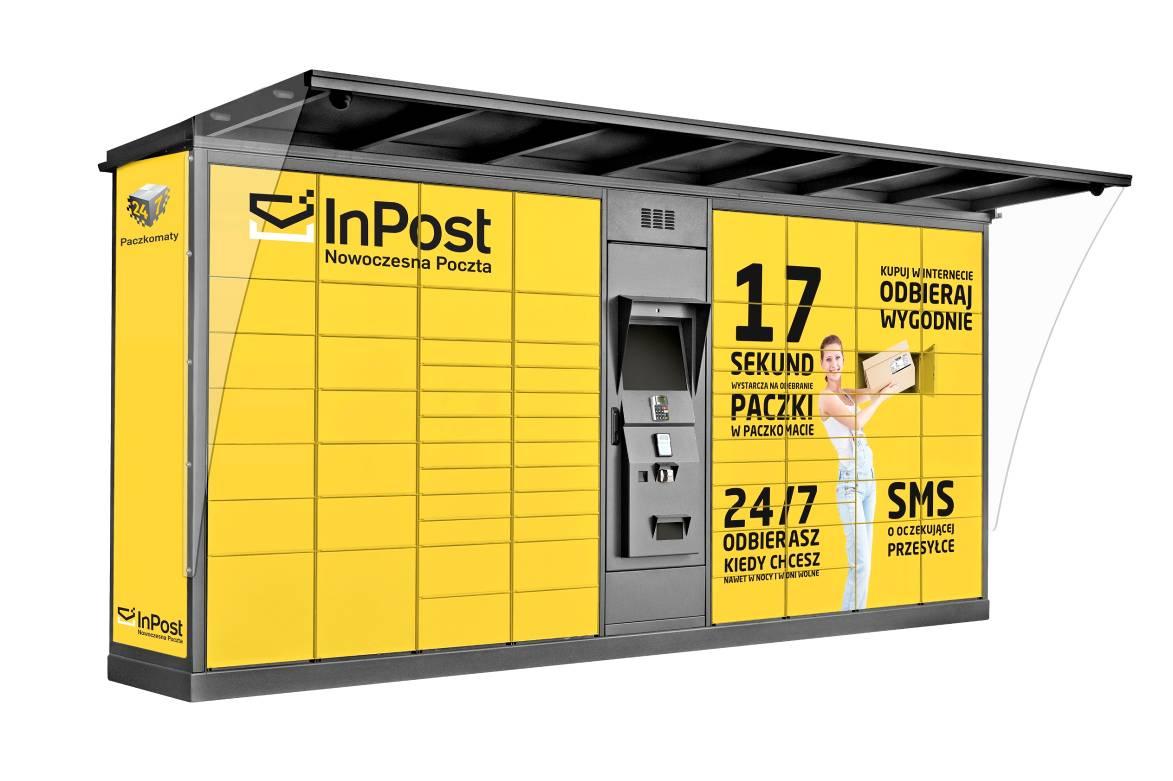
http://dailyweb.pl/wp-content/uploads/2014/05/Paczkomat-InPo...
As well as the logistical issue others have mentioned: if they did/do offer such an option, you value the option so they'll expect you to pay for it (unless it becomes part of a race to the bottom with other distributors in which case eventually someone will offer that for free).
> after 5pm
That would definitely be chargeable. If evening deliveries were offered for free the majority of their customers would pick that.
> Call me on #555-333-9999 if you have any issues
Not going to happen: the delivery people work to pretty tight schedules in order to be as efficient as possible (and therefore cheap in terms of both man time and fuel). Taking time out to try get through to someone won't happen. You could be on another call, your phone might not be contactable for some other reason, and so forth. In circumstances where you are not ready and waiting to collect you are not unlikely to be in a position to not be able to immediately answer the phone.
Of course, there shouldn't be any logistical impediments preventing the delivery company from notifying you once a more precise delivery window is known.
To my mind, their system far outstrips the other couriers.
Now add customer preferences and you have a mess that can't be satisfied because everyone wants their parcel 5-7pm.
If everyone wants later delivery, maybe that is something to look into (to meet/satisfy customer demand). Instead of the alternative of packages not getting delivered in the daytime and trying again the next day.
Amazon do have their lockers. The problem with Amazon Lockers is that they're expensive. Even with prime it still costs extra on top (similar to one day shipping) to have it delivered to a locker.
I've noticed Amazon require a signature a lot LESS often now which does reduce this problem (since it can be left), and I guess Amazon are picking up the cost of the 1-5% of stolen packages.
PS - I've only had a single package in the last two years simply disappear (after it transitioned from a carrier to the USPO, it was a packet of underwear).
Or a combination of Amazon and the logistics companies. Mind you it's very safe to drop things at my house. (Rural home with a long driveway.) But I've noticed a trend toward a signature requirement becoming very rare whether it's Amazon or others.
yet it's still their main product and they are stopping making it even though industrial bread is cheaper. So your point is ?
yet bakers do not disappear. What's not valid about this example?
If that was the case we would replace cooks with robots for a long time as well.
And of course the list goes on for many, many other professions.
It's obvious that the ones who predict massive automation of most jobs are thinking WAY AHEAD of their life. It's not going to happen anytime soon, no matter how much software and hardware is "eating the world". Making predictions is always a risky business... after all we were all supposed to have flying cars by 2015 and whatever, yet the best piece of tech we have is just a tiny computer in our pockets - that's a great achievement, but it's a little short of the dreams we had 30 years ago.
For automation to be a success it doesn't have to replace 100% of the market, and it's unlikely for it to ever truly reach 100% for the reasons you mention. But that's fine, it'll just slowly keep growing.
Then I hope you will also agree that "extinction" is too strong of a word, and we use it too often around here while in reality most jobs have a hard time disappearing completely, if at all.
On top of that, not sure about where you live, but some supermarkets also have reversed their trend about industrial bread and hire "baker-workers" who actually bake bread on-site (from industrial paste) instead of it being purely delivered for consumption, which is slightly better and fresher, and require human workers.
Well you spelled it, you need a communist like system to do that (i.e. take money through taxes, redistribute it through massive inefficiencies, and make sure politicians get their hefty share when the money flows).
Inequality is a false problem. It's a problem if people get poorer, but all indicators for the past 50 years show that everyone is getting richer, while rich ones are getting richer faster (which is obvious why, when you have more capital you are much more likely to increase it faster). As long as even the modest classes are getting richer every generation, everyone's life is improving.
Actually, if a state does any welfare, it probably has this problem already. Basic income offers significant reductions in those inefficiencies by simplifying the process of selecting eligible people (and retiring the required bureaucracy).
> and make sure politicians get their hefty share when the money flows
That you have under every system, from despotism to socialism to capitalist democracy.
> Inequality is a false problem. It's a problem if people get poorer, but all indicators for the past 50 years show that everyone is getting richer, while rich ones are getting richer faster (which is obvious why, when you have more capital you are much more likely to increase it faster). As long as even the modest classes are getting richer every generation, everyone's life is improving.
Inequality will be a false problem when the bottom level of society won't be starving to death or due to lack of basic health care. Again, basic income proposes turning inequality into a non-problem by securing a decent, humane minimum level for everyone.
Never been proven that UBI would reduce the inefficiencies. The State find ways to be inefficient even when it's not supposed to be.
> That you have under every system, from despotism to socialism to capitalist democracy.
Nope, if you did not have a Big government doing wealth redistribution in the first place you would not have much money being lost in such transactions because the flow would be very limited. Look at the US Federal budget, how humongous it has become.
> Inequality will be a false problem when the bottom level of society won't be starving to death or due to lack of basic health care.
Oh come on. Mass starvation is a thing of the past, check Wikipedia, the last starvations happened more than 30 years ago and the only recent ones are due to conflicts mainly - poor people do not die anymore of hunger anywhere - we have large amounts of excess food, even in the poorest places of the world, like the countrysides of China.
> Again, basic income proposes turning inequality into a non-problem by securing a decent, humane minimum level for everyone.
The advocates of UBI fail to understand that by raising the minimum earnings to everyone, you will probably make prices go up everywhere (increased taxes + prices adjustments based on purchasing power) so it won't result in any meaningful difference.
Also, not every form of redistribution is automatically 'communist'... I don't see many people who advocate basic income also suggesting that we turn over means of production to the state - just raising some taxes, and trying to make the way that we redistribute wealth more simple/efficient.
I don't know enough about it to really argue either way, but your arguments don't make much sense to me without more context.
Then you are not looking very hard:
http://ourworldindata.org/data/growth-and-distribution-of-pr...
> Also, not every form of redistribution is automatically 'communist'...
Well UBI is a welfare kind of policy and needs basically a strong State to actually work in practice. Most strong States lean towards socialism and communism because they justify their existence this way ("if we were not there, you would not have welfare, so let us increase the government budget size further") - a common trope to get folks elected.
Inequality, again, does not matter as long as everyone gets richer, including the poorer ones. Which has been the case. Mass starvations have stopped around the world for like 30 years if you have not noticed, and the only remaining ones are usually due to political or conflict issues. The whole world is getting richer, and that is a Greater Good than worrying about the 1% getting richer faster.
Pff, looks like you have no idea what you are talking about. Disclaimer, I'm French and what happened is nowhere as simple as you make it sound like. '
> If a society wants to survive and remain stable some of the benefits rich people have must also be accessible to the general public (for example health care and education)
The poor people have never had as MUCH opportunity as NOW to get education and health care compared to the previous centuries before us. Wake up, seriously.
> otherwise social unrest is inevitable (remember occupy wall street?).
Yeah looks like OWS changed a lot of things : a bunch of hipsters camping in NY with no real agenda, big deal.
The most egalitarian folks actually dream of a society where it would be forbidden to have your own children (since it's actually VERY unfair to pass your genes down to the next generation... Smart people get smart kids, that's furthering the gap of inequalities) and let the sacrosanct government take care of human race reproduction and ensure it's genetically fair.
I'm not too excited by the idea.
Cashiers are still alive and well in Japan, thank you for asking.
> Supermarkets all have self checkin
Not everywhere and even where there is i see way more people queuing for the cashier queue than going for self checking but maybe it's different the Californian world or wherever you are living.
> ovens and breads in EVERY supermarket
I'm obviously talking about local breadshops in cities. they are alive and well, once again, and not going bankrupt. Quality still matters.
> train systems in many countries have automated lines
Yes, but how many have automated trains ? it's technically possible for a long time yet trains are still driven by people. It's way more simple to automate a train than a car yet it's not happening. Strange, huh ?
I'm just making observations based on real life - the world has not massively been robotised since the 90s (it has certainly happened in many manufacturing plants but the "worker"/"human face" is very resilient when it comes to local services).
> I'm obviously talking about local breadshops in cities. they are alive and well, once again, and not going bankrupt. Quality still matters.
There's less. There's less of all these jobs you mention. You say in another post "but it won't go extinct" - well no, probably not, they'll still exist in some form. Horse carts also exist, but nobody's here saying "Cars have not fully replaced horses".
> It's way more simple to automate a train than a car yet it's not happening. Strange, huh ?
https://en.wikipedia.org/wiki/Automatic_train_operation
This is in effect all over the place. When I went to Berlin I didn't find a single subway train driver.
"It won't happen" is talk from people who didn't want to accept an eventuality a decade ago. Today, it's happening - putting your hands over your eyes is very much unproductive.
I'm not talking about subways, I am talking about normal intercity trains. NONE of them are automated. Anywhere. Check it out.
> "It won't happen" is talk from people who didn't want to accept an eventuality a decade ago. Today, it's happening - putting your hands over your eyes is very much unproductive.
I'm not saying this is not happening, what I am saying is that it's happening at a most slower pace than what all the hipsters on HN claim it's happening, and just like everything else, we are going towards fragmentation and not complete removal of most of these jobs. So the "singularity" dream of some people here that the human race will see all of its jobs done by robots in 20 years, and that we need to think right now about income without jobs (UBI and the like) is pure delirium. Society won't change so fast.
More to the point, maybe they feel that the higher wage costs for that kind of shift work aren't worth whatever cost savings in other areas it would provide.
So yeah, adding a second shift isn't unheard of. My grandpa worked second shift his whole life, and I worked third shift the whole way through college.
I'm from the Netherlands, and I haven't heard about the industrial paste thing. I don't think it happens, but maybe it does. In any case, if they do do that, there is no doubt in my mind that they need less workers to perform these tasks than to bake the bread from scratch. So that is still a win for automation.
Oh, I totally agree with you. I was just mentioning that they were reintroducing workers in a process that used to be fully automated.
When there are only a handful of these self-checkouts, you end up with a situation where it is often quicker to wait for the line with the cashier and bagger because they just process customers SO MUCH FASTER.
In college I knew someone who was a grocery bagger for a while, and when we'd go to the store he'd bag his stuff and I'd bag mine. The speed and thoughtfulness that went into the placement of various things in his bag was rather humbling...almost akin to watching an expert Tetris player in the zone.
So ultimately more machines could help solve the long line issue, but that is still definitely a factor as it stands today. Given that grocery stores often leave most of their checkout lanes unattended, I'd love to see more converted to self-checkout to increase overall checkout speed.
A scale underneath the bagging area keeps tabs on everything you can to make sure you're not cheating the system. (Still, I've heard stories of people checking out all produce as watermelons.)
It is quite easy to cheat the current system, though the random sampling helps some. I think someone somewhere made a decision that it is worth it to improve customer satisfaction and deal with some losses, but I have no idea.
It is making you a slave worker, since you have to scan items yourself :)
It may help that we never had people to pack your bags for you, which some countries seem to have.
And that's in a country known for automation.
This seems relevant: "There isn’t a rule of economics that says better technology makes more, better jobs for horses. It sounds shockingly dumb to even say that out loud, but swap horses for humans and suddenly people think it sounds about right."
Except that it does not make sense at all.
Take 200 years ago, most folks were farmers. Take 100 years ago, there were now much more folks working somewhat qualified jobs (where they needed some actual skills) in industries. Take 50-60 years ago, with the creation of the service industries and all the jobs that came with it. And now for the past 30 years, hipsters are getting coding jobs and getting pretty good salaries despite the fact we have been living in a past century of technological revolutions.
And we are far, very far from 100% unemployment.
So your horse analogy has no ground in reality. For the most part, humans have been getting more, and better jobs on the whole, and most people commenting here are holding such higher paying, better jobs around. Thanks to technology.
The qualitative difference between now and 100 years ago is that those hipsters gave brains to the machines. The shift to service industries occured because machines replaced human muscle power. The hipsters started with replacing human precision, and now they're replacing human cognitive capabilities. Services sector is not safe.
It's also important to note what kinds of jobs are being created nowadays. A lot of them are "bullshit jobs" - make-believe work or elements of zero-sum-games like (big part of) advertising industry. Work has been disconnected from benefit it brings, we're literally (although usually indirectly) inventing nonsense tasks because we need to have something for people to do and not starve.
They transform. "Bakeries" become just a pick-up point, where you buy bread that was baked in scale (probably in industrial ovens) and delivered to the store. Bakery employees nowadays have less to do with baking than McDonald's employees with frying fries (they still do something to them).
You think bullshit jobs are something new ? Of course not, they have always existed. Even some coders have bullshit jobs - there is probably only a fraction of jobs that actually directly bring value, among a massive amount of noise from other jobs that support the other or have indirect value to the said business.
But on the whole, there are way more "non-bullshit" jobs that there were ever before, that's why I claim you are missing the big picture. There were no scientist jobs before. There were no engineer jobs 150 years ago. There were few doctors (very few) in the same time range as well.
> that those hipsters gave brains to the machines.
and
> now they're replacing human cognitive capabilities.
No, computers are still very much stupid, there is no autonomous AI in sight - we have just been able to make them do some specific tasks very very well and much faster than humans (deep learning and the like), but in terms of flexibility and learning abilities the most advanced computer program and hardware is far behind any life form on Earth. Are you not a member of the Singularity Church ?
> because we need to have something for people to do and not starve.
People don't work anymore to bring food on the table. Food has never been cheaper. Even homeless folks have smartphones these days - the amount of excess cash that people get out of work far exceeds the money needed to get food.