My uncle is building prototypes for a large company that produces parts for most german cars (I can't disclose where or at which company, sorry). And he worked there half his life, so he knows a thing or two. I asked him the same question and he laughed at me, saying that it's a dumb question. I was flabbergasted at his answer. He continued, by saying how it's against the interest of any car manufacturer to undermine their own business with such "flsah-sale" like hot product. It would create "unwanted dynamics" (I think he meant competition, but I'm not sure).
Also he asked why would you buy a cheap supercar? I said, because it looks good and brings me from a to b. He then asked, what happens if everbody drives the same cheap supercar? I said it's not bugging me, but it would bug others probably. He alluded that it may be different now, but we won't do that. All of my friends at the management level know about this and we don't focus on this problem anymore.
I've summed up (hopefully correctly) some of the most compelling arguments here and tried to bring counter arguments. Which I'll elaborate below the list.
• Tolerances can be solved by optimization (CAD + Solver / +EA-Algorithm / +ML) @giarc
• Goal Oriented Design and Years of Experience don't hinder a great looking body and frame @heavymark @markbnj
• Outer body and frame have no such limiting influence on the interior design @dagw
• 3rd party party reliance is a thing, but you could overcome most of these price drags by using alternatives, 3d printing or self-fabrication @byoung2 anyway that's a good argument @DeBraid I agree, but altough it answers the question it doesn't feel satifying for our curiousity
• Yes, the industry's car design tools don't help with parameter complexity @garyfirestorm you are right there, sir. We need better integrated tooling and part optimizers/solvers.
• Status and Image is important, thus such gravitas have some, but it's not the deal-breaking argument @tyingq You can do it like Asus and create Apple'esque hardware at the fraction of a cost and thrive due to the price gap.
• "Because it's dishonest. You also get all the discomfort and impracticality of a supercar with none of the benefits. You just project some status until people discover what car you're actually driving." @gaze I don't understand what you mean here to be honest, can you elaborate?
Arguing with tolerances just means that the design process isn't automated or not integrated into the production process properly. Otherwisee there would be a user friendly solver and optimization tool for CAD that uses Evolutionary-Algorithms, a Contraint-Solver and/or Machine-Learning.
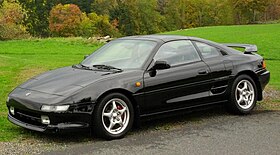
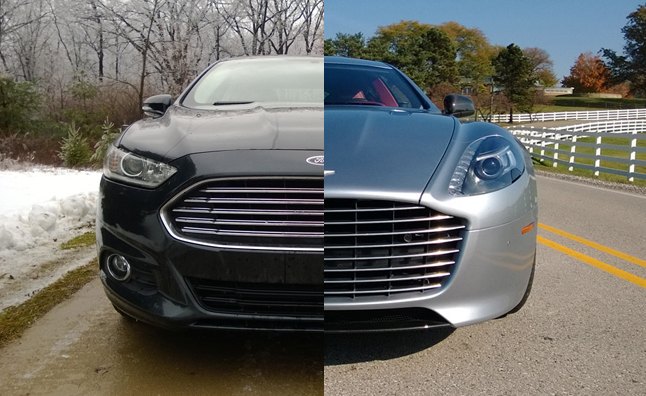
Simply put you can use an existing battle tested car and just change the body with a supercar alike one. This usually means also you have better and not worse aerodynamics (given that you don't blindly ignore aerodynamics just for a better looks).
And who (in his right mind) drives 300Km/h at all on American Streets? That's just unneccsary and arriving 1-5min earlier is no compelling reason for driving at such risky speeds. It's not even allowed from what I know, except in Germany (where I live), but even here we don't usually go significantly over 220Km/h for short periods of time. Thus a big enging and huge horsepower isn't even the selling point of a SuperCar per se, but it's looks and exclusivity.
Tl;Dr Answer: One conclusion I derive is that the Car Design Process and Car Production Process, altough almost fully automated, are really not well integrated and appear to lack essential, albeit usually complex to use tools like Machine-Learning/EAs and Contraint-Solvers. The Industry needs a change urgently in this area, but it's already been explored from what I know :)




_(cropped).jpg)