Android Oreo(android.com) |
Android Oreo(android.com) |
However the main app is a total dog and the mobile site is quite complete. Would definitely remove it.
Oreo must have payed a good sum of money I suppose?
Coming up with the legalese on how and where Google is allowed to use the Oreo trademark seems difficult.
If not, then there is no trademark issue. Google isn't selling a food, it's selling an operating system.
It's the same with kit kat, they probably couldn't just use that, either.
But it's a win-win for both parties, I doubt either of them paid.
Seriously?
I'll leave it up to you to figure out if I'm serious or not (and yes, I really am mixed so this is plausible).
Sincerely,
The Marketing Manager at Nabisco
Android is in itself a loss making project. It makes money as a marketing vehicle for other Google products (and therefore ultimately advertising).
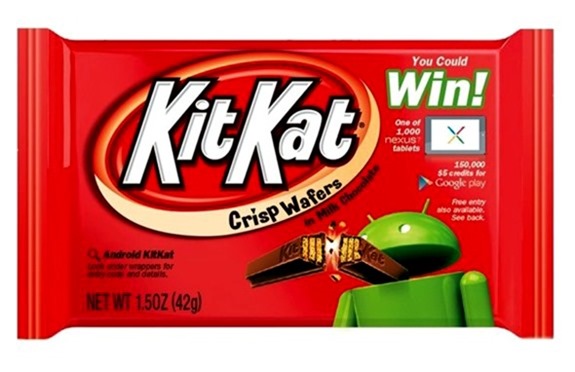
The logical conclusion is that they have permission, not that one of the largest companies in the world made a legal mistake that the "We Are Not A Lawyer"s on HN can see right through... for (at least) a second time. Keep an eye out for Oreo packages with Android branding material on them, in the style of: http://cdn.redmondpie.com/wp-content/uploads/2013/09/kitkata...
I do find myself curious what the negotiations look like when Google wants to not just use Oreos, but not slather all their material with "Oreos are a registered trademark of blah blah blah", which is pretty unusual.
Maybe money was paid one way or the other. Or not.
What restrictions are you imagining?
If Google had a line in a blog post that said, "It's better than real Oreos", they could likely be sued.
Oreo would not like Google saying either of these things. So Oreo needed to make up legal documents to map out all the things Google is allowed to say about Oreo Android. It seems like an unnecessary legal headache - one for dubious marketing gain.
Same with your other example. That line is clearly humor, and keeps the cookie brand's name in people's minds.
I think you're overthinking all of this.
Seriously. Software has improved so much but the hardware nowadays is trash for my needs at least.
That's a deal-breaker for me, and battery cases are not a good replacement since I can't rely on the phone's own battery indicator, have to manually turn on/off and looking at ZeroLemon's case for the S7, it seems to require a headphone extender.
As for the S3's screen I have no complaints. It's readable in the sun with max brightness, I keep it at minimum the rest of the time.
Finally, the S7's native screen resolution is 1440p, meaning it will munch on battery much faster for no perceptible gain (at the distance I hold my phone). And manually lowering the resolution will render a blurrier image than native 720p so that's out.
First two words on the page after the "Introducing.." title say so.
Which makes me look cynical at everything else.
[1] https://9to5mac.com/2015/10/24/apple-wi-fi-assist-lawsuit/
At least my 4.x tablet used to have a 3-state wifi icon, off (not present), connected (gray), internet (blue).
If anyone knows of a solution to this problem on a Galaxy S8 I would love to hear it.
System Settings > Wi-Fi > Gear Icon > "Use open Wi-Fi automatically"
Hmmmm. So Google can have even more of your data.
-Picture in picture (dual app onscreen)
-Notification dots and "force-touch-like-feature" (my words, not Google's) to preview
-Google Play Protect (an antivirus) [0]
-Minimize unintentional overuse of battery from apps in the background
-Faster boot speed
-Support forAndroid Instant Apps
-Over 60 new emoji (sic)
Under the hood stuff, not in the release (thanks u/izakus)
- Project Treble that splits hardware HAL layer away from the OS layer. Plan being that this allows updating the OS without having to update the whole hardware driver stack (and thus avoid being dependant on Qualcomms of the world to update their proprietary blobs for each release) - GPU drivers are now updatable via Play Store (by OEMs)
More new features listed on the main Oreo page [2]:
-Accessibility button: Allows you to quickly access from the navigation bar accessibility features, like magnification, and functionality within accessibility services, like Select to Speak.
-Accessibility volume: Accessibility services can optimize the audio experience for users with disabilities.
-Adaptive icons: Developers can now provide a full-bleed square shaped icon and OEMs will mask the icon to ensure intra-device consistency.
-Ambient screen: Highlights the incoming notification with larger font, highlighted app name and immediate access to actions.
-Background execution limits: More control over how apps run in the background for better overall system performance.
-Background location limits: Limits the frequency of location updates in the background for better overall system health.
-Deep color: Enables applications to render richer visual content with more vibrant colors and subtler gradients. Supports full color management which allows applications to render images in the format and quality they were intended.
-Downloadable fonts: Applications no longer need to bundle custom fonts, which helps reduce their size.
-Install unknown apps: Hostile downloader apps can't operate without permission; users now permit the installation of APKs per-source.
-Integrated printing support: Compatible with all Mopria-certified printers, which make up 97% of printers sold worldwide.
-Linkable files: API that allows you to share files across the Internet via web links.
-Native C/C++ API for high-performance audio: API function for high-performance audio including Native C/C++ audio API.
-Notification categories: More granular and consistent control over which notifications can appear and how intrusive they are.
-Notification snoozing: Lets users hide notifications for a period of time, similar to Inbox snoozing.
-Pointer capture: Pointer capture allows the app to capture all mouse input.
-Project Treble: The biggest change to the foundations of Android to date: a modular architecture that makes it easier and faster for hardware makers to deliver Android updates.
-TextView autosizing: Developers can now let the size of their text expand or contract automatically based on the size and characteristics of the TextView, making it much easier to optimize the text size on different screens or with dynamic content.
-Tooltips: Support for tooltips (small popup windows with descriptive text) for views and menu items.
-Wi-Fi Assistant: Auto-connects you to high quality open WiFi and secures your connection with a VPN back to Google.
[0] https://www.android.com/play-protect/
[1] https://developer.android.com/topic/instant-apps/index.html
I wonder if every Mopria-certified printer prints anti-privacy tracking dots.
Honestly I like it; it was better than basically all the other alternatives.
> Working to keep your device and data safe from misbehaving apps by scanning over 50 billion apps per day, even the ones you haven't installed yet!
Also known as anti-virus.
This page says 8 billion a day, which seems inconsistent. Also how many apps are there on the Play Store to scan that many?
This is good to hear. But, this makes me wonder about Android's ability to prevent people from pirating apps. Due to the nature of Android, I've never wrote an app that wasn't free.
On iOS, there are a number of audio apps that do quite well. I'd be hard pressed to port an app to Android, if taking the apk was as easy as it's always been.
Translation: we developed better compression algos for uploading your personal data to our servers
VPN back to Google?
"Linkable files: API that allows you to share files across the Internet via web links."
Will this mean that I don't have to download a pdf to view it? I wonder what this feature means.
And I don't believe OEMs and telecom operators will release updates even with Treble, if Google doesn't force them to do so.
Except that, if mobile OS's could still disrupt the desktop, there's still many features to go?
- Project Treble that splits hardware HAL layer away from the OS layer. Plan being that this allows updating the OS without having to update the whole hardware driver stack (and thus avoid being dependant on Qualcomms of the world to update their proprietary blobs for each release)
- GPU drivers are now updatable via Play Store (by OEMs)
Notification Dots: Press the notification dots to quickly see what's new, and easily clear them by swiping away.
edit:// a little late with this
(And the Nestlé version actually uses real swiss chocolate, and tastes a lot nicer)
"The world's favorite cookie" right in the first caption. Almost subliminal images of Oreos in the background as you scroll.
[0] https://jwt.co.uk/work/android
Disclosure: I have worked for a JWT subsidiary at the time.
All the stories I've heard[1] say the idea came from Google as Hiroshi Lockheimer (now head of Android & Chrome OS) was a big fan of KitKats.
1: https://www.theverge.com/2013/9/3/4691040/android-kitkat-the...
That said, I haven't needed to restart the uber app to fix this. I just disable WiFi from the notification toggle and the app connects in about a second after that.
Oreo will receive "free" marketing, but now will have to share the name with a version of a mobile OS.
As for the battery life you mention, that's probably just the Android upgrade. I've easily doubled my battery life in 3 major Android version upgrades. 10-15 days (depending on usage) is normal now with a 7000mAh battery.
If your device ships with O it should be running an immutable semantically versioned HAL. In essence you should be able to be able to flash AOSP on every new device. No matter what the vendor does.
Edit: I can see it now, in the technical specs of each device you will see a list of HAL Versions. The newer your HAL the longer you can expect support from AOSP if not your vendor.
[0] http://androidbackstage.blogspot.co.uk/2017/08/episode-75-pr...
In the end it's just a way to make OEM's lives easier while developing updates. It will still require them to actually make updates for devices. Despite Project Treble they will still not have an economic incentive to update devices. And that is the core issue here, really.
My expectation is that Project Treble will help speeding up Android updates - they should come to devices sooner than they are released now, because Treble shortens the development process of updates. I don't expect devices to be updated any longer than they are now, or receive much more updates. OEMs will remain economically unpunished for not updating and likely will just pocket the money saved in the development process.
The only way to solve this problem is to build a "Windows Update for Android" whereby system components are updated in a modular and OEM independent way. The fundamental issue in Android's update problem is that OEMs are fully responsible for device updates and not motivated to do this job well, and Project Treble does not signficantly change this [1].
Don't get me wrong, Project Treble is a great move for Android. I however don't think it will make a huge difference in the Android update story.
[1]: EDIT: it's worth pointing out that Project Treble looks like a necessary move to make a "Windows Update for Android" happen though. Let's see if that becomes a reality.
This hits the nail on the head. ProjectTreble thing will make no significant change in the long run. OEMs don't care about updating Android, they only care about selling hardware and developing shitty custom launchers.
Google is the only one that could change this. They could "tie" the Android licensing (Play Store and their custom bits) to forcing the OEM to release n major version updates . But they won't do this because it will hurt them financially (less licenses sold in the long run..)
All applications are upgradable, even Play Services are upgradable, and developers get the support library to get all the new things to all devices.
So I believe they did a great job at reducing fragmentation in the sense that it no longer really matters what version you have, you still get all the newest stuff. Just look at every iOS version announcement: 3/4 of the new features are in the apps: iMessages, maps, home screen...
There's a reason that "new emoji" is a headline feature now, a lot of the system has been pulled out and is distributed seperately to the OS now so it doesn't have to go through the vendor's QA cycle.
... they have gotten better at this.
If vendors choose to not use this feature it is on them.
O standardize how HAL interfaces between the framework and the low level vendor implementation.
So you can update either, as long as the interface contract is respected, it should be transparent. It is of course more work for Google since the framework will need to keep supporting old version of this interface but that's a necessary evolution.
Since it's semantically versioned, you can theoretically have fairly high assurance of what updates might cause problems and what should purely fix a bug that doesn't affect normal functionality.
Auto-connects you to high quality open WiFi and secures your connection with a VPN back to Google."
Let's hope the VPN can be set to non-Google too, or it's optional or opt-out feature.
This is just a feature that was on some phones that's rolled out to the base OS now. It's opt in AFAICR, there's a prompt to enable it when you first boot the phone.
If Google can take some less drastic strides to fix this problem before a huge change like fuchsia, theres probably a better chance for an easy(er) transition.
>The biggest change to the foundations of Android to date: a modular architecture that makes it easier and faster for hardware makers to deliver Android updates.
With any luck, this will end the huge security/update problem Android has. Right now an update is dependent on the chip manufacturer's drivers, then the OEM adding them to the ROM with their custom "improvements", and finally the carrier pushing the update to devices. Right now it just takes one break in the link and a device goes without updates, which is a security disaster. If Google can push updates from the Play Store (presumably the end goal of Treble), none of this will be a problem.
Tooltips
Support for tooltips (small popup windows with descriptive text) for views and menu items.
Normally, this would be relegated to a git changelog in the support library. But this is on the global marketing landing page.
I like to imagine a fictional internal mail thread going like this:
> Folks! please, give us something, anything, to put on the landing page!
> Someone replies duh, maybe tooltips
> What's a tooltip?
> uhh, small popup windows with descriptive text
> What's a popup window?
> uhh...
> Nevermind, its on!
Obligatory /s and yeah its Google, but seriously I can't imagine any other circumstances on how this specific copy, which tries to explain what a "tooltip" is by using the words "popup window", "view" and "menu item", came up.
This could be a good sign though, of the maturity of the platform (and harder to feel left out if you didn't upgrade).
By issuing a hard restriction on background usage Google has brilliantly improved battery life for the masses while condonig the same lazy architectural patterns of the past, locked people into Firebase Cloud Messaging--a Google service not part of the AOSP, and potentially stunted Android adoption in domains outside of mobile. It's the turning of an era for Android, and my interests have moved elsewhere (from an app platform perspective, embedded Android is still vialble since everything you ship runs as a system app with no restrictions).
There's obviously some contractual relationship but I can't figure out who's on which end of it.
(Compare this to the Mac Pro landing page which actually hijacks scrolling https://www.apple.com/mac-pro/)
Firefox users can set "layout.css.scroll-behavior.enabled = false" in about:config and never have to worry about this nonsense again.
I really wish everyone would stop hijacking scrolling.
Still can't disable or customize to stupid "share" menu that puts you one click away from accidentally sending something to a stranger you contacted once on sms or facebook messenger or email.
Still can't revoke certain permissions from apps (like vibration). There is zero reason why my browser should need to ever vibrate or use the accelerometer/gyro.
Still no good system wide ad blocking solution. (not likely, but one of the biggest things I miss from having a rooted phone)
How about those superpowers, Google? I have been an Android user since 2010 but I am quite sure my next phone will be an iPhone (with a headphone jack).
I'm looking forward to this. It seemed to me in the switch from iOS to Android that the battery life definitely suffered. I wish the Samsung Galaxy's "ultra power saver mode" was available in more devices. The "battery saver mode" in my current Android phone is decent but doesn't seem as effective.
> Integrated printing support
> Compatible with all Mopria-certified printers, which make up 97% of printers sold worldwide.
Gee, I've never heard of "Mopria" but this sounds interesting.
97% of printers sold now - the initiative happened in 2014, and I assume that it took manufacturers a few years to ramp. So probably don't expect it to work with your 5 year old all-in-one.
Every time I think I've blocked every $_#&#- thing that annoys me, more show up. As of a week ago I now get these Throw notifications that cannot be dismissed or blocked.
I also despise apps that insist on being updated and disallow being uninstalled.
These itches are so bad now that I'm pretty disenchanted with Android altogether.
I want a no nonsense phone that literally does nothing out of the box except the app store and make phone calls.
It's an impressive bit of technology though, I've never seen an app so good at telling me exactly what I didn't care about, exactly 10 minutes after I would have cared about it.
"Wi-Fi Assistant
Auto-connects you to high quality open WiFi and secures your connection with a VPN back to Google."
I really do not want to tunnel my whole traffic through Google's servers.
It asks to enable it on a per Wifi basis, if it detects any traffic is being mitm mangled, and you have to agree to enabling it for that Wifi.
So the VPN is "required" by this feature but you can turn it off globally, or manually connect to networks where you don't want to use the VPN.
Windows 3.1 was able to have two windows side by side before Android even existed.
It's also a little hidden in YouTube's site because YouTube hijacks the first right-click. Try this if you have MacOS and want to see how it works with YouTube:
1. Open Safari
2. Go on YouTube
3. Go to any video
5. Right-click then right-click again immediately
6. Select "Enter picture in picture"
It should be available in the right-click menu in the native MacOS video player that most apps build on top of (unless said services hijack the right-click like YouTube). Works well with Netflix, Vimeo, VLC, you name it.
It's one of my favorite things.
I wonder whether YouTube will let you use this without subscribing to Red.
Yeah, but not on my device. I didn't even get Android 7 :)
How do I disable "pop-down" notifications? i.e. facebook messenger, on receiving a message, drops down a little message box from the top with that message. It stays there for about 2 seconds and then disappears... unless further messages in that chat appears.
The only way I can disable this is by muting that chat, which is not ideal. Same for Hangouts and other messaging apps. It drives me insane.
lately I have been been wishing there is a way I can just run some version of linux like debian/fedora on my phone and be able to run apt-get update and upgrade (or yum) as updates are released.
IIRC it cost $600, and technically it does more than I need, but the fact I am becoming more and more concerned that security updates are not being received is making me call into question I actually want a 'smart' phone.
I understand android is based on linux but it is above my head to compile this realease on my own and it is difficult for me to trust rooting the device if there was an option to install oreo on htcone m8 with my 'old' chipset.
any thoughts? did I miss any truely 'free' linux smartphone OS that I would be able to use?
Tooltips
Support for tooltips (small popup windows with descriptive text) for views and menu items.
Normally, this would be relegated to a git changelog in the support library. But this is on the global marketing landing page.
I like to imagine a fictional internal mail thread going like this:
> Folks! please, give us something, anything, to put on the landing page!
> Someone replies duh, maybe tooltips
> What's a tooltip?
> uhh, small popup windows with descriptive text
> What's a popup?
> uhh...
> Nevermind, its on!
Obligatory /s and yeah its Google, but seriously I can't imagine any other circumstances on how this specific copy, which tries to explain what a "tooltip" is by using the words "popup", "view" and "menu item", came up.
This could be a good sign though, of the maturity of the platform (and harder to feel left out if you didn't upgrade).
I don't get it. They bring frequent major updates with such important features like 60 new emijis or antivirus software instead of just doing their homework and implementing the number one feature for an OS: Direct OS updates from the OS vendor and nobody else.
Don't tell me it's a problem and the driver situation is so difficult. This is just a bad excuse. They want to keep people buying new Android phones.
I wonder if this will be good enough to close the gap with the rich music creation ecosystem on iOS.
Google has been a gold-level sponsor the last couple of years at the JUCE Summit/Audio Developer Conference with a motivation to push developers in the direction of the Android NDK. It's good they acknowledge they are behind it that regard, but there's still a fair amount of catching up to do considering there's now AUv3 on iOS and no competing standard on Android yet.
They still don't get it. Google as the OS vendor should update all phones and NOT the hardware makers. Hardware manufacturers can still update their special features on the side after an OS update got deployed but I want that the OS and its core become updates directly and only from Google. Why is this so hard?
I agree it's probably the only way to actually fix this, I just don't think it will happen.
Blaming the OEMs for your security issues is free.
But Android is an odd OS, we will never see a proper update policy from them.
Android seems to have taken iOS approach towards saving power,
"When an app goes into the background, it has a window of several minutes in which it is still allowed to create and use services"
Though iOS's background restrictions goes up to socket level (e.g VPN, which android O seems to have whitelisted entirely); this is going to be a huge impact over consumers and of course pain in the * for developers.
You open the page. Scroll down. What should be the first thing you see? Obviously it should be the greatest, the best feature of the new OS. What is it instead? "Quick boot up time". Really? That's the best thing in Android Oreo? That when I reboot my phone once every 4 months, it's going to start quicker? Surely they could have picked literally anything else as the first thing to mention?
http://www.androidauthority.com/android-8-0-oreo-announced-7...
The proof here will be when they ship.
Thankfully, 'Google Play Services' and distributing more and more services through the Play Store is a step in the right direction.
Google remembers that too, and this change allows Google to bypass those same execs when pushing out updates. The HAL layer will not change from version to version, meaning no driver support will be required from the OEM for new Android versions.
A move towards replacing an open OS with an entirely proprietary solution full of tracking by a single vendor is "a step in the right direction"?
There's thousands of solutions for how you can update core OS components, none of them require what Google's doing to open source.
The development is easier, but if you plan to distribute on other stores, google play services are useless and will make your development more time consuming as they are exclusive to devices with google play store.
The OEM side is usually pretty easy / trivial in comparison. And there are a number of OEMs who would happily push updates but can't, because they can't get hardware packages from Qualcomm / Amlogic / Freescale / etc.
That, more than anything else, holds back new Android releases on lots of hardware.
It's a game I wish they'd get out of entirely. There's no such thing as a useful carrier overlay.
Verizon especially makes it miserable. Ah, but who am I kidding, I'm sure Verizon will still find a way to ruin it.
They already admitted on the ADB Podcast that they don't want to remove the ability for OEMs and mobile operators to customize their forks of Android.
We will still be forced to buy new devices even if they are VTS certified.
If it passed VTS it should be able to run AOSP. The new CTS will be an AOSP System image running their VTS passing "drivers".
Even if your vendor doesn't push any updates. At least you should be able to run a number of newer versions of AOSP as long as Android doesn't deprecate those VTS drivers.
They have argably been enabled for a while, but Treble is making it even easier. Hopefully this pushes the needle over the line for at least some OEMs/teclos.
I doubt we'll see much change. I hope it'll make it slightly faster but without an agreement with OEMs that has teeth forcing them to be more expedient I can't see this getting much better.
For instance, the Galaxy S8 is the hottest new thing on the market right now, and it launched with Nougat. It will probably be six months to a year before Samsung pushes an Oreo update to it, if at all.
Then again, this new architecture likely makes it easier to move the Android userland to a new (non-linux) kernel, so maybe it'll be a moot point.
https://blog.classycode.com/a-short-story-about-android-ble-...
I really wonder what's going on here.
That is one of the big things that annoy me when i hear people talk about iOS updates.
Because when Apple announce their big updates, often the items they present will not be present on older devices for various "reasons".
Thus what most people got where perhaps some security updates and some spurious API changes so that all those apps have to be updated or stop working.
Apple, during Jobs both terms, were more marketing than anything. Watch them slowly slide back into 90s mediocrity outside of USA now that he is no longer around to apply his "reality distortion field".
Users blame Android when Facebook and other popular apps started eating all their battery by running in the background. Google's only choice was to aggressively punish these apps.
All developers think their app is the most important thing running on the user's system, and that is how we get into situations like this.
If HN allowed emoji in comments, I'd have a U+1F923 here. Since I can't do that, you're adorable. The users, eh? The users are supposed to be burdened with checking the wake status and radio activation schedule of their apps? How was that supposed to work, exactly?
> It's the turning of an era for Android, and my interests have moved elsewhere (from an app platform perspective, embedded Android is still vialble since everything you ship runs as a system app with no restrictions).
Google making it more and more difficult to avoid gapps is nothing new.
Even the K9 team had issues with that, and many other open apps did so, too. I've been trying to work some kind of push messaging into the IRC bouncer for which I wrote an Android client, but the issues with legality (I can't just connect to a third party without explicit opt in), API keys (people who host an IRC bouncer don't want to register with Google), liability (I don't want to relay all messages through a server of my own), Google's ToS (I can't just publish an API key for everyone to use), confidentiality (I can't actually put content into the FCM messages due to legal issues), etc are so problematic that it's basically stalled everything.
I've filed a complaint with the EU, this seems like the only option I've got left. I can't tell everyone running a bouncer to register with Google, I can't relay all messages of all IRC users through a server of mine, and I can't bake in a Google API key into IRC bouncers (as that violates Google's ToS)
No doubt we've seen it coming for awhile. But I'm still sad to see it finally come to this, at least ideologically. iOS is a closed ecosystem that's been opening up. Android was an open ecosystem that's becoming more locked down.
Presumably you can still give your users a good reason for why you need to run uninterrupted in the background and they can approve it similarly to how they now approve other permissions.
This is really not a secret at this time anymore and should be taken into account when you succumb to Samsung marketing.
Everybody else will be probably 4-6 months late.
Also, they stopped updating my Nexus 4 long time ago, something that Apple does not with their devices.
Hence, I am not "succumbing to Google marketing" again. I have now updated to a Moto, which used to be a Google company. Let's see how long it takes to update...
I am on OnePlus2 and still using version 6 because maintainers do not give a crap about 2 year old phone and it will never get updated at this point.
Flagship my ass.
Am I missing something about your comment?
"Be together. Not the same."
You might have to leave the major names behind, and might have to skip a few features. Do you need the latest and greatest anymore though? When Android was new (2008) CPUs were much slower and upgrades did help your experience. (I remember missing calls because my phone couldn't switch to the phone app quick enough).
"All current iOS emoji will now work on my phone" was genuinely a highlight of the Nougat update for my Galaxy S7 .
https://developer.android.com/guide/topics/ui/look-and-feel/...
looks like bad 00s clipart
Wikipedia says the same.
https://en.m.wikipedia.org/wiki/Android_KitKat (see history section. Sorry can't figure out how to do the deep link on mobile)
Year of the Whopper
Year of the Tucks Medicated Pad
Year of the Trial-Size Dove Bar
Android Heath Bar (TM)
Android Pocky (TM)
http://infinitejest.wallacewiki.com/david-foster-wallace/ind...
Long story short I'd be extremely surprised if Google didn't sell this.
Though the name is a direct reference to the sweet, so that maybe makes it more complicated.
They made a deal with Nestle/Hershey for KitKat, so I'm sure they did here as well.
Ice Cream Sandwich used to evoke thoughts of sticky fingers and an over indulgence of sugar.
It might not be a good reason, but I made a game a while back that used tilt input instead of arrow keys on mobile: http://nfriedly.github.io/space-jump/
Seen the same kind of reasoning play out in other contexts where user customization has been curtailed.
You can revoke individual permissions from apps. Settings > Apps & notifications > App permissions on Oreo. I think this has been in since Marshmallow (6.0).
You can manage individual notification settings (including vibration) from Settings > Apps & notifications > Notifications.
I'm not sure about accelerometer/gyro settings for apps. I feel a bit different about this one. Why should I care if my browser uses the accelerometer/gyro?
[1] https://play.google.com/store/apps/details?id=com.andmadesof...
Pretty much abandon-ware.
Theres multiple non root solutions that use a local vpn to accomplish this.
Why not?
or
it locked by by his carrier (eg verizon pixel)
or
he wants to use android pay\netflix\other apps that detect root
or
etc.
There are many reasons.
On a serious note, Samsung is so far ahead of every other manufacturer (including Google) I wonder why people buy anything else. For me, whenever I need to buy a new phone, there are two options to consider: Samsung or iPhone.
System fonts have been an OS-level feature since the advent of OS with bundled GUI. Support of a larger part of the Unicode space in system fonts has been an OS-level feature since Unicode. New emoji has been a visible aspect of that, especially on mobile, for quite some time.
It really does seem to be something that drives adoption.
I rarely use those now, but I'm not immune to superficial hype. It's fun.
[1] https://developer.android.com/guide/topics/ui/look-and-feel/...
Rooting is nice, and I believe it's important from a philosophical standpoint, but I probably won't with my next phone because the features I want are getting built into the OS, and I am missing several apps that just refuse to work when they detect they're running on a rooted phone. (Everything from games to my work email.)
It definitely increases the longevity of phon but, while it mostly works, it has lots of little quirks - especially with the various radios. E.g. I occasionally have to re-pair bluetooth devices, wi-fi will disconnect and then re-connect for no apparent reason, etc. Also, sometimes I just find it getting warm in my pocket and I have to reboot it to make it snap out of whatever endless loop it's stuck in. (I assume that updating to LineageOS will fix a few bugs and introduce a few others.)
I'm going to replace it with either the next Pixel or the next iPhone when they both get released in a month or two, depending on which one I'm more impressed with. I am going to miss my headphones jack...
I've been running it on a few phones. Zero issues so far, the install procedure is trivial once you do it once, it self-updates and the changelogs are clean.
will my phone work with tmobile and still make calls with my sim card by using lineage OS?
> I really wish there was a more stable channel to be on, though.
Having nightlies installed automatically on your phone is creepy. So far nothing bad has happened, though :)
and it's not rolled into the base OS either, it's part of "google connectivity services" which is distributed separately.
Java/Kotlin/C++ vs Dart for user space, Linux vs Magenta for the kernel and drivers.
(note that I wasn't able to actually replicate broadpwn on Nexus 5, if anyone was, some info would be appreciated)
Really wish i could find an android tablet with a full size A port these days that didn't run a ancient version...
My Android phone still randomly lights up its screen several times a day, without a new notification having come in. Reporting overall energy usage doesn't help me track down the culprit.
It's not like anyone's written apps for real work on these devices anyway. It's all just second class software.
That's not true (the most of the OS part). They untangled their own stuff (Play Store, Google services and so on) and can update those as they see fit. The OS stuff is still monolithic. Most of serious security issues still require full OS updates. Also supporting a new major version of Android runtime still require a full OS update.
However, when Google would make such a move then they will see Samsung leave immediately and Huawei shortly thereafter. And Samsung makes 50% of Android devices - it will be a very hard business decision to justify destroying their ties with Samsung over device updates [1]. Note that Samsung periodically trots out their Tizen operating system to remind everybody that they can be independent of Android should they want to. Huawei will probably just fork Android and attempt to maintain their own app store.
The Android device market is rife with politics and the consumer is mostly on the short of the stick for it. And Apple is the real winner there - they can sell more expensive devices because people are rightly happy to pay a premium not to deal with Android's bullshit.
[1]: Ironically, Samsung is likely the best Android OEM for device updates - if and only if you consider their high end Galaxy S and Galaxy Note lines. The real issue is that Samsung wants to also flood the market with cheap crappy devices and never update them - and will likely happily ditch Android for Tizen to continue to do so.
Shame Google wasted a lot of capital they had trying to do some really silly things in Android for a few years, and didn't lance this boil while they still had the chance.
Some smaller vendors might appreciate that these responsibilities are taken away from them. Sony, HMD/Nokia and Lenovo/Motorola are basically only adding some apps, themes and tweaks to AOSP at this point anyway, but do tend to have relatively good update reputation (or used to). But other vendors will not appreciate giving away this control at all. Some vendors are likely partially motivated to not have devices updated in the first place.
So will Google make such a ballsy move? They themselves barely have good business reasons to do so. Android completely dominates the market anyway, without Google upsetting the politics amongst the vendors and pouring money into doing things that vendors refuse. It seems Android's bad reputation in regards to updates doesn't really hit anyone that hard.
Having said that, Project Treble does seem to be a move in that direction. Maybe Google cares enough about theirs and Android's reputation, or maybe they even care enough about being responsible. Maybe they'll make "Windows Update for Android" an opt-in thing for vendors. Maybe there are other ways they can create a more responsible market (and better repution for Android) without upsetting vendors. Let's hope they find a way at least.
I heard from "Security Now" podcast that there is a new law that require all government purchased IOT devices must be update-able to fix security issue.
Expand the law a bit:
Make all internet connected device makers (Include phone maker) liable for any loss of private consumer info, hack for 10 years from any internet connected devices release.
Anyone can file lawsuit against them easily or in class actions against the vendor if they don't provide security fixed/upgrade within 4-6 months of from being notify of the vulnerability.
Establish an ISO security standard for IOT (and all Phone): such as
1) Standardize SW/FW update requirement, method and audit. ssl, security hash, CA, etc.
2) Requires system to monitor and log all program/critical system components creation/execution/all internet connection and download for auditing by owner of device.
3) Require system vendors to have source code / tools chain / build system in place to rebuild and fix security issues.
Once the vendors are liable for hack. They will need Insurance. The Insurance Company can follow the ISO security standard to audit and estimate the potential cost.
If they say "install it this way or no Play Store for you", every manufacturer will follow.
http://androidbackstage.blogspot.de/2017/08/episode-75-proje...
Anyway, I was responding to the comment "Most of serious security issues still require full OS updates." This is demonstrably inaccurate since the security patches do not require a full OS update.
I think this is an issue for Google when they want to introduce new platform features for developers, e.g. Project Tango. If updates take years to get to users, it handicaps Google's ability to be innovative.
I cannot change that. The ~5,000 I have spent on smartphones and laptops in the past 10 years is hardly enough. My buying choice, yours, and the GP's are just not strong and valuable enough to cause a manufacturer to pander to our desires.
The economies of scale and the greater money available from the opposite are so bad that no one even makes an expensive phone to capture our tiny segment of the market. They all chase the thinner, glued-up, bloatware-filled, non-repairable, closed-source, 2-year-or-less buyers. Same story on laptops.
In fact, my purchases seem to have the opposite effect: the Nexus is now as expensive as any other flagship. Motorola's cheap stock Android phone line shut down. LG stopped installing removable batteries. MacBook Pros still have nice hardware, but they are completely glued up. Thinkpads still have crappy stock screens.
But there's incredibly little ground to call any of their current laptop lineup upgradable or repairable. I'm not sure there's a single upgradeable component left on any laptop they currently offer. The Macbook and the Macbook Pro have both moved to soldered CPU, RAM, and flash memory. The Macbook Air I believe still has a replaceable SSD but it has the proprietary connectory. To further complicate things - the batteries in the Macbook and Macbook Pro are both heavily glued in, so even that's difficult to replace.
Who would those be? And who of those is not on the high end phablet side of the phone market?
The Nexus 5 no longer works.
The Nexus 4 still works, but its battery is puffing out.
The Nexus S has no hardware problems at all, but it's too underpowered to run modern software.
The model "phone vendors nefariously build products with short lifespans, regardless of what people want to buy, so that they can sell more hardware" has trouble explaining why the longest-lived phones are the earliest ones. It seems more likely that the phone vendors of today build phones with short lifespans because bitter experience tells them that building a robust, long-lived phone is all cost and no benefit -- the phone costs more, it's heavier, it's fatter, and all your customers replace it before the cheaper, sleeker, more attractive phone would have failed anyway, meaning they actually get zero minutes of extended lifespan.
It's the same reason animals age and die.
Maybe because first you try to make your earlier products good to get customers, and then once your business is going and you've grabbed a portion of the market you find it profitable to take risks like this?
The phones of today aren't "built with shorter lifespans in mind", but they are built with more tightly packed components, more energy-dense batteries (to support their power-hungry CPUs and large amount of RAM), etc. Because that's what you need to do so you're not "too underpowered to run modern software." Which is necessary to sell phones to people.
If you made a phone and said "hey, this will live as long as a Nexus S, but it's not going to run FB or Clash of Clans or VR or take very good pictures (HDR is compute intensive)".... good luck selling that.
With the difference that younger (newer) animals are better built. :-)
The Nexus S appears to be immortal. That means that when young, it was terrible (by modern standards), and now that it's old, it's still terrible, but no worse.
The Nexus 5 is mortal. When young, it is good. When old, it is even worse than an old Nexus S. Just like an animal, it's strong in youth and decrepit in age.
not being pretentious -- you will actually need it. I've been reading this book on and off for about four years now, and wish I had started with a notebook from the beginning.
don't get discouraged if some passages are boring -- make a note of them and just power through them.
it's so, so worth it. I think I'm probably really only "getting" 10% of this book but it's still incredible.
Like watching Tarkovsky straight from Michael Bay is not something I'd recommend, I'd tell them to watch some Nolan for contemporary, then Kubrick and stuff before going for Solaris. Is there an equivalent?
other than that, don't be too afraid -- Infinite Jest is intentionally complicated and convoluted, being a bit confused is part of the experience. even if you aren't quite sure what's going on in every chapter, the writing is gorgeous and funny even on a sentence-by-sentence basis.
You'll meet one character, then move on to another character, then return to the first character four hundred pages later. You'll read footnotes on footnotes that refer to other footnotes. There will be plays on words that appear on page 20 and then are reprised on page 600. Extended metaphors are introduced and return without warning.
Just start reading it, and if it gets too hard, put it down a bit. It's still a book for entertainment (the whole story is _about_ entertainment), so don't treat it too much like it's homework. just have fun with it :)
Yes, but only if you declare the business models of everyone involved a non-goal.
An open core business model was always what Android was like, but now the opem core is shrinking with every further commit.
If so, this is indeed huge, but I have some serious doubts about it, perhaps because I have felt so very burned by Android so many times in this respect on anything but Nexus devices.
So even in situations where you can install such a ROM, there's very little guarantee key bits of hardware will operate properly. Any non-standard hardware/hardware feature is also fairly likely to break.
But no one want to get computer with Windows 95 (or 98) anymore. Just Android 4.4 is "OK".
Security vulnerabilities? Nobody was ever affected by those (at least in the social circles of the people buying the devices), so why should they care?
They should do a yearly release (eg. Android 2018). Then at the store when they display phones, they'd have to write "Android 2013" instead of "Android 4.4 KitKat."
The only viable alternative was Windows Phone, but that is gone now.
This is why software/hardware needs best before dates.
[1] https://github.com/siacs/Conversations/blob/2b9cdde558ed96c2...
I don't know where they could keep them since I agree it would be a good idea to have something very similar to other oasis.
If the purpose of this was to bring them in line with other emoji sets, they could have just redone the few that show somewhat different expressions.
I trust them to do the right thing, and they usually do - for my needs. Obviously many other people feel the same way too. I don't want to customize anything, I want things to work and work well. I don't want to be in the driver's seat, I want to be driven.
Your view of Apple and their relationship with their customers is very skewed. The same thing that seems to infuriate you is the thing that makes them so incredibly successful.
Say the engineers have done massive internal performance and stability improvements, better filesystem and what not; but those things are almost invisible to regular users. Most users want something more tangible, otherwise they will have hard time to justify spending few hundred bucks as they will feel "it's the same as before, I see no difference".
It's also (my theory) a bit of identity thing. All big companies slightly tweak their logo (even if it's just changing or removing shadow thickness) every decade or so that it feels fresh. The same applies to UI of applications and OSes.
Android by design leave apps in the background when you exit them via the home button.
Before 4.0 introduced the switcher button, and the accompanying swipe action to fully close an app, the only way to properly exit an app was to hit the back button until you exited back to the home screen.
This because the initial design of Android was less about apps and more about "activities". These were the individual parts of an app, and what enables that one app launch parts of another app to complete a user action (the most prominent likely being the share menu).
This was presented back in the day as a metaphorical stack of cards. As more user actions where taken that opened more activities, those activities would be added on top of the stack. Then as the user hit the back button he would be flipping backwards in that stack. To enable all this, Android keep apps around in RAM until it runs low, and then start to close down the oldest ones (first by waking them up and telling them to exit gracefully, then forcing them).
Thus often an app will sit in the background even though it is doing nothing.
One good way to observe this (until recently) was to run something like OSMonitor and look at CPU time of various app processes. Often they would be present but basically show no indication of actually doing anything. They would just sit there idle, waiting for user actions.
Okay so maybe you could argue that if you never "swipe kill" the app it should be allowed to have background services executing much like e.g. Slack on macOS. But you can't even do that. Having your ui in the recent tasks list does not exempt you from background restriction.
When an app gets put in the background it gets an event from the OS it's then the devs job to not keep everything loaded in the background but most don't.
Swiping it away instantly kills the app unless it has a foreground service with an associated notification.
(Note, I have a Windows Mobile device from 2014, and I still receive the latest security fix on Patch Tuesday around 1 PM, every month.)
This is what they tell us for decades. You can just disable parts of an SoC if no driver is available. This is just an architectural decision Google is not willing to address.
And ARM reference designs from a handful of manufacturers are not that different.
So you want Google to ship updates where parts of the hardware just stop working? That sounds fucking awful, no thanks.
And yes ARM's ecosystem has largely still not standardized on self-discover or self-configuration because they have no incentive to. They just hardcode whatever configuration they need and call it a day.
I've only read Roger Federer as Religious Experience and that was pretty fun even though I don't watch tennis or care enough to know the rules, it was pretty fun to read the actual thing with extended footnotes open in a different tab.
So it looks like it's not a "ploy", but an actual technical reason. Baffles me.
If you want total control over what the recipient sees, send an image.
It would be like if a webpage requested Helvetica and you are using Linux the text simply wouldn't render.
Is this for real? You rather people have to stop using emojis and send images in their stead, than the different platforms give them the same meaning?
Just because different platforms have different fonts does not charge they meaning.
An "a" in Helvetica has the same meaning as in Times New Roman, but the glyph is different. "" means the same thing, even though I inputted it as the Android yellow blobs, I see it as a simple black and white symbol and an iPhone user reading this will see another different image.
However, the blobs didn't always socially have the same meaning as iOS emojis. The push to the more circular emojis was to normalize them against iOS emojis, which for better or worse are the primary target of emoji use.
All the consumer stores on my city have mostly Windows 10 hybrid laptops on sale, with the exception of a few Samsung and Huawei ones with Android.
The other day i found a 10" tablet with a keyboard dock and no less than two A ports on the tablet part.
I am presently contemplating grabbing one to use with a RTLSDR dongle i picked up on a lark.
Even comparing WebGL 2.0 to OpenGL ES 3.0, which it is based on, there are nice features like geometry shaders missing.
In WebGL 2 you can still do geometry processing, and store results in buffers for subsequent draw calls, using transform feedback.
Oddly Facebook Messenger seems to have the best set [1], for my eyes.
Microsoft are the only ones who ever managed to make the separation between OS vendor and hardware vendors work (at least on the PC side). They are sorely missed in the mobile space.
If you want the open source products to win, they need to be able to provide the same usability as the proprietary solution. This is not possible here - you need Google's FCM or you get major disadvantages, and this is problematic.
I've filed a complaint with the EU, this seems like the only option I've got left. I can't tell everyone running a bouncer to register with Google, I can't relay all messages of all IRC users through a server of mine, and I can't bake in a Google API key into IRC bouncers (as that violates Google's ToS)
If I install 100 apps that have their own messaging implementation should the phone just not be showing that to me, even though my battery is now drained in half the time as a result? I'm pointing out that as a user this is very pertinent info to be showing me, if I have 30 apps running in the background I'd like to see it.
But, Firefox Focus has a built-in adblocking and I believe that feature will come to regular iOS Firefox sometime soon.
Honestly though, I think all of the company use the same strategy. Only the flagship line is the one getting extended support for update
They literally didn't update note tablets once!
Thus why it's important that, even if they don't have the same style across platforms (like an 'a' in Helvetica and in Times), they have to depict the same thing.
For example, if from your HTC phone you send a smiley that looks pretty content and calm, users of most other platforms will receive it as "I'm freaking sick of this". The meaning encoded in Unicode for it is "face with look of triumph" ( https://emojipedia.org/face-with-look-of-triumph/ ), which isn't what you meant, nor what your receiver understood.
It's just that its so.. minor. If you ever wanted to implement this in your app then there are multiple ready-made solutions for this or you could write your own in a short amount of time. Presenting this as one of the key new features in a major new OS versions seems just strange.. like there wasn't anything else substantial.
Measuring glyphs, dealing with reflow, kerning, whitespace breaking rules, etc is no fun
Like that idea for WebGL 2.0, will have a look into it.
The current solution: Move them out of AOSP, into Google's internal projects, distribute updates via the Play Store.
An alternative solution: Move them out of AOSP, onto GitHub, distribute updates via the Play Store.
Yes, Google had to decouple them from AOSP. But that’s no reason not to put the code anywhere else in the open. These issues are entirely orthogonal, and Google uses it as a way to force more people onto the proprietary ones.
Also, open sourcing the apps takes away any leverage Google has to recoup the costs of developing Android.
This all worked in the past.
I implemented a prototype before, where I had a standardized protocol, and apps give the GCM library (I modified microG’s) a URL to connect to, and an auth token.
microG’s GCM library would keep all those sockets open, just as it does with the sockets for Google’s several cloud messaging services, and upon receiving a message, wake up the app.
As result, only one app runs in background, every app can use its own notification service, you have no battery loss, and you can keep everything open.
All this can work. Google just doesn’t want it to.
Second, from a product level there is a double standard now. Apps that build infrastructure using Google's platform services don't have to put a persistent notification in front of users and clutter the phone ui. Apps that choose not to depend on google (the "open source" as it pertains here but you're right it's not limited to open source apps) do. That's a pretty obvious power play.
If you want to see all the stuff going on in the background why are things that buddy up with google exempt from that in your eyes? I could flood your phone with a high priority FCM message every 500ms effectively making my app run all the time and you wouldn't know. There will be apps that do it (as there are with APNS on iOS) and it is in fact far worse for battery life. Maybe we differ on this point but there are certainly things I want happening in the background that don't need a ui. That's the precedent on the desktop anyway.
BTW The ordering of FCM messages is not guaranteed so they're not even as useful as a TCP connection.
If we're going down that route, it's also worth noting that "old people" such as GP referred to also can like emoji; my parents and grandparents enjoy using emoji.
They develop for a certain size and resolution, maybe what is currently on the Samsung flagship, and if it also work outside of that box they are happy. And if not they simply flag it as not supported in the Play store.
Android has had from day one all manner of capabilities for fitting a UI to different devices. But still i run into UIs that seems fixed in some manner because of some Photoshop designer with a chip on their shoulder.
I think you are attributing malice to something where laziness would be an easier explanation. As an occasional Android dev, I know the laziness problem all too well when trying to get UI to fit multiple devices.
Pixel phones get security updates for at least 3 years from when the device first became available on the Google Store, or at least 18 months from when the Google Store last sold the device, whichever is longer.
For Apple, updates often mean some subset of the full operating system updates, or a crippled version.
Whereas Google updates tend to be all of nothing - meaning if your phone does get the update, it gets all of the features of that particular version.
This seems to have changed somewhat with moving a lot of the stuff to Play Service (and now obviously with Project Treble), so you get the best of both world (in theory)...
Eh? Aren't you swapping something here? On Apple you get OS updates with nearly all features for at least 5 years, of course they can't create a NFC device into a phone that doesn't ship with one... I would love to see _any_ Android phone with support for 5 years, that does not come from google directly. it would be a no brainer if something exists in the 200-300€ range. because I don't care which phone I have, it just needs to be long liveable and have a price below 400€. currently I use used iPhones, which I get relativly cheap.
In reality, what we see is a bunch of features bundled together into a single update. If one of those features is NFC functionality, iOS phones will get that update minus NFC (and any other features their hardware doesn't support), while Android phones often just won't get that update at all if any of the features (e.g. NFC) aren't supported by the hardware. This also explains, in a basic sense, why iOS devices get updates for longer periods, while Android devices "fall off" or aren't promised updates for as long.
There's, of course, pros and cons to each of these update strategies, as many times it becomes "mandatory" to update (for security updates, to get maintenance/support, to get some other necessary features, etc), and iOS-style updates have historically been too much for device memory/processing/resources to handle (effectively making the phone so slow you're required to buy a new one[1]), while Androids not getting the update at all also requires you to buy a new one.
Neither approach is foolproof, but I think that's what he's referring to by "Google updates tend to be all or nothing" and "Apple updates often mean some subset of the full operating system updates, or a crippled version".
[1] There's enough resources out there that no single one tells the whole story, but there's plenty at https://www.google.me/search?q=ios+update+made+phone+unusabl... and at least one previous class action lawsuit over iOS updates rendering phones "inoperably slow".
A bit harsh, no? If new software requires hardware, why should that be considered "crippled"?
I find amazing that my 2013 iPhone5 can play games (Hearthstone) that some 2015/2016 Androids can't.
Because I do not own that hardware, so for me uses the software is effectively crippled. I don't care why, only the outcome matters.
I wouldnt even mind not getting new features so much, but this also effectively means that my security updates are tied to new hardware; how is that acceptable?
Not getting the latest just seems lazy and makes me want a flip phone that has good audible support. All of the crap that is getting added is just obnoxious and does little to help me use my phone.
Bonus points if anyone can tell me why enabling bluetooth will make it so my phone can't charge to 100% anymore.
I'm blaming Bluetooth because it has been going to full charge fine for a few weeks and I turned Bluetooth back on to connect some headphones and the pattern repeated.
Six months and counting, waiting for Verizon to approve the Nougat update on my HTC One M9. It has literally hit everyone else:
[0]http://www.androidpolice.com/2016/12/09/unlocked-htc-one-m9-...
[1]http://www.androidpolice.com/2017/02/23/android-7-0-nougat-o...
[2]http://www.androidpolice.com/2017/03/21/t-mobile-variant-htc...
[3]http://www.androidpolice.com/2017/04/12/htc-one-m9-sprint-ge...
[4]http://www.androidpolice.com/2017/05/16/atts-htc-one-m9-upda...
Honestly, what are they doing, and why does it take them multiple months to do it?
This problem is made worse on Verizon and Sprint which use CDMA 3G networks, as opposed to the worldwide GSM standard.
Also this could be a result of marketing as well. You can get the latest Android on a new device, or you can wait an indeterminate amount of time (a few months to never) to get a free update on your old device.
Why? The whole point of GSM is that carrier and phone can (and should) be entirely disconnected, decoupled and only connected through the means of whatever SIM the user puts in his phone.
The notion that a carrier needs to be involved in the making of a phone makes about as much sense as if my ISP needed to test and "approve" what Ethernet hardware I use at home.
It's frankly none of their business.
> This problem is made worse on Verizon and Sprint which use CDMA
So don't use them, just like you wouldn't use an ISP which doesn't speak IP.
Google needs to fix their upgrade story. Even if the North American customers continued to run old vulnerable versions forever, updating everyone else's systems would be a tremendous improvement. (It would also make it difficult for the US carriers to continue those particular business shenanigans.)
Prior to the iPhone changing how phones were sold-- carriers meddled with everything so they could get their hands in media playback, app sales, feature upgrades etc. I don't think much has changed in this where anyone gives them an inch (which is nearly everyone but Apple).
Note: I worked for T-Mobile for four years prior and a little after the originals iphone came out.
The iPhone brought a bit of the outside world to the US telco market. This was only a matter of time, as the market becomes more globalized there is increasing competition in the consumer market, and carrier bound phones are less flexible and more expensive in the long run. Everybody knows this.
(I believe that even the US broadband market sooner or later will transformed in much the same way. For a long time it looked like Google was about to do it, but with that seemingly stalled for the time being we might have to wait a few more years.)
It is not reasonable to describe the iPhone as changing how phones were sold outside of a select few countries. Therefore we should not accept that explanation as to why Android phones do not receieve updates either. Those markets are small on a global scale, especially for Android which clearly dominates the lower end of the market, which is predominantly deregulated.
There is absolutely no reason for carriers to need to do anything at all, else it would not make sense that I can change the SIM card out and voila I’m on a new carrier. The manufacturer is the one doing the testing, and the carrier simply provides the infrastructure.
I feel US perhaps has a different experience, because of their ridiculous CDMA infrastructure. Is it Verizon or what, where it’s not a SIM card but the phone itself that’s setup to a specific carrier?
I guess not. I guess instead they rely on the GSM specification to allow seamless independence between the phone and the carrier for 99.999% of the phones out there (if not more).
So why do they need to "test" the remaining 0.001% when they have a update in user-facing functionality the carrier will never see or interoperate against?
No carrier in Europe does this.
Does your ISP control what OS updates you can download? No. And why should they?
That carriers needs to do testing is a lie perpetuated to allow for customer-hostile business-practices. Stop repeating it.
It happens with Apple OS updates too, Apple just have sufficient market clout to tell networks they must complete the testing in the week between the gold master release and the public release.
GSM isn't some magic specification. It's entirely possible for a crappy radio firmware to cause significant disruption to a network it connects to (indeed, I've seen a pre-release firmware from a mid-tier Android manufacturer that managed to cause a reboot in every cell tower it connected to from one of the UK's networks). That's an extreme example, but carriers frequently do testing on that basis, and it often holds up the European releases of Android software updates.
>That carriers needs to do testing is a lie perpetuated to allow for customer-hostile business-practices. Stop repeating it.
Other than your opinion, what evidence do you have that this is a lie?
The carrier can still, of course, test the new firmware all they like - they just shouldn't be able to interfere with its release.
Moreover, in some European countries it is normal to buy a phone and a subscription separately. In some countries bundling is even illegal. I have never had a carrier-branded phone since I switched to smartphones, including my Android excursion (Nexus 4, Moto X 2013, Moto G, Moto X 2014) and some Windows Phones that I played with (Lumia 710/920/640). They all worked on multiple carriers.
Everyone should stop perpetuating the carrier testing myth. For this we have the GSM standards and in many parts of the world a large number of phones are not carrier-branded.
[0] https://www.theverge.com/2016/10/17/13306776/apple-iphone-7-...
Also, plenty ISPs actually do sell branded wireless routers with branded firmware, so it's not uncommon practice in other neighboring industries.
You would walk in, and find a wall of phones, alongside a list of carrier plans.
Then you could pretty much mix and match plan and phone to find some price you were comfortable with.
Come the iPhone's "worldwide" launch however Apple sat down and insisted that only one carrier would get the iPhone, and defined in detail the kinds of plans that said carrier could offer.
This kind of bullshit only happens in the US where carriers are free to bullshit as they like due to absolutely lacking regulation.
In Europe we know better, we do better.
I'd rather say the burden of evidence is on the other side of the argument: prove to me why do you need to do testing as a carrier.
And yet you make absurd claims without evidence yourself. So because you're confused as to the reason, that makes them a liar.. Nice.
I've talked to people about how Verizon is trying to use its network as an advantage for advertising with supercookies and such on one end and Yahoo!/Aol on the other end but it seems to alarm nobody.
P.S. also, was Cingular a joke about AT&T? I think I missed what the joke is...
1. Cramming https://arstechnica.com/tech-policy/2014/12/t-mobile-gives-u...
2. They had a "free for life" 200MB? data plan for the Nexus 7 tablet kept billing me every month. It was a monthly ritual for about six months. Call, explain, get adjusted.
I really don't understand why they so commonly fail to bring best Android devices to markets with most Android penetration - they're practically giving the market share away to Apple's aggressive price cuts lately.
This is why most android high end devices are really tiny market share.
They can't compete with Apple-- AT VOLUME. Apple's supply chain is where they are hugely competitive. This goes for Samsung etc.
So on android, genuinely high end phones are prestige items to make android look good, but the mass of android phones are low end cheap phones that can easily be mass produced.
Apple has been known to buy 10,000 prototype modeling machines and put them into production because they were the only ones on the market that could do a particularly manufacturing step that was needed for that model... google is never going to do that.
In fact, I don't think google has ever made any phones (excluding Motorola) themselves-- all the Pixels are rebrands of other makers devices.
However, it should be mentioned that the pixel was sold in even less countries than the previous generation ..
Google really need to step up its game.
I am not holding my breath though
10 years ago was the original iPhone. How much of a money sink would it have been for Apple to support the original iPhone until now?
What will really kill this is lack of user servicable batteries.
But sure I am going far with 10 years.. and phones would need serviceable batteries to last that long.
- iPhone 4s was supported from iOS 5 to 9.
- iPhone 5 receives iOS 10 updates, but will be out for 11, so iOS 6 to iOS 10.
- iPhone 5s will receive iOS 11. That makes iOS 7 to 11.
Despite that, it's been overwhelmingly the best phone I've had: cheap even unlocked, stable, no bloatware, waterproof.
A Nexus 4 was a 2012 phone with 2GB ram, and 8GB storage (entry model) https://en.wikipedia.org/wiki/Nexus_4
An iPhone 5 is the comparable year device. https://en.wikipedia.org/wiki/IPhone_5 It had entry specs of only 1GB of RAM, but 16GB of storage. The apps would also be native binaries instead of 'java' apps, meaning less storage was needed.
IMO what killed support on the older Nexus phones was /mostly/ the insufficient entry level storage.
This is provably false. The Nexus 6 plenty of storage space (32GB or 64GB) and does not get Oreo. Google's Nexus policy is to provide security updates for 3 years (or 18 months after the device stops selling, whichever is longer):
https://www.theregister.co.uk/2017/05/01/google_eol_for_nexu...
Also, the average Android app size is smaller:
https://sweetpricing.com/blog/2017/02/average-app-file-size/
I can't imagine them putting in development resources when they could just sell you a new phone.
Google chooses not to with AOSP past a timeframe.
I imagine carrier responses would look a lot different then.
That only applies to phone bought from carriers.
Most people buy them in electronic shops where they buy tvs and laptops and stuff (since that allows you to get the best deal any carrier can offer, and not just be restricted to one).
More people are just buying whatever phone and sticking a simcard in it but there is still a huge number who live by what their carrier gives them.
Interestingly enough I see that as the wrong way around.
Going to a carrier specific-store is also guaranteed to offered me inferior choice both in phones and subscriptions. What's in it for me as a customer?
My electronic store is giving me the phone and carrier which provides me with the best deal. I have no reason to give a carrier, a transparent transport network, any sort of loyalty.
I don't have a "my carrier" which I care about. I do however have a "my phone", and I care about that deeply.
What's in it for them?
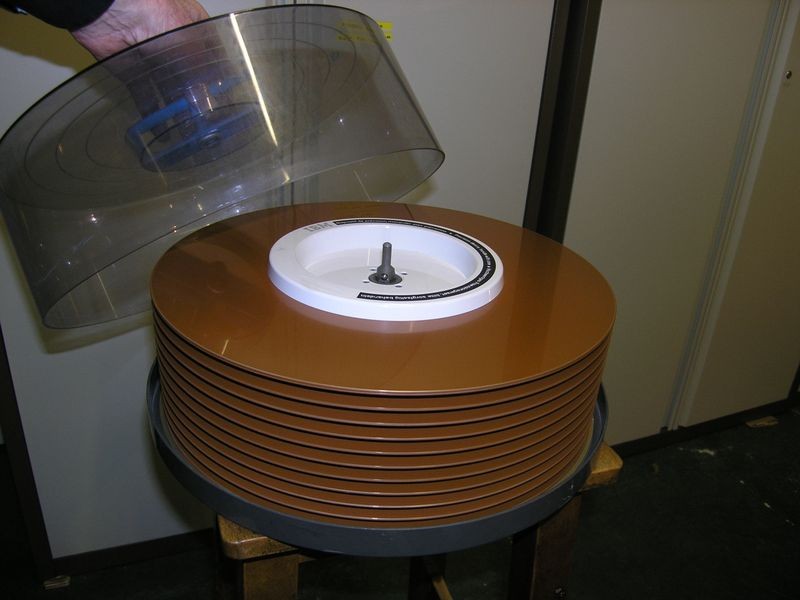
[0]: http://images.computerhistory.org/storageengine/1966_Ferrite...
And in ten years that iPhone has not changed much, except that the CPU/GPU rapidly caught up to current standards. The only other dealbreaker toward using it today is 3G support, and that's a 9 year old feature. If the iPhone 3G had the same relative performance to 2008 desktops as the current iPhone has to 2017 desktops, it would probably still be viable.
Maybe 10 years is a bit too high, but we're talking about high end phones here. I'd be surprised if the actual hardware wasn't acceptable 7 years down the line.
It was done via the desktop application to manage the phone.
However one would ususally only get bug fixes on the Series 30 and 40.
On Symbian towards the end of it, there were some OS updates still, but usually only once.
And Nokia was not alone, my Sony Ericsson C702 were capable of being getting new firmware OTA as well.
Keep in mind that this was back with the original iPhone that needed to be wired to a computer with iTunes installed.
Frankly the iPhone introduction feels more of a rollback than a upgrade from non-American point of view.
Belle already had lots of features that took Android and iPhone years to catch up with.
In particular when Nokia tried to introduce SIP support.
I'm pretty sure I got an actual update at least once.
Both Nokia and Sony Ericsson were doing OTA firmware updates at that point, for "featurephones" no less.
iPhone didn't get that ability until iOS5, in 2011.
Obviously, OEMs don't want this trend to continue.
they had Maemo, they had Symbian. But they were afraid that focusing on Maemo would lead to Symbian dying before they could get Maemo to the same level.
And then boardroom meddling was added, and they went much the same way as HP...