NTSB ‘unhappy’ with Tesla release of investigative information in fatal crash(washingtonpost.com) |
NTSB ‘unhappy’ with Tesla release of investigative information in fatal crash(washingtonpost.com) |
It is considered very bad form for any designated parties[0] participating to talk to the media other than with NTSB approval. Non-essential organizations like union representatives have been booted from investigations for talking to the media.
[0] https://www.ntsb.gov/investigations/process/Pages/default.as... (scroll down to "The Party System")
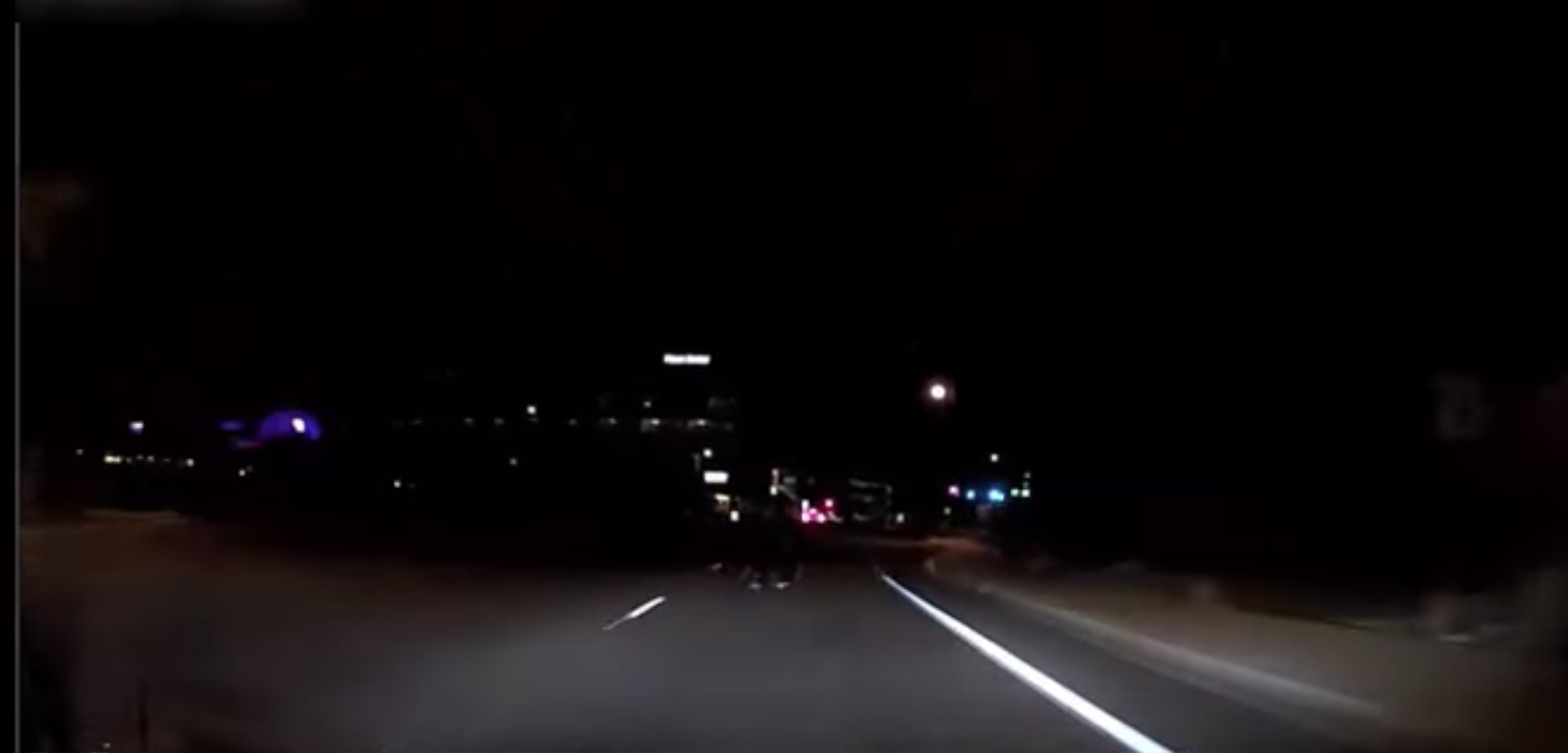
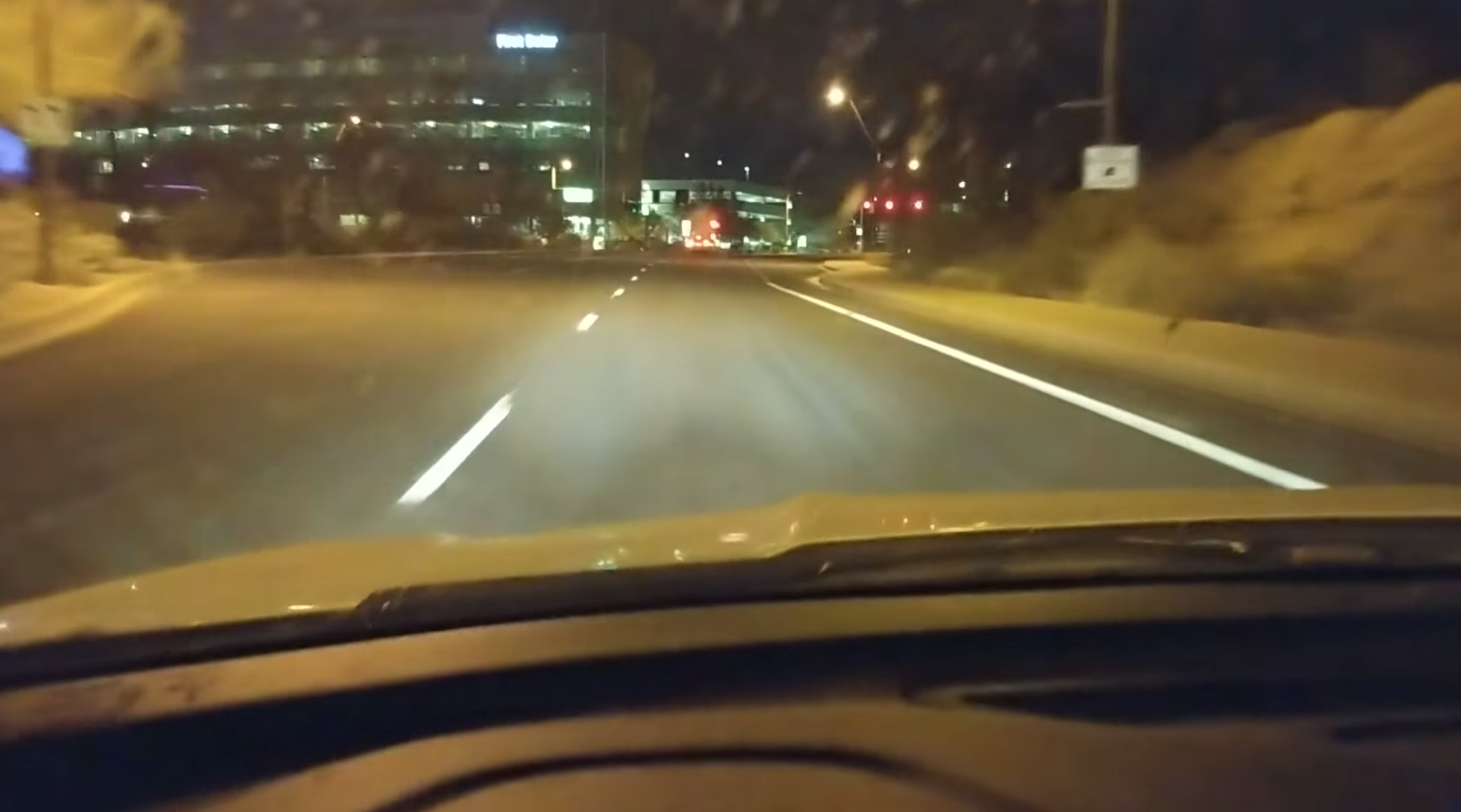
Then there is the question of whether the Uber-supplied video accurately represents the lighting conditions at the time... This may seem unduly conspiratorial, but I gave both Uber and the Tempe administration the benefit of the doubt until it became clear that the initial reports were innaccurate and less complete than they could have been.
It's reasonable to assume it's to keep Uber happy.
edit: can someone explain what’s so wrong with this comment please?
This is completely irrelevant to the crash. Anyone who uses autopilot knows that throughout the drive even if you have two hands but don't apply enough pressure on the wheel, you will get a warning and you have to jiggle the wheel for it to recognize you're there.
Even if the sensors were correct, I have deep questions about the human ability to follow instructions requiring them to be robot-like. I would love to see some studies measuring the extent to which people can really follow Tesla's guidelines to the letter for the 300-500 hours/year that somebody with this commute would be doing.
I'm sure I'm an outlier, but I would personally never use a system like Tesla's Autopilot. I already think highway driving is slightly too boring to hold my attention, so on long drives I always supplement with podcasts and audiobooks. Until I can lie down and take a nap, I'm sticking with manual driving.
>Participants emphasized being alert at all times, paying attention to the road environment and keeping hands on the wheel while in autonomous driving mode.
...
> Drivers seem to enjoy these technologies, and are aware of the limitations of Autopilot and Summon. In the comments, we observed that drivers were highly motivated to use these technologies safely and have not seen indications of the concerns raised in the past such as engaging with secondary tasks while using Autopilot.
It seems the local government or highway agency also neglected their duty to maintain the highway safety barrier, a shockingly regular occurrence where I live as well. I’ve wondered how often someone is injured because they failed to repair a barrier for several months.
It appears all the pieces fell into place at the right time and this man unfortunately lost his life.
While the crash attenuators should exist and the various responsible authorities should maintain them appropriately, I find it frustrating that this is brought up in this conversation as if it's a significant factor. It might have saved this man's life, but this crash was sure to be incredibly violent with or without the barrier.
The existence of a crash attenuator could not and should not affect anyone's decision making that led to the car impacting the barrier. Not the driver, not Tesla, not autopilot.
I hope the NTSB comments on this and it leads to Caltrans doing a better job of replacing these quickly (if they haven't already committed to this in the aftermath of this incident), but I also hope that it has zero bearing on the rest of the report.
Obviously the crash should’ve been avoided, but poorly maintained or designed infrastructure should not be left out of the conversation.
Why don’t they do this, like in other well-planned places:
Inattentive drivers more than overconfident drivers. You look down and stare at your phone for 10 seconds in a normal car and you are punished pretty quickly and learn not to do it.
You look down and start at your phone for 10 seconds in a Tesla with AP and "nothing bad happens" ... almost all of the time.
And that's the problem with this version of AP. Yes, Tesla says keep your eyes on the road. Yes, Tesla says keep your hands on the wheel. But it's pretty easy to get lax and start to slide.
For the record, I think her use is the one valid use. She has RSI issues with her hands and arms and she does a good bit of expressway driving. She absolutely keeps her eyes on the road and hands near the wheel when using it. But I bet she's in the minority of regular Tesla AP users.
Asking drivers to keep their eyes on the road and hands on the wheel while not steering guarantees that their attention will wander, because their brain isn’t getting enough stimulus to keep focused on the task.
I don’t know why it’s not clear to most people by now. The current Tesla ‘autopilot’ is simply more dangerous than manual driving because it harms human reaction time during emergencies.
Tesla is using legalese to blame people for this fully predictable effect when crashes do happen, but I suspect it’s only a matter of time before they’re forced to rebrand Autopilot as a lane assist technology which is all it is. Its only use as a safety system is to maintain control of the car is the driver becomes incapacitated, and safely bring it to a complete stop.
https://www.carcomplaints.com/news/2018/insurance-company-su...
The insurance company says that despite its suggestive name and marketing campaign, "Tesla produced a semi-autonomous vehicle that misleadingly appeared to be fully autonomous."
In addition, the lawsuit claims Tesla advertised the package as providing a way to “automatically steer down the highway, change lanes, and adjust speed in response to traffic," all without requiring the driver to touch the steering wheel.
(EDIT: This is why the NTSB is mad, Tesla is selectively releasing information like this, so they look good before the NTSB reaches any conclusion)
This is widely understood in the aviation community. The mission of the NTSB is not to assist with either litigation or PR.
"Contacts with news media concerning the investigation will be made only by the NTSB, through the Board Member if on-scene, the NTSB’s representative of its Office of Public Affairs, or the IIC. The guiding policy is that the NTSB is a public agency engaged in the public’s business and supported by public funds. The agency’s work is open for public review, and the Act under which it operates makes this mandatory. The NTSB believes that periodic factual briefings to the news media are a normal part of its investigation and that, for the public to perceive the investigation as credible, the investigation should speak with one voice, that being the independent agency conducting the investigation. Therefore, the NTSB insists that it be the sole source of public information regarding the progress of an accident investigation. Parties are encouraged to refer media inquiries to the NTSB’s Office of Public Affairs. In any case, release to the media of investigative information at any time is grounds for removal as a party."
[1] https://www.ntsb.gov/legal/Documents/NTSB_Investigation_Part...
If they are not a party to the investigation, I'd question why not. When was the last time an aircraft manufacturer declined to be a party to the investigation? They recognise that if they get a reputation for being unsafe that has repercussions for future sales; I'd hope the same was true of car manufacturers!
To me, there's literally no way this makes Tesla look good.
Tesla has an ethical and fiduciary duty to carry out their own independent investigation, to the extent that it doesn't interfere with the NTSB's. These organizations do not have the same interests. They don't have to be adversaries, but it's inappropriate for them to be partners. The public is better served by multiple independent investigations.
Tesla is also clearly trying to control the narrative, and I think NTSB's usual MO is that there simply be as little narrative as possible until something as close to ground truth be determined and released. NTSB understands that releasing reports into a pre-charged environment leads to increased risk of backlask against NTSB, thus reducing its capacity to minimize future risk.
The NTSB doesn't like to speculate. They like to have solid facts, and they want the manufacturer to take blame if need be, so they can fix things.
I, for one, would be generally dubious about making such a strong statement against something the NTSB has stated: it may well be the case that the system as designed should work as you describe, but why do they believe otherwise? Was there some flaw in the system?
False negative seems likely. False positive seems unlikely, maybe nearly impossible.
"We conducted an online survey with 162 Tesla Owners. The survey was distributed through online forums and social media during April-May 2016. The survey asked questions about drivers’ attitudes towards and experiences with two functionalities built into Tesla Model S cars: Autopilot and Summon. Questions covered frequency of use, satisfaction, ease of learning and knowledge related to Autopilot and Summon. Additionally, we asked participants to report unusual or unexpected behaviors they experienced while using these systems and what they consider a key aspect of safety. The average time to complete the survey was 9.6 minutes."
From my experience, it's no different from your run-of-the-mill cruise control systems requiring, but not enforcing, that you keep your foot hovering above the brake pedal. I don't feel it's more dangerous than standard cruise control systems.
Completely agree! When I'm driving her Tesla (no RSI issues here) I much prefer to use the adaptive cruise (which is really nice) and do my own steering for exactly the reason you cite. I have to pay attention anyway and steering keeps me from getting bored. Plus I do things like, you know, pass and keep myself from getting into bad situations that are many seconds ahead.
I only use AP to demonstrate it as a party trick to folks who have not seen it before. I half agree with the "use crowd sourcing to get AP training sets" but I completely disagree with how the thing is currently marketed -- even if (as you say) the legalese tries to cover Tesla.
Don't get me wrong: Her Model S is a spectacular car. I love it. But AP is somewhere between a party trick and a death trap unless, like my wife, you have serious problems holding the wheel for hours and are therefore happy to sit there and "supervise" what is a bad expressway autopilot.
1: The handover latency (time from AP requesting handover to time pilot takes over) is measured in seconds to tens of seconds. AP is designed to give up a long time before any possible issues occur. Contrast this with cars on roads where the reaction times need to be in the sub-second range to avert crashes. If AP took a plane into terrain during poor visibility conditions and the pilots only got a second or two of terrain warning prior to a crash, such a crash would never be classified as pilot error on those grounds. Contrast this with self-driving cars where the autonomy frequently doesn't give up at all and the driver's awareness of the situation is the only thing to save them.
2: There are two operators on controls at all times. Recognising the limitations of human attention spans is one of but not the only reason for this being a requirement in civilian airlines.
Boeing has a whole design philosophy about making the operations of AP completely transparent to the pilots and failsafe. That means that all key controls (thrust, trim, stick, etc.) in the cockpit are physically manipulated by the AP so the pilots can see exactly what's going on. and more importantly that the controls represent the exact state of AP when the pilot takes over, so there are no unexpected sudden changes in input. The current generation of self-driving cars is a joke compared to the safety engineering that goes into AP systems.
Even so, it's been implicated in crashes, notably Air France 447.
* pilots have thousands of hours of training/practice
* there are 2 of them
* there is a lot less traffic in the sky / not making a turn every km
This is in HCI 101; we learned this by air traffic controllers crashing planes.
There is space between being an adversary and being a partner in the investigation.
> Root causes of crashes must be investigated and published so that Tesla and their competitors can improve safety of their cars.
Yes, and two independent such investigations are better than one. With less opportunity for the subject to steer the result.
https://www.ntsb.gov/investigations/AccidentReports/Pages/Ac...
The notion that they'd suddenly turn secretive now seems absurd to me. Given their expertise and excellent track record, I think it's reasonable to trust them when they say they want to completed the investigation and publish a proper report, just like they do with other accidents.
That one is a form of bias whereas the other is the opposite of bias: you don't want elements of an ongoing inquest to be released independently because they don't provide a complete picture of the investigative results, and thus provide a biased outlook on the event.
> I see those things as part of each other, as in institutional secrecy is bred from ongoing inquests in perpetuity.
NTSB inquests have never been "ongoing in perpetuity". They provide thorough and extensive public reports.
Their entire purpose is to minimise future risk and they're very good at that. The point of discretion until all the facts are in (what you insultingly call "institutional secrecy") is that until as much as possible is known, there may be a major piece missing from the data which changes everything.
Because A.R.S says that pedestrians have a duty to yield outside of crosswalks and they normally make the police's accident report available shortly after any accident.
I know because I was over there not very long ago trying to get one for someone else. It's just off of Mill Ave., not very far south of where this accident happened.
Regardless, it is normal to wait until an investigation is complete before you start making statements. Making premature statements actually makes the results of any investigation look suspect. Pretty dumb move.
Oh, and even if the woman is at fault that does not mean it is open season on pedestrians that happen to end up on the road.
And I think a lot of people here don't have much experience driving these roads at night. More lights don't really help, there are too many lights on some level, you can see stoplights and such a good mile away, and pedestrians are moving shadows at night.
I had to train myself to notice them more after some weird experiences like the strange, uncoordinated bicyclist driving circles in the middle of a road for no reason in the middle of the night.
I'm sure there are things Uber and the safety driver could've done better, but I fully believe they really didn't notice them. That's right near an overpass and moving between lit and shadowed places also screws with your vision.
And FWIW, I've driven extensively here at night and I know that stretch of Mill Ave. rather well. I used to drive from Mill Ave to Van Buran, going through Papago park.
If there is a concern that the original data collected might be doctored... then this is valid, but also should be the focus of tests and legislation.
Ie,
  - Currently, speedometers are legally required to be within a certain tolerance and calibrated.
  - VW Diesel scandal, was discovered and hurt the manufacturer badly.
(That said, I think this is pre-optimising and using blockchain for this today is overkill... but long term, I could very much see this being a valid use-case)
If the car was able to know what’s the right thing to do, it would not only put it into the logs but it would have prevented the crash by doing it(unless of course, Musk is a contract killer and the cars ar crashing intentionnaly with correctly pre-doctored logs).
That’s why I suggested to use a blockchain - to ensure that the logs are not modified post-mortem.
Why can't they apply that to digital signatures with timestamps? This is a solved problem for years. You could use the NSTB as a timestamping authority.
You're just an internet person triggered by a question, really unpleasant attitude btw. Very closed even to considering an exotic solution and angry as if I'm implementing the blockchain at this very moment, are you in your 50s by any chance? Or maybe personal problems or no sex for a prolonged period or something like that? Why Are you acting like such an unpleasant and rude person?
Nobody here is actually interested in the case because of the implications for roadside maintenance - they're interested because it's a (semi) autonomous vehicle.
Most users will say it's fine, of course. And, as here, Tesla will certainly use it to quickly blame the driver in an accident. But I'd like to see objective measures of attention compared over the long term.
A tape repeating "put your hands back on the instruments" can only buy you that much safety.
The difference between the Uber dash cam [1] and the one posted to youtube is stark [2]. It's certainly darker where she comes from but no where near impossible. Source the ArsTechnica article [3]
[0] https://youtu.be/CRW0q8i3u6E?t=32
[1] https://cdn.arstechnica.net/wp-content/uploads/2018/03/Scree...
[2] https://cdn.arstechnica.net/wp-content/uploads/2018/03/kaufm...
[3] https://arstechnica.com/cars/2018/03/police-chief-said-uber-...
Why would that matter? The issue here is that the LIDAR system failed to detect the pedestrian.
If the average observer watching the published video arrives at a conclusion of "well I would have hit that person too, she appeared out of nowhere in front of the car", it obviously matters.
Are not a party to the investigation -- motives questioned, discovering facts takes longer or impossible
Are a party to the investigation and information can only be released by NTSB -- share price gets hammered every time there's a crash and everyone else gets a chance to put out information
I'm inclined to lead towards "special circumstances" here. Does every Ford crash make national news?
Instituting a more responsible testing program would both signal that they are dealing with the matter and also reduce the possibility of further deaths.
> Does every Ford crash make national news?
Those that indicate a major screw-up do, such as the Explorer rollovers (or Chevvy's ignition switch issue, for that matter).
I don't think the NTSB would be upset if the statements about these autonomous-vehicle accidents were purely factual, relevant and without self-serving commentary and innuendo.
A Chevy engine turns out to have a design flaw, investors say "Yes, but Ford produces and sells tons of engines, so here's how much we think fixing it will cost."
It seems like the recent Uber / Tesla self-driving impact is more of the form of "Gee, maybe this isn't even possible."
If the V-22 Osprey tiltrotor were the only aircraft Boeing made... then I'd say it would be a more similar analogy.
Crash investigations tend to have conclusions like "A happened, and that would have been survivable except that B also happened, and the pilots were distracted dealing with A while B was the more serious problem." There's a whole field of "cockpit resource management" which deals with such issues.
The NTSB's job is not to assign blame. It's to understand exactly what happened and figure out how to keep it from happening again.
This crash is somewhat similar to the four other Tesla crashes where a stationary obstacle was partially obstructing the left edge of a lane. We know that Teslas will plow into such obstructions. Here's the area of 101 leading up to the crash.[1] Note the width of the space between the lines marking the gore area, the pointy section as the exit lane tapers off. It becomes a full lane wide, and widens very slowly. It's possible that the lane following system locked into the gore area as a lane, and followed it right into the barrier.
CALTRANS standards call for a sign in the gore area.[2] But drivers keep hitting them. Replacing them is dangerous work, because there's live traffic and not enough room for a block vehicle. Especially here, because this is a left exit designed for high speed. So one of the options is to put the sign overhead, well ahead of the split. That's what CALTRANS did here. Tesla's system, of course, does not understand such a sign.
Federal standards recommend striping in the gore area.[3] But CALTRANS does not usually do that. Probably because standard truck-mounted lane striping sprayers can't do it without shutting down the freeway.
I look forward to seeing NTSB's take on all this.
[1] https://www.google.com/maps/@37.4107387,-122.0752862,3a,75y,... [2] http://www.dot.ca.gov/trafficops/tcd/exit-gore.html [3] http://www.fdot.gov/roadway/ds/06/idx/17345.pdf
But if it is prioritizing "I'm in a lane, so I'm cool" over "I'm hurtling toward a wall with a very visible marker" then clearly more work needs to be done. (Worse still if it can't recognize such a visible obstruction in the lane.) And, I'd say, should have been done before they were turning people loose with it.
Note that as a part of the responsibility for a 2 ton piece of steel you get the expectation that you will do your best to keep the other traffic participants alive even when they break the rules, especially when they are more vulnerable than you are.
It was a horrific accident and there's pretty much always something someone could have done better, but as far as traffic laws go, it was her responsibility to make sure it was safe to cross. I get that you disagree with that and I can see where you're coming from, but the law says the duty was on her side.
Uber could, and should, do better than this. I believe the NTSB can (and should) demand that of them and everyone else, in fact. But the cops don't even enter into that. They're pretty much just going to figure out which traffic laws were broken and who had right of way.
There's a fair point that maybe they should be able to, I don't know, inspect the LIDAR sensors or something, but I don't think anything like that will be practical for at least a decade or two. To my knowledge, that should be up to the NTSB for now.
In lots of places a sobriety/drug test is mandatory after an accident with severe injuries or fatalities.
And if the driver were to be found not to have braked at all - or even to accelerate - the driver could very well lose their license. Even when you have the right of way you still have to behave like a responsible driver would.
If inspecting the full digital record by the police is not feasible then I would argue self driving cars have no business being on the road at all. After all, we require normal drivers to be witnesses to accidents as well, and we expect them to cooperate in tests to determine whether or not they were able to control their vehicle, especially in fatal accidents.
In this case one of the participants is dead and the other one is silicon so the only evidence taken is the same as if all participants had died and that's not true, at least one of them had a lot of evidence to give, and given the novel nature of the incident there was a very good reason to actually evaluate that evidence.
Being 'automated' should not be an automatic get-out-of-jail card with respect to your liability and your proven ability to control a vehicle, at least the same standards that apply to regular drivers should apply to automation.
I think the problem people have here is that this was treated exactly like a normal accident and maybe they shouldn't have. But we have the NTSB to examine the engineering of the car, that's not something the cops are equipped to do.
The police did their check and released their report once it was done, which is a very standard practice. It can't have taken them that long--the police station where you get accident reports is on the other side of the Mill Ave. bridge from the accident.