U.S. Launches Criminal Probe into Bitcoin Price Manipulation(bloomberg.com) |
U.S. Launches Criminal Probe into Bitcoin Price Manipulation(bloomberg.com) |
See this chart: https://i.imgur.com/Uo07d1d.jpg
More details here:
https://medium.com/cryptomedication/uncovering-the-real-cart...
https://medium.com/@bitfinexed/latest
https://medium.com/@mattcollburner/bitmex-insiders-caught-in...
https://www.tradingview.com/chart/?symbol=POLONIEX:USDTUSD
>they've created 2.8 BILLION USDT
Absolute numbers are meaningless and less eye catching when they're compared to the entire market. 2.8 ~~Billion~~ USDT is only 0.5%-0.8% of the market. Do you really think that a 300-500 billion dollar market is being propped up by less than pennies on the dollar?
What can be said about Tether: it's a trusted third party that's vulnerable to fractional reserve (like all other exchanges). I wouldn't recommend people use it but to point to the tether creation as proof positive of manipulation rather than discussion fractional reserve issues I think is people confusing lurid facts with silent evidence threats.
Other reading: https://medium.com/crypto-punks/tether-misconceptions-298443...
So they issue 11million unbacked USDT and use it to buy bitcoin. They sell the bitcoin for 10million USD on one of the exchanges that allows bitcoin to hard currency exchange. The 10% loss is because you have to pay a premium to exchange bitcoin to real currency. Bitfinex then pays the 10million USD to the customer in exchange for the 10million USDT which is retired.
The net results are 1million new unbacked USDT have been printed, and the illusion that USDT is backed by USD has been maintained.
Possibly the "Bitfinex issues unbacked USDT to buy bitcoin" step is being done not based purely on customer demand, but on a periodic basis when bitcoin price is falling.
Maybe Bitfinex has a hope to preserve their fraud by propping up bitcoin, or to dig out from under the fraud by building a big long bitcoin position and hoping it will rise in value.
Or maybe the timing of USDT issues with market drops is just that bitcoin price falls when there are more sellers than buyers, which is the same time there are more USDT redemptions. So to carry out the mechanics above, Bitfinex has to print tether to fund the redemptions at the time of the drops.
This is false. Market cap is a meaningless statistic when applied to cryptocurrencies. If I create a billion 'FOOCoins' and sell one to a friend for $1, FOOCoin now has a 1 billion market cap, but only a single dollar has changed hands. He sells it back to me for $2, now FOOCoin has a cap of $2 billion! With only $3 having changed hands.
This is clearly an exaggerated scenario, but it does show that the market price multiplied by the number of coins is not meaningful.
> Do you really think that a 300-500 billion dollar market is being propped up by less than pennies on the dollar?
I don't think it's a 300-500 billion dollar market.
In fact the article you linked to goes on to explain this very phenomenon! That in fact it's possible that only around $6 billion in inflow has gone into cryptocurrencies, ever. This puts tether at around 1/3 of the entire inflow. Is that still trivial?
It makes the point that it is in fact possible to influence the market with pennies on the dollar.
Remember that market cap is meaningless while no matter how USDT were created(backed or not) those represent at least some fiat inflows.
My personal opinion: Tether initially had some USD backing maybe not 100%. Now, I'd be surprised if Tether has backing in excess of 10%.
That is still enough to control Tether if you have issuing authority and can limit redemptions for fiat.
In fact Bitfinex/Tether has done exactly that. You would be hard pressed to redeem Tether for dollars.
What? Isn't the entire friggin point of Tether that it's _not_ a fractional reserve system?
From their own FAQ (emphasis mine):
> All tethers are pegged at one-to-one with matching fiat currency (e.g., 1 USD₮ = 1 USD) and are backed 100% by actual assets in our reserve account.
It doesn't mean that you have assets that all total up to be a fraction of your liabilities. You're severely misunderstanding what fractional reserve means.
So, has it _psychologically_ managed to create price stability? So long as there isn't a giant run on the currency where they actually did run out of the necessary US Dollars (as well as insufficient people stepping in willing to pay $1 for 1 USDT), does it actually matter whether or not they have fully collateralized the currency?
I find that to be sorta interesting.
Is Tether a bank? Does it invest its reserves? If you answered no to either of those questions, then you have no business comparing it to a fractional reserve banking system.
https://omniexplorer.info/address/3MbYQMMmSkC3AgWkj9FMo5LsPT...
Who bought all these USDT? Who is holding them? Why would you hold them?
And one reason they might hold them is because they can't figure out how to exchange them for USD.
I mean, I'm sure there must be some people who bought USDT when that was their intention, but there are also a bunch who bought it by accident.
Further, there is more proof that Tether has the funding to back up the USDT than proof that Tether does not have the funds:
https://blog.bitmex.com/tether/
https://blog.bitmex.com/tether-addendum-new-financial-data-r...
Reddit memes, medium posts with no research, and "correlation implies causation" assumptions does not make rumours true.
> Our reserve holdings are published daily and subject to frequent professional audits. All tethers in circulation always match our reserves.
They've been around for years and the grand total of independents audits is 0 (zero).
Sure, assumptions don't make rumors true but them flat-out lying about audits and transparency speaks louder than anything else and we're not even getting into how it took the Panama papers leak for the public to find out that several of the people in charge of Tether and the people in charge of Bitfinex being the same.
There is no way Bitfinex has $2.2 billion in bank accounts. If a bank handles U.S. dollars, they are under U.S. jurisdiction. Bitfinex cannot show who own Tether; that makes beneficial ownership tracing, rules surrounding which became stronger twelve days ago, impossible.
Had they picked any other currency, the claim could have been plausible. But $2.2 billion in anonymously digital U.S. dollars? (Physical cash, too, might have been plausible.) Not likely.
Why creating Tethers from thin air is now a cause of concern? That's a coin just like every coin out there, like Tron, Verge, EOS, they're created from nothing by a program, they have the value the market decides it has and the creator has all the right to print all the coins they want just like everybody else.
And the market has decided USDT has more value than all other coins combined as it is number two in volume just behind BTC.
People use USDT as a safe harbor when markets collapse, it has its use, a very valuable use. Of course they will print trillions if they could, everybody would print trillions of their shitty coins and cash out tanking the market if they could, that's the nature of cryptocurrencies.
I fail to see why people complain about Tether (highly valuable) and not about the rest of the scam coins that are draining the market from stupid money.
If you are claiming they are backed by USD, and you are creating them out of thin air, then that's a scam.
Other coins are only valued based on how the market values them. There is no fraud there; you are not claiming that you will redeem them for something else, they just represent themselves and are valued based on how useful people find that particular kind of cryptocurrency, plus hype.
MtGox was also a scam by the end, since they were trading on their exchange bitcoins and USD that they didn't actually have for people to cash out.
This only works as long as people selling Bitcoin have been happy to accept Tether instead of USD, which (inexplicably to me) they have been doing. If Tether is proven to be backed by nothing at all, then there could be a serious crash as people try to get real money out and dump Tether. Your bitcoin being worth 7350 USDT isn't very exciting if your USDT are worth 0 USD.
No, that just means that there's more of them.
Why isn't there a better source for this than "four people"? I didn't see anything on the DOJ site. Perhaps they are talking about this: https://www.cftc.gov/PressRoom/PressReleases/7731-18
However, that doesn't mention the DOJ so maybe not. Is it normal for the DOJ to anonymously report its activities to journalists like this?
People seem to think that coins are 'clean' after tumbling, but I think its much more likely that you'll get back more suspicious coins: superlatively, "Here's my personal-use drug bitcoin, give me coins that were earned by assassinating someone"
The USDT situation will get interesting eventually. Somebody made a spreadsheet of non-fiat volume of cryptocurrencies.
https://docs.google.com/spreadsheets/d/1pIrTYpJZrGbeI9QTIWGw...
Basically the fate of many shitcoins are tied together. My thought is that when USDT finally gets revealed as totally fraudulent the whole crypto house of cards crashes.
EDIT:
Also, the number of people to whom btc is attractive is less important than the type of people. It may be that there is never mass adoption of Bitcoin - it is also the case that throughout history most people never had any money at all. And even though most people never had any money, sound money has been extremely valuable nonetheless because most people don't know what to do with money anyway.
Also I imagine that major exchanges could get discounts on volume USDT purchases - this would allow them to paper over their own cash shortfalls in exchange for lending legitimacy to the scheme.
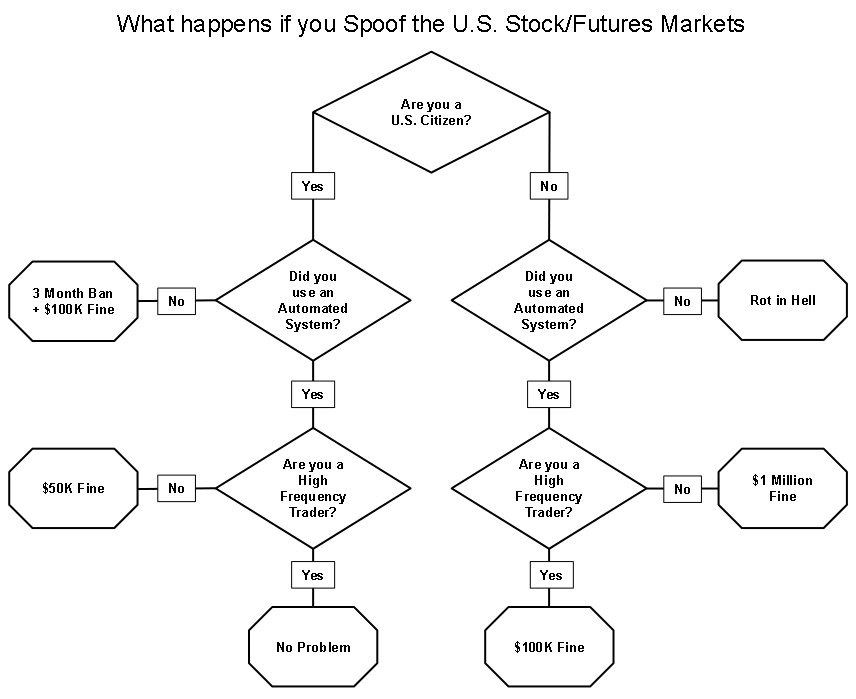
From what I understand, things like spoofing in financial markets (where you submit orders which you don't plan to have filled for the purpose that the market sees "interest" in a certain direction and in hope that moves the market), are regulated but still a grey area. The reason for this is that it's an activity that involves intent. Placing certain orders is perfectly ok if you're hoping that they get filled and you take a position, but placing the same orders could be spoofing if your goal is to cancel them once the market starts moving as a consequence.
So this is all strange to me.
Also they have been calling bitcoins death since about 2009 when it was created so I would not put too much faith in those predictions. If anything this sort of thing could help bitcoin, either price manipulation is identified, the culprits prosecuted and bitcoin goes on as it is. Or no manipulation (or not significant manipulation) is identified and bitcoin carries on as it is but with a govt. seal of approval (up to that point).
They could still be right, given time. They've been right for Bitcoin Gold, for example. They were right when MtGox crashed.
Is the problem that people may be trying to manipulate the price of decentralized commodity or that people are investing in a decentralized commodity without realizing that there may be people trying to manipulate it? I think there is a place for 'hard regulations' but I think there is also a time when the focus should be more on information than trying to enforce national rules on a global scale. Even more so when those rules are likely to fall subject to all the failings of political systems including graft, corruption, and the like.
Because they're leaking. "Four people" is how a media organization says "it's not just one whackjob making shit up".
> I didn't see anything on the DOJ site.
Why would you? They don't appear to have publicly announced anything yet.
> Is it normal for the DOJ to anonymously report its activities to journalists like this?
It's normal for people at the DOJ to do so, yes. Some leaks are done on a semi-official basis (https://boingboing.net/2017/02/22/the-leaky-leviathan.html), others are just individuals doing it on their own.
The same reason that (except for actual indictments and subsequent court filings, and the extraordinary fact of the appointment of a special prosecutor) we get most—often later confirmed as accurate—info on the Mueller probe through similar sources outside DoJ: the DoJ doesn't leak much but a criminal investigation naturally touches people outside the DoJ that are less prone to avoiding leaking. Those can be people in the agency giving a criminal referral, which this reporting suggests would likely have come from the CFTC, or they can be people connected with witnesses (including, but not limited to, those who have been given notice indicating that they are subjects or targets of the investigation.)
decentralized commodity
https://news.earn.com/quantifying-decentralization-e39db233c...
It looks like this is how smaller currencies die, they are vulnerable at any time to 51% attacks thus no one wants to use them. At least in the traditional banking system if you had a lot of money you could manipulate exchange rates, but you couldn't just outright steal when you had extreme market power.
For instance imagine we had a mine that was effectively infinitely large (for the sake of the analogy). If we allowed absolutely anybody with a pickaxe to to come in and mine it, we might call it decentralized. Nobody would own the mine. That one group sent a million miners to go mine it would not suddenly make them owners, even if they happened to receive the largest benefit from the it. By contrast centralization would be when one individual or group forcefully stops, generally with government support, any other individual from mining in "their" mine. In this case they would indeed own the mine. In the case of Bitcoin there is absolutely and literally nothing stopping from somebody from starting up a mass mining farm becoming the new plurality beneficiary.
You're absolutely right by the way, libor rates have been rigged for decades and governments simply "fine" companies doing it. A simple google search will bring up sources for this claim.
I've always thought of Tether as the loose cryptocurrency equivalent of a eurodollar[1] facility. If the eurodollar was Bitfinex's original inspiration, then Bitfinex probably thought that keeping their USD deposits (which allegedly back Tethers 1:1) in custody of foreign banks (i.e. non-US domiciled banks) would place them outside of US jurisdiction.
And the alleged fraud is that they're creating USDT out of thin air, and spending them to buy BTC, in order to manipulate the price of Bitcoin upward. If you're a Bitcoin bull, then that's almost a selling point. I don't think any of this ends well, but I see the short-term appeal.
People don't appreciate how slowly government works, especially on financial crimes. Liberty Reserve was blatantly illegal and technically simple, without even the blockchain fig leaf. It operated openly for seven years. Then the government arrested the founder, and sentenced him to twenty years in prison.
Media organizations get pretty good at distinguishing between rumor and leak. Any major one will have all sorts of policies on how a story gets verified, and they tend to work. Mistakes do get made, as with anything involving humans.
> What reason do we have to believe these four people?
The media organization involved deems them credible enough to use as sources. It's left mostly up to you whether you trust that media organization.
> I guess it is the reputation of the journalist on the line if the rumors turn out to be false.
Yes, essentially (and their editors, and the publication, and the media as a whole...). This is why reporters cultivate sources, vet their information, keep track over time of their reliability, and generally require multiple independent sources if those sources are leaking anonymously.
I mean I don't understand the cognitive dissonance here. In nearly every action our government carries out we can see the behind the scenes motivations which tend to be appeal to special interests. And here you are straight faced arguing that because quantitative easing is done by government (and financial markets) it's somehow above the notion of quick wins and personal gain. This is illogical.
This doesn't mean any alternative is better, but rather that trying to refute alternatives by appeals to authority is an even worse idea than it usually is. And it's usually already an awful idea!
Not to mention that, businesses going under means people without jobs. Lots of businesses going under at the same time means lots of people without jobs, and fewer companies able to take them on. That's a bad thing, no matter how you slice it.
Traditional cloud platform providers are also in a position to impact mining on those. I doubt that any coin could cope with those warehouses of potential mining power.
I'm looking closely at monero on this subject. Despite or because of their hardcore emphasis on privacy, that project has made interesting decisions regarding how to deal with potentially hostile miners.
Disclaimer: Yep, you guessed it, I hold coins, and monero is among them. I'm not saying buy XMR, but definitely take a look at their "politics".
On top of that even if a cryptocurrency manages somehow to completely level the playing field when it comes to mining hardware you still have significant differences when it comes to cost of electricity. Bitmain will stop building ASICs and start building hydroelectric dams instead.
I can't see how you can imagine a future where cryptocurrencies are successful and it's still worthwhile for individuals to mine in their basements. There's always be economies of scale that'll favor the cartels.
Beyond that it might even be possible that PoW algorithms designed to run on general purpose CPUs can end up giving more power to the cartel than an ASIC optimized algorithm because in the latter case the network consensus can decide to hard fork and change the PoW algorithm, hurting immensely the ASIC vendors and their users. That gives leverage. Similarly a new cryptocurrency or minority fork can protect itself from a 51% attack by changing the PoW algorithm, making highly-optimized mining farms unable to attack the coin (Bitcoin Gold should probably have considered that).
Meanwhile if everybody uses general-purpose server farms to mine then they can easily be repurposed to attack any small coin, making sure that the coin they favor remains dominant.
Again with monero because it's pertinent to your point, I would encourage you to read up on its design goals, and the discussions around the recent PoW algo change on github or Reddit.
QE is just another tool for monetary policy designed to combat deflation and increase available capital supply as a stimulus measure. Because QE belongs to the school of thought that the economy is driven by consumer spending as opposed to consumer savings.
Could you please elaborate on what you mean by: > steal money from the public with QE ?
Who is selling them BTC for USDT apart from a few daytraders? Where is the sink of 2.8 billion USDT?
One wonders whether the prolonged slump might lead to some sort of bursting of outfits like Tether/Bitfinex. It seems like a downward spiral of people selling BTC and Bitfinex doing the dance you described, and a bigger hole being created.
Only $1 has changed hands in this.
There's a lot of speculation that this sort of "wash trading" happens in Bitcoin - some exchanges permit buying/selling to yourself, which lets someone boost both price and volume trivially.
I also believe SV companies are lining up to IPO because of this blank check.
But also: A large percentage of any public companies' value can be decided by monetary policy, in the sense a companies value can be decided by inflation or deflation. Monetary policy is just an official term for central bank decisions to influence the supply of money and credit in an economy.
> When the inflated value leaves the stock market, it has an effect of deflating the value of the USD
If you're trying to argue that QE is bad because inflation is bad and people participate in profit taking, you'll need to get over that. What would you like to do? Ban the sale of stocks by persons over a certain net-worth?
> while creating market manipulation tools to coerce stock-driven companies
What, pray tell, are these tools? You know, besides creating mild inflation and some influence on interest rates?
Additionally, you seem to have forgotten that an explicit goal of QE is to lower interest rates, allowing everyone, not just the rich, easier access to capital in order to stimulate the economy. QE demonstratively does not solely redistribute more wealth to the wealthy.
Furthermore, your entire premise is shaky, considering the most prominent historical example (the US recession) mostly consisted of the Fed purchasing $4.5 trillion of mortgage-backed securities.
It's really not exactly "making money out of thin air" considering the Fed purchased securities pegged to a real good/service, mortgages.
Lastly, SV IPOs weren't exactly popular last year. Nor in 2016 or 2015.
In one day in Nov 2017 bitcoin went up 15% in early trading then was down 21% later in the day before rebounding to close near even.
Whether bitcoin will be some like long lasting actual useful thing remains to be seen, but one thing that is undeniable is that investing in bitcoin is extremely risky.
This hold true just focusing on the general market behavior alone while ignoring all the issues such as getting money into and out of exchanges and hacks.
I buy BTC w/ USD Bitfinex prints USDT Bitfinex uses USDT to get BTC
In the end of this operation bitfinex has the USD and everyone else is satisfied. Normally Bitfinex needs to hold onto it to settle USDT claims, but so long as there's a USDT-usable market this might not be necessary
Even if USDT is at 50 cents to the dollar it's still a license to print money
But it is not "now and then". It is 2.8 billion all the time! Maybe they are hold by different people at different times. Yet, they have to be held somewhere by someone all the time, who think that it is a good idea to have USDT instead of USD or BTC.
The math behind it equates to existing capital wealth being used to generate the supply which is amplified by several magnitude for the first users to show up and run the software. Future production costs increase, and the relative newly produced supply decreases.
Old users rely on the gullibility of new users to exchange real world value for these easy to produce database-tokens.
The tiny block size is arguably an ongoing 51% attack from an oligarchy that is in collusion. Again, depending on what you consider centralization having a tiny group that's in direct communication easily qualifies.
Pas: In your example if the only option is to use picks from one company or your hands because other tools are confiscated at the enterance then it's very centralized.
Rolling with the mine analogy, a 51% attack is equivalent our group that sent in a million miners changing the diamond mine into a 'glass' one. It becomes fake, and loses nearly all of its value and people move to the new 'real' mine. You do nothing except critically hurt yourself.
Forks don't help with 51% attacks as the attacker can continue to use their hardware on the fork. Further, you can use a proxy to hid the origin of a block, so Bitcoin would need to move to a new hash which would take a long time and prevent any obvious successor.
Take a freshly baked pie, and give half of it away for a suggested donation of $1 USD to the first 10 people who show up.
Now split the last half of the pie into smaller chunks and slowly give out bread crumbs to new "miners" with the requirement they spend large amounts of capital on exceedingly inefficient number guessing machines in order to win the lottery of "mining" more crumbs.
  Satoshi Nakamoto
  Thu Jan 8 14:27:40 EST 2009
  I made the proof-of-work difficulty ridiculously easy to
  start with, so for a little while in the beginning a
  typical PC will be able to generate coins in just a few
  hours. It'll get a lot harder when competition makes the
  automatic adjustment drive up the difficulty.

  first 4 years: 10,500,000 coins
  next 4 years: 5,250,000 coins
  next 4 years: 2,625,000 coins
  next 4 years: 1,312,500 coins
  In economics, the Gini coefficient is the standard measure
  of how inequitable a society is. This is tricky to
  determine for Bitcoin, as it's not quiet a "society" in
  the Gini sense, one person may have multiple addresses and
  many addresses have been used only once or a few times.
  (The commonly-cited figure of 0.88 is based on one small
  exchange in 2011.) However, a Citigroup analysis from
  early 2014 notes: "47 individuals hold about 30 percent,
  another 900 a further 20 percent, the next 10,000 about
  25% and another million about 20%"; and distribution
  "looks much like the distribution of wealth in North Korea
  and makes China's and even the US' wealth distribution
  look like that of a workers' paradise

  Dorit Ron and Adi Shamir found in a 2012 study that only
  22% of then-existing Bitcoins were in circulation at all,
  there were a total of 75 active users or businesses with
  any kind of volume, one (unidentified) user owned a
  quarter of all Bitcoins in existence, and one large owner
  was trying to hide their pile by moving it around in
  thousands of smaller transactions. (Shamir is one of the
  most renowned cryptographers in the world and the "S" in
  "RSA encryption")"
  Presale ICO / Premine ( max cost $0.50 USD per ETH  )
  = 72,009,990 ETH

  Total Supply today (Feb 23rd 2018)
   = 97,800,000 ETH

  Source:
https://etherscan.io/stat/supplyIf I were a narcotics undercover agent, I'd be working to become The Guy locally to trade Bitcoins with in this manner.
Have a partner snap a photo or follow them home to compile a list of people transacting like this.
Chances are good this is already happening in some cities.
And if your id is leaked in one transaction, it links your id to all other transactions done with that wallet.
It is one of the many reasons it makes a piss-poor store of value.
(Of course the answer to the spike could very well be “somebody fired up the tether printer” plus “super shady exchanges did tons of wash trading/oughright made up fake transactions”.
They wouldn't need to create new Tether during bull runs, because nobody cares about putting their money into Tether then.
The reason being, assuming tether is legitimate, for every printing they are sourcing additional USD to back the newly minted USDT. The idea they could so consistently find large investors willing to make NEW 100M+ investments while the crypto markets were in free fall is unlikely to say the least.
And it's not as if that's the only complaints about Tether. The fact Bitfinex and Tether has the same management; USDT pretty much acts as a proxy for Bitfinex to maneuver around banking laws; and that USDT supply pretty much grows monotonically are just a few of the other issues that suggest Tether is not legit.
BTC crashes inherently would create BTC -> USDT interest, sure, but not inherently create USD availability for backing new USDT.
Creation of legitimate USDT would mainly seem to happen when there is high USD -> BTC interest, because that is, in many cases, realized by USD -> USDT conversion (with, in principle, the USDT created at that time and the USD in reserve backing the new USDT) followed by USDT -> BTC exchange.
You might see new legitimate, large-scale USDT creation in a crash if, say, bargain-hunting new USD money is flowing into BTC, but the people exiting BTC and driving the price down are holding USDT without converting to USD.
> They wouldn't need to create new Tether during bull runs, because nobody cares about putting their money into Tether then.
Yes, they would, unless “bull runs” in the USDT-denominated BTC market are just money already held in USDT rushing back into BTC, rather than new USD flowing into the USDT/BTC market.
Heh. When a bitcoin exchange does it, it's a "scam". When a bank does it, it's "fractional reserve".
Bitfinex, on the other hand, is just outright insolvent.
1. For convenience, like if they're speculating in BTCUSD and their exchange uses Tether.
2. Deliberately, because they're breaking the law and they'd get caught if they tried to deposit their money in a regulated institution.
I doubt many people in the first category have thought much about the risks, or even know the difference between USD and USDT--if they had, then they'd probably use a different exchange. I'll bet there's a lot of them, though. I could imagine that people in the second category would consider the risk and still want USDT. A portfolio of half each BTC and USDT is probably less risky in some sense than all BTC. Even if the investment in USDT has negative alpha, it might improve your portfolio's Sharpe ratio, if the correlation between the risk that USDT collapses and the price of Bitcoin is small enough.
Cash on hand < Outstanding liabilities (Deposits)
Cash on hand + Investments > Outstanding liabilities (Deposits).
A ponzi scheme is where:
Cash on hand + Investments < Outstanding liabilities.
A fractional reserve bank doesn't have the cash to let 100% of its depositors withdraw their accounts tomorrow. It does have the assets to let 100% of its depositors withdraw their accounts once its investments mature, or if they are sold at market value.
A ponzi scheme can't do either of the above. It's a pure scam.
This line of thinking is what caused the 2008 crisis. The two metrics are interdependent. If a bank doesn't have liquidity, it can't make loans, which cant support the prices of the assets it owns which results in financial collapse.
Ponzi schemes are 'investment' promises that require ever growing layers of patsies to be recruited for each patsies' pay off to occur. Fractional Reserve is a practice where an institution leverages themselves by only keeping the expected liquidity needs in reserve and using the other capital for other means. Eventually they blowing up, when the market demands the apparent liquidity.
A ponzi scheme has to continue to grow or else it will collapse. Frantional reserve risks can perpetuate indefinitely until the liquidity is request:
StableCoin takes $100MM in USD deposits. Issues 100MM StableCoins. StableCo notices that it's 'never' had more than $10MM in USD of liquidity tapped. It decides "Hey we could make a stack of cash investing the remaining $90MM USD in XYZ" not until X years later does the fractional reserve issue arise as 'unforeseen circumstances' cause a liquidity demand of $15MM
Fractional Reserve is a practice where an institution leverages themselves by only keeping the expected liquidity needs in reserve and using the other capital for other means. Eventually they blowing up, when the market demands the apparent liquidity.
There are numerous different hashes with varying levels of ASIC 'resistance' - yeah it's a cat and mouse game, but hardly a major issue. The 'obvious' successor would be a matter of the unpredictable public as I'm certain numerous entities would vie to become e.g. Bitcoin 2.0. In the end the market would decide which was the winner. The great thing about it all being that the users could actually come out net winners in the end as the successors would likely not only be technical superior, but it would also be able to use the exact same ledger (as with Bitcoin cash for instance) so that you start with the same relative share in it as you did with the original.
In a way it would even be a good thing as Bitcoin itself is increasingly dated technologically, but is dominant because of its market positioning - which makes it difficult to change. If its market positioning was damaged, we could see the rise of an improved successor.
There is a world of difference between that and a Ponzi scheme. How many investors took a haircut from Madoff's little game, again?
“We confirm that the relationship with Friedman is dissolved. Given the excruciatingly detailed procedures Friedman was undertaking for the relatively simple balance sheet of Tether, it became clear that an audit would be unattainable in a reasonable time frame. As Tether is the first company in the space to undergo this process and pursue this level of transparency, there is no precedent set to guide the process nor any benchmark against which to measure its success.” - Tether spokesperson
See https://medium.com/@bitfinexed/bitfinex-and-tether-is-unaudi...
It is the most clear cut indicator that there is some super sketchy shit going on ever.
People seem to be willing to believe whatever they want despise clear signs they are wrong. Especially when there is the possibility of getting lambo-rich with Bitcoin....
Yes, there is something that they're hiding, but there is no evidence that this has anything to do with their 1:1 USD reserve being a bogus. It's far more likely they are encountering regulation problems given the regulation uncertainty surrounding crypto.
>People seem to be willing to believe whatever they want despise clear signs they are wrong.
Or perhaps I'm not willing to commit to conspiracy theories based on baseless speculations.
In fairness, I can kind of understand the bind: it seems that use-case of tethers depends on not being a legally enforceable claim to dollars, specifically so they can't legally be regulated as such (which would trigger reporting requirements, accreditation as a money transmitter, etc). But that's a double-edged sword: it also means that no (ethical) auditor will sign off on a statement saying they legally own the assets they claim to have.
An interesting fact is that all of the original RealCoin/Tether founders (Brock Pierce, Reeve Collins, Craig Sellars) are now associated with a pair of connected blockchain startups: BLOCKV[1] and vAtomic[2].
[2]: https://www.vatomic.io/ (this is, incidentally, another of vAtomic's founders, "accused of paying $2.5 million of bribes to two technology executives at the bank, so they would arrange $10.4 million of contracts to inflate his company’s revenue." https://www.reuters.com/article/us-servicemesh-cba-bribery/e...)
Huh? They did do audits https://tether.to/announcement-transparency-update/ and they don't say they must be as public or as comprehensive as the community demands.
> These consulting services do not constitute anaudit or attestation engagement
They're saying themselves that they weren't audited.
>Given the excruciatingly detailed procedures Friedman was undertaking for the relatively simple balance sheet of Tether, it became clear that an audit would be unattainable in a reasonable time frame. As Tether is the first company in the space to undergo this process and pursue this level of transparency, there is no precedent set to guide the process nor any benchmark against which to measure its success."
Is it because you don't trust the exchange to honor your USD withdrawal the next morning?
What makes you trust that Bitfinex is more likely to honor USDT to USD exchanges the next morning?
It's almost certain that USDT isn't actually backed 1:1 by USD. If it were, it would be trivially auditable. You're just moving yourself from one category of potential risk (Your exchange steals your USD), into a category of almost certain risk (The shoe drops and we discover that USDT was a scam all along.)
There's still a belief in some circles too that a crypto/crypto transaction isn't a taxable event, which isn't true anymore. Regardless, some either believe this or know it's not true but find it easier to tax-evade this way.
which isn't true anymore
This doesn't make sense.
You don't "convert" other cryptocurrencies to USDT, you sell your cryptocurrencies to people who have USDT. If there's a big sell pressure on the cryptocurrency, people want to move back to dollars, and there are not enough USD(T) then the price of the cryptocurrency should come down.
By adding more USDT to the picture you're magicking up money out of thin air to prop up a price. You're basically saying that when people want to sell cryptocurrency, dollars should be brought into existence to facilitate this at their preferred price.
I'm not saying that I'm a big Tether fan or anything. However to say that it "doesn't make sense" when they print more Tether during market crashes is false.
Why? It's worth exactly one dollar. Which they have in an account. That's the point. The price of the other cryptocurrency will come down, and the value of USDT compared to that cryptocurrency will indeed rise, as it should when people want to sell to a market where there's more demand on dollars than the asset.
> They are not "magicking" Dollars, they are magicking a commodity (USDT) pegged to Dollar.
But it's supposed to be pegged to the dollar by a real dollar backing. In the scenario you're describing, it's a floating asset not backed by anything, with a value maintained purely by supply manipulation, and being issued to prop up an asset price. The opposite of what it's supposed to be.
> However to say that it "doesn't make sense" when they print more Tether during market crashes is false.
It still doesn't. I mean, it makes sense from a "lets conjure up some money to prop up the price of BTC" angle, sure, but that's not the same as it making sense for something that's backed by cash on a 1:1 basis. Tether should only be issued when people give dollars to the tether foundation. That's the claim on their front page, and the basis of their peg.
In fact printing tether to ensure it's market value is $1 is a fine solution. Except for the fact that the bank accounts that BACK the tether with USD are now in deficit compared ot the UDST supply. So while the crypto market value of USDT is $1 it's no longer backed 1-1.
So now, if they're legit, tether must figure out a way to get the missing dollars back into the bank account. The most efficient way to do this is to find an outside investor and trade him all the newly printed USDT for USD. In practice this would be rather difficult to do consistently in sliding markets, difficult enough that the correlation would be low as I pointed out.
You could also exchange USDT for various COINS then sell the coins for USD which then go into those reserve bank accounts. If you have a willing exchange partner with lots of cash and a need for bitcoins then this could work pretty well. Considering Bitfnex is run by the same dudes as tether, if they are legit then this is probably what they are doing. But all that's just IF they are legit and there's plenty of things wrong with USDT outside of whether it's backed 1-1 with USD.
TLDR: Trading volume and market value of USDT does not relieve tether of actually having USD on hand for each Tether that exists.
Plus, Tether's offical website and documentation state that's not how Tether is intended, they claim it is always 1:1 backed by a real USD reserve in a bank account (which they tell people they will audit, but the auditor backed out after giving a statement that said Bitfinex would not provide the proper documentation and access, later erasing any mention of having been associated with Bitfinex.)
Illiquidity is a bad thing, not an generally an indicator that something is an especially good investment.
Also your tendency to define things in binary terms (liquid/illiquid, value/no value) is troubling.
Why the struggle to pretend not to be able to tell the difference between Bitcoin and limited edition comic books?
Take a look at their homepage.
"100% Backed
Every tether is always backed 1-to-1, by traditional currency held in our reserves. So 1 USD₮ is always equivalent to 1 USD."
Whether Tether's claim is actually true is at best unclear, of course.
I am 100%, absolutely, positively not saying 1:1 backing is required for a currency peg.
I am saying that in the case of tether, that is the explicit claim they are making about their cryptocurrency. They are claiming that each and every one is backed by a dollar in their account. This is their value proposition, this is what you are buying when you buy tether. An open, audited, 1:1 backed US dollar token * .
Please go and read their homepage if you have some sort of issue with this, it's right there at https://tether.to/
The idea is very much that you can park money in tether and it's not vulnerable to a run on the currency and it cannot drop below a dollar, because each one has a corresponding dollar in an account.
(* unfortunately they are not very open and have never been audited)
But the secrecy, false claims of regular auditing etc. don't look good from here.
Friedman only gave a report explicitly specifying "THIS IS NOT AN AUDIT" because Bitfinex wouldn't provide the documents and access beyond simple statements.
Friedman LLP recently removed all mention of ever having been involved with Bitfinex from their webpage.
Previously visible here:
http://www.friedmanllp.com/insights/auditor-engagement
The Bloomberg article states that Friedman was issued a subpoena from the CFTC, at the same time Bitfinex was subpoenaed.
  Friedman LLP, a New York-based auditing firm, was also
  subpoenaed by the CFTC after Tether hired it last year to
  assess claims that Tether held enough U.S. dollars,
  according to a person familiar with the matter.