Why Was Mini USB Deprecated in Favor of Micro USB?(electronics.stackexchange.com) |
Why Was Mini USB Deprecated in Favor of Micro USB?(electronics.stackexchange.com) |
The rumor of socket-side wear persisted well after the design change (all the way up to today, as evidenced by your comment, and many others) so Micro-USB was created to work around the confusion regarding Mini-USB entirely by simply creating a new connector.
For one, the number of people that even knew about the issue with mini-USB was barely none.
And the massive confusion micro-USB has contributed to is just unimaginable.
I eventually got a second one which I leave at the office, but was kind of surprised that years later they hadn't replaced mini with micro. There are some mods people are building to replace the mini port with type-c, and I expect I'll try something like that when it eventually starts to fail.
http://www.hobbytronics.co.uk/image/cache/data/rapid/mini-us...
Micro swaps that around, moving prone to failure (bend/pushed pin etc) elements into the cable.
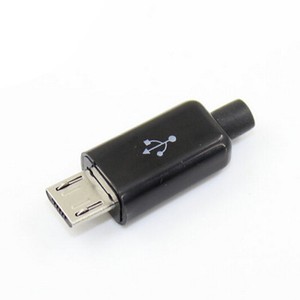
A real USB Micro socket looks like this: https://cf.ydcdn.net/latest/images/computer/_MICUSB.GIF
(1)https://en.wikipedia.org/wiki/Common_external_power_supply
Edit: from your Wikipedia article - "A common EPS must include a cable with a micro USB-B connector for connecting to a mobile phone."
https://arstechnica.com/gadgets/2009/06/10-companies-agree-t...
Of course lightning was better still but alas Apple wasn't going to share that with the world so we have USB C.
The controller only gets charged once every three weeks or so, now that I think about it, so it could well still be under that failure threshold.
I've had countless Micro cables fail on me electro-mechanically. Usually either the latch fails, not a huge deal, but not great, or the contacts "flatten" or don't contact any more.
I've lost so many that I've taken to cutting the bad connectors off and soldering new ones on since I have the tools and the skills, and I don't buy cheap cables (in the hope they'll last longer) so the rest of it is usually worth saving.
It was revised to fail at 5000 MTBF, much more acceptable for something that may be plugged in multiple times a day.
Micro USB was rated I believe at 10k MTBF, and moved the faily bits to the cable.
The USB-IF obsoleted the Mini-A and Mini-AB plugs at that point (which are really only used for USB-OTG, which is rare). They still let the 5k MTBF mini sockets get certified on new devices, however.
On the other hand, I've never fatally damaged a Lightning cable OR port, despite some fairly bad accidents (drops that land on the connector for example). The only failures were a couple where the outer coating started to come off right past the strain relief, the connector itself was always solid for me.
The jury is still out on USB-C for me. I just don't have enough datapoints, but it does seem more robust on the surface and finally (finally!) the cable can be inserted in either orientation.
[1] https://www.youtube.com/watch?v=OqtNleXhTRE
TL;DW- Repeated insertion and removal led to the socket on the microUSB SSD failing after 8000 cycles, cable was still fine. USB-C still worked after 8000 cycles.
My new phone is USB-C, yay!
Note to self: do not tell an elderly person "don't worry, you can't plug it in wrong, the plugs will only fit in the right sockets".
This doesn't bother most other people, but I like to use my phone for longer than 2-3 years. I really don't see the point in buying a marginally faster phone every other year. It's wasteful for the environment and costs a lot of money.
The future I fear is far worse, my current phone, OnePlus 5t has the second failed USB-C port, my previous being a Google Pixel. USB-C cables connections in my experience become weak after maybe 50-100 uses.
I never had a single problem with a long line of micro phones.
Frank's answer, given in 2011, seemed most interesting to me. Scroll a little further and he names Nokia as the driving force.
I have my macbook pro and Pixel 3 as my main devices. For travel I have the Sony 1000mx3 headphones, Aiwejay toothbrush, Xiaomi shaver, the Innergie 60W charger (way way smaller than the Macbook brick). And at home I have the A7iii camera and Sandisk external ssd. I even have some bonus devices like the Daydream remote is usb-c and my Logitech Brio webcam.
There's a couple of things I'm still shopping for (dashcam, presentation remote, flashlight, studio microphone, and 4-input audio interface) but those will happen over the next year I imagine.
10BASE2/thinnet and coax/BNC was a godsend when it arrived. Mercifully followed by the current RG45 cables.
It's at least encouraging that the powers-that-be improved it over time.
Somewhat off, though, because the more complicated VGA connections, at the time, had almost zero issues. So we knew and understood the problem space, and just ignored the right solution.
[1] https://www.lemo.com/en/products/new-connectors/halo-led-con...
I see what you did there...
The only way to match "mini" USB was to ask for particular brand or make client bring the device with him. 5-pin, 4-pin, 8pin Nikon, 4pin Sony, etc. It was a mess.
I find it hard to believe that. Micro-USB in my experience has been the most unreliable cable type I've ever had. Doesn't matter if it's an expensive one that came with your premium phone or a chinese one from alibaba - something breaks with then within a year of casual use.
Granted type-C isn't much better in the latter regard, I've thrown out multiple cables after finding they somehow got squished flat.
It happens, I know that from personal experience. But how does compare with the wear during normal use?
Type C and Lightning nearly look like plug & socket components. I understand type C moved the springs to the plug. But how often do people rip out the socket?
Obligatory XKCD: https://xkcd.com/927/
Back in the mini-usb era, most of my family bought Razr phones. All of them broke in various ways in under a year (one actually snapped in half), because they weren't very careful about handling the phones. Nowadays, new phones last several years and are usually upgraded instead of needing replacement after breaking.
For most of my family, those phones were the first small electronics they had that they kept on them. But my dad had a Blackberry before that, and I had a GBA - we never had issues breaking our "fragile" phones.
I think mini-usb was deemed fragile compared to micro-usb because a significantly larger proportion of the population didn't know how to handle them, and the manufacturers/etc identified the wrong problem.
I think this is a really interesting point. I see so many people complain about "fragile" smartphones, and whose phones always seem to have a cracked screen.
Really it just comes down to taking care of your things, and treating expensive electronics like expensive electronics.
I understand the charging performance hit, but that's much more easily mitigated than sketchy cords/ports.
I go through a micro-USB cable once a month. I buy them in bulk. I hate the standard with a passion. I don't like thin devices- if they could make thicker phones that have mini I'd buy them instead.
I got this feeling the mini is more robust. It got way better metal support for the plug.
Edit: Couldnt remember which is which.
Much better than dropping my phone or headphones to the floor as it happens with the micro-USB cables.
Usually Apple is the one scolded "for switching connectors every few years to suck out more money" How come?
Apple was a major contributor to the Type C design, and learning from the limitations of lighting were reflected in its design.
Like you I really like the small profile of lightning, but the design of the Type C connector does have two important advantages thanks to its shell/shroud design:
1 - The "springy" piece that deforms is the cable not the receptacle. That means when the connection becomes flimsy this is more likely to be the replaceable cables (though some of the cables can be pricy, it's likely still cheaper than replacing the device)
2 - the shroud is ground and is longer than the pins, thus you have a ground connection before you get to any signal or power (like the longer ground pin in UK and Schuko connectors. This doesn't matter much for a USB2 cable but is a safety issue when you have 100W on the cable.
And back to Apple: much as lightning is good for them, it isn't really an instrument of MFI enforcement; they can enforce that just as well with type C. They already have type C iPads so I expect they'll gradually abandon lightning. The iPod 30-pin connector lasted about 9 years and lightning is 7 years old so this isn't unreasonable. And I believe it would make the EU happy.
Citation?
As far as i know, it was created almost entirely by a team at Google, and the agreement to get Apple on board was to not publicize this fact. Which is really sad, because then John Gruber then went off and credited their work to Apple without bothering to fact check it.
IIRC, Apple was not even at the USB meeting where it was first presented.
I'm sure post coming on board Apple contributed, but yeah.
(Various xooglers and others have confirmed all this publicly now, AFAIK)
But I don't think Type C is heading towards iPhone for a few reason.
1. The iPad needed 10Gbps connection and possibly more in the future with USB 3.2 2x2 ( Or what ever it is I cant remember ), that is something lightning will not provide. ( Technically I don't see Lightning missing out any pins to do it, assuming they use pin from both sides, but my guess is Apple don't want to complicate things )
2. The USB 3.2 2x2 Controller is way larger, I doubt Apple is going to put 10Gbps on iPhone.
3. They want you on iCloud, not backing up on your Mac / iTunes. ( It is sad I wish they could at least give me the option of iOS Time Capsule )
4. What is the point of replacing Lightning if they are going to enforce MFi on USB-C?
If anything I really wish they make lightning 2.0 spec that is more durable.
The interconnect itself though leaves a bit to be desired. I still think that lightning is more satisfying from a tactile standpoint. I think USB still has the issue of the floating spade in the female connector. When inserting a cable, I will sometimes catch the spade and I often worry about if this degrades the life of the connector.
The non-reversible nature of USB A connectors drives me crazy - is it only me that ends up turning them and failing at least 3 times before they slot in?!
I looked into it a little since this seems like a ridiculously obvious design flaw (rely on SMT contacts for mechanical strength against yanking?) and I think at least the reasonable ones use a chassis mount USB receptacle there. I hope. I very much hope.
Seems to me on laptops that's a good thing, so if you trip over the cable the connector is more likely to come out, than the laptop crashing down?
I don't really ever move my laptop around while anything is plugged into it, so I think that's the right tradeoff.
What happens is you have one lightning cable with a bad contact, and that causes electric arcing to corrode the power pin in the phone, and now the phone will have bad contact with any new cable you bring in, causing arcing on that cable. Now if you have multiple devices in a household sharing the same charging cables, the "plague" spreads. The only solution is to buy all new chargers, iPhones and iPads all at the same time.
[0] https://www.zdnet.com/article/lightning-cables-failing-due-t...
And for me USB-C has been the most unreliable connector by far - I've had more of them fail that any prior sort of USB connector. But that comes with a caveat - it's always the cables that fail. Replace the cable and it's all good again. I'm coming to accept the fact that any USB-C cable used daily will have to be replaced within the year, which is really annoying. The USB micro A connector is far more reliable.
Sure, your non-Apple smartphone or tablet almost certainly uses it, and maybe your laptop, but anything else? Virtually any other random device that uses a small USB port is far more likely to be micro-B than it is to be C even though C has been common on smartphones for years.
The issue persists even after replacing the iPhone lightning port with a brand new one, across two different Anker cables.
I guess I'll be sticking to original Apple cables, still, it's mildly infuriating.
18 of the 79 named engineers worked for Apple.
https://www.docdroid.net/uf3z/typec.pdf
My sense is the spec was designed by a consortium and no one company owns it, but I would bet Apple did contribute lessons from lightning to it.
10GBps is Gen 2×1 (or Gen 1×2); 2×2 is 20Gbps.
Also, "vampire taps", WTF????[1] That was a hot mess.
[1] Sad memories of coiling AUI cables and inserting properly spaced AUI vampire taps because MGMT wouldn't splurge for a proper ethernet switch.
I don't know what the current status is but it doesn't seem to be an inherent design issue, except for the fact that the port has the springy bits and isn't easily replaced.
[EDIT] all Apple-branded because when I've needed one locally stores around here still don't really stock non-Apple USB-C cables. Some A-to-C for Android phones, maybe. That's about it. Shelf after shelf of various cheap Micro-USB cables and chargers, though. I really wish they'd left an A port or two on these things.
It certainly makes sense that such a hardware change slows things down a bit, but USB-C phones have been on the market since 2015 and pretty much standard since not long after that. If I want a USB-C powerbank or flash drive, I pretty much have to buy it online and I'll likely pay a premium for it. If some newly-introduced device in 2019 uses a USB connector to charge its integrated battery (a misfeature in itself if you ask me), it's almost never USB-C.
In short, I don't expect existing product lines to get revised, I expected to see USB-C show up faster on new products that aren't phones or tablets.
Because there's a much smaller market of people that have enough USB-C hosts so that they're able to make full use of such devices. I, for one, don't have a single device with USB-C. In fact, only my company laptop has USB-3; everything else is USB-2. I don't think I'm an outlier on this.
> but USB-C phones have been on the market since 2015 and pretty much standard since not long after that.
On new models, yes, but for many it makes more financial sense to buy phones 2 or 3 generations back to avoid the premiums of having "the latest and greatest", and those are still microUSB. For example, the latest Motorola phone in the G-family is the G7, and the G5 is microUSB. So, there's still a lot of people buying phones with microUSB.
But there's a cost to switch of being in adapter hell until the market catches up. I'm in that situation, with a USB-C phone, but various micro-B devices I can't find C replacements for.
I'm buying Apple cables from Apple, as well. The lightning connector is garbage, and is easily the worst device interface cable I have ever seen.
Also note that the springs on a lightning connector are on the socket and not the plug.
Lightning cables and sockets are designed to wear out quickly, forcing replacement early and often.
I have an old iPhone 5 where the socket is messed up in a way where it will instantly break a lightning connector if you plug it in, making it so the cable only works with that phone.
Maybe they forgot to add the secret sauce to my copy, who knows.
P.S.: My iPhone 5s lightning port is also good as new. Just needs an occasional grime removal with a wooden toothpick.
Don't let the perfect be the enemy of the good.
Rumor is that it had reliability issues (and I'm seeing that with my own MagSafe plug), but of course no official word.
I suppose it wouldn't be that hard to work around if people really wanted to.
I have a pair of high-end AKG headphones that uses a "mini-XLR" connection. This is a non-standard variant of the popular 3-pin XLR used throughout pro audio equipment. When the provided cable that converts mini-XLR to 3.5mm TRS started failing, I went onto Amazon and found a generic $11 cable, but within a week of use it became clear that it was poorly made, with a metal cap acting as the only source of strain relief.
I've ordered another adapter, one that adapts the plug to 3.5mm without a cable, and it also costs $11. Not as bad cost-wise as some Apple device cables, but fingers crossed.
https://i2.wp.com/www.cheapharddrivesstorage.com/wp-content/...
Here is the other side of the micro usb plug, showing the two metal latches that push into the socket: https://i.ebayimg.com/images/g/OesAAOSwxu5ZF07R/s-l300.jpg
And like someone else said, that ain't a micro usb socket in your image.
Still, an interesting bit of history!
It wasn't stuck in there. Hmm.
(Actually I'm kidding, but it would make a funny rumour.)
Edit: curse you HN for the otherwise sensible collapsing of blank lines..makes these jokes harder.
https://www.youtube.com/watch?v=Y1Tmtd51clI
Titled: Why USB3 Type-C Isn’t on More Cases | How Cables Are Made Factory Tour
In brief - the cables are way more complicated, with many very thin cores. To the point they require manual labour from people in a lot of spots where simpler cables can be automated. Therefore slow to produce and expensive!
Whole series is well worth a watch. The playlist: https://www.youtube.com/watch?v=XD5U3JZNVuk&list=PLsuVSmND84...
perhaps many of those are less water resistant than the phone, but the most common failure point I see in smartphones is their screen glass, and the second is the stupid glass in the back, where applicable.
Not long ago I consulted restaurant reviews in front of a restaurant on my then new phone. Country side, Italy. A big insect landed on my hand and instinctively I dropped the phone on the pavement. The degree of damage that incident left on the device is way beyond what is acceptable for common usage of any other commonly used object. Even my sunglasses are more durable.
Neither of them are water proof, so how does that work?
Otherwise imagine that waste multiplied by millions.
And if that is the only way to charge then I’d have to carry the base station wherever I go, it’s quite bulky.
And you’d still need a data port so I doubt apple will remove the ability to charge via a cable.
Small changes are still small when you "multiply them by millions" because all the big things get multiplied too.
I find it rather useful with my toothbrush. While I'm very much pro environment it is not like we're talking about huge batteries here.
There are 900M iPhone users and expected 1B user by end of 2020. If you Multiple that by 10% - 20% Energy loss from Wireless Charging compare to Wired, that is a lot of wasted energy going forward.
But you’re right: wireless charging is too inefficient and thus slow, so I also doubt they’ll really go there.
I know it sounds wasteful, but it's very important to triage ways to conserve energy, otherwise you end up with things like the awful "unplug your phone chargers" campaign.
My argument is that most people can handle other expensive electronic devices just fine, it's just that smartphones are not durable enough for their intended use.