We need those people to work a full week operating the machines that actually make all the output we all consume.
But why should they do that if nobody else is working? They could just make enough for the small set of people that are actually required to make enough stuff and stop work on Tuesday - having the rest of the week off.
So we all give up full weeks of our finite lives in solidarity with those who we need to give up full weeks of their finite lives if we're actually going to get the goods and services we need to live. And that's because we're a species that tallies our debts with each other - the reciprocity principle (https://www.en.uni-muenchen.de/news/newsarchiv/2016/paulus_s...)
Or to put it in other words, sharing out the needed work is rather more difficult in practice than it is in theory where fungibility is largely assumed. And the more advanced our technology, the harder the sharing becomes and the more difficult it is to maintain the illusion of sufficient reciprocity.
This speaks personally to me as why tech workers (and multi-generation urbanites) are seen as widely disconnected: being persuaded a small number of people "create value" while forgetting about the people building your stuff, growing your food, extracting your oil (and killing the planet in the process), moving your stuff around, nursing people, building your house, installing your AC, shipping your amazon packages, and all the other ultra-necessary jobs (that are usually underpaid) that I don't even realise exist.
Without the drivers, Uber does not exist. Without Foxconn and its army of underpaid labor, Apple does not exist. It's not a small number of people creating value, it's a small number of people capturing all that value thanks to shitty wages and work conditions for everyone else.
We can all pretend "automation" will replace people, but it's obvious the complexities of those tasks will always mostly done by humans.
You might be reading the comment slightly sideways. My read was that the people you list are from small businesses creating value, and most of the tech workers are creating very little value with a few peakers who do amazing things.
> Without the drivers, Uber does not exist.
Personal bugbear, there is as yet no evidence that Uber is creating more value than it destroys. It has a pretty basic business model, trivial positive externalities and is making loss. It looks like it is slow-burning value until someone goes broke.
Uber could be cited as evidence in favour of the idea that most people don't by default know how to create value.
That might be the core disagreement here. There are a lot of people doing activities that are useful. I struggle to think of them as value creators because what they are actually doing is whatever someone tells them - there is a lack of agency in deciding what they do, so I have difficulty attributing outcomes to them. They are fungible, but the people telling them what to do are not. If you tell them to do something stupid, they will do it (as seen with Uber).
Not a comment on personal worth; economic value isn't everything. But the people who make decisions are just more important than laborers. Small businesspeople in particular are a backbone of society in a way that most workers really are not.
I can teach anyone how to clean a mold.
I can't teach just anyone how to design a mold.
And if you designed a mold before, you have been stressed AF designing and reviewing it. For some reason that is disconnected? I still work 40+ hrs
What do you mean "forgetting"? I pay those people for their services out of the money I earn. They're not doing all those things out of the goodness of their hearts, they working for the same reason I'm working, for a paycheck.
>and all the other ultra-necessary jobs (that are usually underpaid)
Their pay, just like my pay, is set by the market. If you don't think that's fair, your issue is with capitalism. I'm actually open to the idea of moving away from capitalism, but very few people, especially in the US, are, and I have no expectation that will change in my lifetime.
Noone really likes to talk about that because that hits our morality itch, but thats how it is. Without slavery-like labour, our society would collapse.
Surpluses and shortages of skilled labor are very unevenly distributed. Differences in ease of automation will magnify this. If there is a demand for 100 neurosurgeons and then cut everyone's hours by 20%, you effectively created a shortage of 25 neurosurgeons. Decreasing hours doesn't increase supply and supply of highly skilled labor is not fungible i.e. you can't trivially retrain a PhD in electrical engineering or truck driver to become a neurosurgeon.
This leads to the following conundrum:
If we forcibly cut hours for everyone across the board then it will create severe supply shortages for the most highly skilled labor that is most difficult to automate, some of which already have severe shortages because it is so difficult to create supply. If we cut hours such that labor supply is proportional to demand then the most highly skilled labor that is most difficult to automate will be required to work by far the most hours, which isn't fair to highly skilled labor and creates a disincentive for required labor.
Systematically reducing working hours may benefit the majority but it creates perverse social and economic dynamics for the highly skilled minority whose labor society can't easily replace.
The US labor market only really has shortages by design.
Also, many given the right augmentation tools, the training time for highly skilled jobs may be much shorter.
Doctors(but maybe not neurosuregeons) is such case, because of regulation. Nurses , with some training and tools could replace many.
But this could be true for other professions.
This is an HN conceit that’s not actually true. Take something like health care. It takes a large number of individuals to produce health care services, and technology hasn’t really reduced that amount. The other day, I needed to schedule an appointment for my son, to follow up about his ear infection. I called the nice lady at reception who set everything up. I could’ve used an app, but that’s like saying you don’t need chefs because you could just eat grass. You can, but you don’t want to. Likewise, dealing with a computer to do something like this is an exercise in self abuse. And computers haven’t gotten any better at interacting with a human at the human’s level in decades. (On that front, I think self check out machines are similar. There is a reason Whole Foods mostly has regular cashiers. It’s because computers haven’t automated away the cashiers job, they just make it possible for customers to save a few cents by doing the job themselves.)
Likewise with pretty much everything else. In the legal field, secretaries have universally been downsized to cut costs. The result is just reduces efficiency, where $700/hour lawyers waste their time doing something a secretary should be doing. (Computers have done precious little to actually eliminate any of that work.)
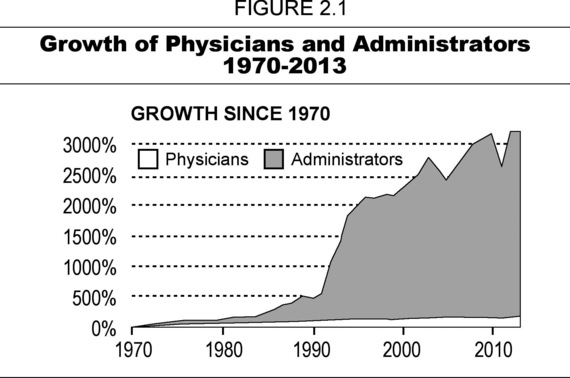
https://images.huffingtonpost.com/2015-12-08-1449597231-8924...
That's a very arrogant and elitist attitude. I wish Galt's Gulch actually existed and we could exile elitists there. Let's see how they do without all the lower castes in society who pick their fruit, clean their toilets, cook and serve their food, take care of their children, pick up their garbage, and have to smile at them in order to have the honor of serving them.
Gold is more expensive than water because gold is rare. But no one would choose a world with plentiful gold and no water. Gold is not worth more, it is just priced higher by market dynamics.
Putting a value on one's work by the price the market gives it, and then justifying the market as the arbiter of value by the total price of work it incents people to do is amazingly circular.
Already doing most of this, so... if I start picking my fruit (and vegetables) and learn to drive a garbage truck, what do I get in return?
Many of those people fullfil complex , Critical roles, successfully.
But most of it's "employees" are easily replaceable.
So why won't this work in the general economy ?
As for IDF jobs with less potential, they are usually accomplished by people with fewer ambitions doing much less than their best and placed there because of that (think of military HR, secretaries, nurses, cleaners).
In short, there are no surprises. The Israeli military service is just a minor inconvenience in the path of ambition that is fueled by the capitalist spirit of the general economy, rather than being a replacement for it.
Citation needed?
You could say that our society works that way now, but there are innumerable pressures at work (many of them created by our public policy) that compel the less driven and the less capable to work ridiculous hours in "bullshit jobs" just to survive. It isn't necessary to compel less-skilled or less-interested people to work full-time just so that neurosurgeons will go to work. The people at the top of the skill pyramid get there because (a) they want to be seen as "the best" and (b) they want access to the money, power, and/or social prestige that comes with their chosen profession.
So many jobs are either not necessary or could be done in 1/4 the time. Our allocation of labor is massively inefficient, and it can't be just because we are afraid of making hard workers unhappy.
I've been working 4 days a week or less for more then 5 years already. No problems.
Good coworkers are encouraged and inspired when you do great work, or create automation that saves time and do more. Bad coworkers get jealous and feel threatened. if you're the kind of person who generally like to avoid conflict (most geeks fit this category), that alone is a powerful de-motivator .
There's an obvious positive sum trade: the useless people get to slack off (e.g. living on UBI), and in exchange the useful are paid commensurate with the value the produce. The useful are happy because they're fabulously rich, and the useless are happy because they're not the ones working so hard. The only real losers are the social status masters, and social status is positional, so they'll always be a small minority.
Unfortunately that small minority controls the cultural narrative. They can reinforce the natural human tendency to zero-sum thinking, and they can hold out the false hope that the useless can become successful parasites too. Everybody is born equal, so if you're not rich it must be because you didn't work hard enough! It's easy to fall for it when your brain is hard-wired with the just-world fallacy.
This combination of cognitive biases and active manipulation means I don't expect to see any improvement before environmental collapse renders the whole thing moot. The 1% rule and everybody else is either overworked or underpaid. You'd have to think like an economist to even see the possibility of escape, and who wants to do that?
The trouble with that is that there is a fallacy of composition there. The only thing you can have in that system is more money. You can't have more stuff because by definition there is no more stuff being added to the pubic value pool.
And if you have more money, but the same amount of stuff, then all that happens is prices go up. Unless you believe more people than now value money for its own sake.
Trying to hide a transfer using a money illusion only works for so long. Then people work out they are being fiddled and have the system shut down politically. Which is historically what has happened in every single case it has been tried.
Alms to the poor is resented not just by those forced to provide the alms but by the poor themselves who resent being patronised and seen as useless.
Such systems are generally put forward by those who believe they can value signal to their peers by being the ones handling out the alms.
C'mon man, that's not even remotely true. Even taking the outlier; google, $360,000 revenue generated per employee. Big deal; I'm pretty sure a decent accounting firm creates more value per employee.
There's also the issue that the population is constantly growing and in flux in different areas. Nobody knows the exact right amount of stuff to make to serve everybody and underestimating can have dire consequences and get lots of people killed, so we can and should make more than might be necessary.
It's a huge oversimplification to say we just need 100 units of food so get the 5 people to make 20 units of food each and then we're good, no need for anyone else to work.
That is to say: citation needed. For all of it.
Reward for the extra day worked? If top performers are rewarded more than everyone else and working the extra day or two is optional,everyone else can opt to not work the rewardless extra day while top performers opt to work a full week for the reward.
It's much like competitive shift jobs for waiters, the good performers get the hard well tipping shifts.
Does this simply not work at scale?
Your argument makes sense, but I'm suspicious that there is that wide of a gap between the 2 classes of people described.
No, the majority of work is laborious and tedious and it's not a 'small number of people' doing it.
Do you realize how many retail service workers, customer service workers, restaurant servers, cooks, line pikers etc. there are?
This idea that somehow it's just a 'small number of folk working' is mythology.
And a lot of middle management is brutal - though it is often very inefficient, it's still essential.
Yes, a lot of jobs could dissapear overnight, but most could not.
Try starting an open source project these days; your chance of getting any traction is close to zero. Influencers are unlikely to help you to spread awareness of your project unless there is something in it for them financially; they're more likely to help promote an enterprise competitor who will pay them.
Journalism is dead, now everything we believe in is decided by so-called 'influencers' but these are typically the most shallow, superficial, scheming, manipulative individuals that have ever walked the face of the earth. These people wouldn't know how to tell the difference between real value and a steaming pile of shit. Most influencers are just idiots with rich friends.
Capital has replaced our values. We need to bring back real values like honesty, integrity, humility, experience, pursuit of knowledge, empathy, efficiency...
--Bertrand Russell, In Praise of Idleness (1932)
It’s atrocious what some of these people are asked to do and the wages they’re expected to perform at.
But beyond that, even wages aren’t even the entire picture. I live in Chicago. I managed a fleet of workers who not only had to content with a company that paid laughable wages, workers were on their own for parking, vehicle maintenance, equipment and materials, ancillary costs of maintaining their tools.
End of the day the $25 we paid to our licensed and insured electrician translated to $12/hr coming home.
I fought for a year to get those fellas better pay. Our managing company was hearing none of it. The guy who ran the entire operation took home six figures. I know this because I saw the books.
Compared to costs
We know mainly why costs are too high in the Bay Area, and it's mostly housing. Which is a solvable problem, if only the market was able to expand housing supply.
If only.. there was more land. Building houses is not the bottleneck. Land is. You'd have to create a 'second floor' of land to mitigate the problem.
Not everyone liked this lifestyle. At least the personnel on military bases know when their contract ends, so they could return to life of freedom and opportunity.
https://theanarchistlibrary.org/library/the-anarchist-faq-ed...
I can find a lot of similarities with the IT industry, or at least in the early days. This is what other industries misses a lot.
"Work less. Play more" I totally buy this slogan, our life is about us and our loved ones at the end.
Wage presure from near full employment is also undesireable to them but must be considered the lesser of two evils and is fairly fudge-able by changing the definition of employed.
It was all taken by the ruling "elite".
There is also obviously a point where more effort out of individual workers is counter productive (see Ford and the 40h work week), but it seems 32-40h weeks may be near optimum generally.
https://www.theatlantic.com/business/archive/2016/01/inequal...
That's very interesting. Got any cites for that? Would like to explore. Thx.
This is interesting. You're saying you would be giving away something valueable for free, and yet there would be no takers? Maybe it's not so valueable after all then? Stuff that is genuinely solving some yet unsolved pain or problem should, given time, take on its own, without influencers.
This is completely false. It depends entirely on your social network.
My main OSS project has over 5K stars on GitHub; it's used by thousands of companies and has been growing steadily but I'm certain that if it hadn't been on the front page of HN 5 years ago, nobody would be using it today. These days it accumulates more GitHub stars every day and I don't do any marketing at all. GitHub stars compound like dollars in a bank account. It got to this point because of HN. Being a useful product was just the prerequisite. There are plenty of potentially very useful products which no one will ever use because people are poorly informed.
Some niche projects are obviously useful, but there is a significant category of projects which are highly valuable but whose value is not immediately obvious; in these cases it can take years to build momentum and you NEED influencers to help you to get that once in a lifetime chance to make even a small impact in your industry.
Also, the opposite is true; there are projects that seem valuable at a glance and which can get a lot of attention (if promoted by the right influencers) but they are an anti-pattern and they provide negative value in the medium and long term.
I've seen many great projects go nowhere and I've seen really terrible projects become exceedingly popular.
The masses are not rational at all; most decisions are based on shared delusions. How many times in human history have huge amounts of people believed things that were proven to be completely false. Too many to count. There are many things that we believe today which will someday be proven to be false. Humanity has not gotten smarter over the past few decades, if anything, we've become complacent and as a result we've developed tunnel vision and have become dumber.
I think the author is wrong about our work culture impaacting peoples need for work. I think people actually want to feel like they are contributing to society, like they are useful. The question to me isnt how do we create less work, its how do we make work more meaningful for people
So, the current system gives meaning to some, and takes meaning from some. I'd have to see some math first, in order to believe it is actually a net benefit on average.
> many craftspeople have notions of pride in their work
Yeah, the job keeps me advancing at my craft; I think alone I would be doing similar things anyway, but probably more slowly. At the same time, the job often forces me to cut corners; alone I would prefer to do things properly, rather than hurry up towards a bullshit deadline only to fix things later when they start falling apart. Again, the pride is both given and taken.
> I think people actually want to feel like they are contributing to society, like they are useful.
But that's quite different from having a job. With more free time, I could contribute to society in ways that are not predictably profitable (which is why I am not doing as a source of income now), but would probably have more meaning that what I am doing now.
> how do we make work more meaningful for people
If you make it voluntary, at least the smart people will have freedom to optimize it towards more meaning. Maybe stupid people will need more guidance. If so, let there be some provided, but again, make it a bit more voluntary than "obey or starve".
Do you think it's the "terror" that makes that situation prefferable from a "capital stand point"? In times of historically low unemployment, I hardly think the general populace is holding such terror. And even so, why would splitting the work reduce this terror?
It includes the following assumptions:
Low unemployment causes upward wage pressure.
Organizations are aware of this.
Organizations cooperate politically to achieve their goals.
>In times of historically low unemployment, I hardly think the general populace is holding such terror.
Exactly. Lower unemployment increases confidence. (and reduced hours would lower unemployment)
Higher up in this thread is a suggestion that: 1) almost all productivity comes from a few workers and 2) it is impossible to reduce their work load and 3) employers retain low productivity workers for long hours to encourage them. All of these assumptions are highly dubious but the theory is popular because it appeals to comforting, entrenched ideas. Which is why no one notices that is a big claim with nothing backing it up.
It’s preferable to have more production, which could be one person working 60 hours or two working 30 hours. Sometimes due to lower switching and communication costs and returns to specialisation/learning by doing 60 hours will be more productive. Sometimes the costs are low and the returns to one person working more hours will be low and it won’t be. If there are fixed costs to employing a single worker this will militate against splitting up the work.
> So reducing workload to increase employment rates is completely unacceptable to those who own society.
Then the German system of Kurzarbeit[1] during economic downturns should be unworkable. It isn’t, it’s just difficult to coordinate.
> Wage presure from near full employment is also undesireable to them but must be considered the lesser of two evils and is fairly fudge-able by changing the definition of employed.
Changing definitions do not affect whether there are too many or too few workers for the production demanded. If there’s an increase in demand for labour some people will work more and some people will come out of unemployment as wages are bid up by the greater demand.
[1]https://pseudoerasmus.com/2014/08/01/anthropology-of-financi...
> In the 2008-9 recession, in response to falling orders, German firms reduced labour utilisation by cutting back work hours rather than by laying off workers. In fact, a whopping 90% of the drop in total labour inputs in the German economy in the Great Recession is to be explained by reduction of hours per worker ! This kind of “labour hoarding” does not normally happen during recessions in other countries, but did happen in Germany this time. This mini-miracle now has people on the centre-left all over the world seeking ways to replicate it in other countries, and has spawned a substantial literature.
> In Germany, firms face restrictions on sacking workers in the first place, but in case of economic difficulties, they can apply to the Federal Employment Agency (Bundesagentur für Arbeit) for “short time” or Kurzarbeit. (Not the same as the 35-hour work week made famous by France, which is a statutory definition of full-time work.) The application entails a protocol for reducing work hours per worker, with the request triggering a process of consultations between the BA, management and works councils inside firms. After an agreement, workers can receive unemployment compensation in proportion to the loss in working hours.
I suspect that has a lot to do with the structure of our society, and our relationship with work.
From TFA:
> In fact, quantitative studies revealed that the average adult hunter-gatherer spent about 20 hours a week at hunting and gathering, and a few hours more at other subsistence-related tasks such as making tools and preparing meals (for references, see Gray, 2009). Some of the rest of their waking time was spent resting, but most of it was spent at playful, enjoyable activities, such as making music, creating art, dancing, playing games, telling stories, chatting and joking with friends, and visiting friends and relatives in neighboring bands. Even hunting and gathering were not regarded as work; they were done enthusiastically, not begrudgingly. Because these activities were fun and were carried out with groups of friends, there were always plenty of people who wanted to hunt and gather, and because food was shared among the whole band, anyone who didn’t feel like hunting or gathering on any given day (or week or more) was not pressured to do so.
It's quite possible to like work. But that isn't really true in a lot of jobs. People who are overworked and underpaid; low-level bureaucrats; middle managers... there's a lot of thankless, unrewarding jobs out there, where people can't see a benefit to their work, where people see a negative impact of their work on society.
We’re long overdue to move past “maximizing employment” at an economic policy level (looking at you US Federal Reserve).
As for wanting to work less, that's probably true, but I'll bet you could get that result for almost any question involving extensive time commitment- for example, I love my kids dearly and love spending time with them, but if grandma offers to watch them I'll take her up in a hot second.
Take a Starbucks employee: They get paid per hour worked, so if they want to work less, they need more money. Now Starbucks needs to pay more people more money to maintain the same hours. This circles back to the popular discussion of automation and UBI or whatever, where Starbucks now has robots and the employees don't exist anymore.
On another note, I'd rather work a job I don't enjoy than be unemployed, I've had periods of unemployment and they were pretty bad.
Or -- stay with me on this -- allow a 'second floor' on top of the current single-floor buildings.
Seriously, NIMBY zoning that doesn't allow for higher-density 5-6-floor townhouse-style development is the issue.
The older I get, the less I believe in crap like Price's law. It sure seems like this in large and old organizations, but I can never point to the actually productive people. Some people appear to do nothing in a large group, but the group then falls apart when they leave/retire. In smaller groups, it definitely, trivially doesn't work like this.
Agriculture is great for a small number of generations for everyone and then you can’t go back without mass death.
I think this speaks to your own lack of understanding of these jobs. Just because the general goal is set by someone higher up, does not mean that there is not hidden variation for the exact task, as well as a lot of places for 'hidden mediocrity'.
Take cleaning the toilets, for example. The general order given is "clean the toilets". Think, however, about how this task has to be broken down. The small things like cleaning the tap heads, under the rim of the seat, etc. that most people might not explicitly think of without being reminded. The person has to do those small tasks, possibly hundreds of times, while dealing with any unexpected obstacles.
Or take something less unsavory, like baking bread. Anyone who has baked bread understands that, while the general instructions _sound_ simple, there is a lot of complexity that is not accounted for, and a lot of room for variability of skill.
Sure, anyone can train for a month and play X tune on the guitar, but are you going to pay for someone who has spent simply one month training, or someone who can really play the tune that has been playing for years? If they are interchangeable then there needn't be thousands of threads submitted to hacker news about how to hire "10x developers".
> Small businesspeople in particular are a backbone of society in a way that most workers really are not.
The matter of fact is that once a company has been established, it can float for a long time without the business owner contributing much whatsoever. I can think of more than a couple of companies that have changed CEOs three times in the last 5 years, while the actual inputs and outputs of the company remain steady. Direction only matters in a vague sense until you hit bad economic times. The ultimate truth is that 'fungibility' has nothing to do with 'value'.
Society would continue on in another form.
Shorter work days and society will collapse. No slavery and society will collapse. Providing worker's rights and society will collapse. We find a way to survive because... the majority of people _are_ workers.
The only thing that collapses when we get rid of a slave population is the capitalist's free lunch.
I'm undecided on whether I see that as a "mind virus" or just the right choice to maximize happiness in the long run. My impression is that spending my time doing unproductive things that I strongly enjoy (like videogames) is somewhat of a local maxima in terms of the happiness it can bring me. One day my favorite game servers will be shutting down, or scraping along with a small fraction of players as everyone's moved on to the next game, and I will have virtually nothing to show for all the time spent. In the best case I'll have a handful of memories that I enjoyed, in the worst case I'll have a deep regret that I spent my most capable years on something that is of no use to me anymore. Presumably by being productive I can avoid that regret, and I'll have skills, money, or creations will be useful to me for much longer. That's my theory of how sacrificing some happiness in the short term should make me much happier in the long term.
The kind that go into his bank account? Is there another kind I'm unaware of presently-I'm unsure how to answer your question here?
But there are other ways to motivate people.
If we're talking about a different , more utopian world, shouldn't we consider those ?
The alternatives that I can think of:
Enjoying the work and similar motivations: This tends to only apply to certain jobs. In addition, just because I'm intrinsically motivated to work on programming, for example, that doesn't mean that I'm motivated to program the things that society wants me to.
A sense of duty: I think this motivation tends to have limitations and is likely hard to achieve consistently without propaganda, nationalism, or a state religion.
Social status: Call me cynical, but I think this only works if someone can use their social status to get the things they want; in which case it doesn't seem that different from capitalism.
This meant that those who we're good religious students(a life long pursuit, and not financially rewarding) married the most desired women.
And that's just on culture.
So maybe there are ways to cretae a motivating culture .
Take my specialty for example. I mostly work on operational multi-modal spatial and sensor analytics at extremely large scales and high velocities (as is typical for these data models). Right now, half the Fortune 500 are trying to hire people that know how to design these systems and throwing silly money at anyone that seems like they can. There is no open source software that can do it and half the required computer science is not in literature, it is an extremely deep technical specialty that takes years of experience to learn. There are, maybe, a half-dozen people in the world right now that know how to design these systems end-to-end from first principles and likely a demand for several hundred. There is no way to manufacture that supply on a time horizon that matters to anyone that wants to hire them.
Even one level lower, high-end systems engineering talent demand is at least an order of magnitude higher than the actual supply. This requires very deep experience to be competent that you can't learn in bootcamp or six months of on-the-job training. Yet despite being paid extremely well even by software engineering standards, as an industry we don't come remotely close to producing enough of them. In fairness, it takes serious devotion to craft and no small amount of talent to become high-end systems engineer -- but few people with the raw talent have that ambition or interest, even though it pays extremely well. You can't force people to do what they have no interest in doing.
PS: People with related skills can always pick up these deep specialty skills with extreme speeds. I have seen someone paid contractor rates to learn a extreme specialty. Including that training, he actually finished the project in less time than the original team had wasted.
It would be like me assuming that I, a broadly competent technical expert, could quickly and easily develop a deep expertise in e.g. high-performance graphics engines. A diagnosis of Dunning-Kruger would not be incorrect were I to make such an assertion.
https://en.m.wikipedia.org/wiki/California_Institute_of_the_...
Look into it’s history and Walt Disney has been training animators for decades. It’s a deep skill that is takes significant time to master, so you need an actual pipeline.
Continuing the idea, NASA trains astronauts. They don’t need very many world wide, but they need a few and the only way to get them is to train these people.
I could go on, but outside of a months to few years for absolutely new fields shortages are by design.
Like doctors are highly paid for a number of reasons one of which is cause the APA restricts the number of doctors that can be trained, but also because of the nature of the finance of healthcare in America, and the cost of training doctors. None of those is determined purely based on the market really.
There is a lot to say about pay to show that wages are not a real market as well :-)
No, the pay of people that you pay is set by you, not by capitalism. If you think some people that provide you services deserve more pay, what is stopping you from paying them extra?
You squeeze Capital with labor law and regulation. Any reduction in employment due to rising wages can be fixed with social support systems funded by corporate taxes that were previously tax breaks or deductions on automation expenses.
The wealth in the system exists to do this. It’s a distribution issue.
It's not a swipe at engineers, it's a swipe at engineers who think they few highly skilled individuals are the engine of the world.
(It's also a jab at the intellectual bankruptcy of Atlas Shrugged)
It's not that there is no such thing as individual achievement it's that there is no "small minority" skilled or unskilled that the modern economy can be reduced to.
But even beyond that there's armies of skilled necessary work that skilled workers can not replace either but seem to forget exist.
Apple doesn't exist without massive sophisticated logistical support but no one ever points out that the naval architects at Maersk or the welders at their shipyards are one piece of the process that allows any one to actually buy anything from Apple.
A good hamburger is valueable, to me. And this doesn't change depending on how hard or how easy it was to make that meal.
You can teach someone unskilled to be a developer in around 6-12 months. Within a year or two they will be working unsupervised to a professional level.
You don't need university for it. You don't need a degree. Anyone can learn it. It's not magic, it just takes time.
No, the surpluses yielded by consumers and profits by companies of those people 'doing the work' is vast.
If they stopped doing it it would be a nightmare.
We don't need resto servers to get English degrees, and then what, exactly? We need someone to do the resto serving.
If they 'start their own business', like 'a restaurant' ... well then they're still going to need servers!
If anything, wages could be increased for that cohort. Surely there's some opportunity for automation, but even then we still need people to do the work.
We all like the idea of 'education' and that everyone should have an opportunity for it, but there's simply quite a bit of work to be done, we should think about how to make it work better for everyone.
This is one of the strongest arguments that I can see in favor of more lenient immigration, specifically to larger countries like US and Canada.
The number of low-skilled laborers content with the current level of pay will keep decreasing, rendering businesses unsustainable. However, for whatever reasons, other countries are better at producing low skilled labor content with those wages. If they are so willing, they should be able to immigrate, allowing the more educated and more skilled native to work in more creative, leadership capacity. Purely from the monetary perspective, natives should see the immigrants as a win-win.
However, when Immigrants cultures or skin colors are seen as being different and not worthy of being assimilated into the country, cultural reasons influence the reasoning strongly.
But in almost all eras (low and high employment) the import of unskilled workers into the US is probably bad. There are already tons of workers on the black market causing pricing weirdness and downward pressure on wages.
I think it's a primary driver of inequality. Recent interview on FT with direct of the Fed indicated for the first time in a long time, US companies are starting to actually 'train people', i.e. they will do this if necessary.
Some jobs Americans will do with the right wages and conditions. For those jobs Americans truly will not do - put them in other, cheaper countries, and let the surpluses go to those areas and villages, helping those people. It's much more fair that way, and more 'good' is created overall.
From the perspective of Native born Americans, no. Because these skilled workers would be competing for similar jobs.
However, it’s possible that the Skilled Immigrants + Native Born Americans create a synergy that works even better, so IDK. It seems hard to do thought experiments with this stuff.
I thought we were talking about skilled workers though?
(I kid, but only kinda)
[1] https://upload.wikimedia.org/wikipedia/commons/thumb/0/0d/Di...
That is a faith-based belief.
Because of this, I think minimum wage is unnecessary and just manages to distort the market and prices out some people out of any job whatsoever.
In plainer English: it's not a swipe at engineers, it's a swipe at engineers who think they few highly skilled individuals produce the majority of the economic output of the world.
But there absolutely is a small minority of extreme producers in most domains.
If every star programmer/engineer died, a lot of things would stop working, but people would at least live long enough to maybe deal with it.
I would think developments like saving the environment, healthcare research, improving public transportation, energy consumption, etc. are all "necessary" work. Building Uber or Twitter or Facebook? I'd lean more towards "unnecessary".
HackerNews is so close to arriving at the conclusion that most jobs (including their own prized "skilled" engineering) are worthless outside of capital accumulation. :)
I think this is false. Unskilled work is easy to teach and learn, by definition. All you need is an "army" and the unskilled work can be easily fulfilled.
There's a reason capitalists have gotten us to think of some work as "unskilled," and that's so they can pay those people far less than they should be, and no one raises a stink about it.
The farm worker is an obvious example of "unskilled" labor, but if you watch a video of what these people do minute by minute, hour after hour, for the entire harvest, they are absolutely being underpaid by criminal amounts.
Yet, because we've been convinced it's "unskilled" labor, hardly anyone cares.
An established rapper could be paid millions for a single mumbled line on a single song but that happens because he can export his value to millions of people who have in interest in it, whereas the ditch-digger can only rely on his labor and what it can provide in his current location.
You say hardly anyone cares, but are you willing to pay extra for the items and services that are produced by farmers and other workers? Perhaps you are, but in reality that is the stopping block that makes people stop caring, and it does have a certain cold logic to it.
Some people like to do more repeatable tasks while others like to do more creative tasks and others don't want to do any tasks at all. We are told that one is better or more required than the other. If we can make a society where people can do what they want to while continuing to have a decent life (whatever "decent" means), its all good.
You are correct - the market will match labor supply with demand. Note that this also cuts both ways - sometimes the market at the "top end" of labor is also constrained. Just because someone is highly skilled does not guarantee a high salary.
But dont worry about it. I get that you are just that cheap. (Joking)
We are talking about aggregates here. I would have to pay not just you, but tens of thousands of other people that extra cent. Farmers, cleaners, attendants, cashiers, literally any of those professions that play a part in modern life. I guess I could pay only you, but it would hardly be a sane justification, would it?
Again, the problem is that your profession is valuable in aggregate but each individual has very little negotiating power. Unfortunately, if you want to double your salary, you'll have to enter a profession whose members each have a better bargaining position.
It just struck me that we might be that we are missing the most important part of the topic.
You are not just saving whole cents left and right but in the process you will also be required to emotionally detach yourself. On the large scale the choice is really between engineering empathy vs psychopathy. If we minimize cost and maximize what people have to pay we cant be all to concerned with peoples well being.
I've had lots of other jobs, I can easily earn twice what I get now. I just one day had the rather silly realization that doing a lot of cycling to improve my shape is a lot of work. Its not work like a job, you have to push yourself until you cant do any more if you want to make progress. It seemed odd to do work without getting paid. It clearly is possible to be both productive and physically active.
You can imagine what it looks like, without a money driven thought process I do 2 times the work one could expect from an employee. You would think it is enough but that is not how the system works. There are other employees who are suppose to get more work out of me, they have no idea about the work, are really unfit and earn a lot more. My effort doesn't make cleaning cheaper or result in better cleaning. They just scale down the number of workers, get larger bonuses and the owners of the company make more money. With 2/3 already going towards the bureaucracy the 1 cent extra is really a joke.
For the people in those jobs to feel productive they have to emotionally detach themselves. I have to buy cheap products made by wage slaves who are probably much worse of, they might not be able to sustain themselves. I'm similarly forced to not overthink it.
Its not impossible for the animals I eat to see some daylight. Its not that if we abolish child labor or slavery the economy collapses. People are just making a lot of money telling that story or they need to tell themselves that in order to cope with the system.
If you can spend 1 euro extra and double a hundred peoples salary the money is the least of your concern.