""The amount of carbon that we can restore if we plant 1.2 trillion trees, or at least allow those trees to grow, would be way higher than the next best climate change solution," Crowther told CNN."
Phytoplankton actually contributes more than trees do to tackle the big construct of "climate change".[2]
In the article, all the climate change action is taken against the CO2 levels in the atmosphere - but I think we can all agree there is more to it than just CO2 (and we can go quite deep on that rabbit hole and slash apart lots of this big amorphous mass of a construct).
On top of that, there are quite some theories on what drives climate change [3] and different views on it [4]. Yet all mediums speak from the same theory which is CO2 is bad. Period.
Now, as said before on a comment by Krageon and Arbalest, it will be the comparable to a person planting 129 trees.
Don't get me wrong I love trees, forest and all that - no question that's beautiful and has more profound effects than climate change alone in our environment and society - but one gets fed up by the `simplicity` we think as a society of these problems.
I guess this is my personal opinion but I think we can do better with technology (which is why we are all in this community anyway) than that. And, again in my opinion, should be the way we lead and liaise with this problem instead of `go plant more trees`.
[1] https://www.nasa.gov/feature/goddard/nasa-study-shows-oceani...
[2]https://novapublishers.com/shop/phytoplankton-biology-classi...
[3]http://climatica.org.uk/climate-science-information/long-ter...
[4] https://www.bettermeetsreality.com/a-history-of-earths-carbo...
Why should it be one or the other? Let's do both (plus many more things).
Even the authors of this study mention that "planting trees" isn't enough, even for the CO2 issue alone, since planting trees is merely a mitigation for past damage.
One of the points I was trying to converge is on the danger these types of articles pose and is they are delusional. It makes society think oh well, that's a big problem but we have a readily available solution, just plant more trees and all is solved.
The other is on one of the statements which is dubious.
I do a lot of work on this area hence why I'm saying all of the above and that's what I found when speaking with general public. And also with people with `high educational degrees` which (in theory) take things more critically and think them through.
Plant 1T trees in the defrost areas of the artics ?
"A study by US-based The Nature Conservancy (TNC) reported than the average reduction of particulate matter near a tree was between 7% and 24%."
There are several trees are nitrogen fixing species, they're a pretty important part of permaculture. Some of the mycorrhizal networks that exist in many forests also fix nitrogen. Also, some species like pine trees get a lot of their nitrogen from endophytes living in their tissue.
What’s already been released is enough to have already changed the climate and will continue warming the planet as long as it’s in the atmosphere.
Planting trees helps remove CO2 from the atmosphere that we’ve already released.
We should be both planting trees (to reverse past emissions) and changing our energy sources (to minimize future emissions).
Creating cement/concrete is one of the primary sources of CO2 emissions - producing a cubic yard of concrete (about 3900 lbs) is responsible for emitting about 400 lbs of CO2. Of course then you have to factor in all of the CO2 produced for manufacturing the structural steel, the fossil fuels that go into all the plastics and wiring, etc.
Sure, in tens of thousands of years, trees would likely eventually repopulate that land; but that’s an extremely gradual process, as most trees’ seeds don’t disperse very far, and it takes years for each new tree to mature enough to produce seeds to extend the forest’s reach.
Whereas if we seed those areas directly, we could have forests again within decades.
Assume: The land we're reforesting is land that humanity deforested. Hopefully I don't need to make that argument, it should be clear.
Assume: If reforesting land causes cooling, then deforesting the same land caused the same amount of warming.
Let A=the amount of warming you get by deforesting some land, also the amount of cooling you get by reforesting the same land.
Let B=the amount of warming you get from shoving CO2 into the atmosphere.
Let C=the total amount of warming so far.
Then A+B=C
If you're making the argument that A=C, then B=0
But B is not equal to 0.
Therefore A is not equal to C.
That means: reforesting all the land we deforested is not going to cancel out the CO2 we've put into the atmosphere.
Does that help clarify my point? Reforestation BY ITSELF cannot be enough.
Of course it's not. That's stated very clearly in the article.
[edit] however @treerock is correct britain formally switched to short scale since 1974 so english is unambiguous, in all but historical contexts.
Also recommends using SI prefixes just as done in the article which is unambiguous in all languages. I guess translators must be aware of this when converting words from billion and up.
becaaause.. it's intermediate scales are un-prefixable, because it names adjacent intermediate orders of magnitude with only subtle mutations of the previous name, because it's inconsistent with itself (<x 10^9), and finally because in 2019 it's extremely ambiguous, in all languages SI prefixes have been around since 1960 all of science and engineering uses these. In other words the same reason English abandoned the long scale.
Then again it was probably far easier for Britain to change in 1974 than it is for the remaining long scale countries to change today since the discrepancy will have been built into all software and systems dealing with currency and other things between countries since then... So i guess you are probably stuck with it and all it's disadvantages whether you are aware of them or not.
huh? Mrd, Brd, Trd, ...
> it names adjacent intermediate orders of magnitude with only subtle mutations of the previous name
million and ten million are also rather close. So what?
> it's inconsistent with itself (<x 10^9)
Those are explicitly named for historical reasons, which is well in line with how names for numbers are handled: we generally work in a decimal system, yet have "eleven" and "twelve", followed by lastdigit-teen while everything above twenty is decimaldigit-y-lastdigit. (German has similar quirks, although the order remains the same. Still: neunzehn, nine-ten vs. neunundzwanzig, nine-and-twenty).
And let's not start with French (ten, twenty, thirty, fourty, fifty, sixty, sixty-ten, four-twenties, four-twenties-ten, hundred). [to be fair, Switzerland and Belgium fixed that in their dialects, using septante, huitante, nonante]
> in 2019 it's extremely ambiguous
It was ambiguous since the 17th century when the short scale was invented.
I'm not sure if the UK officially switched by now, all I see is a random statement by a Prime Minister 45 years ago that I'm not sure is normative (https://api.parliament.uk/historic-hansard/written-answers/1...)
> in all languages SI prefixes have been around since 1960
Sure, and it's used sometimes, but are SI prefixes defined as normative numbering scheme anywhere? That is, which language and which country uses Gigagrams officially?
Also I am British, i've never come across long scale until now, we definitely don't use it, and haven't in a very long time. I'm also well traveled but apparently not enough in Europe to notice this.
[1] https://en.wikipedia.org/wiki/Billion_Tree_Tsunami
[2] http://www.radio.gov.pk/04-07-2019/pms-vision-of-clean-green...
You can actually make small but stable profit from buying land and converting into forest.
> Priority will be given to those who intend to plant a forest in the so-called ecological corridors, in areas threatened by water erosion, in areas adjacent to inland waters and forests, in areas with a slope of more than 12 degrees. Also, those who have land for afforestation in voivodships with a forest cover of less than 30% will get points. Depending on the species composition of the crop and the previously mentioned criteria, the amount of support can range from PLN 4,984 to PLN 7,624 per hectare. In addition, payment is possible for fencing of crops.
Link in Polish: http://www.lasy.gov.pl/pl/informacje/aktualnosci/jak-zdobyc-...
And I believe other EU countries run similar schemes.
Also planting a forrest - as an ecological system - is better to just planting a tree, I think.
Forrest area in Poland is growing since WWII from 20,8% in 1946 to 29,5% in 2016. The target for 2020 is 30% area of the country under forrest and for 2050 - 33%. 80% of forrests in Poland is under management of Lasy Panstwowe - state-owned company with political reach.
[1] https://en.wikipedia.org/wiki/Three-North_Shelter_Forest_Pro...
[2] https://news.nationalgeographic.com/2017/04/china-great-gree...
If we consider countries with more population are going to plant more (so trees per capita perhaps). We could go with landmass but it takes money/people to do this, so let's go with capita.
Pakistan being a highly populated country and so needs to plan more than the 5bn average (they did 10).
But there is a very long tail of small countries in that list of 200 so many more small countries. Most will go below the average needed and so won't stack up.
If the government doesn't have that much viable tree-planting space available then they either have to seize it which would make some people very unhappy, or compulsorily purchase it which would push the cost up a lot. That isn't a reason not to do it, but in order to talk about it you need to be clear about what you're actually talking about.
We absolutely do need to know what we're talking about. For example, the seize-or-purchase dichotomy is a false one. The article mentions, for example:
> But although tree planting on such a colossal scale faces significant challenges (not least identifying who owns the land in question, and securing the rights to plant and maintain trees there), widespread efforts are already underway. [Italics mine.]
In other words, the government doesn't have to seize or purchase the land. They are after a specific right, which we could even imaging being structured, where appropriate, as a subsidized service that owners of degraded land might clamor to receive.
We could almost even suppose that the people who are presenting these figures have take these things into account, at least tentatively.
Actually, I should have been more clear - this is just the money coming out of the government budget. Some unspecified amount of money is coming from private-public partnerships and from donations. The trees are being planted on deforested public land, or just private land where the owners are happy to have forests/trees up, or in public urban spaces. Pakistan has already been hit very hard by climate change - for example by multiple catastrophic floods in the past two decades. There is a lot of public support for this venture.
Also, by making it a socially distributed action. To make people relearn, take part, take ownership, spend more time out.. it could probably cost less.
Can I add this to the HN Weekend Projects list next to Dropbox, Facebook, and Twitter?
1 tree is not equivalent to 1 tree of a different species.
Reports such as this one[0] hint to the impact of tree choice on things like human health, but I'm curious about the effects it has on climate in general (and sustainabiilty of tree populations: disease resistance, etc.).
[0] https://www.thehindu.com/news/national/tamil-nadu/Acacia-rem...!
This casual statement made my eyes bulge. Like, what does this mean? How does it happen? Is water permanently gone? What are the ramifications?
I found a WaPo article on Chennai, which I see has about half a million more people than NYC.
> The city’s reservoirs and lakes are parched and its wells have run dry after two years of scanty rains here. Local authorities are trucking in water and desalinating seawater, but the supply is less than half the city’s basic requirement.
https://www.washingtonpost.com/world/2019/06/28/major-indian...
Just planting 1T seedlings, collecting subsidies, and congratulating each other how we sequestered that calculated amount of CO2 is a totally fake activity.
We really need to do this one right.
That doesn't solve the problem of increasing CO2 emissions, but it blunts the trajectory and with any luck prevents some of the more destructive potential positive feedback loops from winding up.
What I'm saying is that yes, we should plant more trees, but it must not be just about "planting", like this article and many others are trying to portray. Otherwise it will be all for nothing. And we still have to do the other two parts - lowering our overall energy demand and getting off of fossil fuels. We have to do all three.
Hectare for hectare wetlands are even more effective than forests, and encouraging and protecting swamps, bogs, marshes, wetlands, and mangrove forests would be an even better notion.
I read an article similar to this earlier today (not on HN like I posted before I edited this). https://www.abc.net.au/news/science/2019-07-05/climate-chang...
Seems like a rather low number, all things considered.
- Healthy forest has 40-60 trees per acre
This means you need 31,250,000~ square miles which is 15.87% of the Earth's landmass.
- You need adequate rainfall where you plant the trees
- For the healthiest trees, and best carbon sequestration, you also need to 'seed' the mycorrhizal networks that work in cooperation with tree roots.
- You'd have to pick appropriate species for appropriate areas
- Mature trees, the vast majority of the time, sequester far more than younger trees
- There is considerable variation in the amount of carbon various trees can sequester in a given time
Some land that actually used to sustain decent tree populations, is now nearly barren. A good example of this is Iceland. When the first settlers reached Iceland in the latter half of the 9th century, forests covered between 25 and 40% of the landscape (nearly 10-16k square miles), it is now around 0.5% with active efforts to reintroduce trees with the reintroduction going very slow. This year they are attempting to plant around 4 million trees but a fraction of those will likely survive.
It would probably be better to cover 1-3% of our land and coastal areas with solar panels and wind turbines.
Building reactors takes a long time. We probably first need to ramp up the industries that manufacture pressure vessels. The forging presses able to produce pressure vessels for modern reactors can manufacture maybe half a dozen a year, and there aren't too many of these massive presses around. You can of course argue that we build a different kind of reactor that doesn't require pressure vessels, but then you need additional time for R&D and proving the design in practice. Don't forget that we also need to train the engineers that staff the new power stations. Nuclear engineering is not a terribly popular major right now.
Wind and solar on the other hand are well suited to reducing our CO2 output starting today. Building a wind turbine doesn't take ten years.
Many trees are planted to be used as bio fuel. More are planted to be converted to paper and pulp, others for construction.
All forestry involves thinning weaker trees from the forest. Planting trees shouldn't be what's measured at all but areas of sustainable forest created.
But not for reason of sucking CO2. Please understand that forests are CO2 neutral. Any CO2 a tree consumes in its lifetime will be converted to leaves and wood and eventually fall to the ground and be converted by insects, fungi and bacteria BACK to CO2.
To get rid of CO2 from atmosphere we almost need to do the opposite, chop down trees and bury trunks somewhere where the don't decompose.
Then I found a german forest marketplace[1], that has a good FAQ regarding the regulations of owning a forest in Germany.
After reading this I don't want to go anywhere near owning a forest, having to have insurance for the case anyone walking through my forest trips and injures himself, having to pay taxes for the very rain that penetrates the ground and may end up in the sewage system...
If you’re interested in how different species of plants and trees compare in terms of carbon impact, different types of land-management, perennial staple crop exploration, etc, it’s really well written and researched.
Bottom line: planting trees is great, and there’s a ton of ways we can improve the land. But maybe the single biggest impact thing we can do is stop cutting down forests for grazing cattle. At the end of the day the planet needs natural, wild forests, at a massive scale.
Anyone interested to partner on this?
Each search result generates revenue (through ads) that sponsors tree planting.
How many Christmas trees are cut down every year? I bought a synthetic tree many years ago, and I just keep using that to save on killing a tree every year.
By buying a Christmas tree, you create a market for those trees which makes people plant them. This leads to several generations of trees growing at any time, so that there is a net-reduction of CO2.
https://www.sightline.org/2015/12/21/your-christmas-trees-ca...
The tl;dr is that usually cut trees are better in terms of carbon footprint, but not always.
Do we then plant another trillion trees?
It's still worthwhile (and I also like trees, although usually not monocultures).
But how about stopping deforestation? That seems like it would be more effective - pay developing countries based on maintaining their forested areas, policed using satellite data. I think we should also focus on planting trees and basically every other mitigation we can at the same time - doing one thing doesn't preclude others.
This is being done with some success in the rain forests of one of those deforestation happy palm oil producers, Indonesia.
https://www.wri.org/blog/2019/02/indonesia-reduces-deforesta...
[1] https://www.cbc.ca/news/canada/calgary/canada-forests-carbon...
That’s a strange way to put it. The trees form a carbon reservoir. If they burn or decompose then they release carbon. But they cannot grow and release carbon indefinitely. If they emit carbon long enough then there won’t be trees left. On the other hand if the total mass of trees grows long enough they will have trapped more carbon.
Where are the protests to confiscate arable land for reforestation in the UK. Where is the public will to pay a higher % for food due to less arable land. Where is the willingness to accept a lower standard of living (in the short term at least) due to reforestation of the UK. All of which they expect of 3rd world countries, but not for their home country.
The above is never going to happen, but I often wonder whether instead of hegerows around the patchwork of fields we have in the UK it is mandated to be 2-3 trees thick. Sure some land would be lost, but not much and as anyone who has flown into the UK, a huge % of the country is a patchwork of fields, that should be a significant number of new tree planting
Coming from the north of England, I'm often struck when I get to Scotland or down south just how extra sparse trees seem across the north.
I would dearly love to see progress to reforest the UK.
I see these areas basically as factories, albeit we do have the kind of food security our ancestors could only dream of. Would be fantastic to see more forested areas and associated 're-wilding' projects. Could be hugely beneficial in so many ways if only people can take the long view.
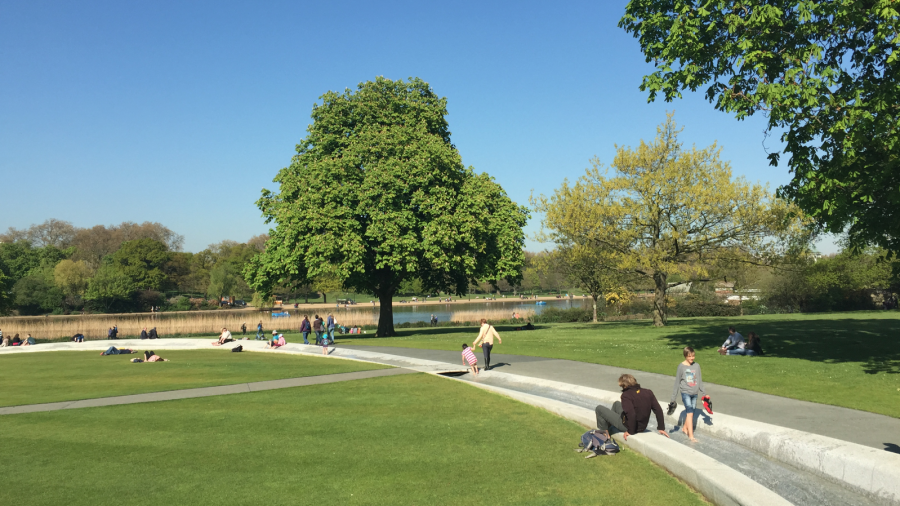
The woods in England where I grew up were more like this https://www.woodlandtrust.org.uk/media/100142120/flooded-woo... - damp crowded, muddy and not that pleasant to hang out in for any length of time. I think our parks are to some extent a way to make things look more like Africa. (eg Hyde Park here https://www.kidrated.com/kidrated/wp-content/uploads/2015/04...)
https://www.nationalforest.org/ https://en.m.wikipedia.org/wiki/The_National_Forest_(England...
Most recently I've been trying to offset 10 tonnes a year via these people: https://www.carbonfootprint.com/carbonoffset.html They were the only people I could find most recently that sold "personal carbon offsets" in the UK which includes UK-based tree planting (as well as options for elsewhere)
Edit: Most of the Scottish Highlands are a particularly bizarre landscape that people generally think of as natural but is really rather artificial as deer, lacking natural predators and being popular for hunting, tend to eat young trees.
Please use "...compared to _the rest of_ Europe" next time. That stresses the very real commonalities between European countries. Civilised people using inclusive language are our only hope for a brexit process without too much bruising. Little things like this can really help.
I apologise for injecting that completely off topic remark into this conversation and will shut up now. I probably deserve some karma burning, just not too much please.
P.S. Thank you for you comment about tree cover and the world wars in the UK. I just read https://en.wikipedia.org/wiki/Forestry_in_the_United_Kingdom with great interest.
So $1T in cost is a good ballpark to start with, but don't be surprised if it balloons pretty quick. Tree planting doesn't scale as efficiently as we might like.
It depends if the dead trees are in groups that leave large gaps in coverage or random deaths (Alopecia versus thinning).
Also surely the actual number of trees is almost irrelevant - the important factors are: carbon capture per acre per year, and risks of carbon release (fire, conversion back to farmland, milling etc).
Wood sequesters CO2. Growing more wood will, trivially, sequester more CO2. Is that sequester "as good" as sequestering it deep underground? That depends. If it is sequestered by an ecosystem that persists over time - in other words, if it is sequestered in a forest, and that forest remains there even if the individual trees die and decay - then yes. The CO2 that is pulled out of the atmosphere stays out of the atmosphere unless the forest disappears.
https://www.technologyreview.com/s/407754/the-case-for-buryi...
If this is the best solution to CO2 problem, I would rather have a CO2 problem.
Definitely interesting, but I think that a fast-growing tree would probably create more O2 (consume more CO2) in its first 10 or so years. I think that big, old forests where large pieces of wood are dropping and rotting, etc, may tend to be on the neutral side of things.
I think that some studying of what type of trees to plant, etc is definitely in order. Certainly some drop less - and quite possibly they determine that the trees need cut down, turned to paper or paper products, and replanted every number of years.
When I think of the situation you are describing (CO2 neutral), I picture a dense, damp forest area. I feel like trees, properly spaced, may lean more toward co2 consumption.
Anyway, just a thought...
[1] https://biologicperformance.com/sealed-bottle-terrarium-gard...
Basically they were (are?) for 12~ years were powering up to a [200kw generator proccessing up to 300kg](from my previous notes about them) of material an hour of dry biomass. Stuff like collected lawn clipping and branches. You could also use waste like paper sludge, sugar cane refuse, waste water sludge (feces and toilet paper), wood waste from milling, used grain from breweries and distilleries, organic waste from industrial sources etc.
Go watch videos on making char cloth, it's a similar process. With char cloth you basically take a can that's mostly air tight, poke a hole in the top, place natural fibers inside like some scrap denim, replace the lid and heat the contents. The gas that gets cooked off is actually flammable and can be a fuel.
The process they were using required a rather large machine and ended up not only producing biochar but output more energy than went into the system by being much more controlled and capturing the gasses.
I suspect you could also manufacture a system that instead just uses concentrated solar power to process material, instead of needing to get up to 1000C though you'd only need to get around 450C (based on past studies for optimal temperature for producing biochar with optimal soil drainage properties), you could pull the gas off of that and pipe it some distance away to another facility doing the same a more traditional way, using the gas as the fuel source for it.
Also, just advertisement and information campaign aimed at getting people to plant trees in rural areas as an investment in their children's future would encourage more planting as well.
When France decided to go nuclear for its power grid they where bringing a reactor online every 3mths for 15 years on average (56 plants in 15yrs).
Economies of scale combined with mass production would bring the costs down, if you could get multiple countries to agree to a standard design with commonality of parts and maintenance you could scale up really fast once you had a pipeline for each major component.
When we are talking about an extinction level event I think a species level Manhattan project is a good solution.
Won't happen for myriad reasons but wouldnt it be nice if our own vicious self interest didn't doom our not so distant ancestors.
If my step soon makes it to 90 he'll see 2100.
I'll be long gone before then.
solar panels are generating a lost of toxic waste https://www.theverge.com/2018/10/25/18018820/solar-panel-was... and are probably a hazard for birds and insects
France was bringing 4 reactors a year online for 15 years.
France is not 1/3rd of global manufacturing capacity..
In part the myth of the virgin untouched forest comes from colonial views of natives existing in harmony or as part of nature and not really human. Even in the US, Native Americans have been managing the "wilderness" for thousands of years before the US Forest Service.
When you can get citizens to consistently try to solve the problem on the level they can control, then you aren't going to be able to consistently get governments to do it either. The options left are to use educational methods to convince the citizens otherwise or go with options that do not require action level buy in from the majority.
Sometimes the things a person can individually do don't work and they need to act in concert to make a difference. Fire control, transportation, defense... health care? Mitigating environmental catastrophe?
I can't help but think that this is a harbinger of the future in more places than Yemen as climate change continues.
https://en.wikipedia.org/wiki/Water_supply_and_sanitation_in...
https://www.atlanticcouncil.org/blogs/menasource/an-update-o...
After air itself, water is the most-used substance by humans (followed by gravel, sand, and rock -- we aren't out of the stone age yet), and the quantities and quality (purity) used are great enough that simple stockpiling does not generally work.
Chennai particularly is in the north-eastern monsoon belt with a wet-and-dry tropical climate (Köppen). Monthly rainfall averages vary by a factor of 100, from as low as 3mm per month in the dry season (Jan-May) to over 400mm in the wet (Jul-Dec, especially Oct-Dec). The climate chart at Wikipedia shows this:
https://en.wikipedia.org/wiki/Chennai
There are no rivers. The water table sits at 2m depth typically. And yes, it is recharged by the monsoon. The shortages are critical, but temporary.
With such an all-or-nothing weather cycle, the need is to both shed and drainnwater during the monsoon and to retain it during the dry season. That's a difficult order.
Current forecast is for rain every day.
I suspect the same will happen with climate change once it changes enough. The problem is that by the time directly impacting people enough to convince them of the need for action, the ability to resolve the problem will be outside our scope to control. Much in the same way a few cities had to burn to set an example for others. Which leads us to the other problem, we only have one 'city' to burn.
If we try to solve climate change the same way that we solved fire services being seen as a common sense government action, it will work but only after the city is burning.
Redwood trees (as an example) are relatively fire safe. At the opposite end Eucalyptus trees are fire hazards.
So - plant a fire resilient forest appropriate for your climate.