Cost of owning a BMW i3(tomkiss.net) |
Cost of owning a BMW i3(tomkiss.net) |
The title claims the content is somehow about electric cars in general, but it's just one datapoint about one model and one owner. FWIW, my maintenance costs for almost 3 years with a Tesla S90D were so far: €290 for changing and storing winter tires. No repairs, no breakdowns so far, despite some abuse on italian country roads. Yearly cost for insurance and (0) tax was half as much as the 530xd I owned previously.
Just look at the cost of brakes. An ICE car will need them every 30-60k miles depending on various factors, but an electric car will need them every 100-200k miles.
Not true, there are two models, one with range extender, one pure EV. It's fair to assume he had the pure EV since he didn't include any ICE costs such as oil changes.
https://web.archive.org/web/20190828121621/https://tomkiss.n...
Overall if you don't need really long range a used Leaf is a great deal. You can get them in virtually mint condition for under $10k. Just be sure to research and check out battery health. There's an Android app called LeafSpy that will use a Bluetooth ODBII dongle (these are cheap) and can query lots of detailed battery info so you can check out battery health after buying. Mine was about average in terms of capacity loss for its age and it gets around 70 miles per charge without issue.
Also note that the Leaf's mileage estimate tends to be a little pessimistic, at least in my experience. My guess is that it's designed this way to avoid stranding the driver. Gas cars are often a little pessimistic too for the same reason. They give you a bit of a reserve.
I bought my 2011 Leaf when it was just about three years old and had somewhere in the neighborhood of 22k miles on it and paid somewhere around $6k.
I figured it was a pretty safe buy because the car still had plenty of miles left on the warranty.
I never had to make use of that warranty though; truly the best fit & finish of any car I've owned. Reliable & by far the best value of any car I've ever purchased.
After eight years, capacity is running down... somewhere around 40 miles per charge in the summer now... but that's perfect for my use-case. I'm looking forward to many more years with minimal maintenance costs. Once the battery capacity gets low enough, I'll spring for a new battery.
Source: Bc I'll be asked ;) https://www.fhwa.dot.gov/ohim/onh00/bar8.htm
So far I have had no issues with my 3. $115 for tire rotation and state inspection is the only thing I have spent any money on so far in 15 months and over 20,000 miles. So that is less than $10/month in maintenance. And I am spending about half as much in electricity as I was for gas. The insurance was a big jump from a 2011 Ford Focus, but that car has cost significantly more to maintain in the same time frame.
I never ran into a single maintenance issue other than the standard. It was the lowest maintenance vehicle I've ever owned.
With my current car I can drive to the summer cottage and back with one tank. It's just carefree and convenient. With an i3, even when starting with full charge, one would have to tank about halfway each way.
It is hard for me to understand such design decisions. I have heard that in some countries the gasoline range must be less than electric range to secure some tax credit.
Edit:
Source: https://en.wikipedia.org/wiki/BMW_i3
REx 60 Ah: 116 km (72 mi), Total: 241 km (150 mi)
REx 94 Ah: 156 km (97 mi), Total: 290 km (180 mi)[12]
https://www.autoblog.com/2013/10/28/why-the-bmw-i3-has-such-...
Most of your yearly distance would be covered by purely electric driving, yet you would not have range anxiety and you could still make those long trips with your car as well.
Would also be good for the environment as one wouldn't need to tie needless resources for a rarely needed big battery.
  Cost of car:         17,400
  Fuel:                712.99
  Maintenance:         3,056.08
  Other:               940
  TCO over 3 years:    22,108
If you total your car and you have good insurance, you might get reimbursed its remaining value, which might be about market, or nothing. If you have a loan out on the car, better hope it didn't depreciate faster than the loan payment takes, or you take a loss. Or maybe you don't total it, sell it privately, and get more than on a trade-in. You don't know what the market will bear, you don't even know if you'll have ended up with a lemon. But even if you do get money back at the end, how old it is, whether its insurance or maintenance costs more, etc will all affect sales later.
I think purchasing a car with an expectation to regain value is gambling. I'd prefer to buy something I'll drive into the dirt, whether used or new, for a more certain financial outcome.
Or his wife (page isn't loading anymore but IIRC he used a bunch of language implying he has a >1 person household) has one in the oven and they're doing what every upper middle class couple does when that happens, buying a crossover.
[0] https://www.consumerreports.org/car-maintenance/the-cost-of-...
I wouldn't trust anything about BMW or other premium German brands from a US source as an EU customer, because:
1) US (and Canadian, Australian, Malaysian) fuel is of much lower quality, and BMW engines are notoriously sensitive to this. As an example, the BMW I own wasn't ever sold in North America or these other markets because of the high sulfur content in the fuel.
2) US consumers who buy BMW are going to have a selection bias towards people buying muscle cars. You're not just looking at reliability numbers, but numbers skewed by Americans who'd buy a foreign luxury vehicle with a powerful engine.
3) BMW is fickle about its maintenance requirements, and generally the further you get away from Germany the worse your quality of maintenance and ability to source genuine parts easily is going to be.
BMW is still pretty bad when it comes to total cost of ownership, but this German study of vehicles on EU roads shows it isn't quite that bad: https://europe.jdpower.com/de/press-releases/2019-germany-ve...
I agree, though; I can usually get the same range out of one set of tires.
So just because you have a certain kind of car doesn't mean you will always have the same tire wear or cost.
As for tires, my hybrid seems better and also takes pretty much any manufacturers tires (19/235 summer, 17/235 winter - can't say anything detailed about durability regarding my driving since I only have it since April this year, but the previous owner seemed to make about 40000km per set), but the i3 tires seem to be purpose build, so less quantity (more expensive) and MAYBE focused much more on efficiency over durability.
Also 45k miles, not km? (Link is down now, so can't check).
(some editing)
Engine inside is small one from motorcycle, so it shouldn’t be hard to service. I was considering buying i3, but went for 328i.
I always bought really cheap tires on my really cheap clunker cars and never knew the difference. I wonder if it's just volume of cheaper tires, or if expensive rubber is just more expensive?
Buy a 400BHP+ Ferrari or 911 and you can get car tyre life right down to similar levels. They'll now be $300-$500+ a corner for being super wide, super low profile, sticky things. $2,000 in tyres every service... A sporty V8 of a couple of decades ago could easily give 6k miles front, 3k back. With higher powers now, who knows.
If you could get really cheap clunker type rubber for those cars, you'd probably be just a few miles from wrapping it round a lamp post. First time you press the loud pedal with enthusiasm most likely. :)
Similarly, heavy duty truck tires are more expensive as they have more engineering requirements.
[1] https://friendsoftheearth.uk/plastics/tyres-and-microplastic...
Note that I'm not against electric cars at all. I'm only talking about pollution of microplastics. Not pollution in general.
Of course it's hard to tell if people downvote because they disagree with me or because there are actually falsehoods in my comment. If it's the latter it's either: 1) electric cars are not heavier, or 2) tire wear due to additional weight is neglectable. Please, correct me if I'm wrong. Perhaps it's my filter bubble, but I only find articles that support my statement [2]. I quote:
"For energy use, the weight is less of a problem than for gasoline cars. They waste the increased energy used to accelerate the higher weight. But the momentum of an electric car lets you return energy to the battery as the car slows. The heavier the car, the more energy it takes to accelerate—but the more you return to the battery commensurately through regenerative braking.
Of course, if you pay six figures for a high-performance electric car (think Tesla Model S P100D) and use its capabilities, you should expect to replace your very expensive low-profile tires every 15,000 miles or so. That's par for the segment."
[2] https://www.greencarreports.com/news/1122838_busting-7-of-th...
You can do a lot better than dealer prices for oil changes if you don't do your own maintenance.
A tractor with a 600 horsepower engine would have around 19 liters. GM can get the same 600 horsepower out of 6 liters. I know motorcycle mechanics who can get that power from 1.5 liters. Of course the motorcycle mechanic will tell you upfront that you will have to completely rebuild the engine every 40 hours. GM knows that even though the engine can deliver 600 horsepower it will only do that for a few seconds and then have plenty of rest time at much lower power output to cool off as a result they can get several thousand miles. Tractor manufactures know that their customers will use 600 horsepower continuously all day, everyday with no breaks to cool down so they build for that spec.
Point is I expect the engine in this car is designed to not be as reliable because of the weight/size vs reliability trade offs they can make. It you mostly use the car in electric mode with a few long trips it won't matter overall. If you typically take long trips (without stopping to recharge) get a car with a larger engine.
This hasnt been true in a long time, at least with regards to sulfur. Current US regulations limit sulfur to 15 ppm [0], EU limits to 10 ppm [1]. Compared to the 1990s and earlier, when it could be as much as several thousand ppm in both the US and Europe, sulfur has been nearly eliminated in current diesel fuels (for road use, at least).
[0] https://www.epa.gov/diesel-fuel-standards/diesel-fuel-standa...
[1] https://www.transportpolicy.net/standard/eu-fuels-diesel-and...
The limit was 50 ppm and 10 ppm in the EU in 2005 and 2009, respectively according to your [1].
I've got an N53 engine[1] which was introduced in 2006. This[1] page shows it and a few other BMW engines weren't sold in North America for fuel quality reasons.
As far as comparing long-term reliability numbers it amounts to the same thing. US numbers can't be trusted for EU consumers. We've got 10 years of data at 10 ppm, the US just 2 years.
But the main reason I'd distrust it is consumer bias. As shown in [2][3] BMW is as common in Germany as Nissan and Honda in the US. I live in The Netherlands where it's about as common to see a BMW (5% market share, 2% in the US).
1. https://en.wikipedia.org/wiki/BMW_in_the_United_States#Engin...
2. http://www.goodcarbadcar.net/2019/01/u-s-auto-sales-brand-ra...
3. https://www.best-selling-cars.com/germany/2019-q1-germany-be...
It gets down almost entirely to personal behaviour.
If you don't tailgate and slam your brakes all the time, they last a long time, even on an ICE.
Sources:
https://www.tesla.com/fi_FI/inventory/new/m3
https://www.bmw.fi/content/dam/bmw/marketFI/bmw_fi/ladattava...
[1] https://insideevs.com/news/328403/bmw-i3-vs-cadillac-cts-imp...
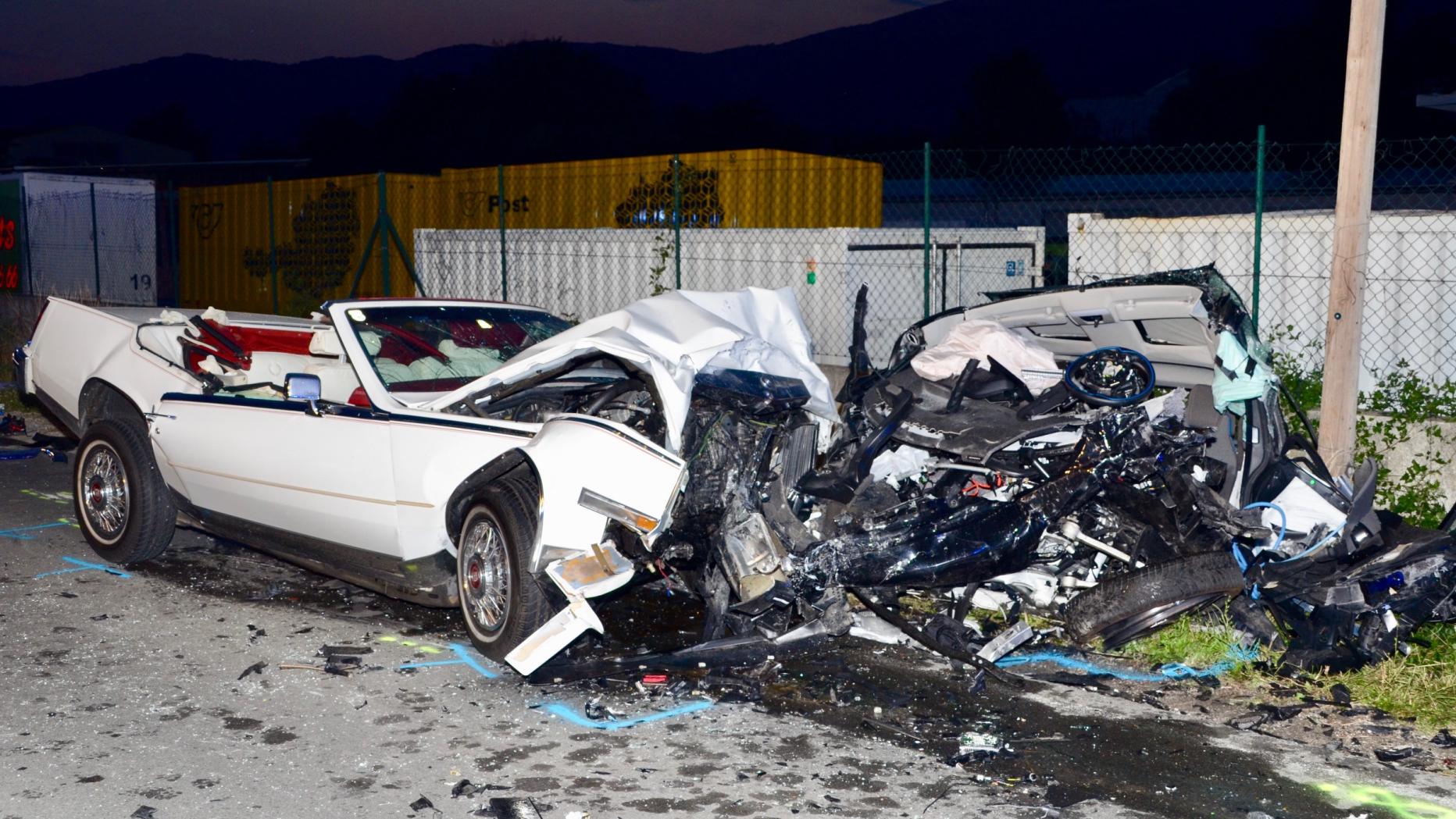
No, you guessed wrong. The crash I mentioned happened 2 days ago: https://kurier.at/chronik/niederoesterreich/zwei-tote-in-moe...
I don't know why you bring up an old rear-ending when I mention a frontal crash...
I would imagine any car heavily dependent on advanced sensors and electronics to cost more to maintain than traditional cars, especially after the first few years. And those parts will likely cost more than a muffler.
The real question is: how are we going to maintain the geopolitical/industrial system necessary to keep gas flowing ? And why should we?
260k miles and it still goes strong, diesels easily get to 500k miles
An interesting twist would be using a hydrogen fuel in an ICE.
For people who have to pay other people to do maintenance (i.e. most people) whether or not you buy a POS that eats suspension wear items for breakfast and how anal you are about getting every little scratch fixed will dominate long term cost. A couple grand for a battery or transmission spread out over more than a decade really isn't that much. Shelling out a grand every time your vehicle gets humped by a shopping cart will add up quick.
They also cost on the order of five figures extra over gas engines.
In the UK you have to tell your insurer if you do that and it can impact your insurance significantly in some cases. The best one I could find was with Aviva they allow 10mm variation in width of the tyre from the manufacturer spec, so if the original size was 225/45 you could buy 235/45 or 215/45, but anything beyond that would require you telling them and have an impact on your premium. Chaging the rims to a different size always requires telling the insurer, even if they are the manufacturer's original rims(which is incredibly dumb, I bought my car with factory 20" wheels, I bought an original set of wheels directly from the dealership in 19" size but I still have to tell my insurer because it's a "modification" to the factory spec of the vehicle).
1. The US is much larger than the UK, with a lot of nothing/low population density.
2. Mentality might be different: I imported my current car used from the Netherlands; the country is tiny, but the Dutch seem really like driving a lot. I saw many cars with 30k miles per year on them.
I'd say most of the drives are commutes to work and shopping.
There's also zero useful public transportation for us. If I worked in the city, I could take the train, but it's 4 miles to the train station.
Now Germany has a population density of 621 people/mi². The US has a little less than 100. Assuming similar interconnectness (family, friends, jobs, holidays), travel distances are much larger.
There are lots of other reasons to think it is unreasonable, but from the perspective of someone who sees their trip to work as half an hour it doesn't seem bad.
But my bet is it's more a matter of following a contract than whether it actually caused an issue; either way I can see not wanting to deal with the potential hassle.
Tesla will probably never reach that price point because they're a bigger battery and more on the luxury end of things (indeed a reman engine for a German car will hit your wallet harder than a crate SBC) but there's no reason to believe that the industry will all be hard/expensive to service like Tesla and other luxury brands. Also Tesla is particularly terrible about parts supply chain and locking everything down so you'll probably never see aftermarket batteries apply downward price pressure there.
When a proper cheap mass market EV comes along it will likely have similar maintenance costs as a comparable ICE vehicles.
It seems suboptimal to not use something like hemp biodeisel or hydrogen ICE