> It was narrated from Abu Hurayrah (may Allaah be pleased with him) that the Messenger of Allaah (peace and blessings of Allaah be upon him) said: “The Hour will not begin until the land of the Arabs once again becomes meadows and rivers.”
When I was a teenager, I was interested in what people used to say about the future in the past and this was the one thing that ever stuck out to me in my readings.
I guess it was common knowledge among the knowledgeable at the time that this was true but I was never able to corroborate it.
If you look at some Sat photos of Saudi Arabia you will see some crazy large circular meadows. They have greened the desert. Almarai is one of the world's largest dairy farms.
* https://en.wikipedia.org/wiki/Axial_precession
Because of this precession ("wobble"), it turns out that the "North Star" has not always been Polaris. Back when the Pyramids were built in ancient Egypt north pointed to Thuban.
The Hoover Dam actually has a monument that gives the year it was built using this astronomical fact:
* https://blog.longnow.org/02019/01/29/the-26000-year-astronom...
* https://grahamhancock.com/motlochw1/
* https://www.quora.com/At-the-Hoover-Dam-what-is-the-meaning-...
* https://kottke.org/19/02/the-hoover-dams-hidden-26000-year-a... (via)
Familiar story. America's Southwest used to be treed grasslands until overgrazing turned them to sand and wasteland.
I'm not saying overgrazing never happened, bit it was not nearly enough to explain the current desolation.
Here you go:
Does anyone know the validity of this? Can any archaeologist/historian types recommend sources?
I’ve read that the Amazon relies on silt carried from the Sahara.
He starts with science and reaches into speculation, but, there's real, interesting science in it.
The part where he tries to show that the old map of Herodotus (c. 484BC – c. 425BC) is somewhat similar to the map of rivers and basins, but they don't even look similar. (Also note that the dates discussed in this articles are about 5000 years ago, something like 2500 years before Herodotus.)
About the erosion in the Sphinx: https://en.wikipedia.org/wiki/Sphinx_water_erosion_hypothesi...
And I prefer to ignore the last part about the Atlantis ...
At some point the ecosystem just can't regenerate faster enough, the buffer is broken, and all is downhill from that point.
If not, please update Wikipedia with references to your original source of information.
(Wikipedia doesn't admit original research.)
Climate change is presently believed to be a major catalyst to the development of civilization in Egypt and Mesopotamia. It also thought to have led to the collapse of the Indus River Valley civilization. But it is not thought to have played major roles in the other developments of civilization.
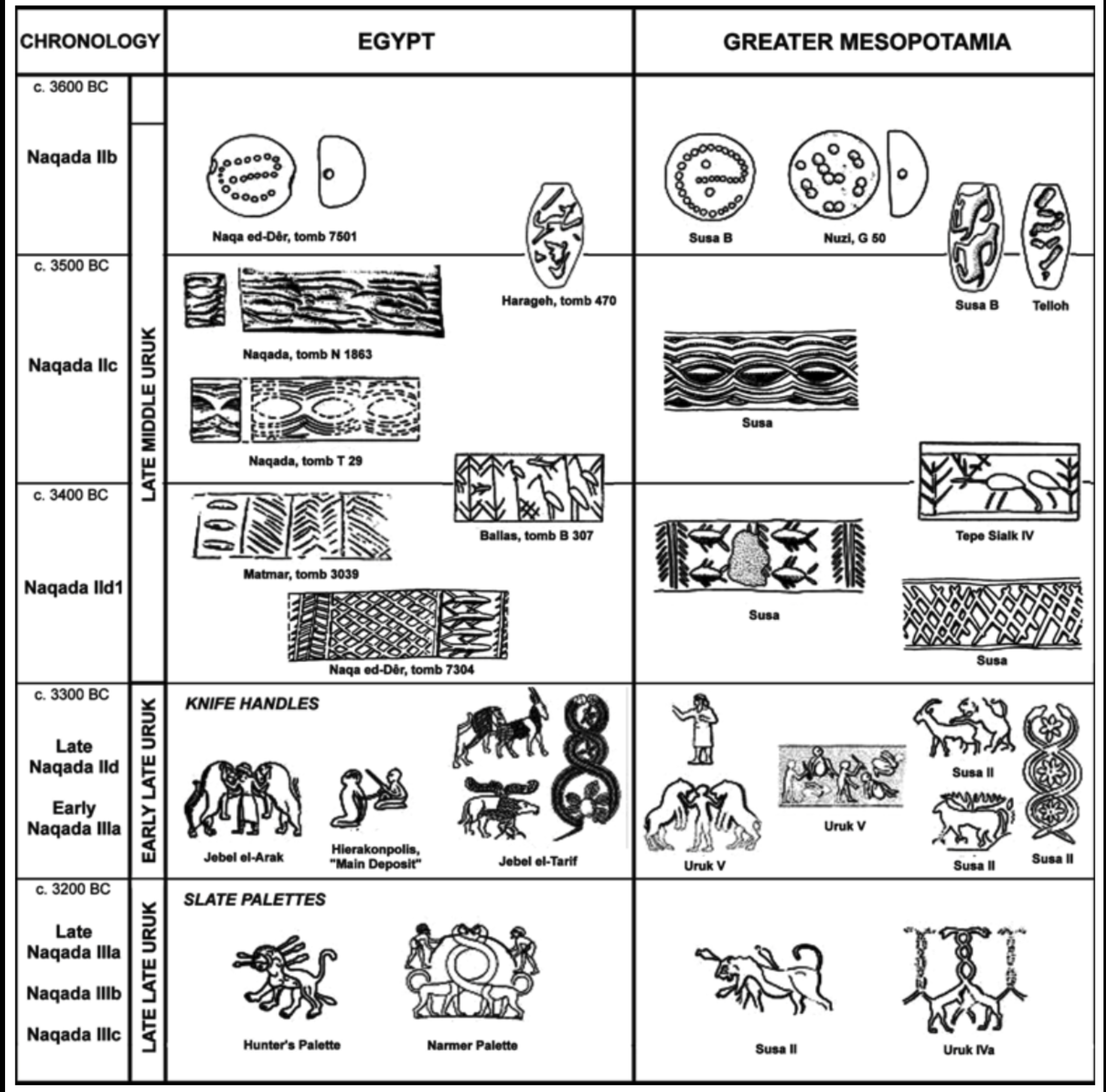
Metallurgy and chariots arrived in China from the west; Mesopotamia, Indus and Egypt were in very close contact. So much so, that the cultural artifacts of the epochs preceding the first dynasties are near identical (including building plans!) : https://raw.githubusercontent.com/wiki/pannous/hieros/susa-e...
Are you sure about that? From what I have read, climate has a pretty big influence on society, and therefore changes in climate would play major roles everywhere.
Longer quote from The Agricola translated:
> These plunderers of the world [the Romans], after exhausting the land by their devastations, are rifling the ocean: stimulated by avarice, if their enemy be rich; by ambition, if poor; unsatiated by the East and by the West: the only people who behold wealth and indigence with equal avidity. To ravage, to slaughter, to usurp under false titles, they call empire; and where they make a desert, they call it peace.
The bronze age started slightly later--just saying in case that was the next question.
In the anthropological context, "civilization" is usually meant to refer to the most complex form of societal organization. Civilizations don't start appearing until about 6000-7000 years ago. By contrast, the Younger Dryas (a sudden climatic shift in the Northern hemisphere that reverted temperatures back to the last glacial maximum) occurred about 12000 years ago. The Laurentide ice sheet probably completely collapsed by about 11000 years ago.
With these definitions, you can see that the distance from the end of the last ice age (collapse of the Laurentide ice sheet) or the end of the last big climate change (Younger Dryas) to the beginning of civilization (~Uruk period in Mesopotamia) is around the same magnitude as the distance from the beginning of civilization to the present day. That's not exactly "soon."
It's a pity the cradle of civilization turned to sand, but at the cost of Earth becoming more habitable it's a fair trade.
Never? If I’m linking something and I want to show some text copied from the article, I copy and paste it. Texts and email and HN and Facebook all support this...where are you sharing things outside of Twitter where this isn’t possible to do?