Earth and Sun(ciechanow.ski) |
Earth and Sun(ciechanow.ski) |
This is a personal reflection on the way it's presented. I'm sure that there are people who already know some of the content, and I found myself skimming over things, nodding, and thinking "Nothing new here." Then realised that there was something I missed, or an explanation that was especially nice, and I had to go back and re-read, wondering what else I might have missed.
So I found it all very smooth, clean, informative, but there was no story, no arc, no narrative, nothing to make me want to sit with a coffee (or other beverage of choice) and simply read like a novel. There wasn't the "Hook; Narrative; Reveal" structure that keeps the reader involved.
Which is a bit of a shame, because the bits I did take time over are really, really nice.
It's really nice.
One thing I would love to see is the path of the sun across the sky for different times of year, and different locations on earth.
Here in Seattle, the difference is fairly dramatic between winter and summer, and I've come to realize that the sun is never directly overhead, not even in summer. It would be interesting to see the difference between polar regions vs in the tropics also.
(90-your latitude) + tilt of the earth (23.5 degrees) = maximum height of the sun during the year
(90-your latitude) - tilt of the earth (23.5 degrees) = minimum height of the sun during the year.
Effectively this means if your latitude is 23.5 or less, you get the sun directly overhead at some time during the year. If your latitude is above 67.5, you get polar night as the sun doesn't rise above the horizon (short one at 67.5, but as you go further toward the pole ever longer)
For Seattle, (90-47)+23.5=66.5 maximum. (90-47)-23.5=19.5 minimum.
I've been thinking a lot about this lately and was thinking of making some educational YouTube videos about it!
It's only ever directly overhead in the tropics.
Quote: One day we’ll colonize other planets, those planets will have different suns, orbits, and rotations periods, yet a simple second will forever be tied to Earth and Sun.
I would definitely give my 'best web page 2019' to it. Bravo!
This is the best web-based equivalent i found with a quick search:
And this is a rather fine tutorial on writing your own:
https://css-tricks.com/creating-your-own-gravity-and-space-s...
Wonderful stuff... thank you for making and sharing!
An often used algorithm for the calculation of the apparent sun position (given a date and latitude/longitude of the observer) is SPA of Reda et al. [1]. If you're interested, I wrote an Android app (Sun Locator [2]) that implemented this algorithm.
[1] https://www.sciencedirect.com/science/article/abs/pii/S00380...
[2] https://play.google.com/store/apps/details?id=com.genewarrio...
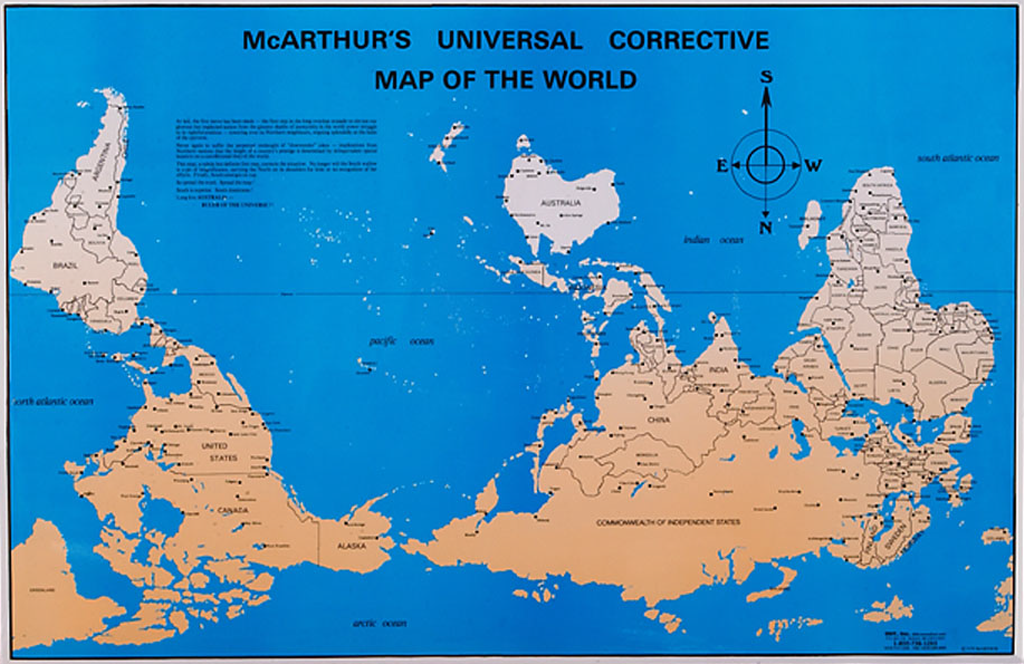
North is not up.
When seen from above the South Pole, the Earth is rotating clockwise.
But really doesn't make much sense to talk about the rotation of a sphere by analogy to a 2D clockface. The Earth rotates from West to East; that's all that needed to be said here.
(But yes, there are many maps that don't have north at the top).
The thing I'm thinking of is if small deviations accumulate over years, how night sky is changed at the same date across, let's say, 20 years?
Then there are the different eliosoidal (and soon geoid with NVD22) shapes that are the basis for every other reference system, most based on similar, but slightly different geodetic network adjustments. Some systems, like NAD83, remain relatively fixed in reference to a particular land mass (North America Datum 1983). Some will then progress with the land mass as it moves on the Earth's plates, others will remain fixed based on a (the) prime meridian, or in reference to the center of gravity of the Earth as it shifts, or in reference to Polaris, etc.
So now you have multiple measuring systems each referencing different geometric/geodetic/astronomic points/lines, and further it matters what time it was when you defined those points/axises. WGS80 is the basis for many modern systems, including NAD83. ITRF is similar, but defines a yearly amount of progression since ~1980 to account for things like continental drift. They coincided around the time when they were defined, and have been diverging some number of millimeters per year since then.
Once you agree on a definition of a system, you further have to define how to measure it. Will North be a point in time, or a rolling average? Will the center of gravity of the Earth be based on changing rate of Earth's rotation, or with respect to a geodetic benchmark or network, or maybe based on millimeter fluctuations in deviations of the orbits of the NAVSTAR / GPS satellites? Should Euro/ Chinese/ Russian / Indian versions of GPS satellites be taken into account?
I'm over simplifying things, as there are additional layers of complexity involving the actual tools for surveying and measurement, the precise steps for any network adjustments or translations, rounding rules and certain geometric assumptions made for different types of math, and way, way more. (You can't actually stretch a tape measure around the equater.)
Take all of that, and then contemplate how all of this is spinning around arbitrarily in space. Sidereal vs solar is only one of 100s of aspects of how we measure these things. It's not just time, but also geometric space.
Everything's relative.
Then you can ask the same person for directions to their house, and they'll turn around and text you GPS coordinates to 12 digits.
Earth's mean obliquity is currently 23°26′12.2″ (or 23.43672°) and decreasing.
The numbers are for the highest angle of Sun toward the horizon in a single day. This happens at solar noon (solar noon is the moment that Sun passes your local meridian/north south line).
It seems reasonable to call north up because that frame of reference is how maps usually look.
To subsume your frame of reference, we could say the Earth isn’t hanging in space, it’s in free fall around the sun.
There are other frames of reference at progressively larger scales.
Edit: Also, the word ‘hanging’ usually implies an ‘up’.
No I am not. What I said was that they should have left it as just that the Earth rotates from West to East (no frame of reference). I only talked about how it would look like from above the South Pole to show that the described anti-clockwise direction of motion was relative to the frame of reference that was being, unnecessarily, assumed.
The Earth has two poles and they are equal, just like with any (approximate) sphere. If you are going to describe how the Earth's rotation looks from above one pole then you should also describe how it looks from above the other. But once you describe it from both poles it becomes obvious that you're not really imparting any useful information because, while it looks clockwise from above one pole it looks anti-clockwise from above the other. Better to not use any frame of reference at all. We know that the sun rises in the East and sets in the West. With just a little thought it is then obvious that the Earth is rotating from West to East and that is all that needs to be said.
Ok
> We know that the sun rises in the East and sets in the West.
You didn’t even try!
> North is not up
Look at the original quote from the article - "when seen from above". There was an assumption there that seen from above means seen from above the North Pole. Thus an assumed frame of reference when none was needed.
I do not assume seeing the Earth from above means seeing it from above the North Pole. Neither would an astronaut, who don't have to assume, they live the experience of seeing the Earth from all orientations.