What is energy, actually? (2011)(jancovici.com) |
What is energy, actually? (2011)(jancovici.com) |
My own answers (shared as a starting point rather than a destination) would be:
A)
- old westerners are really attached to the pensions they promised themselves
- marginally-skilled people prefer the illusion of agency offered by employment over being total dependents of the state
- people who have never experienced certain products and services attach much more value to them than those who already have--new toy vs old hat.
- plutocrats are very interested in keeping the machine well-oiled so that they may enjoy their lives in peace and keep the guillotine at bay.
and B)
- short of civilizational collapse, I'm not sure that we can.
The good thing at least is that some of us have at last reached the conclusion that some sort of planet-wide environmental growth limits have been reached, even that wasn't the case until not that long ago, when any mention of a possible limit was met with "we'll technologically surpass that, we always have".
Outside of global warming--all we plebes get are Pinker-nuggets on how everything is just fine.
The article has it quite the other way round: Once energy consumption doesn't grow anymore we either need more efficient means of growth (i.e. less energy consumption per growth unit) or we have to forego growth.
It's pre-Industrial-Age Malthus all over again: Barring paradigm shifts that allow for more efficient production planet Earth can only sustain a maximum number of people (roughly 1 billion around Malthus' lifetime).
However, Malthus' theory has been disproven time and time again precisely because there have always been such paradigm shifts that allowed us to sustain more people with fewer resources, in others words to increase GDP/NRJ as well as NRJ/POP.
If NRJ/POP becomes stagnant either GDP/NRJ will have to grow rapidly or there won't by any GDP growth - and by extension population growth - anymore.
I just don't get the seemingly recurring obsession with artificially limiting growth. Yes, thermodynamically the energy available ultimately is limited but that doesn't mean we should start to behave as if we've already reached thermodynamic equilibrium.
What supporters of artificially limiting GDP growth often don't acknowledge is that placing such a limit also places a hard limit on population growth or even necessitates a reduction in population.
In fiction, one staunch proponent of such an approach is Avengers villain Thanos, who doesn't want to decimate half of the Universe's population for a lark or because he's simply evil but because he's on a mission to free the Universe from growth and overpopulation.
I suggest that instead of obsessing with the NRJ/POP term in the equation we focus on GDP/NRJ instead.
It's rather telling that even a place like Hacker News has trouble understanding what technology is, what it has done and what it can do.
If i'm not mistaken that's a non sequitur. How do you link GDP growth and population growth? Why would an ever growing population even be a goal?
> there have always been such paradigm shifts that allowed us to sustain more people with fewer resources
No, paradigm shifts have allowed to sustain more people with more resources. Sure resources per people were smaller (eg more efficient processes), but global resource usage has always been growing (apart from recessions and other "bad" events where people actually died from stuff not working). This efficiency / resource usage counter-intuitive correlation is known as https://en.wikipedia.org/wiki/Jevons_paradox.
Achieving “the same with less” at a macroeconomic level is actually impossible. Because if you reduce your inputs, you are by definition reducing demand for someone else’s outputs, leading to ultimately less demand for your outputs, i.e. a recession.
The “way out” is for the increasing output to be more ecological harvested, less polluting, and more recyclable than before.
GDP growth and population growth are inherently linked: In order to provide sufficient resources for a growing population resource production has to increase, either by more energy input or by more efficient production.
If on the other hand population growth suddenly stopped and consumption per capita remained the same the only way for GDP to continue to grow would be to increase output per unit of work (i.e. the GDP/NRJ term from article).
> Why would an ever growing population even be a goal?
It's not as if someone purposefully sets this as a goal. Population growth given sufficient resources up to a point seems to be a naturally occurring phenomenon.
If on the other hand we decide to deliberately constrain the availability of resources this in turn means putting a constraint on population growth as well. Ultimately, this means deciding who gets to live and who doesn't.
If for whatever reason population growth stops naturally there's no need to establish growth as a goal for its own sake. However, artificially constraining growth seems inhumane to me.
I can't remember the exact quote but somewhere in the epilogue of the first Dune novel Frank Herbert has planetary ecologist Liet Kynes say (or rather write because he's penning guidelines for educating the Fremen) something along the lines of: "Life is its own tool for ever more efficiently making use of the energy available within a system."
In my opinion, that's a profound insight.
Jancovici's proposal isn't to artificially limit growth, it's to do realistic accounting. When you pull out a barrel of oil from the ground, you gain something (in GDP, etc) but you also lose something. If you never account for the losses in biodiversity, resources, clean water, etc then you can pretend you're "growing" while actually having net losses accumulating.
It'd be wishful thinking if there was no evidence to back up that claim. However, these paradigm shifts have happened in the past: hunter-gatherer society -> nomadism -> husbandry -> agriculture -> crop rotation -> industrialisation -> information age / green revolution -> digitalisation
Extrapolating from that there's no reason to assume this will suddenly end.
I'm in favour of doing realistic accounting. However, the original title was something along the lines of "In order to reduce energy consumption we need to give up growth.", which turns Jancovici's conclusion on its head.
Not taking into account or neglecting the GDP/NRJ part of the equation and solely focussing on NRJ/POP is tantamount to falling for the same defeatist Malthusian fallacy that we're doomed anyway.
That's what absolutely everyone has been doing for the past 70 years. What happens usually when energy efficiency is called the rebound effect. We will create more with as much energy, not create as much with less energy.
Also, note that creating as much with less energy will limit GDP growth as well, as the GDP is based on creation of goods and services.
At a basic level, it's a cognitive bias regarding economics, the idea of ultimate scarcity: a pie that's forever limited in size and that we all must share (opposite of a view of "abundance"). It however contradicts most of our experience of economics; throughout history champions of "abundance" (who dare to create it) are known as great kings and merchants and soldiers and religious figures. Facts are much less favorable to proponents of scarcity — such mindsets usually lead to economic crisis, under-development, stagnation.
The scarcity view here would move that Earth is already saturated, no more room for anything / anyone, and thus we must all reduce our hopes and start sharing what little is there. Obviously, this is scientifically and economically absolutely wrong, the problem is more about distribution — the Earth is the kind of planet that can sustain 1,000 times more population, and that's low-balling it in terms of thermodynamics. It really is more a problem of energetic efficiency and now externalities (space industry to the rescue).
On a cultural level, technology and development seem to map on a spectrum of perceptions ranging from "technological utopists" to "luddites" (believers in a technological doom). Both extremes are unlikely so most people/cultures fall in-between, around the center usually.
It seems, again from history, from literature, that the best kind of development stems from a culture 'rather slightly positively biased towards technology' (with limits and caveats, what we could call a 'problem-solution driven society'). This was basically the bedrock of innovating Damascus around 1200, of innovating China (key moments throughout the last millennium), and of the scientific revolution in Europe, as well as 20th/21st century tech centers in America and Asia.
My problem with anti-growth beliefs and scarcity proponents is they usually stop short of describing the whole picture, what implementing it actually does to populations, what economic slowdown or depression mean in real-felt terms for real-people. In my mind it's just as dangerous as saying "oh let's build a fascist state because that will be better to solve our problems, that's a risk worth taking!" On paper, maaaaaaybe, you might think that, as a thought experiment; in real life it just never worked. Never. That cure has always been worse than the disease. True for fascism, true for economic shrinking (and there's no "minimizing" growth, the minute you stop aiming for growth which isn't easy nor granted by the way, you find yourself in a world of depressed indicators and it becomes uncontrollable).
Sometimes I feel like people don't realize that piloting a global economy is more like dog fighting or F1, it's not a walk in the park that we are free to take casually and amend to our liking — "oh, let's take this nice little path here!". No, it's hard, and when we fail too much, people die. It's not a toy to play with, it's a freaking hard tension between survival and progress. Idealism is very dangerous when met with complacency.
If everyone use such amounts there were no global warming. But humans always have not enough stuff...
You should do both.
Edit: Do people who downvote me disagree that Capitalism necessitates growth to function? Or do they disagree that we should get rid of it?
What you are proposing is thus an imperialist dictate on African and Asian countries, which is an obvious no go.
Instead you should advocate for improved standards of living and flourishing economies in all these countries, which is strongly correlated with stabilizing population levels.
Africa, with 1.+2 billion inhabitants, has a tiny carbon footprint compared to the US (which as less than 1/3 of Africa's population).
Source: https://unfccc.int/files/press/backgrounders/application/pdf...
So either we tell them that, sorry, but they have to stay dirt poor and also to stay away from their rain forests even if they starve, or the aim is to eradicate poverty on the planet, but in that latter case their resources footprint (this is more general than carbon alone) is bound to increase.
That's why the global population is a key factor in fighting climate change and protecting the environment.
It is exactly the same on the micro level.
And yes, becoming poorer is what giving up on GDP growth means for most of us, since the population is growing.
How about we started cutting the fat in the public sector? All that debt-fuelled overspending western governments engage in has a massive climate impact.
I really don't understand this disconnect between the message of urgency about the environment and the climate, and the widespread complacency about an actual root cause of the issue (as illustrated by your comment), which is population growth: "Oh it's slowing and will probably stabilise at 11 billions... that's fine. On the other hand, we must be emissions-neutral and stop using plastics by tomorrow." That's totally incoherent.
Natural population growth is not occurring in rich countries
Sorry but no, this is a hint at best. This not evidence. Everything comes to an end, eventually.
Regarding the GDP/NRJ ratio: the coupling is somewhat less strong, however we're far from the strong negative coupling that would be necessary for our coming energy landscape. As Jancovici said (in this article or another), we always went from an energy source to a better one ( hunting to agriculture; muscles to wind to coal to oil); we never experienced going back to less concentrated ones.
+products, so it will be 5-6k in total. Still not much.
Yes, the entire world cannot buy larger cars than what we need them for, we cannot fly around the world on vacations, we cannot throw away half the food we produce, we cannot buy clothes to use them once, and so on.
Such needless things, often more related to consumption culture than living standards, is responsible for a large portion of emissions.
Not only that, but we live in societies with an enormous capital in infrastructure built up from previous emissions.
I think westerners should at least start thinking about not emitting CO2 just for the fun of it, before telling others to not have too many children.
But the key issue with your reply is that this is not 'us' doing this versus 'them' doing that.
We must reduce CO2 emissions and we must stop population growth. Both 'we' mean humankind as a whole.
We just need to learn to be efficient.
The world is not empty. It's either exploited to cater for human needs or wilderness that should be protected at the point we've reached.
Math: 327 million US ppl * 274 UK ppl per sq km / 35 US ppl per sq km.
Granted, a few pockets of wild forests left, Amazon, parts of Central Africa, New Guinea, Siberia. Under intense development pressure. Hard to call that "most of the world".
Southern California is an inhospitable desert, but tens of millions of people live there nonetheless.
PS. Mars colonization is folly.
In developed world energy intensity of GDP is decreasing even when you take into account imports. Post-industrial economies can grow while decreasing energy use.
What the author is suggesting is that the developing world should stop growing. I can't agree with that. They need their electricity and washing machines.
GDP per unit of energy use (constant 2011 PPP $ per kg of oil equivalent)
EU: https://data.worldbank.org/indicator/EG.GDP.PUSE.KO.PP.KD?lo...
US: https://data.worldbank.org/indicator/EG.GDP.PUSE.KO.PP.KD?lo...
People in developed countries don't need that either. Commuting being a hard requirement for modern life in an industrialised country is both a fallacy and perpetuated cargo cult.
Most people working in offices today effectively wouldn't have to commute but they still do because employers require them to do so, basically because "that's the way it's always been".
Doing away with lengthy commutes will be key to addressing many of today's problems, including climate change.
There are two very-long-term futures. One where humanity ends up in space, and one where we get the Chicxulub treatment. One of those paths involves us having so much energy that wasting a bit on holidays is irrelevant, and the other raises the question of how much we need to conserve for future generations anyway given that we're going down the nihilistic path.
So the best you can get from where we are now are constant factors, either in a direction interesting for us (increase of energy efficiency) or not really interesting (from the energy needs point of view) but much needed and even ineluctable (lowering carbon emission and/or lack of petrol resources) -- and that's because we are already VERY far beyond the negligible impact on Earth point. Classic economic models are based on the approximation, now long gone, that resources are free. Still some are attempting to replace physical activities by virtual ones, to save the models (I don't really understand what's the point, but whatever): this does not hold, because you can not replace everything and worse: even just the essentials are problematic.
So the question is actually not: "[do] they need their electricity and washing machines?"
The question is rather: is there even a physically/politically/etc. reasonable way for everybody to get that; and actually even just to stay durably in a not too much chaotic world.
And frankly this will be a HARD problem to solve. To the point relative peace in the industrialized world is clearly at risk, IMO.
1. Corporations desperately pursue continuous growth, even when they're already profitable, and do so at the expense of the environment, employee welfare and sometimes, the rule of law.
2. Corporations pursue growth because investors demand it.
3. Investors demand growth because they want a certain minimum return on investment.
4. Investors need to invest money in instruments with a certain minimum ROI because if they don't, inflation will erode their savings.
5. This continuous growth requirement forces companies to compete for larger and larger portions of market share, which in turn forces their competitors to compete harder in response.
6. The end result is a sort of "Red Queen" effect where everyone is forced to compete harder and harder just to maintain his/her existing standard of living.
7. We know that the more extreme a competition becomes, the more ruthless the participants become, often to the point of acting immorally.
8. Therefore, we should focus on curbing inflation to curb the pace of overwhelming growth, and thereby restore some measure of social justice.
> from 1880 to 1975, when energy per capita is strongly growing, the world undergoes just one major economic crisis, in 1929.
> since 1975, after the rate of growth dramatically decreased, there has been a crisis every 5 to 10 years: 1975, 1980, 1991, 2000, 2008, 2012, and it would be no surprise to have a new one in the coming years.
These statements are just totally wrong. There were many more economic crisis between 1880 - 1975 and often those were worse then those since 1975.
These statements are just 100% opposite of every history of economics I have ever seen.
It seems he gets the causation totally backwards.
> and recurring recessions will become something normal in our economic system
Recessions are absolutely not linked to energy supply.
But now that I have listened to him he is 100% spot on about most things.
The only problems this guys has are:
1) He's biased for nuclear because it feeds him. Nuclear cannot be built without hydrocarbons and toxic nuclear waste is not something you can dig down into the ground without hydrocarbons, even if the radiation is only hazardous for 1000 years, we're not going to have enough energy to handle the waste.
2) He does not understand money enough yet. Fiat money cannot have value without hydrocarbons. GDP is 99% debt because today money is 99% debt and therefore neither has value. Money is something humans have arbitrarily invented without being inspired by nature, it does not exist!
3) He does not understand that some things run and use energy whether you use them or not. For example the routers on the internet because processors are synchronous. The solution is async. processors, but our economic system doesn't encourage energy saving research, at least before it's too late, which is now.
That said, if the energy density of uranium is 1000000x that of oil, which in it's turn is 1000x more than batteries; this guy for president?
As such, per capita energy usage isn't just linked to GDP, but also to Human Development Index (a composite index to quantify quality of life that includes GDP).
Here's what HDI vs. per capital electricity usage looks like: https://i.imgur.com/8otdGxP.jpg
Bubble size is proportional to population. While correlation does not imply causation, it's quite clear that as quality of life improves, so does energy usage, to a point.
The striking thing is the knee. The knee is mentioned in the parent article from a GDP point of view but I think that's only part of the story. On the low-energy side, you can see that a little bit of energy can dramatically improve your quality of life. At the very low end is where people are cooking with indoor stoves and dying to the tune of 3.8 million per year from indoor air pollution.
Then you see for places like the USA, we could cut our per capita energy usage in half and probably not be affected from a quality of life standpoint. We're saturated.
There is a worldwide moral imperative to increase per capita energy usage of people at the low end of this curve for quality of life reasons. They deserve the ability to choose how they spend their time. Doing so requires about a 2-4x increase in total world energy production.
Energy sources that can enable that kind of gain without causing more air pollution deaths and without causing climate change are well-known. Here they are as a function of carbon emissions (equivalent) per kWh generated: https://i.imgur.com/8LQFVMO.png
Not as crazy as the fact ISLM doesn't capture private debt, but still a huge problem
Yet, reduction of energy use per unit of GDP is not impossible. In the last 28 years there has been reduction by 35% overall.
FWIW, i want to point out that this is an often-overlooked leverage point for improving our situation. Our systems today are grossly inefficient. For example, something like 30%-50% of the electricity we generate (okay, transform) is lost in the grid on the way to the consumer. Much of it is lost after that too.
I don't think it is that much.
Plus electricity is not our main energy consumption.
And most of our machines have actually a decent efficiency. And/or it is hard to optimize. ICE for example have not even progressed that much in several decades. One or two dozen % maybe? And they will also not improve much in the future.
So we can not sustain by merely efficiency improvements. Because we are talking about reducing the energy consumption greatly. Like x2, 3, 4. But of course efficiency is crucially important, and part of what will be required.
I can't find a good reference, and I think it's gotten better since the 70's, but yes, depending on who you ask and how you do the accounting (and which nation or region you're talking about) losses are from about 10% to as much as 70%.
I'm glad you're not against improving efficiency but you should check it out, the scope for improvement just in efficiency is great.
I. e., ICEs emit streamers and blobs of unburned fuel (not to mention other still-useful chemicals that instead become pollution). You can install a spark plug in your tail pipe and send 5m flames shooting out the back. People used to do it for kicks, I'm given to understand. There's a whole cottage industry of fringe-tech gadgets to atomize fuel more finely to improve cars' fuel efficiency.
Or consider the refrigerator, it opens like a cabinet spilling cold air on the floor every time.
We can get 2x improvement in energy consumption just though greater efficiency.
https://www.econtalk.org/andrew-mcafee-on-more-from-less/
That appears to be backed up here too; this article reports that the $GDP per kWh is increasing over time.
Does this then mean that reducing GDP will have disproportionately LESS of an effect on energy consumption than it will have on value? I.e. we will have to take a much bigger hit on value produced to effect energy consumed.
The cost of fossil fuel is low because the human work necessary to extract it is very low- it's a problem for the ecology due to no (immediate) human work cost for the Co2 damage. The cost of solar is even lower (which is why it's disruptive)- once you have the solar panel, you don't need any human work.
Likewise, people will require less energy when wages shrink or disappear all together. Energy consumption is one of many indirect parts of the market economy. When people have less money they will travel less and shop less, which decreases the need for fuel and manufacturing.
---
Reducing energy consumption is a very bad deliberate goal though. Energy efficiency is a natural goal from the collision of increased demand versus fuel cost. The economic desire to increase energy efficiency does just result in lower prices but also cleaner fuel sources. This has trended true over the last 150 years far before people became aware of environment consequences from rising fuel consumption.
Since rising demand, a product of rising consumption rates, drives technology interest in fuel efficiency it is healthier for future economies, and the environment, to encourage greater fuel consumption at consequence to the economy, and environment, at the present. That statement will remain true only so long as up scaling increase of efficiency outpaces up scaling rates of consumption over time. So far the difference in scale has shown true since the start industrialization and there is no indication that the difference in scale will decrease.
Another way to think about this is energy equivalence. As energy sources become cheaper, cleaner, and more available over time they allow greater access to energy by people with less purchasing power. A poor third world economy can grow in ways it could not before because less investment is demanded to achieve growth independence. These new and emerging energy sources and distribution methods are not created for humanitarian reasons. They are created from expensive investment to satisfy expensive first world energy demands. The people who benefit most are those with the greatest need in developing economies under high market pressure without the luxury of expensive investments in infrastructure or logistics. An under-developed economy with high market pressure is one where there is huge demand for raw goods/resources but that economy lacks the finances to invest in itself, such as Ghana under the cocoa industry.
Your best bet would be to reduce the energy consumption of things and have more power sources that have no CO2 emissions like hydro-electric and nuclear.
Nobody wants to admit that the only real way to limit energy consumption is a horrible dystopian future.
The only exception is Africa but even there the highest emitting countries like South Africa have a birth rate barely above replacement levels.
Read ancient history; you'll see that empires, for ages, relied entirely upon pillaging their neighbours for their own enhancement. The world economy was a strictly zero-sum game basically forever.
The political constructions of the past reflected that state of the matter. There was no social mobility because resource scarcity commanded that as a son of a mason, you couldn't be anything but a mason. And of course, 90% of people had to work in agriculture, anyway, just to feed everyone. There was no way out. Of course society was driven through rigid hierarchies.
Then at some point some guy discovered America, and a strong, growing influx of riches began pouring into Europe. People discovered absolute, continued growth. Then as this trend continued and England had cut down all its trees, they started using coal, and the movement accelerated itself, and went on until now.
As Jancovici remarks, we always went from some energy source to a more powerful, denser, more reliable one: hunting to agriculture, windmills and hand pumps to coal, coal to oil. We never went the other way around, but at some time we'll have to. How to cope?
Now let's talk for a minute about GDP. I had quite heated argument with people with economics background. Basically, they say that GDP can grow eternally because GDP is related to value, which has no physical existence. So though GDP generally implies some form of materiality (be it in the form of ore, grain, industrial goods, or services) it's not mandatory because you could for instance build a better car using no more materials than the previous one.
However it seems to me that this quickly wanders into philosophical territory: what is value? In economics, it seems related to human satisfaction. As the number of human beings on earth is physically limited (we could be 10 billions, 100 billions, but not an infinity), at some point that implies that individual satisfaction can increase indefinitely. That's a stretch, however you see it. That would mean that two humans exchanging a given set of resources in a closed room could increase indefinitely the satisfaction they get from their relationship, and so any arbitrary small country with as few inhabitants as you want could have an infinitely growing GDP, and reach individual nirvana and beyond. BTW I fail to see the point of free trade at this point... Standard neoclassic economics are full of such logical holes.
https://www.tandfonline.com/doi/abs/10.1080/13563467.2019.15...
If you didn’t have growth, you’d all be waiting for your promotion at the power plant when someone dies and frees up a position for you.
I would also like to point out that if there were to be no growth and no inflation (edit: and a static population level!), then the only way to add a dollar to your pile is to permanently make someone else a dollar poorer. That seems likely to accelerate the lethality of the billionaries vs. hungry poor conflict rather than de-escalate it.
> inflation will erode their savings
> compete harder and harder just to maintain his/her existing standard of living
These are two different things. Savings are a stock, "standard of living" is a flow. The distinction matters here because GDP measures flows; the two are related through the money equation "MV=PQ".
pet theory: Inflation is way way more than zero almost everywhere (prices of services and rents reflect this), but high inflation is masked by increased supply chain efficiencies, cheapening (in some cases worsening) of products and other factors, which keep prices of physical products relatively stable.
I'm not an economist, but the Big Mac Index would suggest otherwise.
> then the only way to add a dollar to your pile is to permanently make someone else a dollar poorer
What's suggested is not to stop the production of wealth, but the rate of growth of production of wealth.
Is this really true? Aren't you mixing up production growth with production?
Imagine I live alone on my small farm in the middle of nowhere. I produce 20 bags of wheat every year. I eat 19 and save one. So every year I add one bag of wheat to my pile. No one else gets poorer. Or does the existence of the wheat in my barn somehow decrease the value of all other wheat in the world?
That's fine when wealth distribution is "the 0.01% owns 80% of the wealth".
Plenty of dollars to go around...
"Unbiased private-sector efforts to calculate the real rate of inflation have yielded a rate of around 7% to 13% per year, depending on the locale — many multiples of the official rate of around 1% per year" https://www.businessinsider.com/if-people-knew-the-actual-in...
In my country (Hungary) grocery prices rose an average 38% from last year for example.
So instead of having a 2% CPI, we actually have closer to 9%
It also allows companies cover for Wage Compression because many employers base at least part of annual raises on "Cost of living Adjustments" so if the government is saying Inflation was 1.9% well then the cost of living adjustment for my salary may be 2% with another 2% for performance based or 4% total. But if actual cost of living went up by 9-13% which is likely my real buying power for the next year dropped by 5%.
There is no way this is true. Real world inflation (the kind all working people experience directly) is somewhere between 5-10% year-over-year in the US + Canada today.
As soon as there's a fiduciary duty to maximise ROI, morals go out the window. If you as an officer resist, the collective of shareholders will replace you with someone who will make more money.
There's a dissolution of responsibility that comes with the distributed nature of shares. The owner of a private company probably feels a certain amount of responsibility for the welfare of their workers. I'd be willing to bet most Amazon shareholders don't.
It's probably a naive opinion to hold, and I'm not saying every Amazon shareholder is personally responsible for the warehouse workers that can't use the bathroom without fear of reprisal, but the system is rotten.
Your premise is wrong.
As the U.S. Supreme Court recently stated, "modern corporate law does not require for-profit corporations to pursue profit at the expense of everything else, and many do not do so." ( BURWELL v. HOBBY LOBBY STORES, INC. )
How? Shareholders are either to small to wield power, or big enough to be equivalent to a private owner. There are plenty of boring public companies that don't fight for 10+% share price growth every year.
Based on what? And in contrast to what?
I suspect we differ in our fundamental ideological assumptions, especially if you subscribe or are friendly to Marxism - because I completely fail to connect Apple (or GE, or some publicly traded mid-size company) to any sort of 'social injustice'.
>As soon as there's a fiduciary duty to maximize ROI, morals go out the window.
No, they don't. Certainly, if you're a widget company, the focus is on making the best widgets within your constraints (and not solving homelessness) but that's as nefarious as a saying a carpenter doesn't have morals because he focuses on carpetry.
and eventually you're left with sociopaths running the show.
Nice pocket philosophy, if only the world was a zero sum game, but it's NOT.
The past 300 years of growth in human prosperity should make that abundantly clear.
Past 30 years the world has reduced extreme poverty by half. Not because we in the developed world got poorer.
The only fix we need is to gradually increase taxes on resources until they match the environmental impact. Sure we nee to also regulate the market, etc. To avoid draconian schemes.
But a well regulated market with solid incentives can fix many problems.
They are all absolute statements, but I don't believe they're true most of the time.
1. I think most corporations are small companies
2. Microsoft didn't grow for almost a decade. Then they tippled in size. Are you suggesting that Microsoft didn't grow for a decade because investors didn't demand it, but were ready to triple in size whenever their investors showed up and demanded it?
3. This is true of any investment and not just true for professional investors.
4. This is true of everyone.
5. Most corporations pursuing continuous growth is a fallacy. The competition you describe is called Capitalism and it has many benefits. Not least of which are lower costs and better products/services for the consumer.
6. I disagree with the premise so I disagree with the conclusion.
7. Capitalism can amplify greed and greed can lead to acting immorally, which is bad, but I maintain this is rare.
8. I've been toying with the idea of the benefits of curving inflation in my mind. You're going to have to define what 'social justice' is and what restoring it looks like.
And sometimes its to the benefit of the environment, the employees and its in accordance with the rule of law.
> 4. Investors need to invest money in instruments with a certain minimum ROI because if they don't, inflation will erode their savings.
Inflation are low and predictable in the West. And investors would want to make money no matter what the inflation is.
> 6. The end result is a sort of "Red Queen" effect where everyone is forced to compete harder and harder just to maintain his/her existing standard of living.
That really isn't a logical conclusion.
> 8. Therefore, we should focus on curbing inflation to curb the pace of overwhelming growth, and thereby restore some measure of social justice.
I would recommend to you to really get into economics. You are making a lot of assumptions that really don't hold up.
Yes. Sometimes lottery is also the right investment: in the 1/10000000 of cases where you win...
We tend to think that all companies inevitably pursue monetary growth regardless of other costs. If you look at the average corporation that will likely not be true.
Big corporations tends to be greedy because that's how they got big. Not so greedy companies either don't grow or they get bought up by more greedy companies.
The majority of corporations may not agree with the philosophies of the big ones at all. But the big corporations eat more of the cake. One way to counteract this is to starve the bigger corporations of workforce.
Logically, this would never work if other countries don't do the same.
https://en.m.wikipedia.org/wiki/Externality
How much corporate growth is directly the result of taking from the environment? Could a regulating body apply the true cost of corporate growth back to the corporations so it were no longer profitable to take from the environment for the sake of your bottom line?
Assume there is no inflation. If I have invested $625,000 and I want to retire with the ability to spend $25,000 per year on food, housing, medical care, taxes, travel, and insurance, then I require 4% growth (or dividends!) for that to be sustainable.
Another source of inflation is increasing wage & benefit demands, especially from large middle or lower classes who want to afford to consume more because they value the greater consumption as an important part of life, a noble and intrinsically morally good goal of bettering one’s self through self-determined hard work such that the value of your labor and skill increases over time.
In direct response to large classes of workers demanding more pay & benefits, companies will raise their prices to pay for those increases, again totally regardless of whether a stock market exists.
I think really inflation is a side-effect of nature, and thinking along the lines of how to long-term control or remove it is counter-productive, compared with accepting that it is inevitable and then trying to come to terms with living in the future world that this implies.
> In direct response to large classes of workers demanding more pay & benefits, companies will raise their prices to pay for those increases, again totally regardless of whether a stock market exists.
How well this works is down to the "tightness" of the labour market. Central bank policy affects this: raise interest rates -> decrease investment -> increase unemployment above the "NAIRU" ("non-accelerating inflation rate of unemployment") -> workers are unable to demand pay increases as they may be replaced by eager cheaper workers from the pool of unemployed.
Agents in economics are typically modeled as maximizing wealth or utility, which is different from 4, which says agents want wealth to be non-decreasing.
Even at zero actual growth, you would have nominal growth that matches the inflation rate.
Inflation means that the prices of the products that the companies sell increase as well.
Inflation doesn’t matter
Companies that don’t grow are either dying or turning into DMV.
What you call social justice in reality would cement the status quo and deincentivize technological progress. See the lack of innovation in socialist countries. Great at copying, bad at inventing.
Everyone being equally poor hasn't worked in history yet.
Say one country develops this utopia where everyone doesn't have to compete to survive, either companies or individuals.
Its neighbour though remains with the old Capitalist model. In a generation or two the struggling capitalist country could overtake the utopia one in production, wealth or even by force. Then you're back to square one.
I mean South America is 35% Old Growth Forest vs. less than 3% in Europe.[1]
In Europe, pretty much only the Białowieża Forest remains. We destroyed everything else over the millennia.
[1] https://en.wikipedia.org/wiki/Old-growth_forest#Locations_of...
For sure, economies with 1b+ population could have problematic consumption if they developed quickly, like India and China.
China is a recent example, hopefully India will soon be another.
To be fair, EU investment for example, is biased towards equality instead of excellence, i.e. invest in poorer states to bring them up to speed instead of dumping everything on the best performers. Probably because of the nature of the union, where everyone has a decent say. Even so, some developed countries benefit disproportionately. But the world as a whole is not the EU.
What people in developing countries should do is say "yes sir, certainly", then proceed to work towards their own benefit. Like China did (the one thing they did right).
But that's the good kind of growth, you see?
I'm being sarcastic, of course. The ironic (and to me: annoying) thing about the really vocal moralists is that the concept of self-reflection seems to be entirely foreign to them. The problem is always with other people, and those other people just need to change, no matter at what cost.
That's your assumption, and I believe it's pretty wrong. Advocating for changes that go against your own immediate self-interest isn't lack of self-reflection; if anything, it's often a signal of a correctly pointing moral compass.
No man is an island. Rare is the person whose friends and family work in the same booming industry as they do. Even if you benefit from exploiting other people, you might want to that exploitation to cease for the sake of your own life, or the society you live in.
I already am.
I've been at my job for 13 and a half years, I"ve moved up exactly 0 times. Someone has to quit/retire, get fired or die to free up positions and even then you only have 2 jumps until you're manager, from there you only move up to senior manager and then you're into corporate level positions. My senior manager has been here for the better part of 30 years and probably has another 15-20 in her at which time she'll almost certainly be replaced by someone from another office in another state as her boss's position was when she retired a few years ago (her direct reports were just given to someone already in a similar position in another state).
I discussed in many threads closely or loosely related to this topic and many HNers don't share this idea.
You can be a dev in any kind of company and hold any type of beliefs. Outside of SV and a few other places being a dev isn't that crazy money/career growth wise.
We see bank tellers replaced with ATMs because ATMs are cheaper. Humans are adaptable, if done gradually over time it'll probably be fine.
Inflation caused by Federal Reserve actions is just one (minor) type of inflation.
and manipulating measurements
> Advocating for changes that go against your own immediate self-interest isn't lack of self-reflection; if anything, it's often a signal of a correctly pointing moral compass.
People like to advocate for change a lot, and they often do so whilst working in the opposite direction of that change. I consider that hollow.
I agree with this entirely. Some countries managed to reduce CO2 emissions from their electricity production. However when you look at primary energy consumption, including heating, industry, transportation, no country manages to reach a low-CO2 energy profile.
> There are plenty of people in the UK who have a financial problem in keeping warm in the winter.
There are plenty of people in the UK who live in old, precarious buildings with very poor insulation. Mandatory paid-for insulation in these buildings would reduce energy consumption, CO2 emissions and increase comfort of living. That's part of the measures pushed forward by Jancovici.
> And who defines excessive?
That is, indeed the key question of our times.
I like µC, but housing is really great too.
The more I learn about how money works, the more I think of it as a convenient work of fiction — and worse, one that means fundamentally differently things to normal and super-rich.
To take a simpler case, take "quantitative easing", QE, which is a euphemism for printing money. Is that money real? Yes. And it will continue to be until people lose confidence in the currency. Remember that money is data - to print a billion dollars a central bank tells their software to do a quick `moneyToLoan += 10e9`.
The wealthy do play a different game, though. The game you play as labor is to keep yourself and your family alive, healthy, and comfortable. This game, call it game 1 is winnable! And when you win that, you get to play another exclusive game, call it game 2 which is 'allocating capital to make even more capital'. (Of course, you don't have to wait to win game 1 to play game 2, and since most people consume in proportion to income, the goalposts move, effectively keeping them in game 1 forever). But game 2 is the game that government plays, but in miniature. It's the game of power; a nice pot of money lets you reach out into the world through labor and do anything the human hand or head can do. The geeky idealists want to do something really big, like settle Mars. The cynical egoists just want MORE, and are willing to commit planetary suicide for a little extra.
All 4 of the big household expenses are increasing at a rate of 7-20% depending on where you live
Every single cent I have in the market is via index funds.
The legitimate objections to Marx are that he's old - Marxist analysis is like Freudian analysis, there's a big risk of pretending that nothing has happened in the field for a century. And therefore he's not great on the influences of technology; he pre-dates the microchip and the internal combustion engine.
Less seriously, Marxists have a tendency to be annoying jargon-spouters (see Orwell on the subject), and there's a big contingent of fanatical anti-communists who will kick of at the merest mention of his name.
In my long list of round-tuit projects is "see what of Marx can be rescued from the Marxists".
I also agree that the chosen transmission mechanism of money creation (buying bonds and stocks by central banks) might have lead to worsening inequality. I like the Yudkowsky treatment at https://www.lesswrong.com/posts/tAThqgpJwSueqhvKM/frequently... .
But I still think that the inflation is low and if we want to describe the problems that are happening even though it's low, we should create new language, not shift the current one.
E-mail reduced the amount of letters, but Amazon increased the amount of packages.
Over-the-air TV broadcasts consumed way less energy than FHD personalized YouTube streams.
Americans own more than 20 electronic products per household.
etc.
It's the exact opposite of dematerialization.
Edit: To clarify, I'm not at all against these things. On the contrary. My point is that among those people most vocal in demanding (sometimes radical) change from others, I frequently see a complete lack of self-reflection.
Companies make thins more efficient, and thus they impact the environment less.
Compared to what?
Surely not with not doing them at all...
That's because they're either insignificantly small, or environmental theater (a la Apple).
Or are people seriously proposing having 0 GDP growth and 0% interest rates and 0% expected stockmarket returns? A strange world that's almost certainly unstable.
(There is a much broader question that if you expect a dollar to buy you a loaf of bread today, is it really reasonable to expect the same dollar to buy a loaf of bread in 40 years? And what level of stasis would be required to achieve that?)
Er .. "economic growth" and "increasing GDP" are usually considered to be synonyms? Do you have alternative definitions?
GDP is nothing to do with wealth and entirely to do with income.
I have seen a combination of both Shrink and Price increases. The cost of eating lunch at my favorite restaurants has steadily increased, and the Average price per unit for normal groceries has increased on a weekly basis. Even if your bill remains the same, that 32oz Ketchup is now probably 28oz
Looking at some commodity index's Beef is about 2x the price it was in 2009, Bananas are about 40% higher than 2009, Milk over 2x higher than it was in 2009.
So I really do not understand what data you are looking at that shows food prices are not going up? Both Empirically and Anecdotally my food costs are increasing
[0]: https://www.in2013dollars.com/Beef-and-veal/price-inflation/...
[1]: https://www.in2013dollars.com/Bananas/price-inflation/2009-t...
[2]: https://www.in2013dollars.com/Milk/price-inflation/2009-to-2...
If you are so remote that the wheat is guaranteed to remain off the market forever, no matter if your starving neighbour comes and offers you a fortune for it? Perhaps. Otherwise the answer has to be yes.
It's not just me saying it, it was one of the more important cases the US Supreme Court heard in the 20th century: https://en.wikipedia.org/wiki/Wickard_v._Filburn
They might be the authority on who can tax who, but I don't trust them to know how the economy "really" works.
We need a new mindset not new government policy. That change can't and must not be mandated but has to come from each and everyone of us.
A million times this.
My entire office could do their job from home as even when we need something we have to email our team leads and CC our manager so I could be doing that at home, in comfortable clothes, not fighting 50-something men for access to 4 stalls and not fighting 100 something people for 2 microwaves. I mean, to be honest, getting 4-5 hours of my time back every week would actually a huge compensation... after you remove my vacation that's like 8 days a year of free time I'd get back.
But alas, my employer would never hear of working from home. Likely because of the ages of the corporate leadership: Chairman & CEO is 75, President & COO got his first degree in 1987 so is 'young' at 54~, CFO & EVP is 66, CIO is 59, VP of ops is 58, Information Services EVP & CIO is 60...
Good luck selling remote work to corporate leadership types that have 30-50 years of old-school corporation under their belts.
I'm sure any cost savings would probably be kept by the company and not not passed on to employees but I'd save 20-25 minutes of commuting a day (plus the half hour every day I waste sitting at my desk off the clock because the tardy policy is terrible, accidents are frequent on the way in and logging in to your computer and getting the time keeping software open can take as long as 5 minutes) so once you remove my vacation weeks that would get me 8~ days of free time back which alone would be nice. Plus the reduced mileage/maintenance/fuel etc for my car.
I wish I could find remote work so bad, or that my employer would adopt it.
The reason for this was that he spent a considerable amount of time in an office, where there was one bathroom for somewhere around two hundred people. Madness.
https://www.osha.gov/laws-regs/regulations/standardnumber/19...
That said, out of 100+ employees almost nobody drives by car to the office. It's public transport or bicycle.
For me, the question in that case always is: Why is that?
Often, presenteeism (or put less favourably: butts-in-seats) is used to paper over organisational inefficiencies.
For instance, a common argument against remote work is that meetings, particularly informal ones, so-called water cooler talk, help with solving problems or interfacing between people, teams and departments.
However, I'd argue that - more often than not - the situation that brought about the need to have these meetings in the first place really is to blame: If you need to have a lot of meetings in order to make progress chances are you don't have the appropriate processes and systems in place that help you with making decisions and have to fall back on lengthy in-person discussions for almost every issue that comes up.
> That said, out of 100+ employees almost nobody drives by car to the office. It's public transport or bicycle.
Let me guess: You're located in Amsterdam ;-)
It is not just the employers — I’ve worked with many people that think nothing of commuting an hour to work ONE WAY (in their pickup trucks and SUVs no less), even when living closer to work is a perfectly valid option (this is particularly true in the large Texas cities that have a huge amount of suburban sprawl).
A big SUV is one of the most expensive, most luxurious, nicest things, nicest places to spend time that a lot of people will own - way more overall spent on that seat and its driver-supporting-surroundings than on any Lay-Z-Boy or Aeron chair.
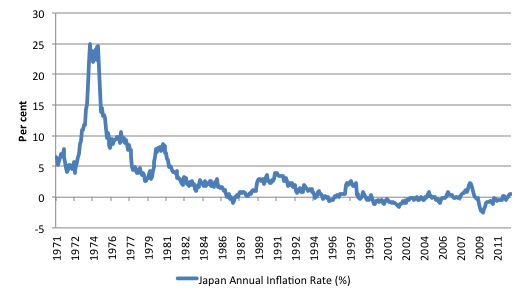
Tremendous graph there.
Basically, services that have to be provided by western labour in the west have got much more expensive, while goods that can be imported have got much cheaper.
This is broadly true though the bit about the West and imports is unnecessary. Manufactured goods have gotten cheaper whether imported or not in real terms, and services get more expensive in relative terms as a consequence. Some of this is probably a result of government misregulation but not all. Cosmetic surgery isn’t covered by insurance, nor is LASIK or hair loss treatment and in inflation adjusted terms prices have been basically flat for over a decade, neglecting the huge increases in quality. Education probably has similarly large inefficiencies, even outside institutions that exist only because of easily available student loans and non-existent quality control like the University of Phoenix.
But Cost Disease is the inevitable product of economic growth. The more capital you have the more labor will be paid because Money is just less valuable to you when you have lots and labour vice versa.
A long report on Baumol’s cost disease in the US context and internationally.
https://www.mercatus.org/system/files/helland-tabarrok_why-a...
This must be interpreted in the context of a large fraction of manufacturing moving off shore in the last 75 years. Manufacturing which remained has become significantly less labor intensive (because that which didn’t has moved to lower labor cost locations).
I think there's also an effect that people are increasingly able to tolerate working very low economic value jobs, because productivity increases in basic necessities of survival, like food and transportation, make this possible. These people are then priced out of healthcare, education, and quality housing. The decreased consumption of expensive labour-based services then decreases their weighting in measures of inflation, allowing them to further inflate, yet overall inflation stay low.
What you may be feeling though, and what isn’t calculated in any numbers, are the increases in volatility, which is itself a cost. The volatility of not living in the few economically burgeoning regions, the volatility of having to keep moving up the ladder or else falling behind, increased years of education and loans for what may or may not be a lucrative career, etc.
> volatility
Definitely worth having a discussion on this, although we need to define the reference period - volatility was high in the 60s, 70s, and 80s. Arguably it was only low in the ""end of history"" period between the fall of the Berlin wall and the 2008 crisis.
But yeah, if I add filler to my soap so that it costs me 20% less to make, but requires you to use 20% more for efficacy, I've cheapened the good, and inflated it's cost.
Whenever economists claim inflation is low, they're almost always exclusively talking about traditional consumer goods (in which case it is low for the most part). They comically go out of their way to ignore the inflation in housing, healthcare, education and various asset classes.
Warren Buffett likes to regularly point out that the Fed's rates act like gravity on stock valuations. The lower the rates, the less gravity. The same is largely true of how housing is affected by the Fed's rates. If you want to absolutely crush housing prices, push Fed rates back up to where mortgage rates are at 15-20% again. What that all really means is, the lower the rates, the more asset valuation inflation occurs. It's just that for amusingly convenient reasons (ie to pretend inflation is lower than it is), most economists like to pretend that asset inflation doesn't count as real inflation in their models.
This is false. The CPI weights the basket of goods that comprise the index based on the types of goods that people actually consume, which includes housing (either in the form of rent or mortgage payments), energy, as well as food and consumer goods. It adjusts for consumption patterns monthly, and re-weights the entire index every 2 years.
The BLS surveys rental prices as well as calculating something called “owner equivalent rent” for owner-occupied housing.
> The OER and Rent indexes have the largest weights of the 211 item categories (item strata) that comprise the CPI market basket. As of December 2008 their shares of the total weight (their relative importances) in the CPI for All Urban Consumers (CPI-U), were 24.433 percent and 5.957 percent, respectively.
[1] - https://www.bls.gov/cpi/factsheets/owners-equivalent-rent-an...
I know what you're proposing will be very unpopular but I have an idea that will be even more unpopular: a federal property tax on land + buildings at (five percent of property valuation) per year. There will be absolutely no exceptions for anyone. Everyone must pay. This money will mostly go back to local governments, toward infrastructure and utilities (mass transit, water, electricity, fiber Internet, sewage, garbage collection, education, ... ideally automated as much as possible) and a portion will go to supplement VAT to pay for supplemental universal basic income (in addition to the freedom dividend) that more than covers the new property tax on a one bedroom somewhere in the continental United States (so not necessarily midtown Manhattan).
The key difference in what I propose is the lack of exceptions. Everyone must pay regardless of whether it is a strip club or a church. You don't pay, you get evicted within fifteen years or however long we decide. I recommend eviction should happen when unpaid taxes reaches 100% of property value.
My Hope is that this will absolutely crash the housing market and stop this irrational speculation in the housing market.
A severe tax on property would simply force property owners to raise rents. This in turn would price people out of the market. The housing stock would suffer as property owners would have no excess funds to make improvements and repairs to property. Building of new property would slow as the market for property deteriorates.
Beyond that...
VAT has had disastrous effects on European economies (go look at the price of goods in Europe. Significantly higher in real terms than in the US). Part of this lies in the way VAT obscures the tax portion of cost, allowing governments to surreptitiously raise taxes. This has happened in most developed countries where VAT is implemented.
You also mention government doing many wonderful things with its newfound revenue, but the reality is that government spending is usually wasted on bureaucratic bloat and other inefficient allocations.
Yes in many terms it's a "waste" but your suggestion of not driving and working from anywhere changes a morning from "get up think about home and family, escape to comfortable car for an hour think about anything, start working for customers" to "get up and think about family, immediately pressured to start working for customers". I'm trying to frame it as daily psychological experience, rather than cost of hydrocarbon burning. Driving is at least "a change is as good as a rest", and on low-traffic big roads, pretty low effort too; and if it's "forced upon you" by circumstance, well geez I just have to go sit down and listen to music for an hour while you're stressing out, what can you do, y'know, byeee. Driving as socially acceptable rest without accusations of laziness.
exactly. the property returns to the market to someone who is willing to pay the property tax.
I am not an economist but this implies property owners are leaving money on the table right now. I don't think that is the case. The market already charges as much as renters can afford to pay. There is not much room for rent to go up.
> You also mention government doing many wonderful things with its newfound revenue, but the reality is that government spending is usually wasted on bureaucratic bloat and other inefficient allocations.
I absolutely agree with you on this one. This is why I want as much automation as possible. However, having worked in the private sector, I can assure you bloat and inefficiency happens in both public and private sector. The main difference I think is that things are much more transparent in the public sector.
It would also likely be a massive long-term boost to equity markets, though the transitional financial chaos would be a short-term drag.
I need to make it high enough to 1. make home ownership expensive enough that people who own "too much" pay their fair share 2. to pay for the supplemental basic income that covers this high tax for a modest one bedroom unit so I don't end up killing people who are willing to scale down.
I actually wanted it to be slightly higher than seven percent so you end up paying the sticker price of the house once every about ten years but that seemed a little too extreme.
This surfaces how little say individuals have in our public policy. I specifically added a clause that would more than offset this tax for a modest one bedroom unit for each individual over the age of eighteen. However, I suspect you are right. However, there will be massive lobbying to kill this proposal before it can even gain any traction. Huge data centers, ware houses, grocery chains, malls, sports stadiums and all these things don't actually pay that much in property taxes and claim that they operate on such razor thin margins that they simply can't exist without a zero percent property tax. These institutions threaten to pull out from our communities if we don't give them rebates on property taxes. Well I'd like to see where they move to when we have a federal property tax!