>The company official said the language used and sentiments expressed in these communications "are inconsistent with Boeing values, and the company is taking appropriate action in response."
Values? Your values appear to be maximizing profits at the expense of human lives. Your response to: "the guys developing our simulator were emailing back and forth they'd never fly on this plane" shouldn't be - let's fire them. It should be: how did management fail SO HORRENDOUSLY that the feedback from these testers wasn't pushed up the chain so we could build a reliable product?
The fact that we're this far removed from the accidents and they still don't get it tells me the company probably needs to just fail.
You might find similar patterns for other carriers if you search by city pairs.
Equipment swaps are pretty unusual for international routes, too, because it's harder to reaccommodate people. I think you were unlucky and shouldn't expect that in the future.
And your coworkers may gain enough courage to actually stand up publicly against what they all say in private. What a horrendously self-interested take on this whole saga.
    KILL(1)     User Commands                    KILL(1)

    NAME
       kill - send a signal to a process

    SYNOPSIS
       kill [options] <pid> [...]
To a techie it's obvious what it means, but if the code runs on some hardware that ends up killing people for real and the code gets inspected during discovery, having words like that could be a liability since jurors are less likely to understand the technical meaning.
I worked in the automotive industry for a few years, we where told not to use the terms "crash","kill","die" and a few others anywhere in code or documentation for exactly this reason.
> "Would you put your family on a Max simulator trained aircraft? I wouldn't," says one employee to another, who responds, "No."
> Peter DeFazio, [D-Oregon], called newly released documents "incredibly damning"
That's hard to argue with. You'd like to think this kind of thing would... leak. Who said conspiracies involving hundreds of people are impossible?
You can't just start leaking internal documents and making accusations without evidence. ...that will get you fired, and possibly in jail.
You need to talk to a lawyer, follow the legal process, and make allegations that you can PROVE.
So many whistle-blowers come out with wild stories (often true), but since they bring zero evidence to the table they are ignored. ...and if they have evidence, they just blindly leak it to the press without going through the process, which can endanger people/privacy and destroy IP.
Don't get me wrong - whistleblowers are important, but if you really want to make positive change and not just stick it to your employer - do it responsibly.
The monkeys will ruthlessly suppress any evidence that they are monkeys or that they supervise clowns.
[0]: see his appearance on the Joe Rogan podcast (it's really long and rambly but there are some fun nuggets in there) Snowdens book might be a better source but I haven't read it yet.
They have gone though the whole plane with a fine toothed comb, Identifying any other potential problems. It will probably be the safest Boeing in the sky.
This whole MAX situation has made me very nervous about flying on the 787 (built in the same era) or the 737 NG (while it lacks MCAS, something else could theoretically put the stabilizer massively out of trim, and this whole situation has proven pilots have problems recovering from out-of-trim stabilizers)
(No, I don't think I still want to fly that, either)
Then again, it’s not clear to me what else they “covered up” or issues that this new article is focused on. I’d be happy for the FAA to delay them further and get to the bottom of this.
Companies are pretty opaque by design and I'm sure these people signed NDAs.
As long as they believed the company was acting legally (even if not ethically) they might not have felt like they had the legal right to share insider information.
Others might have simply felt the company was working on it. And others might not have wanted to damage the company that employs them.
The people that knew something wrong was going on and kept passing the buck are certainly at fault though and in retrospect I bet a lot of people wish they said something.
It's a tragedy what's happened and unfortunately a bunch of people probably could have saved some lives but didn't.
Paraphrasing a famous saying, it's hard to make somebody care about something if their livelihood depends on them not caring.
Looking back, Boeing certainly should have investigated the claims more seriously but just from reading the article I feel we don't have a very clear picture of what happened.
But if the same investigation happened with successful aircraft, they'd likely find a lot of the same things.
"Employee at X mocks regulator" is not exactly uncommon.
> Another damning exchange calls into question the safety of the 737 Max long before the plane was approved to fly passengers.
It’s the quality of the finished product I care about, not the quality of the product at some unspecified point during R&D.
[1] Really deletion policies
https://www.washingtonpost.com/local/trafficandcommuting/int...
1. You would be surprised at how normal talk like that is in huge corporations due to internal politics. People bad-mouth other projects that are getting limelight, taking away resources, etc. A more benign example is how often Google employees rag on the GCP engineers as being inferior, which has more to do with the money flowing into GCP than merit.
2. People are irrational about safety, despite data showing something is ok. There were droves of people that said they would never get on a fly-by-wire plane (Airbus), despite having no evidence to support their fears.
1. I won't fly with you 2. I will fly with you 3. I will fly with you and take my shoes off during take off 4. I will let my family fly with you.
This phrase used verbatim means quite a lot.
“I want to stress the importance of holding firm that there will not be any type of simulator training required to transition from NG to MAX,” Boeing’s 737 chief technical pilot said in a March 2017 email.
“Boeing will not allow that to happen. We’ll go face to face with any regulator who tries to make that a requirement.”
He's one who really needs to go to jail. Why didn't they name him?
Here's another one of his quotes:
> There is absolutely no reason to require your pilots to require a Max simulator to begin flying the Max. Once the engines are started, there is only one difference between NG and Max procedurally, and that is that there is no OFF position of the gear handle. Boeing does not understand what is to be gained by a 3h simulator session, when the procedures are essentially the same.
Just like how no VW employee went to jail in Germany for emissions cheating.
Do you think this means:
a) Change the environment that fosters those kinds of messages?
-or-
b) Punish those who wrote those messages?
They're not saying that releasing a plane that employees were sounding safety alarms are about is bad.
> [Sounding safety alarms is] inconsistent with Boeing values, and the company is taking appropriate [ie punitive] action in response [to prevent any alarms on the next unsafe design].
Bring back the concept of responsibility. They are paid to be in overall responsibility for anything that happens under their remit.
Time was such a behaviour in the department, or under their leadership would have ended a career. Realising the actions of a lowly engineer or janitor can end their gravy train, they might implement adequate oversight.
The published extract was “whole building is about to collapse anytime now. Only potential survivor, the fabulous Fab […] standing in the middle of all these complex, highly leveraged, exotic trades he created without necessarily understanding all of the implications”
Out of memory the […] that was left out by the SEC said something like “as kindly calls me xxx, but there is nothing fabulous about me, just a tender... etc”. And that was an email to his girlfriend, nothing to do with any transaction.
Morale of the story: no jokes, even innocuous, they will be weaponised against you in bad faith. Stick to boring, neutral language. And no personal communications on corporate systems. Write everything on the assumption it will be published with bad intent.
If you give me six lines written by the hand of the most honest of men, I will find something in them which will hang him.
- Cardinal Armand Jean du Plessis, Duke of Richelieu and Fronsac (1585–1642)
Utterly unbelievable, yet also totally unsurprising given everything else that's come out about Boeing recently.
What amazes me is that the same thing is happening with Tesla, but HN hardly bats an eye, because Silicon Valley:
https://www.wsj.com/articles/teslas-push-to-build-a-self-dri...
Engineers speaking up and getting fired or resigning. What's worse is that, as opposed to having a choice to fly on a 737 MAX, driving on autopilot on public roads puts other people at risk.
With the Boeing, the MCAS system put the 737 in a flight state which trained pilots couldn't recover from.
We can’t let this to come down to a cynical “what’s the cost of a life?”-style calculation.
It needs to be much more consequential relative to the crime/incompetence than Equifax, Facebook, etc.
And that my friends is all that you need to know about the boeing of 2020.
Can't we replace the finance folks with software yet? It seems that should be the easiest to automate. They can see it, but of course they are closest to the money, and can't let go.
The merger happened 22+ years ago. When will you start considering the “new” Boeing company to be responsible for their current actions? It’s 2020 and the problems at Boeing are the fault of Boeing, not McDonnell Douglas.
~ first rule of corporate communications
I'm hoping (and kind of expecting) that people will build simple apps or websites to check whether an advertised flight is on a 737 Max. It should be quite easy for people to avoid/boycott this plane.
To be fair, after this the Max is likely to be one of the most intensively studied and prepped planes in existence for pilots who might have to fly one. Pilots don't want to die either.
In the moment, I would imagine this comes across as sour grapes. With the benefit of hindsight, that sentiment seems to hold some water.
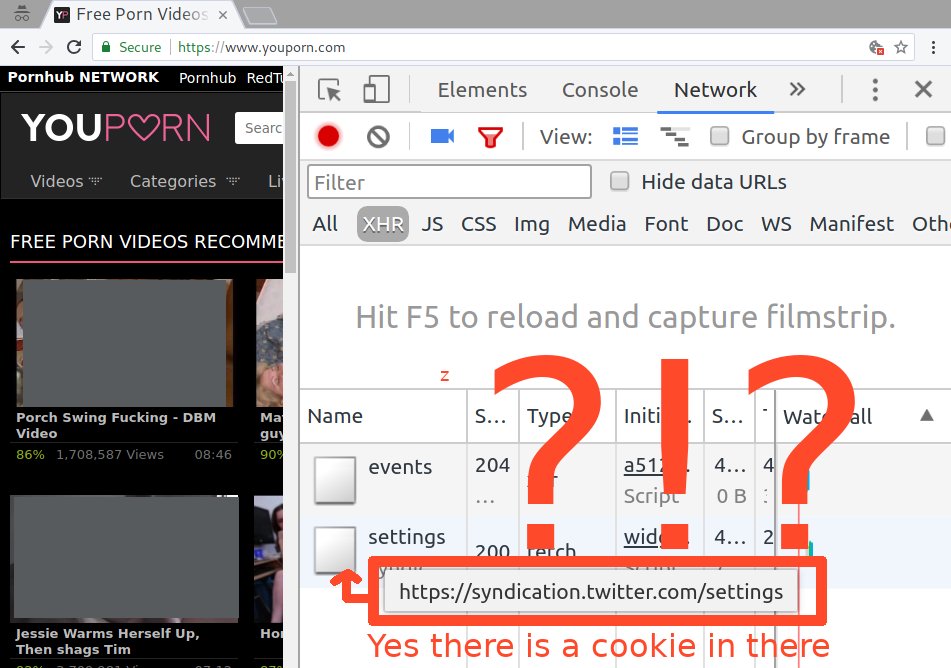
https://twitter.com/davidshepardson/status/12154759339661926...
Maybe the FAA will yield to poltical pressure. But I can't imagine any other certification agency accepting responsibility for any accident occurring on their watch now that more and more about the ugly, incompetent, fraudulent and outright evil engineering process for that death trap comes to light.
A plane only certified by the FAA is essentially dead.
Holy shit this goes deeper than I thought and some people are heavily cleaning Wikipedia.
Didn't even know about this bit stealing rocket tech.: https://www.justice.gov/archive/criminal/cybercrime/press-re...
Also check out: Darleen Druyun https://www.seattletimes.com/business/boeing-probe-intensifi...
Phil Condit was ousted over Darleen and that's why Harry was brought in... although the Wikipedia page doesn't mention any of this...fu wikipedia. He was not "retired" he was forced out and Boeing was banned from Space Contracts for 5 years.
Damn I wish I save all those news articles. Whoever said the Internet is forever is wrong! The Internet is fickle ...some things will be memes forever and others will be forgotten.
And here's what happened to Harry Stonecipher: https://www.wsj.com/articles/SB111019724886272076
So much for "cleaning" up the company culture. F Boeing. The company not the engineers. I also know some very talented people there.
[Edit Note:1] The WSJ link should not be paywalled as it's an old article...at least it wasn't for me.
[Edit Note:2] The WSJ link is very detailed about what went down if it ends up blocked/paywalled I will...f'ck it I will edit wikipedia....grrrrr history is not fickle and Condit was and is an ass.
Its telling there were no[?] whistleblowers able to come forward beforehand. Consequences are too real and the search for the guilty talkers likely continues and I don't even think they were even remotely whistleblowers.
Perhaps technical prowess isn't as highly respected as it should be? Too many corners cut? Excessive priority of business over engineering? Timelines too tight? Budgets too small? Misallocations?
Don't know. Lots of symptoms of an unhealthy organization. It will become an interesting case-study regardless.
https://www.seattletimes.com/business/boeing-aerospace/senat...
https://www.washingtonpost.com/local/trafficandcommuting/faa...
Yeah, I would even say that from the following part "are inconsistent with Boeing values, and the company is taking appropriate action in response."
The Monkey will fire the clown, while still being employed and probably not being hold responsible for the shit they have done.
Management liability at its best.
The company is taking action in response. Against its employees. Not the ones responsible for killing hundreds of people, but the ones who were calling the program out on its flaws that led to those deaths? If I were working on a safety critical program and I thought it was risking lives I'd lose my shit. The employees that said this should be getting an "I told you so" badge, and the executive team should be going to prison. Fuck Boeing for this.
Edit: more to my original point though, the response should be to improve internal processes to prevent this kind of tragedy again, rather than to throw the people doing the right thing by speaking up under the bus, saying it’s against company culture to call out dangerous risks.
Still, it's management's job to create an environment that distills signal from noise.
He's mostly saying the employee shouldn't be punished for saying this in some internal chat(but the CEO should).
> Someone at one end thinks the values and ethic is one way, and the people at the other end have an entirely different understanding.
Like, how is this relevant to the employee getting punished being bad?
For example, this report from the EU parliament from 2001: https://www.europarl.europa.eu/sides/getDoc.do?pubRef=-//EP/...
This details a lot of what we knew about ECHELON from the mid 1990s to 2002: https://www.europarl.europa.eu/EPRS/EPRS_STUDY_538877_Affair...
With adequate penalty and frequent enforcement, usual behaviour would change...
Thanks for posting this, it's genuinely useful.
But all evidence shows it wasn't good enough (the design killed some 300 people!), but it got rubber stamp approval.
Sure, but without additional context we can’t know what they were talking about, or whether those remarks were relevant to the final product.
Yes, when you follow ambiguous instructions, which contradict things like, "Only waiting for regulatory approval!", or"1 million robotaxis this year!" or "Cars can drive by themselves coast-to-coast!"
Given Boeing’s proven track record, you could potentially speculate that the comments are actually in reference to some serious failure. But the quote as it’s presented doesn’t provide any meaningful information.
Read the whole sentence. Boeing does have a proven track record of serious failures, negligence, coverups... If you were inclined to speculate, you could speculate that this comment is in reference to some sort of serious issue that eventually made it into the production model. However the article doesn’t substantiate that implication (and it is only an implication).
The author of the article clearly wants you to come away from reading it with a diminished impression of Boeing. They have a clear profit incentive to make the article as outrageous as possible. A lot of people (myself included) already have a pretty poor opinion of Boeing, and I’d bet a lot of people who clicked on the article would be inclined to believe any negative claims made against them. The dangers of Fake News are often discussed on HN, and this is exactly the sort of situation where it is most important to exercise critical thinking.
That quote, without context, doesn’t reveal any meaningful information at all. I presume I’m getting downvoted because people think I’m defending Boeing, which I haven’t done once. I’m simply pointing out the danger of getting sucked in by outrage journalism, especially when it plays into your preconceived notions (no matter how well founded they are).
The proven track record (this decade; what they did in the past is largely irrelevant) of releasing a deeply defective product?
You’re implying the employees not only trust the MAX, their trust is such that they are comfortable kicking back with their shoes off on a flight.
>"Would you put your family on a Max simulator trained aircraft? I wouldn't," says one employee to another, who responds, "No."
1: I will fly with you.
2: I will fly with you without even wearing shoes. (Realistically, I can't imagine why shoes would make a difference.)
3: I would let my family fly with you.
If you say you wouldn't put your family in a Max, then your trust in the Max is not at level 3. Logically, this is a very weak constraint; it only shows that trust < 3. Maybe trust is 2. That's what fingerlocks is saying.
However, vernacular language generally doesn't work that way. A common mode might come from the following train of thought:
- I don't trust this plane.
- How much do I not trust it? The MAXIMUM LEVEL, LEVEL 3!
- "I would not let my family fly on this plane."
Here, from a logical perspective, the person has confused "lack of level 3 trust" with "level 3 distrust". This is bad in a math class (the scope of the negation is wrong -- [not [level 3 trust]] vs [level 3 [not trust]]), but routine in ordinary speech.
What's the probability of something happening when the probability you are given is probably wrong?
>commercial airlines in the United States between 2000 and 2010 was about 0.2 deaths per 10 billion passenger-miles
and
>390 motorcyclist deaths per billion vehicle miles
dividing gives 19500x per mile. Though I do more miles by air. It's all a bit approximate.
2. The commercial airlines figure which you've used is not from using the particular method of transportation, 737 max, which the use of you are justifying with the comparison.
3. If you wear a helmet, don't ride drunk, don't speed and otherwise follow traffic rules it will make riding a motorcycle a lot safer than average.
Fixed that for you...
As a result I don't use email very much.
The only way you'll ever know what I actually really think about something controversial is if you ask me face to face, or maybe, on a phone call.
I do this, too. I would call this good manners. But that's wildly different from being aware that the contents might be used in discovery or being published out-of-context. Especially the latter provokes the Richelieu citation.
However we are in agreement that this isn't a commitment to fix any of underlying issues that caused this mess.
While that's on the low end of the range of severity I'd expect, I can't help but point out that that is, in fact, punitive action and would, in fact, discourage (albeit probably not prevent) any warnings about the next unsafe design.
If people were joking around and using hyperbole to exaggerate the extent of what they saw as problems, and did this often-- as some engineering cultures do-- a slap on the wrist is justified. That kind of banter creates noise that obscures real concerns about lack of safety.
If they were genuinely concerned and are smacked for creating documentation of it, that is super bad.
Not that 3 hours of simulator training would have helped in either crash. The problem wasn't that the ipad course was inadequate training for the new procedures (as he said there were no major procedural differences), but that any mention of MCAS had been removed from the manual to avoid needing new or modified procedures.
Even worse, MCAS was designed to be near-impossible to override, using data from only one sensor, to avoid the need for procedural changes.
Another _unverified_ thing I heard was that initially MCAS would only be able to issue a single nose down command, and was later modified to be able to issue multiple.
1. https://www.seattletimes.com/seattle-news/times-watchdog/the...
IMO Boeing should be required to separate the military and civilian parts of the company and allow the military side to build civilian aircraft based on existing civilian models. I honestly think it's the only way to save the company, because right now airlines, regulators, pilots and passengers do not trust the current incarnation of Boeing. With their shady culture, we don't know what else is hiding in the airplane. Culture issues aren't solved overnight.
I fly a lot of miles and am the type of person who keeps the airlines in business, and I will not fly on a 737 MAX for the foreseeable future. My coworkers are in the same boat. I don't see the American carriers being able to return these planes to service before 2022. This is absolutely an existential threat to the US aviation industry, and I think the only solution is to split Boeing up.
My understanding is that it was never limited to one command.
Instead, all their failure analysis was based on the assumption the pilot would correctly identify the problem immediately after the first activation and follow the runaway stabilizer checklist (disabling all electric trim) before the second activation could occur.
[0]: https://www.bloomberg.com/news/articles/2017-12-06/vw-execut...
Here is another damning Boeing message, follow the source for more:
I'm wondering how shorter the lifespan for me and others like me will be in the long run.
I'd say that's pretty bad but as the deaths are not instantaneous, the long term damage is difficult to quantify.
Now for the past 5 years (I'm 38 now) my life is about trying to find places with clean enough air, which is much harder and more expensive in winter time.
I'm always looking at experiments that reverse methylation damage, and hoping that those experiments succeed before I get cancer, but there's only 1 successful experiment so far, and I have no idea if it would help me.
For Boeing you have multiple lines (not only the 737 MAX but the 777 too) going as far as handing over bribes to the FAA, with upper management investing the budget savings on some yacht time.
source: https://iopscience.iop.org/article/10.1088/1748-9326/10/11/1...
Are we sure this is happening? This is a modified airplane so they are checking the new addition but are they checking say the wheels or all the screws because some forces might be different and numbers changed and everything should be redone.
[0] https://www.inc.com/minda-zetlin/boeing-787-dreamliner-safet...
Regardless of how much you go over it you can’t fix a fundamentally broken design.
More like they've done the bare minimum to get the planes back in the air. The entire point of the plane is to avoid having to certify a new frame ie avoid doing exactly what you're implying they've done.
They can go through the whole plane with a fine toothed comb and still end up with a common type.
The sad thing is this could be seen as a successful (in the Pyrrhic sense) business move by Boeing in that they were given an impossible goal, secured sufficient sales to airlines, and show all indications of being on the road to getting away with it if there are still sufficient people out there who are still willing to fly on one afterward.
Just gotta be willing to crack a few eggs, and cash in on that goodwill on occasion, yet the business churns on regardless.
It's a bit sickening to be honest. To be faced with what we're finding, and to show all indications of just moving on with business as usual.
It makes it hard to take anything seriously anymore. Cripes, I used to hang aerospace over my teams as a "you could be in a situation where I'd reject this work wholesale because you haven't convinced me you've thought it through, and I don't feel like killing people down the road."
Now the tables have turned... Even there, in what I thought was the last bastion of "it absolutely must be provably right", it seems that wasn't ever the case, or if it was, the rot has set in so badly as to leave it unrecognizable.
Leaves me feeling like a Diogenes, searching desperately for someone who isn't cutting irresponsible corners, and is dedicated to not just achieving the mission, but caring about how they do it.
Sorry, bit of a tangent there... But jeez. I figured it'd be bad. Not this bad though.
Attempting to force people to be vulnerable by unilaterally being open about your own vulnerabilities is manipulative. You will get "my biggest weakness is that I care too much"-type deflective responses at best and a cold shoulder at worst.
In companies, a culture with emotional security is built first in private one-on-one meetings and spread from there - it never originates in a public (public within the company at least) setting.
> Attempting to force people to be vulnerable by unilaterally being open about your own vulnerabilities is manipulative. You will get "my biggest weakness is that I care too much"-type deflective responses at best and a cold shoulder at worst.
> In companies, a culture with emotional security is built first in private one-on-one meetings and spread from there - it never originates in a public (public within the company at least) setting.
I'm a little confused... Did you mean to respond to a different comment?
> Attempting to force people to be vulnerable by unilaterally being open about your own vulnerabilities is manipulative.
This comment makes no sense to me. Aside from not relating to what I said, I cannot possibly see how being open and honest is forcing anybody else to do anything. Personally I speak my mind wherever I work, and if my employer doesn’t like that, I’m more than happy to find a new job. Ironically, the only people who have ever had a problem with it are middle managers trying to cover up after themselves, and incompetent people that were somehow promoted to technical leadership roles they had no business being in. People I have no problems upsetting.
This is more or less my point. If your employer was happy with it, then your employer was the kind of employer attempting to build a transparent organization (and worked to build emotional security etc.). If your employer wasn't happy with it, then you and your employer have different opinions on the importance of transparency, which points to a cultural mismatch, which points in the direction of parting ways.
The key insight is understanding that it's the employer, not the employee, who have both the responsibility and the power to set culture and direction. So if the employer decides not to work on building transparency into the culture, the employer will get an opaque culture as a result. Maybe this results in the kind of problems that Boeing is suffering from now, maybe it results in bankruptcy, maybe not. The employer is responsible and accountable to decide. The employee's decision is much simpler - adapt or leave. Most people decide to adapt; the potential upside to leaving is a murky gamble taken on faith, particularly if people don't have a specific offer lined up at a specific place that seems to be a better fit for specific reasons. So it shouldn't be a surprise to you that employers get what they (intentionally or unintentionally) incentivize.
If you believe that your "ragging on your employers" can stand that level of scrutiny, then by all means, commit them to writing.
This kind of attitude is the problem. You’re supposed to be working together toward the same goal. As a team.
A team of “not my problem” people who are working only towards their own individual goals (or worse, CYA) is the most toxic team that can exist.
> If my employer doesn’t heed my advice,
I think the OP’s assumption – or at least hope – is that if they identify a problem so severe that disclosure would be a serious liability, then their employer will heed their advice, and fix it. The shared goal is producing quality results, not covering anyone’s ass (either OP’s or their employer’s) when they don’t.
Imagine if your conversations of various bugs for a software project that you were building were released after the fact, what do you think they would sound like out of context?
The 737 MAX started operations in May 2017.
So the comment was after the plane was regularly flying, and people on the inside were STILL joking about its safety.
(0) https://www.theguardian.com/business/2020/jan/09/boeing-737-...
> Another damning exchange calls into question the safety of the 737 Max long before the plane was approved to fly passengers.
> "Would you put your family on a Max simulator trained aircraft? I wouldn't," says one employee to another, who responds, "No."
If that quote was from 2018, then it’s from a year after FAA approval, not “long before” it.
I was criticising the reporting, not defending Boeing, and as you’ve kindly pointed out, the reporting is even more dubious than I had first thought.
1. https://www.google.com/search?q=Would+you+put+your+family+on... 2. https://int.nyt.com/data/documenthelper/6653-internal-boeing...
I’ve got no idea what you mean by ‘long before’, unless you somehow Switched what I was talking about - my point is exactly that the employees were discussing that they wouldn’t fly on it the year following the start of service. QED?
The most common one I’d say is when an IC thinks whatever they’re concerned about is much more important than the organisation thinks it is. In such a situation, as long as I’ve communicated my concerns to the right people, I never have any bitterness about an organisation accepting risks I’ve raised after proper analysis (unless of course, it has some impact, and then they start politically back pedalling the risk acceptance).
Personally, due to the nature of my work, I am often brought in to contribute to projects that are either well under way, or nearing completion. I will often find things that I think are risks or other issues at this stage. Any time this happens, there’s a whole bunch of things that could explain what I’ve found. Perhaps I’ve made a mistake in my assessment, perhaps there’s some mitigation (planned or otherwise) that I’m not aware of, perhaps they already know about it and have accepted it, perhaps there’s some major constraint I don’t know about... So I ask around and try find out if there are any easy answers. If not, then I’ll escalate it to other stakeholders. Usually phrased something like “I’ve noticed this, I think it’s an issue for these reasons, and could potentially cause such-and-such an impact”, sometimes with “I’d suggest we consider this alternative approach” and potentially “I’d recommend delaying delivery of this project to address these concerns if necessary”. Even at this stage, I don’t know all the facts, so I simply express my thoughts without claiming to have any definitive conclusions, and trying my best to qualify them with where I believe the limits of my knowledge/understanding are.
In a well run organisation, this will result in my concerns being proven either founded or unfounded, previously known or previously unknown, and some sort of action could result (even if that’s only risk acceptance, further investigation, or plans for future mitigation). In a dysfunctional organisation, my concerns will either be dismissed off the bat, or pointlessly argued about by political actors.
In my experience the latter reaction will usually come from incompetent management trying to conceals their failures, or incompetent contractors trying to defend their billable work. In the first case I’ll just make plans to leave the organisation. In the latter case I don’t really care. I’m a contractor myself, so my job is to deliver value to the employer (who would usually be happy with me in such a situation), I’m not particularly concerned about whether my work satisfies other contractors in that respect.
At this point FAA should require minimum 2 sensors for something like MCAS which can crash they plane. This should be without regard to any prior certification of the planes.
This doesn't matter if you have to make a specific trip (the number of miles is fixed), but that's not always the case. Whatever you do, don't walk, that seems to be the most dangerous common mode of transportation (unless motorcycles are common).
"Aviation industry insurers base their calculations on the deaths per journey statistic while the aviation industry itself generally uses the deaths per kilometre statistic in press releases."
Source: Transport comparisons in https://en.m.wikipedia.org/wiki/Aviation_safety
If you take a look at the "Fatalities per trillion revenue passenger kilometres" plot in the same article, it looks like flying got a lot safer since 2000 (maybe ~10x?).
The conclusion that flying isn't a lot safer than other common modes of transport when you compare by journey is still correct though... (But maybe it is a little bit safer, or similarly safe).
Not walking is also a bad idea, though. I don't have numbers at hand, but I can imagine that a sedentary lifestyle gives you way more micromorts than the risk of traffic accidents when walking to work.
So, just to be safe, don't ever sleep...
I mean, it's pretty common for people to have a heart attack from sudden exertion, too. Like snow shoveling.
And I remember Douglas Adams died after a workout and he was probably reasonably fit at the time (in theory anyway).
So don't exercise.
So is almost everybody else. :)
https://en.wikipedia.org/wiki/Illusory_superiority#Driving_a...
driving isn’t unsafe because of your own (self-assessed) skill, it’s unsafe because of that other 50%.
no matter how safe of a driver you are, you should be worried.
I'm aware that people over-estimate their skill, I'd have been inclined to say "in the top 20%" otherwise, lol. Whilst my reaction time has slowed slightly, and my focus deteriorated a little with age (IMO), I've been driving cars for 25 years without an at fault collision (taxi driver hit me when I braked hard to avoid killing a dog -- we were sub 30mph otherwise I'd have chosen to hit the dog). Have avoided some accidents for sure. I also hold a full motorbike license, have driven minibuses and car&trailer pairs. I'm aged enough to have calmed down and having ridden motorbikes feel I've much more road awareness than the average driver.
Also, I considered head-ons, etc., where the injured party is not at fault - but whilst they increase the risk an experienced and competent drive can avoid some collisions, mitigate the harm of others, and will nonetheless reduce their chances of being in a collision from their side. If 50% of injured parties are the cause, and I can reduce that 50% by 50% then I've still reduced my chance of being injured by 25%.
Does anyone think that doesn't put me in the bottom 50% for risk?
Still, the point stands that I expect aeroplanes to be better maintained and have more redundant and fail-safe systems than a car; and expect pilots to be better trained and more competent (prevented from driving drugged/drunk/tired more than truck/car drivers, etc.) than the average car driver. So, aeroplanes only having the same per-mile safety as cars is [would be] terrible.
And I hate it when people say "statistically that isn't true". How can a fact about an individual be statistically not true? Is it statistically true that I have 2.4 (or whatever) children, even if I have none?
You can compare your insurance rate with the average, and you can consider objective factors that are really blatant such as whether you drive drunk, or when falling asleep, or while texting. And of course you can compare the number of accidents and tickets you have to average.
I wasn’t making any comments regarding Boeing’s culpability, I was specifically commenting on the quality of the OP article. As those quotes are presented in the NPR article, they lack sufficient context to communicate anything meaningful, and based on what you’ve posted, appear to be reported in a factually incorrect manner (they directly contradict the guardian reporting, so at least one of them must be incorrect).
Sorry for the amp reference.
At least another paper using 2018 as the source year for that same quote.
How the hell this single quote can, ‘without context’ lack enough punch to convey anything meaningful is just wrong. Your attempt at being even-handed here seems totally misguided. If I met you on the street I would immediately assume you’re massively long Boeing. What’s the point? There are no redeeming features from the whole MAX story - every month another piece of disasterous news comes out about the practices of this company and the culture that allowed this to happen
Last year I was in small cities in Colombia, like Pereira or Armenia in small hotels/AirBnb-s far from the city center.
I can't live in big cities anymore, and I'm really missing it.
I'd like to go to Australia as well, but I'm afraid of the air pollution due to forest fires.
Regarding living close to highways: air pollution close to them are much higher than farther away, and you spend a significant amount of time sleeping at home, so you if you are not lucky, you are affected.
Generally background noise is a good predictor of air pollution in my experience, just open the window, and if you hear cars all the time, you should look for another place to live.