My Covid-19 Story in Brooklyn(reddit.com) |
My Covid-19 Story in Brooklyn(reddit.com) |
> Guidelines are there for a reason. As much as I despise our Commander in Chief, I don't think the CDC is compromised. Fear doesn't rank over guidelines, but I understand the situation. No one wants to be the doctor that discharges patient zero.
> Personally, I'd admit you for fever of unknown origin for the time being and monitor you for any signs of sepsis. If everything looks good from an observation stand point, I'd discharge you with strict droplet precautions until the fever subsides.
> I think your doctor did the right thing given the context.
Given the above comment, most replies here are arguing against CDC regulation saying it is too stringent. Its very helpful to understand comments in this lens, rather than that the CDC is just under-testing for unknown reasons.
https://www.sciencemag.org/news/2020/02/united-states-badly-...
I was wondering about this... Very hard to justify that in my opinion.
That line is always left out of this: the CDC doesn’t want to test just anyone with cold and flu symptoms ... during flu season.
The false positives are basically guaranteed to absolutely swamp the true positives at this time, and demolish any attempt to target the sick.
I don't keep up with the news at all but recently I started reading some articles from major news outlets just for more info about this virus. It's mind boggling at how different each channel's reporting is (I'm in the US).
I was at the store this morning and they had a TV playing. One channel down played it like it's nothing and it's even "technically" less potent than the regular flu because they compared yearly flu deaths to covid-19's deaths and played it off like "we're no where near the number of deaths that the flu has killed this year!" and then all of the surrounding anchors all agreed with the spokesperson they had on, etc.
Others make it out to be 1 notch away from an apocalyptic event.
So I guess this is really what "fake news" is? I don't get it. You can get a life time of prison for ordering someone to kill someone else but somehow it's ok to potentially gamble with the entire human population by not giving accurate information about a virus that's killing people.
I would recommend to study this site https://www.worldometers.info/coronavirus/ if you want to be more informed.
- Wash your hands thoroughly. https://www.youtube.com/watch?v=jvcvvRp3lsY
- Cough and sneeze into a paper tissue/handerchief or the crook of your arm. https://www.youtube.com/watch?v=M3_rFPtQgKE
- If you experience shortness of breath, have a cough or fever: • Stay at home. • Contact a doctor immediately by phone or call the coronavirus infoline. • Avoid contact with those around you. • Do not go directly to the doctor or to a hospital emergency room.
[1] https://www.bag.admin.ch/bag/en/home/krankheiten/ausbrueche-...
[1]https://www.itnonline.com/content/ct-provides-best-diagnosis...
If the CDC's current tests are flawed or too few, then the CDC should provide guidelines to health providers to quickly diagnose potential patients using CT scans.
Compared to the natural incidence of getting a fatal cancer in your lifetime (about 400 in 2000), this is a very low. And for serious conditions, a CT can literally be a life saver.
But if you apply chest CTs to screen for a disease with (let's say) a 0.1% fatality rate, the side effects of your screening increases the fatality rate by 50%.
https://www.newyorker.com/news/our-columnists/how-iran-becam...
Two questions:
1. Why would the hospital require permission to run a test?
2. Why would the CDC not want to test suspicious cases before severe symptoms present? From what I've read, the virus is contageous whether severe symptoms are present or not.
I mean, let's face it — noone's going to go get tested if it means you'll have to pay 5k+ out of pocket for the experience (even if it's a negative test and you require no further treatment), plus would have to be fired from your job for missing work and doing a self-quarantine for 2 weeks (if it's positive yet mild enough to not require hospitalisation), plus be evicted from your apartment for failing to pay rent due to the loss of the income (possibly having to cut the self-quarantine short in the first place due to any such pending evictions or the prospect thereof).
For this whole thing to work, testing has to be free, workers have to have protections, housing has to be affordable and plentiful, and Andrew Yang's UBI (Universal Basic Income) suddenly sounds like it might be a pretty good idea, after all.
We already eat healthy, me and the wife workout. But the kid? Not sure how to prepare him.
I am a Caltrain rider daily and I feel like it is not fair to subject other folks to this if it is a COVID-19 - but I don't also want to overload the health system unnecessary if there are folks with Acute symptoms.
U.S.: underdiagnozes cases.
Not sure which is worse.
As much as I criticised China's initial response, their eventual containment has proved highly effective.
The US (and numerous other countries) are point-by-point repeating China's initial failures.
This will delay control by days. Growth is presently doubling every 3 or so days, increasing by an order of magnitude every week. Delays will increase consequences directly proportionate to those rates, both infections and deaths.
As it is, if Rest-of-World (RoW) response is where China was ~22 January, we can expect to see 100x present cases (~2 orders of magnitude) and ~500x present deaths (~2.5x OOM). Very roughly.
To me the extreme measures were just an indication that they understood better than they let the rest of the world know what they are dealing with. I mean, they locked down entire cities at who knows what costs, and they were _disinfecting the streets_. Or maybe they did let everyone know via official channels. Frankly, I was surprised that WHO didn't treat this as an emergency much earlier.
I wouldn't go that far, judging from reports of death certificates with "Unknown viral pneumonia". But I agree that China seemed a little more on top of it... once the world got wind of it.
It is time to switch modes from quarantine to containment and stop pointing fingers. Openly tracking potential cases in realtime can help communities slow the spread so we don't get crushed with huge spikes of critical cases all at the same time.
Also, otherwise healthy 30-year olds need to do exactly what this person is doing: quarantine & treat it with the same meds as the flu.
From what I read, in many of the publicized cases here in Europe that started with a single person travelling there were several confirmed cases in people with close contact to the original patient.
The reports from the US are mostly about single patients with no known source of infection and about denied tests. If you don't test, you don't actually know how widespread the virus is right now. It seems plausible to me that the low number of cases in the US is mostly because of the far more limited testing, and not because there are actually that few cases.
Regardless, it sounds like a bigger budget should be set aside for for testing. If I was in charge and had the resources, EVERYONE coming back from an infected country would be tested; symptoms or not.
If it turns out you do have it, my thoughts and best wishes go out to you. (I'm sure the media coverage will explode; shame these things don't get the attention until after the fact).
The CDC counts real flu deaths and estimates infections. It doesn’t test for them. As a result you get a relatively low fatality rate.
But for COVID-19 we are using only confirmed deaths and confirmed tested infections to come up with a fatality rate that seems much higher than it actually is because most infections go unreported.
This is just a reality of the post-fact based world we now live in. Everything is bonkers.
It's worth noting that the real issue is that CFR skyrockets when the medical system saturates. With good medical care available, the CFR is still much higher than the flu but less crazy. The problem is, COVID-19 can create enough severely ill cases to saturate medical systems with uncontrolled spread.
This paper has 4000 citations: https://journals.lww.com/epidem/Abstract/1990/01000/No_Adjus...
To me it feels like the experts (WHO/CDC) are 'downplaying' while nonexperts (internet commenters who read a few articles) are doing the opposite.
I mean, it doesn't help when you hear stories like the one posted on Reddit too. Of course it makes you think things like "why wouldn't they test him? Is it because they want to keep the registered cases down or is it because there's not enough tests to go around or maybe it's because the tests aren't accurate?".
These are questions I have as someone who isn't working at the CDC and I'm sure other regular citizens are thinking the same. I thought the media's responsibility was to take information from experts and present that information without bias to people who are not experts in the matter.
That's not what the guidelines said. They guidelines were referring only to "hygienic masks" a.k.a. generic surgical masks:
The Federal Office of Public Health (FOPH) does not recommend that people who are well wear hygienic masks (surgical masks). If you are in good health, they do not protect you effectively against an infection with respiratory viruses (i.e. self protection). Wearing a mask therefore can give you a false sense of security.
This is a known point. But they did not mention -- nor did they advise against the use of -- properly rated and certified masks (such as N95 masks). Which do provide some protection (albeit with caveats).
Also, just think for minute around the basic logic of what you're saying. If (properly rated and certified) masks provide "no protection" (for unprotected individuals) - then why are the health care workers using them?
And N95s are heavy and uncomfortable. No one can wear them for long. But if anyone wants to, they’re welcome to it.
Looked for interventional studies testing whether face masks and eye protection work in humans to protect against airborne viral particles. A big issue with many such studies is that medical staff only use masks and/or eye protection at work, opening them to being infected outside of work.
Found a small study [1] getting around this problem by exposing subjects (n = 28, avg age 30.5 years) to monodispersed live attenuated influenza vaccine particles by placing them in front of a vibrating-orifice aerosol generator for 20 minutes, subsequently testing for infection using RT-PCR and culture in nasal washes.
RESULTS
- No precautions: 4 out of 4 infected.
- Ocular exposure only: 4 out of 4 infected.
- Surgical mask only (3M 1818): 5 out of 5 infected.
- Surgical mask with eye protection (Z87 Uvex non-vented): 5 out of 5 infected.
- N95 mask (3M 1860/1860S) only: 3 out of 5 infected.
- N95 mask with eye protection: 1 out of 5 infected.
1. Bischoff WE, Reid T, Russell GB, Peters TR. Transocular entry of seasonal influenza-attenuated virus aerosols and the efficacy of n95 respirators, surgical masks, and eye protection in humans. J Infect Dis. 2011;204(2):193–199.
Considering there are multiple papers out of china which suggest the virus is aerosolized, I think it's irresponsible for anyone to claim masks are useless PPE. Anything less than n99 or p99 might be useless, but that's a different story.
There's also one paper which claims that treating a mask with saline solution makes it substantially more effective against viruses. I'll see if I can't dig it up.
Governments the world over have already demonstrated that they cannot be trusted to properly handle this virus.
What do you think happens if the CDC says everyone needs to wear masks, you go to your local store, and there are no masks? There would be violence in the streets.
Anyhow, here in Hong Kong the virus has been, kind of, contained. Mask wearing, along with hand washing and other measures, have been adopted by the majority population.
One of the problems with the Wuhan virus is that there are quite a few asymptomatic cases, and AFAIK at least one preprint study has confirmed that these hosts can transmit the virus to others, making mask wearing for "healthy" people an even more desirable measure in preventing the virus from spreading.
This is a bizarre claim that can be countered against the reality that every front-line worker is equipped with a mask.
EDIT: Almost immediately I dropped to -2. Bizarre. Again, every health agency the world over equips health workers who deal with potential COVID-19 with N95+ masks. For some reason people desperately want to clutch onto the notion that it's useless because otherwise..uncomfortable and uncool mask, right? Another poster mentioned that the source didn't even state that about masks, but instead about surgical masks which is a tiny subset.
-Masks prevent aerosolized matter (e.g. a sneeze) from getting at mucous membranes (where it needs to get to yield an infection).
-Masks prevent you from touching your hands to the vulnerable areas of your face. It is effectively a check. So when you touch that door handle leaving the subway station it's far less likely you'll transfer to your mouth or nose, and we naturally touch our face thousands of times a day. Ideally one would have a mental process they follow where you clean thoroughly before taking it off.
Those alone seem like an absolutely enormous win for masks.
https://time.com/5785223/medical-masks-coronavirus-covid-19/
https://www.livescience.com/respirators-prevent-coronavirus-...
I'm certainly not at the point where I'm going to wear a mask in public, but the whole "Hurrr masks don't work at all" seems like either disinformation (e.g. stop buying all the masks because we want them), or people trying to comfort themselves in some bizarre way. Every bit of evidence says otherwise.
The moderation through this is absolutely cartoonish and ignorant.
In addition, the permanent rubber units provide protection when fitted with suitable filters; NIOSH calls these half masks (as distinct from full facepieces, colloquially ‘gas masks’). Where I am, these are still languishing on the shelves⁴, which means that the sort of people who are willing to spend five minutes looking up that P95 ≥ N95 are not yet panicking.
¹ https://www.cdc.gov/niosh/npptl/pdfs/UnderstandDifferenceInf...
² https://www.fda.gov/medical-devices/personal-protective-equi...
⁴ https://www.canadiantire.ca/en/pdp/3m-performance-reusable-p...
The Surgeon General, on the other hand, does understand the difference and made an appropriate comment.
This is a bizarre claim that can be countered against the reality that every front-line worker is equipped with a mask.
This is not necessarily to protect the front-line workers. Since the incubation period is so long, it makes sense for front-line workers to wear masks to prevent them infecting other people even if it has zero effect in preventing them being infected in the first place.
I downvoted you because you talked about your downvotes.
If you're keeping track of scoring, HN is perhaps not the right community for you.
Will they prevent you from getting sick? Unlikely unless it is N95 or even N100 PPE
But I'm been wondering if they are not useless in terms of the speed at which the human body experiences a high viral load.
If only one virus particle gets through that should be enough to infect if it takes root and multiplies, but going from one virus to tons in your body takes times since they have to multiply.
Compare that with an infected person coughing right in your face. In this situation, potentially thousands of virus particles will infect you. In this situation, the viral load your body experiences will climb high quickly.
The faster the viral load climbs the less time your immune system has to be able to develop antibodies and learn to fight off the infection.
I imagine this is not too dissimilar from how vaccines work.
If this is the case, that might explain why Li Wenliang died at 34 years of age. Being at the center of it all, it's likely he was exposed to many more virus particles than the typical person. I imagine this would be enough to trigger a cytokine storm if the viral load got high fast enough.
Disclaimer, IANAE (i am not an epidemiologist), I'm just reasoning from first principles here.
They were pretty clear yesterday that they’re ramping up test kit production and test sites as fast as possible. They didn’t answer a direction question about how many sites there were yesterday, implying to me that the number is pretty low.
https://www.cdc.gov/media/releases/2020/t0228-COVID-19-updat...
Its unclear to me where 'managing the propaganda' came out in relation to the reddit post.
UC Davis Medical Center statement on refusal of CDC to grant permissions to test suspected patient:
https://health.ucdavis.edu/health-news/contenthub/novel-coro...
"UC Davis Health does not control the testing process."
Florida refusal to release testing data:
https://www.politico.com/states/florida/story/2020/02/27/flo...
Note that Spring Break in the US, in which about 10 million college students consume substances, exhibit poor judgement, congregate in large numbers, swap bodily fluids, and return to some 3,000+ institutions of higher education, begins today. With Florida and cruise ships as prime destinations.
https://en.wikipedia.org/wiki/2020_coronavirus_outbreak_on_c...
I just posted my own update on COVID-19 yesterday (after watching events overtake me for 4 days -- I'd started after listening to the US CDC press conference on Feb 25):
https://joindiaspora.com/posts/bc04cb503c840138f4b8002590d8e...
On the Media's episode this week focuses strongly on COVID-19 and if anything is rather more alarmed and alarming than my own take (I very conciously strove for verified data and sober takes):
https://www.wnycstudios.org/podcasts/otm/episodes/on-the-med...
Audio: https://www.podtrac.com/pts/redirect.mp3/audio.wnyc.org/otm/...
Features Laurie Garrett, excellent content. Focuses to a large extent on both government mishandling and information suppression -- in the US having no information to report rather than China's suppressing avaiable information) -- as well as other forms of mis- and dis-information.
I find this kind of euphemism use really weird. "Substances"? Water is a "substance". A carpet is too. Why not just say what one is actually referring to?
The level of censorship around unquestionably authentic videos coming out of China has left me in a deep state of shock
Nobody thinks it’s right to NOT test every potential case. It just wasn’t possible.
Good news: Just today, they released new rules that should increase testing capacity by 400x.
However the CDC has enacted emergency powers to make it illegal for hospitals to use their own testing equipment, which they have in-house, to test their own patients unless they first get CDC approval. And the CDC has ridiculously stringent requirements for approving these tests.
As a result, the only confirmed case of community-spread COVID-19 in the US is in Northern California, because the UC Davis hospital basically said "go fuck yourself" to the CDC and tested anyway.
This is not because COVID-19 is not spreading throughout the community--it is!--but rather because the CDC's stringent testing requirements prevent testing of any case that cannot be rationalized away as having been caught elsewhere. If you don't test for the virus, then you don't confirm the presence of the virus, so there is no virus, amirite?
How can new rules increase testing capacity? All you can do, is adjust the rules to the existing capacities ...
But unless your kid has an underlying health issue or vitamin deficiency, then not really. Eat well, get some sunlight if you can, wash your hands often, don't touch your face, follow the guidlines doctors are mentioning at your state/local or federal level.
You see many people speak of "boosting your immune system" but it's pure quackery. A person's immune system is many layers and types, a system, it's not a single thing that can be adjusted at will.
The way I see my immune system is a 100 liter tank of water. You can't overfill it but it can be low. At most it can only be 100 liters. Your immune system can only be as good as normal there's no turbo button to over-boost it.
https://www.worldometers.info/coronavirus/coronavirus-age-se...
Also you can read about SARS which is similar.
Seems like what kills most people is the immune system overreacting.
I don't know what the US advice is, but the English advice is "please don't visit hospitals unless you've been told to do so".
We have people who'll come out and test you if needed, and we have "drive through" testing stations.
Telephone 111 or your GP for advice.
https://twitter.com/DrSdeG/status/1233715830170562561?s=20
https://www.gov.uk/guidance/coronavirus-covid-19-information...
Still, a bad cold isn't fair to subject others to, either.
* The fundamental point: A study with 100 comparisons will erroneously reject the null hypothesis at p<0.05 for 5 of them, which is a good part of why we adjust for multiple comparisons. But the same issue holds if we do 100 studies, and reject null for 5 of them. One of the fundamental problems with p values is that we don't really know the baseline number of things being compared in unpublished and preliminary research, which in turn makes the p value somewhat meaningless.
In effect, we've unfairly penalized the study with multiple comparisons vs. the same findings showing up from studies with individual comparisons.
* Studies with multiple comparisons are great engines of hypothesis generation. Setting too high a bar for rejecting associations means that we'll possibly discard too much.
* Most of our tests for multiple comparisons assume a degree of statistical independence which just isn't present.
The abstract is particularly horribly written, but those three points are reasonable points. (At the same time, there's circumstances where obviously we need to adjust appropriately or get absolutely stupid, irreproducible results-- e.g. fMRI data.
But as used, relatively common in standard English.
Wow this is frankly insane. Pretty much every biology laboratory in the USA should have the tools available to perform these tests. More than that, RT-PCR is a routine assay that any self-respecting wetlab biologist can do. If they are struggling to produce these kits they should be letting people order their own primers. Even if less reliable, at least then they would be able to test patients properly.
Edit: I suppose you do need a "self respecting wetlab biologist" to synthesize the primers, but running the test itself is pretty simple.
In terms of the actual epidemiological response, most especially since ~22 January, limiting travel, events, large congregations of people, and shutting down workplaces and schools, has been absolutely appropriate. Those measures have received some criticism, including by Chinese citizens. I don't feel those criticisms are at all warranted.
The information environment is difficult to navigate. I'd argue that China's erred on the side of too much control, as it tends to do, but in general, after 22 January, the process as a whole has worked, judging by results. The challenges are certainly staggering, particularly at China's scale. The avoiding of mass panic and protest is commendable.
The fact that other governments -- Japan, Korea, Iran, and the United States, notably, and all but certainly North Korea, are repeating many of the same mistakes (or multiplying them several-fold, in the case of Iran and PRK) -- shows that this is highly typical.
I'm also quite disappointed by the international response, and that of the United States quite specifically.
One of the first references I posted to HN following news of the Wuhan outbreak was Albert Camus' 1948 novel, The Plague. The story it tells, of society, government, and individuals, in the face of pestilence, is timeless. And contains valuable lessons:
https://antilogicalism.com/wp-content/uploads/2018/03/the-pl... (PDF)
HN submission: https://news.ycombinator.com/item?id=22150237
Otoh, this doesn’t really explain why there would be regulations against developing in-lab tests (as another of the sibling comments mentions).
This wasn't just "anyone" though. But someone who tested negative for the usual suspects -- and just came back from a high-risk country.
Test-kit availability has been constrained throughout the epidemic, and yes, that means that full confirmation has been only partial and lags outbreaks. But information I've seen is that once China was aware of what it was dealing with, it was testing as broadly as it could.
South Korea seem to be taking this even further, with many thousands of tests within a few days in outbreak areas. The US CDC have refused doctors' requests to test suspected patients and control the availability and use of test kits. That's simply fucking insane and stupid. (Again: the UC Davis Medical Center instance: https://health.ucdavis.edu/health-news/contenthub/novel-coro...)
Amateur hour is over.
Otherwise agreed.
The media's job is to take attention from people who are not experts in the matter and present it to advertisers.
Diseases spread. Yes, in their early phases of spread, the total devastation isn't that high.
Your statements would hold just as true for the early phases of the 1918 pandemic-- lots of people die from flu every year; still fewer have died than happened last year; etc. They're statements that are true until they're not.
There's no guarantee of catastrophe, but the potential for it is there.
Also, many areas have urgent care centers for things that are serious but maybe not emergency room serious.
Unfortunately, cost is a variable in the US and I can’t give any good guidance on that. (Not a doctor, standard disclaimer.)
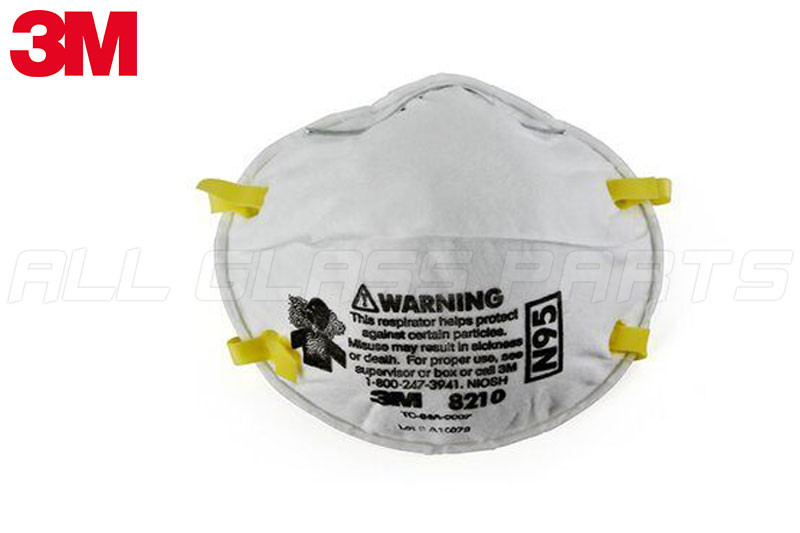
N95 masks just look like cheap little paper things that you stick on your face.
https://cdn10.bigcommerce.com/s-rxcy1k/products/11668/images...
Although there are different kinds of N95 masks, the most common kind weighs a few grams; this is not uncomfortable.
I find N95 face masks insufferably hot and muggy, with their “few grams” hanging off my nose and ears eventually very annoying. I don’t know if any hc workers that find N95s tolerable for very long.
I wouldn't say that was fun. But it was tolerable. A N95 mask is fine by comparison - not much worse than a surgical mask.
(1) Which category of mask are you saying provides "no" self protection -- ASTM 3 and N95? (I've read over your post multiple times, and not entirely clear).
(2) So to be clear - are you saying that N95s provide "no" self protection? Not just that they can be misused; or that protecting against surface droplets is more important; but literally "no" self protection?
(3) And if the answer to (2) is yes, can you provide a source or two we can use for further illumination on this topic?
I'm not trying to waste your time, here. I'd actually really appreciate your input.
And just to clarify, again people are talking about surgical masks. N95 masks, which are still "cheap paper masks", indisputably work. This is way beyond debate.
Translated from Norwegian:
- Does a facemask help against spreading virii?
- No, not when you are using it out among people. The point is that you will scratch your face and get your fingers in contact with your soft tissue. So it is counterproductive to use these regular paper masks, says associate in microbiology and infection control at the University of Southeast Norway, Jörn Klein.
[1] https://www.nettavisen.no/nyheter/smittevernforsker-munnbind...
So they're saying that... masks will help if you don't touch your face? Makes sense to me, the PPE that the CDC recommends involve a face shield in addition to a mask.
Also, it dodges the question of - "What if, being adults, we train ourselves not to scratch our face (in view of the seriousness of the issue)? Will masks help then?"
Surgical masks don't work. Surgical masks are a subset of masks, and it is grossly inaccurate to extrapolate that out to "masks don't work".
Remarkably two people have criticized me for not being specific when replying to a blanket (and incorrect) post, when I was actually specific. Amazing.
Then again, the one guy claims that health-care workers only wear masks to protect patients, which is just cartoonishly incorrect (beyond in the abstract "protect patients by the healthcare workers not getting infected" way). To the point that is has to be malicious.
This whole discussion is beyond ignorant. It demonstrates, again, how painful any discussion outside of code is on HN. It's almost as bad as HN talking about AGW (where it turns out 80% of the residents here are deniers). Embarrassing.
> A. Masks were introduced into clinical practice at the beginning of the 20th century to protect patients from microorganisms being expelled from healthcare workers’ respiratory tracts during clinical procedures (Wilson, 2006).
https://www.nursingtimes.net/archive/when-should-staff-wear-...
N95 masks are distinctly and absolutely worn to protect the wearer. N95 masks are recommended for front-line staff when dealing with viral outbreaks. H1N1, SARS, MERS, and now COVID-19 -- staff wear self-protection masks. During flu outbreaks front-line staff wear N95 for clinics.
This discussion -- what we are talking about -- is COVID-19. Every front-line staff dealing with this, worldwide, is equipped with an N95 mask, or there is a problem. Because when your front-line staff get sick things really break down.
The CDC developed a testing protocol (crudely, a set of 3 conserved RNA sequences of the virus to chemically "grep" for). The protocol is here [1] and I think anyone with suitable equipment (an RT-PCR machine and an oligonucleotide synthesizer to make the primers and probes?) could run tests using just the information on that web page, though they would probably also want known positive samples of the virus to validate against. And there are lots of labs with suitable equipment. But as that page says, it is not legal to do this clinically.
The CDC also sent out test kits [2]. These are just vials of primer/probe pairs synthesized from the short sequences on the above page, and a fake positive control to validate with. These were authorized by the FDA, and so are legal to use. But apparently somehow they screwed up the production of primer #3 (or maybe the sequence itself is wrong), and so almost all the labs were not able to validate the test. After several weeks the CDC has still not fixed this problem, but labs are now allowed to run tests using just primer 1 and 2, so testing capacity is rapidly increasing (though of course who knows how sensitive or specific the tests are).
The federal organization preventing labs from running tests is the FDA [3], not the CDC. It is also the FDA who would have to approve the commercially produced test kits.
[1] https://www.cdc.gov/coronavirus/2019-ncov/lab/rt-pcr-panel-p... [2] https://www.fda.gov/media/134922/download [3] https://www.fda.gov/emergency-preparedness-and-response/mcm-...
You are correct that FDA approval is required for a clinical test, and for that a CDC test kit must be used (even though the biochemistry involved is trivial and a grad student with access to the right tools could put together their own kit...)
An entirely separate issue is that the CDC has used its emergency powers to restrict usage of these kits--you cannot use the kit to test a patient unless the CDC gives the OK for doing so. Even though for a long time many of these kits were not being used to available capacity...
There are now 4 confirmed cases of community-spread COVID-19. 2 in california, 1 in oregon, 1 in washington.
https://abcnews.go.com/US/high-school-student-washington-lat...
[1] https://nymag.com/intelligencer/amp/2020/02/two-new-us-coron...
[2] Neither of them have been to China.
> Then again, the one guy claims that health-care workers only wear masks to protect patients, which is just cartoonishly incorrect (beyond in the abstract "protect patients by the healthcare workers not getting infected" way). To the point that is has to be malicious.
it’s not clear which (COVID-19/typical healthcare) setting is being referred to (maybe same for comment you’re responding to as well).
Apologies for any confusion on my part.
That's 414 micromorts, which is almost exactly as risky as skydiving once on average.
https://en.wikipedia.org/wiki/Micromort
Source: US NCI 2007
This sometime troubles me with radiation dosing comparisons. Another is time distribution, when a radiologic imaging study is equated with exposure from X amount of time in an airplane at high altitude. The time frames are different—- drinking 1 liter of water in an hour is usually safe, and drinking 50 liters of water is fine spaced out over a longer time period—-but not 50 liters over an hour. Radiation doses are often quite time dense.
Your linked image in no way objectively looks “just like” cheap square pleated surgical masks. https://i.ebayimg.com/images/g/LyoAAOSwMTFeMbmh/s-l300.png
If this event is half as bad as all the literature out of China is suggesting, panic is the least of our worries. What a responsible government should do is initiate some sort of recommendation for gradual stockpiling of goods - perhaps a lottery just to encourage the majority of people to calmly stock up in turns.
In any case the CDC has already issued warning to prepare for "severe disruption to everyday life." Now it's up to the ignorant population to wake up and realize that this isn't just another flu.
No. The risk of dying from this disease is negligible for most American adults. The real issue with the corona virus is economic disruption and overburdening of the healthcare system. All of which is significantly exarbarated by panic.
Which is literally the point of my post. The population ideally will have started gradual, orderly preparation sooner. At this point it's better to have a short panic early rather than end up in a situation where the government kept quiet but suddenly the virus is here and people are running out of food and there's a mass panic.
The longer the government waits, the worse the outcome will be.
Yes, the mortality changes with age younger people are about 0.2% but older are close to 15%.
Having health issues such as cardiovascular or diabetes increases the risk further, and Americans aren't the healthiest people.
Can you tell us please:
(1) What your numeric definition of "negligible" is
(2) And on what math this is estimate based?
Exactly. And that's why I'm gonna look out for myself.
And the 30 million the US has stockpiled is short by a factor of ten: https://time.com/5785223/medical-masks-coronavirus-covid-19/
First, parent was talking about the risk to an individual adult person; you yourself note that varies with other parameters including age. This isn't comparable to the 2% figure.
Second, the mortality figure is 2% of people who are infected, not of the total population. So it's substantially less than 6.5 million people, unless literally everyone in the country catches the bug.
https://www.worldometers.info/coronavirus/coronavirus-death-...
If we take China as a comparison, a country with urban agglomerations of 50 million people and more and the 80k cases as rough estimate then the chance that you're even going to be infected in the US is marginal.
So unless you panic literally every time you leave your house I don't see why this is appropriate to cause a panic.
Not sure what to do here. This isn't even a coherent sentence. Nevermind the handwavey logic.
The virus seems to persist for quite a while so you can't simply wait a couple of weeks (or even months) for this to blow over - best case is the seasonal change will slow it considerably, but that isn't a guarantee either. Historically, viruses with these characteristics weaken over time because they don't benefit from killing their host.
So hopefully 2 years from now this will be another annoying virus that comes and goes, that is the best case natural outcome. Maybe we have some breakthrough in vaccines or luck with off-label cures like the malaria drug in trial now, but those are longshots. So it is LIKELY that this is going to be a long and unhappy situation globally.
So there's not much we do with their prognosis.