Mexican states are moving to ban the sale of junk food to children(washingtonpost.com) |
Mexican states are moving to ban the sale of junk food to children(washingtonpost.com) |
Just another way for the police to steal money from the poor. Great job.
I grew up in Mexico. You can definitely get booze before you're 18 if you're crafty and find the right store, but I don't see any general "outright disregard" of laws on alcohol sales to minors. I went to college in the USA— it's essentially the same.
The problem is the law enforcement, not the laws.
As someone who knows a little bit about Mexico, this seems like a law that completely ignores reality.
Would you agree that government should avoid creating laws that in practice do more harm than good, even if the idea behind the law is good and just?
We don't call heroin "fast poppy" or cocaine "junk coca." Doing so with the addictive refinements from other plants only confuses people that temporarily filling their bellies resembles nourishing themselves. Heroin would make us feel less hungry temporarily too, but we recognize it harms.
Michael Pollan's "Eat food, not too much, mostly plants" implies non-food isn't food, but he doesn't come up with the needed name for what's not food that he recommends avoiding eating.
The word "doof" -- food backward -- is catching on among some nutritionists and food writers. The change in your world view that comes from differentiating food from doof is tremendous. You see 90% of the supermarket as a wasteland of addiction, plastic, and pollution. When people say poor people choose fast food over vegetables because they can buy more with their limited funds, you hear that they're buying doof instead of food. Companies selling doof displace farmers markets and people selling food.
Doof is generally packaged, engineered to promote a short-term rush and long-term craving, and its pleasure comes from salt, sugar, fat, and convenience.
I propose using the term doof for doof and avoiding referring to doof with any phrase including the word food.
I don't think I recall having eaten any of near thousand tacos, even those for $0.50, that had "relatively little meat" and "are mostly carbs" and most often heard the sentiment of not understanding how you were getting such a great deal from non-natives, and natives typically informing inquirers that that's just... how things are and have been.
Maybe deeper in South America? I don't know, haven't been and haven't done much research. But North America? I very much disagree with you and believe that most others would too.
Edit: just to clarify it is the poly-unsaturated fatty acids that are the problem, not fats in general. Fats like butter (saturated) or olive oil (mono-unsaturated) do not have these problems, while canola oil, soybean oil, etc. are poly-unsaturated and highly-reactive.
Edit 2: research for these claims:
https://www.researchgate.net/publication/223779598_Lipid_oxi...
https://www.researchgate.net/publication/12013175_Peroxidati...
https://www.researchgate.net/publication/5931176_The_Importa...
These are from a lipid scientist rather than from nutrition scientists, so they are focusing on internal biological processes rather than health outcomes. I have not seen good nutrition studies on poly-unsaturated fats. However, studies of fat consumption that break out fats into saturated, mono-unsaturated, and poly-unsaturated fat categories generally show worse health outcomes for people consuming high intakes of poly-unsaturated fats. I will try to find a good study.
These ingredients are not well studied, which is surprising when you consider how rapidly they've been added to the food supply (basically not at all present 100 years ago, to in every processed food today).
What do you mean by "single hydrogen bonds"? C-H bonds are always single bonds, and I am unfamiliar with any kind of "double" hydrogen (intermolecular) bonding. Unsaturated fats, by definition, have at least one double bond, between carbon atoms.
This is counter to any study that I am familiar with and flies in the face of all nutritional recommendations. Studies that support MUFAs and PUFAs over saturated fats can be found in the references section of https://www.hsph.harvard.edu/nutritionsource/2016/12/19/satu....
That is my general concern with almost all of the nutrition research on fats. They are not grouping the fats appropriately. If you group butter and hyrogenated vegetable oils together because they are both "saturated" fats and then do your analysis lumping them together then you can't distinguish whether the problems caused by saturated fats are due to the hydrogenization or due to the butter being saturated or both.
Saturated fat consumption is decreasing, while unsaturated fat consumption is increasing, but people continue getting less healthy. So it seems the premise that saturated fats are that bad needs to be questioned. Or at least we need to ask if it's really saturated fats like coconut oil and butter that are bad or something that happens to the fats like canola oil when it is hydrogenated.
Edit: also as anecdotal evidence, what is the one common feature of almost all food generally considered harmful? Lots of processed vegetable oils in it, often in conjunction with sugar. I have not seen a reasonable explanation of how this can be the case if poly-unsaturated fats are as healthy as they are claimed to be.
sugar in a whole fruit aren't bad, the fibers in the fruit help your body break down and absorb the sugar over a longer period of time.
just don't eat refined food.
My take is that "everything in moderation" is a mental crutch that people adopt when there's some part of their diet that they know isn't _good_ but that they don't want to give up completely. It is true that we can sneak in unhealthy food here and there without hugely detrimental effects, but that doesn't mean it's a good baseline practice.
The one scenario where it might be useful advice is with somebody whose diet is terrible, and you want to ease them towards a somewhat nutritionally positive diet; even in this circumstance, a more direct approach of "eat less crap and more good stuff" would be more accurate.
You generally want to avoid smoke, so safflower oil and avocado oil are the best choices choices. But probably even better to not cook in oil at all, and just add olive oil (or your favorite source of fat) at the end
It concerns me that your comment is the top voted, as it can lead to dangerous dietary extremism, say avoiding all PUFAs which are among other things implicated in helping the immune system "Paracrine interactions between adipose and lymphoid tissues are enhanced by diets rich in n-6 fatty acids and attentuated by fish oils. The latter improve immune function and body conformation in animals and people. The partitioning of adipose tissue in many depots, some specialised for local, paracrine interactions with other tissues, is a fundamental feature of mammals."https://pubmed.ncbi.nlm.nih.gov/15946832/
1. You shouldn't just throw in links to "support" your claims - to me this shows you don't understand what you're talking about, you should cite the relevant text otherwise it's just hand waiving.
The studies you cite are about radicals generated from PUFAs that are naturally a part of cell membranes, not from diet, and even goes against your claim by saying that PUFAs from diet help generate antioxidants that eliminate such radicals.
"Any change in the cell membrane structure activates lipoxygenases (LOX). LOX transform polyunsaturated fatty acids (PUFAs) to lipidhydroperoxide molecules (LOOHs)." i.e. cell membranes naturally have PUFAs."..."In order to remove LOO* radicals, plants and algae transform PUFAs to furan fatty acids, which are incorporated after consumption of vegetables into mammalian tissues where they act as excellent scavengers of LOO* and LO* radicals." - hey eating PUFAs help cells make radical scavengers. https://pubmed.ncbi.nlm.nih.gov/17914157/
2. Omega-3 is a polyunsaturated fats - yes they are less stable than SFAs, but that probably does not matter at all unless you're eating rancid oils. Polyunsaturated fats are not "extremely" reactive either whatever you mean by that.
Then we know that diets rich in PUFAs and MUFAs have positive effect on cholesterol ratios "We conclude that a mixed diet rich in monounsaturated fat was as effective as a diet rich in (n-6)polyunsaturated fat in lowering LDL cholesterol. " https://pubmed.ncbi.nlm.nih.gov/2761578/
Not going to do well on this site if you make baseless nonsensical claims like that.
Paper[1] from 2009 stating that: 1. We actually use caffeine as a first-line treatment in premature infants for treating apnea and 2. Nobody has done the research on adolescents to assess any negative impact on brain development.
Everyone (more or less) is outside a few liberal, urban, health-focused pockets of the US, too. Or to sweet tea, or some other sugary caffeine drink. Unless you intended "developing nation" to cover those parts of the US, as well :-)
[EDIT] Not sure what rubbed people the wrong way about this, but if it's the qualifiers then it's my understanding that both "liberal" and "urban" are, independently or together, correlated with smaller waistlines and healthier lifestyles, in the US. Almost certainly including consumption of sugary drinks (indeed, this seems to peak in the "deep red" South, in the US, from what I can find). If that's wrong I'd be interested to know about it.
Any other explanation is hiding the truth for some half-reasoning which mich the real point
Additionally, measuring calories in food is done in a purely chemical fashion - the food is burned and the amount of heat energy released is measured. This of course does not actually measure how much energy your body is actually able to absorb (for example, dietary fiber burns just as well as refined sugar, but isnt absorbed the same in the body).
Another issue here is the phrase "moving to". That's not the same thing as actually doing it, and frequently the processes that articles like this are describing end up outputting to /dev/null.
[1] https://www.milenio.com/estados/comida-chatarra-tabasco-proh...
[1]: In the US many of these companies are large exporters too, so it is very hard to do anything that hurts them since our exports are generally not very competitive.
it's probably safe to say that this is a global public health imperative, given the suffering/costs/economic loss around the world that these beverages and food-like products cause. would also like to see some money from things like corn driven to healthy food subsidies e.g. spinach (or pick your favorite) to offset any increase in costs from taxation
also: bearish for coca-cola long term?
Around 2015 IIRC they got into the diary game with Fairlife milk, they own core power. They do lots of business in tea (gold peak and others) as well as coffee.
You can recognize the bottles for a lot of the products because they use the same one with a different wrapper - core power, illy, fairlife and others share. (Note: illy is a partnership)
I’ll also point out their zero sugar line, out since 2017, is fantastic - much better than the older diet technology in terms of taste.
Also, banning sales to children doesn't solve the real culprit - parents buying the junk food for their own children. At least in America, watch any parent fill up their carts and pay attention to what they buy.
I grew up in Mexico. There's definitely a culture of drinking soda with meals for example. Parent's are definitely responsible for that.
There's also definitely a lot of children buying junk food with their allowances. The individual bag of chips is very popular, and it's sold in every "corner store" on every neighborhood (I've seen less of these in the USA, but they're everywhere in Mexico).
Perhaps better done in the form of a tax - in the sense that junk food causes an externality in the form of health problems, that does seem warranted. The underlying problem is that the incentives are not aligned.
(pictures)
https://www.milenio.com/ciencia-y-salud/nuevo-etiquetado-est...
I have not followed this situation since. Does anyone know if this confection is still legal and available in Mexico? This was a lot more dangerous than any junk food.
https://www.ucsf.edu/news/2009/06/8187/obesity-and-metabolic...
I'm no agriculture nerd but isn't much of the US particularly well suited to growing corn, regardless of subsidies?
Is it better? Maybe. Is it still too much sugar? Yes.
https://en.wikipedia.org/wiki/Non-alcoholic_fatty_liver_dise...
In Chile they implemented regulations on the packaging of junk food and they yielded great results. They apparently saw a 25% reduction in sugary drink consumption in the first 18 months [1].
[1]: https://www.eleconomista.com.mx/internacionales/Consumo-de-b...
I remember growing up (I'm from Mexico) chips often had promos where you could find collectibles with cartoon characters in the bags [1]. The cool kids had huge stacks of these, so I begged my mom to get me chips mostly for the toy. I didn't have an allowance and my mom knew better so I never got any though.
Source: I grew up in Mexico. It's definitely more lax than the USA, but it's not the Wild West.
For some reason though, if I put those two things together and suggest people eat healthier during this pandemic, it's this incredibly controversial thing to say, at least where I live in the US.
But just trying to explain this phenomenon to people is often met with extreme defensiveness. You'll hear: I could NEVER give up pasta/meat/whatever. But they absolutely could, and it wouldn't be nearly as hard as they're imagining.
I'll always encourage anyone curious about tweaking their diet to just go for it, but I've given up entirely on trying to nudge people toward a healthier lifestyle if it's not something they're already working toward.
stemming from this, I think the most important thing is that people "get fit" for the right reasons. that they want to have better health, be able to do more activites, etc. vs some of the more usually toxic reasons like trying to meet conventional beauty standards, hating their own appearance. far too often I have seen people who "rush" trying to get fit, or do it for the wrong reasons, and just set themselves up for failure in the long run - or potentially much worse, like depression and the like.
so I think things like having a good measure of "self love" and self worth no matter what you look like, patience, consistency, etc. are all keys to succeeding over just "eating less" or whatever
That may seem illogical since you can't have freedom if you're dead, but we ask people to make a similar trade-off (risk life/health for freedom) when joining the military, and many do.
I'm generally sceptical of tying this kind of advice to crises anyway. It's a social and long-term issue. We ought to eat better not just so that we are better prepared for a pandemic but because it's the right thing to do in general.
Think about universal healthcare and alcohol. How much money is spent on alcohol related issues? The best answer is to ban its sale. Same for tobacco. Enough people have shown then are unable or unwilling to do the right thing. As a result junk food, booze and smokes need to go the way of freedom of speech. We need to ban them.
I think there is more counter evidence then supporting evidence for authoritarian governments being necessary for dealing with pandemics.
1. Please note - comparatively well, Canada, Europe & Oceania aren't doing perfect they're just doing significantly better than the states.
You don't have to ban things not be authoritarian. Smart governments just price in externalities, which is why you slap tobacco and alcohol with extra taxes to offset the increased costs of health care and reduced adult lifetimes.
Now, if only the government was not as corrupt as it is in Mexico...
I sincerely hope there is someone there to stand for you.
I don't think the obesity epidemic is from lack of information.
"Junk food" is a pseudo-scientific designation selectively targeting certain kinds of calorie dense foods. These foods may epidemiologically contribute to obesity, but on an individual level they're far from universally bad.
I think warning about food over-consumption would be great. But selectively targeting some foods only misinforms the public.
[0] And alcohol is still getting far less attention than cigarettes. Most places still don't have warning labels about the risk of cancer or even broad public awareness, despite 3.5% of cancer deaths being alcohol attributable.
Ban HFCS/similar garbage sweeteners in all food products, and incentivize farmers to grow something other than corn. Give them grants to build all-year-round hydroponic farms to grow vegetables or something. And then from there, I think we can start to address other ailments like school lunches and the like.
That sugary drinks are similarly priced or even cheaper than a bottle of water is completely backwards. Soda, juice, etc should be the expensive option (which they are in the long-term!) and water the default, smart choice both in terms of health and immediate cost at the counter.
Tax is charged on cigs because it works and no other reason, its regressive tax too.
I prefer that to a ban, but let's not pretend selling cigs at high prices is in the interest of cig smokers. The only place it works is where there are nicotine alternatives.
I don't know if anyone has quantified the effects on sales of each measure, but they certainly add up with the additional taxes.
If the goal is to raise money, then maybe some sort of tax is the better bet, but you have to keep in mind who benefits from the raised money vs how much of their money you're taking. This would be a regressive tax & poorer people tend to eat more junk food and have more health problems, too. I mean, don't discount the externality that such a tax would disproportionately punish poor people for buying certain snacks.
Anyway I support this law. Banning junk food/drinks for kids is long overdue. It's little different from banning the sale of cigarettes to kids.
Frankly to blame America is to take agency away from Mexican people and reeks of paternalism and ethnocentricity.
I'm glad they're recognizing that dietary health is a serious issue and trying to make changes. But I wonder what effect this will have on paleterias? They're one of the many things I miss from Mexico.
Their parents probably do too.
Also worth noting, there are places in Mexico where it's easier and cheaper to get a bottle of Coca-Cola than one of potable water. [1]
[1] https://www.nytimes.com/2018/07/14/world/americas/mexico-coc...
https://www.reuters.com/article/us-mexico-health/mexicos-new...
Sugar is sugar. What's the difference between a homemade pastry and store bought pastry?
People consume less when consumption is less convenient. A billion people aren't going to start baking cupcakes every day.
I can't effortlessly and cheaply acquire a honey bun when I've had a bad day if I have to make them at home.
You can control the amount of sugar within something you bake yourself for starter.
WHO recommends no more than 50g per day for adults, and preferably less than 25g. https://www.who.int/mediacentre/news/releases/2015/sugar-gui...
Shifting the responsibility for solving a problem from the government towards individual consumers so that corporations can keep making money is a tried, extremely dirty and old PR strategy, originating at least with BP: https://mashable.com/feature/carbon-footprint-pr-campaign-sh...
According to Mintz, the production of sugar was at the heart of the transition from pre-modernity to industrial modernity. Pre-modern human diets all over the world varied widely but consisted of very little or no sugar. The production process required a ton of technological sophistication and intensive labor. Colonial era economic slavery regimes developed mostly in service of the production of sugar.
Sugar is now a huge part of diets in just about every modern culture. It really is addictive in a sense, both for individuals and in a collective economic sense (like oil, sugar consumption and production processes are dialetically self-reproducing, the argument goes).
Myself, I don't really know if we should try to constrain sugar consumption via law for moral reasons. Those efforts sometimes reek of a moralizing paternalism that I don't much care for. But the way we consume sugar, like everything else, has a history. We didn't always do it this way. We need not do it this way forever. And there's more to it than just disparate isolated individual consumption choices.
EDIT - To summarize, the way we consume sugar today is not arbitrary or "natural," but an outcome of the particular way that industrial modernity has developed.
Is that supposed to be a contradiction? It is in fruit and therefore it can't be bad? The poisonous fruit of Atropa belladonna comes to mind.
> Of course in excess it's bad, but normal sugar consumption is not an issue.
The thing is, though, that normal sugar consumption is borderline impossible in a modern diet. You have to go out of your way to avoid sugar, it requires informed decision-making and -- all too often -- purchasing relatively expensive products. Consequently, people who lack education and/or have a low-income are particularly vulnerable.
I agree with the original comment, these products should be outright banned.
This attitude is more dangerous than sugar.
I mean, I'm against it. A lot of traditional foods, like fruit preserves, have added sugar.
But what is danger, exactly? People would just not have food that tastes as good...
Honestly i think its WAY LESS oversimplified that people say it is. True you never know what you really ate, but if you note your average calories for a month, and then do +20% or -20% calories with the same type of food and same lifestyle you will get the exact weight loss / gain predicted from regressing on the first month.
I'd prefer if the fight against smoking was not dealt with in a classist way (the ones suffering the most from this tax are poor people, who don't have either the money or the mental energy to fight off an addiction)!
The best way to fight smoking is to get rid of advertising... where Germany (and Bulgaria) are the only EU countries left where it is still legal to advertise for tobacco products on billboards.
* In Germany they hit a point where a price rise (in the name of health) resulted in reduced smoking and less tax collected and they immediately wanted to reduce tax.
Can't both be true...
No need to wait for anyone for fixing school lunches as this is squarely a financial issue, the key thing there is that cities need some form of politically untouchable budget for education - because as soon as it gets politically touchable, it's the first thing to be axed when a budget crisis looms.
In Netherlands in loads of restaurant the vegetarian option will taste terrible. In recent years that's slowly changing. I often wondered why someone chose the vegetarian option, it looked and tasted terrible. It wasn't just the initial impression, everything vegetarian was bad to terrible. Plus stupidity on my part, instead of buying something nice that's vegetarian I'd try terrible meat-replacements.
To me someone eating vegetarian was someone giving up enjoying food.
IMO it's nicer to focus on the positives rather than on what someone cannot or should not do. E.g. various colleagues are now vegan. Some just because the vegan diet is better for them (more energy, sleeping, etc). That's stuff they experienced, I'm not vegan/vegetarian.
Another thing I realized is that sometimes the meat part in a dish is actually terrible. A lot of the chicken in Netherlands is sold with a huge amount of added water. It actually does not taste any good, sometimes it is not even noticeable that it is in a dish. A vegan friend was visiting, I already was doubting why I was adding chicken to a dish. Replacing the chicken resulted in a nicer dish (cauliflower with mango chutney plus loads of other spices). Since that experience that dish will at least be vegetarian.
Further, why not let people experience it? Instead of saying that they'll change, maybe say it might happen. IMO it's not that important someone completely changes their diet or never eats something. If they go from regularly eating meat to sometimes eating meat that's already a huge change.
Spend a few weeks not eating anything with refined sugar and suddenly things you used to like are cloyingly sweet. Eat a diet free from all fried foods and you'll find french fries are now too greasy. Etc.
People can love and care about unhealthy things without being addicted to them. Most white people would hate to give up cancer-causing time out in the sun, but that doesn't mean it's an addiction.
What we need is to ban cooking at home. Government soup kitchens. All consumption needs to be documented and controlled.
This needs citation, seriously. Cooking at home, even cooking "insanely unhealthy" butter injected baked chicken at home, still seems to be a lot healthier for you than a hungry man dinner, so I think that the real issue is related to the preservatives and the salt & sugar required to mask those preservatives - that are used to unnaturally extend the self-life of pre-made and frozen food.
Even relatively-healthy-but-not-really-healthy frozen meals can't compete with the outright crap. It's so very cheap.
Conjecture: it's sugar and polyunsaturated fats at the same time that cause issues.
I wouldn't classify it as a processed food, but maybe that's where people conflate the terms.
Do you have any source for this? The best I could find suggests that this is probably untrue: "An increase in saturated fat in 2008-12 is notable in several product categories, especially breakfast cereals and yogurt (approximately 15 percent) and frozen/refrigerated meals (6 percent)." [0]
I'd welcome any kind of nutritional study you can reference that shows the problems you're raising with PUFAs. Even if the above studies mentioned didn't control for hydrogenation, if PUFAs were bad for you, we would expect to see poor outcomes from those consuming them. It's weird that people in that category actually did best in the study.
> what is the one common feature of almost all food generally considered harmful?
It's far simpler than looking at added sugar content or amount/type of fat -- the commonality is simply, how processed is this. Any whole food you can consider healthy, but most harmful food is processed (and most processed food is harmful!)
[0] https://www.ers.usda.gov/webdocs/publications/85761/eib-183....
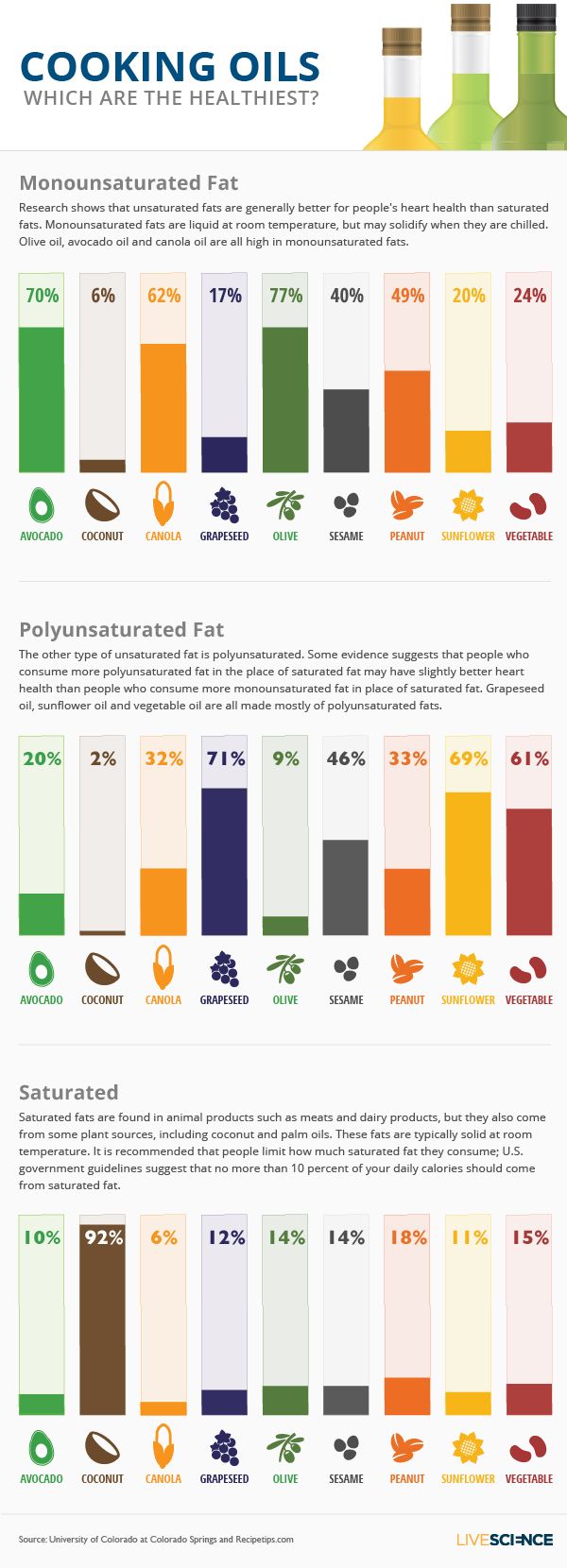
Why is Canola oil bad if it has the same quantity of monounsaturated fats as Olive Oil?
It's not really that saturated or mono-unsaturated fats are good for you, but that poly-unsaturated fats are bad for you. I realize this is contrary to what much of modern nutrition says, but the lipid science says the poly-unsaturated fats are worse because they react more with other molecules in your body.
Also, saturated fat consumption has been declining and unsaturated fat consumption increasing over the past decades while health keeps getting worse. To me, this suggests that something is wrong with our current nutritional understanding, and I believe the lipid science shows that the problem is the poly-unsaturated fats (as one part of it at least, it's obviously not monocausal).
We are lucky to live in a age of a dramatic global decline in famine, but a large scale war or natural disaster could potentially unravel this progress in a devastating way.
Subsidies can do preventative tasks that insurance cannot -- like securing additional capacity of food stores and farm land that farmers wouldn't normally do unless they were being paid to do so.
UK, Sweden, Italy, Spain, and Belgium all have had more COVID-19 deaths per capita than the US. And France has a rate nearly equal to the US.
UK, Sweden, Italy, Spain, Belgium, France, and Netherlands all have worse case fatality rates than the US. And so does Canada. (But, this may be because the US has done more testing.)
https://www.npr.org/sections/goatsandsoda/2020/08/05/8993658...
Also keep in mind Europe was struck before the US - the worst of the first wave is behind them while the US is still riding it down
All that said - Canada is still a country that identifies as a country. If anything is causing a real divide in America it's the entirely manufactured hatred of modern divisive politics. As someone who grew up in Boston I went to school with a wide array of skin tones and original nationalities - there weren't Irish and Italian gangs beating up the black kids - there were suburban entitled white-kid gangs beating up the black kids... Any sort of origin based racism left in America is from more recent immigrants - it's totally bullshit and needs to stop - but I've never met anyone in America that said "Hey - you look Prussian - I don't like Prussians since they moved in on my Pomeranian ancestors. I don't take kindly to you folk."
I am uncertain where you've observed it, but I certainly never saw it in either New England nor the south west.
1. That isn't to say they're leaving tomorrow, there is just actually a serious portion of the population unlike all of the US states.
I don't understand how this invalidates my point that sugar is sugar. That there is no difference between sugar in commercial goods, and sugar you add when you bake at home.
I'm sure given enough effort, I _could_ find cookies made with half the sugar and dark chocolate, but if you asked me right now, I honestly couldn't tell you where to find such a thing, let alone at a price comparable to run-off-the-mill chips ahoy (never mind the cost of baking them from scratch).
We can certainly be pedantic and say one molecule of glucose is identical to another, but the logistics of buying cookies on impulse at the supermarket vs taking out a mixer to make them on a saturday morning will realistically not likely yield identical amounts of sugar intake. There's also something to be said about the shock of learning how much butter goes into these things!
This seems like the most important claim and also has no citations.
    CH₃-CH=CH-CH₃ + · + ROH ⇒ CH₃-ĊH-CH₂-CH₃ + :O¯R
    CH₃-ĊH-CH₂-CH₃ + HOR' ⇒ CH₃-CH₂-CH₂-CH₃ + ·OR'
RO· + ·OR' ⇒ ROOR'
   CH₃-ĊH-CH₂-CH₃ + CH₃-ĊH-CH₂-CH₃ ⇒  CH₃-CH-CH₂-CH₃
                                          |
                                      CH₃-CH-CH₂-CH₃
Now how important this is in a biological context I have no idea. There is a plausible mechanism for it to affect cellular chemistry, but the problem is that "a plausible mechanism" and "an actual effect" are very far from the same thing, and biochemistry is complicated.
The citation I'd want to see is that the chain reactions of free radicals do something biologically interesting, or, even better, that diets high and low in polyunsaturated fats lead to significant health differences in animal models.
Sugar is sugar.
Not that too much can sugar is good for you either, but it's more expensive, so before the advent of corn syrup, less was used.
The sugar is the problem and both the pastries have the same sugar. The homemade one may be marginally better but it's a distinction without a meaningful difference. The problems caused by oddball chemicals used in industrial food manufacturing are less than a rounding error compared to the problems caused by obesity.
You obviously aren't that familiar with the subject since Jarritos is the only soft drink in that list (the others are snack brands). I feel there's an undercurrent of paternalistic racism in this thread - "those noble naive Mexicans would be so healthy if they only hadn't been enslaved to imperialist American fast food corporations!"
Mexico is a whole country full of educated, modern, free-thinking individuals with their own strong, vibrant culture. They're incredibly proud of it. They have their own tastes and their own products serving those tastes and yes, they struggle with dietary health just like everyone else in the world. Walk up to a native Mexican sometime and tell them that they only like pan dulce because Americans have brainwashed them, see how well that goes over.
Install adblockers on any computer your kids use. Cancel your cable television subscription. Deny these corporations the opportunity to pump their propaganda into your kids.
But again it's easier to give up and let them watch TV than having to actually deal them.
Without legal push to make everyone work in unison there will always be an entity (a corporation) willing to invest enough to push the right buttons and coax people into the most unhealthy habits. After all the profits will belong to that company while the expense is paid by society. The overwhelming majority of individuals are completely unqualified to see through the onslaught of marketing (especially the covert kind), the social pressure, or even to understand the risks they're taking.
Corporations are an easy scapegoat that also fits a political ideology on the left.
It's also a complete fallacy to claim that people cannot see through things. People are not stupid they know that it is their diet that makes them fat. People deserve at least this credit and respect.
Alcohol and cigarettes sales to children are obviously completely different and a very poor analogy.
So... Following the logic, either we accept that people are free to make their own decisions, that parents are responsible for their children, or we take children away from parents because the state knows best.
Personally I think we should do the maximum we can to teach good diets at schools, and perhaps provide classes for adults, and to label products then people can do whatever they want but live with the consequences.
But I think the likely outcome (as we start to see in some countries), which must be politically acceptable and cheap, will be similar to the path taken for cigarettes: PR campaigns and tax. This is a way to let people do what they want while nudging them, and to let them pay for the consequences (healthcare where it is financed through tax).
When it comes to children parents won't be blamed (although they should be) because this is not good to win votes. It will be easier to continue blaming ads and corporations, and to ban things.
The primary argument against that is that it puts strain on society to provide for people when they experience health issues from that. I have paid my entire life for social health programs and health insurance though, why? So I will be nannied until the age of 90, eating only approved healthy food and doing no activity that may be in some way risky?
If we are going to ban dangerous things which people do for no reason other than they enjoy it, should we go after scuba diving and mountain climbing too after we ban Snickers?
I agree, and think this is probably for the best. My opinion is that these laws are rightful when the interaction is direct and obvious. If I smoke in enclosed spaces, I am directly increasing other peoples' chance of cancer, giving them no choice over their bodies. This is analogous to how one's freedom to move their body doesn't extend to hitting other people in the face.
I do not agree with the government imposing restriction based on indirect, ambigous harm, like the "harm to society" that drinking sugary drinks which might lead to obesity causes. Harm to society has been used to justify a myriad of harmful policies. Unless there is a very clear, direct link between an action and harm to a person, the government has no business stepping in.
(Of course, this is all just my opinion, I'm presenting this as a justification for my viewpoint.)
But... that's not what Mexico's proposal is. It's also not the goal of any of these public health bans.
The goal of the bans is to prevent people from selling and profiting from unhealthy products. It doesn't stop individuals from producing and consuming whatever they want.
Healthy and unhealthy people alike like sweets. Just because some abuse it doesn't mean an outright ban is in order. And why stop at sugar?
So yeah, information is certainly necessary but not enough.
I think the trouble is that people get big portions, a big soda, and they live their entire lives in a car or seated.
We had McDonald's in the 80s and if you look at random footage of any 1980s street scene you will see fewer obese people than the same places today.
Relatedly, I have a suspicion our basic food ingredients since that time have higher sugar now.
Addiction is a disease and junk food is super addicting.
So I think mentioning that people are generally aware of the bad side effects of junk food isn't helpful - some people indulge due to perceived financial pressures (especially time pressures) others because of the short term pleasure- "Everything is going to hell - at least I can enjoy this milkshake and forget about things for a while." Additionally you have just plain old cravings and other factors.
I agree that the obesity epidemic isn't caused by a lack of information - so I think your point is important, but I think it's also important to realize that addictive substances almost never have that lack of information. Booze and cigarettes both tend to come with really heavy warnings about side effects but those warnings don't really have a noticeable effect.
Forcing manufacturers to put those warnings on products is essentially a big cop out by the government to avoid taking any real action.
Honestly - I can't blame anybody who could be found lurking, let alone posting on hackers news to think there's no way that this isn't common sense. However, it's not. It's really, unfortunately, very far from it in the U.S.
I now cannot easily find it (at least in a brief search on Google) because of recent bullshit regarding the keywords, but a few years back, there was a medical case that briefly made news. Woman in her thirties, not mentally deficient (by any diagnosis anyways), job holding, etc - was hospitalized at near death from a variety of issues that had gradually become quite severe.
Cause of the issues? She'd, by her, family, and friends accounts, not drank plain water in years, pushing near a decade. The majority of her fluid intake, that entire time, had been Coors Light (sparingly sodas, other sugary/alcoholic drinks that weren't plain water). Her justification as to why she had no idea this could cause any bodily harm is because it was "light"
It's bad. Truthfully, I'm happy for you that you get to live a life where you don't know/haven't been exposed to how bad. But, it's bad and I don't see it getting better any time soon.
"2013 nationally representative phone survey of about 2000 subjects showed that one-fifth of Americans thought FF was good for health, whereas two-thirds considered FF not good. Even over two-thirds of weekly FF consumers (47% of the total population) thought FF not good."
Note: FF = fast food
https://academic.oup.com/advances/article/9/5/590/5062131
There's also this scene from Fat Head: https://youtu.be/evcNPfZlrZs?t=1258
I wonder what portion of Americans have a troll mentality and will say stupid shit to pollers just for fun. Probably not far off one in five...
I think you've missed the point.
There's a person out there who thinks it's a perfectly healthy way of life to consume beer as their only fluid intake. Every day. For years. I guess you really need the context of the article - the main concern of it was really highlighting the fact that they weren't aware only drinking beer could been even remotely harmful to somebody, specifically because it had "light" in the name. Like, even if it had nothing to do with her being hospitalized. Not an argument as to whether or not doing so/having the choice to is wrong - simply that the fact a beverage, alcoholic nonetheless, could not be even slightly bad for the human body, because it had "light" in the name...
I know that may seem like satire to us - but this person was completely serious. Or is there something about your comment that I'm missing?
In Australia obesity increased while sugar consumption decreased. The additives really matter and have a huge impact on human health--they are not a rounding error, but it was a great marketing tactic on behalf of various food industry groups to vilify sugar while deflecting from the other ingredients that are similarly problematic.
Which are present in home cooked baked goods too.
I know it's not as simple as just "sugar=fat" but the difference between home cooked junk food and industrially cooked junk food is vanishingly small.
In terms of chemistry/nutrition I agree. However there is a huge difference in convienence. Pastries are a huge pain in the ass to make, and consequently I only make two or three pies a year. Store bought pastries are trivial to acquire and gorge on seven days a week.
(And if it didn't actually harm her, was she even wrong to think a light beer was safe to drink? And by that I mean safe in the amount she drank, not some strawman about it being impossible to harm a human ever in any quantity. Note that not even water passes that strawman test.)
Calling things 'left', 'ideology', 'fallacy' and randomly saying things are 'completely different' aren't great arguments if you keep it at statements instead of an argument.
Marketing is _very_ effective. Further, people are paid for to ensure it is effective. Having rules to restrict that behaviour does go against some peoples idea of what a government should do. IMO that's exactly what the government should do, protect the people (among other things!).
> When it comes to children parents won't be blamed (although they should be) because this is not good to win votes.
You're making this a parent thing, and an either/or thing. It's much easier to do multiple things at the same time. Ensure parents are educated, ensure children cannot be marketed.
It seems obvious to me that alcohol and cigarettes are not the same thing as telling people what to eat or feed their children. I'm happy to hear your take on this.
It also seems obvious to me that people in fine choose what to eat and drink. No-one ever put a gun to my head, for example. I absolutely agree that marketing influences choices, but only up to a point. Certainly the quantity is a personal choice. Giving Coke to your children for breakfast (I have seen it here in England) is a personal choice. A crap diet is a personal choice.
I also think that parents are responsible for their children. Marketing targeted at children is beside the point. Of course it will work, but again only up to a point: in fine it is the parents' decision to let anything go or to impose limits. I am a parent, I know but I'm also happy to hear your views on this.
And finally, it is also clear to me that blaming corporations (and behind them capitalism) for people's bad diets is a political stance because it fits the view that people are oppressed and victims of the system. But it's also the politically easy and low-risk thing to do because you don't scold people you want to convince to vote for you.
I agree that parents and children should be educated, that's even what I wrote in my previous comment. But let's also acknowledge people's responsibility in their life choices.
My take on the situation (at least here in England) is not that people don't know or that they are victims, it's simply that they couldn't care less.
When they lobby (pay) to get more influence than you have as a voter then I'd say they they are nnot just "scapegoats" but actually guilty together with the politicians they bri... I mean lobbied with. And corporations get to profit from this while the society as a whole pays the price for the fallout.
> political ideology on the left
Why do some people always need to turn everything into a political ideology thing? Contrary to your belief it adds nothing to your argument, if anything it subtracts most of the little weight it had to begin with. Off the bat after a single line your comment holds about as much weight as a wet paper bag.
> are obviously completely different and a very poor analogy.
Is it? It's the state banning something considered unhealthy in one way or another. Why is drinking 100% sugary drinks totally acceptable but a glass of wine or beer, or a piece of pornographic material are illegal?
> So... Following the logic
Then by all means, follow the logic don't just replace it with your skewed one and pretend that it was somehow a natural progression of what I said.
> then people can do whatever they want but live with the consequences.
So... Following your logic governments shouldn't be allowed to ban anything. But people can still do anything they want. They will just have to live with the consequences exactly as you said. In this case the consequence is that if you sell this stuff to kids you get a fine.
Ban them, tax them, disincentivize people to buy them, claw back from the corporations the costs of having a society hooked on, disabled, or slowly killed by those very products. It just has to be a clear sign that the state and the society at large shouldn't bear the costs of supporting a person who has severely undermined their health from the age their brain and body are still developing. And it's also society protecting itself by protecting kids from parents' mistakes.