Why radio receivers won’t tune 800-900 MHz(computer.rip) |
Why radio receivers won’t tune 800-900 MHz(computer.rip) |
https://www.wentztech.com/radio/Equipment/Pro2006/pro2006mod...
It was really a golden time for snoop...er..listening to cellular phones because they were so enormously expensive, including per-minute usage fees, that only drug dealers, doctors, and the 1%-ers could actually afford to use them. So there was always interesting things to hear.
Ordinary cordless phones were much more affordable and fairly common at this time. They broadcast in the clear at 49 MHz (at least in the USA) and had no legal protections like the 800 MHz cellular phones.
People are getting automated messages of Mozilla Mac builds being complete during the disaster.
I was 16 when this happened so I had no idea pagers were used like this. Sort of how push messages or chatops is used today. To aide developers or ops people with notifications.
I see that spam was alive and well back then
Needless to say, most customers were military or TLAs.
We could listen in on mobile phone conversations without much difficulty.
Then frequency-hopping started to become en vogue, along with encryption, and made it a lot more difficult to eavesdrop. Most of that happened after I left the company.
Anyways, you could enter the service menu and select which tower frequency you'd like to receive or send on. I remember playing with it and selecting the same channel to send/receive and there was already an on-going call. I heard one of the people say "did you hear that?" and I pulled the battery, it freaked me out.
Daytime: Money. People complaining about not having enough money, not being able to pay their bills (while talking on a $1000 cell phone and paying a per-minute charge).
Early evening: Food. "What are we going to eat tonight?" "Will you stop at the grocery store and pick up ___?" "What do you want for dinner?"
Night: Sex [use your imagination here]
The wireless headsets the receptionists had were using the same modulation as TV, and you could hear it by holding the UHF dial on the TV between clicks. And my friend knew about this. Awkward.
The year was 1999, I had befriended a strange group of friends from an IRC support channel. We all lived within 250 miles of each other and one day decided to have a gathering with about 6-7 randoms from the channel. Hilarity ensued as we played games of command and conquer, Starcraft, and Serious Sam. I was yelled at for saturating the 1.5mbps SDSL line with my webcam, streaming views to our friends who were too far to drive in. Someone else was eating aluminum soda cans. At one point one guy happened to login and said “wait you guys are having a LAN party? I’ll hop on the PATH and be right there”. Then my life changed in front of my eyes.
In walks this dude that looked like he came straight out of Hackers. We all dap up and continue talking about random nerd things. The conversation goes to cell phones and how the fcc passed this law which OP talks about. Surprise someone has a grandfathered scanner that could scan 800-900mhz. Dude that showed up starts talking about how he knows a guy that knows a guy that took his code and runs an elaborate carding net. Dude then whips out a demodulator app that he wrote that takes beeper signals from the scanner audio and decodes it to text. He tells us we can pull livery and taxi beeper codes because they text headquarters with the credit card numbers on pickups. Then his app does it. One guy holding the scanner at an angle to one of those bend/squiggly microphones that were ubiquitous in the AOL era. Modem like beeping screeching through the air. Then messages and credit card numbers start streaming through this dudes app. The entire room does a collective holy s#%^ mainly because we can’t believe this would be streaming in “broad daylight” across the Hudson.
He went on to explain how he got into hacking almost just like in the movie Hackers. Dude was brilliant and got recruited into hacking groups as a programmer when he was 13. He was writing stuff like this for 5 years. We think we had crossed paths at some point because I was deep in the demo scene and wrote patches for hacking groups.. but that day blew my mind about how security through obscurity worked and led me down a black hat path that switched to white hat in the early 2000s
The answer to "How did you hear about our company?" would not have gone well. :-)
The call was a professor at the local state university talking to a woman whose identity I was not able to determine. Almost the entire conversation was about how much he hated Palestinians. That they were subhuman and should be wiped out. I grew up in the South and had heard hateful things before but this was the first time I heard someone advocate for genocide so openly. That conversation has stuck with me ever since, making me wonder what's going on in people's minds that they keep hidden from the public.
At one point in the conversation the woman asked if he was on a cell phone and if anyone could overhear them. Despite there being no way of them knowing we were listening, it still caused my hair to stand on end. He said it was unlikely. The quality of the signal didn't waver during the call and was strong the entire time was he probably was stationary nearby. So very odd that he didn't call using a landline given the cost of such a cell call.
    This website is begrudgingly generated by the use of software. Letters to the
    editor are welcome via facsimile to +1 (505) 926-5492 or mail to 609 Gold Ave
    SW, Suite 1D, Albuquerque, NM 87102. Opinions stated here are somewhat
    necessarily those of Seventh Standard, LLC, in that the author is the sole
partner and does not wish to lead dual lives.Newt Gingrich who was Speaker of the House at the time got embroiled in an incident that was recorded from a cell phone conversation. https://www.cnn.com/ALLPOLITICS/1997/01/13/tape/index.shtml
Now fast forward to a few years later with the Patriot Act and metadata controvery that Edward Snowden exposed... same shit, different day...
Radio receivers and scanners sold outside the USA, even if they are made inside the USA, have no restrictions. US manufacturers usually label these radios as "export" versions.
It reminds me of the early days of web browsers when "export" versions of Netscape and IE only supported a maximum of 56-bit encryption for SSL.
Pagers were also easy to listen to. You'd get short messages without context. A lot were office to doctor or dispatch to tradesperson.
All it takes is listening to your married neighbor talking to their boyfriend/girlfriend to realize that someone could be doing it to you. The difference now is that it doesn't have to be within a 150 foot radius.
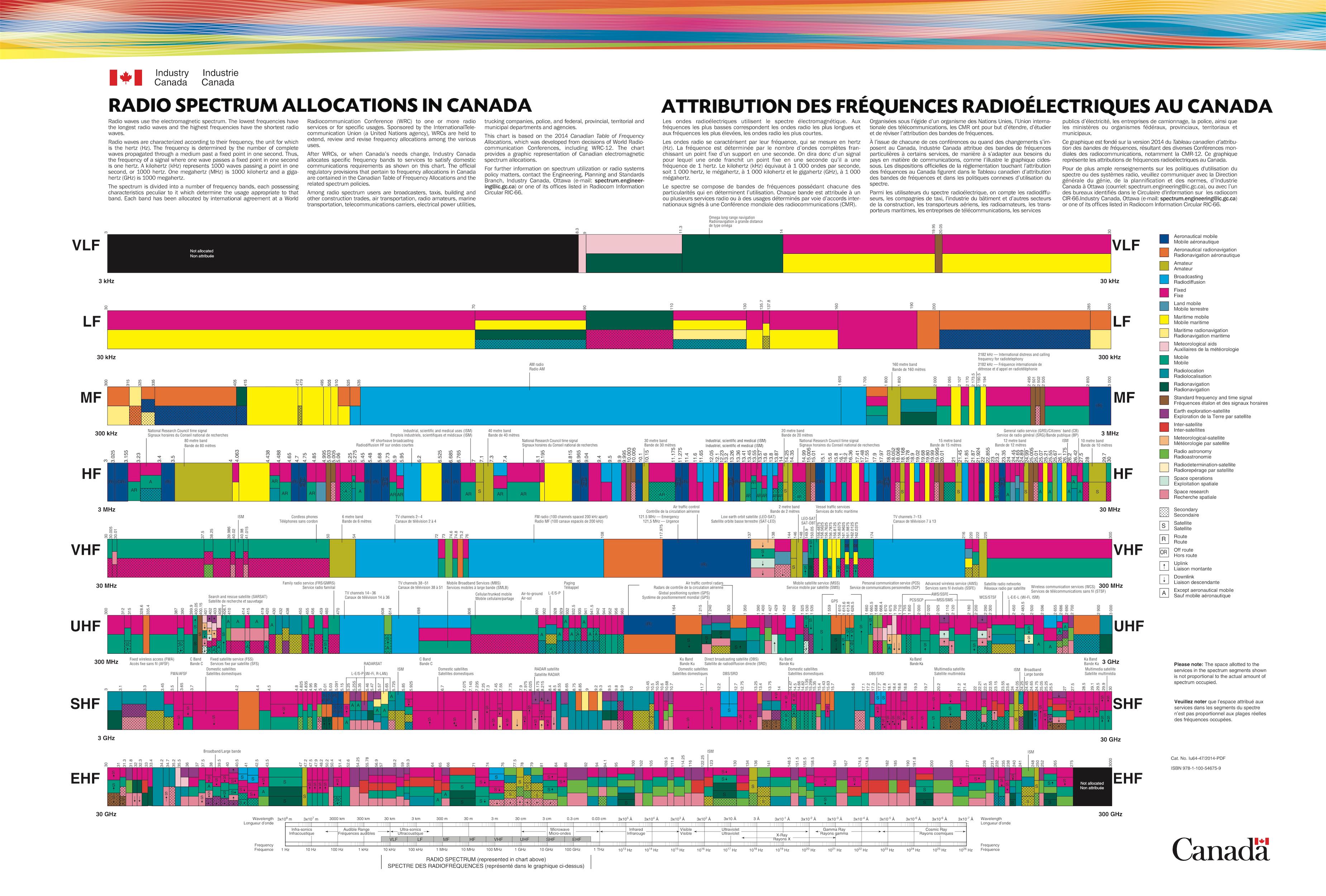
It had the ability to tune to the higher UHF channels 70-83 [0] which while planned for use in tv broadcast, never ended up being used, but they didn't know that at the time of the construction of the tv set. The frequency covered by those channels were reallocated in 1982 by the CCIR worldwide convention, and covered approximately 806 to 890mhz.
What was most interesting to me as a young teenager in the early 90s about this particular tv set, was that I found out I could hear an occasional phone call when tuned to those UHF channels, even more so when I used the fine tuning nob.
On a side note, the tv set also allowed me to view scrambled channels on the cable system which I could unscramble to various degrees by turning the tuning nob at certain rates back and forth. I suppose modern 90s systems were not designed with my old tv set in mind.
https://en.wikipedia.org/wiki/Television_channel_frequencies...
I have an old GRE PSR-500 which isn't terrible, but I'm looking to replace it as it has next to zero software support for programming it and doing it by hand is a real pain.
You'd think in this day and age someone would make a scanner with a companion app connected to Radio Reference for programming. Would be nice to have bluetooth audio too.
FWIW, GRE stopped making scanners in 2012, and later closed down and sold off their scanner business to Whistler. Supposedly Whister were going to release a new scanner, the TRX-100, but cancelled it. Seems like handheld scanner technology is still stuck in the '80s.
If I recall correctly some of it is licensed and/or patented and people are just having to reverse engineer the protocols. I’d pay for a commercial demodulator to snap in.
My friends and I used to get piles of old Okis at First Saturday in Dallas. We'd leave Austin at midnight and drive 3 hours to get all the pre-dawn good deals. I remember we got a hold of some mobile data terminals and tranceivers too, though we never quite got around to the mischief we dreamed of using them for. POCSAG decoding was another good time. Ah, to be young again!
I wonder if truckers still call a lot of phone sex?
  To start: yes, long time no see. Well, COVID-19 has been like
  that. Some days I
  feel accomplished if I successfully check my email. I finally
  managed to clear
  out a backlog of an entire handfull of things that needed
  thoughtful responses,
  though, and so here I am, screaming into the void instead of at
  anyone in
particular.These are often called "MARS mods", since the Military Auxiliary Radio System uses HF frequencies that are outside the amateur allocation.
http://canadianspectrumpolicyresearch.org/wp-content/uploads...
I would rescan daily usually in the evenings and watch what other people paided for. Thursdays and Fridays were good. During the day mostly kids movies.
In the mornings someone would watch a porn fast forward 10 minutes to one specific part.. slow down the video to play 2 minutes then turn it off. Very funny.
If you are in a building let your tv scan for channels in the evenings. If you see a decimal high channels you may have it too.
The most useful part is we could start an on demand show in the living room that had the only cable box, and find it in the bedroom.
and Kevin Mitnick https://www.cnet.com/news/q-a-kevin-mitnick-from-ham-operato...
"I was cloning my cell phone to random subscribers and dialing into computers from the cell phone."
In general, I don't understand why blogs (and HN) are allergic to abstracts.
I'm curious though -- since the rule no longer has any practical relevance, is it still enforced?
Since it's not particularly likely that Congress would ever get around to updating the law anytime soon... does the FCC still even care? If a hardware manufacturer openly tried to sell a receiver that could tune to those frequencies, would they still be stopped?
Here's an archived version: https://web.archive.org/web/20201213003741/https://computer....
EDIT: Seems to be back up.
100 years from now we might get down to a meaningful mix of regs. Right now the Code of Federal Regulations (CFR) is like the roach motel - regs check in but never check out :p
http://www.jax184.com/projects/StarTAC/wireless/testmode.htm...
There's some hazy link here between "JB Crawford" and Kuro5hin and ... ? Or is that just a coincidence / faulty link in my memory ?
I edit a newsletter of blogs of HN and I can tell you that your design is not more hostile than most HN bloggers, don't worry you are fine
The parallels to what we see today with pervasive surveillance and anti-encryption policy are significant, and it's frustrating to see how much less atwitter congress is about these issues today, when it's their own government doing the eavesdropping. As I make a jab towards in the article, I think that the people of today (and even the people of then) have given up on the privacy of their personal communications in some ways. I can't blame them, but it's clearly a problem that needs to be solved. Perhaps one way to look at it is this: in many ways, our communications on the internet have fewer privacy protections than our communications on landline phones. How did it get to be this way? History and policy, combined in an ugly way.
Let's put it this way: OKI900's and all that were around before 1992. And that phone was favoured because you could easily reprogram the ESN/NAM/MIN for cloning as well as turn it into a scanner by turning on it's speaker and had control of the frequency. It was a modder's dream to hack on. But the same could be done with Motorola phones with a few more button presses.
That was 1992.
1997: AMPS system is waning against D-AMPS and even that is getting pressure from a new standard - GSM - which is also digital and ENCRYPTED. Newt gets caught and to show what a great prick him and Bill Clinton were, they passed a law that was obsolete before it was even passed into law.
https://www.wired.com/1997/11/ears-of-the-airwaves/
---
This is why the election system, process of creating lawmakers (congress) as well as judicial system is retarded. The time lag doesn't stop the flash pan crime trends nor does it do anything to improve the situation due to the abuse of absurd laws like this one. This law is rendered null and void by technology long before it was ever enacted...
I wonder why it's always the same names that crop up as the reason for bullshit regulations.
Wargames came out in 1984. It took about 2 years for there to be a law against computer intrusion (hacking). 18 USC 1030. https://en.wikipedia.org/wiki/Computer_Fraud_and_Abuse_Act
But it got most of it's teeth in the 90's. Newt and Bill pretty much ran the 90's. Along with Janet Reno and the rest of them. People may have happy memories of the 90's but for "hackers", it was a terrible time as people were passing bad laws with little info. It's only gotten marginally better over time due to people gaining better comprehension of technology - yet somehow we haven't caught up with our own privacy invasions as a whole. (ie: GDPR and data collection)
You're very very unlikely to ever make it above 60,000ft at a speed faster than 1000kt unless you own a fighter jet.
I worked for a chopper factory in the UK back in the day. We had Novell servers. NetWare CAs back then did as they were told and would only offer rubbish encryption. We used it for throwaway stuff and manually cranked out certs with OpenSSL for important stuff. We also watched firewall logs ...
SDR transceivers like the HackRF are probably still not being purchased by people who will cause any trouble, but I do worry a little bit more about unintentional disruption of important radio applications like aviation navaids or whatever. If I were to take a policy angle here, I think it might be a good idea to restrict such devices to people with amateur radio licenses since they are not especially hard to obtain (DE AE5JL). I'm sure there's a thousand people here who would vehemently disagree with me on that though.
[0] Page 60 of https://www.ietf.org/rfc/rfc2246.txt
They routinely kill and maim palestinian teenagers with 0 consequences, so there must be a huge part of society that agrees with such ideas that they are able to do so with impunity.
I think the concern (fun for the scanner) was that if people leave the monitor on all the time and then have a conversation in that room.
It's time for both the US and the EU to vote out all the incompetent morons of our parliaments...
https://worldradiohistory.com/Archive-Popular-Communications...
Page 14 for "H.R. 2369 and The ARRL"
For that matter I once had a job where I had a WiFi IP phone that I carried around, but I think cellphones have gotten cheap enough for corporate users that the wind is out of those sails. I keep thinking about buying one of those on eBay...
(Cave-at: I'm not involved with the technical implementation. I just know the system as a user.)
http://www.grandstream.com/products/ip-voice-telephony/dect-...
Everybody else would have someone else cut that diode in the first place.
I miss the days when there was a messaging service you could buy in order to recieve text messages nationwide without transmitting your location.
RIP POCSAG
I used it for decoding the AMBE+2 stuff on newer P25 systems. It wasn't great but it did mean I didn't run afoul of any patent issues if I wanted to sell the system to someone else. OP25 is great but I didn't want to take the risk.
Whatever I was watching recently still had that slurring effect in all of the speech that I recall from back in the day, but I just checked out some recent recordings from OP25 and that is actually quite a bit improved. May just try that out first and see where it goes. Thanks!
https://news.ycombinator.com/item?id=11611571
It was Michael Crawford.
JohnCompanies, the first VPS provider, and the incubator of what eventually became rsync.net, did all of the original advertising on kuro5hin.org. I actually grew the company a fair amount just on the basis of those small ads on k5.
While I was never an active member of the community there I had enough random exposure to it to absorb a little bit of what went on there...
Sorry for the noise :)
[0] https://news.ycombinator.com/item?id=19489570
[1] https://static1.squarespace.com/static/51d72b41e4b0f798b53a3...
Am a Canadian HAM, and also the owner of multiple transmit-capable SDRs. While I don't disagree with you on principle, one tricky part with that is that the majority of my usage of these devices has been commercial. Requiring an amateur license to do commercial work is kind of the opposite of how the system is supposed to work (i.e. no commercial activity on the HAM bands).
The real saving grace for the transmit-capable SDRs is that they're generally quite low power. I think the most powerful one I have can do... 100mW? Sure, you could be disruptive with that, but it's not going to go very far.
Until you add an amp hehe
For a while, exports were limited to 40-bit symmetric key strength and 512-bit moduli for DH and RSA. I had forgotten about the limits being raised to 56 bits for a few years before being fully dropped by the Clinton administration.
There was a brief attempt to get around the pushback against key length restrictions with the Clipper chip[0]. The idea was to give everyone 80-bit Skipjack encryption while enabling U.S. law enforcement intercept by having the chip refuse to function if it wasn't shown a valid escrow message (LEAF) for the key it was using. Skipjack was classified at the time and supposedly stronger than anything commercially available at the time. The problem was that LEAF itself only used a 16-bit authentication code, so it was trivial to bruit-force another LEAF message that would work with your session key, but yield garbage data in a wire tap.
[0] https://en.wikipedia.org/wiki/Clipper_chip#Technical_vulnera...
I bring it up because speech recognition has become so commoditized that most of us could think of a way to whip up an, albeit bad, solution to this problem using AWS/GCP/etc in a weekend.
Fortunately COCOM limits for GPS are not enforced. It's empty clause.
Of course that regulation is now useless because foreign receivers don't implement the limit and competing GNSS systems also don't have it. But at the time it was written this was a sensible restriction because it was a unique technology.
Huh?
I miss the 90s. I was 12 years old in 1999, but I started disassembling code when I was 8, so as you can imagine, people online thought I was an adult with all of illegal things I did. I even broke into PayPal and bragged about it. lol embarrassing today.
That being said, I feel like back then a most vulnerabilities were so simple due to lack of foresight/security that quite a few 12-year olds with a decent understanding of computing could perform them:
I fondly remember an IIS bug which allowed you to basically 'cd' into any directory on the host machine and execute cmd.exe remotely. I believe it was as simple as the server not sanitising '..\' when written using unicode escape characters...
All the way through the thousands there was a backdoor on OSX' remote desktop. As long as they were not behind a firewall and had not manually setup remote desktop, you could get full access as well.
And all the way through the 90s and the thousands, there was a backdoor on Motorola and Buffalo cable models, so you could remotely inject your own firmware and remotely reboot the router if you wanted. Everyone online was soldering those things to get hacked internet back then and I was just scratching my head as to why they were not using the backdoor instead.
I can go on. I haven't done anything infosec in a very long time. When I was 18 I got interested in certificate decryption and my passions took a more math heavy direction, eventually leading to quantitative finance.
edit: Oh, and to keep more on topic, regarding listening to cell phone chatter, the cell tower where I lived didn't change to digital until 2006, so in the thousands I knew you could listen in, but frankly I wasn't interested. I was more interested in making cantennas and injecting an 802.11 signal 2 miles away, decrypting their WPA. Surprisingly I did not find a single router that had a different admin password than its WPA password.
In the 90s all the way into the early thousands, to get online I had to get hacked internet, as my parents didn't really understand the internet and thought it was a fad. This may be what inspired some of the black hat stuff I did.