School or Prison(schoolprison.com) |
School or Prison(schoolprison.com) |
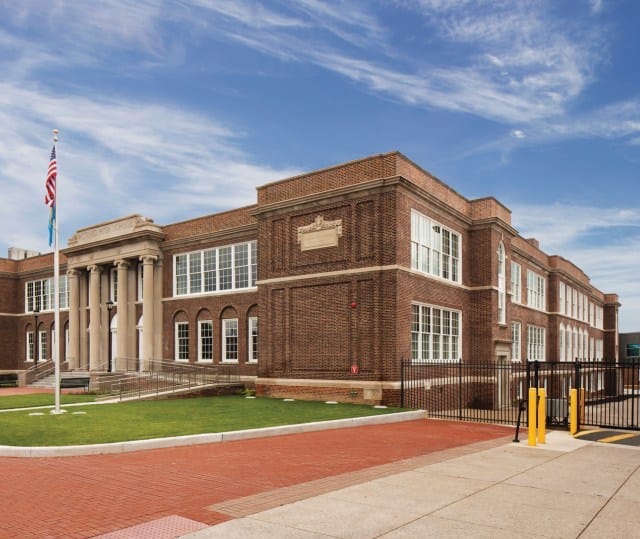
- Windows: Few or many? Are they only on the top floor? Are they small? (Prisons don't have lots of windows.)
- Bars on windows? (Dead giveaway for a prison.)
- Lots of security cameras? (Not the best indicator, but it weights in favor of prison.)
- Fences around parking lots? (Criminals might want to break into cars.)
- Is the name on the building large, inviting, and stylish? (School.)
I think the message being sent is more interesting than the "game".
If you are more curious, I would also suggest his book titled “Free to Learn”
[1] https://www.psychologytoday.com/us/blog/freedom-learn/200909...
And then you graduated, started catching the train to your new job, discovered that many people do not reciprocate this standard, and there's split drink, empty bottles, and undesirable aromatics on every train.
Schools really should be given a makeover. They do look too much like prison. But what, round corners? I dunno. I guess they’d look too much like giant iPhones.
Unrelated but in case the simulation changes theme to “post-apocalypse”, what’s better to use as HQ: the school or the prison?
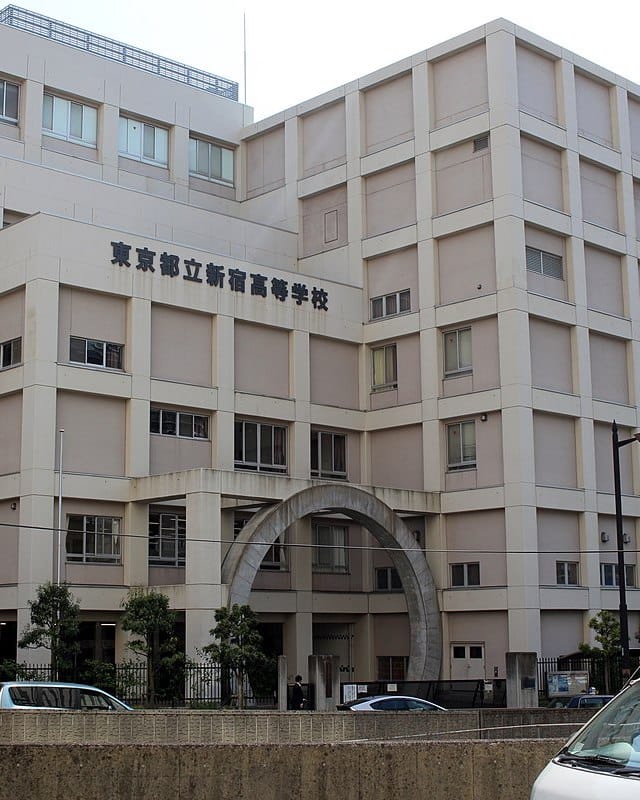
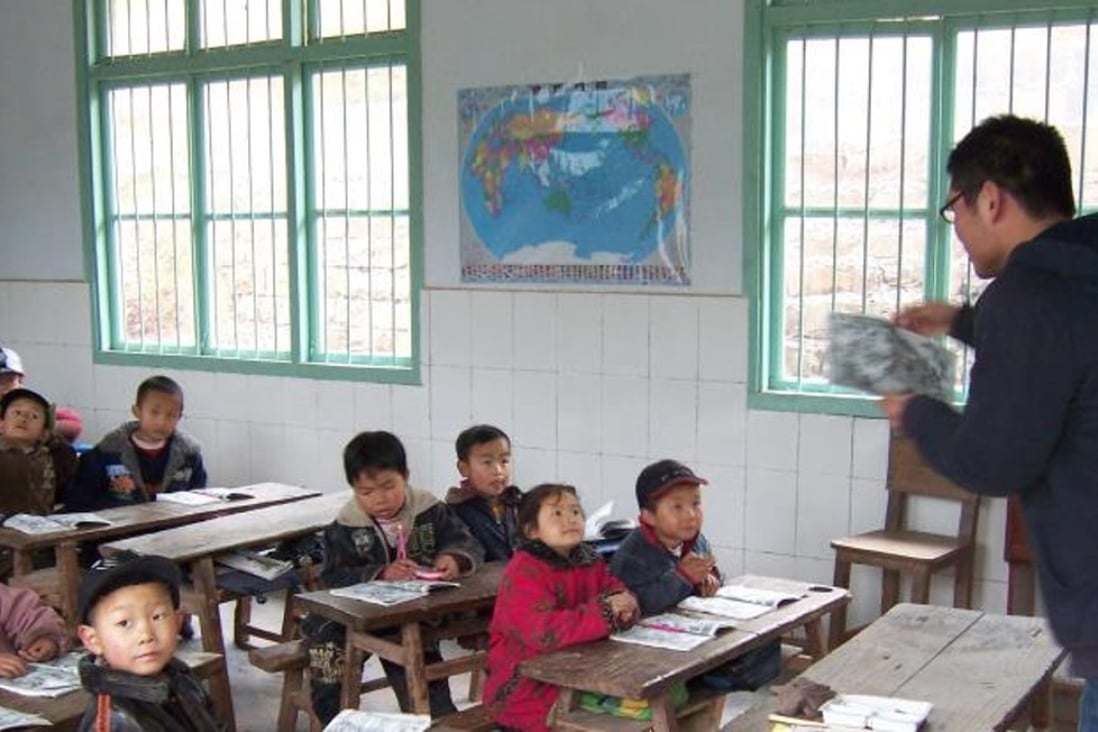
You can read “学校” on this building, making it a bit easier than it should be. :)
i would rather the state appoint an architect group to design like 5 model schools that are modular. and then any time a city needs to build one you just get to play some lego on the modular design. this would make school construction faster and cheaper and maintenance easier
Land isn't uniform, lots have shapes, roads already exist, utilities have to be connected, local construction requirements vary, existing structures have to be accounted for. You're likely not going to save money by forcing everyone to use the same 5 designs because that will just shift inefficiencies elsewhere -- where they're even more expensive. Unnecessarily moving earth or buying more property to fit the 5 mandatory designs is going to be way more expensive than simply building the structure to fit existing limitations.
The specific point of the parent comment is that they do want a cookie cutter school. Saying "no one wants that" isn't really a substantial counter argument.
I suppose the problem with them all being so similar would be if you spent every day visiting a different one, you would tire of them all being them same. But no one does that - you spend many years in a single one, without much awareness of others. In the end it's important that it's effective to spend long periods in, and its uniqueness is basically irrelevant to the people that actually use it.
If it has a ton of windows, it aint a school
Can I flag the whole thread as off-topic? Geez, HN.
I sometimes wonder if it’s down to a fundamentally different experience at schools in the US that I’m not aware of?
I feel like I went in one end of the school system, and then came out twelve years later able to read, write, play musical instruments, understand the natural world, think critically, use a computer, and generally having a wide variety of other skills. Teaching quality was mostly fine, with staff who seemed to be pretty engaged. I spent plenty of time outside school with both parents, and I came out with a bunch of skills and knowledge that neither of them would have been able to teach me. My experience was far from perfect, but it was a million miles away from being “a prison”.
The “school is a waste of time” argument seems to be popular in these circles. Is it down to cultural differences? Or maybe it’s just the iceberg tip of a deeper and more earnestly held view about a fundamental restructuring of society and childhood?
For what it is worth, pandemic made me appreciate teachers more. Pandemic made my kids appreciate school more (and they explicitly stated multiple points where school is better then what went on at home).
Money is just a currency. What they really love (and need), is all the goods and services that can be purchased by money, which include the things that keep their children and themselves alive.
But naked capitalism tells women to "lean in and earn $1 for every 70 cents" instead of telling men to "lean out and earn 70c for every $1" ...and spend more time with your children, family, contributing to open source software, learning science, an instrument, hobbies, sports and exercise and doing other things not valued by the market.
UBI is far superior to both a jobs guarantee, minimum wage laws and unions in rebalancing the power dynamic between the employees and employers.
Instead, today, we are brainwashed that your worth as an individual comes from working for a corporation, and the schools train the kids to sit down and shut up for 10 hours day to do just that. Look at Finland. Or http://magarshak.com/blog/?p=158
There's a long list of reasons schools aren't just a cleared field with a bunch of mobile-unit classrooms thrown out there despite that being the most cost-effective way to house classes.
Paperwork specifically is also pretty important. Sure you could argue that they could postpone teaching that until later but teaching how to fill out paperwork is basically just teaching how to do homework which will be essential for teaching mathematics at any reasonable scale.
Of course now things are digital but it's still the same skills but in a different shade.
When I bounced around cities later in life, I was surprised at how many of my peers said the same thing as a conversation piece.
Maybe they used the same governmental bidding process. "Needed: a building. One food preparation and eating area. Hallways suitable for lining up and proceeding in rows with many small rooms. One yard with sporting facilities."
The whole thing is an abomination. It serves no useful purpose to society to subject most criminals to prison: it doesn't serve as a deterrent (based on talking to ~50 prisoners about this), it only radicalizes them further against "the system", making it easier for them to break further laws.
Why don't we have more outrage against this outdated institution created out of 1600 era values?
The amount of human suffering it creates... It's astounding. Most prisoners would probably rather a super old school punishment like chopping off their arm over the prison sentence they get. And it would be more effective.
I'm not sure what else you can do :( it's a really big systemic issue. I think we just need more awareness, first?
Social life in prison involves having "friends" who can any day decide to try and rob or fight you (both happened to me with my closest "friend"). Nobody has real friends. It's dog eat dog, you lose the ability to trust, and don't have any trusting social connections. That's extremely painful. When you talk to people on the outside, every prisoner just tries to deceive them into thinking things are just dandy: I'm not sure why that happens, but it means those connections aren't real either. It's all so much worse psychologically than is conveyed in popular media. We don't know how to quantify psychological suffering though; as a society we rather put people through huge amounts of that than some visible physical suffering (which, again, is probably strongly preferable to the criminal).
Unfortunately most of the people suffering in the prison system are poor, so we don't hear what they have to say. If you're rich, you can afford your own lawyer and get a much better plea deal, and get out quickly. It's also very racist: you will really understand Black Lives Matter when you meet a black father who was sentenced to 30 years in prison for a nonviolent drug offense, and realize there are 100,000s - millions of people in the exact same situation: it's destroying entire communities. I've seen the way black people who a judge has never seen before are villified from their appearance: go to a courtroom near you if you don't believe me, it's shocking. I'm talking about in San Francisco, not even a rural area.
Anyways, thank you for your empathy. I wish more people understood that criminals will commit less crime if they're forgiven and accepted by society, instead of villified. And it's also the decent thing to do. Prisons are bad cultures because the small number of actual bad actors push everything to this shitty equilibrium: most prisoners individually have a lot of shame about their crimes, and as strong a moral code as the average person. Some definitely do not: and it's hard for the justice system to make the distinction.
All things which are hard to believe until you have some real world experience with these things...
Smells like success...
- An estimated 68% of released prisoners were arrested within 3 years, 79% within 6 years, and 83% within 9 years.
- Almost half (47%) of prisoners who did not have an arrest within 3 years of release were arrested during years 4 through 9.
- More than three-quarters (77%) of released drug ofenders were arrested for a non-drug crime within 9 years.
- Forty-four percent of released prisoners were arrested during the frst year following release, while 24% were arrested during year-9.
- Eighty-two percent of prisoners arrested during the 9-year period were arrested within the frst 3 years.
Source: https://www.bjs.gov/content/pub/pdf/18upr9yfup0514.pdf
A friend was in a therapy theater program that operated at San Quentin. They helped the prisoners write and act in theater pieces. At the end of the program, one of the prisoners, a lifer, told her that it had given his life meaning for the first time since sentencing. He'd been in for something like 15 years. I can't imagine how it would feel to find out you made such a difference for someone.
The US prison system is a terrible thing. That our society derives jokes about the atrocities within really shows the depravity of its citizenry.
1. Talking to prisoners doesn't mean it's not a deterrent for the rest of the population. This is a massive selection bias, it's like saying diet and exercise doesn't work because morbidly obese people say it doesn't work for them.
2. People sometimes lie (often first to themselves), especially about their motivations. This is like an angry teenager yelling that all their rebellion is because of their parents' rules, it's often a self-serving rationalisation.
3. There's no doubt that the US prison system is a bit weird if you compare it to the rest of the world.
So when I talk about deterrence I'm mostly talking about reoffenders. I.e, the prisoners I talked to coming back. I think they're more likely to commit crimes after prison, not less!!
Do you think people would lie, in a heavily monitored prison, about wanting to never come back to prison because they'll "die in glory" in a gun fight against the cops next time so they can't be arrested? Or about becoming a drug kingpin? Sounds like you think I'm saying these people were claiming nice things about themselves, but really they're mostly claiming quite bad things if it makes me think they're going to be back and were strongly negatively influenced by peers in prison.
On the topic of regular people who prison serves as a deterrent for, I'd look at other countries where crime rates are lower without the same hideous institution. Clearly it's not just horrible prisons which prevent noncriminals from committing crime, since so many countries don't have that? I guess that's up for debate.
I think it’s best for a society to implement policies to reduce crime not to scare people into complying with the law. The alternative is quite negative. Also, let’s remind ourselves that people are imprisoned in the US for stupid things like smoking pot, not paying tickets, scared into guilty pleas. Some of those people harden and become career criminals in prison and in the end it results in more crime.
The only useful thing about it IMO is preventing truly dangerous/sick people from interacting with the rest of society. Most prisoners are not that
I think you are under-estimating the extent that many urban schools are preparing students for prison though, and have some structural features in common, even though of course schools aren't nearly as bad as prisons. Contemporary urban schools are often really terrible places, stockhousing and controlling children, preparing them to be stockhoused and controlled.
(And that's without touching the problem of actively violent, disruptive students, who would probably need to be expelled far sooner than they are to protect a non-controlling environment.)
Federal prisons are well known to be cake walks. State prisons are the worst but again differ widely - even within the same state. Typically those with different types of crimes and sentences and ages get put in different prisons, so as you can imagine a nonviolent offender under 35 with a 10 year or less sentence gets sent to a much better prison then a serial killer who's 51 with a life sentence.
So take that dude's experience with a grain of salt. The state wants you to believe prison is hell, but as with most things it depends. The positive experiences I had in prison changed my life. If I had a choice between my prison experience and my experience as a master's student all over again I'd choose prison every time a million times over.
You answered your own question.
The purpose of prison is not reform. It's not even punishment or deterrence. The purpose of prison in the US is:
1) First and foremost it is a profit center. Caging human beings is a multi billion dollar industry in the US.
2) A storage facility for political dissidents and out groups. We just make up laws to target certain groups we don't like, and use that as pretext to lock them away (you know, that pesky first amendment always getting in the way).
3) To reify the carve out in the 13th Amendment which states:
"Neither slavery nor involuntary servitude, except as a punishment for crime whereof the party shall have been duly convicted, shall exist within the United States, or any place subject to their jurisdiction."
Gotta keep slavery alive and well in the USA.
Americans with nice lives, particularly the types to frequent HN, are insulated from the effects of our criminal justice system. Concern for schooling takes precedence.
It's called selective application of the Law, and the US has 3 possibly 4 tiered systems depending on Class strata from what I can tell.
The first level applies to the affluent and politically connected classes that get to legalize their crimes and somehow still get rewarded for their behavior with continued contracts with Government.
FAANG workers have to recognize they are part of the problem: they work for employers who actively abuse privacy laws, labour laws, tax laws, and God only knows what other clandestine operations they have with military and intelligence agencies and yet its some sort of talking point that those people are proud to remind you of any chance they have that they belong to this class (of only vicariously) as though it had any merit or prestige. Until that sentiment changes, I doubt any well constructed from of oratory on HN is going to do much if anything to that end, its definitely a cultural and social issue and class and your affiliation to it seems to be a much bigger component than anything like skin colour or living in the right neighborhood, zip codes.
If the environment is so violent, why wouldn’t you want solitary confinement? (Is there a downside?)
Excessive and prolonged solitary confinement will pretty much result in the death of the individual. The psychological damage inflected upon the victim will be so great that they will return another person (and not in the reformed sense).
Humans are social animals, to deprive us of company for a prolonged periods is as dangerous to our health as depriving us of food. We need love to survive just as we need warmth.
Prison was HELL.
Now why don't people apply this to everything else? You think HN knows what it's like to be a plumber('s apprentice), janitor, drive a floor buffer for min-wage, etc?
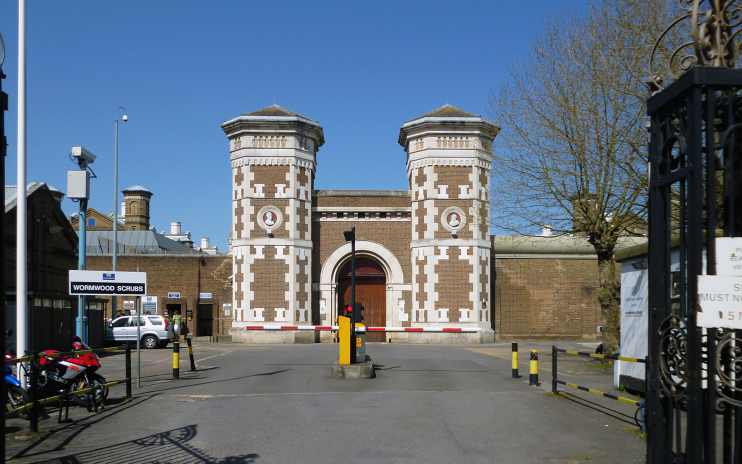
Which looks really nice for a prison. I suspect it is an administrative building, or just the entrance. Not the place where inmates actually live.
School buildings move their entire populations through the entrance in the space of 10 minutes. Prisons are more-or-less entirely designed to prevent exactly that from happening.
At least it had three different exits.
For example:
* https://hidden-london.com/wp-content/uploads/2018/04/geograp... vs https://upload.wikimedia.org/wikipedia/commons/4/47/James_Ho...
* https://i2-prod.mirror.co.uk/incoming/article1185483.ece/ALT... vs https://upload.wikimedia.org/wikipedia/commons/3/33/Cefn_Sae...
* https://ukhumanrightsblog.com/wp-content/uploads/2020/07/HM_... vs https://upload.wikimedia.org/wikipedia/commons/thumb/c/c5/We...
Is it surprising that the cellular prison, with its regular chronologies, forced labour, its authorities of surveillance and registration, its experts in normality, who continue and multiply the functions of the judge, should have become the modern instrument of penality? Is it surprising that prisons resemble factories, schools, barracks, hospitals, which all resemble prisons?
It's something I absolutely despise about our contemporary culture.
I live in Latin America now and envy the kids for getting 45 minutes free at lunch time to hang out outside, socialize, buy from the street vendors that will gather at that time, maybe run a quick errand.
My parents point out that they had a high school experience in the US more like the Latin American one. Something is changing about the US, and it's rotten.
There's a book that presents a good overview of some of these changes: "The Coddling of the American Mind: How Good Intentions and Bad Ideas Are Setting Up a Generation for Failure" (by Greg Lukianoff and Jonathan Haidt).
Now then...
There's a lot of people crapping on schools and teachers in this thread, and as a former teacher and spouse of a teacher I'd like to point out a few things:
Schools and teachers provide a vital service. Not only do they educate our children, they babysit our children, and the pandemic has shown us how vital that aspect of the service is. I've anecdotally seen many parents on social media complain about having to look after their own children during the day.
Schools need arbitrary and often draconian seeming rules, such as refusing toilet breaks, not allowing food or drinks in a classroom, or enforcing strict dress protocols. If you truly knew how manipulative a group of children can be, when ganged together you'd understand this. Toilet breaks are often abused, with children skipping class to, for instance, vape in the toilets. I've had classes where I've spent my break cleaning up chewing gum, spilled drinks and crumbs from students sneaking snacks. When kids aren't in uniform, or under a strict dress code they'll push the limits of what is acceptable and additionally bully the poorer children that can't afford the latest fashions.
If we want schools to ease up on such restrictions then you need to invest in more teachers and other staff. I've had science classes with 35 students all with Bunsen burners merrily flaming, flammable and corrosive chemicals in beakers at their desks, and syringes or pipettes (also read as water pistols). Or my engineering class with 20 soldering irons all on, pillar drills being operated, while a couple of kids are etching circuit boards. Try running that type of class without strict rules and you're liable to see injury, loss of employment, a lawsuit and possibly prison.
If I'd had smaller class sizes, or more staff in the classroom, I could have relaxed my rules. I'd know the kids better, have built up a more trusting relationship been able to monitor who was doing what with greater efficiency.
These are kids we're talking about and they're developing, experimenting, learning, and struggling to navigate a complex social dynamic in a very unnatural environment. Without rules in place, they'll screw up. For God's sake, how many of you "adults" have had to sign a code-of-conduct agreement before being allowed admittance to a tech conference or hackathon? Even grownups can't be trusted.
> Public school teachers are in much the same position as prison wardens. Wardens' main concern is to keep the prisoners on the premises. They also need to keep them fed, and as far as possible prevent them from killing one another. Beyond that, they want to have as little to do with the prisoners as possible, so they leave them to create whatever social organization they want. From what I've read, the society that the prisoners create is warped, savage, and pervasive, and it is no fun to be at the bottom of it.
> In outline, it was the same at the schools I went to. The most important thing was to stay on the premises. While there, the authorities fed you, prevented overt violence, and made some effort to teach you something. But beyond that they didn't want to have too much to do with the kids. Like prison wardens, the teachers mostly left us to ourselves. And, like prisoners, the culture we created was barbaric.
I went to a public school that was most definitely not like this. My teachers were really invested in the students and often perform significant emotional labor for children who don't otherwise have supportive adult relationships. I went to many schools (moved a lot) and they all largely had teachers who were passionate about the well being of the children under their care. I had a very poor home life and having teachers who identified I was going into a suicidal spiral was very useful when I was a teenager.
We of course, are endlessly subjected to an artistic representation of it in Holywood films.
A school building could provide maximum natural light to the occupants. For example, it could have shape and orientation so most of its windows get sunlight throughout the year. Interior spaces can have skylights and be used for short-duration activities like restrooms, locker rooms, and equipment storage.
As other people have commented, space for windows is crucial. (And, at least 2 of the pictures had identifying words in different languages) I scored 10 out of 10 and the game bounced me out.
It's just a bunch of buildings. The onea I saw could be labeled just about anything (hospital, office, court, etc).
In prison you can pretty much poop or get a drink of water whenever you want. In school you need special permission, and hope the teacher wasn't in a bad mood or that 3 other kids hadn't needed to pee in the last half hour, meeting some mental quota the teacher has for the appropriate # of people that should have to use the toilet during a given period of time.
Seriously, it seemed like a revolutionary concept when I hit college and realized "Hold on, I can just get up & go?." Or that (absent computer labs) I could bring a cup of coffee or bottle of soda with me to class, and that common etiquette even allowed for a bit of food if it wasn't noisy to eat or have a powerful smell.
You could make the same game out of "school or doctor's office" or "prison and bank" and it wouldn't be any more obvious if the photos were shot this way.
My idea was to make it much more like how paid for classes and work are.
Instead of grades, there should be classes happening of various levels at all times. And student should be able to apply for promotions at any point, where if they pass the test, they can get promoted to the next level. Grades should be secret from one another like salaries often are, so students shouldn't feel like they compete with others, but only with themselves. And they should focus on working towards their promotions, with a 1:1 with the teacher where the teacher can tell them what they should focus on next and all to work towards their promotion.
That way everyone can go at their own pace, which can even be a pace that varies from time to time. Students don't feel a competitive pressure. You don't really have "class mates" in the sense that there's much more churn at all time of who is currently in any given lesson. And you get more personalized feedback on how to reach the next level.
Also, schools shouldn't be rated with how well their student performs, but instead by the diff of how much better the students became year over year. Like imagine a fitness studio bragging how their program makes you super fit, but they only accept people who are already super fit to join, doesn't make any sense.
https://img.i-scmp.com/cdn-cgi/image/fit=contain,width=1098,...
Both university level and lower education levels in the US will probably have large security camera systems. I know some smaller schools can't quite afford it but the medium and large state schools can.
It doesn't age particularly well, though
Point being that you can cherry pick any answer
That's subjective, but I can't say I like any of them
[1] https://en.m.wikipedia.org/wiki/Consortium_of_Local_Authorit...
A lot of palaces, museums, galleries, opera houses, universities and houses of government share the same basic layout. You’d be hard pressed to say what the function of the Palace of Westminster was if you didn’t know. It certainly looks a lot like some schools and universities.
He traces the design we all see in the downtowns to the works of early german communists and their desire for good looking spaces and architecture that could cheaply be made for the masses in the coming revolution of the working classes. When capitalists heard about it they stopped listening after 'cheap' was uttered. "Oh, this is the 'modern' look and it's the new thing and it's cheap? Do 'em all like that then."
My recollection of Wolfe's short piece is a bit dated, but that's the theme as I remember. It's a short and fun little satirical look at how the 80's downtowns got to be looking as such.
https://en.wikipedia.org/wiki/From_Bauhaus_to_Our_House
As an aside, I wonder how Minecraft is going to change the look of architects and cities in the future. I'm dead certain that the architects of the 2070s will have gotten their love of design in Minecraft.
I've spent extensive time in all of these except prisons, and I can tell you the difference is stark. What explains that? Is it all just down to expensive trim and interior decor? I'm sure that plays a part, but that was never my main impression. Instead, it comes down to the layout and light and feel: it's clear when a building, however regular and rectangular, is designed to support and empower the occupants and when it's designed to control and direct.
  - regular chronologies
  - forced labour
- authorities of surveillance and registrationI imagine that you mean that tall buildings maximize ground area, and that most property is rectangular.
The way to maximize volume to surface area is to build spheres, or cubes if you're forced to remain rectilinear, but tall buildings optimize for ground area.
efficiency doesn't stop with a building's dimensions. efficiency demands social control. it doesn't care whether that happens through self-control and self-discipline or through domination.
I suppose maybe there is some truth to it. But he's highly disingenuous with his implications. It's like a Twitter hot-take that's expanded into a book. Hard libertarians might argue that taxation is in some way equivalent to slavery, which is also technically true but a very biased presentation of the facts. Schools and hospitals are similar to prisons in the same way taxation is similar to slavery (you can find similarities, but ignoring the differences is just asinine).
Every right requires responsibilities. If students have a right to learn, then schools have a responsibility to teach them. If young adults have a right to be educated in a broad range of topics (many of which did not interest them as children) then children have a responsibility to learn. Control is all about forcing people to take responsibility, because otherwise rights will be unfulfilled.
The question isn't whether control exists (it can and should) but whether the intent and implementation is just and efficient. A communist dictator can claim the right to a huge portion of the country's wealth while its population starves, this would be unjust.
There are valid questions to ask about control. Is it better to control inputs or outputs? Is it better to have a rule of laws and systems, or a rule of individuals with authority - discretion means giving more power to individuals. Are the trade-offs our society makes currently fair and worthwhile? If a punishment keeps the majority of the population responsible (thus giving creating rights) but hurts the occasional person who is somehow resistant to control is it a bad thing? But simply assuming that control is bad is silly.
More or less the entire French Intellectual establishment argued at that time for "the decriminalization of all consensual relations between adults and minors below the age of fifteen".
While I agree that seems extremely stupid, it is based on a morally tenable argument that people under that age could give consent. That may be incorrect but if accepted as a premise would justify their position.
So if Foucault believed this and his moral arguments derived from that, it would seem unwise to dismiss all his moral authority just because you believe he was wrong on this point.
I personally think he is totally wrong and that even people at the age of eighteen struggle to know their own minds clearly with regard to consent. However I do not as a result think Foucault is impossible to take a moral lead from.
Not all criticism is moral criticism.
Its still wrong, but anachronistically wrong a bit like how many elements the founding fathers put in which are good government but did so under the unforgivable sin of slavery. If that's too 'ancient history' for you, let's consider Brendan Eich's contribution to Firefox but also understand he is a homophobe. We can still use and appreciate Firefox's technical advancements without worrying about Eich's homophobia.
Age of consent skeptics are as old as time anyway. It rages on today in the modern libertarian party and incel culture. Anti-authoritarian and reactionary movements often become victimizers of children and women and racial/religious minorities because these groups are often protected by authority. When you remove authority, suddenly they are powerless and easy prey to whatever replaces that authority. The most obvious example are soldiers raping women in towns they take over.
In elementary and middle school, we weren't technically supposed to leave the schoolyard but the monitoring was lax enough that older kids frequently got away with it.
Though I don't think a parking lot traffic jam is a sufficient reason either. There are already repercussions for arriving to school late which is what prevents the morning traffic jam from being a problem. Someone shouldn't be allowed to leave at all just because they would be late if they don't come back in time to park. I don't even understand how that could sound convincing to you.
That's just the type of thinking that gives us zero tolerance policies.
So, there's some logic there. They are nominally responsible for you during school hours.
For instance, there was one person, 2 decades ago, flying out of france, who hid a bomb in his shoes so today we are all still taking off our shoes, all of us, each time, on every flight. Splendid.
It's a completely reactionary narrative driven policy that really illustrates the probabilistic illiteracy, cost/benefit illiteracy, lack of critical thinking ... it's like we've taken the structure of folksy tales like "one child did that and they poked their eye out" and are all like "ok, let's make official policy around this"
This is how all the fun park equipment has been dismantled and replaced with things no child past the age of 4 or so would ever find appealing because the existence of a non-zero risk, regardless of how small that is, are all treated equivalently with their volumes cranked to 11.
By that logic, we should never let students leave at all, because certainly some have been killed in car wrecks on the way home.
There is NO logic in preventing people doing that which they will do later anyway.
In his book "Discipline and Punish", Foucault argues that in the establishment of the modern prison, the mission of imprisonment shifted from punishing those who were imprisoned to reforming and disciplining them to become better citizens. The same organizing principles of command and control developed for "modern" prisons were applied to the "modern" school as well. I thought the game eerily demonstrated how similar prisons and schools look to one another. Both kinds of buildings are designed to limit access to the building and also egress.
The reason schools operate that way is simple: sheer inertia combined with just being impervious to reform.
You don't know much about prisons seems to me. As in, once one know just a little how it functions, the above sounds either extraordinary stupid.
There is a simple fact that schools can be glorified daycare so that workers can offload the burden of childcare. For this purpose, a prison makes sense. Despite not being the most humane considering the kids didn’t do any crime worthy of rehabilitation.
A bit like https://upload.wikimedia.org/wikipedia/commons/d/d3/Kilmainh...
I think realizing that daycare with some level of adult supervision and guidance is the primary purpose of much of K-12 could allow us to design better schools that are more like kindergartens, recreation centers, laboratory facilities, art and performance studios, and libraries, and less like factories and prisons.
Though thinking about the factory bit, I do think that craft and maker facilities, as well as gardens and outdoor building areas, are nice to have in schools, making students the creators and crafters rather than the products.
Doesn't justify denying basic biological rights.
I am not sure how preventing them from vaping there and then would solve the root cause of the problem; they'll just vape later or learn to hide it better (and focus their resources on breaking the rules and getting away with it, as opposed to learning) and now they have an extra reason to be against you. Also, how is this problem dealt with during recess? Unless there’s someone monitoring them inside the bathroom or searching them to make sure they don’t bring any vaping products I don’t see how you can prevent someone from vaping inside a bathroom stall.
> where I've spent my break cleaning up chewing gum, spilled drinks and crumbs from students sneaking snacks
Why can't whoever made the mess be forced to clean it? That way the system would self-regulate. Those who enjoy their snacks cleanly can keep doing so, those who make a mess have to clean it up and have an incentive to not make a mess in the future if they want their snacks.
> how many of you "adults" have had to sign a code-of-conduct agreement before being allowed admittance to a tech conference or hackathon?
"Codes of conduct" are virtue signalling to appeal to some vocal minorities but I have yet to see evidence of it actually solving the real problem. Someone who wants to behave appropriately doesn't need one, and someone who wants to be a dick already intends to break the (unspoken) rules regardless of a CoC being in place.
1. School is not mandatory; education is mandatory. Ask any home schooler. A rare few private schools offer quite different experiences than the typical public school (e.g., the University of Chicago Laboratory Schools). This applies also to "closed confinement" and "control". Of course, opting out requires enlightened parenting and lots of resources.
2. You are constantly told what to do, but outside of some broad physical requirements there's really no forcing you to do what you're told. Choose some good coding/math/philosophy puzzles during the evening and work on them instead of paying attention in class. No one can control what you do in your head. You can similarly opt of almost all graded work; especially if you stick to AP courses then the grades you are assigned by the instructor you don't much matter anyways.
3. You are not given a choice in what your lectures cover, but you can choose what to learn and eschew any required "creativity"/"responsibility".
In other words, you can always choose not to play the game and still turn out just fine. Having a friend group that reinforces this option is helpful; I was part of one and today we're all very highly paid and well-educated professionals because -- not in spite of -- our complete disengagement from the high school game (including the academic component).
To any highschoolers reading this: if you find yourself intellectually dead and generally creeped out by high school culture, consider ignoring your coursework to study for a GED and then simply attending a nearby high school instead of college.
However, at least finish your freshman year somewhat engaged. Many aspects of American culture are easier to understand if you know how the vast majority of its citizens are socialized. E.g., many modern political rallies are intentionally choreographed to match the structure and emotional melody of a high school pep rally. Attending a few yourself as an open-minded and non-judgemental exercise in field anthropology will be helpful.
Home schooling is not a suitable alternative IMO. Social contact with your peers is important too; having to forfeit that just to not be in a prison-like system seems like a bad deal.
> Choose some good coding/math/philosophy puzzles during the evening and work on them instead of paying attention in class
So in addition to wasting 8 hours per day in class you need to do extra work in the evening?
I think in both cases we need to fix the system instead of putting the burden onto students to put up with it or work around it with the solutions that you describe.
Boring? Yes. Cold and functional? Sure. Just not brutalist.
Brutalist architecture is often considered soulless, but soullessness (in and of itself) !== brutalism.
[0] https://res.cloudinary.com/schoolprison/10_wwfagw.jpg (which was a school)
I never got to experience that again at school after I left the second grade.
I of course chose disobeying, but I'm pretty sure that the teacher would be far less strict in the future if I went the other route.
Just turn on your voice recorder and go.
In the US, most prisons have an open, bare toilet in the cell shared by a few cell mates. Even if one can technically use it whenever, according to what @throwaway998662 says, in practice this means you can only crap during the 1-2 hours a day when your cell mate(s) are gone.
Yeah, you could get a capricious teacher that says "no" when you ask, but that doesn't seem like much in comparison to the degradation and potential for violence of using the toilet in prison...
I was a good kid!
If I had of robbed or killed someone and been to Juvenile Hall, my pants would probably have been dry.
The world chews up and spits out good kids. I vowed early on that I wouldn't let anyone shit on me again and it really shaped my early life, not necessarily for the better. I overshot assertive by a decent margin.
Fortunately, I eventually settled into a healthy middle ground. I do wonder if there is a method of preparing "good kids" for the world of shit they are about to encounter in a manner that is a net benefit to them (ie. Not scarred or jaded by it). Not that I'm ever having kids.
There was one time a kid got denied wrongfully because the teacher thought he was part of a group that was causing trouble right before that. He had a half-empty Gatorade bottle in his backpack from lunch... he was sitting in the back of class and chugged it while the teacher wasn't looking. He then refilled it with a different yellow liquid, if you know what I mean. I'm a bit surprised the teacher didn't catch him and that nobody freaked out and snitched.
I substitute taught for a few years after college, and you can't leave the classroom at all except during your prep period. It was really bad some days.
As a contrast, at my school the policy was far more reasonable: you still needed permission to leave, but if you didn't abuse the privilege—using it every day, or disappearing for half the lesson—the teacher wouldn't give you any grief.
Uhm. Where in the world do you live?! :O
This story aired in TV and probably it's no longer the case. Also it likely bends the truth a bit, but nevertheless this is so unsettling and absurd that I wanted to share it.
1) Adult bladders are larger, we're more experienced in judging the severity of our needs so we're unlikely to hold it to the point of physical injury. In kids, especially when they've been trained to artificially "hold it in" by schools, they become less sensitized to their needs and can develop problems ranging from UTI's to incontinence.
2) Teachers went to the bathroom all of the time when I was in school, they'd pull the school nurse, or a secretary, or teacher's assistant from somewhere to watch the class for a few minutes.
3) Taxi drivers can stop in between trips.
4a) Bus drivers on long-hauls can stop at rest stops, and do so regularly both for themselves & their passengers.
4b) Apart from city buses, many buses (like Greyhounds) have a bathroom on board so a rest stop isn't even required, just a pull off to the side of the road & take their keys with them to the back of the bus
4c) Buses that run frequent stop local routes, There's generally a place to go at each end of the route, but there is actually employer abuse in this area with schedules so tight and penalties for running behind schedule meaning the have a place to go is only one of the concerns. Wearing adult diapers isn't uncommon, and transit unions routinely fight for bathroom rights. But this awful situation for a certain group of workers is not at all a justification for inflicting similar constraints on other people, much less children with developing bodies.
Well it’s not like you have to be there at all, so no ones going to care why you get up and leave.
In grade school, every time someone asks permission to use the bathroom they stop the flow of the lesson and valuable time is lost. In college the idea is that most of the students are responsible enough to handle the bathroom and food.
And how much valuable time is lost here, weighed against the extreme distraction a student has if they can't go? Besides, once the student has raised their hand and been called on, the flow is already disrupted. Answering "yes" or "no" is irrelevant at that point.
Do you have a proposal that both meets biological needs and doesn't run the minor risk of disruption? Disruptions occur constantly anyway every time a student asks a questions when they don't understand, even when most others do.
I simply fail to see how "stop the flow of the lesson" is either very relevant to unpreventable biological needs, or an unsolvable problem in its own right.
It was actually harder in high school because other than lunch, you had minimal passing time between classes (just a few minutes) so if you stopped to go to the bathroom there was a good chance you'd be late to your next class. And of course no recess. Lunch and P.E. were the two chances you had per day to use the bathroom without having to ask.
This is a fairly reductive statement. Dealing with children is incredibly taxing and difficult. Teachers are [in my country] underpaid and under-appreciated and I believe this kind of rhetoric doesn’t do them justice. People began to appreciate teachers during the pandemic’s home schooling period, but that seems [anecdotally] to have dropped off since children have returned to regular schooling.
> when I hit college and realized "Hold on, I can just get up & go?."
Because you were [likely] an adult now who needs to be able to regulate their own behaviours. No surprise here.
My comment was also not a reductive statement when I've been told "no" when I ask to go to the bathroom, or told "3 people have already gone to the bathroom, you'll have to wait until next period."
Both of these specific situations, and variations, happened to me. I watched a classmate pee their pants once when they were denied access to the bathroom.
Want to talk about job stress? Think about the stress an 8 year old goes through when every time they feel their bladder getting full they start worrying about whether they'll be allowed to pee, or have to wait until the next class or recess/lunch, learning nothing in the meantime and hoping they're not the next kid that has to have their parents bring a change of clothes.
I don't know what country you're in. I'm in the US, and quality of pay varies greatly from state to state. Workload (class size) often varies with the socioeconomic status of the people in that school district. What doesn't vary in any conversation I've had with people on this topic is that my experiences are very much not unique.
People began to appreciate them for the daycare aspect and not really teaching. The statement might be reductive, but it's also the experience that many kids have with teachers and school.
No surprise it's difficult if you already sour the relationship by treating them poorly and give the kids a reason to hate you from day one. Maybe things will be better if you don't start by making up petty rules that don't help anyone?
---
In middle school I remember we had a maths teacher who was very good, in the sense that she let us do pretty much whatever we wanted as long as we weren't disrupting anyone else. This ended up working out well for both sides; those who wanted to learn and engage with the coursework could do so, and those who gave up on it and weren't interested could relax and entertain themselves to make time fly instead of being bored and dreading the class.
In comparison, we had a very severe history teacher, who'd give you spiteful extra assignments (which would escalate further if you didn't do them) if you were lacking in one way or another. Did it help? I don't think so; I remember more about dreading the class and making up excuses/strategies to get away from the class or the assignments than the content of the coursework itself, and I can say for sure that the class was universally hated and dreaded.
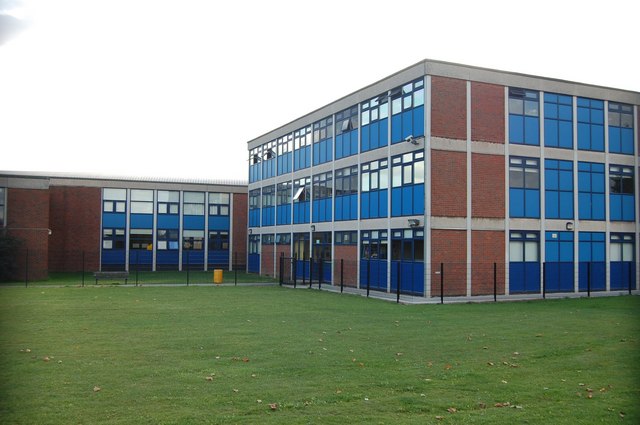
There are, on the other hand, lots of practical problems with this kind of building. The flat roofs have a tendency to leak, they're decades past their design life, thermal control is poor, they're riddled with asbestos, and a number of other issues. And lots of people think they're ugly. But this doesn't make them inhuman, just a flawed solution to a real-world problem.
I think it's easy to forget just what difficulties the UK was in for building in the 1950s and 1960s. There was a spectacular shortage of housing (a baby boom and the effects of WW2 bombing didn't help) and a chronic shortage of both money and skilled labour for building. There is, bluntly, no way that enough traditional brick and stone buildings could have been put up for there to be enough schools. So you can certainly argue that better cheap and/or mass produced buildings should have been made, or that the aesthetics were bad, but writing off all the architecture without understanding its context is unhelpful.
[Edit: in my view, the most inhuman feature of the images is the fencing, but that is almost certainly not original - security in schools was really stepped up from the 1990s onwards]
Update: Marcuse was a Jew, actually. My bad. I'd misremembered this from Martin Jay's book.
A codified system is bound to introduce problems: 'You get one bathroom break during class per week, and you've used yours, but this is an emergency? Sorry, I trust you, but the system says I have to give you detention if you go.'
My point was that the problem was with GP's specific (though perhaps commonplace) school culture/teachers, not the general idea of requiring permission.
This is why above-average students should just go to college after a year or two of high school. 16 year olds and 18 year olds are in fact peers (or can be without drawing arbitrary lines).
> I think in both cases we need to fix the system instead of putting the burden onto students to put up with it or work around it with the solutions that you describe.
The problem is that your suggestion is completely non-actionable for students.
It's also not particularly actionable for a parent trying to help their school-aged child today. Even if a parent does manage to change a huge entrenched institution -- highly unlikely! -- it'll be at least a decade after their own kid is out of the system.
So. Yes, I agree, you too should run for school board. But don't count on systemic change if you're trying to help someone currently in the system.
I sympathise with your situation that a child peeing in their pants is not ok under any circumstances. My point was that’s it’s difficult, nigh impossible, to discern between a child copying another’s behaviour and a child in need. This is simply a fact of having 30+ 8 year olds acting as non-rational actors in a classroom setting. This is the point of difference to your original college statement that you could now be considered to act rationally and therefore don’t need to ask permission.
Finally regarding pay, some quick searches show the median income in America to be $60k. My point was that this is indeed undervalued in my opinion when compared to other Industries. You may disagree on that regard, but it’s my opinion understanding what I do about their expected output.
I wish that had resulted in a lawsuit.
OP is entirely correct, and no one misunderstood the point OP was making. You are simultaneously being needlessly pedantic, and less than charitable by needlessly interpreting inconsequential ambiguities in OPs sentence in a way that would have made them incorrect.
Someone else commented on the downvotes on your post being wrong, the above is why I downvoted you.
Some of that's land, but some is also the design and construction. You're probably hiring a design firm that specializes in building efficient brick box schools and similar institutional projects, maybe with a big glass atrium to have one showcase area, and they've got that design patten pretty well nailed down.
When you have space, you get sprawling flat schools. Still probably a brick box, but not a tall one. My school had large portions that were only one floor tall, and one area that stacked two floors. They've since knocked it down and replaced it with a 3-story building, because now they need more capacity and no longer had space to keep tacking additions on.
Would it have used a smaller footprint to stack it taller to begin with? Sure, but the building lot wasn't the liming factor, budget was.
Dial it back.
When I hear "most volume per surface area" I think of dome architecture, and anyone with even a slight interest in geometry or architecture would probably think similarly.
I wasn't being rude, I was helping explain their point because the words they used didn't match the ideas they meant to convey.
It's fine to ask kids to go when there's specific opportunities, but that doesn't justify restrictive policies during other times: Tiny bladders of small children don't work that way. Especially in grade school, it doesn't need to take more than 15-20 minutes to go from "I'm fine" to "I a really need to go". Especially when bathroom privileges are rationed out & tightly controlled and you become hyper aware of your bladder state. I have my two young kids "do a try" in the bathroom before we leave the house for any car ride. That doesn't stop the occasional "I have to go!" 20 minutes into the trip. And sure enough, at the rest stop it's like my kid turned from a 6 year old into an elephant from the amount that comes out of their body.
When & how quickly you develop the need to urinate depends on a lot of factors: Your specific metabolism, recent activity, what you drank and ate, body position, and probably more. And at some point mentally, you simply pass a threshold where one minute you feel no need to go to the bathroom, and the next minute you do. If that "next minute" occurs 10 minutes after lunch break, so what? What is gained by denying that need?
Foucault seemed to think it was, if not proper behaviour, then at least not-unproper. That is a moral judgement.
To suggest that Foucault was above the entire concept of morals as I understand you to do, well I can't agree on that and I don't think he would either. Of course he was trying to be a moral authority, remember that this whole thing was about him (and others) attempting to legalize sexual relations with children. If he did not think himself an authority, on what merit would he petition? And barring that, it is clear that he was and maybe is an authority, because here we are half a century later or so still discussing his position.
His experiences does not excuse him in my eyes. Neither does it impact to the slightest degree the truth-value of his position on this issue, nor of his philosophy overall.
It may be a moral issue, but there are pragmatic or non-moral reasons one may argue as Foucault did. You may find those reasons detestable and disgusting. That doesn't mean he was making any appeal to moral sentiment - he was just acting on what he finds beneficial or detrimental. Whether on behalf of sympathy for prisoners against the carceral state, or another reason.
>If he did not think himself an authority, on what merit would he petition?
He can do so not speaking on moral authority, but on a variety of authorities - the authority of a public intellectual, for instance. I don't think he was being a moral leader, or attempting to be. The people who would listen to him, the public at large, would not do so because of his moral position in their eyes. An authority as an enduring public intellectual with a strong grasp on philosophy and sociology within his tradition, for sure. A moral authority? Nobody has ever quoted Foucault in such a way.
His experiences would not excuse him (in your view; in mine, there is little to need an excuse if you examine his intentions), but they would provide a rational explanation for why he would forgo morality to expound his own opinions in pragmatic or non-moral reasons. He may have just not cared about morality (the same system that troubled him, I don't know) and reasoned on his feelings and pragmatism alone. I'm not trying to excuse him, I'm trying to explain him, though I'm really just speculating.
https://en.wikipedia.org/wiki/In_loco_parentis
The logic isn't "kids might die in a crash", it is that "schools are responsible for what happens to kids during the school day". The school administration isn't trying to be altruistic, they're trying to avoid liability for a death.
The place has long since been demolished; I remember it from personal experience as a shopping centre where all the shops had closed, and as a car park where nobody parked.
The depressing nature of a lot of brutalist architecture (especially that created by governments) is the uniformity, homogeneity and the mass-produced faux-utilitarian feeling it evokes, as if the inhabitants are all interchangeable peons with no individual spirit. It's a reminder of the depressing local conditions that lead to that architecture coming into being in the first place.
https://www.theguardian.com/housing-network/2016/jan/13/brut...
It's worth noting that Phil is not just wrong about brutalism but also wrong about these examples being (primarily) brutalist. Not generally using raw concrete, they would not be considered brutalist. The modern "box" has been largely discarded by contemporary institutional architects in favor of rough, pseudo-gabbled, uh, crap, as shown in the majority of these examples.
I'd say a bad brutalist building is like a rough bureaucratic dictate whereas present bad institutional architecture is like a bureaucratic dictate but rewritten with contemporary niceness guides - "this is a notice concerning your rights under the involuntary amputation act"
The teacher on the other hand might decide it was time for a trip to the principal's office & call home to parents because the student caused a disruption to the class by leaving without permission.
It is indeed exactly as you said. The world chewed me up for being innocent. I was routinely physically assaulted at school. These things were passed off as roughhousing or joking and the adults never intervened, and some even seemed to appreciate the "humor."
The adults rolled their eyes at me essentially for being weak, it was sort of like "sigh, what are we gonna do with that kid?" It occurs to me now that these were bitter, jaded people who hated a child for his naiveté.
If I defended myself, I was the bad guy. At some point I thought: "it doesn't make sense that I am the one who is right and that everyone else is wrong, so maybe I should be more like those guys." But then I got punished too. For example, it was considered funny for people to kick me in the balls at times. It had happened to me 10+ times and nobody got punished. Regrettably, I did it once to another kid and it was a scandal and I got punished.
I am in a healthy place now but I thank God I got through the teen and young adult years without becoming a criminal. I think I easily could have, because I came out of school a deeply damaged individual.
Prison food probably means you have to break the taboo some days no matter what.
I don't think it's a stretch to suggest the US has gone long on the "retribution" angle in their approach to criminal justice.
[1] https://en.wikipedia.org/wiki/Prison#Theories_of_punishment_...
Rehabilitation: should be obvious, nordic countries are well known for prioritizing this.
Deterrence: again obvious, as noted elsewhere imprisonment has been found to be a poor deterrent in studies but the concept remains as a political argument in favor of harsher sentencing.
Incapacitation: keeping the public safe by preventing dangerous individuals from having the ability to endanger others.
and Retribution, which we just discussed above.
If prison is as horrible as you describe, why do you think it's not much of a deterrent?
Think of it like this though: If harsh, dehumanizing punishments were an effective deterrent, crimes would've gone up when we stopped chopping off people's limbs for stealing, and in fact we'd have more stealing in modern day than at any time in history because public mutilation is not an acceptable punishment now.
Granted this was from studies done in the 70s and 80s that I recall from prepping for a debate on the death penalty.
Only on paper (or more accurately as a self delusion). E.g. Iceland still uses excessive solitary confinement, even though it has shown to have negative rehabilitating effects and is under every definition a form of torture. The fact that the Icelandic prison system still engages in torture suggests that they are still in the retribution camp of punishment.
I don’t know about the other Nordic countries but I wouldn’t be surprised to hear similar stories from there.
aka "this is why we can't have nice things", juvenile edition :)
Stopping making a big deal out of it will remove the disruption factor. If you can just get up and leave and nobody pays attention the act will quickly lose its effect.
> to get out of class
This suggests there's a bigger problem there if people are so desperate to get out as to fake a bathroom break, but anyway, why not let them? What's the harm? If these people are bored/disgruntled/etc then you already lost the game and no amount of force or coercion will change their mind.
I have literally ZERO sympathy for any teacher who has shitty (haha) bathroom policies.
This is why we can't have streets... ?!?
Jokes aside, you just provided a very good example of the prison mindset:
Instead of trying to understand the "problem" of students going too often to the bathroom, the default choice is to make the behavior prohibited.
Then the question is, how does one become intellectual establishement. Sounds like dissenters were somehow excluded from that nebulous subjective category.
Louis Aragon, Michel Foucault, Jean-Paul Sartre, Jacques Derrida, Louis Althusser, Roland Barthes, Simone de Beauvoir, Gilles Deleuze, Félix Guattari, Michel Leiris, Alain Robbe-Grillet, Philippe Sollers, Jacques Rancière, Jean-François Lyotard, Francis Ponge, Bernard Besret
If your (or their, the french intellectual elite's/literati's) philosophy is so morally vacuous that it fails to recognize the sexual exploitation of children and young teenagers as reprehensible, then it is worth less than nothing. It is an evil.
Consent is not enough, is the common modern view. Power structures and actual power matters too.
In some sense, surely advocating (almost successfully, if I recall correctly) for a repeal of age of consent laws must be worse than the crime itself. That is, if we are of the opinion that pedophilia is wrong. Consider the difference between orchestrating many murders and a single murder as an analogy.
No, Foucault (and the others on that list) have been let off the hook for too long. The aesthetician in me is horrified, youth is beauty and they want it defiled?
And a disclaimer; I am of course a conservative in every sense of the word, and this is my perspective.
Talking about power structures while criticizing Foucault is pretty rich.
4 hours without food seems very short, it only would be a problem if the main food source would be fast carbs which let the blood sugar drop very quickly afterwards.
Freudian slip?
Obesity comes from ultimately consuming more calories than calories exerted. Your body learns (maybe this is the wrong word) to store fats when there are long periods of time without eating
I strongly agree with the avoiding carbs and sticking to healthy fats and that it reduces the obesity problem to none.
I definitely agree that obesity comes from consuming more calories that exerting.
I strongly disagree that fat gets stored when you don't eat for a longer time. The exact opposite is the case, nothing can be stored when you don't eat. When you rise blood sugar the body releases insulin which is the fat storage hormone. So the less often you do it the less fat gets stored.
Business school classes were very much like high school, at least the ones I took (I was not a business major). Assigned seats, attendance taken, etc. Don't recall if bathroom trips needed permission as I always handled that before class started.
Math and science classes were generally much more informal. Class met at a specified time and place, and nobody paid much attention to who was there or not. I would occasionally sit in on other classes I was considering taking, to see if I liked the instructor.
At my university, attendance at lectures and tutorials was optional and no attendance was taken (for most subjects). Most people went to the lectures but attendance at tutorials was much more mixed. I tended to skip tutorials a lot.
I remember one year I promised myself "This year I'm going to turn up to everything". So I went to the first tutorial for one of my CS subjects. The tutor asked us "Is there anything you didn't understand from the lecture?" We all said "No". He said, "Then why did you bother coming to the tutorial?"
Then he told us he was trying to teach himself quantum physics as an excuse to not work on his PhD thesis. He asked us if anyone knew quantum physics. One guy in the class was a physics major and offered to give the tutor a quantum physics lesson. The rest of us just left. And the tutor would have put that down on his timesheet and got paid for it.
I didn't bother going to any more tutorials for that subject.
In hindsight, maybe I should have complained, I probably could have got that tutor in a lot of trouble. But I didn't.
So be it! That's life.
It's perfectly normal for bowel movements to be on a schedule. If a student it leaving your class multiple time per week then have a discussion to see what's going on, you might learn something about their life that paints them in a new light. Or, maybe discuss the possibility of going before class starts if possible.
I think people are downvoting your original comment because referring a student directly to the nurse is a strange thing to threaten upfront.
Again speaking from experience, there’s nothing more humiliating than leaving a bloody mark in your desk because your teacher limits bathroom passes. And even if you think that you would make an exception, many well-behaved students won’t speak up, hoping they can make it to the next class. If you’re ‘enlightened’ enough to let your students go to the bathroom three times a week, you’re enlightened enough to call the truants on their BS without penalizing the rest of the class.
As someone who has gone through the legal system in the US and was illegally detained for activism and then later accused of false charges (with no evidence) and illegally arrested: I don't think awareness alone will do anything. Everyone knows the Police are corrupt and the city will do little to nothing if they are caught committing these abuses--the officer who stood on George's neck had several prior complaints for violence in his department and was still allowed to work as an officer.
The BLM movement to me is and will always remain a Police abuse issue first and foremost: one that was highlighted because of the death of George Floyd, but was yet another reminder that Police are in a position in which their crimes are exempt from actual punishment due to qualified immunity, and they know that and behave as such.
In CO after the protests from Floyd's death the Police had their quality immunity removed [0] for abuses they would commit against protesters and were recorded for everyone to see as it became very clear they had no intention of hiding how egregious things got but this only addressed the issues that happened from 2020 onward. There are cases of physical violence and as you said what is likely torture of people who were detained/restrained in which the State refused to prosecute the officers for despite having the evidence and had to be taken to the Supreme Court before it was heard [1]. This case was only settled out of court with the COUNTY paying $400,000 (which is really to say people like me in Boulder) and the police involved were not even punished. The female officer in the video seen abusing the women was the same person who handled my transfer to my hearing from my cell and refused to allow me to make a phone call at a time when they refused to tell me my charges when I was brought in.
Honestly, defunding the police and slashing their pay based on actual performance based reviews are the real starting point, and using social workers instead of Police for mental health cases has been experimented with favorable results in CO. Scaling that would be the next meaningful step to eventually have a bare-bones, non-militarized police force as that at least has the right incentives in place. But that may be a pipe dream in the US at this point.
One need to only look at France to see what and how Civil Society is actually maintained and it starts with keeping Police in a very confined and constrained leash and reminding them of their limited role, which sometimes means rioting and revolting against police abuse to remove poor legislation from passing.
> Unfortunately most of the people suffering in the prison system are poor, so we don't hear what they have to say. If you're rich, you can afford your own lawyer and get a much better plea deal, and get out quickly. It's also very racist:
Incredibly so, the DA of my last case never even bothered to look at the incriminating footage of the officer abusing his authority and clearly violating private property laws and abusing my civil liabilities for unsubstantiated allegations. And I HAD a Lawyer, upon release because I couldn't speak to one while I was arrested, and had it known I was willing to be compliant with the questioning process before being illegally arrested provided my attorney was present before I spoke to anyone, as its my (supposed) Right to do so.
My case was eventually dismissed after 2 missed court dates by the DA who finally looked at the body cam footage and I had my career placed in jeopardy, an injury I still deal with to this day as well as well as the trauma from the abuse and the embarrassment of the arrest as it happen at work for all to see because an officer thought they are John Wayne and knew they never face punishment for their crimes... in addition to a significant legal bill for the privilege of it all.
My only recourse was to lawyer up again and pay 10s of thousands of dollars to a Civil Rights attorney after paying for my defense attorney and take the case as high as the Supreme Court like the other women did before a settlement would even be considered, at which point most of the legal/court fees had already eaten through most of the settlement money. There are no heroes in this system, and Lawyers are just as much responsible for perpetuating this corrupt system as the corrupt judges and officers.
And this is all told from an innocent person's perspective, actual convicted criminals get hung to dry and are seldom if ever allowed to return to Society without being constantly denied the ability to live a normal life in Society anymore, while the criminals with badges commit comparable crimes with impunity.
Honestly, BLM protests need to return and be far more targeted, as in localized to city counsels and mayors/governors offices/homes instead of looting department stores before anything serious is done. COVID may be dangerous, but Police are likely the greater danger to overall safety in Society if you know how the system really works--and while its an unpopular opinion for some, this applies to white people, too. We all saw how even members of International media were treated, and felt only the superficial outrage that people who have been victimized by the legal system have.
I have several horror stories of white middle class women in Boulder being abused by the Legal system, too, and further drives the point that this is not a solely a Black issue. I saw the systematic destruction of these People's lives during my arrest and the first hearing: armed police showed up to one woman's home for a reported car accident against a bicyclist days after it took place, and another of an owner of a home being arrested and forced out of her own home in cuffs when a guest made allegations of her threatening to use force to remove the guest who overstayed and refused to leave all while her underage children were still in the home with that person.
It's completely abysmal and terrifying to be honest.
0: https://www.themarshallproject.org/2020/12/18/colorado-tries...
1: https://www.9news.com/article/news/local/boulder-county-sett...
Reading stories like this just makes me angry.
- Removing qualified immunity from all LEO agencies and departments at the the State and federal Level and making them 100% personally legally and financially liable for all violations.
- Require a more stringent screening and continued training process to ensure they are mentally fit to do their job adequately
- Slash their budget and salaries by 50% until these reforms meet certain benchmarks that require unanimous approval in their city/county before any budget increase by no more than 5% each time, which is to be decided how it is funded without police union and lobbyist influence
- Using those funds removed by police budgets and allocated to social workers to act as first responders to calls that pertain to all mental health related issues, and contrast which solutions perform better and allot the budget/funds to those perform better using various metrics and analytics
- Mandate that body-cam footage be on at all times during an LEO's shift in office as well as on patrol and have it accessible to the people without interference--they tried to stall my process until my lawyer got involved which is typical to ensure that a case isn't brought against the officer
- Stop incentivizing mentally unfit and psychologically damaged people to enter LEO: most of them are ex-military veterans that saw active duty in illegal wars of occupation in Afghanistan, and Iraq and were trained for hostile warfare and not civilian Law Enforcement. Screening for certain mental and psychological maladies would probably reveal how mentally ill some of these people are as a result of their combat and trauma.
Personally speaking, I had high hopes for the BLM movement and the situation that unfolded (Blue leaks) in regards to Police brutality this summer but everyone just went back to the divisive identity politics leading up to the election instead of having a commonly held stance that transcends all party politics.
Most people do not realize that Joe Biden and Kamala Harris have long history of further expanding the Police State. Biden passed the Crime Bill in the 90s that saw the expansion of the for profit jail system that led to lengthy sentences for petty things like drug possession crimes--all while his son turned out to be a drug addict that used his father's position to collude with other cronys for personal gain. And Harris was an immensely corrupt Attorney General that overturned many cases in regards to police corruption using unscrupulous methods and supposedly made evidence disappear to absolve police from wrong doing.
I don't know if and when people will have had enough to actually do anything and get involved anymore, but the issues discussed so far are simply symptoms of a much deeper systemic governance problem and begins with who and how elected officials are put into those positions of power and how limited options there are for any recourse for non-incumbents or established career politicians to be elected in the first place.
The US showed itself to be a Police state over the Summer, that cannot be denied.
The question is what are YOU willing to do about it and how many people in your community can you get involved and start from there. I'd make an argument for private policing, but that would require a resolve for direct activism to serve as a counter weight to these atrocities that the US populace doesn't possess anymore. And honestly given what we've seen with Blackwater/XE in private military contracting I'm sure the US would find a way to normalize this same system in the Police all over aain
I was arrested in San Francisco back in 2011, it was the most violent act to ever happen to me by far. It was my first time in the city and I was at a protest. Usually it is really easy to avoid arrest in a protest, however that night the police did not give us a choice, rounded us all up and arrested the lot of us. I had my life with me in two bags, apparently you are only allowed to be arrested with one bag, the police suggested that I needed to abandon one (in civil terms this is called theft).
They put us in a petty wagon and drove us around for probably an hour, we couldn’t see out, so for all I know we were being driven out of the city (after being released I found out that we were driven 15min walking distance away from the protest site). I was really scared I wouldn’t be able to get back to the city during this.
We were all detained under a freeway pass in two cages, segregated by the gender the police assigned to us. While detained nobody was allowed water or toilet brakes at first, and then only one person at a time. I never got to go to the toiled during the whole ordeal.
They charged me with a misdemeanor called Illegal lodging (whatever that is). They assigned a court date 3 months into the future. As someone that didn’t live in the state (and even the country) it felt like they were setting me up to do an impossible task. However they dropped the charges before the court date (without telling me though).
Now I in the process of immigrating to the USA, and whenever they ask me if I have ever been arrested/detained, I have to answer “yes”, even though—as far as the justice system is concerned—I have committed no crime, and then I have to explain to them that, yes, I was arrested for a misdemeanor, and then provide documents from the courts that the charges were dropped. A lawyer once told me that many people fall for this and provide the arrest records in an attempt to disclose but fail to show the court records, and are denied as a result.
And when I think about all this, what sucks even more, is that my experience was pretty mild. Hundreds of people have far worse violence inflicted on them by the police then I did a decade ago.
My question is is always: “Why are they doing this, what is the point?” and the only logical answer I can think of is that they really love treating people like shit. The only logical explanation for their behavior is that they are facists. They hate people other then them self. The police really has to be abolished.
Sugar = good is no longer an appropriate heuristic given the change in nutritional availability - in fact it is now harmful - so we force kids to behave differently.
It's not clear that school is similar. Is it not the case that people learn better when they are adequately stimulated and engaged? Even if not, how far should we go in making kids miserable to force them to learn more? Do we need to make them miserable or is there an alternative? This is what I mean by asking why, and it's not clear to me what all the answers are (it's a very complex question).
I'm still disappointed Umar Farouk Abdulmutallab's attempted bombing didn't lead to a similar policy.
> it's like we've taken the structure of folksy tales like "one child did that and they poked their eye out" and are all like "ok, let's make official policy around this"
Growing up, my mom was repeatedly told not to play with a button on a string because, "some kid put his eye out". Being a kid my mom always thought that was just a stupid story. She played withing a button on a string, and didn't know anyone that happened to. Decades later, as an adult she was telling the story about this weird and admonition to a distant cousin (2nd?) of hers, and her cousin got real quiet, and simply stated, "That was my brother," and then told the story about how it happened, and that he did lose sight in one of his eyes he struck it with a button tied to a string.
I feel like the shoe inspection is silly, but this seems like the wrong logic. To the extent that there's a vulnerability in the system, patching it makes sense, even if it's only been exploited once.
No one has closed network sessions with unauthenticated RSTs lately like we used to do in the 90s-- so is the sequence check no longer necessary?
Of course, one needs to consider the cost-benefit of every mitigation measure and whether you're addressing the biggest risks.
You're doing the thing I just talked about
Tall office buildings may often have open plan, but this should be attributed to the fitout builder’s client (e.g. SomeCrazySoftwateCompany as the incoming tenant), not the building builder’s client (e.g. SomeGroupInvestmentCompany the owner of the building)
Might be good you didn't. I obviously don't know the particulars here, but I've learned that the attitude of the university teaching staff can be confusing because of non-obvious job reasons.
At my university, there was this PhD having labs with us who I liked - she seemed one of the smarter and wiser of the people I've dealt with up to that point. A year or two after those classes, we ended up having a discussion about upcoming changes in the curriculum. I asked if she'll still be running the same labs she did with us, at which point she almost burst into tears and said something like, "oh god I hope not". I was perplexed by it, until she explained to me that she never wanted these labs, she was forced by her superiors to run them, and they are completely unrelated to the domain of her research. That insight made me understand several other cases of PhDs and professors that seemed incompetent and/or disinterested - it's not that they were bad or stupid; it's because the university mismanaged them into teaching things entirely outside their domain.
https://www.merriam-webster.com/dictionary/hangry
..and I just learned the word is over a century old, it's definitely not new slang.
That's not my takeaway, after looking at these photos though.
Look at brutalist building as another example.
I can't imagine any good reason for that policy other than covering for terrible people.
Is there an expectation of privacy in a public school classroom?
And being the teen that I was, it's not like I had an otherwise perfect attendance in any of my high school years.
I got out over 20 years ago, and I was determined to do whatever it took to successfully complete my parole and put all that crap behind me.
I still have scars. I'm 47 now. Dentures are in my near future because of the fighting from my prison days.
I had nightmares about the fighting and killing (saw two guys get killed mere feet away from me) for 15 years after getting out.
As time goes by the memories are less and less, but they never go away.
It changes you permanently.
Yes, you can argue that some communities have support groups or employment opportunities specific for ex-prisoners, but this isn't available universally, isn't well funded, and most people won't turn to help even if it's offered. That last part is true of free people as well: think of how many people in need refuse to reach out.
The stigma is real and crime is only ever a few inches away from most people.
Here are the slides: https://www.bgcheckinfo.org/sites/default/files/public/5thMt...
"When criminologists examine prison populations, they see a concentration of repeat offenders, most of whom will recidivate. Low-risk offenders enter and exit prison once, so in any survey of a prison stock, low-risk offenders are underrepresented as a proportion of the offender population.
An analogy is helpful: A Mall Exit Survey
Survey researchers sometimes use mall exit surveys to estimate shoppers’ purchasing habits.
Suppose that:
•25% of mall visitors go to the mall once per day.
•25% go once per week.
•25% go once per month.
•25% go once per year.
A naïve one week exit survey of visitors exiting the mall will find that:
•85% of mall visitors go to the mall once per day.
•12% go once per week.
•3% go once per month.
•Fewer than 1% go once per year.
The problem is that high-rate mall visitors churn, leaving an impression that most shoppers are frequent visitors."
Quoted from "Criminal Recidivism: Most Incarcerated Offenders do not Return to Prison", by William Rhodes, from the link in parent
But the slides still find evidence of recidivism using a less biased offender-based analysis. Moreover they find that the people are still more likely to return to prison the longer they have stayed in prison. The numbers are lower, but are definitely there. Ancestor’s claim about prisons creating criminals still stands.
Then there is the issue of low level drug offenders returning to prison for violent crimes in the next round. It would be interesting to see the numbers on that.
Yea, I bet recidivism is low in Norway, who also has a very small chapter of MS13 or whatever gang you like, coincidentally.
I disagree you can look to some other country and make a fair comparison. The only way to do it would be to look at rates before and after some policy change.
This is the problem with attributing purposes for which our ancestors never intended.
Indeed there is no mention of Foucault in that article. I read through her blog more and this is the first one I found that mentions the book in question http://hackeducation.com/2020/07/20/surveillance (also an interesting read)
The grandparent comment here is very good and I agree with all of it — comparing prison to high school is risible, at best — but that doesn’t mean we should fetishize expression of personal experience above any other kind of comment.
Secondly, you're wrong. "Lived experience" is not the same as "an anecdote." An anecdote is a story. Experience is interrogable. The man sharing his experience is right here on HN. The person who wrote was not repeating a story that he had heard, or describing a single isolated incident.
an·ec·dote
/ˈanəkˌdōt/
noun
a short amusing or interesting story about a real incident or person.
Your key word in that definition is "real".
I actually was searching for a response to GP claims about prison not being a deterrent and if nobody had mentioned it would commented it myself.
To add to the arguments: GP even contradicts himself by stating how bad prison is and that you really don't want to be there while claiming it's not a deterrent.
Criticizing that point was absolutely fair and doesn't mean the rest of GP's comment is bad or untrue.
Even if that part is useful though there's no real reason to impugn the integrity of the people the GP references, and the reply does not tell us why we should find those people more likely to be prone to self-rationalization, which it needs to.
So our best theory of behavioral modification states that prisons is not a deterrent for crime, nor is there any evidence for it in the records. All the while prisons are an inhumane and terrible way to treat people. Can we just please abolish prisons.
It would be a contradiction if people only ended up in prison because they wanted to go.
In reality many people commit crimes for other reasons, like lack of food and shelter.
Its much harder to get a job with a criminal record, so many former criminals end up forced back into criminal activities for food and shelter.
This is the part which is a personal attack. You have some time to edit your comment to restate that, if you're up for it. :)
This kind of thing only gets solved one way. And it's not pretty.
There’s a reason we have so many violent gangs in the US. We don’t take care of people the way other countries do, and we take advantage of every marginalized population we can.
Here's the chapter of his book about the nature of certain building styles and shapes being important here...
https://foucault.info/documents/foucault.disciplineAndPunish...
Also interesting to talk about, are the ways that the people influenced by Foucault talk about space, area, and architectural design. Deleuze and Guattari had a whole lot to say about all of those topics, and they are one of the principle reasons for Foucaults fame...
You can deconstruct the whole of society and make an argument that all labor exchanged for capital is oppression, that all regular chronologies favored by the dominant culture is oppression, that all authority figures are oppressive etc... But it's difficult to imagine a thriving, post-industrial society not featuring some of those things.
Even looking back in history, people have self-organized into hierarchical, regimented systems. I think a lot of this is just a natural reaction to our environment, which is also dictated by regular chronologies (days, lunar cycle, seasons), necessary labor (biological need for food and shelter) and implicit authority figures (parents).
I don't think this is why kids go to school. You go to school because you have to. There is no realistic option not to go. If you don't go, then you'll be forcefully put into a school for troubled kids. Even if you don't consider the above, there is still an enormous social pressure to go to school too.
I hate the current system but I also want my kids to be socialised and have friends.
I'd definitely pay a private company providing "home schooling" and using a different model of education where kids are learning by doing instead of memorising crap and at the same time can share a location with other kids of the same age (+ a few tutor available to unblock kids when needed but not delivering frontal lessons).
when my kids miss school, they have to catch up the work they missed. if they already struggle then they can't afford to get sick because they will fall to far behind and may not be able to catch up.
so yes, school is forced labor and it's a prison
So it's in my experience totally untrue to suggest that any child would have to "catch up" any learning missed due to sickness (and also reveals that schools are talking bollocks when they suggest that taking a few days off to go on holiday during termtime will have any noticeable adverse effect, but shhhh)
Also, you may have a job where none of your responsibilities are unique to you, but that's not often the case outside of some types of shift work. If I take a vacation or sick days, I have catching up to do. No one is going to step in for a couple of days and pickup where I left off on a project I've been working on for 3 months.
As for missing school, my kids go to typical mediocre public schools. When a student is struggling, they're given a little extra help. When they miss because they're sick, they're given plenty of time to makeup the work. And if a student is struggling so much that they can't reasonably move on to the next year's more complex material, the school literally devotes and extra year if resources to
Kids can actually take free days off. They don't actually have to do everything that was done while they have been away, usually we have done just small portion of it. Kids that struggle just continues struggling and kids that perceive school easy just continue lazying around.
In no way will few days off make you fall behind.
It might be possible to make a space launch vehicle that's short and squat, or operate a factory without any regular worker hours, but it's going to have some costs compared to our current equilibrium
Also your logic if flawed. Confining people after the deed seem logically a really poor and inefficient way to reduce crime. While one criminal is confined, there will always be another. So your 50% crime reduction is closer to 0%.
Have you done that? Sue the powerful (a school board) from a position of powerlessness (black working class in the ghetto)? Probably not, unfair question. Do you really think it is a realistic prospect? Really?
It only takes a few to ruin it for everybody.
Not quite sure what you're getting at here but insofar as progressive education was an explicit philosophy reflected in policies and actions, it was centered.
>But most schools are not organized that way, and there’s only so much one teacher can do to buck the system. As it was, I got fired from that particular job after two years, and it wasn’t because I was too strict, certainly.
No disagreement there, and I'm sorry to hear you got fired. I'm sure your students appreciated you doing your part to make things less shitty.
"The Montessori method of education is an educational method developed by Italian physician Maria Montessori. Emphasizing independence, it views children as naturally eager for knowledge and capable of initiating learning in a sufficiently supportive and well-prepared learning environment. It discourages some conventional measures of achievement, such as grades and tests."
I don't have any first-hand knowledge of how such initiatives work in practice; but at a high level, it's like home-schooling with more community involvement and socialization, as well as off-site learning experiences. I've also heard of some families who do half-and-half between a formal school environment, and unschooling/homeschooling.
Ugh. That's not really any better. You're still effectively saying the person is an idiot / incapable of reasonable thinking. :(
I don't actually have a problem with people being wrong or not very bright in the comments they make. I have a problem with the arrogance and self-involvement that I feel responding to someone like this — someone who has literally signed up to HN so that they could share a few paragraphs about their life — represents. So if you can do a better job of making the problem with that clear to people who might otherwise make such a mistake, then that would be even better.
Sometimes it's ridiculous-- my then-4th grader was taking Algebra I on the side, and had shown mastery on the 4th grade fraction curriculum on a test, but getting the large packet of fraction work that he missed during an absence was considered critically important. :P
> reveals that schools are talking bollocks when they suggest that taking a few days off to go on holiday during termtime
I do think that the kind of attitude that lets you ignore a bit of schooling here and there for a convenient vacation schedule does affect outcomes, though. I teach at a private school, but I think we're both aware of incentives for attendance, the reasons for them, and the areas in which they cause perverse outcomes.
But it does seem true, from the point of view of parents and children. It doesn't matter that the curriculum is helical and revisits the same topics multiple times. It doesn't revisit the same topics multiple time in a single semester, which means the kid doesn't get a second chance to learn a topic within the grading scope, which means they have to catch up or risk a lower grade. As much as we say that it's the education that matters, as much as it should matter - it doesn't. What matters are the grades. At the very least, in my experience, most parents have grade expectations, and the kid will suffer negative consequences this semester if they fall back, even though they may recover by the end of the education level (where again, the final grades are all that matters).
(Even though the immediate pressure may come from the parents, it's in a control loop with the grades, so the school can't pretend this is not happening.)
As a parent, if my 4th or 6th grader got a lower grade due to missing homework as a result of being sick, it wouldn't concern me.
In high school it starts to matter more due to grades being a component of college admissions, but unless you're targeting really elite schools a couple of days of missed work isn't going to move the needle much. And if you are targeting elite schools, you're already working very hard and including a lot of AP courses and extracuricular activities and you will just buckle down and make up the work.
Obstructing a child from using the bathroom who needs to is a form of abuse. If that teacher then physically restrains or otherwise contacts/touches the child to prevent them, especially if it culminates in their wetting/soiling themselves, this starts resembling something along the lines of sexual abuse.
If there's one thing the USA can be relied on it's both society and the law leaning heavily in the direction of protecting the children, to a fault.
This situation is literally just a phone call away from completely ruining the teacher's career if not life.
I hear people with theories, but child services the world over are famous for nice theories and systematic abuse. Especially for minority and poor children
in that environment how do you take a vacation? sure a planned downtime is easier than an unplanned one but the process is the same.
in a programming team other team members pick up tasks.
if my assistant is away, i may have to do some things myself.
if i am sick, my customers will just have to wait. if i set my deadlines to short, not giving any buffer time, it's my fault.
yes, there may be catch up type work, but usually i am not compelled to work overtime, which is how kids catch up time looks like.
they are forced to catch up on their own time, not in class and they are not given a choice.
Hmmm, I think we're coming at this from different places.
Personally, I have no problem at all with people coming to HN to share their life experiences. For me, that helps my understanding of the world. :)
I'm not debating the merits of Montessori schools. I'm saying the "missing time" aspect of your comment does not have a good analog from work to learning. That's all.
missing time means, that you need to work overtime to make up for it.
at work this is not normally the case. if the work can't be done by someone else, then it will simply be delayed. the timing changes. same with montessori learning. you will simply delay all your learning by a few days. which is not a problem at all because everyone is learning at their own pace anyways.
contrast that with traditional schooling where overtime is the only way to catch up with your classmates