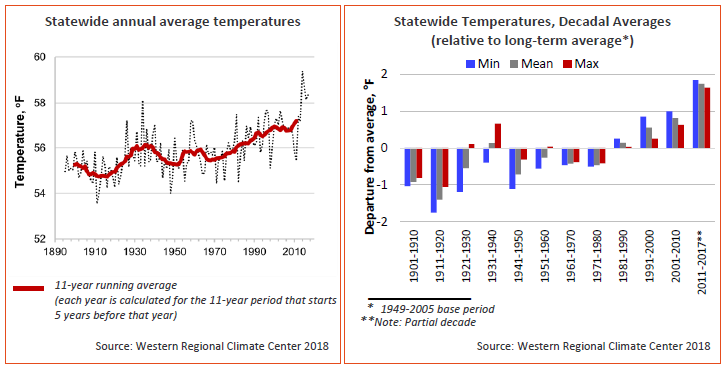
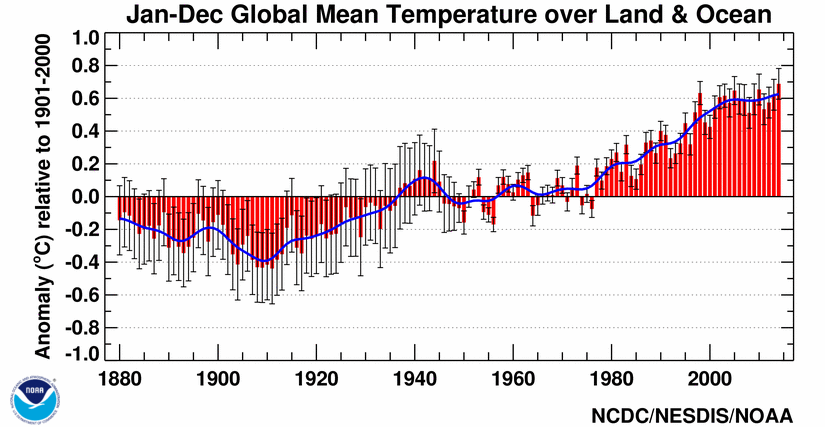
The pandemic has taught me that humans will roundly ignore even the most glaring evidence to avoid accepting bad things are happening. I can't see how we're ever going to be able to avert climate disaster when we can't even get everyone to take basic precautions against a global pandemic.
what evidence? "in 1968, Ehrlich warned of imminent population explosion and hundreds of millions of people starving to death"
Wrong, wrong, wrong. Food has never been more abundant, plentiful and inexpensive https://www.wfdd.org/story/food-growing-more-plentiful-so-wh...
Pardon me for ignoring what this fear monger and crackpot has to say.
And due to advances in agricultural technology, since the Population Bomb book was published, global population has doubled while hunger has greatly diminished.
So wouldn’t the answer be more technology & wealth, not less?
People who don't know insist too that Y2K was a big nothing, but it was nothing only because of $billions spent to ensure that it would be.
People who don't know say the same about whales, acid rain and stratospheric ozone. Same thing: global effort, crisis reduced, although further effort needed.
2038 still looms, but much has been done already.
Some cultures, as it turns out, are better than others at dealing with stresses like this.
Changing culture is a big project. We can try though because we don't actually have any other option.
And in this you are competing with a few donations without a feedback loop against the oil industry that have plenty of money and that kind of feedback loops, for just one culture that need to be changed.
And to make things even more unfair, they can use all the dirty tricks they want (plain lies, exploiting bias, pushing disinformation, bribing politicians, etc), while you can only use the, sometimes hard to get for the uneducated, truth.
For my buy-in, change agents are encouraged to:
- begin with absolute truth
- develop an unambiguous, existentially complete solution
- let that solution sell itself through its inarguable superiority
--
Anything less than that risks coming off as so much bullying.
I oppose this 100%, I take the "ghastly future of mass extinction" very serious and my solution would be to introduce a close to zero birthrate of the extremely overpopulated species of Homo Sapiens. I do not however take this pandemic serious at all and it is NOTHING compared to what is and will happen in the "ghastly future".
We are living in a planetary wide human farm, they told us this was gonna happen! And it will happen again and again until we have devoured the planet.
Hm. How serious should we take this pledge now?
The first place I looked up was England - the Met Office graph seems to indicate a rise. [1]
Have you got any examples of flat graphs?
Miami Florida December 2000 (peak day-average is 77.08): https://www.wunderground.com/history/monthly/us/fl/miami/KMI...
Miami Florida December 2020 (peak day-average is 76.69): https://www.wunderground.com/history/monthly/us/fl/miami/KMI...
---
Honolulu, Hawaii December 1995 (peak day-average is 79.92): https://www.wunderground.com/history/monthly/us/hi/honolulu/...
Honolulu, Hawaii December 2020 (peak day-average is 79.54): https://www.wunderground.com/history/monthly/us/hi/honolulu/...
---
You can use that site to look up the same month 20+ years apart in any place and it clearly shows that there is no significant change at all. You can browse the surrounding years to get a better feeling because there can be random 2 to 3 degree fluctuations but my point is that these fluctuations can go either way and there is no correlation with time.
TBH, I'm surprised that, given that there is an incentive for meteorologists to fake the data (since global warming is their bread and butter) that it's still possible to see proper data which certainly matches my personal observations. IMO it's a matter of time before they start faking historical data. Good we have waybackmachine https://archive.org/web/
The country I live in has had the average temperature steadily rise by a full degree over the last 30 years. Which is visible in changes in flora and fauna and extreme weather.
Really makes me wonder where you get your data.
the exact things Ehrlich and his colleagues would like to prevent
EDIT- from the horse's mouth:
- If I were a gambler, I would take even money that England will not exist in the year 2000
- giving society cheap, abundant energy at this point would be the moral equivalent of giving an idiot child a machine gun
- Too many rich people in the world is a major threat to the human future
- Technology does nothing to solve problems of biodiversity or living space or arable cropland
If you disagree with this, please also provide some graphs that back up your observations.
California: https://oehha.ca.gov/sites/default/files/media/airtempfig12....
Spain: https://sailingtheatlantic.com/pdfs/climate_change_spain.pdf
Netherlands: https://www.clo.nl/sites/default/files/styles/clo_infographi...
Russia: https://cms.qz.com/wp-content/uploads/2014/08/russia-tempera...
Global: https://www.ncdc.noaa.gov/sotc/service/global/global-land-oc...
The thing is although we now we can often figure out solutions when the problems become more apparent, we can't guarantee it - so it makes sense to start working on solutions as soon as possible.
fixed it for you
I genuinely cannot tell if this is ill-intent or an internal struggle to revisit your previously held opinions when faced with the body of evidence of all the data collected after the industrial revolution.
You introduce bias by your selection of measurements. Plus a large portion of the earth is scantly inhabited with no weather stations in place. Like the poles or international waters.
Instead you should look at satellite measurements of the temperature across the entire planet. These are widely available. The scientific discourse and the available evidence is much more advanced than "hey it became colder in those 20 places".
https://en.wikipedia.org/wiki/Satellite_temperature_measurem...
Why should I trust a heavily processed, combined result like the Wikipedia page you posted more than random sampling of raw data directly from local meteorologists? It's pretty obvious that the more 'processing' of the data is carried out, the more inaccurate it's going to be. By the time we get to the global mashup of the data, it's been so heavily tempered by people along the hierarchy that it's basically useless. The global statistics are not to be trusted, they're the result of many meteorologists and statisticians playing 'Chinese whispers' at a global scale.
For the Miami case, it is probably worth noting that Miami is cooler during El Nino events and warmer during La Nina. Of course, 2000 was in the middle of the latter and 2020 the former. In fact, if you look at more than 2 datapoints the trend over the past twenty years is the opposite of what you're saying.
Now try doing that systematically. Take the monthly averages over 20 years from a few thousand sites. Don't forget to correct for the urban heat-island effect, which creates a false impression of warming when a city grows out around an airport.
Do that, present your results, and it might be worth taking you seriously.
Picking 2 dates at random is not a good way to expose long-term trends, as evidenced by your observation that there can be several degrees of variation from one year to the next.
Most of the world is at or below a total fertility rate replacement rate (2.1). The trend simply needs to continue for ~10-15 years to lock in the population decline.
[1] https://www.thelancet.com/journals/lancet/article/PIIS0140-6...
[2] https://population.un.org/wpp/Graphs/DemographicProfiles/Lin...
https://ourworldindata.org/fertility-rate#what-explains-the-...
If it does, population will decline faster, but much less comfortably.