We May Never Get to Herd Immunity(thinkglobalhealth.org) |
We May Never Get to Herd Immunity(thinkglobalhealth.org) |
Where is the carrot?
The issue here is that the need for wearing a mask is not affected by whether you've been vaccinated. The mask is not mainly about protecting you, it's about protecting others from you.
Unless a vaccine also stops transmission entirely (and none of them do though it looks like they will to some extent) you remain a danger to others even if you yourself have been vaccinated.
This in fact is my main issue with people refusing a vaccine. If it was just their own health, and there were no other implications, then fine. It isn't though. If large numbers are unvaccinated, then the vaccinated population still can't return to some semblance of normality without risking killing them.
(BTW I'm not advocating enforced vaccination, I just hate the effect a large unvaccinated population has on the vaccinated population. And for context/clarity/disclosure, I'll be taking it when offered.)
Unfortunately the what you are suggesting just isn't feasible. Mask wearing is also still necessary because we don't know if vaccinated people are still carriers. It is entirely possible the R number of a vaccinated person not wearing as mask is higher than the R number of an unvaccinated person wearing a mask.
Honestly, I think we should just pay people to take it.
The internet is a gigantic vector for mental disease. That's the problem here.
I don’t think anyone is denying that the mental health impacts aren’t real, but I’ve seen no data that supports that conclusion
We get to herd immunity with the flu every year around this time (in the Northern hemisphere). Respiratory virus season ends and rates of transmission fall below 1.0.
“While not every single individual may be immune, the group as a whole has protection. This is because there are fewer high-risk people overall. The infection rates drop, and the disease peters out.”
It’s obviously better to completely kill off Covid (or any infectious disease) with global herd immunity, but a yearly outbreak suppressed by regular vaccination is something we have a model for, and it’s far better than where we’re at with Covid.
But the choice presented is basically between a relatively known effect (killing more people, especially those that skew older) and an unknown effect (mental health + economic + other impacts we don't understand as a result of lockdown measures).
People are losing mothers, fathers, grandparents, etc. that had plenty years of productive, happy life left. Families have been destroyed by this thing. There are major mental and economic impacts to killing more people.
Furthermore, this is a _new_ disease in humans and we're already seeing signs that it can may have serious long term health effects on people that survive it, including younger people. Any estimation of the net impact on society the virus cannot simply be a function of the number of people that are dead and at what age they died.
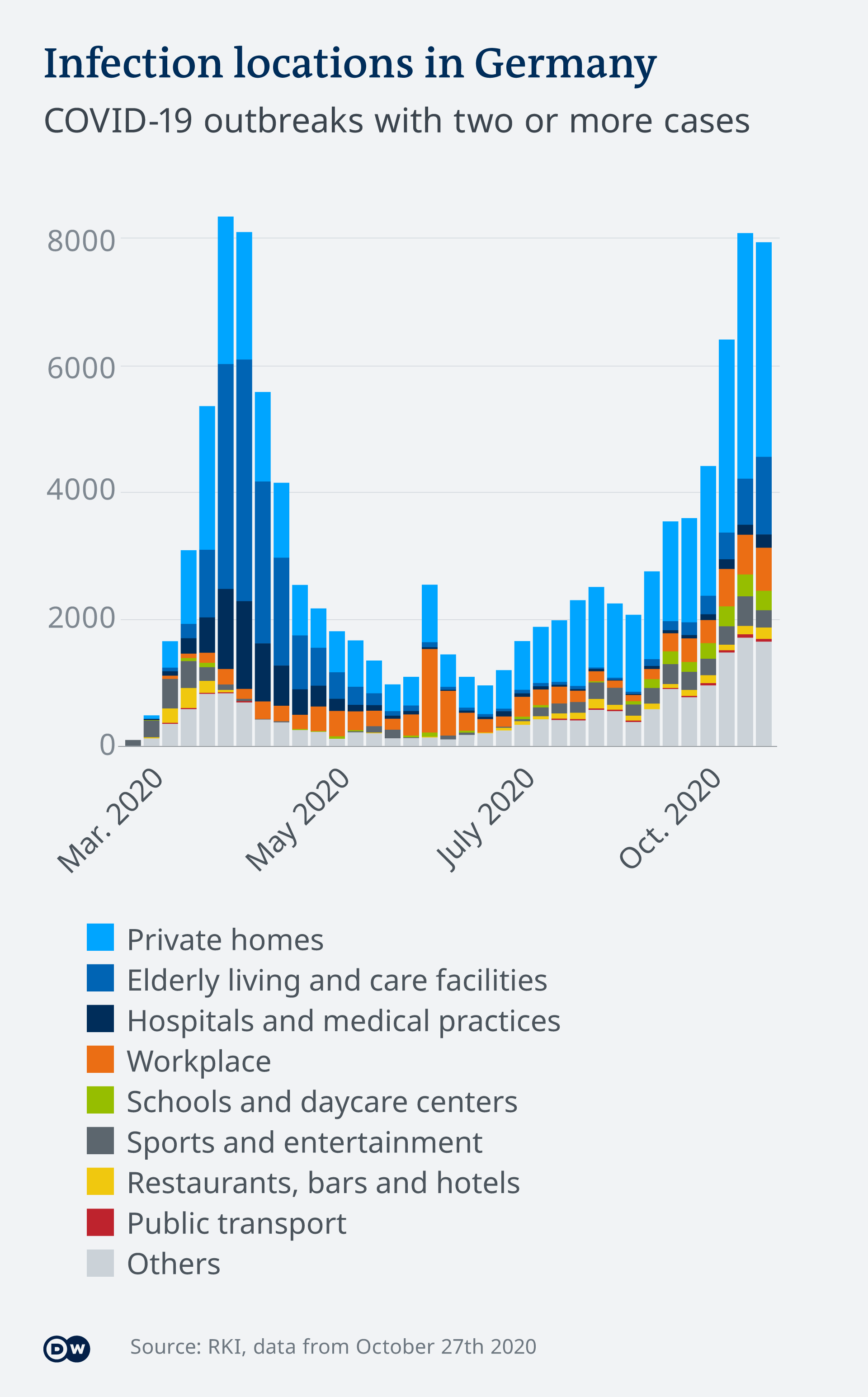
The _only_ reasonable line of thinking I can imagine to support not implementing lockdown policies at all is the hypothesis that most of the spread of the virus occurs via social interactions that are unaffected by the not-so-strict lockdown policies - by friends visiting each other in small, intimate settings unaffected by the not-so-strict lockdown measures, which would then only serve to cause economic turmoil without actual benefit. And I do think that this is something worth looking into [0]
But then when I see the instances of super-spreader events such as the one that occurred in that South Korean church or the Sturgis motorcycle rally (which, if lockdown policy were implemented at the federal level, would probably not have happened), it becomes really hard for me to think that, at the very least, preventing large gatherings of people is a bad idea.. including shutting down restaurants, where people are likely to take masks off to eat and talk.
[0] I found one datapoint here: https://static.dw.com/image/55445964_7.png And the big light blue lines on top would describe the method of infection I was referring to. But this is data we received from a country that instituted lockdown measures - we don't know how the numbers would skew if nothing was done at all. So we would need to find a similar country with similar demographics and behaviors that implemented none at all in order to truly understand these numbers.
my personal opinion is that fear has exaggerated the lockdown argument and that something being unknown is insufficient to not consider it. When we count life-years lost many decades from now, rather than simply raw deaths, a very different picture will be painted. It's in the statistics
So your odds of a negative effect from COVID without vaccine is between 0.04% and 0.006%, and may be much less.
So reasonably you should take this as worth ... roughly a tenth of a car maintenance, in time and cost.
> your odds of a negative effect from COVID without vaccine is between 0.04% and 0.006%
And with the vaccine, they are 0%. Or sufficiently close enough, that they weren't registered in the large scale studies of various vaccine makers.
> roughly a tenth of a car maintenance, in time and cost
And I get the jab for free with paid leave, so for free in time and cost.
Why? Because the costs for society are evidently high. Most people have friends or relatives, which are in high risk groups (e.g. parents, grand-parents), and they rather do not want to take the risk of being responsible for their premature and rather gruesome death.
No they drop by 60%-80% or so, they don't drop to zero. It depends on the specific vaccin and which "refresh" regimen you choose, and of course on your age (the very young and very old can get as many vaccins as they want, it won't work, and of course immunodeficient patients won't work either)
Or to put it differently: if you have to choose between stopping smoking or getting vaccinated. Stopping smoking is by far the better choice (of course both is still better).
Pfizer/BioNTech: 1 severe case in the vaccinated vs 9 placebo group (https://pubmed.ncbi.nlm.nih.gov/33301246/)
Oxford: 10 hospitalisations all in the control group (https://www.thelancet.com/journals/lancet/article/PIIS0140-6...)