Cycling is more important than electric cars for reaching net-zero cities(theconversation.com) |
Cycling is more important than electric cars for reaching net-zero cities(theconversation.com) |
So I can offset my car's carbon footprint by reducing my meat and sweets consumption by five servings a week? Either something's fucky with that math or cars aren't nearly as bad as I thought.
...
>>Switch to electric now, and also encourage new roads and new developments to be bike friendly, so that switching to a bike is something that will be viable in 20 or 30 years for most cities in America.
Your attitude towards the proposal of moving to bicycle is literally the same as those against moving from fossil to electric.
When I came to USA, I bought a car and several after that. I thought at that time how awesome I was.
How wrong have I been at this one and so many others. He was a good man.
You're right in pointing out that cars are "first class" road users.
It's unthinkable to many that a lane of a road could be taken away from exclusive car use and used to create a separated cycling lane.
It's incredibly challenging to restructure our road infrastructure more equitably. It will be a bigger challenge than pivoting from ICE to EV.
Not my thing.
As for public transportation, that is a great option, when it isn't a single bus every hour, taking 1h 30m to destination, which can be done in 30m with a car.
Where I live (Amsterdam) there's plenty of cycling so I wonder if there might not be more to win from electric cars?
I want to have a car for when I need it (take dog to vet, kids etc), but want to not use it for daily commute.
* if you are getting into a tight spot then own the lane. it is better for a car to see you and hit you then for it to not see you and hit you.
* always have high intensity blinking lights ... (in some places it's illegal to ride at night without lights)
more safety tips: https://bicyclesafe.com/
You can solve for density, but the other 2 aren’t in a cities control.
And from there, only walking and cycling traffic above ground with buses and trains for public transport.
This goes for electric cars, bikes, and even your little OneWheel.
Definitely interested to see new data on this if you have it.
I think the main issue people have with cycling is that it's not a quick fix compared to the promise of the electric car. It means a real investment in biking infrastucture and a change of mindset & funding at the national, state, and city level. It means a complete re-thinking of how the average American city is built. It means you need to actually get outside and leave the comfort of your perfectly climate controlled life. None of these things are easy for the average person to accept. We are far too spoiled.
TL;DR - It's easy to greenwash with an electric car. And people like things that are easy.
It's really a better mode of transportation than the car, in certain situations. It's healthy, relaxing, good for traffic and the environment, and convenient for short trips.
The article isn't saying that you need to ditch the car for a bakfiets, just that you can have a significant positive impact by doing SOME of your trips via bicycle. Remember that most car trips are with a single driver and no passenger, and are short trips around town.
Give it a shot!
It's an issue of ignorance. If everywhere you've lived is like that, you assume it's a law of the universe. Even if someone points out that other cities manage it fine, you're already emotionally invested, so you'll deflect (e.g. "well that city isn't identical to mine, so obviously it's irrelevant") rather than consider a different possibility.
Given how profoundly anti-bicycle North America in general is, I'm actually surprised it's not a lot worse.
As soon as one straw man argument is adressed, it's changed to the next one.
- First, But what if you need to move a sofa, or are disabled??
- Then, but what if you have 20 miles to your job, and 20 miles in the opposite direction for groceries??
- But what if you have four kids?
- What if it rains sometimes?
- What if you live in Sahara or north of the Polar circle?
- What if your e-bike gets stolen?
Next Up: what if someone gets offended by seing a bicycle?
The only solution to bad comments is some weighted average of (a) adding more good comments and (b) not adding more bad comments.
City councils believe cycling is recreational, not for commuting or for "real" use. I mentioned this about getting my LA suburb to actually embrace Class II bike lanes previously, and there's simply no political will.
Simply put, it's sexier to put EV charging stations than bike lanes as a form of virtue signaling.
I also read somewhere recently a theory that big cars are a way of protecting (even just psychologically) wealthy people from reality as they have to travel through areas of poverty to get from one wealthy pocket to another. Makes sense when recalling Rob Moses's work with nyc
That theory seems to arise from a disgust for the wealthy (rightly or wrongly) as opposed to an earnest evaluation.
I would put money on the theory that big cars can have more nice things in them and are safer, so the rich buy them.
And nobody gives them a talking to? If any official said that here they would never live down the humiliation. They'd be the butt of every joke for weeks.
Some societies appear to tolerate stupid ideas that I'd be afraid to say out loud. Or maybe nobody actually believes that.
Is there actually someone from a city council or whoever on record saying that? I am doubtful.
It's not even this specific thing. There's a lot of "nothing going is going to happen because X believes Y" to go around that may just be straw men. Seems more like a defeatist attitude to me than something resembling reality.
I didn't own a car until I was 27 and when there's no other choice, you definitely can use a bike in all weathers. It sucks, but that's life. You appreciate the warmth more after weather so cold it makes your face sting.
As for rural living, the article is talking about cities, so the idea is you travel to the edge of the city by car then get on a bike.
People lived a lot closer to their work then..,
Why? Because of winter? They make cold weather gear for cycling. You can even buy rechargeable, heated gloves. You can buy studded tires, as well.
I had a year-round, 10 mile, each way, commute for 19 years, in temperatures ranging from 0F to 100F. (Humidity, raising the Heat Index over 100, is far worse than the cold.)
Ok. But then unless you're hand making the bikes out of wood you scavenged from fallen trees and don't use rubber tires, neither are bikes.
Like many pro cycling articles this one is one sided and assumes there is one solution to our environmental problems. Sure, we need people to cycle more, but we also need electric cars, changes in how and where we live, changes in what we eat, etc.
Probably the fastest way to impact all of this is internalizing the cost of carbon into all of our activities.. ie a big fat carbon tax.
Are you honestly trying to imply the making a bike has even a vaguely similar environmental impact as making a car?
I mean seriously, a bike weights at most 20kg. A car at least 1000kg. That means you should be able get at least 50 bikes out of a single car.
1) Bikes aren't environmentally free either. Over the lifetime of each is the environmental impact of an ICE car -> EV the same as EV -> bike? Maybe not percentage wise but the data I've seen implies getting the ICE car off the road is the most important step. It's like the comparison of going from 10mpg SUV -> 30mpg compact car is more important than a 30mpg compact car to a 50mpg hybrid.
2) convincing everyone to switch to bicycles isn't realistic. More bikes is better. Wholistic solutions beyond just bikes are required.
> we found that emissions from cycling can be more than 30 times lower for each trip than driving a fossil fuel car, and about ten times lower than driving an electric one
Assuming we’re comparing single occupant passenger vehicles to bicycles (incl. e-bikes), this seems fairly self-evident and hardly actionable.
> We observed around 4,000 people living in London, Antwerp, Barcelona, Vienna, Orebro, Rome and Zurich.
> [...]people who walk or cycle have lower carbon footprints from daily travel, including in cities where lots of people are already doing this.
Okay, again, big surprise. Where that infrastructure exists to support such a move in dense cities, abolishing private car ownership would surely have some climate impact, but can we quantify it any better than .03x of ‘?’?
Electric cars are good PRECISELY because they don't require a lifestyle change. That means you won't get a massive pushback.
Because this can't be about just convincing the convincible, folks who already don't have kids and who live in cities. We need to actually transform all of America. Who mostly DON'T live in places where they could feasibly get rid of their car.
Electric cars are a miracle. Cleaning the grid we absolutely know how to do (the grid is 30% cleaner than it was a decade ago, and we've barely been trying). They allow us to electrify in-place. That minimizes the political constraints to climate action in a way that literally nothing else does.
But what I worry people will take from articles like this is that if they don't bike, they might as well just get a conventional car. This couldn't be further from the truth.
In dense urban areas those fit enough can cycle as they do in China and other Asian cultures but there is a concern in the west about weather conditions practicality, hilly terrain etc. I get that lots of global warming worriers love cycling but there is a practical element to this that is all too often ignored
and
> The observed e-bike share was 4.5%; therefore, average emissions include 4.5% e-bike, 95.5% normal bike.
It’s not totally clear to me if the emissions required to produce the energy the human burned to power the bicycle are included—it would certainly vary quite a bit based on the food.
Source?
I'm guessing you are talking about LTNs (Low Traffic Neighbourhoods). For those outside the UK, these are schemes where through motor traffic is prevented from using residential roads. The idea has been around for decades, but they have seen a recent government push due to people switching away from public transport due to COVID. They are usually implemented by strategically placing modal filters (bollards, gates, enforcement cameras, etc). Emergency services are given keys to the gates and bollards. Walkers and cyclists can travel through unimpeded.
In a public Q&A, London Ambulance Service said they had no evidence of delays due to new LTNs. In fact, they are generally supportive of the schemes. By law, councils must consult with emergency services before implementation.
They have also been the subject of disinformation campaigns by right wing newspapers and taxi driver unions.
https://soundcloud.com/privateeyenews/page-94-the-private-ey...
15 minutes in
[0] https://www.theguardian.com/society/2021/feb/13/covid-bike-a...
15 minutes in, Private Eye has been covering LTN's for a couple of years now
I duno man, I've lived in small towns, they're happy to get all tribal among themselves all on their own...
> commutes in rural areas during winter that is not just inconvenient but actually quite dangerous.
Not if you build the infrastructure for it and maintain it.
Biomass is not a particularly low emissions energy source.
[1]: https://www.fastcompany.com/3052699/these-historical-photos-...
[2]: https://www.francetoday.com/travel/paris/the-paris-bicycle-b...
Shower at work? why, because you're sweaty? yeah, the humidity on East Coast is killer. I don't shower, but I keep a change of clothes at work.
Yes? Or alternatively just dry off and change clothes.
"How do you get your kids to school?"
Kids here take the school bus - or indeed cycle to school. I cycled to school from about age 6.
https://www.minnpost.com/cityscape/2020/12/after-major-upgra...
- Thanks to “mill and overlay” repaving, the city and county have added short stretches of bike lanes on: Territorial Road, Larpenteur Avenue, Fairview Avenue, Arlington Avenue, Marshall Avenue, and Tedesco Street. Together these connect bike lane gaps around the city, including a few key bridges and dangerous intersections.
- Ramsey County engineered a “road diet” on Energy Park Drive and installed a wide bike lane running for two miles between Lexington Parkway and Raymond Avenue. The new connection boosts safety for drivers and offers bicyclists a safe connection with few intersections. The result is a quick, if boring, route from the heart of the city to the University of Minnesota transitway.
- As part of the ongoing work to build off-street bike routes through downtown, the city installed its first ever concrete-protected, two-way cycle track on 9th and 10th Streets. To do this, city staff removed parking and made these streets one-way for cars, though the bike route remains a bit awkward as it navigates the Green Line station at Cedar Street.
- The generations-long debate over the future of Ayd Mill Road was finally resolved this year with a repaved three-lane freeway and a brand new off-street bike connection. It’s a lovely link for people on foot or bicycle, and now pothole-free for drivers. That said, the trail remains slightly useless as everyday transportation until (someday!) advocates figure out a way to connect the path to Minneapolis and the Midtown Greenway. If that happens, the new Greenway trail would become the best interurban bicycle route in the country.
- Using a federal grant, the city constructed an off-street, curb-separated bike trail along Como Avenue from Como Park, west past the State Fairgrounds, and to Raymond Avenue. The wide trail with tabled intersection crossings alongside a narrower roadway transforms a key street that, especially two weeks out of the year, will become a lifeline for bicycles to access the State Fair and the University of Minnesota.
- With another federal grant, the Parks Department completed a missing link in the regional bike trail along the west side of the Mississippi River. The new Piram Trail links Harriet Island along Plato Boulevard, past the St. Paul Airport, a string of industrial properties, and all the way to South St. Paul’s Kaposia Landing park. The intriguing path through the riparian woods means that cyclists and hikers can travel along a separated riverfront trail all the way from North Minneapolis to Hastings.
- With more federal dollars, the City completed the biggest link of the Grand Rounds, connecting Lake Phalen to Mounds Park along Johnson Parkway. The new path transforms East Side bicycling with a two-mile, off-street trail with tabled crossings that closes off a handful of intersections along an old frontage road. The result is a seamless family-friendly connection between two of St. Paul’s best parks.
If you search "Minneapolis war on cars" you can definitely find some people complaining, though.
https://www.mercurynews.com/2015/06/16/san-jose-lincoln-aven...
Does anyone have a good up to date source for miles of protected bike lane per city, thats been updated since last year?
The evidence they presented was an ambulance driver who had to go around a modal filter via side-streets to get to a patient who later died. We do not know if the patient died because of the LTN. I am aware of a case where Ealing council failed to delivery keys to an ambulance service - perhaps this was that? That error has now been rectified.
Needless to say, this is a tragedy. However, patients also die because emergency services get stuck in gridlock traffic. What needs to be show is that LTNs in general increase response times; but we were not presented with any data to support this. On the other side, there are examples of ambulances moving rapidly through LTNs, since they do not have to share the space with any other traffic. Remember, London's congestion is so bad that we have an air ambulance service. What we really need is data, and the limited amount we have so far is generally positive towards LTNs. One example we can look to is The Randstad, which is a huge urban area containing many connected LTNs, built from the 70s onwards. It doesn't seem to have problems with emergency service response times.
There's also the risk of missing the forest for the trees here. How many premature deaths occur from diseases of inactivity, toxic levels of air pollution and road accidents? Childhood obesity is around 20% in the UK and even higher in inner London boroughs. If you look at old photos of London, a striking difference to now is children playing safely on residential streets. Ambulance response times are not the only metric we need to keep an eye on.
The hosts like to make sweeping generalizations and talk about the "law of unintended consequences", but I wonder if they understand the law of induced demand?
My original point is that my sister can no longer cycle and is dismayed to find it a lot harder to get around by car, while her son (a v strong cyclist) has to pay £15 congestion charge every time he uses his car as he lives on a band. He is convinced London has 'a war on cars'.
(and all of my bikes that were stolen, were stolen out of locked garages!)
Of course summer commuting in Houston or Phoenix is going to suck no matter what your bike is
https://www.nytimes.com/2021/04/01/climate/bikes-climate-cha...
https://www.pnas.org/content/118/15/e2024399118
https://www.nctr.usf.edu/wp-content/uploads/2013/12/jpt16.4_...
https://www.sciencedirect.com/science/article/abs/pii/S22136...
https://www.nar.realtor/blogs/spaces-to-places/bike-lanes-bu...
https://tfl.gov.uk/info-for/media/press-releases/2011/januar...
(although you might be correct about green paint, thats fake infrastructure and paint won't protect people from getting hit by cars)
Also, painting more lines on a road is usually more of a half-hearted municipal response to requests for bicycle infrastructure; the changes that are established to improve ridership are physically separated bicycle lanes, the network effect of more cyclists, and holding drivers responsible when their behaviors kill or maim more vulnerable road users.
I do bike commute and lived in Seattle for 7.5 years without a car.
The amount of people who call me insane for cycling on London roads is no joke.
LA may have been the poster child of poor planning in the 80's, but i'd suggest cities like phoenix, houston and atlanta have surpassed it in that regard.
It's still the same status quo, woefully terrible and unsustainable transportation model.
Automobile oriented transportation doesn't scale, is a huge waste of resources, and perpetuates unsustainable, ultra expensive and resource intensive sprawling urban development patterns.
In contrast more compact cities with bike lanes take CO2 intensive cars off the road, and less cars means less parking, which enables cheaper buildings with less CO2 intensive concrete parking lots. Wins all around.
It's frustrating to see so called environmentalist politicians that go all in with big electric car mandates but can barely put any money toward active transportation and rebuilding our cities to be more space efficient and accordingly use less carbon.
Remarkably former British Columbia Green Leader Andrew Weaver even got on twitter recently to oppose a Victoria area protected bike lane and got into all sorts of arguments with cyclists. Incredible to see an environmental leader do this.
All this being said, I find it hard to fault 'environmentalist' politicians for their embrace of the electric car: politics is "the art of the possible", and the conventional wisdom, at least in the States, does not yet recognize automobile-centrism as a key problem. There are a lot of entrenched interests in favor of the status quo - not just the traditional car lobby (auto manufacturers, suburban developers, oil companies), but the ~half of Americans who live in suburbs, hence having their lifestyle and wealth reliant on cars remaining a dominant form of transportation. If the choice is between gas cars and electric cars (as, for a mainstream politician it basically seems to be), I am at least happy we are moving towards the latter, even though neither are the right answer.
Shameless plug: I recently attempted to visually explain the first issue (why geometry makes cars unsuited to dense transportation) on my nascent blog: https://digital-cygnet.medium.com/a-quick-visual-illustratio...
But I live in a really small city (< 250k) and drive maybe 3-5k miles a year (mostly to our cabin in a neighboring state) and bike a LOT. It's kind of ironic I am pretty far from your utopian dense dream yet largely living it.
A lot more quickly than you expect ICE vehicles will be restricted to the highways and periphery of towns and cities because they'll be too big, heavy and poisonous. In a word they'll become unsafe for urban transport and our cities will become much more healthy and livable.
In my experience, most people who are against cars really do not understand how fucking awesome it is to drive a car and how well it works in terms of getting me from A to B in the minimum time with the minimum fuss with plenty of space for my shopping. Nothing else comes close unless you are only going around an uber dense area in rush hour.
Yes, there are issues with cars. I will still rather be stuck in traffic, sitting in my own comfortable indoor seat than riding a bike to work or taking the bus with no guarantee of a seat, nor enough space to sit even if I get it. A little planning and I am at work before rush hour and it isn't even an issue.
If I was to take public transportation it would need to not take twice the time (I measured it from the time I was outside my building to the time I was inside at work), it would need to be far more comfortable and I would need to be certain that there wouldn't be trouble in the bus.
But most of all? I would need to be certain that the people who made the changes were previously happy drivers and are now happy public commuters.
I did just buy a nice bike for the exercise and the ease of parking, but it only makes sense for short journeys to dense places where parking is the major issue.
Go 3D to segregate N/S traffic from E/W traffic thereby eliminating traffic lights and things really pick up. Of course it’s much easier to blame cars, but counties only have so many people you can actually build enough infrastructure to solve the root issues.
Obviously this desire needs to be balanced with environmental protection, practicality and accommodation of those who legitimately want to cycle or walk. There are a few technologies coming down the pipeline that should help achieve a compromise between all of these:
-mass electrification of vehicles
-pervasive small-diameter tunneling: The jury's still out on whether this can be done cheaply enough, but if this works out, it completely solves the urban scaling problem. Passenger vehicular traffic in cities can be pushed down into the ground, freeing up existing space for cyclists and pedestrians. Parallel tunnels can be trivially added when specific routes require additional capacity.
-self-driving vehicles: Self-driving taxi services would reduce the demand for personal ownership of vehicles, thereby reducing the total ecological burden.
I'm in complete agreement with you that automobile-oriented transportation, as implemented today, is completely awful. That doesn't mean we should reject the human element, and force people to do things they don't want to, when technological progress can allow us to satisfy those wants responsibly.
If you want public transit be more popular, build denser cities. E.g. on Manhattan using the subway is a no-brainer, and you are rarely more than two (long) blocks from a subway station. In some more remote parts of Brooklyn, you often cannot reach the destination by subway alone, and you have to take a bus. Even further away, traveling by a bus either becomes too slow, or the bus does not come close enough, and a car is inevitable. I suppose there is no way to make public transit economical or time-efficient in agglomerations like Houston, even though LA manages a bus network somehow.
Cycling such distances us also problematic: you either have to be pretty fit and take a shower when you arrive, or you have to have all the time in the world. Cycling within a dense city is pretty practical, though.
The distance problem with cycling is solvable (though it pains me a bit to say this as a recreational cyclist) by electric bikes and other micromobility solutions (e.g. Citroen Ami). The streets of NYC are chock full of delivery drivers and others zipping along at 25mph on cheap, quiet electric bikes with ranges of many dozens of miles. Once we have a better regulatory regime for these (so people aren't blowing so many lights and hitting so many pedestrians), I could see them being a viable alternative to cars for many-mile use cases, at least during dry/temperate weather.
Even though there's quite a lot of electric cars, there is still a remarkable level of noise generated next to patios along main roads, so improving that would be nice, if we can assume that cars won't go away entirely.
Compare that to the prairies, Alberta, or even the island, and it's a world of difference in terms of surface level lots. Would be curious what your opinion is as (presumably) a bc resident.
Ultimately the city of Vancouver cannot grow out anymore therefore we need to grow up without increasing the amount of traffic on the roads. I think the key to limiting traffic on the roads is to build dense walkable communities connected by solid transit options.
Regarding solid transit options: I think the city desperately needs a broadway skytrain all the way to UBC and a skytrain line which goes from metrotown straight west down 49th avenue connecting with the canada line at oakridge and ultimately terminating at UBC.
Going east-west in the city kind of sucks right now and most of the crappy buses to ride on are east-west due to overcrowding.
Cycling infrastructure still needs much more investment and we should be changing rules to massively encourage electric micromobility as well. The safety arguments against it are nonsensical when compared to the cars it replaces, and better provision on roads would make it even safer.
Right now with continuing near zero investment in active transportation the government is saying that its pretty much going go with the near status quo, minor and easy to achieve solution. The amount of CO2 reductions that follow will reflect this lack of ambition.
Seattle also will dig a new transportation tunnel, and fill up another tunnel with the excavated dirt, so a lot of money is spent and capacity does not increase.
A strategy of fewer vehicles works, all the better with a tactic of converting to electric.
Want to lower emissions? One easy, cheap way is to convert car lanes to bike lanes or simply remove them. Lots of other government subsidies worth removing too, especially to fossil fuel extraction.
During the last confinement, when car traffic completely stopped, I realised that cars are the single biggest reason why living in the city can be unpleasant. People may not realise it consciously, but when they move out of the city, what they are looking for is a place with not as much cars driving around.
Cars destroy cities by making a vicious circle of making it unpleasant to live there, therefore enticing people to move to the suburbs and commute by car, which make the problem worse.
Setting up biking infrastructure fixes this, because it reduces the room for cars used by commuters, while creating room for bicycles used by people living in the city.
With less cars, you can make the city center where people work liveable. You can have offices mixed with housing and have people live close to their work place, further diminishing the need for cars.
If you think that your city can't possibly be a good place to cycle because weather / hills / etc, you are probably mistaken. Electric bikes and the appropriate clothes make biking pleasant in most places. IF there are not too many cars and infrastructure for the bicycle of course, which is probably the thing you don't have
Both are noble goals, but let's not let perfect be the enemy of good. Switch to electric now, and also encourage new roads and new developments to be bike friendly, so that switching to a bike is something that will be viable in 20 or 30 years for most cities in America.
Edit: To clarify, the investment I'm referring to is rezoning entire cities and tearing down single family homes and replacing them with mixed use buildings to bring commercial spaces closer to residential spaces. Most American cities have commercial centers and are then surrounded by residential, with very little mixing of the two. For example the closest place for me to buy food is .75 mile away, but the closest supermarket is 1.5 miles and I have to cross two major roads and a Freeway to get there.
I've been an avid road cyclist for many moons (hence my username), but I've pulled back on that after my 5th road crash. As I've been getting older, my ability to "bounce back" from serious injury has diminished, and I'm now left with arthritis in my hand from my most recent crash where a motorist broke it by passing too close and hitting me (https://imgur.com/a/LdNQSRT). The difference in speed was probably less than 10mph, but that was enough to cause a lot of damage.
Every bike ride in mixed vehicular traffic is a roll of the dice, and no matter how experienced and defensive you are as a rider, your luck is eventually going to run out. Somebody is going to do something really sudden and dangerous, causing you to crash. When that happens, it's then a question of, "How bad this time?"
I'm fortunate that my commute can be done 80% on completely separated paved trails. These days I throw my bike in the hatchback, drive the 20% of the distance to a park-and-ride by the trail, and ride on the trail into the city.
If there weren't a trail along my commute route, I wouldn't be commuting by bicycle at all. It's my city's commitment to build the infrastructure that makes me willing to do it.
- Your commute is sufficiently short
- You have facilities to shower and dress at work
- You have sufficient time to shower and dress at work
- You don't have to bring kids or sizable cargo
- Weather is sufficiently good
- You're sufficiently healthy
He is Canadian, commuter, not a cyclist [2], yet he found that in Netherlands are the most livable cities, to the point he's decided to rise children there [3]. He answers all the critique raised in this thread. And describes how Netherlands achieve its goals - bike paths are on another level there, they are specifically organized on different routes [4].
[1] https://www.youtube.com/channel/UC0intLFzLaudFG-xAvUEO-A
[2] https://www.youtube.com/watch?v=vMed1qceJ_Q
Advocates of cycling, I would be genuinely interested in how you would logistically achieve a typical weekend day in my life, which might consist of:
- Transporting myself, my wife, my daughter, my dog, and (say) 3 large bags full of the stuff that they require from my house at the rural/suburban boundary to the part of town where the hardware stores are - about 25km away, with about 600m elevation change.
- At those hardware and big box stores, I'll need to buy (say) 300L of sand (bagged) for the sandpit, a new powertool, a bag full of clothes, and a new bed for the dog.
- We then need to have some breakfast at a cafe, and transport the whole lot home.
- We have to do all of this in the rain or in the very high winds that my city is famous for.
- Total time to achieve all of this has to fit between my daughter's naps, so we have about two and a half hours all up.
Some version of this is my life almost every weekend.
Now, I would genuinely like to hear how I could achieve anything approaching this using a bicycle. I'm not being facetious - I don't know how it would be possible at all - but cycling advocates seem determined to assume that I somehow can, so I'd love to know how.
Not to disagree with the broader point, but I think it's worth distinguishing "travel" from "transportation". I don't have a car, and I bike and walk for almost all of my daily personal "travel". But, I think this also makes me more willing to use delivery services, in which case I'm offloading some carbon footprint to trucks and vans which might not be counted as part of my "daily travel". Part of the appearance of reduced emissions can come from sweeping some emissions into a different category.
A delivery van might do 200+ deliveries in one trip. Compared to a single delivery in your personal car. That a huge number of people to split the carbon cost between.
You might argue that delivery can travel further, but that would just be ignoring the carbon cost of have goods delivered and stored in a grocery store.
I think almost certainly deliveries are more carbon friendly, after all the goods are coming from the same source, but with delivery every step the carbon footprint is shared with 10s to hundreds of other people. The only exception to this is probably takeaway food, in which case I recommend that you cycle to restaurant and eat there.
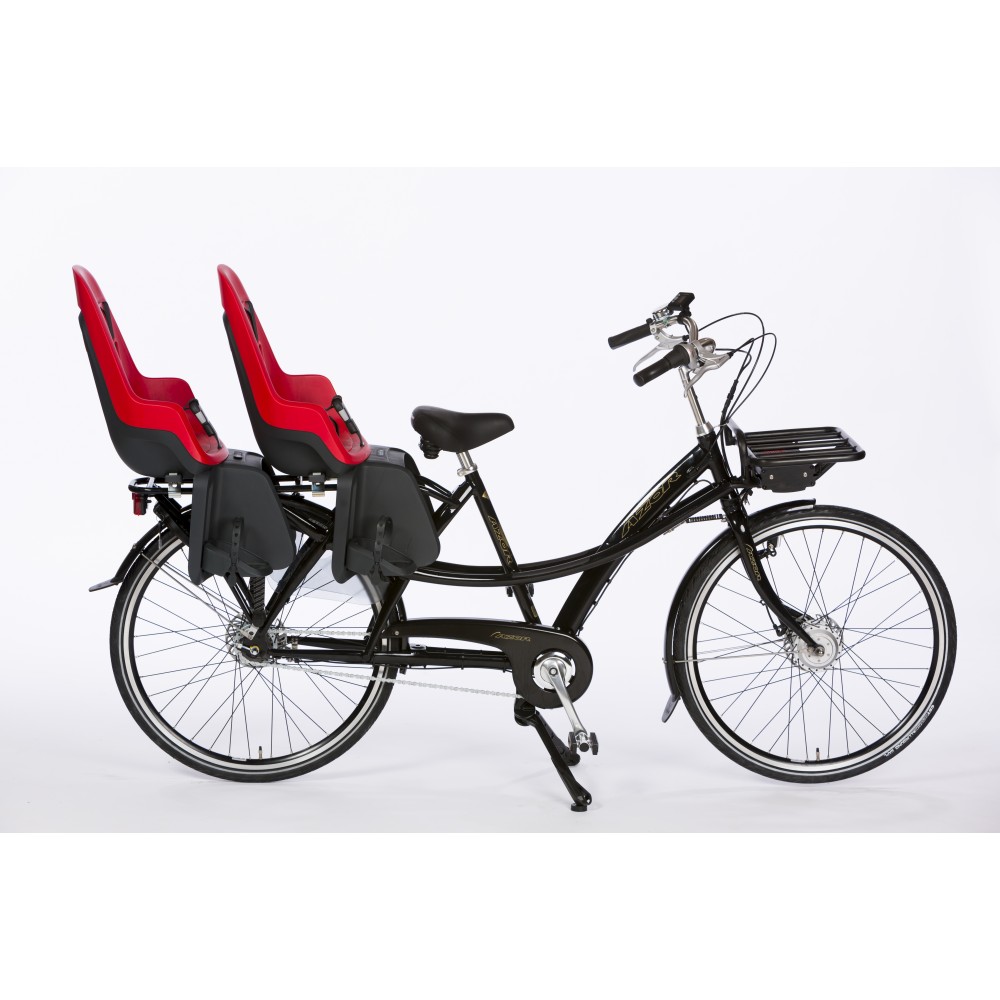
That said, with big panniers or a cargo bike, it's pretty easy to take care of daily needs with a bike. We have an electric cargo bike, and it's somewhat uncommon for us to feel like we need a car for something.
Personally I very strongly prefer longboards over bicycles for commuting (it's more fun, you can just grab and carry it, both of your hands are always free when riding, etc) however there's just so many things that are fine-ish for bikes or pedestrians, but ruin the fun for skateboards. Cracks in the pavement. A street crossing with a lowered curb that is just slightly too high to roll over. Narrow sidewalk next to a busy, downhill street. Cracks in the pavement. Cobblestone. Badly timed traffic lights. Cracks in the pavement. Dirt roads. Potholes.
One important observation, a city that's awful to skate tends to also be much less accessible to pedestrians. You might think it's irrelevant until you meet someone (or end up) in a wheelchair, or with a stroller.
1. Cycle 2. Electric Bus/Tram/Taxi 3. Electric Car/Biogas Car
- Make driving miserable,do a carbon tax - do a carbon dividend - keep the infrastructure about good things like trains
A.k.a. planning for major centralized supply (public transit) and incentives for demand. There's no point directly funding electric car stuff because a) it is not good enough as pointed out, and b) it doesn't benefit from planning as much anyways.
I don't get why these things aren't more obvious :/ ...
Specifically on an European diet(~1.5-2g CO2/kcal) a cyclist is responsible for ~27g CO2/km, which is not negligible and puts cycling on par with public transport.
I don't believe cycling to be a solution here. It's said that 25% of trips in the Netherlands are currently done by bike, but what is left out is that, according to this study(2012):
https://www.tandfonline.com/doi/abs/10.1080/01441647.2013.80...
50% of trips are still done by car.
Looking at distance traveled it's 75% cars and 8% bicycles.
That's after decades of changes in infrastructure to accommodate cyclists.
Comparing distance travelled is not really a useful metric in my opinion. Virtually no one is going to ride their bicycle 20-30 miles to work each day, when many people will happily travel this distance by car. It's for the short <5 mile trips that you want to incentivize people to take a bike instead of a car. That's where you have the most to gain in terms of making your city a more pleasant space to be.
I don't see cycling as a serious proposition here, because it doesn't solve any new problem that isn't already handled by public transport.
This is interesting, but might it be possible that at least some those cyclists ate 1 more serving of lamb (or other high-carbon meat) or chocolate than they normally would have because they biked? Or did they eat 1 more serving of mostly plant-based food?
Did they do an analysis of the amount of food consumed by the cyclist on the day they biked vs. the days they did not bike?
Using EVs to transition to something else, leaving behind craters and huge scars from mineral extraction, and huge amounts of e-waste, is just absurd on its face (but very profitable).
Obviously it doesn't have to be either/or, but I think the largest change would be widely accessible public transit (which is also a multiplier for the effectiveness of cycling, if well-designed - you can move your bike on the train or the bus, and it takes cars off the road). And I'm happier for other people to cycle; this eases pressure on the roads, reduces pollution and noise and accidents, etc. Yay cyclists!
I also have already thoroughly (if unconvincingly) been Eurosplained at over "how age, disability, weather, kids, cargo, population density, topography, etc. etc. are all non-issues for cycling" and "how it's the one size fits all solution for everything" in terms of accessibility so would be happy to avoid rehashing all that.
[ although if you have some anecdotes about 80-year old Swedes riding their cargo bikes uphill both ways every day through winter and summer that you absolutely must share, go for it ]
Despite all this, I still somehow feel that emphasizing cycling more than a combination of transit+walking is hopelessly ableist and not really very practical for a lot of the urban layouts we actually have, particularly in the west. Amsterdam's population density, for example, is 10x higher than Sydney's, and it's way flatter.
One of the things I miss the most from my college days was being able to ride my bike everywhere. I could go for weeks without driving and it was wonderful. Now days I almost never ride my bike anywhere (other than by my house for exercise) because there are just too many cars and careless drivers.
If only more cities were like Copenhagen. When I travelled there I was blown away by how bike friendly the city is. There are some parts of the city that are only accessible by bike and the roads that allow cars have elevated bike lanes, which are much safer than the “share the road” bike lanes we have in the US. The psychology of road rage just disappears with bikes. Once all the metal and glass around you disappears we are much friendlier in traffic and accidents.
Making the world more bike friendly isn’t just good for the environment but good for our well being.
The sustainable future of transportation is the electric bus, the electric trolley, the electric train, and the electric scooter. We need to be taking more steps towards it.
Put differently, reducing air travel is much more effective than ground travel habits at reducing your carbon impact.
> When we compared the life cycle of each travel mode, taking into account the carbon generated by making the vehicle, fuelling it and disposing of it, we found that emissions from cycling can be more than 30 times lower for each trip than driving a fossil fuel car, and about ten times lower than driving an electric one.
I'm surprised that bicycles are only 30/10x less. It seems like, before any usage, manufacture of a single car would use far more than 10x the energy of manufacturing a bicycle (1000x?).
Just making the point that your lifestyle might not be representative so be careful when making arguments based on it.
https://www.theguardian.com/environment/2019/sep/25/1-of-eng... [1]
They're designed to maximize traffic flow for cars with little to no thought towards the safety of pedestrians and cyclists.
When there exist separated bike lanes, people can be assured of their safety, and that's when you see cycling growth.
For bikes to have real gains, you must somehow make cars less appealing. And while individual mindset is similar in China and the US — everybody really really wants cars now — the outcome has so far been different. Here’s my guess as to the reasons why, with the most important first:
- It’s super hard to buy a car here. The waiting time for a new number plate is something like 10 years (for the non-rich anyway). I’m so thankful for this — I can’t imagine this city with tons more cars. (You used to be able to jump the queue by buying an EV, but the waiting list for that has grown now too)
- Even after you buy a car, there are days when you can’t legally drive it, depending on the last digit of your number plate.
- It’s straight up annoying and expensive to drive to most places in the city. Traffic is terrible, and for short trips you’ll spend way more time and money parking than driving (its common for a 10 minute bike ride to be a 30-40 minute drive during rush hour). That said, the city does not seem interested in fixing this problem by widening roads, which I take as a win.
- There is bike infrastructure: not only are there decent bike lanes, but drivers are used to sharing the road with bikes. It’s not Scandinavia, but it’s way better than the US.
- There are shared bikes fucking everywhere, so it’s always an easy option. It’s super rare that I end up somewhere and cannot find a bike.
- There is zero tolerance for drunk driving. If you’re going somewhere to drink, that’s a trip you’re not driving.
All this said, even though there are so many bikes on the streets that they stack up at traffic lights like cars during rush hour, I feel like the number of bike commuters is 1-2 orders of magnitude less than the number of subway commuters. There’s a scale (population, and geographic size) at which you can’t just promote biking, you must invest in public transport.
Large parts of the population are too old, too infirm or handicapped in some way to make it more than a few blocks. Yes, some could be forced to lose some weight and get in better shape, but that's not going to work for many people with chronic conditions.
Then you need to take into account that the weather is bad for a significant part of the year. In the north, snow and ice make it dangerous to drive a car with all wheel drive. Bikes are downright dangerous in those conditions. Gentle rain may be workable but many rainy days make it dangerous to ride. Even a sunny, summer day is not-so-good for those who need to go into an office or a meeting without taking a shower to wash off the sweat.
Now mix in the fact that bikes can't carry more than a token amount of luggage. Parents with small kids, people with groceries, and anyone working on any project bigger than say, knitting or watchmaking, can't carry their stuff on a bike. The extra weight exacerbates all of the issues with hills, health and weather.
Now mix in darkness. In winter, many people leave home before it gets light and come home after darkness. Sure, you can manage with a good light, but it's just markedly more dangerous at night on a bike.
Now let's talk about how this dream of biking hurts the poor. By definition, people who can't afford very much end up in the worst homes and that almost always means the places with the longest commutes. Sure bikes are cheaper than cars and that sounds good for the poor, but the reality is that their poverty consigns them to live much, much further away.
I like bikes and I would like them to be used when possible, but bike-rights advocates don't do themselves any favors by making extreme statements like this. Bikes just can't replace cars for a significant number of people. Oh, sure, the young, unmarried, childless hipsters who write these things can do okay, but they're ignoring that there are many, many people who can't. Bike talk like this is anti-old, anti-family, anti-worker and anti-poor.
1) Many countries effectively subsidize cars over public transit in ways that are non obvious (not charging for externalities, minimum parking requirements, huge comparative investment in automotive public works), so your accounting of the costs you see (insurance, gas, depreciation) will likely underestimate the true societal cost.
2) The problem that cars seem to solve (getting around a sparse world) is also _the problem that cars cause_ (sparsification). If you have to drive three miles to get to the grocery store, you could think "thanks cars for making this drive easy", or "boo cars for making this drive necessary". In the city I live in there are 3 grocery stores within a 10 minute walk of my apartment.
3) Some people truly do prefer the spread out, population-sparse lifestyle enabled by cars. But some other people truly prefer the dense, walkable urban lifestyle that, as I have mentioned, cars seriously disrupt. The damage comes when people in one group try to force the other to adapt to rules that make sense in their preferred environment (e.g., if Urbanite A wants to ban cars while Ruralite B wants to put highways through the urban center so she can get to work via car). I tend to side with the Urbanites on this issue at present, because it doesnt take much to see who has the upper hand in American cities right now. (viz: Rober Mosesization of most major American metros in the 60s-80s)
   * Noise. From where I sit, the only noises that filter into my apartment from the city are occasional laughs or shouted conversations from bargoers, loud trucks grinding gears on the avenues, or honking of desperate commuters

   * Lack of space. Basically every city block in the USA is surrounded on all sides by areas where, if you walk into them without your wits about you, you could be smashed by a multi ton vehicle. When streets are closed for street fairs or the like, the "lack of space" complaint often drifts away - the whole city is your space again.

   * Danger. See above. There is of course also higher crime in cities, which I cannot find a way to pin on cars.

   * Grime/poor air quality - pretty self explanatory
1. Cars travel fast and they obstruct the occupants' view in all kinds of directions. So the cars themselves don't really count as eyes on the street in the same way a pedestrian would.
2. Streets designed for cars are less pleasant to be in as a pedestrian or cyclist, so fewer people will be out on the street. You only walk on those streets if you absolutely have to be there.
Look at some YouTube videos of "open streets" in New York during covid.
I drive 6 miles to church. My kids are in the minivan and can't ride bikes yet. We also have stuff with us: diapers, water cups, snacks.
My work (before WFH), is about 7 miles away. I could bike - but I take kids to day care, and they can't bike. Also, I can't wear "athletic" clothes to work, and I would still want to shower.
My wife goes shopping at garage sales where she frequently drives 25 miles. She often gets large items (ceiling fan, book shelf, art). She can't do this with a bike.
Grocery shopping could be bikeable. Get a wagon behind the bike, only shop when a spouse can watch the kids.
Spending time with friends isn't bike friendly. A 5 mile bike ride, with kids in toe, and all of their stuff won't happen.
Me, at the bar, could be on a bike.
As I look at the list, my kids REALLY stop me from switching to a bike. In addition, I still need a car occasionally (trips, fun restaurants, etc) - so I still NEED a car, I just might not use it as often.
I think people think bikes don’t work because they’re thinking about the problem, as opposed to trying through the problem.
But secondly, I would suggest a paradigm shift in how you think about things. You are probably right that for you, in the environment you live in, a bike is not the right choice. But an urban/suburban environment is not a fixed constant, so the question is why is your environment reliant on cars?
To respond to a few of your examples with this framework in mind.
- If your church and your work were closer, biking might make more sense. Suburban sprawl and zoning laws push things (housing, work, and amenities) apart that could be closer together.
- Your kids sound pretty young, but for when they get older if you lived in a place where it was safe to cycle alone, and their friends were closer to you, they could cycle to friends more easily. Unfortunately, with how things are, I wouldn't blame you for keeping them off the roads, as many U.S. roads are unsafe, especially for young kids.
- Again, it's not relevant until your kids are older, but the majority of Dutch children walk or bike to school, rather than being driven. From what I've seen, even elementary school aged kids will travel to school alone.
Now it could be that you just prefer the countryside, in which case of course bike infrastructure is irrelevant to you. But many people are more motivated only by a desire to avoid big cities in which case building out the "missing middle" between sparsely populated car dependent suburbia/countryside and dense urban centers could be the solution.
> cars are the single biggest reason why living in the city can be unpleasant
I'm pretty sure rent / house prices are the #1 negative people cite about cities. A relatively new phenomenon. In cities where prices have not risen as much, like Detroit, I doubt people say cars are unpleasant.
Ironically cars are probably depressing prices in the city significantly. For most normal people, a car lets them not overpay for land, by letting them live somewhere far away.
The pandemic changed that calculus. Normals don't work from home though. Normals were just sustained by PPP, until that ran out and they get (or already are) fired.
> infrastructure
The people living in cities with developing infrastructure change faster than the infrastructure gets built.
Let's say we're talking about a place where land values are rising despite no infrastructure changes. There, the people who want to leave rent or sell to the people who want to come, who already find the lack of infrastructure agreeable.
The people who are left over can't afford the higher rents.
So then, what you discover is situations like the Sommerville Green Line Extension. Many residents opposed it. "Gentrification" is a word used to describe the antagonist, for these people.
Why opposition to infrastructure? It raises rents.
It's a little reductionist, to make everything about dollar and cents. We're paying for the environmental and psychic impact of having cars everywhere with too few dollars.
But good luck advocating for infrastructure changes on a timeline faster than the makeup of the residents of the town.
A good public transport infrastructure is much more efficient at transporting people in and out of cities.
I live around 20 miles from my the city center and public transport is faster at getting me there than a car and you don't need to search for a parking spot.
This is interesting, but might it be possible that at least some those cyclists ate 1 more serving of lamb (or other high-carbon meat) or chocolate than they normally would have because they biked? Or did they eat 1 more serving of mostly plant-based food?
Did they do an analysis of the amount of food consumed by the cyclist on the day they biked vs. the days they did not bike?
Nope, for me it's definitely getting away from the wrong sorts of people.
Or we can go back as you described. Destroy the cities we have built and build small walkable towns. That would mean that you have no say in what your job will be, but your parents do. That’s over 100 year old concept that worked well back then and would probably work well if you built it up again. But with modern demands of “personal freedom” it’s impossible to build.
For example:
* https://tfl.gov.uk/corporate/publications-and-reports/econom...
* https://cyclingsolutions.info/cost-benefit-of-cycling-infras...
* https://cyclingindustry.news/724m-in-economic-benefit-on-80m...
In my anecdotal experience from the UK, high streets have been destroyed because they have failed to keep up with what people want.
Decades back, we started copying the US and building lots of out of town shopping centres surrounded by acres of car parking. Town centres started to compete by making it easier to drive in urban areas - but in doing so, they made the environment much less pleasant (loud, dirty, unsafe etc.)
Over time, retail became homogenised to the degree that every high street and shopping centre had exactly the same set of shops. This worked until internet shopping arrived. Why go outside to shop when it doesn't offer anything that you can't get on the internet - cheaper, and with a larger selection?
Now the only thriving high streets are those that offer something more than the internet can. Unique independent shops; space for people to meet friends and relax; street cafes; art/culture and so on. Removing cars in favour of walking and cycling is one of simplest and most powerful tools available to achieve this.
And I don't understand your issue with the jobs. Most jobs are in the cities, which is why people commute there. Why not live in the city then ?
In my somehow big city (1m habitants in France), they wanted to create a train line between my city and another one. As every infrastructure projects in France, the project eventually had years of delay (maybe 3 or 4).
So at the due date, no train line. But the trains (about 20 of them, IIRC) were acquired and stored somewhere.
So we had those trains without rails. Somehow, local politics decided to let them roll temporary on an existing national train line.
Nobody anticipated it, but all cities with a train station on this old line started to gain a ton of attractiveness. The real estate prices and population on those cities raised by 30-40% in 2 to 3 years.
People were just happy to live countryside while being able to move to work without cars. And that’s totally reasonable since with this high numbers of trains, this line is now able to have a 20min frequency.
Eventually, local politics decided to let the trains indefinitely and just buy 20 more for the new line. Which of course, added delay :D
——
I have a great car. But I think any mean of transport is really more pleasant than car. The only problem is they are not always all as optimal as a car. But it’s an infrastructure problem. Public transports without rails is as optimal as your car without a road.
You need structural change or it all really doesn't matter. Now maybe you think that structural change is unlikely to happen, and I agree with you, but then we're in really big trouble.
> let's not let perfect be the enemy of good.
This is not the perfect vs the good, the is that meaningless versus the possibility of having an impact. We need to do so much more than have only bikes in cities that it is almost impossible to image we make the changes necessary to avoid climate catastrophe. If you think even that is out of the realm of possible, then there's no need to worry about what type of fuel powers your car, it quite literally will make no difference. The gas you don't use on your car will just be used by amazon delivery trucks to further reduce shipping costs and increase sales.
As you say, for many motorists, giving up space on even some roads to cyclists is treated like some sort of war crime. There's very much of attitude of, "we can't just have a majority of the road space -- we need nearly all of it!"
Having lived and cycled in Amsterdam to me it did seem like a major investment. Sure if one were to design a greenfield city then it’s not a big deal. But to pivot a car centric city to safely accommodate cyclists is a major change. The city residents have to go through the transition process which isn’t going to be fun.
I’ve seen it done half ass way in India and US which end up being deadly for cyclists.
I am all for cycling, I absolutely loved my two year stint at Amsterdam. It’s a life changing experience. But let’s not underestimate the costs involved in transition. Also, the city residents have to be onboard with the process, as they are the biggest stakeholders. Otherwise the implementation will get dumped half way through with disastrous results.
I don't think that's a fair comparison. I live in what many outsiders consider a bike friendly city though in reality it's impractical and unsafe to bike most places. If you're willing to also walk/bus your bike, flout local law on bicycling in pedestrian areas, and bike on major thoroughfares without bike lanes between travel lanes and parked cars then I suppose you'll be happy. That is until you get door checked, run off the road, ticketed, or hit.
Redesigning just the main streets and their auxiliaries would require making tough choices like one way roads that you'll cause you to drive considerably further to your destination. Removing on street parking, when our city already has a parking deficit. Removing the verges where they exist to accommodate bike lanes. On the many streets without verges the options are one way traffic or no parking, mixed use lanes for truck traffic and bicycles is unsafe. I suppose the buildings on one side could be seized under eminent domain, but that just balloons the cost and time scale.
All this is too say that without widespread infrastructure, especially between cities, biking is facing an uphill climb to widespread adoption. People want to be safe on their commutes. They want their bikes and cars safe while they work and shop. Designing And building infrastructure for bikes in cities that have been maximally developed is an incredibly and wastefully expensive exercise in compromise that does little to meaningfully reduce vehicular traffic.
How do you take "a tiny fraction" away from a street that has one lane in each direction to build a dedicated bike lane? Make it a one-way street and just kill traffic? It's not as simple as you make it out to be. Don't infer motivations, I don't own a car and ride my bike everywhere.
It's mostly a money issue, at least where I live. That part of the budget is spent on "climate managers" (for a city of 20k) instead of improving bike infrastructure.
It does. I'm constantly pushing to rezone the entire city as multi-use and multi-dwelling. The city council has ignored me, and most of my fellow citizens vehemently disagree, as they believe that would devalue their property.
While obviously the same principle applies in the US, achieving higher rates of cycling in Europe is substantially easier, both politically and practically, in Europe than the US. Europe is significantly more compact cities, and public transport is usually very good, additionally many European cities have already invested heavily in cycling infrastructure.
Step 2. Fine bastards who violate them.
- physically separated bike lanes wide enough for safe overtaking, with a gap between them and a parking lane that protects cyclists from open car doors and people leaving the car from cyclists
- an actual network of bike paths instead of vanity paths
- redesigned intersections that are safe for cyclists (https://en.wikipedia.org/wiki/Protected_intersection)
- bicycle storage infrastructure in apartment blocks (not everyone has a suburban garage)
- bicycle storage infrastructure in office blocks
I can already see this happening in San Francisco. With the market street being closed to cars before pandemic hit. During pandemic, a lot of streets were marked "slow", so no entry to cars there and city plans to keep it that way. Some good hangout spots like JFK drive in GGP and Great highway are also marked car-free, I also heard something similar about Embarcadero in planning. City is also moving to make outdoor dining parklets permanent. All these moves discourage car ownership in every way and when you also consider transportation services like Revel scooters, Lyft electric bikes and Lime scooters, you can start seeing SF as a leader in USA. Not to mention, it is impossible to buy a used bike on CL at a reasonable price last entire year.
Let's keep putting in the work SFians!
Make progress where you can.
I'd love for their to be more cycling options (and things are way better than they used to be), but no reason to disincentivize transitioning to EVs too (or framing it as some battle between them).
> switching to a bike is something that will be viable in 20 or 30 years
20 or 30 years? I'll be dead of old age!
The biggest hindrance to me right now is no way to park a bicycle safely. Even carrying bulky bike locks is risky in NY for someone who wanted a nice ebike.
What if you don't have a garage to charge your electric car?
You chose to live a lifestyle that requires a car. Which is fine. But it's a choice.
Even this depends on where you live, though to a lesser degree. In particular, if you live somewhere that you have to park on the street, you're 100% dependent on others for charging infrastructure.
There were lots of government subsidies, federally funded academic research, etc. involved in making it a practical choice you can make.
* City roads are narrow and don't have empty space just waiting to be painted green. Bike lanes will cost you parking spots or a car travel lane. This gets huge pushback.
* Dangerous drivers must be removed from roads. You can be hit, killed even, with video evidence and the driver may escape punishment entirely.
* Cities (or specifically NIMBY residents) must stop resisting increased density, mixed use, and useless parking minimums. Not everyone wants to live in a suburban development, miles from useful amenities.
* Bikes and alternative transportation are compliments and need to be developed together. Biking to transit hubs is huge. It's not just green paint wherever it fits.
Also, setting up a good cycle lane can be more expensive than you think. If you have a nice bike lane that spreads over 5 km but there's a 200 meters gap in it because of a bridge which was too narrow to keep the bike path, then you don't have a nice lane at all.
Blindspots. Intersections. Parallel parking/parking in bike lanes. Safe and clean parking of bikes at destinations.
The entire design and build requirements of roads have to be reconsidered to make cycling/scooters first class citizens in cities. As it stands in the US, most cities are pretty dangerous for cyclists.
Realistically, you've got to convince me to leave my 3000+sqft house (with bedrooms for all my kids) and yard to move to a 1000sqft apartment in the city (and make my kids share a room) and take on a bigger mortgage so that I'm closer to work. Also how do I get groceries for a family of 5 home on my bike?
Life for the majority of people where I live has not been set up to be bicycle friendly and bike lanes don't change that barrier.
US roads always stroke me as super wide and at least those I saw myself had plenty of space for this.
One example to illustrate the difference - on say Swiss or French car parks, if you park perfectly in the center of the parking spot and if cars around you do the same, even with regular car (say BMW 3 series) you can't just open the door fully, often not even that half-open position in the middle. Significantly wider cars effectively take 2 spaces, but then again not many folks buy them here also for this reason.
Good biking infrastructure is physically segregated infrastructure, which is less trivial to build (though still way cheaper and easier than infrastructure for cars).
The larger and more ambitious the project the greater the costs. I imagine a massive upgrade would be even more expensive
https://www.seattletimes.com/seattle-news/transportation/12-...
Cycling lane poles would be ideal, but a lot of drivers push back on this since they see it as precious space being taken away from them.
Paint doesn't do squat for making car lanes safe for bikes.
She used it to carry four kids (her three and one of mine) when we visited. We took the rented car and she beat us there.
Moving any specific component of that system to another niche might help a little, and I'd welcome any progress, but is not a solution.
With that said, I'm a year around bike commuter. Cargo bikes, trailers, and baekfiets are gaining popularity in my locale, especially the electrics.
> The Vaalserberg is a hill with a height of 322.4 metres (1,058 ft) above NAP and is the highest point in mainland Netherlands
before anyone gets the wrong idea, the biggest problem is not going up, but going down (especially with kids, cargo or kids+cargo)
So while it's true that Siberia won't ever be bike-first, we should understand that each person we can get to transition to biking is worth 10x the carbon reduction of getting them to transition to an EV. It will also be harder! But the 10x heuristic should help us think about how to balance the increased difficulties against increased benefits.
Also, this is a transition that will eventually involve everyone. There will always be people who can't cycle and we need to maintain room for them to be full participants in a non-petrochemical-based economy. This makes low-carbon personal transport like cycling even more valuable in the context of needing to allow people with more limited mobility options access (they will need the parking spaces we increasingly hope to move away from).
as someone who almost completely abandoned the car, even though I live in Rome, one of the most car crowded cities in the West (and probably the World), if we care about taking cars off the road, we need to make cities walkable
Many areas of Rome already are and have been by design, because pedestrians and cars don't compete for the same space and there are large enough sidewalks
in the city centre where streets are narrow, cars usually drive very very slowly, because the road is occupied by people walking and have precedence
But when pedestrian share the space with other vehicles, like in car restricted areas, that's where things start to get unpleasant if not impossible
bikes, electric bikes, scooters they all make walking difficult to the point that pedestrian need to be careful about them more than with cars
in this covid times with virtually no cars for Rome standards, my biggest concern when I am around is avoiding riders and their bikes, they are everywhere and respect no rule.
I can be relatively sure that on a one way only street no car is gonna suddenly appear from the wrong direction, not so much with bikes (and other two wheeled vehicles) especially because they are extremely quiet
this is my experience after 45 years as a Roman citizen and 7 years without a car
For example, driving a car is necessary to be a full member of society in most places in the US. If you can't drive basic things like going to work, buying food, visiting family, seeing a doctor aren't possible or take 2-3x more time without a car. As a result people are very hesitant to take away people's licenses, even if they really shouldn't be driving.
> - Your commute is sufficiently short
This is the most important one. Most people would be happy biking 2mi/3.25km to work. I like biking a lot so I would bike up to 10mi/16km.
> - You have facilities to shower and dress at work
I commuted by bike for years in hot, humid climate without showering at work. Consider all of the remarkable achievements of humanity. You could figure out something that could work for your situation.
> - You don't have to bring kids or sizable cargo
Places where cycling is normal have various solutions for this.
> I commuted by bike for years in hot, humid climate without showering at work. Consider all of the remarkable achievements of humanity. You could figure out something that could work for your situation.
It's called a shower. I weigh 300lbs. Trust me, I am going to be sweating like I was sprayed by the grossest stink hose of all time. Sure, I'd love to believe I'd be closer to 200lbs than 300lbs after a year or two of riding, but that's a year or two smelling like a rank asshole. On behalf of myself and everyone around me, hard pass.
2 miles is around the lower end of what I would consider bikeable, much less than that and I'd just walk.
Cycling is roughly 2x as dangerous as driving (1) to the person themselves per mile travelled and motorcycling is 35 times as dangerous (2).
Electric bikes are probably somewhere in the middle.
I am hoping once we get humans off the road, cycling can be safe and I would love to cycle places.
(1) https://www.sciencedirect.com/science/article/pii/S221414051... (2) https://www.askadamskutner.com/motorcycle-accident/how-do-ca...
For what it's worth, your risk from diseases of inactivity (diabetes, heart disease, etc) are far greater than the risk of cycling, even with poor infrastructure. Most people who take up cycling to work see an increase in life expectancy.
The solution is to separate cyclists from motor traffic on all major roads and introduce 30kmph limits on quiet roads. The Netherlands did this and has far lower accident rates, despite having more children and elderly people cycling. They don't wear helmets either!
However, I also feel that one should think about the safety of other road users when choosing one's transport method.
Your first reference notes that "over half of the deaths in car crashes were to road users other than the drivers themselves". Looking at Fig 1., fatal cycling accidents that didn't involve cars were almost all (~92%) fatal to the cyclist rather than to other road users.
EDIT: And then there's the contribution to air pollution-related deaths to think about as well, see e.g. https://www.independent.co.uk/news/uk/home-news/nearly-9-500... (2015), and I guess more broadly the contribution to climate-change related fatalities. I appreciate these are difficult to measure.
> - You have facilities to shower and dress at work
> - You have sufficient time to shower and dress at work
You can address these by planning where you live and work to make it so. These are not immutable facts of nature you have no control over. If your work doesn't have a shower, maybe a nearby gym does.
> - You don't have to bring kids or sizable cargo
There are solutions for transporting kids on bikes. Unless your job is to transport cargo, how often do you need to transport sizeable cargo? Most people are not bringing a refrigerator or something with them on their daily commute.
If the switch to biking only works for the 95% of people whose job doesn't require hauling around large pieces of equipment with them everywhere all the time, then that is still a huge win.
> - Weather is sufficiently good
Or your clothes are sufficiently good
> - You're sufficiently healthy
Bike every day and you will become healthy
Not too many people can make that decision on the sole basis of their preferred mode of transport.
The rational decision for most people is "live where you live because you have things keeping you there" - good, bad, job, family, friends, responsibilities, or otherwise. Given the choice between a) driving 25 miles for work everyday and keeping the status quo versus b) uprooting your family, changing jobs, and risking your savings to move to a new city ... so you can have the benefit of riding or walking to work?
These decisions don't happen in a bubble, there are tradeoffs. Sadly transport is rarely considered as one of them. The car is a convenient default. And while many people might consider riding or walking to work, they aren't going to unless systematic changes are in place to really tip that balance towards an urban/cycling lifestyle that's viable for more people.
Infrastructure, bike lanes, shower and bike lock facilities, etc. sure those might help.
But the real issue is that most adults (in America at least) are stretched so thin on time, forced by economic realities to take on multiple jobs and responsibilities that effectively makes owning a car a requirement to navigate the suburban hellscape safely and quickly.
To recap, things that have an impact and will help cities become vibrant net-zero communities - Economic reform so people can afford decent bike gear or a few extra hours for riding and maintenance - Cycling infrastructure so people feel safe and don't stink at work - Rebuilding entire city centers so people can do life without a car - Empathy towards people who still need to rely on a car because the transition to the above will take time
Things that will be completely counter-productive and discourage people from engaging with cities - Shaming everyone into your particular brand of urban cycling lifestyle because you think it would be good for them and they should just "make it so".
Yes. We can all afford to move to a dense urban center such that we'll never have to carry a few week's worth of groceries, or enough clothes for the next school year, or anything else which is hard to transport on a bike. Roads (streets, really) are always in good condition, and never icy or that special condition where there's a layer of ice with a thin layer of loose snow on top. Winds never gust to 70 mph, because it would be unseemly for a proud cyclist to fight a headwind on badly-plowed streets.
> Or your clothes are sufficiently good
I still idly wonder what clothing is equal to the task of a whiteout blizzard.
If you live in a place where you don't need a car, then sure, I guess that might work, but the VAST majority of Americans do not. They would have to move somewhere else. There isn't enough housing in such places, so new apartments (and schools and stores) would need to be built. That takes time and emits a bunch itself. We don't have the time to empty the suburbs (and no chance it'd happen politically). So the fastest solution BY FAR is electric cars as we can decarbonize people where they are.
A lot of cycling advocates massively underestimate just how good electric cars are. (They also last at least 10 times longer than bikes, in terms of number of miles... including tires, etc.)
People want climate change to force solutions to other problems. But we didn't solve ozone depletion by getting rid of refrigeration or air conditioning. We did it by developing and using non-ozone-depleting refrigerants. There's no political will to do much else, except around the edges.
Absolutely, build better biking infrastructure. There are good reasons to do it. But electric cars and trucks are WAY more relevant to actually getting most of America off of fossil fuels in a politically and economically feasible way than telling everyone they have to bike, now. Technological solutions are more feasible than social ones.
(Also, all the inputs to an electric car CAN be decarbonized as well.)
What? By what metric?
The Netherlands is nearly a perfect place for biking, which is why they bike.
They are quite fast, require very little physical effort, and have a small fraction of the energy consumption of a car.
And you can still get the health benefit by investing as much muscle work as you want to.
~$1000 gets you basically a slow, mini-motorcycle.
It’s dramatically cheaper than a car, longer range than a bike, and wonderful in cities.
I came here to post this. I hadn't ridden a bicycle in almost 30 years when I bought my eBike back in January. 2500W Luna, having a blast with it.
Cities are usually quite small in area. USA is an exception to this but that is due to car dependency. We can't reverse care dependency if we continue to pander to it. In London, the average speed of traffic is much lower than a gentle cycle. For longer distances, municipalities should focus on rail infrastructure. You might also consider an e-bike, which can double or triple your range as a cyclist.
> You have facilities to shower and dress at work
Cycling at a moderate pace does not make you any sweatier than public transport . With adequate infrastructure, cycling in a city can be leisurely, rather than a battle against motor traffic. Riding a bike is not the same as racing a bike, much like how walking is not the same as running.
> You have sufficient time to shower and dress at work
Presumably you have to shower somewhere. What difference does it make if it is before or after your commute?
> You don't have to bring kids or sizable cargo
Cargo bikes are remarkably efficient and can carry two small children. They are cheaper than a car too. Older children can cycle. Did you know 75% of dutch teenagers cycle to school? However, we need infrastructure where people feel safe to do this. For occasional journeys a car may still be required, but that's fine, we are targeting the 90% case here.
> Weather is sufficiently good
Cycling away from traffic in the rain with fenders and a jacket is no worse than walking. Toughen up?
> You're sufficiently healthy
In The Netherlands, disabled and elderly people can use powered scooters and wheel chairs on the cycle paths. This gives them independence even after losing their driving license. In other countries, they would likely end up in a home. For those who must use a car, that is still an option. Traffic is actually reduced since cycle lanes have much greater carrying capacity in terms of _people_.
It's telling that the most of the examples in the article and in the comments are about tiny shrinking European towns (lol, Copenhagen).
Author from Canada, and he has seen all the problems described in the thread. He is not bike promoter, just a person who wants comfortable and safe commute. So he moved to Netherlands where even commute by car is better because of the way city is organized. He describes in details how and why, and it is amazing.
Now I want to visit Netherlands.
- Your commute is sufficiently short (I managed a 30k round trip every day at my last job. Took about 45 minutes each way.)
- You have facilities to shower and dress at work (I was lucky enough to have this, but some people who don't use e-bikes to avoid arriving as a sweaty mess)
- You have sufficient time to shower and dress at work (Say 15 minutes? Is that really a major issue? Just think of all the time you're saving by exercising and commuting at the same time.)
- You don't have to bring kids or sizable cargo (I've got a kid's bike trailer and a kid's bike seat to take my kids to Kindergarten on the way to work)
- Weather is sufficiently good (I live in Germany. I get by. When there's deep fresh snow I don't cycle, the rest of the time it's fine.)
- You're sufficiently healthy (Cycling's a great way to get sufficiently healthy.)
- physically separated bicycle/automobile traffic ( safety like the netherlands )
- cycling support infrastructure ( to quickly address flats / part breakage when out and about )
- reliable backup transportation ( when all else fails )
But I agree, weather and disability issues definitely require some kind of supplemental modes of transportation. Even then I’d rather we invested in public transportation instead of cars.
A okish video about winter biking https://youtu.be/Uhx-26GfCBU
Basically the temperature does not really matter much. It has more to do with the maintenance. If the cycling paths exist and are in good condition people will use them. Actually I think properly cold weather (stays below freezing most of the winter) is better then when weather is going above and below freezing point all the time.
edit: And cycling in the rain is much worse then riding in the winter in my opinion.
What is a real issue is a lack of cycling infrastructure, if it's dangerous to commute to work by bike then a car is a better choice.
Electric bikes are also an option that allows more people to ride in a wider range of situations that would otherwise be a limitation, including hilly terrain.
On the occasions you are moving something larger than can fit in the bike you can take a cab/rent a car or truck. If you are regularly transporting things larger than the cargo bike then perhaps you need a car but I guarantee you 99% of people are not moving 300L of sand every weekend.
Also adults and people older than 10 can ride their own bikes.
Wear a cape and some rain pants: https://cleverhood.com/
The Netherlands is also notoriously rainy and windy.
The point is you can replace 90% of your trips with a bike, not that you can never have motorized transport. 90% of car trips in America definitely do not need to be in a single occupancy vehicle/only need to be because we've put everything so damn far away from everything else to accommodate cars. The latter part of the second statement does not apply if you live in a pre mid 50s city
Partly it's because I live in a city with rubbish traffic on weekends, so a weekend like you describe would be full of crawling traffic and hunting for parking spots.
Having a weekend like you describe - which I remember more from other cities - is something that you can do because of the ways cities are designed (big box stores!). Not wanting to be a moral scold, but a lot of cycling advocates would just say "spend your weekends differently". That's not what I'm saying - and elsewhere I complain that a lot of cycling advocates seem to assume everywhere is already set up like Amsterdam in terms of population density and flatness. However, spending every weekend piling into a vehicle to schlep around big box stores is a choice, just like living in some dense area and cycling everywhere in a cutesy whole-family cargo bike.
You use the word 'need' a lot, even for stuff like "breakfast at a cafe" ('mom: we have breakfast food at home', as the meme goes). A lot of this stuff is choices.
There are different types of bicycles, and different types of carriers you can attach. For example there's a cargo bike [0]. In a bicycle focused city you'd perhaps be able to borrow/rent a bicycle for specific uses.
I guess the rain can be a bit of a nuisance, but from my understanding it becomes a non-issue once you've got the proper gear for it. Plus if you were bicycling to work for example, you could have a change of clothes there.
By the way mrmoneymoustache.com has some blog posts about his primarily-bicycle lifestyle in Boulder, Colorado if that's relevant to you.
[0] http://greenlivingideas.com/wp-content/uploads/2012/05/cargo...
Yet somehow those millions of families get by just fine without cars. I'm not sure why you think it is complete impossible.
That said, if you're having to buy 300L of bagged sand _every week_ then no, it doesn't seem like a particularly fun time and frankly I'd stick with a car.
Yes it is more dangerous, for the simple fact that falling on your back and slamming the back of your head on concrete is a very real and considerable danger, and its effects can be extremely severe. Skating helmets are shaped differently from bike helmets because of this one thing. It's not a common occurrence (I see people falling forward and injuring their knee or hip ~100x as often), but can be deadly.
For casual, daily commuting I wouldn't say it's more dangerous on average. I've had plenty of minor accidents while I was learning (I'd say first 12 months), mostly scraps and bruises, once a twisted ankle. If I compare it to how I was learning to cycle as a kid, it's a very similar experience ;)
The hardest part will come from learning to manage your front/back balance in addition to left/right. It's always safer to keep your weight forward, it will also keep you more stable at higher speeds.
Overall the longboarding community is extremely serious and conscious wrt safety, unlike some street skateboarders nobody will ever point a finger at you for casually wearing a helmet and/or pads, and if you'd ever try anything remotely related to freeride/downhill/sliding without adequate protection, you're likely to have your board taken away until you suit up. I believe natural selection had something to do with that.
> I'm always amazed by how skaters are able to stop or "hit the breaks" where there are none.
Where you see no brakes, I've counted 5 different methods to control your speed, all of them have their uses ;) In the order you'd learn/need them: bail, footbrake, carve, slide, airbrake, bail (again). Simply stepping off the board is most effective at sidewalk speeds, all you need is reflex and balance; you'd also learn to fall. At 20+kmh, footbraking (dragging your foot on the ground) becomes necessary as bails can hurt. Down a mild hill, carving (slaloming) will help you keep your speed down, without touching the ground (and grinding down your sole, foot burns are a thing lol).
At 30+, you almost certainly are going to need a helmet, it's also when sliding starts being effective (never EVER slide without a helmet). Airbraking is simply the opposite of tucking - instead of curling down to make your body shape more aerodynamic, you stand up and spread your arms, it can be the difference between going 30 or 60 down a hill. Lastly, if you need to crash safely at 40+, you learn how to ride out your speed on your gloves, pads, leather, etc.
https://www.sciencedirect.com/science/article/abs/pii/S09658...
There is just no possible way that everyone is now driving <32mi every day running errands that they would have run before being forced into remote work.
Every other look at this, including things like the Apple Maps reports and government stats have shown that miles driven is way down. In fact I know a lot of families who have had to buy battery tenders for one of their cars because it's sitting unused so much.
The only thing I can think of is that I might spread out the errands more across the week since I don't have to do it after work.
But anecdotally, my wife and I both started being home full time six years ago, and despite have kids since then (which greatly adds to the places one needs to go), our overall milage went way down, to the point where we even got rid of a car. After the pandemic, when the kids start doing a lot more after school activities, we may not even get a second car because Uber/Lyft can cover the rare trip that needs to happen simultaneously.
> Approximately 20% of telecommuters stay at home all day during a workday, while only 8% of commuters do. Telecommuters that have at least one trip during their workday accrue more vehicle miles travelled and number of trips than their commuter counterparts.
So if you throw out the 20% who don’t leave their home, the rest accumulate more miles on average?
And they mention telecommuters meeting clients (vs. office workers staying at the office), so I’m not sure the populations are even comparable.
Maybe the paper goes into these details?
You other description matches quite well to Beijing so I assume you are living in Beijing, but this one doesn't quite match from my experience.
Yes there are technically "bike lanes", but Beijing drivers really treat them more like "ramps" that's use to get on and off the main road, or even "shortcuts" when the main road is too jammed. They really have no respect whatsoever to cyclists' right of the way on the bike lanes.
In the USA, 60% of all vehicle trips were less than 6 miles - which is a perfectly cyclable distance for the majority of people. With pannier racks, it is completely feasible to cycle with groceries.
Weather and danger is for sure a problem, but better urban planning can make this much less of an issue. Provide incentives for employers to offer showers. The whole point of this article is that cycling is a great thing for carbon footprint so it deserves investment to fix the reasons why people feel unable to cycle.
Obviously push cycles are not a panacea. If you live somewhere very hilly, you might need an e-bike. If you live in the suburbs, you might cycle to a train station and continue your journey by train. If you live somewhere rural, you almost certainly still will need to own a car for part of your transport needs. But I cycled about ten thousand miles on my last £300 bicycle over a few years (now upgraded to an e-bike), which saved me a ton of money, improved my health and reduced congestion/pollution for everyone else.
You're making my point for me. I'm not saying bikes don't work. I'm just saying that there are many times that they don't work. And it sounds like you're a bike lover and even then, you couldn't replace 8k-13k a year of car travel.
And I'll note that you're using an electric bike. That's like an electric car, but with only two wheels. So you're really on the wrong side according to this article.
Just because it has two pedals doesn't make it a bike.
"Ownership is lowest in Manhattan, where only 22 percent of households own a car, while ownership is highest in Staten Island where cars are owned by 83 percent of all households. Queens (62 percent) is also above the city average, while the Bronx (40 percent) and Brooklyn (44 percent) look more like the city as a whole."
As soon as she could afford a car, she got one and her life expanded.
What do other families look like who have multiple kids and no car?
Data please. I'm posing a question and looking for data, not speculative conclusions.
I'm a cyclist myself and I can definitely say that after biking 10km I end up wanting to eat more protein (and chocolate) than I usually do. Maybe not an extra full meal unless I do a century, but definitely a different meal than if I hadn't biked at all. Also, after exercise I often end up tired and buying food instead of making it myself. All I can say is that my eating habits do differ on days that I bike. I eat plant-based protein but there are lots of people who don't. That's why I posed the question.
In urban areas that are already dense this can be done without any significant infrastructue investments by simply changing how the traffic patterns work on existing roads.
A good example of this is Barcelona's "superblocks": https://www.vox.com/energy-and-environment/2019/4/9/18300797...
If we start today and incorporate the lessons they've learned, it hopefully won't take us 60 years to get there.
The principle is simple: In designated spots, prevent through traffic for cars while allowing bicycles to go through. This massively reduces car traffic on those streets. In Ghent they did that by simply placing obstructions on the road that only bicycles can maneuver around. Once more people are cycling, you'll have increased political will to spend money on more ambitious infrastructure such as in Amsterdam.
2. People tend to underestimate how far you can easily go on a bike. The house I grew up in on the outskirts of a rural town is 5 miles from the supermarket, which sounds far but should take only about 20 minutes.
This is not true - we have streets that have been converted to be fully pedestrian+bicycle, and resupplies/moving in is not really an issue because these vehicles get exceptions. The sign combination 'Motor traffic forbidden / Exception for authorized vehicles' is pretty damn common in my European city.
https://liveboston617.org/2020/12/16/dangerous-bike-lane-div...
From the 1939 worlds fair: https://en.wikipedia.org/wiki/Futurama_(New_York_World%27s_F...
https://en.wikipedia.org/wiki/Futurama_(New_York_World%27s_F...
Building free/cheap parking spaces creates a dependency spiral where there's never enough. Counterintuitively, the best way to meet parking demand is to start reducing the number of spaces and charge more for them.
https://mobilitylab.org/2017/07/19/voxmobility-lab-video-hig...
Despite spending a lot of money of adding bike lanes to a few roads the number of bikers in my city remains flat. To change this we'd need to massively expand public transportation and convert all non-residential roads into dual use vehicle and bike divided roads. It sucks but people don't change easily.
https://www.google.com/maps/@37.7474901,-122.4878233,3a,75y,...
Killing traffic is good.
https://www.nydailynews.com/new-york/ny-bike-lane-survey-dat...
If you don't like that a group of people have more perceived power than you in your local government then find a way to fix it ethically. Don't bypass local democracy just because you think it's easier to take a shortcut.
Either way, the source is irrelevant to the fact that it is a real cost.
It's business owners here too. There are many studies showing that bike lanes create more customers than parking spaces, but the owners don't believe it and consistently act against their own interest.
Another option would be to vote with your feet and money. If you move to an area where the zoning is e.g. more dense or bike-friendlier, it will add to the property market demand in those areas. OTOH you selling your property in your current area adds a tiny bit of negative market pressure. If that happens on scale, it drives down the prices in less friendly areas and drives up the prices in climate-friendlier areas.
Though I honestly don't know how realistic it is really currently to find a densely-zoned districts in American cities that are not plagued by rampant crime, run-away poverty and under-performing schools. I live in Europe, and my image of American zoning is mostly based on content of two YouTube channels: "Not Just Bikes" and "City Beautiful". You have probably heard of them, and if not I think you might find their videos quite interesting (or the "Strong Towns" initiative, if you prefer reading.)
In my European home city the council is actually already taking concrete measures to increase the density of zoning and actually discourage sub-urbanization / urban sprawl, even though the scale of the problem pales in comparison to typical the American city AFAIK. One of the concrete measures I myself pledge to is to always prioritize availability of biking and public transport when moving - if not for my own sake then for the sake of my children. This is a natural choice for me since I have always lived in the city myself.
I think the difference to US cities might be that in my home town the real estate prices in the city are very high because a sufficient large portion of the people who have the economical means to choose their place of living choose to live in the smaller apartments of the densely-populated city center districts, as opposed to the larger single-family housing in the suburbs. This is because the city center is actually filled with desirable services and urban culture, which just does not exist as much in the suburbs.
But I do understand that bootstrapping a lively and livable downtown is not as simple as just moving there if the area is currently dangerous and undesirable. The city council has to encourage this trend for it to be a viable option for residents who want to live there.
Just as driving a car in Venice, in a jungle, or up to the summit of Mount Everest is not optimal.
That said, biking in Swedish winter works just fine. We plow our bike paths as well as roads, and get on with our lives.
This is someone I know, he rides with his crew quite regularly and this video is from a hill in Greece near my hometown. https://www.instagram.com/p/CEzGpGnlzTh/
Suppose office workers are more likely to live in an urban center, and conversely remote workers are more likely to live in a rural area. If that delta is large then it would easily explain the trend, because it really isn’t telling us about office workers versus remote, but rather urban versus rural.
Anecdotally, about half the folks I know who have gone remote have moved out to rural areas.
There are plenty of studies that show all resource use has dropped with the pandemic, including lots of delivery traffic.
I think that had much more to do with drivers driving much more defensively, because there's so much more chaos on the road. For example in the US you can mostly expect drivers to drive within their lanes, while in Beijing it's more like half half that they drive in the lanes or on the lines.
It would be nice if we didn't smell when we arrived.
I used to have this bike with an extra front seat and regularly cycled places with 4 kids (4-7) by myself (pushing one on their own bike): https://kokfietsen.nl/image/cache/data/Azor%20Catalogus/069-...
But then again, this country is really flat.
Edit: with kids 6 miles is a stretch, not that it's super hard, but you'll often be tempted to just take the car. If you upgrade to an e-bike that temptation will be a LOT less.
People in non-auto-centric countries all over the world take their families to church and everywhere else you listed.
This trip takes me around 2 hours and people think i am crazy for doing this.. but those same individuals will spend an hour commuting and then go to the gym for an hour?
Cycling isnt suited to a few miles.. I have never been "athletic" and can do a 50KM ride with a bit of training.
If the ground is fairly flat i'd say 10 miles is reasonable.
These distances can be easily covered on foot or bike with minimal change in infrastructure.
[0] https://www.bikeleague.org/content/national-household-travel...
https://nhts.ornl.gov/vehicle-trips
For vehicle trips:
21.4% of trips are 1 mile or less.
35.2% of trips are 2 miles or less.
45.6% of trips are 3 miles or less.
This seems likely to work better in areas that aren't as geographically constrained. Seattle, for example, has far too much water around it and industrial areas near that. It'd be a good one-shot conversion though.
I couldn't agree more! IMO increasing walkability will be key to both increasing density and decreasing carbon impact.
The point I was driving at when saying we don't care where we take cars off the streets is that taking 100 cars out of, say, Rome, has about the same impact as taking 10 cars out of 10 other cities. There are places which are more interested in moving away from cars today than others and, while we eventually want to get all of them, we can start where resistance is lowest.
“It doesn’t work if you have an emergency during a blizzard, so therefore you should never bike”
“It doesn’t work for a single mother with three jobs so nobody should do it”
“We haven’t completely rebuilt the entire urban infrastructure into a biking utopia and achieved perfect economic justice so therefore nobody can bike”
Nonsense. It doesn’t have to be all or nothing. Not every single person needs to bike and even those that do don’t need to bike all the time for every trip. That doesn’t mean there isn’t tons of low-hanging fruit to turn lots of bike trips into car trips.
But I really don't blame anybody for not wanting to cycle in the US. It's legitimately dangerous and unpleasant in a lot of areas. It doesn't have to be that way but that's the world we have.
Car tires last 30,000 to 50,000 miles. Really good ones are 80,000 to 100,000 miles.
Similar for the mechanisms.
Not US, but still.
The average mileage in the UK is 7k miles annually. Americans just drive too much.
Okay, some hipster with two young kids can take a saturday jaunt on a super-long, super-expensive electric bike, but that's not going to work for most people when it's cold, dark and rainy.
This has lead especially commuters of low-wage jobs quickly being forced to buy a new, more environmentally-friendly car (and their Diesel car just lost a lot of value in the market), so they have no option other than switch to gasoline engines - which are usually OLDER cars than they used to be with WORSE pollution statistics.
Buying a new car is not affordable to them. Public transportation is a lot better than in the US, but still will not solve the issue completely, and where it is a viable alternative, it's expensive both in time consumption and in money spent.
With a new law that was meant to lower pollution (and the jury is still out on if the goal was achieved, as during the corona crisis, pollution sank overall), we've created worse conditions for the underclass and lower middle class.
This is how you destroy support for ecological policymaking. If you want a better world for yourself and your children, you cannot achieve it by making it worse for others and the present.
If you hit the poorest, you won't get a ecological paradise, you'll eventually get the next iteration of an autocratic dictatorship (either left-wing or right-wing) - now with the extra support of the industry. No-one needs that.
As well there's the environmental impact. Concrete creates a lot of CO2 and we actually need to use less of it going forward.
Need to get somewhere in the suburbs? Carry large items? Go in the nature for the weekend? Any route that's not been anticipated by the central-public-transport-planning-committee is probably way better done with a car latency-wise.
Above a certain income threshold, it'll be really hard to convince people to ditch their car completely. You might get away with reducing car footprint from one per adult to one per household. Any dense development should have some sort of underground parking planned for it. Then it makes it much easier to get rid of on-street parking and convert the space into safe cycling infrastructure.
For example creating a bus route to the base of the mountain so that hikers and snowshoers can access the wilderness is a big win for the public at large, but nonetheless there will always be a group of enthusiasts that want go on a further flung mountain hike, and they'll need to use a car to get there. Doesn't mean it wasn't a good idea to create the infrastructure that accommodates the bigger group.
Building big expensive concrete car lots, assuming everyone has a car, is an example of building for the edge case. In Vancouver, a city that has done not a bad job of building protected bike lanes, there's data out now to support that the parking lots that it has mandated in new apartment buildings are in fact overbuilt, under utilized and part vacant!
I don't think this is true. People move because of job opportunity, family, weather or cost of living. Very rarely because they want a change of scene. Car is the often the requirement where they move to in America.
Imagine that you live in Italy, where only 24% of the population lives in cities with a population equal or larger than 250 thousand people.
Half of Italy is not flat and it's very hard using the bicycles to move, unless you are already expert and even for bikers (as in motorbikes) it's challenging going up and down the hills and mountains and usually they go in group.
Paradoxically around Milan (and in the city) they use bikes a lot, but it's also one of the most polluted areas in Italy because they also use cars a lot to move from or to Milan and other large cities, mainly to go to work or it's trucks moving goods.
You can't replace them with bikes.
You can't replace them with trains either, because regional trains are already at full capacity and Milan public transport already moves 800 million people/year (fun fact: the Milan public transport company ATM also operates the Copenhagen's subway).
Being on flat lands surrounded by high mountains also means that there are no regular winds cleaning up the air, so paradoxically biking is more dangerous for your health.
23% of the Italian population (13 million people) lives in cities with a population between 20 thousand and 59,999 people, the majority of towns in Italy (20% - 1,509 of them) have a population between 1,000 and 1,999 people and host 2.5 million people.
Those are the areas where they can't give up on cars, they have no alternatives, they have to use it daily for every activity: from groceries to work, school, church, etc.
They are usually near highways or heavy traffic roads, because many people move daily to go to larger cities for work, but also the areas where biking it's more of a challenge.
So it's a combination of long distances (people live away from cities because housing it's much cheaper), geography and older population.
I present you a sample of the area where my parents come from.
https://www.juzaphoto.com/galleria.php?t=2681540&l=it
https://www.juzaphoto.com/galleria.php?t=2510258&l=it
https://www.juzaphoto.com/galleria.php?t=2510257&l=it
Another problem with cycling in the snow is that it's way harder. You need much wider and softer tires, but this also means that you need to put in more energy. Going uphill is a pain. Add a little soft snow and/or ice to it and it's awful. You'll also sweat in the coat. Batteries for ebikes don't work as well in the cold either.
I think you pretty much need an alternative transportation system for winter. Or maybe we should all start using electric tricycles or quads.
> I have a hard time seeing there being much cycling in winter.
And yet we got schools with 1000 out of the 1200 students cycling to school in -17c weather in Oulu. Out of the rest 100 to 150 walked and a couple took kicksleds.
https://twitter.com/pekkatahkola/status/1093297261604265985
> Icy conditions are scary on a bicycle.
Me (and a few million other Finns and Swedes and Norwegians and ...) would disagree.
> All it takes is for snow to cover some ice and the bicycle can simply slip out from under you.
This is why we maintain the roads. Also studded tires exist for bikes too but are rarely used here (Finland)
> It's also possible for temperature to be above 0 during the day, but drop to below freezing in the evening/at night.
Does happen. But again maintain your roads. Not really a problem on its own. Only if you let cars drive on the hard packed snow that has now melted which creates huge grooves that then freeze. Solved by not allowing cars on the bike paths.
> Another problem with cycling in the snow is that it's way harder. You need much wider and softer tires, but this also means that you need to put in more energy.
I rode the exact same bike summer and winter with the same quite narrow tires meant for asphalt (never had studded tires on my bicycle) for the last 25+ years and still do. Well not the same bike over all the years but only ever owned 1 bike at the same time.
Actually now that I think about it is a bit harder when really cold (think -25c) but not for the reason you said. The grease/oil in your chains, ball bearings, etc starts to gel up making it harder. Could probably fix it by changing the oils but nobody bothers with that. Just cycle harder (or slower and accept the commute taking 5 minutes longer)
> Going uphill is a pain.
Just cycle harder. You will get in shape quite fast. If you have proper gears it is not a big problem (outside of some extreme hills that are pain in the ass to even walk up)
> You'll also sweat in the coat.
Don't wear too thick of a coat or just open it up a bit.
> Batteries for ebikes don't work as well in the cold either.
Based on comments from my friends they work just fine. We have electric cars here and they work too.
> I think you pretty much need an alternative transportation system for winter.
Again watch the video I linked about winter biking.
Basically riding in the rain is much more of pain in the ass.
If you're going to invest in infrastructure, I would think that investments in public transit will be more palatable to the taxpayers.
Also public transport and cycling are not opposites of each other. Here in Helsinki a lot of people cycle to the train or metro station and then take that to the city for their commute. You can also take your bike into the train or metro here if that works better for you.
People also drive their cars to the metro/train station and do the same. Parking can be really expensive (and hard to find) in the center if you happen to work there. For example my work place (a bit over 100 person IT company office) we have a total of 2 car parking spots for the whole company that you reserve in a google sheet when you need it.
In places where it gets cold enough to snow, but doesn't stay cold enough long enough for the ground to freeze, the snow near the ground can melt and then freeze as more snow lands on top, leaving you with an ice sheet between the snow layer and the ground. That can be much more treacherous to drive on, and I'd guess to cycle on.
Both should be sacrificed in order to break the car-infested cities. I imagine the pushback must be annoying to deal with, yes, but there's just no way you're going to be able to reconstruct your cities to be safe with this absurd amount of space dedicated to cars in cities of all places.
I suppose we might be on the same page here, though it's not entirely clear to me at the moment.
100% agree with the rest of your comment.
This behaviour from a few individuals pushes anti-bikers to protest even more, making it harder for these initiatives to thrive.
As ridiculous as it sounds, a deterrent similar to a license plate may become a necessity.
Meanwhile, the driver who hit me (in a bike lane) defended himself to the cop by saying "it's hard to not hit bikers". He was not even given a warning. I had video evidence from a helmetcam.
These devices still need parking, even if they are as compact as a scooter or a bicycle (not like a motorcycle). Keeping them in an apartment is a bit uncomfortable, too, especially in a walk-in on 4th floor, since they are not exactly lightweight.
Electric skateboards are much more compact, but take more skill, and have a shorter range.
All this is totally solvable, but the problems first needs to be recognized.
I lived in Vancouver, which is very transit friendly by NA standards.
In the residential Neighbourhood I lived in, most roads were 3-4 cars wide, and 2 of those widths were exclusively for parking private cars (parking lane, travel lane, possibly another travel lane, and another parking lane). The building I lived in had as much square footage for parking as it did for living.
Parking a car in was more or less marginally free(as in most North American cities). Using a city parking spot for anything else cost money, and was time limited. Renting a private parking spot was about $100/ month (due to building codes there was an oversupply of private parking in addition to the available street parking). Renting a bedroom the size of a parking spot was $500+/mo.
In other words, the city incentives were set up that a climate controlled parking spot for a car was significantly oversupplied, and cheaper, than a putting a human in the same space.
Oh, and they can't move closer to the city center: removing the subsidies just made houses that are centrally located impossible to afford for them.
(Electric cars might be the best alternative in rural and even some suburban areas. But they don't belong in a city.)
The reason diesel engines have been prohibited in certain city centers is because they have been shown particulary bad for people's health [0]. That is usually also something that hits the poorest people hardest. Rich people choose to live somewhere else.
Your last paragraph is just non sequitur. If you want to, you can try to explain why you think that would be the case.
[0] https://www.theguardian.com/environment/2017/may/15/diesel-e...
Edge cases will always need to be accommodated. That's one of the foundation of engineering and good design.
> In Vancouver, a city that has done not a bad job of building protected bike lanes, there's data out now to support that the parking lots that it has mandated in new apartment buildings are in fact overbuilt, under utilized and part vacant!
In a city that's famous for having real estate sold for investment purposes and not actually occupied? Shocking!
> whiteout blizzard
Why the hell are you driving anywhere in a whiteout blizzard? Stay home. You don’t need to go into the office and update the TPS report during a blizzard.
A blizzard happens maybe once every one or two years. You need to drive on a sunny day in May because sometimes a blizzard happens? That makes no sense.
If you live somewhere that whiteout blizzards are a year-round everyday occurrence, maybe consider a dogsled as an alternative to driving.
This thread is about giving up the car. Entirely.
> Why the hell are you driving anywhere in a whiteout blizzard?
Shit. Happens.
Ideally, emergencies would never happen. Still have to prepare for the less-than-ideal.
No, it's not. I never claimed that. Having biking as an option doesn't mean you're never allowed to touch a car again. This may shock and dismay you, but it is possible to have multiple viable alternatives for transportation. Bike when it's convenient. You'll probably get to enjoy it and seek out more ways to bike once you discover how good it feels and how nice it is to not have to worry about parking.
If a situation arises where a car is truly necessary, then use a car. I'd estimate for most people probably 90% of car trips could be replaced if they lived somewhere more bike and pedestrian friendly. That would be a huge win for the environment. The other upshot is that if everyone does that, then when you do need to use a car, or for people who are, say, disabled and really can't bike, then the roads are much emptier and driving is more pleasant.
You could get an ebike, insure it, and come out well ahead just from fuel savings.
And as far as "longer range than a bike" that's more than likely untrue. The largest batteries, best motors, and most efficient mode might make it to 100 miles on a charge, but more realistic on more common models is 30-40 miles in a middle power mode. A 40 mile limit is less than you can acomplish on a non electric bike.
Most people can easily go 20 miles on an electric bike, but have difficulty going 20 miles on a normal bike.
Also Rad power bikes are in the ~$1000 range and are great!
For people who want a bicycle for a bicycle and are going to use it, you may want to save up for a mid drive bike.
Even if you're walking, -20C and below is just too damn cold even if you have proper gear.
That sounds like bad infrastructure, which admittedly is the default almost everywhere.
There's also a safety issue in that if you're in that kind of cold for long enough, it'll kill you, jacket or no jacket.
I bicycled everywhere with a two year old in a kiddie seat until I was eight months pregnant. In Germany, which was almost as cold as Kansas at times.
It is if your car isn't a junker.
This is well researched: https://www.cambridge.org/core/books/neighborhood-defenders/...
Citation needed.
From a European perspective, it is not my impression that the local democratic system is good in any US city.
But that could be my filter bubble, we only heard bad things because people shout the loudest about bad things.
Actually, it would be my 6th bike, but that's its own problem. ;-)
I'm spoiled by where I live now, a 25 minute easy bike ride to my workplace, a similar ride for my spouse, and within walking distance of shops. It's really a lifestyle changer.
Also, bicyclists in cities tend to travel closer to the speeds of cars than pedestrians, and tend to have more similar dynamics such as turning radius and stopping distance which infrastructure for cars is already designed around. Additionally, car drivers are licensed and there is an expectation of awareness that they must exhibit. This makes it far easier to place slower-moving "hazards" in their path than adding faster-moving vehicles in the path of pedestrians.
https://www.sallymorinlaw.com/bicycle-accidents/riding-your-...
Some areas have long stretches of sidewalk without intersections those are fine for cycling assuming they have little pedestrian traffic or are wide enough to pass safely.
I wouldn't want to bike when there are many cars in the same lane as me, but it is still safer than biking on sidewalks where are many pedestrians.
* It tends to be busy with pedestrians (not everywhere, as you mention)
* It's not safe when crossing side-roads
* It's inefficient if you walk at junctions
I have had more close calls with cars riding on at most 10 miles of sidewalk (and that's being generous to be honest) in the past decade than with ~6000mi riding in the road.
Also, the width and amount of obstructions on sidewalks varies widely.
1. This central area should have a connection to a frequent public transit option which can get you to your job. BRT would be the easiest to roll out, but the ideal for most people would probably be some sort of medium/commuter rail with decent WiFi onboard and enough seating/frequent enough trains so that the average commuter can sit and work if they'd like. Obviously this won't take everyone out of their car, but the majority of commuters in your neighborhood could use this instead since it would be faster and more convenient. Ideally there would be trains/buses running at least every 10 minutes.
2. Because there is a retail area close to your residence you can realistically walk/bike to get groceries and do routine errands. Bike paths in your residential neighborhood make this easier because they feel (and are) much safer for everyday people to use instead of sharing streets with cars. Ideally the paths are safe enough for you to feel comfortable with your elderly relatives or children biking on them.
This is obviously very different from how North American suburbs are set up today and would require a large amount of investment and changes in the way that we do public policy and planning. However, it is certainly possible to have suburbs that are bike/pedestrian friendly if you put the infrastructure in place to do so.
What you describe is exactly how my suburb is set up. There are several clusters of mixed housing (single family, town houses, apartments) built around a few retail centers (and the retail centers usually have housing built on top of them). There is also both light rail and regular rail for transportation from the retail centers. I live 3-5K from the various central areas.
Here are my observations:
* cars are really only avoided for people in the residential apartments above or directly attached to the grocery stores. Nobody here rides their bike to shop (based on never seeing bicycles at the grocery store).
* there's still ~ 200M of elevation change inside of that 3-5K range. Only the most hard core are interesting in cycling that on a regular basis.
* It's a 5 minute drive or 30 minute bus ride to get to the light rail centre from my location (others are closer, some are farther). Some are content to take a bus, but many others drive. There are some who cycle but it's a tiny percentage.
* It's wet here all year long, but uncomfortably cold 5 months of the year. Those who cycle for transportation tend to only do it during May/June/July/August.
What's the level of bike infrastructure available? It can be surprising how protected people need to feel from cars to use bikes over other modes of transit. I personally only bike in bike lanes and will avoid sharrows and walk my bike on the sidewalk if there isn't a lane available. My partner will only bike on grade separated paths. This leads to us mostly walking or taking public transit since we're in an urban area, but both of us would gladly bike if we had a good network of bike lanes to do so.
That's simply not close enough. The station must be within a 10-minute bike ride to disrupt the car-centric commute. Ideally the rail stops must be spaced about 3km apart, then there's a corridor 5km wide that lets everyone inside use their bikes to commute.
Cargo bike. Also used for getting the smaller kids (too small to bike safely/fast enough) to daycare etc.
Or when living in a properly dense city just bring it with you one backpack at a time. This is what my mother did when I was a kid. Just stopped by the shop on her way home from work.
The lack of affordable 2500sq ft apartments is the big failure. It doesn't cost that much more to build them, and so rent shouldn't be any more than a house payment ($1500/month!). If that doesn't exist it is because zoning won't let them build it. (or more likely they can, but why do that when you can get more $$$ from 3 800sqft apartments each at $1000/month. Until the high profit apartments are filled nobody will build the ones families would actually live in.
Or to put it a different way: it isn't 1880. People have always wanted more space, now with cars we can afford it in the suburbs.
In Vancouver proper, Average 3 bedroom house price is $2.1M. A townhouse or condo of that size is $1.5M. Your typical house payment is going to be much higher than $1500/month. Rents are probably in the $3K+ range -- I don't actually have data on this. Lots of factors there. I don't think zoning is one of them as there is constantly land assemblies and razing blocks of houses for town houses and condos. I suspect it's more geography: we're up against and ocean, a border and a mountain range.
The mountains don't help, but nobody is building the apartments people want to live in.
Cars suck.
Same way they are now, on major roads.
> How will the infirm get around?
They use mobility cars or scooters in the bike lanes, is what happens in bike friendly places like where I live.
Funny, I always hear this question from right wing people who otherwise have no interest in helping "the infirm". I'm sure you aren't one of those people, right?
> it seems like a very superficial, quasi-moralistic solution
The alternative solution seems to be "Burn all the fossil fuels, die miserably," so I welcome some sort of alternative.
The objective isn't to get rid of all car lanes, just replace some of them.
1. https://publications.jrc.ec.europa.eu/repository/bitstream/J... 2. https://cfpub.epa.gov/si/si_public_file_download.cfm?p_downl...
Disabled people have various mobility devices that go on the bike paths.
The quality of life is a lot better here.
I can safely say that I genuinely didn't enjoy public transit. I wasn't "tricked" or "fooled" or "indoctrinated" by western society into envying the "holy automobile". The mere fact that you used the phrase "My body was used to it" indicates an implicit aspect of unpleasantness that one needs to trick themselves into accepting.
As an adult, I am now fortunate enough to own a vehicle, and the comfort, convenience and empowerment of owning a car is almost incomparably higher to public transit or cycling.
It seems like you are either 1) rejecting the possibility that technological innovation will allow for responsible and scalable use of automobiles and/or 2) rejecting human comfort as a valid argument for doing anything
We should be putting resources into public transit and cycling infrastructure for all the individuals like yourself who want (or need) to commute in that manner. And as long as we can do so responsibly (which I totally see humanity being able to do in the medium-term future), there's no reason not to also appease people who enjoy traveling comfortably.
Are you sure you didn't also learn to be comfortable in a car? You had to learn to drive, right? And didn't all that bussing condition you to find it comfortable in a cramped metal box that moves? I like driving but hate commuting in heavy traffic. I'm pretty sure most people do. Have they been "tricked" into accepting that?
Yes, I'm pretty sure that I didn't have to learn to be comfortable in an environment that I immediately found comfortable.
>"You had to learn to drive, right?"
I must have forgotten the part where I was indoctrinated into praising the wonders of the holy automobile.
>"And didn't all that bussing condition you to find it comfortable in a cramped metal box that moves?"
No? What part of my anecdote made you think that I ever became comfortable with bussing? Are you really suggesting that a hard-shell non-adjustable bus seat (if one is lucky enough to not be standing), with strangers squished up again you, is comparable to what one gets in most automobiles?
>"I like driving but hate commuting in heavy traffic. I'm pretty sure most people do"
Moving the goalposts eh?
Still waiting for a direct response to my previous comment, but I don't really expect to get one. "It seems like you are either 1) rejecting the possibility that technological innovation will allow for responsible and scalable use of automobiles and/or 2) rejecting human comfort as a valid argument for doing anything"
Cycling is fine until its too cold, too wet, too hot, and oh I am late or I need to carry something else or .. or... or..
seriously all these articles act as if it is a viable solution day in and day out and its far from one.
people like cars, buses, and other enclosed transport, all for the same reason. because it can make the weather irrelevant to the trip
(knock on wood)
Remote start is cheap compared to the price of a car anyway, if it makes a difference.
Also the sun isn't significantly hotter in summer than in winter; it's not going to make you overheat.
Welcome to life, it's hard, and this will hardly be the worst thing you'll face. I bike year round in Berlin, all you need is a rain coat and waterproof shoes, I'm faster than cars on any trip <5km. I still cringe every time I bike next to a 1km+ traffic jam (ie. every single day) and see that every car is occupied by a single person. Moving 2 tons of metal for a 70kg meatbag will always be the least efficient way. Just stop a minute and think about it, the whole street if completely packed, hundreds of square meters used, for what, maybe 300 persons in their expensive wheeled boxes... and then you have the space used by parking spots.
People in the past, and a lot of people today, still live perfectly fine without cars. We fucked up by designing all of our activities around them and now we're slave to them, it doesn't have to stay like that.
Convenience will kill us all if that's all we care about and don't take into account the non monetary price of it
I lived day in day out with a bicycle for years. Do you not believe me? Even now, I have a car, but I don't use it every day and I cycle if it's close enough regardless of the weather.
As for needing to carry something, you make other plans. You're on hacker news, I'm sure you're smart enough to figure it out. And being late? What? Are you advocating speeding?
I mean, sure, you make some good points, but they have nothing to do with the completely valid statement you are responding to. If you're going to completely sidestep their comment, just man up and admit you were wrong before you move on to other arguments supporting your position.
And I’m far from alone. For a lot of people it is the solution, day in and day out, and it has been for many years.
And these situations aren't common anyway, and I say that living somewhere where so many people bike everywhere all the time that finding parking can be an issue (though is still much easier than finding parking for a large steel box on wheels.)
Again, it's a matter of infrastructure and priorities: https://youtu.be/Uhx-26GfCBU?t=260
> There's also a safety issue in that if you're in that kind of cold for long enough, it'll kill you, jacket or no jacket.
In any situation where being outside for the time a commute could take would kill you, roads wouldn't be safe to be driven on.
However, what if you have a 30-60 min commute and it’s -20, -30 out? You can easily drive that, but cycling is another matter.
Bikes are but a means to an end: decreased traffic, reduced urban pollution and safer streets. Getting more people on bikes means fewer people on cars. Reducing traffic also require good and frequent public transport for both people of reduced mobility and weather events. Most situations were buses or trains are disrupted is a time when driving isn't quite safe either. And cars aren't going to go away, what you want to do is affect the margins: the 2 mile drive to get milk that would 1) ideally not have to be 2 miles and 2) trivially cycleable in safe infrastructure.
I am also of the belief that increased density should be a goal, for multiple reasons, which would make the need of 60 minutes commutes unnecessary for most, with the lovely side-effect that people that desire a suburban lifestyle can still have it and the equation for both bicycles and public transit a no-brainer.
A big problem is that local governments place a lot of weight on "community input," but the people giving input don't accurately reflect the community. People who show up to meetings tend to be strongly opposed to change and fit into demographic groups that have a lot of free time, i.e. older, richer, and whiter. This causes a lot of positive changes to be either outright vetoed or delayed indefinitely at the whim of NIMBYs.
I don't disagree with you that this happens, but I'm not sure that removing the local democratic infrastructure is the right way to solve this problem.
I'm not a big fan of the practices of a lot of these low-level elected groups (seriously, fuck you Palo Alto representatives), but the principle behind the existence of all the local town and county governance systems (and particularly the heavy reliance on elected people) are things that seem like really good ideas to me, and that I think should exist in more places (maybe they do, I'm sure the commenters here will alert me to such places ;) ).
Proper bicycle infrastructure (separated bike lanes etc.) and quality public transportation is the solution - the comfortable option should generally be to take a train/metro/bus/tram/boat.
Unless cars are different than every piece of heavy equipment and industrial machinery ever (which have been studied into oblivion because there's money at stake) comfortable drivers are safe/effective/better drivers because it reduces cognitive load allowing operators to be more attentive to second order things (mirrors, what the car in front of the car in front of them is doing and so on).
I agree we need much more public transit and bike lanes. I think most car commuters would switch to subway at the city outskirts if the value prop was good enough.
Wrong kind of discomfort. You want drivers to be wary and keep them thinking about navigation enough that they don't zone out.
It means not having to worry is a fight is about to break out, having some punk shine a laser in your eyes (happened to me), having space to put down my bag and some place to put my feet (I am short, I don't reach the floor in most busses). It means no crying children (meaning no small children on the buss at all). It means that and a million other things.
It also means I don't have to stand in the rain to wait for a bus, ever.
Oh, and it means no pandemic. I am not going to sit in an enclosed space with strangers at this time.
I agree that investments should be made to keep the capacity of public transportation at not too crowded levels at all times. However, have your legs been weakened enough by spending time in a car that you're unable to stand occasionally?
>It means not having to worry is a fight is about to break out,
This is probably a socio-economic issue if anything
>having some punk shine a laser in your eyes (happened to me),
Sad to hear that has happened to you.
>having space to put down my bag and some place to put my feet (I am short, I don't reach the floor in most busses).
I agree that the design of certain means of public transportation suffers from poor design.
>It means no crying children (meaning no small children on the buss at all). It means that and a million other things.
Might I suggest moving to the remote wilderness, instead? There you will be fully insulated from the rest of mankind.
>It also means I don't have to stand in the rain to wait for a bus, ever.
This problem is mostly solved by covered bus stops (roof + a few walls), that protects against the elements.
>Oh, and it means no pandemic. I am not going to sit in an enclosed space with strangers at this time.
The pandemic is the exception. Just because traveling by car (second to not traveling at all, by the way) is better than public transportation during the pandemic does not mean that we should ignore the incredible harm that car-centric design is inflicting continuously on the world.
By this logic, aggressive drivers are also a good thing because they stress you out while driving.
Of course, you didn't believe that either when you wrote that comment.
https://www.inquirer.com/transportation/philadelphia-street-...
When I used to ride in cars as a child it was incredibly uncomfortable because I got car sickness. When I started to learn to drive it was uncomfortable again because of all these weird controls and the stress. I'm sure many of us would find it uncomfortable merely to be inside a car had we not grown up with them from a very young age. I, and everyone else, learnt to find cars comfortable just as I learnt to find bikes comfortable.
They wouldn't need to if we didn't design cities around roads instead of designing them around people.
Cars pushed people away from their working place, we commute as much as in the paste but we travel much greater distance and now we're trapped. It was a curse in disguise, and I'm not even talking about the financial stress owning a car ads to most people's budget
Removing some lanes makes the city much more enjoyable for everyone but ofc this is harder to do in really old cities which were designed for horses or big metropolitan areas wherr extra land is scarce.
We moved to Tallinn, Estonia last year and compared to Finland the cycle lanes here are poorly designed and many local politicians still support cars over cycles which is a sad.
Employers expect employees to come to work every business day, and people expect business to open every business day, even under heavy rain and thunderstorm.
Watch! Heavy rain/wind! Most people can't go to work! Most businesses are closed! Teachers can't go to schools! Nurses can't go to clinics and hospitals! What a ridiculous picture of a modern city.
New proposal: this city only allows residents who are 20s/30s years old and healthy and fit.
If the existing materials are not good enough, perhaps we can invent more waterproof, windproof, breathable, warmer, cheaper etc. materials
You'll notice that regardless of the weather, people bike. Chuck some rain pants and a rain coat on, or carry an umbrella, or get a bike poncho thing, or all of the above. It's not hard.
If it's seriously shitty weather, the public transport is a bit more full than otherwise, but still people are out biking because that's how you get from A to B.
Try again.
You could look at Stockholm or Amsterdam or Copenhagen or Munich for biking, too. Those are all colder cities (but not as cold as Oulu) with decent or better bike infrastructure and cycling rates.
I'm in Munich and can speak to my experience here. Munich isn't as good as Dutch cities, but it's still better than any US city I've visited or heard of, by a fair margin. Weather is similar to Seattle, so kind of cold on average, but not horribly so. This winter we definitely had a fair amount of freezing though, and actually the last couple days we had snow again.
Munich makes it work with lots of protected bike lanes that clearly used to just be sidewalk. That's not ideal -- it cuts into walking space, obviously -- but it's still better than no bike infra, or painted bike lanes. There's also a fair number of off-street trails, multi-use paths (half the time these are just sidewalks where bikes are allowed, really) and walk/bike cut-throughs in neighborhoods. Oh, and the default road width in residential neighborhoods is small, which helps a lot.
For the last four years, I have occupied an internal combustion engine almost exactly once per year.
It's not just been doable, I'm in the best shape I've been in twenty years.
Common grandma, giddy up?
Most sidewalks aren't appropriate for cycling. The exceptions I was describing are mostly found in big commercial developments, target, walmart, etc. Around me they tend to build wide sidewalks, well separated from the busy road. Here's an example:
https://www.google.com/maps/@38.9146941,-92.3196647,117m/dat...
But most sidewalks aren't like that they are crossed regularly with driveways and end at a road every block. Every driveway is dangerous because drivers just don't look for people moving at bike speeds(2-3x faster than a pedestrian) on sidewalks. I personally know two people hit while cycling on a sidewalk because somebody pulled into a driveway and didn't see them.
Imagine you're a cyclist, on the sidewalk, trying to cross a four-way stop. If you cross at the sidewalk, you're at extreme danger of being hit by a car making a right turn. This is called a right-hook.
The road infrastructure in the US was built without consideration for bikes and so it's really annoying to many drivers when cyclists use roads but that doesn't mean the right place for cyclists is on the sidewalk.
Approach the intersection, coasting and then braking. Come to a stop, with feet on the ground. Optionally, dismount. Wait for a big gap in the stream of cars. Walk or ride across the intersection, remounting as necessary, and then continue on riding.
I'm not seeing the extreme danger here. It's not possible for a car to make a right turn because there isn't any car. The cyclist doesn't cross until the cars are gone.
Urban adjustment: there might be a "walk button", and there is a chance that it is actually connected to a traffic signal. Cross only with the walk indicator active.
I don't see any reason why this should be illegal. It's far safer than the alternatives.
For sure, one of the advantages of cycling is that you can at any time become a pedestrian by dismounting. This allows you to take advantage of pedestrian crossings. It's going to be really annoying to dismount at every intersection or every ~500ft/155m.
> The cyclist doesn't cross until the cars are gone.
There's a four-way stop by my house that continuously has traffic for a hour twice a day during rush hour.
> remounting as necessary
A key to road safety is behaving in a predictable manner. Cars are supposed to yield to pedestrians at crosswalk but bikes are vehicles.
It's far safer at the intersection to merge into traffic, take the lane and yield the intersection with the same rules as other vehicles.
> It's far safer than the alternatives.
History shows it's not. Sidewalks aren't designed for use by vehicles going 3x the speed of pedestrians.
It's not safe for the pedestrians and it's not safe for the cyclists.
Say that in a whiteout blizzard.
But it's not just down to city size. Take a city like Provo in Utah. It's not large by any standard, but it's completely designed for cars. It has awful public transport, a grid 'motorway' system cris-crossing it, everything-as-a-drive-thru, lots of unused space, lots of parking lots... If you try walking around it, you'll just spend hours walking past nothing in particular to get to nowhere special.
I've been in the US once, 13 years ago, and it was pretty shocking for me to experience the concept of "car centric" in its full glory for the first time. I was at CES in Las Vegas and went to some club one evening with a friend. At some point I left and wanted to walk to the Hotel alone in order to calm down and enjoy the nice climate. Turned out, there was simply no walkable connection between the 2 locations. I couldn't believe it, but - being stubborn - walked anyway, in the dirt along some highway, a bit scared of being picked up by the police, not even sure if walking there was even legal.
Later that week I moved to LA and first saw the endless suburbs of an American city, from the air.
I don't know how representative those 2 places are for the US, but having seen that, I can totally understand why many Americans have a very hard time imagining life without a car.
1) Living in dense cities is not for everybody, but given that large and (at least pre-covid) growing majority of people in the developed world do choose to live in cities, I think it's safe to say that there is a very sizable demand. For an example of the benefits of density, see [0].
2) I'm not sure exactly what you mean by a "means of escape", but getting rid of cars of course necessitates replacing them with other modalities. If you want to go skiing does it matter to you whether you take a train or a car? Or, for further afield trips, take a train to a car rental far from the city center? (If you mean escape in a literal sense, like "evacuate in the face of a disaster", then cars are clearly not fit for purpose -- if roads can barely handle rush hour traffic, mass evacuation is a recipe for gridlock)
[0] https://www.bloomberg.com/news/articles/2019-11-01/how-densi...
There are trains, buses, taxis, bikes, rental cars etc.
To me owning a car seems much more miserable!
It does depend on your idea of "escape" though. Good trains to beauty spots make a world of difference.
Whatever the answer, that works for cyclists. Simply dismount, then act like a pedestrian. Maybe the intersection is unsafe for pedestrians, in which case it is also unsafe for cyclists.
The idea that "bikes are vehicles" is a load of nonsense. It's clear that the only cyclists talking to legislators are the ones in the top 0.01% for acceleration and speed. For all the rest of us, we're pedestrians, even if the law pretends otherwise.
The speed difference, mass difference, and energy difference are all terrible for bikes against trucks. Pretending otherwise is silly. We might as well compare an little old person on a bike, just 120 pounds total going 10 MPH, with 210-pound Usain Bolt running at 28 MPH.
The problem of running down pedestrians with a bike is simply solved by not doing that. The cyclist must slow down and give a wide gap or get some sort of acknowledgement that passing is OK. This isn't hard.
Personal anecdote: I was born, grew up and lived up to my mid-20s in São Paulo, Brazil. It's a city where a car is a basic necessity, much like in the US, public transportation sucks and is spotty, never on time. I owned cars, I loved the frictionless way to get out, getting the elevator out of my apartment, down to the underground garage, turning my car on and driving away, easy. But that car sat idle 98% of the time, I paid road taxes, maintenance, parking spot, etc. for the convenience of having a car ready to go at an instant time.
Nowadays I live in Sweden, I never need a car apart from moving houses or carrying some large furniture. A few times for a road trip here and there, I can just rent a car when needed and I come out on top of expenses still, the peace of mind of not having to take care of a car is another huge bonus.
The pre-COVID world will still exist, cities are a necessity if you want to have good public services, without higher density a city has no way to fund high quality public services.
I would like to know what clear downsides, apart from disease spread, has COVID showed from living in high density cities? And I mean cities like Berlin, Amsterdam, Paris, and so on.
I really doubt this is the case. In fact people are placing large bets of the opposite. Just saw in the news that some texas developer is planning a new 23 story commercial building in Vancouver's downtown.
Cities have been the norm since humans started living together. They been been a success despite many, many pandemics. They are not going away.
I was in a supermarket last Friday afternoon, in Michigan, and it was "I don't want to be here" busy for normal times, never mind during a pandemic. There were people with no masks and people going through the motions of having a mask and so on. People are moving on before they should! Another couple of months is likely all it will be.
Many people (although not all) would choose space in the countryside over dense in the city if they had a choice. I imagine this becomes even more likely as people have families and begin to prioritise other life aspects over and above work.
That doesn’t mean they are the best vehicle to offer that freedom and electric vehicles will definitely be an improvement over ICE vehicles but in my experience as soon as you’re outside of major metropolitan cities public transport options fall apart and are often incredibly inconvenient compared to owning a car.
Maybe the solution would be to build better public transport systems outside of major cities but to do that requires funding and local governments (in the UK at least) seem to be chronically underfunded so I doubt that it will become a reality anytime soon.
The solution might be full self-driving cars, but we're far from it yet.
Well you are free not to own it. Nobody's forcing you.
Actually my main mean of transportation in Toronto is bicycle myself (well I work from home for the last 20 years anyways).
I also own car (van actually) and it gives me great and hassle free degree of freedom. If I am in a mood and I often am I can jump in and in few hours be in complete wilderness swimming in some godforsaken lake. Or if I need to grab some heavy stuff and bring it somewhere which happens rather often. And I do not need to arrange / wait for anything. Just get in and go.
So no. Screw that dense car free living. To each their own.
Ironically it probably would take up less space than the infrastructure build for cars.
But this is the point made by the OP, essentially for the convenience to jump into your car a couple of times a year and drive to the wilderness without having to walk or take a means of public transport, you require cities to be build around those cars. The issue is you don't directly see the cost associated with it, because you're used to it. The thing is, if you actually had to pay for that convenience (because if we would not have to build the car infrastructure cities could be much cheaper) directly there clearly would be a point where you would say it is not worth it.
A) Cars have a tall stack of interest groups with money to throw around politically. Manufacturers, Dealerships, Gas corporations. lobbying groups including, especially, but not limited to the AAA all have skin in the game and have thrown money at politics. (In general bicycle groups are rarely as organized, rarely have much in the way of profits or income to burn on political favors.)
B) Taxes. Today roads are partly paid for with gas taxes and sometimes vehicle property taxes. A lot of motorists feel so entitled to the roads simply because they see those tax numbers directly on their gas bills and vehicle registration fees and think that they own the roads because they feel like they have the receipts. (Nevermind that there is no state in the US that entirely pays for roads out of such taxes, and the "I paid for it, so I own it" fallacy seems to refuse to ever actually prorate its "ownership" against the actual small percentages any individual contributes to the total budget.)
Which is hilarious because road damage squares with the weight of the vehicle and bike lanes would need to be repaved maybe once per century.
If you replace 3 car lanes with n cars/lane/hour by 2 car lanes plus a bicycle lane, car traffic/lane/hour goes down as soon as you have over n cyclists/hour on that bike lane. At that density, that bike lane looks empty (https://www.boredpanda.com/space-required-to-transport-60-pe...)
I think that is massively underselling the disruption to traffic. Depending on the city and the traffic patterns, hundreds of thousands or even millions of people could be commuting into a city on a given day. Reducing the car throughput on a significant portion of roads will cause backups to spread across the road network, affecting thousands.
Maybe switching to bike lanes can be a net positive, but it all depends on the commuting patterns of people living and working the city. Then again, maybe if car commuting is made painful enough, it will accelerate shifts in commuting patterns.
With careful planning the interests of vehicle commuters and cyclists can be balanced for maximum benefit, but I think in the long term changing zoning and development strategies will be what's needed to really make the shift.
You can maintain throughput and accommodate even more people on bikes if they just ride on the streets themselves rather than confining them in narrow bike lanes. A general purpose traffic lane can accommodate far more bikes than any bike lanes possibly could.
It is not about forcing others, it is about freedom of choice. Bycicle is just one of the modes of transportation. People without choice have to use car.
City streets are narrow and extremely uncomfortable to drive on as it is.
I agree. I live in a city and am constantly afraid of all the gigantic cars that fly by me whenever I walk anywhere. I'm also constantly (albeit much less) afraid of someone stepping out onto the street when they're not supposed to and not being able to stop in time. But maybe, just maybe, the cars (that get bigger every year) are the problem? Maybe instead of declaring that roads are for cars and roads are too small so nothing can be improved, we could make it easier to get around cities without a car?
I just find it ridiculous that anyone who lives in a city has to live with the fact that a 3 inch curb is all that's stopping a massive hunk of metal from running them over. I find it ridiculous that bike (or non-car) lanes are considered evil because of the idea that not being able to park directly in front of your destination means that no one will go there. And I say this as someone who drives a car and rides a bike in a city, because I'm well aware that a lot of people who ride bikes do so in a very unsafe way. But I'd take getting hit by someone on a bike over getting hit by even a moped every single time.
People live in cities, not cars. I shouldn't have to fear for my life while walking down the street.
There are still jams in Stockholm, but only for people who chose to ride by car, their problem!
Of course I've driven in big cities. I agree that it's not great...which is why the solution is to make alternative options as viable as possible: walking, biking, transit. Then you don't have to drive in big cities, and more space on roads is freed up for those who do.
Cities are defined by their population density, and cars by their nature are geometrically inefficient. The solution is higher efficiency modes, not doubling down on something ill-suited to its environment.
You know, looking out for my own safety.
EDIT: If following the same rules as everyone else is too much to ask, maybe you should just stay off the road no matter what you're driving.
Why is this so hard to understand? Unless you're a delivery vehicle, driving in a city is just antisocial.
When you're thinking in that context and imagine switching modes...it just sounds terrible. Because it is.
That doesn't mean the solution is everyone driving forever though: the solution is improving the infrastructure and land use to where other options ARE more viable. They should be good enough to where you don't have to convince anyone to use them; their usefulness should speak for themselves.
Your car is too big.
EDIT: Since I can't respond to the comment below me, the Juke is slightly taller than a Mini Cooper and about as long and wide. I literally can't find a smaller car that I'd be comfortable driving on the highway.
It isn't surprising that so many cars are on the road when just to cross the street you need to walk a quarter mile on average. Then you have to cross the death trap parking lots with zero shade and 120 degree black top.
Some aspects of the pre-COVID world may make a comeback, but hopefully as a society we have realized the omnipresent threat of new diseases is very real. This will impact high-highdensity areas more than low-density areas. It is not just disease spread, but also the policies enacted to limit the spread. My friends in NYC tell me that exorbitant rents for tiny apartments they were forbidden to leave was not particularly enjoyable. Paris seems like an exceptionally bad place to be in 2020/21. Public services are nice when you have access to them and not-so-nice when you are dependent on them and they fail. Often access to services is limited based on economic factors in the best of times, much less in times of stress.
By contrast renting is extremely high friction. Even if I reserve a specific type of vehicle in advance that doesn't guarantee that it will actually be available when I show up.
That said, it still depends on commuting patterns, road topography, etc. Some cities have a majority of workers driving in from distances that would be impractical for most people to bike. Making a big shift to bike lanes without making other changes to reroute and accommodate traffic would just cause gridlock and frustration for most.
If shifting city centers to being bike centric is done on a longer timeline then capital improvements and redevelopment can be done to support it in a way that makes it more efficient for everyone. Some cities can do that on a shorter timeline based on current constraints, others would take longer. Ultimately I think it's the right direction to go in.
Hint: I don't drive, I walk.
You can also use studs tires if you worry.
I ride my bike in Sweden frequently even with a lot of snow without trouble. The only thing to worry about is when spring comes and the snow melts by day and freezes at night but on the main bicycle lanes the problem is solved by salting them once the weather gets mild.
I use a regular gravel bike (so not huge tires, 38mm) without stubs tires. Never fell.
I just don't ride during snowstorms directly of course but in those cases even buses and trains can be canceled until it calms down a bit.
I bought myself a Xiaomi scooter and wear a good jacket while listen to music through my Sony overears riding to work. I'll have to wait with the soft drink and junk food til I arrive though. I also wear a backpack to carry whatever.
The opportunity is to convince more people that cycling is a legitimate option for a large group of people. Infrastructure investment instills confidence and further education for both cyclists and drivers help to manage that risk.
Whilst cycling in the snow might not be your cup of tea, there's a cohort of people who could consider it as a net positive to get from A to B, exercise and put less wear into the road. And we need to support those people.
Personally, I think subways should be the backbone of every city transportation system. But surprisingly even very environmentally conscious cities choose to forgo subway systems.
And your answer is 0... How? Bridges and tunnels between buildings? People evolving to fly?
Every person would require door to door taxi — tremendous increase in traffic. Same with bike lanes, take them away from Amsterdam and city would choke. Every Amsterdam driver benefits from less cars on the road.
I can’t really tell from your comment whether you think this is a high or low number of people using cars(?) but I certainly hope you’re not trying to give the impression that Stockholm or Sweden in general is some sort of haven for cycling, because it’s a terrible country for cyclists.
Country roads are notoriously dangerous to cycle on, and cycle infrastructure in towns and cities is most often under-dimensioned and very poorly designed - often with dangerous features such as posts or obstacles stuck in the cyclist’s path.
I wish Stockholm was better than this, but it’s a hellhole for cyclists - unlike Oslo or Copenhagen.
I like to think of it as moving away from a datacenter to cloud based solutions. You don't need to buy all that capacity ahead of time anymore just for those short bursts.
Sorry but I do not live to make sacrifices for the "benefit of everyone". I already left one country because of that. It was called USSR. And the first thing I did as soon as I could - got myself a car and traveled all over the places on my own.
My small software development company does not use cloud either. Self host and rented dedicated servers. Orders of magnitude cheaper that that cloud. I prefer to feed myself rather then keep filling pockets of FAANG and the likes.
This is easily the stupidest excuse for logic I've ever heard. The PT cruiser is classified as a truck. Does that mean it's the same size as a RAM 3500?
Even by European standards it's a tiny car.
The Juke, while smaller in length than those cars, is wider than both the Prius (by a longshot) and the Golf. And ultimately it's width that matters for the feeling of street size.
Also, by European standards the Golf or the Prius isn't a tiny car, it's more or less average (though that's changing). Small would be a Polo, a Citroen C1, a Mercedes B-Class, etc...
Fuck me this place is worse than reddit.
Where? I live in Toronto and I certainly do not feel that I am forced to have a car.
https://www.bbc.co.uk/news/magazine-17914504
Yeah, that sounds a welcoming place.
Motorists are used to cyclists being slow because of this overly cautious approach that novice cyclists take to riding bikes on roadways. Another way to help retrain motorists' expectations is to do better to keep up with traffic. If you are causing traffic blockages while on a bike, then you are not riding fast enough. There are multiple ways to address this, the simplest (though not easiest) being improving your cardio and strength. A more long-term, better solution would be to redesign infrastructure either to keep cyclists separate from motor traffic or to make motor traffic slow enough that bikes don't seriously impede traffic flow when they take the lane.
Whether a cyclist can maintain 20 mph or just 10 mph isn't going to make a difference to the motorists. But taking the lane by default will train them to change lanes to pass like they would when encountering any other slow vehicle.
That's what I'd propose. Carving up the already scarce roadways to try and squeeze in a "safe" lane for cyclists is going to make it far more dangerous for both bikes and cars. Bike lanes that run above the street would be far safer.
No, it's 50 mm wider. If you're going to call that a longshot, just wait till you see a Ford Explorer.
The Juke is 4 mm wider than the B-class and 200 mm shorter. Tell me again how huge it is.
EDIT: In fact, only one car you mentioned is appreciably narrower than a Nissan Juke, and even then it's only by 200 mm
The last year before I moved to Germany, I got hit by cars twice, and neither time was I at fault. Once I got t-boned by someone who didn't look before turning, the other time someone suddenly went across the bike lane to pull into a parking lot. Neither crash was serious, but the first rattled me quite a bit -- my son was on my bike with me and got a scratch (and the bike rear wheel was totaled).
For that first crash, the more serious one, a cop showed up and wrote a report, but didn't even give the guy a ticket. In the US, driving a car makes you the privileged class, and you can get away with a lot.
My near misses have been because some idiot decides to hug or even drive in the cycling lane (usually while texting) or when someone parks a car in the cycling lane forcing me to move into the road (with cars being incapable of waiting for me to get around the idiot that decided to park in the cycling lane).
Those are instances of following the road rules perfectly yet still nearly getting in a dangerous wreck.
It's not a problem of rules, it's a problem of cyclists not having safe places to cycle. It's a problem of cities not planning for cyclists. It's a problem of cities not enforcing rules that ultimately protect cycling.
there will be cases of fault by all kinds of parties, but to type out something like "Well I've never died and I'm safe, so if you died you must be dangerous" is mind-numbingly shallow.
As a frequent city cyclist, I take the lane early and often as is my lawful right, signalling unequivocally my intention and impending action to merge into the traffic lane. Most often I use this right when avoiding someone double-parked in the bike lane, or when turning left at an intersection.
I don't think that's accomplished by encouraging equal use of roadways. I think that means space currently designated for cars should be reduced to make way for other modes of transportation.
[1] https://iamtraffic.org/wp-content/uploads/2015/05/BicyclistP...
I did a fair amount of bike commuting in Cleveland as well, though the drive was less hellish and I drove some of the lousier days.
The worst part of moving to Vermont, perversely, is that I get less exercise because it's a 25 mile one-way trip to the shop I work out of.
Especially now that ebikes are a thing.
https://nypost.com/2020/12/20/cyclists-frozen-out-of-bike-la...
If you build the right infrastructure, people will ride it.
And they pay for it quite a lot.
https://www.youtube.com/watch?v=Uhx-26GfCBU # Why Canadians Can't Bike in the Winter (but Finnish people can)
Do you cycle? Do you ride in the primary position that I described earlier by default?
Accessible cycling is what we need, and that usually means physical separation from cars.
For instance I don't see any particular utility to making infrastructure so that there's enough room for every person to use a motorized wheelchair.
Different conditions demand different solutions.
Replace "Accessible Cycling" with "Accessible form of transport that does not endanger other people not using that form." Whether that's bicycles or wheelchairs or scooters, etc.
The point is that putting them with cars is dangerous.

#/media/File:Street_intersection_Futurama.jpg)