Mall department stores were struggling; the pandemic has pushed them to the edge(washingtonpost.com) |
Mall department stores were struggling; the pandemic has pushed them to the edge(washingtonpost.com) |
My guess is that they are collectively dying, but that the severity of symptoms is not evenly distributed.
You haven't been hearing it twenty years either. Some people were putting on this trade in the early 2010s but this trade really picked up around 2018/19, when it became apparent that the situation was irreparable. Before that point, the "smart trade" was long malls...most of these people got wiped out (Bill Ackman more than once in TGT than JCP, Lampert in Sears...the trade that worked in 2004 went to zero by 2014).
You can also look at countries which have higher online share of retail, they are further down this path. In the UK, these places are just being boarded up (retail parks, what you would call strip malls in the US are thriving however). One mall near me with tens of units traded for $200k, that was worth $10m a few years ago. The largest mall operator (which owns almost all the top 20 largest malls) is in BK.
But the easy money has been made. Yesterday's news. The money is in redeveloping/converting these places into mixed-use and offices.
Back in the year 2000, someone created the Deadmalls.com website:
https://en.wikipedia.org/wiki/Deadmalls.com
...just a few random items from DDG:
From 2000: "Retail Darwinism Puts Old Malls in Jeopardy"
"The fully enclosed shopping mall, that island of boxy chain stores and lost apostrophes in a sea of asphalt, was not born in California. But this seems to be the place where people are digging its grave, at least in its present form."
https://web.archive.org/web/20150527125625/https://www.nytim...
From 2001: "Dying shopping malls reborn as old-fashioned downtowns"
https://www.berkeleydailyplanet.com/issue/2001-12-12/article...
From 2003: "Malls: Death of an American icon"
https://web.archive.org/web/20030707142032/https://money.cnn...
Cory Doctorow was talking about dead malls in 2003:
https://boingboing.net/2003/04/19/dead-mall-contest-re.html
From 1998: "Enclosed malls losing luster as well as tenants"
"Mintz thinks the vacancies signal a deeper problem -- that malls are outdated and out of touch with the needs of today's shoppers."
https://www.bizjournals.com/kansascity/stories/1998/02/09/st...
And it turns out there was a book published in 2002:
"Greyfields into Goldfields: Dead Malls become Living Neighborhoods"
https://www.amazon.com/Greyfields-into-Goldfields-become-Nei...
The suit may well have a stake through its heart on the west coast. It never died in the east coast mega-metrapolisis group from Wall Street/NYC and Washington DC setting the norms.
Similiarly suburban malls are generally either sickly at best or maybe a bunch of high end outlets /might/ survive or could go the way of strip malls in a few decades. Urban malls tend to be vibrant in comparison as the limited big box store viability means that if it isn't viable to do a particular store at street level retail small stores for whatever reason the mall is the perfect place to locate them.
It doesn't help that malls are practically designed to get old and decrepit - malls are built to a completed state - once one is built, it will never get "bigger, newer, and better", it will only get more and more older and "outdated". They weren't DESIGNED to be updated and last for decades.
A Hedge Fund Manager Who’s Shorting America’s Malls (2017)
...seems like 4 years is enough time to get a feel for things.
Original: https://www.wsj.com/articles/mall-short-seller-shuts-down-be...
Different fund who raked it in: https://www.esquire.com/news-politics/a34785141/shopping-mal...
Many malls in nearby towns are filing bankruptcy.
They're definitely not surviving as they did in the 70s - 00s
where are malls dying?
As my doctor ordered I walk 4 miles a day, I go to different malls in the DC area at least twice a week. I don't even buy anything, I just look around.
I see lots of gen Z shoppers. They still have that intoxicated look, running around with shopping bags. Like you would of seen in a 1970s mall promotional video.
Again, I'm sure eventually Amazon, Walmart and online shopping will wipe retail stores off the face of the earth. But I don't think we'll see a replacement for the indoor foreground experience you get at a mall.
We know that when a mall loses its anchor tenants its demise accelerates as its smaller retailers depend on the anchor tenants to pull in foot traffic. It's a doom feedback cycle.
No windows, no natural light, never going outside in the real, natural world. Just one giant homogenised hermetically sealed world.
It wouldn't be "best" for many people.
Maybe "convenient" for bosses who don't like how much productivity they lose when a Meat Flavoured Productivity Unit has to go get a haircut or imbibe sustenance....
For example: I used to work at GoogleX's "San Antonio station", which was a converted shopping mall, and it had great lighting, even on lower floors.
With multiple employers in same building, you'd also have many more socializing options -- including random colleagues who drop by to run errands.
Besides, what would you suggest instead -- let them turn into suburban blight?!
Being able to go for a climate-controlled one-kilometer walk every lunch break is a real luxury for a lot of people, it's way better than a cell in some high-rise near the highway. The mall could have a hackerspace too!
It has potential.
I think it's a US thing. Many malls have significant sun-light, though not for the stores (I think this is done on purpose so that you are not distracted and focus on the goods). This could be re-purposed, however. Concrete walls get removed and replaced by glass.
Malls in the US are like that. But not everywhere
(I'm gonna be honest, US malls are not the greatest)
Americans absolutely freaking love their cars and have no desire to change the drive-thru lifestyle. I can't convince my parents not to feel pity on me when I'm overseas without one, they don't understand and can't understand that I am not merely indifferent, I hate the burden of a car and living in the inconvenient cities that pop up as an result of mass car ownership. The preferences of my friends in their 30s make it clear to me this American preference is not changing within our lifetimes. The lifestyle I want is only available, for the most part, in Asia. A recent long stay in Paris was even quite a surprise for me, I found the population density way too low to enjoy the convenient walk everywhere lifestyle easily found in Shanghai, Seoul, Bangkok, Istanbul etc.
(Unlike some other countries.)
Also are Americans really unhappy with suburbia?
Like the center of a neighborhood would be a coworking center and a park, it could be surrounded on each side by a subdivision, and the corners could be commercial/services. That way you'd be able to easily walk to your job if you wanted, and head home to let out pets or have lunch, no problem.
It would require pretty much everyone to move to coworking for it to be viable, though, and you might find out you don't like spending so much time with your neighbors.
Jobs are different since you generally don't work at the nearest one.
And of course we're obese, many people couldn't walk to accomplish errands if they wanted to.
https://patch.com/massachusetts/natick/see-inside-natick-mal... "This condo building was built in 2008 overlooking the Natick Mall. For just $925,000 you get sweeping views, 3 bedrooms, and access to all the shopping you can do (if you have any cash left over)."
But massachusetts has a weird relationship with Malls. I visited the Wayfair Offices, which sit above a really high end mall (Copley Place) in Boston. When I visited there was a pretty long line in the mall to get up the escalator to get onto the office floor...
https://www.polygon.com/2021/1/4/22213102/epic-games-buys-ma...
That sure gives me the impression that they're tearing down the mall structure and probably parts of the parking lot, and then building new buildings.
But the best part is the proximity to the 9/11 memorial. The bottomless reflecting pools gargantuan in size where the former twin towers once loomed. Nothing quite focuses the mind like a few minutes at that historic work of public sculpture.
>>> Americans do more of their shopping online and gravitate to specialty brands and discount chains
The phenomenal rise of mobile shopping apps like PLT, DePop, Nova, and Shein provides a remarkable case study in instant commerce. One, the merch is so cheap, even teens can afford to wear an item just once. Two, the auxiliary market around creating digital content by fashion influences perpetuates the virtuous cycle. The compensation of course coming in the form of promotions, gift cards, commissions ...
Ultra-fast Fashion Is Eating the World
https://www.theatlantic.com/magazine/archive/2021/03/ultra-f...
> The film centres on a group of office colleagues in downtown Calgary, Alberta, who bet a month's salary on who can last the longest without going outside by using the system of covered walkways that connect the buildings. The film takes place over one lunch hour on day 28 of the month-long competition.
The luxury malls in cities that would support more co-working space--though ask WeWork how things are going--are mostly doing better.
I thought the idea was brilliant. The mall had a ton of space in which the company plonked a bunch of cubicles that everyone (including the CEO) used, plus many other amenities. On some days there would be delicious food trucks outside.
1) Drive some distance to get there 2) Park in a cramped car park, where the size of the parks is generally as small as legally allowed 3) Walk through the same car park, which bizarrely doesn't have walking ways for people to safely go through 4) Go to the shop and search for the item(s) you are after 5) Wait in line for some arbitrary amount of time because the store has hired as few staff as they could possibly managed. Note that I'm being asked to wait, despite clearly indicating a willingness to buy 6) Get accused of shoplifting on the way out, have to show a receipt and have a staff member ask to see all through my bag 7) Get back into the car, hope you don't hit any pedestrians as you are backing your car out 8) Exit through a maze of one-way streets, trying not to hit or get hit by other cars, shopping trolleys or pedestrians.
Obviously it's not all bad - you get to see the item you are buying and see related items, try on clothes to see they fit, and take the item home immediately. However, overall as an experience it is painful.
Online shopping has its negatives, but I can stay home, order what I want, pay immediately and move on with my day.
Also - Hot Topic is a great place to go for fun masks.
That will provide the necessary foot traffic to rent out the rest of the mall to small time players that will try to compete with Amazon. Unfortunately, they'll have all their sales tracked by Ring cameras, and eventually have their offerings cloned as Amazon Basics knock offs. On the plus side the food court and restaurants will do fine as there will be plenty of people burning $2 of gas to save $1 on a $10 made in China knickknack.
Mall security will be offered for free by Pinkerton, on condition that they get to keep the parking lot fines.
Ring cameras on Pinkerton guards will identify known union organisers via facial recognition, and a they will be delivered "special" salads, laced with E Coli bacteria.
This fictional future was brought to you by https://en.wikipedia.org/wiki/History_of_union_busting_in_th... and https://www.parkingpanda.com/blog/post/top-10-cities-with-hi... and https://en.wikipedia.org/wiki/Rajneeshpuram
It’s truly surreal to see places that once had so much life now almost completely empty and falling out of repair.
Malls need to improve along a number of dimensions. Better dining, easier transportation or integration into live / work / play mixed use, and addition of grocery stores would make them better than Amazon.
Add a Target to any mall and it's twice as good. Add good food or a movie theater, and that's my weekend shopping destination.
Build instant check out. That'd be a game changer. One of the worst parts of shopping is the checkout process.
Malls need to improve. They can win, but they have to get better. Lean into the things Amazon can never do. Physical, social, evening or weekend as a destination you plan your time around.
Twice a week? Is this common for people? Even when online shopping wasn't a thing I don't think I was at a mall once a week.
I especially enjoyed our trips to the regional upscale mall as a kid.
I’ve been hearing about a come back as stores make “instagrammable” experiences, sounds fun but I don’t trust real estate agents
I remember malls during my childhood being packed on week nights November to Christmas. Now they are still kinda busy but not in even close to the same way.
Watching the Mall scene in Christmas vacation I don't think I have seen a store busy like that in years, maybe on black Friday.
whats up with the states?
Guitar Center is a good example--if you sent them through a full blown Chapter 7 where they could finally discharge the stupid private equity debt they would be a perfectly profitable running business.
An unprofitable business with $1 billion in cash flow is way more useful for financial engineering than a profitable business with $100 million in cash flow.
The point of shoving something like Guitar Center through Chapter 7 is that the financial engineering debt holders actually take a bath and consequently think twice about wading into this with another firm.
If these kinds of financial engineering games can just keep getting handed around, there is no incentive to stop as you can shuffle the chairs around and keep looting the cash.
“Here's the man with teeth like God's shoeshine He sparkles shimmers shines Let's all have another Orange Julius Thick syrup standing in lines The malls are the soon to be ghost towns So long, farewell, good-bye”
The modern shopping mall is distinguished by a single financial entity which owns the land/buildings, provides shared infrastructure (e.g. parking/power), and rents it all out as a package to many mostly small tenants. Enclosure is an optional feature. Later in life I lived near one of the earliest US malls built on this model - Shoppers World in Framingham, MA. It was not enclosed. It was basically a ring (or maybe more of a figure eight) with two stories of balconies over a shared courtyard. The familiar enclosed structure came later.
Ironically, Shoppers World itself became unable to compete with the newer enclosed Natick Mall across the street, so it was torn down. Now the name persists, but it's basically a big parking lot with a dozen or so isolated big-box stores around the periphery.
It's cool to imagine alternate uses for existing malls, but I'm guessing the best thing to do would be to demolish them, then convert the land to small, dense housing developments.
This could be said about most real estate, I think.
A lot of indoor malls are dying. I can remember when the same empty places exploded in the 90s.
Despite it being really busy most stores had short to no queues and aside from JB Hifi had nobody anywhere near the doors checking receipts.
I would have imagined things in Australia were different (more like US), what with how much land there is.
most of that land is away from the city!
I know I won't be going back to this exhausting 3h weekly ritual.
Also one US-specific issue is Christmas shopping, which probably drives a lot of the planing. Stores make the most money during a limited interval when they are packed to capacity and need to plan for that.
So these days maybe malls are a perfect fit!
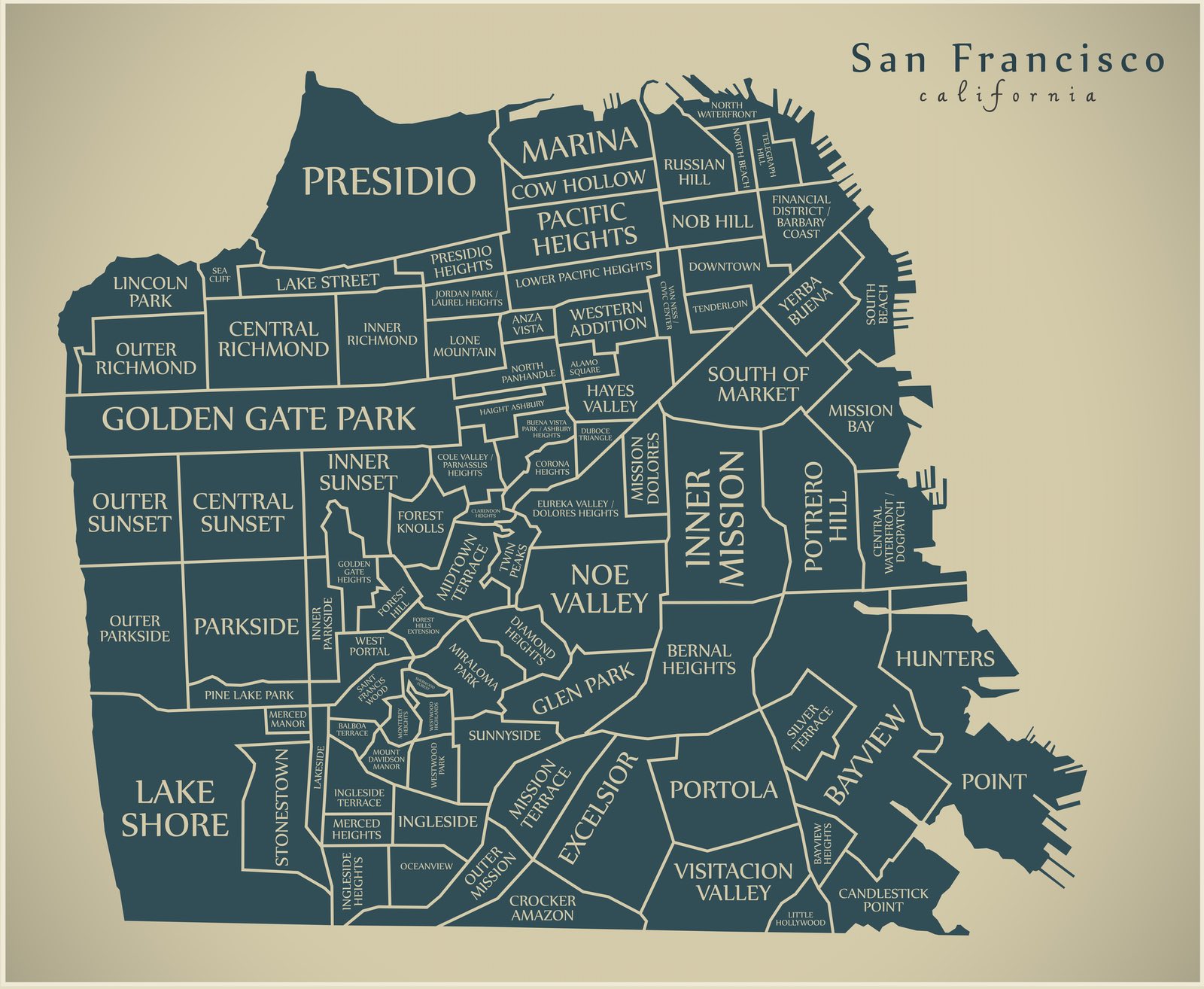
San Francisco's Stonestown Galleria has a proosal for adding 3,000 housing units, in the outer Sunset: https://www.sfchronicle.com/local/article/Stonestown-Galleri...
San Jose's Santana Row, completed in 2002, has over 1,200 residential units:
https://web.archive.org/web/20170107101031/https://westernit... (PDF)
Edit: which is to say that traditional malls are just terrible because mixed use would be much better. City center buildings, even strip mall buildings, get a bunch of uses. But the scale of traditional suburbans just forces a single use on it.
The surviving stores that used to be anchor candidates seem to be happy being on their own in a sea of dedicated parking.
Office + mall examples usually seem to be working fine, except there always are one entrance for each, distanced physically as well as in general aesthetics.
However the truth is literally the opposite.
Every city older than about 100 years is built with mixed use retail and housing.
I encourage you to do some googling
Wait, what?
Other than very old houses (which I've been told had the bathroom in a separate building), every residence I know of has the kitchen and the bathroom in the same building. Yes, they are separated by walls, in the same way housing and commerce in a single building would be separated by walls and floors.
Finally, there is the issue of investment. There are big pots of money for each use...investors who invest in retail, office, and residential. The pots of money for non-conventional projects are much much smaller. One reason is that with mixed use, there are three economic cycles that have to be timed. The retail, office, and housing sectors don't cycle in lock-step.
Your good ideas in real-estate only have legs if you have the money to make them happen. And the time. You're talking a several hundred million dollars and a decade optimistically down the happy path. More likely more since most mall land is already malls and you will have to acquire multiple parcels from multiple owners without them being the wiser and holding out for premium prices.
[1]: Retail uses produce so much income that it makes sense for them to sit vacant for many years instead of converting to some other use.
That's because no one implemented the original vision of the mall, at least in the US.
http://www.slate.com/blogs/the_eye/2015/05/07/victor_gruen_t...
"He imagined designing an environment full of greenery and shops: an indoor plaza that could be an island of connection in the middle of the sprawl, one that would get people out of their cars in order to walk and stroll within them. He saw his structure as an architectural panacea—it would remedy environmental, commercial, and sociological problems with the creation of a single building. Gruen presented his a solution for America: the shopping mall.
Gruen’s full vision for the mall was more than just shops. He imagined them as mixed-use facilities, with apartments, offices, medical centers, child care facilities, libraries, and (since it was the 1950s) bomb shelters. He wrote theoretical sketches of shopping malls long before he ever built one, but for a long time, none of his ideas came to fruition. Then in 1952, the owner of Dayton Company commissioned him to build the very first fully enclosed, climate-controlled shopping center. It would be in Edina, Minnesota."
Of course, if everything was enclosed instead of open air as envisioned, it would have been a pandemic nightmare
Not a North American city mind you, but a true old development city.
Human scale. People first, not cars. Everything you need to live within walking distance.
This is the vast majority of Europe.
Transportation is essential (and underrated). I am in the UK, we have a huge share of online retail but some large physical retailers are totally fine (Next is a well-known one)...if they pivoted their stores ten years ago to locations with strong traffic links. Local councils during the pandemic shut down parking, that basically finished small-time retail (not an exaggeration, most of these changes have been made permanent, single-unit operators won't ever be able to reopen because councils have shut down parking everywhere). And adding multi-use units (food, film, gyms, etc.) is also another strong play. But it is only easy to do this if your model doesn't revolve around a cornerstone tenant, and you have flexibility in your space. The locations doing well here have been able to flexibly add amenities (post-2008, these places were dead but slowly added restaurants as the economy recovered) and are composed of medium-sized units with no one cornerstone tenant.
The issue is largely structural. Most malls can't improve. They can't suddenly change the economics of having too much space. They can't change the price gap between warehouses and retail (or the debt backing these prices). The only solution is going to be BK and conversion into other forms of commercial property (largely warehouses but some offices/mixed-use). It will be other areas that thrive, not old areas being revived (look at what happened to inner cities when chain department stores took off and people moved to the suburbs...a lot of these places just died because the issue was structural).
Same. Given we now have depth sensors and 3D modelling capabilities in our phones, sounds like something a disruptive startup could solve.
It's always been parking for me.
Malls across Asia represent the height of social interaction.
Teenagers come and hang out. Social events like fashion shows, food fairs, car shows all are held in the clean comfort malls Public area. If you have a child that does any kind of singing dancing or musical instrument the recital is most likely to be held at the mall.
Meeting someone for dinner is easiest done at the mall restaurants - which includes some many chains but also unique sole proprietor restaurants.
I’ve yet to go to a popular mall where the parking lot is not absolutely packed. In this case you use the malls built-in car wash services while you take a stroll.
The pandemic has certainly taken a toll on Thailand’s malls as well, but it does not look their position in society will be uprooted by online shopping anytime soon.
Check out photos of the recently built Icon Siam to see the latest in mall monstrosities.
we build malls in middle of nowhere and they get packed...
He looks like he could be 12, but I think the quality of his analyses are always excellent.
So now malls are facing envelopement from discount stores and big box, plus the ever growing threat of Amazon and other e-commerce.
The malls that get investment are pivoting to supermarket anchors and entertainment.
Then as things shifted back to linear depreciation, it made building/running malls much less attractive, and we're seeing that play out over the 20-30 year capital lifecycle you mention.
[1] https://en.wikipedia.org/wiki/Dead_mall#Changes_in_the_retai...
So it’s not cyberpunk when people work for dying big box stores, but it is when OP works in a WeWork located in the same mall?
On the whole it might be slightly trending to the latter.
Yes and no.
I'm an avid cyclist, so follow local traffic and infrastructure plans and related political/governmental issues. I live in a fairly dense suburb about 40 minutes outside DC (near Dulles Airport).
From what I can see, there is a subset of people who love owning a yard and having some of their own space for kids or gardening or whatever. And they like having a garage to store all their crap (and occasionally a car).
But, within that group, there is often a sort of despair (probably too strong a word) about the rotting infrastructure that surrounds them. Potholed roads, bridges literally crumbling, too much traffic, etc. This group pushes hard for more road construction, more sprawl, etc despite studies that mostly show more infrastructure doesn't help (demand always catches up). And they don't want to fund it via taxes.
There is another group that lives in the suburbs by necessity. Jobs are out here, costs are manageable, etc. They'd move to a city, if it were easier/affordable. I fall into this group. I actually sold my single-family home a few years ago and bought a smaller townhouse in a denser neighborhood so I could walk more places. Cost was the same and I enjoy the downsized home/yard, ability to walk/cycle for coffee or beer, and walk to work (thought that last bit was dumb luck on an office move).
And the vast majority are somewhere in between. Mostly ambivalent. Maybe some notion of the "American Dream" (big colonial home, white picket fence, etc), but content somewhere in the middle.
tl;dr - Americans like the cost and convenience of the suburbs, but much of that comes from indefinitely deferred infrastructure investment (though a massive chunk of suburban residents don't actually realize just how badly that spending is being deferred).
I don't think I've ever been to a city where they decide they don't need cars on their major streets. All of our cities presuppose that enough people will need to drive through it, and everything is much more spaced out because of it.
I'm sure Europe is similar.
Like here's one of Harajuku: https://www.youtube.com/watch?v=_VXKHlhJzd0
https://californiatravelmedia.com/wp-content/uploads/2019/12...
South-west side of SF, about as far from downtown as you can get.
Its a stones throw from Daly City so indeed about as far as you can get from downtown heheh.
that was built out of the city middle of no where because there was not enough water and land to do it in the city, and yet still full and now Costco and others opened next to it, plus a new mall built across it. there are like 10+ malls withing 20km
something is different maybe the weather leads more people to liking to go to a warm place in the winter? but then again many parts of the world malls are doing well.
1. Usually already located at a crossroads; you want a mall at a busy junction to attract custom
2. Usually already a local transit hub, since they tend to be a major concentration of jobs
3. Are separated from any pesky residential neighbors by major roads and/or large swathes for parking
4. Have a lot of land in the form of said large swathes of parking
These characteristics actually make them ideal for densification into a more walkable oasis; they already have some mixed uses, and the parking lots are developable without much fuss from neighbors. And you can do the whole thing in phases.
A bunch of malls in the Seattle area are getting redeveloped in this manner.
#3 is a negative. The separation from housing makes them LESS suitable for office space.
Put the two together, and even if the mall is redeveloped into nice office space with room to walk around, people outside the mall have to drive to do so. For people on the other side of those major arteries, they literally have to drive 1-2 blocks to walk around the mall (or former mall).
None of which is to imply we shouldn't redevelop malls into mixed use "urban" hubs. But, we shouldn't assume that redeveloping the mall in isolation will succeed. The surrounding area might need significant changes to fully utilize the former mall zone.
Neighbors in single family suburban homes are more likely to be NIMBYs and block development, so insulation from them is a feature, not a bug.
Looking at it further, it does go both ways as well - for example "Gurnee Mills" is in a mall.
There also seem to be a surprising number of Sbarros outside of the U.S though they are all listed first in the list.
It was my first taste of European pizza. It had no tomato sauce inside it. I went to the staff to signal that I wanted sauce in the pizza and they had no clue what I was saying.
That day I came to the shocking realization that that's how the rest of the world ate pizza.
Thanks for looking that up!
I spent a large chunk of my formative years in a desert climate in the southwest. The sort of place where you would try to stay in air-conditioned spaces as often as possible during the summer. The regional mall was a huge air-conditioned enclosure where people would go just to sit around for hours on end with the occasional stroll through a department store.
In the 30 years since it first opened 2 of the 5 "anchor stores" closed. Other than that it's just been plugging along. One of the reviews I recently read for it was, "A great place to go when you're in a desert and need a mall."
The reality is the cold weather doesn't really bother people who are use to it. I'm happy to spend time outside jumping store to store because I'll be dressed appropriately.
Across the border in Vermont, some of the strip malls have a glass-enclosed front layer for similar thermal protection.
They left the major anchor stores (Target, Von Maur, Hobby Lobby), turned most of the center of the mall into parking lots, and put up a few multi-store strips around it, and it went from empty to having thriving businesses that have mostly all remained the past 16 years.
This guy has more details and took some pictures of the mall just before they closed it:
Provide the right financial incentives and a developer should be able to do it on terms favorable to the city (vs getting little/no revenue from a derelict mall complex).
Or RoboCop. You choose.
At $400/square foot to build a mall, and $XY/square foot/year to maintain it, the only thing that makes financial sense to grow in one is black market marijuana.
Assuming that everyone has a comfortable and spacious home with a desk&chair area is, well, a bad assumption.
A bunch of people I know are now working significantly more time from a couch, in a clearly non-ergonomic position. We will see and hear about the real damage 5 years from now.
I couldn't agree more, the transition for me was trivial - I'm a developer who plays games, I already had a nice chair, two 27" 4K displays and a fast desktop so for me my hardware/comfort improved - for my partner work issued her a just about passable laptop and..well that was it.
With the lack of space I used a spare 27" monitor I had putting it on the boys desk with a decent external mouse/keyboard and we bought him a gaming chair - that way my partner can use his room as an office while he's at school/his fathers but yeah it's not be great for her.
We are moving next year and my only criteria for the house is at has to have either a large brick built garage or a concrete garage and space for an office pod in the garden, working from home around a near-teenager was challenging (and frankly that's just gonna get worse) and long term not something I want - I need quiet solitude to work most comfortably.
Our employers did at provide additional monitors (both of us already had suitable laptops), which was nice and better than many received.
My brother works from home now and he's either in his living room or kitchen and my sister has just moved house and has converted one of the bedrooms to an office but prior to that worked from her dining room.
I've worked from home for a few years and have an office (spare bedroom we didn't use) so it's no big deal for me.
I'd love to see a large-scale survey around home office working.
This is an interesting change happening in many places now and I wonder how it will impact the higher end of the market (and expectations) in a long term. Some people in larger houses recently went from 4 bedrooms with lots of space to 1 bedroom, 1 nursery, 2 offices. (yes, nice problem to have in practice, but still interesting)
It's not for everyone! Even for me, if there was a mall in my area, which had coworking, an attached hackerspace and, let's say, a gym? I would pick up a minimal "grab a desk" coworking package.
Why not? Sometimes being around people is nice. Sometimes there's lawn work or construction happening near my house. I could make a thermos of coffee and a protein shake first thing in the morning, head to coworking, get some stuff done, hit the gym, have my choice of food court meals, and head home for a shower and a quiet afternoon at home. Or call it a soft half-day and spend the afternoon working on something with circuit boards, or just shooting the breeze with the hackers.
Gosh this is sounding really nice! Anyone finds a setup like this, let me know!
Even if suboptimal, revitalizing the mall as a co-working space sounds like a less-bad solution to me. Still open to practical alternatives though. ;)
If they really cant find the money sell it to developers to make condos or single family homes.
I agree there are only so many stores a mall can support. At that point the economically sound strategy is to stop building. It's not to layer on incidental complexity that provides lower returns at increased risks. It will only create problems syndicating investors for the project.
[1] Retail was still recovering from over-supply from the S&L pre-crisis and under-demand from the dot.com crash. At the low point of the cycle it could have been perfectly sensible to start planning a retail project on the prediction that retail could only come back and in the hope of timing the up-cycle correctly. But you would not have been building a mall. You would have been planning a power center.
Money people need things as simple as possible to package risk.
A family friend opened a bakery. Finding a storefront was an insane process, in some cases it’s apparent that the landlord doesn’t want to rent out the space, it’s been vacant for 4 years and rent is... aspirational.
Any real-estate pro forma will include a vacancy rate.
If a person owns ten storefronts on a block, discounting one lease sets a lower rate for the nine other leases.
If a business can't afford the lease, that is a problem with its cashflow and/or access to capital relative to its aspirations. Often the landlord can simply take depreciation and meet its IRR targets. Particularly if the landlord is unleveraged. The building and land aren't going anywhere. That's the nature of real property as an asset class.
I assume you're moving out of the city and into the suburbs or similar?
I wonder if the last year of WFH will actually make suburban sprawl worse in the short- to medium-term? Lots of people moving out of city flats into suburban homes for just the reasons you mention. I can't blame them, but it's probably not sustainable either. [and easy for me to say, as I already own a suburban home]
I know a bunch of people who were in urban apartments who have moved to larger places a number of hours out. There's a huge spike in real estate prices outside of cities now.
I'm in the UK but in the north earning a southern developers salary so that gives us a lot of options.
"long term" they won't be a near-teenager, or even teenager. ;). I do understand the quiet solitude for work issue though.
These people look at the numbers produced by their model and send their money where indicated. It's why Walgreens and CVS will build on two corners of the same intersection. Both have the same traffic counts and same catchment demographics.
Neither interest nor money are a given and the amount of either necessary varies wildly by jurisdiction. Even quite small obstacles can change outcomes a lot. Zoning has quite real effects.
(The low-key method for normal people is to get “variances” - which are not as impossible to obtain as you may think if you work slowly and quietly on them.)
Far less food waste too, I’d rarely buy more than a bag’s worth of food at a time and would just go shop 3+ times per week.
I wanted to rip my own eyes out.