Life Improvements Since the 1990s(gwern.net) |
Life Improvements Since the 1990s(gwern.net) |
I routinely flew in the 80's and 90's: shorter lines, more cabin space, and food every flight (and fewer yokels airing their stinky bare feet). I'd go back to that in a heartbeat.
These times of algorithmic flight loading and canceling/combining 'underbooked' flights really stink.
I once ended up flying a Seattle - Boston redeye on a 747 with a total three other passengers, and the flight crew said that they (Braniff Air, bought by Northwest, etc.) were still making money on the flight because the hold was full of US Mail.
That was a quality experience we'll likely never see again.
(Then again, I also once flew London to NYC one row in front of the smoking section - that's also a quality experience that I won't miss never seeing again)
And the people with more income are feeling that their comfort has to suffer.
So for those with more income, maybe it makes sense to pay for first class or hire a private charter plane?
I'm quite fond of Amtrak's Adirondack. It is a lovely way to visit relatives during Thanksgiving and see the foliage. Cheaper than planes and less stressful.
Go watch some early 90s movies and look at the kinds of apartments and houses normal "not material to the plot" people live in and how they are furnished and compare to today.
Am I the only one hat thinks without Facebook and other social media, our vaccination and mask wearing rates would likely be much higher?
Unlike other things, if you didn't have them, you wouldn't really think twice about them in the first place, except as very minor inconveniences...
The web kicked off in the late 90's, picked up the 2000's but not real fast, and now is really flying and one assumes it will continue to accelerate.
Power tools are amazing. And that's the internet pushing them. I can see reviews with each new advancement anywhere in the world. They can see R&D around the world. Each company has to keep up and so do the counterfeiters. I'll order from overseas if they are not available local. Power tools augment humans, you can see people's home improvements getting more complex which is also pushed by the internet. Everything is in hyper mode.
I've wondered about this. No vaccines presumably. But, also, the sort of work from home, online shopping, remote school, etc. that many people/companies were able to more or less adapt to basically wouldn't have been possible in 1990--and, arguably, much before 2000 if that.
It's true that there was less air travel, including international travel, in 1990 than in 2019 but I'd need to be convinced this would be an important factor.
Comparisons to 1918 are hard, if only because of WWI and associated secrecy, but from what I can tell having read a bit, it doesn't appear as if there were widespread or long-lived closures of schools and other places. I assume, we would have acted likewise in 1990; i.e. we wouldn't have done a lot because there wasn't a lot we could do.
ADDED: This was not intended as a political comment. Merely speculation about how the world may have reacted differently in a world effectively without internet or (likely) a rapidly-developed vaccine.
Heck, decade earliers, George Washington inoculated his troops against smallpox against the wishes of the continental congress.
And depending upon how you count, it took decades to develop a polio vaccine.
I would not bet on a COVID vaccine being developed and tested in about a year in 1990.
Also, accuracy and precision on smaller/cheaper tools. I have a "jobsite table saw", which is a thoroughly budget one by comparison to a big ol' cabinet saw. And being a smaller saw has a lot of problems, but one that stopped being a problem is a rack-and-pinion fence even on fairly cheap (~$300) table saws that provides really, really solid accuracy.
Power Tool KickBack Control (and just safety, were dB warnings big in the 90's? Ergonomic's are improving)
Drill bit/blades/disk composition/tech.
The fact I can (almost) throw out tools that you'd never have seen in a garage in the 90's.
And if we are not children and can talk about such things, they can look good. (Although the 90's tools are now retro and also have an aesthetic)
Track down a power tools catalogue from the 90's
Like computers, every thing was invented before the 80's. But now it's usable and accessible.
And yes, the 80% is probably batteries and cost. But there's a lot in the 20% too.
Going off topic but putting a clear window on stick vacuum cleaners literally gamified vacuuming. What that means for asthma for instance we will see over the years.
Battery adapter's (ie. Milwaukee to Makita) went from 3d printed on ebay to injected moulded over a short period.
The female market has been increasing since the 90/00's and is continuing to increase.
Uhm,
(1) I measured up to 1960. Since then it's a 61 year period, not a 25 year one.
(2) That period having "two world war" versus our "stability" makes my point even more. One would expect a period without 2 world wars bothering it, and with stability to enjoy, to produce more.
(3) "and the development of modern physics and engineering" that's my point exactly. That we enjoyed the low hanging fruit of that development and now we've stagnated and get much less impressive feats.
1960 - 1880 = 80.
> One would expect a period without 2 world wars bothering it, and with stability to enjoy, to produce more.
Only someone ignorant of history. WW2 gave a huge incentive and a ton of resources to develop technology.
Europe had ARM, a whole slew of microcomputer companies (and still the Raspberry Pi foundation today), Nokia, Linux, MySQL, etc. - all largely sold off or destroyed. Such a loss of potential.
I have issue with this one in part:
> Not Watching crummy VHS tapes, period
The rewind button actually worked 100% of the time.
I also have an issue with the like for USB. Yes, it’s better than most 90’s tech, but USB-C in its various guises/disguises and it’s horrible relationship with Thunderbolt is a travesty. The cables and ports can’t reliably be distinguished and various things just won’t work, or become unreliable. It’s just so unhelpful to have so many identical specs in in form factor.
One caveat is I only used macbooks for years. I was shocked when I built a Ryzen desktop and one usb-c port was standard, without thunderbolt support. So I had to begrudgingly use a to c cables there.
there are no material life improvements - only more efficient dopamine triggers. but that's not an improvement because before the 90s - guess what - they had their own triggers.
in that spirit you could add how access to more diverse pornography brought happiness to so many lonely men considering how especially a hundred years ago they were so starved they would get aroused at the sight of women's knees. poor bastards.
guess what, your mega-tittie-porn isn't really an improvement over some picture where a woman lifts her skirt you can see her ankles. it's just a fucking going round in circles what you all confuse with "improvement".
life for many people fucking sucks and most of those "improvements" only come at the expense of removing people further from any kind of meaningful spiritual fullfilment.
This goes even more so if we speak of the spectrum of LGBT identities, which in 1991 was in the midst of losing all continuity with the past because so many died from AIDS; many folks then would stay closeted and quiet because coming out was just too threatening. Casual homophobia was everywhere, and the "gay neighborhoods" of larger cities were somewhat exceptional even within that city. Now it's hardly unusual to be out, though generational acceptance remains rocky.
I don't know about you, but having cheap access to climate control and refrigeration is a pretty big deal. Even animals appreciate a warm place to sleep and fresh food.
Your reasoning seems ascetic. If a fellow says he's happier with the mega-titties than the ankles, who are you to tell him otherwise? Every human experience can be categorized into a dopamine or cortisol trigger. Who vested the authority in you to decide which of them constitute "meaningful spiritual fullfilment" and which do not?
>The percentage of the global population living in absolute poverty fell from over 80% in 1800 to under 20% by 2015.
This is astonishing.
In the time frame he's focusing on, from the 90s to now, the decrease in absolute poverty and substantial increases in well-being globally are facts that subsume any single technology or widget or innovation.
24% in 1990 down to around 7% today. More people are living better lives than at any point before in history, and this should be celebrated, but hardly seems to be noticed.
The things he points out, however, are crucial pieces of why things have gotten better. We're able to instantly connect to a global pool of information, alerting each other to the swarm of problems facing the world, and we're able to take action.
Charitable donations, political activism, decentralized media, ubiquitous internet access, and a thousand other small things have enabled and inspired people to use powerful networks of people and computers and resources to effectively target and fix huge problems facing billions of people.
Sure, we have real challenges in the misbehavior of big tech companies and the politics of the panopticon, but maybe we can be hopeful that history has a trend toward a more liberal, purposeful, enabling life for all humans that exceeds the mere struggle for survival.
I think of this article as a reminder to appreciate things that are so incredibly important, even if they tend to go unnoticed day to day. Stop and smell the victory of technology over struggle and disease and discomfort and starvation.
The smoking ban happened in England in 2007, so I didn't have to put up with smoking for that long. But I can definitely remember the time when going out meant your clothes and hair stunk of smoke. It was disgusting. In Germany it is still legal for smaller establishments to have smoking, and smoking is still very popular in Germany, unlike the UK and US. A few of us were looking for a place to have some drinks one night and found it really difficult because going into a smoking place was out of the question.
Growing up in the UK we always had the cheapest food. In the 90s supermarkets started having value brands and we had a lot of "Tesco Value" stuff. Today you just cannot find food at such low quality. If you buy the cheapest today, you are getting what would have been a premium product back then. The bread was like tough foam, the crisps like burnt potato skins, the beans were mostly watery sauce.
"My grandmother casually horrified us a few years ago by going through the list of her dead siblings: 2 died on the farm of ‘summer diarrhea’ (bovine tuberculosis from unpasteurized milk) as infants, an unremarkable fate in the area, and then 3 died in their teens–20s after moving to the city to work in textile factories. The rest died later. For comparison, she lost 1 child out of 5 (stillbirth), and 0% of her >12 grandchildren/great-grandchildren."
Several years ago an older friend of mine recounted to me that his father was one of three siblings to survive the influenza pandemic of 1918-1920, six of his brothers and sisters died from it.
https://www.statista.com/statistics/562541/birth-rate-by-pov...
Where do I find this? I tried this spring and summer but couldn't find guacamole that doesn't spoil within a day or two, especially after being opened, which is too soon to be practical.
As far as prices go, seems like Walmart has them at $4.89 for 6 mini cups (12oz total or 340g) or a large single package of 15oz/425g for $4.98. An average avocado weighs 136 grams without the pit or skin according to the USDA. Let's say 1/5th of the total weight of avocado flesh you buy is spoiled in some way (too stringy, too hard, spoiled etc.) At $1.25 per avocado and 20% spoilage, the large single package of Wholly Guacamole and the avocado are nearly the same price. Various sources claim that the average US avocado price is around $2 but when I buy them myself I usually get them around $1; I suppose if you're paying more it's an even better value.
So, looks like a good value in addition to saving on spoilage. My only worry would be the plastic waste, but I can't seem to find what the containers are made out of and if those are recyclable.
Following the link, the "clutter free" desktop from 2014 hides all affordances and labels, and dumps everything into a laptop and smartphone screen. The "clutter" is now digital, more complex, and arguably more intrusive in terms of continuous interruptions that follow you around everywhere.
I think the lines of text are too wide, the font is too large and thick, the line height is too small, and paragraphs really need to be padded vertically, the indentation instead makes it seem like a high school essay and made me want to close the tab immediately.
Housing: Now less affordable than ever. It takes more hours worked to afford any kind of shelter than ever in the last 50 years. According to an interview I once watched: in the 60s, a painter could afford a single family house and six kids and the wife didn't even need to work. today, two painters working together can barely afford shelter, even with no kids.
Cars: MPG has not improved. Look at a corolla from the 70s vs today, it's about the same. Comfort is roughly comporable, at least since the invention of AC. It now costs more to buy a car today than in the 70s, in terms of average number of hours worked in order to afford a car.
Education has seen the greatest amount of inflation. Whereas a high school diploma could give you a great enough salary to afford a house in the 60s. Now, not even a bachelors or masters is enough to afford basic shelter for many people living in the first world.
Yes, we have a gazillion more computers, iphones, smart watches and toys to play with. We can fill our entire house with plastic now. what goood is that if you don't have a house to stay in? where will you plug in all those electronics and your massive 70" tv, when you're out on the street?
You'll pry my gas range from my cold, dead hands
> ...
> Indefinite: not worrying about running out of AOL hours, liberated from the tyranny of time metering and (mostly) bandwidth metering
Except that some ISPs do have caps and going over results in throttling or extra charges. I thought those days were behind us, but no. It is better than it used to be, but it's still a thing.
My eyes used to itch when I watched a CRT for more than a couple of hours, if better technologies didn't become available I would have probably not chosen a career in IT.
It also threatens to wipe away many of those, especially if societies or ecosystems begin to collapse or conflicts increase.
This actually sounds really fun and makes me feel nostalgic for the 90s
I'd be so happy when I got my hands on something that VIZ reprinted, like Baoh, Grey, or Outlanders. Then, I'd know what was going on.
EZ Pass type devices has made long distance traveling so much easier and more efficient. Anyone travel the Mass Pike in the 90s? It would be stopped for a quarter mile for the privilege to pay 75 cents in a line.
> All-You-Can-Eat Broadband
... in some places, with some providers. My local broadband monopoly imposes metered data usage, with caps and overage charges. You have to pay $30 to have unmetered access.
When I was a kid in the 90's when I think about life back then it sucked, compared to nowadays.
I think we could list a lot more than what is in the article.
> Cars: MPG has not improved. Look at a corolla from the 70s vs today, it's about the same.
This is not true, MPG has meaningfully improved. From the EPA, "[sedan/wagon, car SUV, truck SUV, pickup truck, and minivan/van] are at or near record high fuel economy and record low CO2 emissions in model year 2019" [1]
New Vehicle estimated real-world fuel economy increased from ~14MPG in 1975 to 24.9MPG in 2019[1]
>It now costs more to buy a car today than in the 70s
The price of cars has risen below inflation:
The annual inflation average 1970-2021 is 3.86% [2] From 1970 to 2019, cars had an annual inflation average of 2.04%. [3]
Finally, a car today will last longer than they did in 1970. The typical car in 1970 would last until 100K miles. Today the typical car lasts more like 200K miles. [4]
In summary, cars cost less, last longer, and are cheaper than they were in 1970.
[1] https://www.epa.gov/automotive-trends/highlights-automotive-... [2] https://www.inflationtool.com/us-dollar/1970-to-present-valu... [3] https://www.in2013dollars.com/New-cars/price-inflation/1970-... [4] https://www.nytimes.com/2012/03/18/automobiles/as-cars-are-k...
Children living in homes with gas stoves are 40% more likely to develop asthma for example, according to some studies. Other studies have it closer to 10%.
Anyway, it's clear that indoor gas combustion isn't advisable from a health perspective. Not to mention the climate, burning methane for energy should be phased out, full stop.
https://www.vox.com/energy-and-environment/2020/5/7/21247602...
https://qz.com/1941254/experts-are-sounding-the-alarm-about-...
As for asthma, current U.S. federal agency involvement on the subject does not identify a connection between cooking with natural gas stoves and the risk of asthma development or direct association with asthma attacks.
And no asthma has found or correlated in Europe.
With pollution around industry, cars and wastes, yes.
Gas stoves? that sounds tacky as worst.
I have recently swapped gas for induction and it dropped my meal prep time by 20~30% because I'm not standing around waiting for pans to get hot anymore.
If I was big into wok cooking, I'd probably keep the gas range. 99% of the time I just want to get a pan to 500F or boil a pot of water ASAP.
Another nice situation was during the 2003 blackout my father was able to crank a turn table to play some records while lighting the stove with a match to cook dinner
Electric or induction will never win me over unless I somehow end up in a house with a Powerwall.
I think it's nice to have an induction burner but I prefer gas for many reasons. One is the visual feedback from the flame. Another is that a flame is a 3D surface to cook on so I can tilt the pan to get certain sides hot when needed.
Induction is good at boiling water though.
Whenever I cook on gas, I miss the fast-heating of induction for things like pasta or potatoes.
I also don't understand why all induction ranges have to be "high-tech" touchscreen crap. I'd love an induction stove with big, substantial, tactile knobs. Cooking on a Wolf range is such a pleasure for that experience alone.
In the UK, every kitchen has a fast-boil kettle (and has done for decades now) and those still boil water faster than an induction hob.
Yes, so? You said "you're comparing an 80 year period (...) with a 25 year period of stability".
But I just compared 80 years with 60 years (and those 80 years also had the handicap of two world wars, and much less available resources).
Does it matter? Do you see anything of the scale of 1880-1960's inventions and discoveries appearing in the next 20 years?
Or do you think if we keep it to 60-60, say 1900-1960 and 1960-2020 it changes anything?
>Only someone ignorant of history. WW2 gave a huge incentive and a ton of resources to develop technology.
Only someone ignorant of history would also not know that WW1 and WW2 killed thousands of the brightest minds and millions of young people at their prime, disturbed research in tons of areas, diminished resources in affected countries (all of Europe for one for almost 2 decades), and caused the loss of trillions of resources, having a devastating effect which makes weapons and military systems research pale in comparison.
You should try induction sometime. Convective electric is very slow by comparison and I have struggled with it myself for many years. My current cooktop can take a 10" iron skillet from dead cold to smoking hot in under 30 seconds using the maximum setting.
Only caveat with induction is the distance to element & cookware material constraints, both of which can usually be overcome with little difficulty.
Here's a recent study from Australia for example: https://espace.library.uq.edu.au/view/UQ:727186
I have a cheap 1500w portable induction cooktop I used for this exact purpose. On the lowest setting, it only pulls ~300W AC, so you can run it on the smallest of generators or portable power stations without any problems.
I have a 12,500W generator as well that could easily run my main induction range, but I reserved loading on this for making sure the furnace blower was moving. Didn't want to play games with fuel supply at the time.
Cast iron is the opposite. They take a long time to heat-up and a long time to cool down. Steel is somewhere in between.
I've never heard a chef say that getting a pan hot and staying hot quickly is their number 1 optimization. Except for boiling water, which induction is great for.
But every home cook has different things they like I guess.
I am certainly no chef. Just an engineer trying to optimize my time as much as possible, especially in areas where I do not really enjoy spending it.
Reduction of delicate sauces, et. al. is not something I am strongly concerned with. Fast meal prep is the name of the game for me. I do still have the ability to use gas if I really wanted to, I just like the speed of induction.
Do you prefer the cleanup required for a gas range as well? My induction cooktop can be perfectly cleaned within 10 seconds and I don't have to wait for it to cool down either.
When you look at all of this through the lens of time-value, I think it gets much more complex.
I’m a hobby home chef so I guess my optimizations are different. I insist on an offset smoker when a pellet smoker would use much less of my time, for example.
Awesome you cook though especially when it’s not your preferred way to spend time! It’s so easy to fall into the pattern of just getting delicious restaurant food all the time but cooking for yourself and family builds something.
Yep there you go. If it's something you enjoy, you almost want to slow things down a bit.
> It’s so easy to fall into the pattern of just getting delicious restaurant food all the time
Absolutely. Virtually all of my friends & family are 100% addicted to other people cooking & bringing them food now.
I try to eat out rarely, especially any sort of cheap fast food. The quality & nutrition you get out of a $5 burger these days is absolutely appalling.
Look at the bottle of Elmers glue on the table. Today the glue probably works better (barring regulation that forces compromises to product efficacy) and comes in a bottle that uses half as much plastic. Something like a bottle revision that would have formerly required expensive salaried employees to come up with multiple options, send them to the supplier, supplier has to respond to each with details and quotes, etc, can now be accomplished in a fraction of the man hours thanks to email and CAD being ubiquitous in the entire supply chain from marketing, to engineering, to the vendor's contractor who will actually design the tooling. Sign off might take days instead of weeks. This sort of efficiency improvement allows more engineering, design work, or other optimization to be done to every good and service in our economy allowing it to penetrate into even the most thin margin use cases. From farming to high finance products and services are substantially more influenced and optimized by specialist professionals than they were in 1990. Increase efficiency like this throughout the national and global economy is how lawnmowers and A/C units can be sold on sale for $100 and still make a profit. (yes I know that example isn't perfect but you get the point).
https://blog.daneurope.org/en_US/blog/are-full-face-snorkeli...
If each local region needs its own widget factory, then to become a top widgetsmith you only have to compete with the local widgetsmith talent pool. Just as there can be many high school star athletes across the world, there can be many top widgetsmiths within their local widget factories across the world, even if each is likely mediocre relative to the global pool of widgetsmiths.
Now the widget market has globalized. To become a top widgetsmith, you now need to be the best in the world. There is no room for locally optimal widgetsmiths when the market can globally optimize, just as there’s no room for most star high school athletes at the NBA.
The upside is that the entire world gets much better widgets. The downside is that you can only make a good living as a widgetsmith if you’re the absolute best in the world. Local markets lead to redundancy, which is globally inefficient but locally optimal.
This is extra pronounced for singers, actors etc., but not as much for people such as software engineers. A mediocre programmer that implements functionality that you need is much more valuable for you than a star programmer immersed in his UltraFastXMLParserForHaskell library and does not take side jobs.
Yes, though for most jobs there is far more demand than can be met by the best in the world. When someone needs a lawyer or software developer, they are very unlikely to hire the best in the world.
It definitely applies to software. It's why trades are a much better career option, local will never not matter in that case. The best 'star high school' welders and electricians are always going to be desirable, as no one is flying in the best in the world for every little job.
Most of us, except the best in the world among us, messed up going into software. The script completely flipped on this since I was a child in the 80s and was dreaming of becoming a programmer as I am now.
That is why society is (has to) move into post-employment era. It's no longer required or even beneficial for everyone to be employed and/or employed to the extreme degree they are now (~50% of waking hours).
You can find examples of this, but overall, I dispute the generalization.
I think quality/price improvements have been monumental in some areas, stagnant in others. Computer related products have gone crazy. It's not more for less though, it's "much more for a little more." The market grew a lot and a produces a hell of a lot more. Even that isn't the norm though. More for less, even less for less, are uncommon.
Farming and manufacturing.... None of the capitalisation, gene patents and such of recent generations is anything like basic green revolution tech, in terms of productivity growth. Farming is different. It uses less labour, more capital, but it's not producing much more efficiently. The price of farm produce isn't falling, quality is not rising. Same for most manufacturing, especially basic manufacturing. Most of the last generations' gains were made by employing cheaper employees in cheaper places, not reinventing manufacturing techniques. So, low end, high volume manufactured goods got cheaper, but a car still costs what it costs. Good quality appliances generally do too.
The quality of housing has gone up, but prices are often very high.
Education... we have more and arguably better, but more expensive.
Medicine... same. More and better, but more expensive.
There's a pattern here that's more complex and interesting than the average.
There are many thousands of people on this forum that have gotten a free education and in turn, one of the best careers in history from that free education that would never have been possible until recently.
I'm seeing more and more people (that aren't designers and engineers) are forgoing classical education and making a great living for themselves just by utilizing the freely available information on the internet.
At least in the embedded space, this is definitely not true. The norm is approaching more and more features for less.
I thought we liked Raspberry Pis on HN.
Regulation might do that and there is much more going on:
Regulation also protects health and safety of customers and workers (especially important with chemical products) and prevents fraud, and it corrects market distortions that damage businesses, including instituting changes that the nature of the market prevents any one business from implementing, and opening up competition.
Other things limit technological innovation, including incumbents with market power who profit more from eliminating competition than from improving their products.
Definitely a big deal, but mostly invisible on the demand side. You're talking about improvements to the supply process; the article is about what consumers experience.
Can you really not think of any benefits of regulation to correct for pervasive market failures?
"Intellectual Property Maximalism rollback: copyright terms have not and probably will not be indefinitely extended again to eternity to protect Mickey Mouse, and in 2019, for the first time since 1998, works entered the public domain"
I think the easy indicator may be the wrong one here. Defined more broadly, the public domain is not being enriched. For example, the web was a lot smaller in 1999, but it was a much more public domain. Today's web and post web internet is more centralised, controlled and therefore private property. Google could crawl pages, links, forums, because they were public, and use that access to create a search engine. Content, connections and signal are, today, proprietary. You can't order the world's information if that information is facebook's, only facebook can.
Or patents, more stuff of the last generation is patented than the previous'. Does that mean we invented more or we patented more? What happens to stuff that doesn't get patented? It's public.
Old copyright expiry deadlines might be a symbolic lead indicator, but they're determining the location of a fence post in county scale land dispute. A tiny, legible, part of the whole. In real terms, Disney's copyright portfolio is worth more, not less.
Because almost all the industrial production that pollutes water and air moved to third-world countries, where people suffer from pollution. Same for thrash that is taken to China, India, Indonesia for "recycling", but is actually burned in fires or thrown into the ocean. I wouldn't consider it an improvement due to advances in technology.
Rather, pollution is largely something that occurs in the production process in locations where desperation for production is so high that they are not willing to put in any personal effort or social policies to curtail it at the expense of production.
However, once you become richer, air quality and so on moves higher in our collective list of priorities. Production can occur without pollution. It is just more expensive, and requires care.
Some of the "upsides" (e.g. improvements in patent regime) just aren't there. Some aren't as wonderful as they are described.
I'm in my mid-sixties; I'm very much a candidate for the "things were better in the old days" brigade.
But I do think many (most?) things have improved. Housing is better; healthcare is immeasurably better (unless you can't afford it); and mobile telephony has improved the lives of at least a billion people worldwide.
Because I'm not miserable old git, I'm not going to list downsides.
[Edit] OK, I'll list one: permanent war.
What should we be measuring when we measure improvement?
An incredible number of people pick ‘91. Some people even ask to go back to the seventies.
This article explains why I would much rather be young now rather than before.
That said, given current inflationary trends, it will be interesting to see if this still holds up in a decade or two.
[0] https://www.aei.org/wp-content/uploads/2021/01/cpi2020.png?x...
Quality of life depends far more on the integrity of a person's human relationships than these trivial material gains.
I can remain bright eyed through all kinds of horribleness if I believe my suffering is meaningful and valued.
I used to be very excited about technology and I really believed it could fundamentally improve humanity in some way(s).
Now I'm excited about prosocial things, interconnection, anything which allows humans as a social animal to truly connect, find meaning, and uplift each other. Everything else is likely a distraction.
This is the hard part though. Technology lets you make incremental progress, occasional breakthroughs, and rarely has any major setbacks that aren't purely monetary. Humans having healthy social lives at the micro and macro scale is something we arguably understand and can affect much less than technology at the moment.
> Remember when physically detaching your car radio to avoid leaving it in the car was considered a 100% normal thing to do?
Why is it rarer, I wonder? I do recall having a detachable faceplate on my car radio. I sold that car in ~2010 or so but stopped bothering with the detaching long before then.
> All Day: because you won’t be yelled at for tying up the (only) phone line
... missing phone calls because I was occupying the phone line. My university claimed to have been "wired" but it was always "going to be enabled 'next year'".
There are various ani-theft technologies that can kick in if an infotainment system is removed. Electronics are also just cheaper in general so there's less value in stealing them.
All crime is down significantly, except murder and gun crime in the last year or two.
I imagine the value of a stolen car radio has plummeted since the combo of smartphone + CarPlay/android auto/3.5mm aux jack/Bluetooth is ubiquitous in any car made in the past 10 to 15 years.
I think some Eastern European gang perfected a way to smash windows and grab the valuable parts because at some point arrests were made and after that I haven't heard about it.
I found that induction is a VERY VERY uneven heating source, in fact it's the most uneven heating source. When using it with traditional cooking methods and implements that are also usually quite uneven (like cast iron) it becomes a complete travesty. Additionally, typical cooking techniques that are intended to address unevenness of heat like pan flipping doesn't work with an induction cooktop because when you lift the pan it shuts off.
I ended up getting a dual fuel gas range (gas cooktop, electric oven with convection) and I love it. Gas is just the best way to cook, period. I wish it weren't so, because it's not energy efficient and it can be a safety hazard, but it just straight out works better than anything else.
- Mapping the human genome has led to many applications of genetic medicine.
- Polio was eradicated in India.
- Cancer death rates declined 27% since 1999...
Click & go stroller & carseat systems are magical. Used to be that if your baby fell asleep in the car, you'd have to wake them up to undo the 5-point harness, transfer them to stroller, buckle another 5-point harness, undo it when you get to your destination, and then deal with the screaming baby. Now the carseat base stays in the car, you unclick the carseat, pop the whole thing into the stroller, get to your night out, pop the carseat on an inverted high-chair, and the kid can sleep the whole way or join you at the table.
Cheap plastic has dramatically reduced the cost and increased the safety of toys. Also, electronic toys & learning aids are super cheap now - my kid's got a Mandarin/English pictionary where you hover the pen over the pictures and it tells you the word for it in either Mandarin or English, and it cost < $20.
High-end preschools are better. There's been a lot of research on how to support children's social & emotional development that's now made its way into the classroom.
Traveling is generally better. There've been large improvements in travel cribs like the Pack'n'Play or Lotus, many hotels have them stocked, and there's the aforementioned improvements to carseats. Also airfare is cheaper. My kid went on more plane trips before he turned 2 than I did in my whole childhood.
There've been vaccines developed for many common childhood illnesses. No more rotavirus, no more chickenpox.
The big bugaboos for parents today are housing and work. You need 2 incomes to buy a house now, which makes everything else much more pressed for time. But if you can ignore that, there've been a lot of conveniences invented to help improve the efficiency of that constrained time.
When I was 7 years old way back in the day, all my toys could fit in a small bin about 24 x 24 inches.
80% of the crap in our house never gets played with, just sits in the bottom of a toy box taking up space.
Then there's the keyboard / mouse combination. The keyboard is an Apple Keyboard II [1] (or a minor variant - there were a few different models, with adjustable height and different switches), which came with the Macintosh Classic and uses the ADB connection. But the mouse is a Macintosh Mouse (M0100) [2], that uses the DE-9 connector, a connector that the Classic / Classic II did not have.
I know this is being pedantic, and in the end it doesn't matter, but it does annoy me that the computer / keyboard / mouse combination presented would not work together. Like the above poster, I expected better of the Harvard Innovation Lab.
[1] https://en.wikipedia.org/wiki/Apple_keyboards#Apple_Keyboard...
[2] https://en.wikipedia.org/wiki/Apple_mice#Macintosh_Mouse_(M0...
Hmm. Perhaps this is a regionalism, but I remember the phrase as being "batteries not included":
> Car Theft is rarer, and in particular, we no longer have to worry about our car windows being smashed to steal our car radios
Yes, car radios have been made harder to steal, but now our car windows are smashed to steal laptops and other valuables. And catalytic converter theft is also rampant.
Well that sure seems to be true.
https://www.motortrend.com/news/catalytic-converter-thefts-n...
“According to the National Insurance Crime Bureau, the pandemic has seen a rapid rise in catalytic converter theft. In 2019, an average of 282 catalytic converters were stolen every month; in 2020 the average had risen to 1,203—and that's just an average. In December alone, 2,347 catalytic converters were stolen.”
And anecdotally, living in Chicago: I know of so very many people who have had their convertors stolen. The wonders of outdoor parking.
It feels unreal to read. Like, crime must be higher in Chicago/LA etc than I realised.
An incredible amount of whistleblower leaks made it possible for citizens to know what horrible things their governments are doing. There is a real check on state power when the press has such a reach now, and you can publish (or dump) materials anywhere online even if you don't trust the press.
Frozen/convenient dietary alternatives to enslaving and killing animals are now easily available and it's no longer conventional wisdom that veganism will kill you or make you a stick figure person. Not likely considered incremental by those living beings!
I can remember in the early 90s going to AAA to get paper maps for upcoming trips, buying a Rand McNally almanac for the car, etc.
First getting mapquest and then later in-car GPS and later Waze has been super convenient.
Although the one part that is unequivocally better is the real-time traffic/incident info to reroute around trouble.
Database-backed GPS transformed both of those to be easier and safer to use while traveling.
1) Printers still suck. By that I mean, mainly, reliability. I try to print something from my Mac laptop. The printer is connected, has paper, and displays no error messages. Nonetheless, nothing happens. There's no apparent way to figure out why. There wasn't in the 90s and there still isn't.
2) Software quality is, if anything, worse. It's clear that no unusual cases are ever tested for; only the most common browsers and a few of the recent releases of the OS. Error cases are handled no better than they ever were.
3) What else?
Laser printers are a step forward even if they leave a lot to be desired. Also, somewhat anecdotally, the amount of times I need to use a printer has significantly fallen since 2005.
- big tech companies are becoming so powerful that they will interfere in our daily lives through tech (because tech is everywhere) and there is little we can do about it we want it or not.
You cannot escape Google/Microsoft/Facebook/whatever. You just can't (unless you go full offline, but then the tech live improvements since the 90s go away as well).
This is such nonsense.
There are more alternatives now than ever. Name any service provided by FANAMNGS (or whatever acronym we're using today) and there are many alternatives. Shit we even have viable alternatives to iPhones and Androids.
Now if you need AWS level quality of service, you're gonna have to use a service provided by a company that has the means to provide that level of service. The difference is, 20 years ago, that level of service was just not available to your average person/company.
If you're talking about social media, then yeah, social media NETWORKS rely on having everyone on the same platform. It's easier than ever to host your own Geocities equivalent, if that's what you wanna do for some reason.
- all the employers I ever had either used Google or Microsoft suite of tools (e.g., gmail, office, etc.)
- my family uses WhatsApp, and they give a damn whether Facebook becomes Big Brother or not
So there you have two aspects of my life (big ones) where I cannot escape the big corporations.
The way technology today is implemented repulses me. The surveillance, gamification, addition psychology all seem so unrecognized by the public but have made me less interested.
But for me the biggest grievance is the poorly working software. So tired of it. So so tired.
I want to say that IMO: the workday should be lowered. It is possible to produce all necessary things for living in just 2-4 hours/day, including houses, cars and many more. See productivity growth. Free time can be work too, but it should not be seen as necessary work, everyone should be able to make a choice: work necessary time (2-4 hours/day) or longer. If you think something worth your free time, OK, work at your free time. But what happen is that you try to tell me that I have to work each day 8-12 hours/day so you can have an universal cable or a new video game, etc. Not cool.
I've spent some time looking for a part time job, there is none/rare. Also part time wage likely will not be enough for life support.
Almost no one have a choice in how many hours to work so we do not know what people prefer.
A funny point considering the absolute unmitigated disaster that is the Eurozone both in concept and implementation x)
> Keurig & other Single-Serve coffee machines
Another unsustainable waste of materials. Just use ground coffee please.
> Clothing has become almost “too cheap to meter”
Yes, it has been outsourced to countries with dirt-cheap labour. I'm not entirely sure if that's a good thing.
The public domain has gotten larger as has the private domain. But all that private stuff is now on track to expire one day, while in 1999 it was not clear that that would ever happen at all.
Compared to 1999, a lot more of that "private domain" stuff is also being made freely available, price-wise.
I support copyright expiration, but making Disney's copyright portfolio worth less when they continue to create a bunch of stuff was never an explicit part of that goal for me.
Well this is trivially true, but it really doesn't mean anything. If copyright length was 500 years this would still be a true statement.
It's ridiculous that there are 100 years old works of art created by people who have been dead for three quarters of a century which are still under copyright. You cannot spin this as a positive thing, I'm sorry.
Works published two years after the end of World War I will enter public domain in 2047 (Agatha Christie's first book). Star Wars will enter public domain in the 2070s. It's mad.
The type of CC matters.
NC can't be used commercially--whatever that means.
ND, rather ironically, essentially forbids derivatives/remixing therefore prohibiting one of the reasons CC was created in the first place.
Or it's kept as a trade secret.
You can't be secretive about a UI, or the chemical composition of a drug.
It's sort of like the people who say mobile devices are destroying the more open PC market and replacing it with closed mobile "consoles."
There are far more PCs out there today than there were in the 1990s and they are cheaper, faster, easier to use, and more versatile. The reason people think mobile has eaten everything is because growth in mobile has outpaced growth in PCs and there are now far more mobile devices than PCs. The PC market has still grown though, so there are more PCs than ever.
Mobile growth is plateauing too. The mobile explosion was the creation of a new computing niche more than the displacement of an old one, though low-end and narrower PC use cases have been displaced by phones and tablets. PCs have become more like trucks vs. cars, machines for "real work."
We also have a lot more OS and architectural choices in PCs today than in the 1990s. Linux is pretty usable and MacOS no longer sucks, so with Windows there are now three major choices available. Others like FreeBSD and OpenBSD are also viable but not as popular. You can even get an ARM laptop or desktop in the form of Raspberry Pi style boards in laptop form factors, larger ARM64 "server" chip boards that can work as desktops running Linux, or in the form of Apple Silicon Macs (that can also run other OSes on ARM in VMs), so you now have two CPU architectures in the mainstream PC market instead of just one.
Lastly there's a huge market today for cheap single board computers like the Raspberry Pi that did not exist at all back then.
A similar comparison by the way applies to the metal server market vs. cloud. There are far more racked up servers today than there were in the 90s. Cloud has just grown really quickly, so there's even more cloud deployments.
Well, there definitely are more PCs now than in 1991, but pre covid-WFH era, PC sales were at an all-time low, following a multi year downward trend, thanks to people moving to those closed mobile devices and consoles.
Not exactly a new thing though is it? Plus the actual percentage of people worldwide exposed to war or directly affected by it has dropped significantly. The world is more peaceful than it has ever been.
Depending on who you ask, conflict deaths per capita have stayed the same or declined since 1990.[1] 1991 had the first Gulf War, The Troubles, the Yugoslav campaign in Croatia, Mozambique, Ethiopia, Guatemala, and many more.
1. https://ourworldindata.org/grapher/conflict-deaths-per-10000...
But the music was definitely better back then!
We now make bigger, more-accurate bombs and missiles, but we sprinkle them around just as carelessly. We still have to be made to hate people if we are going to support a war; and we don't pay a lot of attention to the casualty-count of people we hate.
Music: If you're referring to the 60's and 70's, I agree - the seventies were my formative years, musically. But we're speaking of 1991, I think. [checks 1991's hits] In among the dross, there are some good tunes - Clash, Should I Stay Or Should I Go; James, Sit Down. And there was some great Acid House, which didn't make the charts (clubbers didn't know the names of the songs or the artists).
Objection!
Before 90's US was in permanent war just as well. It was called the Cold War. So that one downside is actually non-existent - from "before" vs. "today" point of view.
When I was growing up camcorders were expensive so video is limited to special occasions. Have a good amount of pictures but a lot fewer than we have of kiddo. Cameras were more expensive and each picture cost money in film and development. Long distance calls were short and infrequent because they were expensive.
We’ve also built a highly sophisticated surveillance state and generally reduced our basic freedoms and individual rights post-9/11, and despite bumps in the road for this program thanks to Snowden etc, nothing has fundamentally changed and things continue to get worse on this front.
To me, this list of improvements is really just a list of improvements absent broader context which paints a very different & disturbing picture.
Mobile phones are the pinnacle of tech - and also a superb tool for mass surveillance.
Happiness is a proxy for successful adaptation to reality. So yes, if they are successfully adapting to the changing environment, they should be happy. The very least, failing at it will make them pretty “unhappy”.
> We are biological creatures and each one of us chooses to construct meaning of life (or lack thereof) individually.
A weird level of resolution to stop at. We’re also atomic creatures, maybe we shouldn’t care about death? But we’re also conscious creatures that suffer and maybe at least avoiding that is pretty meaningful? I don’t think any nihilist is nihilistic enough to self-immolate for example.
You could DIY your meaning individually, as is the fashionable belief in this age of post-modern, but it’s liable to crumbling tragically with an inopportune contact with reality. Normativity of reality seeking is a strongly built instinct in any species that knows they have to survive in it, and their meaning emerges from this relationship.
Benjamin Franklin, agreeing that “the happiness of individuals is evidently the ultimate end of political society,” offered his vision of Higher Progress: If every man and woman would work for four hours each day on some- thing useful, that labor would produce sufficient to procure all the necessaries and comforts of life, want and misery would be banished out of the world, and the rest of the twenty-four hours might be leisure and happiness.
Also Epicur: "Epicurus believed that the greatest good was to seek modest, sustainable pleasure in the form of a state of ataraxia (tranquility and freedom from fear) and aponia (the absence of bodily pain) through knowledge of the workings of the world and limiting desires. "
I don't mean to suggest that miserable circumstances don't make you miserable; just that circumstances that are twice as awful don't seem to make people twice as miserable. I suspect that most mediaeval peasants were about as cheerful as most ordinary people today.
We seem to be designed to not be content with what we have, because that would eliminate motivation to make things better.
If you're going to broaden person to people, I think it's best to narrow to "happier and more fulfilled" in regards to something. Marriage/personal economics/profession/social life/spiritual life/etc.
Young adults in 2021 are hopelessly trying to outrun that time they tweeted a slur when they were 12.
Okay I guess I'd rank crispr as highly. But the list of changes that profound is short.
There's a podcast by Jason Feifer (was called Pessimists Archive) where the repeated theme across many episodes is the recurring fallacy of the "good ole days": https://www.jasonfeifer.com/build-for-tomorrow/
E.g. you ask today's generation and they say the "good old days" was 1991; but if you ask those in 1991 what the good old days were, they wouldn't say "right now!" ... they'd say 1970s. And if you ask those in 1970s... they'd say... (you get the point).
So the conclusion is either...
- the true good old days after connecting the survey across centuries was actually the prehistoric cave man days of hunting & gathering
... or ...
- every generation repeats the rose-colored glasses narrative because we bias the past with positive memories and the bias the present with negative current events
My mother was 20 in 1968, and it was the good old days. They believed the revolution was around the corner. Present was somewhat grim, but future was bright; in her years of political activity she saw the pill come, abortion rights, women rights enhanced, the end of dictatorships in Spain and Portugal, the end (in civilised countries) of death penalty, the crumbling of USSR.
My children are in their 20s; my son refuses to learn to drive because cars are evil and he doesn't want to own one, ever, because they're bad; he's hell-bent of enjoying the now because he's pretty sure that there is no future, except climate catastrophe, incessant wars, and electronically-enhanced surveillance; he thinks that democracy is a complete scam and he forgets to vote if I don't nag him weeks in advance. He's just as disillusioned as I am, but 27 years younger.
So I think the picture is more complex. The global direction of evolution is much more important than the objective starting point.
Is this sourced? In Europe, 1991 was when the Soviet union fell. Sure, in many now-ex-USSR countries 1991 wasn't the best of times because the collapse wasn't very well managed. But in West, suddenly the impeding doom of nuclear war near disappeared overnight.
2021 has ... exciting climate events and Covid.
edit. What is the soundtrack of 2021? In 1991 it supposedly was https://www.youtube.com/watch?v=n4RjJKxsamQ . TIL the year ended with band donating bunch of royalties from the single to Gorbachev 10 days before he resigned and the USSR disappeared. [1]
[1] https://en.wikipedia.org/wiki/Wind_of_Change_(Scorpions_song...
If you asked then what the good old days were, they'd probably say 1988. There's a reason Bush 1 was the only 1-term president between 1980 and 2020. Things didn't start perking up until around 93-95 with the WWW.
I grew up in the 90s, & maybe I'd do better as a 20 year old in 1991 rather than 2031 (too young to say 20 in 2021; I've succeeded already close enough to there), but I'd rather grow up in the 2000s than grow up in the 80s
There's a kind of arbitrage, where if I could take my technical abilities from 2010 back to 1990, I'd probably do pretty well. I'm not so sure about taking those abilities to 2030. So you need to frame your question more clearly: at what age does the time travel occur? For simplicity I assume the only age you've given: 20. If it's about when we're born, then that's a completely different human being
That explanation has the benefit that it doesn’t need to counter-assert against daydreamers that things are getting better, worse, or staying the same.
Google search and showers that stay hot are pretty nice, but the relative difficulty of accessing quality education, jobs, and housing probably turn out to be much more significant as you exit your 20s in 2031 and think about starting a family.
There's a big difference between 1991 and just a few years later of course, but even when I graduated from college (1996), Microsoft was absolutely suffocating. I had decided that I wanted to work for a computer company and that I had zero interest in working on Windows NT(or Copland). This left one company, Sun Microsystems, which even in 1996 was not really recruiting at universities. I got a job there by cold e-mailing a Sun engineer (Jeff Bonwick) based on a Usenet post in comp.unix.solaris. (Cold e-mailing to get a job was so unusual that a friend of mine who was a reporter for the AP wrote a story about my job search -- and it was broadly picked up nationally![0]) At Sun, I was the youngest person in OS development by a decade, and the industry broadly thought Sun to be foolish for insisting on innovating in the operating system. Conventional wisdom was wrong, of course, and I had a great 14-year run at Sun that I wouldn't trade for anything -- but it would be a mistake to overly romanticize what was honestly a pretty crappy era.
[0] I talked about this briefly in https://www.youtube.com/watch?v=IznEq2Uf2xk, including an (embarrassing) photo of me ca. 1996 that ran as the front page of many business sections around the US
Also, IME, the culture has become hateful, poisonous, and based on trauma, despair, and survival rather than hope and dreams, freedom and self-actualization.
May be with memory wipe of currently what you know and the way the world is
The past always looks better. People still want to return to the 50's and most of them were not alive then.
However, I believe every generation has had it "better" generally speaking than the previous and that's how it should be. Certain era's had things that were probably better but this era has things that future generations will envy as well while also having it "better" generally speaking.
Today is this best time to be alive and I'm optimistic tomorrow will be even better.
A recent study (2013) suggests that the idea that second hand smoke has a direct link to cancer wasn't entirely accurate.
https://academic.oup.com/jnci/article/105/24/1844/2517805
>Even unhealthy foods are less unhealthy due to removing hydrogenated fats from foods
I would say food is far more unhealthy today than in 1991. There is sugar and bastardized sugar in everything. Sugar is addictive and food manufacturers use it to get people addicted to their food. Instead of eating for nutrition, people eat for that sugar hit, and you almost can't escape it. Try finding prepackaged foods in the grocery store without some form of sugar in it.
But the 2020s are going to be a transformational decade too, with a lot to learn and experience, and a ton of opportunities. Far more chaotic than the 1990s, but honestly that suits me personally. I thrive on that.
I would pick the 90s over the 2000s or 2010s though.
Well, I'd go back to the 2010s and buy even more bitcoin than I did, but other than that, I could skip that decade.
"You mean we don't all die in a nuclear war or from AIDS or global warming?"
"No, the future is much better! Riding lawn mowers are cheaper, teddy bears are much more cuddly and silky, board games have been revolutionized and you can get goat cheese at Walmart!"
Those quality of life improvements on that list are in reality pretty sad compared to the loss in social cohesion and quality of life in ways that matter more. You would think we didn't have indoor plumbing or antibiotics. We were in good shape. But the difference in pre and post 9/11 America is stark. This place was basically ruined on a social level, pure fear and panic, and it remains in different forms.
Now if you asked me if I'd rather be born in 1971 or 2021? I would say 2021. Because the last 20 years have been throwaway decades. Someone 20 years old in 2021 missed ALL of the good times, never saw America as it was, and has and will spend most of their life behind the 8 ball.
If you're born today, while there could definitely be more calamity, there's a good chance things turn up from the malaise of 2001-2021 in the next two decades. At least as it pertains to the working class. Which is most of us. Its been a great two decades for those that were running the show. But there's a reason why overall sentiment is and has been negative.
I'll take 20 in 1991, or 20 in 2041. But not 20 in 2021.
GPS on the phone is awesome, but I'd still prefer financial security.
Factory jobs that is probably true in general--though you're still into the period when a lot of traditional union manufacturing jobs were leaving (or had left) the country.
As an engineer/software developer, you're probably going to be paid about $40K for an entry-level position [ADDED: For the US at a "tech" company]. And there is basically no equivalent to routine FAANG SWE salaries.
Housing is cheaper (relatively) in some locations although the Bay Area was still relatively expensive. Manhattan was considered the high-priced place to live at the time.
Not in tech though. Engineering jobs paid middle-class level well, but nothing out of the ordinary for white-collar professionals. Starting salaries were in the 30Ks for top offers in rich companies but many people started in the 20Ks. You had to be Sr.Dir/VP level to start getting close to 100K.
The concept of engineers with a few years of experience making more salary than top-level surgeons was inconceivable. So purely on a financial sense, it's much better to be a new grad in software today than in '91.
Still, I'd rather be paid 35K doing ground-breaking UNIX kernel or networking work than be paid 500K building yet another adware/spyware social app.
Similarly for life at the bottom. In almost any period in history, life at the bottom sucked hard.
On the other hand, since I was in my 20's in the 90's I was a young child in the 70's and 80's when nerds were to be bullied, gay people were to be beaten, and God help you if you were Trans. That's still the case in much of the world, but looking at how my kids grew up, vastly improved since then.
So as a nerd, yes, the 90's were probably better for 20 year old me, but the 10's were definitely better for the 10 year old me.
Not so incredible I guess. I was 20 in '91 so can relate.
Computers and the internet were seriously exciting at the time, uncommercialized and pure hacker culture of exploration. We were building technology because it was exciting. The concept of building adware or spyware didn't exist. Today a startup going to "make the world a better place" is a sitcom joke, back then it was truly the feeling.
When can I be 'improper old' ?? :-D
Edit to add: in many ways, the apparent close of the Cold War just removed that one bilateral threat from center attention. In its place, we gained a new awareness of much more fragmented conflict scattered all over the world...
While you enjoyed your life in 1991, people around me literally died of hunger, because Gorbachev and Yeltsin and their advisors from USA killed almost all the industry on the former USSR territory overnight. People lost jobs, people lost savings, people lost meaning of life overnight.
It's a biggest case of genocide since 1940s, that is silenced and undocumented.
https://www.nytimes.com/1989/01/22/world/soviets-foresee-bud...
1. https://en.wikipedia.org/wiki/Export_of_cryptography_from_th...
Real people need to pay for tuition/childcare, housing, and healthcare, so what would be the point of excluding those from the calculation of real income?
There's no real reason to have to pay for college when we're already paying for public education.
If you want uneducated children with no healthcare and no affordable place to live I guess things are fine, and that’s pretty much what we see now.
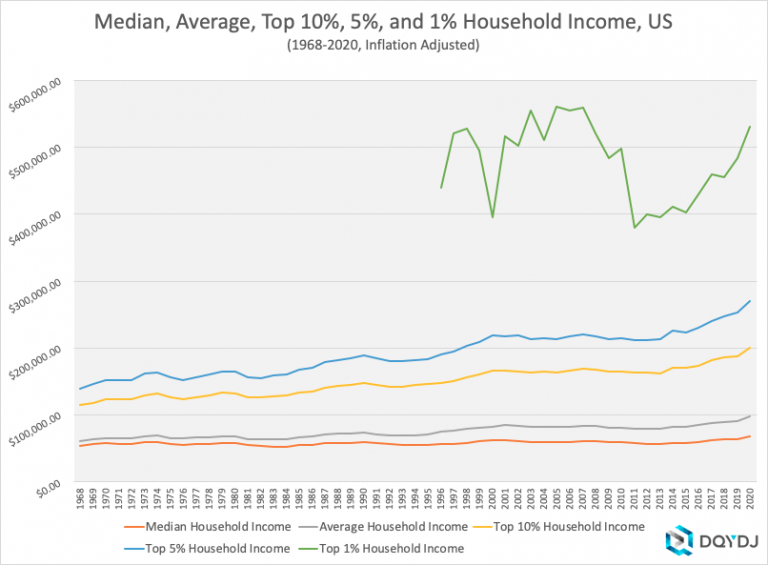
When I was in grade school we learned that average was a generic term for mean, median, or mode. So when I see average conflated with median in discussion (as it often is), I assume it's intentional. But others seem to interpret it as a synonym of mean.
[0] https://s3-us-west-2.amazonaws.com/gs-live/uploads%2F1527022...
> So how to know a mask is safe? Check whether the mask has a one-way breathing system, verify that one-way valves are in place both in the snorkel as well as in the orinasal mask section, and last but not least check if the orinasal mask makes a good seal on your face. If these checks are positive, then it is a good indication the mask is safe to use.
(Decathlon is a very prominent sports shop in France, I believe that others now sell the mask as well)
EDIT: I noticed that we apparently have the anti-unicorn version (with the tube pointing to the back) :)
https://www.amazon.com/full-face-snorkeling-mask/s?k=full-fa...
We're now headed to a situation where labour is abundant (demographic trends being what they are, globally) and specialization trivially achieved (hello youtube). I'm not so sure it will continue to be an advantageous trait.
I don't have any data handy, but I think we often feel greater satisfaction working through all of the aspects to creating something versus being a "cog in the machine" and specializing in one role. E.g. I'd rather build a boat - have a hand in the design, source the materials, and actually physically build it rather than work in a factory and operate a machine that spits out rudders all day, every day.
Of course, the boats created via mass production are probably going to be cheaper and in many ways better than what a novice manages to put together.
The exception would be someone like a subsistence farmer. But hell I'd rather work in a factory.
To build a boat on your own the way you described is crazy resource intensive. You need land to store the boat, you need materials, you need tools, you need free time to work on it. This is basically a wealthy persons pet project. Depending on the size of the boat and your abilities you will be pumping a crazy amount of resources into this for years.
The second type is a job. You need a car to get to the factory, and an able body. Within a week to a month you would be expecting your first paycheck.
You are basically asking if a wealthy person can feel higher amount of satisfaction than a worker class. It’s cliche that money doesn’t bring happyness, but if you are investing that much resources into a project it better be making you happy or what are you doing with your life?
The other problem with the comparision is that people who have a boat project are a self-selected bunch for those who would enjoy building a boat. If i would have the resources to build a boat I wouldn’t. It is a risky, hard, and back breaking work. The reward at the end is that you have a boat, which I don’t want. If you give me resources and force me to build my own boat I will be misserable.
Is it a surprise then that this wealthy self-selected bunch has a higher statisfaction with their pet project than a factory worker? How could this ever be a fair comparision?
> Wikimedia Commons has become a treasure trove of materials that can be freely remixed.
And wikimedia commons does not allow ND or NC licenses.
Objectively life has become better and more comfortable for the vast majority of humans since then (Hans Rosling does a beautiful job of exploring this).
But I do think that perceptions and feelings matter, and even though material wellbeing is a prerequisite to that, so is also the general feeling and view that those around you hold, and in many ways I feel we've gone backwards in that.
https://stevenpinker.com/publications/better-angels-our-natu...
?
Personally, I don't believe that working less (or more) makes people happy (unhappy), but my whole point is that defining your future goals in terms of happiness and attempting to measure it is futile by definition.
Assuming you're talking about staying in an industrialized nation.
> almost everyone seems to believe that real incomes have totally stagnated.
suggesting that this is a false belief. I think this can easily be interpreted as you saying "inflation is fine" (even though that may not have been your intention).
If, somehow, we all started working for the supply chain, I think we could rebalance those hours so that they weren't as extreme. As it stands, solutions like UBI still require sweatshops, global shipping, global finance, etc. while simply letting people who aren't on the hook to provide a vital service to sit around and gaze at navels.
UK: https://www.theguardian.com/money/2021/apr/26/uk-catalytic-c...
France: https://www.europol.europa.eu/newsroom/news/europol-supports...
Despite all of this, air quality is relatively high. Water quality is relatively high. Ecological preservation efforts have restored all sorts of habitats and saved species from extinction.
Gina Rinehart has become a billionaire in Australia by owning a massive coal mining operation. A lot of the coal is burned locally, but most is exported to Asia. Asia isn't forced to buy Australian coal. Asian countries could instead put a tax on dirty energy, and encourage cleaner energy. But some combination of reasons keeps that low in their list of priorities.
And even if they unfortunately wish to continue to burn coal, it would be possible to force the use of air scrubbers and purchasing purer grades of coal. But that isn't pursued for the same reasons.
One counter-argument I've seen when I've taken your side is that some works are higher quality for society (in some fuzzy, aggregate sense) because they have gatekeeping that maintains the image of a given copyrightable work.
Well, then there are still the thing that have copyright today!
If you are talking about some cultural space being exausted because of remixing (say, overuse of the mona lisa makes people less interested in it) -- well, this seems not to be the case, but anyway, we could have specific legislation to avoid this effect and still have copies for people to enjoy (not that I support that, I bet its not a big problem when compared to the massive boon of accessibility)
Not really!
If there was any fixed copyright length, then true. But the lawmakers were changing it, maintaining the "last thing to enter the public domain" constant
Oh, and since we are splitting hair here about numbers, US started a 20 years war as result of just 3k deaths during 9/11. You and US government have another order of magnitude disagreement about what constitutes a "good" number of deaths as war causalities.
I thought my estimates for Cold War casualties were pretty generous - I didn't want low estimates to get in the way of my case. But I think my case stands even if 100,000 died in the Cold War.
If you're going to argue that every mid-20thC "hot" war was just a campaign in the Cold War, well I'm sure the consensus is that the Cold War didn't include open conflicts like Vietnam.
Source is wiki: https://en.wikipedia.org/wiki/Cold_War
What do you think Vietnam was about?
anyway, the median figure doesn't tell you a whole lot by itself. the median rent in the US for is ~$950 for a 1BR or ~$1250 for a 3BR (suitable for a family with 2-3 children). if you make the median salary, you are probably taking home $6000-6500 a month depending on tax situation. having ~$5000 left over after paying rent sounds more than just "comfortable" to me.
of course, we don't know exactly how well local rents are correlated with dev pay. maybe to be more than "comfortable" you need to pay for private school or pay rent in the best school district. but it would be much more useful to calculate the ratio of rent or home price to pay for each dev and then take the median of that.
That may happen, but it's not generally true. Regulation can, for example, increase competition which increases innovation. It can standardize safety rules, which reduces the risk for manufacturers clearly defining what they do and don't have to do. Etc.
The benefits go to a lot of people, or you could say that voting makes you politically connected. Politicians must balance many interests, including those of the politically connected and of the voting public. You don't want to be the politician who failed to protect your constituents.
So many of the new products I buy are designed by small teams, or in some cases, one-man operations. It's funny how we went from a single craftsman making the whole product, to massive corporations making all the products, and now the internet, with the access it has given us to information and the global supply chain, has allowed us to go back to that world where we can leverage the talents of an individual and mass production at the same time.
I think the Framework laptop is a prime example of this. The fact that a small team like that can "produce" a product of such quality is mind blowing.
It seems to me that the general quality of items has been on a steady rate of improvement again, rather than the race-to-the-bottom that seemingly every industry experienced during the 90s and early 00s.
A great point. While I'm well aware of it, is there a book or guide to how that is done? 'Global supply chain manufacturing for noobs'? I'm looking for something with real expertise and research behind it, not someone's blog post.
- Another consequence is that everyone can publish, anything, no matter how good it is. Come to think of it, in that example, crap rises to the top much more than the cream.
Part 1; make a compelling mockup, post to kickstarter etc and other social media
Part 2: bide your time with product update mockups until knock offs appear on Alibaba. Make a show about complaining about the knock offs and then return the kickstarter deposits.
Certainly not the absolute best in the world, but they are still unlikely to hire a thoroughly mediocre worker who in a past world devoid of easy global communication and travel would have only been hired into a high-paying role by virtue of the fact that they were the only available worker with the necessary skills, since sourcing better talent from a global pool was much harder.
But let's also remember that much of the world doesn't use the Internet. In the US, large segments of the population lack computers (beyond phones) and high speed internet access. I know that during the pandemic, schools in poor districts had the problem that many of their students lacked those tools for remote learning.
And for FWIW, there are exceptions where the absolute best in the world dominate the market, such as in entertainment where the top musical performers, athletes, etc. collect almost all the revenue.
The other problem is temperature regulation. It regulates heat by pulsing on and off. It makes a noise which is annoying. On some settings and some pans, it will pulse between boiling over and coming off the boil completely. Since the heat settings are digital it can be impossible to find a setting that will keep water at a simmer (even if your volume of water is large enough to overcome the pulsing).
The one thing electric hobs have going for them is ease of cleaning. But cleaning a gas hob is a small price to pay for being able to cook properly.
Gas hob with electric oven is definitely the best combination overall. I could see having a couple of induction rings in addition to gas useful just for boiling and deep fat frying due to increased efficiency and safety, but that seems like an overly complicated setup.
The problem is how uneven it is. It sounds like in your case the induction coils aren't spaced out far enough or have enough coverage for the size of your pan. This is a real problem on many induction cooktops, where a 10" or 11" burner will only have a 7" induction zone, which is horrible if you are setting a 12" or 13" skillet on top of it. On the higher end though, you can get dual-zone burners where they have a ring on the outer edge of the burner and an induction ring towards the center, and this helps a lot. It's still two hot rings rather than heat spaced across.
I've played around with several cooktop types and read a LOT on the topic, and my finding is that radiant electric ceramic cooktops are the most even, but the slowest to change temperature, because they essentially heat the glass which heats the pan to some degree. By the same token disc-bottom cookware is the most even, but the slowest to change temperature. The least even cooktops are induction, even the better induction is much less even than gas or electric coil. The least even cookware is definitely cast iron. Using cast iron on induction is the worst case scenario, but if you use disc-bottom cookware and a high end induction cooktop you can salvage it.
Also, watch out, induction has a tendency to warp or crack cast iron and carbon steel cookware, which if warped makes it basically not work at all on induction.
But all that said, just using gas is better across all types of cookware, and you can do things like use copper cookware for ultra-fast responsiveness and easy falling to simmers.
Actually, that's probably a reasonable design. Induction is fine for boiling water (or water-like things - soup, sauce, water-with-pasta-in-it, velc), and that's probably the largest single class of cooking tasks. The problem with a induction stove is that you can't do non-boiling stuff at all, but if you have gas burners, that's a nonissue.
Although as tristor notes, it's probably better to have 2 induction and 4 gas than vice versa - if you're running out of burners, using a gas burner where you'd normally use a induction burner is less of a problem than vice versa, and if you aren't, you can just use whichever are better suited to what you're currently doing.
I think having 4 gas and 2 induction would be better. You can use the induction with a disc-bottom stock pot for making pasta or other things that require boiling large quantities of liquid. Induction is bar-none the fastest way to boil lots of water. Gas can be used for most everything else. Induction is really good with disc-bottom cookware generally since disc-bottom cookware tends to be very even and counter-acts the induction unevenness, but it also retains a lot of heat and doesn't run heat up the walls like typical clad cookware.
Thanks for the book recommendation. I've added it to my Goodreads list. I'll checkout the talk too. I haven't seen that one of yours, because I saw the title and figured it was heavy on memory-management and pretty out of my wheelhouse.
As for the progression of software development, this may be trite to say, but in my opinion the single most important revolution in software is the rise of open source. I don't think that there was a single event here per se but rather a multi-decade long progression across many different domains that has changed just about every single aspect of software development. (Cloud computing too, certainly -- but I don't think that cloud computing is economically viable without open source.) So software development from the 1990s is unrecognizable in large part because it is just so damned proprietary -- which, as it turns out, was in fact a relatively short blip in the fullness of history.[0]
[0] https://www.youtube.com/watch?v=Zpnncakrelk, in which I expand a bit on the history of open source, among other things
I didn't fully appreciate how important open-source is as a 21st century movement until I read The Cathedral and the Bazaar this year. Hearing the open-source development story of SQLite also blew my mind a little.
I can see why you're so energized by open-source firmware.
Late '91 I was graduating soon and I did go to the university recruiting stalls of Sun and IBM and Motorola. DEC was a presence but I loved SunOS and didn't like VMS so didn't talk to them. Never considered Microsoft since I hated them so much already back then.
Ended going in a different direction due to a graduate degree scholarship but thinking back maybe should've joined Sun directly back then. I did later end up at Sun a few years later, roughly same timeframe as you.
Do it to Coke/Pepsi while you're at it.
Maybe I should to revisit what I thought I knew
While the absolute numbers may seem small by today's standards, it was more then enough for a single 20something to have the time of their lives. Even paying Manhattan rents, we were out 5-6 nights a week clubbing and partying
Many people today choose lifestyle centered work (gig economy, part time roles for short term, etc) rather than work that lets them build a life. I have multiple friends that have gone this route out of high school with no college and started at the bottom and have over the years acquired more skills and knowledge and some have moved into supervisory and management roles after their companies financed some additional skills like using spreadsheets, basic management, etc.
The endless stories of people that start, work a week and get a check, don't show for 2 weeks and then come back thinking they are still employed is amazing. The jobs exist and they pay well, but not enough people want them.
This isn't like fast food restaurants having trouble hiring people at minimum wage because stimmy checks pay more than working. People come in and they want the job and they work a week or 2 and then disappear after they get paid and then come back when they need money again. That type of work ethic just isn't compatible with this kind of career so they end up at an Amazon warehouse, driving Ubers, and delivering food instead since that does support their lifestyle choice.
And yet in retrospect humanity's trend has been of greater ingenuity, connectives, safety and well-being. Sure, it's possible that THIS is the high point and it'll all go down-hill from here, but that's like being a broken clock - if you think every thing will kill you, you will eventually be right.
But I see no reason to think like that. For example, sure the pandemic sucks but relative to what it could have been, especially in such a connected world, humanity is handling it pretty well. There seems to be resilience in our economies, supply chains, and people - that when they are tested they have bent and strained but not broken. Like a ship that gets rocked but doesn't sink in a storm that's actually a GREAT sign.
I can related to your emotional state though. I remember walking in NYC a few days after 9/11, and seeing a half-completed building on 42nd street and thinking: this will never get finished. Nobody will ever dare come or invest or live in NYC - we're doomed and dead.
That building is worth a billion dollars now and that neighborhood is thriving. It's important to remember that feeling of gloom and realizing that it doesn't always (in fact, most of the time) pan out as we feared the worst.
It's not about present society being a global maximum, it's about present society being a local maximum. The lessons from history are often that things can and do get worse, sometimes for generations, before improving again later. It is absolutely possible (and I would argue probable) that life will get worse for a long while before improving.
Sure. Like I said, you can do this at any point in time and if enough people do that it becomes a self-fulfilling prophecy so it's better not.
Out of curiosity, I took a look at your submission history (which is vast!) and it's 90% doom and gloom across a vast array of topics. I do think living with such a negativity bias is very disempowering - and not to mention not fun. I don't mean to be stupid and blindly optimistic (I manage risk for a living among other things) but like I said, living with certainty that everything will be terrible will ruin your life.
Like I said, since dawn of man, people had reason to believe what you believe. And those who really believed it would have no reason to build anything, learn anything, invest in anything, have children etc - why do any of that if the world is ending.
But the world is inherited by those who DO do those things - everything we have, everything we are, everything we're investing in - is there because someone in the past believed that the future is worth the work. So just be careful how much of this your let into your psyche because it will lead to you to a dead end
The example I like to think about for this is imagine being born in the eastern European bloodlands - Eastern Germany, the Baltics, Poland, Byelorussia or Ukraine around 1895-1900. Things are pretty good up until the Great War starts, which back then you would be old enough to be considered an adult for, and then it is wars, famines, repressions and totalitarianism for the rest of your life as you likely die just short of the Iron Curtain falling. That's a pretty bleak life. Yet many people lived it, and found love and purpose and had families under it and those civilizations as a whole eventually recovered.
The pandemic, with hundreds of thousands of deaths just in the US hasn't had the same sort of coverage. Nor the fact that we haven't had hurricanes in the Gulf but massive flooding everywhere... my response doesn't come from emotion but from the lack of emotion I see in our leaders to the catastrophes.
We haven't even begin to cut emissions enough to slow down the climate catastrophe and I doubt we ever will. While I imagine the US will start protecting its own supply chains I imagine it will act as it always has, protect the wealthiest and best off and leave middle and lower classes to fight for scraps. Just look at our healthcare system, best in the world for the richest, and one of the worst in the western world for lower classes.
Sorry, but where are you living/getting news from because I am jealous and I want to be that isolated.
Literally every new story, list of headlines, broadcast, tweet, and conversation today includes COVID. CNN used to have daily death counts and totals. Every single person's life, from the way we study, work, shop etc has changed because of COVID.
If your thesis is that somehow this big crisis hasn't been sufficiently publicized and people aren't aware, I just have a really hard time connecting to your perspective on the world.
This seems like an understudied thing to me.
Your thought that we're naturally armed against CO2 build up is generally true, but what we aren't armed against is a lack of O2 in the presence of a lack of CO2. Our urge to breathe occurs not because we're losing O2, but because we have too much CO2 in our bodies. I think this is critical to understand in the context of snorkelling.
If you're in a room and CO2 is gradually built up, you will likely experience symptoms of the build up occurring in your body, absolutely. When it's more acute though, you often don't experience symptoms in a time frame in which you'll be able to respond properly. In the case with this mask that's probably not a concern at all.
Another concern, far more applicable here, is hypoxia. This kills snorkellers and divers frequently. Typically they deplete CO2 levels in their body via over-exertion and/or hyperventilation (intentionally or not) then go under water for some period waiting for their warning signals to return to the surface to breathe. Unfortunately the signals never occur because CO2 levels haven't reached a level which causes their nervous system to respond by causing an urge to breathe. Instead, oxygen is depleted causing a blackout to occur either under water or near the surface. The person isn't able to protect themselves while unconscious, so they often drown.
I wanted to point this out because in the context of water sports, more people need to be aware of this. Your body won't always let you know you're in danger. It's often why people experience it and/or die from it - they simply didn't know. We expect our bodies to tell us when we need to breathe. This is because our bodies are typically in conditions which allow for this to happen and we're very accustomed to that - we take it for granted. Once you skew the O2 and CO2 levels in your body, things don't occur as you'd expect at all. Much like any other situation where homeostasis is compromised.
Hopefully I'm not coming across as lecturing or anything. I'm genuinely intending to be helpful.
Some key tips when in the water, regardless of what mask you use:
- Breathe normally, don't hyperventilate
- Only dive if your breathing is at a normal rate and you feel relaxed
- Say you dive down for 30 seconds - spend at least 1 minute (2x your dive time) recovering oxygen, preferably 3x
- Always, always try to go with other people - accidents happen, and you'll need each other
- If it's your first time spending time under water, gradually build up your time under there. Feel out your comfort zone before testing yourself.
- Spit out your snorkel when you go under water. If something goes wrong, it becomes an easy entry point for water to get to your lungs.
"Snorkels constitute respiratory dead space. When the user takes in a fresh breath, some of the previously exhaled air which remains in the snorkel is inhaled again, reducing the amount of fresh air in the inhaled volume, and increasing the risk of a buildup of carbon dioxide in the blood, which can result in hypercapnia. The greater the volume of the tube, and the smaller the tidal volume of breathing, the more this problem is exacerbated. Including the internal volume of the mask in the breathing circuit greatly expands the dead space."
https://en.wikipedia.org/wiki/Snorkel_(swimming)
(The face mask snorkels are relevant to the "greater the volume of the tube" part.)
The extreme example is breathing from a long skinny tube. If the volume of the tube is bigger than that of your lungs, you never inhale new air.
To revise your original statement, "dev wages can be through the roof, if you live in one of a few hot markets that exist globally at least". To me that's like saying, "need more money? Just become the CEO". :)
That is fantastic (at least as far as I understand it). What a fantasy of open source that not only do people download your code and compile it, but they download your hardware design and manufacture it!
Who doesn't it benefit? The designers and other developers now have prototypes, etc. without having to pay for manufacturing.
https://cdn.dqydj.com/wp-content/uploads/2020/09/inflation-m...
Source:
I still think it’s crazy our minimum wage is so low ($7.50/hr today vs $11/hour in late 1960s in today’s money). IMHO, it should be pinned to productivity growth since the 1960s (the question is: should we have higher or lower inequality than in the 1960s? The most conservative answer would be “the same”, in which case you tie the ratio of GDP per capita to minimum wage to the same level it was in the 1960s.), which would put the federal minimum wage somewhere north of $20/hour. (Or perhaps a regional approach where a minimum wage of $15/hour is universal and then above that, minimum wage at 40hours/week is three times what it’d need to support a two bedroom apartment rent at median local prices.)
I’m also convinced that stagnated wages has caused stagnation in productivity growth, because as minimum wage becomes cheaper through inflation, it makes less sense for companies to invest in productivity enhancing automation and efficiency as they can just hire cheap workers and fire them as needed.
> they can just hire cheap workers and fire them as needed
But doesn't increasing the minimum wage just price these people who were formerly being hired/fired completely out of the labour market?
>>as minimum wage becomes cheaper through inflation, it makes less sense for companies to invest in productivity enhancing automation and efficiency as they can just hire cheap workers and fire them as needed.
There is a finite number of workers. Once they are all employed, only investment into productive capital raises productivity.
https://www.vocabulary.com/dictionary/reification#:~:text=Re....
So if you feel happy (or miserable) it means just that - that you feel happy (or miserable). It doesn't mean that happiness or misery actually exist literally.
https://www.ktvu.com/news/recent-snorkel-deaths-prompts-inve...
One could argue that abstractions "actually exist literally" without being physical. Gravitational fields don't exist physically but do exist and they're a valid abstraction that's useful to measure. Maybe happiness is a phenomenon that could be useful too (though I would say to a lesser extent.)
A little tangential but... even things that we would say exist physically are not on closer inspection. Does a chair actually exist or is it a platonic ideal that we apply to a collection of atoms assembled to form four legs, seat and a back?
And it's intangible nature does nothing to prevent us from measuring or maximizing aggregate happiness.
I'd say happiness exists exactly as much as chairs, in both cases we are classifying what is, in reality, just a collection of atoms, either as a chair or as a happy person, based on some external measurments
Abstractions are critical to human thinking in science. But not only reification is very different, you can't measure happiness even if you want to. You'll always have to go 'happiness as defined ...' or resort to people self reporting their feelings. Which is fine - I always ask my kids how they feel. I just understand that not only kids and adults may change how they feel next hour but that those feelings are unreliable. If you have kids of your own, you know how many 'tragedies' they lived through by the age of 6.
And that list of companies is sort of a mixed bag.
Adobe has mostly done pretty well through the years.
Sun Microsystems did have a very good decade through the dot-com years but then didn't.
Apple was really struggling at that time.
DEC was on the way down and would be bought by HP a few years later.
Microsoft was about to launch Windows NT so that was a pretty good place to hop on but obviously went on to have a long period of stagnation.
If you were at Apple, you'd be working on a platform (Mac OS classic, or Copland, or Newton) that would be thrown away by the end of the decade.
If you were working at DEC, likewise. (VMS, VAX, even Alpha)
Sun is more complicated, as they pivoted better and took longer to die. That would be a good place to be maybe.
1991 is an awkward year since it's about 2-3 years before the HTTP/browser revolution.
One thing though is that to my eye when I look at what these companies were working on then, it all seems more interesting to me now. The actual employment of a programmer (who wasn't stuck in finance or insurance etc. doing COBOL) had the potential to do some stuff that we at least thought Was going to be groundbreaking back then. NewtonOS and Alpha and Copland, CORBA, PowerPC/PREP, OS/2, research projects like Sun's "Self", etc. it was all exciting stuff. Just very little of it went on to be used later.
For one thing, you'd have been much more plugged into the coming internet revolution broadly than any of the others. You'd also have been at least connected to the open source world although Sun resisted aspects of it in many ways.
They were also primarily in Silicon Valley unlike the others.
Early cell phones. PDA's like Palm. Printer market was hot. Businesses were networking their computers like crazy. The PC accessory market was hot. Video games like the Playstation were about to come out. Dial up online services and then ISP's. The web appeared.
Of course $40K then is $80K now, and you were working at 9-5 at BigCo, with a pension plan. Interest rates were 3-4x what they are now, the value of the house that you spent a couple of years salary on is probably going to quintuple, and the stock market runup over the next 30 years is going to be unreal.
Not counting the stock market plunge especially in tech in the dot-bomb era when there's a good change you'll also lose your tech job and very possibly be very underemployed for a few years. Of course if you hold on through that (and 2008), you'll come out well on the other side.
And if you were 20 in 91, you probably don't have a house in ten years in pricey (just not eye-watteringly so) SV 9 years later when the bottom falls out of the market.
Well, except pension, which were largely gutted in the private sector by 1991 (it was the plot of the 1987 movie Wall Street).
- Particularly interesting point in history for software (pre-Netscape!) - Build lots of experience before Google, Netflix, and FB are even born. - Incredible compounded returns in software stocks (and great returns in housing)
2021 is a great time to be a 20yr old software dev, but it's also a great time to be a 50yr old software dev who has 30 yrs of experience, stock market returns, and housing investment.
That Belarus recovered is not obvious.
They obviously do not pay commensurate to the risks of job loss, lack of quality of life at a job, and/or to make up for the undesirability for the location they are in.
The proof is the data showing wages for factory type work stagnating for many decades now (until the recent few years). People incorporate that knowledge, and let their kids know that those jobs are not worth investing in. How many factory towns are there where the factory closes or downsizes and the whole town goes into economic decline? You need to pay a lot to offset that kind of risk.
The other proof is also that I bet they can get lots of qualified applicants that will “show up everyday and work”. Just offer $200k per year. Or $500k per year. Obviously the purchasers of that type of labor are not offering enough money.
It started(and continuing) with 3D printing and now looking into KiCAD...
I would absolutely be interested in projects with your approach.
I mean, there's a lot of alcoholism problems and drug issues too.
>People incorporate that knowledge, and let their kids know that those jobs are not worth investing in.
I'm not sure the wisdom of the crowds is a great example here. How many kids are in many thousands of debt and working at dead end jobs or as a barista, etc. because they got a useless degree from a third rate university?
> How many factory towns are there where the factory closes or downsizes and the whole town goes into economic decline? You need to pay a lot to offset that kind of risk.
I don't think I'm describing factory town style jobs of yesteryear. There are many solid jobs in tool and die, machining, etc that are mainly run by small to mid-sized shops. Literally thousands of these around the country.
There are a lot of people making a great living in these places, it's just that there's a shortage of qualified labor. Similar to software companies - there's a shortage of labor and it isn't because they aren't paying enough. Additionally, a lot of people think this kind of work is below them because they went to a university to study a field that they can't make it in.
> The other proof is also that I bet they can get lots of qualified applicants that will “show up everyday and work”. Just offer $200k per year. Or $500k per year. Obviously the purchasers of that type of labor are not offering enough money.
Yeah probably but I'm not sure that's economic. Also, the starting pay won't be the best but you rise fairly quickly through the ranks where the money improves. But like I said before, there are a lot of people making a good life for themselves with a home, a family, vacations, and a solid American life in these places. This life exists for people. But you would think it isn't even available - but it is.
Kids complain that they are 50k in debt from school, can't find a job that pays well and will never be able to afford a home or have kids. But that's not true. There's a career out there in modern manufacturing if they are willing to humble themselves.
People think it is "below them" because they saw the people who went into white collar professions in their parents' generation come out ahead. Pay enough (and advertise the pay) and people's perception will change.
>But you would think it isn't even available - but it is.
Where are the job postings showing the pay and benefits? Why do the stats indicate the wages not increasing much?
>There's a career out there in modern manufacturing if they are willing to humble themselves.
The situation might have changed recently, but those jobs have definitely not paid sufficiently for the past few decades to make it a worthwhile investment. This is shown by definition, since they are complaining about lack of candidates for the job positions. If they paid appropriately and competitively, by definition people would have opted to work those jobs.
I think it only seems overly negative -because- so many people are blindly optimistic and assume things just get better naturally with no action required on our part. That's why I have such a negative outlook, I can envision the immense work we need to do to address climate change (and many other issues) and I'm seeing such a small amount of work being done that it's basically a rounding error. Watching people reject even the small amount of work required to personally address COVID (a free shot) does not fill me with hope that we can make big changes.
>But the world is inherited by those who DO do those things - everything we have, everything we are, everything we're investing in - is there because someone in the past believed that the future is worth the work
I think this is the disconnect between us. The future is worth the work, but we refuse to work on the future. We instead work harder to prop up the unsustainable present.
EG: you're dismal about covid because some people won't get the shot. But in the 80s/90s you'd be dismal because people weren't practicing safe sex despite AIDS, and you'd draw that line to a depressing conclusion. And yet in reality, somehow the world moved towards a much better place despite those things.
Same with COVID - you are obsessing on a small number of people not getting vax and getting depressed, but you are ignoring for example super-fast vax development, global awareness, willingness of governments to move in and out of different disease control regimes, etc. Those are wildly optimistic things, but you don't let those things encourage you, instead you seem to seek out the bad stuff no matter how small and and form your view on that.
Conspiracy theorists used to be everywhere, but in small numbers and not very homogeneous; now they are plentiful and coordinated enough to lead to outcomes like the Jan 6 insurrection or the vaccine denialism gripping something like 30% of Americans.
It's not "somehow", you're glossing over the very real losses and very avoidable tragedies (fed by bigotry and fear) that happened during the AIDS crisis, which is my whole point. Progress isn't free and by ignoring the real losses and avoidable tragedies we repeat the same mistakes. That's why we have to confront the uncomfortable parts of the past and present. If we only focus on the superficial elements of success and progress, we make problems more difficult to actually confront.
We hear the same things in other non-manufacturing trades though like plumbing and carpentry and HVAC, etc. companies struggle to find reliable people when the money is good and prospects are stable.
One contractor I had was a Ukrainian man with a math degree but went into tile work when he moved here because he found he could make more money doing it. Smart man in our conversations and humble but is massively in-demand in the general area because he’s so good at it and he’s paid like it.
If you want to argue for indefinite high federal spending to guarantee a tight labor market for decades, then sure, a higher minimum wage might not be necessary. Is that what you’re arguing?
Because if a tight labor market is transitory (and minimum wage keeps dropping due to inflation), then businesses won’t be given a firm enough pricing signal to make productivity investments.
I'm arguing that labour shouldn't be specially exempt from markets fluctuating between tight and loose. I'm also arguing that raising the minimum wage hurts the very poorest of us the most, by making them unable to complete in the only way they can: lifestyle compromise. Indeed, they end up worse off when they are priced out of the labour market and forced into joblessness.
How is one meter defined?
You claim that happiness cannot be measured, yet in the next sentence you talk about measuring it by self reporting. One unreliable way of measuring doesn't equal to “cannot be measured”.
Now, that doesn't mean that you can't define happiness as you want it and pursue it on an individual level. For instance - walking in the park makes you 'happy' (as self reported feeling). Yoga makes you happy. Meditation makes you happy. Great - go for it.
BUT it's pointless to even attempt to measure 'group happiness' and try to increase it. People make pointless statements and point fingers in on the wrong directions. The article is about technology and I am sick and tired listening to how technology makes people unhappy or happy. Governments are often blamed for policies that make people unhappy. Society is probably blamed the most for people not being happy. It's too materialistic, the goals are wrong, bla-bla-bla.
BTW Here's the exact meter definition - https://en.wikipedia.org/wiki/Metre
If happiness is not as well defined or well-behaved as we would like it to be, perhaps we can make it better rather than dismissing the problem.
This doesn't make sense. Anyone who purchases labour is an employer. "Employers" are not a single entity and therefore cannot maintain a monopsony.
It seems more likely that wages lower or stagnate when the supply of labour exceeds the demand. Minimum wages actually hurt this process by banning the demand for labour below a given, fixed wage.
> massively increased inequality and wage stagnation
Increased as compared to when? Before minimum wages there were all sorts of service and labour positions in the economy that simply don't exist now. It used to be that unskilled labour was available for much lower cost. Think gas stations being able to afford multiple attendants, middle class families being able to afford domestic service. These positions simply aren't tenable at "minimum wage".
Was this a more unequal world? You can certainly make the case for that. Was it objectively worse than the world today, where it is tenable not to participate meaningfully in the economy and still be supported by society? I'm not so sure.
I don't think we need to get bent out of shape about the aspects of human nature that cause horror and tragedy, since they seem so greatly overshadowed by aspects of the same nature which are driven to continuously improve. The good guys are winning, by a lot.
I don't think you're living up to your name though!
So what level of sacrifice should be required of those that don't make it? Going back to the AIDS example, government involvement was delayed because of bigotry, because it only affected people who didn't make it. Our economy is currently propped up by low wage workers both locally and globally who aren't making it. We don't do a good job at taking care of the sick and the poor. We're doing a terrible job at taking care of the environment. As you both have said, none of this is new, but it doesn't have to be this way. We know how to solve many of society's problems and we choose not to do so. If the core reason for these things is "human nature" and we shouldn't try to change, I don't think I have the defeatist attitude in that case. My attitude comes from seeing solutions that we aren't even trying to do, not that we -shouldn't- try.
>The good guys are winning, by a lot.
I don't see the good guys winning. The good guys currently have the high score, but the bad guys are on the upswing and scoring points on the good guys, who are just standing around.
The same as it has always been for all living things: pain, suffering, and death.
> low wage workers both locally and globally who aren't making it
Pretty sure quality of life is up by pretty much every measure for "low wage workers" both locally and globally.
> none of this is new, but it doesn't have to be this way.
> We know how to solve many of society's problems and we choose not to do so.
You could have made this statement at any point in history, and people might agree with you. If this is the only way it ever has been, why do you think it doesn't have to be this way?
We know in theory. There is a vast, uncrossable gulf between theory and practice, as various communist experiments have shown. There is no known solution to ingroup/outgroup tendency, sociopathy or naked self-interest.
> If the core reason for these things is "human nature" and we shouldn't try to change
We should totally try to change! But we shouldn't expect to succeed, and we shouldn't be surprised or disappointed when awful things happen. We should instead realize that, looking at the past few centuries of history, this is an amazing time to be alive, by every metric. Better to accept humanity the way that it is, space rockets and genocides and all, and realize that it's still a net-positive, than despair that humanity doesn't hold up to some sort of fictional ideal.
Wages are stagnant and certainly haven't kept pace with productivity. They can buy more TVs because electronics are cheaper, but costs for basics are going up. Metrics don't capture "having to pee in a bottle" because of work demands.
>You could have made this statement at any point in history, and people might agree with you. If this is the only way it ever has been, why do you think it doesn't have to be this way?
Was it true in 2500 BC that they had the resources to feed everyone on the planet consistently? 1500 AD? We can feed everyone now, yet people go hungry in the wealthiest nation in the world. Has it been true at any point in history since the industrial revolution where we could provide healthcare and advanced education for everyone in an industrialized nation? It works for many of them, but not the wealthiest one. Are we doing everything we can to solve these problems? I understand life is about prioritizing and understanding tradeoffs, but food and healthcare are among the most basic needs for a healthy individual and education is one of the basic needs for a healthy society.
>There is no known solution to ingroup/outgroup tendency, sociopathy or naked self-interest.
So why do we structure society to encourage and reward these behaviors instead of trying to mitigate their effects?
Wages have never been tied to productivity. They're derived from supply and demand for labour. Gold miners are very productive fiscally speaking, but they don't make any more than coal miners.
> Metrics don't capture "having to pee in a bottle" because of work demands.
Why do you think people shouldn't have to pee in bottles? Or be exposed to dangerous conditions? You seem to be operating from a moral ideal that gives a very clear idea of how things ought to be. Where do you derive it from?
> Was it true in 2500 BC that they had the resources to feed everyone on the planet consistently? 1500 AD?
You'd be surprised how much grain was hoarded by ancient Pharaohs and Medieval Lords. It was likely enough to prevent much of the starvation their populations experienced. We could always feed more people than we do, and people with wealth and power have always preferred expensive trinkets and shows of status to feeding the hungry.
The US is fundamentally build on individual liberty. This idea is in opposition to involuntary social obligation. If a person doesn't want to use their wealth/time/energy to the benefit of others, do they have to? Should you force them? To what degree? Are people entitled to be helped or should they have to ask? People disagree axiomatically on these things.
In absence of an oracle to tell us who is right and who is wrong, and given that we are all morally equal, it seems to follow that no one has a strong case to impose their answers to these questions on anyone else. Why are you so sure that helping people is "right"? Why do you think everyone has to work towards your idea of a "healthy society"?
> So why do we structure society to encourage and reward these behaviors instead of trying to mitigate their effects?
I'd say our current social structure is the best we've got for mitigating these effects. Entrepreneurship allows people to harness their self-interest to the benefit of others. Democracy limits the effects of corruption. This is why our society is able to innovate as much as it does, and therefore prevail in the ongoing competition with other societies and other ideas.