From what I've understood from the local news (I'm a South Korean), It's not about blocking handsets with forked Android (that already happens regularly AFAIK), but the requirement of shipping Google apps like Chrome and Google Assistant. The big elephant in the room here is Samsung phones, which do ship it's own custom browser Samsung Internet (BTW, with ad blocking capabilities!) and a separate virtual assistant, Bixby. That's the part where the KFTC decided was monopolistic.
I don't have a personal opinion this, but seems that the comment threads are focusing on the wrong part. Manufacturers were always able to bundle up their fucked-up version of Android. They were always able to ship super-custom UIs. Google never prevented that... but they did force the UIs bloat by having two separate default apps.
[1] https://ftc.go.kr/www/selectReportUserView.do?key=10&rpttype... (in Korean)
If you're signed into Google etc on your phone and that is compromised, it appears to the average person that Google messed up.
We also need to clean-up the mess with all those "partitions" (some of them with critical informations e.g. calibration, IMEI, etc) so that only one partition would have all those static information (reasonably protected against overwrite, e.g. colocated with bootloader and device-tree). We should be able to re-partition the storage (like we do on PC) without bricking the device...
This is thought-terminating nonsense, constantly repeated. What my grandma wants is for me to pick what's best for her and install it. What she doesn't want is Google (or Samsung for that matter) keeping her grandson from doing what he thinks she'll like best.
edit: and to be clear, that's what all of my computer-illiterate family members want, although not all of them from me (there are other grandchildren, uncles, etc.). The radical idea that people would rather have decisions made by the people that they love and trust rather than companies that actively and constantly prey upon them should be accepted without question.
Here you go: https://puri.sm/products/librem-5.
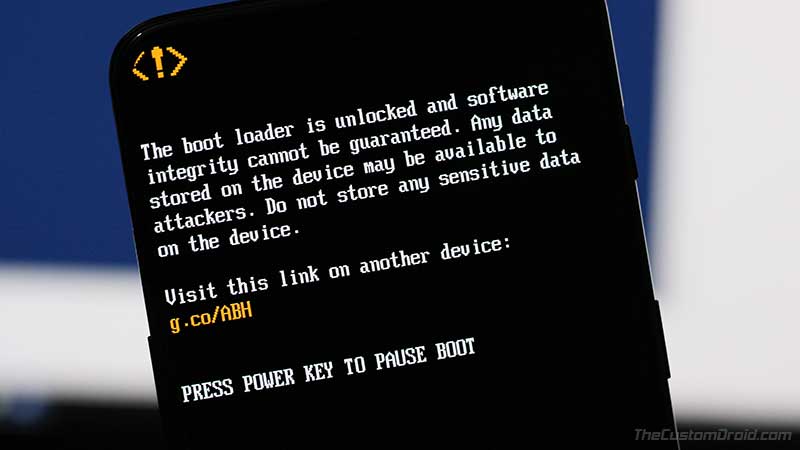
If I’m Snowden, knowing my boot loader could be unlocked and a key logger side loaded isn’t reassuring.
[0]: https://android.googlesource.com/platform/external/avb/+/mas...
[1]: https://android.googlesource.com/platform/external/avb/+/mas...
Example: https://www.thecustomdroid.com/wp-content/uploads/2019/06/Ho...
Perhaps what I mean is "locked bootloaders at POS". Selling them locked should be illegal, but locking them yourself with your own key should be trivial.
If I'm Snowden, I would be far more concerned about that.
For many essential and security critical apps to work, like bank apps or the McDonald's app you need to hide the fact you're using a modified system, because of SafetyNet.
This hiding/bypass works for now, because it tricks Google into thinking your device doesn't support hardware attestation, and fallbacking to Basic attestation, which is easier to bypass. Google can at any time flip the switch to require hardware attestation, and your apps will stop working, with no way around it, other than flashing back the stock ROM your device came with and locking the bootloader. At that point I will probably just buy a new phone.
https://www.bloombergquint.com/business/samsung-s-lee-receiv...
The Anti-fragmentation agreement google makes these folks sign HELPS consumers. Going to be a crazy situation if that goes away, the app you buy on samsung won't work on HTC etc.
Google held/holds the ability to allow or disallow all product releases Android manufacturers release, including products which do not use Google Play Services.
Tizen became critical to Samsung because Samsung couldn't release a smart fridge with Android in the background without Google's permission, even if they had no intent on it having a traditional app store... because it might constitute a fork of Android.
Who controls the browser controls the platform.
Nothing has changed since the mid-1990s.
Law moves so freaking slow, this is about a 2013 complaint. Dealing with tech industry crooks requires faster movement than this.
The article makes it clear this ruling is entirely to the benefit of Samsung Electronics.
Also, to even compare that Android phones are 'cheaper' is rather bold, there's Samsung flip phones selling for $2000.
[1] https://www.counterpointresearch.com/us-market-smartphone-sh...
If that disappears, you'll end up with apps that only work on Samsung Androids and your LineageOS will stop being compatible. We're essentially going back to horrorshow of SymbianOS, where different Symbian devices weren't compatible between themselves because the OEMs kept fscking up.
(Heck, in early Android versions Samsung tended to break core APIs all the time and caused a lot of churn on developer side to workaround their per-device fsckups. Having to import phones from half a world away so you could see why the video recorder hardcrashes when you call an API is NOT FUN.).
I did have to uninstall a load of bloatware using ADB and I added a custom launcher (Niagara).
Excuse me? McDonald's app considers itself security critical now?
But that's not really important, because unlocking the bootloader factory resets the device on every Android phone that I know of. AFAIK it's not possible to unlock a bootloader without the owner's knowledge.
Somethings never change.
I don't think there is anything stopping Samsung from using AOSP.
If HTML was invented in the current climate, I'm damn well convinced a simple <a href={external domain}> would be shot down for "security" reasons.
We're seeing a real breakdown into walled ecosystems. My opinion is that most of the steps that direction are well-intentioned (Safety, Security, Consistency, etc). The end result is fucking hell, though, where the ecosystem owner profits massively and unfairly compared to all other entities.
Compaq blew that wide open, much to IBM corporate's dismay and IBM legal's glee.
In the smartphone OS market, it doesn't matter if apple is on the luxury spectrum and android is on the general spectrum, because they are the only relevant OSs around (excluding harmony because it doesn't have nearly as much market share as those two).
So yes, android and iOS are competitors, unless other luxury OS pops up to compete with iOS or OSs like harmony become more relevant to compete with android.
If Kia and RR were the only car brands, they'd be competitors of each other because there are "cheap" second hand cars by RR that compete with Kia (like second hand iPhones) and expensive Kia cars that compete with RR (expensive android phones that compete with apple ones).
And that's how it should be with apps, too. And people need to be educated to never, ever be so trustful. You lost your savings to a scammer? Well, you'll be more diligent next time.
> only real android competitor is manufactured by one company who doesn't allow even the end user to install apps not directly approved by Apple
Even if android and apple might be strongly separate segments of the smartphone market, since they are the only relevant ones at play (FirefoxOS is no more, harmony doesn't have significant market share and pure Linux is not a thing yet), they are the only competitiors of each other, because, even if not to frequently, we do observe people switching from apple to android and vice versa, people have no other alternative to get a mobile device to run their apps on.
Your point still stands, someone that's on android and want to leave android but doesn't like apple because they run the business in such a dramatic way, might feel like an OS monopoly, because Android and apple are so different from each other. Still, since both run out apps, both run browsers, both (usually) have cameras, etc etc, they are still competitiors, even if very weak ones (your car analogy doesn't apply here anymore, since smartphones and cars are very different, but it was a good analogy till now, but analogies only go so far).
This weirdly intersects for the Right to Repair movement, or for consumers whom would rather be conservative on new device purchases and software licenses.
Once the manufacturer ceases supporting a product, everything becomes open source.
The warning is a great thing for security: I'd appreciate it if my phone showed me that warning after I've surrendered it to the border control agent (alternatively, a sketchy repair shop), or bought it pre-owned, or if I "lost" it and gets returned to me.
The issue I'm pointing out is that this device integrity thing exists at all, and that Google ends up having more control over the device and its capabilities than its legitimate owner.
I don't know if putting the government in charge of maintaining all of that would be the best idea.
Something like this would have to be done with regulation.
Shares some similarities with the gradual corruption of copyright over the years, extending it out into infinity (thanks Disney!), companies would rather hold close the things they refuse to use than give them to the people once they have no more profit to be made off of them.