Hmmm, can I trust you to not put your own ads onto competitors websites?
That is beyond f'd up. Will they never learn?
I mean this entire thread is a bunch of very angry people screaming to the void and self-congratulatory people stoking their own superiority complex for having the most common opinion in the HN echo chamber.
The days of “tech people” being ambassadors and having any influence over the direction of B2C software is over.
You must be borderline and delusional if you work at microsoft and have the guts of thinking that the company deserves even the tiniest amount of trust
I really thought they were on a good path when Ballmer stepped down but this is old Microsoft all over again.
My question is: Do you see these prompts when downloading Firefox?
“ There's no need to download a new web browser. Microsoft recommends using Microsoft Edge for a fast, secure, and modern web experience that can help save you time and money. Try now”
Even more bizarrely it puts Opera as the top result, at least here in the UK.
Then Microsoft started this aggressive, disruptive push to bring it to iOS Safari's level as the only browser people should use.
I don't know any good operating systems for normal people anymore. Windows 10 and 11 are hostile, macOS only runs on very expensive hardware and doesn't run most programs people need (because the business world is still Windows oriented) and Linux has been making progress but still isn't a good alternative for the common user unless they have an expert to rely upon when something breaks down. ChromeOS doesn't run on most devices (it can, but the images aren't available) and I wouldn't recommend a Google-oriented OS to most people anyway, if they can avoid it; Android is bad enough already.
I miss the Windows 7 days. The Win10/11 kernel may have seen loads of improvements, the UI and basic behaviour has only been regressing for many years now. The Windows 11 window snapping is nice but it doesn't excuse the aggressive spyware that comes with the OS, and neither does it excuse this antitrust lawsuit in waiting.
IME "common users" already rely on an expert when their Windows OS breaks down. Not long ago I had to walk my aunt through opening the command prompt in Windows 10 and entering the command to do a full reboot (as opposed to that hybrid shutdown+hibernation) because for some reason i couldn't really figure out from the phone the WiFi stopped working even after shutdown/reboots (she shuts her computer down whenever she isn't using it and she called me after not having connection for days). I remembered reading at some point that normally in Win10 the kernel doesn't shutdown fully but instead hibernates and my guess was that the WiFi driver somehow got in a state that didn't let it work and instead of restarting at reboot it was getting hibernated so i tried to do a full reboot. Which worked, though it could have also been something else that happened to get unstuck after the full reboot - at some other time she also had the entire taskbar get frozen and that would persist normal reboots (via alt+f4 and selecting to reboot) which was also "fixed" by that full reboot (she has the steps and commands to type written in a piece of paper by now :-P).
Not to mention the myriad of issues encountered due to forced updates.
I think that the whole "Windows is good for common users" idea is very outdated nowadays, it might have been the case a decade or so ago, but it certainly isn't anymore.
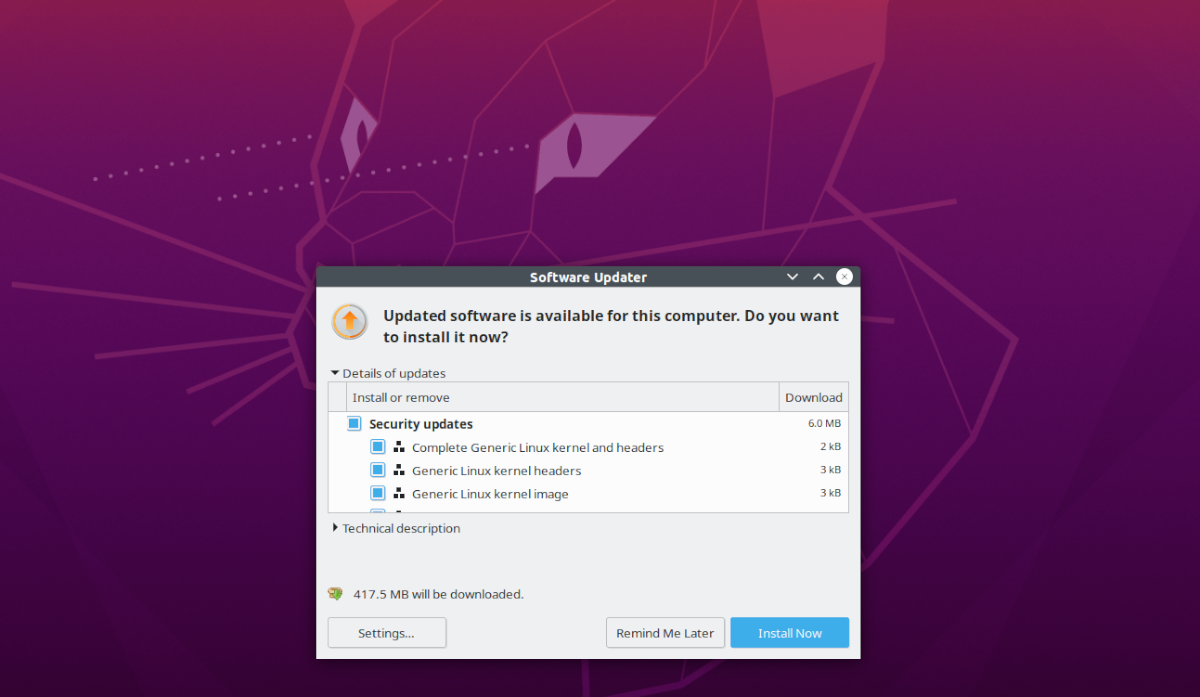
When a Linux update fails (which can happen automatically; for example, Ubuntu 16 reserved a very small boot partition and upgrading it to the latest version leaves it with too little space to keep the normal amount of kernels available), you end up digging through files and configuration and terminal commands. This is different from Windows where you have four buttons to click, and if all of those fail, you either reinstall the entire OS or reverse engineer Microsoft's logic and directory structures.
When Windows fails, the OS usually detects the issue and reverts all the work. Their self repair is excellent. Sure, Windows Update may be broken for a while and the forced restarts make the whole process annoying, but the system still works.
Linux can easily leave the system unbootable while Windows has the necessary recovery options. Boot recovery and System Restore are some features that definitely improve Windows' stability. Timeshift with a CoW filesystem and some GRUB hooks can somewhat replicate the effect, but I haven't seen any distros enable all of those by default yet.
For example: I enabled encryption in the installers of both Ubuntu and Manjaro and hibernation simply didn't work. I managed to make it work with some config tweaks on both, but out of the box my laptop simply shut down and lost all of my work when the battery got low. My laptop also had no sound, stuttery video and no working microphone because of missing drivers for Nvidia, Intel and Realtek chips. Udev rules broke sound every time I unplugged my HDMI drive or let it go to sleep.
Windows sometimes breaks down because of shitty drivers, but I've never seen it happen this severely.
This was probably all related to the manufacturer's decisions about board configuration, drivers, and other proprietary crap, but the end user doesn't care whose fault that is and neither should they.
I usually disable fast startup, and it sounds like she should disable it too.
Whoever set it up so that you have to reboot to shut down should have realized that the way they were implementing this was a bad idea.
There are many many distributions. When I started Linux, I first tried Ubuntu because that was recommended to me. Ubuntu is installed with Xfce which looks and basically is clunky and outdated. Setting up WiFi was a PITA because my laptop doesn’t even have an ethernet port, and i couldn’t do much else without wifi. I had to configure some stuff via the command line because there were no settings for it, and install a new trackpad driver. Eventually I gave up Ubuntu because it was too hard to use with my trackpad.
Later on I installed Debian which IMO should be recommended. But i couldn’t properly install regular Debian. After some research I had to install “nonfree” Debian from some confusing site, because my computer needs a nonfree Wifi driver (again, no Ethernet port). Setting up Wifi was an even harder PITA.
At least Debian was usable and had good trackpad support once I set up. Plus I have to admit the graphics are way better than even macOS and Windows. It’s also very noticeably faster than macOS, running the same programs. But actually installing it wasn’t easy.
That's unnecessary, reboot will always skip Windows's "Fast Startup". It can be a bit unintuitive because back in the day people used to recommend a full shutdown+boot cycle instead of a reboot as it could fix more issues. But it makes some sense, because generally when you reboot it's either because of an update or issues that probably won't be resolved if the kernel is just hibernated rather than fully restarting.
I agree with you, but I think that "for common users" pretty much all OSes are interchangeable these days anyways. The biggest headache for most folks isn't the occasional need to resort to an expert (which they'd always have to do), but the unnecessary headache of learning the quirks of a different OS. Easier to just stick with what you know, which is usually Windows.
I fell for it too. There was a brief period where you could do a clean Win10 install, log in to the OS with your MS account, and everything just worked and synced in a "this is nice" sort of way. The cynic in me kept thinking "don't fall for it," but it was too convenient.
Now I regret it and the only reason I haven't switched back to local accounts is because I'm not happy with any of the competition either.
This is an outdated take - it's functionally untrue in most business settings.
Gaming on the other hand, is very much still mostly Windows only.
I game a lot, I haven't rebooted into Windows in well over a year. Luckily I don't really play games that require stupid DRM/anticheat (although, that is being worked on)
I would probably start playing Apex Legends again if they allowed EAC Linux support. Epic added support, the devs just need to support it -.-
Most business settings have some absolutely critical custom software written in Winforms or something that can't be ported, plus an entire machine of IT personnel and software tools that would be just as costly to convert.
If I need to run Windows, I will either use WINE or single GPU pass through to a Windows VM on KVM. Never needed to dual boot. Edge on Linux is great actually, I just don’t like that I can’t disable the listening on avahi ports even though I have disabled avahi. Apparently Edge uses it to mask IP when using WebRTC.
FWIW, iOS doesn't chide you when you download Chrome or Firefox. Of course Apple requires them to use the iOS rendering engine - but that's perhaps a slightly different point.
How is apple allowed to do this? Would MSoft have escaped the legal trouble back then if they had simply insisted that Netscape had to run like IE?
What programs won't run on macOS that "normal people" are going to need? In my experience most "normal people" use a web browser, the Office suite, and maybe some Adobe programs.
If you need an expert anyway, it doesn't matter much which OS you use. The only exception I can think of are disabled people, who might rely on very specific software.
Most things work with just a browser. Such that my kid's school just gives Chromebooks. They prefer the Ubuntu and Pop os machines, but are fine with any.
The windows machine was ok when we had it, but it did crash more.
I only regret some content creation tools. Used to regret gaming, but steam has come a long way.
Counter-point: my dislike of Edge aside (especially since it uses Chromium instead of their own engine, which is lame), Google has made an aggressive, disruptive push to switch people to Chrome for many years now, which itself has made some aggressive, disruptive effects on the web. Is a little friendly "popup" from a competitor in a style all other browsers incorporate really such a bad thing to help keep Google's market dominance in check a bit? I don't think Microsoft or Firefox should just roll over and do nothing while Google pushes Chrome in everyone's face every chance it gets - it seems to have cooled off a bit recently (or maybe that's just due to me switching to DuckDuckGo permanently) but in the very recent past it was still doing so.
> I don't know any good operating systems for normal people anymore. Windows 10 and 11 are hostile
May I ask what makes you think this? Occasional oddities aside, I've found Win10/11 to make for an incredibly pain-free desktop experience. While the upgrade to Windows 11 was a bit of a pain due to all of the weird system requirements - I have the hardware required, but apparently not everything was enabled or set up properly and it took some effort to do so - and the start button location is still taking some getting used to, it mostly Just Works and gets out of my way. I've found it to be the opposite of hostile.
Windows blatantly ignores your preferences and settings to push Microsoft's own products. It started with little popups about Edge and previews of Microsoft Office, but every month the intrusive crap gets worse. Now computers come with some kind of debt scam installed by default into the browser that is VERY hard to get out of without technical knowledge or the help of someone with it.
Firefox had to reverse engineer Microsoft's system twice now to simply allow setting a browser as a default, and Microsoft has said to "patch out" their latest approach. Even still, the default browser won't open when you accidentally click a link to Microsoft's help; that opens in an ms-edge link that Microsoft keeps strictly to themselves. I consider that to be hostile.
- In Windows 10, they already made it harder to change your default browser. You have to explicitly open the Settings app and go to the relevant page (maybe if you're lucky the app you're using can link you there at least), and then when you try to change your default browser it will try to push you to try Edge.
- In Windows 11, they went even further: you now have to change the default apps separately for every single protocol and file extension, rather than having an option to set an app as default for everything it supports. The concept of a "default web browser" that's easy to understand for the average user no longer exists.
- When Firefox decided to implement a hack to let users directly change their default browser with a single click, Microsoft decided to patch it because "it can be used by malware to hijack your default browser". Which would be a completely reasonable explanation if we ignored the context this is happening in, but they're making their ulterior motive painfully obvious.
- And now, they're going even further by injecting unwanted and unprofessional self-promotion into third-party websites without the user's consent. It's quite different from what Google is doing, because they only suggest you to switch to Chrome when you visit Google Search, they don't try to stop you when you try to download Edge or Firefox from Chrome.
I seriously hope Microsoft gets hit with an antitrust lawsuit again, they completely deserve it. Looks like they haven't learned from last time.
If MS really cared about security as they claim rather than competition, they could very easily implement a popup dialog that shows up when an app tries to change your default browser. Heck, maybe even make it part of UAC for extra security. That way, it would only take two clicks and be also far more secure than whatever they're doing right now.
Also, I'm not entirely sure about this, but I remember reading somewhere that MS is also doing the same on Firefox downloads. While Google may somewhat deserve it (though that doesn't make MS's behavior any less user-hostile), Mozilla definitely doesn't deserve it as Firefox already has a quite low market share.
I guess the difference is that Microsoft has an additional avenue to advertise since they control more of the software stack.
The things I have more of a problem with are the dark behaviours for things like changing my default browser. I noticed when I originally would install Google Chrome and it asks if I want to make it my default, the process to do so is more complicated. Chrome can only pop up Windows default application chooser settings dialogue and then you have to manually switch the default browser in there. Microsoft will give multiple messages you have to go through before it sets it as default. Whereas when I recently switched back to Edge they had the same banner asking if I wanted to make Edge default, except when I clicked "yes", that was all. Microsoft was able to directly make that change without having me go through the weird process of switching defaults.
When one company gives themselves artificial advantages over their competitors like this that is when things start to get weird for me. For now I am going to stick with Edge for a bit, but if they continue to do things like implementing "buy now pay later" schemes I'll probably go back to Chrome.
This is not only not true for many years anymore, it's even got so far that it's almost the opposite now. Most successful businesses nowadays are increasingly led by tech-savvy leaders, because otherwise they wouldn't be successful anymore, and those people make their own software now increasingly better on macOS than Windows for their own selfish reasons because they all run on MacBooks, iPhones and Apple Watches today.
Even Microsoft's own software ironically works MUCH better on macOS than Windows. Try Office on macOS and you'll be surprised how good it is compared to Windows :)
That has not been my experience (though I wish it were).
Excel on MacOS still feels clunky and has significant performance problems with big files - including crashes.
For non tech savvy people, Linux can cause problems, but only if they do something weird to their system. Linux, specifically Ubuntu or Mint, untouched, and unaltered is a great out-of-the-box experience.
The key (if turning someone on to Linux for the first time) is to stress that the command line is for power users who want full control of every bit on the system.
It's best to gradually introduce the command line once they're familiar with using the system and are comfortable doing their first (command line) update/upgrade ritual.
When you Google for "Windows 11 sound not working" the first result I get is https://www.makeuseof.com/fix-no-audio-windows-11/ which is much more user friendly.
The system itself is one part of the problem, and that's the part that has been improving for years. The community providing technical help is another; Linux help forums are often full of technical users advising technical users whereas Windows help threads are usually novice users asking help and getting it in simple terms.
I'd say there are 2 main problems with Linux (for non-techies, etc, etc):
1 - They are not using 'linux', they are using one of the main distros, that can have some big differences between them. That also happens with Android, BUT, people that use a Galaxy S20 will google `S20 how to xyz` without even knowing how Android differs
2 - As mentioned in other comments, setting up can be a pain. Windows have enough drivers that installing it is just a matter of putting the cd/flashdrive and clicking next-next-finish. Some big distros might have sorted that out, but then you go back to problem #1 if they are the ones having to decide on a distro
3 (bonus) - Most people don't actually benefit from having too many choices, specially from things they don't care about. Usually they will choose a smartphone by 'it looks nice, camera is good, the interface is beautiful'.
For me, sounds like this could be improved if instead of recommending Linux, we (tech folks) collectively decided on just one distro to recommend to non-technical people. But I doubt that would be possible
I'm a Delphi Developer who moved to NZ in 2005 and several programs are still live and running in UK factories. A tribute to the Win32 sub-system rather than my programming I assure you :-)
But in both cases, actual user interaction required is very little and decreasing with time.
I will admit though, that if something doesn't work immediately with Linux, there's a good chance you won't be able to get it working with Linux.
A long time ago, I helped the development of some useful compiz plugins: https://www.youtube.com/watch?v=-X9bcrJ3TjY .
I abandoned the development when compiz was rewritten in c++, but the next step we planned was to add the choice of some fixed window layouts. Seems very close to what window snapping turned out.
It's so hard to trust Microsoft anyway, I'm glad 11 is such a tranwreck dead on arrival. Makes it easier to discourage people from using it, ever.
They named their user tracking, telemetry, and "Buy Now, Pay Later" add-ons "trust"? That's really Orwellian.
"FREEDOM IS SLAVERY"
"IGNORANCE IS STRENGTH"
"TRACKING IS SAFETY"
"CHOICE IS DEFAULT"
But really I feel like people jump to the antiauthoritarian rhetoric really quickly nowadays. I know your making a joke, but damn if I'm not worried we're kind of normalizing the concept
Microsoft hasn't been in the news as much, at least not regarding privacy matters. They're often seen by the public as the solid company behind trusted products like Office and Windows.
> "with the added trust of Microsoft"
Hijacking a competitor's page demonstrates that Microsoft lacks integrity and cannot be trusted
So, the statement "Microsoft Edge runs on the same technology as Chrome, with the added trust of Microsoft" actually means "Microsoft Edge runs on the same technology as Chrome, with the added ability for Microsoft to screw you over".
Now they are throwing away their good will with smarmy tactics --why? for some short term gains?
They were passing Google reputation-wise, of late, but these moves undercut their work of the last few years.
It seems they see Google, FB, even Apple, etc., eating this cake (using market to undercut competition) and can't stand the temptation. I can only hope the DOJ will find some will to take on tech and do something about their behavior, but I am not holding my breath.
If only companies would have principles they could stand on and we could count on.
This is really cringe
I especially hate funny error messages as they just frustrate me. It’s ok when Reddit has a funny image because they can’t show my video game forum, but it’s infuriating when Microsoft shows a “whoops, what happened” when it just failed to sync the last 30 minutes of my work document.
On the opposite, I started using Discord recently and they manage their funny tone very well, but it is used consistently through the application. And it stays informative.
I call it "meme speak". It's the style of writing used on meme image captions or in tweets designed to generate the most number of shares and "likes".
Newer is not always better... if only Microsoft (and the rest of Big Tech) would go back to 2008 or even earlier, when they were far less controlling.
Browsers detecting specific sites and acting differently on them, unless specifically requested to do so by the user, should be prohibited. Ditto for operating systems detecting specific applications. There needs to be a word for the equivalent of net neutrality, but applied to software and environments in general.
MS in 1997 or so was doing shenanigans like crash Explorer if you attempted to download Netscape (Firefox predecessor) they got sued by the EU and lost.
The lawsuit terms expired recently and Microsoft is doing exact same shit they got sued for the first time, I guess they are testing to see for how long they can get away with thsi shit before they get sued again.
Do you have a source for that? I remember them being sued and losing simply because they bundled the browser with the OS, but don't recall any sort of the "detect user attempting to use competing browsers and kill them" mentality that they now have.
"Did you know that personal files can disappear just like that, just like that? Oh, I just noticed you are downloading Chrome. By the way, you sure those backups are working? You have backups, right? Just saying."
Sure! I mean it's working so well at changing corporate behavior, why would we want to stop now?
Things like this are why I advocate for Corporate Jail time and a Corporate Death Penalty.
[0]: https://en.wikipedia.org/wiki/United_States_v._Microsoft_Cor....
I'm wondering if it's still a business case for Microsoft despite being sued.
[0]: https://ec.europa.eu/commission/presscorner/detail/en/IP_13_...
Windows 11 is awful, I went back to 10 within a week - screen flickering, stupid scrolling issues etc.
But everything else seems to be much improved lately. I’ve got Ubuntu running on my laptop and it works with my Magic Trackpad (including gestures), 4k display with fractional scaling, and 1080p low-dpi display simultaneously. I wasn’t sure they would ever get there. Everything pretty much works.
The App Store is still garbage and the whole Snap concept seems to work much worse overall than Flatpack. But I have faith they will get their act together eventually.
Still, I foresee a future where the pain of Linux Desktop for me will be outweighed by the pain of continuing to use Windows. Which is sad. Linux Desktop will have won not on its merits, but because Microsoft just decided it didn't want to make a Desktop OS anymore.
If I get extremely lucky, it's possible Haiku will take off in the meantime and implement some of the things I'm still waiting on for it to be a decent desktop for my uses, but I'm not holding my breath.
So here’s my defense of Microsoft taking these steps:
* Google promotes Chrome on YouTube, search, and gmail. Strategically Microsoft needs a message to counter the pop ups on Google sites that are leading to the Chrome download page. It would be much more annoying if you saw this message every time you visited YouTube or Google. The author presents it as the case of someone actively seeking to download Chrome but they could have been lead to the download page from another Google property.
* Many people don’t know that both edge and Chrome use the same engine. When my company mandated edge, people reflexively complained even though they don’t lose anything in terms of speed, extensions or compatibility. For many people knowing that edge has the same browser engine is informative - most non geeks won’t keep up with that.
* if you are working at a Microsoft company, your data is already in the hands of Microsoft and your employer so there’s little privacy to be lost by continuing with edge, but by switching to chrome you bring a 3rd party into the mix.
* you could argue a lesser version of this for all windows users with the integrations that Microsoft has been pushing.Microsoft violated that trust. This means that they value their interests above my own. They are demonstrably untrustworthy. Again, btw.
If the only environment where someone will not be an asshole is an environment that punishes assholery, they are an asshole.
So now, every stupid thing has to be completely free just to be considered by any consumer, and every software maker has to beg, badger and berate users over and over to get them to try things and download things and sign up for things, all because we collectively forgot that we could have just paid them 40 bucks and moved on.
You used to have to pay for operating systems, and for a while it actually became more expensive (e.g. macOS was $99 but went up to $129 to everyone’s surprise before becoming “free”). You definitely used to pay through the nose for apps but you got a lot for that money. Mobile devices are largely responsible for the 99-cent-ification of software, most of which is now “free” with “in-app purchases” which is ironic since these “cheap” replacements sometimes cost hundreds of dollars more if you actually add up all the recurring in-app purchases they contain. And, of course, subscriptions.
So great, Windows is “free” now and web browsers no longer cost money like Netscape did but instead we get all this crap in our faces. Personally, I think we have lost a lot and we desperately need to re-learn how to pay, once, for software, again.
[0] https://www.neowin.net/news/microsoft-says-its-own-edge-brow...
lolololol
Does someone on their marketing team actually believe that?
I'll shed a small tear for the people that are still forced to use Windows, but Google is at least as bad with this in pushing Chrome at the expense of other browsers.
And users are caught in the middle. OS vendors should STFU, stop pushing their services, ban telemetry and other invasive stuff and put the user centric. Fat chance of that happening any day soon though, after all, the only reason that users exist in the first place is to be ripped of or squeezed like so many lemons until the last penny has been forced out of their pockets.
They're not wrong about it being based on on the same renderer as Chrome, but that's about as far as it goes.
The worst thing is that Apple and Google do the same dark patterns and no one seems to care about them. For some reason, Microsoft didn't learn from the early 00s any lessons on how to do this kind of thing with any subtlety.
I have a Mac laptop and iPad, an Android phone, and I now run Linux on my PC and haven't booted into Windows 10 since May (checks uptime...). I don't think I have any reason to use Windows at home any more. The changes in Windows 11 are even more unappetizing. It feels like Windows Me, or Vista. The version no one asked for.
Every kind of technology today has clear and visible dark patterns. In the past it was advertisement everywhere and now it is user-hostile design. See any discussion about smart tv, subscription services, webshops, smart devices, phones, apps or any other technology topics and the issue of dark patterns will pop up. It is a race to the bottom, and I can see the rationale by Microsoft. They are doing the same thing as google is, just a slight step further.
If people switch to Apple then third-party browser must use iOS WebKit framework, and reportedly have their performance limited to make safari better in comparison. They could go linux but then people complain about a lack of polish and compatibility with programs/hardware that they use and so return back to either windows or mac.
As a person who have been working with computers for my whole life and used to be quite excited by new technology, it is quite often that I get tempted to become a farmer and leave behind the dark world of technology.
Let Caeser have his awful stuff. We can all push for fun, and free computing.
Instagram's log-in to view anything (even public pages) is everywhere now. If you go to Twitter and click a person's name or click a tweet, you get a log-in pop-up.
Firefox, for all it's modern faults, is the only browser that's actually different in any substantial way.
I switched a year ago and I was emotionally prepared to fight a rough battle with problematic websites, incompatible apps and so on. I was very positively surprised. The only major PITA was the fact that I had to define MIME types for downloadable documents that I wanted to save by default - the usual box "remember this option" was missing for .mkv and the like. So far, this was the only major complaint on my part. Everything else was very positive, especially the containers, no forced Google logins everywhere, the availability of extensions that Google doesn't like (like Ad Nauseam) and so on. I wouldn't go back even if someone paid me (OK let's be honest: I'd do it if I was paid more than €1000 a year).
I imagine the telemetry is extremely important. Knowing every activity done by every user is valuable to Google, or Microsoft, or whoever gets the chrome feed. Of course this is why I like brave, FireFox, safari and others as there is no similar telemetry.
...Because apparently Safari no longer exists...?
as a casual reader, I know this is false.. several HUGE efforts, have failed to gain the eyeballs of readers . repeating that there is only one choice, is not useful or constructive right?
That's the thing. I don't WANT a browser that's actually different. The web is a duopoly between Apple and Google, and everything else is a second-class citizen. The era of an "open" web came and went, passing us by as capitalism took over. Firefox offers no meaningful freedom when all the content it's supposed to consume was designed by and for big companies targeting other big companies' products and customers.
Using Firefox introduces a lot of headaches and subjects you to frequent, meaningless UI updates that add partner extensions against your will and show you recommendations that I don't want to see... Mozilla is desperately trying to stay relevant and has introduced a lot more dark patterns than Chrome has, all while adding no value beyond some vague, lackluster appeal to a libre web... too little, too late.
Google, for all its faults, makes a darn good browser. The only downside is that they track my habits. So what? I'm not particularly exciting, and the only real cost I've noticed, beyond needing an ad blocker, is that my Google News feed gets cluttered with shit I don't care about derived from my browsing history. But other than that Chrome is just wonderfully simple and clean compared to the bloated Firefox (and its lookalike clones, Opera and Edge).
I think 11 is more about changing hardware requirements, requiring a TPM. The UI garbage seems more like an opportunity to try new things, they'll figure out that people don't like these new things.
8 and 8.1 were the last death throes of decent design, and then they started making a mess of everything in Windows 10. Not only didn't they reverse it with Windows 11, they doubled down on it when they had a perfect chance to rebrand with a "back to the classics" comeback to Windows 7-like UI without backlash.
Their trajectory is locked in. Barring a miracle and re-prioritising on their users, "good" Windows releases are dead forever. Looking forward to the LGR Retrospective on "Windows 7, the last good version of Windows" in about 10 years time.
Talk about timing...
The train wreck starts there. Who wants a system that auto upgrades itself without the user permission?
Aside from that, and a couple of UI annoyances (the placement of the start button and the re-arrangement of the start menu) I'm happy enough with Windows 11 that it will be a bummer for me if I have to go back.
For me it's little things like the way the context menu is cleaned up -but the old one is still available, and the file manager is similarly cleaned up. I also like that WSL is better than it was on Windows 10 (running gui apps are now an option without grafting a separate and half-assed X implementation ).
So yeah, I'd say "trainwreck" is a hyperbole -especially for anyone who had to use Windows 8!
Prime majority of users don't upgrade BIOS, or don't even know what it is.
11 will be a short lived release just because of that, and them not only needing to backpedal, but to entice users into biting into a new bait, as all what is actually good in Win11 been kind of mentally displaced by the fiasco.
A supposedly sucks less Win11.1 will not do it to attract more users. A completely new release is coming.
It's crippled compared to Win10.
No one cares about HDR. How about some decent data retention?
I get better frame rates in Linux running wine than I do in windows 10 since the 2020 updates.
Personally, I'm looking into Vivaldi; though I haven't switched over yet.
Almost every single person that I can think of in my life does not give a shit about an edge reminder. The one that does doesn't use Windows anyway.
Hackernew is a unique audience.
It still crashes way too much for me to use as my primary browser, and I only keep it because it is a better PDF reader than Chrome and I've not had time to find a replacement.
I hate having Microsoft scan my online shopping carts so they can collect data and hijack affiliate commissions. Do they think we're dumb?
Back then, I felt like the owner of my machine. Sure they had bad things like IE but I could just ignore it.
Now, it restarts itself and installs updates despite me specifically trying to stop it.
It’s a shame really because I really enjoyed Win 10 and even Bing doesn’t suck completely.
Thank goodness for competition and the new M1 laptops! Now Apple just needs to launch a good search engine and get Numbers to where Excel is and I can wave goodbye to both MS and Google.
I mean... if you're paid to increase the usage of X, do you really care about long-term reputation, if you'll be five companies away by then?
Microsoft never changed. There was never a "new Microsoft". Only a new strategy with the same goals as ever: anti competitive behavior, bullying "partners", and what not. Just because they made this or that opensource changes nothing to the nature of that company. Windows 11 is basically just adware at that point.
To circle back to your point, I now feel Google’s Don’t be evil was a deke, a fake and was all about building reputation which they leveraged for market share.
winget uninstall -e "Microsoft.Edge"But after spending so many years, especially in the late 90s and early 2000s, getting shit from a bunch of khaki wearing, corporate butt kissing MSCE types about how Linux is "get what you pay for" and constantly mocking that all this "free software can't do anything"
and then sitting back and watching Linux empowering cloud computing, Unix/Linux being the basis of all our mobile devices, being the base for most IoT, watching the explosion of Docker and tons of other toolsets all initially rooted in the Unix/Linux ecosystem, watching Unix/Linux become a tool that developers heavily relied on either Linux on the server or Linux/MacOS on the desktop/laptop...
watching Microsoft do things like making Notepad use Unix EOL characters, supporting MS SQL on Linux hosts, expanding PowerShell to perform all kinds of tasks easily done by Unix/Linux for over a decade, creating a knock off of apt and yum with "win-get", making it super easy to install a whole Linux ecosystem within Windows itself, doing everything they can to make using GIT on windows, an easy experience, and so forth and so on..
and i just can't help being figuratively stick up my middle finger. Not just to MS as a company but to all the clowns that mocked Linux and Unix guys for literally 20 some odd years. Not just peers and co-workers, but managers, upper level managers all the way to CTOs who reluctantly realized Linix solutions were a better fit in some areas and were won over by lower management.
At this juncture - i don't even particularly like desktop computing, no matter the flavor. It's all frustrating in their own ways - including my precious Linux.
But F* windows and F** windows people in IT. The whole lot of em
iwr https://chocolatey.org/install.ps1 | iex; cinst googlechromeIn particular I remember utilizing the FTP method to get Firefox (avoiding IE) was all the rage in the XP era.
You know what I say to that? Tough cookies. Websites and OSes have different responsibilities to their users -- if MS wants to use shady cross-promotion tactics like Google, they should provide web services that justify the annoyance and do their cross-promotion there.
Why are we making computers harder to use for the everyman? It's such a grossly short-sighted decision that will only serve to further the divide between an increasingly mobile-oriented consumer class and a primarily desktop-oriented professional class.
So to have a successful browser you need to invest to have a visitor count rivaling the largest search engine, video platform, and online mail combined? I think that’s a very large hill to climb even for Microsoft. Your statement leads to only a Chrome hegemony. In terms of sites with Google’s reach, maybe Facebook could make their own browser but that’s about it.
I see Google prompting users to download Chrome on Google.com similar behaviour to Microsoft using Windows 95 to push Internet Explorer.
- not talking about gp specifically. Just folks who make those sorts of decisions off such busted premises.
indeed this is the added trust of msft.
I wouldn't expect a "fixed" version distro to break nowadays because of updates.
Also FWIW openSUSE does provide recovery support[0] as it uses Btrfs snapshots before and after package installations and upgrades (as well as during some other events, including taking a snapshot periodically - these are deleted after a while or if they start taking too much space) and you can roll them back either manually or even boot from a snapshot in case something goes wrong.
I haven't really had a need for it so i can't exactly tell you how useful that would be (or to compare it with Windows since i never used Windows' system restore either), but it does sound like it'd provide the same or at least very similar functionality.
[0] https://doc.opensuse.org/documentation/leap/reference/html/b...
That is what i expected but it doesn't seem to work that way and i had issues myself with it with other things, like e.g. some older games use the system timer (which is reset at full shutdown) for their animations but if the timer is a large number the animations and movement might break. This wasn't much of an issue back when most PCs were shut down every day as it would reset the timer, but nowadays the timer state persists after reboots - it was what actually prompted me to figure out how to reboot the PC from the command line as that does a full reboot.
It might be a bug that persisted for a long time or some intentional feature, but either way it is something i've experienced on my PCs and for that reason i have a small shortcut that calls 'shutdown' with the parameters for a full reboot.
Ubuntu's default desktop environment is GNOME (or Unity in some earlier versions). You must be thinking of Xubuntu.
- `dd` the latest Debian netinst onto some old, small on-desk USB-stick,
- Insert USB-stick into target device, power on, get to boot-selection screen.
- Hook up my phone via USB to target, set it to USB-tethering mode (To bypass initial (wifi-)firmware issue(s))
- NOW press ENTER in the boot-device selection screen.
- Select Expert mode in the Installer Menu, this enables:
- Selection of "non-free" package source
- Enable backported software
- Select minimal install (get the rest after Ethernet/Wifi Firmware is installed)
- Reboot, still using USB-tethering
- Install needed firmwares: `apt-get install firmware-<TAB><TAB>` (choose correct one, or install many/all)
- (optional, but recommended on devices younger than 2 years: Install backports kernel (currently 5.14): `apt-get install linux-image-amd64/bullseye-backports`
- (Optional, but needed when batadv-meshing with Openwrt master on 5.10: install kernel from debian testing (5.15.x) , with command similar to above ^bullseye^testing (after adding testing source)
- run tasksel, select "Default Desktop", or whatever you were planning to install anyway
That is a "detour" of less than 10 minutes.
Also, this won't give you too many benefits aside from convenience to skip one password entry, while any Saas will at some point leverage it against you if it every gets popular. That is basically the gist of secure boot or trusted platform in general right now.
Smartphones are trusted platforms and their software landscape is atrocious and predatory. Trusted platforming would move it in exactly the same direction.
Meanwhile boot viruses have become quite rare, because phishing and extortion is much more profitable.
With office 365 and intune you can essentially have the same control as traditional AD joined machines actually Intune probably has better management than GPO these days.
The only thing that is still missing for corpo is Intune for Linux and even that isn’t 100% required as long as there will be Intune for Edge on Linux, once you can manage the browser the majority of the controls the organization needs are handled.
I haven’t seen any of these in almost a decade. there are specialized use cases that require some specialized software, but for most business operations the software works cross platform or runs from web apps. I used to keep a parallels instance to run MS SQL server for some tasks but we have even transitioned that to a less propriety setup.
Most browsers will, or to be more precise: I’ve never met a browser that didn’t request to be the default, but there’s usually a point where they stop asking or else a setting to disable that “feature”.
Though yes, that accounting sheet that has 2 million blank rows, and some macro trying to access a file in c:\windows\system32 is likely still causing problems... (not kidding)
Those folks also us macOS, but that was not the poiI tried to make.
But as i said, the best solution is to break them up. Split them into Azure; Windows+enterprise software à la AD; Exchange, etc., Office365; Surface.
You can imagine it all you want, like most things that are pure fantasy.
> The main issue I find with Linux is app support but that would be worse again with Haiku.
There are other issues that I consider important. Things like how application management works, coherency of the platform, stability of ABIs, simplicity of the platform, non-bloatedness, lack of fashion-oriented design, etc.
I do agree though that all of the Linux distros that are aimed at being minimalist aren’t simple (e.g Arch).
Though there are some like Puppy Linux which I think have quite cool ideas around it.
Please refrain from projecting whatever ideas you have around “Linux desktop people” onto me.
Let's look at your post again:
> Really? What does Google deserve when it nags me about switching to chrome whenever I use any of their pages from a browser that's not chrome?
If that isn't whataboutism, then you really ought to work on better phrasing your thoughts.
Microsoft is doing bad thing. That Google is also doing bad thing is irrelevant to the discussion about Microsoft doing bad thing.
Now that Firefox is no longer in the top 3 (in the Western market, further down world-wide), we can expect it to lose relevance even more quickly. Especially since Mozilla leadership has studiously avoided any effort to differentiate themselves from from Google/Chrome. They missed a huge chance to become The Privacy Browser that puts users in control of their web experience when Google and Facebook recently got all that bad press about privacy violations and monopolistic behavior.
The point GP made was Firefox was worth targeting not that Firefox is going to be more popular the Edge.
I've had Python scripts (ML, data analysis) running locally overnight on Windows, only to come back to a restarted computer. Not fun.
No, we don't think this is OK. It looks ridiculous.
Remember that "textspeak" is just shorthand used to save keystrokes. I haven't seen anyone unironically use "2" instead of "to" since the days of flip phones -- on a smartphone keyboard, it's harder to type the number 2 than the word "to" because you have to switch to the numeral keyboard and then back.
Writing "u" instead of "you" is less common than it used to be, though some people still do it sometimes. But capitalizing the U is absurd -- remember, the whole point of shorthand is to save a small number of keystrokes, so you wouldn't waste keystrokes on unnecessary capitalization.
Any kind of shorthand like this looks ridiculous and out-of-place in a professional context, like a text message from a corporation. It signifies that you don't care enough to type out the whole message, which comes across as relaxed and casual between friends but as lazy and unprofessional in a form letter.
If I received a message liked this, I would immediately think it was written by some middle-aged manager who is trying to be "cool" and "relate to the kids." But a poor imitation of low-effort texting shorthand doesn't come across as "cool" at all; it's just silly and disrespectful. It gives the distinct impression that the whoever wrote the message thinks of me as "just a kid" rather than a normal, adult peer; as if I don't deserve the dignity of a normal, professional message.
Why this matters: SMS delivery is usually priced per message segment. Going over the 160 limit ~doubles the cost to deliver the text.
(Source: I am the CEO of a company which sends millions of text messages and avoiding 2 segment messages saves us thousands each month!)
All that said, the text from the above commenter's loan servicer is unprofessional nonsense regardless of its length.
you're thinking really hard about paying your student loans now, so it worked. who doesn't understand what's going on? doesn't sound like it's your loan-servicer, to me.
But that's for introducing me to the iwr command. I don't use Windows often, but it's good to know what tools are available in the rare instances that I need to. Now I need a mnemonic to remember it... "I Want Real (curl)"
I personally don't like the lack of old things. Namely being able to drag to the taskbar. That's baked into a lot of my workflows, and I can't believe they removed such a useful feature.
I also don’t think it reflects the dev team tone as it seems so fake fun and probably means the dev team is in terror of saying the wrong thing. I’d rather see the localization resource bundle value than whatever this is.
It’s about as honest as the Costco greeter in Idiocracy saying “Welcome…I love you.”
what?
This is all just my understanding from reading various discussions, so may be incorrect in whole or in part.
An experimental patchset for Wine/Proton. Might help with some newer titles, and Steam gives you the choice per-game to target a specific Proton version.
IIRC Win7 was the one that started installing most drivers without any user effort, which was really nice. It also bloated minimum disk size to many times that of XP (or a very full-fat Linux install, so the drivers can't be the reason, since that also includes tons of drivers) but if you had the space, it was worth the trade-off.
about:telemetry
Full details on what is sent to Mozilla, how it's used, and easy to understand.
Additionally, if you don't like what's being sent, you're still able to disable telemetry.
If Microsoft started doing this, it would be a lot of negative attention. Whereas Chrome users haven’t cared about logging stuff for years now.
It's encrypted in transit, but it has to be decrypted to be meaningful to the end user and that's where they can eavesdrop, the kernel has full access to user memory and all syscalls, no?
>If Microsoft started doing this, it would be a lot of negative attention
They have a proprietary closed source kernel which can be reverse engineered by very few people outside Microsoft, I think putting a little backdoor there would be less noticeable than showing a message box to every user.
How much is each customer worth to you?
Which is worse for your business - all your customers getting a cringey needs 2know if U wish 2stay in Autopay text and thinking that your entire business is unprofessional, or spending an extra $0.001 per customer per month to send them a message that reads F0rmatFunction can automatically pay your bill each month, but we need your approval. Change your mind? Cancellation is easy, just text "No" to this number. Respond "OK" to enable auto-pay! I'd rather get the latter for sure!
Sure, it's good to let those generating the messages know where the threshold is. Concise communication is best, sometimes you can be equally professional and just pick a different synonym or structure, and save the company some money. But sacrificing quality of a $20/mo service to save $0.001 per customer seems unwise, even if it adds up to a thousand-dollar bill.
At least Pottering isn't trying to extort loans from me when I start/stop a service.
False. The FOSS software that I personally use is less useful (on a practical technical level) on average than its technical equivalents.
And beyond my specific tools (which I admit could just be the bad parts of FOSS), FOSS software is near-universally bad (along with almost every other piece of software I've touched - this isn't a condemnation of FOSS, only a pointing out of the fact that it's not good, just better), and nowhere close to a "computing utopian dream". The amount of issues that I've found in open-source software wouldn't fit in a blog post, let alone an HN comment (although if anyone really wants I could provide a sampling).
You can say that some pieces of FOSS are better than their proprietary equivalents in a technical sense, sure - but I've never actually found a single piece of software, FOSS or not, that is anywhere close to "utopian" (or barely even "functioning").
Probably because of which fields you work in. But in software development, I'd say it is almost exclusively the case all over the board.
If you work in digital arts, then Blender is probably the best end-user application example I can think of.
I'm a software developer and have used the following pieces of software that were very non-utopian: gcc gdb sbcl vim emacs vscode atom tmux bash fish make cmake automake autotools m4 cpython pip mypy pyinstaller firefox gradle ant sbt chisel npm qmk (that is - everything I've touched). I also know that virtually everything related to webdev is just straight-up awful.
I've also used Blender and can testify from personal experience that it's bad.
What else is there?
The only thing that causes a comparatively bad experience on Linux is in part software availability or driver related, neither of which is the fault of the operating system itself.
I feel the same about a lot of apps in F-Droid now. Sometimes their functionality is not as complete or they're not as polished as their Google Play counterparts. But the ad/crapware and mandatory logins that is included in those apps take away a lot of usability now.
At that point I gladly give up some polish for a 2MB app that is fast and does just what I need over a bloated 100MB app with stupid animations, ads and tracking. My battery loves it too.
No.
If I type eba{Tab}query, firefox should search ebay for query. If I have to go to settings once and tick a box to enable this functionality, I will. I won't stop wanting what I want.
2. Find an eBay search engine you like, install it in Firefox.
Now, when you type eba{Tab} Firefox will suggest the search engine you installed, and your continued typing will be as a search in that engine.
I don't use this for eBay, but I do use it for Rust, typing e.g. rust{tab}iterator takes me to the documentation for std::iterator and related entries.
Pretty much every other browser is based on Chromium. Some very niche ones on webkit.
From there you can see what is being update and what the update does. You can even choose not to install one update or another or even not update a system component or another.
So, if you're afraid a new LO version may break compatibility with documents you work on but GNOME updates will improve usability, you can disable one specific update. Very simple and user friendly. For users who don't know, understand or don't care, they will simply click update.
Canonical is also planning to use snaps for some desktop or core components so they can have security updates automatically installed in the background. This is a somewhat polemic topic, but I understand their rationale: some people simply choose never to update because they have been burned by bad past experiences. Of course, the more advanced user can still disable it.
The websites don't seem to want to support Firefox, so Google definitely isn't blameless, but we should probably at least blame them correctly.
I use FF on Android too. Android is better than others. I have Chrome disabled on my phone and there are some things that just won't open without it. It won't let me shut off the "Play Protect" nag every single time I install or update something from F-Droid. I've accidentally turned it on countless times. But it is the least worst of the mainstream mobile OSes.
On a relatively recent (at the time) processor and ideally more than 1GB of RAM and it was absolutely fine.
It's reputation for instability was heavily due to early NVIDIA WDDM drivers being utterly crashtastic - this is something that did eventually get resolved. At the time I had an ATI card and it was perfectly stable.
Source: Over the years, an app I had my hand in was on one of the rotations.
Putting ads in the address bar: https://www.theverge.com/2021/10/7/22715179/firefox-suggest-...
Recording what you type in the address bar: https://today.in-24.com/technology/450296.html
Putting ads on the New Tab Page: https://www.ghacks.net/2018/12/31/firefox-with-ads-on-new-ta...
Randomly installing Addons for people: https://itsfoss.com/firefox-looking-glass-controversy/
Some times installing addons without permission to promote TV Shows: https://gizmodo.com/mozilla-slipped-a-mr-robot-promo-plugin-...
They last 5-6 years, Mozilla has made a number of baffling decisions. And most of their advancements just seem to be very 'me too, me too!' as they chase design decisions made by Google.
The auto-installed addons thing was a bit of a fiasco (though one which didn't affect me), but things like advertising or extension support are still worlds better in FireFox than on Chrome.
but boy has it made Brave more attractive.
I just feel like Mozilla has a very "Democratic Party" attitude. They do really stupid shit that no one likes and stares you square in the eye and says "what are you gonna do about it - vote for the other guy?" and it's super frustrating.
Never going back to Chrome - even though I'm forced to use Google apps @ work, and it has noted incompatibilities with FF.
They also managed to ruin their privacy-oriented Firefox focus browser on mobile, by making it redirect website links to compatible apps - completely butchering its only use case as a private browser that lets you be online without any permanent sessions
You can turn this off
Ultimately I rolled back my installation to a previous build, and have refused to update it since. I'll give the latest build a try on my backup phone.
Where does Safari fit in here?
https://news.ycombinator.com/item?id=12305598
https://news.ycombinator.com/item?id=9976298
https://news.ycombinator.com/item?id=10053352
https://news.ycombinator.com/item?id=10144733
...and many more.
Now look at mainstream media. CNN alone has 230K results for google privacy [0]. How many results for microsoft privacy? 16k [1]
[0]: https://www.google.com/search?q=site%3Acnn.com%20google%20pr...
[1]: https://www.google.com/search?q=site%3Acnn.com+microsoft+pri...
However clean, possibly less bubbled browser, gets number over twice larger on the second link.
What? Every non-tech person I see is happily running Google Chrome and has never even considered Firefox. Hell, I think most still think Google is one of the "good guys".
Non-tech people still trust Google much more than Microsoft. Microsoft is bad, but they haven't made your data their core business just yet.
That's pretty interesting claim, what makes you think so?
> Maintaining browsers has become a significant undertaking, so complex that only well-funded corporate interests can afford to keep one patched and up-to-date with the latest web standards. It surpassed operating system complexity. It surpassed pretty much everything else too. So we can forget about it ever being truly "free" (and free from ads) unless we simplify the web somehow. I also don't think we're going to go back in time and start cutting features out of browsers. So that isn't going to happen
Google develops Chromium and Google gets constantly bashed for selling ads. MS modifies Chromium and adds their own branding and sell ads. MS is just trying to cover their development cost.
Disabling ActiveX and Java (not Javascript) and having Just One Browser made for a remarkably clean and simple experience, the likes of which we haven't seen since.
For all the modern innovations, I don't think the fundamental premise of the web has changed all that much -- hyperlinks, text, and media -- but the user and developer experience has gotten a lot, lot worse over time as more and more money competed for eyeballs.
Edit: As for "work as hard and dedicate as much budget"... I hope they don't! A circa-2000s feature freeze on web browsers would be wonderful. Stop "innovating", i.e., creating trash features that only help huge enterprises selling trash advertising. The web doesn't need to be this complex; we're feature-rich and content-poor as it is. What started as a network for academics and info sharing ended up being a marketer's wet dream and a nightmare for everyone else.
What are you referring to?
I just remember that every time I reopen Firefox (to test it for something), some new annoying thing like Pocket or some other trendy extension I didn't ask for has suddenly appeared. And it's always bugging me with CHECK OUT WHAT WE ADDED popups. I don't CARE about your new features, just let me browse the web and stay outta the way, damn it.
To say nothing of things like FLoC, new web APIs that just so happen to be excellent ways to track you, neutering ad blockers, AMP integration, and so on.
The first point there is changing the API for their add-ons, which they did for performance, maintainability, and security reasons. No dark pattern there.
On Firefox Suggest (points 2 and 3), are you saying it is a dark pattern because their messaging when you enable the feature is not clear about what's happening? What's wrong with the messaging and how would you like it to be better?
With ads on the new tab page, I don't see what is a dark pattern about it? Or are you just saying that you don't like ads and wish Firefox would find another source of revenue?
With the Mr. Robot extension (points 5 and 6), I think it was a dumb choice, but again I don't see how it's a dark pattern?
FWIW this is also one of my least favorite things about FF. What the fuck is the point of unobtrusive background auto-updating if you're also going to annoy me with ads every single time you do it?
Only OS maintainers seem to give two hoots about efficiency… Google and Mozilla see no issue with turning your laptop into a battery destroying space heater, and the impact of Google’s part in this is outsize with every other app being built with Electron.
A system which still pretends you're talking through a teletype, a system where it would make sense to use both CR and LF together and individually to move the cursor accross or down or both, shuns it.
Windows never did mandate it, applications can use any line ending they like, but used it as a convention for backwards compatability with DOS which was backwards compatible with CP/M. CRLF is the standard in SMTP, POP, IMAP and HTTP.
To watch Linux fanatics:
1) identify Linux with Unix, for "superiority by association".
2) personally identify with the use of LF as a newline indicator in text(!)
3) fantasise that Microsoft's use of CRLF is inexplicable, inferior, dictatorial and in some way objectively wrong, while Linux's parroting of Unix is superior, amazing and in some way objectively correct.
4) Ignore that the American Standards Institute draft of control characters from 1963 had only CRLF newlines, and Multics from 1964 didn't go with the standard when it could have.
5) personally feel superior and vindicated that Microsoft's basic text editor changed newline terminators...
6) ... a program they don't even use ...
7) ... while in the same breath complaining about how everything should be like Linux and they've said so for years, but now it is that way it's also bad; "fuck you fuck everyone I was here before it was cool, I was angry that you didn't do it my way and now I'm angry that you are doing it my way".
8) while ignoring the elephant in the room that the "everything as text" OS with tools that "do one thing well" is completely incapable of handling both styles of line endings.
Is just a ridiculous situation.
> "doing everything they can to make using GIT on windows, an easy experience, and so forth and so on.."
What a terrible company, doing things to make users lives easier. Imagine if all the standard Linux tools could just handle common line endings. Python does, which demonstrates it's totally possible and mostly a non-issue. It could have been made to completely go away, but instead has become a source of Ego and Pride for the Linux fanatic, thinking people who use tools that deal with complexity and present it simply are inferior, instead of thinking that those tools are desirable and superior.
My personal opinion on WSL and other "Linux integration" tech in a nutshell. We MADE this world. How dare they try to domesticate it! How dare they take our ladders, pulling them up right after they are done building their monopolies!
> At this juncture - i don't even particularly like desktop computing, no matter the flavor. It's all frustrating in their own ways - including my precious Linux.
I don't even want to see a Year of the Linux Desktop any more. It's a dumpster fire. Serenity OS and Haiku deserve their own Year of the "X" Desktop far more than we do. The Linux can keep its Century of the Linux Server trophy instead. And it's not a consolation prize, but a real achievement.
I was thoroughly in the "screw Microsoft" camp until about 2018, when I thought they were on the way to redeeming themselves.
Unfortunately they've continued their prior "hatefully corporate ++" behavior. I bestow this term on companies like Oracle & SCO (remember them?). At this stage in my career, I have regularly been in a position to send a significant portion of comapny expenditure toward Microsoft. I won't be in future, and when I reach CTO/CIO I will continue to advocate for more open and fair solutions for my company.
> But F* windows and F* windows people in IT. The whole lot of em
Maybe leave the late 90s.
The way Windows people talk about all the "revolutionary" stuff Windows can do, like just piss off.
This is like the jocks bullying kids for wearing Metallica shirts or NIN shirts freshman year only to act like the biggest fans 2-3 years later.
It's like Star Trek fans getting mocked for decades, just so people who never cared in the first place can tell people who've been fans for 20-30+ years they aren't "real fans" (and banning them from communities for daring to have a critical opinion) b/c they don't gobble up every piece of shit Abrams or Kurtzman puts out.
There's just this trend of people swinging down and then when said thing becomes mainstream, they act like they've been down since day one. the important lesson is that they're cool and smart and in-tune, no matter what.
I personally believe it is arrogance to say that non-technical users shouldn't be allowed to control their own PCs. And besides, a lot of users of PCs at home are technical. So I strenuously disagree with you.
I mean, look at your language: "MS taking over is really not a big deal". How am I supposed to have interpreted that?
Windows is actively user hostile when it comes to updates.
And if Windows Home users should be able to disable automatic updates is debatable.
I honestly think blender is a technical marvel that in many cases is better than its proprietary counterparts. The bar is quite high for these kinds of specialised and very expensive software. So, if blender is "bad", then perhaps the bar is set so high, that I don't think I can give a satisfactory answer.
"Utopian" in that there is nothing that could be better or improved is a higher bar than what I had in mind. But, just "better or equal than its proprietary counterparts", I do feel there are examples. Linux itself being a very clear one. There is a reason why it's the most used operating system by a mile (something like 90-98%). More contentiously I would also include it for desktop use. Hmm, perhaps AOSP also.
Out of the many tools you've mentioned, I've used most of them as well, and I don't consider any of them particularly great. But, what are the closed source alternatives that are better?
Perhaps also fish, as I cannot think of a better proprietary shell. Powershell and its windows integration is uaf.
Maybe some of my examples are skewed by the value I place on it not being controlled by corporate interests. That my usage isn't profiled, that I'm not exposed to dark patterns for KPIs at some board meeting.
I'm using the dictionary definition of "utopian", which is "Of, relating to, describing or having the characteristics of a Utopia." where "utopia" means "An ideally perfect place, especially in its social, political, and moral aspects." - that is, perfect software. Sorry if that wasn't clear - maybe I should have started by clarifying that first.
Now, even allowing for some very small resource cost (I think that it's unrealistic to expect even perfect software to consume no CPU, memory, or disk space), "ideally perfect" software is: low-resource-use, responsive, high-throughput, easy-to-setup, easy-to-learn, easy-to-use, easy-to-understand, ergonomic (efficient from a UI perspective), backward-compatible, forward-compatible, stable, well-documented, extensible (containing a powerful extension language and development environment for that language, and a large API that extensions/scripts can use), introspective, good error messages, easy to compile and develop, robust against internal and external errors, high skill cap, has all of the features that you need, and the largest force-multiplier possible without resorting to AI.
Given that definition, I hope you can see why I don't categorize any programs as being "utopian".
As for Blender - I don't use it frequently (I've just done some hobbyist modeling), but I can still name a few issues: can't open multiple blend-files at once, can't do real-time collaboration on a blend-file, no blend-file versioning, API in Python (which is not a great language, either by itself or for an extension system), no IDE for development of Python extensions in Blender, cmake build system for Blender itself, bad integration of operators into scripting (for decent integration, see Emacs' interactive functions, described more generally at [1]), no hot-patching of Blender code (emacs can hot-patch elisp code as it runs, and elisp makes up the majority of the tool, including almost all of the text-editing functionality - the same applies to Atom and JavaScript), no introspective facilities for Blender itself.
> Linux itself being a very clear one.
I don't believe that this is clearly the case. Linux is only the most used kernel (not OS/userspace) because of its inclusion into Android, and we have little reason to believe that the Android company chose Linux based on its technical merits and not because the only other alternative (Windows NT) required expensive licensing. On the desktop, Windows has a 95% market-share - does that mean that it's a technically superior desktop operating system? In fact, in the server realm, we also don't have any reason to believe that it was chosen for any reason other than the fact that it's free.
> But, what are the closed source alternatives that are better?
In most cases, you're right, there are none. (with a few exceptions: Visual Studio, PyCharm, PowerShell (I don't know what "uaf" means, but I do know that PowerShell's typed nature makes it infinitely better than untyped bash), Allegro/LispWorks, Sublime Text) But, I wasn't trying to say that open-source programs aren't better on average than proprietary programs - just that (a) there are exceptions and (b) everything is bad. That is - "bad", rather than "better" - relative vs. absolutely measurements. When you used "utopian", that's universally accepted to be an absolute standard of measurement, and given the common definition of it (listed above), I don't think that it applies to the vast majority of software.
But, to just focus on the arguments you had on Linux. Android is only a drop in the water in terms of Linux kernel usage. And we have every reason to believe they chose Linux based on its technical merits. It actually works pretty well for what an operating system needs to do. The top 500 supercomputers, worth billions (the fastest one alone cost 1 billion) don't pick Linux because it is cheaper. They pick it because it does what it needs to do, fairly decently. The NT kernel has a bag of decades old shit stinking up the place, so that's a no go. And MacOS forked Unix is not licensed to run on anything non-apple branded, not that that would matter, since there would be zero incentive to do so.
The argument presented that there is no open source software that is better than the commercial equivalent, is what I gave counter examples to. Which is demonstrably easy to argue against. Which I have done. You wouldn't want to use anything other than Linux for a supercomputer. AWS and GCP run their systems on Linux.
I actually find that a very useful feature that keeps my settings and logins in sync across multiple computers and accounts.
> To say nothing of things like FLoC, new web APIs that just so happen to be excellent ways to track you
Still falls into the "it just tracks you" category... basically the only major downfall, which isn't a big deal to me. Everyone tracks you these days, and mostly an adblocker negates the effects.
> AMP integration
Yeah, AMP and its ilk (FB Lightning pages, etc.) were good ideas evilly implemented. Good thing AMP is on its way out.
> neutering ad blockers
That would be a big deal if and when it comes to pass (seemingly soon, perhaps?)
The thing is, aside from the ad blockers, most of those supposed downsides have had little to no impact on my user experience, vs the constant hassling of Firefox. I get annoyed every time I open Firefox. Chrome just works and actively makes my life easier with its syncing and auto logins. To you those may be downsides, to me they are helpful and unobtrusive.
If the semantics bother you, feel free to call it something else... an anti-feature, perhaps.
Every time I open Firefox it's different, and annoying in some new way. It's really gone downhill in the last decade.
I see the fresh installs often because I only use Firefox to test occasional browser bugs (it's always Firefox), and then delete it a few weeks later when I no longer need it, then reinstall it later when I need to test it again. Every time it gets more annoying.
On that same point, whenever something starts failing to work on firefox (on Windows or Linux), I have come realize that it's probably an "unobtrusive auto-update" that is causing it. Sure enough, closing and restarting firefox gives me a new tab showing what was just "unobtrusively auto-updated", and whatever was broken is now working again.
I don't think they know what "unobtrusive" means.
Having said that, even with the previous complaints it's still much better than the privacy problems with chrome, at least in my opinion.
This is someone who uses linux for 99.99% of all computing things, so its not like I'm a Windows shill
Then again, I've seen Windows do weirder things.
Current bugs: - every MS app store app has the windows image preview program icon, despite following every guide I could find to fix this.
- sometimes WiFi just dies, and won't come back until I disable the card, full reboot, then enable it (Intel 6 chipset AFAIK, so not some noname brand)
- explorer randomly dies when switching virtual desktops and then comes back. I've had this one 3 machines now and I've no clue why.
Were you using an Nvidia graphics card and did you right click on the left box of explorer where the quick access toolbar is? This is a common issue with Nvidias context menu in that situation.
The other issue is being handled by the DBA but it sounds like he's getting a similar treatment.
Now all it would take them is a second to check the sizes of both and not remove the one with actual data but ya know that would be a actual useful feature.
And before you complain about to me about my "setup"... The scenario I described above is entirely common in IT departments the world over.
Now please stop blaming victims and start blaming the people that have the power to change things.
I just upgraded to Windows 10 21H2 last week, after upgrading to 21H1 a couple weeks ago. I'm looking at my C:\ drive with hidden files viewable and there is no "Users.old" or "Windows.old" folders.
This is on Windows 10 Pro using my personal Microsoft account, but the PC is managed through Intune so I can access corporate resources.
What I'm saying is, to use your own words, "you're objectively incorrect."
Sometimes individual user directories get moved if they are corrupted, but they still aren't in my experience deleted.
The issue is really that the front end experience has gone to shit and that windows boxes are inherently zero day hackable at random. With gaming there's memory leaks out the ass. When doing updates windows regularly ignores and resets settings. Not everyone wants to use defaults and not everyone has time to edit group policy settings every time there's a changes. Your IT team is definitely 100% debloating your system before imaging.
I'm over here coding, running vms, setting up ssh tunnels, streaming, recording video, playing music, doing teleconferencing and all manner of other nonsense. So yes my standards are a little out there.
But frankly I don't think windows should be able to be HIPAA certified because I don't believe it's possible to secure it. And trust me that's my job.
The workers at my job that use Chromebooks are by far the most secure in our entire IT stack.
I still used a Start Menu replacer. That was one thing I wouldn't want to give up.
https://answers.microsoft.com/en-us/windows/forum/all/update...
https://answers.microsoft.com/en-us/windows/forum/all/update...
https://answers.microsoft.com/en-us/windows/forum/all/window...
https://answers.microsoft.com/en-us/windows/forum/all/window...
and numerous others.
Why does it happen? I have no idea, and probably Microsoft doesn't either. Nevertheless, it means the update process is broken. After such a case you may feel like you have the alternative of either running unsecure system or losing your data, so you may even consider the first option. Except you can't unless you pay for the Enterprise version.