The pandemic has deepened an epidemic of loneliness(mcc.gse.harvard.edu) |
The pandemic has deepened an epidemic of loneliness(mcc.gse.harvard.edu) |
So I get that from where you sit, you see that
> Loneliness is inherent to the human body and soul
But I've come to see that if that is true, it is only true in the way that there are shadows on a sunny day. The shadows let you know that the light is shining. The inherent nature of all life is love.
It can be damn hard to find sometimes, and ego and modern western culture seem bent on destroying it, but it is there.
You don't have to be good to have a good time.
I will never understand why it's okay to live in places where is possible to have no human contact for weeks.
Individualism sucks, and that was brought to us by the war on communism.
downside: no one to talk to
Yeah, a few of the other comments assume that the office is the only place you can find companionship. That's an issue. Just like it's smart to set up boundaries between your WFH area and your rest and relaxation area, you need a set of friends outside of your coworkers as well.
It looks planned but my bet is on accidental.
I definitely see this.
I have the budget to buy some live improving stuff, but I don't see anything.
On the flip side, be wary of those pushing personal liberty above all else and those who are trying to damage public health campaigns and institutions like health care and education.
I'm not a fan of making everything a political issue, but since you went there - I see one group of politicians actively trying to cut us off from each other (well-intentioned or not) with venue closures, capacity limits, travel restrictions, event cancellation, recommendations to avoid gatherings, etc. and the other side trending more towards encouraging people to get back out there in the world and start interacting again.
And when everybody is wearing a mask, faceless, it sorta takes the human out of human-interaction.
And those guys not wearing masks, they're all filthy trumper qanon goblins. So ramp up the fear for that.
An obedient citizen rolls his eyes in terror.
>Many of my staff and friends don't want to have kids, make no effort to find a partner and find all sorts of excuses
Is the lack of affordable housing and/or environmental disasters really responsible for people who lack the precondition (eg. having a partner) for buying a home?
They want the dynamism of being able to change jobs and careers, they all want the opportunity for career progression which for the most part isn't there (it's always been competitive).
That means more risk and all the things that come along with it.
I think even 'remote work' will have a serious of consequences we're not ready to accept, which is that it will make workers even more fungible.
If someone literally can't show up for work ... then they're generally going to be seen as more easily replaced or changed around.
We need to fixing housing costs badly though.
In Germany where I live home owners are in the minority (40%). In Europe on average homeownership is about 70%. Yet, we are one of the richest countries in Europe.
Furthermore, buying a house on credit does not mean you own it — since as long as you pay your debt it’s the bank that owns it really.
Finding a partner and maintaining a relationship got nothing to do with owning a home. I am saying that as a dad without owning a house.
Looking at this list:
https://en.m.wikipedia.org/wiki/List_of_countries_by_home_ow...
I am also not really sure I really would want to live in the top countries with the highest percentage of home owners.
There's been an expectation for a long time that your self-worth as a person is connected to being with someone else, and therefore your path to increase self-worth is through a relationship, and then through creating a family by getting married and having kids.
It's not true though, it just forces you to get stuck in unhappy, abusive, or co-dependent relationships with other people because throughout all of your childhood and your formative years, you've been told that happiness is in the other person. That other person has to be responsible for making you feel complete, and you have to be responsible for making them feel complete. I think it's pretty bizarre that we've been taught to give up control over our own sense of self in that way.
Nobody is making excuses, and the internet and Netflix aren't the problem, and it's not as simple as getting out and meeting people. A partner and a baby won't suddenly make you less lonely or more happy, more likely you'll just have two unhappy people who have to work even harder to make a living, and a child that requires therapy.
The one way to not be lonely is to be happy being alone. If you're happy being alone, happy being with yourself, then you have a conscious and mature choice to make about whether or not you'll be happy being with someone else too.
But if you think the only way to not be lonely is a relationship, then sure, maybe you won't be lonely... but will you be content? And if you can't get the relationship, will you just grow bitter and hateful towards the people who won't give you that happiness you so desire?
That's not really true though. We're born social animals, we die social animals. Being solitary isn't a means of "finding oneself" so that one is ready to "bring other people into the mix". It's just a way of slowly going crazy. There's a reason why solitary confinement is a form of punishment, or even torture.
Not being a fully realized person doesn't stop you from making connections. Even deep great friendships. You and your friends can grow together over time. You can cut out friends that are not a good fit over time if they are bad for you (abusive, etc.).
There's nothing wrong with being single, but as a statistical matter, I'm going to go out on a limb and say there are many people, even flawed people who haven't found themselves, for whom a partner and a baby will make them feel less lonely and more happy, otherwise wouldn't our species be extinct? The fact that humans continue to be born suggest nature predisposes us to certain behavior which we see as being in our best interest.
What's stranger is that it's rarely a cope for the person saying it. Instead, they are explaining away others' desires as unhealthy, while they often have those desires already fulfilled themselves. It's as though the speaker is uncomfortable with others being lonely and seeks to demonize it as a personal failing.
Internet in the morning. Have your coffee, catch up on the news, your social.
Then put the internet down for the rest of the day. Go out, ride a bike with a friend, go hike with a friend, go to a coffee shop, library....
In the before times, I’d go to get drinks with friends and often found they were chronically distracted. If there’s a lull in conversation they pull out their phones. I go to the bathroom and come back and they’re swiping through Tinder.
I got married before the dating apps got popular so I never went down that particular rabbit hole, but I feel like they’ve severely damaged people’s ability to pay attention to where they are and who they’re with.
Don't forget your mask. The pandemic is still on.
Work remote from your computer. Buy food, water, sex and get dopamine hits from social media.
When you don't really need anyone, it's hard to be vulnerable and try to open up to new people. So here we are, we have everything at our fingertips and yet we're empty.
Tech enables people to maintain communities digitally over distance and self select into ones they match with on metrics better than just location.
This has pros and cons. The con is people used to socialize with local people and groups (because it was the only option) and now do that less.
The pros include being able to communicate with people you wouldn’t be able to otherwise (like we’re doing now), if you’re growing up in a small town this is huge.
I think we’re missing a good way to connect the digital communities to the real world more frequently. Maybe metaverse will help, maybe better cities with cheaper COL so people can move around more easily, maybe remote work? I don’t know - we’re still in the middle of a big transition.
https://www.mhanational.org/number-people-reporting-anxiety-... https://www.aecf.org/blog/generation-z-and-mental-health
Not great reports but I've read actual papers on this in the past.
Not everyone has to subscribe to the "get married and have kids" philosophy of life.
Many jobs out there use up workers like a resource. And the well is running dry.
As to why people feel doomed: Republicans are putting the most faithful trump zealots in places to most influence the next elections. Remember that the Republicans believe the previous election was stolen.
This gives them motivation and means to throw out results where Democrats win.
If they do that, I'm not sure if the country will split or fall into civil war.
The utter insidious evil of the election theft lie from trump is going to destroy the USA by removing any trust in elections.
The United States' status of "doomed" isn't supported by any metric.
> The utter insidious evil of the election theft lie from trump is going to destroy the USA by removing any trust in elections.
This kind of invective is just utterly counterproductive. If you want to see a brighter future, start building.
The world is not that presented by the distorting effects of the shrill voices of the doomsayers.
It's not just the Republicans though. There are also quite a lot of maliciously incompetent Democrats too.
I have the unenviable position of being against trust in elections and also against Trump.
I think tackling loneliness is like most other things that are good for you (eating healthy, exercising, budgeting) - they’re hard to do even though you know they’re good and they’re relatively simple.
I'm drastically less lonely based on that one life change. It's incredible what a difference that can make.
Over the years though, it felt more and more hollow. We've had time to step back and think lately. I realized what was missing was emotional openness and that comes with a little vulnerability. While being friendly with workmates is nice, it isn't the place to show emotional vulnerability. I had set myself up to never be able to turn associates into friends.
It finally clicked as to why people keep their work and friends separate. I'm glad you found your groove. The quality of life that comes with having deep friendships is incredible. I hope stories like these inspire others to take a step toward realizing deep friendship.
Otherwise I agree with you on dealing with loneliness.
There are things you can do to help. Provide flexibility, paid time and/or funds to do side activities like hobbies and sports. Have them participate in conferences or expert groups. Offer opportunities to test out new activities like diving, skiing, wall climbing, and so on. Not as a team building exercise, but as activities which employees can do to improve their own well being.
If someone doesn’t want to find a partner and gives you “an excuse”, please don’t make it your problem.
I wish education and homes were a bit less expensive, I feel a bit for Gen Y/Z as they've been through 2 existential crisis and definitely have some legit beefs, but on this one, I think they should be coming into the office, joining social groups.
Political polarization, and not vaxx polarization is part of the problem, sadly every brand on the Internet that communications anything is a bit part of the problem, some more than others.
Unwilling or stolen by tech companies who engineer addiction?
I mean, just look at this comment further down:
> I've chatted with a couple of people who feel that their country (USA) is descending into chaos, and they don't feel like investing in a doomed future. I agree with the general feeling, but I'm trying to use it to motivate myself to have more fun.
I agree. So with the context of that statement I will give you my opinion about your other statements:
> I have a tech company and most staff want to come to the office 1 day a week.
How many of those staff have to do work in the office? There's no reason to go to the office if you can work from home other than to socialize with others. And I don't know about you, but I think socializing with coworkers leads to a very unprofessional work environment. I'd rather stay professional.
> Getting them to come is very tough.
As it should be. Work shouldn't be their only way to socialize.
> Many of my staff and friends don't want to have kids, make no effort to find a partner and find all sorts of excuses.
I don't want to have kids. I wouldn't mind a partner but I don't particularly make an effort to find one.
What you see as excuses are perhaps your own opinion.
I particularly think it to be really fucking selfish to bring a child into the world when the child won't succeed better than you. Despite the tech sector and certain trade sectors, the job market is shit. Education is shit. Climate is shit. Government is shit. Neighbors are shit. Why the hell would you think now is the time to have children?
> Netflix, the internet and these things are part of the problem, but I have no clue what the solution is.
But on that point I quite agree with you
Everyone is different. There is not "the solution". There are many, sometimes mutually exclusive, solutions.
For me: work shouldn't take up all of the time I would require to run errands. Other businesses' time are completely within my own employer's time. There's literally zero time for me to go deal with a bank problem or take the car or lawnmower to the shop. If I have an electrical, or plumbing, or stovetop, or refrigerator issue that needs immediate attention then I have to take time off of work to do that. And there's only a few weeks given for that. I've seen people have to take a few weeks off just to deal with problems and then they have zero time for themselves. Where are they supposed to find time to build relationships or fix the problems that matter to them?
> There is only one way to not be lonely - be with people who care about you.
I've been around for a few years. It's one thing to care about someone; I care about many people! But I don't really want to learn more about them because what they're interested in is utterly empty and devoid of meaning to me. I imagine it's the same in reverse: the people who care about me don't really want to care about the things that I care about. That's where loneliness is.
You say you have a tech company and I see from your bio that you're "founder and president". How much steering can you provide? Can you steer your company's goals to align with the things that your employees care about? Because until that happens then I won't believe that you really care about your employees.
You care about your company and, on the peripheral, are your employees who seem to be dragging their feet with regards to your company. And that makes you peripherally concerned about your employees but not meaningfully concerned. At least, that's the surface impression I get without knowing who you are, what you do, or anything about your company; an assumption. I hope I'm wrong :)
It also doesn't help that every news broadcast and TV show is somehow furthering agendas that divide us, or polarize topics into idealogical tribal warfare.
The social backdrop of life is family and community, that's what you come home too. I divorced just before the lockdowns started and have no family in my city. I don't believe in extrovert/introverts and spent several years developing my social skills so I do meet people quite easily and have a good group of friends. But even the best friend groups as a working adult can't replace community band family life.
I have two points of reflection:
1. Every decision we make corporately as a society seems to weaken or impede family and community life. From how we build our cities to how we respond to pandemics. I have no solution other than try and buck the trend.
2. I offer my sympathies to anyone else feeling lonely. I hope we can persevere and eventually find meaningful social lives filled with loved ones.
agreed. it seems community & family life has been trending downwards for a long time and lately its in a steep dive.
You could try VR chatting (seems like you covered the normal bases already), i dont think its dystopian if used sparingly. I know there are tons of lonely souls who use that as an outlet for expressing themselves & ideas, or feeling closer to others while watching movies/gaming.
These days getting people to come over is so difficult and the lack of good public transit options make a 3 mile distance a ridiculous endeavor. Combine that with the stress of the past two years and public policy that continues to fail on a global level over this (when will it end) even my more extraverted friends have become anti social. It's hard to get out of that rut when you're in it. I've made do with the understanding that I'll have to push myself to hang out with people to the point of burning out in order to forge strong friendships but it's not ideal.
Going from college, surrounded by people looking to socialize, to who-knows-what, is quite a transition. I bought my house near public transit options and within walking distance of entertainment/recreation options on purpose. I know that's not always easy to find, but like you say, a significant part of this is a policy choice, not just because of public transportation, but zoning could play a part in it as well. The city I live in has since given grants to businesses building along public transit routes and it is having a positive effect on people being out and about.
At least in New York there are plenty of parks (including a mix of commercialized like Domino Park and the High Line and more raw, like parts of Central Park and west side near the river). I can't imagine being in a city with poor public design, like SF.
Regardless of the hype, social media is a poor substitute to physical human interaction and is more anti-social than it seems. I'm sorry, but Internet friends you've never met aren't your friends. They won't support you in the ways that really matter, they won't know you as you are rather than how you portray yourself. Internet communities have the capacity to broker relationships but those relationships have to flourish outside of those communities to endure.
Loneliness is good. It forces you to do the unpleasant, inconvenient and potentially risky act of actually getting to know someone and include them in your life. People need to allow themselves to feel it so they can act on it and truly relieve it instead of wallowing in digital emotion machines that simulate human interactions.
One thing that I worry about is that one side effect of being lonely, as noted in this report, can be depression: and this depression can lead you to isolate yourself further, only increasing the loneliness.
That said, I have another friend working for a web developer who only began full WFH during the pandemic, and now says they'll never go back. They've told me that they don't feel lonely at all. Different strokes for different folks.
https://www.cnbc.com/2019/02/14/one-in-three-americans-has-d...
Thanks
[0]: https://www.vivekmurthy.com/post/2017/10/10/work-and-the-lon...
The standard formula was music plus style plus some kind of group bonding activity like dancing, playing music, going outside, etc. Drugs were pretty often involved too, but not always and even in drug-heavy scenes like raves there was a sizable "straight edge" faction.
This was basically how all the young people who were not "jocks" or into other official activities (of which there is a limited selection) would meet one another and socialize.
Maybe I just don't know, but this stuff really seems dead. I've spent some time digging out of curiosity and I've never found a hint of anything similar today. It seems like it all moved online into social media and now instead of dancing all night in warehouses or going camping to hear a band people just stare at phones and have their brains sucked out by "engagement" (addiction) maximizing algorithms.
So social media seems like one thing that killed it, but I also think police crackdowns motivated by standard issue drug war freakouts were a factor too. (Irony: the replacement, algorithmically curated social media, is much more addictive than a lot of the drugs I remember people doing back then.)
So now there's the people who are into the mainstream standard stuff and... what? Social media? 4chan?
I shudder to think of who I would be without rave culture in late high school and college. I'd probably be dead of suicide or one of these hate-ridden incels or pajama Nazi CHUD types. I'd put my money on suicide.
Edit: my philosophy with my kids is that screen time is okay as long as their lives are full of a lot of other things. I don't think screens are the problem per se. I was also into hacker stuff when I was a kid and spent a lot of time in front of screens. The problem is the absence of enriching social activities, not the presence of a screen. I do selectively ban certain things though, like YouTube, that are particularly toxic.
I’ve never felt more lonely in my life than working in an office full of people, and I know that’s a sentiment shared by most of my friends. I don’t think working in an office is the major factor in this.
Based on these stats, I wonder if loneliness and social connection has a similar "first step" between 18-25. This is the time people establish habits that they maintain for their entire lives. Does an early accumulation of "social currency" (for lack of a better term) mitigate loneliness-linked misfortune?
We are being fed propaganda that is clearly designed to divide us.
And the lonely individual is the ultimate easily-conquered unit.
To my American friends this seems totally normal, and suggesting something different is ridiculed.
An obvious consequence of this is that American adults have 3 or 4 "social fabric ruptures" as they grow up:
1. When they turn 18 they move far from home to go to college temporarily. They develop a new group of friends, at the expense of being far from family & home.
2. When they turn 22 they move to Big City for a job. Probably _not_ where their parents live, and almost certainly not where their college friends live.
3. There's another (optional) move to Different Big City in late 20s
4. Finally they marry and in their early 30s they move to Suburb (leaving their Big City friends behind).
The result of this is an absolutely frayed social fabric. Not only do people leave their friends behind just as they start to develop deep friendships, they do so in an environment where building new friendships is harder (because they keep getting older).
If one wanted to design a system that maximized unhappiness, it would be pretty close to this! Of course Americans are lonely! They keep leaving their family and friends behind!
There's two reasons for this, imho.
Firstly, the cultural norm of "the real college experience" requiring dorms, facilities, football stadiums, etc. Being a commuter student in the USA is weird at best at most colleges, and certainly the good ones.
Secondly (and perhaps most importantly), is a set of policies (transit, zoning) that make the places where old people/families want to live different from the places young people want to live. This results in the 30-something move to the suburbs, but it also results in the 18-something move to the city or ~disneyland~ college campus: of course you don't want to be a commuter student if your parents live in the suburbs: there's nothing to do! You can't drink, you can't party, you can't do anything.
This social norm has a whole other series of consequences besides just loneliness. Financially:
- It's inefficient at best and ruinous at worst: Not only is sleep-away college expensive, it also creates a rat race between schools for bigger/better facilities resulting in runaway costs.
- Young adults entering the workforce don't live at home, which means they don't create a savings cushion to help them buy their first home in their late 20s (compounded with college debt due to the point above)
- Families with kids often end up far from grandparents/family/trusted friends, further increasing the financial "overhead" of just living.
We have too much choice about the people that we have in our lives and the basis of our interactions with those people. We're much more reactive than we like to admit - therefore having people in our lives who cause us discontent or even trouble can actually be a very good thing (within reasonable limits). However, once we have the choice (freedom of movement, a world of connected people just like ourselves, no dependence on "local" community) we naturally choose to exclude those people. We're engaging with or waiting on an ideal and painless social group.
It's somewhat analogous to being able to always choose what to listen to or what to watch. You never get any surprises. You are rarely challenged. The stimuli are weak.
This is the first time I’ve been out in more than a year, and you’re going to be a jerk? NO! I get to be the jerk!
Dating was never real easy for me, but wow since Dec 2020 to now ive went on 20 to 30 dates to new friend meetups (bumble bff) and really nothing materialized. I've even started talking about it with recent dates (since Sept) and meetups cause they bring it up themselves.
I thought it was my age which is a factor for sure but those expressing the same sentiment are 15 to 20 years younger then myself. I'm in my mid 40s. Even though we express the same struggle no connection is made (IDK).
Online dating is a joke with a good amount of friends (casual ones ive known through work & school) all saying it's hard to connect with people on a deeper level then just a date and a hookup. There's always something better to swipe right on and the one your interested in is interested in another whose not that interested in them but another and so on. My view of it ...one view at least.
Sadly, I was correct. They really didn't mention wealth or inequality once.
Class pervades every aspect of America's problems so deeply that it's almost invisible, but that is no excuse to ignore it. Especially when we're talking about Harvard research, and especially when we're talking about a pandemic that has dramatically exacerbated wealth inequality while extremely disproportionately affecting the poor and minorities.
If you care to look, there is actually a lot of research pointing that the pandemic affected the poor's ability to voluntarily socialize compared to the wealthy. If you think about it, it's incredibly obvious.
And yet these authors didn't mention the idea once. That's unconscionable, if unsurprising.
Both this paper and another paper it links to make it a point to state possible concern with getting their data this way. Aside from that, there are several important factors you would want to account for and the more you want to split out the data to isolate influences the larger the sample size you need. Their total sample size was only ~950, making each nested subset sample size progressively smaller than that.
ftfy.
Here in baltimore it's about fear of being a victim of violence.
I feel like a lot of people want companionship pushed to them in the same way an app pushes data.
- what's the baseline? How many people feel lonely on a good day? How has it changed since then?
- "online survey" is there a selection bias skewed towards those that are more inclined to identify as lonely?
- how does this correlate to how many young adults have a SO / are married?
Conversations are a bit of a puzzle. You are trying to identify the overlap of two parties interests.
Now I see a lot of people who start right out of the gate with politics and immediately become hostile when you disagree on some small element. I don't even mind politics or political debate, but political opinions aren't a substitute for personality.
Even more importantly, I've realized that it's not healthy to have an entire social diet composed of polite conversations. Emotional vulnerability and openness is a necessary ingredient for meaningful social engagement. An opening move into politics is still an out of pocket move, but never engaging openly stunts a potentially deep bond.
Doesn't that just mean that they're not engaged with the topic currently or the speaker if they're so uninterested that they would prefer to pull out their phone?
This is a weird bone to pick. It's similar to saying "obesity isn't a problem, overeating is."
Like, yeah, sure, you can frame it that way if you want. But what utility have you added? So that you can build up to the conclusion that lonely people ought to go socialize properly? That's pretty tautological advice there mate.
I read GP's comment more along the lines of "loneliness is akin to a hunger that drives the lonely person towards seeking deeper personal connection with others". Similarly to how some people argue that "boredom is a gift" which leads to creativity[0]. Instead of placating that hunger with poor substitutes, be it TV, netflix, social media, drugs etc, that drive can serve as motivation to seek out connection, the lack of which is ultimately the root cause of the loneliness.
[0]https://www.bbc.com/culture/article/20200522-how-boredom-can...
Loneliness definitely is a problem if a pandemic makes socializing in person effectively impossible. We need people to be able to overcome their loneliness, temporarily not in person, so they don't risk spreading a lethal virus around.
People still go to concerts, raves, clubs, etc. Over the summer NYC streets were packed with young people going out as restrictions were lifting, so this isn't it.
Unless there's a select group of people who truly are addicted to technology and some who aren't (and the former is a silent majority), it's not accurate to say all young people are 24/7 on their phones and never go outside to talk to people.
They moved to different regions, different countries and even different continents. That is the human story.
I expect you are from western europe as that is one of the few places on the planet where a hundred kilometres really is a long way. Even in Europe, people from the East move. They move west.
The "american cultural norm" isn't something unique to north america as you've framed it although i do agree that it is quite common there.
I think it's also worth considering the extent to which these movements you're describing would have been undertaken by groups rather than individuals.
I feel like if someone goes into this with the expectation that a romantic relationship, or a family and kids, will solve their problems, then they might find out that they're wrong. Like, they're hedging all of their bets on those things and when you look at, say, the incel community, then you can see it's almost an all-or-nothing proposition because so much is riding on sexual or romantic validation at the expense of almost everything else.
And there are the people who have children to try and rescue a marriage, and then they find out it doesn't work like that. Sunk-cost fallacy, maybe you're not happy with someone and you're also not happy alone, but there is someone else out there who connect with you in the way you need.
If I were to rephrase my original post, I'd say that you should listen to your needs but you shouldn't dismiss that some of those needs, maybe, are fulfilled by you, and not someone else. So make sure that you keep yourself happy and don't put the entirety of that responsibility on another person.
Personally, my priority has been to make close friends and to do my best to keep them, while not being afraid of losing them over time.
Or to put it all another way, I'm the only constant in my life and everything and everyone else is a variable.
I'm talking specifically about that kind of relationship. As everyone has pointed out, it would not be great to take this approach while making friends and doing the things friends do.
I know hearing people experience a mild version of the above. It's the most visible aspect of how the pandemic of virus has led to the pandemic of loneliness.
Being a tenant in Germany is essentially as stable (if not more stable) as taking a mortgage on a home in the US. This is still the type of stability the state provides, which is quickly disappearing worldwide as all funds go into real estate due to a decade of zero (or negative) interest rates.
We have strong social security, but Germans have few assets and those aren't really equally distributed. I don't think financial problems are standing in the way of kids though.
I completely agree. These doomsayers are powerful because we give them our attention, so if we ignore them they are impotent. We've collectively decided as a society that our attention is valuable so when we give it to people who want to do us harm by enraging us so we follow their political ideology, terrifying us so we doomscroll through the news all day, or showing us a highlight reel of the lives of our peers to make us feel like failures we're pretty much stealing from the pockets of our own futures.
Each of our realities is a canvas and we let some of the most ruthlessly calculating human beings of our generation scrawl all over them every day, but we as individuals can choose for this not to be the case. You don't build a brighter future by hoping someone at the top notices you, the people at the top are there because they benefit from the status quo so of course they're not going to help. You build a better world by starting small, and one small change is kicking the doomsayers out of your precious attention span.
The job should not be your place of socializing. People have opinions, make jokes, have bad days, get upset at each other, misbehave and so on. These things are fine, they are human.
However, these things aren't appropriate for work. My coworkers don't get to choose me, they are stuck with me. I try very hard to be mild, polite and gentle at work.
That is very much not who I am as a person. My friends know this and are fine with it, but they also get to choose to be my friend (or not).
I literally feel like I can't have a real friendship or genuine social interaction at work. I might exchange pleasantries and try to make polite small talk, but it's not worth the risk of making someone else feel alienated or offended.
Weekly seems important. I am part of a mens group that has coffee weekly at 6AM, it’s awesome.
When you make an offer on a house you're bidding against two-earner households. For a lot of us in tech the salience of this fact is diminished by the industry's high salaries, but for most folks this is a really big deal.
If there was more supply, prices would stabilize somewhere lower. Given enough supply that point would be somewhere one income could support.
It's the constrained supply paired with high demand that drives prices up and requires multiple high incomes to compete (especially in places where this has been taken to the extremes because of NIMBYism and entrenched anti-build regulation/incentives).
what does that matter aslong as your bank has approved the mortgage. I don't see why seller would care.
are you saying that ppl are bidding for mortgages that high that bank needs both of their incomes? wow.
This talk really changed my thought process on careers. Basically every corporation in America is fundamentally unstable to work for, where you COULD be laid off for essentially arbitrary fiscal goals. That instability makes it impossible to trust your leaders (i.e. the company) to actually support you. As long as the people who pay your salary don't think long term about organizational health, people will be forced to play games and constantly job hop.
*Not to complain about 5%. For the vast majority of workers that's an unattainable dream -- but that just furthers the point that the worker is not treated as an asset.
Why do people want this though? 50 years ago, you could be a mechanic, work 50 hours a week and own a house. The wife could be at home to take care of the kids. These days, both have to work 60 hours a week to afford a rental apartment.
in the 70's, a home cost about 4.5 times the median yearly household income. Right now it's about 7 times the yearly income. That doesn't seem like a massive increase (even though it's more than a 50% increase), but employment of married women also increased from 40% to 60%. So while we have, on average, more earners in a household, we pay more of our income on housing. It's a double whammy.
So people want careers in order to start earning a living wage in order to be able to actually raise kids and live a meaningful life in a nice home. People don't just want a career because they want a career, they want that because they don't want to be wage slaves who don't get to live a life. Also, they don't get to raise their kids, because they don't have time for that.
If two adults have to work full time to have a house with kids, then they also have to be making enough for child care and various other things that they might be able to do more cheaply if only one of them was working.
Remote is the _only_ option for 90% of great jobs if you live anywhere outside a few big tech hubs.
It depends of the company culture.
As far as I can tell this hasn't really been studied, at least this paper from 2019 on loneliness says "There is virtually no literature that looks at socioeconomic status as the independent variable."
https://soundideas.pugetsound.edu/cgi/viewcontent.cgi?articl...
It does appear to be an issue with older adults I suppose:
https://www.healio.com/news/psychiatry/20210324/socioeconomi...
And it's dumb beyond words to write a fucking Harvard paper on loneliness and not mention wealth inequality once.
I don't believe these statements need to be backed up by science to be self-evident, and worthy of research. That's a tautology, and a dumb one.
Crossing the aisle is another commendable but unrelated thing.
People also don't want to value just the presence of strangers, the way the in some countries the culture treats it as an honor just to invite people over to your home. Even in America a sense of neighborhoodliness was seen as a virtue in the past. That, though, is a positively strange idea in modern day America, in fact. I wouldn't even try to say I consider an honor to invite the awkward guy we work with over and talk with him(not saying I necessarily do have those virtues myself, I'm also a product of our times). People would not understand it at all.
I chose these particular examples because they were so common in the past and are now controversial. I'm sure someone will tell me they don't need religion or that some strains divided people more. I'm also sure some people will tell me it's weird and possibly even pointless to insist we all invite each other and make friends, even with the awkward people that have a hard time socializing, and I'm sure some will say they don't need that to be happy anyways.
Looking at large scale trends, though, these are things that were important to American society in the past that are now not so common. They were foundational to societies cohesivenessm. And they just haven't been replaced completely with institutions that replace those functions-- which is the key issue here. You don't have to be religious or invite lots of house guests-- I'm not saying that-- but damn if those kinds of things didn't provide benefits for society. And those also certainly aren't all the institutions that needs to be replaced.
I'm not entirely sure who pushed for these changes, but I do know people today relish them-- and even if their great grandparents can't out of the grave and said "I can tell your first hand these are the institutions that kept us from being lonely" I think many would still outright reject them.
I think the powers that be benefit when citizens don’t trust each other in almost every hierarchical system because it’s a more stable condition (people aren’t banding together for the greater good).
In America, Reagan did a lot of the same shit; as did daddy Bush, Clinton, W, Obama, Trump and now Biden. There is bipartisan corporate oligarchy kleptocracy, and the Brits have caught up by defanging any people power in the Labour party via vile smear campaigns.
In both countries the tactics are the same - buy the media, the police, and the politicians. Sell weapons to the worlds worst regimes. Deregulate finance and environmental protections, subsidize fossil fuel bastards, and privatize healthcare and every other common nationalized good from water to waste.
The widespread fear and distrust and doubt you speak of is spread through the media with full intent by these people, so as to get away with more shit more easily.
On a broader scale, the median wage in America is only ~30k, while the cost of rent and basics far outpaces any increase in wages. So the idea that people would use the time off from their excessive working lives to go hiking is actually a bit insulting.
The comment I responded to reeks of ignorance of the reality of the daily lives of so, so many Americans; who if they have any free time and disposable income it sure as fuck isn't going to be spent hiking up mountains and buying decent hiking gear.
... I visited Pittsburgh last winter, and was struck at the differences between neighborhoods. In Squirrel Hill the coffee shops were open and trading, the sidewalk was free of snow, people got their groceries delivered from Giant Eagle. In Braddock, the sidewalks were cracked to pieces, layered with demonically slippery ice that hadn't seen a grain of salt in years. There wasn't any cafe, or bagel shops, or proper grocery store; there was a dollar store and a bodega with people outside trying to sell me clothes, or threaten me because I only gave them a dollar.
So I dare you, go to your city's equivalent of Braddock and ask them how much they like hiking. Ask them how much free time they have, ask them why they don't socialize in coffee shops. [I'm not shitting on Braddock - I liked it, there were nice people there, and many neighborhoods are far worse.]
The reality is that poverty amplifies loneliness while reducing the ability to socialize, but so many Americans are happy in their little bubbles while huge portions of the country crumble around them.
The world knows how unequal American society is, from welfare to justice to infrastructure; but wealthy Americans seem not to be interested (or to even think of themselves as wealthy). The blissful ignorance of most American's daily struggle is only blissful for the ignorant.
This isn't flamebait or nationalistic prejudice; just my own observations about a country that seems to be racing blindly to an even darker place.
Without diminishing how incredibly unequal/bimodal some areas of America are, I wonder if the second part of this statement is statistically backed up.
When I was poor I frequently interacted with different people waiting for the bus, riding the subway, hanging out outside the mobile home park drinking, etc. Now, borderline-rich, I find it much harder to interact with people. I drive alone in a car, live in a luxury condo complex where no one talks to each other, etc. (Although there's also a pandemic going on so apples-to-oranges)
Stats seem mixed [0]
[0] https://greatergood.berkeley.edu/article/item/are_the_rich_m...
> This isn't flamebait
It kinda feels like you're looking to nit-pick/fight though.
To rephrase, please don't give your waitress or barber a rant on how candidate X is doing A and B.
You should have good friends who willingly engage in deep conversation with you, whether it's religion, sex, politics, etc. That is where your openness and vulnerability are - not with bots on twitter.
I’ve noticed this pattern with quite a few people I’ve met lately. Completely embarrassed to discuss anything significant like why they’re doing what they’re doing, what they want out of life, and how they’re going about accomplishing it - if at all. It’s topics that most people are just deathly afraid of speaking about while in public but truly are necessary to understand what the heck a person really is like. (Assuming you want to be close to them and support them)
I don't know about the US but that has been the case in the UK for a long time now, especially for family sized houses.
We went from married women not being able to work to not being able to not work. I'm not sure it was an improvement.
[1] analogous to your comment https://news.ycombinator.com/item?id=29473019
[2] analogous to my reply https://news.ycombinator.com/item?id=29473223
Your community is.
Also, the global response to the pandemic has been the most amazing thing in human history: we have never been so rapid and coordinated. Never have international institutions worked together across the globe in concert like this.
We had a vaccine crated before the disease even hit the West, we tested and manufactured over several months.
Vax hesitancy is understandable, although the anti-vax stuff is terrible, it's mostly been an American thing.
Even the coordinated economic measures, as crap as they are ... were on the whole good.
If this were 50 years ago, we would be dying at 5x the rate and the Fiscal Policy / Central Banks I don't think would have reacted and we would be in a terrible recession with serious calamity. It would have been destructive globally, maybe even leading to war.
As for the "community," that has slowly been disintegrating in modern societies around the world. I can only personally attest to not feeling like I belong to one myself, whether it be a neighborhood, church, workplace, or anything else that people find community in. Not necessarily for lack of trying, but for not finding a group of people who deeply understand and accept me - aka loneliness.
As far as group cohesion, yes, it's a problem, I totally agree. Though don't think anyone 'understands' anyone, often not even their spouses or closest relatives, so keep your chin up and keep an open mind, be thankful for the things you do have.
The stats aren't mixed, they're "u shaped" according to your link. Again, the difference is that the wealthy are lonely by choice; the poor by lack of options.
Land is scarce so there will always be some constraints in highly desirable areas, but today we're way way below what the land can support because of bad policy.
A devastatingly accurate typo
However, the affordable rental market greatly mitigated that and allowed "delayed" home ownership until a suitable nest egg was constructed.
On the other hand, I do wonder how the economic outlook for work in the US looks once the deeper portions of the boomers retire and open up work. Not a lot of optimism though.
I for one am planning on moving onto a sailing yacht next year, while it's not exactly much cheaper that money is better spent on the inevitable maintainance than keeping the landlord's wine cooler full!
Hope you have beautiful day and a beautiful life ahead.
If a historical analysis isn't your thing(and I get that), the next best thing anyone can do is look for it in the present. Anywhere we see people pressing for the individualization of responsibility, assuming the inability of groups of people to affect positive change, or the "I'm not responsible for anyone but myself" attitude, we see a person with this mindset realizing a reality where everyone is more distant, alone, and lonely.
This opinion just doesn't reflect reality.
As always, the best analysis of the decline of civil society is Robert Putnam's Bowling Alone (and his subsequent research to supplement). It's a bit academic, and sometimes biased, but it spells the issues out quite well
Median income was $31,133 in 2019, according to the Census.
Hence my point.
Edit for the response below: Median income is not the same as median household income.
Edit for the edited response: Sure, median wage in real terms is $35k, a whole 4k more annually.
Keep in mind though that 85.8 percent of males and 66.5 percent of females work more than 40 hours per week; "the most overworked developed nation in the world". That's not out of choice, that's out of fear, propaganda and necessity.
> Median household income was $67,521 in 2020
Maybe you're thinking per-capita, which is in the 30s? But that unfortunately includes children, so not exactly what most people would think "Per capita income is the mean income computed for every man, woman, and child in a particular group including those living in group quarters."
We use historical standards to measure progress all the time. The thing we should be exploring is "why has home ownership become so expensive?" and "what can be done to alleviate that impact?" Anything else is a distraction.
I despise how this behavior has been completely normalized. Especially in the dating sphere. People putting their phones on the table to make sure they never miss notifications is just so fucking disrespectful to the people you're actually with.
FWIW, I don't use my phone while out to eat with another person, but I do put it on the table—on silent!—because it's large enough to be uncomfortable in my front pants pocket(s) while sitting.
Even if any or all of that is true you can still put your phone away. If it's an emergency someone will call you.
Online social is a complete shit show. You’re spending time with peoples outward persona not real people.
In germany if you take a walk during the daytime your looked upon as a "slacker".
Friends require to be condemned to boredom together.
Relationship require something called perspectives in life. Why produce spawn for a dieing world?
This is what you wanted in the 70s when you demonstrated for a "humanity" capable to hold back from environmental destruction.
Its a species of monks, waiting in their cells to dwindle to zero.
It goes the same way of telling "stop being sad" to depressed people or the most meaningless advice of "just be yourself".
If you’re very online and you’re lonely being very online then proposing that you change what you’re doing to perhaps get different results is not the same thing as "have you tried not being sad????"
It's like telling an obese person to go exercise. It is meaningless advice. "Oh but can they figure it out right" Well, if they could maybe they wouldn't be so lonely.
And even more in boomer style "just take your printed CV to McDonalds to get a job" pulling people offline might be just cutting the only social link most of them have, instead of leveraging it.
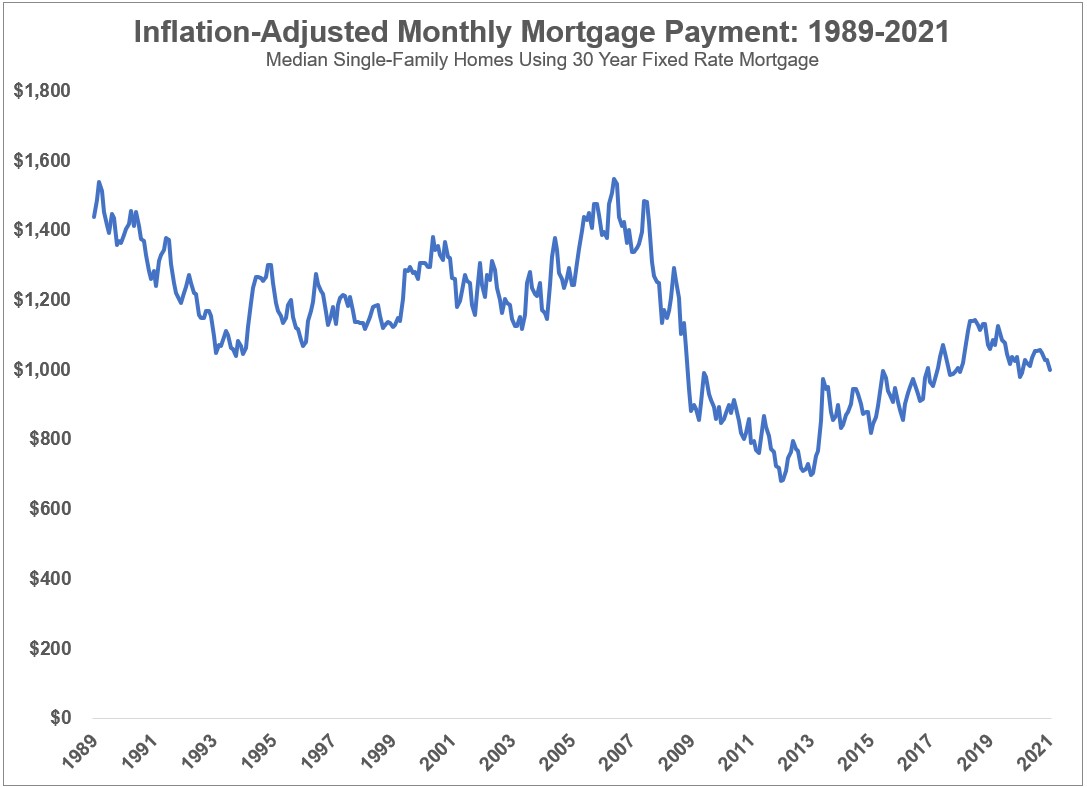
https://awealthofcommonsense.com/wp-content/uploads/2021/03/...
Our parents were single earners and home owners
I have peers who bought houses in the late 90s on a single income
You can use Dutch bank's mortage calculators to see you can't buy a shed on a single income
I read on a Dutch news site this year that even for double earners, home ownership is not feasible in some cases
Banks won't give out mortages for say € 700 / month, forcing these individuals to rent on the private market at € 1000+ a month.
It is not anymore surprising that you are overweight if you don't exercise, and especially if you aren't cooking at home ever.
Cut out any drugs, go to bed at a reasonable hour, exercise, get a hobby, eat decently. If you don't know how to do those things or have medical issues preventing you, go to a doctor/therapist/personal trainer/nutritionist/life coach.
No you aren't going to become a social butterfly just because you finally logged off your game, but if you try a few different organized social events (board game meetups, hiking group, whatever) you will probably start talking to a few people.
If you still can't, then you need to talk to a therapist. You probably have either never developed or allowed your social skills to decay and need help to get them back on track.
> If you spend all your time […] watching Netflix, or playing a game, then it's not surprising that you are lonely. You are engaging in solo activities that other people can't really join.
The relevant qualifier here is "all your time", and I agree, all your time is bad, but these activities can be plenty social if they’re engaged in for a reasonable amount of time and with an eye toward being social.
Netflix and playing games to be were vital to me keeping a social link with friend when the pandemic started. What worked for me was to do these activities in a group with friends, friends of friends, and family of friends in a group. For example, we treated NetFlix like a book club treats a book store - a source of material to discuss. We picked out movies and series and would discuss them like a book club discussed movies. Hearing the perspective of others and their understanding of the shows/movies was very interesting and it allowed expanding my social circle with people that either had similar interests or were articulate, civil, and respectful about our differences.
Same for gaming - we would run social gaming nights for people that would break off into smaller groups based on gaming preferences. Did that over Discord and it worked great to break the ice and keep socializing.
The key was to use these things as a backdrop to bring people together and drive engagement and let their desire to be social drive relationships. This takes active effort as opposed to binging a show alone or just queuing in another public lobby in a game.
Another key was limiting time. We alternated between games and movie/series discussion every other week, and that gave everyone (especially participants with a busy work schedule or kids) time to set aside a couple of hours to watch/discuss the shows/movies or game.
In my experience, actually no. I took up rock climbing about a decade ago, which most people would say is a fairly social activity. I rarely talk to anyone and certainly wouldn't describe anyone I've met at the gym as a friend. You have failed to consider that maybe the reason people are entertaining themselves with solo activities at home is that they are predisposed towards not being very social even when among other people with similar interests.
I married someone I played an online game with. This idea that multiplayer gaming is somehow asocial is ridiculous.
Necessary (but not sufficient) for change in life to occur is for the person wanting change to desire it happen and make effort for it to happen.
To answer where: whatever activity you choose to do with other people, assuming you choose an activity that can be social - typically something based on your interests, and if you're not sure what those are, try a bunch and see which ones you enjoy. Part of building a social circle is developing interests of your own and then finding people who share those interests with you.
To answer with whom: the people that are doing these activities that are there to do them but also be social. There are tons of places out for hobbies and activities where you can meet people, but you have to go to those places, put in the effort with the activities, and be open to making connections with people, and even then, that may not work, but you'll never know unless you try.
Let me give you an example from my life. In my early twenties I was lonely and I spent most of my time forum posting and chatting on IRC/AIM. I was talking to people but not making connections. An acquaintance of mine who had a lot more friends and connections suggested that perhaps I was spending too much time forum posting and chatting and not enough actually out doing things. I resisted this change for about a year, but I found that continuing to do what I was doing wasn't changing my situation. I decided to make a change in my life and to start pursing interests and connections. Weekday, I would go to work (which required me to be online as a computer programmer), but then to limit my online time at home and make an effort to go out and meet people. I didn't go out every night, but I spent some time away from the screen - I got better at cooking, I started reading more, and I focused on discovering new interests.
In some cases, this was having a drink (not necessarily an alcoholic one if you're not into alcohol) in a bar during a football game to meet other football fans. Another was to go bowling once a week which turned into joining a league. Another was to go to a farmer's market to pick up fresh vegetables. The last was joining a local Linux users group. Starting all of these activities, engaging in them with the mind of being social, coupled with learning about myself, led to both personal and professional connections being made - I met my wife, I met a future employer and hopefully startup co-founder, and I met friends that I still bowl with to this day. It was my desire to go to these events, to be open, to talk to people who were open to being talked to, and to meet regulars and connect with them that helped me move forward. I don't want to make it sound like it was all sunshine and roses - it left me tired, some of the activities I tried left me physically sore because I wasn't really fit enough for them, some of the people I met ended up being terrible people and I had to learn to cope with that/cut them out, and I had a few failed relationships along the way which bruised my heart. None of that would have happened if I just stayed on forums and chat and never made an effort to change. There is also the chance that I wouldn't have met people out and doing this, but I never would have had the opportunity if I hadn't tried.
> It's like telling an obese person to go exercise. It is meaningless advice.
If someone is obese and asks for advice on how to become more healthy then suggesting exercise (along with some exercises they can get started with - see above for my analogous answer to that) is not meaningless. If someone is obese, asks you for advice, you give them advice, they don't follow it, and then they complain about how things aren't changing and that it was meaningless that you gave them advice then the obese person might bear some responsibility for their situation not changing.
> And even more in boomer style "just take your printed CV to McDonalds to get a job" pulling people offline might be just cutting the only social link most of them have, instead of leveraging it.
Anyone that is suggesting that you go _completely_ offline is wrong - I am not suggesting that at all! You cannot go _completely_ offline and be productive, educated, and social these days. Many of the social opportunities that I mentioned above these days are organized online, so you will need to be online in some cases to know when they're happening and to keep in contact with the people you meet there. What people are suggesting is that you limit the amount of time you spend online outside of work and the necessary time to find these activities, learn about them, and maintain the connections you make while doing them.
If you do not suffer from loneliness, this entire thread is not about you.
If you suffer from loneliness and are not socializing successfully, something has gone wrong, somewhere.
Even if you need to see a therapist, you are not fundamentally broken anymore than someone who is physically weak is fundamentally broken. You simply need help with your development.