- Housing - Education - Healthcare
If costs are too high for students to afford, why doesn’t the price fall? If it’s scarce why isn’t more of it produced?
If our monetary system is broken, and debt is artificially cheap - then you would expect price of these goods to rise above what consumers can pay.
Given the cost of education in the US, the value of college is questionable indeed.
I guess I just like simple language.
Is this a problem for society?
No, it isn't. A tight labor market which provides more opportunities for on-the-job training is positive for everybody except those who made their money selling fake tickets.
I made the mistake of thinking that the purpose was to get what is essentially a certificate stating that you went to a good school and got good grades.
I do think it was a net positive overall, but in reality I think I would've done just the same by going to school and networking, partying my ass off for 4 years, and then figuring it out after.
If you can do those things without going to college then it's a no brainer _not_ to go.
It can't be both ways. Unless of course you're the Higher Edu Industrial Complex and you know NPR and their ilk have no memory and no integrity.
Yes, there's some concern. There always is. But that doesn't make shamelessly crafting two opposing narratives.
However, Chinese graduates are in a similar situation as US college graduates.
It's hard to find a decent job with a college degree. The college degree was once the premium but now more like a baseline in many industrials. Now China wants to push more young men to go to the professional education track.
But the challenge is there are more issues in professional education than in college education here.
This is probably because the tuition fees have become so inflated that most people cannot recuperate the costs during their working career.
Whether this is good or bad is still an open question. I'd claim that we have too many college-degree professionals and that companies claim they need them, when they really don't.
This is likely some combination of Covid making college temporarily less attractive (the social connections are just as important as the education) and lower-income students who have families that need them during the pandemic (community college enrollment dropped by a higher 13%).
I would expect enrollment (at least at 4-year universities) to fully recover once the pandemic is well and truly over.
See https://www.theatlantic.com/ideas/archive/2021/09/young-men-...
Whatever is causing this, it's ok part of a much bigger trend than can be explained by COVID, which has exacerbated but not caused this trend.
If the mantra is that everyone should go to university, then it becomes an extension of high school, and the credentials less valuable... and mostly the student loan industry thrives.
I presume there are cheap colleges and universities in the states as well that are just as educational as the big name schools.
according to Hege Ferguson, director of admissions for Florida State University, as of January 7, 2022, they have received 67,291 first-year applications for summer and fall semesters. That is a 21.2% increase compared to January 7, 2021, when they had received 55,500 applications.When gender doesn't exist then that breakdown no longer matters...
This is BAD. NEWS. for us Americans. How are we supposed to compete on an international scale if we are not training the next generation of knowledge workers[0]?
Part of the thing I always hated about Uni is that it felt very... kamikaze. You have one shot. I had to work during the day and go to school at night and going an extra year was NOT an option for me. It sucked to be on the hook for so much money when society didn't really make any room for me to actually learn and excel in that environment.
I suppose you could join the military. However, the military isn't for everyone. I don't know if would have had the mental fortitude to make it. Also, you lose out on some extremely productive years.
I know a lot of ex-soldiers who have severe disabilities, both mental and physical, from their time in training / on the field. Also, forcing everyone who wants to go into higher education into a propaganda mill isn't exactly a great idea either.
Also, the military doesn't just give you a credit card to go to any school you want. I had friends in school who struggled with the gi-bill system.
0: A term I an loathe to use, because I do not think other work is "dumb work", but it is a useful short-hand for workers who are working in jobs that require advanced education.
Zero undergraduates in 2065. You heard it here first! /j
- Depending on what you choose it might not even be rewarding
- You'll be saddled with crippling debt forever
Nah.
You're better off paying a couple of thousand for a coding bootcamp and have a better chance of finding some work and actually pay off the smaller debt you might have incurred.
It will help those who choose college, too - as demand for education falls, so will the prices.
My school, Michigan Tech, is in Michigan's Upper Peninsula, a remote location averaging over 200" of snow per year with the nearest major city over 5 hours away, and most students traveling 8+ hours from their parent's homes in SE Michigan. The application was 4 pages long: 1 page of info, 2 pages for me to fill out, 1 for my guidance counselor. No essays. So, very easy to be accepted to, 90%+ acceptance rate.
The second year return rate was below 70% at the time, and anecdotally many freshmen didn't return for second semester after going home for Christmas. Not only is it remote, cold, and not sunny, but there was a dearth of women and some tough weeder classes (chemistry, calc 2).
If you can finish, you're in a great spot. Eng degrees from there are quite well regarded regionally (competitive with University of Michigan) and graduates had lower debt than any other school in the state. It seems obvious that the university avoided a more stringent up-front filter so it could soak kids for a year or two before forcing them out due to grades or environment.
I'm not sure that's entirely unreasonable, as I'm not sure how they could predict who would leave due to environment, but I also knew many freshmen who were obviously not setup to succeed academically, and didn't.
imo this is an appropriate way for a public school to operate. everyone gets a shot, but people that can't make it get failed out early. way less debt for the student than dropping out years later, and more frugal with public funds too.
    Welcome to Merry old Boston
    The Land of the Bean and the Cod
    where Lowells speak only to Cabbots
and Cabots speak only to G*dSome people fail out of college because the work is beyond their capabilities, but I think a significant percentage of people who start college but don't graduate do so for reasons other than being simply unqualified.
I admit it's anecdotal, but very few people I know who started college but didn't finish didn't finish due to academic reasons.
Enrollment might also be down because of COVID. For many, I think, college is more about getting away from home and living in a fun-filled alternate world for a few years with dorm rooms, frat parties, etc. With remote classes and restrictions, why bother?
(I'm imagining here -- I commuted to a local 4-year college on a public bus while also working. Then got my Master's degree in the evening while working full-time, in the early 80s.)
There are a handful of companies that own a huge margin of the standardized testing market(Pearson being one of them). From selling new test learning books every year, to the massive global standardized testing training market.
Maybe the movements to eliminate SATs have a different agenda, but generally the main reason you need those SATs is because the average education level in the US is so horrendous. Instead of fixing that problem there are a handful organizations acting as money printing machines and gatekeepers for higher education. It's frankly disgusting.
If you ever had to take ANY kind of industrialized generalized test, whether it's ISC2, PMI, 6 Sigma, TLA+ or just SAT's or IELTS/TOEFL GRE or even just normal US university multiple choice as a non American you might find the whole ordeal infuriatingly insulting(unless you studied medicine, in which case it's similar across the globe)
It's a lazy cop out for not giving teacher enough resources to actually teach.
I also have first-hand knowledge of a fair number of students who took some time off during the pandemic.
It used to be common for selective colleges to administer their own proprietary admission exams. But that was a huge burden on students applying to multiple schools, hence the switch to standardized testing.
The answer depends on institution type.
Highly Selective Institutions: the admissions process is so hands-on and personal that I could believe they are able to get a good sense of each candidate without testing. E.g., I absolutely believe Harvard's admissions folks have the bandwidth to compare grades between high schools (not that they need to). And they do all sorts of stuff that gives you a better sense for the candidate than test scores (alumni interviews, essays, rec letters, delving into performance in highly competitive extra-curriculars, exceptional community service work, etc).
Non-Selective Institutions (let's say admissions >70%): Standardized tests are kind of a waste of time and money for all involved. These institutions are functionally admitting everyone who can manage to fill out the admissions paperwork and didn't systematically fail high school courses. It makes sense to make test scores optional, because there might be a few diamonds in the 30% "oof" pile who can pull off a decent SAT score to compensate for their D-average-no-honors-courses transcript. But requiring the SAT/ACT is silly when your admissions standards are extremely low.
Moderately Selective Institutions: I definitely see utility in these universities still using the SAT. But notice that this is actually a very small set of institutions. Perhaps 100-300 the US's 3K+ colleges fit in this category.
--
FWIW, my opinion on SAT/ACT is somewhere in the middle.
I think standardized tests can be an excellent instrument when some form of assessment is necessary but more nuanced assessments of merit are cost-prohibitive. So for places like competitive state flagships, I think getting rid of testing and replacing it with an admissions process that works at least as good as testing is probably more expensive than it's worth.
However, I also think the pro-testing camp is often extremely hyperbolic. Testing is just one way of assessing merit. It has all sorts of flaws. Tests are a model, and all models are wrong.
As an aside, I'm not surprised that so many pro-SAT-the-sky-is-falling folks are mathematicians. That entire field is completely fucked up when in comes to testing. Math as a discipline is bad about intellectual peacocking in general... if you think Mensa is insufferable, spend an afternoon in a math dept. Math professors are exactly the last set of people in the world I would trust to have a healthy attitude toward the ability of testing to suss out real merit. They literally talk about their prelim exams the same way frat bros talk about hazing rituals. Systematic misuse of testing is the second biggest reason that people choose to do phds in math-adjacent fields instead of math. (The biggest reason is job prospects.)
The same goes for infant mortality. People cite infant mortality as evidence that our healthcare system sucks. But really infant mortality is clustered in certain sub populations.
The same goes for murder rates and gun violence.
Unfortunately the problems cannot be fixed until people admit and are willing to talk about the underlying actual root causes.
Obama explains it the best. (Ignore the right wing title its a good video of him on his first visit to Kenya)
https://m.youtube.com/watch?v=fItxli7-uU0
Starts at 15:13
These kids will never get these years back. What a disgrace.
[0] https://data.cdc.gov/NCHS/Provisional-COVID-19-Deaths-by-Sex...
[1] COVID-19 rarely spreads through surfaces. So why are we still deep cleaning? https://www.nature.com/articles/d41586-021-00251-4
https://www.cdc.gov/coronavirus/2019-ncov/more/science-and-r...
> the relative risk of fomite transmission of SARS-CoV-2 is considered low compared with direct contact, droplet transmission, or airborne transmission
but yes, I agree education was in a sorry state prior to the pandemic as well
https://academic.oup.com/cid/article/72/12/e1146/6024998
> In analysis of the cluster index cases ... only 3.8% were identified as having a pediatric index case.
> These pediatric cases only caused 4.0% of all secondary cases, compared with the 97.8% of secondary cases that occurred when an adult was identified as the index case in the cluster.
> Clusters where the asymptomatic/symptomatic status of the contact cases was not described were excluded from the analysis. Even with this broader definition, 18.5% children were identified as the index case in the household clusters.
1. COVID was always going to become endemic to humans.
2. Young people are part of society — and you’re blatantly disregarding harm to them in your appeal to the “health of my society”.
It's not just who dies directly from Covid. It's also the spread of it to vulnerable populations.
It boggles the mind that this still has to be repeated. How many 22 year olds coming back from spring break will kill one of their parents or grandparents?
There is almost no feasibility in eliminating COVID at this point in time. It will mutate, and hence we need to be talking about the possibility of 'living with the disease'.
As such, how much damage are we doing damaging the education, and critical periods for these youths?
If the problem is protecting the parents and grandparents, why not do that, and isolate them rather than permanently damaging the youth.
And if you're really concerned about spring break, then add all these restrictions 2 weeks before spring break.
People's brains were already broken. People are bad at statistical risk.
People are afraid of flying despite driving be much more dangerous.
https://www.worldlifeexpectancy.com/usa-cause-of-death-by-ag...
https://www.cdc.gov/injury/wisqars/pdf/leading_causes_of_dea...
Under the age of 24, vehicle fatalities, suicide, and homicide lead in >3k deaths each year.
https://www.foxnews.com/us/fentanyl-overdoses-leading-cause-...
Meanwhile, 18-45 79k have died from fentanyl overdoses in the past 2 years vs. ~50k covid deaths in that time frame.
You don't need to imagine 3k deaths being acceptable, it's in the data for all to see.
You're just pretending that you can actually do something by making restrictions, you actually can't.
The onus for training needs to be put on the businesses themselves. This is better for everyone including the businesses themselves. Putting in training requirements and a probationary period where new hires have to meet a certain threshold or be let go. The individual can then decide how best to learn.
Bad spelling/grammar are mostly just due to modern technology where people communicate differently. Those things aren't as important as they once were. You'll see "highly educated" individuals making the same mistakes.
Lastly, there's the possibility you're speaking with someone who is not a native English speaker. Obviously, with your high IQ you should have been able to consider that scenario though ;)
The current sales pitch of college is "give us tens of thousands of dollars so you can watch some online classes with information you could find freely on the internet, we'll occasionally get you to write essays about how you were born inherently toxic as a person, and then at the end we give you a piece of paper that won't get you a job." No shit, attendance is going down.
Unless you have a very specific plan for a career you want to get into, and you know it's a job that would actually be worth the money spent (like a computer science degree so you can get into a software career), it's just such an obviously horrible deal.
Brian can't be bothered to enroll into college because he's tired of remote learning.
Yes, remote learning sucks. Doesn't mean you should stop. I'm bothered by this optionality. Later in life you're going to do a lot of things that suck, but have to do anyway. Further, at such young age, I would expect some hawkish parent to "help out" with the choice, but I guess I'm old fashioned.
Fine, though. Delaying enrollment whilst earning some cash in the meanwhile is not the end of the world. And so Brian starts work at Jimmy's sandwiches.
Then comes his mastermind move: he starts work at an Amazon warehouse for slightly more pay, yet needs to buy a car to get there. For which he takes a loan.
I imagine many Americans don't even blink at this, but it's absolutely moronic. The very point of the break from school was to earn cash. Instead of saving it up, he's now in debt for the car, works a shit job, and comes short both for his "needs" and for college.
Brian seems to have some self awareness at this point:
"It's so hard," he says. "I'm just like, 'Wow, if I go to school, I'm going to take time off and I'm not going to have any money for things I need.'"
Yeah, Brian, Wow indeed. Typical for American consumer culture: spending above your means from the very start.
What we need is a better life for the working class, not more college. Start by getting serious about wage and hour laws, and start throwing employers in jail.
It is criminal what they have done to people. Absolutely criminal.
My biggest gripe is the astronomical cost and debt burden that has vastly outpaced inflation. The university system in the U.S. has been taken hostage by greedy interests that push all kinds of bullshit costs on to students and have lost sight of exactly why the university exists in the first place - to educate. Not to house, not to entertain, not to keep fit, but to educate those that want to learn. If universities would stop with the non-sense "campus life" and focus more on a their core mission (like universities in Germany, for example) they might not have ended up in this predictable mess.
This level of enrollment decline only means one thing for universities: Layoffs and shrinking budgets. You can't squeeze any more blood out of these students.
There are plenty of adjunct professors who don't earn much. Why don't they join forces and create their own university?
If they focus on education and limit spending on administration and sports, they could offer high quality, affordable education.
1. There actually aren't many low-paid adjuncts in hot fields. The CS and Eng departments subsidize the Math department, and STEM+finance+premed+nursing subsidizes all of the humanities. A philosophy adjunct is probably doing way better ad juncting than they would off on their own. And the instructional staff in the in-demand fields are generally well-paid.
2. The low paid (and usually not that low paid) adjuncts within in-demand departments are generally there as a retirement gig... if they wanted a stressful empire building type of job, they'd go into industry.
3. Runway. Adjuncts who aren't semi-retired have no access to capital and here's a really long lead time until an institution is regionally accredited. You can't take a dime of federal grant money, GI bill money, private scholarship money, student loan money, etc. until you're accredited.
College in America is an example of a market failure induced by government intervention.
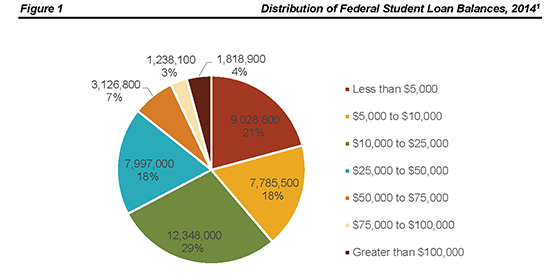
Federal loan guarantees and special rules around student loans (critically, they are not absolvable via bankruptcy) have caused a distorted market, whereby the colleges are incentivized to compete with each other for these guaranteed loans. Remember the student is a child, likely 17. They almost certainly have never supported themselves financially, and almost certainly have no conception of what a $200,000 loan will look like 10 years down the road. So you have colleges who are _guaranteed_ to get $200,000 from these poor students. You'd have to be some crazy altruist not to exploit that!
However, imagine a world in which no such federally-guaranteed loans existed (and critically where absolvable by bankruptcy). In this case, no rational bank would loan a student 200k. The financials simply aren't there. Now students have to look around for funding options in the private market, which is only going to cut loans it believes will turn a profit: that is, loans to students who they believe will be able to pay them back.
We have built a flawed economic model here: it is guaranteed to fail. The only solution is to overhaul this market either via novel market design or via nationalization.
The choices of individual schools is mostly irrelevant: as market players, all they can do is play the game. The game is bad, and so the schools' decisions have bad outcomes.
That being said, both of my daughter's had drilled into their heads how expensive college would be by their HS teachers and staff. We're continually telling them not to worry about it, it's our responsibility to pay, not theirs, don't feel bad for not going into STEM, etc. Doesn't help that we live out west where anti-intellectualism is the default and a degree is just seen as a piece of paper.
As far as I'm concerned, besides the fields that deal with the fate of a person's life (like doctors and lawyers), the whole idea of going to college and getting a masters in whatever your heart's desire deserves to be imploded. I see no sense in those saying that we need to "fix universities". Honestly, fuck universities for acting they're worth as much as they are while still pretending their priority is the students. Everything I learned in college and the different schools I went to can now be learned online or at the library for free or for $29.99. In a few generations, universities will be naturally replaced with more practical alternatives. So why try to prop up these archaic institutions for the sake of the average person rather than the exceptional? Such a desire is more of a fetish for an image of what universities represent.
If college is important factor in improving economic outcomes, it shouldn't matter if you go to college at 18 or take a few years go at the age of 21 or even later in life. We have this stigma around adults who get a college degree later in life. I've met a several people who went to college as older adults (one at the age of 26 and the other at the age of 30) and ended up having highly lucrative careers. My mom got her masters at the age 55 (and rightfully lorded over my sister and I that if she get her degree with straight A while holding down a job, being a mom and in her 50s, then we have no excuses).
I believe college is valuable (though greatly overpriced in the US) but you don't need to be a young adult to attend. In terms of the labor effect of having fewer college graduates available for the labor market, honestly most jobs don't really require a college degree (including office and white collar jobs). Employers tend to use college degrees as cheap filtering signal instead having better hiring processes. Most entry level jobs have onboarding and training where college knowledge is not a perquisite for success.
On top of that, for certain professions, what is taught in colleges is an absolute joke. Computer science at my college had zero connection to what happens in the real world and I'm being completely honest when I tell you I can't think of a single thing I learned in college that I use in the real world. Even some of the more advanced types/concepts would be better taught in a ~1hr tutorial or video than how it was taught in my college.
I'm all for giving people a broad education (I think I liked my non-technical/math/science classes more than the ones pertaining to the major I was working towards) and I think college should do a better job preparing people for the "real world" (budgeting, meal planning, conflict resolution, etc - So should high schools).
I dropped out my junior year after being frustrated at feeling like I was wasting my time in classes that didn't prepare me. It was one the best decision I've ever made. I still got saddled with 3 years of debt but better than 4 and having no advantage at the end of it. I've never had an issue finding a job over the past decade+ and I'm making very good money (more than people I know who did graduate).
We need massive college reform in this country.
In the linked PDF, they note they don't have complete data on international students. "In recent years, IPEDS enrollments in the nonresident alien category have accounted for nearly five percent of all IPEDS enrollments."
   Fall 2017 Fall 2018 Fall 2019 Fall 2020 Fall 2021
  All Sectors -1.0% -1.7% -1.3% -2.5% -2.7%
  Public 2-year -1.7% -3.2% -1.4% -10.1% -3.4%
  Public 4-year -0.2% 0.0% -1.2% 0.2% -3.0%
  Private nonprofit 4-year -0.4% 2.4% -0.6% -0.1% -1.6%
  Private for-profit 4-year -7.1% -15.1% -2.1% 5.3% -9.3%
The article itself posits that it is tangentially related to costs as kids are choosing to work rather than pay for school. However, that association feels pretty shaky and doesn't hold up to scrutiny as to why these changes accelerated so rapidly during the pandemic.
I don't have a data-driven answer, either. However, my guess would be that students are uninterested in an online college experience and don't see the value in spending to attend a lucrative school so that they can then sit at home on their laptop. If I had to bet I would guess that enrollment ticks back once all these restrictions are abandoned.
A significant part of the recent downward trend could be because there are fewer college age people in the population. Just eyeballing it looks like fewer 18 year olds every year for the last 15 to 30 years? [1]
A more interesting statistic might be students per capita within the college age bracket.
[1] https://en.wikipedia.org/wiki/Demographics_of_the_United_Sta...
Everyone is vaccinated, everyone is boosted, everyone wears their little masks, and they're still going remote, quarantining, and forbidding students from doing pretty much anything except sit in their dorms and watch remote teaching material.
Is it any wonder that a lot of students walk away? Everything that makes college fun is forbidden. Why the hell would you put up with that? If I want to sit in my room, not party, and watch education videos all day, why would I pay $50k for the privilege?
This is bullshit, and students aren't idiots, which is why a lot of them are dropping out and postponing their education until universities get their shit together.
"it could be there are fewer people and thus students, due to population growth slowing or reversing, or it could be it's unaffordable or unpromising?".
I hope it's from slowed population growth, but suppose it's the cost.
There's few private colleges (mostly international business schools I guess?), a large majority of students goes to the public universities. The eduction is free, but you pay a few hundred Euros per semester in administrative charges, which usually includes a ticket for city or state public transport.
You can get a loan from the state (BAföG) to cover living expenses, which you will pay back after finishing, when you have a job (well of course things are more complicated, but that's the gist). The maximum amount you have to pay back is 10.000 Euros, even if the size of the loan was larger.
My middle daughter wants to study art (she is an artist and sees a future in it for herself). My benefits will expire by the time she applies to college. So she’s not likely to end up at a four year university.
I have a hunch my youngest daughter may want to study computer science. Unless the cost of school changes I may put together a program for her myself mixed with online schools and traditional CS resources.
Excuse me? No one cares about fields that employ 2.8 million workers [BLS.gov 2020] ? No one cares about work that provides information, entertainment, and shapes political views? FYI your doctors, lawyers, and politician's biggest expense line items usually include money going to communications and media professionals.
I and many others resonate with the notion of 'useless degrees', but you chose some terrible examples. That said, there is more value to education than vocation, and your inability to see that shows that you missed quite a bit in yours. The classical liberal arts education could and should be continually reimagined for a changing world, but to wholly discount its importance is capitalist orthodoxy that misses much of what life is about. Read a goddamn book.
> [...] to wholly discount its importance is capitalist orthodoxy
Touched a nerve, eh? You have no clue what books I've read or how many.
I didn't "wholly discount" the importance of so-named classical liberal arts. But there aren't many good reasons for putting one's self into debt to get a degree in such things. Be honest, liberal arts isn't heart surgery. Liberal arts can be learned for free if it is the knowledge itself that is of highest importance. The cost of majoring in these areas of studies are hardly congruent with how well they prepare someone to become a part of the world outside of academia and the cost that they bear. Perhaps to certain individuals the cost still is justified by the end result they are aiming towards, but to assume that everyone going into the liberal arts is in college not because society is cajoling them into it would be highly ignorant.
You're mistaking my valuation of the degree for a valuation of the subject mater itself. Are you familiar with the growing amount of student debt in the United States? Liberal arts are no exception, and there's nothing I'm aware of about fields it encompasses that justifies the expense in both time and debt. It appears to be a racket.
There are actually people that the vaccines won’t help. They are immunocompromised. They can only be protected by high vaccination rates and zero exposure to Covid.
The situation will be no different in a year or 5 years than it is from now, so continuing to argue for societal shutdown is completely untenable.
People who are immunocompromised have a tough life, but we can't shut down the world for them. COVID is here to stay. Forever. You can't shut the world down forever.
Hmmm....which seems better?
That does not lessen the impact of 3000 deaths among people who did not take on that risk.
Are any of them on the order of magnitude of measures we've taken against covid?
But these are not equivalent things, cars are nowhere near as deadly as Covid, this pandemic is likely going to cause 25 years' worth of car deaths because of a subset of the population is too morally and logically weak to adopt small measures.
It's not true.
I don’t know if the rules that my system put in place at the beginning of the pandemic are still in force. They may have put that rule in place just to make sure we all went online when this mess first started. I just know I’m not going back to the classroom until most of my colleagues do too. My college is still almost entirely online.
EDIT: Chancellor’s memorandum was about cleaning protocols. The union advised us on liability issues and said that we could be liable for sicknesses if we fail to follow the protocol. My union membership includes a $1 million liability coverage for the classroom. They might have brought up this as a way of saying that our classroom insurance does not cover this possibility.
https://www.insidehighered.com/news/2020/08/03/students-aske...
I'd rather live with ineffective American lockdowns than effective Chinese ones, but the Chinese example falsifies your statement.
Also it's proven at this point that covid came from bats.
The ROI for many degrees is abysmal. There's been some really great research on in this area, including my favorite report here: https://public.flourish.studio/visualisation/7583742/
The worst cases from that data approach -$1M ROI. Ouch. Those institutions deserve to be held to account, they are doing a disservice to their students and society for putting people into such economic peril. The term leach seems to apply. I'll even concede that prescribing classical liberal education for all is somewhat paternalistic, even overly anglo-centric. We can do better. Still, I think education is critical for democracy to be functional and as a society its worth investing in.
We're generally on the same page as far as I can tell. But yes, I will become quite cranky if you call journalism useless :)
...how do you even spend $1M on a religion degree that costs less than $10k/yr?!
Surely this is just actual straight-up white-and-black fraud, or some sort of weird data entry error, right?
This model definitely doesn't account for how compensation for clergy works, which typically includes parsonage and nontangibles. And the $1m isn't based on cost, but opportunity cost of missing working years, investing the money elsewhere, and more. It definitely doesn't work right for these and other outliers, and even some of the salary data doesn't make any sense. For instance: GA
Savannah College of Art and Design
Manufacturing Engineering.
Earnings at Age 25: $27,068 Earnings at Age 45: $30,387 ROI (Before Completion Adjustment): -$353,221
Yet salary.com shows salaries at $64-$153K, median $108K. The tuition is $38K / year for a bachelor's degree, so I could see how somebody would be in the red for a while, but it also seems that it would have a positive ROI if one were to stick with the field for their career.
https://www.salary.com/research/salary/general/manufacturing...
And so I can ask the same question, why are you disregarding the harm done to them (them being the young people)?
The purpose of the lockdown wasn't to prevent deaths, it was to prevent the hospital systems collapsing.
>it was to prevent the hospital systems collapsing
Can you please apply this logic a little further as to what would occur if the hospital systems collapsed? Do you want me to spell it out for you?
Young people are part of society so they are obligated to protect it.
> Young people are part of society so they are obligated to protect it.
The point is that the part of society being protected is largely confined to older parts of the population, while much of the costs of doing so are disproportionately coming down on younger people. It's easy to say "do your part to protect society", but when the part of society being protected is the mental, social, and emotional development and well being of young people, as well as technical skills and future job prospects, older people seemingly have no problem casting it aside for what benefits them the most.
Either way, I didn't say anything about eliminating the virus. Hospital systems are still at risk of being overwhelmed... that's why restrictions are still in place.
You're acting like younger people are the only people affected by the restrictions.
I participate in two communities - one that completely ignores COVID (except for a couple months at the very very beginning). They don't test, they don't care if someone is positive. Lots of people are vaccinated, but lots aren't (they all had COVID, they can't think of any reason to get vaccinated since they already are immnune).
And another one that is freaked out about COVID, mask wearing, vaccine or you are excluded from everything, social distancing, keep everything closed.
Somehow the longterm death rate is the same in both - except for those first few months. But the mental health in the open community is far better.
It's over. COVID is over. It's time to stop closing everything. Take the vaccine (or don't if that's the risk you chose to take), and stop this meaningless theater.
So why am I supposed to give more of a shit about your anecdote than my experience again?
>It's over. COVID is over. It's time to stop closing everything.
Uh we know. We’re talking about what happened in the past. Everyone has been using past tense verbs.
> You're acting like younger people are the only people affected by the restrictions.
I’m not, but I’m saying the calculus of restrictions only makes sense for the older parts of society. Younger people are getting a raw deal. They are far less financially secure, established in their careers, their education, their social lives, and even in their personal development. Immense damage is being done in all of these areas to protect society from a disease that isn’t actually a threat to the young in any large degree. Older generations are sacrificing less due to the restrictions, but are reaping all of the benefits. This is especially galling considering the availability of effective vaccines that prevent severe disease and death, meaning that whatever risk does exist for these older generations is largely mitigated for them except for those who refuse vaccination.
So yes, it is enormously selfish for our society to throw young people under the bus to protect the most selfish portion of older, more well-to-do generations who refuse to protect themselves.
It would have also prevented scaling of health systems due to a distinct and dramatic shortage in staffing and long term backlog.
The decision above was purely economic. You would have to be really stupid to think the people in charge would shut down trillion dollar industries because the parents of some children died.
None of that is what could be derived or implied from your statement you condescending prick. If that is what you were implying, maybe you should get a better grasp of English so that your point could come across clearer.
>The decision above was purely economic.
I think it's hyperbolic to say that it was purely economic. Everything we do has some connection to the economy. Everyone in this thread, including myself, is basically making an economic argument facaded by an emotional one. But to say it's purely economic forgets the connection we have with people and the reason why we want the hospitals to be open for people who need care. A real sort of "collapse" happened for some rural family members. They don't have a hospital for their whole county and have to rely on another county's hospital. After they ran out of beds, the people in that town just had to wait and hope whatever ailment they had could be resolved elsewhere.
Back to the economy, obviously bad mental health has long lasting effects and that has secondary effects on the economy. I'm not so sure the alternative, the one where everything is kept open, would have worked. The "hospitals will collapse" scare tactic was only one aspect of what would have been a much larger collapse. Not just economic, but societal.
>You would have to be really stupid to think the people in charge would shut down trillion dollar industries because the parents of some children died.
You mean the hospitals? With a health system collapse, they just wouldn't be able to handle a lot of cases like you said. It wouldn't shut down in the sense that it would be 100% ineffective, just that
1) Skilled trades pay better than most bachelor's degree track jobs. My kids can make more money with a six month apprenticeship than they will with all but a few 4 year degrees. If you can drive a forklift, you can make $45K/yr... which is identical to what an firsty year teacher makes.
2) There are better options than college for many. One of my daughters did a six month digital marketing bootcamp. She made $45k year one, and a year later is the director of marketing at her company making over $100k/yr.
3) College is way over priced. They claim graduates make 40% over their lifetime vs. non grads. JP Morgan Chase did a study two years ago that shows kids that had a job, any job before age 18 make 35% more than their peers over their lifetime regardless of degree.
4) Student loans are a horror that needs to stop. Young people should not be put in debt-bondage. Imagine America's financial health if we let young people start families and careers debt free.
1. Many trades also pay like crap and have a very limited window in which you can do it. In addition many are not welcoming to women at all, regardless even if you take the highest paying trades, do they pay more than the highest paying careers that require higher education?
2. Which boot camp? How many people ended up like your daughter? How much was it? Without these facts no comparison can be made.
3. Some colleges perhaps, smart people can get full scholarships and even without that community college plus a cheap state school isn’t expensive. Link to your study? Did these people not go to college?
4. As you’ve already demonstrated college is hardly required let alone loans.
I’m surprised this is the top post.
Average College grads make more money over their lifetime, period.
https://www2.ed.gov/policy/highered/reg/hearulemaking/2011/c...
All the data that currently exists shows better outcomes for students that go to college. One would expect this even if college had no benefit to students because the population of students that go to college is pre-selected. Before they attend, students that go to college, on average, demonstrate better analytic skills than the students that do not go to college. They also, on average, have access to more existing wealth and other resources through their family.
In the absence of perfect data (which is almost always the case in sociology), it is reasonable to look at case studies to try to make sense of reality. It is not bad practice. It is what Harvard Business School does. It's what product managers and UX designers do when creating products. It's what marketing teams do when selling products.
Feel free to disagree with the interpretation of anecdotal data, but statements should not be dismissed out-of-hand because no p-value accompanies them.
I have two family members who have been pipefitters for 20 years. Both make more than I do as a software engineer. Another is a doctor, and makes more than they do. But another does boat repair, and makes more than the doctor.
If the last decade is any indication, skilled labor - especially those not afraid to own their own business, are set to make a killing. It's nearly impossible to even get people to come out for normal household jobs anymore - they're all way too busy with more lucrative clients.
I'm not sure what you mean by limited window unless we are talking about professional athletes and some categories of manual laborers.
> In addition many are not welcoming to women at all, regardless even if you take the highest paying trades
This is rapidly changing. Also, there are also skilled trades that are mostly women (e.g. cosmetologist, many medical roles).
> do they pay more than the highest paying careers that require higher education?
When we factor out jobs that require 8-12 years of education, in general, yes the trades aren't a bad deal.
> 2. Which boot camp? How many people ended up like your daughter? How much was it? Without these facts no comparison can be made.
I'm not turning this into an ad for the school my daughter went to. Cost was literally 1/2 of he first year salary over $40,000. It was capped at a maximum amount. She ended up paying about $6k, but it was contingent on her getting a job that payed better than $40k.
3. Some colleges perhaps, smart people can get full scholarships and even without that community college plus a cheap state school isn’t expensive.
I have five kids. My first was straight As, great test scores, and we still ended up with $6-8k of expense per semester after the full ride scholarships paid for tuition at a small private college.
Ok, here is the biggest community college in the US: Ivy Tech. $2,400 per semester for 12 hours, plus fees. It's not that expensive, but they also have less than 20% of students complete their degrees...
> Link to your study? Did these people not go to college?
It didn't matter what education level they attained, across the population the outcome was consistent. Having a job while young made a huge difference - almost as much as having a degree.
4. As you’ve already demonstrated college is hardly required let alone loans.
Yep.
Stop this. The most accurate predictor of a person's lifetime income is the income of their parents. Children of wealthy parents are more likely to go to college. It's like saying "People who drive expensive cars in high school make more money over their lifetime, period".
I question the statistical literacy of people who make the argument that going to college has a significant causal impact on future earnings.
Which is why the parent comment specifically mentioned "skilled trades". If you're not familiar with the term, think plumber or electrician instead of roofer or outdoor landscaper. The working window for skilled trades is also far greater than software engineering.
UCLA is 13k per year, *if* you are from California. Classes are likely impacted (even upper division) so even if a person goes to UCLA just for the last 2.5 - 3 years they could easily owe > 30k
The real cost
- rampant corruption (in california, if they ever opened the books on the non-profit entities it would be a major stunner and awakening for many people). Last I saw there was ~100 non-profits serving ~20 campuses . You can read more https://www.calstate.edu/csu-system/auxiliary-organizations/.... But what they don't tell you, those books are private and not shared with the public. Rest assured, they are money laundering machines.
- rent seekers like Pearson and Mcgraw Hill (fun fact, did you know the 2 joined forces to run a company called Follets that runs most campus bookstores (how is that allowed?)
- administration bloat
2. Probably a little. These boot camps are mostly a scam like many colleges today.
3. You can do college cheap. You can also get a scholarship if you qualify. You can do college the expensive way if your parents will pay for it. Taking a $100-200k loan for it is stupid.
4. Yes.
Which leads me to the conclusion: College degrees used to get you higher pay, people overbought that and someone filled the market, people now can't sell their college degrees for money. Worse, many of them have raked up debt to get that college degree.
Sounds familiar? This is like people buying the top in a crypto, realestate, stock-market bubble. But you add a few steps and the thing sounds legit. (Did you ever wonder why people buy MLM and not go directly and buy a Ponzi Scheme).
Economists are now finding that as more women move into a profession, the pay goes down. Similarly, when computer programming moved from a female dominated profession (early days) to male dominated (now) the pay went up. Medical fields that have higher proportions of women have lower pay. Along these lines, as college skews more female (college grads are like 60/40 female/male now) the "college grad" professions are having a declining wage premium compared to non college grad jobs.
3. Scholarships are not based on intelligence. They are based on access to resources. Many good scholarships require references, achievements, good writing, and lower income. Hard to do that in a city school, if at all. Those that get the scholarships come from parents that know how to game the system. This leaves first generation students far out of the equation. To add to that, judging students based on their high school is a terrible method of educating.
4. A degree has become more required if you don't have the resources to already live in a major city for your work. For example, you can work in software if you live in cali cities far easier than if you live in Utah. If you're coming from Utah, you have to pass the "I'm a drone" test of getting a degree. Many people would like to work in something other than trades, hence university.
University no longer functions like we think it does. Large amounts of it are now online, auto-graded, with instructors barely doing any work other than showing up. Housing and tuition costs have skyrocketed with far less scholarships than ever before. I recall a 40,000 scholarship 8 years ago that simply doesn't exist anymore, along with a number of others. Many of these are funded by various communities or collaborations of companies, and over time the over corporatization, lack of funds and lack of community have lead them to just not offer scholarships anymore. Why give away free money? A really easy way to upset a number of teachers, especially high school teachers, is to tell them to try to locate applicable scholarships for their students. They can't. Perhaps a couple that maybe add up to $800 one shots. Half of that being a local scholarship. They get very hand wavey and think 1 of 3 scholarships from Microsoft or Google is reasonably obtainable, yet realistically it would be similar to winning the lottery.
There are many bright and hard working students I meet daily that simply cannot get the support they need and cannot devote their time to learning what they need to. It is absolutely brutal the number of hours some of these students are working just to survive. We give the largest amount of support to students whom are already well off and tell those that have to work for what they have to go away. That's American education as I see playing out as we speak.
And yet incomes have held stagnant through the entire rise of college attainment. That contradicts the notion that there is more money to be made.
Within a given population, those who are born more capable will earn more than those who are less capable. Those who are born more capable are able to go further in school and be more productive in the workplace for the same reasons. Someone born with a crippling disability that forced them to drop out of high school also struggles to find gainful employment for the same reasons.
However, over time, those in similar standing seem to end up making the same amount of money no matter what. If the existence of college and everything associated with it were to magically vanish, those born more capable would still earn more money over their lifetime than those born less capable.
The state school where I live charges $18K/year for tuition and housing. That sure isn't cheap, especially for a mediocre school. Graduating with $72K in debt from this school would be a waste of money if you aren't doing a STEM program, and if you are, there are far better schools.
Exactly.
These types of post often ignore the actual work being done.
A graduate student might make a comparable hourly rate to an amazon warehouse employee, but he or she can also go to the bathroom and sit down.
Your "period" makes me think about more questions, not less.
1) Will that still hold in 2070? Kids who are now 18 are likely to be working at least until then. How do the developments over time look like? Won't the increasing shortage of tradespeople drive up their compensation?
2) How does a finer division by majors look like? I would be surprised if every major out there made more money than, say, an electrician.
3) Lifetime is a very long timespan. College grads are deeply in their debt in their 20s and 30s, so they can afford starting a family less. They will be better off when they are 50, but in the meantime they possibly sacrificed a an unborn kid or two to their tuition debt. This is a nasty tradeoff.
Plenty of coding bootcamps have great placement rates and great salaries. For example, the median salary at Boston's Launch academy is $72k. The median salary for Fullstack Academy Grace Hopper in NY is $90k.
https://static.spacecrafted.com/b13328575ece40d8853472b9e0cf...
https://static.spacecrafted.com/b13328575ece40d8853472b9e0cf...
This organization verifies outcomes independently: https://cirr.org/data
I know several people who have gone to both of these, the data is legit, that's the outcome I saw from the graduating class.
> 3. Some colleges perhaps, smart people can get full scholarships and even without that community college plus a cheap state school isn’t expensive. Link to your study? Did these people not go to college?
Even "cheap" state schools aren't so cheap https://educationdata.org/average-cost-of-college We're still talking on average $25k/year. But that depends heavily on the state. In some states, you pay $14k in others $30k. Either way. Not cheap.
The rise in cost has been amazing: https://nces.ed.gov/programs/digest/d07/tables/dt07_320.asp In the 1960s total tuition + room + board inflation corrected was only $1000!
There's a long way to go on this, but there are definitely people pushing back on it in various ways, including a number of women welders, electricians, bricklayers, etc all posting about themselves and their experiences on Tiktok:
I ended up loaning $80K to him, so that he can open his own small welding shop. It is likely that money is gone forever without return. Even now with his own welding/metal fab business it is a constant struggle - winning bids inconsistently, short cash runway, $28/hr, can't afford to pay for his medical insurance, late night work to ensure new projects are coming in, abuse from general contractors who exploit small subcontractor welders, big boys clubs (small subs can't get those projects), etc.
1. Many trades also are your own business, and can immediately scale for income - many plumbers, electricians, etc are millionaires with a small team of employees less than 15.
2. Google offers free marketing certification for this reason as well, it's not impossible for marketing/seo people to make 100k annually. It's very, very common.
3. Many colleges are not worth it and is debt- look at most state schools and you'd see a semester costs minimum $45,000. Yes there's community colleges.
4. Even community colleges require loans, and have programs of financial aid that is really "apply for fafsa, apply for stanford loans and then have pipelines for private debt.
“ Average College grads make more money over their lifetime, period.”
There are huge selection effects in play. It is true that even after controlling for these effects, college has economic value. But the statement about making more money isn’t the right framing at all. There’s a whole chapter on this in the book called “Mastering metrics”. You might want to pick that up - it’s a coffee-table book for the quantitative-minded person.
Bootcamps charge a lot upfront and success rates as measured by good-paying jobs are low.
That's a claim none of you sources can or even could support. Past performance is no guarantee of future returns.
Many universities aren't welcoming to men at all.
So that doesn't mean that if those people hadn't gone to college they wouldn't be making that extra money.
No one is saying that people that go to college are less valuable, what's in question is exactly what is college attendance adding that can't just be created in a less expensive, less elitist and more efficient environment.
Period.
The impression I get from hanging out a bit in the welding subreddit is that a lot of people get into welding thinking it'll be a lucrative profession (because that's what people on the internet say about plumbers and welders and electricians and so forth), and what they eventually discover is that while it's possible to make a lot of money as a welder, that really only works if you own your own business. If you take a job working as someone else's employee, the pay usually isn't all that great.
That isn't to say that people shouldn't get into welding, it's just that they should have the right strategy and expectation going in.
But not everyone can be a manager, I think we need better protections for the doers (unions, etc.). A lot of naive kids go into trades and trash their body only to end up with nothing or a life addicted to painkillers.
With the forklift you will stay at 45k forever and probably make less every year whereas for the teacher this is a starting salary and will go up. Talk to real blue collar workers and from most you will hear a not very rosy picture. Pay stagnates, management treats them like crap, terrible working conditions, very hard on the body so getting older is difficult.
Unless you are a business owner or in a very good union blue collar jobs aren't much fun.
I agree that the jobs are tough in the apprentice years. You are literally doing the grunt work for that trade, but a) you are getting paid to learn, and b) if you start right out of high school you are still young and able-bodied. Apprenticeships only last 2-4 years typically. You could be a licensed electrician at 22 years old.
I'm surprised by the magnitude but I can see why this would be the case. Working teenagers probably correlate with having parents who value work. Plus it teaches some valuable skills early on. An entry level job can throw all sorts of uncomfortable challenges at you, which you are expected to handle in stride.
I'd say there's a societal benefit as well, due to the empathy it promotes. Most people work very different jobs as an adult than they would as a teenager. Having more perspective on what other workers experience makes one more kind and reasonable in general.
We only look at college degrees for people without experience... for people that have experience, we don't care about the college sine it is all outdated stuff anyway... the interview will tell us what we want to know
Just as with claims about college, there is a huge selection bias in this observation. (A substantially higher proportion of youngish Americans obtain a bachelors degree than have a job before age 18.)
Edit: Let’s be clear: there is obviously a huge selection bias when talking about college as well, which should not be ignored.
Is this true? I got a job as soon as I was legally allowed to and so did every one of my friends in high school. Where I'm from you were seen as kind of a loser if you didn't work over the summer, at least. I'd guess it was something like 90% of kids at my school worked at some point in high school.
Edit: Here's a chart [0]. These numbers are much smaller than I expected (although keep in mind this is a snapshot, not the percentage who at any point in high school will have had a job), but what's really surprising is that the number of high school kids working has collapsed since I was in high school.
[0] https://www.statista.com/statistics/477668/percentage-of-you...
> Collage increases earnings!
"Yay lets send everyone to collage and give out >1T$ of loans"
> Early work experience increases earnings!
"Confounding factors and selection bias!"
I agree there are better options than college for many. Thought if I were a betting man, on average, College is the better decision.
> One of my daughters did a six month digital marketing bootcamp. She made $45k year one, and a year later is the director of marketing at her company making over $100k/yr.
I'm curious how old she was when she completed that bootcamp, and if she had a degree in another field, and/or experience. I just cant fathom a 20 year being a marketing director making $100,000.
In nearly 20 years professionally, I have worked with MANY people between the ages of 18-22 (many of which themselves attend or attended prestigious schools), and none showed the aptitude, skill and leadership required to be director at that time.
The real question is whether or not this path is scalable for an entire generation to successfully replicate. I suspect it's not.
Which is why these degrees were sold with the promise of good pay. If you want to blame someone for framing college solely from a wage earning potential perspective, point the finger at the people selling college degrees to kids.
There should not be guaranteed student loans for degrees that don't provide competitive dollar careers.
At what point in the past 50 years did we start expecting academic liberal arts institutions to start churning out people with vocational skills? These are entirely different things.
The fact that an average 1970's college graduate was highly employable has nothing to do with those colleges having good vocational training programs, and everything to do with selection bias of those who attended and the economics of the time.
If you need vocational skills, you should enroll in a vocational program.
Colleges assumed the trend of charging $25k to $50k per year would be sustainable. They were dead wrong, especially given the horrendously predatory loans backed by the government and barred from bankruptcy.
If we fix the college financial system, enrollment would likely skyrocket.
America is still stuck in this alternate universe where it's a great privilege to have the opportunity to learn, which is of course true to some extent, but they really put it on a pedestal there.
Compared to the rest of the world, I think they over index on attending prestigious out-of-state and thus expensive, regardless of public or private, instead of building a really strong system for locals.
I think of my (non-US) classmates, maybe 1-2 per 100 were from a different region or country? I paid a total of $20k over five years which I easily covered with internships/summer jobs. Can you say the same in the US?
We've gotten to the point where it would actually be cheaper for students to hire their own adjunct to each them 1:1, than to go to some universities.
Updating with numbers:
- USC tuition is >$60k/yr
- Adjunct professors in CA apparently earn $34-$43k/yr
https://admission.usc.edu/learn/cost-financial-aid/
https://www.salary.com/research/salary/recruiting/adjunct-pr...
Any industry that sees nothing but expansion for decades, has a rough time when it stops. I think higher ed is in for a rough time.
It will be interesting to see a follow-up analysis that parses out enrollment behavior by subgroup (e.g., by SAT/ACT score) as it will be easier to understand who is choosing not to enroll in college.
Another follow-up could be to see which institutions are losing students. It is known that college enrollment is counter-cyclical to the economy and that enrollment declines at community colleges and open access universities when people can get a job right out of high school.
And Zoom interactions are still terribly inferior to real life in-person ones regardless of what kind of college you go to.
I'm hoping that online school really takes off, and that colleges follow Georgia Tech's lead on pricing for it. OSU still wants full price for online classes, which is bogus.
Beyond that, I'm going to strongly incentivize my kids to stay home the first couple years and hit the local community college for the first half of their degree, just because it's dramatically cheaper than what it'll cost to send them to live at a university.
I thought college was expensive when I was going in the 90s. Now it's just ridiculous.
For everyone else, all college does is shows people that you are diligent: you read the books, wrote the essays, passed the quizzes.
Now, the thing is most jobs are not directly related to any particular degree. For example if you become an option trader like I did, nothing on my Engineering/Econ/Mgt was relevant. Even the finance parts of the management course were not relevant. You learn on the job. Think about it, you are at work 50-70 hours a week the whole year vs splitting your time at uni over a much shorter calendar. At work you sit next to an expert, at school you sit next to novices.
So the whole idea that college qualifies you to do something is bogus. It's mainly a signal that you're teachable, and a weak signal that you're interested in some particular broad area.
I would guess that the great majority of jobs that people with degrees take could have been done by the same people without their degree. You'll never get people to admit that if you aren't friends with them, but that is generally what people think as well.
Are there other benefits to college? Certainly. You get to socialize, mature a bit away from home, and for most people it's the last time they are exposed to the great ideas that mankind has found over the centuries. Those things can all be done separately without paying for it, but currently the system is broken and everyone uses degrees as a social status marker, which is self-reinforcing: you still need a degree because if you don't have one you can't get those jobs that you don't need a degree to perform.
The number of jobs that are just "general business role" is enormous.
I think I learned a thing or two at university.
Students don’t want to pay tens of thousands of dollars for remote learning. They could watch Khan Academy videos instead for free, and they’d be better quality.
I found people who did self directed online learning combined with having some projects to show in the resume were the best and had real world experience rather than having memorized a hundred java design patterns from the 90s.
I got my B.A. in 1968; I owed $800 balance on my student loan ($6,400 today).
My plumber just charged me $430 to install a sink, about an hour and a half's work. That doesn't include the cost of the sink. Are Gender Studies majors making this kind of money?
now many are massively bloated organizations with declining utility and the need to maintain their perpetual growth - who wants to cut costs? the downward spiral is only going to accelerate, IMO. and that doesn't even account for declining birth rates. my feeling is the next 20 years will see the higher ed industry contract rather quickly and the universities that remain will deliver either on quality (increasingly difficult to hold an advantage) or accessibility (inexpensive, contemporary workforce training since employers no longer do that).
However, I wanted to take a step back and offer a different perspective. College does more than teach one a trade. It should, ideally, help the student become a better citizen of their own culture, of the world, and of their community. College taught me deeper empathy, and different kinds of empathy, it taught me more about literature, history, cultures, anthropology. There is so much today that could be improved if, for example, philosophy was a core requirement of every CS curriculum.
Outside of coursework, It taught me how to make friends, and how when I did bad things, I would lose friends. In a way, it is a continuation of high school except with the training wheels off, with all the consequences of adulthood to be tasted for the very first time.
I know it is a privilege to say this, and it is why I am such a huge proponent of free education, but to miss college is to miss more than some academic study in a field. It is to miss a whole chapter of life. To go from high school to labor, without that sweet blissful blend of freedom, stress, and discovery feels like a life not fully lived.
I would love for everyone to experience this, so from this personal perspective, I find that this framing (of money), on the whole, a rather negative thing.
Borrowing to pay tuition to take general ED classes is dumb, and yet, this is the path that is pushed on our best and brightest.
At the least, kids should gen ed in Community College. At the best, we should reform or horrible curriculum.
This isn't likely to hit community colleges, which the article touches on. Just trying to point out that digging deeper might show some interesting details.
The elephant in the room is that those foreign students are also the ones paying sticker price and subsidizing college for the other students, even at public schools.
* Some abandoned their international studies plan and attended local colleges instead.
* Some took a gap year to wait until 2021.
* A minority pushed on and took classes online until they're able to come to the US.
First birth rates are generally down. Not only in America,but worldwide.
>Wages at the bottom of the economy have increased dramatically, making minimum-wage jobs especially appealing to young people as an alternative to college.
This isn't an ether or situation. I worked full time while going to school full time. In fact this was my entire senior year of college.
I actually got to 6 figures without a degree, but the entire point of college for me was getting away from my horrible family. It's still a good way to get distance.
This is great news overall. Tuition will have to drop and schools will offer more flexibility to working students.
In my home state of California the UCs are hostile to anyone with a 9-5, I hope this changes.
2. Interest is charged, which is abhorrent at any rate. Especially the 8%.
3. PPP "loans" to the tune of almost 1t$.. which were forgiven. Just run a few sham job ads for software engineers at 10$/hr and NobOdy wAnTS tO wOrk!
4. University doesn't really provide job skills. They allude to, but then say they dont.
5. Jobs say they need a degree, but that's primarily due to https://www.naacpldf.org/case-issue/griggs-v-duke-power-co/ and easier to exclude black people with a 'degree'.
6. Most programs do NOT need expensive schools, labs, etc. Non-lab based classes can easily get by online.
7. School costs are stupid, because "Its what the market will bear"
8. Even public higher ed schools are stupid priced, because the public aspect has been surely ripped away from them.
9. Even if you DO go, you're guaranteed only one thing: undismissable debt. I failed out due to medical reasons. I have the debt, and no degree to show for it.
As a millenial, higher ed is a bad bargain. And if you're younger, DO NOT LET HIGH SCHOOL threaten you with "if you dont go to school you will work as a grocery bagger for the rest of your life". Teach yourself IT. Get into an area, double down, learn it inside and out. Find a few hot tech areas. Learn them well. And off you go.
I have never considered a candidate’s college or if they even attended one. The only thing I evaluated is what they accomplished in the last 1-2 years. That meant hiring some brilliant engineers straight out of high school.
Most of these candidates were early stage hires for dozens of companies that went on to become billion dollar public companies or get acquired for 8-10 figures.
As far as a springboard for a career, I haven’t seen colleges come close to worth the price of admission.
Almost your entire career value is dependent on how well you can self-learn and self-motivate. The one important piece that school might teach or give you exposure to is how to collaborate effectively with others.
This right here.
The strongest argument against the status quo is that the juice isn’t worth the squeeze.
In aggregate college graduates could achieve equal or greater levels of learning, relative to their chosen profession, and cost, with education regimes other than the typical four year state college experience.
Ideally: 1. Attend an in-state university. 2. Look at your school's graduation report, which surveys students by major on their starting salary 3. Choose a program with a high starting salary 4. Take all general education classes online at a community college, starting the summer after high school graduation
This is the most probable way to achieve a high roi on college, for an average american.
Edit: clarified that private secondary school = private high school. Of course federal student loans are available for accredited private colleges/universities.
Not sure the reliability of this source but the trend is there across sources: [0] https://educationdata.org/average-cost-of-private-school
I guess they've since changed to https://en.wikipedia.org/wiki/Federal_Direct_Student_Loan_Pr...
They are very much for private schools. There's no real limit on them. They tend to cover the difference between what a family can pay and what the tuition is. They're generally low interest and you don't need to start paying them back until you're done with school.
Since the loans always cover the difference the impact of tuition costs going up isn't immediately felt
Private high school costs have gone up as fast or faster than college. This cannot be explained by the availability of federal loans.
Worse, many get saddled with debt and don't finish for various reasons.
Meanwhile tuition and books keep skyrocketing as schools divert more of their attention away from academics and toward more profitable uses of institutional time and capital.
But in a bit of good news, more jobs are ditching the degree requirement as workers as more scarce. I am glad the pandemic has opened the eyes of employers to realize that a degree is not the indicator it once was.
Opinion: the self-taught are just as capable in the workforce and college degree requirements are gatekeeping.
Somehow, society wrongly started associating universities for corporate job preparation.
I think people are starting to realize that if you want to get prepared for work, you should go to a trade training (like bootcamps). If you are priviledged enough to pursue your interests, then universities are a great place to be.
During a parent/student College night, the perky 20-something group of presenters did a GREAT job of showing the schools, the perks, the ways to knock a little off the top (every student gets a scholarship! every student gets in-state tuition!)
They didn't count on me being good at math, and my reluctance to add nearly $600k in family debt over 4 years...that's double my mortgage, and I have 30 years to pay that off.
I decided as the patriarch that our family didn't need to prop up a broken system. I'm hopeful that I'm not scuttling my children's chances by doing so.
So I'm footing half the bill, and the boys are acquiring $20k or so a piece in student loans. I'm hoping that's enough for them to get their first job, because in my experience, that's the last time the sheepskin had any impact on my career.
I've heard this from a lot of kids going through this and I would not be surprised if that's the main driver versus this article's main point of short term work $ versus long term career $.
One of the interviewed kids said "he was tired of remote learning."
I can't find any surveys just googling around if anyone has a source?
for me, education alone would not be worth private school $, or even University of CO money (not science or maths). I barely learned anything from my major subject classes.
I learned a ton from living on campus, doing my sport, student government, being an RA, interning and then working on political campaigns. probably some HN bias I think most here are probably more self starter, more intelligent.
Plus college is about learning about yourself. Hard to become an independent adult when you're living in your parents house doing Zoom all day.
If we can align the incentives of colleges and students to find jobs, it will also be a win for the economy. Let students bargain with their future earning potential, if they don’t make anything, the school doesn’t make anything.
It's win-win-win, taxpayers get free access to universities for themselves and their children, students avoid debt or garnished wages in the future, and universities get government support and can shut down complicated administrative overhead for helping students navigate financing.
Now I know your thinking - does it scale? Yes! We have data from secondary and primary schools with the same cohort of students, who attend school for no cost. Attendance and graduation of these schools is closely correlated with life outcomes and success! We could apply this existing financing model to universities and solve the problem of tuition fees with by reusing the ideas from other tuition-free primary and secondary schools.
Prob a bit long for an elevator pitch, but hey.
as for the free college idea, this seems like a solution for the wrong problem. I'd argue a large chunk of students are already wasting their time getting a credential that shouldn't be necessary for the work they plan to do. I'm not convinced it's automatically good for more people to graduate college. four years is a long time to spend doing something without a clear, concrete reason to do so.
If his major/career had the choice of degree vs work, the latter would be a really good choice right now.
Trick is to find ways out of the engineering department. I did Latin as an optional, and I was in a sports team where nobody was an engineer. Plus presumably you aren't living in an engineering-specific halls?
And no one is going to run an experiment on their own life but observationally, yes, that’s what’s happening in aggregate.
Foreman earning 170k - how many of them are there? Acsdemia is a really tough job market, maybe except for CS, and nobody claims that scientist is a great career because there are professors who make good living. After all, everyone knows how many PhDs and postdocs leave the academia because of lack of tenured positions.
If you're briliant and top 5%, then you're going to succeed in every job and every trade. The question is what kind of jobs are left to the 95%?
Unionized manufacturing does much better, with steady employment that can exceed 200/hr for the right work. These days you can pretty much only get such jobs via connection as they aren’t creating more of these jobs very frequently.
Source: The 200/hr figure was based on underwater welding for USN ships.
The effect seemed to be just what you're describing. Even though most of the non-schooling group got worse jobs to start, they had several years of lead time to build experience and get pay raises which ended up being more valuable than the certificate or degree the other group got.
I think this can be applied to a lot of successful professions; they require commitment and, in the case of software engineering, a level of talent. You can't just go to a college or bootcamp and earn tons of money if you don't have the knack, if it doesn't click with you.
The issue here is survivorship bias; the people that earn a lot of money end up talking about, or getting reported on how they make their money, but the 95% earners below that don't get the mention because their jobs and earnings are average and unremarkable.
I mean part of me wants to reach out to a FAANG or hip startup and look for opportunities to see how much I could in theory earn there. But I don't think it would be a match because I don't have the sigma male leetcode grindset.
The point where they started taking in about half of each rising generation as freshman instead of 5%.
I fail to see how this is a problem, and whether it should be fixed. The very idea that people that went through college deserve more is insulting for tradespeople as well as the source of bad incentives to go to college. If anything, the society would probably benefit from colleges focusing on transmitting and advancing knowledge, rather than being paid fast-lanes for people who only give a fuck about the payckeck.
This idea that some works deserve fair pay and some work deserve abuse (the worst being "burger flipper", "student job", etc.) really need to die. If you don't think it deserves fair pay and respect, you don't deserve the service.
Because schools can't bullshit maintenance certification curricula and aren't willing to pay qualified faculty.
See also: the alarming number of schools where CS and Data Science courses are still taught by mathematics faulty (because they can't find CS faculty who are willing to work for $70K).
This model of "pay unqualified people to teach a good enough version of the course and hope our consumers don't notice they're being shafted" only works in unregulated fields. Most trades are not unregulated.
That’s far more time than a typical creative writing minor.
But people should also be made aware that universities do not train a craft and not every academic discipline translates to an occupation. The final training will probably happen in the companies that want to invest in academics.
Colleges - especially for-profit colleges - have certainly contributed to that feeling.
This needs to be fixed for the school-only path to be viable.
Education degrees and Journalism degrees rank near the bottom of pay.
If you want a good starting salary, invest in a STEM major.
Above all, google "starting salaries for major XXXXX" before picking one. Sheesh!
If OP's daughter got a CS degree after two years she'd have made $0 and be $30k in the hole for state school tuition ($100k+ for private school). By my calculation she's $100k minus boot camp cost out of the hole.
According to Google the median income for a bachelor's degree is $100k, which includes experienced people in their working prime. So I think OP has a pretty good counterexample.
Also, not everyone wants to maximize their income. Comp sci now is what finance used to be, but not everyone has the moral framework or dedication to money where they can just Google highest paying jobs and choose the top one.
> 1) Skilled trades pay better than most bachelor's degree track jobs
This is a problem that the colleges cannot fix. It's not the college systems fault teacher pay is being held back so much (unless by that you mean they should dramatically increase professors' salaries, so that the higher rates in academia trickle down.)
> 2) There are better options than college for many.
This is point 1 again. Digital Marketing is just a different skilled trade.
> 3) College is way over priced.
Isn't that because tuition has been a larger and larger portion of their income?
> They claim graduates make 40% over their lifetime vs. non grads. JP Morgan Chase did a study two years ago that shows kids that had a job, any job before age 18 make 35% more than their peers over their lifetime regardless of degree.
Sure, and? That's not relevant to the discussion, because they just isolated one variable. If both statements are true, you would expect a college educated person who had a job before 18 to make 89% more than someone who did neither.
> 4) Student loans are a horror that needs to stop.
I agree. But it's not the college system's fault that public support (financially) nosedived over the past couple of decades.
That...is one heck of a promotion. Good for her!
I'm not sure universities can fix this, or want to fix this.
Many of the people opting for university degrees aren't looking to perform work that needs to be done, but seeking a role that makes them feel powerful/smart/elegant/influential etc.
In a market-based economy that rewards meeting the needs/wants of others, I'm honestly surprised that many college grads are paid anything at all.
Is this a problem that needs fixing? We don't have enough plumbers & electricians (for example), many in those fields are retiring and until lately there haven't been enough people entering those trades to replace those retiring. Now we're probably going to start seeing people enter those trades at a higher rate than in the recent past. These are very good paying jobs and often it's hard to find a plumber or electrician when you need one.
The real issues are twofold: first, student loans are underregulated and very predatory in a way that car loans and mortgages are not; second, like you said in your third point, college is way overpriced, with the cost of it going up about an order of magnitude over the past few decades with no discernable increase in quality (see the excellent Consideration On Cost Disease for more[1]).
If education was 10x cheaper and student loan rates were 3-5% a year, you wouldn't need the public to fund education - and even if you wanted to, it'd be a far easier time selling that idea than trying to convince people to fund undergraduate degrees to the tune of $100k+ per student.
[1] https://slatestarcodex.com/2017/02/09/considerations-on-cost...
On the other side, elite private universities are in ever greater demand, driving higher tuitions. Higher tuition is a signal of their elite status, and such universities want to keep their tuition close to that of their competitors. They use financial aid to produce a sliding scale to collect as much money as they can from those who can afford to pay. On the other side, because of that financial aid, raising tuition an amount x may only produce an increase of income of 1/2 x, because the rest goes to increased financial aid. That factor increases the rate at which they raise tuition.
You already are subsidising it by providing loans that cannot be paid off before death.
Just need to add debt prisons and we'll be back at 18th century class society.
I agree college is far too expensive and the rate of inflation of college tuition is rather absurd. The reasons for such, are best debated in another thread. However, I'm skeptical that eliminating student debt would ultimately result in significantly better financial outcomes for young people. Instead, most of the "savings" would be swallowed up by higher real estate and rent costs. The pandemic should serve as prima facie evidence -- give a huge swath of the population more cash, real estate will eat much/most/all of it. Let's say that instead of student debt, the typical 22-32 year-old professional has approximately $500 more spending power. All that means is that they will compete with each other to purchase housing, pushing rents and housing costs up -- not just for themselves but also for everyone else.
This doesn't mean we shouldn't try to reduce student debt (not via forgiveness, but by reducing education costs to begin with) -- but doing so is not a panacea.
This would remove the FOMO of college and significantly increase trades and bootcamps.
An idea partially inspired by this blog: https://slatestarcodex.com/2015/06/06/against-tulip-subsidie...
A bachelors degree is not a license to practice or guarantee of employment. That is not the point of education.
Having a job before 18 and getting a bachelors degree are not mutually exclusive, in fact, recent data suggests that about half of all people attending undergraduate school are employed. I personally was employed by 16 and went to college at 18, keeping a job for the entire time to offset some of the costs.
I do agree that student loans are a heinous tool though, even moderate loans accrue huge interest during a formative time in your career and prevent you from saving for retirement during the vital years when your investments have the most time to mature.
For decades clueless counselors pushed kids that were not successful academically or with behavioral issues into "the trades"... Only for the kids to realize they do need good reading and academic abilities to be able to succeed as a skilled tradesman. And that it takes disciplines to work in those fields.
We keep hearing about the successful tradespeople (notice how they are all their own bosses and own their shops) who made it but not the auto-repair schools’ dropouts.
Nobody has forced anyone to take a student loan. In fact, many young adults would probably learn a lot about life, financial management, and restraint if they saved for college and waited till they could afford it instead of going straight to college and going into huge amounts of debt. Generally society doesn’t condone going into debt carelessly in other situations so I don’t understand how we give (or want to give) students a free pass for racking up thousands (or hundreds of thousands) in loans.
My startup is trying to help this in the flooring industry. At https://gocarrera.com we have made a platform for contractors to connect to companies and vice versa. We will roll out a feature shortly for people unfamiliar with the industry to be and to find add join other contractor teams to help them get started in the industry. It's really exciting and pretty shocking how complex the industry is.
Hate to say it, but sounds like a diversity promotion to me.
To me this is just a sign that the market is working correctly. The world needs more forklift drivers, plumbers, electricians, and mechanics than it needs teachers. The idea that teachers deserve to be paid more is elitist, IMHO. The problem is that our culture incorrectly assumes college degrees are the only way to “learn” productive and valuable skills.
All that to say, if the economics of college were better, even I (mid-career) would consider going back for a couple of degrees to continue expanding my community.
That's too short sighted. What's the lifetime earning potential of a forklift driver vs a teacher?
Median starting pay for a 4 year degree is over $54k at the moment.
That's a massive difference.
Yes, the whole system is utterly convoluted, twisted, and perverted into dysfunction; but I also find it astonishing that you claim it's some kind of debt-bondage, right after clearly making the point that you can just go into a skilled trade or to a marketing bootcamp and that just alone the drive and work ethic of someone who has a job before 18 will set you up for success.
The real issue is that the upper class has colluded to corrupt the whole education system, largely for self-enrichment, which has also have an exorbitant impact on America's competitiveness by inefficient allocation of human resources into ever increasingly useless degrees. It is not a coincidence that all these changes have correlated the increase in communistic/socialistic type policies and mentalities.
The body condition of construction workers, fork lift operators and even welders is worn down and in pain.
Not to mention, they have to live with unfair medical standards. When she does hand strength assessments for workers comp the number is based on natural average. So lets say a normal office worker squeezes on the test at a score of 100, a construction worker squeezes at 320. Workers comp says they can return to work if they can squeeze at like 120. Which terrifies the construction workers but they won't get any more time off.
[1] https://studentaid.gov/understand-aid/types/loans/interest-r...
Maybe had a job before age 18 implies later went to college for instance.
We've already seen this in every state where lottery funds "go to education." The new money doesn't increase the budget for education, it only frees up some money to be spent on something else.
E.g. if you take a math degree that teach "2+2 != 5" this degree is likely to reduce mental acuity. You'll be a great activist, but not a great mathematician or teacher.
1. Create needless procedural requirements, each alluding to serve some sort of qualitative intent
2. Hire people to service these requirements
3. Profit?
Instead, my double major in mechanical engineering/applied economics was heavily loaded with highly inefficient, archaic classes in subjects I cared about combined with a heavy dose of mandatory humanities type courses that were essentially ultra-leftwing indoctrination courses. For example, my Latin American history course was a non-stop "Latin America is a crappy place because it doesn't have enough Marxism" course.
I was assigned various books, and as long as I wrote about the books with identical conclusions to the professor, I got an A, no matter how horribly written. If I wrote eloquently about why I thought the book about Gaitan's socialist movement in Columbia wasn't as angelic as depicted in the book, I got a D. Another book that was assigned reading was "Pedagogy of the Oppressed" which is essentially a handbook telling you how to get otherwise happy people to realize they are oppressed and embrace Marxism.
This was the early 2000s, and the predictions about Columbia, for example, couldn't have been more wrong. It's a vastly improved place compared to then, despite the depiction in the class of a sinister, evil, predatory capitalist society. No matter what South American country you discussed, if it was communist/socialist, it was a paradise. If it wasn't, it was a dictatorship. The teacher wouldn't stop talking about how amazing Venezuela was, and how Hugo Chavez was "misunderstood."
Another class I took was called "Economics of Poverty". The professor is a person I can't forget, because long before I had ever heard of Elizabeth Warren, she was a fair skinned, blue-eyed white woman who claimed to be half Native American. I never believed that for a second, and it was obvious she made this claim to advance her career. My favorite moment with her was when she told the entire class that "most of you will graduate from this school and be unable to find meaningful employment. Our economic system doesn't value what you've learned, and you need to fix that." It was a soul-crushing, disempowering experience and I'm furious about how much I bought into her and her colleague's bullshit back then. Pessimistic losers who've never left their bubble ruining young minds as they themselves live off of the oppressive debt the students are taking on.
I don't have a problem with nutbag activists, but I deeply resent the Federal government subsidizing them and their foolish causes, on the backs of 17 year olds signing away their lives for debt.
But that's a starting wage in tech in Seattle or the Bay area for an engineer that's in demand and it only goes up from there. Those engineers that are in demand all have undergraduate degrees, it's a huge virtue signal for hiring for now. A new college graduate with one year of industry experience got poached for $400k by a competitor. And that doesn't begin to cover what AI superstars make straight out of school.
Ironically as someone in the later phases of my tech career, I am increasingly interested in trade skills over tech skills. And doubly ironically there's a lot of intellectual overlap.
The alternative, IMO, is to make state run schools tuition free, but there's no guarantee you'll get in. Use some relatively objective metrics like the SAT and relative standing in high school class to determine eligibility. Then get rid of federal lending altogether. Apparently this is more similar to some of the European models. Under this model, any highly gifted but poor person worried about debt can get a higher education. Granted, the gifted person is also generally okay in the current model, because they probably end up making enough to handle their debt. It's the less gifted person who still wants and benefits from a higher education, but can't get into the free state school, who benefits in this model, because the removal of unqualified lending will bring down prices of less competitive colleges.
But in the end, college as we know it, as great of an experience as it is for many of us, is likely becoming obsolete (in its current form, that is) with the rise of the internet and the ability to learn just about anything in your garage with an internet connection and a computer.
Also, in-state tuition for state schools is much less than $50k/yr so try going to Cal and/or your best local public school and supplement with self teaching (e.g. via public/free lectures from MIT)? The self directed learning/motivation is the hard part for many people of that age, but few have said living frugally should or would be easy.
If I were college-age and I were planning on going to college I would certainly do one of two things. I would postpone college until the COVID issues died down -or- I would use the fewer applicants to get into a more prestigious school banking on a better 3 year experience (out of 4) starting in the fall of 2022 and more impressive degree going forward. Either way, I can imagine admittance numbers falling off.
Where the hell is the money _going_?
Are Colleges and Universities pocketing the money? Are they publicly traded and distributing dividends? Are they building rockets?
I know some of it goes back to financial aid, and some goes to football coaches...
But we're talking about so much freaking money, and I just can't visualize where it's going.
To be fair, this kind of means that universities should be completely public. And although they are for all intents and purposes, in theory they are still non-governmental entities. And that's strange as well.
This is partly true. The US also DID use to subsidize more University tuition.
However: Agreed. The loans are dumb. They feed into the issue in exactly the way you describe. They should be interest free as long as you are making regular payments.[1]
> Also, in-state tuition for state schools is much less...
This is so thorny... I have a younger cousin, and what he ended up doing was going to a community college for two years, then transferring. It worked out well for him! But it was a gamble.
When I was in school my parents were very obsessed with me "having the college experience" even though we were much less well-off than they were in uni and were not able to support me financially[0]. I say this to point out: I am not advocating for this. College should not be fun! If it is: Great! Glad you had a good time. But that is not necessarily the reality you should expect.
However: I have noticed a lot of people made a lot of friends in Uni, and those develop into professional relationships later in life.
Additionally, if you are an ambitious person, going to community college has the risk of failing to prepare you for higher level university teaching.
Finally: I am an extremely extroverted person. I found the community aspect of going to class, studying with friends, etc. extremely helpful in my motivation and understanding of the material. I've tried to do the MIT classes and such, but it rarely sticks.
0: Not their fault, not whining. Shit happens!
EDIT:
1: AS A VERY MODERATE ACCOMMODATION. I'm not advocating for this policy as the end-all-be-all, but I feel like this is a very reasonable suggestion.
I’m not American, but there are lots of stories on here I’ve seen of people being able to dual enroll in a local community college or university in grades 11/12 and shorten the time spent in college.
The fact student loads have special bankruptcy treatment is bad. But absent Sallie Mae (or Navient, whatever it is now) students would be paying whatever Harvard or Stanford asked, and that would determine pricing for the next tier of schools.
Unrelated question: does "Cal" mean Berkeley here? Do you really need to "supplement it with self-teaching"? I don't really understand why state schools are viewed that way, since Berkeley consistently ranks world top-10.
That’s very true for mortgages, but in my experience this isn’t how student loans work. Nobody I knew before college had any idea what their loans would cost on a monthly basis once they went into repayment, and I don’t think it was disclosed to me (or I forgot).
Also unlike my mortgage, my loans have trivially changed repayment plans. I changed some of them several times based on my economic circumstances without refinancing, which makes nailing down a single payment kind of hard, even if the interest rate hasn’t changed.
Millennials have been out there for nearly a decade yelling on social media about how ridiculous their student loans are. Kids on the precipice of college have started paying attention. Combine that with the restrictions for Covid, and you have a lot of kids who don't think that taking on tens of thousands (if not hundreds of thousands) of dollars in debt is worth it for some Zoom classes.
It's a single anecdote, but between online resources and alternative training programs, it seems harder to justify spending tens of thousands of dollars on college.
When I was in high school and applying to colleges around 2011, the advice given to us was to not take cost too seriously. Many authority figures (like high school counselors) told my peers and I to, "follow your heart" or "go where you think you'll fit in best".
On top of that, student loans and interest rates where not explained to us very well. Very few of us understood that borrowing 160k-200k to go to an out-of-state/private school could very well mean you were signing up for a lifelong debt.
Looking back, its insane we could make such a life altering/hindering decision with so little oversight from the "adults".
85% of graduates have less than $50,000 in student loans. Paid off over 20 years, that’s really not much. https://www.rclco.com/wp-content/uploads/advisory-student-de...
Additionally, those that have much higher loans are usually medical students who make $200,000/year at the entry level.
Yeah, but you are assuming people only go to college for its educational value , ignoring that college grads tend to have much higher wages and lower unemployment compared to high school grads. If you look at FIRE subs for example, almost everyone who attains early retirement has a degree. The college wage premium is amplified by both higher wages and higher returns from investments by investing said wages in rapidly appreciating stocks and real estate (the post-2009 bull market in real estate and stocks, on an real basis, exceeds even the '80s and '90s).
I finally paid mine and my wife’s off in 2020 and when I did the math, combined we paid $216k over 7 years post college. We were both lucky enough to have well paying jobs, but so so many people don’t. Some of these people even with decent jobs will be paying $500-$1000/m for nearly the rest of their lives.
I have a senior in high school right now and although I think you're right - he's concerned about a potential quarter-million dollar tuition bill before this whole thing is over - he's also concerned about the whole selectivity of it all. From the outside looking in, you never know what's important and what's not. He has this feeling (and I'm not sure I can dispute it) that the only degrees that matter are degrees from hyper-selective ivy league schools and if the only school he can get into is Texas Tech, he might as well just give up and go into a trade. I remind him that I went to a no-name school and I'm doing fine but he says "things are different than when you were young", and I'm not 100% sure he's wrong.
Exactly this, without the "give up" part. Why is going into a trade giving up? It's choosing a different path than the one that has been shoved down all our throats like it is the only respectable option. University is not for everyone, and not everyone can go there. There's simply not enough room.
I think going into trades is what I want my son to do. I love Mike Rowe's thoughts on this - you can make excellent money, get started fast and be working for yourself by the time you would get a precious 4-year degree. And trades are in serious need of new people; seems like a great opportunity.
I went to college and dropped out, so the value of my non-existent degree is literally zero. But I got a ton of value out of my time there. I met a lot of friends, grew significantly as a person, and found a job opportunity that started me on my career path.
I still think college is way too expensive these days, but if you think of it as only purchasing a degree, you're missing a lot.
My general impression is "has a degree with min GPA x.y" is a HR check-box that is necessary to get past an initial screen for a lot of large company roles. After you've got a couple of years experience no-one on the interview panel likely cares about the school you went to (and if they do, maybe give that firm a miss) compared to what you've done in the past 3 years.
Barely scraping through an engineering degree or getting a degree in architecture at texas tech is certainly a bad idea, but the average engineering graduate is doing better than the trades.
More of this data is public now on graduate outcomes, e.g. https://www.collegesimply.com/colleges/texas/texas-tech-univ...
There are some paths where the university choice does matter, others that don't.
Going into the trades is not a bad idea I think, but again it needs to be a conscious decision for the pros and the cons.
I think the key bit is do some research, try and get a week long internship in the job that he is looking for and/or try to speak with seniors/grads.
Problem is we always keep hearing about these selective schools in the media and that colours out perception a lot. Of course try as much as possible to get into a selective school, but if one is unable to, there are still opportunities.
I did this and through I resented it at the time, I existed college with around $30k in student debt versus my friends that all has something in range of ($40k to $80k). IMO 30k in student debt is very manageable, currently have the thing paid down to like $12k and I like knowing I can reach into savings at any time and wipe out this debt if need be.
For the truly frugal student, I would probably recommend something like what I did: take community college or AP classes aplenty in your senior year. Go straight to a college that has the best program for your interests (keeping in mind your interests may change). Graduating in three years is easy enough if you have a semester’s worth of transfer credits for gen eds, and classes like calculus and linear algebra in particular are really easy to cover before you go to college. Administration will probably try to make graduating early as hard as possible, but they really won’t be able to stop you if you have the credits already.
Absolutely - $30K in debt is completely reasonable imo; if after 4 years in college you have not improved your job prospects enough to cover that payment, then you probably didn't work very hard, or didn't pick a marketable major.
Most of these 'college debt is out of control' stories being pushed in the press, are usually focusing on outliers - i.e. people that borrowed $250K for multiple useless majors and now work at Starbucks because they chose badly. Public policy shouldn't be based on edge cases like this; not do we want to reward people for making bad decisions.
Last I read, the median college debt that people owe is less than $20K, and should be more than manageable for most people.
If we want to fix the college debt problem, focus on getting the college costs down - anything that tries to make it easier to pay for, without controlling the cost side of the equation, will almost certainly cause the cost to go up even faster then before.
The quality of teaching at the community college often exceeded that at UCLA. Researchers are not necessarily the best teachers.
In my department there were a number of community college transfer students. They were almost always the most ambitious, and ended up going the furthest. YMMV.
https://studentaid.gov/understand-aid/types/loans/interest-r...
Any loan that is charging 6.28% interest and also cant be discharged by bankruptcy is just usury with current interest rates.
The chair of NYU's Board of Trustees at the time was William Berkley. Perhaps coincidentally, he also headed the board of First Marblehead. I'm sure there was no conflict of interest, though.
The interest rates are high because so few loans can be discharged by bankruptcy. You can refinance your mortgage with anyone. Far few companies will refinance your student loans.
Meanwhile, it makes prefect sense that bankruptcy cannot discharge student loans. Otherwise, every single student would have crappy credit from 21-28 and no student loans ever.
What's predatory about public loans. They all qualify for income based repayment, which means you'll never pay more than 10% of your disposable income (any income over 1.5x the federal poverty level). If you make below that amount, you'll never be required to pay back anything. And they are cancelled after 20 years.
Theoretically you'd owe tax on cancelled debt, but only up to the point of solvency. And a borrower who hasn't made enough income to pay back a student loan after 20 years probably isn't solvent, so won't pay anything. This also assumes that as more and more people reach this point, there isn't demand for congress to change the tax code.
Public loans make up about 92% of all student loan debt as well, so the vast majority of loans are going to qualify.
It distorts prices and results in a suboptimal allocation of society’s resources, and results in people complaining about having a “degree” and having to sling coffee cups as their career.
To some folks, having to pay off their loan, is considered predatory.
I also was very concerned about cost when going college, so I went with the cheapest route possible and also worked a job during college. I went to community college for 2 years while living at my parent's house, which was very cheap, it cost about $1000 per year for that. Then I transferred to a cheaper in-state school, in my case it was one in the California State University system (CSU) which is way cheaper though not quite as well known as the UC system (UC Berkeley is part of that system), which cost me about 10k per year for the final 2 years.
In all I was able to get through college with no debt and a degree in Computer Science for a total cost of 22k. I think there is a mindset that students should always attend the best possible school that they are admitted to, but this seems pretty dumb to me as they are usually expensive for big brand names and in the end you receive the same degree and learn the same things.
What I did also happened in California, I think some states have even cheaper paths through college if you go with the community college + in-state university route.
I can do the first two years of undergrad, through a community colleges while still working, and grad school can be figure out later if I decide on it, but I’m still concerned about how much I need to save for those last two years of undergrad.
Tuition is one thing, while generally expensive, I’m in a state that’s not too bad if you can get in-state tuition. It’s still probably expensive, but nothing unmanageable (doesn’t seem much worse than financing a new car). The main concern is living expenses.
The financial aid system is a bureaucratic joke as far as I’m aware, and “estimated family contribution” seems like a delusion in the case of most people. I half-joked with some friends about living in a car for the last couple years, and one thought I was crazy, responding with an anecdote about how “you don’t have to do that, I worked 3 jobs to pay for my education” which to me almost seems more miserable at this point.
Barely anyone pays full tuition.
Look up the statistics for any of the big colleges that share numbers. It’s usually less than 10% of students paying full tuition. Significant numbers of students pay under $10K and many pay basically nothing at all.
It’s still too expensive, but the myth that everybody is paying $50K/year at these colleges needs to die. It ends up convincing a lot of people who shouldn’t be paying that much that everyone else is doing it and therefore they should too.
Here's mine [1] -- at UIUC, full tuition is 35-50k depending on residency. 30% get free tuition (given their family's net worth <50k/gross income < 67k) and 40% got some form of a loan averaging 20k.
Assuming very generous loans (unlikely), 30% of people paid full price, or about 10,000 students (undergrad class size is 30-35k). That's not trivial, but definitely off your 10% claim.
(Here [2] it is more succinctly, and not in a large picturesque landing page advertisement fashion)
Now some anecdata-- I paid 35k. Every college friend I knew also paid full, except one, who had crazy interest rates on her loan. I recognize my friend group may be a bubble, so I preface this with "anecdata" and gave you some sources on my own.
Enrollment was at record numbers immediately preceding the pandemic, and this was a trend that held for several years prior as well. Lots of colleges had been expanding their campuses like crazy in the Before Times.
I don't think the pandemic will result in a long-term shift away from this trend. By-and-large, college education remains is a worthwhile expenditure, despite the costs. You even agree, hence why you have three kids in college!
I can appreciate not going to college right now. Classes have been randomly cancelled, there have been lockdowns/classes going remote, professors aren't grading/lecturing at the levels they should be, students are doing the work, etc, etc. But once society reaches some level of normalcy again, I believe enrollment numbers will explode back to record levels.
Plus, cost-conscious students have more options than ever. A lot of community colleges are starting to offer 4 year degrees.
It's worth noting that the vast majority of students don't pay the sticker price because financial aid is provided early and often (beyond just loans). Very few students are actually paying $50k.* [0]
The average net price at a public college last year is $19,230 and the average net price at a private college is $33,720. Note that this doesn't just include tuition, but also room and board. So if you're going to public college you're probably paying $20k to eat, sleep, and learn. Plus you generally get some kind of health insurance too.
These averages can be significantly lower still for in-state public colleges and community colleges.
No doubt the massive inflation in college prices is driven by the government loans, and the federal government's policy around them should be modified at best. But we should speak in reality instead of the hyperbolic articles that often just look at tuition which is what most people are familiar with. Colleges below the top tier compete on their "discount rate" which is what percentage of the sticker price does the average student actually pay because almost no students pay the sticker price.
* "The average grant aid awarded per student was $8,100 at public colleges and $23,080 at private schools."
0: https://www.collegedata.com/resources/pay-your-way/whats-the...
It was about 15 years ago, I was 19. At the time, I was attending community college because I had no idea what I wanted to major in, or what I wanted to do with my life as far as careers go, but I had so much societal pressure telling me that I had to go to college in order to be successful. I'd tried steering myself towards a few subjects that were hobbies/passions of mine, but every time I dipped my toes into doing something with them professionally, I quickly became concerned about money/profit/work/bosses bastardizing my love for them and opted to keep them as hobbies/passions. 15 years later, I am still enamored by some of those same hobbies and am happy I kept them as such.
While the "goal" was to transfer to a university from the community college, I consistently found myself thinking, "I'm seeing a ton of my friends, and people who graduated HS a few years before me, taking out these massive loans. Why am I going to go into debt if I don't even know what I want to do?". It just made no sense to me, so I stopped. I've been incredibly lucky that I found a career path in an area that I'm good at, and have risen to a level in my career that I'm happy with, but I absolutely did have to work really hard to get here.
All that is to say, not only do I think we put far too much pressure on people to know what they want to do when they're still too young to truly have that figured out, but I also completely agree with you that cost is the primary concern here. If I didn't have to go into so much debt in order to have continued my college education, I have a feeling I would've opted to keep at it and figure out what I wanted to do along the way.
[1] http://irpe-reports.colostate.edu/pdf/tuition/Tuition_Fees_H...
[2] https://financialaid.colostate.edu/media/sites/38/2018/05/Un...
"Overall state funding for public two- and four-year colleges in the school year ending in 2018 was more than $6.6 billion below what it was in 2008 just before the Great Recession fully took hold, after adjusting for inflation."
"Between school years 2008 to 2018, after adjusting for inflation:
    * 41 states spent less per student.
    * On average, states spent $1,220, or 13 percent, less per student.
    * Per-student funding fell by more than 30 percent in six states: Alabama, Arizona, Louisiana, Mississippi, Oklahoma, and Pennsylvania."
That seems low to me. Are you only counting the cost of tuition (and not books, room and board, etc)?
I just grabbed some numbers for NH, one site says the average for tuition alone is $10k, with another $1.5k for books/etc, and another $15k for room/board. So, unless you are able to commute from your parents, looking at closer to 25k+ in loans, per year.
I also checked UNH specifically, where the numbers are roughly $20k for tuition/fees and $33k all in.
Where is that? At my school (Oregon State University) in-state tuition is $13k, and room & board is an additional $13k (which is way overpriced -- more than double what you'd pay in rent & groceries living off-campus, but all first-year students are required to live in the dorms). And out-of-state tuition is triple the in-state rate. So that $25k-50k estimate is exactly on-point here.
Most state schools are easily $20k for in state students once you add in the room and board. Then they try to get $50k from the out-of-staters. Top flight state schools like Michigan, Cal Berkeley and Cornell start at $75k+ for out-of-staters. Of course financial aid does enter the picture for many students.
https://www.wsj.com/articles/stop-feeding-college-bureaucrat...
When I hire now, I always look for kids who are willing to teach themselves and learn from all of the good sources on the Internet. Places like Coursera, Udemy or even YouTube. They're reasonably priced.
The best lessons I learned in college were off campus and developing my social skills (which is important).
We can't just look at tuition, but housing costs. The cost of housing sometimes rivals tuition. A fun fact is they make freshmen have to buy $2200 meal plans for their first year. They also prevent freshmen from better housing where they can cook for themselves and save money through food stamps.
Ontop of this part of those grants are work study, you have to work to receive that money. This is again even if you're dirt poor with nothing. You will have to take a second job if you need to buy personal items like deodorant.
The vast majority of students don't fit into this, they come from middle class parents and have to take out private loans. Students have to pay on private loans, so, again, more and more work. I know students working 30 hours a week just to meet living costs and pay what they owe to the University so they are not barred from signing up for classes. These students are not learning what they should be, even though they are very bright hard workers it's wasted because we let universities charge these ridiculous amounts.
It's not as if the unis are using it responsibly, either. They're not funding extracurriculars or programs students can learn more by being involved in. I recall one of our programs having to be funded by professors themselves to go anywhere. There are many different administrative workers that simply don't need to exist. The system has become lazy and inefficient. I recall in HS teachers spent hours grading. In uni - it's largely automatic. Yet we continue to have multiple teachers per subject and give professors just 1 or 2 classes.
If we defund universities they will shape up quickly. Defund, regulate, start firing people.
Private loans only make up about 8% of total student loan debt
https://www.nerdwallet.com/article/loans/student-loans/stude... https://educationdata.org/student-loan-debt-statistics
I understand that commuting to schools is not available to everyone but State schools are affordable. Entertaining the idea to go away for school either leads to higher costs or more debt. A 4 year degree from UT Dallas landed my oldest a 110k + first job in DFW. His entire degree cost approx 45-50k and that included gas, books, etc.
But central bank and government policies starting in the 70's gutted US manufacturing and took away most of the non-information worker jobs - so there was little else for the middle class to go for a career except first to college.
Hence today.
However, today it's easier than ever to live off the nanny state WITHOUT a career.
What should the role of college be today?
In what way?
the number of STEM degrees in the US has basically been flat for decades, majority of degrees being handed out are effectively useless in terms of boosting productivity and "advancement". Go around and ask people with college degrees how often they actually use them, probably 90% admit it was worthless, I know mine was. Luckily I had academic scholarships so I didn't have any debt
kids are effectively being propagandized and brainwashed into chasing worthless credentials while racking up debt that will impact their lives for years. The amount of emotional manipulation around college is disgusting
I went to college because my parents forced me to. Thankfully I got out without any debt. I cant imagine how upset I would be if I racked up 100K is debt and ended up with a useless degree like many of my friends did.
That being said... I cant really blame my parents for forcing me to go. It did seem like the best option at the time. No one told me, or I guess them, about alternative educational programs or trade schools. I'd probably be a carpenter now if someone had. I had pretty much zero plans for my life post high school so college at least gave me something to do while I figured it out.
Between 2008 and 2015 the number grew by nearly 50%.
https://nces.ed.gov/programs/digest/d16/tables/dt16_318.45.a...
They also force each other into "worthless credentials", as many college graduates will only date other college graduates.
You paid with five years of your life. Even if college were "free", it still wouldn't be the optimal thing for everyone to do. It is the best choice for some, but unfortunately those who make other choices are often looked down upon in much of the world unless they're an outlier success.
The cost of US schools is a massive problem, but the increasing assumption that everyone needs to take multiple years out of what could be the most productive phase of their life to engage in a tracked cookie-cutter experience is an even bigger problem.
Schooling and education aren't the same thing and the first doesn't always lead to much of the second.
I think foreign colleges have stricter entry requirements and fewer amenities compared to American colleges. So yes, college may be free in Japan, but also much harder to be accepted.
The top schools in Japan are indeed quite competitive, but there are also universities that admit almost any high school graduate. A few decades ago, a lot of new universities were established just when the birthrate was starting to drop. Now some lower-tier private universities are struggling to attract enough students to survive.
[1] https://schoolynk.com/media/articles/245ea105-7e5e-49db-ad13...
Yeah this is problematic, on one hand you have people who work harder for it pass the entrance exams and get in (like in France for example where some engineering schools like Polytechnique and ENS have a super difficult entrance exam but then you know everyone studying there earned it), but on the other hand you get some people who are just lazy or not good at physics get filtered from top tier positions in CS because the entrance exam had Math and Physics equally attribute to your grade.
I don't know how much our reams of communications, generic business and English majors are advancing humanity. (Granted, I studied finance [and engineering] in undergrad.)
English is an unowned cultivated intellectual property that greases communication which greases all other human endeavors. I think its underappreciated.
Not all education needs to advance the frontier, much of it is about maintaining what we've already claimed and passing it on to new generations.
I don't know about all of the rest of the world, but many countries require you to "test in" to college (and then it's free). The US basically lets anyone go to college if they can pay.
You can argue one is better than the other. But you should be honest/aware of the difference.
Free education levels the playing field. Moreover, I feel guilt. I have been a beneficiary of free education. Free transport, free college tuition, free books and some paid assistance with living somewhere else. Coming from a working class family it has given me an amazing boost in:
* Career (master computer science)
* Spiritual knowledge (one Buddhism course was enough)
* Outlook on the world
* Network
University isn't perfect, but if I wasn't given this chance then I would not be able to replicate certain pivotal experiences simply by using the internet and my own wit. In that sense, I still believe it levels the playing field by quite a bit.
School was always meant as the great equalizer and I think it still should be, as imperfect as it is.
I think the facts don't really support the idea of it being a "great privilege" in the sense of being inaccessible to most. E.g. if you look at this table of tertiary education by country, in OECD countries plus a few others, the US is in the top 10. https://en.wikipedia.org/wiki/List_of_countries_by_tertiary_...
In the section below that, if you look at 4-year degrees or higher, more Americans have a 4-year equivalent than Israelis, Swedes, Canadians, Norwegians, French, German etc.
We're not an outlier in how many of us go to college, just in how much of people's lives they end up paying for it.
Yeah subsidization of education, of mostly useless degrees will solve all problems of humanity, totally.
To be clear, I think this is a more sensible system than what we do here in America, where anyone can get an advanced education because even if you can't afford it, the government will guarantee loans of arbitrary size.
We get a new iPhone every once in a while, or a UI refresh of twitter, to simulate a feeling of advancement, but we all, deep down, know it's just that, a feeling.
How could anyone even really want advancement when we know that finance thrives on predictable cycles.
The word for the next centuries should be 'humility,' not 'progress'. Humility is the only thing I think we can possibly achieve anymore
Of my (undergraduate) classmates, I believe 60% were out of state, including out of country. Unfortunately, most that came from states with similarly ranked public schools did not have access to a similar program in those states.
My payments to the university totaled $60k for 7 years, undergraduate and masters. (I lost full tuition coverage my first year.)
There also seems to be a deep seated fear that any sort of public investment in people is seen as a slippery slope to soviet-style authoritarian government.
That being said, there's a difference between academic education and other forms of education, such as vocational or work experience. One is not better than the other. I'm weary of people that think they're smarter or better than someone else on the basis of what school they went to or how long for. Academia does not have a monopoly on knowledge. Particularly in the information age, but even well before the age we find ourselves in, there's always been value in the pragmatic experience of less intellectual pursuits.
I'd say the U.S.'s slant towards pragmatism and away from intellectualism is one of my favorite things about the country. I'd say it showed itself pretty well on the Covid response. Red states were more quicker to re-open, quicker to drop restrictions, and quicker to move on to living with Covid and in spite of it. People knew intuitively that you wouldn't be able to control a virus more infectious than the common cold.
And many people know this, intuitively as well, that's why New York loss record population last year and why Florida and Texas grew dramatically. The intellectuals running New York and New York City probably have tons of education and not one bit of common sense, because all they know is conformity. When an ordained expert says jump, they ask how high?
That doesn't even begin to cover the other part of it, which is how poorly adapted academia is for the 21st century. Even if it were free, it wouldn't fix that problem.
Almost all of my classes had leftist brainwashing. In my machine learning class, the professor would use voting republican as a classifier making the wrong decision. Given that people had made it this far in education to be good at repeating and learning what ever the professor says and that the professor is in a position of power over the students, this is very bad.
> There also seems to be a deep seated fear that any sort of public investment in people is seen as a slippery slope to soviet-style authoritarian government.
Well, we now have to show our papers to go to restaurants, bars, work, etc and are now required to mask our faces in public. its considered an act of terrorism to raise your voice at a school board meeting, and we're being censored on internet platforms. so yeah, you already accomplished your soviet-style authoritarianism.
America just wants new grads to be indebted to motivate them to get to work.
Hell no! Life is a zero-sum game, so if I'm hurting other people, that must mean I'm winning! Besides, if we all collectively come together to make the world better, those people might have nice things too! That would make me so angry! I'd rather live in poverty than see those people do well in life!
Sarcasm, obviously, but at least 100 million Americans believe all of the above. They are single-issue voters, and their single issue is hurting other people.
https://en.wikipedia.org/wiki/List_of_countries_by_tertiary_...
The reality is many universities have gotten out of the game of offering quality education. They still offer education, but they are largely indifferent to the quality of the education, so adjuncts will do just as well as any professor.
Instead, universities have spent enormous money and effort to protect and emphasize the college/university "experience." Thus you get an enormous amount of handholding and bureaucratization in higher-ed because they're functioning like giant weird resorts with health services, legal services, financial services, extra curricular services, and a whole lot of other crap with education as only the implied "reason" the students are there.
> But no school is judged on their regulatory compliance.
To a certain degree this is untrue. Student complaints and/or payee (parent) complaints for things like Title IX violations, as one example, mean a potential loss in federal/state funding and negative press. So institutions seek to bureaucratize the whole process from the tip of the root to the highest leaf. Higher-ed in the US has become a kind of ride into adulthood.
In regards to admin costs, just look at UC Berkeley, they now have a $25 million dollar diversity department that hires nearly a hundred staff, all making over $50k and getting access to the pension system. Lots of people will say departments like this are a good thing, but there’s no question these departments cost a lot of money and inflate administrative costs. Berkeley has 1 staff member for every 2 students at this point.
Look at this: “ Establishment of a Supplier Diversity Program at an institution is required when an organization is receiving federal funding for contracts or subcontracts as dictated by the Federal Acquisition Regulations (FARS). The delegation of authority to manage the program is issued through the Office of the President (UCOP) policy.” Talk about regulation causing bloat, to take federal contracts you need to establish an office that tracks and reports the diversity of your contractors. No wonder costs have skyrocketed.
A) tracking and reporting the diversity of your contractors (which I think a techie might accomplish with a google form and a spreadsheet),
B) "establish an office" that performs A,
C) a "$25 million dollar diversity department that hires nearly a hundred staff"?
IMO the discussion focuses entirely on cost-to-student, which is of course important, but is possibly missing some important details. A doubling of productivity among research staff at a university like Cal would no doubt correspond to some insane GDP multiplier 20 years down the road.
Fascinating. Got a citation for this?
All uni’s I know of in the U.K. have hired hordes of admin staff. I think this is largely due to centralisation, eg rather than have an exam admin in each department, you have a team in a central building. This sounds like it will be more efficient, deduplicate effort etc, and also has the added imagined benefit of presenting all the courses in a similar way, so you can have a “uniform” and “unified” student experience.
But this is a fantasy.
The reality is that different departments and different courses need to be run according to their specific needs. So the central administration then either fails to address this or hires more people to compensate. And once you remove people from their actual job (ie take them out of the department and change the job from “helping lecturer X get this exam done” to “execute processes A B C” then the potential for bloat and empire building skyrockets. You end up with all sorts of strange initiatives, buildings, and job positions, that seem far removed from simply administering teaching and research.
At the same time the U.K. gov slashed funding, moved to a reliance on tuition fees, and pushed universities to run like businesses. Their ostensible purpose and the incentives they face are now dramatically misaligned, so it’s no surprise that the outcomes we see make no apparent sense. It’s far more important to bring in grant funding than provide good education, for example, when you know students will keep paying regardless.
It's enough to assume elites were greedy (and/or dense) and didn't consider long-term effects, you don't even need a decades-spanning conspiracy for it.
The elites won't be as fine once they realise much of their wealth stems from the rest of the republic, but that seems to be the circle humanity is caught in for eternity.
The reason colleges cost so much is that they've expanded their administration, facilities, and sports programs to soak up all of the available loan money.
I went to a state school that focused on STEM. The acceptance rate was low, class sizes were small, and the tuitions were reasonable. The buildings dated from the 60's. We didn't have extensive athletic programs, and our gym was falling apart. The school didn't spare expenses on things that didn't contribute directly to education.
We still had access to full machine shops, doppler radar installations, flow cytometers, BSL-3 labs, electron microscopes, wind tunnels, robotics facilities, and a boat load of really cool stuff. But it certainly didn't feel like an ivory tower.
Though our school wasn't losing money, the state board of regents decided to merge it into a much larger "liberal arts" school. This was done so that it could hit the student body requirements in order to qualify for building its own division I football program.
They built lots of fancy buildings for their dance program and theater productions. I can't even count how many stadiums and sports facilities they've constructed - it feels like two dozen! They're also purchasing lots of expensive real estate to enhance the size of the main campus. Meanwhile tuition has quadrupled and fees have gone up 1,000%.
It's bloat. That's why everything costs so much.
Looking at recent graduates are we sure that this system is truly preparing them for the realities of the real world and how to understand it.
Feels more to me that a whole generation is being scammed into paying for broken tools.
And I also agree: how will these institutions scale back? What if tuition was cut significantly? What programs are on the chopping block?
Back in the 70's and 80's state appropriations covered between 70-80% of tuition. Now my state covers roughly 35-40% of funding for most public universities [1]. Part of this is the university offering more programs - athletics, counseling, therapy, other student services, which all need additional funding. The other part is that state funding is going down due to a variety of political budget reasons.
[1]: https://www.house.mi.gov/hfa/PDF/Summaries/21h4400h2cr1_Educ...
I never applied to any public school, but I was legitimately worried about not being accepted. I wouldn't depend on it.
I'm really glad I went to a private college in the end. People who went to state schools said class sizes were huge (like 150 students per class) and they were being taught by TAs. I really don't think I would have succeeded in that sort of environment - At my private school we didn't have any TAs and I never had a class over ~30 people, which was important because classes were very interactive.
https://nces.ed.gov/programs/digest/d19/figures/fig_12.asp
but to be fair, yes the stats do indicate a decrease in enrollment. however degrees conferred has increased despite a decline in enrollment, any guesses as to that?
Hardware is cheap, especially if going back a gen or 2. Software is free if open source'ing it. Piracy is also cheap too. Books and resources are plentiful, and predominantly cost time to experiment and do. And you can get hold of the developers pretty easy in open source, or dev with them.
Science has costy expensive lab equipment, knowledge is less shared and more guarded for their guild, people are harder to get to.
Engineering, depending on discipline, isn't even legal to teach yourself (professional engineer). Or it requires more expensive lab equipment in the ranges of 10's of thousands (think good oscilloscope, signal generator, rf anything). It's possible but really hard.
Math is possibly just as 'easy' as CS/IT. However, it's a super elite group. They have their own in-language that's near impenetrable for outsiders. And the people who excel are not at all easy to get in contact with.
Outside of STEM, there's other possible avenues. But given that Marx said that a capitalist society trends towards money-making activities in mathematics, science, and technology (STEM), the other avenues are probabilistically a bad bet. And yea, that sucks. But we also like to have enough money to live and enjoy life.
I don't know a full answer, but I believe we can start with administrators and work our way through the system. Something has got to give. This system cannot stay as it currently exists.
College currently mostly exists as an early-life service, but alternative paths exist: in the US, people in the military can go to college later in life. In some countries, people can get college education at evening courses. We could envision that some people starting early in life in physically hard jobs may want/have to retire years earlier, and use that time to go through college our of personal interest.
This isn't really possible with an onerous college system mostly dedicated to social layering, but an university system with scholarships for everyone and flexibility in the time and way people enroll is not an impossible goal.
I for one would really like to return to university after I retire, for instance.
If you wonder why Democrats get so hesitant to do anything about the situation there is one of your reasons why. (there are alot more reasons but thats a decent reason)
My alma mater finally merged CS and SWE, then moved the new CS/SWE degree to Engineering because engineering basically prints money.
Yeah, the crucial thing that most people miss in these discussion is that most schools don’t actually effectively teach what they claim to be teaching. Teachers and students go through the motions, but the students don’t actually end up learning much of anything, and the teachers who nevertheless give them passing grade face no consequence. If a typical high school started offering aircraft maintenance certification, instead of increasing the graduates value on job market, it would simply make the certification to be held as worthless.
3. Not cheap compared to what exactly? College graduates generally get paid more money over the lifetime.
https://www.coursereport.com/reports/2020-coding-bootcamp-al...
(Difficult to read on mobile)
This shows that 1% have no high school diploma, 5% have graduated high school and the remaining 94% have gone to or graduated from college.
15% have 1-4 years of college and no degree, 6% an associates, 55% a bachelor’s, 16% have a masters, 1% doctorate, 1% a professional degree.
Data from 2018,2019,2020 is collected from the surveys.
Average Wages: No college degree: $61,836 Associates: $57,762 Bachelor: $71,267 Masters: $74,774 Professional: $66,619 Doctorate: $83,250
Not clear if this is the first job only or if this includes the results of second and third jobs. There is a section showing average wages for first job is $69,079 and average wage for third job is $99,229.
Also 15% of the graduates have never been employed from the boot camps. (16% for 2018 grads, 15% for 2019 grads, and 37% for 2020 grads.)
There are a lot of other insights in there as well.
Unfortunately the reporting doesn’t generally show quantiles or other information about the spread in wages. There are a few results where mean and median are shown.
As it’s a survey and self-reported there are always going to be some limitations. If others have alternative data to offer up, please share!
Much more than that. The ivy league admits ~20k a year. That number jumps to a few hundreds of thousands if you extend to flagship state schools & the Dukes, Northwesterns, and Stanfords of the world.
If you have a very specific career in mind then sure go for it, but just telling people to "go into the trades" is probably harmful.
I can agree with you on that.
This was the case for me, though I wouldn't classify as being "screwed."
I attended a private tech school, and they were upfront they would not accept credits for any engineering program pre-reqs (Math, Chem, CS, Tech Comm, etc). However, they would accept "humanities" credits an apply them to any electives required for our chosen degree.
Luckily, I had participated in our schools "running start" so I earned those credits while in high school, and my only intention of taking math at the time was to fulfill my highschool math requirements. I did also take 2-years of mandarin, which my school gladly accepted and counted towards my electives.
All that being said, in Washington state, all publicly funded schools must accept all credits from Community Colleges, AND guarantee admission, so if you are a student looking to attend a state school in Washington state, community college is a very attractive route.
Glassdoor has that salary around $75k on average for a small company.
But certainly, not all community colleges are alike. If you want to transfer to a bachelor's program, you want to find a community college with a competent transfer program that is hopefully aligned with your destination and at least has a track record of transfering students who go on to get their bachelors. Some community colleges aren't great at that.
Also, California community colleges are very affordable, but some states don't have that. If community college has costs in line with 4 year schools, then it might not be a great choice.
Neither options are super easy.
PLUS loans are supplemental loans with a higher rate than regular direct undergraduate (3.73%) or graduate/professional (5.28%) student loans.
"On average, smarter people make more over their lifetime than less smart people bro, that is a fact!"
1. Can’t predict the future.
2. How does the finer division by non college jobs look like? Electrician is one of the top- how does it compare to a doctor accounting the medical debt?
3. Average college debt is 30k. Hardly crippling.
1) You cannot predict the future, but expecting that current situation will hold indefinitely isn't a safer bet either. I think the best you can do is observe the trends.
2) Of course, I would recommend anyone to take the more compensated route, trade or college but it is probably easier for someone of average academic aptitude to become a good electrician than a good surgeon or a good programmer. That is the point.
3) What are the interests? I heard quite a lot of horror stories regarding the interest rates on college debt. Interest rate for non-trivial principals is the most important parameter of any debt.
The point is that two jobs with superficially equivalent wages can be far from equivalent in things like the toll it might take on one physically...
The same could be said for the starting salary of graduates with undergraduate accounting degrees and entry level plumbers ($40k-$50k annually)... Similar in terms of wages, far from equivalent in terms of physical demands...
Edit: I'm not trying to claim there aren't good trades, just that the "word on the block" about how easy it is to get a job doesn't always reflect reality.
It's surprisingly similar to software development in that regard, once you get skilled enough you can get better money contracting than being employed and right now there's so much work that the "safety net" doesn't concern you.
On the other hand, the infrastructure for a large urban area doesn't run itself! Trade work is definitely needed to keep the roads paved and cars functional, the warehouses and stores stocked, the buildings in repair, etc., I would hazard even more so than in less urbanized areas.
I think what I'm getting at is that it seems a little too facile to say uncritically that anyone can just go drive a forklift and expect to make a reasonably liveable income.
But when you're that age, it's impossible to weigh the economics of how many MRI / CT / medical imaging engineering positions are going to be available when you graduate in 4 years, vs how many other fresh grads will be applying for them. The only thing you know is that if you diverge from the path expected of you too much, the other fresh grads will have a competitive advantage over you so you just have to take the gamble that what you're studying will be employable.
This means that even in the same school the math teacher for kids entering grade 8 does not know what material was covered before. Some kids may have been exposed to a particular topic, some may have never seen it. So teachers have to go over the basic material again and again and again, which makes it very hard to give a solid course.
In Europe (at least in some countries), there is a standard program, so the teacher in grade 8 math knows that all prerequisites have been seen by every student. So they give a very brief refresher at the beginning of the year and can turn to the new material. Even better, when a topic is covered in a physics class, the physics teacher knows that the corresponding math tools have already been covered in the math classes.
I would not want to be on the team that does a risk assessment with these facts as inputs, because the results would be politically untenable.
Cool claim, have any supporting evidence? Personally, I don’t believe that. The opportunities that you have as a result of the skills that you have can create great divergence in lifetime earnings. You’re making a pretty extraordinary claim.
I fail to see how you can be an electrician longer than a software engineer, but even if that was true there are far more careers a college degree enable that pay more.
> I fail to see how you can be an electrician longer than a software engineer
Because electrical components and systems do not evolve and change as fast as software constructs, neither does plumbing.
> but even if that was true there are far more careers a college degree enable that pay more.
That's debatable when you account for student loans paired with less marketable degrees. Otherwise, I feel that student debt wouldn't be an issue.
Of course with an engineering background I know how to read all the different tables and understand where the numbers came from. That might give me an advantage, but I can learn to do most of them pretty quickly if I want. (they are faster than me because they tend to have the tables memorized)
Tuition has been increasing at 8% per year.
You can also go to the Cal State system. SDSU, for example. You can also put in two years at a community college and then transfer across.
Graduating from an ABET accredited engineering school is just fine.
Pitt and CMU engineers used to have this debate back at Westinghouse and the general consensus was the primary difference between the engineers was 10 years extra to pay off your student loans.
> - rent seekers like Pearson and Mcgraw Hill (fun fact, did you know the 2 joined forces to run a company called Follets that runs most campus bookstores (how is that allowed?)
This makes me furious. ALL of the universities I know lost their really nice bookstores that you could browse through.
The problem is that the bookstore has two spikes of book profitability and the rest of time the books are a waste of space. That's "inefficient"--so everybody outsourced and now the "campus bookstore" is just a gift shop with a small wing to shuffle online book orders at the beginning of the term.
The current total cost for UCLA is $36,297 per year for California residents, $28,408 if you're living with relatives. That is for the 9 months per year fall/spring session, so summer school/housing/etc is not included. This is also only for your direct educational expenses. In that budget your "personal" expenditures are set at about $5/day which includes entertainment, recreation, clothing, etc.
And perhaps the biggest problem of all is that it is intentionally made exceptionally easy to take out additional loans, generally just clicking an extra button while setting up your schedule/financing for the next semester. As most college age individuals (let alone those attending a decent university) expect they're going to be millionaires at some point, it is an exceptionally exploitative system feeding off widespread completely unrealistic life expectations. It's easy to rationalize how much nicer $xxxxx would make your life today, while how little value it will have tomorrow. But for most, tomorrow will never come.
Pharmacy: If you get a doctorate and work in a hospital (e.g. in ER), you'll get good pay. The average pharmacist in the pharmacy: Not as much in the future. And there's been a lot of wage pressure due to:
1. Amount pharmacies have to pay to obtain the drugs (i.e. what drug manufacturers charge).
2. Amount insurers will pay for medicine. These are contractual. So if you have insurance and go in, there's an upper bar on what the pharmacy can get from you.
The profit a pharmacy makes is between these two numbers, and that margin has shrunk a lot in the last decade. The upshot? Pharmacies are cutting staff, and cutting hours. In my state, there are towns with no pharmacies at all - they had to shut down as they were losing money.
If you give people who aren't cut out to do something, a chance to do that thing, it's expected that more people will fail. We are now living with the predictable result of pushing unmotivated and uninterested kids to "just try it out", and handing them a credit card to do it with.
The universities were happy to take the money, from the elite-but-useless private schools to the underfunded but more practical public engineering colleges. Only changing the incentives will change the results.
You'd think students would be incentivized enough not to dig themselves into thousands of dollars in debt, but students are also incentivized by the wishes of their parents and the promises of a good future. Incentives don't have to be in someone's best interest to be motivating.
The issue is that if lenders looked at creditworthiness for college loans the way they do for mortgages, either the price of college would have to decline precipitously, or they would trust far fewer people with that amount of money.
The trick to fix our college system is simply allow student loans to be discharged through bankruptcy, like any other loan. It is a simple incentive shift that changes the whole dynamic of the higher learning industry. All the problems with it that we talk about nowadays will right themselves and everything falls into place with this one weird trick.
I'm not pro-student debt, but I don't see how this is sustainable for colleges either.
So, perhaps, "student loans" need to go (in the sense of all of the awful regulation (or lack thereof) around them), but not necessarily "loans to students to earn a four-year degree".
Politician A says they want to help students by paying for their education, or at least some of it. This requires cash flow, which results in more taxes, or at the least, entries into the government’s debt figures. Either way it shows up on the balance sheet and can affect tax liabilities today.
Politician B says they want to help students, but they will instead have the government lend money to them, with zero under writing other than the “school” needing to be credentialed by some entity. The cash is spent, but an even bigger asset in the form of the debt is recorded, actually improving the balance sheet. Then you can whittle down whatever taxpayer subsidy is being given to the schools as is, and they can make up for it with tuition increases. Either way, government finances look good, and taxes can even be reduced.
It suggests the difference is more teens in school. One can also imagine more focus on extracurriculars etc. within a certain demographic over a job flipping burgers.
Speculation but maybe boomer money allows their kids not to need to work as much as past.
Overall the US has seen a half-century of flatlining wages, massive growth in executive compensation, substantial decline of unions, financialization of many industries, business consolidation greatly reducing competition throughout the economy, outsourcing of many kinds of jobs, relaxation of labor laws, hollowing out and regulatory capture of federal agencies, an almost complete elimination of any limits on corporate/wealthy campaign funding, massive cost increases for housing and healthcare and education, etc.
Not really surprising that constantly empowering capital at the expense of labor for decades leads to long-term structural problems.
* * *
As an aside, it would be very helpful if these labor participation rates were broken down by age in smaller buckets. Such large buckets make it hard to disentangle demographic factors from changes for each age group.
And no, they do NOT make good money.
Giving out loans with no cap on how much schools can charge and with no ability-to-repay check is a recipe for catastrophe.
I think option 2 is the best equitable outcome but is probably politically unsavory given the heterogeneity in public school costs/quality across states (which typically aligns with political divides).
Either society puts their money where their mouth is and actually pays for people to be educated, or they can choose to keep taxes lower and let people fend for themselves. Either of these options is fine, but the bullshit blank check taxpayer funded loans non dischargeable in bankruptcy is only good for politicians and taxpayers today at the expense of taxpayers and members of society tomorrow.
We know college can be cheaper, Brigham young goes for 5k/yr, European and Canadian schools still charge less than 10k/yr.
Most public state schools keep their pricing in line with these caps ($35k in loans + ~$5k in grants). I just picked on Iowa because, and here's a list I found:
https://www.universityreview.org/iowa-colleges/
You'll notice that in-state tuition for all public state schools is around $8k a year. Here's the same for Tennessee:
I believe this only applies to the subsidized federal student loans that don't collect interest while you're in school. The limit on unsubsidized federal loans that start collecting interest right away is much higher.
When I started college in 2009, I got $9,000 in federal student loans for my freshman year.
Perhaps you were classified as a independent student?
It's expensive, but nice work if you can get it
I guess in the UK you'd try for an apprenticeship with day release to college for the academic elements (or take a job in a technical field and do an Open University or other distance learning course for the academic side?).
(They specifically asked about a certification not just “some coursework”.)
I think the problem is in the culture of these institutions, they are not prepared for getting iut of a classroon and getting their hand dirty.
A pretty good set of AWS welding certs can be done in 6wk of night classes.
You can't get paid money to install a toilet in some states until you've started as the jobsite bitch, worked your way up and payed years of your life into the system to get in a position to even be eligible to take the test.
The latter tends to only happen after regulatory capture.
I think they did answer this: it's because hands-on practical/technical skills are hard to learn and people who can teach them are generally expensive.
so it is a much easier sell a creative writing major in a faculty senate or something similar than Aircraft Maintenance. And when you do get Aircraft Maintenance it usually gets tucked into the engineering or business schools in order to survive.
also: https://thedispatch.com/p/we-are-less-educated-than-we-think
As to your question. It’s easier to get a degree now since standards have been lowered since we need to retain students. The cost of acquiring a student is much higher than retaining a student so a lot of effort has gone into retention. What this boils down to in my opinion is the need to pass students. Not failing students is the easiest way to retain them.
i also wonder if something like the power law is in play - larger schools fairing better with a larger student base to allocate acquisition costs over, vs smaller specialty schools. anecdotally i have seen one or two small schools close to me close/merge with other schools.
I do agree with you though: you get your money’s worth in Europe.
https://www.valuepenguin.com/student-loans/average-cost-of-c...
https://admission.ucla.edu/tuition-aid/tuition-fees 56k 9 months.
https://www.ohio.edu/financial-aid/cost
34k 9 months
9 months is considered 2 semesters.
per semester.
wouldn't consider ohio personally though. but beats your average by a good 30%. Not sure where it can get cheaper than Ohio.
UCLA is ~36k all-in / per academic year for in state students Ohio is ~24k all in / per academic year for in state students
It's not cheap or something you can cover on a part time job anymore but its nowhere near the numbers you are citing.
Apparently lots of places, since the national average is substantially lower than the Ohio numbers.
But, more importantly, both UCLA and Ohio University are flagship R1s. Likely literally every other public university in Ohio is cheaper than OU, and I'd be unsurprised if UCLA is one of the more expensive public options in CA (wouldn't know, never lived in CA).
e: sure enough, the total cost at Youngstown State is 22K (tuition 10K, the rest is food and housing).
As an aside, including room and board in college prices always struck me as a bit odd (except in cases where living in a dorm is required, I guess, but that's somewhat rare). Do non-college-students not eat/drink/sleep?
Colleges/Universities and expensive enough and screwed up enough that exaggeration isn't necessary.
2. Where are the stats?
3. Sure, many colleges are worth it too. State schools don’t cost 45k a semester. Don’t know how you can spread misinformation.
4. Community college can be very cheap, it depends on where you are and how poor you are so it’s hard to draw broad strokes here.
A degree is not required at all to start a business. Evidence: Microsoft, Dell.
Having a house and children as soon as possible isn't a win. It's what happens when you lack imagination. There's so much more to life than pumping out kids at 21 in your 3/2 in fly over country.
If your goal is generational wealth, leaving your kids better off than you, return on capital investment and things like that, owning property as early as possible that you can afford to own puts you miles ahead of people that don't do it, again degree or no degree.
Edit: This is an example of the classic marshmallow test.
“Flyover country” is readily considered condescending. Might be an accurate description, but accuracy is not what makes it condescending.
Really??
Just as a counter-example, if you have your kids in your young 20s, then they are out of your house when you hit your mid 40s.
In your mid-40s, you tend to have much more money and a much better sense of what you want out of life.
So assuming you have children at some point, when is the best time to be child-free, in your 20s or in your 40s?
And what about the joy of grandchildren?
When society tells you to wait until you are 35 to have kids, how is having kids at 21 "lacking imagination"? Going against the crowd requires imagination.
I think it's pretty hard to argue this is true while literally making "life." Yeah you don't usually get a shiny new car and an unnecessarily large house having kids at 21, but the life you're talking about is a negative for humanity.
What does it matter when you're happy and have everything you need to survive and provide anyways? That's what a "win" is.
This is so far from what I’m talking about that it’s closer to what I’m arguing against than for it. I am not talking about materialistic things. I am talking about experiences, relationships, and outlook-defining memories.
> What does it matter when you're happy and have everything you need to survive and provide anyways? That's what a "win" is.
Eating buttered potatoes for the rest of my life isn’t a win to me even if it will technically sustain me.
You can do more. You can be more. You can experience more. And most people don’t even try. Sad.
College tuitions and housing prices vary wildly, many students live with family, many students have merit based scholarships. Many states have copied Georgia and have lottery funded scholarships that covers the majority of in state tuition for students with a B average in high school.
>Or, more likely, the stats are collected poorly as they typically are.
The stats are widely available along with the data collection methodology. If you want to stick with your confirmation bias that's fine I suppose.
That figure has risen to about 36% today, a 3.5x increase.
Chart: http://www.mygovcost.org/wp-content/uploads/2011/03/governme...
Source: http://www.mygovcost.org/2011/03/14/the-u-s-as-welfare-state... (the first random example I found on Google)
Anyway, do you have some alternate data to consider?
PPP was a boon - 'Here is a loan that converts to freebie money for millions of companies'. Where'd the money go? Buying Lambo's and the like.
Or, when can I get a tax abatement for 10 years? COmpanies can because of this mythical 'they create jobs' tripe.
Just look up corporate welfare. And if I was permitted to, I would.
Housing and supplies are still expensive, and _yes_ it’s still very expensive to go to college, but there are affordable options out there for college.
[1] https://www.universityofcalifornia.edu/uc-system [2] https://www.calstate.edu/attend/paying-for-college/Documents... [3] https://www.calstate.edu/apply/transfer/pages/ccc-associate-...
You need to be pretty lucky in your final years or actually going for masters or PHD to really be exposed to the research side of things.
It's a steal alright, but I cant say I agree with who is coming out ahead.
The OP said he could just "reach into savings" and whip out 12k. That is an INCREDIBLY privileged position to be in and I would urge you both to re-evaluate your perspective.
People taking care of their sick mother, or paying for expensive medication for chronic illnesses, or living in a poor job market area, or have poor credit due to narcissistic parents taking out loans in their name, battling mental illness, or are paying child support, etc; are not "edge cases". They make up a considerable number of people who are struggling with the compounded failures of the system layered over of them.
It was Margaret Mead who said something to the effect that "The earliest sign of true civilization, was that of a healed femur." This was said because a femur is not something that can be healed without assistance from someone else to bandage you, care for you, and fetch food for you.
What is the point of civilized society and public policy if not to ensure that "edge cases" are treated as equitably as the general public? Why do you not have the same mentality when somebody breaks a leg? Why should society care for the outcomes of poor decision making: for example, such as playing contact sports, that results in a broken leg?
Also please quit spewing the nonsense of "didn't choose a marketable major". I see this a lot with STEM grads, shitting on the arts, and then turning around and watching DUNE on HBOMax. Everybody enjoys the work of "non-marketable" majors, but nobody wants to pay for it.
That's quite the story you've created for yourself. I'm sure it makes it easy to dismiss the issue out of hand.
Pushing these $250K horror stories, is self serving to people who want all loans forgiven - even for those people who owe much less, and who can easily afford to make payments; of course people who owe money, would prefer to get let off the hook, who wouldn't.
Edit: Found an article[0] that links to a study[1]
[0] - https://www.nytimes.com/2016/03/20/upshot/as-women-take-over... [1] - https://academic.oup.com/sf/article-abstract/88/2/865/223534...
How much of this is just labour side supply/demand? If you have an all-male profession suddenly open up to women then that effectively doubles the pool of candidates. You would expect wages to go down (a lot) in that case.
As such it is more the image is programming will be women's work than a reality because the reality is there weren't many programmers.
“Systems analyst” used to be the name of our job.
Also the term "Computer" was actually an occupation (that was dominated by women) before the modern usage [2]
[1] https://en.wikipedia.org/wiki/Ada_Lovelace#First_computer_pr... [2] https://en.wikipedia.org/wiki/Computer_(occupation)
Something tells me you won’t show any that supports the quoted assertion.
By the way the quoted assertion has nothing to do with income stagnation.
> However, over time, those in similar standing seem to end up making the same amount of money no matter what.
Like, you want me to link to it? I wouldn't know the URL off the top of my head. That is an oddly specific thing to memorize.
> Something tells me you won’t show any that supports the quoted assertion.
No doubt. You can tell someone is just looking for a fake argument when they start asking for someone to have memorized an arbitrary URL that is likely a deep path structure and not reasonably memorizable.
> By the way the quoted assertion has nothing to do with income stagnation.
Especially when they think they have it all figured out, free of misinterpretation. The intent of what I said has everything to do with income stagnation. If you have interpreted it differently, I'm not sure what to tell ya.
I learned more practical skills from free online classes and tutorials than I did from my entire university program, and I can think of maybe a handful of times I've thought about complexity analysis. But I've also entirely avoided whiteboard interviews, so perhaps myself and prospective employers have selected for my weakness in academic computer science concepts.
Out of interest, what are other fields besides IT?
The evidence suggests that bootcamp grads struggle at finding good jobs, and also bootcamps charge a lot up-front, whereas collages have more aid and other programs to defer payment.
It’s not a panacea, but it’s a decent option when compared to going to college for 4 years, going tens of thousands of dollars into debt, all to get an education with a lot of material that is fairly irrelevant to a career, while not having much better job prospects, particularly after getting the first job in the field.
While I agree with your core sentiment, my opinion is that this is a symptom of a cultural/societal problem and not one of the schools. Modern Universities are certainly ripe with problems (largely driven by adopting business structures), including generally poor quality courses and curriculum within them, but I think you've identified a larger societal problem we have.
Why is it that broad education which is generally, at the very least in my opinion, clearly valuable yet so lowly valued in society? It's my opinion that we have institutional structures that, given a lack of opportunities, value specialized and specific knowledge over general knowledge.
Meanwhile, if you have the capability to escape these institutional shackles, general knowledge becomes far more valuable. On the labor side, labor markets are all about jobs and specialized roles with efficient production from that role. On the capital side, you need more general knowledge to see, connect, and sieze opportunities. It seems to me that most lack enough genuine realizable opportunity where general knowledge becomes valuable (say, seeking entrepreneurship) and in such a set of constraints, it makes complete sense why people specialize and chase demand of specialization because it's their most optimal strategy for financial success.
I work in R&D in startup-esk environments and my general knowledge is fairly well valued, however even here leadership sometimes fail to see how some book or article I read years ago, course I took, project I worked on years ago, etc. was critical to making the connection that made this research thing possible.
They value the general subset of knowledge I have that made their thing possible (oh boy you know A, B, and C and those saved us!!!), never mind the hydrology work I've done, it's irrelevant (D, or so they think, even though I may draw on concepts from such domains opaquely) or perhaps hours of video gaming (E, which lead to a game theoretic intuition about approaching an underlying problem). That knowledge was only appreciated after the fact because it made someone a pile of money or positioned a large contract.
I remember hating taking geology in college because "I'd never use it," then I did a lot of applied science and R&D in the fossil fuels industry and suddenly a lot of "silly" things I did in geology gave me a foundation to jump from and to build upon. That silly geology course made me boatloads of money in retrospect. Throughout my career I always like to look back when I have a problem and say "ah ha, I sure am glad I studied or read about X years ago, that's one less thing I need to internalize now to do this thing." I'm always surprised how much old general knowledge I draw upon for new problems and how valuable they truly are.
It could be that people who are driven or passionate, on average, want to pursue higher education, or that they take on risks, exercise their brains in learning endeavors, and it’s their effort and drive that leads to success.
It’s entirely possible that high earners have college degrees because they were told that to be successful, they had to go to college. It’s a belief they were raised with.
I think it’s highly misguided that we give college so much credit. And we also demonstrate survivorship bias where those who went to college but didn’t get the pay off are blamed for having made some wrong decision.
We treat higher education as a silver bullet and put it on a pedestal when it’s not.
Also if companies gain a substantial advantage using other signals outside of degrees, you can be guaranteed that their competitors in their industry will follow. In media and marketing, degrees have long been abandoned for other signals such as portfolios and social media engagement
> Yeah, but you are assuming people only go to college for its educational value , ...
But that's exactly the point, a huge expectation of going to college is the whole college experience: building independence, lifelong friendships, extracurriculars, etc. 50k for Zoom? Fuck that.
Children literally taking out 5 and 6 figure loans for a glorified multi-year vacation with some half arsed “education” strapped to it.
This seems to apply to all kinds of things - people, organisations, software, religions.
I guess as often in live, balance is important here :)
I've passed on a traditional uni for this because I want to avoid debt, and still get "why don't you go to uni?"'d every so often by family and acquaintance's.
And if the argument is "well, if you don't make enough to pay it, just don't!", as GP appears to be, I don't like spending other people's tax dollars dishonestly - especially not on textbook companies [0] and an expanding administrative staff.
[0] Which bribe and cut-throat their way into forcing $100+ payments per student per class per semester. Pirating or buying second hand doesn't even work half the time now - you need the "online access", aka DRM.
There's literally lectures and a quiz you have to pass before you can take the loans that explains how repayment and interest rates work.
For public loans the actual amount doesn't really matter because payment is income based. And the cap on lending is around $60k for 4 years, so I'd hardly use the word massive.
>"why don't you go to uni?"'
Of course all this only applies assuming you're American, which I'd guess your not since your friends call it uni.
Yes, but they are told their whole life "after college, you'll make enough to pay it off easy, no problem!"
> For public loans the actual amount doesn't really matter because payment is income based. And the cap on lending is around $60k for 4 years, so I'd hardly say it's predatory.
60k, with an extremely high interest is most definitely a problem.
> Of course all this only applies assuming your American, which I'd guess your not since your friends call it uni.
Nope, I live in Texas. Anecdotally, my group of friends all flip between "school name"/School/Uni in conversation. In this case, I picked uni because I'm on mobile and typing is hard.
Ugh. Why?
You asked for a statistically grounded conversation, so let's do that.
Let's start, for example, with pdf page 25 (and surrounding context) of https://davidcard.berkeley.edu/papers/causal_educ_earnings.p...
The analysis done in that paper is a good starting point for a productive conversation. We could discuss the bounds on various coefficients and decide whether the conditional statements about those coefficients made in the paper have clear answers in either direction. Or we could critique the various modeling assumptions. Etc.
Do you have another study?
Either way, it's a fact that parental income is the best predictor of future income. Not educational attainment.
But why? What are the CAUSAL relationships between parental earnings, educational attainment, and child earnings? The children of doctors are more likely to become doctors, but saying that educational attainment is therefore less related to doctoring than parental occupation is obviously a bit absurd. Just because a parent paves the path doesn't mean that educational attainment is irrelevant to walking that path. And anyone who makes it through med school and residency has the option to enjoy high earnings, regardless of parental income.
The MD example, for the curious and humble reader interested in Truth rather than Winning, makes it abundantly clear why section 3.6 of the linked paper asks a question that's directly relevant to untangling these causal links.
> Do you have another study?
There's an entire literature base on exactly this question. "lifetime earnings parental earnings education" returns 130K results on Google Scholar. But, to be blunt, I don't think you're interested in learning anything. I think you're interested in Winning the thread. So I'm not posting for your benefit; that would be futile. I'm posting for the benefit of intellectually curious readers.
Sure, but they are interrelated factors and they way they effect the distribution is complicated. This study was linked elsewhere and does control for parent's income: (I didn't vet the methodology or data, just looking at what their reported results say.)
https://research.upjohn.org/empl_research/vol23/iss3/1/
One of the reasons that parental income is such a strong predictor of child income is because parental income has a strong effect on how much college will increase your income.
Interestingly enough, that effect is quite disparate based on more than just parental income.
The study says that low income whites see only a 12% boost to income from college while high income whites see a 131% boost to income from college. Interestingly, blacks show an even higher boost to income from college, 175%, and parental income had no statistically significant effect on this boost.
Also interesting is how those effects play out when you look at different parts of the income distribution. Parental income increases the average effect of college, but doesn't significantly affect the median effect. Thus a lot of the increase to the effect of college on average incomes [edit: for children of higher income parents] is from gaining access to the long tail of very high income outcomes.
So the answer is if you are a poor white male, college is far less valuable than if you are female, rich or black (in increasing order of college effect size.)
https://research.upjohn.org/empl_research/vol23/iss3/1/
again, college grads make more money across all demographic groups. Not sure what you’re arguing
For all of human history, there's been a chance that a child will die in a car-accident or be abducted by a child predator on his way to school every day. We haven't said that kids should stop going to school because of this, have we?
There's a non-zero chance people will die traveling to and from work today. We haven't said that people should stop working to save lives, have we?
I think that most people being bad at understanding risk-management is at the core of why there's there's such big divide with how to react to Covid.
That’s why they’re not discharged in bankruptcy: to make them possible to be made en masse.
So the answer to your question is as much as I think they could reasonably repay based on their earning potential after graduation. Which is a reasonable answer to the whole problem except that it hands a huge advantage to rich kids who's parents can write that tuition check.
In the US they don't have that. AFAIK, there's no "Green Bay Packers U-18s" football team that is integrated with the professional club and promotes young players. Baseball does have a farm team system called the Minor Leagues.
The NCAA which runs university athletics in the US managed to make a junior league feeding all the professional leagues in various sports. The progression for an American athlete is then to get a scholarship to play at some university, and then get drafted by a professional team once they finish.
Student loans are government-guaranteed and cannot be absolved by bankruptcy. This IMO creates a perfect storm whereby under-informed teenagers can get massive loans they have no hope of repaying. Without the government/no bankruptcy components to this equation, the market would not support this kind of debt market.
Fortunately, this is easy to fix. There are two simple options (and probably many more complex ones):
1. Make it a free market. Make student debt absolvable by bankruptcy. Don't give government guarantees. Private loans will account for the viability of student's repaying those loans, while allowing bankruptcy helps ensure that unfair or predatory loans will be costly to the loan-issuer.
2. Make it a government service, like K-12. The government will actively manage the tertiary education market, thus making "the cost of college" a policy decision.
IMO the first one is not particularly desirable because it will limit college access to the upper socio-economic classes, further exacerbating wealth inequality and reducing social mobility. That leaves us with the second option, which is both straightforward to implement and has many case-studies abroad.
There's no context that changes this. Private loans make up less than 8% of all student debt. There are numerous sources available. This isn't in dispute by anyone (except maybe yourself).
Given that fact, the only way your premise, that the vast majority of students take private loans, can be true is if most students take very very small private loans of less than a few thousand dollars.
And even that is demonstrably false. Because we have data that clearly shows that the vast majority of students don't take private loans.
https://research.collegeboard.org/pdf/trends-student-aid-201...
>...that scholarships are rare...
More than 75% of full time students receive at least 1 scholarship or grant. Most of them aren't enough to cover the full tuition much less room and board, but they aren't rare.
And in many states have large scholarship programs as I've mentioned where tens of thousands of students in the state get that scholarship.
>The evidence I have readily available concludes...
Confirmation bias is something to watch out for. There's no evidence outside of your personal experience to support the conclusion that "the vast majority of students take private loans."
My own experience was that professors who were not currently research oriented tended to have a much more personal interest in actually teaching- not just the material, but in the practice of pedagogy overall.
Compare that to researching professors (or worse, their grad student substitutes) and it is often a night and day difference. All you're really paying more for is often the name on your diploma at the end of the day.
Universities don't care if you default on your loans, they've already been paid.
If they're dischargeable, rates will just go up, or the government will have to subsidize them further. 17 year old kids aren't choosing whether to go to college based on whether the rate they get on their loan swings a few points in either direction.
If a politician runs a campaign on “reducing student loan assistance” they will have committed political suicide and it won’t change the minds of any mother pushing their 17 year old son to go to college.
If they're not hard to learn, then imo it's not a "skilled trade".
> those who know it just pretend they are hard to keep people out.
> Of course with an engineering background I know how to read all the different tables and understand where the numbers came from.
If you're an EE and you're referring to electricians, I would argue that electrical work is not an easy concept for most of the population which is one reason for its market demand.
Gatekeeping is not some thing that just the scare quotes skilled trades do.
Further, I think it's disingenuous to only consider tuition. Cost of living in e.g. Berkeley is ridiculous, literally more than tuition. [1]
(I understand that living is not something Berkeley can fix, but it's very much their problem and a concern on students' minds, regardless of whose "fault" it is)
To only consider tuition is a cost-shifting marketing tactic that these schools use so you don't focus on the bottom line. Their goal is to get you to attend. Period.
Let's look at a less prestigious school-- UCSB tuition is about 12k, but total cost might be 24k (official estimate says 32k [2], but I have the random fees they have to not be applicable, e.g. "campus fees" or "books")
The probability of that person digging themself out of that hole and being able to achieve the common expectations of a family, house, vacations, retirement, weekends, etc is pretty low.
And someone with $60k in public loans most certainly can dig themselves out of that hole, because repayment is capped at 10% of disposable income, and it is cancelled after 20 years.
And while I have sympathy for your story, it isn't much more than what you want to be true. As an example: even a rather stupid medical doctor will tend to earn a lot of money. So, assuming you are capable of getting the degree, it will likely pay well.
Another large group goes into teaching, where income is also set mostly by your degree and tenure, not individual skills.
None of that is definite. I'm just trying to show how you can spin a story either way. But refuting the data which is clear on this across time and many countries requires more than a good story.
The question why you'd want to believe that is rather natural, as are your emotions. The mythological welders with 6-digit incomes are a staple on HN, so it isn't really unusual. I guess it's part of a cluster of attitudes best described as anti-elitism.
> "Before they attend, students that go to college, on average, demonstrate better analytic skills than the students that do not go to college. They also, on average, have access to more existing wealth and other resources through their family."
This is a classic example of the concept of "correlation does not equal causation". This is when two things are related, but one does not lead to the other.
> "But refuting the data which is clear on this across time and many countries requires more than a good story."
We all know correlation does not equal causation because we went to college. Or have read a single thread here. But it's still empirical data and, as such, slightly better than motivated storytelling.
I agree with your point about the doctor. It's a good point that uses storytelling which is the thing you seem to be against.
As for what I believe personally, I think college is still the right choice for most students who want to pursue a STEM field or study business. I went to college, studied a STEM field, and it worked out well.
You say that empirical data is always better than storytelling based on anecdotes. I disagree. Misleading empirical data can be actively harmful and worse than no data at all.
For example, if students assume from the existing correlations that college will automatically raise their income, regardless of their intended career, they might be left with no career prospects, crushing amounts of debt, seemingly no hope of ever owning a home, seemingly no hope to ever support a family, etc. It's very depressing and what many of my peers are facing now.
Basically, if you do not already have a force multiplier is the reward of college worth the huge loan that can't be dismissed in bankruptcy?
Nothing is wrong with going to trade school or boot camp or whatever, or even just being a laborer.
Of course students prefer newer dorms, amenities, programs and research opportunities. But asking someone who might have been getting $5/week allowance to figure out how much a newer dorm is worth when the prices are in the 10s of thousands is an impossible task. They don't know how much money is worth.
And then to tell them that they can't discharge it in bankrupcy because they knew what they were getting into is very much bullshit.
And I don't say all this because I have student loans. I was very lucky, I went to a state college with a full tuition scholarship. But I've seen a lot of my peers struggle with student loans because teenagers don't understand fiscal policy, and shouldn't be expected too.
I have a vested interest in this problem. But saying popular things for upvotes isn't going to change the underlying problem of how to allocate scarce resources.
I disagree with you on "teenagers don't understand fiscal policy, and shouldn't be expected too.". This isn't fiscal policy. This is a pretty straightforward introduction to being an adult and budgeting. I went through it, too. A mortagage was harder and more daunting. Rental terms on apartments were more predatory. The fact that people even discuss bankruptcy to discharge student loan debt is a horrible sign, given how much of ones' life potential one i throwing away to recover prime loan eligibility.
Also, "And then to tell them that they can't discharge it in bankrupcy because they knew what they were getting into is very much bullshit." - what part of where I wrote, "The fact student loads have special bankruptcy treatment is bad" is unclear?
If I give you two loan options with bad terms and you have to choose one, then that is a fiscal policy thing and your choice is ultimately pretty inconsequential. You may be slightly better off than the person who made the other choice but the bad policy is affecting both of you.
Ultimately it's both a policy and a personal choice thing, but as with most society-wide issues the personal choice aspect falls away pretty quickly and we need to get realistic and figure out what a solution is instead of just blaming individuals.
It doesn't really matter what students "prefer", if a bank doesn't do their due diligence and a student isn't able to repay their loan, then the bank should be losing that money as a bad investment. They won't give a $1M mortgage loan to buy a 50k lot, and likewise won't give it to someone that doesn't seem like they could pay it back. I do think there's value in people getting degrees that don't pay well - but then you shouldn't be getting a loan to do so.
> students would be paying whatever Harvard or Stanford asked
I don't think this is true - people simply can't go to a school they can't afford and people don't have infinite money. We gave the banks the freedom to tell children that they will indeed be able to pay back loans that they often cannot, so it's the bad actions of one organization(banks) enabling another(school). Ivy league schools may be like Veblen goods where increased prices also increase demand - but that can't be true for all schools and we've seen tuition increases across the board.
The solution that seems best to me is to first fix the bankruptcy issue - if someone can't pay back a loan that is a risk the bank is accepting by giving the loan, just like any other loan. I think that alone would probably have enough of a chilling effect that way less people would be able to attend colleges at first and they would be forced to lower tuition rates. That would correct the market going forward, but it doesn't really help people that already fell victim to this system. That seems like it could be remedied by either making interest rates 0 or capping total interest to some amount relative to the principal (e.g. the total amount can never grow to more than 110% of the principal).
Similar to healthcare, I don't think education shouldn't be profitable in the short term - it's a long term investment a society has to make in itself so you can't really track it as an individual investment in any one person. If someone else becomes a doctor I'm still benefitting from that so it makes sense that I'd pay into some of the cost to educate that person. Unfortunately in the US at least we seem to be totally unable to do anything without a short-term and concrete path to profit regardless of the amount of good it would do.
I wonder what groups of people might be harmed by such a policy, but I would bet it won’t be middle and upper class families who are willing to co-sign for loans.
Changing that in isolation would almost definitely have an effect where low income families can't afford college. I see that as a gap the govt should be filling either through public colleges or directly funding people to go to school, probably both. The core issue I see here is we're letting private companies make bad investments without liability, into something that probably shouldn't be profit-driven to start with
Research is usually grant funded.
Research may be funded. But research salaries are high as are facility costs and upkeep. There are numerous costs to support a top tier research program and maintain it that are not covered by grants.
Is it the college education itself that explains all of the earnings difference?
Or is it that the most adept of each income block are more likely to complete college education, and some of the later income difference is because of intrinsic ability rather than the benefits and signaling advantages of a college degree?
Pay sucks dick.
Unless you bust ass and work overtime/meet management's obscene expectations (you won't unless you're on meth), your pay is going to suck.
If you want a more relaxed environment (residential stuff, "small," few employees, lifestyle biz) your pay is going to be even lower.
Commercial pays better, but it's more soul-sucking and kills your body quicker.
If you're not in a skilled trade (big 3: plumber/pipefitter, electrician, or HVAC; physical IT/wire-pulling) it's even worse.
If you don't have a family/friend connection, good luck breaking in to anything worth anything (that includes a union. If you're non-union, you're basically screwed, unless you're high-skilled/massive amount of certs and can negotiate for yourself).
LUNA (or whatever the labor union goes by nowadays) is pretty decent if you've got a lot of problems in your life, but can come to work sober (and on time), do the work without bitching, and be productive. All the other unions worth anything are, once again, almost impossible to get into (unless you wait years, have a connection, or have a track record). Everyone wants to be an electrician (so much so, that even non-union shops aren't accepting any "apprentices,"---cheap labor---that don't already have experience; this is no different from the unions).
If you get in, it's a golden meal ticket for the uneducated; but pay caps out quickly (and any white collar professional with a shred of ambition will surpass you in pay in their 30s).
Hours are uncertain.
You can sometimes be working 2 hours a day, and sometimes 12. Overtime is cool, but it doesn't beat getting home and having a few hours to do anything at all, instead of passing out on the couch and waking up at 5am to go back to work.
Past that, any other jobs that pay better (tow truck operator, lineman, etc.) have even worse/more dangerous conditions. Your body will start hurting in your twenties, and you'll feel like you're 60. This won't go away unless you stop doing any physical labor for a while, but if you do that, you won't make money, nor gain "hours" (for those sweet union pay bumps after you pass a certain amount of hours -- regardless if you're the most efficient and most experienced apprentice, you'll still be getting paid the same as the bumfuck nephew of the owner who's only there because family takes care of family).
If you're a citizen of the U.S., there's no real reason to do manual labor, unless you really don't care that much about money or starting a family (most people in manual labor). For illegal immigrants, the pay is fucking amazing compared to what they get paid back home. They can work for a few seasons, save up their cash, then go back home where American dollars let you live like royalty.
I work in tech now. I get paid more than 2,000x what I did being a tradesmen, my body feels amazing now, I can fuck around all day doing whatever I want because I'm remote, and---in comparison---I barely do any work. These are my anecdotes.
It's time to start funding these schools adequately so that they do not immiserate everyone except those with wealthy parents. It's the opposite of a meritocracy.
The one thing we can't do is stop funding because we have pre-decided that it won't lower tuition. It's easy to attach strings to money, let's do that.
I'm not sure there is evidence of that at all. Do you have some statistics?
Because they're in large part neither functional nor artistic. Both force one to think in novel ways. The certification-for-its-own-sake majors do not.
There are reams of low-grade degrees in which the majority of teaching is in memorization, not mastering new ways to think. That doesn't advance society, particularly when it burdens young people with debt.
I have a degree in physics with a minor in literature. I took one upper div lit class a quarter. I never memorized a thing. Instead I read a ton, both assigned and peer review, and wrote a ton, both essays and creative. My lit classes are far more memorable than my physics classes because I learned the skill of communicating my ideas. "Low-grade" creative writing taught me that my ideas will never be conveyed as I hoped; good criticism can be immensely helpful; and rewriting my work is when something truly useful comes together.
> There are reams of low-grade degrees in which the majority of teaching is in memorization, and not mastering new ways to think.
The biggest complaint from anyone I know who studied medicine/pre-med is the sheer amount of memorization involved. Must be a useless field of study.
This is a straw man. Nobody said memorization is verboten.
A certificate granted for mainly memorization, where no new modes of thinking or doing were involved, is not worth tends of thousands of dollars. If a med school matriculated students who never did practical and had never deliberated treatment modes and tradeoffs, et cetera, yes, it would be close to useless.
What exactly do you think an English major is like? Humanities majors absolutely force you to think in new ways, and I'd argue much more so than engineering or CS majors.
I agree, and was on the edge in not including that major, but did so because there are English majors and there are undergrads who got a degree in English. At a lot of tier 2 public universities (e.g. the one I went to), the latter dominate. A student showing initiative can get a top-notch liberal arts education. But the average student won't. They'll skim, read the SparkNotes and pass through unchanged because the point isn't studying literature but getting a diploma.
Students who want to learn anything should be given the opportunity. I strongly believe that. But more people with degrees doesn't make for a better-educated population. And driving money into encouraging that doesn't necessarily advance society either.
Unless you are an Einstein-level genius (who by the way, had kids), the best contribution you can make to society is to have kids. Kids are multipliers as their achievements can not exist if they are not born. There is no "experience" that is worth dooming humanity to extinction, and I also doubt you can name any experience that a parent has not had at some point in their life.
What exactly are they missing out on? Perhaps you're missing out on what they have as well?
Telling people what their priorities in life ought to be is absolutely condescending. It's not a marshmallow test. It's a question of personal priorities and values. Looking down on people because they have different priorities and made different choices than you, telling yourself they missed out in doing it, it's really just a way to convince yourself you're happy with your choices and nothing more.
Also, anything good in your life would make you reluctant to move somewhere else. But you wouldn't say, for example, that having a significant other is bad because it makes you reluctant to move.
A lot of the trades are hard on your body. By the time you are 45-50 your knees could be wrecked and that makes it hard to do service work like electric/HVAC.
There are an argument that desk work isnt healthy either but that is a different discussion.
Also, IME, tradesmen always have the nicest houses regardless of income because they or someone they can trade with will do top quality work for barely any compensation.
Suvivorship bias?
I imagine that those that are still in the trades are managers/owners. Those that have blown out knees, but don't have the skills to manage/own/washed out a decade ago... Are not.
There's not enough room in the trades for every person who did work in their 20s to manage/own in the 40s, unless you have a lot of attrition.
That's a completely different issue from having injured your back or shoulder or knee so often that you need surgical corrections just so you can remain functional at a resting state.
As a woman who likes trades like manual work as hobby - a lot of those do actually depends on physical strength. At hobby level it does not matter that much, but to achieve actual commercial productivity is simply much harder without all those muscles.
One was a heavier older lady, imagine a burly dinner lady and you’ve probably got her. The other woman was maybe in her 30s and looked trim, but she had arms gnarled like branches and you could see a six pack through her tshirt.
Mad respect for women who choose a profession like that, but it needs to be a lifestyle and it will consume you. As an untrained man with a normal (assumed) amount of testosterone, my body adapted over two shifts of swinging 70lb metal bars around.
You already have. I want to see the graduation stats.
> It didn't matter what education level they attained, across the population the outcome was consistent. Having a job while young made a huge difference - almost as much as having a degree.
Where’s the link?
Sorry but your point is way too centered on your anecdotes. Fact remains that college graduates make more money.
https://www2.ed.gov/policy/highered/reg/hearulemaking/2011/c...
My salary immediately doubled and has since quadrupled in the 5 years since I attended. It isn't be a great option for everyone, and not every attendee has had a great outcome. But it can work for those with an affinity for analytical work and willingness to work 70-hour weeks for 12 straight weeks.
Hack Reactor has made their outcome statistics public. https://www.hackreactor.com/outcomes
> post random fact
> source?
> no source, but here's more random facts
For most people this routing when they are 10 (or so) decides what routes are open to them later in life. There are exceptions to this (my host sister went to Realschule, and later took the Abiture, the the test that got her into college), but they are pretty rare.
I have always been a bit leery of choices made so early in life, but it works pretty well in Germany.
And "pumping out kids" as you put it does this for many people. Sorry it doesn't for you, but saying that it isn't a "win" for some people is short sighted.
> You can do more. You can be more. You can experience more.
Many would say the same of those in their 30s and 40s with kids.
> Sad.
Again, many would say the same about your aspirations. Insulting, isn't it?
My point being, what makes you happy, doesn't make others, so don't cast someone who has kids at 21 with a home and ability to provide for them into a bucket of not "winning" at life.
Who says it doesn’t for me? I’m not against kids. I want kids, I’m going to have kids. But I’m going to finish getting some bucket list items out of the way first, when they’re possible and practical to do.
>Many would say the same of those in their 30s and 40s with kids.
Some things are either not possible or not responsible to do once you have kids. And once they’re adults, you’re too old.
>Again, many would say the same about your aspirations. Insulting, isn't it?
Not at all! I’m okay with that. Everyone’s living their own life and others can have an opinion on it if they want to.
>My point being, what makes you happy, doesn't make others, so don't cast someone who has kids at 21 with a home and ability to provide for them into a bucket of not "winning" at life.
Again, I started a more involved discussion, but the original comment strongly implied that earlier is better and I disagree. Sorry you’re taking it so personally.
I had a lot of experiences before I had kids. Traveled the world, great jobs, career, friends.
But those all seem pretty empty by comparison. I'm glad I did all that, but a lot of it (while very exciting at the time) I see as been-there-done-that. (Though I still get a lot of satisfaction from my career.)
But at some point I realized that human relationships are just a lot deeper than a trip to a faraway temple. And, though I like my friends, marriage and kids is just a much deeper relationship, full stop.
Also, I figure it's time to let the next generation experience things for the first time. I'd rather share those experiences with my kids then do another experience for myself and my friends for the Nth time.
I suspect that you are young, and you might also change your mind at some point. For me I just got to the point where I realized that I could go pretty much anywhere I wanted -- enough vacation time and money. And I just didn't want to.
Professional accomplishments are also great, so I don't criticize you if that's where you find meaning. But retirement might be pretty painful if so.
There are many careers that don't require or even suggest retirement. I've heard of professors dying mid semester. That's how I'd like to go - in the midst of doing what I live for.
Speak for yourself!
Definitely made finding a job as a SWE difficult. Pretty hard to break in. I got lucky.
I never had any connections/family worth anything, so I learned how to sell/market myself, and I talked my way into all of my early jobs.
Pretty straightforward once you figure out the process. Took a long time of eating shit to get there though.
I'm also lucky that I was adopted into an upper middle class family, and went to good schools, and interacted with children from successful families.
Even if those relationships have done zero for my career prospects, being surrounded by those sorts of people rubs off on you. If I grew up in a working class area, around working class people, my sense of values and my perspective on the world and so on would be a lot narrower, and less likely to lead to great financial success.
Some people never had a chance. The communities they're born into, and the people that imprint onto them, can snuff out any hope of moving up and out.
If we disallow lending, that would tend to limit the attendance at “away from home” colleges and universities to the upper middle and upper classes. I don’t know that outcome is obviously “better”. It would be a massive boon to the wealthier families as compared to today.
I benefited massively from student loans and Army ROTC scholarship; I don’t want to see that taken away from future generations (even if removing that would benefit my family).
Here's a high level report showing some of the state funding changes. https://www.cbpp.org/sites/default/files/atoms/files/10-24-1...
If anything, the predominant messaging today is the exact opposite of that. It also doesn't matter because public loans qualify for income based repayment, so it doesn't matter. If you end up stuck working at McDonalds for the rest of your life, you'll never pay back a dime.
>60k, with an extremely high interest is most definitely a problem.
Current undergrad rates are fixed at 3.73%.
>Anecdotally, my group of friends all flip between "school name"/School/Uni in conversation.
Interesting, (as an American myself) I've never heard an American use uni outside of conversation with Europeans.
Unless you do get a job in your field, with enough income that you're supposed to pay it back, but can't. This probably will be less common with the current rates, but as recently as 2012 the interest rates were at 6.8% .
> Current undergrad rates are fixed at 3.73%.
Indeed. I was operating off of the rates from those who took loans in 2012 or before, the current rate is much more reasonable.
> Interesting, (as an American myself) I've never heard an American use uni outside of conversation with Europeans.
I probably picked it up from the internet and spread it to the group, I like saying less syllables :P
There's also the fact that now (even for someone who took out loans before 2012) you'll never pay more than 10% of your disposable income, for more than 20 years. Up to a max of about $500 a month (which is the 20 year payoff rate for a $60k loan at 6.8%).
There are ways you could end up paying more. Say if you spent 10 years unemployed running up interest and suddenly got a job paying $100k, but even then you're talking $700 a month for 10 years before it gets cancelled.
The government under the Obama administration changed things so that "Federal" loans instead of being made by private organizations and backed by the government, were directly distributed from the treasury.
However even before this, there were separate Federal and private loans, and the only way to get to $200k (for undergrad) was to get unsubsidized private loans that weren't backed by the government.
In somewhere like Iran you may see very high graduation rates in part because you may need to be selected as best student (a former employer I interviewed with, the owner got into college because he was best math student in a class of something like 1000 children.)
Dropout rate because of failure to adapt, of course, would be a good thing. Those who aren't fit for a career in engineering for instance were rapidly ejected into a different program from my public college I went to (like 25+% ejected first year, memory says it was more like 50%), which meant very few people wasted lots of money on a dead career path.
There is also the Gesamtschule, which combines the three tracks (Hauptschule, Realschule, Gymnasium) into a single school.
This is in North Rhine-Westphalia.
If for whatever reason the demographics at each track are not the same as those of the nation it will get called racist and shut down quick.
In Germany, our system is far more inclusive at all levels which means we don't have that much of a problem with early stage ethnic discrimination. Not to say we don't have any problems at all (far from it, in fact!) but it's nowhere near as bad as in the US, and additionally for once we Germans don't have historical baggage that's keeping us down.
It's only the pseudo-social scientists who can't do proper data analysis (finding out the real confounding variable) that push the college propaganda
By comparison you could go off campus and rent an entire 1bd for like $750/mo. A similar living situation off campus with 3 roommates would set you back $300-400/mo and $550 if you really wanted the nice place.
The thing that always bugged me about dorms is they aren't treated as regular residences. School having a week long break? You have to be out of your dorm during the break with no where to go but back to your parents. Also that 30k for a year only covers two semesters, about 6-7 months of actual housing, which works out to $2.5k/mo for board if we take half of that 30k you mentioned.
I don't know where this college is but I'm going to bet that you can get a seriously nice place, probably a small house for that amount.
/sarcasm (in case it wasn't obvious).
$1250 a month housing
$1250 a month on education and staff
The numbers aren't crazy with the housing prices we're experiencing right now.
You will not be paying 30K a year for OSU e-campus. More like 10-15K a year or so.
Yeah, last time I looked it is the same tuition as if you were using the in-person facilities. I think that's too much for an online program. I paid less than $10K for my master's degree at Georgia Tech. That works out to about a third of what OSU is charging for the online undergrad CS degree, if my math is right. For online videos recorded once and watched many times, I think it should not cost anywhere close to what sitting in a room with a professor does.
If you see the study of any humanities at all as only possibly measured by what success you gain in the domains of social status or notoriety, then I wonder if you apply that same rubric to STEM fields? Please be mindful that just because you dont know about something, doesn't make it dumb, bad, or pointless. At the very least, don't wave away so simply an entire discipline!
So when it comes to cars, what you're saying is that "some of you will die, but that's a sacrifice I'm willing to make". Am I reading that correctly?
PS: The above is obvious sarcasm. See how ridiculous bad risk-management calculations sound?
> Additionally society cannot live with hospitals operating at reduced capacity because of COVID overflow.
Color me skeptical about the severity of this risk for 2 big reasons.
1) Look at actions, not words. Think about how governors and hospitals are acting. If there was a genuine fear of the hospitals collapsing, they'd be putting out daily public service announcements begging for retired doctors, people with any medical training whatsoever, or even random nuns to come and volunteer to tend to the sick and dying. Instead they're mass-firing healthy "health care heroes" who refuse to get a vaccine. Is that the act of people who are genuinely concerned about overwhelming the health care system?
2) This sensationalism has been happening every cold and flu season: see pic-related. Hospitals are designed to perpetually run at close to full capacity for financial reasons. https://i.imgur.com/50eqkXq.jpg
Point #1 government is doing everything they can to prevent that collapse scenario. I'd need to understand more about the machinations of the hospital policies you mentioned. No link to your sources, but I imagine it's not as black and white as you are suggesting.
I find it interesting that some people are like "it's not that bad, why do we need these restrictions? Everything is functioning, what's the problem?"
The thing is "it's not that bad" because of all the restrictions and vaccines. If we did nothing hospitals would absolutely be fucked and people would be dying in the halls.
Model me a world where we didn't bother with masks and other measures, then let's talk.
Feel free to find the link for me and edit the post though if it’s legit.
Point is, for a time, we had access to some 0.1er% shit that’d I’d never get to utilize in my “office job” while my wife would trade for some truly spectacular experiences with the spouses of CEOs and CTOs. Heck, she’s half the reason I got the network I have these days. There’s something to be said about someone saying nice things about you to a captive audience :)
Definitely. There are a lot of young guys in the trades who no one should hire under any circumstances. They do drugs, drink, and even start fights on the job site. They get fired frequently and just move to the next job. There are so many of them that it makes for a toxic workplace for anyone getting into the trades.
There is reason for a license, but they have a system to ensure only so many get one thus keeping supply down
You must not have never interacted with something like, say, AC install. It's regulated and you're not supposed to buy the parts yourself. You can, but some stores shut you out, they won't take your refrigerant back that legally needs to be disposed of, and so on. Recently I fixed some AC units that just needed a soldering touch up where "real repair companies" wanted to do a full new $10k install.
Similar stuff for locksmithing.
They are. You're just living in a bubble were regulations have already been set.
https://thediplomat.com/2020/01/the-bigger-problem-behind-ca...
https://www.ilo.org/global/topics/geip/WCMS_614394/lang--en/...
> Similar stuff for locksmithing.
https://www.bbb.org/article/news-releases/22797-bbb-scam-ale...
https://www.gvlock.com/blog/how-to-spot-avoid-a-locksmith-sc...
I agree that over regulation is not a good thing, but I strongly feel that there's a need for basic licensing
For me it's been a drastically different experience compared to my in-person undergrad. Whereas my Bachelor's degree was full of camaraderie and formative life experiences, my Master's has been more or less bereft of social or personal growth and focused entirely on course material. This is okay for me since my primary goal is to develop a deeper technical background, but I would not recommend such an experience for your average 18 year old kid who is about to start their first university experience.
Apart from the labs, I do not see a reason to go to college to learn.
And my online classes were explicitly taken online, with professors who had done online stuff before, not hastily moved online in the midst of a pandemic. Knowing how computer-averse some of my professors were, I can only imagine the transition to online was rough, and I bet I'd be scared away from online classes in college if I had to go through high school like that, even if I got a full ride.
And, as others have said, going to college isn't just for the degree. Yes, that's a big part of it (the expensive piece of paper at the end), but just being able to be away from your parents really helps you grow up and become independent.
Universities are moving into a new space by taking so much online, and people will realize that some institutions are better at this than others. MOOCs can be done well, but it is largely not those traditional institutions that will be doing that.
I'm very interested to see if some education disruptors come out of this time.
https://thetech.com/2021/03/18/regular-admissions-2025
Tuition has doubled since I went there, but at least they can afford good financial aid for those who can get in.
Education is primarily a prestige product. Secondarily, the social and alumni effects of the network around you when you attend. Thirdly, it is the college campus experience. Fourthly, it is what you actually learn.
If you just price the value of each of these four pieces, the dynamic in the market is completely explained. Community college still provides learning, but not much on the other three factors. That is, it has become poor value for the fees it charges despite them being lower in absolute terms than prestige schools.
Couldnt it just be wanting to waive fees for those it would help? How are they supposed to only waive fees for those who have a shot at getting in?
The problem is, the pandemic has been in full swing for the past two application seasons, and you can only take so many gap years.
There is a large backlog of very talented students. It's not a good time to be an applicant.
And here is your straw man. Nobody said they were worth that much. You haven't demonstrated that a significant portion of any major exhibits these traits.
Four years of a young person's time is worth tens of thousands of dollars. So beyond the direct cost of education, that is the opportunity cost, to the individual and to society. I think that's money well spent for e.g. a proper liberal arts degree. It isn't for a piece of paper pursued for its own end.
This is the basis of your entire point, and you haven't backed it up with anything of substance. You can keep tossing red herrings, but this hasn't been addressed.
What you want is a study that shows that people from lower income quintiles that go to college have a higher lifetime earning than people from the same quintile that didn't go to college. Maybe that exists? if it did, I'd imagine the pro college people would be waving it around everywhere.
Using Google Scholar to find relevant research is a great habit. but you really have to read it to make sure it says what you think it says
Yes, there is a large college wage premium for students in lower income quintiles. The most that can be said is that it's smaller, but still quite large.
I assumed the point of contention was a more nuanced question about causation, since the above is just a simple factual question that can be checked without any sort of analysis.
Social network, safety net, family experience with college, etc.... There are plenty of reasons why class mobility is imperfect. [Edit: I, for example, had access to summer jobs in highschool through my parents' professional network that were not as easily available to other people.]
> There's an entire literature base on exactly this question. "lifetime earnings parental earnings education" returns 130K results on Google Scholar.
Yes, but you chose a specific article to post to refute a specific claim. The article doesn't address that claim, so it is entirely reasonable to ask for a citation that does actually back up your argument. Your response here amounts to: "just go read the all the literature until you see I'm right" and is not constructive, even without the name calling.
Edit: You seem to have substantially edited your comment. Thanks for removing the name calling but generally ghost edits like this are frowned upon here.
Yes it does! I think you're misreading OP's post.
What was OP's claim?
>> The most accurate predictor of a person's lifetime income is the income of their parents. Children of wealthy parents are more likely to go to college. It's like saying "People who drive expensive cars in high school make more money over their lifetime, period".
OP's assertion about "best predictor" is true but irrelevant. The interesting question is why?
OP asserts that the answer to that question is literally "for the same reason that rich kids drive BMWs".
OP is asserting that college has the same causal effect as a parent purchasing a BMW for a child. I.e., none at all, it's just a proxy for parental wealth.
That strikes me as an unlikely causal hypothesis.
Could there perhaps be a reason other than parent income that the child of an MD drives a BMW to school? Probably not.
But could there perhaps be a reason other than parent income that the child of an MD does well in their premed program? Seems likely.
And indeed, the above article establishes a causal link that's directly relevant to falsifying that assertion, that college == bmw in terms of causal effect.
Elsewhere, OP asks if the college wage premium persists across family backgrounds. I think perhaps something related to that question is what you perhaps read into their post. But that's not actually the claim they are actually making in that post.
(BTW: CWP and PEP are positive for students from low income backgrounds... these are just numbers you can look up... why am I the thread secretary for basic statistics?)
In reality, a significant part of the correlation between of college and is indeed due to college being a partial proxy for parental wealth. At the same time a significant part of the correlation between parental wealth and child income is to the that same proxy.
Even when you control for parental wealth, there are large heterogeneities in the effect of college on income in different groups. This makes it hard to argue for a simple, direct causal link between college and income.
While I think you and me tend to agree on this subject, I think you should focus less on being the "thread secretary" and more on understanding the opposing argument and clearly explaining your argument rather than posting dense statistical papers with no analysis and using abstruse acronyms.
Why? The parent got their child a tutor. Why can't poor kids have that? They're parents can't afford it.
Over and over again, better food, better housing stability, not having to work while doing school, etc.
The cause still comes back to some parents being wealthier than others.
It's classist to think wealthier parents are more virtuous in some way than their poorer peers
If this was not a college town or somewhere as rural - you’d likely have to make it closer to $2000+ just because that’s how expensive it is these days to live in cities unless you were able to buy a house a couple decades ago.
You just described a campus.
But if you’re going to a second-tier state university I really wonder if any of those students are getting a positive payback.
They can do this by reading books. There are even books of criticism that help you learn about other books.
Another factor is that people take life more seriously in Iran (based on my very limited data on non-urban Iranians, and the US). There is virtually no social bubble that does not think degrees are important. “Engineer” is used as a general title of prestige, used as an umbrella term for anyone rich who is not a medical doctor.
Somewhat relatedly, college in Germany is more focused on the theoretical than it is in the US. A lot of engineering college programs in the US would be closer to a German technical school than a German college.
I very much appreciated the way my public college worked. Very few who started electrical engineering finished. But they would accept damn near anyone. The few that survived had the world in their pocket.
>A lot of engineering college programs in the US would be closer to a German technical school than a German college.
Must depend on the college. My experience, as well as most my peers, was that engineering was about 60% raw mathematics. There was so much math, I only use a small fraction of it today. Maybe 10% of the engineering degree was practical labs. The engineering technology programs are maybe what you're thinking of? They flip those numbers on their head. It's hard for me to imagine any 4 year degree except mathematics and physics having more math than engineering programs I'm familiar with.
Sure, but if you're trying to avoid false negatives the German system is already poor. In the US work is the goal and there's a lot of talk about finding a job you love. The German system is mainly focused on minimizing the number of people who can't find work. In Germany there's also less of an income gap between professions than in the US (a German doctor or highly paid computer scientist only makes 2x what a tradesperson or retail worker makes https://www.iamexpat.de/career/working-in-germany/salary-pay...).
> My experience, as well as most my peers, was that engineering was about 60% raw mathematics.
Was the mathematics mainly proofs? My US university required a minimum of 2 classes with a significant programming project for a Computer Science degree, and many students took 6 or more courses with significant programming projects. My semester studying abroad in Germany, there was only 1 course offered that even had a serious project component. There was a heavy focus on proofs, and all the hardware architecture courses offered were entirely structured around formal verification of hardware.
Upper class parents know how to raise children to present as higher class because they have the benefit of having been raised and lived in that class.
Being able to spend time on my kids helped, but they also entered school at a high level in math and reading and with the diction of a higher class because I knew how to teach this to them.
Some of the knowledge of how to succeed in education and develop children's minds is unevenly distributed, and it's not something easily fixed by just committing resources. (Though committing resources surely helps).
I would certainly believe that person. However, saying "this major at this school has low standards" is not the same as saying "a bunch of majors at all schools have low standards and are thus worthless."
Here's a few American, Canadian, and European news stories detailing similar sentiments from well before the Covid mass hysteria programming.
https://www.westernjournal.com/2018-flu-bad-hospitals-treati...
https://www.texastribune.org/2018/01/11/flu-levels-rise-texa...
https://www.reuters.com/article/us-usa-flu-idUSBRE9080WD2013...
https://www.beckershospitalreview.com/patient-flow/2-healthc...
https://www.nytimes.com/2004/01/18/nyregion/full-emergency-r...
https://www.latimes.com/archives/la-xpm-2000-jan-09-mn-52273...
https://www.ctvnews.ca/health/health-headlines/hospitals-ove...
https://www.france24.com/en/20170111-french-hospitals-cancel...
> government is doing everything they can to prevent that collapse scenario.
Deeds show intent better than empty words.
If they were genuinely concerned about the healthcare system collapsing due to a flood of sick people, they would be screaming daily begging for more health care workers: not firing healthy workers to have Covid positive health-care workers work.
Citations:
https://abc7.com/asymptomatic-california-health-care-workers...
https://afn.net/medical-health/2022/01/12/jab-or-job-califor...
Society has been sold a false bill of goods.
None of your sources talk about hospitals being "designed" to run at full capacity for profit. Canadian, UK, and most other EU hospitals don't run for profit, so that leaves the US. I doubt you'll find a medical director that claims the way to maximize profit is to design a hospital that is on the edge of meltdown every flu season.
"they would be screaming daily begging for more health care workers"
Ahem:
https://www.webmd.com/lung/news/20210812/hospitals-struggle-...
https://www.bloomberg.com/news/articles/2022-01-07/hospitals...
https://www.aamc.org/news-insights/hospitals-innovate-amid-d...
https://www.washingtonpost.com/health/staff-shortages-hospit...
There are many more sources citing hospitals struggling to find nurses, your last two citations demonstrate how desperate hospitals are by re-hiring folk who refuse to get vaccinated or are asymptomatic. How desperate do you have to be to put patients at risk of getting infected from their health care worker? I mean talk about rock and a hard place, that's a fucked up position to have to be in and shows that there are very few other avenues to go down.
There's 2 movies on 1 screen when it comes to the actual stats surrounding Covid-19, so I'm not going to argue that with you.
I'll just ask you about what's serving as the "control groups". How are, say, Amish Country PA and Florida doing? Forget any stats about "cases" you can come up with for a moment: how are normal peoples' actual lives going in places where masks and most preventative measures are less common? Are people living their lives more or less normally, or are these regions wastelands of disease and death with survivors roaming the streets begging for medical attention?
Come on. The stats support colleges. You need to provide more than anecdotes to be taken seriously. I could just as easily blurt out that I make more than all of his 5 kids combined because I went to college and boom, anecdote refuted. This isn’t how it’s done in conversations worth having.
The 2nd example highlights what happens when you have a bunch of unlicensed individuals posing as locksmiths ripping people off because they don’t know how to properly deal with locks. Instead of picking them, they use a drill to destroy the lock and overcharge their victims with new locks. It’s a big problem.
Ie Some regulations are useful.
Locksmiths in my area have a proclivity to drill locks because it's cheaper than picking, save very cheap locks. Some locks can't reasonably be picked even by most locksmiths -- they have other things to do than teach themselves how to pick 1 specific type of lock.
You don't really understand the markets for these things and think you can regulate them.
Also not enough people have the time or inclination to pick locks or learn enough about a trade to discern good vs bad contractors. My points still stand.
I feel that you need to live outside of the bubble of a developed country to get a better perspective of things.
Meanwhile my wife only makes an appreciable dent in hers whenever she gets a gift from family members, and she's still paying $900 a month to not do much more than tread water. She did get it paid down a bit more thanks to the past two years of deferrals, but she still owes a lot more than I ever borrowed (two years of my school were paid for by a scholarship).
It's been a steady drag on our income since we've been together. At least mine is just about to go away, mine was $400/month as well... that $1300/month is almost as much as our mortgage payment.
I have multiple friends that have just given up on ever paying off their student loan debt in their lifetime and only pay enough to keep it where it is (or slowly increasing even). You wonder why people aren't buying homes and having children, there it is. I guess the solution to overpopulation is just saddle everyone with a bunch of debt, then.
> 85% of graduates have less than $50,000 in student loans. Paid off over 20 years, that’s really not much.
It is pretty terrifying that you manage to mentally justify going in debt for 20 years over your college education. I understand that given a good job it's easy to pay it back, but I never even borrowed even a tenth of that to complete my engineering degree and I've probably paid my education back several time in taxes to the government.
1. Efficiency. Canadian universities deliver similar/better products at much lower cost. Not just cost at point of use, but actual "amount of money spend annually to deliver education".
2. Financing model. Taxation allows you to fund things without paying interest to a middle man. If you pay off a set of loans whose principle is 50K, but with 5%-7% interest rates, then you're paying a lot more than 50K. So even if the products were equal in price, the taxation model might work out ahead.
Yes taxation is higher, but I still feel like we get a lot more bang for our bucks here.
One of those people can pay that loan off in two years. One of them is likely never going to pay it off without a career change.
Of course, we probably don't want loan officers picking what poor people can major in either.
I would not say that people should be denied based on their chosen major, but prospective students should be shown statistics on the average salaries, unemployment, and usage rates of the major they're interested in and compare it to the projected costs and resulting loan debt.
Plus, you're right that the interest rate is insane when banks are paying 1%.
The interest rate especially shocking when you consider that interest is supposed to pay for the creditor taking on the risk of default, which is almost impossible with student loans.
It made me think of the way some professional licenses work. The payment to keep the credential is essentially a tax. Some employers won't list the credential on a job description because then they'd be required to pay for it. But they only hire people with said credential, essentially shifting the tax on the individual and creating a kind of shadow job hiring process where the people being turned away may not be sure that getting the credential would open the door for them.
Computer Science and Computer Engineering are typically significantly different curricula. Engineering is generally part of a school of engineering. Computer science is generally in college of science. This is a generalization of course. This is purely pedantic, but most ABET engineers consider a CS major a scientist while a computer engineer as an engineer. My comments were limited to engineering programs.
In Germany, the equivalent major is Informatik, which literally translates to English as Information Science but is basically Computer Science. There are some colleges that offer technische Informatik, which would be Computer Engineering, and a degree in engineering, but as far as I can tell that's rarer.
Computer Science isn't officially an engineering degree, but I definitely wouldn't consider it a science degree. The only scientific experiments were in gen ed physics courses.
Around ~22 months ago, I had a cold call from someone in HR asking me, "Did you finish your degree?" It was unusual. I'm not sure where they got the idea that I was "working on it" in the first place. This was happening around the same time that we had been acquired, so I imagine that it was related.
More recently, around the end of last summer, a mid-level on my team had apparently heard from someone else that I didn't have a degree and was probing me about my experience, etc.
It also came up in conversation during the Christmas holiday, with some friends, while playing an online game. This group of friends is also in tech, though they're a little younger than I am. In that conversation, they were surprised to learn that I didn't have a degree but held patents in the CV space (work done on a bootstrapped start-up that myself and a friend/co-founder worked on in the early/mid 2010s).
There are other examples from the past but I don't really hang onto these sorts of things.
I would add that I don't think any of these were bias or malicious or anything like that.
I took my degree in CS while I was working (lots of sleepless nights and ill prepared exams) and just because I didn't want to preclude myself from the opportunity of working for some big company with antiquated requirements.
Meanwhile Running Start gets you your 2 year degree by the time you graduate, so 2 years less debt, and 2 years ahead of everybody else. The trade school had game programming classes, automotive, electronics classes... which were things I was actually interested in learning at the time and were not remotely available at the HS itself.
But if you do either of those two things, the high school loses and FTE count, and the money gets diverted to the other school. So the HS tends to hardly tell anybody about them. Not to mention, they made the trade school seem like a place where delinquents go who can't handle high school and get into college. Looking back, I wish I had known more about the trade school, because there were so many more interesting classes there!
https://www.forbes.com/sites/prestoncooper2/2017/01/17/obama...
The European governments didn't distort the market to make universities as grand and expensive as the American ones (where the price raised 1500% since the 80s).
European universities are sad places which get the job done for relatively little money. You're still spending 3-5+ years of your life though, and that's a currency you can't earn more of.
People have been saying this for decades, but is it still really a thing? Perhaps on the coasts? If you're in a small or mid-sized city in the midwest or the south, it's almost exactly the opposite...
> We also continue to interview in ways that are more accommodating for college graduates and attendees, regardless of whether it's needed or not.
Wouldn't Leetcode-style interviewing be more egalitarian? Assuming self-taught people know their stuff, I guess? The alternative in other engineering disciplines is to just check the degree and do some soft interviews, right?
Or do you mean something else?
More than anything that’s why students go to college (source: college students).
That doesn't ring true for my case. I'm sure it's incredibly anecdotal but college level networking lasted 2 years top for me - and it was all ex-coworkers from there on.
I think at some point we'll all be screwed by automation (including teachers, developers, baristas and doctors) and too poor people won't have a reason to exist.
Better to get rich and independent from society before we can print human-like workers in a factory.
But, many (most?) people are status-conscious and equal pay != equal prestige. College is primarily about opening doors to higher prestige.
While you don't have to have a degree to get into tech, having one certainly makes things easier
They're pushing these onto kids who are barely adults because its FREE MONEY to them.
Forget stats about cases in order to understand stats on cases in areas with fewer preventative measures? What kind of crazy is that?
If you do care to look at stats on the Amish community there is this paper: https://pubmed.ncbi.nlm.nih.gov/34117598/
And I think we all know how Florida is doing: https://www.miamiherald.com/news/coronavirus/article25729082...
I don't know how else to understand COVID impact without data and factual, meaningful statistics.
Life in these places is more or less the same as it always has been, other than it passing the peak of cold season. People go out without forced masks and having to show their medical histories to enter buildings. Yet these places haven't collapsed. Why not?
If the Covid narrative that we had to mask up everywhere and check your papers to ensure safety or society would collapse is accurate, why is this "control group" (for lack of a better term) not collapsing?
We're fucked.
We've had very high rates of death, and we've destroyed our economy.
Please correct me if I'm wrong, but hasn't the UK implemented vaccine and mask mandates?
The average for "Plumbers, Pipefitters, and Steamfitters" is $56,330 per year, according to the BLS. For "Software Developers, Quality Assurance Analysts, and Testers" it's $110,140 per year. For "Physicians and Surgeons," it's $208,000 per year.
We also need to consider that running your own business is a lot of work, and doing physical labor can be hard on the body. One of the benefits of office jobs is that you get high pay, stable hours, relatively low stress and get to work in an air-conditioned room. So I would still prefer that over skilled trades even if the pay was the same.
One of the downsides is your job can be easily outsourced to a country with lower wages, and with remote work here to stay (IMO), that is going to be even easier than before.
There are no remote plumbers.
I firmly believe that if you show up on time, are pleasant, and are competent at your work, running your own business is a slam dunk and you can charge whatever you want (within reason). Because my experience is that it's nearly impossible anymore to get all of those things.
There are shops that specialize in "re-shoring" projects after cheap offshored contractors end up spending the complete project's budget without shipping anything working.
Their salespeople would talk to potential clients, get the project's duration, then quote them a reasonable price for domestic developers, get laughed out of the room as the company decide to go with much cheaper "best cost countries". Then a few months before the end of the contract they would contact the same company again and most of the times (assuming the company was still alive, a lot of badly capitalized startups just shut down at this point after having wasted all their runway) end up re-doing the project.
But hey, this time, it’s going to be different!
Only if PII isn't an issue. Which it still is for a large number of remote jobs. You have to do the work inside US borders because of liability or security issues for an incredibly large number of remote roles. If you don't believe me, just roll over to weworkremotely.com or any of the other remote job boards and check out how many current openings specify "USA only."
E.g., while I was growing up, a guy in the neighborhood was doing really well. He was in the peanut vending business, you remember, put in a coin, turn a crank, and get out some peanuts. So the customer, how do they know how much money the peanut vendor is making?
It’s really hard to outsource.
His business grosses about $2M per year, apparently after payroll and supplies he nets $500k. He was claiming something like $300k back when my mom stopped working in the late 90s.
For some odd reason, my folks have next to nothing to show for it, at least not to retire comfortably as he's about to turn 75. They dson't live extravagantly aside from going on a few nice vacations a year that might total $30k. The condo they rent is $3500 month. They mostly eat at home or family style restaurants. They have a couple used Audi A4s w/ lease/insurance/gas maybe $2k total per month. You'd break even making maybe $180k
Even being extraordinarily bad w/ money, there is no conceivable way my father makes more than half what he claims.
Also you want to look at real earnings, which take into account cost of credentials, tooling, ongoing education, things like that.
In particular, pipefitters make a significant amount more money than plumbers, so I'd gather that that number is skewed downwards.
otoh sedentary labor can be hard on the body
> One of the benefits of office jobs is that you get high pay,
you get high pay for a high paying job, and low pay for a low paying job. office or not is independent.
> stable hours,
maybe, but it again is down to the job itself, not just where you do it. the most stable hours i've ever gotten was working in a fab shop.
> relatively low stress
well, depending on the job. also, tge sedentary nature of the work in an office can be, besides hard on the body, a huge source of stress, and one that might be hard to identify until you've separated yourself from it.
> and get to work in an air-conditioned room.
thinking back to shitting in a portapotty at a quarter to six in the morning in winter-- i can't argue with this point!
On the flip side you stay in better shape, and therefore are healthier. When you work a physically demanding shop you exercise all day every day. With your typical office job, we’ll I have health issues from sitting too long.
Or to be a little pedantic, by mean, not average. When Bill Gates walks into a dive bar the "average person" is temporarily is a billionaire.
The joke ofc being that there is a 'shortage' of welders because it's actually very hard to become a good welder. If, somehow, we got a bunch of people to become really good welders, it would just go to being a low paid profession.
This isn't a contest IMO, we all do more than OK. But it's definitely not fair to say that college pays more than trades. Both have huge swaths of pay ranges, from effectively zero, to millions. But if you're optimizing for making as much money as possible, I'd argue you're doing it wrong anyways.
To not take into account the age is silly. And the entire point of the original post is arguing about earnings, so…
Learning a trade and going to college for a white collar job are two different routes entirely, in my opinion. Even assuming that the skillsets were interchangeable, a lot of trades people would never trade their job for an office job and vice versa.
some good points, but I wanted to call this out specifically. when we're discussing at a high level what career paths should be encouraged, possibly via policy, I don't think we should price in the ability to evade taxes.
Yup, residential clients are bottom feeders - avoid them at all costs - nothing but a hassle. The good money, and work, is with commercial clients.
There are many different trades, with different income expectations. And of course if you are willing to own the business (not easy) is a factor, some business are more conductive to owning your own business.
We need to be honest with kids: it matters what degree or job you presue. While I can't predict the future perfectly I can look at trends and say some engineering jobs are better than others. Med school looks really good too. Music on the other hand should be a second major or a minor if you study it at all. Likewise in the trades some are better than others, though I'm not sure what to get into.
I wonder how much of this isn't also driven by the reduction in private union membership. I've worked white collar jobs in organizations with strong unions and I'm willing to bet the blue collar workers were probably almost surely, on average, more than the average white collar workers elsewhere. And when I worked in areas with weak union membership, the converse was true.
The difficulty in the former was that it was hard to get into the union, but once you did, you were probably making many multiples of the average household income for the locale.
It's almost always been this way. I remember a reading a quote from a prolific 19th century author (whose name I can no longer find online, thanks to broken phrase searching in Google) complaining about enterprising carpenters earning more than his government salary.
The issue is that it's not an apples to apples comparison. Small business owners who provide blue collar services can make significantly more than salaried white collar workers. However, runnig a small business requires a completely different set of skills, and the percentage of blue collar workers who can do their trade and run a successful small business is far lower than the percentage of people doing blue collar work.
Everything from bonding (or not) with your roommate, to going out late at night with your hallmates, to meeting boys/girls and dealing with the strange dramas that ensue, your first off campus party, cramming in the libraries at 4am for exams, hanging out in the [insert major] lounge and complaining about your professors, tailgating at football games... just all the little incidental things that are part of college life. People who went through college can automatically bond over their separate experiences of these things.
That seems rather small for such a huge debating point?
Two of my tradies (painter and gyprocker) I actually found by having them do work at my office building, and then contacted them for work at home.
Who do I want to work for? Someone who appreciates the end result, but is reasonable about timelines and a 'structured but not fully firm' timetable.
In the trades, we are usually doing a fine dance between other tradesmen doing their thing, then it is our turn to do our thing. So many phases in the process of a new build or remodel effort requiring all these different trades to line up correctly, usually between at least a few projects going on at the same time. When the plumber is 3 weeks behind, it bumps the insulators, which bumps the drywallers, which bump the painters, which (can) bump some finishing details, etc.
So, I'd say honestly, the understanding of things being delayed (within reason) is my primary "will work for them again" metric. Obviously we all work to get paid, but being paid isn't the reason I do what I do. Taking pride in work done is how I'm able to 'stare at walls' all day, and be fine with it.
That being said, throughout the thread I see people stating that no one wants to deal with the residential work. I primarily focus on residential work. It's probably easier to bill to the moon and skip some corners in the commercial world (ie. 'make more money') but as mentioned above, I've zero interest in that - It's a combination of being compensating fairly and pride in the work.
Find someone that does good work, for a fair price, and be civil -- It will be remembered. I'd dare say that most trades people that I know/knew have no problems with the 'stress of work', but the interactions with over-demanding clients are what cause them never to be willing to take a call again.
OR bill out the nose, hoping they don't even get the job, as it's just not worth it. (irony is, most of these stories end up with them getting the job, anyway).
Take this anecdata with a grain of salt; it's nearly 20 years old.
Well, too late to fix it now, I suppose it's a lesson on the perils of inadequate sleep and the risks of video-conference calls with people in wildly dissimilar timezones.
My point is it's just not at all a 1-1 comparison when determining "total compensation" across sectors like this, and that median income is a bad metric to use on its own to determine whether someone would be better off going to college or learning a trade.
Sure, it may rarely come up in discussions but it doesn't imply someone is inferior to someone else.
The kind of people who believes formal education trumps everything are not in touch with the reality of education.
You probably did way more learning in your professional career than most graduates do during their degree.
2. I haven't looked at the data, but I'm going to go out on a VERY short branch here and assert that the entire delta between US and CA tax rates is not consumed by higher education.
It is odd that jobs which don't require this knowledge test for it.
But I'm perfectly fine now, ossifer.
Software development in practice is rarely about how to build a thing, but very much about what to build.
And I have yet to see an outsourced shop that's good at solving that problem. (Sadly)
Right, I figured. This is entirely orthogonal to the discussion about the problems with higher ed in the us...
1970-71: $81,798
2018-19: $88,703
Mean salary of American college and university presidents in 1983: $160,640 (2018 dollars).
Median compensation of private college and university presidents in 2018: $668,000.
Median compensation of public college and university presidents in 2019: $495,808
More, and primary source links:
https://www.lawyersgunsmoneyblog.com/2021/03/university-admi...
Much of the growth in administration is driven by a significant rise in the costs to comply with federal regulation. Those regulations are not bad--it's the cost of complying with things like disability laws, Title IX, etc--but they require collecting and reporting significant amounts of data, and that isn't free.
There's other stuff too; some colleges do have the lazy rivers and fancy dorms, many colleges lose money on their football program, etc. But those aren't the fundamental drivers.
By the way, in case anyone is wondering, the money is definitely NOT going to faculty salaries. Salaries for full-time faculty have been stagnant for decades even though an increasing percentage of classes are taught by poorly-paid adjuncts.
Similar things happen in healthcare. My SO works in pharma and the amount of red tape they are required to navigate significantly increases the complexity of their administrative work and decreases the cost-efficiency of their business, partially passing on the costs to the price of drugs.
Again, like you said, the regulations are not bad (like regulating the types of communication they can have with doctors), but there is a price to pay to keep them.
Also, medical profession trade unions/cartels (aka AMA) constricting the labor market for medical work.
These things probably could actually be resolved by governmental regulation.
Then there are other leaks, like $50k/yr hosting bills for a CMS serving under 200k pageviews per day, or other ancillary a11y compliance tools that cost nearly as much. If there is budget, it has to be spent.
At this point, my feeling is that the local maximumizations that have driven us to this point are irrecoverable. There is no “fixing” this system. It will carry on for a while yet out of momentum, but something disruptive will dethrone it eventually.
The one place is almost certainly not going its faculty salaries. The industry's shift to adjuncts has been great for university endowments but terrible for those who got their PhD in the last couple decades
My point is I don’t think the money is going to university teaching staff at least…
There is so many overspending problems its not even funny - and yet the people actually teaching the classes are TA's, probably getting $20K/year, while the professors work on their 'research' and are rarely available to students.
Starting to think the whole higher-education model is hopelessly broken.
When I was an undergrad in the mid 1990s, the dorms were square rooms with cinderblock walls, concrete floors, metal frame beds, and a simple desk, the cafeteria was like an oversized high school cafeteria, and the gym was a basic weight room. A couple of years ago I received a brochure from my alma mater asking for donations and showing the modernized campus - the dorms were now luxury apartments, the cafeteria was a gourmet eatery, and the gym looked like a Lifetime.
I'd bet a lot of it comes down to how modern values are implemented.
Being kind and embracing meritocracy should be completely free.
But adding a department of "Diversity, Equity, and Inclusion" isn't.
Where football coaches have very large salaries (EDIT: compared to peer schools), those salaries are paid by athletic department revenue and boosters.
They are. Why wouldn't they? Kids and parents can get massive loans from the government, it would be silly for universities and all their admin staff to pass up the opportunity to enrich themselves.
Universities have started to compete on which ones have more gyms, clubs, luxury dorms, various interest groups. Well, the basket weaving club needs an instructor, a secretary, a janitor, a new facility, a maintenance person for it etc. Some of them may be friends and cousins of the existing administrators, but you're not supposed to notice that too much.
I couldn't stop laughing when I visited my alma mater, a decade later and seeing how they had build a brand new gym with a huge lazy river around it. In my head I could hear the enthusiastic tour guide "Your child can type their homework while floating around in a lazy river, isn't that great!". But then, of course, I realized that it was my tuition that has paid for the lazy river.
On one hand, I am not sure I agree. My son is going to the same state university I went to, and it's substantial more expensive, but they 've also built a ton of infrastructure that I find questionable.
On the other hand, I don't really have data and when I look for it I find articles like https://www.cbpp.org/research/state-budget-and-tax/state-hig... :
"Deep state cuts in funding for higher education over the last decade have contributed to rapid, significant tuition increases and pushed more of the costs of college to students, making it harder for them to enroll and graduate."
TL;DR it's like a shiny name plaque for billionaires.
https://247sports.com/LongFormArticle/Ranking-college-footba...
As far as where it goes, I think a ton goes into new buildings and amenities. I went to Auburn a decade ago and the campus looks completely different. Everything is new and shiny. I assume there are also a ton of administrators.
I remember when my public college was banned from starting new building projects due to state wide budget restrictions. The year the ban was lifted, half a dozen projects immediately kicked off.
Sports team boondoggles are a popular way to spend tuition money.
Administrative salary and staffing bloat.
So it is very relevant, and your statement here is basically an admission that your 40% stat I keep seeing in these threads is equally irrelevant. "You can make more money and still be burdened" equates to "making more money won't necessarily make your life better." If that's true, what the hell is the point of going to college? To make 40% more?
I’m not sure what your point is.
I’d take that with a big grain of salt. They love to play up this angle but I just don’t see where funding has been cut at the same rate as tuition has increased.
I remember back when I was in school, one year the state government asked for some belt-tightening, to the tune of a 2% budget cut. Y’know, asking the school to go back to the budget they had like two years prior. The admin started going nuclear, “there’s no fat in our budget, these cuts will go straight to the bone!”, saying they’d have to cut the entire music department, 10% of all class sections, etc. Even got the students riled up enough to march on the capitol building. Even at the time, being significantly less jaded than I am now, I knew this was complete BS. Ever since I’ve been very wary of this narrative that colleges are driving up tuition because of state budget cuts. And it didn’t help shake my belief when I went back to campus a few years later and saw that they did a complete renovation of the library to include multiple gaming kiosks (!) and other such creature comforts.
Simply put, the schools can basically charge whatever they want and students will pay because any 18 year old with a pulse will get approved for unlimited money so long as it goes toward college. Put limits on student loans and you’ll see the situation change quickly.
https://www.usnews.com/education/best-colleges/paying-for-co...
It’s not some insurmountable number.
Unfunded grad school is pretty much never worth it for that reason, especially for non-STEM fields (but even for STEM, it's still pricey enough that it probably isn't worth paying full price). Med school is also pricey, but high salaries make up for that, and what I've heard of law school is that it isn't worth the cost if you aren't going to a top 20 school.
But as for specifically undergraduate education, I do think the financials make it worth it in many cases, but it's misleading to generalise across all majors. 30k of debt for a computer science degree is likely worth it, sure. Is it worth it for an English degree? Debatable, but 30k of debt at least isn't going to financially hobble someone for the rest of their life. Is it worth paying full sticker price (if e.g. the student doesn't qualify for financial aid) for a sociology degree? I think that would be dubious.
Consequently, if you find someone who doesn't do commercial, beware.
Exception: someone over the age of 55 who continues doing skilled work as a "pro-hobby."
I've asked repeatedly for access to financials and to get more insight into my parents' retirement accounts and have met resistance, which is frustrating as I may have financial burden for their care coming up soon.
Basic point is, if my father had truly earned the income he claimed for decades against the lifestyle lived, they should have a retirement nipping at 8 figures; living out retirement in relative luxury and going on fantastic vacations on the regular. Instead they will have to economize and there may be a point where I have to kick in financial assistance.
They could, but I wonder if it would actually improve the state of things. We would then need to increase the size of the bureaucracy (in the government and in each institution that does any of these things) to meet these regulations, and given that a bureaucracy becomes less efficient with size it may not actually make things any cheaper.
The vast majority of college sports programs in the U.S. are losing a lot of money for the school. They are operating at a detriment to the school's main goal of learning.
Also a Universities goal of learning is research, not teaching, especially not undergrad teaching.
Maintaining physical health is huge, but the demographic that needs to be targeted is lower performance level that club sports. Even THOSE are quite competitive. Even the (very fit) people who participate often cease physical activity and healthy eating soon after graduation.
On the other hand, subsidizing college gym facilities does tend to reach most of the student body. Required athletics classes is even more effective and pays long-term dividends (if they haven't been canceled due to COVID by now). But even more-so than that, consistent physical activity for grade school and high school would be even better from a whole society perspective.
Many college grads complete degrees without a strong reason for it nor have they explored the potential opportunities.
Even an English degree is fine if you have an understanding of what you’re trying to do and set yourself up properly, e.g journalist, technical writing, marketing track vs the degree and no clue
> Skilled trades pay better than most bachelor's degree track jobs.
Well, it's hard to tell whether this is true for 'most' bachelor's degree track jobs (this depends on what one means by 'skilled trades' which I don't believe there's an objective definition for), but I would say it's probably true for at least some of them. It seems that electricians, for instance, have higher starting pay than English degree holders, as well as higher median mid-career income. So in that respect it's misleading to say that everyone should go to college because going to college raises their income by 40%.
Also such donations kind of guarantee your kids will get into the university, so some additional perks are there too
This is one of those things I believe to be more about feel.
That plumber has done this 1000 times and will make it look easy.
They can pass you tools, walk you through it, give you as much help as you can possibly receive, but you'll struggle a ton anyway. Or, as you say, break it.
Practice makes perfect. Sometimes it is still cheaper to get somebody who knows what they're doing. We can't yet remote that in.
Back in the 1980s there were a lot more jobs in manufacturing, doing things like manual machining; and every driver had to have basic mechanic's skills because cars needed constant tinkering.
We've got many more youtube videos showing how to use a hacksaw - but far fewer people who use hacksaws on a daily basis.
AR/VR does not make one experienced.