The most livable cities(economist.com) |
The most livable cities(economist.com) |
But unlike a lot of the high income expat enclaves the Economist chose to put up in the rankings Istanbul also has genuine culture. It's the most actually cosmopolitan city in the world as far as I'm concerned.
Is this common? / any ideas on why they've done it this way? It's cool, but surely adds unnecessary complexity and require testing to ensure it displays as expected on different devices.
The FAQ on the front page provides a hint as to why this might be superior to just using an SVG or PNG.
Also, how are public pensions? Do people expect to go by with that 30 year from now, or do people usually have a backup plan/private insurance
Educated young people don't believe in pensions but usually also don't have a backup plan. People 45+ expect to receive a pension.
Don't believe it.
You're welcome!
It's nice to live in, unless you live in a district where you rather not.
Anyone claiming those don't exist is just sitting in his tiny bubble.
That, or not having sufficient dynamic range.
So I don't care about such a top.
Have you perhaps considered that they're not very diverse? NYC and SF are a bit different yeah, but other than that they're all remarkably similar. Honestly it's a significant factor in why I decided to move back to Europe. It always bothered me when Americans claim that the US states are as diverse as separate countries in e.g. Europe. No, just no. You are blinded by the fact you've grown up there and are attuned to the small regional differences. There are as large regional differences within individual European countries as there are in the US.
This. Being a European, after seeing NYC, SF and Las Vegas, I passed on an opportunity to go for a week-long business trip to Seattle. Even though I had the time, I imagine Seattle being just mostly more of the same (an uniform, boring city consisting of XX century architecture built on a grid) and absolutely not worth the trip.
Americans speaking about large cultural differences between regions always surprise me - I often suspect they don't understand what "cultural differences" mean and instead talk about political differences.
Have you considered that they're not very large differences and you're just blinded by the fact that you're attuned to them?
Large American cities have many minorities that tend to congregate socially and geographically, hence "Koreatown", "Little Russia" etc. You have your Cuban-Americans and eat Thai food.
An American will say this is diversity. I guess it is in a sense, but with very flawed integration. Other countries also had large influxes of immigrants in the past century and they eventually are integrated, enriching themselves and their host country in the process. I wish people would reflect more why this doesn't happen in the US.
To the contrary, I find it odd that there isn't a single upper-tier livable city in the western 2/3rds of the US but every city in the eastern 95% of Australia is top tier. Hell, my neighbors immigrated from Australia.
The problem also is the laid-back culture which creates mediocrity in my opinion, the tech scene in Europe, America, Singapore is much better as a result.
Depending on priorities its a great place to live, but if you are super passionate about whatever you are doing, it may not be the best place to advance career wise.
And frequently people move for bigger money or career opportunities over livability.
It has people at all stages of assimilation, including communities of completely unassimilated immigrants, but it also has large populations from just about every ethnic background in existence that consider themselves Americans first, and are also considered fully and completely American by the vast majority of other citizens. I don’t think you’ll find that to the same degree anywhere else.
America is currently home to almost 50 million immigrants, representing about 13% of our population. This is more than any country on Earth by number, and something like 8th by percentage. This number is just immigrants, not the American children of immigrants.
The population of Chinatown in SF is around 35,000. Only 80% of that is some kind of Asian. The Chinese-American population of San Francisco is around 175,000 (out of around 850,000; total Asian-American population is around 280,000). There are areas of concentration, but you've a great chance of having a Chinese-American neighbor or two wherever you live in the city. The population of Little Italy in Manhattan is just under half white, with less than 10% being ethnically Italian. Similar demographic changes for Little Russia in SF. With the exception of some religious enclaves (e.g. Hasidic Jews), this is probably the case for most enclaves in the US older than (say) 50 years.
Enclaves existed in Europe historically and still exist today. Both in the US and in Europe, enclaves formed both naturally as a thing immigrants did to survive in their new host country and as part of government plans.
Ethnically, in the US the lines are essentially gone. Almost no one cares if your grandmother was Irish or your cousin married a Greek. (There are some pockets where people do care, but they're usually associated with historical beef—or generalized racism—and they're by far the exception.) To the extent non-white people care about ethnicity, it is probably correlated with how recently their ancestors immigrated, with recent immigrants themselves most likely to hold such views. I doubt this is that different from Europe.
We do tend to divide more along racial lines; especially between certain groups—usually with outspoken people in BOTH groups having a problem with mixing. This is seen both socially and geographically; especially in some places. (Even this has changed significantly over my lifetime in places I thought it wouldn't.) I don't really know how this compares to Europe.
LA has greater concentration of a single dominant ethnic/racial group (Hispanic, 48%) than San Francisco (non-Hispanic White, 40%).
Well, let's compare. You could drive for days across America, and hear truly microscopic changes in accent and dialect from one side to the other.
Here in Scotland, I could drive for an hour and hear a totally different accent, two hours would get me to a totally different dialect, and with a six hour drive it's literally a completely different language.
... and you'd still be further south than anywhere in the UK :-D
On the other hand, I'm not very attuned to the differences within e.g. Norway, the UK or Spain, but based on the politics that is visible to me, there are quite stark differences in many European countries and I have no reason to believe they are less diverse than Sweden or the US.
You can debate which are more or less diverse, but you have to admit that they are on the same order of magnitude. The difference between European countries is an order of magnitude or more different that the differences within the US. I can't understand how anyone can argue otherwise.
Yeah, that's what I imagine. A better, more beautiful, more pristine version of what I have at home. I'd gladly see that. But places like deserts or tropics or arctic are nothing like home, and a bit like traveling to another planet - more interesting to see, although there may be not that much to see there after a first couple of days.
> Florida is extremely boring, the only thing it has going for it is the warm water.
Doesn't Florida still have some pristine swamps? It would be cool to see them. Also, I've just never been to a place with oppresive heat, aligators, plenty of mosquitos (in the swamps) and all the rest of it - it'd cool to experience it once, even if to swear it off for the rest of my life.
To the European eye, all parts of all American cities look exactly the same, with the exception of those bits that directly touch a body of water.
[1] In the Soviets, the cities were built on different premises, so they look very different - although the countries were so poor that, even though urban planning was excellent (ubiquitous parks, public spaces, houses built far away from busy roads etc.), the buildings themselves are drab due to resource constraints.
You later changed to "worth it" because you didn't want to admit that these places might not be "more of the same", because they aren't the same at all.
I suspect you also realized that if you find yourself "bored" in NYC, the problem is not the city. There are few places in the world with more things you can do 24/7 than New York.
I didn't change anything. I think it's clear that I passed on opportunity to go to Seattle because I didn't think it was worth it (why else would I pass on it)?
> I suspect you also realized that if you find yourself "bored" in NYC, the problem is not the city.
Where did I write that I was bored in NYC? I think it's great, but I also think it exhausts the experience of "large, dense American city built mostly in XX century" to the point where seeing another one doesn't add that much. Aren't Americans travelling to places like New Orleans or Nashville precisely because they're not like most ordinary American cities?
I enjoyed living in the US, France, Denmark and Germany, I can't find Boulder, Besançon, Nantes, Helsingor, Münster, etc. These are all smaller cities outside of the big ones and they would all have a score higher than Vienna in this index.
I am 100% confident that you can find in your country a lot of incredibly nice cities to live in.
This article should be titled "The most livable big cities".
In addition to there being probably hundreds of variables that are subconscious and/or can't be accounted for with studies.
Cultural differences impact what a person believes is the correct answer.
Nordic European winters are horrible, and no amount of amenities can compensate.
But a very cold winter is nothing compared to a very hot summer. Look at how many people die in heat waves. Rarely does a cold snap result in more than a handful of deaths, and most of those will be traffic-related. Heat waves can result in hundreds dead very easily. I'll take a Canadian or Norwegian winter over a Texas summer any day.
Parts of Canada are actually about to mandate air conditioning (aka active cooling) in new buildings in recognition of the danger that summer heat can pose in Canada.
https://www.cbc.ca/news/canada/heat-dome-retrofit-building-c...
Yup... Belgium (and that's not even totally north), where I'm originally from, has 199 days of rain per year. Out of the 166 days left, half of them exhibit a gray sky. Wife and I packed our stuff, put our baby in the car and left for a better life along the Mediterranean sea side six years ago: zero regret.
People really underestimate how you are shaped by the society that you grow up in.
And while it's always possible that the hedonic treadmill is skewing their sense of perspective, I also suspect that these measures are somehow lagging behind reality, and that a list of top 10 is in fact the list of the best places to live 5 years ago, and the best to have moved to 8+ years ago, rather than somewhere you should be making a 2 year plan to move there.
If you are young or adventurous, you might be better off looking at a list of 10 up and coming cities instead. Though you might be slightly worse off there in the case of a recession hitting before you are fully established.
Unpopular opinion: Classic American sub-rural living. Live in outskirts of Denver in a large cookie cutter 4 bedroom house and a Ford F-150 truck. Lots of resources, not a single thing to be annoyed by and cheap cost of living. No gentrification, people are kinder and nicer. Absolute bliss.
1. Work authorization. It would be great if the "digital nomad visa" thing really happened at some point 2. Taxes 3. COL 4+ those things you mentioned
Seems to be a nice place for remote work.
Meanwhile, kids in American schools are getting shot at, but yeah, Warsaw is definitely less livable than any large US city.
Yeah, but...
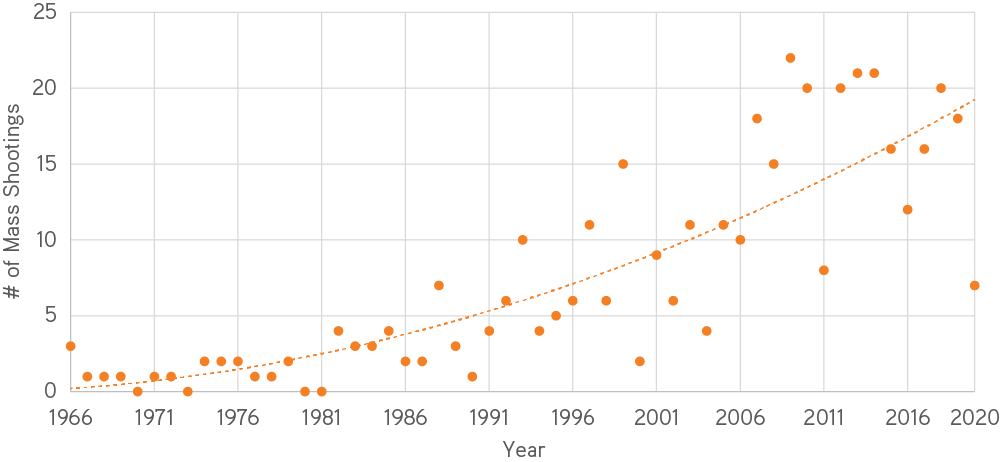
Typical (Median) Annual Death Rate per Million People from Mass Public Shootings (U.S., Canada, and Europe, 2009-2015)
    United States — 0.058
    Albania — 0
    Austria — 0
    Belgium — 0
    Czech Republic — 0
    Finland — 0
    France — 0
    Germany — 0
    Italy — 0
    Macedonia — 0
    Netherlands — 0
    Norway — 0
    Russia — 0
    Serbia — 0
    Slovakia — 0
    Switzerland — 0
    United Kingdom — 0
https://worldpopulationreview.com/country-rankings/mass-shoo...
- Empty offices since the pandemic
- Disappearance of the high-street due to Amazon
- New "In-between" builds
Most British cities still have empty or skeleton-crewed office buildings. That can't be sustainable. Surely these will be sold off as housing.
Shops are vanishing at a terrifying rate. Some city centres are boarded up and only charity shops, Tesco minimarts and tattoo/nail bars remain.
Every tiny plot of land is being sold off to developers to "fill in" with profitable (but in my reckoning totally unneeded) housing. This is changing public footpaths and cycle cut-throughs and squeezing the density of some areas.
I think any metric of "livability" would be in flux and likely to change in many British cities.
I won't even get into weather: the first few days of blue skies just started this week after a year of bleak gray-on-blue. Depressing is an understatement.
Unless you have terminal cancer or close to death, good luck getting any specialist’s attention. You’ll wait for a year on a waitlist for someone to care. Doesn’t matter if you have money either, no way around it.
Family doctor crisis is real, there are absurdly long wait times and people suffer as a result. But some things are also top notch. My wife just had our first son a few weeks ago and everything was really good - and parts of the process that were free would be very expensive in other places.
Zürich is a beautiful and well-organized city, for example, but every single time I've been there I've found out that its quiet translates into a boringness I've seldom experienced anywhere else. For me, a man in his late thirties who has no plans to have kids and form a normative family, it's a living nightmare.
At worst, this is an infomercial for the data components they gathered, which they use to come up with these aggregate stats.
Honest mistake on their part. I think the exodus count is over 50,000 so far.
Let's all pretend that the experience is the same for everyone, if you're not white, you know this is not necessarily true for you
At the same time, Auckland is pretty dead for a while now, especially the CBD. Traffic is not that bad, but we haven't recovered at all from Covid. We will see in the next few months if cruise ships and tourists are back or not.
Secondly, it's funny to see how variable the scores are from one year to the next - with rare exceptions (e.g. Kiev right now) cities don't really change that much in the short term.
A few other small observations:
1. It's absolutely comical that Frankfurt ranks 7th. I know the city quite well, it shouldn't crack the top 50 in any vaguely sane ranking.
2. It's also plainly weird that Istanbul is Western Europe but Budapest is Eastern Europe, together with Tashkent, which is comfortably to the East of all of Iran.
3. Why no breakdown for Southern Europe/the Mediterranean?
Year after year when going over these rankings I'm left with the same impression - arbitrary tastes and cultural flexing + some basic common sense observations, all masquerading as science.
This week is funny, seems to be D week. Because through some coincidence the cities asking for a quotation are Dhaka, Denver, Dublin and Douala. On your third international project you learned the hard way that scaling compensation for the team on site by cost of living might work fine in Zurich, but not for a cheap country permanently skirting the threshold to civil war. The company started by that on-site team after resigning mid-deployment likely has the same "D" quotation inquiries this week.
That's would be an example of the target audience EIU is selling the index to. Not a pat on the back for the nicest place, but a meaningfully closer to objective estimate of how much will our employees hate us if we deploy them there. Easily worth a few hundred dollars.
Perhaps, although I imagine that IRL this kind of research might be bought as part of a much bigger research effort. Maybe just to have it and say that you checked some "objective" source before making a decision.
https://pages.eiu.com/rs/753-RIQ-438/images/liveability-inde...
(Need to provide an e-mail address to get the above link.)
[0] https://store.eiu.com/product/global-liveability-survey/
In areas of Chicago and Baltimore, for example, the streets are "walkable," however the frequent violent & property crimes that take place in these areas make a casual stroll down the block an unsafe proposition.
I grew up in Harlem during the time it was emerging out of the 1980s crack epidemic. As a child, the streets were easy to walk on and crime did not impact this for me in any real way. Just a few years prior, though, this was definitely not the case. And even today, as "walkability" improvements have been made in Harlem, the streets are quite obviously less walker-friendly, since walking down the street exposes you to a non-insignificant risk of being a random psychopath's next unwitting victim.
My suspicion here is that you have some sort of binary thought process surrounding cars in cities. The fact is that cities are not as livable in general. Any solution involving more or better walking capacity is a temporary fix at best. In actuality, what you need is a very solid city planner who is able to anticipate and respond to cultural trends adequately. Cities need to be able to balance the needs of various transit options, such that they don't compound peoples' other problems that come from living in cities: crime, cleanliness, affordability, etc.
If your goal is reducing crime, increasing walkability is an excellent way of achieving that. The more walkable areas are, the more regular people will be walking in that area. The more regular people that are walking in an area, the safer it is. Walkable areas are also much easier to police and keep safe since they are naturally much more dense and less spread out, so there is vastly less surface area to cover.
High crime areas would naturally have fewer walkers and fewer amenities.
I can’t speak to Baltimore, but in Chicago, crime and scarcity of amenities go hand-in-hand. I can’t think of a single pedestrian-focused area that has both amenities and a significant crime problem (one must understand that Chicago crime is not nearly as prevalent or evenly dispersed as the media and non-Chicagoans enjoy imagining).
If it was just about "can you go for a walk" twisty-turny suburbs would get the highest imaginable walkability score, because you can get lost in those for hours and never see a car. Or any other useful destination, for that matter.
However, the background threat of it and cultural acceptance of guns over there would be intolerable for me (from a liveability perspective).
I don't think Poland and Hungary have a high probability of entering a war, but it is a small percentage increase multiplied by a devastating outcome.
I agree it doesn't seem that likely, but keep in mind that Poland's entire eastern border is Russian or Belarussian territory, with a speck of Ukraine in the southeast. The probability is still low, but it's higher than a year ago.
I have no idea what "unneeded" housing is. Are these units sitting empty?
YoY house price growth in the UK is running at around 10%. I am not aware of a glut of "unneeded" housing.
My own anectdata, but I've made the opposite observation. At least in my hometown (~10k population), I've been pleasantly surprised at just how resilient the high-street has been. In the past year, we've had a new bakery, a new arts and craft shop, a new cafe, and the farmer's market is going from strength to strength.
While several years ago, I would order relentlessly from the likes of Amazon, I've found myself purchasing local goods in local stores far more, and am better off for it.
That's awesome. To qualify my comments, I've also seen some of that change. New shops I've noticed filling in are
- a bike repair shop
- a "slow living" craft shop
- a tailors/upholsterer
- a fishmonger (haven't had one for 20+ years around here)
But in my town (city >300k) the decline has been significant with large chains, banks, clothing and brand retail shuttering up.
I do my best to support local trade and petit commerce. The ability to use cash and just browse in spare time is a factor.
But I wanted to add that with the exception of empty offices due to COVID all other problems didn't change that rapidly, IMO.
These have been slowly building up since Gideon's austerity and in almost all deprived areas in the UK, you could play the Charity/Fried Chicken/Bookies/Boarded shop drinking game for at least a decade.
And gambling shops. I noticed a large increase in those.
But seriously, should they be skewed more single 30s guys with no commitments? Should they be skewed towards the things that benefit the majority of people who are not single 30s guys.
Saying this as a former 'single guy in his 30s' myself.
The Patek Philippe-wearing jet set, towards whom most of the advertising on The Economist is aimed at, is going to have very different ideas of livability.
Personally I also find very well organized, well functioning Western European cities quite boring. I would take Athens over Frankfurt any day - but of course the 'objective' index says I would be wrong to do so.
Whether you’re a teen, in your thirties, or in your eighties.
If you’re city doesn’t cater for this range, it simply isn’t a great city, but rather a playground for a particular type.
The answer is the analysis gets tons of press, people get worked up over the rankings, share the link, more eyeballs, more arguments, more eyeballs —> more ad revenue.
It’s the same reason starts up do blog posts of analyses, it’s free PR.
Pretty clearly it works based on the HN discussion alone.
Neighborhoods for cars:
* Noise
* Pollution
* Dangerous for all, especially children and cyclists
* Discourages simple outside exercise like walking or jogging
* Forces car ownership. You can't do anything without a car.
* Massive amounts of space are required for roadways, parking etc.
* Sprawl. Everything has to be spread out.
* Anything immediately outside your home is unpleasant.
Neighborhoods for people:
* Quiet
* Less pollution
* Safe. Children can play outside and go to the park or shops by themselves, or visit their friends by foot or bike. (I sent my 7 year old to get a couple things from the supermarket last week.)
* Biking and walking is pleasant
* You don't need to buy a car
* The neighborhood isn't full of ugly car parks.
* neighborhood is compact, making biking and walking much more viable.
* more space for public green areas
I enjoy biking, public transport and the density to support a nice shopping/bar/party street within walking distance, but what do I know, living in the second most livable city.
2. Living in a city means living densely (for some definition of dense). If you don't like that, you should probably not live in a city in the first place.
3. Dutch cities are not really that dense in my experience.
I live in a mixed used era, in a 5 story appartment block, which is the high end of density around here. I have two tram lines within 400 meters and an S-Bahn station less than 100m away.
And also, dutch cities allow for bikes, if public transport isn't your thing.
I'm genuinely curious, as I feel the opposite
Clearly, there is no linkage between walkability scores and crime.
[0] https://www.walkscore.com/score/1405-pacific-st-brooklyn-ny-...
The equivalent mid-density construction is basically nonexistent in new construction today because of exclusionary zoning. It's only recently that some states have started forcibly re-legalizing this sort of thing by overriding local zoning codes, and it will still take decades at best for new construction to really catch up.
And talking about catering to a specific type, Frankfurt and Zürich are way more catered toward a very normative idea of family and individuals A city like Berlin by these standards is deemed less liveable, but some of its flaws is what makes it way more humanly liveable. Also, Berlin has so many areas that are completely different from one another that here you can find the millionaire tech startupper with a villa at Wannsee eating out at Hasir in Kreuzberg next to deadbeat students. That’s more my idea of psychologically livable. But yeah, if you’re into skiing, banking, and fancy wines I guess Zürich’s fine.
Can I ask where that is?
Large chains being replaced by smaller establishments would be great but I don't have high hopes here.
https://www.downtoearth.org.in/news/climate-change/extreme-t...
> The study found that extreme heat and cold killed 5.08 million people on an average every year from 2000-2019. Of this, 4.6 million deaths on an average occurred annually due to extreme cold while 0.48 million deaths occurred due to extreme heat.
"In Canada, more than 80 people die each year from over-exposure to the cold."
https://www.ottawapublichealth.ca/en/public-health-topics/co...
In Canada and northern US, you expect the cold and plan accordingly.
In sub-Saharan Africa, you expect the heat and plan accordingly.
It's when the conditions flip-flop (hot Canada, cold Africa) that people run into trouble.
Goes right back to how subjective livability is. The above statement might be true for you. For me I'm unhappy at anything below 80F and downright miserable below 60F. Any city that gets weather below freezing is completely out, regardless of all other factors. Live is too short to spend most of it freezing. All the top 5 in this economist list are freezing places, hard nope from me to all of them.
So something like the London tube, where millionaires sit next to people that have been unemployed for the past 2 decades sounds like hell to them.
The biggest problem with DB is that they're privatized (but state-owned). They've been cutting large parts of the rail network off for good and instead invest in large infrastructure projects with dubious benefits (and then DB executives retire as executies in construction companies hired for these projects).
The rare case where you have to take a lot of luggage can always be covered by taxis. In no way is that more annoying than finding parking, sitting in traffic, taking your car to maintenance etc.
Also, it sounds like you're talking about long-distance services here. But this thread is about local to regional services where people don't generally carry around baggage.
I also like gardening and farming, wood and metal working and generally doing all kinds of projects involving metal casting, glass blowing, pottery making etc. I would never be able to do comfortably living in a city.
The only downside to car culture is environmental concerns that I really hope electric cars fix.
How are they supposed to fix it?
In many countries we still burn gas & coal for electricty.
The cars need to be produced, which is alot more resource intensive than building better public transports, since a train transports hundreds of individuals at once, and can serve the transportation needs of thousands over the course of a day, the amount of material and energy for fabrication per-passenger is far lower. And thats's not even taking into account total service-time and cost of recycling.
The cars need parking spots when not in use, which requires space that could otherwise be used for housing/parks/recreation/businesses. Public Transport systems have far fewer downtimes (even when I dont ride the train, someone else does). Plus, they are more space efficient to begin with.
And of course cars need roads. Lots of them, and no matter how many are built, there still seem to be traffic jams.
That really is a problem with the city streets. In the Netherlands, bikes are considered such an essential mode of transport that they often have priority over cars.
You'd think that'd result in dutch cities being hell for drivers, but they're really not. Because you're not competing for space with all the people that can choose another mode of transport. Unlike most places in the US where everyone is forced to use a car because good alternatives are nonexistent.
You're not going to drive fast in a dutch city, but you'll also not get "stuck in traffic".
But yes, I think your concern is more about that you wouldn't enjoy living in a city to begin with. Which is fair enough, most of these things you enjoy aren't great if you don't have a workshop and/or plenty of space (though I have to note that amount of pottery workshops in my city is quite high which is nice because it makes it more accessible to people who can't own all the equipment).
They won't fix it, because we still need to make cars.
If you get an older car that you can repair yourself and keep going long past its point of planned obsolescence, and convert it to run on a cleaner fuel like propane, then your ecological impact will be a lot less.
A few years ago, my family doctor noticed something concerning. I was seen by a specialist within a week, and was in the operating room a few days later. It was a potentially serious situation but not immediately life-threatening, yet I still received fast and efficient treatment.
There are longer wait times for high-demand procedures affecting 'quality of life', but that is the nature of triage.
The important part is that the whole episode cost me nothing more than a few sleepless nights, while a friend in the US who went through a similar process and spent a similar time waiting for surgery ended up with substantial medical debt.
But for those who needed it, it was fantastic. And the quality of care that I experienced there was on par or better with what I get in the US.
I don't think much has changed. I just went back, had a very minor medical issue, and within 2 hours after making my first call, I had see a primary care physician, who wasn't 100% sure, so she called in the specialist next door as well.
I had thought, given how many people live around them and use them, that the beaches would be crowded, or ruined with litter, but nothing of the sort.
And the water is so much warmer than our South Island beaches.
Where are you based ?
Sophia Antipolis (https://en.wikipedia.org/wiki/Sophia_Antipolis) is definitely an attempt to build a Silicon Valley in Europe but why did it not work? It was pushed and funded extensively by the government, it doesn't feel natural after all. In the Bay Area, the government was there too, no delusion but private sector has shaped California for about 150 years. What always stroke me is the urban planning: the houses and roads are big and pretty even if they look old sometimes. It might be part of the Californian dream: a big job, a big car, a big home, etc. Also the administration and mentality is different, more Republican perhaps?
By contrast, many large cities in North America have extreme seasonality. With meters of snow in the winter, and unbearable heat in the summer. Looking at you NYC.
Canada has a family doctor crisis because they barely pay them, flat out. Often a pure family doctor doesn't even hit $200k, so any med student today is going to go some specialty route. It needs to equalize with walk-in clinic rates or it will continue to not have good supply.
Another special thing about the UK although is the amount of schooling needed to become one and consummate expense and risk seems significantly less. You can enter doctor school after high school and be in school for a significantly less amount of time. If you don't get in, you can move on with your life and go do something else with nothing really spent time wise or financially.
In the US/Canada, you need to get at least %75 of an undergrad, hope you get accepted into a graduate doctor school, which is extremely competitive, and then work you ass off in a very high workload situation, and then you need to do residency where your paid below minimum wage if you do an hours worked calculation, in a system designed by a doctor with a literal cocaine habit before cocaine was made illegal. Your in your 30s when you can start making proper money.
It's a combination of:
- A government that is outright hostile to health care workers, including fighting a battle against their unions during covid to reduce pay. The health minister famously went to a doctor's home and berated him from the driveway for tweeting something negative about him. Again, during the pandemic.
- Some specific changes to the pay schedule for doctors that makes it very difficult for them to spend more than 15 minutes with any given patient without losing out on income.
- The introduction a teledoctor system that pays better but most of the people on the other side of it don't live or work in the province.
And that's ignoring other kinds of medical workers, where they've done various things to force specialists to take on fewer patients, cut nursing headcounts to the bone, etc.
Every medical professional I've interacted with for the last few years (even before the pandemic) has seemed exhausted and on the verge of packing up and leaving.
Public Healthcare absorves the heaviest blows: expensive surgeries, cancer treatment etc are mostly or only done by the single payer public system, while private Healthcare enjoys mostly low severity cases.
If there was no private system, the public system would pay for all of that. What you’ve described actually seems like it goes easier on the public system by allowing it to specialize on certain kinds of issues
    Norway — 1.888
    Serbia — 0.381
    France — 0.347
    Macedonia — 0.337
    Albania — 0.206
    Slovakia — 0.185
    Switzerland — 0.142
    Finland — 0.132
    Belgium — 0.128
    Czech Republic — 0.123
    United States — 0.089
    Austria — 0.068
    Netherlands — 0.051
    Canada — 0.032
    England — 0.027
    Germany — 0.023
    Russia — 0.012
    Italy — 0.009
Many statisticians believe the reason the CRPC study's results seem so counterintuitive is that they are incorrect. One of the more detailed analyses appeared on the fact-checking website snopes.com and concluded that the CRPC report used “inappropriate statistical methods” which led to misleading results.
The dirty secret of gun control policies is they do not much at all. Gun control policies that reduce actual human death are mostly about impulsive suicide prevention, and if you get rid of the guns, I'm guessing a substitution effect would start happening anyway. When you really dig into it, most non-government caused gun death comes from mental health issues, economic inequality, organized crime shootouts and suicide, and those things are not solved by making guns harder to get, beyond some suicide impulse prevention.
They are usually zero in many developed countries and usually non zero in others(I mean one here).
So giving a shit about it actually have an impact.
It can make the difference between your kids coming home from school or not.
Gun violence in US kills.more people than soldiers at war.
Should we stop giving a shit about war too?
I think it's shows that the average US mentality is cynical about other people's lives exactly because people don't give a shit.
Obesity is a problem of quality of food, if McDonalds cost less than vegetables and poor people often can't afford healthy options of course there are going to be consequences. But the solution is not throwing money at the problem (food stamps) it's in a shift in culture, which US society is apparently not able to do, because nobody gives a shit. They are good at campaigning to deny abortion to women, but not to make healthy food available to everybody regardless of the census. Maybe it's too a socialist option for them.
> Guns are flashy, but infinitesimal compared to the actual causes of early death.
That's completely untrue. And, again, it shows the cult around guns that some people appear to be sucked in.
Guns Became the Leading Cause of Death for American Children and Teens in 2020
Other ways to display this data would be:
- group Europe into 1
- split the US into states
- display error bars
- take 95% lower bound assuming a normal distribution
https://www.evanmiller.org/how-not-to-sort-by-average-rating...
It's also the only country in the West were regularly every year there are a few mass shootings.
That's the real problem, they have normalized it, all other countries have usually zero mass shootings for many consecutive years.
What matters is that USA can't stop them.
> Of course the US is less likely to have shooting-free years
Not bigger than
Albania + Austria + Belgium + Czech Republic + Finland + France + Germany + Italy + Macedonia + Netherlands + Norway + Serbia + Slovakia + Switzerland + United Kingdom = ~363 million people
USA = ~330 million people
---
Typical (Median) Annual Death Rate per Million People:
Team Europe (363 million people) = 0
USA (330 million people) = 0.058
p.s. read the study I linked
The stats are deaths per million people.
phat = 1.0*pos/nThe Mediterranean climate is very different from what you get in Central Europe, or (worse, as far as rain goes) the UK and Ireland.
"Caelum crebris imbribus ac nebulis foedum; asperitas frigorum abest" – "The sky is obscured by constant rain and cold, but it never gets bitterly cold."
(Tacitus about Britain in 98 AD. Not much has changed.)
I personally like the weather on the southern slopes of the Alps the most. Southern Austria, South Tyrol, Slovenia. Pleasant enough to be almost-Mediterranean, but not scorching hot in the summer and still retaining four distinct seasons.
If you like such weather, places like Trieste or Ljubljana can be fairly welcoming and with low cost of living, though you need to forget about Silicon Valley levels of compensation.
The basics are actually the thing it does best; covid vaccination for example went well once the political stuff was handled.
It seems like the ceiling here is the amount of investment it would put in to manage 100% of the health needs —- I don’t see how the parallel existence of a private system causes the public system to be larger than it would be if there were no private system
the reasoning is well explained in the link I posted.
The main reason, for those who don't want to read it or went straight to comments without reading my post in full, is that
*The data itself supports this interpretation, as the United States endured mass shooting events all seven years, but the other countries all experienced mass shootings during only one or two years. Thus, in a typical year, most countries experience zero mass shooting deaths, while the US experiences at least a few.*
If that doesn't scare people enough, maybe this[1] or this[2] will.
[1] https://rockinst.org/wp-content/uploads/2021/07/number-mass-...
[2] https://yubanet.com/usa/over-70-of-mass-shootings-in-develop...
Over 70% of mass shootings in developed countries happen in the US, international analysis shows
“Mass shootings are a uniquely American problem, particularly in relation to other developed countries.”
Note that this is true even though each mini-US continues to have the same per-capita shooting death rate.
But that's absurd, since each of those mini-US countries has the same problem as the whole US. Picking the median has just hidden the data. I suggested 4 alternative ways to express this.
Measuring smaller regions can lead to an increase of the median.
For example Norway only had one mass shooting in the past 10 years, while there have been 25 major mass shootings in the US in the same time span, in 2022 alone there have been 22 mass shootings in USA[1], but only 3 in the entire Europe - 746 million people -, including one in Russia and one in Ukraine, and only 1 (one) in EU[2] (so basically in US it's 22x more likely for a mass shooting to happen compared to Ukraine, Russia and the whole EU, at least in 2022, until now)
[1] https://en.wikipedia.org/wiki/List_of_mass_shootings_in_the_...
[2] https://en.wikipedia.org/wiki/Category:2022_mass_shootings_i...
But, being Norway so small (there are 5 million people there) if we count the median for Norway only it goes up to 1.888 deaths/million over the 10 years, even though it's been a single event, perpetrated basically by a nazi terrorist, it's not a systemic problem like in the US, where normal regular people buy a shotgun and start shooting at everybody, including kids at school.
Remember: we are counting incidents that kill people, so having consecutive years without mass shootings it's something all developed countries should try to achieve, it's not just stats and numbers, it's people lives!
In my country that counts 60 million residents (and over 9 million guns), there have been only 3 (three) public mass shootings since 1982! one of which perpetrated by the clan Casalesi (a mob family) in a conflict between Camorra and African criminal gangs, another was the attack on the Great Synagogue of Rome perpetrated by Palestinian terrorists and only one by a private citizen, with mental health issues.
Spot the differences with US.