Why A4? – The Mathematical Beauty of Paper Size(scilogs.spektrum.de) |
Why A4? – The Mathematical Beauty of Paper Size(scilogs.spektrum.de) |
It’s not that there is a relation, it’s that it’s simple. If you put 288/187 inch of water on a standard letter paper, you get exactly one cubic foot of water, but I wouldn’t say “The fact that a cubic foot of water has a relation with the size of the paper we use is just poetry”.
It also is a happy coincidence that the idea “if we cut a page in half, the two parts should have the same proportions” leads to usable paper sizes. If it weren’t, we wouldn’t have this system.
And has this ever been tried for 3D, say in storage boxes? The proportions of a box would be about 1 : 5/4 : 25/16. That’s a bit cube-ish, but doesn’t look unusable to me.
The metric system is great for symmetry and calculations but that doesn't always map to practical quantities in those units, in my personal opinion. It's kind of funny when foreign friends will explain to me metric units, when I already know them, but they don't understand anything about non-metric units or their practicality.
Edit: I should have known to make this comment, because it's going to get bikeshedded to death (already is). The summary of my point was to say that the metric system is perfect for calculations and representations, but the non-metric systems can often serve more practical purposes. Not always but often. In other words, for daily, non-engineering uses, there's really not much of a strong winner aside from people's country of origin. Even for paper, it's a toss-up for me. I find for notebooks, the A<x> sizes are nice and preferred by me, but US letter size is sometimes more preferred over A4 paper. A4 paper is nice for mathematical notes but can often get in the way of diagramming due to the narrowness.
There just seems to be a superiority complex of those that use the metric system, but I don't really get it. Note the use of the word "shocking" in the comment I replied to.
Edit 2: Commenting on scales really seems to grind some gears and gets people going. I'm okay with stating that the scales used for various measurements are fairly arbitrary in daily life and that there's pros and cons to both, but still disagree that it's shocking various places don't use the metric system. They certainly cause issues in engineering systems though.
Fahrenheit maps to your human experience because it's what you grew up with.
To me, Celsius maps to my human experience, because it's what I grew up with.
That's it. That's all it is, and that's the only reason you think it maps better.
I can perhaps relate my subjective experience to better explain what's going on. I grew up with Celsius temperatures, so temperatures like 27C or -5C tell me exactly what I should wear when going outside. For Fahrenheit, even though we are told that it maps to human experience, I have to consciously try to remember what these 10F, 20F temperatures mean and often forget. The intuition just isn't there at all.
For height, I'm used to the metric system, but I can also understand the imperial system in that specific area because of seeing so many discussions about it over the years.
I actually learned to cook while in an Imperial zone, and now I am more used to certain temperatures in F.
The reason people find it shocking, is that we are essentially forced to deal against our will with Imperial measurements, because the US is a powerful country. The annoyance has more to do with the sensation of being trapped by another culture and having to adapt to their way of life rather than the reverse.
Feet or inches are, I think, a bit more human friendly than meters, but only when used by themselves, that factor of 12 is just weird in a base 10 system. I know that the argument is that you can divide by 3 and 4 easily, but when it matters, metric countries simply make standard sizes a multiple of 12 (ex:120mm).
For volumes and weights, I find absolutely no redeeming feature to the imperial / US customary system. The kilogram is a perfectly fine unit, so is the liter, and that both are the same when we are weighing water is a very useful property. Because many things are around the density of water, you know that most things that fits in a 1L bottle weight around a kg, and you can often measure volumes with a scale without conversion.
Metric is not the most practical for every single situation, but it is more practical when used as a whole, that is, when you need to deal with with several quantities at the same time (ex: masses and lengths). And there are everyday situation where it is simply better in my opinion, like cooking.
We can leave hands in water at 50°C. Above, it slightly start to cause burns.
This is a range that make a lot of sense IMHO.
I see nothing special about -17.8°C +37.78°C range except that 37.78°C is very hot. But why 37.78 and not some other value? It is arbitrary. And -17.8°C is even more arbitrary - it is not the coldest weather in many northern regions.
0C outside means the ground is hard to work with. 32F is such an arbitrary number when dealing is concrete reality outside.
There are endless examples of where this argument doesn't stand up because the "averafe==ge human experience" is nothing like yours. But of course, it's more or less applicable in most of the US, so you imagine it's universal. Whereas, for the rest of us, 0 is cold, 10 is cool, 20 is warm, 30 is hot, and extrapolate from there. That's simple and relatable enough for me.
They don't see it the same way that you don't see that the units are totally irrelevant, the brain just have to form habits around the relation between the numbers and the world, but as soon as there are consistant and predictable, the extra effort or lack of doesn't change much about their practicality. The habits are formed early, and doesn't require any extra work once set.
Having physical relationships between units without having to remembering ratios can be handy time to times, and for your entire life.
(Or 7.75" x 11", approximately, if you prefer.)
But wait for it. If you look at the pendulum formula [1] you will realize that g ≈ π^2 (i.e. 3.14^2 roughly equals 9.8) is not a coincidence, it's a consequence of the original definition of the meter!
The metre was _actually_ originally defined in 1793 as one ten-millionth of the distance from the equator to the North Pole. Obviously, that ended up having its own issues, hence the subsequent refinements until we settled on using the speed of light in a vacuum as the basis for it.
It all makes sense and seems really clever when you are at school with your little ruler with those weird inch things on the unused side. I could bark at any adult daring to use an outlawed measurement unit, to put them in their place.
To a certain extent we do that with Americans and their usage of 'weird' units that make no sense to people outside of the UK. However, as I have got older, I have learned to appreciate why these quaint measurements have survived the test of time. For example the 0.1 inch pitch spacing of integrated circuits is a gentle reminder that Americans pioneered and invented all of this stuff and that, despite the politics and sentiment of the time, some respect is deserved for the non-metric giant shoulders we stand on.
Every British person knows what a metre is but most British people will give their height in feet and inches. Ask those people what their height is in metres and your guess is as good as mine.
Weight has made a slow transition to kilograms in the UK. Stone is still a measurement. But when an American describes weight in pounds the average British person has not the foggiest.
I find more beauty in the vernacular measurements and I can play devil's advocate - 'Metric is French Napoleon conquest bad'.
Nowadays we have electronic gadgets to do the simplest arithmetic. Nobody does long division on paper these days. They don't even have a pen. The benefits of the decimal system are somewhat moot. I can see why base 12 measurements stick around but no idea why base 14 is a thing.
Anyway, couldn't the A4 problem have been solved with non square pixels?
Not sure if this is valid (celsius looks fine to me) but if it is, sure, fahrenheit makes sense.
But for the rest, like distance and weight? What the fuck?!
[1] I'm not claiming we do perceive temperature logarithmically - just making an analogy with another case (sound) in which we don't use a straight linear relationship because it doesn't match our intuitive perception (e.g. of volume "doubling").
On the other hand, I completely agree that the rest of the non-metric measurements are just a mess. However, the binary nature of cups, pints, quarts, half gallons, and gallons are kind of quaint I suppose.
[1]: https://fr.wikipedia.org/wiki/A4_(format)#/media/Fichier:Pre...
As such A1 is 1/2 m², A2 is 1/4 m², A3 1/8 m², A4 is 1/16 m².
I would call this tied to the metrics system. It never occurred to me that I could approximate odd 1m² areas with 16 sheets of A4... I found this enlightening from the original article. TIL.
First: The DIN paper standards aren't a part of the metric system. They are a use of the metric system.
Second, the important part: what makes A series paper cool (truly one of my favorite standards) is a ratio, these are by definition independent of metric.
One can imagine a paper standard based on 36 inches, rather than 1 meter, which would have all of the good properties of A and B series paper.
The third reason is that the imperial measurement system is also an application of the metric system. But others have covered that already.
It's an ongoing source of amusement to me that people fluent in just one system of measurement look down on a continent of hundreds of millions whose educated class is fluent in both.
A foot is at least something very closely aligned across many cultures (from ancient Egypt to Japan) because of because of its clear and useful relationship to human scale and building products
You can check with Nassim Nicholas Taleb, I think he nails it. The imperial system is much more natural for people to grasp. A pound is roughly a fist sized rock, but there are no natural objects that weight around one kilogram. And one yard is roughly the length of a step, completely unlike a meter. And so forth. /s
Seriously, I propose a compromise. Europeans give up decimal comma and US gives up imperial measurements. Everyone wins.
I’m a European, and I hate decimal comma. When consuming data saved by MS Excel or similar, dealing with decimal commas is an ongoing source of annoyance and compatibility bugs, for all my 22 years in the software industry.
Modern software has American roots. Many programming languages like C, C++ and Python are using dot when printing or parsing floats with their standard libraries. It’s even in the name, these numbers are called “floating point” not “floating comma”.
Yes there is: a liter of water (see the beauty?)
> Europeans give up decimal comma and US gives up imperial measurements. Everyone wins.
And US gives up strange day-in-the-middle date format as a bonus to make everyone there sane.
https://www.youtube.com/watch?v=fjFaKD9BuOc
I can hardly wait for first contact, and the planet has to transition to some galactic standard...
+1
It uses US Statute Units which are similar but not always the same as Imperial Units.
There are some very important differences...
Hence the reason that no Brit is ever impressed with a "pint" served in a US bar. It looks like the barman forgot to pour all of it. :P
We should retire Imperial, US and Nautical units and switch everything to SI Metric.
Having several definitions of mile, pint, gallon, foot, etc in use, at the same time, is just feckin' silly.
You added sarcasm flag but sometimes it is more natural. I grew up with metric but can visualize "about an inch" better than "about 2.5cm".
It's common for "metric people" to sometimes use inches and feet in casual reference to certain types of measurements. "She is almost 6 feet tall" is another example that will be used instead of "180 cm" or "1.8 metres".
I've seen quite some fists and they all varied in size. This seems like a really bad idea to use as a reference.
consider it done
It’s the kind of thing that you always wonder about but never seriously investigate.
You could go a whole lifetime without knowing…
If, instead, we had height and width, I can roughly use my body to estimate screen size.
Last time I bought a TV I had to tape out its size on my wall to get a better understanding of its size relative to the size of my living room.
Never!
Doesn't it make sense for some things to divide by 3 and 4, like a year, so that a season is 3 months long, instead of 2.5 months long (as in the old 10-month year system, ending in December)?
Does it not make sense to use a human scale for certain things, like outdoor weather (as opposed to say, temperatures inside of machinery):
In Fahrenheit: 0: very cold to people; 100: very hot to people.
In Celsius: 0: not that cold; 100: I died 50 degrees ago.
The metric system seems to me to be forced onto things where it does not fit, when in fact it's fine to use more than one system when contextually appropriate.
After all, none of us think it weird to use bases 2, 10, or 16 for different things on our computers.
The only reason Fahrenheit looks like "a human scale" is because you're used to it. At least Celsius has clear reference points (everybody knows how cold is "freezing water" and how hot is "boiling water").
> Doesn't it make sense for some things to divide by 3 and 4, like a year, so that a season is 3 months long, instead of 2.5 months long (as in the old 10-month year system, ending in December)?
Programmers all around the world would first hate you for changing things, and then love you for making a consistent dating system.
But, seriously now, dates are a bit of a difficult system to change. You want to be able to refer to past dates without too much confusion, and also there are outside restrictions such as the length of a year compared to a day (not many integer divisors of 365 days).
The metric system also uses twelve months per year, so what is your point?
> Does it not make sense to use a human scale for certain things, like outdoor weather (as opposed to say, temperatures inside of machinery):
Yes, Fahrenheit works 'better' than Celsuis for describing weather temperatures. But it does arguably worse at pretty much everything else, including other everyday occurrences like cooking or washing clothes.
As an aside, 12 would arguably be the better base for an everyday number system, but we are where we are (and contrary to what's commonly claimed, the imperial system isn't derived from base 12 either - 12 is used in a few places, but most proportions are historically grown and fairly random).
Celsius 0 and below, warning there could be ice on the road.
Hot/cold is too subjective. My relation to heat/cold was not the same when I was living in north of France, Swiss alps and now in south of Spain.
https://en.m.wikipedia.org/wiki/French_Republican_calendar
10 months per year, 10 days per week.
It's not like I didn't explicitly cover that:
"I'm not claiming we do perceive temperature logarithmically - just making an analogy with another case (sound) in which we don't use a straight linear relationship because it doesn't match our intuitive perception (e.g. of volume "doubling")."
So, no, I'm not saying temperature perception is logarithmic and Fahrenheit is logarithmic to match it.
I'm just saying that similarly to how dB suits sound perception better (because it's logarithmic and more appropriate to our logarithmic perception of volume), fahrenheit might fit intuitive temperature perception better (because it's more appropriate to our perception of temperature).
Actually, I'm not even saying this is the case. Just that I've read and heard people claim that, so it could be (I'm not from a fahrenheit using country, so can't speal for how it intuitively feels), for one example:
https://thevane.gawker.com/fahrenheit-is-a-better-temperatur...
Hmm, the largest historic European foot listed on the corresponding Wikipedia page is almost 30 % larger than the smallest foot. So while they indeed all are somewhere roughly 30 cm-ish long, after a few feet those differences will still add up considerably…
Incorrect? It's pretty bloody close for 1793 — The error is less than 0.02% !
There was /s at the end of the sentence, meaning I was sarcastic:)
We should all switch to the ISO (and some (most?) Asian country) format of Year-Month-Day.
Of course pre-metric units were defined by something convenient. A cubit is the length of the forearm.
I don't think Taleb goes into the why.
Metric is clearly superior if you have the social concept that units should be standardized and (as a corralary) that products are commoditized. The idea of a standard commodity, however, didn't really exist before the industrial revolution.
So why would units be standardized before that? The only place units mattered was taxes, and then the unit was whatever the king said it was.
> I don't think Taleb goes into the why.
You can measure rope and cloth using cubits by wrapping them around the fist (which holds one end) and the elbow.
There are other paper sizes based around the A series that fit relate back to it as part of a geometric progression, which means stuff fits neatly together. For instance, the C and DL series, which are used for envelopes, with a C4 envelope being exactly the right size for a sheet of A4 paper.
Bad for origami though. Ditto with regard to A4. :-)
I don't think you can call it the original definition, because (a) that definition never got any universal acceptance (not even among scientists), (b) didn't work (as it gave different results on different locations) and (c) wasn't particularly close in value to the current definition.
I do care, though, and use ISO 8601 almost exclusively in writing. And I do know a few others. Perhaps things will change eventually.
For example, fitted kitchen cupboards are designed in multiples of 150mm, which has plenty of nice factors. A dishwasher might be 600mm wide, or a typical cupboard 450mm.
For example, telling a story about their daughter who has grown quickly and is now "almost [n units] tall"? Are you saying they would use centimeters and expect their listener to know what "184 cm" looks like?
I'm not saying metric people use "5 foot 9", but it's common in my country (Australia) at least to use "6 foot" because that's a nice easy rounded benchmark. In metric height, there is no benchmark until 2 metres tall, which is a rare height even for men.
> Temperature near 100°C is important when we cook (eggs, pasta, rice).
When does that matter on the scale being used? Someone else mentioned this, but I've never known anyone to be taking direct measurements of these things when cooking aside from baking. It's pretty clear when water is boiling.
> We can leave hands in water at 50°C. Above, it slightly start to cause burns.
When has that been useful and dependent upon a temperature measurement (and thus a temperature scale)?
I'm not sure why 0f is a big dangerous milestone in outdoor temperature. Is -18c/-1f really that different to -17c/1f? If anything, there's a much stronger argument that 0c is the dangerous milestone because that's when you get ice.
Really the only temperatures I care about on a day to day basis are like, freezing temperature (0c/32f), room temperature (20c/70f-ish) and various benchmark outdoor temperatures, like 30c/90f being hot and 40c/100f being potentially dangerous. You can +- a few C either way on any of those (except freezing) and it doesn't really make a difference. Cooking, even baking, is usually fine within around 10c. Sous vide is apparently a lot more sensitive but I've never done that.
Very occasionally I deal with something something like a kettle thermostat or boiler thermostat, where I might choose something like 100c/212f or 50c/120f respectively. I also use an IR thermometer for cooking pancakes, pizza and monitoring my wood stove - but neither Farenheit or Celcius are any more useful in that context.
I think the idea that it is indeed relatively arbitrary probably summarizes a more accurate reaction to the comment I originally replied to.
0°F is a big milestone? I'll claim 1°F should be the milestone instead, or -5.4°F, or 2.33333°F.
15°C or 12°C or something is an important temperature if you live in the tropics without a heating system.
bmitc reacted to the comment that said "Temperature near 100°C is important when we cook (eggs, pasta, rice)." By asking when that info is important. They are not the one here that put weight in arbitrary numbers, at least in that last comment.
Yes, 32 degrees F is arbitrary, but so are several of the milestones in Celsius.
I think my argument is that Fahrenheit is more natural most of the time, but both scales have their sweet spots (which makes sense given their relative nature). But I can't see any clear argument that says Celsius is superior all the time.
0C wear a woolly hat
10C wear a jacket or sweater
20C Teeshirt and jeans weather
30C Teeshirt and shorts weather
40C Get in the shade and keep hydrated
50C You want to avoid this end of the scale
It's almost all defending against the pro-Fahrenheit folks making strange arguments promoting it, like somehow you can't measure your life unless it's in F.
I didn't make that argument. Fahrenheit is more natural in a lot of cases because of the range and delineation between whole number temperatures. Celsius is slightly less so but not all the time.
My entire point, which was lost in the bikeshedding is that it is not "shocking" that the metric system isn't used everywhere in daily experience because non-metric systems were literally invented to be useful and practical. Are they perfect? No. Neither is the metric system for daily human use.
The U.S. is a big place and thus has wide-ranging temperatures, and that probably contributes to resistance to getting rid of Fahrenheit, amongst other things and other measurement systems. The U.S. built a huge amount of modern infrastructure before anyone else and has never experienced a "rebuild" period. For non-engineering purposes, there's no downside to using non-metric units, and a lot of downsides in converting. As the back and forth here shows, there's probably a strong argument to be made that the measuring systems don't matter at all in an ideal world where it's free to convert entire countries back and forth between them. But for some reason, a lot of the world feels very superior for using the metric system.
Again. Not "shocking" as the original comment I replied to mentioned.
You don't cook?
I've used temperatures in the 60 something to 80 something range to measure the inside of food, my oven goes anywhere from 160 to 220 degrees, but water boils when it goes all bubbly. I know that that's at 100 degrees, but I don't do anything with that info.
I don't agree with bmitc's point that Fahrenheit feels more natural. But it seems like that anytime someone has something positive to say about Fahrenheit or imperial measurement, 10 different people need to tell them how wrong they are, and how there can't be anything positive about those systems of measurement. That doesn't seem necessary to me. Especially with temperatures where everyone just remembers a couple of numbers and associates them to a certain feeling or application, and whatever you've used your entire life will feel better or more natural.
1. 0 Fahrenheit is close to the typical minimum temperature, and 100 close to the typical maximum temperature, which can be tolerated by humans. Celsius 0 and 100 aren't even remotely close to this: it's surprisingly awful.
2. Fahrenheit has nearly twice the integer resolution of Celsius. This is particularly helpful in describing body temperature.
3. Celsius seems like it'd be useful in cooking but it is not really. Sure, 0 and 100 describe the boiling point and freezing points of water -- in Paris only -- but these are phase changes in water. Nobody says "now hold the temperature at 100C", because water naturally fixes to 100C the entire time it is undergoing its phase change. You don't need to measure it. And Fahrenheit's higher resolution is again very helpful.
4. Scientists don't use Celsius or Fahrenheit. They use Kelvin. Both Celsius and Fahrenheit convert to Kelvin with a linear transformation.
This is a theory of mind issue.
For metric users, Celsius is 100% familiar. Intuitive means that there are a bunch of hints that can give you an idea of values that you don't know. The fact that 0° Fahrenheit is about as cold as you can easily stand and 100° Fahrenheit is about as hot as you can easily stand is something that gives you an intuition: if it's as hot as I can stand, it's about 100°, if it's as cold as I can possibly stand, it's about 0°. I can figure out intermediate values through converting my feelings into a percentage.
You can of course do that with Celsius too, but Celsius hasn't been built around a range of human feeling, it's been built around the phase changes of water. You just have to remember the human comfort range in Celsius, do all the same calculations as above, multiply the result by the difference between your low human range and your high human range, then add that to your low human range to get an answer. There's no help, and it might as well be arbitrary.
Really? Barely long sleeve weather.
"Typical" maximum and minimum temperature as limits are meaningless, different places have significantly different minimum and maximum temperatures.
The resolution might be better for body temperature (I have my doubts, we measure to decimal point in C), but certainly not for cooking. Nobody needs to know the difference between 200 and 201 F in cooking.
> Both Celsius and Fahrenheit convert to Kelvin with a linear transformation.
C doesn't need multiplication tho.
But the slope of the Celsius<->Kelvin is 1.
> Fahrenheit has nearly twice the integer resolution of Celsius. This is particularly helpful in describing body temperature.
Yet medical practitioners insist on using Celsius in the most of the world, what fools!
> 0 Fahrenheit is close to the typical minimum temperature, and 100 close to the typical maximum temperature, which can be tolerated by humans. Celsius 0 and 100 aren't even remotely close to this: it's surprisingly awful.
I am very rarely exposed to 0 F, in fact, I actively go out of my way to avoid it by seeking shelter during blizzards while on mountain tops.
You're more likely to encounter 0 F in a continental country, but in my temperate maritime climate country, a populated locale hitting -10 C / 14 F is big news, and only rarely would it get to -4 C / 25 F where I live. In other words, I have very little use case for 0 - 32 F.
So its intuitiveness to you, is opaqueness to me. Because you grew up with Fahrenheit, and I grew up with Celsius.
Scientists do use Celsius and Fahrenheit sometimes, unless your definition of scientist excludes everyone who isn't a chemist or physicist.
TL;DR - you prefer Fahrenheit because you think in it. I prefer Celsius because I think in it.
It's just silly. It has no more bearing on reality than a kg does.
As far as I'm aware, there's no winner for cooking. I've never seen a recipe that required temperature more than as a value that could be provided in any units as long as you have equipment in those units (i.e. I'm not doing math with them). Putting "400°F" or "200°C" or "475 K" or some arbitrary "oven level 5" into my oven shouldn't really change how it comes out.
On the stovetop, I've never had an instruction with a temperature attached besides "interior temperature must reach X" or keeping something at a near-boiling temperature, which I've never needed a thermometer for, and 90% of the time I'm improvising without caring what the temperature is outside of "hot enough to cook the way I want but not too hot".
Sous-vide? It needs the temperature within a tight range, but the scale attached to the numbers doesn't matter as long as it's the one my thermometer uses. Double boiler? Doesn't even need you to use a thermometer to keep the temperature right. Give me a kitchen with everything in unpronouncible alien temperature units and I'd do just fine.
Can you elaborate on the cooking though? I've seen that mentioned here a couple of times, and I'm not sure I follow. I'm from a Fahrenheit country and my wife from a Celsius country, and it's never caused any issues or confusion in the kitchen. But maybe you mean also for the volumetric measurements as well (or primarily)?
But there is something else, and I am asking you the question. Since you and your wife live in countries with different unit systems, isn't problem when doing each others recipes?
I mean I live in Europe, and if the recipe calls for 4 ounces of butter, I don't have a 4 ounces stick of butter, I have a 125g stick, which is not exactly that. A quart of milk is not exactly the liter I have. And my oven doesn't do 350°F, it does 180°C which is not exactly the same. In the end, I will have to adjust the recipe to my standards, and things may be lost (or gained) in translation, but it won't be the same.
Not really. Celsius maps to the boiling and freezing points of water in Paris. Live in Denver and you're screwed. And -- this is important -- nobody measures the freezing points and boiling points of water, because during its phase changes water holds to that temperature automatically.
Fahrenheit is also twice the resolution of Celsius. This is highly advantageoous for body temperature, medicine, cooking, and other functions. Celsius's integer resolution is horrible.
Distance on road signs, car speed, engine fuel efficiency, beer pints (though I don't mind this since it means our average drink is larger, easier to say than 568ml as well), and that's it as far as I can recall
Celsius and Fahrenheit don’t make much difference. That’s the only part of the imperial system which is not incredibly inferior to metric.
The government proposed a consultation on doing so, mostly as a distraction.
I'd eat my hat if anything actually changes, the UK was (partially) metricated over 50 years ago, there's zero appetite for reversing it among people of working age and business concerns will dominate any serious consultation around changing legislation.
On the other hand if nobody over 65 voted every vote would be different.
Business interests align with hard cash. That's going to lean towards metric.
Over 65s don't "vote" much in businesses, they're retired.
Here we see the difference between subjective and objective plainly expressed.
Every other argument seems to boil down to "I'm not familiar with it, so it's hard", "dealing with 10s is easier than 5s", and "Fahrenheit has more resolution because I've forgotten decimal numbers exist".
The actual superpower of metric is that all the units relate to each other in simple ways. For instance most liquids you and I deal with on a daily basis have a similar density to water, so if you've got 100g of it, it's going to be ~100ml. You don't need to deal with arbitrary artifacts of the measuring system beyond the unit prefixes.
Fahrenheit being more natural is purely subjective, there's no good reason at all for it.
Keeping the imperial system is just a matter of convinience because Americans are used to it and changing everything is difficult. Also some people think producers of food and any objects to sell might lose some margin by converting and rounding to the next round number of the new unit
You mean "I'm already used to something and I dislike other things."
Now I think these discussions often go about cherry picking examples and just limit the discussion to outside temperatures is such a cherry picking.
The real power of the metric system comes from going all-in. You can't use everything but the temperature scale. If you would do that it would be even more obvious how disconnected the temperature scale is to the whole system.
The whole thing is absolutely mad and most efforts to standardise the systems historically lead to the adoption of the SI unit system for "important" things, as well as a few good intentioned bits of legislation, like the International Yard and Pound agreement [1] which standardised those measures between the US and other former imperial users. Don't get me started on the survey foot, or the hell that arose when the units of classical mechanics, electromagnetism or similar scientific systems had to meet imperial or US customary units...
[1] https://en.wikipedia.org/wiki/International_yard_and_pound
Well, in the middle ages, the furlong was important, because it was the standard size for farmers' fields (based on how long a furrow an ox could plow without resting). But 8 furlongs didn't fit neatly into a mile, so to make things easier for everybody, the mile got expanded to a nice round 5280 feet, or exactly 8 furlongs.
Some places even mix metric, imperial, and some traditional pre-imperial system.
This leads to two interesting consequences for aircraft that perform international flights from/to China: [1]
- they need to be equipped with two altimetry systems;
- they need to perform small climbs or descents when entering or leaving Chinese airspace, as metric flight levels do not usually match Imperial ones (flight levels are defined by round numbers).
[0] https://en.wikipedia.org/wiki/Flight_level#Metric_flight_lev...
[1] https://skybrary.aero/articles/china-reduced-vertical-separa...
Several countries (e.g. France) use the word pound (livre) to mean 500g, which could confuse visitors into thinking something non-metric is being used. I noticed that in south America.
These are basically “sizes” that are imperial by tradition/accident more than people using them as measurement. If I wear size 32 waist jeans is that imperial? Maybe. I’m not measuring I’m just using it as a known size. Might be inches.
Same for wheels, rifle ammunition, …
I use inches for TVs/monitors and although I’m as metric as they get, I have a 55” TV and my car has 20” rims and so on. Everything has cm, kW instead of horsepower etc listed as well for a TV of course.
As far as I know only a few countries - presumably because of regulation - have switched for absolutely everything. Australia is an example of a country where you can get a 100cm TV.
It's actually a pretty convenient unit, as long as you're familiar with how large tatami mats are.
Note that this unit isn't used for measuring an entire apartment's floor area though, that's done in meters.
Other examples are screen sizes: I have no intuition at all about how big 5.5" actually are, but I know where in the current phone market 5.5" would fall (awesomely non-huge!), whereas to my mind, the metric equivalent would carry no information at all ("bigger than a stamp, smaller than a TV"). And for sensor sizes you even have the situation where the imperial number is a "size class" with very little relation to actual size, whereas the metric number usually describes actual size. Completely different numbers. All countries use a combination of metric and some other system.
295mm tyre width, sidewall height is 30% of the width and the wheel it fits in is 20 inches (can't recall whether it's 20 inch radius or diameter).
Also naval folks are stubborn too. Own miles, knots as speed, craaazy! : )
But here in Finland (a completely metric country) things like televisions are still marketed/sold as 44" etc where the cm value could very easily be used.
The first is that the Fahrenheit scale wasn't built around a range of human feeling, but originally around a substance whose temperature is easy to stabilize. Following this, the human temperature was set at 96 (later adapted to 98.6) and the melting point of ice at 32 to have 64 gradations to help with measurements linked to specific hardware. If it was designed around human feeling, then 98.6 and the freezing temperature of brine is hardly helpful.
The second is that if it were intuitive on its own, people who don't use the system regularly would still be able to remember the logic, but that's not what typically happens. Every time I need to think in Fahrenheit (which tends to only be online debates about this very topic), I can't picture anything clearly even with the purported 0 to 100 concept. It is a subjective appraisal of temperature that can't help me convert feelings into anything useful because the limits are still arbitrary. If -17.7C is the lowest a person can possibly stand, then Canadians are gonna be iced out. If 37.7C is the highest a person can possibly stand, Saudis are cooked. The number of regions that hold a range that's appreciably close to that 0 to 100 is quite small.
How and why Fahrenheit was developed is completely immaterial: what is material is whether and how its range is of value to its users now.
> Every time I need to think in Fahrenheit (which tends to only be online debates about this very topic), I can't picture anything clearly even with the purported 0 to 100 concept.
Your argument is "because I'm not used to Fahrenheit, it must not offer an advantage to people used to it"? Really? C'mon.
But that's your argument for Fahrenheit...
If you only buy milk in multiples of 500mL, you're buying a luxury brand or from a corner shop -- both situations use the slightly smaller (vs 568mL) size to make the price seem lower.
You can see at Tesco [1] that Yeo Valley, Arla, Cravendale, Finest, Tesco Filtered are all 1 or 2 litres. "Normal" milk is 2 or 4 pints.
(The EU used to have regulations around this sort of thing, but I think they've unfortunately been repealed for most products. It's why bread was only sold in multiples of 400g -- it meant the merchant couldn't discreetly reduce the size of some/all products.)
[1] https://www.tesco.com/groceries/en-GB/shop/fresh-food/milk-b...
The dairy that delivers here does 500ml, 1l, and 2l, as does the one I bought milk from before I moved, and the one before I moved the time before that.
E.g TV sizes are mainly compared with each other, and so the unit used doesn't really matter, and if you want to know the external dimensions it'll typically be given in metric in countries which uses it.
> Other examples are screen sizes
that's common, but not as units of measure, but as marketing.
Same as megapixels in photo cameras.
Nobody measure power in HP, we say "that car has 85 HP" only in speech, but when it matters (for example on car papers) power is express in KW and screens are measured in cm that are also written on the package, they are only marketed in inches.
You would be correct if people had an idea of how much power 1 HP is or the surface of 1 MP camera shot, but they don't know, they only know that 16 MP > 12 MP and 300 HP > 100 HP, they (we) ignore what it actually means.
It is also perceived completely differently depending on context.
A 120HP tractor is not the same thing than a 120HP car or a 120HP motorbike.
According to US measures I'm 5'11, which means nothing to me, while it's obvious to them, because they actually use foot and inches all the time and do math using them.
Also 90F means nothing to me.
As for body temperature the rule of thumb as I know it is sth like this:
    36 - fine
    36.6 - the theoretical perfect temperature (but it's a lie [1])
    37 - observe
    38 - go see doctor (but no rush)
    39 and higher - go see doctor immediately
As for "requires medicine" - I don't remember having to make that decision, if I had 38+ C fever I just went to a doctor anyway.
[1] the actual perfect temperature changes by almost 0.5 C between people, time of day, time of month (for women) and other factors (measurement error). If you used thermal method of anticonception you'll know how variable it really is.
(Is there anywhere that doesn't use this mix of measures for tire sizes [tyre syzes]?)
I need to look up sous vide cooking. I've never heard of it before. Seems pretty interesting.
The normal milk is all in pints.
(I now know how to interpret Celsius, but it involved memorising certain fixed points. The "30 is hot, 20 is nice, 10 is cold, 0 is ice" rhyme is a good one.)
For me how it works - 0 is freezing point, 36 is body temperature (you learn that around 4-5y of age), and it's imprinted heavily. Half your body temp is about to begin feeling cold (in general). Picked body temp as it is 100F (originally 100F was meant to be the body temperature)
So calling it "Frankenstein and Science" is a little silly, especially when we have an absolute scientific scale (Kelvin).
Actually, nobody complains that we use both Celsius and Kelvin, so what problem is there with a third scale for people, if the former two are for industry and science respectively?
But that's literally the argument given for Fahrenheit.
Also an year is not even 365days.
That's not only subjective but also depends on humidity. 34º with high humidity can feel far hotter than 38º in dry weather.
I'm not saying I agree with it, but it is at least understandable!
Notice that before the end of WW2, continental European aviation was metric too. For this reason, the instrument panel from a Messerschmidt BF-109 is almost readable for a layperson: https://live.staticflickr.com/3746/14275081012_1f74be13b4_4k...
The numbers don’t work out too, “litres per 100km”. Why not millilitres per km (or litres per gigametre)
I drive X miles (or X km), I then fill up with Y litres (or Y gallons)
If I put 40 litres in my car and do 16 km per litre that’s 640km of range, simple calculation of 40x16
If I need to travel 260km at 20km/litre I need to but 260/20 litres or about 13 litres.
If I put 40 litres in my 3.6 litre per 100 km my range is 40/3.6 = 11 x 100 = 1100km.
If I need to do 260km at 3.6l/100km I need to do 260/100 = 2.6, times 3.6 = 9 litres.
With the “metric” way you need to do two calculations.
if you insist on using volume per length, I’d personally prefer 36ml/km, then I know I need 36x260 ml of fuel to go 260km, or my 40,000ml tank will take me 40000/36 = 1100km.
Measures are much more common in inches, foot and miles than metric. Volumes are much more common in cups, gallons, pints than metric. Weights are more common in pounds and ounces than metric.
That's in almost all domains, not just "a few high-profile holdouts" (even cooking, where it kills me that quantities of solids are in "cups" rather than grams...)
I think this is partially true, particularly with the older generation. People often talk about their height in feet and inches, and their weight in stone and pounds.
> Volumes are much more common in cups, gallons, pints than metric. Weights are more common in pounds and ounces than metric.
Your experience seems to be very different to mine. To be honest I have no idea what a gallon even is, and no intuitive concept of an ounce. The only place I have ever seen measurements in "cups" is one chicken biryani recipe I found on an American website. (I agree it's bizarre: half a cup of mint leaves - wtf?!). Any recipe published in the UK in the last couple of decades tends to be in grams and millilitres. Example picked at random: https://www.bbcgoodfood.com/recipes/chocolate-courgette-cake
I rarely see/hear/use imperial outside pints and road signs, or for “sizes” like screen or clothing waist sizes, unless I’m talking to people a generation older than me (I’m 40).
Every recipe site I use either has both or is entirely metric, and I only ever use metric. I’d probably look elsewhere if a search turned up a recipe in imperial only.
Even distances are in KM outside of driving (because of the road signs).
Pretty much everyone I know talks about their weight in KG. Heights do seem pretty split between cm and ft/inches but everyone understands both.
Most liquids except beer and cider (including other alcohol like wine and spirits) are in litres and ml.
It’s very obvious to me how metric-first life is for me because visiting America involves constant conversion and thinking whereas everything in other European countries (which are generally entirely metric) comes easily.
Ask an average American to give you the length of their car, size of their kitchen or weight of a brick in metric and they'll have no clue. The average British person can do this, because education has been metric for 50+ years and the least-technical industry (e.g. construction, DIY) is metric.
(See e.g. https://www.diy.com/, the largest consumer-facing DIY shop in Britain. It's 20kg of 10mm gravel, doors in millimetres, paint in litres. I can't even see a button offering an imperial conversion.)
We're still a bit of a mishmash, but it's not as bad as it might seem from outside.
That was unnecessary, an obvious joke about both, and how people feel about them, etc. C and K scale the same way, so C is just an offset K (or vise versa). Both C and F are arbitrary, of course - zero (as developer) being the phase change of the water does make more sense to me; again arbitrary.
"But being (as?) this is a .44 Magnum, the most powerful handgun in the world, and would blow your head clean off, you've got to ask yourself one question ..."
(Which totally illustrates your point because it's not really 0.44 inches.)
On the other hand:
"Seven-six-two millimeter. Full metal jacket."
Instead of DPI, one could use µm per px, or px per (c)m if you want something easier to work with at very high DPI.
I know what DPI and points are, but just because I know a few values and can say "that one's large", "this one is small", with no idea how much they act iually measure. With other units I could approximate the viewing distance much better.
Easy halving, the same reason why A4 has been extolled.
Normal text would be 40mpt = 4mm = 11.33pt.
But there are already metric point definitions: https://en.wikipedia.org/wiki/Point_(typography)
It's the one part of the metric system that isn't innately superior to imperial/customary
Also in Italy, when dealing with agricolture, forestry, and related services, non-SI surface units are still commonly used, at leat in the north:
https://it.wikipedia.org/wiki/Pertica_(unit%C3%A0_di_misura)...
[0] These days, and selling butter in 200g packages to keep the prices seemingly low.
And that's why i do my shopping now based on €/kg. There are some very telling differences between even the same manufacturer: last thing i was looking at was gin [the drink] € per litre. Just a visually minor difference in bottle size was a substantial difference in a) cost and perceived value and b) cost and actual value.
Note that nobody I know below the age of 70 uses the "livre" unit in France. It's something you see pretty much only in old recipes
> I drive X miles (or X km), I then fill up with Y litres (or Y gallons)
This isn't what most use the liters per 100km for though. People just fill up whenever the light on the car tells them to. Mainly the number is used to compare cars when buying a new one. Some keep track of the actual consumption to notice if something is wrong with their car (just write down the current number on the odometer and how many liters you put in on some paper/app/whatever. you can do the actual calculations later)
At least this has been my experience here in Finland.
> With the “metric” way you need to do two calculations.
That's really an absurd way of looking at it, because one of those calculations is a division or multiplication by 100, and 100km happens to be a typical distance someone might be interested into finding fuel efficiency.
So the answer to me is an immediate mental computation, 2.6 x 5l = 13, you never ever need to compute consumption per km, express things in ml etc.
Your own "easy" examples look to me very intuitive and convoluted, so I guess the systems are 100% comparable, the only difference is the power of habit.
The USA only uses metric in some important industries.
Britain uses it for lots of "unimportant" things, like construction/DIY, medicine, health care, cooking, sport/fitness.
It doesn't mention one product that is very much in the news at the moment: energy. I'm fairly sure they still sell it by the kWh rather than the MJ.
Colloquially, people still talk about calories rather than kJ in food. (And they do that even in Germany, I think, one of the few places where they measure font sizes in mm rather than points, or so I've heard.)
EDIT: Perhaps kWh counts as metric, even though it's not SI?
EDIT: According to Wikipedia [0], the Imperial unit of energy is ft⋅lbf.
The kcal (kilocalorie) is what most people mean when they refer to calories in food, and that's just the energy needed to heat 1 kg of water by 1 deg C.
Since a person is mostly water this means that, say if you weigh 100 kg, and eat 1000 kcal of food, that food contains (theoretically) enough energy to heat your body mass by 10 deg C. The units do give a kind of intuitive understanding of the energy in food, while also being based on metric quantities.
It's sold in MWh in the rest of Europe.
No need for perhaps, unless it's btu (or some horse power/hour) it's metric.
Watts are a metric unit, as are seconds. Hours are not formally an SI unit, but at least according to Wikipedia [0] are "officially accepted for use with the SI".
[0] https://en.m.wikipedia.org/wiki/Non-SI_units_mentioned_in_th...
For example: https://www.builderdepot.co.uk/timber-sheets/carcassing-timb...
Note the listing is primarily in mm with the imperial measure along side.
So of course the actual size is still equivalent to the old imperial size because of the history, from a legal perspective it's metric.
We (Canada) partially transitioned too, but didn't complete the building supplies part of it.
So food is all metric, roads, speed limits, distances, weights, yet wood is imperial, and tools are metric and imperial.
This makes sense, because with the US so close, and the largest trading partner, imperial cannot fully vanish in some repects, until they get rid of it too.
Typical offenders in my case are medical bills printed on dot-matrix printers.
I don't even know if there's perforated continuous stationery/form paper with tractor holes that, once you strip the holes, is A4 sized? I guess it's really uncommon if it exists for I don't ever recall seeing any actually used.
Now don't get me wrong: hearing the song of a dot-matrix printer makes me happy (brings back lots of memories as my first printer was a dot-matrix one) and it's nice that that tech is still in use here and there. I just wish the dot-matrix printers in Europe would use A4 continuous paper (which may or may not even exist).
And don't get me started on oversized continuous paper that is not perforated: this is the kind of stuff that can trigger obsessive-compulsive disorder!
I guess all this rant to say that even in Europe, where A4 is ubiquitous, you still have places using other sizes than A3/A4/A5 etc.
Submitting coursework in college was required to be on A4 paper, and if you used a dot matrix printer you lost marks too. Some of my college professors, even on my computer science undergrad were so stuck in their ways that they demanded you type everything up on a manual typewriter and would penalize you if they thought you had done it on a computer.
College students were lazy, so everybody would use the college's 9-pin dot matrix printer (losing points) and then mad dash for the single guillotine cutter in the adminstration's office like they were French royalty in 1789. I special ordered very expensive A4 tractor feed paper, and bought a second-hand daisy wheel printer that nobody wanted because daisy wheels didn't do graphics, and typed everything up on a computer. No lost points, no lining up to use the guillotine, no mad dash at the end.
But yeah, places using sizes other than A4, screw those guys.
I ended up asking one professor if it was OK to use word processing. He said, just this once. The next week, there was an all-faculty meeting (small college), and they actually discussed whether word processing should be allowed. The profs who were already using word processing spoke up in its defense -- from the physics department. They reassured everybody that the computer was not doing the writing. The college came out with a statement saying it was OK, but that we were on our honor to not use a spell checker.
By the time I graduated, every prof was using a word processor.
What I don't think the profs figured out, for several more years, was how to grade a paper that's mechanically perfect. All of my papers got A's, and I chose courses where the grade was based solely on written work. I think in terms of efficiency and aesthetics, using a word processor bumped my GPA by easily half a point by graduation. I was already a good typist thanks to programming.
Many years later, when my kids were in grade school, the writing assignments included formatting requirements, including margins in inches, for documents that would never be printed. These requirements came from the ironically named "Modern" Language Association. Today, teachers say, any format you want, just get it in by the deadline.
Oh my, I just remembered the pain of setting the perforation skip when using nonstandard paper. And then realizing that those problems were a luxury compared to the problems big professional office printers throw up today.
I actually miss the sound of a dot-matrix.
There is. We had an ImageWriter in the 1980s which printed on exactly that. Until i read your comment, i assumed that was the standard!
This format still exists, for example:
https://www.paperstone.co.uk/paper/listing-paper-computer/5-...
"Sheet size is A4 - 11.66inch deep x 235mm wide (edge to edge including sprockets)"
(Edit: Although it does make a sort of sense, in that dot matrix line height is in inches - but still aggravating).
My solution was to just give up on keeping the documents unless I have to, for legal/tax purposes, and just digitally archive them. Modern scanner apps are super good, and the OCR/search features make the 20 seconds it takes to scan it and throw away the paper.
The theory is that it's highly unlikely that I'll ever need to produce/find the papers every again.
So if I have to, I'll pay the cost of sorting and organizing the papers when that day comes.
Kind of like lazy evaluation in Haskell :)
Really? I see zero chance of it. A4, while mathematically nice, offers very little benefit and is an awkward (just a little too large) size to handle. Consistent ratios are of extremely dubious value; if I'm reducing a text by 50%, I'm going to retypeset it anyway. A5 is even more awkward than A4. Too big.
I‘d imagine that printer sales are declining in the digital era, which slows down a transition, and most of the ones remaining are at institutions with a lot of inertia (government, medicine)
You have to be joking. The US is already the laughing stock of the world as it's demonstrated repeatedly that it's incapable of going metric. (If you go metric you automatically get A4.)
I recall Kennedy once said that the 'US chose to go to the moon and do other things not because they are easy, but because they are hard'.
Seems many took 'other things' to heart and decided that if things had to be done the hard way then they may as well continue slogging it out with the antiquated brain-muddling Imperial System.
Right, doing 'nothing' the hard way set the US back a decade or two.
Each day I would have to review the log for any security breaches with a highlighter and investigate any attempts to break our system...
Yeah, that sucked. (we were one of the first VOIP people...) ((Quicknet))
This statement, and the rest of the post, simply reads "I don't like different". However, the article is about the mathematical benefits of A4, the failures of 8.5x11, and the true benefit of A4 from a paper-size agnostic society.
This article convinced A4 is better (and the entire system) not because it doesn't fit in my folders, but because it makes practical sense.
Which is something I would like to avoid on things like birth certificates and such.
The B sizes start at B0 with a length on the short side of 1m, then follow the same pattern. The C sizes, often used for envelopes, are defined as the geometric mean between the equivalent A and B size.
As a child of an architect, when I was a kid my dad would bring old A0 drawings home as paper we could draw and paint on the back of. Loved it.
- Edit: it does mention it, I skimmed it too fast…
I was a patron for Hello Internet. Though I doubt it will, I hope you guys can one day bring it back. So many fond memories :)
Thank you for your hard work and almost-always insightful remarks!
(Ooh, I had a quick question if you don't mind - how did you get into animating the videos in the beginning? I'm also hoping to make sciencey/educational/technical videos on YouTube but I don't have any animation/software experience. Right now I'm just planning to draw static images/diagrams on my iPad and use that for the video, like a slideshow.)
It's not as common as the A series but it's used occasionally and it offers intermediate sizes between those of the A series.
It’s folded in alternating direction so it doesn’t go down as fast. It’s 1m wide, then 1m long, then 50cm wide, 50cm long, etc.
It means you can paste an A5 sheet handed out by the teacher into your B5 notebook, leaving a reasonable margin around it. Or you can fold an A4 sheet in half, and paste that in.
To be fair it used to be even worse, as the fed used to use demitab (8x10.5).
I hope they were more precise with the maps than they were with the calculations (A4 is 1/16 m2, and then 80/16=5). :)
https://www.iso.org/standard/36631.html
I can't help but feel a perverse pleasure that the US refuses to switch.
That perverse pleasure must be masochism.
My (very limited) experience in printing seems to be
1) they still trim tons of bleed regardless;
2) the fact you can cut A3 into two A4 etc. is great, but doesn't really matter when 99% of the printing paper will be just one size (A4) anyway?
3) Lots of magazines and books use non-standard sizes.
Disclaimer: I'm from a metric country. This is a genuine question, not in anyway trying to make excuses for The US' letter size or what not.
Minor side point, I’ve never seen an x written as )( but always as / and then \ (or vice versa). I wonder if this is a regional thing ir just one person’s preference.
I was taught the ")(" way at primary school.
> I can tell you now it is precisely 210mm by 297mm
> So the only ratio that has this important property is the square root of 2, famously – and ironically in this case – not a ratio
I suspect either:
- A4 paper is not precisely 210x297 mm, or
- the precision of the ratio has been sacrificed in order to allow integer numbers; but if we're willing to make that sacrifice, why not round up to 212x300 mm? and then we can have the nice round number that the classmate wanted in the first place, with a bonus that both dimensions are even-numbered so can be halved with mm-graduated rulers.
Or maybe the 18th century was severely lacking in innovations.
Paper weight is measure in grammes per square metre. 80gsm is typical for ordinary paper.
  A0 = 2⁰ m² = 1 m² → 80g
  A1 = 2¯¹ m² = 0.5 m² → 40g
    ...
  A4 = 2¯⁴ m² = 0.0625 m² → 5g
Though maybe we could have A3.1 Gen 2x2 for thick blue paper with glossy texture folded 4 times but 2 of those folds weren't down the middle.
Anyone made a similar experience?
Reluctance is too strong a word. In the US we use metric for quite a lot of measurements. Frequently things are labeled in both metric and imperial. What we have is ambivalence. Folks from countries with more metric adoption care way, way more about the US using imperial than anyone in the US does.
Another way of asking this is, if you could magically make it so that everyone had been using and today used one of the two (A4 or US letter), would it matter to you?
Is there a term or place to search for pens sets that scale with A*/B* paper? Using the ISO or "technical pen" doesn't return obvious matches (from my US based search at least).
The reason is that two is a good factor to work with. Multiplying and dividing by two is more common than by five in a lot of domains. Three is pretty useful also.
But the metric system is based on ten, which has factors two and five. Five is not such a great factor and often creates awkward numbers when dividing by two or three.
The US measurement system, while inconsistent and arbitrary in many ways, but handles factors of two a lot better. Two cups in a pint, two pints in a quart, four quarts in a gallon.
Better would be to have a consistent measurement system in base 12. Two twos and a three are a nice set of factors to work with. And twelve is still a nice "order of magnitude" that gives a good sense of scale.
When it comes to distances, feet are actually pretty good in this regard. Degrees and time are base 60, which includes an extra five factor, so I guess it's combining all of them.
The non-US world is smug about A4 and the metric system, but the very reasons that A4 is good shows why the metric system is not quite as brilliant as people like to think it is.
(Obviously standardization and consistency have value, too. The metric system is good in that regard.)
So when they mark the gsm number onto a ream of A4 sheets, is 80 the gsm of A0 or A4?
Excellent article by the way. Thank you.
It's the same thing, since it's the grams per square meter. A0 is 1sqm by definition, and if you tile A4s until you have 1sqm of it, you get A0 (at least if you double through the small side every time: A4 -> A3 -> A2 -> A1 -> A0)
There's something great about being able to print something at home on A4, see how it looks, and know that it's going to be exactly the same (no stretching or cutting required) when you go to a print shop for an A1 or A0 print.
And yes there is a lot of legacy network effects around Letter size, which is why the switching costs are very high to make switching impractical.
> almost a whole value
But not a whole value.
you can fold A(n) paper in half to make a brochure or booklet of size A(n+1), for example. it will fit perfectly into any envelope or folder sized to fit A(n+1) pages.
(A4 sheet area: 1/(2^4) = 1/16 of a square metre) * (standard paper weight of 80 grams per square metre) = (5 grams per A4 80gsm sheet).
Would have been useful for calculating postage.
"This means that C4 is slightly larger than A4, and slightly smaller than B4. The practical usage of this is that a letter written on A4 paper fits inside a C4 envelope, and both A4 paper and C4 envelope fits inside a B4 envelope."
You brought me memories of being a very small kid drawing on A0 roll scraps bigger than me on the floor of my parents' studio :)
(Duplicating my own comment from a few months ago.)
You can put an A3 sheet on a photocopier and press the "A3→A4" button and have the original perfectly scaled onto a single A4 sheet, or vice-versa. There's usually a button that does A4→2 A5, so you get two half-size copies on the A4 paper, which you can cut into A5 sheets. (In my school, university and workplace experience, it's very common for A3 paper to be loaded in photocopiers and some printers.)
Equally, you can design something in A4 size on the computer, then print it on A3 paper without any changes. Then send it to the print shop for an A1 print, still with no changes.
An envelope that fits A5 paper will fit once-folded A4 paper perfectly.
(Magazines people expect to be photocopied, like scientific journals, are often A4 sized.)
My equivalent experience in academia is that you can design posters and print drafts on A4 sheets to see how they look and be confident that they won't be butchered when put on A0 at the print shop.
This is more for the manufacturing side. At the factory they really only have to make A0 paper that can then be cut to any other A size without any waste. You can't do this if the paper sizes are not related which is the case with North American sizes.
Also the fact that you can fold a A4 into A5 (what is used for letters here) with a single fold is really neat.
1. Not really - if you go to professional digital printer they have other formats +, RA and SRA (A3+, RA3, SRA3) that are slightly bigger to accommodate for bleed.
2. It matters if you want to make saddle stitched binding yourself - you fold A3 and get A4 booklets.
3. If you make bigger runs of anything at professional (offset) printer the standard sizes don't matter that much because you print on big sheets (like B0) that get cut (often multiple different jobs on same sheets). So it's about waste (not printed space that gets trimmed). But the paper waste really matters only in very big runs 5k+. Whats more expensive are offset printer plates that need to be made.
So yes the magazines/books can be any size but the space on rest of the plate/paper will be filled as much as possible.
This is what I'm trying to say though, the whole ratio thing or 1m^2 area thing will be irrelevant, isn't it?
https://www.printingcenterusa.com/blog/how-to-arrange-pages-...
If they need some other odd shaped papers, just like metric B-series, they do that separately.
When they print A4 for customers, they actually print A3 and cut it in half, saving half the printing cost.
Well, it turns out that it's based on the fact that A0 is defined as having an area of ~1m², then each subsequent size halves the area. So A4 has dimensions that give an aspect ratio √2 and an area of ~1/16m².
    A0: 1,189 mm × 841 mm = 999,949mm² ≈ 1m²
    ...
    A4: 297 mm × 210 mm = 62,370mm² ≈ 1/16m²
"The A0 base size is defined as having an area of 1 m² ... rounded to the nearest millimetre, 1,189 mm × 841 mm".
"the international A-size system now starts with A0 paper, with sides in the correct 2‾√ ratio, but with exactly 1m2 of area, or as near as you can get with whole millimetre side lengths (1189mm 841mm, to be precise). Then folding or cutting it a few times until it is conveniently desk/folder sized gets you to A4, hence the ‘4’ bit in the name."
"Base-size has 1sqm area. Halving does not change ratio of the sides."
I wanted to read the standard myself, but CHF 58 is a bit too much:
Because the A standard's baseline is A0 which has exactly 1m^2 area. So that nice rounding did happen, just at the baseline scale, and on area. The B series is a tad larger, B0 happens to exactly be 1,000 × 1,414 mm.
If the operator is skilled, or the machine is well-calibrated most A4 paper is therefore exactly 297mm tall, and 210.25mm wide (so slightly wider than the standard)
2) Rounding to whole centimeters, or an even number of millimeters, is too coarse.
A0 is anchored at 1 metre squared, so everything else follows from that.
A4 vs Letter is no big deal, IMO, with modern printer drivers and PDFs and so on.
But once you start making regular use of A5 and A3, it’s hard to adjust to their absence.
However, the DIN sizes are not the only standard sizes in Europe! There are also (de facto?) sizes for art paper, canvas board, and stretched canvas.
For example, 30x40cm is a standard size for painters, and A3 (almost but not quite the same) is only really used for drawing… and sometimes for prints, depending on technology.
On the US side, 9x12in is a standard size for both drawing and watercolor. And it fits exactly zero frames you can buy off the shelf in Europe. But at least 16x20in is almost 40x50cm! That’s been a lifesaver.
Just today I was pleased to realize that my “weird” sized Chinese watercolor paper — Baohong, good stuff - is within a few mm of A5. Because I’ll take any standard at this point.
I eventually found that I like the A4 size better than US Letter. US Letter seems unnecessarily wide for most writing.
I (European) spent some time in the US in the past and, while I understand why many people prefer A4, I found one major advantage of the US letter format: It is, like so many things in America, bigger.
Very useful if you have to write down equations!
    A4      210mm x 297mm
Letter 216mm x 279mmOf all the European measurements, the one I miss most here is the paper size. I still struggle with the scaling mess that is US paper sizes, and long for the elegance of the A, B and C series.
But it’s when you start folding and mailing the paper that the A* system really shines, US system is maddeningly frustrating.
Of course this is not intrinsically the fault of the paper size. The lines could just be narrower. But then you get a massive margin, which is often not what you want for a /letter/. At least not one printed on 10pt or 12pt. Once you put notes in the margins, or double column layout, US letter might be superior. Maybe also for typed letters as the words tend to be wider in that case.
I am curious if people experience the same, or potentially the other way around.
Stuff like easily using fractions (1.65m, and what's halfway between 6"4' and 6"5'?), division of things with fraction (what's half of 6"4'?), and converting from cm to m is much more common. So while metric does indeed make some things harder, it makes many common things easier. Overall, it seems like a fair trade-off.
And, unfortunately, we're way too committed to base-10 to change it now. So metric it is.
Also having a measuring system in base 10 when you use base 10 for notation will always be more handy to calculate even it has less divisors. Your comment is the kind of comment which can only be made by someone who has never used metric.
Or a system in base 60, where 12 and 5 are alternating:
- 12 hairs = 1 graph square - 5 graph squares = 1 inch - 12 inches = 1 foot - 5 feet = 1 manlet - 12 manlets = 1 stone's throw - 5 stone's throws = 1 dash
And so on
The Babylonians base 60 was quite a practical decision we partially inherited, but the metric 10 and Aztec 20 were probably just cavemen looking at their fingers (and toes).
If you use your thumb to index the interphalangeal joints of your hand, you also get 16 which is super slick. A4 is a nice standard, but we really missed out on realizing base 16 metric.
  >>> 12/2, 12/3, 12/4, 12/5, 12/6, 12/7, 12/8
  (6.0, 4.0, 3.0, 2.4, 2.0, 1.7142857142857142, 1.5)

  >>> 16/2, 16/3, 16/4, 16/5, 16/6, 16/7, 16/8
  (8.0, 5.333333333333333, 4.0, 3.2, 2.6666666666666665, 2.2857142857142856, 2.0)
Base-16 has the "infinite number problem" for 3 and 6 that base-10 has, and only 2, 4, and 8 give natural numbers.
This is probably why there are 12 months and why people used "a dozen" for a long time.
Wide format tractor fed music paper in green.
I had tractor fed graph paper for a while. If you want to know frustration, try lining up your DnD game maps to that...
And I had forgotten about the perforation skip/misalignment. Thanks for bringing that back. Triggered.
[1]: https://chrome.google.com/webstore/detail/hacker-news-enhanc...
"so every students needs 11 sheets of paper... times 234 students... times 5 grams... OK I need help to bring everything to the exam building"
Binary search trees aren't just base two because we liked the number. Base ten, on the other hand, is just a number we picked and it happens to check a few boxes too.
The Imperial or US standard systems of measure rounded the horses on halving in an awkward way because halving is intuitive. 1/2, 1/8, 1/16, 1/32 of an inch etc. and it's proven very useful. Splitting a meter into ten is less useful than splitting it in half and that half into half.
Base ten doesn't half indefinitely across units bases. 1000cm, 500cm, 125cm, 62.5cm, 31.25, 15.625, 7.8125, 3.90625, 1.953125, 0.9765625...
4096cm, 2048cm, 1024cm, 512cm, 256, 128, 64, 32, 16, 8, 4, 2, 1 (which of course looks a lot better in base 16 notation)
1000, 800, 400, 200, 100, 80, 40, 20, 10, 8, 4, 2, 1
We could have had the best of both worlds. When SI was getting standardized there was a proposal for extra glyphs for base 12 and 16 that would have obviated our overloading of A-F too. Measuring in 1/256 of an inch would have been crazy simple while also getting the other metric goodies, IMO.
Advantages of this system are pretty hidden and subtle but when you notice it helped you then you are glad somebody put lots of thought into it.
What would be better alternative? Make it random?
Letter should fit fine into your file cabinet unless it has some really tight margins.
If "legal" size is a problem, then I can understand that better, but that size is just as much of a pain in a letter world as in an A4 world. They made it too long on purpose. They likely would have done the same thing with A4 as a base, if letter didn't exist.
"I was taught the ")(" way at primary school" is a perfectly reasonable response to your question, which wondered whether it was just one person's preference. That answer tells you it isn't.
Nowhere did the reply suggest it wasn't regional, nor, for that matter, that "/ \" isn't regional. Both are presumably regional, but whether one is more common requires a fair bit of work to answer.
Folding in thirds isn't worth the bother when I post things so infrequently.
Choosing a large British supermarket, they have C4, C5 and C6 sizes, plus DL (A4 in thirds) which are cheapest: https://www.tesco.com/groceries/en-GB/search?query=envelopes
y : x = √2 : 1 = 1,414
It depends on your point of view on what you are comparing.
    A0 area = 0.5^0 = 1 m^2
    A1 area = 0.5^1 = 0.5 m^2
    A2 area = 0.5^2 = 0.25 m^2
    A3 area = 0.5^3 = 0.125 m^2
    A1 area = 1 m^2
    A2 area = 0.5 = 0.5 ^ (2-1) m^2
    A3 area = 0.25 = 0.5 ^ (3-1) m^2
A0 = 1/(2^0) m^2
A1 = 1/(2^1) m^2
A2 = 1/(2^2) m^2
And so on
(EDIT for formatting and also to observe a sibling post to mine is making the same point)
I've never used the steel nibbed pens. My grandfather was a draughtsman, and had a complete set, but as I understood it (age 10-ish) they were delicate and needed to be used carefully. I wouldn't buy a complete set on a whim :-)
https://en.wikipedia.org/wiki/Technical_pen
https://www.rotring.com/pens-pencils/technical-pens/isograph...
https://www.staedtler.com/intl/en/products/technical-drawing...
https://draftex.com.au/collection/pens-markers-inks/technica...
https://www.faber-castell.eu/products/TechnicalDrawingPenTG1...
(There were also Indian websites, so I'll bet there's China/Aliexpress too.)
The 0.10, 0.13, 0.18, 0.25, 0.35, 0.50, 0.70, 1.0, 1.4, and 2.0 scale with √2. I couldn't tell if other sets were just rounding or dropping the hundredths place. The rotring and staedtler both offer sets in those increments. I suppose this is just common knowledge to those who need it.
edit: about A5 specifically, I prefer 5½ x 8½, which tends to become 5¼ x 8¼ (even smaller) after trimming the bleeds.
During WWII, to save paper, the government mandated that letter size would be one inch shorter, so it was 7 1/2 x 10. This innovation did not survive the war.
Legal documents submitted to court had to be on legal size paper. In Florida, this was prohibited by the end of the 1980's. Land deeds followed thereafter.
Not sure when federal courts jumped to letter paper.
Letter paper is the default for LaTeX. Thank the gods for the KOMA classes.
The A sizes, A4 etc., and the B sizes for posters and art are significant step forward because of their ISO standardization and widespread adoption
However, from my perspective, it's not perfect, especially so at the 'edges'. For example the width of A7 shirt-pocket size notebooks of the spiral-bound flip-over variety are just too narrow to use comfortably, here the standard breaks down.
Before ISO standardization notebooks of this type were often wider and easier to use, also they were commonly available.
Canada is metric in almost everything it does, but it still uses Letter-size paper.
Also to this outsider, that cultural and physical coupling to your southern neighbor is noticeably different in different parts of the country say between Quebec and British Columbia for instance.
For documents that need bleed to edge you have RA* and SRA* sizes.
Then we just need to standardize on A5 as a standard for bills mailed out, since it'll fit inside of everyone's filing cabinets already. A5 for taxes would also be nicer too.
Then get school supplies made in A5 size (easier for kids to carry), and finally after a silent transition period where there's less and less in the US Letter size, we can relegate PC Load Letter to the Office Space movie.
> But not a whole value.
Right, I said that because one of the dimensions is a half. However in practice those values behave as nice round numbers as well, because in the imperial measure context most things are sized to powers of two, i.e. 1/2, 1/4, 1/8 etc.
No idea what the advantage of a whole unit is supposed to be; nobody is sat around with a ruler measuring A4 cuts. The tolerances for paper manufacturing need to be specified in tiny fractions of a mm either way. As for actual typographers, they don’t use metric units, the size of the paper is not of great concern.
I added some more thoughts on the value of whole units in a sibling post. Like I mentioned it's mostly subjective, and has some utility to me when working with paper and measuring cuts. So yes indeed with a ruler, measuring cuts. :-)
1. You can easily calculate the weight of that letter without a scale, and stick exactly to the 20g limit (or whatever) for the cheapest postage rate. (I remember doing this in the 1990s for air mail letters to relatives.)
2. You can crush 2, 4 or even 8 normal A4 pages onto a single sheet while photocopying, and save paper/money. Although maybe by the time photocopiers were available in your country, the cost of paper was no longer an issue. (I would press the 2-on-1 or even 4-on-1 button when printing at university, to halve the cost at essentially no inconvenience.)
"Vintage Office" [1] has a Dot Matrix printer.
"Calm Office" [2] has a Printer/Scanner.
[1] https://mynoise.net/NoiseMachines/vintageOfficeNoiseGenerato...
[2] https://mynoise.net/NoiseMachines/openOfficeNoiseGenerator.p...
I am a sup[er fan, and subscriber to that site!!
I am happy that others know about it!
That was my first printer ~1986 or so.... gosh I wish I still had it.
Make it play the Windows 95 sound...
(the guy who wrote the win95 startup sound was paid $30K)
--
This is pretty amazing though:
16 v 33 bitch
No, there are many more printers in the rest of the world than in the US and the vast majority are used with or are set to A4 paper.
A4 is the world standard, like it or not. It's only the US and a schizophrenic UK that converted to metric and still doesn't realize it that aren't metric.
Let me give you an example (and it's very common, this is but only one instance). The BBC sells/syndicates programs of its health guru Dr Michael Mosley across the globe including here in Australia where I am at present. Regularly, these UK-based programs discuss obesity and weight.
Well, these days, the problem is that no one here knows what pounds are let alone stones and ounces except for a few like me who remember the pre-metric days before the 1970s.
Same goes with TV shows from the UK and the US that mention temperature in Fahrenheit degrees. If you asked the typical person here what 20°C was in Fahrenheit they wouldn't have a clue that it's 68°F.
...And if you were to ask them the difference between an Imperial gallon and a US one, you'd get blank stares to the effect 'what's a gallon and why are there two types?'. Then neither would the majority of those in the UK and US know the fact or that a US 55-gallon oil drum is essentially equivalent to a 44-gallon (Imperial) one. Right, the US has even screwed up the Imperial system.
Moreover, there's an arrogance from those two countries about this. For instance, Mosley's programs are supposedly made to promulgate health and here they're largely deprecated when the local audience cannot put a measure on what he's talking about.
That arrogance is palpable, the BBC doesn't even bother to subtitle the programs with the equivalent amounts in kg or Centigrade and such. And why doesn't Mosley make an effort to mention the matter in his programs? After all, he's been here enough times and even made medical programs here to be fully cognizant of the problem on this side of the planet.
It's possible that there are printers being imported into the US that have nonadjustable cassettes but I've never seen any (not in recent decades anyway). Even decades ago the HP LaserJet II and III would take both sizes. BTW, I still have a a fully functional LJ III bought around 1994.
As far as I'm aware, there are no printer manufacturers that manufacture normal office type printers left in the US, everything now comes from Asia.
Edit: However, in the US reams of letter size are the norm whereas nowadays it's almost impossible to Letter size in any other country. It's been a problem for me because I've had to produce manuals in both paper sizes (depending on which country I was working in at the time). Same with the ring binders which are slightly different sizes not to mention that the US often only uses 3-ring binders whereas everywhere else they're 4-ring and the hole spacings are incompatible.
I once took the time to figure out how much ink I used per page. 1.1 mL of ink from the CON-70 in my Pilot Custom Urushi (FM) translated to 11 pages of writing on A4 paper (~ 350 words per page). Because A5 pages are half the size of A4, I now knew both how many pages of either size notebook it would take me to finish a bottle of ink: ~ 500 A4 or 1000 A5 pages to one bottle of Iroshizuku Shin-Kai.
That's going to take me while, but, due to the paper sizing properties, I have an easy translation of the information.
The innovation of the A-series line was using the golden ratio, so that the half-sized paper has the same aspect ratio; half-sized paper always had half the area.
> Most can accommodate A4 but the defaults need to be changed, you need to arrange new suppliers of office supplies (A4 is less prevalent in the US than Letter size) etc.
Most Americans doing printing are doing so for Americans, and doing so in an American market that primarily supports Letter size. If you‘re doing localization for other markets, paper site is pretty trivial in the grand scheme of things compared to much larger hurdles like translation.
The location of manufacture ultimately has very little to do with what the consuming market is asking for. Just because most electronic goods are made in China doesn‘t mean we need to switch to Chinese style plugs and sockets.
As I said in a HN post only a few days ago, in most things Australia is a follower not a leader but it got it right with the introduction of the metric system. During which it banned the use of Imperial units (measurement). For example, one couldn't buy a 12-inch rule, only a 30 cm one.
After everyone had gotten used to the change the rules were relaxed and some Imperial stuff could be used but most measurements still had to remain metric - fuel in liters, food in kg etc.
One of the reasons the changeover worked well was that kids learned metric from the outset at achool and if adults didn't want to appear stupid in front of them they had to learn to adjust and they did. In the UK that never happened to the same extent.
But, mostly, my fascination with A-series paper as an American is rooted in my utter disappointment that we refuse to use the metric system (even though every single American does without knowing it).
Not saying A4's not good. Just acknowledging that "nice round numbers" are convenient sometimes. Standards that use US-traditional measurements seem to do better at that for some reason.
Half a 20x30 sheet is 15x20, so the ratio has changed from 2:3 to 3:4.
1:sqrt(2) is used to maintain the ratio. The round number is at the start, with the area of A0 being 1m².
So what? The only thing I ever try to print multiple to a sheet is slides, and those are a different shape entirely.
(where "better" is actually "really annoying")
When I was in my early 20s, I used to save ticket stubs, boarding passes, train tickets, etc when I was traveling, I really liked keeping them. But when I saw myself becoming a borderline hoarder, I took photos of them and threw all of them away. Even today, I have the habit of taking a document image of ticket stubs and other new things, specially when I'm in a new city or a country.
There is no practical use for them, just that they help me to not stack up physical papers.
The other real documents I archive are mostly documents related to dividend notices, water/electricity bills that unfortunately come in snail mail, etc. I'd be fine if I don't keep them, but I have them in the very unlikely scenario that I just might need to make a paper trail.
I’m not sure it was tremendously useful but she could verify her feeling that water and sewer increased disproportionately to the others, for example.
Recently a colleague needed to provide 20 years of details of addresses lived and trips overseas made in order to complete various immigration forms.
Governments can change their demands at their whim. If you don't have the documents, you're screwed.
Here's another specific example. It's not just the initial tweet, you can see example after example in the discussion:
https://twitter.com/OmidVEbrahimi/status/1558024348132327424
You're not in the same position, I assume you were born in the USA. But do you really trust the Government not to change the laws? And what if you want to accept a contract or employment in another country?
How much would you need to have archived in those circumstances?
Are you sure?
Personally, having lived and worked in four countries, I archive pretty much everything.
Edit:
Concrete example: I'll probably never get audited by the IRS, but if I ever do, I really really want to have all the records I need to defend myself.
I almost never need to find anything.
It's a decent compromise between separate files for everything (which would take too much effort) and not saving stuff at all. Even scanning stuff to save digitally is more work than this system.
After 3 years the box gets burned.
The exception is tax returns, they get saved separately.
I keep receipts for significant purchases (electronics etc) in one envelope per year. It's so little space I keep these indefinitely, so if I sell an 8 year old bicycle I should still have the receipt.
Everything else is in an A4 (now this comment is on-topic) file, and with so much being electronic these days it takes a decade or more to fill one up.
The IRS and the courts may lose files occasionally. Then there are fires, like the government records Missouri fire: https://www.archives.gov/personnel-records-center/fire-1973
It happens.
I think scans would be acceptable, but you'd probably have to verify those claims with the bill sender.
Houses in the US being so big has less to do with storage requirements for tax filing documents than everyone wanting to stay above average for everything, including house size, and home builders and real estate agents profiting greatly from the general FOMO.
As your finances get more complex, and you change employers more often, and you have more 401k plans that are distributed around various companies, and you have multiple credit cards, etc... then your storage requirements will necessarily increase.
So, you do want to make sure you've got your own copies of those files, whether hard copy or scanned.
But for 99.99% of US citizens, a single file cabinet is likely to be more than enough.
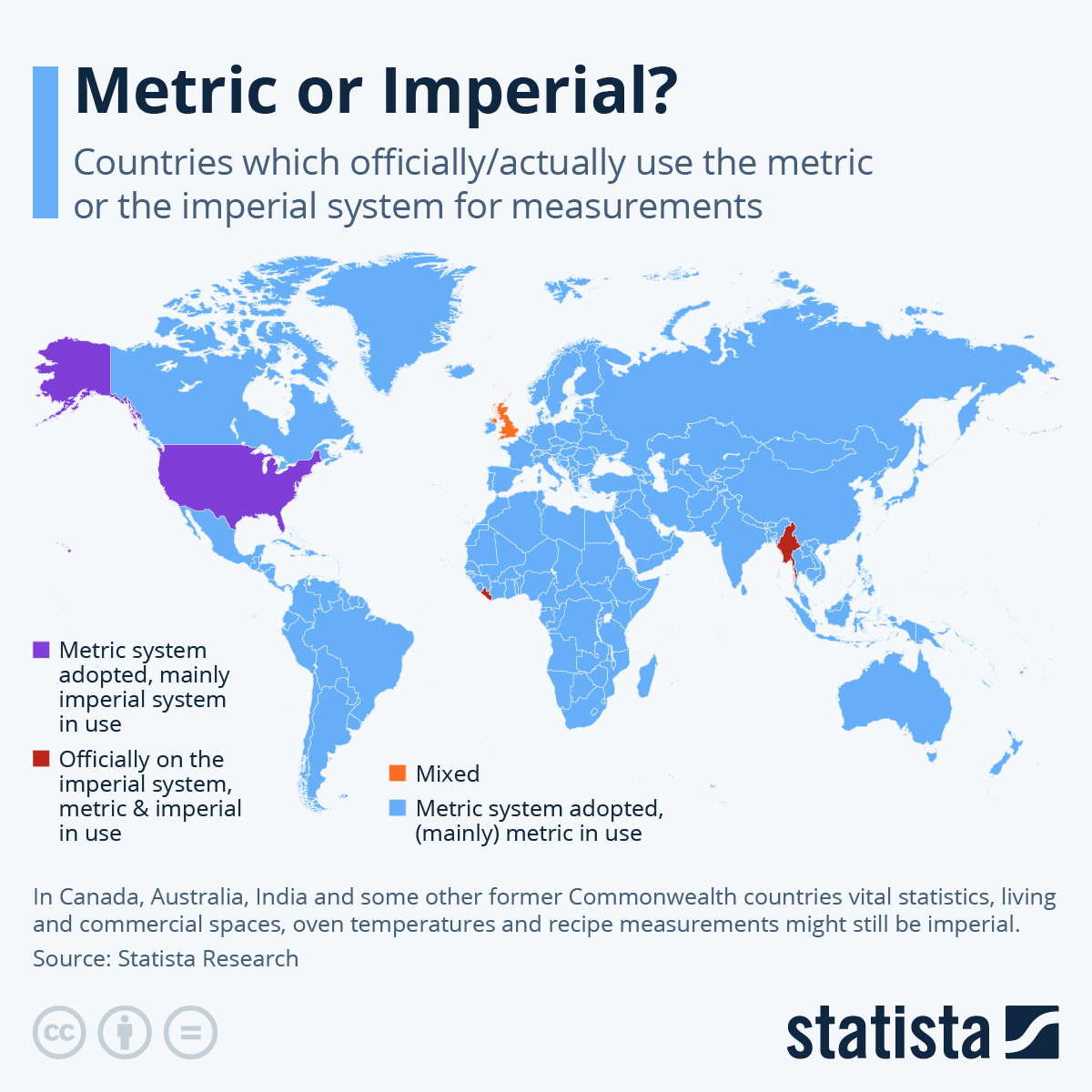
#/media/Fichier:Prevalent_default_paper_size.svg)
