Plasma Bigscreen(plasma-bigscreen.org) |
Plasma Bigscreen(plasma-bigscreen.org) |
It's a sad state of affairs when the best GUI for a TV is Gnome 3
The basic thing going on here is simply that the KDE guys are working on a 10' experience and that's great, there is no good 10' experience today on Linux. Unless you count Steam Big Picture mode I guess? But a desktop environment which knows what to do about 10' would be really exciting.
Edit: for anyone who's interested, this appears to be the repo for the Bigscreen project: https://invent.kde.org/plasma/plasma-bigscreen/activity
The distro images on the website may be out of date.
It is perfectly reasonable to criticise the marketing when it gets in the way of the message. Having to find and read the FAQ to discover that it is basically just a prototype desktop environment for existing distros is a bit silly.
Totally reasonable to feel this way, but personally I think naming is so important that it transcends any technical merit a project might have.
For my own projects, I never write a single line of code until I come up with a name I truly love. Some times it takes weeks, but then the project has an identity which keeps me motivated over the long term and actually inspires my technical choices of what to build.
Compare to the “Yet Another” naming scheme which (to me) feels like a preemptive apology for a project’s mere existence: https://en.wikipedia.org/wiki/Yet_another
Or it's a strong signal toward the creators that their clever idea for naming was only clever in their heads and nowhere else?
I too got confused and was wondering "is this a project to revive old plasma TVs somehow?".
This is, somehow, typical in most Linux software I've used. They just don't care. :/
What about Xbmc/Kodi? Works great on a raspberry pi hooked up to my TV... Has been doing that since the early 2000's when it ran on my brothers Xbox (original) but that was pre-Linux.
Edit: spelling
Maybe the post's main link should be changed to this one? That Bigscreen website seems to be confusing and out of date.
Can the vendor OS be wiped from these devices?
If so, is there a list?
Many people have positive associations with KDE, but associate Plasma with bloaty QML based desktop widgets from the KDE4 era. If they even associate it with KDE, and not with plasma TVs or blood plasma.
Nevertheless, as for what I personally feel, I agree - I like KDE better.
But oh, the picture quality back then, compared to LCDs and rear projection. No comparison, and even today, it holds up well.
Won't die... Been wanting to upgrade to a newer larger tv for years, but this thing keeps running along without issue...
BTW, it had been dead for 10+ years...time flies so fast.
What they have in the Downloads section now is basically a variety of distro images which you can run on a Pi, or a device that supports pmOS, etc. There's a long way to go before you could buy any random smart TV and flash this onto it. Though maybe less long if you have a smart TV with an embedded Pi which might be a thing these days?
Once I found out what it was, it was still quite cool and I am curious to follow development, but I agree the site design/layout/copy is confusing at best, misleading at worst.
There are 10' experiences for Linux (Kodi, Plex, and Steam Big Picture are what I know of), but these aren't integrated into the desktop, they are focused on TV/movies and gaming respectively, so KDE focusing on this problem is something new.
Although I think your point is correct.
On topic: I'd love to have my TV run an open source OS that can run all the streaming apps to avoid OEMs snooping on what I'm watching
it isn't about that it's more economical purchase when it dies, but I even saw people breaking stuff just so they "had to" buy new thing that they want.
If you watch a lot of movies, it isn't an issue. Plus, the TVs came with a 'burn in' reduction program that you could run a couple times a year, but that operated by sweeping an intense white bar across the screen, so you were effectively 'wearing' the pixels down to a similar level to reduce the obvious burn in. If you ran that cycle to often, it would kill the maximum brightness.
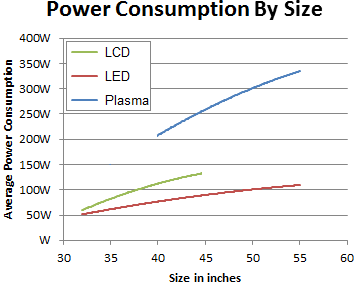
While plasma uses a bit more energy than LCD it's not that big of a deal (especially if you've got one of the last gen plasma panels) if you don't use it as some sort of moving wallpaper but just turn it off when not in use.
Still, wouldn't recommend buying a huge TV. Jevons paradox and all.
But ironically, DRM is only a huge annoyance for paying law abiding customers.
Did you pay Ubisoft $50 10 years ago for Assassin's Creed 2, am amazing game? Great, because now you can go f*ck yourself instead of playing the game since Ubisoft took the server running the DRM for that game offline. Did you pirate the game? Great, because now you can play it for free indefinitely.
And there are countless horror stories of paying customer bases getting shafted on the products they (used to) own via DRM.
To prevent piracy, or something.
Meanwhile pirates enjoy Blu-Ray rips encoded by people known for taking pride in providing the highest possible quality.
https://copyright.gov/1201/2015/fedreg-publicinspectionFR.pd...
Yes, it still sucks when publishers make their customers jump through hoops like this, potentially exposing them to malware if the necessary DRM circumvention software comes from a dubious source.
The idea of not letting a device connect to the Internet is slowly becoming a thing of the past unless you live in a faraday cage (which is becoming more and more tempting). Oh, correction, thanks to mesh networks like that of Alexa living in a Faraday cage is not actually enough if at least one device is connected. Yay.
The more difficult option is if they come with cellular modems built-in, thus bypassing any of your infrastructure (which needs authorisation). That of course is technically possible, tho probably commercially unacceptable (modems cost ~15 to 20 dollars in bulk which is significant at smart-tv scales, not counting the data cost).
Nope, the whole point of Amazon Sidewalk is that it "just works." I don't think there's even a way to know what devices are connected, let alone any kind of authorization.
I’m not saying this to be snarky or judgemental - your comment genuinely made me think about the issue and this was my response.
A Plasma skin can't do any of this. So while it's probably very suitable for things like games and photo frames on a big screen, I fear that it is disadvantaged from the start for video and audio.
I'd also bet with certain types of displays (eg: OLED, HDR and/or local dimming) there's benefits when there's a different aspect ratio (eg 21:9), letting the TV do something different to the backlight when it knows there there is no content in parts of the display vs getting a black signal.
I’ve made my peace with software upscaling of video to match resolution/frame rate. At least the Apple TV does it pretty well. If you don’t you get a really annoying flicker as the display changes resolution. The shield on the other hand has really bad up scaling by comparison, particularly with frame rates so I just leave it on.
Far more important in my book is properly sending the raw audio out. I have a very expensive audio unit that will do a far better job upmixing the sound. Unfortunately the Apple TV doesn’t let me send the raw audio out.
Kodi can actually run third party apps, for what it's worth: https://kodi.tv/addons/matrix/
The use case is the following. Consider one that has:
  * 5.1 capable audio system
  * A TVBox (KODI)
  * A TV
  * A projector
  * The TV apps can play 5.1 content
  * The TVBox (KODI) can play 5.1 content when connected to TV through HMDI (5.1 was agreed in the handshake between TV and TVBox)
  * The TVBox __cannot play__ 5.1 content when connected to projector through HDMI because the projector is stereo audio only and there is no option to accept 5.1 content.
It does not bypass ALSA. It uses ALSA. It bypasses the original HDMI handshake and follows the user's wishes.
Of course it does not work in my case because a) that's the universe we live and b) it hits some android capability / security problem and it switches back to stereo output.
They run their own audio stack.
https://plasma-bigscreen.org/get/
The very first heading is "Neon based reference rootfs". It gives the impression that you must know exactly what these words mean and what you're doing, or there's no hope of ever using this thing. (The classic 1990s style Linux onboarding experience, in other words.)
Is there anything out there tbat overwrite the TV's "smart" firmware? Something analogous to OpenWRT and its router support?
It would be bet cool if you could use the controller and buttons "natively".
Basically years ago FOSS made things simpler because it gave you back control.
Now maybe I am just out of the loop, but I am not feeling the control in the everyday.
I've been using OpenWRT (previously DD-WRT) on my routers for years now. Mostly I just enjoy not having nonsense on my router!
I think how I got started with it was by finding my device in their devices table and reading the page specifically for it. https://openwrt.org/toh/start
The biggest caveats would be: I've never had any issues personally, but be aware of the risks; avoid bricking your router, and be prepared to recover it in case the worst happens (make sure you back up the firmware before flashing it.)
And once you're installed.... `opkg upgrade` is much riskier than `dnf upgrade`. There's usually no script doing necessary modifications for you. Use with care.
I dug out an old router in the garage and might play over the weekend
It's an OS one can load onto a smart TV, replacing whatever is there? Like, if I had a Samsung TV that began advertising at me, this could overwrite the UI?
If so, I looked for a hardware compatibility list and saw only Raspberry Pi, which confused me.
But you’re right it’s unclear, this bit of the intro seems to imply you could install it straight to a TV: “Plasma Bigscreen turns your TV or setup-box into a fully hackable device”. So far I haven’t heard of any smart TV that lets you install a new OS, might be possible with hacks though.
Sadly it's a non-starter without widevine certification.
I tried using an rpi4 as a media player a few months ago, and it was simply not fast enough, although one reason is I could not get HVEC hardware acceleration to work. I reverted back to using an old T430 laptop with a broken screen and k/b, which is ideal for 1080p.
With a rpi3 or a rpi4 both should be fine.
Librelec (and other ROMs) ship the ffmpeg fork which uses the acceleration
Most projects, if you say “I think the gui should look like X” they’ll reply with “show me the pull request then”. No one wants a manager when they’re already volunteering, and not enough people who have the skills to make things look aesthetic exist and contribute.
Source: look at other comments on this article.
The tagline on the home page is "A privacy-respecting, open source and secure TV ecosystem" so that sounds promising. Is this some sort of alternative firmware to replace the junk installed as standard on most "smart" TVs now - like installing OpenWRT on your network gear or rooting your phone and installing one of the alternative Android distros?
I believe it's more along the lines of an open-source Apple TV or Roku box.
I guess it could be a plex front end but outside of that can it really do much people usually do with their TVs?
Seems like this type of functionality/framework could be beneficial to the Steam Deck, since anything that looks good on a 10-foot display should also look good on the Steam Deck's display.
Sadly, pmOS doesn't support any TVs as far as their website is concerned (https://wiki.postmarketos.org/wiki/TVs) but with some work (getting the mainline kernel to boot based on the GPL sources or getting the built-in kernel to boot pmOS) you can flash your TV with this firmware. In practice you won't be able to do much with it as TV SoCs are almost always shipped with underperforming hardware and as little RAM and storage as possible, but you could.
> Plasma Bigscreen turns your TV or setup-box into a fully hackable device
I know what you meant, but given the concerns people have with privacy of their TVs, smart devices, and in general the security of their internet connected home, describing something that turns your TV into being "fully hackable" feels like it's ripe for misunderstanding.
"Owner-customisable" or "user-customisable" perhaps to clarify that you're in control.
"Putting you in control of your TV" might be a good slogan or motto.
> TV or setup-box
We're talking about a set-top box, right?
But you're right this is quite possible, perhaps you will be able to buy an ad-free model at a premium, like with Kindles.
Probably some ads would be preloaded, so you'll end up giving it wifi just to get new ads instead of enduring the old ones over and over and over again.
Sorry, but I don't see it as a problem worth solving. Just make sure your TV is airgaped, use it as dumb terminal and deliver signal from a suitable and well maintained device.
What bugs me is that most people make bad UI designers and they are completely oblivious to it. I see some people desktops and their editor's colour schemes and I wonder if they have any sense of aesthetics at all. A cursory look at those "desktop theme" websites is the proof that 99% of them are just plain terrible.
I swear I saw someone that replaced their default UI font with Times New Roman.
It's like what Steve Jobs said about Microsoft: most people just don't have any taste. It sounds arrogant, but I think there's some truth to it.
Looks pretty cool though. I'm keen on open source privacy minded software I can run on my TV. Currently, I have Kodi and it would be nice to have other high quality alternatives.
We desperately need an alternative to Chromecast for all sort of web videos. There is none (even Apple Airplay is not as good).
That's one of the reasons why I cannot switch to privacy Android forks or non Chromium browsers.
I honestly can't fathom how people can complain about a free software that protects your privacy and gives you full control of your purchased hardware. If some overflowing text, harsh shadow, or whatever is a show-stopper, preserving your privacy wasn't that high of a priority for you anyway.
It's a free and opensource project. Feel free to open a PR or bug report.
  --protecting privacy - check
--decent UI - In ProgressThis isn't and never has been protection from constructive criticism. Nor should it be. Choose to ignore it, or dismiss it, sure. But belittling valid criticism is a bad look.
One of the best things is the dev enviroment was so simple, just a basic linux setup with a sensible toolchain. (Samsung was easily the worst in terms of dev experience due to their tizen crap).
What I really miss though, is being able to write my own apps for the TV without having to jump through 1000 hoops, sign 5 EULAs/NDAs/contracts and be able to develop said apps on my computer and then simply push them to my TV, just for me.
Been looking at one of the Android distributions, BlissOS.
I mean, it seems cool if the voice commands etc all actually work but it is one of many.
Being able to update the actual TV firmware like: OpenWRT, Canon Hack Development Kit, Valetudo(vacuum robot) is what would really have my interest.
This is what LibCEC is for.
Or what I like is to get a generic air mouse/keyboard remote that has programmable IR buttons for volume, input select, power on, etc. to control the TV's native settings. There are a ton of inexpensive options: https://www.amazon.com/air-mouse-remote-keyboard/s?k=air+mou...
So, rarely have to use the TV remote. It's used only for live TV (rare) and switching input, also rare.
Or use a monitor instead of a TV?
https://www.sharpnecdisplays.us/products/displays/ma551-mpi4...
Oh, and of course there's a review of it from Jeff Geerling: https://www.youtube.com/watch?v=-epPf7D8oMk
Actually, this thing has some pretty decent specs... my initial reaction was that it was overpriced, but now I'm thinking this is a decent deal for what you get.
I'm sure smart TVs make some money off data tracking, I know it's a part of Roku's business model. But I feel like most of the additional cost in this went to the "commercial grade" features. It can be left on at full brightness for months on end. It can probably withstand a kick from a teenager at the mall. The 3 year commercial warranty also probably has some actual urgency behind the support.
Do any non smart models exist that aren't targeting commercial usage? It's probably not practical, thr market for that is probably 0.01% of the total TV market.
The cost to image quality ratio would probably scare most consumers away, but I might have found my next TV. Thanks for sharing.
It's a gripe, or a whinge, which is fine and open source shouldn't be immune to it. Although I will say that open source projects in my experience tend to be much more responsive to bug reports and actual constructive criticism from people paying them $0.00 than proprietary software projects are.
There are smart remotes with libraries of patterns and capable of switching between those, eg Logitech Harmony (assuming that's still a thing).
There are also "learning" remotes. One of these would be easiest to homebrew. Basically you've got an IR detector. You point your existing remote at it and tell it to start watching for whatever button you want to map. Then you press that button on your existing remote. Voila, key mapped. You just have to keep doing that for all the zillion and a half buttons on your remote and you've got yourself a clone.
Apple is getting there though, probably because of the same managerial culture.
This is something GNOME does better for God's sake and they can't even show thumbnails in a file picker!
I'd say Windows is selectively polished. Some parts are worked out beautifully while others are hacked together. macOS is a lot better in terms of polish (but a lot worse in many other aspects).
I used to launch Steam games in Big picture mode from Kodi just fine.
Actually I was waiting for a desktop environment like this Plasma Bigscreen for a while but then got a new TV with Android and use that instead.
I would still prefer to use Kodi as the main app launcher on Android but it gets Killed to save memory and takes a while to start up again.
And using Kodi over HDMI is not an option anymore since a lot of content I watch comes in 4K 10bit HDR or 4K Dolby Vision and sadly desktop Linux does not support HDR and variable refresh rate over HDMI (so Linux Steam experience also bad).
Everything is easy to drive via a TV remote.
The skin system lets you have as much UI eye candy as you like.
Chances are someone has made an addon for whatever you want to consume.
You're just running ye old HTPC otherwise.
It has the added bonus (over typical smart TV interfaces) that typing text becomes much faster. You can use the web browser as a web browser. You can use uBlock origin. You can have several tabs open at a time and switch between them at a sensible speed. It's so much better than a smart TV.
You don't need the room cluttered with cables, you can put the laptop in a cabinet underneath the television.
> WARNING: This product can expose you to chemicals including Styrene and Formaldehyde (gas), which are known to the State of California to cause cancer, and Lead
I'm not sure the risks are worth the price, I've never seen such warning on any product, but I don't live in the US. Is that a common warning to see? How likely is that to happen? Is it a thing that happens in case the TV breaks in half, or is something that slowly slips out in the air around the TV?
The linked website says "Exposure to these chemicals may take place when products are acquired or used", am I supposed to believe that just buying this TV and bringing it home can make those chemicals to leak out into the air in my home?
The statement brings so many questions but so few answers...
So you only get contributions from people who can contribute on their own, which is developers.
Probably because for developers, OSS is a badge of honour and can help your CV / find paid jobs - while for designers it's just a dribble nobody cares about.
When designers partecipate, they get to contribute and even impose (sometimes questionable, think kde4) choices.
The other meaning of "ALSA" is libasound / asound.conf / dmix, the old userspace audio stack, which is deprecated since Pulseaudio except for a few holdout distros. ALSA had difficulty mixing multiple playback streams, let alone bitstreaming DTS. I think the GP is talking about this meaning.
That and bitbanging audio through GPIO or otherwise bypassing the ALSA stack doesn't seem all that unreasonable. I can't find any specific information about it with LibreElec/etc. but it would not surprise me.
Oh well. I think Pipewire has a lot of potential today. It brings much improvement to routing and session management for audio and the hybrid scheduler design and considerations for pro audio use cases makes it very promising. I hope the need to bypass the Linux audio stack can disappear.
On the contrary, that's super easy with ALSA. Literally all you need to do to "bitstream" is "play" the data as if it were audio, and not have any software in between trying to adjust volume or otherwise modify it. You could do it with nothing more complicated than "aplay", making sure to specify the correct card and not dmix.
At some point long before PulseAudio was ever a thing maybe but dmix with the default config has been working just fine all this time.
https://sfconservancy.org/blog/2021/mar/25/install-gplv2/ https://sfconservancy.org/blog/2021/jul/23/tivoization-and-t... https://events19.linuxfoundation.org/wp-content/uploads/2017...
It isn't even clear that Vizio would be able to comply with GPL enforcement, since they largely just OEM TVs built by AmTran in Taiwan and don't do much more than slap a logo on it.
It would highly depend on the contract between Vizio and their suppliers no? In particular if the lawsuit finds that anything from the supplier (like e.g. the display driver) is part of the GPL violation the contract likely contain clauses that would force the supplier to provide source code. Otherwise Vizio has grounds to sue their supplier.
That's the beauty about going after the big customer facing companies, it offers the strongest leverage.
They should've looked better at their contract, then. It's not the consumer's task to make sure these companies and their suppliers stick to their licenses. If their suppliers ship software that's not compliant (i.e. the vendor doesn't follow GPL's requirements) then Vizio is not allowed to ship them either.
If they can't comply with the license, they shouldn't be allowed to be sold in jurisdictions where the GPL is considered legally binding; after all, they are violating copyright. Any damages from their vendors' malpractices can be resolved in a separate lawsuit if Vizio wants to hold them accountable but you can't hide behind your vendors to sell illegal wares.
As GPLv3 states:
> All rights granted under this License are granted for the term of copyright on the Program, and are irrevocable provided the stated conditions are met.
If they can't or won't release the GPL source code, they can't legally ship the software as they haven't met the requirements for their license and if they do, authors of the GPL'd code could sue them for copyright violations.
In fact, this paragraph could bring them into even hotter water:
> However, if you cease all violation of this License, then your license from a particular copyright holder is reinstated (a) provisionally, unless and until the copyright holder explicitly and finally terminates your license, and (b) permanently, if the copyright holder fails to notify you of the violation by some reasonable means prior to 60 days after the cessation.
> Moreover, your license from a particular copyright holder is reinstated permanently if the copyright holder notifies you of the violation by some reasonable means, this is the first time you have received notice of violation of this License (for any work) from that copyright holder, and you cure the violation prior to 30 days after your receipt of the notice.
In other words, if copyright holders notify them of their violation and Vizio doesn't act in a timely manner, copyright holders could permanently retract their GPL licensed code from Vizio. Should a particularly important Linux developer choose to do so then that could effectively deny Vizio the right to ship Linux on any device it sells (to areas where GPL is upheld, such as the USA or Germany).
> If a display manufacturer produced a quality display and supported something like this, I wouldn't mind paying a good deal extra for it.
> Without that revenue stream, Baxter said, consumers would be paying more up front. "We'd collect a little bit more margin at retail to offset it," he said.
A little bit.
The value of that tracking is worth a lot to a company making near-zero margins, but it's not a very big impact on the full price.
- 60Hz refresh rate - 8,000:1 contrast ratio with local dimming on - 500 cd/m2 brightness and "HDR compatibilty" - 86% DCI coverage
I mean personally I don't care so long as I don't see ads, but the advice you're really giving is "don't buy a TV". Can't say I disagree though.
No thanks, modern TVs!
The march of technology is responsible for almost all of the cheapness of TVs, and niche commercial targeting is responsible for the non-cheapness of other TVs.
Hisense has a $430 TV comparable to that $2200 model but with better color. Tracking, I dunno, might be $50.
The idea that a court could compel Vizio to provide enough source code that you could run your own OS on the TV is pure fantasy. You would need to obtain binary blobs for firmware and drivers from an original TV, and distributing them would in turn be software piracy.