Intel and the $1.5T chip industry meltdown(economist.com) |
Intel and the $1.5T chip industry meltdown(economist.com) |
2) Taiwan is not China. We are going to break the rest of China up because Xi decided to consolidate power instead of steward the distributed power he inherited.
3) The USA isn't in trouble at all; we will expand our industries, inflate our currency and strengthen it so demand globally grows as Russia, EU and China falter.
4) China took HK almost 3 decades early so why should anyone believe their word on territorial respect.
I generally agree with you that countries should have control over strategic industries (e.g., oil), but I'm not sure if nationalisation is the way to go.
I feel like that serves more to scare off investors than anything else. The way the US is going about it feels more correct to me: give fiscal and financial incentives for these strategic resources to be built and managed inside the country, while also removing incentives for too many exports
Investors will be scared of the US nationalizing specific strategic industries but not the changing political winds of foreign nations? I don't think so.
They aren't enumerated and listed at the end sure, but they're there.
Companies can't survive in a peak world without manufacturing crap. Sell more because your tools break.
So now they are looking at how to do that under the premise of eternal growth:
They will try to lock us down in the hardware = deprecate older hardware and force you to move to never software with TLS 1.3.
That has never succeded because you can always hack everything = They will try to rent out the accounts.
They allready started that process, but I'm not buying it. I have all the software I need under permanent license.
Since processors now have peaked, everyone is buying all the computers they can, the really smart ones are buying low energy devices like Raspberry but 1151 Xeon is also sold out.
Anything manufactured today will probably have hardware kill-switches or programmed obsolescence. For companies: "To not lock your customer down for eternity is suicide"...
Edit: Loving the downvotes without comment...
Raspberry Pis are out of stock because 1) companies that used them in production and got those production builds certified in some way get preference and 2) scalpers are taking the rest of the stock and doubling their money with it as it drops.
Older Xeons (and similar hardware) aren't worth running unless you have access to really cheap electricity; upgrading your system is cheaper than paying for the electricity you'd be wasting otherwise, even if you're staying a gen or two behind by buying datacenter surplus from eBay et al.
I understand your consternation, as some devices (e.g. cell phones) and some applications (e.g. SaaS apps) definitely appear to exhibit rent-seeking behavior. But that's no reason to declare literally everything a conspiracy, which just makes you appear to have some wires crossed.
Now Mojang and Rockstar (on azure) have disabled TLS 1.2 on their servers on purpose to lockout Windows 7.
Windows 10 offers NOTHING of value compared to Windows 7.
They also offer excellent support. Their hardware gets like 10 years of OS updates. An M2 Mac today will last well past the next two US presidential cycles.
M1-2 are brittle and controlled, the opposite of open/repairable etc.
ARM, Atom, Xeon from this period can last 100 years.
If you don't have this hardware, you'll get something that will last max 10 years.
USA has banned China from manufacturing without having a replacement.
Many traditional hardware companies are transitioning/have transitioned to some form of hybrid model or subscription service explicitly.
We are actually looking at degrowth, not eternal growth.
Processors may be near peaking but the Raspberry Pi is not a competitor with those processors.
The reason stock is down is because of supply chain issues still overhanging from the pandemic.
Raspberry 4 has 2Gflops/W where M1 has 2.5!!!
Pandemic is not the problem. Energy and money is the problem.
Edit: Premise = Promise yes.
Energy, while vital, is not the only component in any part of an economy.
> Companies can't survive in a peak world without manufacturing crap. Sell more because your tools break.
This cuts both ways. If tools break too often or too easily, someone else will manufacture a tool that lasts. That tool will then sell millions or even billions of units. This can sustain a company for quite a long time.
> So now they are looking at how to do that under the premise of eternal growth
No one believes in or expects "eternal" growth. It is well known that any bubble fueled by cheap money, government bailouts, corporate welfare, or any other intervention will eventually burst. This is planned for by the very largest companies. Companies without the resources to plan for these market crashes simply do the best that they can.
> They will try to lock us down in the hardware = deprecate older hardware and force you to move to never software with TLS 1.3
I feel your pain here as an enthusiast for older hardware, but this is simply untrue. No one ever forced me to give up my ZX81, my XT, or my PPC lampshade iMac. I have them, I've kept them running, and they're fine. The XT and PPC can get online just fine either with a TLS bridge or with sites like 68k.news and frogfind.com. The constant upgrade cycle is optional. People are keep phones longer than ever. The cool-down in the PC market indicates that those enthusiasts who wanted to upgrade have done so. The heat up now is likely to be datacenters where the next wave of AMD Epyc offers a very massive energy to performance trade-off against Skylake SP. All of that said, eWaste is an issue and companies who make hardware that cannot be serviced and/or upgraded easily should probably pay a tax on it.
> Since processors now have peaked
There's plenty of room at the bottom. Seriously. I do not normally make appeals to authority because doing so is stupid, but we are talking about the most complicated machines humans have ever created. In this case, I would urge you to listen to the guy who has made these machines with extreme success: Jim Keller. He thinks we still have a long roadway of improvements before we are forced to change the industry in major ways (Gallium Arsenide or quantum or something).
> Anything manufactured today will probably have hardware kill-switches or programmed obsolescence
Already kind of illegal in some jurisdictions, and already a thing in others. Mixed bag there. However, also completely untrue as you used "anything". For example, in the automobile space you can sill get a Jeep with solid axels, a simple naturally aspirated V6, body on frame, and able to be serviced in pretty much any garage anywhere. The will to deal with tradeoffs of such a vehicle is the largest obstacle. Likewise, with computing, the willingness to deal with the tradeoffs is the problem. Do you want the best performance with most convenience? Then you likely want an M1/M2 MBP, and there you are not very serviceable. You could always get a Framework or build yourself a desktop. You can even run Linux, BSD, or Haiku if you want to make sure that your software will be serviceable by you.
In any case, the limit is on you. You can choose the locked-down products, or you can choose open platforms. Most people choose a mixture based upon their needs and preferences. The preponderance of that selfsame majority then determines the overall direction of global markets. This isn't some shadowy cabal purposefully making a system that is unsustainable, this is the consequence of an aggregate of choices that put momentum behind certain things.
How can two people missunderstand eternal growth... I said premise... that is what they promise... obviously it dosen't exist!!! Do I need to add /s or something?!
Jim Keller has been wrong so far... he can't solve the memory bottleneck.
You can choose a non-locked down product now maybe, in 12 months not a chance in hell!
Energy/money is also the solution, so if you see it as the problem then you are probably missing the specific details.
If clean energy sources are strategic, yeah the US should do the work to protect its ability to utilise it regardless of it being oil, solar, wind, nuclear. Doesn't mean the state needs to own those ventures, just that they should put in the effort to fund investment and growth in strategic areas.
>M1-2 are brittle and controlled, the opposite of open/repairable etc.
We have reached the point where we cannot have removable ram for technical reasons. M chips get a a lot of their performance from excellent memory bandwidth. Move on from this thought process. The software is still gives you more control compared to Windows and thats what really matters, not the arch that it is running.
>If you don't have this hardware, you'll get something that will last max 10 years.
10 years is enough time for the next computing paradigm shift. It is great that MacOS lets us hold onto the old world for 10 more years(hopefully).
>USA has banned China from manufacturing without having a replacement.
Thats a temporary issue. They mostly made low end junk silicon anyway.
There wont be a next paradigm shift.
DRR3 > DDR4 > DDR 5 > DDR6 in latency.
Multicore is leveraged fully, it's the end of electric transistors.
Memory has been slower than the CPU for 30 years! L1, L2, L3 only works around the problem, it does not solve the problem!
You don't understand that SSDs peaked in 2011 when it comes to longevity at 60nm with 100.000 writes per bit.
SATA chipsets/drivers offload the IO more than PCI-e which uses the CPU to buffer.
Older is now better than new.
It's over and when you are trying to get a new laptop in a few years (because your M1 broke) and they will cost $10.000 and break in 2 years and you have to pay $100/month to be able to access/develop on it. You'll remember me.
Furthermore, the makers of Minecraft and Grand Theft Auto don't owe you the ability to use outdated OSes if you're using a service they maintain. They probably didn't intend to break your workflow, and instead wanted to make their own stuff more secure.
If you're not a W10 fan, you could always run Minecraft on Linux. I think GTA V works on there as well. Either way, there's an out.
HTTPS is not secure in any way.
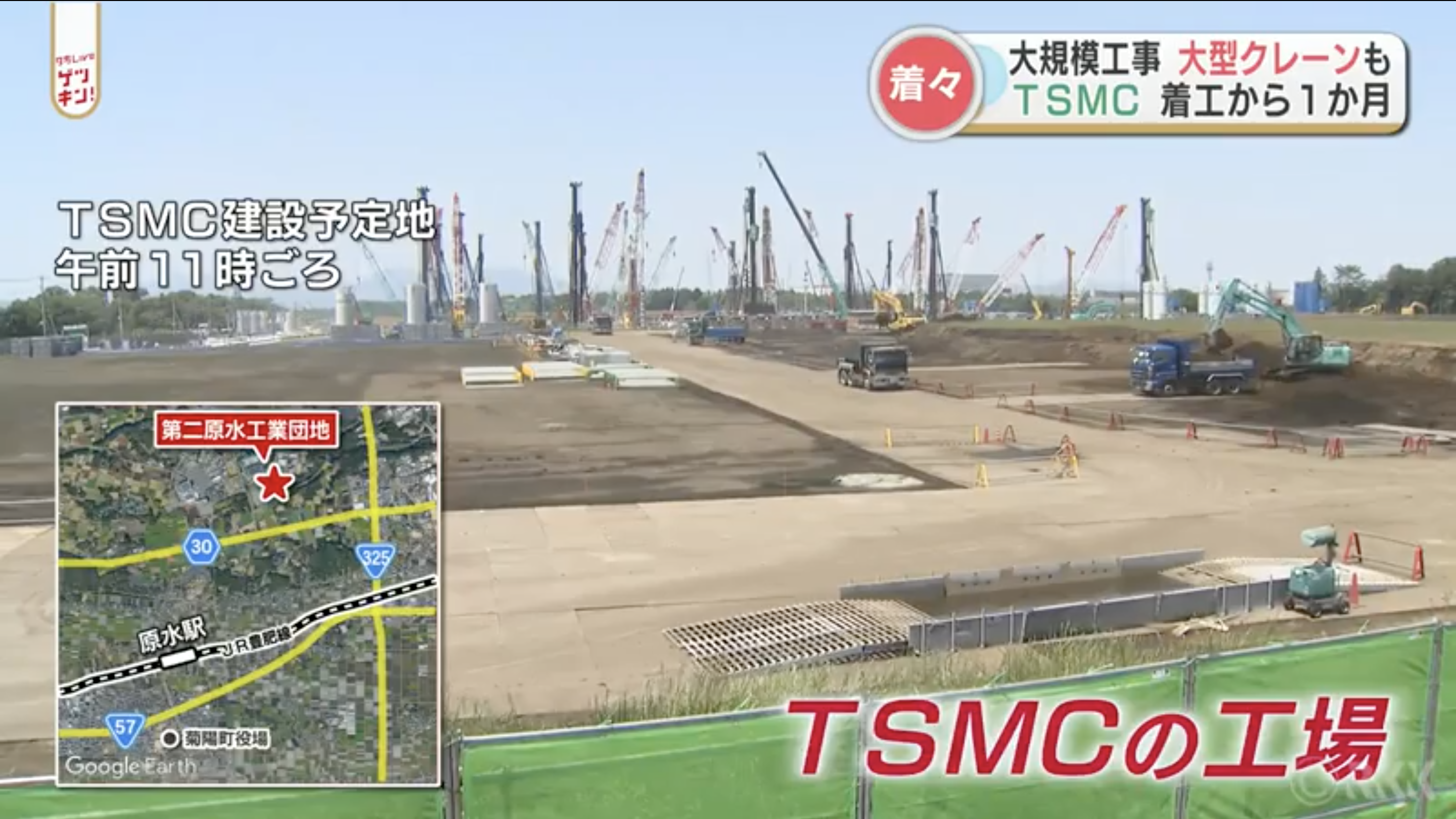
https://www.nhk.jp/static/assets/images/newblogposting/ts/7P...
https://cdn-cw-english.cwg.tw/ckeditor/202205/ckeditor-628ae...
It looks like a forest of cranes...
Similar factories are being built in Germany by Infineon: https://www.infineon.com/cms/en/about-infineon/press/press-r...
Samsung in Texas: https://www.datacenterdynamics.com/en/news/samsung-plans-17-...
Intel in Arizona: https://www.cnbc.com/2021/03/23/intel-is-spending-20-billion...
Samsung/SK in Korea: https://fortune.com/2021/05/13/south-korea-chip-semiconducto...
India is doing something with Risc-V: https://pib.gov.in/PressReleaseIframePage.aspx?PRID=1820621
Overall, divestment from china seems to be the goal. But this many new factories being produced is going to overproduce chips and eliminate any profitability; but inexpensive chips like this will most likely create a boon to the economies.
I'm curious why not the latest - 3nm, 5nm
TSMC is one of the key players in the 21st century. As we've seen with the supply chain issues from covid and the Ukrainian conflict, high quality semiconductors are a vital resource for modern nations' security and economies.
TSMC is the only entity that can make the highest quality chips (3nm being not actually 3nm, but just called that way for marketing purposes). If Taiwan looses that unique ability, they then loose much of the backing of NATO-aligned nations.
Taiwan bet the whole nation on TSMC, and it's paid off thus far. They're not likely to let go the trump cards they hold.
More on the issues with Taiwan and China here: https://www.youtube.com/watch?v=p6sCsOdqXQw
On the other hand, 22nm and 28nm are almost 10 year old technologies and they are still used in cars, so much so that the industry is begging car manufacturers to get to newer nodes [1].
[1] https://www.theregister.com/2021/10/19/chip_manufacturer_chi...
It may be "swinging the other way" but we're at the very depth of the curve right now, and lead times are frequently 12-18 months. I can't see any evidence that it's swinging back, personally, maybe someone else does (like the writer of this article).
From Chinese Anti-Secession Law:
Article 8: In the event that the "Taiwan independence" secessionist forces should act under any name or by any means to cause the fact of Taiwan's secession from China, or that major incidents entailing Taiwan's secession from China should occur, or that possibilities for a peaceful reunification should be completely exhausted, the state shall employ non-peaceful means and other necessary measures to protect China's sovereignty and territorial integrity.
https://www.europarl.europa.eu/meetdocs/2004_2009/documents/...
It is USA/EU strategic interest to avoid too deep dependency on Taiwan. We should support the status quo there as people of Taiwan are prosperous and peaceful nation. But we can't be caught off guard by China as EU was caught off guard by Russia.
Xi became a Leninist and is trying to be the next Mao. He is a true believer that his glory and the glory of China can only happen by taking back Taiwan.
TSMC is a huge reason for this conflict. The current US policy is trying to slow China’s technological might for that next war.
[1]https://www.latimes.com/archives/la-xpm-2004-apr-07-fi-intel...
I can't think of a reason that on-shoring chip fabs would be a bad thing for the US - other than the vague threat of China retaliating. Cutting off foreign dependencies in high-tech industries would surely be beneficial in the long term.
The US government, US, we, gave Intel and some other companies a huge sum of money to stay awesome.
Then they announce huge layoffs to get rid of a lot of thr talent, people, heart of their business.
So, wouldn't we have been better off as a society of we had just offered thT CHIPs money as a startup find and asked a bunch or people from Intel to leave and build new semi companies using this fund?
In the end the meteic for success of the CHIPs program in the short term should be number of people working in semi in the US. How did we dedicate money and resources to this thing of national importance and end up with fewer experts working on it?
Money is the root of all evil, power corrupts us all.
Still no sign of stability in supply.
They will certainly retaliate. The question is how. Most think they will react similarly, banning cutting edge electronics exports that could have military use.
But I suspect they will go after our weak spots. Prescription drugs, solar, lithium. I'm sure there are more.
Intel trades at 5.5x PE for the last 12 months but 12.1x PE for the next 12 months (estimated, obviously). Intel specifically is also not at an "all time low" - they IPO'd in 1971 and have grown significantly since then.
I agree there are some bargains to be had in semi stocks, but keep in mind things may very well get worse before they get better.
And if you didn't buy till they were near their peak, did you really care about PE ratios?
Seems like a good thing to be honest. More supply means cheaper prices and even if demand is a bit lower there is no way it is going to keep going down. We have CPU's in damn near everything these days. The drop is probably mainly because of crypto mining falling of a cliff.
It’s hard to see how AMD would get capacity ahead of Intel CPUs.
Can anybody link me to a guide with the basics of these topics, like what exactly is a chip (is it a microcontroller? a part of a larger system?), or why the few giant fabs can't be replaced by a lot of smaller and cheaper ones?
There are lots of different chips ranging from slow, energy efficient, and cheap microcontrollers, to fast, energy hungry, and expensive high performance computing clusters. Intel makes the fast ones, and had the fastest chips from the late 1990s to the mid 2010s. Since then, a Taiwanese company has had the fastest chips which go into iPhones, Nvidia graphics cards, and AMD cpus.
Building a fab (manufacturing plant) to make the fastest chips which require features shorter than 7nm (billionths of a meter!) requires billions of dollars in up front investment. It's mass scale manufacturing at some of the lowest levels anything has ever been created at.
The US gov't is afraid that company which makes the fastest chips in Taiwan (which is not recognized as an independent country, but is effectively self governing, but China claims is theirs, it's complicated yes), could be under Chinese control some day. The Military Industrial Complex don't want the US tech sector or US defense tech to be beholden to China, and US companies (Intel) want government funding to build expensive factories. Thus the CHIPS act.
[1] https://www.youtube.com/c/Asianometry/videos [2] https://asianometry.substack.com/
Please, do not suggest this.
You can decide for yourself whether or not you want to go to the extra effort to read the content. And then the rest of us can also decide for ourselves.
It's great to legally diversify these fabs, but it does very little to mitigate geopolitical issues that are brewing in and around the east china sea.
The other day we were discussing Pablo Azar, "Computer Saturation and the Productivity Slowdown" (Federal Reserve Bank of New York Liberty Street Economics, October 6, 2022) [1]
Simply reinventing systems and deliberately obsoleting stuff to create fake demand is over. The metaverse isn't hoing to happen. People are fatigued with tech.
We're entering a different era in which we need to make better, more humane and effective technology, not just more and more and more of it.
[1] https://libertystreeteconomics.newyorkfed.org/2022/10/comput...
EDIT: less trashy link
Never thought I'd see an Economist article explaining that GS are a bank hahaha
China ban => lower demand from CCP
nvidia RTX 4090 still out of stock in most places :|
I'm pretty sure datacenter and military chip usage will grow in next few years even if recession hit consumer market even harder then past year then US chipmakers will get fat checks just 2be prepared for China retaliation (probably feels good to be Intel in chip war time).
I mean, I just don't think they made that many in the first place. Overclockers UK(one of the biggest online electronics stores in the UK) was very upfront with how many units they are getting from manufacturers, and they got like ~500 cards total for launch. That's nothing. So of course it's out of stock, even if only a very limited group of enthusiasts is actually interested in buying one.
I think demand is considerably lower for these than it was two years ago, but nvidia is managing supply to some extent.
Global recession is to blame for everything. I'm waiting for some years for payable video card, nothing special, but i guess Global recession is to blame. /s
The chip industry is now swinging the other way.
For some of the designs that I'm building for clubs and amateur rocket clubs, my chip prices have gone from $3 to $60/chip. I've been able to get by with the stock of chips that I keep for repairs, but, to find chips in the price points that I generally work with (and by price point, I mean, I donate these to clubs/college rocket clubs at no cost, so, I try to keep my costs as low as my sanity/bom/weight permits), I've been finding chips that have 1/4 of the ram or 1/4 the functionality that I need, and reworking my code around the new limitations of what I can build with.
Thank the EE gods that I can get boards from China in about 3-5 days at a relatively sane price point: add in an open source pick and place system (OpenPnP) and a easy-bake reflow oven (hacked together from a freebie on craigslist) and it allows me to iterate over designs about once every two weeks or so, as long as I've got everything in stock. I've had to change my boards for the SI4467 (Sub Ghz RF Transceiver from Silicon Labs) three or four times in the last year alone. I find something that works, build another one, I'm out of stock on an item with no availability in sight on DigiKey/Mouser, so, it's botch wiring and praying that I can get it to work the way I want to until I refab my PCB, and then rinse, repeat.
It looks like the audio sector was hit particularly hard by the war in Ukraine.
It’s interesting that Russia became (or remained as) an almost single supplier of this “outdated” technology.
But still, these “tubes” are rather a niche product in the audio equipment market, no? We probably can’t get a good enough insight looking just at them.
What you list is either analog of older nodes (~90 to 40nm). It's a very different world, with often different players. TSMC plays in the digital old nodes, but as I understand is not very motivated in investing in much new capacity, and try to push customers toward 22nm ULP (may work for some, but not all). Others are investing, but it takes time.
So you start to see a glut at the high end, but still constraints in the analog / old nodes.
As for other chips, part of it is the toilet paper effect. From what I've heard, companies are buying 5x or 10x what they normally buy, just to be sure they got parts for production. Since the situation is still bad, I'm guessing people are still doing it.
Especially ICs are made in batches, so once it runs dry the manufacturer can't just print out another 10k units, they got other stuff lined up. I see for STM32s a lot of stock is expected at the end of this year or first half of next year, which lines up with what their CEO said that things will start stabilizing at the start of next year.
I'm just a hobbyist who knows a few EEs though, so might be wrong. But this is my impression.
[1]: https://www.audioholics.com/news/fire-destroys-akm-audio-chi...
[2]: https://www.strata-gee.com/akm-responds-to-strata-gee-reques...
"In late September Micron, an Idaho-based maker of memory chips, reported a 20% year-on-year fall in quarterly sales. A week later amd, a Californian chip designer, slashed its sales estimate for the third quarter by 16%. Within days Bloomberg reported that Intel plans to lay off thousands of staff, following a string of poor results"
But most of the article is about how they're building new fabs in America, right when sales to China are being restricted. So its about a future surge in supply and reduction in demand.
If your comment was accurate it would seem like we should have had distributor stock coming online after the pandemic shortages as companies push to get their orders in the queue before capacity goes offline due to conflict.
I’m curious with parent — my guess is just that the humans behind the companies got used to the profits and not sitting on inventory, which was always risky.
With that being said, it's not that simple. Bluster isn't just a political tactic -- it also enables the military to slowly chip away at norms and edge closer towards a strategic advantage (e.g.: progressively violating more and more of Taiwan's sovereign airspace). If the party could have things their way, the military would merely continue pushing the envelope until one day a D-Day assault force seemingly randomly washes up on Taiwan's doorstep.
Just in terms of international law, the Chinese flights near Taiwan are provocative but don’t violate any laws. The U.S. and Russia still do this sort of thing all the time. An ADIZ is not sovereign airspace.
That strategy manifests in that slow chipping away: they don’t need to do things all at once.
Taiwan has an Air Defense Identification Zone where they track aircraft and aircraft entering it are supposed to identify themselves. This extends over the Chinese mainland and it's this zone that everyone talks about China "violating". But it's Chinese airspace and ultimately they have the right to fly there without notifying Taiwan.
Well, only 13 countries recognize Taiwan as a sovereign country - such as the 10,000 people of the 21 square kilometer island Naura.
Also, Taiwan occupies Kinmen Island in the bay of Xiamen's harbor on the PRC mainland. The island is in the Xiamen harbor and is 10 km from the city of Xiamen. So any PRC planes flying around Xiamen are "violating Taiwan's sovereign airspace" (which almost no one recognizes as "sovereign" - one of the main parties on Taiwan acknowledges Taiwan and the mainland are all one country).
However, I am not arguing that China is not serious about retaking Taiwan. They are deathly serious.
They said they will retake Taiwan and they can and few will really care. So of course they will.
wriggling around the law needs only an emergency.
https://en.wikipedia.org/wiki/List_of_US_arms_sales_to_Taiwa...
The latest sale involves adding 60 Harpoon anti-ship missiles to the pile of hundreds they already have.
China will not have an easy time of invading such a well-armed country, and they also have to weigh the non-zero possibility of foreign intervention. It will be a costly endeavor by any measure.
China's best bet is a cultural/political/economic takeover, which will give other countries time to diversify chip manufacturing, as we are currently doing.
China doesn't need to storm the beaches, they can passively blockade Taiwan until they give in.
China moves at a different pace than the West.
They might retake Taiwan in 2100, after a couple generations maybe care more about shared culture and language than democracy.
The irony here is that it is in fact China that seceded from Taiwan.
Russia is a declining state relative to Ukraine & Europe, so Putin's odds of success in 2022 were considerably higher than they would be 10 years later. So if invading Ukraine was necessary at some point, 2022 was the best time to do it.
China's regime believes that invading Taiwan is necessary, but OTOH the Chinese military is getting stronger very quickly and they believe they'll be in a much better position to invade in a decade then they are now. So there is no way they're going to invade any time soon.
Avoiding a war completely is highly unlikely given Xi & China's policies. But delaying a war is highly likely. And a war indefinitely delayed is a war avoided.
You spend the rest of the comment before this talking about how war will happen when they are stronger and probably can't be avoided, so I don't know how this last sentence follows.
If you know for sure that someone will wage war on you in future, and that they will get stronger faster than you will, then it could be in your interest to go to war against them sooner rather than later.
There's always a bigger fish.
The last time nations were obsessed with autarky, we got WW1, and soon after, WW2.
Most countries (i.e. every country not suffering from a drastic case of the resource curse) have the nature that if they trade a lot with another country, either country would lose economic value if they invade the other, _even if_ that invasion goes off stellarly well with almost no losses: The populace doesn't like being subjugated and produces significantly less.
In an inbalanced trade/dependency relationship, such as Saudi Arabia's oil vs. the rest of the world, or Russia's gas vs. europe, it's actually _both_ sides that are dependent on the other. It's the dutch curse all over again.
Go back in time:
* Europe wants more gas to grow its economy, and doesn't have enough on its own soil. * Russia has more than plenty and is willing to sell it. * We enter a period of years where europe companies and countries more and more build industry that isn't going to work out without the relatively cheap russian gas. As these industries continue to succeed and russia continues to be a reliable supplier, ever more industry takes the leap and becomes dependent on it. * This sounds like handing off quite the 'weapon' to your supplier, but, the problem is, that supplier is now just as dependent on this relationship as the consumer is: Russian economy falls apart without the trade of europe-produced goods (a lot of it by industries that run on russian gas), just as fast as europe falls apart without russian gas.
Thus, if russia were to invade europe, russia's economic value falls off a cliff, and the same applies to a lesser extent to europe. The only reason europe could in theory invade russia (assumes a perfect invasion, no nukes, no significant resistance at all, just a dejected populace), is because russia's primary value is not particularly dependent on human capital.
My theory about why this theory didn't work out and russia invades ukraine is a mix of:
* Misunderstanding by Russia of world/Europe response to this invasion. * Too much power in one person, who, like most people surrounded by yay-sayers for 20 years, has lost grip on reality. * Most of all, a ticking clock: Europe has stated they want to wean themselves off of fossil fuel within a decade or so. And so they should, but it's a torpedo to the trade dependency relationship between europe and russia.
That last one is the economic argument: Russia had to do something or their economy would fall apart if europe delivers on their plans to rapidly reduce their dependence on (russian-supplied) gas.
Thus, autarky -> war. Because if you're doing economically better than your neighbouring country, you produce more weapons and more people, and just invade em, why not.
We can trade the risk of what happened to europe, or what is likely to happen if china and the west become autarkic relative to each other (namely, that china invades taiwan) - with nukes and MAD. But that's got its own problems.
Were they? I thought WWI happened in the midst of first huge wave of globalization - to the point that no one thought war was possible, as it would mean collapse of international trade, and huge losses that come with it.
And to think that in the 80s Regan tried (but opposed by business) to impose sanctions on europe because of the USSR gas pipelines. What a circus. Europe got hooked on USSR gas in less than 20 years, and has been planning to wean off for 10.
Europe after WW2 relied on the US to defend against Russian aggression, and not even 30 years later, in a master class of cleverness played both sides by buying, and then becoming dependent, on Russian gas, only for the Russians to become aggressive again.
Where the cleverness falls apart is that cheap Russian gas was on bought time, and now all the europeans have to show for it is massive debt, expensive social programs, a lack-luster military and closed nuclear plants. Good job...
Ukraine was invaded because they have a great deal of oil and natural gas and could therefore significantly impact the Russian economy especially if the world starts to reduce Fossil fuel use.
Ukraine would solve nothing in the Russian economy.
Ukraine would simply secure two things: Crimea (which is essential to Russia and was strategically exposed), and complete control on all main gas infrastructure towards Europe. It's not a coincidence that the invasion was launched when it became clear that the new gasduct to the North was dead in the water (because of American opposition to it): Putin wanted to make gas furniture to Europe strategically independent from other countries (i.e. completely dependent on Russia), one way or the other. The original calculation was probably "You don't give me Nordstream, so I'll take everything else". Obviously it didn't go as planned.
Putin didn't have to invade! If he was truly worried about Russia's economy he could have (and should have) gone about instituting reforms/policies to encourage economic diversification and growth. I fail to see how even a successful invasion of Ukraine results in economic upside for Russia. They were doomed to fight an insurgency for years which costs money, or they're going to spend resources rebuilding a country they just fought a war in.
I guess only if PRC is embargoed (US Sanctions TMSC). Maybe next year.
https://www.reuters.com/technology/us-gives-reprieve-least-t...
that would be equivalent to shooting themselves in the ocean.
for now, they are still under the thumb of the american navy. how else would they ship out all the consumer goods? and to whom? USA is their biggest buyer.
You've got to be kidding me. Putin had been warning West since the Munich speech in 2007. [0]
[0] https://en.m.wikipedia.org/wiki/2007_Munich_speech_of_Vladim...
So I think it's fair to say that the EU was caught off guard by Russia, even if because of the EU's willful ignorance of affairs rather than Russian duplicity.
His people like him. Who are we to decide whether he is “tyrannical” or “insane”?
The west has this constant undercurrent of “we know what’s best for you” when talking about other countries and their leaders.
Its neither warranted nor welcome by the locals.
For the last 300? 400? years the dominant global superpower has been a naval power. You don't need to be a Leninist or a "true believer" to see China's future glory being helped by controlling Taiwan.
No, it would still be true. Just beyond Taiwan on the north side are the furthest islands in the Japanese island chain, and if you instead head south, you see Philippine islands instead. Head through the South China Sea and you end up either having to run past Singapore through the Straits of Malacca (already a critical, congested chokepoint), or travel through the internal waters of Indonesia or the Philippines (admittedly, I'm not sure you could call Singapore, Malaysia, or Indonesia US allies, given the general ASEAN propensity for neutrality).
I worked for a defense contractor back in the early 2000s when the USG was selling a lot of arms and systems to Taiwan. I got to see the bullying in person via the ASOC (part of the C4ISR platform) system we were installing. China would routinely fly fighters over the straight to the boundary and fly the line and return to the mainland. I didn't understand the rationale at the time but the US was enabling Taiwan for their own interests in chips. China doesn't matter as much but Taiwan does. The US always had a large naval presence in Taiwan that I saw. China has a relatively weak naval force in comparison - but obviously enough forces to easily take over Taiwan if and when they really feel the need to. I think these programs just bought the US more time.
Ultimately though, China needs Taiwan for those chips. The problem being that if the major producers leave Taiwan then China is hopeless as they don't possess the capabilities or people to retool. They need the likes of Germany and others to even think about the ability to produce competitive processors to AMD / Intel. China can't build its own fab for these types of procs.
Finally, I didn't realize until more recently that China was, and still is, relatively incapable on their own. Some recent books put it into perspective for me on a global scale. But the fact that China just recently figured out how to manufacture a high precision pen is an interesting reference [0].
[0] https://www.washingtonpost.com/news/worldviews/wp/2017/01/18...
"US Could Lose 1000 Fighter Jets, Its Entire Global Fleet If It Goes To War Against China Over Taiwan"[1]
1. https://eurasiantimes.com/us-could-lose-over-900-fighter-jet...
China can't build fabs for very small lithography processes yet. But 40 years ago they couldn't build almost anything. That changed. The fab situation will change, too.
The one thing that matters in the long run is money and even though the US is fighting tooth and nail to halt China it isn't very likely to happen - who knows, we'll see. Whenever this discussion pops up it reeks of racism. People from China aren't less intelligent than people in Germany or in the US so with time and more money they will with 100% certainty overcome any technological gap. Sure they are behind in some areas but pretending they can't make a pen is disingenuous. They have had the capability to launch satellites since the 1970's and are now building a space-station. It is no different than saying the US can't make rockets because they had a lot of outside (Nazi) help after WW2. China has in a very short time-span gone from mostly agriculture to being in the top three in many (most?) high tech areas.
But in short can you explain why the US is using insane amounts of energy to slow down China if they are so totally incapable? Why do we need a completely new doctrine and pivot of the navy to be sailing around an utterly incapable and un-concerning China?
But I don't buy this argument. TSMC is a factor, sure. In that it likely increases the cost of war. The PRC shouldn't expect that by invading, they'll win TSMC (the company, the tech, the talent, the market share).
They know how to fab chips, they don't have the tech.
It would be far more useful to kidnap Dutch technicians and scientists from ASML. But that wouldn't be enough as ASML is also dependent on some key chemicals and tools manufactured in other countries.
From my limited perspective of having recently worked at Intel, they had a lot of dead weight. There was a lot of talent, but it was also diluted by a lot of management and bureaucracy.
I honestly don't know if layoffs are an effective solution to this, but IMHO they could definitely benefit from lower headcount and greater urgency.
I'm still trying to reconcile it with the CHIPs thing. Intel on one hand is admittedly bloated and inefficient, and so is choosing to reduce its headcount and therefore bandwidth to do work.
So what is the CHIPs money going to. Typically when you invest in something like this you are buying people's time to do the work and also materials and supplies to build the stuff like factories, etc. So if we are lowering headcount it's not going to labor.
I suspect as you say it's more about changing worker types, like getting rid of skillsets they don't need so they can hire those they do like people to build semi plants here.
So, in my mind, the only way it adds up is if Intel goes on a big hiring spree soon. Otherwise, where did the money go? We can buy equipment to build plants but who builds them?
The CHIPs bill was pretty broad. It might make sense to subsidize a pure-foundry company as an ongoing issue (in particular, isolate these big investments from the boom-bust semiconductor trends). Or somehow try to come up with subsidies that go to Intel to the extent to which they act as a pure foundry, but that will be pretty tricky to work out I guess.
An ecosystem of open fabs seems to be a prerequisite of those small plucky startup chip design teams. Of course they can order from TSMC but then they have to wait however many weeks to test out each prototype...
Intel has not announced layoffs. There is a rumor layoffs will be announced at the next quarterly earnings release.
it's not a jobs program and majority of the layoffs are targeting non-technical areas. Raw number of engineers isn't a great metric for government programs either, could be easily gamed. Focus should be on building up the ground level infrastructure needed so actual innovation can happen, not just giving money to Intel and other established players to further strengthen their monopoly
How do you even know whos going to be fired?
That's from April, but in short there's a huge order backlog that they're still working through apparently, despite producing half a million units per month. With the lockdown gap in production and the Pi 4s getting increasingly integrated into various 3rd party products I suppose that's no surprise.
It's quite apparent that there's little demand for the Pico, since it's always in stock.
Without additional context (which perhaps you have and used subconsciously) that's not evidence that there's less demand - just evidence that the ratio of demand to stock is lowest. It could be that it has 2x the demand but they prioritised it and produced 3x as much stock, or it could be that a specific component makes one product easier/less delayed than the other to make (in which case equal demand could still lead to only one being regularly in stock).
If for example 100 people a year want to buy a product $A, and 10 a year want to buy product $B, and the company manufactures 200 $A's a year but only 5 $B's, then $B will be out of stock more despite being far less popular.
Or course this partly relates to how well a company predicts future demand when deciding how much of each product to create. But in many cases (though I would guess not when it comes to The Raspberry Pi Foundation) marketing therefore also becomes a factor - in that companies may see value in either creating slightly less than they expect there to be demand for, or artificially limiting / lying about stock levels, in order to get people thinking "wow it's out of stock so it must be popular!"
No wonder there's no supply.
As far as Intel goes, they've been on oxygen for decades with the technological advancements they appropriated from DEC, while at the same time selling off the DEC-designed StrongARM technology and exploring new ways to generate heat and waste power. At this point, they have a formal relationship with TSMC and a government mandate to turn the Rust Belt into the Silicon Belt, so don't count them out (unless you are 75 or something, because it will be 10-15 years for all of that to happen), but to guys like me (and I would imagine most people on a site like this), they're about as relevant now as IBM (/s) In the meantime, we need to convince Apple to sell its consumer chipsets, maybe with an incentive from USA (either money or an agreement not to prosecute them for investing so much training and capital in China that they feel comfortable announcing their plan on TV yesterday to murder as many people as necessary to return Taiwan to 1895 legal structure).
It's not so much that cruise missiles used on civilian targets in South Korea or Japan would not be a reason to start WW3, more that it would be less tempting.
I think I also read that the entire foundry would be rigged to blow in the case of invasion. Between controlled demolitions such as these by Taiwan and whatever China has to fire at them to successfully win, there would be very little of value left standing on the island by the end of it. It would take them decades to redevelop it. Very hollow victory for China.
Our dedication to protect our ally Taiwan has nothing to do with Silicone and neither does China's nationalist obsession over it. If it comes to war, chips will play no role
They might rattle their sabers but these fabs will be safe.
Businesses in general started to see the appeal around the time that the Google Assistant, Cortana, Alexa and Siri started to become actually useful and desired by the general public. Because of that, there will continue to be a push to extend and enhance those capabilities.
The current systems can turn a normally worded question into a web search, and present the results in a pleasing manner. The next step is to extend the ability of the systems to actually understand wider and wider ranges of questions. We are still a ways away from having free-flowing conversations with our computers, but there are many steps along the way that are useful of themselves. Advancing this technology is a competitive advantage, and becomes key to drawing in and keeping people in one of the various tech ecosystems (Google, Microsoft, Amazon, Apple).
In the wider business world, people are finding new and better ways to apply this technology.
I think technology has shifted from giving me what I want to telling me what I want. I really dislike it.
Pleasing but not useful. I really miss Google search from 10 years ago. I think things started going downhill when they introduced the instant search feature. Nowadays it's difficult to find anything. The results are mostly irrelevant and littered with spam and AI written nonsense. I remember I could go through hundreds of result pages and find useful things on the tail end, now quite often I get one page only and nothing is relevant to my search term. I have to often use quotation marks etc, but even that stops being helpful - basically more often than not I get no results at all.
I work for a fairly large, fairly successful company and I'm having to explain to my team how to quantify the business value of a product, like showing that the value provided to customer in terms of dollars is greater than the cost of the service we provide. It's an uphill battle, because we've lived in a bubble so long people don't even remember this basic fundamental of business.
The tech industry exploded because of cheap money, but by and large has completely failed to extract actual value from the technology.
Even when I list out the "tech" products I do use frequently (Uber, Door Dash and the like) I realize that the products they offer are basically investor charity since they cannot be sustained indefinitely at the price point they're offered (and they don't make sense if they charge more).
Of the actual technology I use, the vast majority has barely changed in a decade. The most impressive thing I've purchased in years is finally getting an RTX 3070 and that is just "neat!". Anyone who remembers the release of the original iPhone will instantly recognize that despite the trillions spend in the tech industry, nothing quite as game changing as that has come out since. Google search was also better back then.
ps: to add a bit more, from the few chats I have, people are either saying "well I need that to check my bank account or pay taxes" or "well I need that so I can binge on netflix"
Or I guess we can just be pendantic. There are no such thing as alternating periods, all periods of time are exactly the same!
For example cell phones still sound worse than land lines did in the 90s. We just don't care, and don't have a choice anyway (even most landlines are ultimately going to interface with a digital connection).
Refrigerators have more gizmos than before, but one of the key features, reliability, is in decline.
Personal computers are increasing moving back to a client server model which is absolutely a step back from where we were a decade or more ago. When the services behind all the billion SaaS apps we consume disappear so will the tools themselves.
Market conditions have virtually eliminated software you own.
I suspect this trend will increase dramatically over the next decade where most of the devices and tools we use are objectively worse than what we're using today.
But to argue that technology as a whole has stopped is... well, not irrefutable, but almost certainly wrong. And if it's right, wow, is that bleak.
Constructed more naturally, your statement here:
> we need to make better, more humane and effective technology, not just more and more and more of it.
Is certainly true, but frankly is just a tautology. "Technology" as commonly understood means new stuff that makes people's lives better.
Like 'taking better pictures when you a person of non white color's but that's the wrong attitude. They solve great issues like this and I'm probably more underwhelmed that we even had to fix something like this because it wasn't really solved before.
Let's see if/when we get a more stable timeframe back. With COVID and the Russians it's shitty and climate change might already be a regular constant.
It's how we end up with shit like grocery self-checkout machines and robots answering customer support calls. Nobody likes being yelled at by a robot who doesn't understand the situation, except the decision-makers buying the machines.
This isn't peak tech, not by a longshot. This is just Intel's competitors eating it's lunch.
Robots answering support calls are annoying, but self-service websites are pretty good for 99% of things.
It has never been easier to build a business(software). Labor is abundant, and the tech boom has created a million Medicis willing to throw money at wild things. Look at FTX fund for example.
I have experienced a handful of magic products, Apple products which are the best example, that are built from incredibly capable software that takes cheap hardware components and makes them sing. All objects could be like this, deep software capabilities running on a few dollars of hardware. I have the idea that the demand for people that can create software is bottomless, that there will always be more thing to turn into perfect iThings.
I think there is plenty of industry tech left to be developer
So the goal is political. The economy can take a hit to achieve it.
Samsung was making Apple's A's in Austin, Texas some time ago, but Apple ditched Samsung's US manufacturing in favor of their China/Taiwan-first offshore outsourcing strategy.
With China having “seized” Hong Kong, and Russia invading Ukraine, flags went up signaling that the next major move in the future could be China invading Taiwan. And Taiwan is where the most advanced chips are made.
In parallel news, playing with the open source AI models, it’s clear that GPUs are NEEDED in order to run these AI models. Ex: an Nvidia RTX3090 (low end of A100) can run Stable Diffusion in a couple minutes, while my 2013 MacBook Pro, cpu driven, takes ~4hrs to perform the same task.
AI models applied to military uses is a game changer, as demonstrated by Ukraine equipped with US tech.
Mitigating the risk of losing Taiwan, enabling production on US shore, and banning sales to China [1] would keep the economic and military advantage on the US side a bit longer than if things kept going the way they were.
Chips might slump now, but GPUs are gonna be in hot demand, even w/o the blockchain use cases. As demonstrated by the open source AI models, we’re about to replace a lot of stock photos, news illustrations, logo services… and that’s just the beginning.
[1] https://www.bis.doc.gov/index.php/documents/about-bis/newsro...
It's mostly cold war era equipment, designed around the '90s or earlier. Modern AI also seems very failure-prone for military applications around populated areas.
Many chips are not fungible, at least not for large-volume orders that incorporate stuff like customer specific mask ROMs or optimizations, and certainly for built-to-order stuff like Apple's SoCs. That means that let's say Apple can't just go and take a bunch of NVIDIA's chips and slap them into their products, and I'd even take a bet and say that manufacturers of NVIDIA cards can't easily take up cancelled order capacity for the same NVIDIA chip from other manufacturers.
The rise of TSMC has somewhat increased the national security risk as the market share has shifted away from Intel. We are seeing with the Ukraine War, a reliable domestic supply of semiconductors is now critical to national security.
I expect Intel will continue to be helped along by the US government for some time.
I’m no libertarian market wacko, and I think it’s important to have decentralized production and as a planet we probably jumped the shark with centralizing Asia as the production hub for manufacturing and fabrication. But I’m dubious DPA etc are sufficient measures.
My point though was low prices and softening demand is NOT helpful as the prior poster asserted. It hurts the effort because the lack of margin and scale means only fiat production is possible, with poor long term outcomes.
Intel used to make a processor with AMD graphics and 4GB HBM2 (Core i7-8809G).
On the other side, the US obviously wants to see a war between the two side of the strait. And the US is actually prepareing for it.
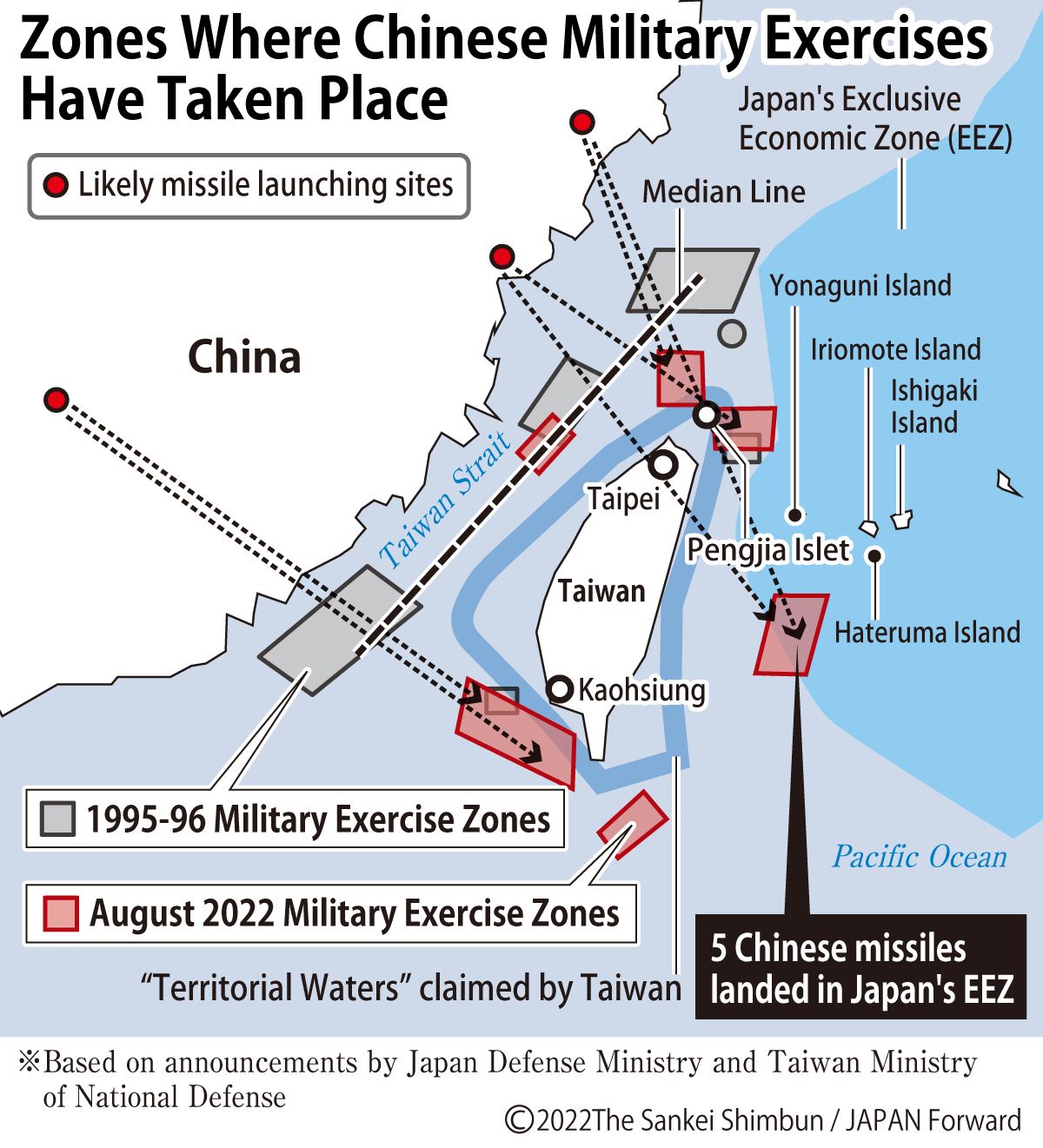
- https://japan-forward.com/wp-content/uploads/2022/08/JF-Grap...
Source:
- https://japan-forward.com/editorial-chinas-missile-tantrum-t...
In Russian these are called “lamps”, not “tubes”.
Again, it's simple to say on a whim that China can go from building a lot of cheap electronics to building very complex microprocessors. But that doesn't change the hurdles or the reality.
Also keep in mind that if anything gets in the way of developing these processes - more supply chain breakdown, access to raw materials required to fabricate processors is unavailable or constrained, or China is dealing with any other number of issues along that path it will only take longer. Then realize that during this period of time the rest of the processes are enhanced and iterated leaving China even further behind.
So at the time China can fabricate chips that are outdated today, the world will be 20+ years down the road from where we are right now. The more you dig into all of the things that are needed for China to catch up the more it's apparent that it very well may not happen.
a.k.a. please don't feed the trolls
Gelsinger thinks x86's days are numbered. So Intel's historical moat of designing and manufacturing x86 chips is going away.
So now it's more compelling to treat design and manufacturing as separate business concerns:
- For potential foundry customers, it reduces fears that Intel will give higher priority to fab'ing its own chips.
- It frees Intel's chip designers to design chips without needing to assume they'll be built at Intel's foundries. E.g., they can design chips for TSMC's process if that would result in a better product.
And given all these factors, I suspect Gelsinger and the Intel board of directors are planning to separate the design and manufacturing functions into separate businesses. (Either practically speaking by limiting their interaction within Intel, or literally by making them separate companies.)
"Taiwan’s president, Tsai Ing-wen, told one group that she saw the island’s tech prowess as a means of shoring up support for its democracy. Calling economic security a “pillar” of national security, she said Taiwan was willing to work with partners to build sustainable supply chains for what she called “democracy chips.”
> https://www.nytimes.com/2022/08/29/technology/taiwan-chips.h...
This is hardly an "out-there" take, too.
Why are you so quick to dismiss being protective of such an important resource as a motivation to protect Taiwan?
You are right that those semi companies do not need the government investments to build fabs. However, those fabs materialize overseas, depending on overseas supply chains. The EU and US regions want to build out more of the supply chain domestically, for strategic reasons. Those governments could simply legislate to impose heavy restrictions, but that hurts the competitiveness of the companies involved. And so, they combine that stick with a carrot, which is the government investments. You can already see increased restrictions on the semi supply chain in China, timed right after the CHIPS act passed.
Nobody wants that.
Yes, absolutely. Russia, 60m people (or how much is it? More even) notwithstanding, is essentially a petrostate. It was too hard to try to get the population-driven productive elements to compete against the easy resource money.
I mean, Norway is right fucking there. This war is on them, entirely, for failing to prepare for the inevitable day when the natural resources are no longer enough to bankroll the entire state.
But, doing it _now_ is not possible without major political upset, so the major political players, not wanting to be 'upset' out of a window (hey, you live by the sword, you die by the sword, I'm sure the political elite is aware of the usual way to deal with higher ups that need to be lesser higher up: By taking that literally) - start a war.
Outside of Putin's delusions of grandeur for an empire that never existed I still fail to see ANY upside for Russia for this war.
China doesn’t have to storm beaches to be within shooting range.
If Taiwan were an easy conquest it would have been conquered. It’s not impossible that China would attempt some sort of belligerence, but Taiwan is capable responding to any threat with enough firepower to deter such actions.
What does the Pico have to do with RPi shortages? Why would anyone buy a rPi400 as a RPi replacement? WTF does 30 year old DEC tech have to do with today's Intel? Why force Apple to sell consumer chips and how does he think that's gonna work out in the long run when all the software required to use them is single-source?
----- B--- (Hupa) received a BA from Stanford and wrote her 2017 Berkeley PhD dissertation Wailaki Grammar on a Dene language spoken along the Eel River in northern California. Now an Assistant Professor of Native American Studies at Humboldt State University, her research focuses on Dene languages, and on historical-comparative linguistics for language revitalization within the Wailaki and Hupa communities. While at Stanford and Berkeley she also worked with speakers of Karuk, Yucatec Maya, and Sereer. B---- is a coauthor of "Xo’ch Na:nahsde’tl’-te: Survivance, resilience and unbroken traditions in northwest California" (2019, with Cutcha Risling Baldy, in Ka'm-t'em: A Journey Toward Healing), and has contributed to the Hupa Online Dictionary and Texts project (at UC Davis). She is also a traditional basket weaver and singer from the Xontah Nikya:aw in Hoopa Valley, and a member of the board of the Advocates for Indigenous California Language Survival.
You can easily guess what the purpose of the program is.
1500 years ago, Aryabhata came up with an algorithm for approximating an integer ratio with (what we today call) continued fractions, and we use it today for that and for inverting elements of finite fields. Aryabhata was a Hindu, speaking Sanskrit, living in a monarchy; no corporation he formed part of still exists, or could exist, at least according to accepted legal principles. Yet his algorithm continues to be correct today, and like the movement of the Earth, it would continue to be correct even if nobody believed it.
Platonists believe that mathematical constructs like programs are actually more objectively real than things like stones or puppies, because propositions about them have a truth-value that is independent not only of the speaker's social context but also of time. Today this puppy is alive; tomorrow she will be dead. The Pythagorean Theorem doesn't do that.
There’s also drones, communications systems, electronic warfare systems, jets etc…
Aerospace code is much too thoroughly-vetted to use something as slow and imprecise as a modern AI system. Existing realtime platforms and sensors are plenty fast, and you can prove that they'll work correctly. Plus, when you're procuring chips to run in an adverse environment, advanced process nodes will probably be too fragile and prone to interference.
I bought a few of them a while back and have only recently managed to integrate one of them into a really basic project. They tried to make some kind of middle ground between an ESP and an Arduino, while providing an incredibly buggy MicroPython build and no Arudino IDE integration. Some of that's been corrected, but it still remains this all rounder thing that's never the best choice for the application.
Or they correctly estimated, planned not to go out of stock and were able to succeed. Jumping from "it never shows as out of stock" to "therefore they must have badly estimated one or both of supply or demand" is even stranger a leap of thinking than the initial misconception of thinking that not going out of stock proves low demand.
In both this comment and the previous one, you're guessing at a possible explanation while writing as if you know it to be the correct explanation.
(Sorry for coming across all critical, hopefully learning what can and can't be construed from a product being in stock is worth my negativity!)
https://www.france24.com/en/live-news/20220805-chinese-missi...
That happened during the Pelosi trip in August, and the jingoists were angry it didn't go further. The likelihood of an effective air/sea embargo on Taiwan is more likely than an initial invasion.
https://www.cfr.org/councilofcouncils/global-memos/hague-tri...
The PCA "rulings" aren't international law because UN (which PRC accept as international system) has no formal position on them / has not adopted any parts of the decision. Ergo, PRC's SCS position is consistent with international law - like the actual one at UN, not make believe US "rules based order" which was behind PCA lawfare campaign and the ongoing propaganda.
PRC is more firmly within bounds of the "world system", versus US who tries to enforce FONAPs despite not ratifying UNCLOS, and doesn't respect the kind of international law that it accused PRC of violating, see ITLOS ruling (an actual UN ruling) regarding UK/US military base on Chagos/Mauritius/Diego Garcia.
Apple runs an Asia-first strategy these days, they are divesting from China at top speed (whether that's due to sanction threats, the risk of operating in dictatorships, raising wages in China or a combination of that is up for debate). It doesn't make much sense for Apple economically and logistically to use US-made products as they have to be shipped across the ocean to the assembly plants.
I'm not entirely convinced that that's what Apple is doing.
The Information reported[1] last year that Apple made ginormouse investments ($270+B) in China's domestic tech industry to train their workforce and foster China's tech manufacturing. That was 6-7 years ago. It was also revealed very recently that Apple was still trying mighty hard to source more materials and chip suppliers from China's domestic tech industry (eg, YMTC) in spite of the on-going US sanctions on MIC chips -- in this particular case with YMTC, Apple finally gave up only after the Biden admin expanded export control on YMTC last week[2].
I don't think Apple is deterred by Xi's dictatorship, China's geopolitical threats to Taiwan/the South Sea conflict with other SEA countries, or the Uigher (and other ethnic minoority groups) human rights concerns, despite their virtue signaling here in the US. Sure, I think the justification for Biden's foreign/trade policies is up for debates, but what is quite clear is that Apple hasn't really changed its China/Taiwan-first business practices.
1. https://www.theinformation.com/articles/facing-hostile-chine...
2. https://asia.nikkei.com/Business/Tech/Semiconductors/Apple-f...
Sadly giving a search engine too many words can stop it from even searching, probably because that would cause a scan or result in a very time and computer/resource intensive search. So it doesn't even bother searching and tells you it couldn't find anything.
Imagine this use case. User searches for a video that costs Youtube royalty fees and is not monetized. Do you prioritize that in your return results or some other video that makes your business money instead of costing it?
Same thing with the Spotify Company playlists and recommendations versus user generated ones. Spotify's seems to include lesser quality, lower royalty songs now even though that is not what I want and it knows it. But unlike Google, I only go to Spotify BECAUSE of the quality of the songs it recommends me. Now that it's priority is first lower royalty songs over songs it things I would like the most I have no incentive to stay.
Underrated insight
If the chips went on sale every year then companies would gamble on additional stock at discount, driving revenue down, and further disrupting the sales transitions into new IC designs.
Either way, you probably meant that 13 nations have full and formal diplomatic relationships with Taiwan. Which, btw does not include the US, Japan or any EU nations.
"One day the great European War will come out of some damned foolish thing in the Balkans."
The economists, globalists and industry people believed that it could never happen. The military, nationalist and political folks figured it would be inevitable, or at very least if it happened they had to win.
Many people subscribed to the argument of the economists and globalists in more democratic countries because it was a comforting illusion the people in the more militaristic autocracies, believed it was inevitable, and incidentally were the nations that hold the most culpability for WW1, Germany, Russia, Austro-Hungarian empire.
Wait a minute why is all of my description starting to sound terribly and horribly familiar to what is going on now?
Seriously those that will continue to posist that war will not come are foolish and don't realizing that the first steps are already in progress with the information war being waged right now through cyberspace.
Note I don't want a war to happen and think it will be horrible and terrible, but all the elements are in place for it to happen. A shifting balance of power into a multipolar world, multiple nations either facing decline or ascendancy, realpolitik becoming the norm in international relations, it all looks very grim unless some very wise, peace loving and capable leaders emerge on the world stage soon.
So another Cold War for the 21st Century if we continue to rely on a mercantilist attitude in a world where networking is more important than some trade links.
nobody that is alive and sentient (in the traditional sense) wants a war... and yet, we all see it looming.
How so?
Hell, there's a Wikipedia page listing all of the Russia-Ukraine gas disputes (https://en.wikipedia.org/wiki/Russia%E2%80%93Ukraine_gas_dis...). One of the stated motivations for Nord Stream 2 was to improve reliability of gas to Europe in case Russia decided to cut off the gas because of a spat with one of the transit countries.
Russia switched off the gas 7 years after Putin was screaming from the rooftops that the US sticking ABMs in Eastern Europe was a red line for Russia. That's Russia being an unreliable partner?
https://en.wikipedia.org/wiki/Chiang_Kai-shek#Mass_deaths_un...
https://en.wikipedia.org/wiki/Constitution_of_the_Republic_o...:
Following the ROC government's retreat to Taiwan on 7 December 1949, the Temporary Provisions together with martial law made the country an authoritarian one-party state despite the constitution. Democratization began in the 1980s. Martial law was lifted in 1987, and in 1991 the Temporary Provisions were repealed.
ROC has been democratic since the 01990s, but it was an authoritarian dictatorship that killed millions of its own people at the time the Communists drove it out of the mainland (only to exceed its atrocities with their own) and for decades afterwards.
OP isn’t wrong though contemporary Taiwan is a model democracy in a region where there are few.
Why is this obviously incorrect statement that can be easily disproved by just checking the map is being repeated again and again on HN? It is only second in popularity to "Russia invaded Ukraine to prevent NATO on its borders" which can also be trivially disproved by finding Estonia or Latvia on the map...
It's not disingenous and it's not racist as I've laid it out. Facts are facts. I've never discounted the fact that China can't make electronics or that it can't, as a nation state, build satellites. What it's manufacturing sector, the bulk of China's financial success couldn't do was make a ball point pen as it requires precision manufacturing. That was not in China's wheelhouse until 2017. There are countries that excel in precision manufacturing at scale. You're conflating some very macro things.
> China has in a very short time-span gone from mostly agriculture to being in the top three in many (most?) high tech areas.
Define "high tech". The top 5 chip manufacturers in the world are: AMD (US), Intel (US), Broadcom (US), TSMC (CN --> Taiwan), NVidia (US). I'm curious if that helps you understand, better, what I'm talking about. I'm not talking about run of the mill electronics manufacturers. If you round out the top 12 - China isn't there: STM, NXP, Micron, LRC, Applied Materials, Texas Instruments, and Qualcomm - none of which are Chinese corporations. These are the companies that know how to build chips. Where is China in this mix? Because these are the companies you need to build high-tech things. Putting an iPhone together is not the same thing as building the chips in them.
> But in short can you explain why the US is using insane amounts of energy to slow down China if they are so totally incapable? Why do we need a completely new doctrine and pivot of the navy to be sailing around an utterly incapable and un-concerning China?
Yes. TSMC. They are the dominant, mass volume, manufacturer of these chips today. The US supply chain relies on this right now. Chip building isn't like retail where you can throw up a store in a few weeks and are off to the races. Building what TSMC has takes time. The US is buying time. That's why you slow China down and keep the issue of Taiwan at bay.
Again - I'm talking about R&D, chip design, intellectual property - in chips the US holds the majority of the major players. Yes, TSMC is manufacturing many of those chips today, but design and manufacturing are not the same thing.
It's appreciated when you read the entirety of the post before sharing information that's already been reviewed and incorrect information.
It's been done many times before (weapons, food, etc.) and always leads to the exact same result: garbage heaps and no available resources when they're actually needed.
Offering companies grants and favors to encourage building real, sustainable, on-shore businesses has a much higher likelihood of success.
I assure you there would be plenty of customers for $10 cpus that are as fast as modern $100 cpus.
Smart tvs, routers, modems, drones, toys, iot devices.
That being said, the commenter you replied to is wrong. Yes, warehousing occasionally does lead to massive wastage. But warehousing in general is common even if it means things will be slightly more expensive. That's how the military is able to run equipment whose manufacturing ended decades ago. That's how manufacturing worked worldwide before JIT became widespread.
The reason it might appear warehousing doesn't work is because the news will report instances where it's gone wrong. They're not gonna report the significantly greater instances where things are working just fine, because that's not news.
So I'm arguing we should over-produce infrastructure and you're arguing we should over-produce capacity? OK but you have to continue offering the favors else the on-shore companies are just going to fold up when times get tough.
In a catastrophic event though I argue the over-provisioned group is better off than the group that can ramp up their production to post-catastrophe needs, the over-provisioned group has backup supplies and can produce at their normal rate, the over-capable group still needs time to spin up their production.
You don't really want over production, you only want the factories and employees who know how to do the job.
That's the USA's mistake.
China's capitalist zones with very low taxes attracted all the factories because at the same time the USA was increasing taxes on the factories. What is left in the USA? Nothing. How do you wage war when you dont hold cards?
[0]https://www.csis.org/analysis/chinas-slow-motion-financial-c... [1] https://news.usni.org/2021/01/22/chinese-navy-faces-overseas... [2] https://www.scmp.com/economy/china-economy/article/3157385/c... [3] https://www.world-energy.org/article/20509.html
The US doesn't either. ASML is the only supplier of cutting-edge lithography systems and they are Dutch, not from Taiwan or the US. Without them Intel and TSMC couldn't do what they do and US sanctions is why China can't currently build competitive chips. It is not because of some kind of US tech brilliance.
If you're saying the US doesn't know how to design and build chips then you're conflating two very different things. The US manufacturers used to build them here, but the global supply chain made it infeasible to do it on US soil historically. The US currently doesn't have the manufacturing capacity to fabricate the chips they design - but the actual R&D is here. China doesn't have that.
> It is not because of some kind of US tech brilliance.
If that's the case then please share one Chinese rival to Intel / AMD.
THAAD can theoretically stop these missiles but the range for doing so is extremely limited due to the speed (up to Mach 10) and low altitude these missiles fly at.
Thus, the interception goal would be to get them in their boost phase, or mid-course phase, rather than the terminal phase after they've launched the HGV (hypersonic glide vehicle). HGV phase, I think only laser/particle weapons would work given the time between detection and firing solution. But for mid-course, they could use SM-3/SM-6. The SM-3 is specifically designed for targets like the DF. So AEGIS systems with SM-3 might be effective in protecting US carriers as long as the launches are detected. The problem is, the HGV only spends a much shorter time in ballistic phase, and once it re-enters the atmosphere, it is no longer on a predictable ballistic trajectory.
That said, military tech often works much better in theory than in reality. The USSR/Russia had a fearsome military tech on paper, the evidence in Ukraine seems to be it was hyperbole.
https://freebeacon.com/national-security/report-missile-tech...
If you wouldn't mind reviewing https://news.ycombinator.com/newsguidelines.html and taking the intended spirit of the site more to heart, we'd be grateful.
If you don't believe in human made climate change pls say so directly so I can ignore you
If you wouldn't mind reviewing https://news.ycombinator.com/newsguidelines.html and taking the intended spirit of the site more to heart, we'd be grateful.
It is whether the democracies of the world will abandon democracy and allow dictators to take over their societies by threat of force or force.
If we are not both better armed, better prepared, and willing to fight, we might as well hand over the key to Putin, Xi, and Un, and live under their dictatorships.
If we want freedom, we must risk war, and if the threat is nuclear war, then that most of all must be faced down. There is a reason we don't negotiate with terrorists or blackmailers — because if we negotiate and let them gain from terrorism or blackmail, we get a short period of peace before they try it again, along with every other wannabe dictator who can get their hands on some weapons. This all applies even more strongly with nukes.
It sucks, but there is no other choice.
I don't want to be condemned to repeat history because hordes of dolts can't even begin to pay attention
ugh
it's really not and actually the slowdown is so bad that AMD has had to reduce production, as well as other companies reducing memory/flash wafer starts etc.
it's not just intel or fake news, availability really hasn't been a problem for a year or more at this point, and if anything we're starting to shift into the "glut" phase of the bullwhip cycle.
Texas instruments still has not caught up, and their chips are used just about everything, including on graphics cards.
I see two errors here.
Defining technology to be "that thing which makes people's lives better" feels weak, even disingenuous, because trivially nuclear missiles and weaponised smallpox are technologies that fail your test.
Therefore, there exist technologies that can make peoples' lives worse.
The second issue is with your subjective "(people's lives getting better) doesn't appear to be slowing down to me". It's a view you're entitled to hold of course. Maybe you are not aware of other perspectives. It may have escaped your notice that in the last decade digital technologies have substantially changed in their nature. They've been at the centre of scandals over the erosion of democratic values, decline in education, attention disorders, social fragmentation, childhood depression, pollution and e-waste, conflict minerals, energy consumption, loss of privacy, dignity and rights... Must I go on?
To hold the idea that "all technologies naturally improve human life" by definition alone seems like a desperate escape from the facts.
Please don't. OK, I get it now. Your point above wasn't about "peak tech" at all[1], it was about this part, which you didn't mention. I think you're wrong, FWIW, but am not going to engage.
[1] In either the sense of "peak tech startup investment activity" or "technological progress as commonly undeerstood".
No one wanted the war, many knew it would be horrible, and yet it led to the most nightmarish collective human experience in human history.
We are in a multi-polar world now, Trump pointed out and many people are starting to agree, about whether or not the US really should be so closely aligned with Europe, NATO will probably stick around but it might not be enough. Meanwhile India has happily agreed to buy all the Russian oil that Europe isn't, which is done to spit in the face of the sanctions imposed on Russia. The mutli-polar world right now is US, India, China, EU, and Russia which is still a regional power, each of which have different interests.
The problem is China and the EU are facing huge demographic shortfalls in the next 30 years that will pose existential threats to their society, Russia is in the same boat. The EU is having this problem addressed to a certain extent through immigration but the nationalistic racist attitudes of the Chinese people make this a less palatable option for them. It is likely that the demographic cliff is going to continue to stress Chinese society to the breaking point until it snaps and begins an international incident that could quickly escalate to a global war. The best thing the US could do to preserve it's interests is do whatever we need to to schmooze up to India and cement an alliance with them, as they represent the best regional challenger to China and if they end up on the side of the CCP will cause huge problems as at that point a Bejing-Delhi alliance will be able to exert control over 1/3 > of the world's population. (This assumes they will be able to control all of Southeast Asia through soft and hard power)
That being said, ASML is 100 percent reliant on US Government research for their EUV breakthroughs, which is why the USG can tell them who they can and can’t sell to.
I look around where I am and wonder why aren't more of us wearing masks?
We produce more oil domestically than we consume.
"Peak tech" is two words I just pulled out of my arse an hour ago.
Let's define it together.
For me it's a palpable sentiment not a definition. But some people here seem to "get it".
The "tech industry" is not just an activity, it's a culture. Many of us, including (particularly?) developers are increasingly fed-up and disappointed by the direction digital technology is going. Not because we dislike technology, but because of what a minority are doing with it to gain power and wealth to the detriment of everyone else.
I don't think things will change for those investors who are smart enough to see the writing on the wall and switch (as they are doing) to physical technologies. FWIW I love the startup mind-set.
But this cynical flogging of surveillance capitalism, screwing over users, social control and smartphone bandwagon has been sticking in people's throats way beyond this community for some time.
The pain and anxiety equals or outweighs the perceived benefits - not just to a few geeks - but to people like my parents, siblings and neighbours.
That's "peak tech" for me.
And in terms of nation states caring, that's also incorrect because Taiwan is a linchpin of US Pacific foreign policy and for the US to do nothing or "not care" about Taiwan being invaded would signal to allies in the region that they cannot count on the United States and that they should find their own defense arrangements. It would de facto kick the US out of the Pacific and end global hegemony overnight.
Frankly, Taiwan is a big fucking deal w.r.t US, Japanese, and Australian national defense concerns and is a big deal to other nations such as New Zealand.
https://www.axios.com/2022/08/24/american-support-ukraine-po...
I would go as far as to say that US Army + Marines + Navy could not land on Taiwan without suffering multiple brigades of attrition AFTER at least a year long blockade and air campaign. It is that hard.
PRC has to surpass US in GDP, then spend 10-20 years of US level military spending, then maybe.
A major power with 1.2 billion people can take an island of 20 million 80 miles away from its shores.
Practically, PRC can simply mine TW ports, crater run ways, via glide mines and MLRS all within PRC borders (that can hit anywhere in TW + adjacent). US + co doesn't remotely have the demining, sealift or airlift capacity to logistically support TW off PRC waters. Nor will they convince any commercial fleet/insurers to go on suicide mission of... invading One China territory. It's like how Operation Starvation crippled JP during WW2. Except TW is much smaller than JP and PRC is a much larger industrial power than US during wartime. PRC can unilaterally and trivially render TW inaccessible - it can blockade TW with basically zero sustained naval or air effort.
And really if US/JP try to run the blockade they're legally invading Chinese sovereign territory and it's WW3 anyway. TW may have chance to survive a PLA invasion, but IMO no chance of breaking a PRC blockade. Folks are grossly underestimating the proponderous of advantages PRC has near her coast.
Taiwan between missiles and air force elements would be uninvadable. The only way to control Taiwan is to land a quarter million soldiers or more.
They scream at me when they think I'm stealing (Any human being doing that would instantly be reprimanded by a manager), they have tiny platforms where I can't even fit my groceries and heaven forbid if I do something the machine doesn't like, an attendant needs to come unfuck it for me.
The best thing about them is that I can do some work for the store for free as part of my shopping. I can't wait for the next grocery innovation of having the customers stock the shelves from the backroom before they can fill a sack with onions.
I was a cashier for a couple summers. There were a couple members of staff that were really experienced experts who could really fly through the checkout, but there were plenty of us that were just kids working over the summer...
Supermarkets have always looked to save cost, it is a price sensitive business after all. At some point you'd give a list to the clerk and they'd put your order together. I'm sure people were annoyed when they had to start doing that clerk's job.
Think bolder. As a software engineer in the Soviet Union I had to spend about three weeks each year in the collective farm fields planting, tending and harvesting potatoes and cabbages. Since some of my American friends are very fond of socialism these days - these types of “improvement” look definitely a possibility.
Something about this doesn't seem to entirely add up, given that workers in government and defense-critical industries weren't exactly rounded up a la carte to work the fields. Not when there was a dedicated class of kolhozniks that were paid next to nothing, and couldn't really leave the countryside for better jobs in the cities.
But now that you mention it, I would pay good money to see the likes of Peter Thiel spend a few weeks a year picking strawberries, or filling grocery bags, or piloting a shitbarge up the Hudson river along with the rest of us. I do keep hearing from that half of the political spectrum that hard, poorly paid work, and pulling yourself up by the bootstraps builds character...
And not to be overly pedantic (although we are on hn here, and when in Rome...), but leading American socialist movements are focused on democratic socialism, much like many European countries where I'm pretty sure forced agrarian labor isn't a thing.
some wholesale clubs apparently counter this by randomly auditing every cart as you leave, but that seems to leave the whole thing only marginally more efficient than traditional checkout
I have lost count of how many items I forgot to pay for at Home Depot.
This posture change will keep pace broadly with the American domestic chip fab industry.
This is very obviously true, since China is a nuclear power and has ICBMs as well. We won't be involved in a hot war with them for the same reason we have been avoiding that with Russia.
So support via the former will always be the more tenable position for a democracy.
I can assure you that if the everyday American saw in line item on their paycheck called "Ukraine War Tax" the public would be much less supportive, but since all the money is either printed, to debt then there is a disconnect between government spending, and the hidden tax of inflation everyone is paying but pretending to just be "greedy companies" and not government spending that is the cause
Republicans want the Presidency in 2024, and turning their base against Ukraine is going to be a pillar of their strategy.
Russia can also do what it likes because of the constant nuclear threat. Russia has nukes that work, whereas the likes of the UK has a single nuclear sub that occasionally gets stuck on a sand banks. The Russians probably know where it is at all times.
It was one EU country in particular that was very vulnerable for a few separate reasons for the Russian gas politics, but they have seen the errors of their ways at long last.
Dependence on Russian energy is significantly reduced and there more than every intention to reduce this to zero. Note that the intention was always there, gas was only ever a stopgap between now and fully renewable.
Does it?
Nominally, Russia has roughly the same number of nukes as the US.
The US military budget is 700bn/yr and it spends 60bn/yr in maintaining its nuclear weapons. So 60bn/yr is a good estimate for what it costs to maintain a US/Russia-sized nuclear weapons arsenal.
Russia spends 60bn/yr on its military in _total_. However much of that goes into maintaining its nuclear arsenal is clearly not nearly enough. By all accounts Russia can't even maintain its trucks. Most likely the budget for nuclear maintenance is "disappearing" the same way that much state money disappears in Russia. Surely no on believes that Russia has been spending 60bn/yr since the 70s, when the last nuke was detonated.
Russia no longer has nuclear weapons, you heard it here first.
People have been saying this about technology for as long as technology has existed.
Have they? It kinda sounds "truthy" but if ever there was an unfalsifiable claim that's gotta be a contender.
I'm no general historian but think for the most-part people have enthused over and coveted technologies for thousands of years.
With the exception of occasional religious objections to "magic" it was the Luddites during the industrial revolution whose first stirrings of discontent emerged.
Even the early critical science-fiction of H.G Wells and Mary Shelley was tepid and poetic.
Much later, in the late 1960s, comes the first modern tech-critique, and much of that is driven by affairs relating to environmental and war problems, Vietnam, oil crisis, DDT... way before the Internet.
The idea that we have a surfeit of technological capability, or perhaps just too much of the wrong type, seems very contemporary to me.
Better tech is how humans (all of them - rather than the few) get more space to reflect and live outside.
A young adult "in an already developed country with relatively new infrastructure that had already been built for them and they chose not to continue to invest in and improve" in the 70s had plenty of time to reflect and live outside.
Meanwhile, because of those young adults lack of productivity in the 70s, people even in the US are drinking water with lead, have their homes destroyed by climate change, had the forests die and passively watched as desertification took hold.
That said, I don't blame those young adults individually, they were a product of poor societal leadership. While not in aggregate (as evident in today's "crumbling" US and European infrastructure and diminished infrastructural head-start), I'm also sure many of these individuals found a healthy balance between being outdoors relaxing and improving the human condition for the long run.
All I'm calling out is that in aggregate they were no bastions you should hold in any high regard, and definitely not something to try and replicate.
What we need is better technology to lift up the human condition, allow each of us to continue to help improve the human condition with roughly 40 hours per year of effort, and spend the rest outdoors/gaming/enjoying/relaxing in general.
Better is subtle. Nothing is a straight line.
- Less human effort and overall cost to produce and store food.
- Less human effort and overall cost to grow, transport, and store food.
- Less human effort and overall cost to clean, transport, and store potable water.
- Less human effort and overall cost to keep everyone's bodies healthy.
- Less human effort and overall cost to keep everyone's minds healthy.
- Less human effort and overall cost to construct net-new housing (and frankly more generally "improve everyone's safety").
- Less human effort and overall cost to keep our planet healthy i.e. appropriately and continually terraformed for our needs.
- Less human effort and overall cost to travel/explore any and every inch of this planet (including the sea floor, the highest mountains, the sky, and even orbit). Fuck it, why think small, even less human effort and overall cost to travel/explore every inch of this universe.
These are the technologies we need to get more people outdoors!
The Ancient Greek philosophers used to say this about writing and reading
A phenomena that is very clear in threads about China.
I would think the opposite to be true.
How do you attempt to apply to game theory to a situation where the other party is completely irrational? It seems impossible to me.
Honest questions here.
https://en.wikipedia.org/wiki/Face_(sociological_concept)#Ch...
Like many politicians, Xi is ruthlessly self-interested. His actions that allow him to consolidate power aren't necessarily in the best interests of China.
Yes, this sort of narrative plays a lot better when describing someone you're actively at war with. Along with the fact that you are always winning the war. Ukraine has been winning the war with Russia for about 9 months now, according to the media.
It’s always in our interest to simply reduce our enemy to madmen or nazis, as it justifies our own counter aggression.
Yeah, Biden himself recently said that Putin is a rational actor who grossly miscalculated, because he was basically fed very bad and flawed intel. He may be blustering about nukes now, but the only way he would do that is if Ukraine turns the tables and invades Russia, or something similar.
It is interesting to see how dramatically opinion has cooled on China in the past few years, simply because they have become a great power competitor.
The PRC's GDP was US$17.7 trillion nominal in 02021, the latest year for which we have numbers, according to https://en.wikipedia.org/wiki/Economy_of_China. That makes it the world's second largest economy by nominal dollar value (after the US) and the largest by PPP. That's not just individual countries, either; it overtook the economy of the EU in nominal GDP in 02021 under Xi's leadership. The IMF's estimate for 02022 is US$20 trillion according to https://en.wikipedia.org/wiki/List_of_countries_by_GDP_(nomi....
This isn't just a matter of domestic numbers that can be fudged, either. https://en.wikipedia.org/wiki/List_of_countries_by_exports says it exported US$3 trillion worth of goods in 02021, up from US$2.5 billion in 02020, making it the world's #1 exporter, with almost twice the exports of the US at #2, though by this measure the entire EU does still exceed PRC. (The EU is excluded from the list for not being a country.)
Nor is it just a question of adding together poverty-level earnings of 1.2 billion people. The PRC's per-capita GDP is US$20k PPP. Economically, the average Chinese person is doing fine, although they're experiencing a lot of unfortunate things outside the economic sphere.
China's economy is experiencing major difficulties (Evergrande, zero-COVID lockdowns) but it is far from being "killed" or a "return to Mao-style communism", by which I charitably assume you mean 01970s-style stagnation and not, for example, the largest famine in human history.
You should take a long hard look at where you're getting your information from and how you decide what information is trustworthy.
Can you list the other warm-water ports used by the Russian Navy? Here's a paper on the subject from the Air Force Journal on European, Middle Eastern, and African Affairs: https://www.airuniversity.af.edu/Portals/10/JEMEAA/Journals/...
>>>It is only second in popularity to "Russia invaded Ukraine to prevent NATO on its borders" which can also be trivially disproved by finding Estonia or Latvia on the map...
While technically true, there is a big difference between the Estonian/Latvian border, and the Ukrainian one. I discussed this 7 months ago: https://news.ycombinator.com/item?id=30513745
OP didn't say anything about Russian Navy specifically. However, do you suggest that Russian Navy couldn't use Novorossiysk for military purpose if need be?
> While technically true, there is a big difference between the Estonian/Latvian border, and the Ukrainian one. I discussed this 7 months ago
Well, Russia is now getting additional 1,340 km border with a new NATO member (real, not imaginary one like Ukraine) and is apparently completely unfazed by it. In fact they continue to move military from that border into Ukraine. Really makes you think whether they were really worried about spooky-scary NATO or pursuing some other goal in Ukraine all along...
Regarding other analysis from your comment - this is not WW2, nobody is tank-rushing capital of nuclear superpower via highways lol.
EDIT: Also, I've re-read comment you referenced again and for a person with a lot of "defense consultant"-related buzzwords in profile you seem to be awfully poorly informed about European history. "Keep in mind this is a country who's arguably most important holiday commemorates the war where they lost 25+ million lives fighting off an invasion from a hostile alliance on their western border." is either intentional manipulation or pure ignorance because USSR _were_ part of the alliance and were happy to divide Poland and massacre its people at the beginning of WW2. They like literally started the whole thing themselves, but miscalculated with choosing their allies!
To discuss options for Russia's future without the specific context of its national security interests is meaningless when the country's decision-makers are almost entirely from said national security apparatus.
>>>However, do you suggest that Russian Navy couldn't use Novorossiysk for military purpose if need be?
This 2013 report suggests that Sevastopol has superior all-weather access compared to Novorossiysk: [1] I'm not familiar enough with the meteorology of the region to articulate why. They probably could switch to the Caucasian coastline as a fallback plan, but I'm sure Russia looks at the problem from the lens of "we're a nuclear-armed Great Power, why the fuck would we compromise on this?" Sevastopol definitely provides better power projection across the whole Black Sea. [2]
>>>Well, Russia is now getting additional 1,340 km border with a new NATO member (real, not imaginary one like Ukraine) and is apparently completely unfazed by it.
I think they were completely blindsided by Finland abandoning its long-standing neutrality, and have very few tools in their toolbox to leverage. While the Finnish border threatens their access to the North Sea, it poses less of a risk to Moscow than the Ukrainian border does. If you wanted to take Moscow from Finland, you need to secure the M-11 highway as an MSR....which means you have to secure St. Petersburg (good luck storming a city of 5 million+) or bypass the metro area and leave your supply line exposed. Russia is moving conventional combat power from the North, just as Russia is moving conventional combat power from everywhere into the Ukraine wood-chipper. They've also stepped up rotations of nuclear-capable strategic bombers in the north as a compromise to signal "don't try anything stupid up here, we've got nukes!" Of course the Finnish Air Force is rather large and capable, so I'm not sure how credible that threat is. Overall I now rank Putin pushing Finland & Sweden into NATO as the greatest geopolitical failure of the 21st century, dethroning the invasion of Iraq. Interestingly, Stalin made some similar blunders in the late 1940s/early 1950s against the West.[3]
>>>Really makes you think whether they were really worried about spooky-scary NATO or pursuing some other goal in Ukraine all along...
Even when Putin had Ukraine as a borderline vassal state they were bitching about NATO expansion in their near abroad. Some of these arguments were made in the US Congress before Putin even came to power. [4] In particular, skip to the comments by Jonathan Dean and Michael Mandelbaum.
>>>this is not WW2, nobody is tank-rushing capital of nuclear superpower via highways lol.
It doesn't matter what you or I think about tank rushes, what matters is what the Russians think about tank rushes. [5] In case you missed it, they initiated this invasion with a multi-axis armored blitz towards Kiev combined with an air assault to secure a nearby Aerial Point of Debarkation. The Russian military establishment has maintained that the offensive is the key aspect of warfare, and that the tank is the key component of the offensive, since the 1930s. Their current military thought leaders also place a priority on "active defense" aka preemptive elimination of threats. [6]
The qualifier "of a nuclear superpower" doesn't add much to the conversation. Of the major nuclear powers, only India has a capital closer to an adversarial border than Russia (I don't count Pakistan or Israel as "superpowers")....and India maintains an exceptionally large tank fleet, and has fought some of the largest post-WW2 tank engagements between their capital and their border with Pakistan.
>>>you seem to be awfully poorly informed about European history
Pretty sure ad hominems are against HN guidelines, but since you wanna go there...
>>> USSR _were_ part of the alliance
Oh? What "alliance" was that, specifically? As always, the devil is in the details. There were only two signatories to the Molotov-Ribbentrop Pact: the Soviet Union and Germany. The Soviets had a bilateral agreement for the partition of Eastern Europe. That made them "co-belligerents", not "allies". They never signed any treaty with the Axis at large (for example, the Pact of Steel or the Tripartite Pact). They submitted a revised proposal for joining the Tripartite Pact to Germany which was quietly ignored as preparations for Operation Barbarossa were already underway. At no point in time was the USSR allied with Italy, Romania (14 divisions, almost 10% of the invading forces), Slovakia, Finland, or Hungary. There is one thing we can agree on: the Soviets absolutely miscalculated....when they took their Western neighbor at his word that he would adhere to the Non-Aggression Pact that they had signed.[7][8][9][10] And you wonder why the Russians have no desire to repeat that mistake, when we tell them NATO isn't a threat?
TL;DR = Read more. Condescend less.
[1] https://jamestown.org/program/the-future-of-the-russian-blac...
[2] https://www.tellerreport.com/news/2022-04-27-from-sevastopol...
[3] https://www.wilsoncenter.org/sites/default/files/media/docum...
[4] https://www.govinfo.gov/content/pkg/CHRG-105shrg46832/html/C...
[5] https://turcopolier.typepad.com/sic_semper_tyrannis/2016/04/...
[6] https://community.apan.org/wg/tradoc-g2/fmso/m/fmso-monograp...
[7] https://en.wikipedia.org/wiki/Molotov%E2%80%93Ribbentrop_Pac... [8] https://en.wikipedia.org/wiki/Co-belligerence#Germany_and_th... [9] https://en.wikipedia.org/wiki/Tripartite_Pact#Soviet_Union [10] https://en.wikipedia.org/wiki/Operation_Barbarossa#Order_of_...
EDIT: forgot these two additional general resources on understanding Russian national security thought:
https://en.wikipedia.org/wiki/Foundations_of_Geopolitics
https://csl.armywarcollege.edu/usacsl/publications/RUSSIAN%2...
"Star wars" is feasible with reusable launch to orbit vehicles.
The difference between ally and vassal seems like one of alignment. Right now Japan and the US are quite aligned, but were alignment different, I think the status would be as well.
Japan doesn't get involved in aggressive wars, but neither does e.g. Switzerland, and no-one would call them a vassal for it. Yes that restriction is currently constitutional in Japan, but Japan is free to amend that constitution without needing US approval.
The War is just the needle that is contributing to the massive bubble popping
Is there possible anything democratic without free speech?
( Speaking of which. In the Soviet Union all western media - newspapers and magazines - was put under the lock. Foreign propaganda. Sounds familiar? Only trusted persons could get the key. Funny thing is all former Party media - newspapers and magazines from former years - were put under the same lock. Protocols of former Party congresses too. Dangerous, same as foreign propaganda. And now I see this:
https://taibbi.substack.com/p/youtube-demonetizes-tk-content
YouTube demonetized a video showing years of audio and video clips, tweets, and headlines produced by the Party politicians at about and after 2016 - nothing else.
So we may be not there yet but we are sure sailing in the same direction ).
Taiwan does have fairly good stocks of weapons and ammo. It's also great terrain for fighting a defensive guerilla war. It'd be China's roleplay of "Russia in Afghanistan".
TSMC's DUV 7 processes are reportedly very good.
And I thought Intel's 14 was good too (after some ramping), which is why they stayed on it and iterated on it for so long, it was the 10nm process they had so much trouble with and the problems there are not generally reported to be with lithography but materials (cobalt, among other things, which they dropped in later nodes).
So I'm not sure what you are trying to argue. DUV has _proven_ to be economical down to about 7nm.
The nm measure is a marketing tool. Intel nm is 'larger' because they were measuring gates differently.
I only take nm claims as comparison of products of same company.
What media?
In the beginning most reporting was that it would be over in a week. Then Russia had that little blunder with their first offensive. Then again most reporting was that the russian artillery steamroller would squash the Ukrainians. Now most media favor the Ukrainians due to their recent successes. Also goals and frames of reference changed. In the beginning winning for Ukraine was not letting Russia roflstomping them. Now it is throwing all russian military out of their country.
No one outside of China thinks his stubborn refusal to abandon the failed Zero Covid policy is in any way a good idea. Everyone sees it as a stupid and irrational face-saving action.
Now, if you're going to say economic pressures will lead to political settlements without conflict, then that's a discussion to be had.
I kinda think I should write an essay about the life of a software engineer in the Soviet Union. It is always interesting to get reactions of un-believe to simple truths, known to everybody with the same "living experience". What stops me - my English is bad and Russians know all this already. Still, let me do what I can.
So, software engineers and the food supply. I worked as a software engineer in a biological research center. I've participated in the practice described below from 1979 to 1991, 1991 being the last year of the planned economy. Each employee has a quota to be fulfilled in the collective farm fields, like 20 days a year. Each morning, weekends including, a big number of buses was coming to the city center. Our research institution was assigned one bus. We packed in it and were driven into the fields. There was a quota to be done by each until afternoon: planting, tending or harvesting depending on the season. In the afternoon like "before lunch" buses arrived to take us back to the city. You were free from work this day, but paid in full. You were also paid for the work done in the fields. Twice paid for a half of a day's work.
No one was exempt from the farm work quota, nor government workers, nor defense contractors from a county seat 20 miles away.
So the whole system was not especially cruel, but extremely ineffective, like the life in the late Soviet Union in general - do not forget these buses with their fuel, some of them bringing people from 20 miles away - for half a day's work.
( In 1990 yours truly organized and participated in an economic experiment, reducing some of the costs. Instead of giving a quota to each co-worker, we've organized a team of volunteers, spent whole days in the field and were done with the quota for the whole institution in a week or so. This was a back-breaking affair, but earned a good money. I've sent a letter to the county newspaper with a proud name Kommunist, describing the "experiment". They published it, but they also published "letters from workers" naming me "the enemy of the people". )
Some misconceptions to correct, if I may.
>in the 1940s, when people were packed into train cars to bring in the harvest
Incarceration rates in Stalin times were less than incarceration rates in present Texas or Luisiana. So not much could have been done using inmates labor only.
>dedicated class of kolhozniks that were paid next to nothing,
Kolhozniks in my time were paid 2-3 times more than a software engineer. Not that was much, but still.
>and couldn't really leave the countryside for better jobs in the cities.
This practice ended in 1965. Free movement of people was restricted in general though, meaning you have to jump through some stupid obstacles to move, but absolutely possible.
>I would pay good money to see the likes of Peter Thiel spend a few weeks a year picking strawberries
This is a strange wish. If Thiel is a good person, he will work along with you, yes. But if he is the bad guy like I guess you've implied - he will be a supervisor over you packing strawberries. Some things never change with a change of a political system.
For anyone who doubts it I highly recommend Adam Curtis's new 6 hour docu-montage "Russia 1985-1999: TraumaZone"[1]
[1] https://www.newstatesman.com/international-politics/ideas-in...
[1] https://economictimes.indiatimes.com/news/international/us/a...
Observe that "the world" will not be helping Taiwan. India won't. Russia won't. Brazil won't. Nigeria won't. Pakistan won't. Bangladesh won't. Nigeria won't. You get the drill. US will, and probably Europe too, but why assume that these will 1) be able to defeat China in a conventional war in its own back yard, and 2) will even try to do so?
The democratic countries will come together, the same ones that helped Ukraine; delete from that list authoritarian (democratic or not) countries, and democracies that are led by authoritarian dictator wanna-bes (so if Trump comes back he'd be conflicted, because he loves authoritarian power, but indicated his displeasure with China). Probably not Hungry. Russia doesn't matter if they aren't nuking you. India, there is the authoritarian bent the country it is on - non Hindu people aren't feeling so happy about their country. I'd think India will feel torn because they want to fight Pakistan freely but don't want to increase the power of China. Brazil is another partially fallen democratic country, wonder how that vote will turn out at the end of Oct.
There are two reasons those countries will help Taiwan - because they don't want authoritarian dictators to take over democracies, and because Ukraine reminded us all of the importance of stopping dictators - we can't wait for them to decide they have enough. It's over 80 years since the last time the world went through it, German and Japan were the original threats (with Italy and a few others), now it's China and Russia. The chip making part of Taiwan will all be decimated in the first few hours of a war (you thought that would be one of my reasons to intervene ;-)). It will be re-created bit after bombing it and damage and just losing power it will be hugely weakened, hurting both sides.
Ukraine showed how much more powerful the militaries of the western alliances are. I'm sure China will not be so weak and kleptocratically weakened as Russia was, but they haven't been in battles recently so they will need some ramping up to really organize. I'm sure China will be able to do major damage to navys trying to operate around Taiwan, sink a few us carriers. But the US and the other western countries are about a lot more and they can operate in countries around there.
China is a powerful country, they have brilliant engineers and scientists and that economy and a vast population. They are not to be under-estimated. The world must move forward to promote democracy and stop dictators.
When people don't like to discuss what they call platitudes is because they will not benefit. The US has endless problems, with 400+ years of racism, slavery, denial of institutional racism, then our destruction and the big lie about Iraq, and finally Afghanistan had a different situation but still managed to screw that up. My friend who recently moved back to Taiwan to retire will probably also have an interesting viewpoint on such things. "Please don't kill me, China" might describe his views. He thinks (hopes?) there won't be a war because the west will help protect Taiwan.
Edit - the us has a lot more years than 200 of racism, updated that comment.
The primary reason that we're concerned about semiconductor fab concentration in Taiwan is that China has consistently stated that it is going to invade Taiwan at some point (and that could be 2049 or in a few years for all we know). This is completely outside of any hypothetical scenarios of who lobs cruise missiles at who during WW3.
You can make the point that relying on semiconductor manufacturing outside of your country/coalition is a bad idea for military self-sufficiency, and I would agree, but that's a much more diffuse risk than the very specific scenario that is driving the CHIPS act and concern about fab concentration in Taiwan.
China has said that they believe that, in the event of hostilities over Taiwan, they will be obligated to strike US forces everywhere in the region -- and the US Navy still has a strong presence in Japan. Also S. Korea and the Philippines.
This means potentially launching missiles at these countries too, and the Chinese have made it very clear to all involved that they will consider and/all US allies in the region as potential belligerents and act accordingly. AKA military action against Japan and SK, and possibly Australia and NZ. It is just another part of the Taiwan political calculus.
Point is: moving the fabs out of Taiwan doesn't mean shit if they're still in a country that China could strike, and in the case of Japan, would likely strike, in the event of hostilities.
Do you have a source for this? I haven't heard this stated before, but I'm not an expert here.
Even taking this as true, I think it's a big leap to go from striking US military bases in Japan, to striking civilian infrastructure in those countries.
It seems quite clear to me that the opening salvo you are hypothesizing (attacking multiple military bases and civilian targets) would be an act of war against the USA and Japan. This would certainly provoke all-out war with the US, and they have a first-use policy that could entail a nuclear response.
Frankly the whole scenario above seems extremely unlikely to me, and I think Ukraine is the better example to model here. Essentially, China occupies Taiwan, and dares the US to strike in retaliation, knowing that their retaliation would be the thing that triggers armageddon, and betting that the US is not actually willing to escalate militarily over Taiwan. I predict that China would take an effort to avoid attacking any US military personnel stationed in Taiwan (I gather this is just an unofficial presence), because the rational play is to give the US as little excuse as possible to escalate in response.
In other words, China MUST offer the US a path to de-escalation/capitulation in order to take Taiwan without a war with the USA. It's much easier to take Taiwan without a full war with the USA (obviously, IMO).
This would be starting World War III. It would be akin to the Japanese attack on Pearl Harbor, with the main difference being, we have thousands of nukes and China does not. This course of action is so profoundly stupid that I cannot imagine China taking it.
China. Japan cooperates with AUKUS [1]. If Xi invades Taiwan, it's going to pull in America, Britain, Australia and–in all likelihood–Japan.
That said, we're more likely to see a recapitulation of the Ukraine playbook than direct intervention by American and Japanese forces.
They want Taiwan not a war with the entire west all at once.
Japan is very able to defend itself against China and the Chinese know that. That doesn't mean the Japanese would win a war with China, but who knows? Who would think Ukraine could take on Russia? If China seriously went to war with the US and Japan China could be blockaded.
The history of the last fifty years suggest the Chinese are pretty measured in their use of force. I'm sure they would try to capture Taiwan if they were confident they could with acceptable losses. But they realize time is on their side and they are not crazy gamblers like Putin.
Japan ? They're as threatened by China as India, and nobody in China is planning for administrative take over of 130 millions Japanese anytime soon. And Japan has so many problems to solve already, they're not looking at bothering China enough to risk missiles.
Countries that have actively threatened Japan with nuclear bombs: China, Russia, North Korea, and the US (which literally dropped a bomb but have yet to make threats since).
It would take a matter of days until they had massive internal protests. Hungry people topple governments in hours.
I think you misunderstand deeply the current equilibrium in the world.
Most of Africa, a significant part of South East Asia, some countries in Eastern Europe would definitely align with China. A significant part of South America would be neutral.
The USA is losing allies nearly as fast as China is making them.
Yet, it is EXACTLY what Xi repeatedly said in his new-term-inauguration speech
The dictator of China has effectively declared, as publicly as possible, and very specifically, that he intends to invade Taiwan if it does not willingly abandon it's democracy and come under China's rule
He obviously thinks he can get away with doing so without consequences, including those you suggest.
Yet, leaders make such mistakes all the time. Putin just made one on 24-Feb-2022.
It is up to the western world to ensure that Xi sees that such an action would result in bad consequences for him, and deter him from his stated course.
But the fact that it is bonkers is no assurance whatsoever that it won't happen.
China can get much further than Russia can in that amount of time.
If chip fabs are at the top list of your worries, your perspective of war is probably overly informed by being on the side that undertakes imperial adventures against people who can't shoot back. Direct war against an actual superpower is horrific.
You are moving the goalposts again. OP stated that Russia don't have any warmwater ports outside Crimea which is obviously incorrect.
> I think they were completely blindsided by Finland abandoning its long-standing neutrality, and have very few tools in their toolbox to leverage.
They could sign a peace agreement with Ukraine and quickly move their armies north no attack Finland, no? I mean, if Russia _really_ considered having (more?) borders with a NATO-member an existential threat (like they always pretend when discussing Ukraine in that context), then that would make total sense.
> Even when Putin had Ukraine as a borderline vassal state they were bitching about NATO expansion in their near abroad. Some of these arguments were made in the US Congress before Putin even came to power. [4] In particular, skip to the comments by Jonathan Dean and Michael Mandelbaum.
Well, Ukraine offered to commit to neutrality multiple times during peace negotiations in February and March, but Russia rejected the proposals and proceed with annexing more Ukrainian lands. Isn't it by now settled that they were just using NATO boogieman as a pretext for trying to (re)build their empire?
> It doesn't matter what you or I think about tank rushes, what matters is what the Russians think about tank rushes. [5] In case you missed it, they initiated this invasion with a multi-axis armored blitz towards Kiev combined with an air assault to secure a nearby Aerial Point of Debarkation.
Which failed spectacularly and kinda proves my point?
Also, they assumed that after initial missile barrage on Ukraine military assets they will achieve complete air superiority which didn't happen. I don't think anyone expects NATO to quickly achieve air superiority in Russian airspace, including Russia's own military analysts.
> The qualifier "of a nuclear superpower" doesn't add much to the conversation.
Of course it does! Russian nuclear doctrine permits them to conduct the first strike when "existence of Russian state is in danger", so they will most likely just tactical nuke the shit out of (hypothetical) NATO grouping on their border that is in the process of assuming attack formations. This also coincides nicely with their "escalate to de-escalate" playbook.
> Of the major nuclear powers, only India has a capital closer to an adversarial border than Russia (I don't count Pakistan or Israel as "superpowers")....and India maintains an exceptionally large tank fleet, and has fought some of the largest post-WW2 tank engagements between their capital and their border with Pakistan.
I have no knowledge of India's or Pakistan's nuclear doctrines. Do they permit first strike?
> Pretty sure ad hominems are against HN guidelines, but since you wanna go there...
Where is ad hominem exactly? Your portrayal of the start of WW2 makes you look on either misinformed or malicious (more on your talking points later). The fact that in next paragraph you are seemingly making U-turn on that doesn't change the formulation of your previous message.
> Oh? What "alliance" was that, specifically? As always, the devil is in the details. There were only two signatories to the Molotov-Ribbentrop Pact: the Soviet Union and Germany. The Soviets had a bilateral agreement for the partition of Eastern Europe. That made them "co-belligerents", not "allies". They never signed any treaty with the Axis at large (for example, the Pact of Steel or the Tripartite Pact). They submitted a revised proposal for joining the Tripartite Pact to Germany which was quietly ignored as preparations for Operation Barbarossa were already underway. At no point in time was the USSR allied with Italy, Romania (14 divisions, almost 10% of the invading forces), Slovakia, Finland, or Hungary.
You are arguing semantics here (co-belligerent vs ally, etc.) while seemingly agreeing with me that USSR was one of the states that started the whole WW2 on the side of "evil western allies".
> TL;DR = Read more. Condescend less.
Well, you keep repeating Russian propaganda talking points and make it look like they were just peacefully minding their own business in thirties and then sneaky westerners cowardly back-stabbed them in forties. This is one of their favorite tropes how the whole world is against them and keep trying to either attack or contain them for no reason what-so-ever besides maybe some ingrained "russophobia". The very existence of Molotov-Ribbentrop Pact secret protocols was denied by soviets for longest time BTW.
These details, your comment history, repeatedly calling Kyiv "Kiev" and doubling down on describing Russian invasion in Ukraine as completely self-defensive measure against menacing NATO expansion makes me doubt you are arguing in good faith here, but calling someone a paid shill will indeed be against HN rules...
I honestly think there is 100% chance that if China invaded Taiwan today, the US would declare war and send troops to defend Taiwan. In contrast, I think there is >0% chance that the US would not declare war on Russia if they did a (tactical) nuclear attack in Ukraine.
>>>OP stated that Russia don't have any warmwater ports outside Crimea which is obviously incorrect.
If Sevastopol is highlighted for its warm-water access, but Novorossiysk is not, then the issue is at best unclear.
>>>They could sign a peace agreement with Ukraine and quickly move their armies north no attack Finland, no?
Even leveraging interior lines and Russia's robust rail transportation network, pivoting 150,000+ men >1,100km (roughly the distance from Kursk to Petrozadovsk) is not something that happens quickly. Also, not all "NATO borders" are created equal. As I said, sharing a hostile border with Finland and sharing a hostile border with Ukraine do not present the same security implications for the heartland of the Russian state.
>>>Ukraine offered to commit to neutrality multiple times during peace negotiations in February and March, but Russia rejected the proposals
Did Russia reject the proposals, or did the West torpedo the negotiations? https://www.globalresearch.ca/diplomacy-watch-did-boris-john...
>>>Which failed spectacularly and kinda proves my point?
Yet the American "Thunder Run" into Baghdad was a spectacular success, and Russia's own armored drive on Tblisi in 2008 was also reasonably successful. The tactical concept isn't the failure point, the abysmal incompetence of the force trying to execute it is. Russia's armored blitz into Grozny in 1995 was also a brutal and costly failure. They had the same problem then of a poorly-led and poorly-supported underskilled army driving into urban terrain held by experienced and well-led veterans.
>>>Also, they assumed that after initial missile barrage on Ukraine military assets they will achieve complete air superiority which didn't happen. I don't think anyone expects NATO to quickly achieve air superiority in Russian airspace, including Russia's own military analysts.
The Ukrainians are turning off the search radars on their SAMs, and get fed extensive intelligence from practically every NATO ISR asset in Europe. They largely only activate their big long-range SAMs after NATO has already tipped them off to a threat. Combine that with generally threadbare Russian ISR of the Deep Battlespace, and Russian Air Force pilots not having the skill/experience to do very large US/Israeli-style strike packages. All of that has kept the airspace surprisingly contested.
By contrast, none of those limiting factors would apply to US airpower if we needed to peel back Russia's IADS. It's the one thing at which we are absolutely exceptional, and while Russian SAMs are still very respectable hardware, their personnel have demonstrated they are so incompetent/poorly trained....we'll probably walk all over them. Hopefully we don't have to find out.
>>>I have no knowledge of India's or Pakistan's nuclear doctrines. Do they permit first strike?
Same here, no clue.
>>>Where is ad hominem exactly? Your portrayal of the start of WW2
Rather than engage with the argument you attempted to attack my credentials and/or regional knowledge. I did not make a "portrayal of the start of WW2" [emphasis mine], as my comments contain no temporal specificity. I said that the Soviets were on the receiving end of an invasion from an alliance on their western border. That's an indisputable fact. I didn't clarify WHEN, merely that it happened, and that it colors their logic and thought processes.
Here's another statement about an adversary within my actual Area of Operations: "North Korea was on the receiving end of a bombing campaign that destroyed every structure larger than a footbridge in the country." That doesn't imply that the war was started by a US bombing campaign, nor does it assign any moral justification to North Korea's actions. It merely provides context for things that affect our military planning today, such as North Korea having thousands of underground facilities. The entire country is an underground bunker complex. I have to constantly bring this up to shake overconfident Marine Corps officers out of their complacency, by comparing a fight in North Korea to "like invading Iwo Jima, except the defenders have fortified a territory the size of Indiana". But back on subject...
The key take-away is that the physical borders of the Russian state are demonstrably insecure from the west. Attacking along the Warsaw-Minsk-Moscow axis has been used in 1812, 1915, and 1941 for a reason, all with catastrophic implications for Russia. Russia will continually act with extreme paranoia regarding its European frontier, probably until they have reliable buffer states as far as the Carpathian Mountains. Watch this Finnish Colonel for some background: https://youtu.be/CvonRMSuFpw
>>>keep repeating Russian propaganda talking points
Dates. Distances. Timelines. Treaties. US Congressional discussions. You have contested the accuracy of none of them. If you conclude that they are all "Russian propaganda", perhaps you are simply DEEP in an ideological bubble?
>>>and make it look like they were just peacefully minding their own business in thirties
Don't put words in my mouth, at no point have I implied that. Your inference of such is entirely a product of your own biases.
>>>repeatedly calling Kyiv "Kiev"
I also refer to Volgograd as "Stalingrad", Myanmar as "Burma", and sometimes even Ho Chi Minh City as "Saigon". Again, anything you infer from that is a product of your own mind. Unless you spell Munich as "München" regularly, and do the same for every other native-language rendition of every city, in every conversation, then demanding usage of "Kyiv" is just a meaningless virtue-signal. As a side note, do some Google Searches with the date range feature. Reuters.com was using Kiev vice Kyiv in their English reporting as late as 2019. Why did they wait 5 years after Putin invaded the Donbas to switch? https://www.reuters.com/article/us-ukraine-crisis-rally-idUS... Reuters is still using "Munich", BTW. Those dastardly Anglophiles. /s
>>>but calling someone a paid shill will indeed be against HN rules
I'm not just a defense contractor, I'm also a NATO military officer. Just because I serve Russia's #1 geopolitical adversary doesn't mean I let my brain fall out of my head to be filled with whatever palatable nonsense is swallowed uncritically from major western sources. The number of field grade officers I knew who took the "Ghost of Kiev" at face value was equally shocking and disappointing. You must understand the context of why your opponent is making the moves that they make, or you will be surprised, caught off guard, or otherwise ill-positioned to send as many of them to Hell as possible. I find "Pressing 'X' to doubt" on most of the talking points coming from friendly sources more useful than the opposite approach.
Also spend some time lurking on the various intel fusion chatrooms on SIPR or JWICS if you have an appropriate security clearance, and read some of the historical orders for things like when we wanted to put anti-ballistic missiles in Eastern Europe in 2007 (IIRC there are EUCOM Campaign Orders for that, you can search on Intelink.sgov.gov on SIPR). It's important to grasp what we're REALLY doing and not just what we say we are doing. You'll find yourself with far more questions than answers.
You seem to be hellbent on dying on that hill, but I don't see what is "unclear" about it since anyone can easily verify with 2 minutes of googling that Novorossiysk (as well as multiple other ports in the region) are warmwater. As someone who visited eastern Black See coast in January I can attest that water there is indeed in liquid aggregate state during the winter :)
> Even leveraging interior lines and Russia's robust rail transportation network, pivoting 150,000+ men >1,100km (roughly the distance from Kursk to Petrozadovsk) is not something that happens quickly.
But they would have managed by now if they wanted to, wouldn't they?
> Did Russia reject the proposals, or did the West torpedo the negotiations? https://www.globalresearch.ca/diplomacy-watch-did-boris-john...
Well, I think you could find some hot take on Twitter (which your linked article seems to be based on besides unnamed "multiple former senior U.S. officials") that supports any kind of wild theory on any subject. (maybe martians torpedoed the negotiations? go figure!)
However, Zelensky had always been reasonably pro-Russian until such political position became completely untenable. Remember that the guy was elected on program to "stop the war that is only going on because Poroshenko and his goons are making millions on it and we just need to stop shooting and make peace with Putin", etc. so I don't see any motivation for him to continue it instead of reaping significant political benefits from bringing the peace to his people. I guess next thing you are going to tell me is how revolution in 2014 was completely orchestrated by the West (my friends that participated are still waiting for their paychecks BTW!) and other such talking points that people with your views likes to repeat ad nauseam...
> Yet the American "Thunder Run" into Baghdad was a spectacular success, and Russia's own armored drive on Tblisi in 2008 was also reasonably successful. The tactical concept isn't the failure point, the abysmal incompetence of the force trying to execute it is.
Both of these were executed in conditions of air superiority, which is exactly what I talked about in very next sentence of my previous comment, no?
> By contrast, none of those limiting factors would apply to US airpower if we needed to peel back Russia's IADS. It's the one thing at which we are absolutely exceptional, and while Russian SAMs are still very respectable hardware, their personnel have demonstrated they are so incompetent/poorly trained....we'll probably walk all over them. Hopefully we don't have to find out.
You assume NATO will just "walk over" Russian layered defense of endless Thors, Pancirs, Buks, S-300s and S-400s in hours to allow tank blitz on Moscow? That is a quite a surprising take for me, but okay. I mean, Ukraine _slowly_ putting them out one-by-one with HARMs, but it takes quite some time...
> Rather than engage with the argument you attempted to attack my credentials and/or regional knowledge. I did not make a "portrayal of the start of WW2" [emphasis mine], as my comments contain no temporal specificity. I said that the Soviets were on the receiving end of an invasion from an alliance on their western border. That's an indisputable fact. I didn't clarify WHEN, merely that it happened, and that it colors their logic and thought processes.
> Here's another statement about an adversary within my actual Area of Operations: "North Korea was on the receiving end of a bombing campaign that destroyed every structure larger than a footbridge in the country." That doesn't imply that the war was started by a US bombing campaign, nor does it assign any moral justification to North Korea's actions. It merely provides context for things that affect our military planning today, such as North Korea having thousands of underground facilities. The entire country is an underground bunker complex. I have to constantly bring this up to shake overconfident Marine Corps officers out of their complacency, by comparing a fight in North Korea to "like invading Iwo Jima, except the defenders have fortified a territory the size of Indiana". But back on subject...
Something that is factually correct but presented in certain way is one of the best and most effective kinds of propaganda. A quote from the master of the subject:
"Good propaganda does not need to lie, indeed it may not lie. It has no reason to fear the truth. It is a mistake to believe that people cannot take the truth. They can. It is only a matter of presenting the truth to people in a way that they will be able to understand. A propaganda that lies proves that it has a bad cause. It cannot be successful in the long run."
I believe is is important to frame the start of WW2 in the correct way. There is a reason why USSR/Russia propaganda always insist on framing that their Great Patriotic War started in 1941, and the reason is not because USSR had nothing to do with it in 39-40, quite the opposite in fact.
>The key take-away is that the physical borders of the Russian state are demonstrably insecure from the west. Attacking along the Warsaw-Minsk-Moscow axis has been used in 1812, 1915, and 1941 for a reason, all with catastrophic implications for Russia. Russia will continually act with extreme paranoia regarding its European frontier, probably until they have reliable buffer states as far as the Carpathian Mountains. Watch this Finnish Colonel for some background: https://youtu.be/CvonRMSuFpw
As a highly experienced military officer with access to all kinds of closed chatrooms with scary-looking abbreviated names what is your assessment on the likelihood of western invasion into Russia in 21st century? What would be the motivation of invaders and their plan to prevent the war from quickly escalating into nuclear? Do you believe that Russian analyst has different assessment than you on the matter? If so, why?
> Don't put words in my mouth, at no point have I implied that. Your inference of such is entirely a product of your own biases.
And I suggest that framing and wording of facts presented by you is an indication of your biases. Apparently we will have to disagree on this one.
> I also refer to Volgograd as "Stalingrad", Myanmar as "Burma", and sometimes even Ho Chi Minh City as "Saigon". Again, anything you infer from that is a product of your own mind. Unless you spell Munich as "München" regularly, and do the same for every other native-language rendition of every city, in every conversation, then demanding usage of "Kyiv" is just a meaningless virtue-signal. As a side note, do some Google Searches with the date range feature. Reuters.com was using Kiev vice Kyiv in their English reporting as late as 2019. Why did they wait 5 years after Putin invaded the Donbas to switch? https://www.reuters.com/article/us-ukraine-crisis-rally-idUS... Reuters is still using "Munich", BTW. Those dastardly Anglophiles. /s
I don't see anything funny or "virtue signaling" on having courtesy to use geographical names preferred by people that live there. I didn't know that Germany prefers "Munchen", but I happen to mostly call it like that my whole life because that is how it is called in my native tongue (Russian).
> I'm not just a defense contractor, I'm also a NATO military officer. Just because I serve Russia's #1 geopolitical adversary doesn't mean I let my brain fall out of my head to be filled with whatever palatable nonsense is swallowed uncritically from major western sources. The number of field grade officers I knew who took the "Ghost of Kiev" at face value was equally shocking and disappointing. You must understand the context of why your opponent is making the moves that they make, or you will be surprised, caught off guard, or otherwise ill-positioned to send as many of them to Hell as possible. I find "Pressing 'X' to doubt" on most of the talking points coming from friendly sources more useful than the opposite approach.
So let's assume for a second you are actually who you say you are, as opposed to some FSB-dude (or even better-trained Olgino worker) and present you with very simple question: do you believe that security concerns are indeed _the main motivation_ for the invasion? no empire-rebuilding for ideological reasons and political gains involved?
Taiwan is an American ally for reasons other than the semiconductor industry.
We will give Ukraine to Russia if we can save Paris.
Only that you just taught the already aggressive ruling elite of a huge country with an abundance of resources who don't care about anyone including their own except that they need them for work and for the fighting that threatening use of nukes gets them anything they want. Moldova next - it's not EU or NATO, already very low risk for Russia, if they can get there. Which was (is) a stated goal for the current war, to get the entire south of Ukraine to take away their sea ports and to get to Moldova.
They'll try the Baltic states next. Not a full invasion, just lots of little aggressive actions. Even previously they did murders in the EU, financing of radical parties out to undermine current EU country governments, supported by propaganda. I don't know how much it actually influenced US elections, but I think it's save to say they at least tried.
Giving them Ukraine will be massive. They will also have lots more of the oil and gas reserves under Ukraine and around the Krim. They will also get tens of millions of new citizens, lessening the problems of a shrinking number of people available inside Russia significantly. There also are significant parts of former USSR production in Ukraine, which will all go to Russia. They will also own even more of the prime agricultural lands of Eastern Europe, which at least so far seems to suffer less than Western Europe (look at the heat maps of this summer) under climate change so it may become even more valuable than it already is. The land is some prime real estate - unlike Siberia, Ukraine is much better, you can't look at the map and think "it does not add all that much to Russia" because the value of Ukraine lands is much higher.
I have no idea how you get this idea. Giving up Ukraine is really, really massive in its long term consequences, greatly strengthening Russia directly as well as showing them that the means they use actually work. This would be a gigantic loss for the West.
For China it's about nationalism, for US it's about protecting allies/upholding treaties and protecting democracy from the strongest authoritarian regime. Chips are not important. After all chances are high they might be destroyed even in a successful defense of Taiwan.
As a Ukranian American I wish we had and were doing more for Ukraine but it's not about chips or economics. Ukraine had only recently grown closer to the US. The US has promised to defend Taiwan for a long time (well sort of, arguably the US does keep some strategic ambiguity about this which might let it wiggle out)
Ideas like "protecting democracy" are used to sell citizens on wars they don't care about. The full destruction of TSMC is likely preferred over a Chinese dictated world technological economy. The truth is, if one side has TSMC chips and the other doesn't, what we're talking about may necessitate a total war.
While upholding treaties is vitally important, I think you’re underestimating the importance of chips(a rare occurrence on HN!).
Wars are generally fought over resources rather than ideas, and pretending that US is defending Taiwan to defend democracy instead of defending its strategic interests (access to vital resources — chips) is misguided.
I doubt this is true for China (I very much suspect economic concerns trump any other concerns for them as well), but I am quite convinced you are wrong about the USA - one of the biggest supporters of non-democratic regimes in the world. There is little in US history to suggest they have any preference for a democratic regime over a subservient autocratic one. They are also extremely clearly uncaring of international treaties.
And make no mistake: the USA is coordinating Ukraine's defense because it sees it as a good chance to weaken Russia, not out of some deep care for the people of Ukraine.
I got a little carried away with the Michigan analogy, but IMO it doesn't go far enough: Taiwan is far more integral to the global semiconductor industry than Detroit is to the global auto industry.
I think if we fast forward 5-10 years, Taiwan will not be this much of an absolute, but it will take years for these new fabs to come online. Until there are viable alternatives, Taiwan is a massive risk.
Taiwan and China account for 70% of contract chip manufacturing. It's absolutely the dominant share... but not remotely to being "all".
Don't semiconductors represent a significant military advantage? Would we really want China to control the worlds semiconductor supply?
Zeiss covers their mirrors and lenses. The smoothness is extreme: "If you were to enlarge such a mirror to the size of Germany, the largest unevenness – the Zugspitze, so to speak – would be a whole 0.1 millimeters high."
Then they have positioning / tilt accuracy.
"If one of these EUV mirrors were to redirect a laser beam and aim it at the Moon, it would be able to hit a ping pong ball on the Moon’s surface."
What they don't say is what the yield is on these. I've heard they have to try and make X to get y that can hit all the specs.
In the machines themselves didn't they have to build in both an electron microscope and an atomic force microscope for defect detection?
And then the environment they operate in is terrible from a wavelength absorption energy / contamination (tin?) issues etc.
https://phys.org/news/2022-10-telescope-mirrors-sharpen-view...
The semi industry is known for being very boom/bust so it’s best not to scale up too quick lest it kill your company.
My comment is that ASML is hitting their profit targets, they have backlog until 2024. If I were leading ASML or an employee of it, I wouldn't want to scale up. I am already hitting my targets, it's cozy, I have backlog until 2024, I have no competition.
The current situation is good for ASML and bad for us.
My comment is equally applicable for all companies in the supply chain that are monopolies.
At some point you're running into actual, real constraints, real bottlenecks in the supply chain, that will take years to resolve. You can't just scale up on short timeframes, no more than you can make a baby in a shorter time frame.
We know that ASML doesn't ship high tech machines to China, it only ships low tech ones. China in return holds the world hostage by not producing enough chips. With enough subsidy, I think we could ramp up production to meet demand.
I also don't understand that the key companies are monopolys. It all seems a bit planned to me. Place the chip manufacturing company in Europe, chip factory in Taiwan, assemble in China. I feel like someone planned to distribute these technologies and infrastructure to avoid having one country having it all.
I know I cannot support my argument, but this is a gut feeling I have.
OTOH, nobody can reasonably explain why there are unsolveable real bottlenecks in the supply chain and why it would take years to resolve. Throw resources and people at it. This is not just one company with limited resources and a single goal. We should fund the semiconductor industry.
I don't think the global economy can "fund" properly more than the current number of actors of this industry, namely each of those zones would have to consider what would be its "local" leading-edge chip manufacturing as a "military defence"-thingy: making money out of it would be optional.
They are still growing, they are still getting stronger, but for how long? Meanwhile 70% of Taiwanese residents now identify as Taiwanese rather than Chinese?
If they wait for that percentage to climb, and for TSMC to diversify fabs to other places? The cost to take Taiwan is going up, and the prize for taking it is falling with no reason to expect inflections in either. If they don't take it now, there is really no point taking it at all.
Rationally speaking, there probably already isn't any point in taking it. It would tank exports and speed the adoption of local manufacturing elsewhere. All to get a temporary stranglehold on chip supply? What would they do with those chips? They are already far too export dominated. They need consumers to reduce their exports. If they want to win the long game, let their 1% give half their wealth to educating knowledge workers to buy their manufacturing rather than exporting it.
Still, other points I disagree with.
PRC's exports to the US are not falling; they fell in 02019 due to sanctions and in 02020 due to covid, but they're already back above their 02018 level, which was the highest in history. See https://www.census.gov/foreign-trade/balance/c5700.html. They probably will not fall within the next decade or two.
If US manufacturing becomes stronger, that will increase PRC exports to the US, not decrease them. (If the US doesn't have anything to trade for Chinese products, it will not get them, which may cause them to be sold to different customers or may cause their production to be reduced.)
I think increased interest rates abroad would tend to increase PRC's exports, not decrease them. As far as I know, PRC isn't borrowing money from abroad to finance expansion of production capacity; it's lending money abroad to finance consumption of its exports.
PRC's population is not shrinking, though it's barely growing and may start shrinking soon. Most of their trading partners have growing populations.
TSMC cannot be taken, even today; it can only be destroyed. Today, doing that would be counterproductive to PRC because so much of their domestic industry depends on TSMC, but the US has forced TSMC to impose sanctions on PRC's military. This is an existential threat to the PRC. If the sanctions continue, or are removed but could plausibly be reimposed, and TSMC remains strategically important, at some point PRC leadership will act to remove the military advantage this gives the US and its satellites over them, even if that means paving Taiwan with Trinitite. The alternative is to be unable to respond to military attacks from the US.
Reducing exports only improves your economy if the exports are stolen, for example in the Congo Free State or the Irish Potato Famine. Weaker forms of this are known as "Dutch disease" or "the resource curse". This is very much not the case in PRC. Historically, export-led industrialization has been by far the most important cause of economic growth. By contrast, your prescription of import-substitution industrialization has failed everywhere it was tried, including, for decades, in PRC.
Increased exports leads to increased specialization and increased capitalization, which increase productivity. Unless, again, we're talking about enslaved laborers who are not in a position to capture any value from their increased productivity, this increased productivity leads to increased earnings, which increases domestic consumption. This has been known for centuries and is agreed on by virtually all economists.
Your implications that Chinese people do not value education, and that lack of education causes low consumption in China, could hardly be more false. Chinese culture has prized education highly for thousands of years. It's one of the key distinguishing features of Chinese culture. Expensive private tutoring companies were a hot startup sector until the government crackdown.
> GT Collection
> Great silicon part, and quite timely as we were forced by HQ last Friday to revise all product line designs to comply with 100% Chinese domestic semiconductors & passive components by latest Q4 end. All western sourced/accounts and parts are now forbidden, apart from those sourced by HQ’s registered jurisdiction.
> Worth adding to the list, we’ve also signed accounts with GigaDevice and Expressif Shanghai in the MCU and connectivity range. Thanks for the info, we’ll get in touch with WCH and have a few shipped over for bench tests.
Although another commenter claims GigaDevice and Espressif have all their parts made by TSMC?
This is almost entirely due to the Gaokao. Also, there's a difference between prizing education as a means to make money, and prizing education as a means to make a well-rounded person. The concept of a 'liberal arts' education in China barely exists, from the standpoint that education isn't about vocational skills to enrich yourself monetarily, but to enrich oneself as a person.
Fundamentally, I don't think an authoritarian state that constricts intellectual, academic, and political freedom, combined with an educational system that acts largely as a vocational gatekeeper, is conducive to the free questioning that is at the heart of innovation.
Western education tends to teach rebellion. Rebellion against your parents, against the government, against the status quo. The way you get a Steve Jobs or an Elon Musk is to have someone, who is told no over and over again, "you can't do this", to say "f*ck it, I'm doing it anyway, no matter how stupid or impossible you say it is."
It's this rebellion that's at the heart of innovation. And I don't think Confucian or CCP values rebellion very much.
This is really more of an engineering problem, you need more cycles for quality and reliability. But it's not something unsurmountable. Intel had no reason to try hard enough, Intel is never going to get sanctioned.
'Necessity is the mother of all innovation' might come to play here. If it comes down to living vs dying, people go to no ends to make things happen.
Well that was a sarcastic joke at the end. The US has not made any threats to Japan since after the bombing. The other countries listed are a different story though.
Russia: I think you have forgotten that the Kuril Islands are still contested territory between Japan and Russia. Russia's same policy is there that they will retaliate if their territories are "attacked." The exact same line with Ukraine. Putin has suggested he would take out Japan and (South) Korea quickly as they are the US's main launching points of an attack. Getting them out of the war quickly gives Russia a serious advantage and the US a serious disadvantage. This is ongoing and has been in discussion since the Cold War. Policies have not shifted on this. Russia has actively been violating international nuclear armament treaties and this has been big news since 2014. So, current.
China: Has been much more explicit and aggressive, stating that they will nuke Japan until they unconditionally surrender if they even send a single troop to defend Taiwan[1]. This video is 2021. They have also made similar threats to Australia after a deal with the US for nuclear powered subs (which would not have nuclear weapons) saying that any nuclear nation is not immune from nuclear attack.
North Korea: idk, last week when they launched their test missile directly over Japan?
I get that searching with respect to Russia might be difficult right now because everything is focused on Ukraine and Google overfits search results. But this has been in military discussion for decades. Maybe it is just saber rattling, but these are still things that have been said.
[1] https://twitter.com/jenniferzeng97/status/141497128516000563...
Loss of TSMC would result in chips shortage, but not when it comes to critical and military infrastructure.
There's a lot of resources at stake, and semiconductors are just one part of the whole.
That gives us good reason to hope that China will keep behaving that way. We can keep up the deterrence, China can keep on blustering, and nothing bad actually happens. That would indeed be a great result.
Indeed, seems like a most likely scenario.
TSMC chips aren't critical, considering that ASML can also deliver the same equipment to US... and cut off China from their equipment. (or sabotage in critical cases)
There's a myriad reasons, why US would probably would send in military to protect Taiwan. But it's not going to be "just because TSMC"
I think China is out of there mind here. They either are A. willing to smash Taiwan to rubble and call it a victory or B. completely overestimate their chance of success.
I think China's real hope is that they can threaten their way to an advantageous position and take Taiwan without firing a bullet, but so far no one is blinking and the west is fed up with autocrats threatening warfare to get their way.
The US has made multiple unclear statements. What one president may say, another may walk back or reverse. Or the US might simply not do what they said, or adopt some face-saving half-measure.
Killing US troops stationed in Japan, OTOH, would force a very strong response; even if the government wanted to deescalate, the public wouldn't let them.
That only works if the rest of the world hasn't already decided to intervene.
And sure - NATO isn't "the rest of the world"; but militarily, it might as well be.
As important as TW is to rejuvenation narrative, it's ultimately the consolation prize versus dismantling US east asian security architecture and securing regional+ hegemony. That's the grand finale battle for the lightcone of future PRC security/prosperity.
>Japan is very able to defend
Japan (and SKR, and TW, and even PH) like most US allies in island chain are are heavily dependant on energy and calorie imports. They can defend themselves against invasion, but they can't defend against PRC turning them into Yemen by wrecking critical infra (cut internet cables, destroy power nodes, mine ports etc). Stuff that make them non viable as a modern economy/society. The flip side of trying to contain PRC during peace is if they try to contain PRC during war, they're stuck in the island chain with a much more autarkic PRC who can spoil region indefinitely. And because US has security commitments, it maybe in PRC interest to draw US to defend allies where PRC forces balance is strongest.
I also think while CCP obviously prefers low cost reuninfication (even if armed), I personally would not be surprised if things escalate much broader because there are larger (and worthwhile) goals / targets. If Australia is going to contribute to even supporting US efforts in TW scenario, then destroying US military infra in AU (Pinegap, Geraldton, Exmouth) will cripple US Indo Pac operation. If anything, there may come a point of favourable future PRC power balance mixed with levels of percieved US antagonism where PRC will be eager for excuses to eliminate US regional/global military infra.
>The issue is in such a war China is also cut off
The Malacca dilemma was based on assumption that US had unilateral power to blockade PRC imports with impunity due to being domestically energy secure - it was an argument/strategy also based on asymmetric vunerability.
But that's increasingly not true, the TLDR is PRC rocket force likely already has capability or will in short term to _conventionally_ strike major US energy infra... US is existentially dependant on ~150 refineries - they are as dependant on these refineries as PRC is on maritime energy shipping. People conflate resource security as having more resources in your soil but it's really about the ability to protect the critical extraction/delivery infra. Otherwise Saudi wouldn't bribe US for security. Obviously conventional CONUS strikes is also a prelude to MAD, but it is also an equation for PRC establishing mutual vunerability with US, which greatly constrains US actions. Not to mention such capability also functionally dismantles US naval supremacy via port strikes (both capital and support assets) that underpins US global power projection.
My feeling is that the chance of US blockading PRC when she becomes as (conventionally) vunerable as PRC is increasingly remote. It's hard to understate how much geostrategic calculations must change once a relatively autarkic industrial power as massive as PRC is able credibly bring actual war to US homefront. It will be first time in modern history where conventional fires can penetrate CONUS to meaningfully degrade US society. US will have to assess whether it wants to fight a possibly existential war (possibly at best a pyrrhic one where she might not uphold her hegemony after) or abandon East Asia where PRC preponderance is increasingly difficult to match or deter, especially with respect to TW.
...to fight the spread of Communism.
Lastly, because of Russia’s geographical limitations, the research de facto chooses two of its only naturally occurring warm-water ports. Novorossiysk in the Black Sea was excluded from the analysis because it is primarily an economic port housing only part of the Black Sea Fleet (BSF),
from: https://www.airuniversity.af.edu/Portals/10/JEMEAA/Journals/...
>>>I think you could find some hot take on Twitter (which your linked article seems to be based on besides unnamed "multiple former senior U.S. officials")
The article links to Ukrainian Pravda which cites unnamed sources close to Zelensky. So are the Ukrainian journalists credible in their reporting, or not?
>>>But they would have managed by now if they wanted to, wouldn't they?
They don't have the manpower, partly because in their arrogance they waited 6 months too late to mobilize.
>>>I guess next thing you are going to tell me is how revolution in 2014 was completely orchestrated by the West (my friends that participated are still waiting for their paychecks BTW!)
Fully orchestrated? No. Subsidized and facilitated by the US State Department and NGOs? Yes.
https://www.reuters.com/article/us-usa-ukraine-tape-idUSBREA...
>>>You assume NATO will just "walk over" Russian layered defense of endless Thors, Pancirs, Buks, S-300s and S-400s in hours to allow tank blitz on Moscow?
Not in hours. I'd assume at least 30 days for a thorough air campaign, with 1000+ sorties per day for at least the first week.
>>>Something that is factually correct but presented in certain way is one of the best and most effective kinds of propaganda.
With that mindset almost anything can be misconstrued as propaganda.
>>>I believe is is important to frame the start of WW2 in the correct way.
Except the point was never about the start of WW2. It was about identifying the terrain-related strategic vulnerabilities of central Russia which spans centuries. The purpose of highlighting the WW2 experience is simply that it is still within living memory and colors perceptions of Russian decision-makers more than, say, the Battle of Borodino.
As an aside, I also argue we should consider WW2 as starting in 1937 with the Marco Polo Bridge Incident. Eurocentrism of the major Allied Powers is the only reason we don't.
>>>what is your assessment on the likelihood of western invasion into Russia in 21st century?
Extremely extremely low. Always has been, just look at our force posture. But I absolutely assess that we aim to neutralize Russia as a Great Power, through a mix of external and internal pressures. I'd also argue that we've deliberately destabilized the nuclear MAD balance of power in pursuit of this goal, and everything that has happened in Eastern Europe in the past 15 years is fallout from that.
The same jerk has been running Russia for 20+ years, but compare what his security concerns were in 2001: https://ibs.colorado.edu/johno/pub/Putin_911.pdf
Look at our security relationships in the early-GWOT era: https://2001-2009.state.gov/p/eur/rls/rm/33912.htm
>>>What would be the motivation of invaders and their plan to prevent the war from quickly escalating into nuclear?
1) Undermine a Eurasian-spanning power bloc (reference Brzezinski's "The Great Game" for why)
2) Prevent the creation of an alternate reserve currency backed by Russian natural resources (oil + gold, Gaddafi wanted to do this before he was killed)
3) Finally eliminate the most credible nuclear existential threat to the US (China's nuclear triad, in contrast, is small and inadequate)
I don't think escalation can be prevented with sufficient reliability to approve a conventional regime change operation. The problem is, Russia's paranoid leadership likely sees things differently.
>>>Do you believe that Russian analyst has different assessment than you on the matter? If so, why?
Yes, because their lived experience and cultural environment is completely different. Their historical trauma + cultural ego/chauvinism combine to cause them to weigh the variables in the equation differently than I would. The Marine Corps suffers from similar issues, just in a different context. Our historical trauma = the Navy "abandoning" us at Guadalcanal, so we have an irrational attachment to maintaining our own air support, with stupidly-expensive/complex VTOL performance requirements. Our organizational chauvinism reinforces our refusal to source assistance from our sister services because we think we can do anything and everything by ourselves.
>>>do you believe that security concerns are indeed _the main motivation_ for the invasion? no empire-rebuilding for ideological reasons and political gains involved?
I think there must have been an assessment of security concerns and economic trends that led to "if we don't knock Ukraine out of NATO's orbit permanently NOW, it will only become impossibly difficult to do so in the future". Combined with a REALLY poor intelligence assessment of the West's reaction AND overestimating their own ability to successfully execute a regime change against the largest country in Europe, which has had 8 years of combat to improve itself.
But aren't the four (security, empire-building, ideology, politics) always inextricably linked? National leaders express "security concerns" usually because The Other Guy is interfering with their empire-building, both foreign and domestic. I loathe every time I hear a general talk about our vague "national security interests". A friend of mine used to provide communications support for Tier 1 spec ops units. He said "I didn't kick in doors with them, but I traveled with them and made sure they had working radios. What I learned was..... everything is about money, family, and power."
Dude, I'm Ukrainian and Pravda isn't exactly considered a paragon of journalistic integrity here. In fact, they are exactly the ones who would publish articles based on twitter hot takes and "unnamed sources close to X".
> Fully orchestrated? No. Subsidized and facilitated by the US State Department and NGOs? Yes.
> https://www.reuters.com/article/us-usa-ukraine-tape-idUSBREA...
Sigh People with your political inclinations (usually Russia-sympathizers) always bring "Nuland tapes" like some kind of slam dunk. They were discussing who would they have preferred to work with in future Ukrainian government. What exactly is so scandalous here in your opinion? You don't believe Russian diplomats had been discussing their preference at the time? Or that there weren't any strong words exchanged in private conversations of Ukrainian government officials regarding US president elections in general and Donald Trump in particular in 2020, for example? Were US president elections "subsidized and facilitated" by Ukraine?
Also, the conversation about the subject always goes in following way in my experience:
- The revolution was fully orchestrated by the evil collective West!
- How?
- Okay, maybe not orchestrated but payed for!
- People who participated still waiting for they paycheck, where do they apply?
...
- Okay, okay, but US gave some humanitarian aid aNd hEr tApeZ!!1
I personally know a lot of people who participated directly (for free, no Nuland or "drugged oranges" involved, if you get the reference), donated money, food or medical supplies, so please spare me your lectures about western spies paying opposition and hiring nazis to overthrow the legitimate government...
> Not in hours. I'd assume at least 30 days for a thorough air campaign, with 1000+ sorties per day for at least the first week.
I don't get it. You state they are afraid of sudden decapitating tank blitz on Moscow... that will be preceded by 30 days of bombardment? How does that make sense? Won't Russia just retaliate with nukes? (again, which is explicitly allowed by their nuclear doctrine and fits well with their "escalate to de-escalate" playbook)
> With that mindset almost anything can be misconstrued as propaganda.
With your background you should understand better than most how modern propaganda works. It is not a leaflet or poster with "Tovarisch, motherland calls you to kill evil nazi Ukrainians! Apply Now!" (though that still do exist and has its place in the toolkit) but bunch of dudes on payroll performing organized campaigns in social media to distort facts, set the framing and control the narrative. Your message history on HN fits that description perfectly BTW ;)
> Except the point was never about the start of WW2. It was about identifying the terrain-related strategic vulnerabilities of central Russia which spans centuries.
Except that they didn't have nukes during that invasions!
>1) Undermine a Eurasian-spanning power bloc (reference Brzezinski's "The Great Game" for why)
Russia creating "Eurasian-spanning power bloc"? With what? Dude, they have been getting their asses kicked by bunch of poorly-trained Ukrainians with some outdated stuff (Stingers, Javelins, M777s), some nineties tech (HARM, etc.) and very few relatively modern but limited pieces of equipment (~30 launchers with GLMRS, no ATACMS). You assume US are threatened by _that_ and are plotting to prevent Russian glorious domination of Eurasia?!
> 2) Prevent the creation of an alternate reserve currency backed by Russian natural resources (oil + gold, Gaddafi wanted to do this before he was killed)
Russians seem to be doing very well in sabotaging their natural resources business empire themselves at the moment, no need to tank-rush Moscow for that.
> 3) Finally eliminate the most credible nuclear existential threat to the US (China's nuclear triad, in contrast, is small and inadequate)
Fully eliminate nuclear threat... by provoking nuclear war with biggest adversary?
> I don't think escalation can be prevented with sufficient reliability to approve a conventional regime change operation. The problem is, Russia's paranoid leadership likely sees things differently.
Or they just pretending that they are "being threatened by big-scary NATO at their border" to legitimize their conquests?
> Yes, because their lived experience and cultural environment is completely different. Their historical trauma + cultural ego/chauvinism combine to cause them to weigh the variables in the equation differently than I would.
Aren't analyst supposed to analyze military capabilities and scenarios objectively? I mean, how stupid can they be? It is not like their analysis is performed by Kadyrov and Prigozhin, right?
> Our historical trauma = the Navy "abandoning" us at Guadalcanal, so we have an irrational attachment to maintaining our own air support, with stupidly-expensive/complex VTOL performance requirements. Our organizational chauvinism reinforces our refusal to source assistance from our sister services because we think we can do anything and everything by ourselves.
Irrational attachment or people who produce and sell the necessary equipment lobbying for that? There are clear financial incentives for military-industrial complex to keep things "with stupidly-expensive/complex VTOL performance requirements" which I consider more relevant explanation than some "historical traumas".
> But aren't the four (security, empire-building, ideology, politics) always inextricably linked? National leaders express "security concerns" usually because The Other Guy is interfering with their empire-building, both foreign and domestic. I loathe every time I hear a general talk about our vague "national security interests". A friend of mine used to provide communications support for Tier 1 spec ops units. He said "I didn't kick in doors with them, but I traveled with them and made sure they had working radios. What I learned was..... everything is about money, family, and power."
When US invaded Iraq or Afghanistan they didn't try to annex the lands. And even if you suggest it would be unfeasible to annex lands thousands kilometers away, they still could have easily annexed nearby Panama in 1990, for example. Here we see very clear divergence of stated goals ("We just want Ukraine to commit to not let spooky-scary NATO in", as if NATO is actually anxious to get in in the first place...) and actions (ethnic cleansings, forced deportations, annexations).
Do you think there was any realistic scenario where NATO could have accepted Ukraine with significant chunks of the country occupied by Russians since 2015 even without the invasion? And you think Russia didn't understand that Ukraine was not going to be accepted any time soon?
Well, your country being invaded by an incompetent horde of brutal assholes surely influences your ability to dispassionately assess the strategic situation, and the motivations of said assholes. I can understand it's hard to hear that the people slaughtering your countrymen aren't 100% at fault...more like 95% at fault, with the other 5% being sustained multi-decade provocation from....the country that is giving you every weapon imaginable to repulse the murderers. But Ukrainians are dying due to fallout from a chain of events initiated 15+ years ago, by DC think tankers with an irrational willingness to antagonize a Great Power on the opposite side of the planet.
>>>>They were discussing who would they have preferred to work with in future Ukrainian government. What exactly is so scandalous here in your opinion?
I would argue it wasn't a conversation of "wouldn't it be nice if" but them making decisions about who would be the leadership of Ukraine, which isn't something that should be decided by US State Department officials.
>>>With your background you should understand better than most how modern propaganda works.
These days we call it "information operations" and "psychological operations".
>>>> People who participated still waiting for they paycheck, where do they apply?
Don't be naive. The bottom-rank locals in any revolution don't get a paper trail directly back to the US government. Most people who are getting suitcases of US dollars have enough sense to keep their mouths closed about where it came from. $50,000 from an American who "works for an NGO" so the Maidan protesters can buy supplies -> $1,000 spent on supplies "with their own money" and $49,000 quietly pocketed.
>>>>You state they are afraid of sudden decapitating tank blitz on Moscow... that will be preceded by 30 days of bombardment? How does that make sense? Won't Russia just retaliate with nukes?
In order to retaliate with nukes, their nuclear deterrent and MAD has to be credible. Which brings us back to why they were so pissed off in 2007 about ABMs in Eastern Europe: putting an ABM umbrella on their doorstep means you can shoot down their nukes (boost-phase intercept profile), which means the conventional invasion of Russia can proceed with impunity.
>>>>Russia creating "Eurasian-spanning power bloc"? With what?
The Russians would be the western anchor of a military and economic partnership largely led by China. Putin and Xi have been orchestrating such for years.[1][2] The Russian military and Russian natural resource exports would be the main leverage against nations west of the Urals.
>>>>Dude, they have been getting their asses kicked by bunch of poorly-trained Ukrainians with some outdated stuff
Which has left a ton of military professionals flabbergasted. The Russians have demonstrated an embarrassing level of incompetence from the highest ranks to the lowest, and I don't think even people with a low opinion of the Russian military anticipated this poor of a performance. Well-respected combat veterans have held the Russians in pretty high regard since at least the Battle of Debaltseve. [3][4][5] But the Emperor has no clothes, so to speak. Their industry already wasn't able to sustain their grand military ambitions, but it certainly can't replace their losses, compensate for the brain drain, compensate for sanctions, etc....So the Russians are feeding themselves into a Ukrainian woodchipper, basically taking them out of the "Great Game" for at least the next 10 years, if not 20-40.
>>>>Russians seem to be doing very well in sabotaging their natural resources business empire
I think Putin expected the natural gas stranglehold on Germany to keep the Europeans on the sidelines. Not anticipating the severity of economic sanctions and the rapidity of Europe switching to alternative energy suppliers is just one of his MANY egregious miscalculations before undertaking his invasion.
>>>>Fully eliminate nuclear threat... by provoking nuclear war with biggest adversary?
1) I think the policy wonks wanted to salami-slice and encircle Russia until they could get good-enough ABMs in place. Putin has reacted kinetically before that could be completed. 2) Yes, whoever is sticking to the agenda of antagonizing Russia is an asshole, gambling the lives of the whole planet.
>>>>Aren't analyst supposed to analyze military capabilities and scenarios objectively? I mean, how stupid can they be?
I don't think most intel analysts are stupid, just human. On the contrary, the most consistent problem I see with them is the same Dunning-Kruger Effect seen on HN: they are intelligent, but think they are smarter/more knowledgeable about certain specific domains than they actually are, and come to egregiously bad conclusions due to underestimating the gaps in their knowledge base.
>>>>Irrational attachment or people who produce and sell the necessary equipment lobbying for that?
Both. But in the F-35's case definitely the blame lies mostly with the Marine Corps. Our demand for VTOL capability compromised the kinematics of the entire platform.[6]
>>>>When US invaded Iraq or Afghanistan they didn't try to annex the lands.
The US approach to imperial domination doesn't rely on "painting the map" directly. We dominate people's central banks and financial systems instead.[7][8] It's all about maintaining the Petrodollar/global reserve currency system, which allows us to essentially tax the entire planet and give every country monopoly money in return. Monopoly money which we also spend on our gigantic military, which enforces the acceptance of said monopoly money.
>>>>(ethnic cleansings, forced deportations, annexations)
I'd say these are business as usual for brutal sociopathic Soviet-trained leadership, and also the only way that Russia has any hope of controlling the vast territory it's trying to bite off from Ukraine: get rid of all of the locals. Then there is no one to support an insurgency, no one to vote the "wrong" way during referendums, etc...
>>>>Do you think there was any realistic scenario where NATO could have accepted Ukraine with significant chunks of the country occupied by Russians since 2015 even without the invasion? And you think Russia didn't understand that Ukraine was not going to be accepted any time soon?
That would be the case if NATO adhered to the letter of its own laws/documents/policies. But I think the Russians don't consider that possibility as something they want to bet their future on. It would mean putting the future safety of the Russian State entirely in the benevolent hands of NATO decision-makers. I think after the 2007 ABM dispute, any perception of NATO benevolence in Putin's mind was shattered. Maybe we'll carve out a special exception for Ukraine. Maybe we'll re-write NATO's Articles to remove the "no existing territorial disputes" clause. Or maybe the US would just bully/bribe every other member into voting "Yes" to Ukraine. These sound unbelievable to most Westerners, but they are probably all realistic risks in the brain of a KGB field agent. So after Ukraine's constitutional amendment in 2019 [9], Putin probably decided to seize the initiative. If he spent a few months figuring out exactly how to respond, that would put him Summer-Fall of 2019....planning to execute an early 2020 full annexation. Then COVID hit, and Putin waited until the global pandemic was stabilized before setting in motion staging his troops for invasion (Fall 2021 with a planned January invasion)...then he had to delay AGAIN after Big Daddy Xi told him "Don't fuck up my Olympics with your war." So world events may have delayed a Spring 2020 invasion until Spring 2022, which means we're actually witnessing the fastest possible turn-around time for a Russian offensive, assuming Ukraine's amendment was the straw that broke the camel's back. It also means Putin may have planned an invasion while notoriously-anti-interventionist Trump was in office, but ended up getting puppet-on-warmonger-strings Biden in the White House by the time everything was ready. shrug Entirely supposition on my part.
[1] https://www.newyorker.com/news/daily-comment/russia-and-chin...
[2] https://jamestown.org/program/russia-and-china-a-mutually-ex...
[3] https://www.politico.com/magazine/story/2015/11/pentagon-fig...
[4] https://warontherocks.com/2016/05/fixing-nato-deterrence-in-...
[5] https://www.theamericanconservative.com/facing-the-facts-of-...
[6] https://medium.com/war-is-boring/fd-how-the-u-s-and-its-alli...
[7] http://iskra-news.info/news/segodnja_nochju_iz_borispolja_v_...
[8] https://www.globalresearch.ca/libya-all-about-oil-or-all-abo...
[9] https://www.rferl.org/a/ukraine-president-signs-constitution...
That's not what "the right to life" means. There are lots of policy decisions which have tradeoffs that result in more or less life lost. For example, the government could require that all car engines have a maximum speed of 25 MPH. That would empirically reduce the # of lives lost in automobile accidents, but society has judged the tradeoff (in terms of convenience, transportation time/cost, etc.) to not be worth it -- and that tradeoff does not constitute "violating the right to life".
I therefore hardly think your reports are true, or right.
https://www.statista.com/statistics/1111779/coronavirus-deat...
And using Covid deaths per million global stats:
https://www.statista.com/statistics/1104709/coronavirus-deat...
The data on the linked page above shows that China has a Per Capita covid death rate of 10.8 per million, while that of France is 2,115.56 deaths per million. Even if you were to take the side of the tin-foil hat conspiracists and multiply China's covid death rate by a factor of 10, France would still have a covid death rate that's 20 times (20 TIMES!) that of China.
The only Western country with a lower covid death rate than China is New Zealand, which has an astonishingly low covid death rate of 0.2 deaths per million - solely because for much of the duration of the pandemic, NZ literally shut itself off from the world, and only opened up a few months ago.
The remaining countries with low covid related death rates are poor African & Asian countries - either due to a nonexistent medical infrastructure that does not permit them to keep accurate infection/hospitalization/death records or because the vast majority of poor countries have a significantly young population with relatively robust immune systems due to repeated exposure to illness causing pathogens.
The other wealthy/developed countries on that list that are nearest to China are the UAE & Qatar, both with 236 and 238 covid related deaths per million respectively, Japan with 250 covid deaths per million, and Singapore with 252 deaths per million.
Ah yes, China, comes to the top of the list when I think of protectors of human life. One-child policies, welding people into their apartment buildings, corralling them into COSTCOs [1] like they're farm animals being loaded into a semi-truck. Such benevolence.
> Or have a lot of us so internalized anti-China propaganda that we're no longer able to think logically?
Nah, more likely you have been drinking the pro-China propaganda like a 7-11 Big Gulp.
[1] https://www.reddit.com/r/Costco/comments/xgvlm6/video_of_peo...
I would tell you to stop drinking the kool-aid, but it would be a waste of effort. Rational arguments won't work against emotion-driven beliefs and delusions (China - Those Evil Communists. 'West' - Lands of the Free and Birthplace of Freedom and All that is Good).
b) China lies all the time. That's a fact. May be 5 million died from covid there. who knows.
https://en.wikipedia.org/wiki/COVID-19_misinformation_by_Chi...
Of course 0-covid is only possible if it is maintained forever, because like it or not the rest of the world still has covid.
Their lockdowns are politically motivated: saving face because they prematurely declared victory, and a need to avoid dependence on western vaccines due to the ineffectiveness of their own vaccines—the latter really just a roundabout way to save face.
If you understood Chinese culture, you’d know that saving face is pretty important and makes you do crazy things.
And this happened yesterday: https://www.reuters.com/world/china/china-delays-release-eco... . The market opinion is that the financial data is very bad so they don't want to release it. And this is quite coupled to their ongoing Covid policies.
I'm not sure that is true in general, but it is unfortunately true for the elderly in China - precisely the population they want to protect. They've sort of screwed themselves by not vaxxing the elderly at high rates.
The CCP should have purchase novavax for the shot (they still should given China’s low jab rate) and allowed the majority of people to live their lives. Covid for the majority posses little risk.
They're not even remotely capable of doing that before US intervenes. Taiwan is a heavily fortified island with unfriendly geography and a massive high tech army.
FWIW on the likelihood of this specific claim, my impression is that the Pentagon considers it likely that they will try to annex Taiwan at some point in the next decade, e.g. see yesterday's headlines from Blinken (https://www.bloomberg.com/news/articles/2022-10-17/blinken-s...).
I don't have any particular domain knowledge to judge how hard it would be for China to occupy Taiwan (or how much more military power China would need to tip the balance in its favor), but I'm interested in any hard analysis that you can share on the subject. The general reading I've seen has suggested that they would be able to do so in the next 10-20 years if current trends in military growth pan out.
I doubt it. Most people will be passive and will just live their lives. They will get a few for sure, but they won't be able to do all that much. It's not like the ruling elite cares if there's an occasional killing, after all, they already use that method themselves, see the list of Russian businessmen and manager deaths.
I'm afraid Russians have already started re-implementing elements of the same 100 years old strategy: https://www.hrw.org/news/2022/09/01/forcible-transfer-ukrain...
Are you supporting that assertion, or are you making an unrelated point about educational models? Because the connection isn't clear to me.
To the question of vocational training vs. liberal arts education, I think you're exaggerating subtle differences in cultural attitudes toward education that really do exist. Schools in China have compulsory classes in physics, chemistry, biology, geography, and history, among other things — vocational training for a few percent of the population, but liberal arts for the rest. The most respected form of education is still calligraphy.
And, despite paying lip service to free questioning and rebellion, Western schooling consists almost entirely of intensive training in obedience and conformism: https://www.cantrip.org/gatto.html
Steve Jobs wasn't the product of the Western education system; he was the product of LSD, his machinist father, a neighborhood full of engineers, working at Hewlett Packard at 13, Hare Krishna prasad, Zen Buddhism, a pilgrimage to India, Transcendental Meditation, and Primal Scream Therapy, but especially LSD. Elon Musk isn't the product of the Western education system; he's the product of his emerald-tycoon engineer father, his supermodel mother who spent her childhood seeking the Lost City of the Kalahari, and his Commodore VIC-20.
Maybe if they'd been schooled in China they would have had the independence conditioned out of them, I suppose. But I think that's more a matter of the surrounding society than the school system.
I'm just reacting to the point about tutoring as a proxy for valuing education, when in my experience (living in China, and with my extended Chinese family), this mostly results from pressure over the Gaokao. In the US, college admissions aren't so test focused, indeed, a lot of colleges don't even require the SAT/ACT or AP scores for application.
> And, despite paying lip service to free questioning and rebellion, Western schooling consists almost entirely of intensive training in obedience and conformism
Yes, K-12 is mostly about indoctrinating kids into the requirements of society. Nevertheless, Western kids rebel against their parents and school, and media even celebrates this rebellion. Moreover, a growing number of parents commit to alternative K-12 schooling. I sent my kids to Montessori schools when it was possible.
> But I think that's more a matter of the surrounding society than the school system
The school system is a reflection of the surrounding society. If we were analyzing a country where most of the schools were religious schools that drilled a religious book, we'd obviously view the structure of the school as based on the values of the society. To the extent that K-12 education strips kids of their individualities and passions and independence, as it happens in both the US and China, the degree of harshness is substantially more in Asia in general. US school kids come home and after homework (if they do it), tend to play. Asia is renown for kids finishing school, then beginning after-school education, tutors, etc some of them study from 13-16 hrs/day in junior year.
My son is a senior in HS, his first class is 9am, he gets home at 3:30. He has 1hr lunch, and 1hr during the school day of advisory/study hall (tutoring). 2hrs of homework a day max. So about 8-9 hrs of study total. His peer in Shanghai is doing almost double that.
But I do think Chinese culture has greatly valued education (and standardized testing) for about 20 times as long as the gaokao has existed; in that sense, too, the school system is a reflection of the surrounding society, not only vice versa. It's true that the "education" in question has often been more a matter of convincingly repeating established doctrines than of repudiating them, and often valued because it was a gateway to material gain, by way of standardized testing.
On the other hand, I never see the kind of anti-intellectualism that got Trump elected in the US (and Hitler in Germany) in the families of my Chinese friends. I know it can exist in Chinese culture — the Cultural Revolution had plenty of it — but it doesn't seem to be a dominant thread the way it is in the US. And this is true of families from Taiwan, too; it's not just a Mainland Chinese reaction to the CR. They just don't seem to have the nerd/egghead stereotype.
(And I still don't understand why that other person thinks Chinese people don't spend enough on schooling or why they would consume more if they did.)
look at the top voted comment in this thread - the narrative is some sort of escalation from Xi Jinping when unification with Taiwan is boilerplate rhetoric which every leader since Deng says at Party Congress.
PRC position has not changed - commitment to unification by peaceful means, but war never off the table.
So what gives?
P.S. I wore my tin-foil hat while posting the above. It's pretty similar to the one you're wearing.
Firstly, completely dismissing Japan as a sovereign state. Complete disrespect.
Secondly, nuclear warfare is the dumbest solution possible. Who ever fires first must accept potentially losing the trust of all nations. No matter who fires for whatever reason. Barring an alien attack or something of that magnitide.
Thirdly, the US power does not come from its military - but diplomacy. Allies in strategic places captured by the flow of capital. The military maintains the status quo but isn't invincible. If it were, Russia would not exist. China would not become a superpower.
These are basics.
Having a critical view of the world is a great thing, and I can only commend you for that. But you need to look into the facts first.
In the case of Japan and South Korea, those are not sovereign states but protectorates of the US. At least because they were occupied by the US post WWII and limited military autonomy because of US directives.
My point being the US is an imperial state masquarading as a cheerleader of democracy. The only reason no one says anything is because the US has the biggest stick in the room and anyone refusing to bend over to be shafted is public enemy number 1 ie. China, Russia and the levant.
Its surprising how weak Europe is considering how much experience they have in warfare but it is what it is.
This is completely different from the mutual defense agreement that Japan has with the USA, where it has been made very clear that the USA will protect Japan.
I understand you want to have a critical opinion, but you need to look at the facts.
In general, I think this 'rebel' instinct can go either way. It can lead you to challenge the status quo and make an improvement, it can also lead you to think you're a rebel because you deny the moon landing, or you're a flat earther, or an anti-vaxer. Anti-establishmentarianism can turn from a legitimate gripe into a conspiracy rathole really quickly.
From "I don't wanna wear a mask or get vaxed" to "vaccines are implanting you with Bill Gates microchips!"
It's kinda weird how Americans would look down on a very qualified political candidate with lots of degrees, but then boost up a blithering idiot because "he's one of us". No where else is that attitude prevalent. When you are flying commercial airlines, do you want the unqualified, uneducated guy flying the plane? When you're getting heart surgery, do you want the guy who never went to med school doing your surgery? But somehow, when it comes to politics, the guy who studied economics, history, political science, engineering, somehow loses points.
Dude, I'm not the hyper-patriotic type of Ukrainian :)
> I can understand it's hard to hear that the people slaughtering your countrymen aren't 100% at fault...more like 95% at fault, with the other 5% being sustained multi-decade provocation from....the country that is giving you every weapon imaginable to repulse the murderers.
You seam to have _very_ poor imagination then (ATACMS long overdue? DPICM? Abrams? Finally start teaching Ukrainian pilots to fly F-16s? Some Patriots maybe?). Also, now you seem to be putting words into my mouth since I've never said that it is "100%" their fault.
> I would argue it wasn't a conversation of "wouldn't it be nice if" but them making decisions about who would be the leadership of Ukraine, which isn't something that should be decided by US State Department officials.
Can you provide exact quotes where they are making such decisions?
> These days we call it "information operations" and "psychological operations".
Your point being?
> Don't be naive. The bottom-rank locals in any revolution don't get a paper trail directly back to the US government. Most people who are getting suitcases of US dollars have enough sense to keep their mouths closed about where it came from. $50,000 from an American who "works for an NGO" so the Maidan protesters can buy supplies -> $1,000 spent on supplies "with their own money" and $49,000 quietly pocketed.
I'm not being naive and I stand by my words. I remember back in 2004 there were indeed significant amount of people on Maidan Nezalezhnostii who were being paid daily to stand there with orange stripes. In 2014 main driving force of the revolution were middle-class people donating stuff or risking their lives directly by participating. All other forces were at best secondary and at worst inconsequential. Opposition politicians where routinely booed by the revolutionaries due to their meek positions and indecisiveness.
It seems you are intelligent person, but think you are smarter/more knowledgeable about certain specific domains than you actually are, and come to egregiously bad conclusions due to underestimating the gaps in your knowledge base ;)
> In order to retaliate with nukes, their nuclear deterrent and MAD has to be credible. Which brings us back to why they were so pissed off in 2007 about ABMs in Eastern Europe: putting an ABM umbrella on their doorstep means you can shoot down their nukes (boost-phase intercept profile), which means the conventional invasion of Russia can proceed with impunity.
That is strategic nukes. What about tactical nukes delivered by cruise missiles? Won't Russia just tactical nuke the shit out of theoretical NATO army that is in the process of assuming attack formation near their border?
> I don't think most intel analysts are stupid, just human. On the contrary, the most consistent problem I see with them is the same Dunning-Kruger Effect seen on HN: they are intelligent, but think they are smarter/more knowledgeable about certain specific domains than they actually are, and come to egregiously bad conclusions due to underestimating the gaps in their knowledge base.
You provided both a detailed description and a great example of described phenomenon in the same message ;)
> The US approach to imperial domination doesn't rely on "painting the map" directly. We dominate people's central banks and financial systems instead.[7][8] It's all about maintaining the Petrodollar/global reserve currency system, which allows us to essentially tax the entire planet and give every country monopoly money in return. Monopoly money which we also spend on our gigantic military, which enforces the acceptance of said monopoly money.
I know cool-realpolitik-kids like to explain everything in the world with "petrodollar", but I don't see how it is really relevant for invasion in Afghanistan, for example. Also, petrodollar system in not straight up win as such people seem to assume when describing it in edgy and simplified way e.g. "we just give everybody fake-monopoly money and force them to accept it with our military!!1". You can read a simple and balanced analysis that also discusses flaws of petrodollar system in [0].
> I'd say these are business as usual for brutal sociopathic Soviet-trained leadership, and also the only way that Russia has any hope of controlling the vast territory it's trying to bite off from Ukraine: get rid of all of the locals. Then there is no one to support an insurgency, no one to vote the "wrong" way during referendums, etc...
But why do they need all the referendums/annexations business if they invaded just to not let spooky-scary NATO in? BTW Russians themselves don't claim that they invaded only (or even mainly) because of NATO, so I don't know why you chose it as (another) hill to die on.
> That would be the case if NATO adhered to the letter of its own laws/documents/policies. But I think the Russians don't consider that possibility as something they want to bet their future on. It would mean putting the future safety of the Russian State entirely in the benevolent hands of NATO decision-makers. I think after the 2007 ABM dispute, any perception of NATO benevolence in Putin's mind was shattered. Maybe we'll carve out a special exception for Ukraine. Maybe we'll re-write NATO's Articles to remove the "no existing territorial disputes" clause. Or maybe the US would just bully/bribe every other member into voting "Yes" to Ukraine. These sound unbelievable to most Westerners, but they are probably all realistic risks in the brain of a KGB field agent. So after Ukraine's constitutional amendment in 2019 [9], Putin probably decided to seize the initiative. If he spent a few months figuring out exactly how to respond, that would put him Summer-Fall of 2019....planning to execute an early 2020 full annexation. Then COVID hit, and Putin waited until the global pandemic was stabilized before setting in motion staging his troops for invasion (Fall 2021 with a planned January invasion)...then he had to delay AGAIN after Big Daddy Xi told him "Don't fuck up my Olympics with your war." So world events may have delayed a Spring 2020 invasion until Spring 2022, which means we're actually witnessing the fastest possible turn-around time for a Russian offensive, assuming Ukraine's amendment was the straw that broke the camel's back. It also means Putin may have planned an invasion while notoriously-anti-interventionist Trump was in office, but ended up getting puppet-on-warmonger-strings Biden in the White House by the time everything was ready. shrug Entirely supposition on my part.
So what stopped spooky-scary NATO from accepting Ukraine after it first applied in 2008? And how much more time did sneaky US need to finally "bribe" all the other members to accept Ukraine as-is after the previous war? It is another favorite Russian propaganda talking point ("NATO was plotting to accept Ukraine!!1") when in reality it seemed to be completely not interested.
Transcript here: ( https://www.bbc.com/news/world-europe-26079957 )
Nuland: Good. I don't think Klitsch should go into the government.
Pyatt: Yeah. I guess... in terms of him not going into the government, just let him stay out and do his political homework and stuff.
Nuland: [Breaks in] I think Yats is the guy who's got the economic experience, the governing experience. He's the... what he needs is Klitsch and Tyahnybok on the outside.
Pyatt: Yeah, no, I think that's right. OK. Good. Pyatt: ... so I think you reaching out directly to him helps with the personality management among the three and it gives you also a chance to move fast on all this stuff and put us behind it before they all sit down and he explains why he doesn't like it.
So they came to an agreement that Klitschko should be outside the government, Yatseniuk should be in the government, and then got into the details of how to manage Klitschko (and later in the conversation, bring in other diplomats to help) in order to ensure they achieve what they wanted. It may not be apparent to a non-native speaker, but this isn't a conversation where they are just speaking hypothetically.
>>>Won't Russia just tactical nuke the shit out of theoretical NATO army that is in the process of assuming attack formation near their border?
Satellite ISR has a decent read on when/where nukes are being handled for the tactical varieties, and especially for the launch platforms. I would expect them to be priority targets during the air campaign. I would also expect the planning process to have Positive ID of x% of tacnuke platforms as a critical piece of the Go/No-Go Criteria...in other words, the invasion wouldn't be launched until the likely number of tacnuke "leakers" could be reduced below a certain threshold such that it wouldn't derail the armored thrust.
>>>I don't see how it is really relevant for invasion in Afghanistan
The initial invasion was an outlier in response to a Black Swan event, so no that's not directly relevant to the Petrodollar. Staying as long as we did? Arguably enabled us to threaten Iran from multiple directions, and also put US forces straddling the lines of communication between Iran and China (via the Wakhan Corridor). Those aspects supported Petrodollar maintenance.
>>>You can read a simple and balanced analysis that also discusses flaws of petrodollar system in [0].
I think I bookmarked this ages ago and forgot to come back and read it more thoroughly. Overall I agree that the dollar is due for a reckoning, and when it comes I expect a collapse of both the Western "international order" and the US economy. Hence why I think our global strategy reflects protection of the Petro even in cases where our values suggest we should have different priorities (example: not executing regime change in Saudi Arabia). But my point still stands: we can replace a nation's government, integrate their central bank, and despite not formally annexing their territory still benefit from their country economically, because we need to keep as many banks as possible generating demand for our toilet-paper-money, which they need to buy energy to run their economy at all.
>>>But why do they need all the referendums/annexations business if they invaded just to not let spooky-scary NATO in?
Ya gotta keep up appearances, for the benefit of the masses. And it creates a paper trail to trot out in international forums such as the UN later. "See, we totally did everything the democratic way. It's all above-board. Will of the people. We've got the paperwork." "Your referendums are BS because you killed half the people living there first." "You don't have the documentation to prove that."
>>>BTW Russians themselves don't claim that they invaded only (or even mainly) because of NATO, so I don't know why you chose it as (another) hill to die on.
It figures prominently in Putin's Victory Day speech: http://en.kremlin.ru/events/president/transcripts/68366
Last December we proposed signing a treaty on security guarantees. Russia urged the West to hold an honest dialogue in search for meaningful and compromising solutions, and to take account of each other’s interests. All in vain. NATO countries did not want to heed us, which means they had totally different plans. And we saw it.
Another punitive operation in Donbass, an invasion of our historic lands, including Crimea, was openly in the making. Kiev declared that it could attain nuclear weapons. The NATO bloc launched an active military build-up on the territories adjacent to us.
Thus, an absolutely unacceptable threat to us was steadily being created right on our borders. There was every indication that a clash with neo-Nazis and Banderites backed by the United States and their minions was unavoidable.
Let me repeat, we saw the military infrastructure being built up, hundreds of foreign advisors starting work, and regular supplies of cutting-edge weaponry being delivered from NATO countries. The threat grew every day.
>>>So what stopped spooky-scary NATO from accepting Ukraine after it first applied in 2008?
Strong opposition from France and Germany. https://www.washingtonpost.com/news/worldviews/wp/2014/09/04...
>>>how much more time did sneaky US need to finally "bribe" all the other members to accept Ukraine as-is after the previous war?
Looks like it took until 2021. Germany's new foreign minister is pro-Ukraine and seems at least open to the idea: https://www.atlanticcouncil.org/blogs/ukrainealert/is-the-ne...
But I SUSPECT the French were still opposed until this latest invasion. I don't have a clear picture on what Macron or his government thinks right now, other than being pissed off at the Biden Administration for fucking over France for the Australian nuclear submarine contract.
Oh please don't give me that crap. Your interpretation was not shared by mainstream press at the time as well [0]. Their English mastery is also apparently not good enough to understand the nuance!
Even if we assume your interpretation to be correct, I still don't understand how it would "prove" that the revolution was "Subsidized and facilitated" by the US.
> Satellite ISR has a decent read on when/where nukes are being handled for the tactical varieties, and especially for the launch platforms. I would expect them to be priority targets during the air campaign. I would also expect the planning process to have Positive ID of x% of tacnuke platforms as a critical piece of the Go/No-Go Criteria...in other words, the invasion wouldn't be launched until the likely number of tacnuke "leakers" could be reduced below a certain threshold such that it wouldn't derail the armored thrust.
So remind me again how is that mythical highway to Moscow is so important in case of all-out planned invasion that will be proceeded by at least 30 days of high intensity bombardment and highly likely escalate to nuclear exchange of some intensity? Won't Russians mine the shit out of it, blowup all bridges and evacuate everything and everyone of importance from Moscow to far east during that 30 days?
> I think I bookmarked this ages ago and forgot to come back and read it more thoroughly. Overall I agree that the dollar is due for a reckoning, and when it comes I expect a collapse of both the Western "international order" and the US economy. Hence why I think our global strategy reflects protection of the Petro even in cases where our values suggest we should have different priorities (example: not executing regime change in Saudi Arabia). But my point still stands: we can replace a nation's government, integrate their central bank, and despite not formally annexing their territory still benefit from their country economically, because we need to keep as many banks as possible generating demand for our toilet-paper-money, which they need to buy energy to run their economy at all.
Did you read it all, thoroughly or otherwise? The author stipulates that petrodollar system may not be beneficial for US anymore and that abolishing it would eventually lead to better outcomes for US themselves, instead of "collapsing both the Western "international order" and the US economy. [1]
> Ya gotta keep up appearances, for the benefit of the masses. And it creates a paper trail to trot out in international forums such as the UN later. "See, we totally did everything the democratic way. It's all above-board. Will of the people. We've got the paperwork." "Your referendums are BS because you killed half the people living there first." "You don't have the documentation to prove that."
But to keep spooky-scary NATO out it would have been enough to maintain puppet people republics indefinitely. Formally annexing the territories is only needed for building an empire, otherwise it doesn't make sense to pay the very high cost that Russia is incurring due to sanctions.
>It figures prominently in Putin's Victory Day speech
Well, on Victory Day NATO is a good boogieman apparently. On other days of the week it could be biolabs, "same people", Nazis, water to Crimea, etc. I could provide links for all of these, but I assume you are familiar with them.
> Strong opposition from France and Germany.
So you are saying there has never been a consensus among NATO members regarding accepting Ukraine and that some of its most prominent members strongly oppose it? Seems we are in agreement on this one!
[0]: https://www.politico.eu/article/us-suggests-russia-is-behind...
"In the phone call, Nuland and Geoffrey Pyatt, the US ambassador in Kiev, are discussing the planned government reshuffle ... The two diplomats express reservations about Klitschko, who is best known as a world boxing champion."
[1]: https://www.lynalden.com/fraying-petrodollar-system
"At first, having the global reserve currency is an exorbitant privilege, because the benefits of hegemonic power outweigh the costs of maintaining the system. Over time, however, the upside benefits stay relatively static, while the costs keep compounding over time, until the costs outweigh the benefits.
And from there, the value of the system depends on who you ask. Folks who are often on the higher end of the income spectrum who worked in finance, government, healthcare, or technology benefitted from this system, since they obtained many of the benefits of globalization and none of the drawbacks. Folks who are often on the lower end of the income spectrum, specifically those that make physical things, are the ones that benefitted least and gave the most up, since their jobs were outsourced and automated at a faster rate than other developed countries. But now with China also undermining the structure of the system, even the geopolitical/hegemonic benefits for the political class are subverted as well.
As the system frays, it’s easy to point to external nations as the cause of this fraying. When they begin pricing things outside of the dollar-based system, or employing mercantilist currency policies, or building pipelines, or deciding to do something with their dollar surpluses other than reinvest them in US Treasuries, it can seem as though they are undermining an otherwise sound system.
In reality, those external actions are a symptom of the more underlying flaws in the system: the fact that the United States is no longer big enough as a share of global GDP to supply enough dollars to fund global energy markets and global trade, the fact that the United States has to run persistent trade deficits to get dollars out into the system, and the fact that an all-fiat global currency system incentivizes mercantilist currency manipulation by many countries to generate trade surpluses against the US wherever possible."
"In addition, a system constructed around the US dollar decades ago when the US was 35% of global GDP, doesn’t work as well when the US is only, say, 20% of global GDP. It’s not about how big the US military is to keep its hegemonic status; it’s about whether the global monetary system as currently structured is still mathematically viable, and whether it even still supports the interests of the United States.
Put simply, there is a natural economic entropy to global reserve currency status, because inherent flaws in the system continue compound until they reach a breaking point. The challenge, of course, is identifying ahead of time where that breaking point is. A change in the global monetary system doesn’t necessarily mean bad things for the United States (indeed, the United Kingdom had an economic boom in the post-war years after it lost reserve currency status), but it does mean making a trade-off between international interests and domestic interests, and re-aligning trade as needed to obtain the desired balance."
Instead he says reunification would destroy TSMC because of how dependent it is on overseas suppliers.
Tsai is not entirely a creature of the US, and has indirectly - perhaps initially, inadvertently - manipulated the US by pushing for an unendorsed independence, forcing the US to deal with a situation they hadn't before considered - a 'two china' outcome.
However, now that US does sees this outcome, it cannot unsee it and is thus driving hard to secure that outcome, no doubt as a stepping stone for the long term goal of regime change in PRC
As for Chang, I think status quo is his ideal outcome - de facto independence, TSMC servicing two of the biggest economies in the world, and therefore, the entire world. Not happening now though, sadly
Guess I’m one of todays 10,000