Why is hydroelectricity unfashionable?(spectrum.ieee.org) |
Why is hydroelectricity unfashionable?(spectrum.ieee.org) |
Without suffering they won't feel they deserve the absolution they crave, so every solution has some "problem"
- Electric cars still emit particles from the brakes!
- Nuclear reminds me of a scary TV show I saw!
- Solar doesn't let plants grow under them!
- Wind turbines kills birds!
The solution will be to come up with a way this type of person can feel properly absolved. A few decades or centuries ago they accomplished this with just a wooden box and a black robe, but that's not an option anymore. Not because it's better or worse, it just doesn't work today.
This is not a joke, this is a Very Hard problem, and also the one with the higest payoff for society. Can you imagine being able to make these people happy and letting the rest of the world get on with their lives? Golden age. Come on, nerd harder!
What is the wooden box / black robe referring to? I'm missing the reference here.
"Environmentalists make good movie villains because they want to make your real life worse" https://www.washingtonpost.com/opinions/2019/01/03/environme...
"Environmentalists want to increase the costs of everyday goods and services by taxing carbon. They want you to fly less and to pay more, via offsets, when you do fly. They want you to stop eating meat. They want you to stop having kids. They want to deprive you of disabled-friendly plastic straws — and they’re coming for your delightful balloons next. They want to turn your corpse into food for plants because even the sweet release of death cannot save you from the environmentalist menace."
They want you to pay for the impacts of carbon emissions at the point of sale instead of socializing them later. That seems fair to me.
> They want to turn your corpse into food for plants because even the sweet release of death cannot save you from the environmentalist menace.
In this particular case it doesn't really matter what you or anyone else want lol. We will all be plant food. I guess unless you shoot yourself into space, but even that's not a hard guarantee.
This can't be quantified currently. Current methods of 'paying' for carbon emissions have ended up being corrupt wealth transfers. That people are still for them is pretty good evidence they aren't really concerned about the consequences of carbon emissions.
Not really, Canada just refunds people whatever they collect in carbon taxes at the end of the year, with the goal being to make the decision clearer at the point of sale. [1]
> That people are still for them is pretty good evidence they aren't really concerned about the consequences of carbon emissions.
Anyone who thinks you should emit less carbon understands that making carbon more expensive does just that.
We don't need to let perfect be the enemy of good and have an absolutely unimpeachable answer as to exactly how much damage a metric ton of CO2 does to know that making it more expensive will help.
[edit] IMO we should just let gas get to $10+/gal.
[1] https://unfccc.int/climate-action/momentum-for-change/financ...
This is a very clever system which I have to admit sounds like a great idea, I was talking about things like carbon credit markets.
> Anyone who thinks you should emit less carbon understands that making carbon more expensive
This is not the case, it's likely (and to the point of OP) that making carbon more expensive in location A just acts as an indirect subsidy of carbon emissions in location C. In other words, if you make 1 KG of carbon more in location A, that will often make it economical to perform the same work in location C (still releasing at least 1KG of carbon) and then ship the result back to A releasing another KG of carbon. Worse, the more of something that is used in a certain place the cheaper that thing can become. A carbon tax in location A might make it economical to build a (or a larger) pipeline to move natural gas to location C, and then you get https://en.wikipedia.org/wiki/Jevons_paradox where carbon emissions increase much more in location C than they were reduced in location A.
The reason carbon markets make no sense? They don't have a supply curve. This is why politicians have to set the price artificially. The supply should be provided by carbon sequestration projects. You emit 1 ton of carbon and pay for 1 ton of carbon to be sequestered from the atmosphere. The problem of course is that carbon sequestration is incredibly expensive so the price of emitting would be unaffordable. The incentives to cheat would be massive, it would be incredibly difficult to enforce. In theory this would spur a technological arms race to develop the most cost effective and large scale way to sequester carbon from the atmosphere, but the world economy would likely collapse before that panned out. It's kind of a shame we didn't YOLO this however, because once the techs were finally developed then we could just throw money at reversing climate change and that's something people would be so happy to do. People love easy solutions that don't demand a lot of time and attention.
Fossil fuels are only cheap because we are blithely ignoring the externalities, unlike every green alternative.
What's not so clear to me though, is why we aren't pumping (pun intentional) massive amounts of money into hydroelectric pumped storage. These systems are capable of storing massive amount of energy cheaply, safely, and (relative to other methods) efficiently. Every single pumped storage project gets mired in protracted legal battles and they are impossible to build. Our modern energy ecosystem requires more and more storage, and somehow we are under the illusion that we can get there with overgeneration of solar and hooking up batteries. We can't. We need storage and pumped storage is the only practical way to get there with current supply chains and technology.
This really cannot be enphasised enough - this is the only game in town. The solutions are needed yesterday, and must be built on a massive scale - there is no time for a 20 year R&D to production cycle of a miracle technology. Only hydro does not require any new minerals and mining.
The only other container that is even worth mentioning is conpressed gas, but it seems to have neither the capacity nor the efficiency of a large hydro deployment
The largest pumped storage station in the US has a storage capacity of 24,000 MWh:
https://en.wikipedia.org/wiki/Bath_County_Pumped_Storage_Sta...
There's an underground hydrogen storage project underway in Delta, Utah with a capacity of 300,000 MWh:
https://www.powermag.com/massive-utah-hydrogen-storage-proje...
It would take 22 Deltas to overtake the world's largest pumped storage plant, a massive Chinese installation with 6.6 terawatt hours of storage capacity:
https://www.pv-magazine.com/2022/01/04/state-grid-of-china-s...
Still, potential underground hydrogen capacity is tremendous, amounting to thousands of terawatt hours in Europe alone:
Such facilities should allow Ontario to run on a mix of pure nuclear, hydro and wind. Currently about 15% of the electricity supply in the province is natural gas, used at peak times when demand exceeds the constant output of the nuclear/hydro base. At other times, their surplus is sold at a loss. More pumped storage will smooth this out.
Why is mining a major obstacle, provided it is economical and the environmental costs are some orders of magnitude less than those of climate change?
There is another game in town. Emphasis on "is", as in present tense, not future. Natural gas power plants. They emit much, much less CO2 than coal. If we use them to only generate electricity when solar and wind are not enough, we end up with much lower emissions than what the trees remove from the atmosphere. We also end up needing to overbuild solar and wind by only about 30%, not by a factor of 3 or 4. The capital cost of maintaining the current, existing, natural gas power plants is basically zero. The capital cost of building new pumped storage is huge.
Here, let me do it for you. Lifting 1 kg to a height of 1 m requires about 10 Joules (more precisely 9.8, as every high school student hopefully knows). One billion kg, or one million tons is 10 giga-joule, or giga-watt-seconds. Increase to 360 million tons, and you get one GigaWatt-hour. One ton is one cubic meter of water, one million is a square of 1km2 area and 1m height, and 360 megatons is a square of horizontal width and length of 6 km and a height of 10 meters. A fairly big lake. Building an artificial one would qualify as a mega-project. It would cost multiple billions of dollars. It would be able to generate one gigawatt of power for one hour. Of course you'd raise it to a certain height, let's say 100 meters, and that would generate the 1GW of power for 4 days. If you have 100% efficiency. Which you don't have, because you lose energy both when you pump up, and when you let the water come down. Assuming an optimistic 25% overall round-trip efficiency, you get 1GW power for one day. If you want for one month, well, you multiply this by 30.
Or you can just keep around a 1GW natural gas power plant, and use it when you need it.
False.
A river is not a static thing. Nor a lake. Rivers, lakes, swamps, bodies of water change over thousands, and even hundreds of years.
A lake today, is a river tomorrow, and vice versa. Terrain erodes, shifts, rivers dry up, or appear from nothing.
Go back in time, in 10k increments, and see how a local area changes.
To claim that a hydroelectric dam is massively damaging, is not valid, not even remotely. A dam does not destroy ecosystems, it changes them. One disappears, another appears.
And considering that some beaver dams can be seen from space, and dwarf the size of our dams, the idea that daming a river, is unnatural, is absurd!
This ridiculous mantra that dams are bad, needs to end. It needs to end, now.
If we embraced dams, we could entirely wean off of hydrocarbons, and move to h2 generation, using existing pipelines in North America.
And no, the absurd assertion that h2 is hard to store and use, is not valid either.
I swear, there is so little logic to the environmental movement.
Everything is bad, everything terrible, and so we are left with te worst outcome possible.
That said, the environmental destruction is worth it when it comes to hydroelectric power.
https://www.gordonbuttepumpedstorage.com/
There are a lot of good pumped storage sites out there.
*exaggeration, but close enough.
The whole of the human race is massively damaging to ecosystems. That bit isn't in doubt. The question is as to whether the benefits outweigh the costs. And naturally, humans get to be judge and jury on the matter. But hey, do you want to be able to get to work, afford that iPhone, or not?
It seems to me that high capacity integrated battery projects are being built in large numbers, and they are much closer to cost-competitive than I would have though from the general sentiment in the press/HN comments. Obviously they are more expensive than raw solar but still in a price range to be competitive with NatGas OpEx in the next few decades. If that’s true then we might not need to fight the environmental battles on pumped storage (which for the record I do agree could be used more).
https://techcrunch.com/2022/09/20/pge-says-tesla-battery-was...
Are pumped storage environmental battles really that much less of an obstacle than those for solar, wind, or transmission line installations?
Here in Kansas we have a ton of wind energy production and we’re lucky enough to have a nuclear reactor as well. It’d really be nice to store that, but we have no mountains. We have a rolling plain in the middle of the state but even the highest/lowest delta is like 200-300 ft (I made that number up).
Alternative solution: Build Lots of pressure-piston, that are stable standing on its own. Basically, a pillar of ice, coated in insulation, standing upon a small lake that provides water at pressure. If additional energy is needed after the extraction, heat is added to the system and the lake replenishes, while the piston shrinks. If energy needs to be stored, additional water is pumped on top and frozen.
If additional heat reservoirs are nearby or something in need of coolant is nearby, additional heatpump like bonuses should be findable.
Similar concepts have been explored: https://energypost.eu/gravity-batteries-any-nation-can-do-it... but they need massive construction efforts.
Instead of having the building up storage provide its own structure, with little more then a concrete base and some grain silo walls. https://i.imgur.com/iCg9LzY.png
The piston sealing the under pressure water, could be archieved via "onion" layers, steps leading down, taking up a part of the pressure, until it drops to "holding back by atmosphere" on the outmost layer.
Hydroelectricity: Is this power you obtain by placing turbines behind a huge concrete wall of a large river? If so, how is the scenario of building a large concrete dam in the mountains where water is pumped up a hill to covert it into kinetic energy any more better?
I understand that hydroelectricity is used to supply the basic power need, say 80% and a water reservoir with turbines to cover power peak needs.
This seems like you either didn't understand what pumped storage is, or you've confused several related technologies.
A typical pumped storage scheme goes like this: We find a mountain with a high lake and a low lake. We dam the high lake so that its natural outflow (perhaps to the low lake) ceases. We dig tunnels between the lakes, and we put an electric pump/ turbine in the tunnels.
When we put electricity into the pump, water from the low lake is pumped up to the high lake (until it gets too full and we stop). This stores energy. When we let the water down the pipe through the turbine instead, the same water flows from the high lake down to the low lake, giving slightly less electricity via the turbine.
Unlike the conventional hydro electric power plant this is not really producing electricity, it is storing it, hence the words "pumped storage". We can use this to move electricity in time, which otherwise has to be done very expensively with batteries.
For example, when it's windy in the middle of the night in the UK, the French and Belgians buy some of our cheap electricity, and the stored power hydro facilities in Wales and Scotland also use that electricity to pump water up to their top lakes. The next afternoon, when peak electricity usage occurs as the sun goes down and people begin cooking evening meals, the pumped storage releases the water, making electricity it can sell at peak prices. In the UK the pumped storage plants are privately owned, so they benefit financially from this arbitrage.
Then, later, allowing that filled reservoir to drain through a hydroelectric plant and generate electricity.
This solves 2 major problems, compared to alternatives.
1) The scaling costs (with respect to energy storage capacity / volume) are extremely low. E.g. instead of building twice as much battery, you're just consuming additional empty space behind the dam.
2) There is no time-cost to storing energy in pumped hydro, which affords great flexibility in when it's stored and when it's extracted. E.g. stored on a bright day when the wind is blowing, extracted at night when there's no wind.
In essence, it turns spikey supply and demand patterns into more constant ones, which are cheaper and more efficient to service.
If you do this using wind or solar power the dam becomes a giant battery you charge.
So basically, during the daytime, they generate power from it and then at night the pump the water back to the upper dam. As far as I know its been working without any problems. And since the dams are fairly natural and small, and right by the coast (so very little downstream effects), it seems a bit more sustainable. The only wish would be for these mountain ranges to have multiple geographies like this so we can have multiple small pumped storage schemes with as little as possible negatives.
For pumped storage, we can essentially build it anywhere there is an elevation change. So we can avoid harming river ecosystems where they naturally exist and create pipes and tanks where it would be the least damaging to the ecosystem
Can you elaborate? To me it always seemed like we're basically replacing a river with a lake, which doesn't seem so bad. Sure, it requires adjustment to a new equilibrium, but why is the dam lake ecosystem strictly worse than the river one?
Genuinely curious, it always seemed to me that the discussion around hydropower seemed to focus solely on what is lost from the river ecosystem, without discussing what might be gained by a lake ecosystem.
It's hugely disruptive to ecosystems.
Sure, but compare it with the alternatives. Oil and gas are obviously very destructive of ecosystems. But so are lots of renewables.
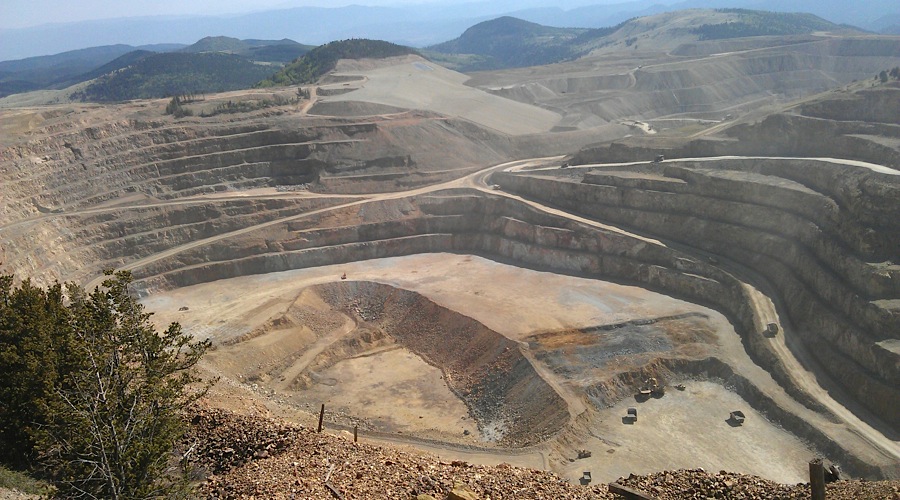
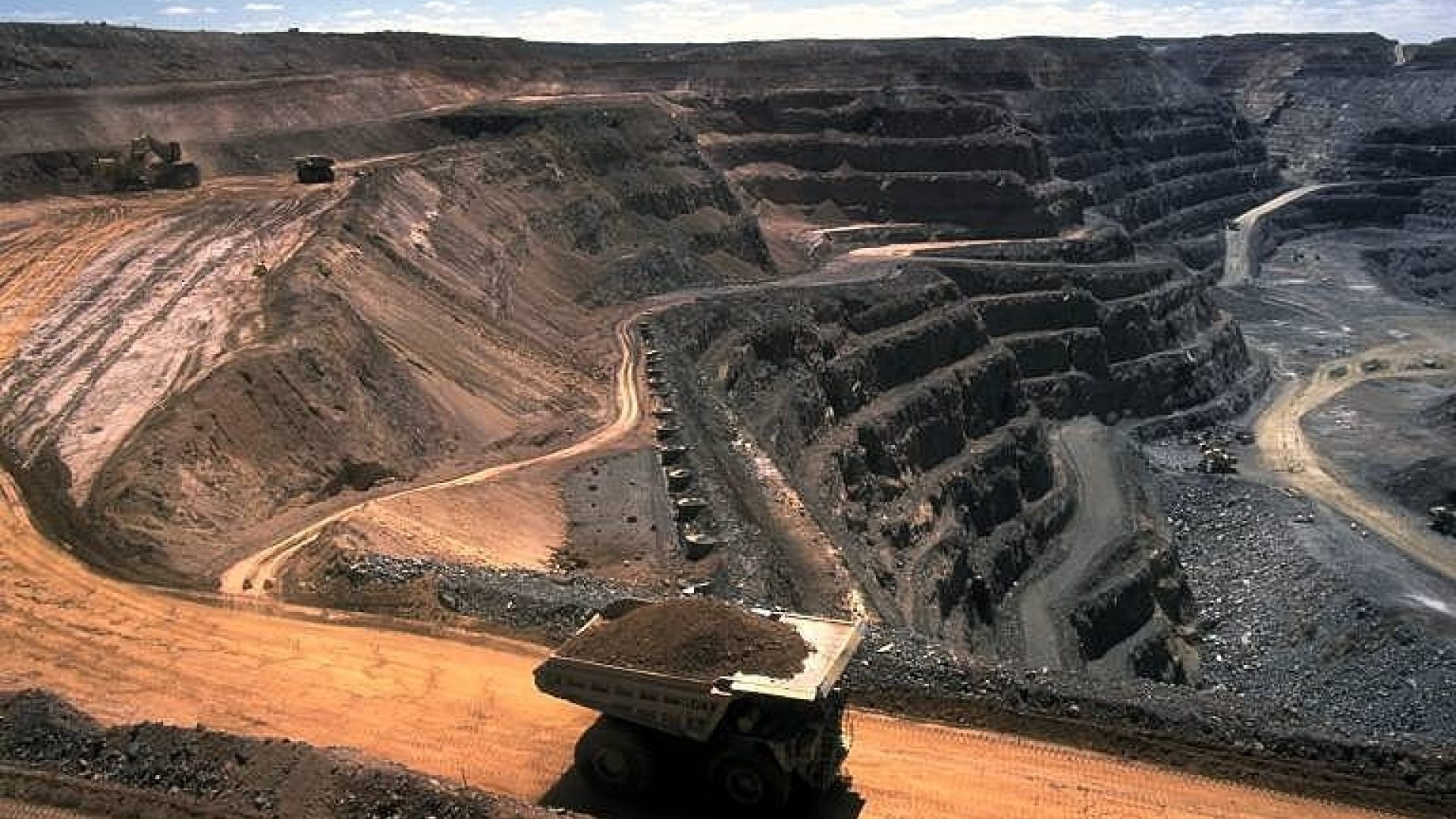
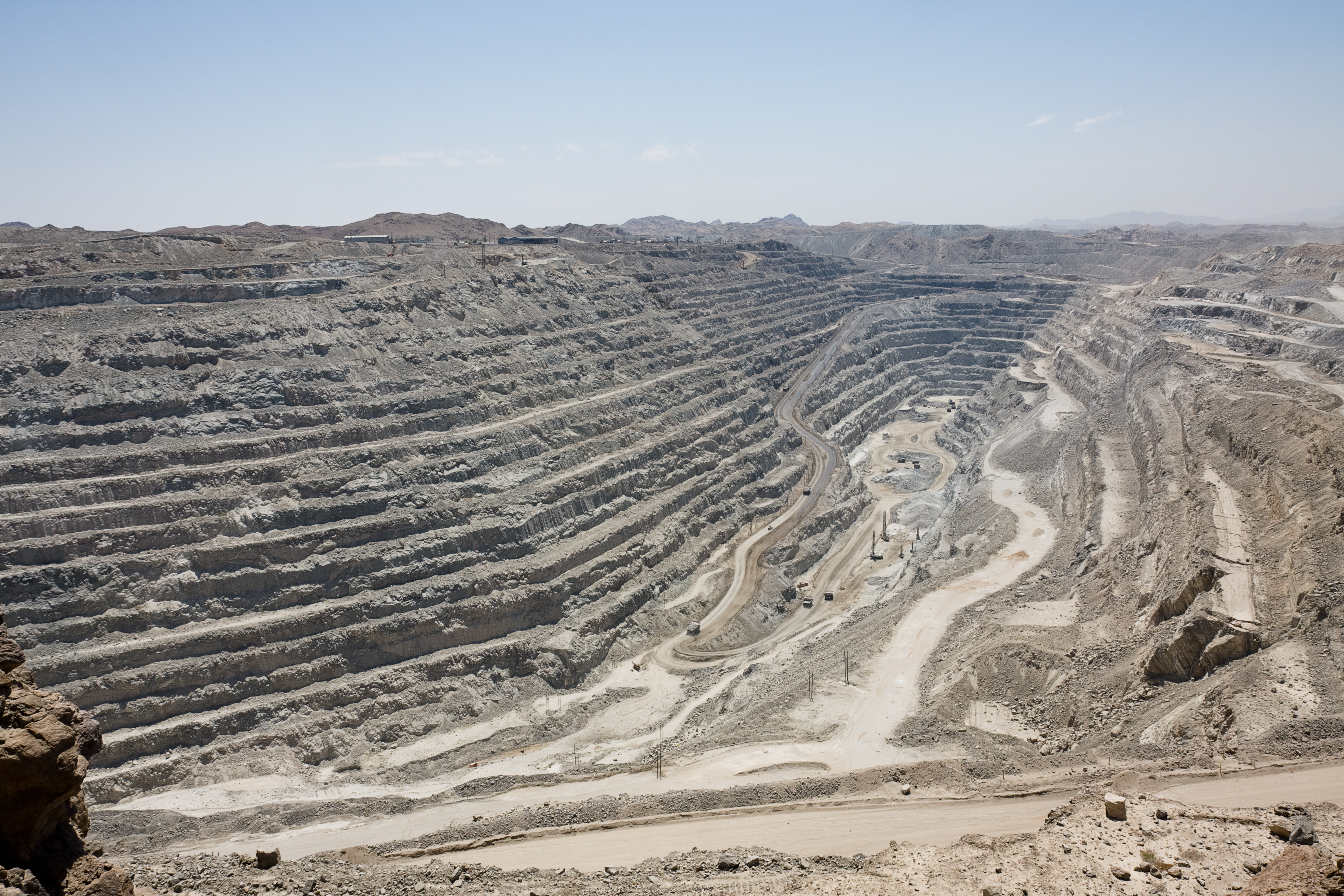
Here's what a silicon mine looks like (used to make solar panels): https://www.mining.com/wp-content/uploads/2016/02/anglogold-...
Here's a lithium mine (used to make batteries): https://assets.telecomtv.com/assets/telecomtv/open-cast-mine...
Here's a uranium mine (used for nuclear energy): https://energyeducation.ca/wiki/images/8/82/Openpit.jpg
Compared to these, the habitat displacement from hydro seems very mild. There simply is no energy source that is harmless.
I am curious to understand the different technologies. I am also asking because in the end every kind of power generation will have some effect on the ecosystems. It's always a question of trade-offs.
Hydroelectric dams destroy these ecosystems completely. Yes, you can build bypass channels for fish, but that's just a part of the system and the channels don't work properly in many cases.
I find this extra surprising because we also desperately need better fresh water management for other reasons, not least of which being our country's tendency to alternate between drought and flood.
There must be some reason we're not doing it, but I can't for the life of me figure it out. It seems to tick a lot of boxes:
- Powered by intermittent renewables, and can even be collocated
- Helps with fresh water management
- Easily to parallelize construction
- Can be operated in a federated way and replaced/upgraded/maintained piecemeal
- Requires only technology that is already extremely well-understood
- Relatively cheap
- Relatively clean
- Quick and easy to turn on/off
Storage will be built out later.
It is not yet clear which kinds of storage are cheapest, because the costs of many are still falling fast. By the time we have a use for storage, it will be cheaper and we will know which to build.
Nuclear is unfashionable, because there's huge growth potential among wealthy industrial countries, but because it's not "liked" there's very little actual growth.
Maybe if the author did even the slightest bit of due diligence he would've found out most potential hydro sites in the West already have a dam on them. Without significant technological improvement hydro is effectively tapped-out already. IEEE is starting to match Medium for "I started and finished writing this article during the same session on the toilet" submissions.
a) there aren't that many places left to build conventional hydro.
b) of the places that are left, there's been a lot of (IMO justified) opposition on the basis that flooding wilderness and disrupting river ecosystems is bad (also, flooding rainforest tends to result in a shedload of CO2 and methane, so the climate effects of conventional hydro are nontrivial).
c) Because of and b, new hydro is pretty much dead in developed countries and difficult to get funding for in the developing world.
d) until very recently, there's been little need for more pumped hydro because it's cheaper to build peaking gas plants, and a wash for the environment because the energy has (mostly) been coming from coal or gas anyway.
e) with the introduction of more and more wind and solar into the grid, the need for energy storage to match supply and demand has become much greater.
f) Hence, there's increasing interest in new pumped storage projects around the world, or other changes to hydro to better match the peakiness of energy prices. These can be either completely new systems, or modifications to existing ones. For instance, rather than running a 100MW generator 24 hours a day, you might put an extra 300MW of capacity but only run it at peak times.
g) Pumped hydro isn't the only game in town for energy storage. Aside from lithium-ion batteries (which is more economically competitive as a storage technology than some seem to think), there's things like iron flow batteries, thermal storage, and, yes, hydrogen.
Villages and cultural patrimony that sometimes must go underwater.
Droughts and only small part of the Earth has rivers with enough water to make a dam that can generate power regularly.
Moreover, that dam has been a major contributor to the great reduction in the number of sturgeons in the Black Sea.
Do you want your bread toasted or light your room with candles?
* Most of the best sites for hydro (and geothermal) in western countries already have damns.
* Between climate change and growing population, fresh water is becoming more and more scarce, making hydro a less dependable source of energy.
* These projects take a long time to plan and build.
Between these there is little opportunity for hydro to play a significant role in our short-term decarbonization plans, even ignoring ecological and safety concerns.
China and Vietnam have dammed up nearly all of the large rivers in those three countries, for hydro. There are countless projects constantly being built as well. The scale is pretty epic really. Vietnam has some of the largest number of hydro dams in the world.
Downstream, there are huge swaths of empty riverbeds. In the wet season, when the rains overflow the dams, there are major floods and people who have built too close to the river edge, get swept away.
Hydro certainly is green, but the effect it has on everything downstream, isn't. Especially when it is poorly managed by countries that don't really have very much ecosense. They claim they are removing dams. I've seen it, they aren't... if anything they are just building more.
They are blamed for displacing populations, disrupting the flow of sediments and the migration of fish, destroying natural habitat and biodiversity, degrading water quality, and for the decay of submerged vegetation and the consequent release of methane, a greenhouse gas.
I wouldn't be surprised if solar panels had a negative impact on insect species.
Where is the magical green line?
I think most people equate "green" to anything not involving petroleum.
On what planet have wind turbines killed off 10% of the bird population?
With wind turbines it is however manageable. The tech to detect birds and shut down turbines is already there.
https://www.robinradar.com/bird-control-radar-system-wind-fa...
The immediate upstream from a dam, however, is another story entirely.
Unfortunately, that's the scale of our civilization, the status quo is more destruction of ecosystems.
In some cases we need to make sure we take the last bad decisions, otherwise someone else will take worse ones.
There's not going to be a perfect solution. Probably not even a good one. Pumped storage (and hydro power in general) seems a pretty great option, compared to building ridiculously vast banks of batteries that need replacing every decade or two.
Especially given that it's a centuries-old technology, installed upstream of many (perhaps "most"?) things, and yet THE ENTIRE DOWNSTREAM ECOSYSTEM (which, since all streams lead to ABSOLUTE SACRIFICE AND TOTAL DESTRUCTION), is THE ABSOLUTE ANNIHILATION OF EVERY ECOSYSTEM.
Do I need to download a new copy of TehScienceConsensus.pdf again? What page did you get this from?
The true green yet unfashionable energy source is nuclear fission.
This feels more like a hit piece that amounts to "your 'green' energy sources aren't so green, hypocrites". Specifically:
"This ennoblement is strange, given that wind projects require enormous quantities of embodied energy in the form of steel for towers, plastics for blades, and concrete for foundations. The manufacture of solar panels involves the environmental costs from mining, waste disposal, and carbon emissions."
As if the earthworks and concrete of major dams, the steel and plastic of the generation stations didn't count.
The author also ignores the justification for building megastructures on rivers in the western US (or Africa, or China, or ...): they are in deserts, so the flow (and therefore the power generation) are especially sensitive to the natural drought cycle. Build a small dam on a small river, then deal with the consequences of no power when the river runs dry every fall. Or, dam a big river, which requires a big reservoir, and only deal with drought-driven power outages when you hit the 50 or 100 year drought.
Thats more people dead in one year, that all people ever killed by all alternative fuel sources combined over entirety of human history- hydro, nuclear, geothermal, solar and wind.
If something happena daily, its uninteresting. If one person dies in a freak accident, its all over the news.
on topic onion sketch https://www.youtube.com/watch?v=yjfrJzdx7DA
Or is he 'just asking questions' to continue undermining solar PV and wind.
Yes, yes he is.
Included among Smil's admirers is Microsoft co-founder Bill Gates, who has read all of Smil's 36 books. "I wait for new Smil books the way some people wait for the next Star Wars movie," Gates wrote in 2017.
Constantly talking about how renewables aren't enough and that we need to invent new tech to save us, rather than just roll out the amazing tech we already have as fast as possible.
https://www.theregister.com/AMP/2022/10/26/gates_green_inves...
Smil was also an EV skeptic.
The displacement of communities, loss of traditional lands, erosion of shorelines, and leached mercury into the water supply has been borne disproportionately by First Nations (indigenous) communities (1,2). This and ignorance of it is from a legacy of racist policy (at best apathy) and poor treatment of these communities. Take somewhere like Easterville that was relocated to the cheapest, least economically useful parcel of land with almost no local industry and wonder why there is poverty (3). Obviously it's not the only factor but I go up to some of these places for health care and really enjoy the work/meeting people, but it's sobering. I can't imagine it's any better in China with their massive projects but don't have any citations or experience there.
1 https://www.cbc.ca/news/canada/manitoba/manitoba-hydro-clean...
2 https://cen.acs.org/articles/94/web/2016/11/Dams-increase-me...
3 https://en.wikipedia.org/wiki/Easterville,_Manitoba , can get free press article via google cache if you want
Instead, many systems with two reservoirs are now being equipped with pumps, again this is ok for short-term storage from hours to days, but no solution to store the Northern sun for the winter. Better produce hydrogen with cheap solar in the sun belt and ship it elsewhere, or move heavy industry to places where green energy is abundant (Iceland, Qatar, …?).
Edit: I was wrong, see https://web.archive.org/web/20170329132409/http://www.iea.or...
This report puts current usage to 20%:
https://web.archive.org/web/20170329132409/http://www.iea.or...
Dams are blamed for displacing populations, disrupting the flow of sediments and the migration of fish, destroying natural habitat and biodiversity, degrading water quality, and for the decay of submerged vegetation and the consequent release of methane, a greenhouse gas because that is exactly what they do.
>Instead, that pure status is now reserved above all for wind and solar. This ennoblement is strange, given that wind projects require enormous quantities of embodied energy in the form of steel for towers, plastics for blades, and concrete for foundations.
What does he think they build dams out of?
Sure some are luckiest like Norway or Swiss, but others are not, at least not for vast part of the country. That's the real "unfashionable" part. The rest is just a matter of expectation: PRs have sold to many the idea we can bring with us energy in significant quantity, p.v. actually offer that in a vast area of the world, of course only when the Sun shine, while you can't hardly have mountain hydro at home except veeeeeeeery few homes. Some also might fear dam incidents, oppose against not-so-small projects etc. That's is.
The day you come up with infinite and free aboundant energy will be the day you put to bankruptcy both the US, the Middle East and Russia, and they don't want that
But it's in the plan anyways, we are getting the taste of it right now, globally
Bonus:
Saddam Hussein got the fate he got because he wanted to use Euro instead to trade their energy
https://www.theguardian.com/business/2003/feb/16/iraq.theeur....
The moment people can be self sufficient in everything will be the moment the US collapses
By collapse i mean their position of global hegemony, they'll end up becoming a normal country
Same for Ghadaffi, he wanted a unique currency for Africa
Initial cost estimate was $AU 3 Bn, it's now headed toward $AU 6 Bn plus a connector that could also cost billions.
https://reneweconomy.com.au/snowy-2-0-hit-by-another-blow-ou...
I'm more familiar with the southeast, so I can't speak for Queensland, but areas that have both good rainfall and high topological relief, already have a lot of damn construction (and associated destruction of wilderness).
There's the Snowy Mountains scheme of course (which has drained dry the Snowy River of Banjo Patterson's day) and also the lesser known Shoalhaven Scheme, and in Tasmania practically every river except the Franklin is dammed.
Tasmania has had significant hydro since 1895, is currently 80% hydro powered and is 100% renewable (and aiming for 200%, to increase green supply to the mainland).
AFAIK salton sea is pretty much at sea level?
For me, that sounds like quite good, given the capacity possibilities. We can always build tiered storage, with smaller, but more efficient tiers (e.g. batteries) used first and PSH when that's filled up or exhausted.
Because energy storage is currently not a problem, and consequently not profitable.
Unless you have some very bold organization to invest on things that today make negative marginal profit on any scale, or a government rushing into the solution of tomorrow's problem with today's money, you won't see any action.
It will certainly turn into a problem at some point (I expect it on this decade already). But even when it happens, it's not clear what kind of storage will be successful; and pumped hydro has a bunch of competitive issues due to its geographic limitations.
Yes it is. It's one part of the solution to fluctuations in electricity production (renewables: wind, solar) and consumption (day / night, warm / cold).
In a grid, at all time, the production has to match the consumption perfectly. You can make the frequency vary a bit to make up for fluctuations, but only so much before damaging things. Storage helps with a production higher than consumption and then with a higher consumption later.
Good storage makes grids more flexible and ideally lower the need for electricity production, and costs.
I agree with the rest of your comment though.
All the big pumped storage in the UK is owned by for-profit companies.
Are they making the big money from running school tours? Maybe the gift shop? I don't think so.
In the UK they can buy 1.5GWh of electricity for say £75000 on a windy Sunday night and then sell say 1.2GWh (pumped storage is maybe 80% efficient) for £200000 on Monday afternoon. That's a £125 000 profit in under a day. And this wouldn't be their best case it's just a pretty good day although there are always worse days because doing this well involves predicting weather and other factors so as to judge when to buy and sell.
They're not going to become the next Apple doing this, but it's a healthy business.
Its unfashionable for new capacity because much of the low-hanging fruit opportunities are plucked, and it has high upfront costs, and, while good from a climate and air pollution standpoint, it is still one of the most enviromentally destructive energy sources.
Also, while it doesn’t induce climate change, it can be vulnerable to climate change.
You could make climate change worse through bad natural water management. E.g. you could create a desert, or something in between.
When I think about the giant five valley hydroplant in China, the giant Euphrat hydroplant or the giant Nile hydroplant of Aegypt, I think its more the abscence of political force which could move ten thousands of people out of the way.
But the big ones built in the last 100 years are going to stick around for awhile.
"In the late 1970s and 1980s, a public campaign to prevent the construction of the Franklin Dam in Tasmania saw environmentalist and activist Norm Sanders elected to the Tasmanian House of Assembly as an Australian Democrat. Brown, then director of the Wilderness Society, contested the election as an independent, but failed to win a seat.[3]"
From
https://en.wikipedia.org/wiki/History_of_the_Australian_Gree...
The founder of the Green, Bob Brown, now opposes wind farms in Tasmania.
https://en.wikipedia.org/wiki/Bob_Brown#Opposition_to_a_Tasm...
Oh, sure, IF you have a vast set of mountains and much water, let's say Norway, developing hydro is obvious. Just a bit more populated countries, let's say Swiss do want both simply because one offer good power for most of the year but not enough safety to relay on and so having two systems is better than one. If you have no suitable areas, let's say Mongolia, and you do not have the tech for nuclear... Than they are both unfashionable.
That's the practical "fashionable" or "unfashionable" part. Anything you can have, is fashionable if gives you something useful, anything who can gives you something useful but you can't have........
First this wont work during the cold season and how incredible inneficient is this going to be?
I think we must stop to outsource providing cheap energy to poor countries and tap on our.shoulders how green we are. Lithium batteries? Fine, but no lithium mine round my corner!
Depending on the type of mine, getting a new one up and running can take 7-17 years, counting planning, permitting and the inevitable lawsuits.
Copper and nickel mine runoff can be extremely toxic, especially to aquatic wildlife and wetlands. Remediation isn't really feasible once the damage is done, so plenty of groups would rather outright ban certain rich deposits from being mined at all than take the risk.
How sensitive environments elsewhere in the world fare under mines that aren't subject to safety precautions in the US is apparently an "other people" problem.
Hydro requires the most common mayerials like steel or concrete.
But there are numerous other storage alternatives that also do not need any special materials. We don't know yet which ones will be cheapest.
Having gotten that out of the way, my post was more intended to be along the lines of a curmudgeonly cynical sideswipe at political processes. Getting hydro schemes approved seems a lot like getting bypass routes approved. There's always going to be otters, pandas, or whatever going to be on the short end of the stick. In one interview of a route's detractors, I saw a Downs Syndrome girl shown on the telly. The route would go near the home where she was housed, and would consequently "get confused". I was sitting there, thinking to myself, "holy shit, talk about cynical manipulation. She doesn't even know she's on here."
So my post was more of a criticism against the detractors of such schemes, who I think favour emotional over a more sober analysis. It's too easy to sloganeer about "Won't someone pleeease think of the children".
In the end, there's no definitively right or wrong answer, of course. It's up to society to weight the benefits and costs. There's always trade-offs. Sometimes the trade-offs can be black-and-white, sometimes they are shades of grey.
> We just don't have reasonable places to keep daming
Isn't super true from an energy perspective.
It both is and isn't a problem, depending on your time scale, and opinions about how we should bridge the variations in supply and demand.
Today, on the short timescale (subsecond) this need is called frequency regulation, and we mostly do that with so-called "peaker plants", essentially natural gas turbines that run constantly and feed power onto the grid at subsecond notice.
This is a very expensive source of supply (easily 5x the median wholesale rates) because the natural gas is mostly wasted (not to mention the very high CO2 emissions: ~600g/kWh produced [1]).
Therefore, there are a lot of companies working toward solutions to this, that don't involve burning fuel, either by building stationary storage, or by aggregating negative demand, thereby participating in a very expensive electricity market with a low-marginal cost solution. In short, this is where the money is today.
The next level for storage is not yet a problem, but will be: storing excess renewable energy supply between different parts of the day or week. The value of this service to the climate is massive, but the economic value of this is not enough to justify the cost of Lithium batteries. To support this use case, we need batteries or other storage media that are 10-100x less expensive than Lithium batteries.
There are many candidate storage technologies for this use case, from pumped hydro to metal-air batteries, to compressed air energy storage, but no clear winners yet.
1. Estimated based on a rough average of .65tons/MWh for CA peaker plants from: https://www.psehealthyenergy.org/wp-content/uploads/2020/05/...
Maybe recent energy price increases has changed future reckoning though
Even places without hills often have deep underground cavities, which also serve.
That's why they are a big business for very few developed countries supply chain. Do NEVER forget that anything at a certain scale is a matter of know how, supply chain and raw materials. Formally knowledge is "open in science" but that's just PR, in the modern world almost without public research and public universities knowledge is power and is in private hands to a point of being a danger for the society at a whole.
A Pelton wheel is fundamentally different in every detail from a steam turbine. Useful Pelton wheels have been made in village smitheries. They are readily mass-produced, and last many decades without need for service.
https://www.euronews.com/green/2022/10/24/frances-massive-ne...
So you can typically pump the lower water back up, using wind or solar power.
Ironically Colorado is a very hard partner to trade with. The major consumer (Denver) is in the center of the state. The entire eastern half is an empty plain and the western half of Kansas is a slightly less empty plain. From population center Kansas City to Denver is about 600miles, make energy trade a little impractical. They make a ton of their own wind energy on their open plain, and they were late adopters; they learned a lot from Kansas's expensive mistakes on wind power.
If land is not overly expensive, then vertical bifacial solar can be quite viable. With snow or a light non-vegetated surface you should expect around 15% capacity factor in the worst month at 40 degrees and it will be skewed heavily towards morning/evening and slightly toward cloudy days compared to monofacial.
Doesn't get rid of the fossil fuels on its own, but should be cheap enough to displace most coal that remains after wind at a significant profit.
[1] https://conbio.onlinelibrary.wiley.com/doi/full/10.1111/conl....
Macroeconomics has unfortunately fallen out of fashion on todays curricula at schools/universities.
Nukes get less competitive every day. Lately, already paid-for nukes are about on par with fresh-built solar or wind,big you neglect the disaster liability subsidy. But wind and solar costs are still falling.
I don't know where Chinese rivers with untapped potential are located, but I'd guess they are in Tibet.
https://www.youtube.com/watch?v=j_B5bZvCdJY
Just make it go to almost the same depth and you dont even loose water..
Grand Coulee Dam should be demolished, but won't be.
A project I had a colleague working on where the batteries are critical to preventing blackouts since they will result in mothballing of other infrastructure indicated the utility was budgeting for a 5 year lifespan on the batteries.
But if you want more detailed breakout, there's this[2] report that you can dig through which states:
> A range of cycle estimates was provided throughout the literature for lithium-ion of up to nearly 6,000 cycles with lower DOD (DiOrio et al., 2015; Greenspon, 2017). The analysis conducted here estimates that lithium-ion LFP can typically provide 2,000 cycles at 80% DOD, while NMC systems provide 1,200 cycles for the same DOD, due to positive electrode dissolution and associated increased capacity loss at the negative electrode. In the next phase, more detailed cycle life data for LFP and NMC chemistries will be obtained. For example, based on 70% capacity at end of life, lithium-ion batteries have demonstrated a cycle life of approximately 8,000 cycles at 80% DOD (R. B. Wright & Motloch, 2001). The calendar life of lithium-ion batteries ranges with some stating > 5 years or as high as 20 years (R. B. Wright & Motloch, 2001) and others in the range of 5-15 years (Dubarry, Qin, & Brooker, 2018). This report estimates a 10-year calendar life at 80% DOD, also assuming 5% of that time will also be allocated to downtime. A cycle life of 2,000 cycles for LFP and 1,200 for NMC is assumed with a 5% increase in total cycles each by 2030.
So with the right chemistry, assuming one cycle a day, assuming 70% depth of discharge is acceptable, 8000 cycles is 21.9 years.
[1] https://www.tesla.com/megapack
[2] https://www.pnnl.gov/sites/default/files/media/file/Final%20...
If it could be made a permanent bay of the ocean, that might make the area less of a disaster. But it seems real hard...
Pumped storage round-trip efficiency is not, in fact, 25%, but routinely above 70%.
Nobody pumps water up just 10 meters. It is, instead, pumped (say) a thousand meters up to a reservoir commonly 10 meters deep. A 10m-deep reservoir needs only a cheap earthen dike. A dike is hardly a "megaproject", even if km long. Dikes are low tech.
The energy is extracted at the bottom end of a penstock. Each ton of water in a reservoir 1000m up stores 10MJ. One just 100x100x10 meters thus holds 100,000 tons, 1000 GJ, >270 MWh, 6 hours at ~40 MW.
Nobody needs 30 days' storage. If your hydro storage runs low, and local fuel tankage looks like it might, too, you order out for LNG or, soon, NH3 or LH2 from solar farms in the tropics.
Few would need or want a 1km x 1km reservoir. Smaller ones distributed where the power is needed are more useful.
An underground cavity, where it exists, can be used instead of a hilltop reservoir, or with one.
Burning NG once in a while is no big deal, but NH3 will be cheaper in the near future.
But you also concede that you can use LNG from time to time. Which we can later switch to H2 or NH3.
Right now, all the natural gas power plants in the US produce about 12% of the total (gross) emissions. If we use these plants only when there's not enough electricity from solar, wind, hydro and nuclear, we'll reduce their emissions by a factor of 10.
What is the point in building thousands of reservoirs then? To reduce that 1% to 0%. Which we'd reduce anyway once H2 or NH3 become cheap and abundant enough?
By the way, the EIA made a handy comparison table for various power plants [1].
A "combustion turbine - industrial frame" is by far the plant with the cheapest capital cost, only $785/kW. Conventional hydro is listed at $3083/kw, with a fine print footnote that this cost is the least expensive plant that could be built in the Northeast (where the geography permits).
So, the cheapest possible conventional hydro is 4 times more expensive than an brand new natural gas power plant. My point is, we don't need a brand new one. We can just keep existing ones (and we don't even need to keep them all).
[1] https://www.eia.gov/outlooks/aeo/assumptions/pdf/table_8.2.p...
Concluding that we'd only need 2% of the current emissions from this is a bit misleading. The overwhelming majority of emissions currently don't come from electricity and the only way to replace many of them is via electrifying them.
Some can be turned into opportunistic loads, but there will still be a major need for 4-100 hour storage in addition to the seasonal storage (which will be largely achieved via hydrogen or ammonia).
Off river PHES seems to currently be cheaper than other storage, but chemical batteries have a lot of other advantages and may become cheaper.
It also has at least one advantage over conventional hydro in that sites can have a lot more head. This allows the power room to be a lot smaller, and there are many brown field sites where one or both reservoirs are mostly complete (which may make it cheaper in spite of needing two reservoirs).
It's hardly 'the only game in town' though, and it's unclear whether the gap between 'batteries have much lower cost per watt' and 'ammonia has much lower cost per joule in storage' is big eough that 'a hole has zero long run cost' the marginal efficiency gain over electrolysis is worth it.
For tertiary, occasional use, efficiency doesn't matter much, and other considerations dominate. Gas and steam turbines need expensive periodic maintenance after operating for some period, so you avoid running them too much. Fuel costs money, too. (Unless you synthesized it yourself; but what you burn you cannot sell.) But storing liquid fuel is cheap. Shipping it, too.
Transmission lines complicate choices, in large part because they go both ways, and because must be scheduled long in advance to maximize usage because they cost a lot to build. The power they carry might be free at the source.
You do need a hill to build one, though. But you don't need Putin.
With batteries you can design the site, get consents and order battery units off the peg in under a year.
The US has plenty of land that it could use for pumped storage if it didn’t care about the environment. (See, Hetch Hetchy in CA). AIUI it’s (justified) concern about environmental impact that holds this technology back.
Some recent advancements:
https://www.energymonitor.ai/tech/hydrogen/toshiba-claims-hy...
https://newatlas.com/energy/hysata-efficient-hydrogen-electr...
https://energynews.biz/idaho-national-lab-and-bloom-energy-p...
There are obviously off the shelf components for dealing with hydrogen. This is not some hand wringing unsolved problem.
A reservoir can increase scarce habitat for migratory birds, which is commonly much more valuable than your typical bald hilltop.
I think Chernobyl has a much bigger influence on nuclear policy than Bangqiao on hydro despite the latter causing two orders of magnitude more deaths.
https://toronto.citynews.ca/2018/06/07/kathleen-wynne-ran-en...
They were in power for ~11 years, but thanks to their "green energy" programs they not only lost the election, they lost political party status and have yet to regain it.
Renewables are not cheaper.
"The FAO estimates that the renewable generation subsidy program will cost the Province a net $2.8 billion over the first three years of the program, from 2020-21 to 2022-23. The FAO's three-year cost estimate is significantly higher than the Province's cost estimate of $1.3 billion reported in the 2020 Ontario Budget."
These long-term "green energy" programs were expensive, and the government knowingly lied about how much it would cost.
Thanks for blackouts when it's cloudy and not windy.
France is still the model country when it comes to nuclear power. Even in 2035, nuclear will be less than 10% of its energy mix.
IMO thats entirely rational. Dying is not what I'm scared of when it comes to a Chernobyl-like accident. Dying slowly and painfully of radiation poisoning is. It's hard to imagine a worse fate. Drowning in a huge flood, while unfortunate, is something I'd be much more willing to risk. It'd at least likely be quick.
The good news is that really didn't happen. About 40 or 50 people died of acute radiation poisoning (that's a bad way to go). Many were displaced. The most common form of cancer that occurred as a result of Chernobyl was thyroid cancer which is 'almost 100%' [2] curable generally speaking. You take the thyroid out, and folks are put on thyroxine. Broadly preventable with iodine pills and also principally attributable to acute exposure immediately following.
Worth skimming the summary of the UNSCEAR report. [1]
> Apart from this increase [6000 cases of thyroid cancer], there is no evidence of a major public health impact attributable to radiation exposure two decades after the accident. There is no scientific evidence of increases in overall cancer incidence or mortality rates or in rates of non-malignant disorders that could be related to radiation exposure. The incidence of leukaemia in the general population, one of the main concerns owing to the shorter time expected between exposure and its occurrence compared with solid cancers, does not appear to be elevated. [1]
1 person died in Fukushima, 0 in Three Mile Island, the next two worst incidents of all time.
On the other hand, 200,000+ people died and a village was wiped off the face of the earth in Bangqiao.
[1] https://www.unscear.org/unscear/en/areas-of-work/chernobyl.h...
[2] https://www.cancer.org/cancer/thyroid-cancer/detection-diagn...
Of which nuclear ones are an obvious alternative?
The the size and rainfall season matters for how long they can run. Cape Town has a winter-rain season that runs from roughly May to September.
https://en.m.wikipedia.org/wiki/Steenbras_Power_Station
The capacity of the smaller of the two dams is 3,560 megalitres. I think a 1km X 350m X 10m deep is this capacity. So "small" is fairly subjective term, but you are right that it is not gargantuan. It is still not going to be easy to place such a setup just anywhere, but I'm willing to admit my statements may have been a little too much.
I would be interested in how much it cost to build and run to obtain the 180mwh capacity. A similarly size gridscale battery would cost in the vicinity of 40-60 million USD (using the $140 per kWh cost, numbers are is hard to find for the supporting equipment and installation costs).
There is probably an inflection point where pumped storage becomes more economical than batteries. With land and labour costs so different from lace to place what makes sense in certain areas, is probably not economical in others.
https://www.morningbrew.com/series/battery-tech-for-evs-and-...
It does not, in fact, need "very favourable natural geography". It needs an elevation difference, something found almost everywhere, Holland and Kansas excepted. Kansas has deep underground cavities, which also suffice.
Building dikes is cheap and low tech. Dikes predate written language.
Perhaps your and my definitions of favourable geography are different. You need a water source, due to evaporation, you need a big resovoir at elevation, and another lower. If you don't want to build it all yourself you need valleys that you can close off at one end. You need ground that is not permeable, so the water you have stays where you want it.
Perhaps I am misreading you, but you seem a bit agitated with your in fact writing style. We're all friends here. I am not anti pumped storage. Far from it. If you can make it work economically, it's a great solution. It will definitely be part of the mix. But there's reasons it's not being rolled out everywhere, and a lot of this is due to cost and unfavorable geography.
The main reason it is not being rolled out much is that it is not time yet to roll it out. You need enough spare renewable generating capacity to charge it from, first, which we are very far from, most places. In the meantime the right place to spend is on generating capacity. Later, we will know better which storage methods are best.
Hydro relies on a pressure difference. This means you want the turbine located at the lower reservoir, which is going to be tricky with an oil well. Oil fields are not a hole filled with oil but instead are just porous rock, which greatly limits the flow rate you can achieve from a single well. Oil fields are already pressurized, so you'd actually need to put in energy to get water in there.
And of course you'd be contaminating the water with oil and gas, which makes the upper reservoir a bit of an issue.
Solar - sure we will protest that:
https://barrie.ctvnews.ca/solar-project-demonstration-in-tay...
Wind - yep... people will protest that:
https://toronto.ctvnews.ca/ontario-wind-power-opponents-prot...
Nuclear? Of course:
https://globalnews.ca/news/4298298/protesters-rally-pickerin...
So.. when those people go home, what do they think powers the lights?
Solar farms do best in deserts, which tend to be habitats for species that like extreme conditions. Several of them have been blocked in recent years. There was a recent huge solar project that was planned to cover most of the land area that an endangered desert tortoise inhabits.
https://www.reuters.com/article/us-solar/exclusive-sierra-cl...
https://news.bloomberglaw.com/environment-and-energy/massive...
Aside from the large swathes of forest that have to be cut down for wind farms, birds of prey tend to fly into the blades of wind turbines. These are also often endangered species. The fish and wildlife survey estimates 140,000-500,000 bird deaths at wind farms per year, with most of these being birds of prey which have low birth rates and high conservation value (many endangered species). In contrast, cats kill billions of birds per year, but they are common small birds, not endangered predator species.
In addition, something like 800,000 bats are killed by wind turbines.
https://wildlife.onlinelibrary.wiley.com/doi/abs/10.1002/wsb...
The solution, for solar, is obviously installations on top of human structures, like roofs and roads (but not on the road surface, which is silly). For wind, there isn't a good solution that doesn't hurt predator bird populations.
You link to an article from 2010, I don't exactly know which plant you refer to but I did find that a solar plant (Ivanpah) was built around that time and this was done by taking into account the tortoise territory. They decided not to build where the tortoise territory was. There is also recent work being done by environmentalists to help guide solar panel placement in the Mojave desert. https://medium.com/wild-without-end/the-tortoise-and-the-sol...
> These are also often endangered species. The fish and wildlife survey estimates 140,000-500,000 bird deaths at wind farms per year, with most of these being birds of prey which have low birth rates and high conservation value (many endangered species).
The article you linked mentions 573k birds and 80k being birds of prey, that's 14% and not "most". It also mentions there is a need for better measuring methods, it's a bit old now so they likely have gotten better at it too. This is an area of active research so efforts to reduce birds collisions are being worked on.
>CATL is already claiming $40-$50/kwh for sodium ion batteries that begin production next year.
Tried to look this up, but didn't find anything. Where's that?
Water in this system is part of the capital cost (charging it up when you start), then a minor maintenance cost (replacing evaporation). Otherwise, unlike primary hydro, there is no large constant flow out of the system, and no need to be on a river.
The water lost to evaporation is at least an order of magnitude less than water evaporated from a nuclear plant of the same levelized power.
Is there any source saying dams create healthy natural ecosystems? A necessary evil I can kind of see, but a net positive for ecosystems? That seems doubtful.
Certainly an ecosystem will grow up around nearly any situation.
Just think of this way, dams have a life span and for the most part, most of them in US have hit the end of their life spans and should be removed. They serve no purpose to anyone.
It all depends on the natural hydraulic dynamics of the dam - some are better placed than others.
Dams very commonly destroy fisheries worth far more than any value the dam can deliver.
One cubic km is one billion tons. Each ton is ~10kJ per meter lifted, and let's assume you can separate your reservoirs by 100m vertically.
That would give a total system capacity of 1e9 tons x 1e5 J/(ton x meter) x 1e3 meters, or 1e17 Joules.
A kilowatt hour is 3.6e6 Joules, so this gives us ~3e10 KWh. If we're imperfect in reclaiming that energy, we'll actually end up with 1-2e10 KWh.
US annual electricity consumption was ~4e12 KWh/year in 2018 (or ~1e10 KWh/day), so a 1km^3 * 100m installation is probably larger than required to provide a backup for replacing our entire electrical generation infrastructure with intermittent sources 99.9% of the time. Not by a huge amount though! Less than an order of magnitude, IMO.
> A reservoir can increase scarce habitat for migratory birds, which is commonly much more valuable than your typical bald hilltop.
How much is the level going to fluctuate on a daily basis, though? Does it really form useful habitat?
Efficiency of pumped hydro is always better than 70%, round-trip, and commonly better than 85%.
There is no reason to put all your storage in one place, and great reasons not to. A site moving 0.0001 km³ is useful for utility-scale storage. Of course, pumped hydro will be only one storage method among many.
Birds mostly use the top of the water. Probably, the lower pond is easiest to tailor for multiple use, but "floatovoltaics" are probably better in the upper one.
If a coal tailings pond unloaded into the Thames you'd have a bad time. If a dam unloaded on Quebec City you'd have a bad time. If the strategic petroleum reserve exploded you'd have a bad time. You'd have unlivable areas, you'd have cancers, the whole deal. That's not a reason not to do something that science tells us we've made safer than - and lower carbon than - any other form of power.
[edit] I could just as easily say: "well what if a plane falls out of the sky for no reason over the parliament buildings" and that would be bad, but I have no idea why it would - similarly I have no idea why the spicy rocks going to town on each other in the reaction chamber of a nuclear reactor would get out. But in both cases empirical evidence, testing and refinement have led us to eliminate the reasons that's ever happened before from operating designs and to add a ton of safety mechanisms to mitigate the risk of unforeseen consequences.
Hydroelectric, compressed air and batteries have round trip efficiency of ~80%.
https://www.sciencedirect.com/topics/engineering/compressed-...
The facility you linked produces and stores chemical fuel, and can't even convert it back into electricity. It is really easy to store insane quantity of fuel, just like we can store loads of oil.
The kicker is that production of Hydrogen and other e-fuelds is less than 50% efficient, and converting them back to electricity is another 50% loss. Compression for storage and transportation mean further losses. So the overall round-trip efficiency is expected to be about 25% or lower.
It is probably possible to build an economy based on e-fuels, and that's what many oil companies are pushing for. They are probably the only viable way to achieve seasonal storage. It's a different set of tradeoffs.
The project includes using Mitsubishi M501JAC combined-cycle gas turbines to turn the hydrogen back into electricity:
https://www.powermag.com/aces-deltas-giant-utah-salt-cavern-...
https://power.mhi.com/products/gasturbines/lineup/m501j
This turbine has a rated combined-cycle efficiency of 64%.
Production of hydrogen is more than 70% efficient in the best current commercial electrolyzers:
https://www.nrel.gov/docs/fy04osti/36705.pdf
Round-trip efficiency is much lower than 80%, but not as low as you have written here.
1: https://www.sciencedirect.com/science/article/pii/S019689041...
Siemens currently has turbines that can burn up to 75% hydrogen and is targeting 100% hydrogen by 2030:
https://www.siemens-energy.com/global/en/priorities/future-t...
General Electric has a variety of gas turbines, accepting 50% to 100% hydrogen in the fuel blend:
https://www.ge.com/gas-power/future-of-energy/hydrogen-fuele...
Mitsubishi claims to offer turbine operation on up to 100% hydrogen:
Eg. the Hybrit project produces iron sponge with electrolyzed hydrogen. So the process becomes
> (electricity + H2O) + Fe3O4 [iron ore] => Fe + H2O
instead of the usual
> C [coke] + Fe3O4 => Fe + CO2
What compressed gas storage does is (aside from combustion energy of a fuel gas) to provide not a store of energy, but a store of reduced entropy, enabling otherwise unusable amounts of heat to be converted to work.
https://en.wikipedia.org/wiki/Grand_Coulee_Dam#Irrigation
However it seems that the pumped storage I recall hearing about as a kid has an extremely low storage capacity and is more focused on irrigation.
We definitely do need pumped storage. Although big civil engineering projects tend to be slow and expensive in most developed economies. And how much of the world actually had the right terrain? My guess is that we will see a few massive projects at one end of a HVDC link rather than scaling up.
There is absolutely no shortage of terrain suitable for pumped hydro storage. The smaller the project is, the easier it is to find a good item for it.
> At the close of 2021, there were more than 670 GW of solar plants in the nation’s queues; 285 GW (~42%) of this capacity was proposed as a hybrid, most typically pairing PV with battery storage (PV+storage represented nearly 90% of all hybrid capacity in the queues).
This is the surprising fact for me from that report. Of course, “built with some storage” is not the same as “built with 100% storage” but the report shows the distribution is not terrible, with ranges of 50-100% storage being built. (With %age being something like “daily maximum variance from demand curve” but I don’t understand exactly how this is computed).
A very few places use all of the inflow for irrigation.
Given the evolution in PV cost, maybe it will be cheaper to size PV production to worst-case days rather than size it for an average day+storage? You'd still need sufficient storage for overnight consumption, obviously.
> • Battery:PV capacity ratio always at 100% in HI; lower on the mainland (but increasing over time—see bottom right graph) • Storage duration ranges from 2-8 hours; 50 of the 61 plants have 4-hour duration (other 11 are 5x2 hr, 1x3.7 hr, 4x5 hr, and 1x8 hr)
And there are some detailed case-studies that give other examples too:
The first one (Pine Grove substation) gives a sort of "emergency button" to provide 12 hours of load relief, when they call it in. This seems like it's basically just shaving off extra load that occurs on particularly busy days (~40/year), it's not solving the core demand-curve mismatch. (It looks like the batteries function as essentially very-short-term demand smoothing/arbitrage when they are not being called in).
The second one (Wheatridge) is 4H of 30MW (~10% of the power of the whole facility); I don't have a feel for whether this is closer to the full demand-curve mismatch.
Edit to add: There's actually another case study that might be even better, Slate PV + storage plant in CA, which is ~50% power for 4 hours, which is very substantial.
I think you're right that you can't store much energy overnight -- but that's not really required I believe. My understanding is that if you have a mix of solar and wind in your grid, you tend to be fine overnight since it's always windy somewhere at night. The challenge for solar&wind is supplying the afternoon/early-evening peak.
Previously you'd conceptually have "baseload" which is sized at the daily minimum, and then "peakers" (or these days just rapid-dispatch gas) which are turned on as needed to supply the daily peaks. With solar this isn't an option; the supply curve is fixed. So you either have to massively overbuild to have enough generation to meet the demand peaks, or have some way of shifting the peak solar generation (midday) to the right, to match the peak utilization. So I think your storage ends up needing to look more like "store 25% of the midday generation to be used by 6pm" (numbers made up for the sake of example). Which seems to be the OOM that these projects from the report are achieving.
A surprising amount of demand can be shifted with real time pricing, too.
Right now storage is almost irrelevant since deployed solar/wind capacity rarely reaches 100% of demand.
https://energytransition.org/2017/07/germanys-worse-case-sce...
https://reneweconomy.com.au/a-near-100-per-cent-renewables-g...
Windgas is actually pretty suitable for that last 1%. It may be 50% efficient to produce but it's easy to store large quantities of gas for long periods for those dark/still spells.
Counterintuitively that 1% of electricity generated from windgas will among be the most expensive "green" electricity but it will probably still be cheaper than nuclear power:
https://theecologist.org/2016/feb/17/wind-power-windgas-chea...
I very strongly doubt this, storage is very expensive.
> Data on plants under development from the interconnection queues of all seven ISOs/RTOs plus 35 individual utilities suggest that these hybridization trends are likely to continue. At the close of 2021, there were more than 670 GW of solar plants in the nation’s queues; 285 GW (~42%) of this capacity was proposed as a hybrid,
Perhaps I'm mis-interpreting this (not my field), and it's plausible I suppose that these projects won't get approved uniformly. I'd be happy to get more clarity on this if the report is actually saying something different. (I acknowledge my original phrasing could have been better, the way I wrote it suggests "solar that has just been built" vs. "solar that is currently planned to be built". But I don't think that's the source of your surprise, it's surprising because batteries are supposed to be uneconomical any time soon.)
Anyway, if I'm interpreting this correctly it seems like quite big news; I certainly shared your priors/skepticism on battery storage prior to stumbling across this report.
The cost differentials are basically all down to labor, which is generally locally captured.
The "long supply chain" of batteries isn't true. We don't need cobalt or nickel for grid. Sodium Ion is going into mass production in China, and LFP is topping 200 wh/kg. Hell,you don't need cobalt or nickel for EVs anymore, a 300-400 mile car should be easily doable with the current state of the art LFP, and 200-300 doable with sodium ion.
Hydro storage is very very efficient (thanks to all the engineering that went into hydro dams), I think it's in the 90%+ for efficiency. It definitely should be a major part of our energy plans, but this thread makes it seem like it's the only practical way, and uses pumped hydrogen as a straw man competitor.
We need grid wind, gridsolar, geothermal, keep the nuclear, hydro, home solar, home storage, chemical batteries ... all of it. But the cost profile of wind/solar is already better than natural gas turbine, and I'm hoping wind/solar+batteries will pass everything in 5 years with sodium ion, but I don't have numbers on that.
This two weeks storage is ridiculous. With good home solar buildout, that is not needed.
My understanding is that it only becomes competitive with other options at a very large scale. A 10 m deep football sized reservoir, at an altitude of 1km above the generator would have approx 13Mwh of energy storage at 100% efficiency (if my math is correct). Battery prices are around $140 per kWh, so a 13 Mwh battery installation is going to be in the vicinity of 2 million dollars.
I would love to see some costs involved in building two man made ten meter deep football field size dams, a large 1km length (it will be quite a lot longer due to it running on a slope) with all the required engineering to run it down a steep incline. The add to that the and generating equipment, and pumps.
Once you've done that, we could compare the operating costs of the two options.
As for nukes, stable costs make them proportionally less competitive by the day, in the face of cheapening competition.
Option 1: Build enough solar and wind to replace the electricity generated by the power station; in fact overbuild by let's say 30%. You can afford that because solar and wind are cheap. And then build pumped storage to be able to add an extra 300 MW for a few weeks, when you need that. Decommission the natural gas power station.
Option 2: Don't build the pumped hydro. Build instead twice as much solar and wind as in Option 1 above (for less money than in Option 1, because pumped storage is so expensive compared to solar and wind). When they can't provide 2 GW of electricity, fire up on natural gas power station to make up the deficit. Decommission one natural gas and keep one in partial use. Achieve more emissions reductions for less money.
Which option do you choose?
For storage beyond 4 hours, other considerations become important, particularly cost per MWh stored. You still need to extract plenty of wattage, but charge rate matters less. So, you need big or many turbines, but pumps can be slower. And, of course, retrofitting the many existing reservoirs is cheapest, so you do that before building anew.
Fuel storage similarly takes advantage of existing combined-cycle turbines, which are being adapted to burn a gradually increasing fraction of hydrogen. It remains to be seen whether they can be made to burn ammonia directly, or if the ammonia must first release its hydrogen. Stored fuel has the great advantage that it can be shipped, bought, and sold.
There are really only 3 options - dam up a watershed so you can get a huge volume without much structure, build your resevoir on top of a mountain so you can get much larger pressure head and thus require less volume, or reuse a hole you were digging anyways such as an open pit mine. In all three cases you are heavily constrained by geography.
I think that's what the GP meant by "extremely geographically dependent." Finding a 1,000 ft height difference (using the Gordon Butte Project as an example) between reservoirs will be really challenging in huge swaths of the United States and elsewhere.
[1] https://www.kgou.org/energy/2013-09-03/oklahomas-wind-energy...
The question is, is this something that has been re-evaluated? Are there more site locations available than previously thought? Have the economics changed significantly? Was this a known-wrong assumption 15 years ago? Has the public perception changed re: the environmental costs vs benefits of this land use?
I would much rather we build a bunch of pumped hydro than a bunch of chemical batteries, on the belief that it is a much more sustainable technology. But I have seen a lot of online discussion about pumped hydro that treat siting, operational, economic, and land use concerns as if they don't exist, when often they are the primary reasons these projects don't get built.
Siting, operational, and land use concerns for pumped hydro are, generally, trivial. If one site is bad, another is good. There is absolutely no shortage of sites, so only the best need be even considered.
What adds to the confusion is that Germans - OP used a common typo that hints at his native language - casually use "water power" ("Wasserkraft") both for hydroelectric dams ("Wasserkraftwerk") and pumped storage ("Pumpspeicherkraftwerk"). It's one of these fascinating little insights in how different languages form different train of thoughts.
If it makes more financial sense and uses less resources to overbuild solar 3x and curtail 60% of the energy than paying for fuel, then you have 2 units of energy you have already paid for spread out over 6-8hrs/day.
As long as using your $300/kw electrolyser at reduced duty cycle is cheaper and less resource intensive than mining and shipping gas, you do it.
Electrolysis efficiency and expense are entirely sufficient to requirements for the hydrogen storage projects are, in fact, proceeding.
> simply damming up a mid-sized valley can store such a ginormous amount of water that is it hard to compete.
I would love to see an analysis of whether it is feasible to build enough such large scale reservoirs (and how many we would need) to store an order one fraction of the daily energy needs. (at city/country/world levels)
Looking at https://energetechsolar.com/1mwh-500v-800v-battery-energy-st..., they're around .88 LB / AH, so 880,000 LB/MWh. 399,161 KG / MWh. 11,179,036,800, or 11,179,036 Metric tons of batteries. I don't know what the breakdown is but global lithium production was 100,000 metric tons in 2021, which is off by 2 oom.
My math may be wrong, and you do have losses of water from evaporation, but with pumped you can go up and down. But that's 11 million metric tons of lithium and other metals. Water falls from the sky (in most places still). Lithium has to be refined. You can recharge the battery, you can reload the water or pump it the other way. Tomsauk is mostly concrete and water (by volume). You do need almost a mountain for that head, or a mine. Concrete breaks down over time and can be maintained,. Batteries wear out as well but can be rebuilt. Water seems the easiest of the things to replace currently. The only things I can think of that are easier are provably gasses and maybe salt or rock.
This is all napkin math, and I may have missed a decimal some places. But they seem within the same order of magnitude for efficiency. But is it even possible to build batteries that big?
Of course when they got greedy with Tomsauk they ruind a great natural area. I'd love to be corrected on my math and assumptions.
Niagara Falls sits between Lake Erie into Lake Ontario. Which is the perfect location to use pumped hydro because all you need to build is a pipe between them and put a turbine inside the pipe. If you have excess energy pump water up from Lake Ontario to Lake Erie, and when you need power run that in reverse to generate electricity.
Move enough water and the water level on each lake will change, but 6 inches (15cm) isn’t going to change anything of note and that represents an insane amount of energy. Something like 500 GWh if I remember correctly. Unfortunately that’s literally the best case in the US, nothing else even comes close.
I would think the stronger argument for pumped storage would be in a place where the high level of water did not naturally exist, and so the only way it gets up there is by pumping. But perhaps this still destroys too much of an ecosystem even if it's not a river ecosystem.
That is cheapest, but building a dike for a reservoir works fine too. A conveniently placed box canyon may need a dike only at one end.
Presuming I understood correctly.
Another system used a hydrogen-side electrode made of foamed metal immersed in water, where the surface area presented to the water was therefore very large, and the small pore size limited the hydrogen bubbles' interference with contact between water and electrode surface.
I think those places are really rare though.
Dikes are a technology older than writing.
Yes we know. It is still cheaper on a cost-per-kwh basis than batteries, by a significant margin.
> I would love to see an analysis of whether it is feasible to build enough such large scale reservoirs (and how many we would need) to store an order one fraction of the daily energy needs. (at city/country/world levels)
No it is not, there are not enough suitable sites in most places in the world to make this work for world levels. That said, it is entirely up in the air if there would be enough mineable lithium to make batteries for similar amounts of storage.
Efficient electrical energy storage at scale is currently unsolved.
Unlike "Energy Vault" (NRGV), a purely fraudulent investment scam. Energy technologies seem to be favorites of frauds (fusion especially so). It seems like nothing is so obviously nonsensical as to attract the attention of regulators.
But there are lots of different storage technologies, and costs are falling fast, so pumped hydro may be undercut in places.
Anyway, the amount of water flowing over Niagara Falls is currently regulated hourly by treaty with excess flows above that level used to generate hydroelectricity. 100,000 cubic feet per second (2,800 m3/s) of water flowing over the falls, and during the night and off-tourist season there must be 50,000 cubic feet per second (1,400 m3/s) of water flowing over the falls. That excess is generally 50-70% of the rivers total, making the falls arguably just a really large and extremely expensive water feature used to attract tourism. https://en.wikipedia.org/wiki/List_of_Niagara_Falls_hydroele...
Adding a separate pumped hydro system really can be treated as an independent entity because we don’t just control the falls we can even turn it off when needed. https://www.dailymail.co.uk/news/article-1338793/Niagara-Fal...
I wasn't aware of the treaty, that makes sense.
The link about turning off the American side of the falls doesn't really support the implication that there is enough hydroelectric capacity to use up the entire flow of the river. The simplest explanation is that the flow was diverted over to the Canadian falls.
If you assume they blocked 1/2 the flow (1,400 m3/s) and didn’t use it for anything. That would still take 21 days to raise water level of Lake Erie by 1cm.
"This is nonsense. We have lakes already."