India lifted 415M out of poverty in 15 years, says UN(economictimes.indiatimes.com) |
India lifted 415M out of poverty in 15 years, says UN(economictimes.indiatimes.com) |
It would've been even smaller if it wasn't for the devastating consequences of European imperialism. These countries were left in a piss poor state, lack of education and healthcare etc, resulting in a long period of high birth rates with exponential growth.
Check the graph below [2] you can clearly where most damage happened, during the main occupation period (1850s to 1950s). Britain had falling birth rates (prosperity) but they were constantly high in India (poverty). Birth rates have been on a steep decline only after independence. Yet empire apologists somehow claim that it was a net good for India :)
[1] https://ourworldindata.org/grapher/population-by-country
[2] https://www.gapminder.org/tools/#$model$markers$line$data$fi...
Europeans talking about high population, human rights and global warming is a joke
In 1960s villages didn't have access to medicine or doctors. So people used to produce 5-7 children so atleast 1-2 went into adulthood.
But as medicine became more easily accessible all 5-7 children ended up in adulthood leading to population increase.
Nowadays I see max 2 children in villages.
Because of this: https://en.wikipedia.org/wiki/Indo-Gangetic_Plain
An exaggerated relief map showing its sheer size and flatness: https://i.redd.it/5qv0bvyrd9h01.png
Extremely high fertility rates.
At what costs?
I've heard this narrative before as it has happened in many Western countries and it is continuing to happen in China. I don't have the answer, but I always wonder about the costs of lifting so many people out of poverty, for example, there could be costs related to: environment, quality of life, traditions and values, mental health, etc.
Along with that thought experiment, I wonder how did they get into poverty in the first place. A lot of areas that are now declared as poverty zones today may have been poor in the past, but were self-sufficient and self sustaining.
Also, it’s interestingly a huge black eye to the CCP: news of this Indian accomplishment will be censored in China, because it proves that nations can progress without forced-sterilization/-abortion/-1-child-policy/authoritarianism/ etc.
To neoliberalism, Countries and Companies are like the ghosts. They have a will of their own, they are immaterial and can't be pinned down.
Together with the omnipotent and omnibenevolent Invisible Hand they form the Trinity and Haunt the stock market.
If there is a recession, it is never a structural problem in the market, it is always because the consumers have sinned.
What good is lifting people out of poverty, if they are lifted out of poverty and placed in a toxic urban environment?
When someone is so poor that they can just barely feed themselves and their family, you can't realistically expect them to do much to reduce pollution. You can't really enforce pollution regulation because they can't pay fines and tossing them in prison only makes things worse.
When they're able to afford some luxuries they're capable of devoting more thought towards their environment and can afford to spend more for more environmentally friendly living.
Also, last I recalled, London faced similar issues before and is in a much healthier state nowadays.
But if you mean the US should take credit, then, no.
The guy who can't get a lifetime job at a shirt factory, steelworks, or software job in the USA also "paid" for this.
Americans just didn’t share that newfound wealth with the lower classes as well as India did.
But this way a bunch of self righteous people like Gates and Pinkerton can play statistical games and say everything is great. No, it's great for them.
70 years ago 50% of the world lived in extreme poverty, today it’s 11%.
https://ourworldindata.org/grapher/share-of-population-livin...
The population in 1950 was 2.5 billion, so 1.25 billion living in extreme poverty. Todays population is 7.6 billion, so 840 million living in extreme poverty.
Undernourishment has the sametrend, data once 1991: https://images.fastcompany.net/image/upload/w_596,c_limit,q_...
Human history is basically nothing but suffering and starvation. 80% of the population was living in extreme poverty before the industrial revolution. https://ourworldindata.org/grapher/distribution-of-populatio...
quality of life, mental health: are you implying folks in poverty were perhaps happier before? If so, you're probably not familiar with life in poverty.
environment: while there are larger issues that could likely surface (more consumption of electricity, additional waste etc.), the environment in which they lived most likely improved (sanitation, medical help, gas instead of wood-burning stove, cow-dung as fuel, water-borne diseases); this comes from personal experience having lived close to one of the largest slums a long, long time ago.
Humanity has always, by current standards, been dirt poor and living near starvation levels.
The last 250 years of industrialism has changed that enormously.
To answer your question, they got into poverty because they had always lived in poverty, since the dawn of time.
Well, when the British left in 1945, roughly 15% of the country was literate [0], now that is up to 77% [0]. From here [1], it seems that poverty was around 45% of the population (361 million). It also says the rate varied based on how the monsoon season went, which makes sense for a primarily agrarian society, especially one which had to import food to meet their needs till 1965 (roughly).
so, basically, the British didn't leave India in a good place. See [2]
[0] - https://en.wikipedia.org/wiki/Literacy_in_India#/media/File:...
everthing was on a razorthin margin, just a minor floods or droughts could kill double percentage of the population and they werent that uncommon, hence the monstrous birthrate. An analogy in animal realm is population of animals dependent on variable inputs of "food sources", their population graphs are always a rollercoaster
https://www.worldbank.org/en/news/press-release/2022/04/01/l...
Is there a reason to trust them if so, considering they would be coming from a brutal, authoritarian dictator?
A lot of the move towards authoritarianism that we’ve been seeing in the world has been driven by the success of the “China model”.
If India is successful to a similar degree as China, that shatters this belief, especially since there are very significant questions about the Chinese economy and how stable it is. A lot of the numbers appear to be made up in a way India simply cannot do.
And if Democracies can achieve success, Chinese citizens themselves may consider it as the better alternative as it might indicate that China’s economic success was less the result of the CCP and more because the Chinese government chose to move towards a Western capitalist economic system a couple of decades before India.
2) India has its own sordid history with coercive sterilization. During the Emergency, millions of people were sterilized, under varying levels of compulsion.
It is fascinating how they went from "One Child" to their current policy without admitting any mistake at all.
---
As for India, not only have they had problems with forced sterilization, they've also had problems with parents wanting a son at any cost: https://www.theguardian.com/global-development/2021/dec/27/f...
Today, GDP per capita in India is $2,200.
It is $12,500 in China.
I'm not sure that 'Six times faster growth, and eight years of life expectancy, and seven times fewer people facing hunger and food insecurity' is as much of a black eye as you think.
I could think of quite a few Americans who would happily embrace a one-party state, if it meant that they wouldn't lose five sixths of their wealth and income, and eight years of their life, and have a one-in-seven chance of having to seriously face starvation. Most of them, actually.
Also, re: "without forced-sterilization" https://www.bbc.com/news/world-asia-india-30040790
Chinese policies are meant to solve Chinese problems (whether they are successful is a different discussion). The government is in the business of producing results, ideology is secondary.
But the bad guys are the chinese, who hasn't been involved in a war in 40 years.
Authoritarian regimes are bad. The fact that this authoritarian regime has mongoloid/asiatic facial features is irrelevant. I hated GWB’s expansion of the security state and two senseless middle eastern wars, I hated Obama killing American citizens without trial, and I hated Trump’s… everything, basically, but admittedly withdrawing from Afghanistan was p cool. Stopped clocks etc.
Anyways it’s totally consistent with wanting a just world to also hate the largest authoritarian regime in that world. This “but what if it’s because you’re racist?!?!” line is an absurdity
Amazing that this needs to be said...
They also are responsible for stealing hundreds of billions of dollars of IP from the US every single year.
https://en.wikipedia.org/wiki/Allegations_of_intellectual_pr...
And masters at stealing R&D and tech from US companies for their own use
https://en.wikipedia.org/wiki/List_of_Chinese_spy_cases_in_t...
https://www.cbsnews.com/news/chinese-hackers-took-trillions-...
Some countries progressing faster though, (China being one of them).
> Net Resource Transfers (NRT) for all developing countries have been mostly large and negative since the early 1980s, indicating sustained and significant outflows from the developing world (see graph below)
https://gfintegrity.org/press-release/new-report-on-unrecord...
We'll never know how much more advanced India would be if they invested as much in infrastructure.
https://youtu.be/bLIsqYKDqY8?t=214
To put it another way - how many children are an acceptable sacrifice for mammon? I say "none".
just nation level apathy on child mortality in lower class citizens.
Maybe we shouldn't be painting millions of people with the same brush because of some patterns our brains happened to notice
I've anecdotally seen it happen again and again with the universities of the recruiting managers being overly represented in the candidate pool.
To note, Indians have a closer affinity to english putting them in an interesting position when moving to the US/UK (where I suppose you live). That affects wether the immigrant pool has a pretty normal social distribution or if the people getting out of their country are also used to getting out of their comfort zones. Japanese are specially affected by this, and workers that decided to go abroad will be less flocking into disporia communities.
In an ideal world you hire from a broad pool of people from the public but in reality hiring people you know tends to lower risk and a natural phenomenon.
But obviously it shouldn't be a hard rule, talent and applicable skills/personality should be what comes first every time.
If the company is entirely all Indian, over a long period of time, when they work in a diverse city then it's probably a sign they aren't looking broadly enough for talent and that is not just negatively biased socially, it's also bad for business.
The talent pool is generally over represented by Indians. I have been rejected a few times by HR (western) for not being a cultural fit.
Indian managers do not generally have the same problem, network can be a better explanation.
https://news.ycombinator.com/newsguidelines.html
Edit: actually your recent comment feed is so full of this that it seems you've stopped using HN for anything else. As that is not what this site is for, and destroys what it is for, I've banned your account. If you don't want to be banned, you're welcome to email hn@ycombinator.com and give us reason to believe that you'll follow the rules in the future. They're here: https://news.ycombinator.com/newsguidelines.html.
Same with USSR/Russia, post-communism.
At least that's what comes up when you mention the problems that these countries have.
Inequality is a feature, the pie grows larger: https://www.youtube.com/watch?v=HtJwAYJ9B08
Instead of lifting poor class upwards, the west wants to pull everyone else down. Reducing quality of life and regressing in every metric of progress. The future is in Asia, places like Taiwan, Thailand, Indonesia, Vietnam, India, Malaysia, Singapore. Socialism is so easily captivating to average IQ voter class in USA, it is a fight every generation has to go through. Countless examples of failures won't convince people.
The likes of Greta Thunburg have changed their tune from climate alarmicism to just destroy Capitalism all together: https://twitter.com/ShellenbergerMD/status/15885879870379786...
Capitalism branding has been damaged by equating it with crony-capitalism which is what most people think it is.
PS: You might find this information on how her old was financed amusing (https://www.snopes.com/fact-check/ayn-rand-social-security/). I know I did.
If anything, capitalism wins at: https://www.bloomberg.com/news/articles/2022-01-11/india-s-d...
> Following liberalizing economic reforms in the late 1980s and early 1990s, India is now one of the world's fastest growing economies, as well as the second most populous.
https://web.archive.org/web/20110520002800/https://www.ers.u...
[1] https://www.investopedia.com/terms/i/international-poverty-l...
[2] https://www.sciencedirect.com/science/article/pii/S0305750X2...
And as someone who is in India frequently, the idea that newfound wealth was shared as a deliberate policy mechanism with lower classes is somewhat ... discredited.
I believe in globalization - but the US government should have done a better job helping people with it's impacts, and the developed world should stop pretending that there was no cost to others to make it happen.
> scamming America’s most vulnerable population
Nothing from that goes to Government taxes or public benefits. These people are not out of poverty by scamming.
please try not to down punch some positive news from “Third world countries” if you don’t have any constructive criticism
To use the same analogy is like someone hacked their system and placed a bug in production.
Here is Alex Epstein's Google talk about climate alarmicism that aligns with Shellenberger's post: https://www.youtube.com/watch?v=s6b7K1hjZk4
Shellenberger's book review (first one that shows up on google search) is just following the same tropes of Climate catastrophization. The article doesn't steelman Shellenberger, but instead reduces it down to "… yet bad science, strawman arguments, cherry-picking facts, and ad hominem attacks on scientists, media, others"; ofcourse written by folks at Yale "Climate Connections" blog.
Here are a couple of alternative reviews: https://www.nationalreview.com/2020/07/apocalypse-never-the-...
https://www.independent.org/publications/tir/article.asp?id=...
Climate arguments have no counter balance. The media routinely ignores the otherside of the equation and never provides a balanced view of how we can tackle it. Instead, the zeitgeist created by progressives for last 50 years is that we should depopulate, regress, and reduce quality of life and ultimately become state dependent. The same group of scientists and environmentalists that also ran the campaign against nuclear energy.
Otherwise we see other kind of societies:
The question is is the growth worth the pound of flesh the CCP takes as its right in return for that growth and social stability?
Another fair question is could it not have been achieved through a more humane system of governance?
that tends to happen when the government runs resources down to near-zero, forcing the new system to start from scratch.
had the conversion occurred earlier, when the USSR was still a reasonably successful state, I suspect it would have gone nicer.
Life has gotten worse for the average person in Russia in the last 40 years, not better - by almost every measurable metric.
And that's with all the low cost tech they can import - like $20 cell phones and pirated Hollywood movies.
If China is on one end of success, Russia is on the other.
It's ok to say "China was going the right direction between years X and Y" without being an "apologist".
* "China steals everything" (which essentially labels Chinese people as thieves).
* "Chinese scientists created CoVID-19 and then lied about it" (alleging that Chinese scientists have no integrity).
* "China only copies" (implying that Chinese people aren't creative).
* "Chinese numbers are all fake" (implying that millions of Chinese people are in on some conspiracy to fake everything).
In other words, in my experience, many people who say they just hate the CCP actually hold a huge number of negative stereotypes about Chinese people, and have a very conspiratorial view of the country.
One fact that everyone here should take into consideration is that the Communist Party has a very broad base of support in China, and is fairly popular. Most people actually approve of the central government, not in everything, but in general. If the Communist Party were as comically evil as people in the West tend to think, it wouldn't have this level of support, and it would lose power pretty quickly.
And one can't explain its popularity by claiming that Chinese people don't know what's going on - they tend to be far better informed about happenings in China than 99% of commenters in your average English-language internet forum. If you can't imagine why people in China would support the government, just consider the fundamental transformation that hundreds of millions of people have gone through in the last few decades. People who did not even have running hot water in their homes or reliable electricity are now wealthy enough to fly to Paris for a week.
I'm not trying to paint a rosy picture of the Chinese government or the Party, but I'm just pointing out that things are significantly more nuanced than most people here think.
This is an incredible claim, given that nobody has even alleged that China is killing anyone in Xinjiang.
I recall when "genocide" used to mean "murder of a race" (as both the history of the term and its etymology make clear). It's now being devalued by obviously hyperbolic, rhetorical use.
I didn't consider it "genocide" when the US killed hundreds of thousands of Muslims in Iraq. If that's not genocide, there's no way it's genocide when China carries out political indoctrination in Xinjiang.
https://www.washingtonpost.com/politics/2022/10/17/chinese-h...
Best evidence of this is the previous 2020 elections.
"Everybody complains about politicians. Everybody says they suck. Well, where do people think these politicians come from? They don't fall out of the sky. They don't pass through a membrane from another reality. They come from American parents and American families, American homes, American schools, American churches, American businesses and American universities, and they are elected by American citizens.
This is the best we can do folks. This is what we have to offer. It's what our system produces: Garbage in, garbage out. If you have selfish, ignorant citizens, you're going to get selfish, ignorant leaders." - George Carlin
Okay, if so, then why complain about Chinese spying? They are just doing what the US is even more guilty of.
As a westerner I would love to see the US stop embarrassing us in front of autocrats.
But the coverage is probably outsized to their actual impact compared to the hundreds of billions spent by the local monopolies trying to influence the elections themselves.
Trump ignoring his personal issues for a moment, has shown with his rise and fall, just how much of the media are just working together - I have never seen all of them including interestingly enough CNBC and Fox constantly dismissing the same candidate in unison for months towards to 2016 election.
Add the tech monopolies into the mix for 2020 and it was another eye opener.
[0]https://www.history.com/news/industrial-revolution-spies-eur...
> billions of dollars of IP
I like how your make claims about important societal issues, but the evidence provided is all about money.
For instance when we started getting problems with vaccination of people in Norway it was not due to China but fake news and conspiracies pushed by the radical conservative movement in the US.
The US holds a special position in advancing and protecting democracy, but is itself turning into a liability. China is a concern but first priority has to be to fix American democracy before it drags the whole West into the mud.
PRC national debt gdp is ~70%, LOWER than India ~90%.
Also PRC has 5.5x the GDP / per capita vs India.
All the mega banks in China are indistinguishable from the state - you're looking at 100% of debt to GDP on their balance sheets alone.
You're comparing the total debt of China with the national debt of India.
All the mega banks in China are indistinguishable from the state - you're looking at 100% of debt to GDP on their balance sheets alone.
Not being daft, but what fall? Sure the non-Right media wants to paint him as a has-been, but that's revisionist history, and wishful thinking.
Key fact: Trump in losing received more votes than Obama in either of BO's victory. Yet Obama is generally painted as popular and love, and Trump a nothing?
I'm not a fan of DT but a false hope in a false narrative is an opportunity for him to exploit.
The CCP stance is that democracy wouldn’t work for China. Whether that’s actually true or not is debatable of course.
https://www.reuters.com/article/us-china-politics-xi-idUSBRE...
The 2016 Indian banknote demonetisation is perfect example of how a somewhat democratic state can pull off large scale action that China refutes as a possibility. Was it pretty? Was it effective? Who knows. What matters in this argument is that it's the kind of corruption fighting mechanism that China likes to cite as the domain of their heavenly mandate and not possible for democracies.
Again, China can keep yelling that their way is the only way for China, but there does need to be a little more supporting basis than that.
Says who?
Running a society is hard. You can't simply compare the reality against a hypothetical guaranteed better outcome that would happen under democracy, even ignoring the claim (at best contentious) that India has done better than China for the last couple decades.
An equally a propos comparison would be the Soviet Union and its attempt at a transition to democracy. Life spans and material wellbeing collapsed, and even their political system ultimately backslid, to something as bad as the USSR. You can say that they just did democracy wrong--which they certainly did--but that doesn't solve the core issue that getting democracy right is a really hard problem. If the CCP had committed to democratic reforms under Deng, maybe it would have worked out better; but it also might have created turmoil and mass death, as attempts at democracy did in the USSR. And if the latter happened, rubbernecking Westerners would just say "well China did democracy wrong"; democracy never fails, it can only be failed. It's easy to call for from afar, but when your society's well-being is on the line, it's a much scarier risk to take for abstract benefits.
Democracy is a common value of humanity and an ideal that has always been cherished by the Communist Party of China and the Chinese people.
India’s real middle class is just one financial disaster away from poverty. China on the other hand has been immensely successful at lifting millions out of poverty and securing them firmly in the middle class.
Also, if you think India cannot and does not make up numbers, you are completely wrong. See most recently their COVID numbers. See in the past their economic data that was treated at par with garbage by the global community.
We don't know what is the extent of the real estate bad loan crisis in China. But if the protests surrounding it are telling, then I would say that the Chinese middle class are already in a financial disaster. Couple that with the increasing anti-globalization from the West, and China's middle class certainly ends up being in a very bad position.
India’s middle class will fall into poverty if they lose their money. the critical difference is that the indian middle class is without government or societal support to help them out of poverty.
Such a bank does not exist in the US or any major EU countries. They issue bonds and keep the debts on their balance sheets.
I'm skeptical India has any such equivalent.
The same is true for all the major banks in China. The main difference in China is that - since the bank is an extension of the state - the state directly decides who does and very importantly WHO DOES NOT get funding.
The companies that do get funding are often times GSEs. This is federal debt... Pretending otherwise is pedantic.
Sure, I'm with you - count Fannie Mae's and Freddie Mac's debts as the US Federal Government's debt.
India and almost every other country don't have any equivalents.
In India, around 3% of the population pays income tax because the rest are under the tax bracket. Yet somehow the government manages to have public schools and hospitals. During covid, when students and children in the UK were starving, India was feeding 200 million people out of the government's pockets.
Its funny seeing people who have the faintest idea of Indian ground realities make sweeping generalizations about a country of 1.5b people.
Source?
“If some random Russian not can trigger a coup”
It’s still an act of aggression regardless of whether the US is equipped to deal with it. While I agree that the US does lots of shitty things, we have way more checks and balances than our key enemies. For one, it is the people who elect those who represent us.
I think it would be naive to think similar programs are not being enacted in the present day.
He has openly been a an advocate for military action and regime change by the US in several countries[1]. Recently he also openly mentioned his role in helping plan coups d'etat in an interview, when asked about the events on January 6th that followed the 2020 election:
"As somebody who has helped plan coups d'etat— not here but you know (in) other places— it takes a lot of work." [2]
Also, tragically enough, he in fact served as the 25th United States Ambassador to the United Nations. Just a reminder, when listing its principles, the first point of the UN's foundational charter reads: "The Organization is based on the principle of the sovereign equality of all its Members."
The USA counting a self-proclaimed "coup planner" as their ambassador to the UN can give us an idea of how fundamental interfering (ie, "hacking") other nation's affairs is to their foreign policy, and how little it respects the sovereignty of nations.
[1]: https://en.wikipedia.org/wiki/John_Bolton
> Source?
Not even hiding it: https://content.time.com/time/covers/0,16641,19960715,00.htm...
While the tech bodyshops (TCS, Infosys, etc.) might have a poor reputation in the US, these companies have been absolutely critical in helping move tens of millions into middle-class respectability.
Its just amazing to watch - this woman’s mom, grandmom, aunts, uncles were all peasants or did odd trades. Now because of a single generation, the entire family could dream of middle class dignity.
If you didn't go into government jobs, where there was lots of bribe income potential. The next best paying jobs were in IT services namely three big IT giants Infosys, Wipro and TCS. It was also a huge social status symbol to get a job in these companies.
Of course many made it big, many didn't. Many realised the same corruption and Indian social practices applied to these companies too. While there was definitely a base upgrade in terms of a salary. The big opportunities, promotions, travel were subject to discrimination, bigotry and corrupt practices plaguing Indian society. And by early 2010's there was total disillusionment with these companies. Many MNCs set up their own shops in Bangalore, where the systems were relatively fair and HR practices, though not perfect did work to some extent. 2010s were all about working in MNCs directly.
Then came the start up era. While some made it really big, start ups in India like everywhere are subject to same lottery set up and also some Indian founders can be stingy with equity, and many turn up to be straight up frauds.
Software jobs did move the needle by a big margin in moving Indians from lower-middle/poor class to middle class.
P.s. We spend money in local shops because the stores like Walmart have still not penetrated the Indian market as they have outside India.
I grew up in the 80s and 90s in India and moved to US in 2000. Now I am a US Citizen but when I do go back to visit, I literally know people who were poor/lower middle class and they all are now living upper middle class lifestyles (have a nice car, eat outside a lot , have their own home etc).
Some factors:
- Globalization of economy opening up in the 90s
- Tech and other jobs (manufacturing etc) but more importantly, lot of global companies opening shop after the economy opened up in 90s. It is still not as friendly to outside companies as say China but things are changing even though slowly in a complex country like India
- Rise of Internet especially since the introduction of Jio Data by Reliance. It has changed the game significantly. An average Indian may not have a Computer necessarily BUT they all have data and internet on their phones and almost everyone can order almost anything on their phone including paying for bills (UPI is amazing)
- Mindset of young people is changing especially as more people are now exposed to other countries/culture through TV, youtube/internet, Movies, Travel. Capitalism is becoming more favorable compared to old school thinking of socialism and the whole "Raj" mentality that was left over by British and continued for decades by previous Govts.
There is still a lot of extreme poverty in pure numbers (population size) but I have no doubts that overall, millions have moved from extreme poverty to lower or middle income status in last 2 decades.
But generally speaking, yes, all it takes is one person from a family landing a white collar job. And life becomes (relatively) much better
Absurd that I can go a month in India without ever using cash or cards, order everything I want from anywhere and have it delivered within a day (or even minutes), yet it can sometimes take me 45 minutes to travel 3k and that my car’s suspension breaks down at 50k kilometers because there is no public transport and the roads are filled with sinkhole sized potholes.
Our economies and societies are still pretty fragile, any political shock can start a downwards spiral. Stay vigilant.
MNCs are essentially doing what colleges fail to do in India. Teaching people how to code, talk to clients and bring them into formal employment.
If the latter, I’d say education is helping pull these people out of poverty.
Is the school paying them? Its rich Western countries bringing India out of poverty.
couldn't agree more. In my previous comments, I've criticized bodyshops for their business model but this is so true. While I never worked for any of the WITCH company but I worked with few product based and service based companies, In my case, we do not had our own house, in my 10 years of Software Engineer career, I was able to bought house and also paid my whole housing loan. Own a second hand car. I could also buy a new car but I decided to go ahead with used car instead. For those who don't know, car is necessity in US but in India it is considered a semi-luxury.
Agreed, I would say, I am relatively good at what I do so it also translated in to comparatively higher salary (and still way less than what I could have made if I would have moved to Bengaluru - "Silicon Valley of India")
This is related to the Elephant Curve brought out by Globalization https://en.wikipedia.org/wiki/The_Elephant_Curve
That is more or less, middle classes from developing countries exploded in number. While for the developed countries, their middle class doesnt share the same fortune. The upper class however, reap heavy fortune.
Unfortunately it seems the developed countries' middle class appetite to sustain this is waning.
http://glineq.blogspot.com/2022/10/lets-go-back-to-mercantil...
The same goes for most "slavery" jobs. A lot of people's fortunes has turned all over the world by working under "inhumane" condition for American or European companies.
These are actually good jobs in respect to state of play in these countries. The harm comes from degrading the employment standard in the rich countries where it's impossible to compete with places like China when they work under these conditions and as a result the jobs with "humane" conditions disappear in the wealthy countries or get worse.
Overall though, the world becomes a better places as the people in the developed countries get their stuff for cheap and people in the developing world catch up.
Some of those stories about workers at Foxconn committing suicide also neglect to mention that the factory town has 1M workers who all live and work there, and that the suicide rate is actually lower than that for a city of equivalent size, or that 1M people living together might hurt themselves for any number of reasons (debts, unrequited love, adultery, etc), not just work.
At the cost of Americans dealing with poorer tech support, buggier software (sometimes critical software that leads to million dollar losses), and employment fraud (like lip syncing in interviews where someone else answers the questions connected to the mic).
As a human interest story. I'd like to know more if you're okay to share. How is he doing now?
I saw a poor woman go up to the window of the frequent flyer lounge kitchen, she placed with her hands out, and the staff returned and gave her a bundle of eggs. She was so grateful.
While stuck in a jam traveling between meetings, slums lined the side of the road, three kids under 5, no clothes, covered in filth, hitting a stone around with a stick with huge smiles... happiness.
And last night on the way home in Mumbai I see a father and son on a dark street intersection with almost nobody around. The father laid out a tarp and the under 5 year old son was hopping and dancing around taking shoes out of the sack and placing them neatly in pairs.
And then the little jobs to help people. The chaiwala and the lift attendant.
And well... the food! Thank you India.
The quickest and by far best way to do this is backpacking all around, taking slow public transport, sleeping cheap, eating cheap where locals eat etc. I've spent like 500$ per month there in 2010. Yes there may be unpleasant bowel issues but after weeks you will come back a slightly better human being, and memories and experiences will be part of your personality. Best parts are usually random interactions with anybody out there, asking for directions and ending up eating dinner with their family, haggling with rickshaws, seeing how untouchable caste lives, feeling the intense heat of burning bodies in front of me on Manikarnika ghat in Varanasi... I could go on and on for very long time.
I've done in my previous life 2x 3 months backpacking like that, just big fat lonely planet book and deciding what to do and where to go next on the spot. Everybody from west we met was doing exactly this, just time varied between few weeks to few years. Felt like being in completely different universe, friends and family back home just distant dream of a dream. Both times it also felt as spending few decades there. And oh boy did it change me for the better, even I could see it.
It's like talking to people opposed to GMO rice. They are fine with an ideological position that GMO foods should be eliminated until you point out the alternative is hundreds of millions dead of starvation.
Have evaluated alternative hypotheses? Maybe Education or Scientific Literacy or something else deserves this credit.
There's so much emphasis (from comments) on information technology services contributing to this. This is a recent phenomenon. Growth due to IT services was extremely concentrated in a few cities and most took their family there.
India was never a nation state before becoming a federal republic. Poverty was not widespread uniformly over the subcontinent. Over-reliance on agriculture and lack of trade meant factors like climate patterns disproportionately affected people in the lower social order.
Government definitely played a role in establishing energy infrastructure, educational institutions, introducing healthcare schemes and before that, smart people played an even bigger role with the constitution.
India's growth can be traced to a small list of landmark decisions which caused chain reactions.
- 1950 Constitution and enforcement by institutions
- 1954 Midday Meal Scheme
- 1956 Non-Aligned Movement
- 1961 Green Revolution
- 1970 Operation Flood
- 1991 Economic liberalisation
Looking back, just liberty guaranteed by Constitution wouldn't have worked because of the caste system.
I can add more if someone's interested.
- itspi
India's poverty line doesn't gets redrawn every year to account for the inflation and increased cost of living.
The current definition of the poverty line is daily earnings 27 rs for rural areas and 33 for urban, which is a ludicrously low number. Even beggars earn more than that. Of course we will have very low poverty if we use stupid ways to measure it.
https://www.drishtiias.com/to-the-points/paper3/poverty-esti...
Added to this is the shenanigans that our politicians play, where they may just lower the poverty line to declare a victory over it
It started with PV Narasimha Rao as PM and Manmohan Singh as his finance minister in the early 90s. Thankfully Singh himself had a fruitful tenure as PM later. All it took for India to take off was the shackles of govt control to come off.
Sad to see that the lesson hasn't been learned and even today there is a strong strain of socialist reasoning calling for more govt control on markets.
Concrete example: before deregulation one had to pull strings (e.g. have family or friends in the civil service) to get a phone to your house, then wait a few months after approval to actually get the wire to your house. That was also the era that there were two channels on TV, both state controlled (Doordarshan) that broadcast maybe 5-6 hrs per day.
We just had one channel DD1 It would start in the evening around 7 pm I think with this tune https://www.youtube.com/watch?v=9-7JmGB9BRA
I am not sure if these 2 reports are contradictory, or whether they are in agreement with each other (since the GHI score for India has been trending downwards). Does anyone who is more knowledgeable on this please explain?
After PV Narsimrao's reforms, thanks to IT and service sectors, many people are able to get out of this dependency. In South India, every small village has many people working in Chennai, Hyd, Bangalore, Pune for many IT companies, etc.
In Late 90's and early 2000's, even if you were a M.Tech graduate from IITs in chemical engg/civil engg/mech engg, Companies like Infosys/TCS did not hire such people. Today, same companies go to a third rate private engineering colleges, hire a lot of people for jobs.
Now, you see a lot of migration from the North to the south--to work as carpenters, electricians, etc. Also, population growth is kind of slowed in the south--at most two kids per couple.
My family is one beneficiary being below poverty line, You had to entertain the worst of lot, the local corporator, the PDS contractor so you get your PDS every month. There was also no fixed date by when it would be present, Most of the times the contractors are cheaters who replace that rice for a worse quality of rice(Almost always the grain in small)
I can promise you, That the 2 rupees rice is not tasty. It's horrible, It was not 25 kilo per month, If I remember correctly it was around 4 kilo per person per month till bjp came to power.
BTW, It was started by late CM of AP, N.T.R.
Direct money transfer is a better option every single time.
Ethereum +9110%
India NIFTY50 +6059%
Bitcoin +5566%
Nasdaq100 +4705%
Shanghai SSE Composite +2307%
NIFTY100 +1709%
SPX S&P 500 +908%
SSE50 +227%
SSE100 +67%
[1: Inflation Targeting as a Framework for Monetary Policy]: https://www.imf.org/external/pubs/ft/issues/issues15/
Because high inflation means the money in your bank account becomes worthless at an exponential pace.
5% inflation falsifies economic statistics at a greater rate than 2%
Congratulations, India!
My great-grandfather was an indentured laborer in Malaya. My great-great-grandfather's family properties were seized by the British Raj, and many of his relatives and family imprisoned after a rebellion. Our family has not been able to recover from that up until my father's and uncles' generation, when many of them were able to go abroad (mostly the Middle East).
On the other hand, on my mother's side, many of her grandfather's businesses were forcefully nationalized in the few years after Indian independence.
Funnily enough, life has been good so far for our extended family. We have 4 dollar billionaires who have extensive properties in the UK today. And one of them owns a stake in the British EIC.
[0] https://en.wikipedia.org/wiki/National_Rural_Employment_Guar...
I had a friend tell me the other day that I couldn't be anti-racist if I wasn't anti-capitalist, because capitalism is by inherently racist. Ever since 2018 or so it seems as if anti-capitalism has become part of the mainstream progressive Western viewpoint, while I don't remember that being the case in the 2000s. Are these views held around the world, or do I just have a very well-selected sample?
So far GMOs are practically irrelevant for feeding humans, assuming a vegan diet there is enough land to feed everyone to avoid starvation. If we assume a reasonable amount of meat consumption there is also enough land for that.
I don't know why GMO advocates throw the "but everyone will starve if you don't buy my proprietary products" slogan around as if that makes them look less manipulative. It is supposed to delude people and prevent them from thinking for themselves.
As for the being a nation state part, sometimes I think we would have been better off in an EU type situation rather than being one large entity.
I have the same idea. But I'm not very sure about it, specially because our divide has been the main cause of Britishers colonizing us. An united single state gives us much more resources to function properly and defend our interest against neighbors like Pakistan & China.
I could be wrong though, as EU seems to be a good example of governance
No other nation needed 'school meals' in order to generate wealth, it's a nice program but hard to fathom as a 'root cause' of something.
The Non-Aligned movement? India would have been much richer, much more quickly, if they were to have aligned themselves with the West.
The Green Revolution / Op. Flood - well obviously that's huge, but does having more food equate to prosperity? I mean, wherever populations are exploding, usually it's pretty poor. Though I'm inclined to agree with you.
Trade Liberalization was unequivocally a big deal and FYI Green Revolution was arguably part of that, or at least tech transfer was.
If you throw in the last item, with the vast surpluses available from technology and productivity from richer nations, it amplifies quite a bit.
"school meals" allowed families to be able to send kids to school for education instead of getting their help at work to feed families. That means, more people were inclined towards getting education and literacy. Which was a huge deal for our country at that time.
>The Non-Aligned movement? India would have been much richer, much more quickly, if they were to have aligned themselves with the West.
India "might" have been richer without NAM but did you not notice what our close relationship with west did to us? Also, that richness would have made us into a failed state like USA (yes, I know about US' homelessness, lack of social security, and the greedy capitalism). We needed to stand on our own feet before we could make alliances. Heck, the west is still opposed to India till now. As much as I dislike Russian politics, our partnership with Russia has actually helped us develop much quicker (and yes, it was a partnership in every sense)
Indian constitution was needed, specifically because our country is so much more diverse. Are you seriously comparing a tiny piece of land (HK) to a huge landmass like India, which has hundreds of different cultures, identities, religions, languages. We absolutely needed a code to unify our country. We are still very diverse, but our unified under a single identity of Indian.
And since you folks actually acknowledge the atrocities of Nazi Germany, you should definitely look into India's colonial history. You'll understand the storm we had to endure, and what we were left with once we kicked those colonizers out of our land.
The global Multidimensional Poverty Index (MPI) is a key international resource that measures acute multidimensional poverty across more than 100 developing countries. First launched in 2010 by the oxford Poverty and Human development Initiative at the university of oxford and the Human development report office of the united nations development Programme, the global MPI advances Sustainable development Goal 1, holding the world accountable to its resolution to end poverty in all its forms everywhere.It uses Multidimensional Poverty Index (MPI) not something you are referring to.
Edit: to put things in perspective, I'm a tourist
And, yes, it does feel less than a dollar if you choose the acceptable option.
- Absolute Poverty: If you have less than $X/day, you are poor. This measures living standards.
- Relative Poverty: If you're in the bottom x%, you are poor. This measures status.
Without knowing anything, it sounds like this measurement is more on the Relative Poverty side.
> This figure considers both the proportion of the population that is deemed poor, and the 'breadth' of poverty experienced by these 'poor' households, following the Alkire & Foster 'counting method'.[1] The method was developed following increased criticism of monetary and consumption based poverty measures, seeking to capture the deprivations in non-monetary factors that contribute towards well-being. While there is a standard set of indicators, dimensions, cutoffs and thresholds used for a 'Global MPI',[2] the method is flexible and there are many examples of poverty studies that modify it to best suit their environment. The methodology has been mainly, but not exclusively,[3] applied to developing countries.
https://en.wikipedia.org/wiki/Multidimensional_Poverty_Index
You can use measures that are less country-specific like the Gini coefficient and UN R/P to measure domestic inequality between countries:
The UK has a Gini coefficient of 35.1, a UN R/P 10% of 13.8
India has a Gini coefficient of 35.7, a UN R/P 10% of 8.6
For reference, Norway has a Gini coefficient of 27.7, and a UN R/P 10% of 6.1
(higher = more inequality)
https://en.wikipedia.org/wiki/List_of_countries_by_income_eq...
Ultimately, the purpose of that statistic for the state to be able to tell whether its policies are working. The state, therefore, must construct measures that show progress when it makes progress and show regress when it makes errors. A measure that ultimately shows 0 progress even when real progress is made, is not that useful to the state.
A data nerd may want to normalize definitions (I certainly do and the MMR and IMR measurements are ones I find particularly annoying) but ultimately a state measures for its own purposes and not mine.
The severity of poverty in rich western nations is easy to underestimate. There are people in the UK who are underfed, can't afford heat, have to work multiple jobs etc. This kind of poverty does look different than poverty in India - better in some ways, but worse in others - but it is still poverty.
The data on relative poverty is hard to trust, but we also can't trust gut feelings about which countries "must" have more poverty. Perhaps it is true that UK does have a higher fraction of people in some kind of poverty.
An index that captures the percentage of households in a country deprived along three dimensions of well-being – monetary poverty, education, and basic infrastructure services – to provide a more complete picture of poverty.
There's also the Multidimensional Poverty Index which has an alternate definition
The international definition of extreme poverty means living on less than $1.90 a day. It is the basic ability to survive.
The domestic poverty threshold definition in the UK is whether or not you are able to maintain a fairly stable middle class standard of living.
https://income-inequality.info/
All incomes are in PPP (purchasing power parity) dollars, so you can see that living at the US poverty line of $11k/year places one at about 85th percentile (having more income than 85% of the world's population).
You can see the code for it on Github as well: https://github.com/whyboris/Global-Income-Distribution
It is a relative thing..
You need a significantly higher amount of money in the UK to have a lower middle class lifestyle.
In India (and most other third world countries), that is readily achievable because of low living costs.
(Any government will try to say the same thing, to save its face)
But right now, the welfare state is still working (free/discounted food for lower income class). Anecdotally speaking, there is no such 'hunger' observed even in beggar communities. All are pretty much well fed. Due to opening of the economy in 1991, people have become 'rich' and the welfare state has subsequently reduced.
If we are talking about nourishment or nutrient intake, it is also not observed to be lower to the scale the index paints. Even during lockdown and covid pandemic, 200 million or more people were given free/discounted food everyday. There might be more hunger during the lockdowns, covid deaths; but not to high extent the index says compared to other countries.
The index paints the 'hunger' levels on the scale of DPRK or Afghanistan which is just not possible (laughable), if anyone sees it from first hand perspective. I have always been suspicious of the index from the very beginning. Even the past decade reports are suspicious.
https://www.reuters.com/world/india/indias-wheat-exports-hit...
Grew up in a poor family with my dad as the sole earner taking care of my mother and 3 kids. Mum used to do minor clothes repair work for neighbours for some extra money, but it wasn't much. One of my first memories is waddling along to the ration shop (cheap subsidized government shops) with my mother to buy rice and kerosene for cooking.
Things were hard for quite a while (I was about 12 or 13), it didn't really change until my oldest sibling got a job at Infosys after finishing university. Now that I look back on it, what they were paying him wasn't much, but for us it was a life changer. We could afford daily essentials without any hassle. No longer we needed to buy things on credit from the grocery stores, no longer we were worried about not being able to pay the electricity bills at the end of the month.
It did change the trajectory of our life dramatically, as it allowed me and my other sibling to afford university. I did a bachelors in Computer Science and eventually managed to move to Europe for work after a few years. We are in a much better position than we were 15 years ago.
I know people here tend to look down on these cheap curry-consultancies for their dogshit services but at the other end of the line there are real humans too. Same dreams and ambitions as you do. It's true that these companies pay their actual employees peanuts and treat them like shit, but sometimes that's good enough when the baseline of what life gave you to begin with was wayyyy less.
This is just anecdotal so take it with a grain of salt, but this was a similar story for many of my friends from childhood.
It's a little funny that people here assume that everyone on this forum is some FAANG engineer earning $400k in SF, there's also a small section of us little people hanging out in the corners :)
The point you said about Infosys paying salary that is good enough to escape poverty trap can’t be emphasized enough. Infosys, TCS, and similar companies gave lifted hundreds of thousands of families out of poverty trap.
Man you just rekindled those memories. I still remember the dusty ration card book (from PV Narsimha Rao's times, I guess).
> people here tend to look down on these cheap curry-consultancies
HN is very parochial when it comes to outsourcing and the vitriol some people here have for H1-Bs is sad. Our stories are the other side of the coin which shows that these curry-consultancies are making some real dent in the universe for the rest of us.
Although I do fall in the FAANG engineer earning 300k+ in New York, I do believe most of us are the same(desi engineers in TCS/Infosys or on site FAANG) for whom programming/CS/tech is a passion and ambitious/adventurous/lucky to be able to get out of poverty/lower middle class, we hustle and make the best of the hand we are dealt, not everyone gets lucky to crack the FAANG lottery and clear the leetcode hoops FAANG companies throw at you. Personally I feel you should change your attitude to think the peanuts they give you is enough, of-course while keeping your humility and remembering your humble upbringing to appreciate the pay/privilege many others dont have/wont ever get just due to dumb luck, unless some crazy innovation like miniature nuclear fission reactors that give humanity potentially infinite energy and makes everyones life luxurious , in a world of finite resources and potential over population its inevitable there will some overpaid, some underpaid engineers, yet both these sets are paid significantly higher than many many others from a non engineering disciplines.
Background: I come from a non-UC, rural yeoman farmers family. I grew up in rural India and used to spend my summer and winter vacations working on our family farm along with my cousins. I was the first Engineer in my family and studied in a Government college, and most of my batchmates were from a similar background, with over 50% of them being lower classes.
I have witnessed India's progress from the front row and it is something my parents or grandparents could never have imagined. Many of my friends went on to achieve great prosperity, some being C-level at Unicorns, others helping build Indias nuclear submarines etc. There is substantial wealth in the hands of my 4th tier town folks and I can see the signs of (relative) prosperity. Most households have people working in the private sectors and the wealth does trickle down.
I visited a Govt. hospital recently and I was surprised to see that it is not an ugly damp place it used to be. Granted, it is not on par with NHS or US hospitals but neither is it a god forsaken place.
The infrastructure is also much better than it was in the 90s. My grandfather would be shocked to see the Nagpur Metro and would think Aliens built it.
I am also proud of the fact that India does take special care of wild life and is actively working to preserve the amazing biodiversity it has. Of course there will always be pressure from humans, but the heart is at the right place.
I think this is underappreciated. Yes, infra in India is still not Switzerland, but eg. airports are now unimaginably better compared to just 20 years ago, when you needed a biohazard suit to venture into the bathrooms at DEL.
I'm American, but of Indian origin. Our family visited many major cities in India when I was a child (early 90s) and it was heartbreaking. We just kept wondering -- how does anyone begin to fix poverty that is so vast? We gave a lot of charity (esp schooling support) over the years but it always seemed like just scratching the surface of a vast problem.
We havent been back since -- but i'd say every family helped is a positive step. Solutions do not need to be 100% comprehensive at the start. I look forward to more economic success for the people of India, and for people everywhere.
It seems to me the government is doing a good job of supporting those at or below abject poverty. There are food security programs, free medical aid, education, and I guess even housing. Of course the poor have to wade through bureaucratic and corrupt system. But with digitization it’s getting fixed to an extent.
That said, the huge challenge I see is in the so called middle class segment. For a reasonably educated person the jobs just don’t exist any more. So the mullion of people who join the work force every year have to fight for a few thousand jobs. And they live their life precariously, just one or two jolt away from falling back into poverty. For a vacancy of 10 clerical posts tens of thousands jobless people turn up, some of them way over qualified. This cohort is really getting disillusioned and is easy to manipulate and radicalize.
India is a hugely complicated, vast, and diverse country, it can’t be comprehend by one person or even group. So you will come across all kinds of contradicting views all of which could well be true simultaneously.
This seems more like propaganda. I come from a small village. No one in the village is jobless, or hard pressed to meet basic necessities. In fact there is acute labor shortage in agriculture. I have a cousin who probably failed in his 10th grade. He picked up some driving skill, and works in one of the road construction companies. He recently got fired because he wanted to work from a different place, and the company didn't have an opening in that place. He found a similar job at his preferred place within a week. He has his own car, and saved enough to start a side gig setting up a pharmacy where he employs couple of people.
There is no dearth of work for people willing to work, and are flexible. It's a different matter if someone wants to find a cushy government job.
My village had mountain on one side and river on all three other side, so when my maternal grandfather died I had to cross a river with my little brother on top of me to see him.
My family was so poor that they sold goats to somehow manage my fees and used to skip mills on Monday to manage finances.
In few decades we have solar powered borewell in that remote village and I am earning very good earning.
Not only my family but everyone in village has been uplifted. My ancestors will lose their mind if they see us now.
I think this also has network effect for example before current era no one knew about opportunities present outside as information was no easily accessible in village.
One guy getting a job leads to ripple effect on other families perusing better job and education.
It is only when you think back that you realise how bad the situation was back then and how much had changed.
Education has though largely remained where it was i.e. cities have very very good schools, colleges (but expensive) etc and higher eduction (colleges etc) is much more prevalent but primary education in rural areas is still a concern. Same with healthcare. It has improved drastically in cities but not in rural areas.
However there is still a 20% population which lives below the poverty line. This, in Indian context is still a very large number (250-280mn). Government cannot put their foot off peddle here. Education, nutrition, healthcare, roads, safe drinking water, santitation, electricity, social equality etc are the goals that they need to continue focusing on.
Not surprising considering the terrible conditions under the communist economic policy and then the shift to capitalism in the 80’s.
”No less than 95 percent of Vietnamese respondents said most people were better off under free market capitalism.“
https://thediplomat.com/2014/10/capitalisms-biggest-fan-is-a...
It’s easy to criticize capitalism if you’ve never lived under the alternatives I guess.
The entrepreneurial spirit is really impressive. You can call up some store and say “can you have someone bring the clothes to my home to try on?” and they’ll say “no problem”. They’re dynamic, resourceful and willing be flexible.
People start companies all the time. Of course the lack of paperwork and regulations (they exist, but mostly ignored) helps immensely.
So, hate for capitalism is pretty old in certain parts of the world.
I would like to have a different take. India has a strong merchant class since aeons and market economy was never a taboo culturally. You can see that in the entrepreneurs like Bansals, Agrawals, Shahs that are at the helm of Indian Unicorns. So yes, there is a skepticism about 'western' capitalism, but not for market economics.
Funny, they chose to call the company "East India company", instead of "South Asian company" :)
However, Indians don’t have an ideological attachment to capitalism. It’s looked upon as the best way to grow and improve things in most, but not all, avenues. So Indians are still in favor of socialist policies where they are working well. So, Indians probably would not be in favor of privatizing Indian Railways, or eliminating the many subsidies and free supplies given to the poorest, or eliminating the 50% foreign investment cap in many industries.
I think you need to get more educated friends.
What’s even more relevant to the Indian situation is that much of that inflation is being driven by the strength of the dollar which has made imports more expensive.
The U.S., of course, is on the other side of that problem. The ridiculously strong dollar means that solely currency effects should be making things cheaper for Americans.
Funny story - I had my police verification the week of demonetization in 2016. After the cop was done, we both silently knew that even if he asked for something, there just wasn't cash available to give him. He looked heartbroken.
A “purple patch” is a period of exceptional performance. Like an athlete being “in the zone”.
In western world it is currently family but that's because family ties are much more likely to be preserved over time than ties to your village.
In other places in the world people are so immobile that they are expected to be born, grow up, work and die in the same village. And so ties to your local community are much more likely to be preserved over time just like ties to your family. It is not that the village replaces your family, it is just another group of people where it makes sense to invest to get something back in the future. Imagine you had tight knit group of friends where you left school but somehow are still able to stick together. If you trusted that this will continue for a long time it would be much easier to invest within the group knowing somebody might help you out later.
The Bangalore metro project started in 2011. In over a decade, they've managed a paltry 56km of active rail lines - an average of 5km/year. Meanwhile, the city hasn't even had a master plan since 2016 and every government department works on its own without any collaboration whatsoever (resulting in disasters such as railway stations without any proper bus connectivity).
India's bureaucracy and polity will keep holding our infrastructure hostage.
This is just plainly false. Ask any serious student of history, and he will tell you that most of India has very little in common with each other. There are at least 4 major groups of languages (groups, not counting the myriad dialects), differing opinions on laws, clothing and even food. India was never a nation before the Britishers consolidated power over present day India, Bangladesh, Pakistan and parts of Afghanistan, and made it one.
Of course, the bottom x% is what it is - but if you create margins or classes then it works different - ie, the % of people who are making x% less than the median or average or whatever.
https://tech.hindustantimes.com/tech/news/india-now-2nd-larg...
No American big box retailer will ever be built. Indian government doesn’t allow foreign companies to come in and set up shop very easily (at best they can get in with 49% ownership like Starbucks/Tata). Additionally the logistics situation is very different. Less ports, roads between cities built differently than USA, traffic across states is not a right like USA and various restrictions/inspections/fees can occur. It’s worth keeping an eye on IKEA’s expansion specifically in India. They really want to grow the marketshare, they have the right price points, and people seem to genuinely like and want them around. But lots of artificial hurdles which i suspect are caused by local traders/shops knowing how much business IKEA will take from them.
Indian Amazon is approaching the utility of American Amazon and are pretty good about taking advantage of the existing couriers and air cargo which takes care of some of the interstate logistics I mentioned. The funniest part to me is that every individual item you order comes with it’s own delivery person, there isn’t yet much work to consolidate packages. The current generation is growing up with Amazon though and I anticipate many future improvements.
I also see a dead comment in this thread saying India doesn't have malls... I've never seen more malls in an area than I have in big Indian cities. A lot of them are pretty good!
Source: many extended visits to india
I'm impressed how much Aliexpress currently does this: consolidates purchases from different sellers, ship 3rd party to Canada, and then use local postal service for last mile delivery.
Ebay could learn a lot from them.
To answer your question, yes Walmart can happen but it has to be ready for some serious competition because other than D-mart other big player JioMart backed by Reliance has entered this space recently.
Driving out 45 minutes just to buy groceries seems futile since every neighbourhood will have dozens of grocery stores that will deliver right at your doorstep (and now, half a dozen quick delivery apps too).
It is good that we are elevating people from poverty. All I am saying is it creates a different set of problems. But yeah, overall it is good that we are able to pull more people up from poverty.
The better version is people living under x% of the average living standard.
Apropos, I've always wondered where the terms gf and bf, for girlfriend and boyfriend, came from, i.e. the West, or India. Wonder, because many such short forms come from or are unique to Indian English.
Most "first world" economies are dominated by services, so I would be surprised if India has topped out in services. Do more of the high-level stuff, like design and independent, research and development. "Grunt" work, like churning out code generates, a certain level of wealth. The high-level stuff generates even more. As a crude measure, until India is winning 1.4/7.8 = 18% of Nobel prizes it has untapped potential. (This is not intended as disparagement of India's track record but to highlight the potential for India.)
In my mind the real value of a strong manufacturing industry is that it drives the development of high-level services associated with manufacturing (robotics, materials, science, ...). I'd rather have small highly developed manufacturing sector than a large "low-tech" manufacturing sector.
By the government's own admission, 800M people are still being given free food because they can't afford it on their own. That's more than the population of western Europe and USA combined.
Services simply don't employ people in large enough numbers. It's not rocket science - basic maths.
But really, their demographic precipice is what's going to stall them out. I hope their political system is functional enough to let it transition into something that can continue functioning after the end of a turbo-growth economy without collapsing into a Putin-esque kleptocracy or go the way of 20th century Argentina with constant coups and general political chaos.
For developing world to develop, you will have to go the extra miles, you are competing with big guys, trying to make a space for yourself in a crowded room. Every country does currency manipulation, imaging you make your good cheaper to get some papers, only because the paper can be used to buy energy.
We need to thank China as the developing country that has made massive efforts on that issue over the past 45 years.
To stay on topic of India (but applies to many countries), PRC / Asian Tiger model of export driven growth model via light industries to generate surplus to upgrade capital is going to be increasingly difficult and expensive. Era of high western consumption (low interest, debt driven etc) and cheap commodities is being tapped out for short/medium term. The TLDR is PRC extracted as much benefit as it can from globalism under relatively ideal conditions while those that did not are going to have a much harder time trying to replicate similar feat. Especially India, because let's be real, west is not going to repeat the PRC "mistake" with India again, especially when India is difficult to geographically contain.
Deep poverty in the west often looks like having a stable income and roof, but being completely overwhelmed by high unavoidable static costs such as rent, health insurance, loan paybacks, etc. Of course this style of poverty is also present in India
They're different kinds of experience. I suspect the former is more dangerous, scary and unpleasant, but the latter is more depressing and suffocating.
Likewise with the institutional access and class system, the west has a more sort of guaranteed based level of societal support. But in India, chances are larger that you'll have a more local social support group of family and friends. In comparison the west is often much more isolated and lonely
Obviously I'd still prefer being poor in the west, but I think it's reasonable to say we also have forms of suffering here that are different in kind and sometimes worse than in India
Sometimes community can provide a safety net, but even a community so poor that it can't help materially is better for, e.g. mental health.
I think people have different definitions of what "educated" means. The average social studies grad has zero grasp of basic economic concepts, but a lot of them feel confident comparing economic philosophies.
Like I said, get educated friends, not friends who think reading some poetry is education. This isn't England in the middle ages where that would have been considered an education.
Yes I agree, a Masters in literature doesn’t teach you much about the ‘real world’, but if you don’t think there are plenty of CS and engineering students with the exact same type of perspective, you need to expand your social circles.
If you find yourself agreeing with everything your friends say, I’d actually say it’s you who needs to find friends with different educational backgrounds than your own.
>I couldn't be anti-racist if I wasn't anti-capitalist
Maybe flip it around and ask her why she hates the global poor so much
Much to India's detriment, I might add.
I have friends who earn in dollars. They can easily afford to buy a couple of apartments every year. They do this and let those apartments sit vacant for a few years, waiting for them to appreciate. When many people start doing this, it artificially inflates the prices.
India is also expanding vertically in cities so new housing is often built in different area and older infrastructure is not maintained in the long run.
A significant portion of real estate is built on under the table money. You often pay 30-50% of the value in black money.
So, real estate is a very illiquid investment unless commercial in India.
There are also cultural reasons for artificially inflating real estate and Indian property developers are under huge loans similar to China. It won't be sustainable.
https://commons.m.wikimedia.org/wiki/File:Everybody_works_bu...
I’m actively hunting for an apartment in NCR and get painfully reminded of how poor I actually am.
After leaving Delhi we would , after an hour or so, make our first stopover in a little village called .... Gurgaon! There we would have chai, samosas, etc. In those days Gurgaon was separated from Delhi and a sleepy little village.
When the capital expanded, those villagers became instant millionaires.
A lot of comments in this thread are crediting TCS, Infosys, etc for lifting people out of poverty, but another factor was the skyrocketing realestate prices. Small-time farmers who could barely make ends meet suddenly were sitting on million-dollar land holdings.
(Though I suppose an urban software developer is a good credit risk)
It is strange to parse given that it means "person that I'm non-platonically involved with" (i.e. not simply friends).
Anyway, thanks for giving me the benefit of the doubt. :)
>Is what you're talking about a bit different? Can you dive in a bit?
Sure I can. Thanks for asking.
Yes, I was talking about something different. But I seem to have been misunderstood by a few people in this subthread.
No worries, it happens. Human languages are not perfect, nor are they always unambiguous. Nor are humans perfect, in writing or interpretation. :)
I wrote the comment casually, so did not think to check how it might be understood differently by others.
When I said
>many such short forms come from or are unique to Indian English.
, I meant, first of all, just "some", because "many" does not necessarily mean "most", let alone "all". It just means "many", for some value of "many". It does not necessarily imply a comparison or relative valuation, such as, "many" relative to the total number of acronyms.
(5000 is a big number on its own, but not compared to 5 million.)
And secondly, I had first come across usage such as gf and bf in emails between Westerners and Indians known to me, some 15-odd years ago, and Indian (techie) English has many :) possibly unique acronyms such as o/p for output, i/p for input, so I thought at the time, that gf and bf might be Indian English acronyms, having not come across them in general Western English usage, at least before that.
[1] An arcane reference to an Asterix comic issue, maybe Asterix in Rome (or Italy), where they talk about learning modern languages such as Latin :)
For example, in Mumbai average people barely find more than few sq ft to live in whereas families like Godrej control land worth approx 10 b $ in the city itself. Moreover the Godrej family do not want the entire land to be used for development per se and are unwilling to part with some of it for developmental infrastructure projects. The moral of the story is that it is the same (if not worse) as any other country.
The rental yield on houses in India can be as low as 2% (source: Personal) which should in theory lead to crash in housing prices, but that is not happening as population in city will constantly increase with rural to urban migration.
[1]: https://superr.in/economy/i-tried-starting-a-manufacturing-u...
However, if history is anything to go by that will stop pretty soon as the hyper upper class solidifies their hold on wealth, appreciating assets, and means of production, and will start to keep larger and larger shares of profit while workers' wages stagnate, and then inflation will start to decrease the purchasing power of those stagnating wages, and the middle class will start to shrink and disappear as it is in America and other "free market" capitalist countries.
I think that is the point they were making.
It is just depends place there is still places where nimbyism does not run rampart. We we paid like 200k€ from our new house.
In which country is a new house 200k Euros?
Poorer counties often have large families, government programs for food distribution and many people growing their own food.
You might have empty bank account but you will have something to eat and some roof over your head, even if you are crashing at family place or it's illegal construction on a land thats not technically yours.
If you are poor in London you will just starve and freese to death
Holy cow! I just checked this fact and it's true! https://fullfact.org/electionlive/2019/dec/9/food-banks-more... That said, it shouldn't be a suprise since there are food bank donations everywhere these days. Truly depressing.
That depends on how you define "living standards." For example, the USA can probably afford to lose a LOT of consumer products spending while still raising HDI metrics by simply reallocating how resources are committed. We prioritize spending in a lot of places that don't really return much in the way of physical or spiritual well-being. Think car-dependent infrastructure which mostly just serves to raise need for spending on vehicles and infrastructure. Think fast fashion which mostly serves to accelerate trend cycles so people buy clothes more often than they did otherwise. There's a lot of consumer needs that are socially-pressured here.
The US has been doing this for a long time, but it's gotten to the point where it isn't clear that it is in our interests, e.g., to enable China to be a major trading power.
IMO, US's colonization of the world has been through finance, which has been ok for the world. Globalization is a good business for the US, de-globalization will actually accelerate the empires' declining.
China would have hundreds of millions more people, with consequences for all of us, if it had not done what it did.
Very little efforts are made globally to control population, which makes things like COP27 rather moot.
You should read a bit more so you'd know for example what the opium wars have done to China and what the colonialism has done to India (both perpetrated by the same first world country)
Historically India and China were always the wealthiest (up to the second industrial revolution) regions out there (as in the concept of India and China as we know now are post world war II)
What we are actually seeing today is a rebalancing of wealth that is pretty much needed so that in the US a person would need to have just 1 vacation instead of 3, while in India someone can put some food in their table and allow their kids to go to college.
First world's wealth of the 20th century had nothing to do with India's or China's misfortunes of yesteryear, European/US de-industrialization and poverty is 100% globalization-inflicted.
You've no idea of what these actions have done long term for the countries. Those things are pretty relevant since India form example gained his independence around 70 years ago, not 4 century
And clearly you never read any history book
You should travel around a world a bit especially in affected countries/continents, clearly this enlightening activity evaded you.
Explotation was always limited, first due to tecnological limits, so it cant be used to describe systemic failure in decades spans. The culpript for stagnation is easily found in Centralization, mindless bureaucratization, socialism and commando economy idiocy both in Cina and India, and how things improved when approaches changed after decades of stagnation at best.
>in the US a person would need to have just 1 vacation instead of 3, while in India someone can put some food in their table and allow their kids to go to college
this is a view of economics which put the center of economic productivity in raw workhours and not organizations and capital. Not true in most cases, the competitivity of poor countries outside of manpower intensive Industries (es: garments, which moved out of china in 2018 due to labour cost) is low to no regulation on (bad) business practicies which increase shareholder values
edit: economics are not for the most part zero sum games
Nothing different than a service based economy where a huge percentage of people live paycheck to paycheck and supports wealthy billionaires.
What are you trying to prove? Because what you say has not meaning and point whatsoever. We could even argue that certain technologies advantage were reached by China before the west and people like Marco Polo have made their fortune trading them (without going there and start wars for example). Does that make them a "agrarian economy"? They were doing trades with Europe and Asia before America was even discovered (and to that extent before Jesus was born). Unless you've any evidence of what you just said, you just made an empty argument.
> this is a view of economics which put the center of economic productivity in raw workhours
I never talked about this, you're playing a movie in your head and that is the output of your own imagination.
The point I was making is in contradiction to the previous post that mentions how globalism made the west poorer while enriching other countries.
The reason is that with the previous era (colonialist) the west lived above their mean because of the exploitation that was perpetrated elsewhere (Africa and Asia). Now that these countries have added values in their economy which resulted in uplifting their own citizen to a better living standard is creating some trouble in the west.
Yes, the Chinese approach has been draconian and even cruel. But it has also been effective and the point remains that we should thank them for having succeeded in controlling their population.
I also do think that too little is being done to stop population growth globally because that growth is actually the root cause to most of our environmental issues. Note that between "too little" and your over-the-top claim of "genocide" there a gigantic chasm.
This also applies to Western countries. Many of them have incentives to boost natality. We need to 'free ourselves' from the idea that population growth as a positive and necessary thing because it simply cannot continue and a decrease would even be a net positive for the environment and quality of life.
- Lacking access to electricity
- Lacking access to drinking water within a 30 minute round-trip walk
- Lacking access to sanitation facilities
- No household members have completed at least 6 years of schooling
- Any child in the household has stunted growth due to malnutrition
You need at least a third of the criteria to be true in order for a household to be considered in poverty.
It's likely that practically no one in your country meets this definition.
In the United States (where it is not only possible, but common for two people with education to lift a family out of poverty into the middle class), most people below the poverty have a drastically superior standard of living to anyone below the poverty line in India. The type of "poor" where two people are working full time jobs in the US would not be considered poor in India.
I feel like the insane housing prices here are not just related to nimbyism that restricts supply, but mostly to speculation driven by banking, political greed, realtors, investors, basically any and all large piles of money that have housing constantly going up fast so that their piles of money get even bigger.
Because nobody wants to live outside Helsinki these days. So there's a lot of supply and low demand everywhere else.
It's just human behavior to be selfish.
So I think some kind of sociological argument makes more sense (I don't know what that would be though).
Is it? If you have N participants in a market and a bunch of investment opportunities that are on average net negative, the person with the most money will take the most opportunities resulting in their relative worth increasing the most. The endgame for this is one person with all the money. Works for N=2 and N≃infinity.
It doesn't happen in (some? most?) small communities because of specific things that aren't present in big communities.
Of course, said -isms require either an unbroken chain of morally righteous people with absolute power being in charge of said means of production fairly for the equal enrichment of everyone, or some kind of system of checks and balances to keep those in power from abusing it and preventing corruption from outside the political power structures, the exact formula of which we've yet to figure out.
Personally I'm of the opinion we should just throw the baby out with the bathwater and chalk this whole civilization experiment up as a mistake and go back to tribal societies of yestermillennia. Of course, the vast majority of the current human population disagrees with me in that regard and I will admit there are some good things about it, so until that changes I'll be here plugging along like the rest and hoping for better days.
And, of course, capitalism and socialism work best together.
It's impossible to achieve in reality:
- fungible goods (i.e. stuff like toilet paper where you have 100s of vendors most people can't really differentiate much in terms of end result): good luck with that for any kind of complex good
- perfect information symmetry (i.e. the vendor and the buyer and seller know exactly the same about the product): can't happen when most buyers are individuals and most sellers are companies with full time people employed to work on their products
- low barriers to entry for vendor: good luck, in the real world you need time, capital, experience, etc to enter a market, and even when you're there, there's stuff like brands, marketing, reputation, etc
Etc.
Plus, even if this absurdly perfect model would be achieved, you still have to put stuff like social welfare somewhere in there. Why? Because some people are just plain bad at basic economics (president Truman was close to dying in poverty during his old age), and you can't just let them starve to death.
Which area of France is that?
https://en.wikipedia.org/wiki/Dunbar%27s_number
> Proponents assert that numbers larger than this generally require more restrictive rules, laws, and enforced norms to maintain a stable, cohesive group. It has been proposed to lie between 100 and 250, with a commonly used value of 150.
Says you, basically.
All current markets have state intervention, and the best ones have good state intervention.
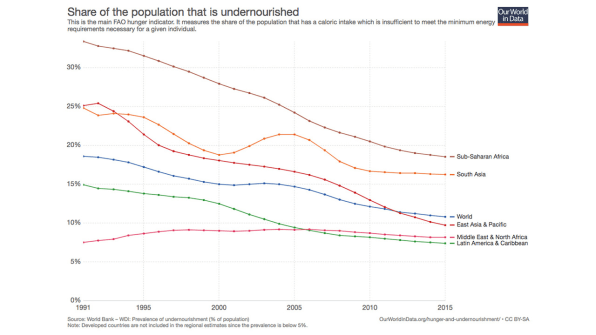

.jpg)