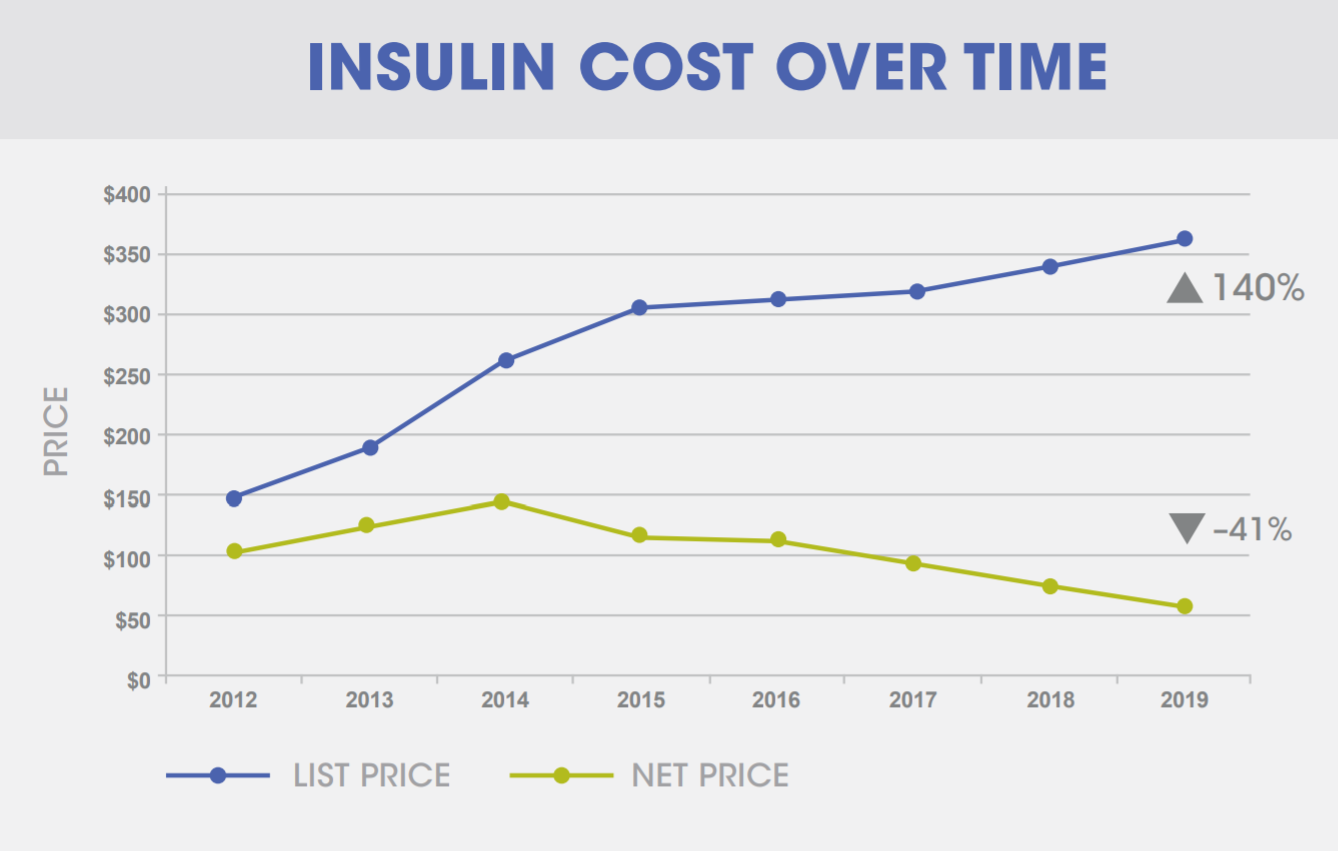
https://mises.org/wire/patents-legal-monopolies-and-high-pri...
The FDA, from my perspective, plays such a huge and important role in our society and showcases the exact things we need from our government. They are an example of a government entity that mostly gets the job done right, an essential part of our livelihood today.
In 1960, Richardson-Merrell applied for approval for a drug called Thalidomide, a cancer treatment. They had clinical trials that included pregnant women. They were rejected six times.
In the UK, The Distillers Company (Biochemicals) Ltd, a subsidiary of Distillers Co. Ltd marketed thalidomide as Distaval, a remedy for morning sickness. Their advertisement claimed that "Distaval can be given with complete safety to pregnant women and nursing mothers without adverse effect on mother or child ... Outstandingly safe Distaval has been prescribed for nearly three years in this country."
By 1962, over 10,000 children (most in west germany) were born with crippling disabilities caused by thalidomide. Over 2,000 died.
Frances Oldham Kelsey was awarded the medal for Distinguished Federal Civilian Service by President John F. Kennedy for rejecting the drug.
It also tries to blur between patents and exclusivity. Exclusivity is usually 3 years (5 for new antibiotics and new chemical entities). Patents are 20. Exclusivity is a very small portion of intellectual property protection. I would call that dishonest.
The FDA does not control drug patents, the patent office does. Abolishing the FDA would do practically nothing to reduce IP protections, but would eliminate all the other things they do, like making sure drugs work and don't kill people.
Like they did with Thalidomide?
Abolish both the FDA, and IP.
Her HbA1c long-term blood sugar measurement was literally off the charts. Off the chart on the wall on the hospital, right through the red “DANGER” section. She had lost 17% of her bodyweight and half of her hair.
We have learned the following:
You want a continuous glucose monitor (CGM), and an insulin pump, with rapid-acting insulin.
You do not want long-acting insulin. Especially not insulin glargine. It is a dangerous form of insulin: It is injected as a blob of insulin (“bolus”) under the skin. It’s supposed to stay in the place and slowly fritter and diffuse into the bloodstream. This effect is due to crystallization of the modified insulin amino acid chain in the pH level inside the body. It’s clever. However, if insulin glargine happens to go into a blood vessel, it works pretty much instantly. Then it is not long-acting at all. The subcutaneous environment is… living tissue. There are capillaries. It can and will go into directly into the bloodstream at some point. For some reason. At injection time, or due to bumps and jostles and physical pressure. Then there are no brakes on it. 24 hours’ worth of active insulin can go into the bloodstream. Then every cell in the body is signaled hard to pull glucose from the blood – all the flesh in the body rips the sugar out of your blood, leaving too little for the brain. People start losing consciousness in minutes, csn pass out, and may die.
Insulin degludec is another long-acting insulin, one which is acceptable in this regard. The bolus stays glommed together due to polymerization of the insulin so it’s more robust. It also has molecular brakes on it kind of – if it does go into the bloodstream, it attaches to albumin in blood plasma and doesn’t become active all at once.
However, using rapid-acting insulin in a pump is strictly better because this replicates the insulin oscillation of the pancreas. “[The pancreas’] basal insulin level is not stable. It oscillates with a regular period of 3-6 min. After a meal the amplitude of these oscillations increases but the periodicity remains constant. The oscillations are believed to be important for insulin sensitivity by preventing downregulation of insulin receptors in target cells. Such downregulation underlies insulin resistance, which is common in type 2 diabetes.”—https://en.wikipedia.org/wiki/Insulin_oscillation
The insulin pumps work this way. They pump the insulin with a rhythm. It’s easier to control the blood sugar and you need less insulin. It’s crucially different and much better for long-term health and quality of life.
The most important things are a good blood sugar sensor (continuous glucose meter or CGM), and a good pump with a good user interface. We haven’t tried one of the closed-loop automatically controlled pumps that reads from the sensor and autoadjusts, but it’s clear from the problems people have with badly designed pump that a good “semiautomatic” pump is better than a poor and unpredictable sensor-feedback-controlled automatic one. These have issues like sometimes cutting out without giving clear warning if blood sugar is high, and the blood sugar target range can’t be adjusted low enough (liability issues afaik) so people tend to stay at too high blood sugar levels which do long-term harm. I do assume that a good automatic pump is magic.
Also, glucose metabolism and inflammation are intimately related, which ties into the vascular system. There is a lot more actionable science out on this than most doctors are aware of. (Overburdened medical personnel are unable to keep abreast of scientific developments.)
That is to say, the inefficiency of the FDA was, in the words of the FDA itself, directly responsible for the premature deaths of 100,000 Americans. And that was for beta-blockers alone.
I laughed when watching an FDA press conference during covid, where the spokesman said that the agency was streamlining approval measures to get covid vaccines approved faster. A journalist asked if this would negatively impact the safety or efficacy of the vaccine to which the FDA head confidently replied that it would have zero material impact. It makes you wonder, if they are capable of quickly making approval decisions without sacrificing safety or efficacy standards, why is that not standard operating procedure? There are no answers that don't lead one to conclude that the FDA is a bloated, bureaucratic, wasteful mess.
That's easy. The normal process has multiple trials:
Phase 1: 50 people Phase 1: 200 people Phase 3: 100,000 people
Normally, you pass each phase before exposing a larger number of people to risk. More people means you can find rarer and smaller effects, but if you haven't tested on <50 people first then you might really endanger the group of 200 or 100k.
The expedited process tests it on 100,250 people at once. THOSE people are exposed to more risk, but the safety of the vaccine is the same. And because the vaccine was proven safe, those people were not negatively impacted any more than if they had followed the normal process.
> There are no answers that don't lead one to conclude that the FDA is a bloated, bureaucratic, wasteful mess.
No, you're just not actually looking.
> With California leading the way, a handful of states are considering trying to disrupt the market for essential medications, starting with insulin. The plan would be to manufacture and sell insulin themselves for a price that is roughly equivalent to the cost of production.
I feel like I'm missing something here. My understanding of why insulin is so expensive: laws are created and enforced by the government preventing people from competing in the space.
If you try to make your own insulin, and you take it to market with 3rd party analysis and certification of it being medical grade (and safe) insulin, you'll start seeing an escalation of the state against you. First angry letters from lawyers and eventually, if you continue head strong and ignore everyone telling you to stop, government officials (possibly with guns) will come and forcibly shut you down.
Is California just going to ignore these laws? How will the state not be liable for damages when individuals are?
I'm all in favor of revoking the legal structures that pick the winners in this market. It seems like there are plenty of people passionate in this space that would/could make insulin at near-cost if permitted to.
It's just that, by my understanding, it's the government that doesn't permit them to. It's weird that people in the government (at the state level) are stepping in to do what people in the government (at the federal, but possibly also the state level?) won't let people in the market do.
Edit: substituting “intellectual property laws” with “laws” as it seems there’s more to it than just IP.
California, on the other hand, is paying a lot of money to Novo Nordisk et al, and would benefit from reaching a low average price. They can afford to go through the approval process with all the important insulin analogs. And they won't go bankrupt in court before it pays off.
In the U.S.A. is expected to expire on 2027-07-05.
How did something invented in 1994/2000, get patented in 2009? https://patents.google.com/patent/US8048854B2/en%3C/
That is incorrect. A bioequivalence study is much simpler and cheaper than the original safety and efficacy studies.
You do not need to prove that safety and efficacy of the drug, only that you are delivering the equivalent of the originally studied drug at the same doses.
That’s not an accurate understanding of intellectual property specifically. Insulin isn’t like a pill, where once you have a chemical formula you can make millions of them very cheaply. It’s a biologic, an artificial hormone. Even leaving aside the patents, it’s very expensive to get approval for a generic biologic (called a biosimilar). That’s why there are few manufacturers of synthetic human insulin, even though that’s out of patent.
Another obstacle, as you pointed out, is that there are few manufacturers who produce synthetic insulins. From what I've learned in my discussions with manufacturers is that many are transitioning their facilities to a focus on mRNA drug manufacturing. Therefore there is a limited set of manufacturers who don't make insulin but have the equipment/facilities for it (in the U.S.).
>Average retail prices of Novolin and Humulin (traditional short- and intermediate-acting insulins) have gone down, or held steady, while prices of modern rapid- and long-acting insulins continue to go up. On average, traditional insulins now cost less than half of what modern insulins cost.
https://www.goodrx.com/healthcare-access/research/how-much-d...
There is a lot more going on that makes high end insulin expensive. A lot of conversation around insulin is people talking past each other because they are referring to different things that they think should be free, usually one of these additional features on top of the hormone itself.
I suspect they would be breaking federal laws, so I believe consideration of the State's 10th Amendment rights applies here. That would be wonderful and hope that this case brings that topic into the spotlight, because I see 90% of the federal government as being grossly unconstitutional on that basis alone.
Personally, I suspect the market leaders would not want to face the courts, because the exposure would be horrible PR that affects all of their product lines. Moreover, an aggressive and concerted effort to block this effort should be viewed as the anti-competitive behavior of a cartel, which is the status quo de facto that the State is effectively trying to disrupt.
I don't see such a challenge as anything but a lose-lose for those companies. Hopefully, they take the bait and do something stupid that leads to reform at the national level.
An interesting wrinkle is that Congress already foresaw this and passed a law decades ago waiving state sovereign immunity for patent and copyright claims. But then SCOTUS overturned the patent prong of this federal waiver on the grounds that Congress hadn't proven that states had a pattern of telling patent holders to go fuck themselves. And SCOTUS's reasoning for striking down the suit about Blackbeard's Law was that this also held true for the copyright prong of that law... despite being handed a brazen example of a state nullifying copyright law for their own gain on a silver platter.
What this technically means is that your state could, tomorrow, run their own pirate streaming site and not get sued for it[1]. The only way to stop it legally would be to sue end users, which would be difficult to do for a direct download service[2].
As for antitrust and cartels, since copyright and patents are legal, government-granted monopolies, most courts are very loathe to attack them even when they are used in ways that violate antitrust law. You can see this in FTC v. Qualcomm, where an appeals court smacked down an antitrust ruling for this reason. Compounding this is the fact that a very large contingent of judges have been slowly nullifying antitrust since the 1980s under the "consumer welfare" theory that every tech company is built to maximally exploit.
I could see California getting away with bloodying Eli Lily & Co's nose. But I would not count on this becoming a future model for evading (ab)use of the patent system. Remember, all the states are still part of a federal government that is very much in favor of the patent system as currently constituted, and there are still things they can do to block California.
[0] https://nsglc.olemiss.edu/blog/2020/apr/2/index.html
[1] Assuming your state had not already waived sovereign immunity for copyright
[2] It's commonly believed that you can't sue for downloads, only uploads. This isn't quite true. At least one court has outright said that both are illegal but infringe on different exclusive rights. I don't remember which court.
Insulin can be made without breaking patents. Unless you specifically require something branded as Lantus®, for example(which is in no small part due to publications funded by pharmaceutical companies themselves, but also some 'marketing' straight to doctors). There are other longer lasting insulin formulations that can be made.
There are hurdles if you take that route (as described in the article). Many are financial. One is regulatory (biosimilars).
> Other federal regulations have added to the challenge. The FDA began to treat insulin as a biologic drug in 2020 — meaning it is made with living materials instead of combining chemicals like conventional pharmaceuticals — which comes with a different set of standards for generic versions, which are known as biosimilars, as well as manufacturing challenges given the precise conditions these products must be made in. Biosimilars can cost up to $250 million to produce and take up to eight years to bring to the market, versus a one-year investment of as little as $1 million for conventional generics. And unless the FDA recognizes a new generic insulin as interchangeable with the products already on the market, health insurers might not want to cover it and doctors may not be willing to prescribe it.
Seems like the barriers for a state entity are exactly the same as the barriers for private generic drug manufacturers, and the state could easily just stop erecting these barriers.
The ability to mass produce insulin at negligible cost has been around for decades, they guy who discovered it made it patent free even.
Only in the US do companies get away with this kind of price gouging, and only because of monopolistic (or I get oligopolistic?) behavior and BS legal threats against anyone that might impact their profiteering off the work of others (paying off competitors not to compete, and BS patents on minor changes, with applications carefully scattered to maximize length of coverage).
The only reason it's taking someone the size of CA to actually do something, is because the Pharma companies buy out, pay off, or lawyer into oblivion anyone else. All strategies that normally work because the victims of the (to me) clearly illegal monopoly based actions aren't incurring costs if they stop, whereas the gouging and monopoly tactics cost CA huge amounts annually. The only thing Pharma could do to make it worth CA not doing this would be to stop price gouging, which is of course the only reason CA is doing this.
That price gouging is illegal if it's some dude hoarding toilet paper, but not when it's insulin being sold by multi-billion dollar corporations remains absurd. That people come to defend the "IP rights" of these organizations and their BS patents is a really American phenomenon.
Long acting insulin is not.
They are different products, and the formers patent being free has nothing to do with the later innovations being locked down.
There is no patent on insulin, just regulatory capture on which proprietary analogs are approved for medical use. In 2020 the FDA changed the regulatory status of insulin, signaling that it's not going to let that regulatory capture continue. But if it does, there will be a lawsuit, it will go to the Supreme Court, and the pharma companies' arguments will probably get thrown out.
The issue is that while insulin is actually quite cheap to make once you get started, the startup-costs associated with getting to that point are quite hefty: lab real estate, equipment to make and purify, FDA fees, etc.
Newer versions of insulin are "better" than generic insulin: easier to take, fewer side effects, etc. The major insulin producers have been slowly doling out minor improvements over time, about every decade or so, to maintain IP protection on these newer modern versions of insulin, and the high prices associated with these newer versions. They've also been paying off several generics manufacturers to delay them from manufacturing generic versions of these modern versions as the patents expire.
Even that is debatable. At least Sanofi has been known to fund some rosy articles about their Lantus® product. When the EU looked into it (for similar initiatives) they were not able to find the large 'performance' gap that was suggested between that insulin and alternatives.
Isn't that already illegal (price fixing/collusion)? How are they structuring the deals to avoid prosecution?
This is 100 year old technology. It has nothing to do with development cost.
https://www.vox.com/2019/4/3/18293950/why-is-insulin-so-expe...
The article doesn't do a good job of explaining that "insulin" isn't a single drug, or at least how they describe it.
Generic insulin is cheap. You can get it for $25/vial from your local Walmart. With production costs, regulation compliance, storage, transport, and paying pharmacists, they're not making much profit on that.
Patented insulin analogs are not cheap. They have different characteristics for duration and onset time that make them easier to dose, but the patent means that you can't produce and sell it unless you own the patent or have licensed it. Drug companies who own these patents set their prices according to what they can get insurers to pay, not according to what they expect people to pay out of pocket.
One of the weird quirks of the US medical system is that drug companies often have alternate prices for people without insurance. Remember, the high prices aren't designed for you to pay, the high prices are designed to extract as much money as possible from your insurance company.
You can see this in action on drug company websites. Lilly has a program that will cap your payments at $35 for even their expensive insulin analogs: https://www.insulinaffordability.com/ You have to renew every 12 months and hope they're still doing it, but they generally keep these programs around because it dampens the outrage about the high prices.
California will make insulins already off patent. Ones where lower cost versions are already available. It would be far smarter to just subsidize existing versions.
But it doesnt solve the problem that the latest cutting edge patented insulins cant be copied by the government.
1. Centralise power in a regulatory body that will raise costs every time something goes wrong.
2. The barrier to getting things done rises until there is a crisis.
3. The barrier is so high only someone behaving like a financial illiterate would enter the market, so legislators task government with entering the market or underwriting someone who can.
So I'd assume that legal ability that was ever the problem. Usually it is regulatory requirements implying a minimum size of the actor needed to take on the risk. I see a few comments that this time around the technical term implementing this for insulin is "bioequivalence" but the broader pattern applies in a few markets and should be called out.
IANAL. But would this be similar to Jim Olive Photography v. University of Houston System?
https://fairuse.stanford.edu/case/jim-olive-photography-v-un...
Like they ignored asinine federal drugs laws? I hope so!
Rather, the executive branch of the federal government is choosing to not enforce federal drug laws (in some situations, for some drugs).
Federal agents can walk in and charge everyone in a cannabis store anytime they want, as I understand it.
Municipal broadband, power, roads, schools, post, housing, and healthcare? It's long overdue, and with an appropriate amount of funding has been shown to be effective at controlling costs and delivering moderately good quality in most cases.
A lot of things get so warped by profit motive. And there are places I want a profit motive, but insulin (and healthcare generally) isn't one.
As if the federal government isn't the one causing the shortage in the first place.
# 1 competition works
> When a company develops a new drug, it gets a period of exclusivity, 10 years or more, in which it is the only one able to make or sell that drug. But after that exclusivity period has passed, other companies can make a carbon copy and sell it at a lower price. Studies find that once several generic competitors come on the market, prices drop significantly.
# 2 big pharma has hacked regulations for prescription drugs, medical devices and generic replacement to prevent losing federal government granted monopolies.
> But pharma companies are savvy about finding ways to extend their monopolies, with insulin and other drugs, by making minor tweaks to the chemical compound and asking for a patent extension. In the case of insulin, the companies can also modify the delivery device to protect their market share. Each product is meant to be used with specific, company-designed injectors.
This is a government created problem.
[...]
> But in the long term, the plan is for a government factory operated by government workers producing government-owned medication. The state would have its own public production facilities, staffed by civil workers, which would sell generic insulin for the same cost needed to produce it, plus perhaps a small percentage to cover auxiliary costs for the program.
> The $100 million in funding is split evenly between the short and long term. But that long-term vision will take time. Even if the state were to retrofit an existing factory for insulin production, that construction work could take years, as would hiring a workforce to oversee it. Once production is up and running, California would need to hit more targets — most importantly producing a product that the FDA says is interchangeable with existing insulin medications.
That second phase is certainly ambitious. Putting it out for bid would be the more normal government process. It will be interesting to see what happens.
https://news.ycombinator.com/item?id=32021868 (216 comments)
I clicked on the Vox link, hoping to see an update. There wasn't one, although I'm guessing that the 2022 announcement was about the budget being approved and now in 2023, they just started writing an RFP.
About 3 in 4 enrollees in ACA plans that use insulin pay $35/month or less out of pocket. For people with private insurance, 4 in 5 pay $35/month or less.
The biggest problem seems to be too many plans, too many choices, and too many ways to fall through the cracks.
It's still a despicable racket if the patient only pays $35, but the insurance company is paying $500.
Folks in the Type 1 boat are in a much rougher place without insurance than the far larger, and growing, population of Type 2s. And I imagine, skew any reporting that does not make the discrimination between the two.
(This all intended as a supplement to your very good point)
https://worldpopulationreview.com/country-rankings/cost-of-i...
"Domestic manufacturing" is just a talking point to fig-leaf the real goal.
TL;DR: "Evergreening is any of various legal, business, and technological strategies by which producers (often pharmaceutical companies) extend the lifetime of their patents that are about to expire in order to retain revenues from them. Often the practice includes taking out new patents (for example over associated delivery systems or new pharmaceutical mixtures), or by buying out or frustrating competitors, for longer periods of time than would normally be permissible under the law."
A relevant quote from the Wikipedia article: "In one study of the prescription drug market, Feldman found that 78% of new patents associated with prescription drugs were for existing drugs."
Depressing AF...
1. https://www.t1international.com/blog/2019/01/20/why-insulin-...
Hang on, isn’t insulin pricing the exact sort of thing anti-cartel/anti-competitive laws are meant to prevent?
What a reality. I‘m glad that I don’t have a life threatening diseases, but I would do everything that is possible to survive. Steal, rob, fraud to come at least up with the money to survive.
I‘m shocked that simply surviving a manageable sickness in a first world country is not a human right.
It looks like one party tried to get this done in reconciliation. If so, blaming “arcane rules” is slanted and makes me wonder what other information the author is twisting.
The same free market entities that produced covid vaccines in record time?
That free market?
1. https://slatestarcodex.com/2016/08/29/reverse-voxsplaining-d...
2. https://slatestarcodex.com/2015/09/24/the-problems-with-gene...
I hope this is done well.
I thought thr Indian pharmaceutical industry was well able to make it, why not just buy it?
Seems like a very roundabout way when we could just ignore intellectual property laws directly, at home. The same applies to "importing things from Canada." Why the ruse?
It is out of patent.
One should look at their own employers and see if everything they are doing is ethical.
NOTE: just making a point, I don’t condone what these companies are doing
Type 1 diabetes has nothing to do with diet it is an autoimmune disease with genetic and possible environmental antecedents.
If you're interested in learning more about type 1 diabetes please check out:
Yeah, everything was great under the state owned telco monopolies. Let's get back to that!
Where? The US has among the highest percentage of kids going to government owned and operated schools. We have plenty of government housing as well (projects). Nearly all of our roads and transit systems are publicly owned and operated too.
Almost uniformly, those government operated systems aren’t very good—in America. And it doesn’t have to do with “funding.” If you compare with Europe, we spend more money per student, per transit rider, and per public housing resident, etc.
Municipal broadband: the best broadband in the entire United States is provided by the municipality of Chattanooga. [1]
Post: The USPS is the most trusted brand in the United States, above FedEx and UPS. [2]
Transit: The New York City Subway is the 3rd largest metro rail system on earth after London and Guangzhou. Ok fine, it's expensive to build - but it moved 1,300,000,000 people in 2021.
That's just three random ones.
[1] https://www.ama.org/marketing-news/usps-ranked-most-trusted-...
[2] https://qz.com/1996234/the-best-broadband-in-the-us-is-in-ch...
The profit motive coupled with competition works very well to keep prices low.
You need only realize the following; European firms stand at the ready to supply insulin at well below US prices today, but are prevented from doing so by the FDA. And they can do so and still turn a profit.
That has never happened. What does happen is the cost is borne by the taxpayer rather than the user of the service.
The "warping" of the profit motive in the insulin case is entirely caused by government interference and regulation (by making it nearly impossible for competitors to spin up and make insulin).
If the state takes a commodity and sells it on a cost plus or cost basis, it’s going to kill investment in the spaces and collapse the margin.
At this point, we’re killing people and bankrupting states and employees with out of control costs. Making an example out of insulin would fix that and constrain some of the players in the market.
If the service is "not dying preventably" that's fine.
My understanding is that it is manufactured by Novo Nordisk, the makers of more modern, name-brand insulins, as well (they make the fast-acting insulin aspart called Novolog that I take as part of my own regimen).
For further reference: https://diabetesstrong.com/walmart-insulin/
That's what my brother used to take 20 years ago.
They are not exactly 'inferior technology' and there are uses for them. But you are right that diabetics these days don't generally take them.
There are generic long lasting insulin alternatives, but none that I know of are available in the US. I believe that's what CA wants to do.
Walmart sells human insulin (the previous gen stuff) for $25/vial. It’s manufactured by Novo Nordisk. It’s what was regularly prescribed in the 1990s. It has downsides, such as requiring a strict eating schedule: https://diabetesstrong.com/walmart-insulin/
Most doctors today prescribe human analog insulin. They do this because it is better at controlling blood sugar without requiring strict eating schedules.
whatever the quality of life improvements of the newer stuff is its worth pointing out there's a doctors-getting-kickbacks scandal every few years https://duckduckgo.com/?t=ffab&q=prescription+kickbacks&ia=w...
https://theconversation.com/why-telling-people-with-diabetes...
Walmart also sells, and has for a while, "regular" human insulin under their "ReliOn" brand, which is $25/vial. This is an older style of insulin, less flexible and reactive, and requires a more restrictive lifestyle to make it work . Not following this restrictive diet schedule and rules can put you at risk of a hypoglycemic incident, which can be fatal.
There are other kinds of insulin analogs, including a "slow acting" variety called insulin glargine (sold under the brand names Basaglar, Lantus, etc). It serves to smooth the overall curve of blood sugar on a given day. My own treatment regime includes both insulin aspart and insulin glargine. I do not believe Walmart sells any insulin glargine (yet?)
For what it's worth, as an additional piece of information, a Continuous Glucose Monitor (CGM) is another modern tool in the treatment arsenal. They are also incredibly expensive, especially without insurance, but have saved my life several times when I made mistakes or just had bad luck with a dose of insulin aspart, and went very low. Being able to see myself starting to go low, rather than simply reacting when it is too late and I am already affected, is a significant aid.
Hopefully California is planning on doing a different style of insulin that better manages that?
https://theconversation.com/why-telling-people-with-diabetes...
There's no reason California couldn't say, "If you need insulin, and you live in California, it's available for free." Assuming that's what the taxpayers want.
Governments are just collections of people organized by incentives, just like corporations.
In corporations, the profit incentive pushes the organization to minimize the cost of production. At the same time, competition puts a ceiling in prices. Poorly organized, staffed and managed businesses go bankrupt.
In a government, there is no incentive to minimize costs. Next years budget is contingent on isi h all of this years. Leadership positions are politically appointed, not based on competency. Employees are not rewarded with huge bonuses or promotions for competing projects on time or ahead of schedule. Budgets can just be sink holes, as long as they are politically expedient and have the proper messaging. Better ideas are routinely stifled by political agendas, and investment is singular; one department gets all the funding and there is no competition.
Look at Venezuela as an example. When the government nationalized the oil industry, it completely fell apart. Production dropped off hugely.
https://1.bp.blogspot.com/-ZfBANMMU5dQ/XzFtNw93ZCI/AAAAAAAAq...
Insulin is cheap. My brother gets his from the Brazilian government, no charge and no proof of income(it is a life-saving medication and you already pay your taxes). If you want more "convenience" (receive at home, not wait in line, etc), you can go to a pharmacy and pay. Costs maybe $20 for a month's supply of brand name long acting insulin (less if you are low income, even less if you have some forms of private insurance).
The Brazilian government also highly incentivizes generics vs brand names, doctors will often prescribe by the active ingredient unless there's a very specific reason to go to a particular brand. It has threatened to break patents (and done so on occasion) of companies that overcharge for essential medication (https://www.reuters.com/article/us-merck-brazil/brazil-bypas...)
There is absolutely no way insulin costs should be as high as they are. Walmart survives with a 3% profit margin but somehow we allow pharmaceutical companies to charge about whatever they want. It's not 'high tech' anymore, despite minor improvements by Lilly and friends to keep the patents alive.
Related: US health care costs (global is following) are also higher than they should because of the food industry. They will push their sugar heavy processed crap worldwide, but in the US they use high fructose corn syrup. For decades fructose was erroneously pushed to diabetics because fructose doesn't raise insulin levels. What it does do it cause metabolic syndrome, ultimately leading to obesity, type-2 diabetes, and there are links to cancer and even a growing number of publication linking to Alzheimer's and dementia in general. 88% of Americans have some sort of metabolic dysfunction(https://www.ksl.com/article/50332891/88-of-americans-are-met...).
We tend to shame people and say that they are pre-diabetic, obese or what have you because they are lazy and over eat. That's untrue. You can't outrun a bad diet. People will try to "eat healthy" and eat a bowl of cereal because companies say it's good for you. It is not. They will cut fat (and end up eating more carbs) because they have been told (by the food industry) that fat is bad. It is not, sugar and highly processed foods are. They feed people bad information(a calorie is a calorie) and then shame people for not "taking care of themselves", all the while polluting geniune research that contradicts them. It's terrible.
I would say that whole combination is pretty arcane.
Sure, at a high level it's simple. But so is "crawl the internet, make a database and match keywords from requests to a ranked list of results."
Sorta. They can be fired at will (https://www.washingtonpost.com/archive/politics/2001/05/08/k...) and they're making advisories, which the Senate can just... overrule.
https://www.axios.com/2022/08/07/insulin-price-cap-reconcili...
There was little reason to block it and it is hard to imagine why they blocked it given how many people it could help. I tried to understand the logic but most everything I read were just out right lies. I have knowledge of this first hand because my wife takes insulin.
I do agree that it's on-topic in this particular thread to have a discussion about the merits of policies like this and that can include highlighting the factions that support or oppose them (and the reasons and/or incentives that might be driving that support/opposition).
Decades of experience, thousands of employees who are experts in their own area and the capital to move fast.
In general all medications are the most expensive in the US, often by a lot. For two main reasons:
1. All other countries are to some extent "free riding" on the US market, and refusing to pay full price.
2. The FDA is doesn't approve a lot of things. So many cheap foreign medications are illegal to import. I heard that many forms of insulin are in this group.
Yes, and the costs are always higher than that of a for profit company.
> the situation is quite dire at this point
Right. The solution is to remove the regulatory and legal barriers that add $190 in cost to a dose.
Yes it will. The government is far, far more powerful than the corporations.
"A weight loss of ~15 kg, achieved by calorie restriction as part of an intensive management programme, can lead to remission of T2DM in ~80% of patients with obesity and T2DM." [ https://pubmed.ncbi.nlm.nih.gov/32690918/ ]
"A novel HIIT-protocol recruiting lower and upper body muscles efficiently improves insulin sensitivity, VO2max and body composition with intact responses in obesity and type 2 diabetes. " [ https://pubmed.ncbi.nlm.nih.gov/36387850/ ]
The caveat, is of course, "long-term weight loss maintenance is challenging."
The modern programs of a combination of fast/slow analogs are more flexible and adaptable. The demand on the user is still pretty high, but it's a bit closer to baseline.
EDIT: and I guess I should say, I've got plenty of bias from my own relatively narrow experience. I'm sure there are different regimens and different opinions amongst various doctors
See 2 USC 641(d) for it being out of order and Senate rule XX for how those are decided (which is surprisingly flexible, as you hit). Or for a more readable source: https://www.cbpp.org/research/federal-budget/introduction-to...
But the fact that we're even discussing this shows that the article is pretty reasonable in calling this arcane.
The actual quality of the education was substandard, but there is something to be said for being embedded in an environment where academic failure was simply not considered an option.
Explain why some of the worst school systems are some of the best funded. https://foxbaltimore.com/news/project-baltimore/more-than-75...
https://foxbaltimore.com/news/project-baltimore/baltimore-ci...
I suppose off-patent insulin could be produced with some degree of inconvenience to the consumer because they might have to take more doses per day, but they should work nonetheless.
People want long acting insulin cheap. (short-, intermediate-, rapid-, and long-acting, ultra-long-acting (42h) insulin are the main categories.) Long acting insulin was the product that had a price jump at the end of 2017.
I am pretty sympathetic to the non long acting stuff not being good enough. Expecting people to monitor hour after hour, and only calling it an inconvenience really downplays how tedious it is to stay alive.
Or if you have a pod or pump then you can use only the rapid acting and the software will drip it slowly to cover your basal need over the 24h.
Trying to use just the fast acting with self-injections doesn’t work because you go high overnight while you’re sleeping, and even during the day you would have to be injecting every 3 hours to keep up. (E.g. when your pump controller dies on vacation and all you have on hand is rapid-acting)
Source: I have two kids with T1D.
https://haiweb.org/wp-content/uploads/2015/05/HAI_ACCISS_fac...
It looks like most patents are expired. I hope this should open the way for effective analogue insulin to be manufactured generically.
Modern insulin is protected by moats, two of which are intellectual property and regulatory approval. Modern insulin being cheaper in other countries is because they are not following the same trade and approval laws. The way to match abroad prices would be to change protections and approvals, the latter of which is and has been happening over the last five years.
Average prices per "standard unit"
  * Rapid acting: $120 (US) vs $13.50 (JP)

  * Rapid-int (?) acting: $107(US) vs. $13 (JP)

  * Short-acting: $87 (US) vs $19 (FR)

  * Short-int acting: $95 (US) vs $13 (JP)

  * Intermediate acting: $73 (US) vs $13 (JP)

  * Long acting: $88 (US) vs $15 (JP)
CVS filled a month supply for me after my insurance number had changed and when I went to pick it up they kindly asked for $1300 before I gave them the new insurance info.
But yes, I didn't leave a complete comment.
It's when you want something better, that lasts longer than Novolin N that price starts to go up. (Novolin N is typically injected underneath the skin (subcutaneously) once or twice per day.)
Obviously, if you have insurance, I would expect you to be being prescribed something better, because that's how the world works. Then you can jump from traditional insulin to rapid and long lasting, and pens.
The job of the parliamentarian is to interpret the rules and give advice about what is allowed and what is not. Sure, they can be wrong. But if you don't like the rules, change them. Because any self-governing body that isn't following its own rules isn't actually operating. Any legislation the Senate "passes" in violation of its own rules doesn't actually exist. It's an exercise in futility. Both Democrats and Republicans understand this and both parties value an impartial parliamentarian as an asset. It's a job created out of need:
> Charles Watkins had arrived in the Senate in 1904 from Arkansas to work as a stenographer. Blessed with a photographic memory, and a curiosity about Senate procedures, he eventually transferred to the Senate floor as journal clerk. In 1919 he started what became a 45-year search of the Congressional Record, back to the 1880s, for Senate decisions that interpreted the body’s individual standing rules to the legislative needs of the moment.
> In 1923 Watkins replaced the ailing assistant secretary of the Senate as unofficial advisor on floor procedure to the presiding officer. From that time, he became the body’s parliamentarian, in fact if not in title. Finally, in 1935, at a time when an increased volume of New Deal-era legislation expanded opportunities for procedural confusion and mischief, he gained the actual title.
https://www.senate.gov/about/officers-staff/secretary-of-the...
That's what the vote to overrule the parlimentarian essentially does, for that one vote. Both parties have done so for judicial confirmations.
https://en.wikipedia.org/wiki/Nuclear_option; "a parliamentary procedure that allows the Senate to override a standing rule by a simple majority"
> Any legislation the Senate "passes" in violation of its own rules doesn't actually exist.
A court is not likely to agree with that.
It’s also the worst large metro system, by timeliness and reliability, in the world, despite being very well funded.
People in the rest of the country aren’t exactly unaware of New York. But its transit, housing, and public school systems are a poster child for how government-run services are terrible, even when well funded. There’s a reason why New York has suffered net domestic outmigration for many years.
Look, if Stockholm was in America the American public would have a very different idea of what government-run services could be like. But we don’t have Swedes running our government services, we have Americans. It is what it is.
You forgot to mention cleanliness, comfort, and safety, where it also is just atrocious compared to other metro systems outside US.
Praising NYC subway for being really big sounds to me similar to Soviet Union boasting how many tons of steel it produced. It sure did, but its citizens would have preferred instead to get something other than 1000 additional tanks.
Gotta love the fatalism that ensures it stays that way. This is really how America lost it's way - acceptance.
You can even get 25G from EPB now, though the 10G is good enough for me, frankly. That being said, there's several locations in the US where 10G residential fiber is broadly available; frequently either municipal or co-op (e.g. Utopia Fiber in Utah), though I believe EPB was first in 2015.
Municipal broadband and the post works well because the US is good at building infrastructure. But at the same time, our government is also beholden to interests that want to kill that infrastructure so they can sell costlier and worse equivalents. States passed a bunch of laws to ban local government from running ISPs and Congress has been putting stupid funding mandates on the USPS's pension schemes that make a profitable public venture unprofitable.
Transit is a bad example because America is famously addicted to cars and allergic to any transit system that isn't a road. The NYC Subway could not be built today under the current political climate. Hell, it wasn't even built by the city or state government; it was stolen from the people who built the system through overregulation. Nationally, we have Amtrak[1], which was created by bailing out failing freight companies. With some high-speed upgrades it could be great, but the system is still beholden to those same freight companies' infrastructure[2].
The underlying problem is that America does not want to build working government programs. It is run by people who deliberately take funding in order to burn it so they can complain about how much better "privately-run" monopolized systems are.
[0] There are probably examples that right-wingers would point out as well - maybe check Reason or CATO for them, because I forgot.
[1] US citizen: Japan has high-speed bullet trains! We should build a Shinkansen!
US: We have a Shinkansen at home.
Shinkansen at home:
[2] Which, BTW, is actually supposed to give Amtrak priority over the rails. Like it says it in the actual law. Nobody cares.
Wealthy families arrange to live in suburbs designed explicitly to cordon their children off from there less wealthy peers, each time setting up a vicious cycle where homes in those school districts derive much of their value from school funding, creating an incentive for an ever-increasing levy for de-facto private schools.
Meanwhile, big city school districts are relatively well funded (teachers in the largest cities have surprisingly strong compensation) but poor management. Not everything that Republicans say about teacher unions is wrong, and there is an extent to which management of city public schools is set up to allow schools with high parental engagement (= greater parent wealth) to succeed while others fail.
Simultaneously, if you look at school districts in poorer exurbs or, worst of all, downstate/upstate rural districts, teachers really are making the wages that TV shows make jokes about, supplies are scarce and enrichment classes (in some places) nonexistent.
These are structural problems, not culture-war-of-the-moment problems.
I'm not high-horsing any of this; my kids went to school in Oak Park, IL; I believe every full-time teacher at OPRF makes a six figure salary. Oak Park is essentially a pair of extremely well funded school districts (K-8 and high school) with a fire and police department tacked onto the side.
My wife is a public school teacher here in DC. You can always find examples of the popular culture war hobby-horses, but most of the time when a student isn’t doing well it comes down to money. It hurts hearing about a kid who’s trying but falling behind since they haven’t slept more than two consecutive nights in the same place since a parent lost a job, or the top kid in the class cancels their SAT test because they need to watch a younger sibling because their mother can’t afford to miss work. When it comes to stats, that shows up for the school even if the student can’t.
(My comments here are in the context of type 1 diabetes. The (potential) positive health impact of modern insulin may be less pronounced for other diabetics.)
My rub is that the conversation is dishonest. Saying "access to insulin is a right" and then changing the topic to modern delivery methods and such. Call a spade a spade, and have the direct honest conversation the first time. My pertubement goes beyond this topic into social justice/political correctness and just about anything. I may believe in the cause and the result, but be dismissive of how to get there by cheating and hacking peoples attention spans. It seems the only way to be an activist and get attention is to start with a lie, and now everybody is competing for the most inflammatory headline.
Everything you said is the conversation everybody should be having, instead of truncating it to "insulin is way too expensive."
To me, that cost inflation is purely artificial and not driven by any new tech relating to the insulin itself.
For T1 diabetics, the cost increases have been moving to insulin pumps which have infusion set costs in addition to the actual pump, and for continuous glucose sensors.
Everyone will agree that (cheap, out of patent) insulin should be available to all; it's literally lifesaving.
But then switching that to the (modern, convenient) insulin should be available to all is a bit of a slight of hand, especially when it is NOT a "you will die without this" but a "you will have more hassle taking medication to not die" scenario.
Obviously the costs involved in implementing these technologies should be part of the discussion, but I don't think it's unreasonable to want to make anything that eases management of diabetes way more affordable.
The press writing "life saving insulin" headlines takes away from the ability to discuss that: within the last decade or two, modern improvements made the process of managing diabetes significantly easier and else stressful. The drug companies gave everybody a taste of an easier life, and then jacked up the price, saying "pay us more or go back to the old way." At what level should the government step in and subsidize or control this quality of life improvement? At what level should its creators be rewarded?
I am old enough to remember when the entire world took traditional insulin. It wasn't pretty.
The price of these drugs NEVER went up.
Framing it as only "more hassle" or "purely convenience" really downplays the difference in the quality of life improvement the last decade has brought everyone.
Regulations often have the effect of protecting entrenched corporate interests.
Government regulation hurting competition, and hurting the free market by "protecting corporate interests too much" is precisely what people are often complaining about.
Supporting the free market would instead be when you allow competition, and do not protect the entrenched corporations too much.
Copyright and IP laws are probably the quintessential example of government harming the free market by preventing competitors from competing.
It's like the inkjet printers that refuse to use ink from other vendors.
Also, the pump manufacturer is not the same company as the insulin manufacturer.
No it won't. It will just shift the cost to the taxpayers.
A state like California with a contract manufacturer would probably break even on the insulin and save billions for reduced complications. Poor people with diabetes are frequent fliers for ER admissions. The cost of one ER visit is probably close to annual insulin cost.
It'll cost even more when the government takes it over. There's a reason why central economic planning results in poverty.
Instead, reduce the regulation and laws and interference by the government so that competitors can sprout.
Is anybody buying short acting anymore? At those prices? Rapid onset is $72.88.
https://www.walmart.com/cp/3769564
That's basically a 4.4x increase, after inflation to jump from short to rapid. Not saying its justified. Why pay $200 list for something that is less than $80.
it looks like they tried to patent some pen injection mechanism as a way to artificially extend the patent, but the patents were tossed out. I think that's a similar approach to how the Epi-pen people have maintained control, except their pursuit was successful (epinephrine isn't exactly a new chemical, nor is the process for manufacture).
still--manufacture of these drugs is long and expensive process, esp with fda approval. new entrants want to recoup their cost. the public is a great institution to develop generics because it can happily do so without a profit motive.
Another thing that needs to be investigated is how much the PBMs (Pharmacy Benefits Managers) prpfit from the spread of drug pricing. Are they marking these drugs up a lot? Do they need to be tightly regulated?
- one payer healthcare systems - non-convoluted distribution systems - depending where cheaper workforce/cheaper to make the insulin - less stringent regulatory processes - stronger lobbying groups in the US
I've never heard of anyone unable to find insulin in Australia.
https://www.goodrx.com/healthcare-access/research/how-much-d...
It is more expensive in the United States because the US is subsidizing the earnings requirements the companies who make the drug require to develop new variants. At a high level, everybody pays insurance, it gets funneled into high drug prices, high drug prices pay shareholders and fund R&D. It's capitalisms version of socialized drug creation, and the rest of the world benefits from the US overpaying.
Are you arguing in favor for no government regulations whatsoever? Are you arguing for cartel state?
That's what government running things is.
> communism is when the government buys things?
No, communism is from each according to his ability and to each according to his need. You can form a commune with such a structure, it's not illegal.
> Are you arguing in favor for no government regulations whatsoever?
No.
I'm confused by this because it seems a purposefully black and white take.
I don't use "central economic planning" unless I'm talking about a State that has implemented, well, central economic planning. It doesn't make sense to me to point to a country with nationalized transit and nothing else nationalized, and say "they do centralized economic planning." How are you differentiating between these two kinds of states? Because otherwise I don't know how to communicate the difference between the Soviet Union and, idk, Spain or whatever.
I'm also confused by the conflation of that with "the government running things." The government runs the military, is that central economic planning? The government "runs" elections, is that central economic planning? The government sends soldiers to break strikes, is that central economic planning? FEMA sends food and medicine to hurricane disaster zones, is that central economic planning? Is a firetruck central economic planning? Where does it end lol?
Finally the most confusing thing to me is where you stand on any form of government regulation. Happily it sounds like you aren't Full Libertarian and think Amazon should be building our roads, but when you say "the government running things" is the same as the government regulating things like how medicines can be produced and tested, I get totally confused. So a law that says "no murcury in medicine" is the same as... Central economic planning? It's equivalent to a nationalized healthcare system? That's weird because people have been arguing for the usa to socialize its healthcare system for decades but apparently it's already socialized, cause it has regulation?
I only am pinning you down so hard on this because I completely disagree that whatever people mean by "free market" is a means to greater material conditions for people, but I genuinely can't even figure out if that's what you're arguing for, I'm just working off my understanding of your world view from the other thread where you dropped a simple "this would be better if the free market did it."
Another piece of the insulin ad drug saga that I haven't seen many people discuss here is the distribution of drugs. The distribution from manufacturers to patients is incredibly inefficent with a variety of middle organizations increasing the cost associated with distributing the insulin and those costs are pushed down onto patients. Our website has a simplified graph showing the current model vs what we plan on doing: https://projectinsulin.org/why-insulin/
For a more in-depth look the Wall Street Journal has a great video from 2019: https://www.wsj.com/video/series/news-explainers/how-drug-pr...
I was dating 20 years from glargine (invented 1994, approved 2000), which is technically still patent protected somehow, despite biosimilars being approved. It takes a while too for Doctors to switch over when new paradigms are delivered. The real metric should be when long acting overtook intermediate acting prescriptions.
For anyone looking for history of modern insulin. https://www.ncbi.nlm.nih.gov/pmc/articles/PMC4045187/
I will also say that Pharmacy Benefit Managers (PBMs) also have a lot of power when it comes to influencing doctors to begin prescribing new drugs.
You assume that creators are rewarded.
In Sweden you get the insulin and pens for free (that is, you've paid for it with your taxes).
And the answer/solution is somewhere in the realm of a public/private hybrid, where the government is funding short term expensive, long tail benefit research.
This is beside the point. You pay for insulin, but with taxes. In return, you don't have to deal with "do I eat or do I get insulin".
> When I say create I mean discovered not manufactured. The R&D.
The question remains: are the creators actually rewarded?
In the US most R&D now is performed by small companies, government entities, or with government money. Large companies buy this research cheap and profit from it immensely. There are cases when all new drugs that appear on the market are based on public government-funded research.
The amount of revenue that goes back into R&D decreased while revenues increased.
More data here: https://www.cbo.gov/publication/57126