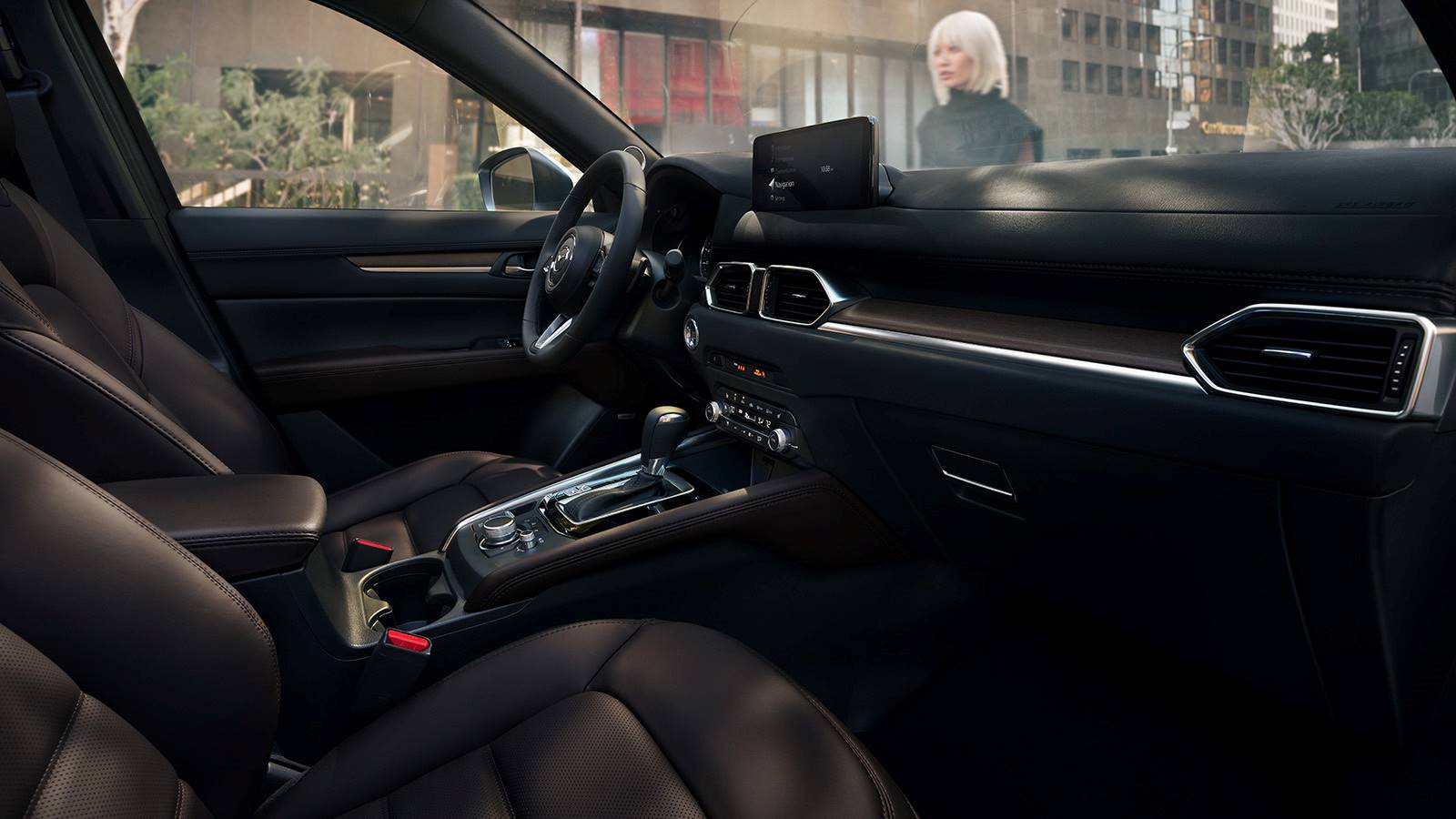
The design of in-car climate controls has gone backward(theturnsignalblog.com) |
The design of in-car climate controls has gone backward(theturnsignalblog.com) |
(Voice control could be more polished than it is, but it works great for climate control IMO. I really like it for enabling or disabling the defrost, which can take fiddling with if you use touch screen or old style controls… especially in a rainy/cloudy situation where you want both hands on the wheel and both eyes on the road..)
While driving a car, it's no longer about preference - it's about attention and safety.
1) the notion of design has been subtly replaced with style;
Sleek wins over functional. For instance, scroll bars on desktop UIs were thrown away, because they were too fat for phones, and phone UI now sets the trend. So nobody among designers cared that the scrollbar you see with peripheral vision does help you orient in apps.
2) styles are in perpetual rat race, you must be trendy and throw away anything that's drawn to 5-year-old fashion;
3) constant feature creep; Social network VK offered music playing, but over the last 5-6 years the number of taps it takes to start playing grew from 3 to 6 or 8 if you need a particular playlist. It's just awful and irritating.
Consider public transit apps. In my city, you must do 15-20 taps to see the routes you need. I struggle to do this while walking. And I have a good vision -- imagine how tough it is for an old man. But a public sector manager, who drives a new sleek Mercedes and never took a bus/trolleybus last 20 years, tells you this is the future.
4) imprecision of touchscreens and curvature of a thumb. Feature creep requires to stick more and more items in the screen, and on a phone, you must be able to hit 1*1 mm area with a rather flat surface of your thumb.
I've only driven Renault Logan derivatives that have no touchscreen, and kinda scared of the perspective to have to deal with touchscreen while driving.
If you call designers artists, remove objective KPIs, and give them free reign, you get one-button mice. Similarly, if you let engineers build something, you end up with git's cli.
In contrast, design and use been studied as a unified discipline since the early 1900s: https://en.m.wikipedia.org/wiki/Time_and_motion_study
Taking decades to reinvent a preexisting organizational wheel is why "Humble" should be a corporate value in every company: learn from the past.
I drive a 2015 Hyundai Genesis. Why? Because I test drove recent Infinities and Mercedes (and I can't stand Lexus' grill). Knobs with tactile bumps work.
> Social network VK offered music playing, but over the last 5-6 years the number of taps it takes to start playing grew from 3 to 6 or 8 if you need a particular playlist
(Cue MySpace laughing in the corner, smugly rocking zero-touch autoplay since the early-00s)
Am I in the wrong to think both of these are plenty functional to the point I like them?
A one button mouse functions a lot like a touchbad when you factor in meta keys (at least to my memory -- I've only ever used one in conjunction with schooling years due to low-Apple footprint). And having learned git cli recently, it seems to make sense to me.
But I agree generally -- silo boundaries can lead to poor results due to ignoring second order effects and holistic user experience (your users aren't siloed).
My other pet peeve triggered by your transit app comment is creeping privacy intrusion. I use a private DNS and can barely go a week without having to tweak my allow-list because an app that use to work fine now is blocked because they added yet another tracker. Looking at you Park Chicago, CTA apps, and seemingly every public service app I’ve ever used.
I do agree however regarding accessibility. But again, this problem exists no matter the interface. Old people aren't thriving on desktops, they're struggling to manage flip phones with actual large buttons on them. We need to do more here, but I sincerely doubt changing the interface will solve the problem entirely.
So the older cars work closer to that because they basically have the options “blow hot/cold air on me” instead of “try to maintain this temperature”.
I can be quite comfortable in a wide range of temperatures if I can get a blast of cold or hot air “on demand”.
On top of this if it’s cold outside I may be wearing very warm clothes in my car and not actually want room temperature.
This is because she wants hot air on her hands, and in order to get enough hot air on her hands with a "normal" set-point temperature, the fans must be turned up enough that the wind chill makes her feel cold.
Instead she prefers very hot air, but at a limited rate.
I would imagine there is significant accounting pressure to push as much as they can onto the screen. There are definitely a contingent of designers who are upset by this trend, but I wouldn't be surprised if there is also a contingent of people in the design department who advocate for this due to the 'cleaner' look and are wanting to emulate Tesla.
Then there’s a separate issue of the control system being crappy. Even if it’s 20F and you need to heat the cabin to 55F, I don’t want deafening heat blasting in my face for 2 minutes to get there ASAP. I’d prefer a 10-15 slow ramp.
I realize those are highly personal desires, but I’m way better served by an old school(hot/cold)x(1/2/3/45) control. I’m happy to be the PID controller for the system
For example mann-filter.com sell also biofunctional filters for many car models. They made a huge difference for me. And worked flawlessly for 2 years.
But I also realized that you no longer need them. My wife set her climate control to 70 degrees and never touched it since. In the winter it warms her up, in the summer it cools her down. Her car is a perfect 70 degrees all year round.
So for her, it doesn't matter how inaccessible the controls are, she never uses them. I suspect at least in part, the less accessible design reflects the lower usage.
This bugs me :) Having said that, I don't know if some cars apply an s-curve to their heat output that you could hack by doing this, so I keep my opinion to myself when I see people doing it.
For example, the slider wheel to specify a date or time is not very easy to use. I use Runkeeper to track exercises. If I have a 45 minute workout, I have to scroll through 0-44 to get to 45. This takes a few swipes and is more effort than tapping “4” and “5.”
I feel like the interface is superficially tested but not for routine functions where someone would like to speed up their interaction.
I think this inherits from the select drop-down html control where on the desktop everything is 1-2 clicks to select the drop down and then the value. But on a touchscreen it’s swiping.
This Carrie’s through to all these vehicle interfaces. I hope they get better. The S class interface in this article looks terrible. And that’s for a very nice car that other manufacturers are emulating.
Ignoring low use functions is bad. There are plenty of buttons in my car that are a waste of money on the bill of materials if you think about frequency. But if I need it in an emergency, it’s essential.
A year ago they changed the air to a sliding bar which was inconceivably stupid. It was straight up dangerous to try to change the air level while driving because not only did you have to look to get your finger on it, it was so sensitive it was hard to get it to the level you wanted.
They should outlaw changing the interface of a car once it had been released. This isn’t a computer it’s a car. Lives are depending on it and the hubris tesla had to change it Willy nilly is infuriating.
And the diesel engines usually have a diesel powered heating element, to warm up the engine quickly, this is needed to reduce the pollution, because the cold engine performs badly.
I love that little temperature adjustment for the hands on BMWs.
Hilariously, though, its not just the car companies that are bad. Google used to have an acceptable solution with google maps and voice commands to change songs in google music. It worked without much effort. Today I can't get my pixel to reliably start music or change a song. Android auto, instead of being its own app, seemingly has to detect you're moving a car and then does stuff. It's a disaster - I'm not sure why anyone would have wanted it that way but I hate it, and have been thinking of getting a dedicated GPS unit instead.
In a way, it feels that the current trend is very much like the Apple laptops at some point, where they god rid of the physical function keys and replaced them with touch sensitive controls. Thankfully, Apple is reverting this change.
I think at some point car manufacturers will realise that it leads to more accidents and they will also reverse course. Perhaps touchscreens will even be forbidden?
Caveat: I was wrong before on touchscreens. I though phones with touchscreens will not work out, but they have. However, it is because we no longer use phones for phoning, but to watch movies, read text, etc.
No, I blame the managers and executives, looking to add feature while reducing costs. Moreover, adding this level of software integration permits later adding software locks via an OTA update.
Auto execs wouldn't know ethics if they bit them in the ass. Those individuals should be held responsible for the tragedies that their reckless choices have caused.
  - Set the climate control for say 70
  - If it is 80 outside, the AC comes on. Great!
  - If it is 69 outside, the HEAT comes on. Even if the car HVAC is off. Uh, not so great?
Back to the OP article, wow that Benz control is nutty. I had a (very) old Mercedes that was gifted to me years ago and the controls were a dream. Not one of them had words on it just symbols, and you could muscle memory them in no time. A very well thought out design. A wheel for temps and fan speed, buttons for activation. I think it might have been a total of 6 inputs. I would trade that for my Hondas sucky four touch screen buttons to turn the fan down screen any time, even if I had to pay dearly for it.
And good automatics won’t crank up the heat if there is just one degree difference. Except electric cars heating is usually for free, because you just use the available heat from the engine.
Although, it seems like a major benefit for touchscreens are the ability to update the interface. I'm fairly sure Tesla does this (don't own one so not 100% sure). It's an interesting idea, also if owners are able to customize to fit their preferences.
And for navigating menus, there's a mini-screen just under the windshield that can be controlled by a d-pad on the steering wheel. I can manage the audio in every way without ever taking my hand off the wheel.
That’s probably why car manufacturers nudge the user to only chose the temperature, and try to figure out everything else automatically. For the remaining 10% of power users, they hide the settings in some submenus.
This leads probably to better overall customer satisfaction.
And i have to admit that I also mostly use the automatic settings. If the automatics are good (and Mercedes does it well), that’s usually enough.
> "The main goal of climate controls is to make the passengers comfortable. PO Fanger defines thermal comfort as being influenced by six factors: air temperature, heat radiation, air flow, humidity, activity level, and clothing. The car can control the first four factors."
I would like to point out that direct conduction is also extremely important, and that radiation is generally more important than air temperature in daily life. However, it is difficult to directly control conduction and radiation - those are generally changed by changing air temperature.
In fact, liquid water is a bigger factor than any of the named factors, but we generally do not try to control how wet a person is with our HVAC systems.
Here's one tiny case study: A person is cold, because it is wintertime, and it is cold and overcast outside. Their windows are cold, but do not leak much air. After they pull the curtains closed, they feel warmer because their body is no longer radiating as much heat toward the window (you feel the relative difference in heat radiation).
They turn on their home heating system, which increases the temperature, but does not add total humidity. Thus the relative humidity and vapor pressure of water decrease and they perceive that the air has dried out. The home heater raises the air temperature relatively quickly, but their outside walls are cold-soaked and do not heat up quickly - they still feel a chill.
They turn on an oil-filled electric radiator. The radiator consumes 1400 Watts, much less than the home heating system (over 5,000 Watts), so it does not change air temperature much; but it does give the person some comfort.
They turn on a heating pad on the couch. It only consumes a few hundred Watts, but all of the heat is transmitted directly into the person and they warm up quickly.
The person also consumes a hot drink and dries off from the drizzle they walked through. As they dry off, they feel much warmer as their skin is no longer losing heat to water phase change (evaporation).
----
Now, do I expect a car climate system to handle all of that? Not a bit. But we are always telling ourselves simplified stories. The actual story of comfort is very complicated.
https://www.curbsideclassic.com/blog/cold-comfort/cold-comfo...
I would argue that humidity control is included in cars by the air-recirculation button. It’s certainly not exact control, but if you recirculate the air in winter everything will quickly get fogged up (and often vice versa in summer).
This is the 2016 climate control cluster I preferred: https://cdn.shopify.com/s/files/1/1225/1056/products/317144_...
What was nice about it was the three dials for all controls.
This is what they have now:
https://cars.usnews.com/pics/size/776x517/images/Auto/izmo/i...
I think this is aesthetically better, but they turned the fan speed and vent settings into push buttons instead of dials. Whereas before I could set this without looking, now I often have to look to verify my settings. So in that sense, I wasn't happy about that change.
In one of the talks at Google I/O a few years ago a VP from Audi (or Volvo?) spoke in a thick and lofty German accent about how "ve haf completely oferhauled ze driver exzperienze". He played a sexy video clip showcasing their new Android infotainment system (something like https://youtu.be/h_7_fKJ0PNs), and the first thing I noticed is how they'd taken away my traditional temperature knobs and replaced them with digital touchscreen ones. They looked just like physical ones, and were in the exact same place you would expect (https://9to5google.com/2017/05/15/android-cars-audi/). So, I've gained absolutely nothing, and now I have to take my eyes off the road and look down at the stupid console just to change the temperature.
TLDR: Tacticle feedback is a Good Thing(tm) and designers should cultivate - not fight - muscle memory.
So it makes since that their “innovation” is a skeuomorphic digital version of a physical dial that costs more and is shittier.
There’s a gnostic origin story of the demiurge who is like a retarded brother of God that sees heaven and wants to make their own version. But they mess up and make a crappy version that is our world. I think that analogy fits when I see groups try to copy another group and fail, especially when they have high resources. The demiurge was near omniscient in power so it wasn’t lack of resources that made our world suck.
I also think it funny that the gnostic origin story was so pessimistic.
I love learning about different cultures and their origin stories.
Plus, thanks to the excellent folks at cyanlabs[0], $150 worth of parts from a junkyard and I was able to get the larger screen so I can use Android Auto with the map at a usable size. I don't mind the touchscreen UI for something like selecting audio or map destination, since I can do that while parked. The only feature/option I actually miss from a higher optioned car is seatwarmers, which I'll probably add before next winter.
So yes, part of the reason I ended up in the cheapest car they sell is the better UI of the controls (that, and I liked the smaller physical size of the vehicle). I ended up spending ~20k less than I was originally budgeting for the edge. Sure, this is anecdotal and I realize I may be an outlier, but the UI was a major part of the purchase decision and I know enough about the industry to confidently state that most of that extra money is pure profit margin for Ford. BOM cost on an optioned up Edge isn't significantly higher than the base ecosport, so that is way worse profit margin for them.
Edit: forgot link [0] https://cyanlabs.net/applications/syn3updater/
For every single millisecond after you check your backup camera to make sure there's no kid in the blind spot behind your car, your whole-ass body should be rotated with you head looking over your shoulder and out the rear window.
Unless you have a monster SUV that you can't see out of anyways, in which case use the screen.
In either case the driver should be spending an exact and precise 0.0% of the time a vehicle is in reverse manipulating any control not related to steering and acceleration.
"But what if the passeng.." Don't. Please don't.
Guess what? I can happily reach down and adjust a real temperature dial by touch while looking at a reversing camera, without looking at that dial or being distracted, in the same way that I can do that while driving forwards. It's the touch screen that's the problem here.
Especially since the backup cam doesn't change in perspective as I crane my head to get the side of the car in view in the sideview mirrors.
On the oven front, the high end GE ones[0] have a display. It looks fine from pictures, but when you're trying to interact with it, it's just slow. It has a design flaw of just an unresponsive touch screen. But buttons you want easy access to aren't always there. (This can maybe get better if they fixed the implementation, but right now it's terrible).
On the washer dryer front, I've been using two recently so I could compare. One is an old Maytag with a physical dial. The other is a semi new Samsung that has buttons but uses a display. With the Samsung, you always have to push and hold the power on off button. The Maytag you can just turn the dial and then hit start. The Maytag is just overall faster to interact with.
I feel like these large appliance makers see displays as a selling point, but then they produce very suboptimal implementations that are terrible and the downgrade from the previous experience. I really wish they would spend more time on UX, rather than style.
[0] https://www.geappliances.com/appliance/GE-Profile-30-Smart-B...
I’d rather GE make an oven that reliably holds temp and leave touchscreens to the Apples of the world.
If that horse has left the barn, never to return, then what if they at least build on top of android?
Whenever I am in a car with a touch screen the two things that get me
- The car bounces and I miss the thing on the screen I was aiming for
- I am low vision I have to lean in so close to read those stupid screens with the tiny UI widgets
I hope they figure something better out, I honestly preferred when they were doing the screens with the buttons around the edge.
All I want is a small display, doesn't have to be touch, for backup camera and carplay. Please put everything else behind buttons, switches, and LED indicators.
Console view:
https://toyotaassets.scene7.com/is/image/toyota/TAC_MY21_000...
Most of the inputs are chunky physical things. Drive select is a gigantic clicky knob and there are three dedicated rotary dials just for the climate controls.
They both use the three knob system (fan strength, temp, zones) and there is no possible improvement as far as I am concerned.
I want a steering wheel with more buttons than an xbox elite controller, with chording, pressure sensitivity, long press double press etc. Why settle for a steering wheel that isn't Turing complete while you are touring? And your eyes never leave the road.
Kudos to them if they reversed the decision. Touchscreens have no purpose on the dash except for navigation and maybe the rear camera
It seems the Japanese brands (Toyota, Mazda, Honda…) tend to tick most of these boxes. I would have hoped brands like Volvo or Volkswagen would avoid this touchscreen trend but it seems they jumped on the bandwagon.
https://www.autocar.co.uk/car-news/motor-shows-geneva-motor-...
There is a list of cars with Android Automotive at the bottom of its Wikipedia page: https://en.m.wikipedia.org/wiki/Android_Automotive
https://di-uploads-pod3.dealerinspire.com/toyotaofclermont/u...
You might just need to find an older used model that is in good condition.
And as for git cli, I have no problem with it (conceptually or practically), but I also accept that most people aren't us.
It's moderately difficult to build something that's perfect for yourself: it's much harder to build something that's optimal for everyone not-you.
Ironic that requiring cameras to improve safety has potentially done the opposite by killing off physical controls.