Rural Americans are importing tiny Japanese pickup trucks(economist.com) |
Rural Americans are importing tiny Japanese pickup trucks(economist.com) |
The stock Bongo sort of vaguely represents an American pickup truck if it was built by somebody who had only ever heard of one described. However, they're ubiquitous, and the boxtruck versions handle a lot of what we in the U.S. would use semi trucks for.
In Korea they tend to be made by Kia, and I think in Japan there's a near identical variant by Mazda.
They can be had pretty cheap, a friend of mine has one for some farmland he has outside of Seoul and he says he bought it for ~$5k.
In Europe we just call these vans, as 99% of the time what's meant is a panel van. They have a roof, so you can even carry stuff when it's raining!
American-style pickup trucks are hardly ever seen. If you have stuff (like construction equipment, bulky materials) to move that can get wet, and wouldn't easily fit in a van, you use a dropside van as it's much easier to load and unload. It's the same cab and chassis with a different rear end.
https://www.vandemon.co.uk/blog/article/different-types-of-v...
What I _really_ want is something like the Ford F-100 Eluminator concept.
https://media.ford.com/content/fordmedia/fna/us/en/news/2021...
It was powerful enough to haul serious weight. The engine labored somewhat, and one could definitely feel the increased momentum of the vehicle.
I had some doubts about the front crumple zone - there really wasn't much that could absorb a head-on impact. But it never became an issue..
If I had similar transport needs again, I'd get one of these vans without hesitation.
I have a 2002 Hilux in the 2.7L four-cylinder. These things tend to be fairly bullet proof and great for on farm work both in what it does and being a cheaper vehicle you done stress about dings and scratches.
On thing the article didn't mention about side-by-sides is they tend to do better in mud and hills. So in areas like I am where its hilly and slippery clay soils, side-by-sides can offer a decent advantage and safety aspect getting around vs a ute/truck.
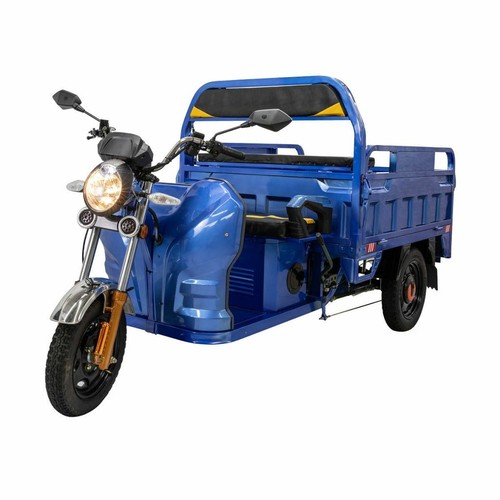
It fell relatively out of favor with the introduction of cargo trikes[0], a.k.a. "triporteur" in the local parlance. Trikes are now used for everything from transportation to cargo, still mostly within small businesses in the informal economy.
[0]: https://i.ebayimg.com/images/g/9LsAAOSwJnxgO-sr/s-l500.jpg
Also not being able to see the vehicle firsthand before purchasing.
They’re inexpensive though. That’s nice.
( https://initiald.fandom.com/wiki/Takumi_Fujiwara%27s_Toyota_... )
That’s why you can’t take an F-150 and put it on a smaller frame and sell it in the US. But many of us want one!
I’d love a half-ton truck the size of a 80s Tacoma…
I could use some help fact-checking though. I was digging around for primary sources but it’s tough reading…
https://www.sfchronicle.com/local/article/Meet-Kiri-the-tiny...
That's in large part to light trucks having less stringent fuel-economy regulations.
Well it all made sense when I saw a Kia Telluride.
Often the infotainment system (and the invariably J-pop music) remain in Japanese, which is fun.
It would be great to live completely car-free, but absent major changes to how we plan our cities, it's just a sad reality that cars are a necessary ingredient to life in the vast majority of America. To cope with this, I'd love to be able to import a kei car or van from Japan, or micro-sized European city cars, or even some of the very small EV city cars that we see in China... but I just can't, unless I want an overpriced pile of scrap from the 1990s.
It's all so much worse when you realize that the 25-year rule is a holdover from a grey-market import scare of the mid-1980s[0]: European carmakers, namely Mercedes, BMW, and Porsche, were having trouble in the US with people importing European models of their cars. There were some valid concerns around inconsistent modifications for US safety standards, but the main issue was clearly that these grey-market imports were cheaper than buying a US model from a dealer, so profits were being missed. Instead of fixing the pricing discrepancy, they just successfully lobbied the government to enact this draconian 25-year ban, and so to this day I can't have a 2020s Japanese kei car shipped to a US port at my expense because it'd be illegal to register it.
[0] https://jalopnik.com/the-25-year-import-rules-history-is-mor...
They have a terrible reputation, primarily because they get used a lot by people who can’t afford a car.
I wish it were different, but driving a moped/Vespa on American roads is a pretty big risk.
But I guess I feel the same in SEA where instead of electric bikes you have to contend with a sea of gas mopeds.
Half of all cars sold in the US are imported. Toyota, a Japanese company, is the most popular brand of car sold in the US.
So, yes, you can import cars all you want, they just need to follow US safety and emissions standards. These cars do not meet those requirements, so you can't import them.
If you didn't block them as imports, we'd have lots of people just go to Mexico and buy highly-polluting vehicles to save money, and our problem with smog in the border states would be much worse.
I'm interested in learning where it was actually _curtailed_ in some measurable way e.g. due to the public pushing back, or other reasons. If you know of resources/studies on the pushback story, assuming there is one, would be appreciated.
I currently drive a small efficient car, but I'm seriously contemplating buying an electric SUV for my next car, even though I've no use for it. I don't drive a lot, but every time I drive, I see drivers on their phones, drivers who don't signal, drivers who race the lights, drivers who don't turn their head lights on at night, and other general poor situational awareness, etc. etc. And about once a month I see someone run the red light by a _large_ margin.
By absolute measurements SUVs are worse in most metrics including safety, but alas prisoner's dilemma prevails. No amount of defensive driving on my part is gonna trump physics, if / when my tiny hatchback gets T-boned by a lifted truck.
With that situation, we usually buy cars before 2005 or so, and we pay those 3k to 4k euros in those, and usually with over 250 000 km (155 000 miles). Depending on the model, they even can be more expensive than people would think: A late 90s Nissan Terrano would cost from 6k to 7k, and my current car, a Korean one that cost about 13k in 2012, now cost from 9k to 11k (unless it has too much mileage or isn't in a decent shape).
At one point, I pondered buying a Toyota previa with this head gasket issue for 3K and planed to repair it myself. Fortunately I got my sense back and bought a Renault Scenic with no issue at all, 2K and I managed to have also the timing belt replaced. Yes, internet thinks that because it is a French car, it will crumble. Well internet, so far it had no issue and its head gasket is intact.
Even the advocate highlighted in this article (Economist) admits his would probably be a “death trap” on a busy highway.
Maybe the US should create separate standards for city streets and roads with low speed limits, that could be a good way to bring down vehicle sizes. But just allowing these things just anywhere seems like a recipe for increased fatalities. For every HN reader who would use theirs wisely there are 10 average Americans who would risk maiming.
They already have!
https://en.m.wikipedia.org/wiki/Low-speed_vehicle
https://en.m.wikipedia.org/wiki/Neighborhood_Electric_Vehicl...
But it’s a hard sell when the US has so many high speed roads. I mostly see them used for facility maintenance, parking enforcement etc.
If they don't pass emissions, they cannot be legally imported. It doesn't matter whether you want to use them on private property; that private property is still within the US, and subject to EPA regs.
People think the same thing about not having to register their snowmobile, ATV or whatever if they're hooning around on their farm or private property. Nope. State environmental cops will happily step onto your property, chase you down, and cite you.
Toyota and Subaru are present in the United States because there is an incentive to manufacture them locally, which serves as a valuable learning experience for the US.
Thus the United States' car manufacturers are either perceived as being of low quality or lagging behind their competitors, leading to the country being utilized as a third-party for inexpensive assembly.
A) most cars manufactured by European and Japanese brands are built in Mexico and direct imported via NAFTA/USMCA. The fact that Toyota and Honda choose to continue to do manufacturing in the United States is probably seen as a boon to those local communities.
B) the "low quality" image of American brands is pretty limited to the United States, like a lot of American products (California wine, for instance, is generally bottom shelf in the US but well regarded internationally). In Russia, Ford used to be their top marquee. Ford and GM are both huge in Oceania. In LATAM, they're seen as a step up from Japanese and Chinese brands and Volkswagen. In Europe, they're not generally perceived as low-quality; instead, the perception is that they're too large and fuel inefficient for most European roads/cities.
I think the US needs to update a lot of rules regarding the sale, import, pollution and import of cars, including trucks. Require commercial licenses for the big stuff, have US manufacturers manufacture these practical small cars in the US according to modern US standards, and allow the import of vehicles that US manufacturers refuse to make.
I find it funny (yet I see this all the time) that 2 countries have polar opposite regulations for the same topic.
The question is: is it street legal and can you legally get it registered to drive afterwards? Once you ask that question, tons of regulations come into play ranging from axle weight to emissions standards to safety requirements.
[1] you gotta have an ATF destructive devices license and follow state specific laws if you want to fire the main cannon
Unofficially, it's indirectly how we got the Civil Rights Act passed as a quid pro quo:
> In retrospect, audio tapes from the Johnson White House, revealed a quid pro quo unrelated to chicken. In January 1964, President Johnson attempted to convince United Auto Workers' president Walter Reuther not to initiate a strike just before the 1964 election and to support the president's civil-rights platform. Reuther, in turn, wanted Johnson to respond to Volkswagen's increased shipments to the United States.
Whenever you buy from aboard, that's money and jobs that are lost to the USA.
So they want to export, but not to import!
And instead of banning the imports, they just set technical standards.
Like requiring specific bumpers and car height, and pollution standards, despite the fact US roads are deadlier and the US pollutes more than anywhere else.
Other countries are a bit more optimistic about international trade, and recognize they can't do everything.
Western Europe, for exemple, has focused on high added value engineering and office jobs, to outsource production to Eastern Europe and Asia. And everyone has an engineering degree in here, so good luck to live on your factory job.
IIRC the frame makes the car, so you could bolt your kei to a Geo Metro frame, and register it in one of the more lenient states (KY, AZ)
The vehicles meeting the requirements wouldn't be competitive on price because they'd be playing by a different set of rules.
https://www.dmv.ca.gov/portal/vehicle-registration/new-regis...
From the California DMV's web page on direct imported vehicles: "If your direct foreign import vehicle was not originally manufactured to meet California emissions standards and DOT FMVSS, the vehicle cannot be registered in California, unless the vehicle is modified and tested under CARB’s direct import program."
Based on research that I done years ago, my understanding is that the modifications required to get many foreign vehicles to conform to California's emission standards, combined with the testing fees (which is far more expensive than the cost of a traditional biennial smog check), make it prohibitively expensive for casual buyers to legally register imported vehicles in California.
Some people get around this by registering their vehicles in other states where only the EPA 25 year rule applies; occasionally in California I do see cars with their steering wheels on the right side with Nevada or Oregon license plates. However, California generally requires its residents to have their vehicles registered in California.
One thing I'm curious about is whether California allows direct imported vehicles to be converted to run on battery-backed electric motors as a legal modification. If this is the case, then the vehicle would certainly pass the emissions test.
I see plenty of Smarts and Fiat 500s in San Francisco
I am leaning more towards a street legal side-by-side as there are a few dealers here and they have people to perform more advanced repairs. Downside is they cost more especially if I want a fully enclosed cab with windshield and heater, something that is a must during the winter here. Upside is I can take it into the mountains and also use it to run into town for groceries.
An upside to either of these options is that these are the remaining vehicles that do not as of yet have any of the telemetry, dashboard infotainment systems, pay-as-you-go for subscriptions for standard features, etc...
https://reddit.com/r/fuckcars/comments/sdrgv3/japanese_truck...
A kei truck has about 90% the bed length of a pickup while being a lot more nimble. The lower bed is more ergonomic to load and unload too.
Importing adds friction both up front and for ongoing sourcing of parts and maintenance. Just give us some options for local pickup trucks utilizing existing repair facilities! Instead everyone bitches about truck drivers having such large vehicles, when that’s all that’s on offer here!
There is one farmer we used to call the used kei truck salesman because at any given time he has 10-20 of these in his yard for sale fresh off the import boat.
I'm sad that the city van is a dying breed now. Had a Nissan NV200 I used for a daily driver and weekend camper van. Unfortunately the NV200, Metris, Promaster City, and Transit Connect are all killed off and out of production. By 2024 If I want another brand new cargo van I'm stuck buying a $40k+ fullsize.
I live on a working ranch and while our truck is very boring ("work truck" - basically a fleet vehicle with no options) it is still quite large as it has an 8' bed, etc.
I think we could make good use of a battery powered vehicle with a small cargo area and we definitely make good use of the aforementioned full-sized truck ... but I don't find these mini-pickups appealing or interesting.
If anything, the urban folks are buying bigger cars/trucks and rural folks are buying bigger sxs/ATVs
And at least out here, you're allowed to run around on the roads at least some with them to get between fields.
For those who aren't aware, Mahindra secured a licensing agreement with Willys in 1947 to make them. They're actually as close as you can get to a modern Willys Jeep, so much so that they were sued by Chrysler for infringing on Jeep's trade dress by looking too much like a Jeep brand Jeep
It's the same somewhat bizarre logic that makes it fine to register say, a 1969 VW Beetle in the US, but not a 2004 Mexican Beetle that's no less clean or safe. The older stuff gets grandfathered in because at that age there's hardly anyone willing to bother. But if new minitrucks were road legal, they'd be everywhere, and there might be an epidemic of minitruck highway deaths, etc.
If made illegal to drive on the roads it's not clear why these would be preferable to side-by-sides, other than novelty or for folks that really like to wrench.
Like the other commenters have said, you have to check your state's laws to see if they can be registered, but I've met people in states that don't allow kei trucks and are just used as ATVs, and it's not like you're going to be fined for driving on back roads between your properties anyway. In Nebraska they're banned on highways, but it's not like you're going to take your 1800lb car which doesn't have airbags or any crash structure that only drives up to 65mph with a tailwind on any highways anyway.
If you're looking to buy one, check state laws and I recommend just eating the ~$2,000 markup to get one already with tags from a car dealer that sells these. Dealerships that sell RHD cars to people who drive for the Post Office will have these in stock and will be the easiest to deal with. It's not worth the risks and effort to do all the paperwork yourself IMO. If the car previously passed inspection in Japan, it's basically guaranteed to be fine because inspection in Japan is very good, they check for rust etc. Parts can either be cross-referenced to other cars (e.g. Honda Civic) or they will be expensive but available. You'll have to do all your own work, but they're extremely simple cars.
I use mine as a van camper, pretty cheap on gas if driven slowly.
The Ford Maverick is great and around 20k but at this point I want 100% electric.
Side by sides can, with a few accessories (horn, license plate lights, turn signals, etc), be driven legally on roads. Most dealers are happy to sell and attach these high profit items for you.
Funny side note, my state even has a picture of one of the Japanese mini-trucks in the PDF. [1]
I think people should look up the DoT website for their state to get the current legal requirements for street legal UTV's and mini-trucks.
[1] - https://www.dot.state.wy.us/files/live/sites/wydot/files/sha...
Regardless, they look pretty cool. A cheaper option, but lower quality, might be some small trucks from China.
It will also be interesting to see how Fords Maverick catches on. May not quite fill this niche but seems like a good option overall.
a) They do 60mph ok if you have a four-speed one. Five-speed ones will do 70 just fine.
b) country roads are generally 45 in most states.
c) chinese minitrucks have a hell of a lot less support for about the same price.
d) Ford mavericks are DOA here. If you want a work van you buy a work van.
However, in some states you can't use off-road vehicles on any roadways, and you would only be able to register such an import as off-road vheicle. Where as you could register 25+ year old on in quite a few states as a low speed vheicle which allows pretty much anything, but highway use.
People's poor dumb monkey brains just can't handle the speeds/weights involved in driving cars IMO
Also don't get me started on how it's pretty hard to find a regular cab pickup. Like the ford maverick only comes in a 4 door configuration. Good luck carrying any standard length items like 4x8 sheet of ply wood or 8 ft lumber without the thing comically hanging out past the tail gate. What I found funny is on fords website you can see just that https://www.ford.com/trucks/maverick/. This is something you even see on larger trucks, and I am like wtf... It's a truck not a people hauler. You might be able to find some manufactures in their commercial/fleet line of vehicles that is at least sane when it comes to bed length.
Honestly, these days it's just better to get a cargo/work van unless you needing to haul dirt or other dirty things when looking for something new. It just seems like a small truck with a bed that make any sense are not made =(
Jeans started out as super useful and economical clothing worn by miners, cowboys, etc. fast forward n years and people are paying hundreds of dollars for exclusive denim and designs with pre-worn holes and other artificial wear patterns.
Trucks today look like they could be utilitarian and used for work but are really just an overpriced fashion statement.
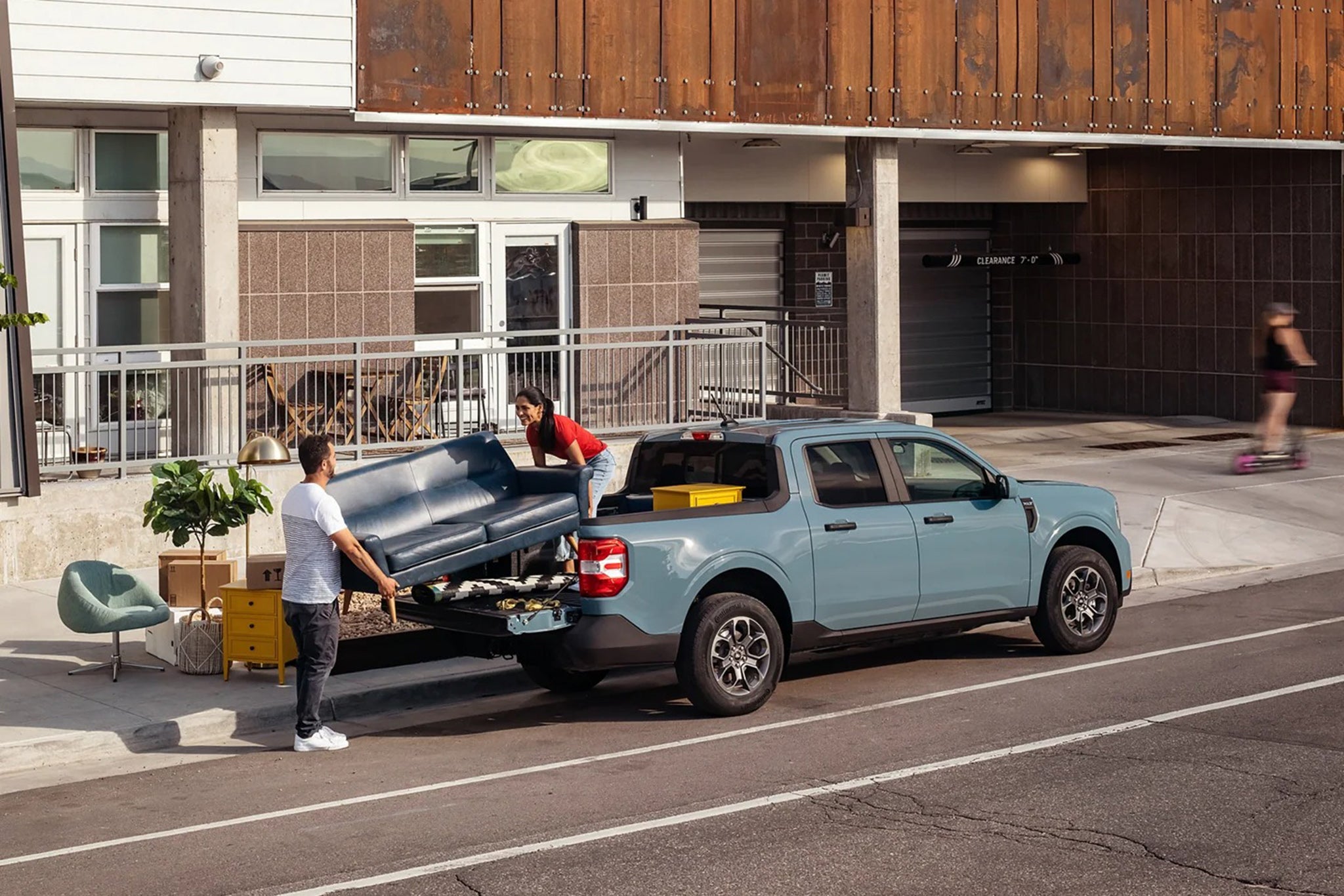
Look at the absurd marketing picture Ford put out. These people have no hope of even loading the couch they're struggling with, let alone half the other crap waiting on the sidewalk: https://www.thedrive.com/content-b/message-editor%2F16461598...
While this is a somewhat different type of truck than the subject of this article, it reflects a similar failure of manufacturers to address a major gap in the market. Not everyone is a poser who just wants to drive around in a "truck." Some people have actual truck applications to be addressed, and want an efficient little truck for them.
Really depends on the city and country, but in general, yeah, urban planning for humans is taken seriously. E.g. the Netherlands' cities are just fantastic for pedestrians and bikes and public transit, and quite decent for cars too (because the alternatives are so good if you do need/want a car, there's not a lot of traffic in your way); meanwhile in Bulgaria, the capital Sofia with an official population at 1.3 million (and lots of people from surrounding cities commuting daily) clearly prioritises cars, with massive works around road works, new ringway, etc.. Even then, there's quite decent public transit (with 3 metro, tens of tram and trolley, close to a hundred bus lines), pedestrians can walk everywhere and there are even bike lanes showing up more and more.
These are the reasons:
1) They are too wide. Real farm tracks are often narrow and overgrown. You want a narrow viechle to fit down them.
2) They are too heavy. When they get stuck you want them to be light so it's easy to pull them out. Ideally a little manual pushing should be enough
3) Off-road "capability" isn't actually that important because you could get a Toyota Camry down 99% of farm tracks. The 1% that's impassible by a Camry is also impassable by most off-road viechles because a pipe broke or a river flooded and washed away the road completely. You want off-road capability to prolong the life of the viechle, not to get down the track.
4) You need good visibility from the cab so that you don't run over your colleagues when doing complicated maneuvers.
Those little Japanese pick-ups look perfect.
The fact they can't really be driven on interstates/highways is the only thing that would make it difficult to sell them here as new vehicles.
Given how well the ford maverick is selling, and the successful introduction of the hyundai santacruz (and soon-to-be-introduced chevy montana) I think it's safe to bet there would have been a decent market for new vehicles in this segment if the manufacturers could get them highway-compatible.
People make this excuse all the time in australia too. I have never had a problem living all over, including small country towns, without a car. Excuses are bullshit for most people.
  The 25-year import rule here, which bans Americans from importing vehicles
  from other countries unless they're 25+ years old
Of course we shouldn't be allowing people to import some pollution-spewing deathtrap that doesn't have seatbelts--the FMVSS regulations do exist for a reason--but I think we should be taking a more critical look at our regulations, especially as compared to other places at the same socioeconomic level.
Also these kei class vehicles would not do well on some of the highway speed collision tests.
Moreover these Kei Trucks still have to deal with the 25% chicken tax =(.
The trucks have all just gone through auction and have inspection reports. Mine I bought for $2k was grade 3.5 and what I’d consider pristine for a 25 year old truck. The Japanese are pretty trustworthy people to do business with, and they build great vehicles.
One thing the author left out was the fascination I had with the whole process. Watching auctions, assignment to a ship, tracking it through the ocean and storms and watching on video as it passed through the Panama Canal. Then the customs and importation paperwork with CBP, going to the port, the driving 200 miles home in my new “truck” that had road manners more akin to my golf cart than anything actually on the road around me. I-95 was terrifying— I barely got off the on-ramp before looking for the next off-ramp to find backroads for the rest of the journey.
These kinds of trucks might more to your liking. Sure they aren't as small and cute as the imports, but your local auto store can still get you parts for them.
They are fun to drive, fairly fuel efficient, and are capable of hauling material from the home center. I learned to drive stick, and how to pop the clutch when you have a dead battery, in a Ford Courier on the high plains of west Texas.
I wish they still made mid-sized pick-ups that were actually mid-sized.
A Tacoma is nearly the size of Tundra was twenty years ago, and a Tundra today is like the size of a damn schoolbus.
Sadly Dodge Rams and other stupid big US cars are starting to rear their ugly faces, although they look hilariously out of place on our roads. A popular term for them is "emotional support vehicle"
I’ts kinda crazy that cars like that are not even made anymore. You can barely load a couple boxes into most of the currently popular extended-cabin abominations.
the people that depend on these vehicles are particularly tuned in to how to keep them alive...
Years ago, when my wife and I lived in a 'rural adjacent' community we had a ~20 year old manual transmission european sedan sitting in our driveway for about a year, tires slowly deflating, until one couple stopped by to enquire about it. My wife told them that if you can get it running you can have it, the husband came back a few days later to sign the paperwork, and after popping the hood and turning a few knobs was able to get it started and drove it away :)
Very happy that the vehicle had an extended life with someone that could put it to use.
The biggest issue I have is that they are right-hand drive. I'd be hesitant driving a mini-truck on streets and highways, even if it's licensed. This would be a non-issue if the intent is to leave it on private property, unlicensed.
I wish mini-trucks had a bigger demand here. I'd like a pickup, but I don't need the monster trucks that are on the market these days. Just something to move furniture, appliances, and junk around town.
The Ford Maverick is even smaller. It is a bit more barebones but it might work for you.
https://www.trademe.co.nz/a/motors/cars/suzuki/carry/search — all used imports from Japan. Note prices are in NZD, reduce prices by 1/3 to get to USD. You can get GST (sales tax) refunded on exports but it might not be much money because second hand goods are zero-rated?
I really wanted a 1.3 litre 4WD Suzuki Carry a few years ago, but they really hold their value so they were not cheap enough for me. USD8000 for a 20 year old ute! They are in high demand in NZ.
I personally would avoid the Subaru mini-truck: I think mechanical issues and access to parts are problems. I also looked at the equivalent Hyundai mini-truck, but the Suzuki is probably the best bet.
Japan has regulations that make old vehicles expensive to keep, so they export them before they get really old. New Zealand buys a lot of second hand car stock from Japan. If you need something 25 years old, then New Zealand might have more stock.
We don’t salt our roads. Anything that has spent all its life in dry areas like the Canterbury Plains would be best - don’t buy if it has been long periods in wet climates. Avoid anything that has been on the coast - avoid sea-spray rust damage (don’t buy from my local area, New Brighton).
Living in a rural area, I first saw these popping up at least a decade ago. The typical farmer / rancher has to be mechanically skilled and one of the benefits of these vehicles is that they are relatively simple mechanically speaking, IE: assuming availability of parts you could do the work yourself.
So if you can source the parts for them, and be willing to have it take some time; you’ll find help.
It is. I can do some mechanical work but I have no idea what special tools and tricks are required knowledge with these trucks. At least with side-by-sides there are a myriad of dealers and mechanics near me as so many people use them around their ranches, to go into town and to go into the mountains. There is probably some little shop that would say they could work on the mini-trucks but my experience with the small businesses here as that most of them fake it until they make it, but they never make it. So I would be taking a bit of a gamble. If I found one that was cheap enough it might be worth the gamble as I could just write off the loss if it has some obscure problem. That is why I am still on the fence.
I can fit a bed, 3 months of luggage and a bicycle in mine. In a pinch, it's a brilliant microcamper. It's a big box on wheels. You can do what you want with it.
It's not a nice car, but it was designed to serve real user needs. That's why they're everywhere from Morocco to Poland.
* protects your goods from weather
* more cargo volume
* better forward visibility without a long hood
* easier to load and unload due to being lower
* can park it without people being able to walk up to it and taking your tools and equipment out of the exposed truck bed
I see these monster pick-up trucks more and more in European cities nowadays too, F-150s, Dodge Rams, with some fancy paintjob and big wheels but who's bed hasn't seen any actual use carrying anything because the owner is usually some middle-aged Ray-Ban wearing divorced dad with money, using it as a toy, trying to look cool. Power to him I guess, but those monster trucks are horrible for visibility and safety of cyclists, pedestrians, small cars, etc.
Most utilitarians here, blue collar workers, people for whom their vehicles are a tool for the job, mostly drive white vans here, as they're a lot more practical and economical than big trucks.
What’s fun is when you notice that the biggest, flashiest trucks are all concentrated in the fanciest suburbs. Once you get out in the country, off the main roads like where I’m from, suddenly (1) pickup trucks make up a lower percentage of the traffic, and (2) they are generally* smaller, more utilitarian and more beat up.
* except for the occasional F350 dually pulling an actual horse trailer
If you've ever sat in traffic driving a small car surrounded by large vehicles it definitely starts to sink in that you are at a distinct disadvantage if anything goes wrong. So this trend is also at least partially about this weird arms race of wanting to feel safer in the presence of ever larger vehicles.
I bought a F250 diesel to tow my 13,000 lb rv. Smaller vehicles can't do that.
Subaru Sambar (kei truck) towing capacity: 1,300 lbs
Ford F-150 towing capacity: 5,000 to 11,300 lbs
Ford F-250 Shelby edition towing capacity: 24,200 pounds
And that's just one additional dimension where these vehicles significantly differ.
These vehicles are utilitarian workhorses great for contracting, construction, farming (eg. hauling livestock), towing (eg. other cars, trailers, mobile BBQ, etc.), boating, leisure [1], etc.
I live in an urban area close enough to the forest, lakes, and pastures to see all of these uses frequently.
The electric version will power job sites, camp sites, and help with disaster recovery. It's going to sell like hot cakes.
[1] https://www.f150forum.com/f34/how-pull-jeep-out-mud-130086/#...
The subreddit is specifically named 'fuck cars'. How exactly are they being dishonest? This is more like r/vegan showing how a vegan meal is better than a steak meal along some dimension, say, environmental impact.
> I live in an urban area close enough to the forest, lakes, and pastures to see all of these uses frequently.
In fact I would say that you are the one being somewhat dishonest by (implicitly) claiming both the benefits of being able to use it as a utilitarian workhorse, and in an urban area. If the trucks have the majority of their utility as contracting, construction, or towing, they should require being licensed as a commercial driver, and potentially be banned from being operated on city roads due to the danger they pose to smaller vehicles and pedestrians.
Think of the argument from that subreddit (and me) this way -- if you are driving a huge farm tractor, you cannot also bring said tractor into the city center. Not all heavy machinery needs to be allowed everywhere. Obviously you might not agree, but I think the argument is fundamentally honest.
The transmission overheats after 3-4 hours going uphill with no load. They made it too heavy for the powertrain!
It’s also depressingly easy to trigger the overload light on the dashboard by doing things like buying bricks at Home Depot.
Seriously, WTF? Do we need a 2500 class to replace our old pre-fuel-injection GMC 1500? It had better fuel economy and was also lower to the ground. It could even handle mountain freeways!
(The newer GMC was even worse than the Ram, FWIW.)
I’d definitely look into one of these little japanese trucks if I could get a new one and have it serviced. Bonus points if it is an EV.
I'm pretty sure most people who own these oversized pickup trucks never use that towing capacity. Maybe some do, and if they were the only ones using them, nobody would have a problem with it.
In fact my friend was SO excited about his new van (for 1998) that for a while, he was bragging about every last little aspect up and down those hills, every time we rode with him. He lived in a gigantic danchi at the top of one of the steepest hills around, and still loved that thing.
(He worked as a furnace-jumper-inner / furnace-insides-scraper at an auto recycling place all day, and had molten aluminum burns on his arms and sometimes face...I respected the heck out of that guy for what he did to support his family. I think he runs an IT business in Brazil now.)
No trouble going up long or steep hills in windy mountain roads with the whole family of 4+luggage in the car.
No trouble going up long hills at highway speed (120 km/h) with two adult friends in the back.
Aircon on and everything. Works great.
The closest us equivalent in the US may be a Hyundai Santa Cruz, which sells ok-ish, the Honda rigid line, which sells okish too, and the Ford Maverick which sells like hot cakes.
RAM, like Ford, had the reputation. A rebadged Fiat toro may do the trick.
https://www.cnbc.com/amp/2021/03/04/ford-quietly-begins-prod...
Therefore, it's far easier to build a larger vehicle to meet the requirements.
Because they know they can sell bigger trucks for more money.
What about the Ford Maverick? The only issue is that the bed is fairly small, but it looks like these minis have small beds and low towing capacities as well? And Ford makes a hybrid version.
(Don't misunderstand: I'm not arguing against relaxing the rules in Oregon.)
[1] https://www.caranddriver.com/news/a36651899/sizing-up-the-20... [2] https://www.oregonlive.com/business/2022/03/pedestrians-incr...
  My memory is a bit hazy, but at one point in time an importer company paid the
  large sums (hundreds of thousands I’m sure) to have a certain GT-R model go
  through the safety/emission procedures so they could be imported before they
  were 25 years old. That’s the only case I can think of.
I've seen a new 2023 4runner with weird panel gaps, unnecessarily stiff handling (compared to a 2020 model), and sunroof motors stopped working after rain.
For example, they recently became street legal in North Carolina ( https://www.ncleg.gov/BillLookup/2019/H179 )
Do you have a source for this claim? In my limited searching China exceeds the US in pollution. My sources could be biased, so I would be happy to take a look at yours.
Western Europe has the issue of much lower wages though, and they keep importing cheap labour to offset the "aging crisis", rather than embracing it and labour-saving technology like Japan. Like I'd definitely rather be an engineer in the USA, if I could magically get a green card.
Works great for occasional use, but still really sub-optimal to have an extra row of unused seat rather than bed space to put stuff if your primary use of the truck is to carry stuff in the bed.
I think there is a reasonable logic that scrapping the truck would probably be pretty bad for the environment, such that some of the standards are "water under the bridge", as it were. The rest of the logic almost certainly falls on the numbers just not mattering? I don't know.
It's one thing to work on your car and get it to pass smog. It's another thing entirely to buy a dozen of them.
Okay, now that’s a rabbit hole if I’ve ever seen one. Because: tanks are operated by a crew, not just one person.
So who on the tank crew needs this certification? Presumably, at least, the gunner—i.e. the person actually pressing the button to fire the cannon—would. But how about the owner of the tank? How about the driver, if that's a different person? Can the driver/owner of a privately-owned-and-operated tank just be a regular dude, and call in an expert (maybe someone from the National Guard) to sit in the tank alongside them as its gunner?
I know that ATF explosives experts are usually called in by e.g. YouTube science content-creators, to handle the actual "explosives" parts of explosives demos. But in such cases, the ATF fellow doesn't just set off the explosives; they also set them up, in fact usually sourcing the explosives themselves rather than trusting explosive materiel given to them.
In the case of a tank, the tank is already there on-site when the expert arrives; and its cannon shells are probably also already there on-site, as finished explosives. Would a destructive-devices-licensed expert insist on calling in an engineer for an audit of the tank's soundness as weapons platform, to ensure e.g. the cannon barrel will still be able to take the strain of firing after sitting unmaintained for decades? (And would that person need to be specifically trained and certified in Weapons Engineering to be able to sign off on the tank's soundness?) Would they insist on sourcing their own shells, or, if that's impossible (vintage/foreign tank where shells of the required shape can't be locally sourced), perhaps having them refurbished (opened, cleaned, re-filled with a known explosive mix, re-packed) by a trusted factory?
And do the rules change if the driver tells the gunner when to fire? In fact, would the answer to the licensing question be different depending on the type of crewed weapons platform we're talking about? Would you, as a vehicle owner, need a destructive-devices license to e.g. captain a gunboat in a private pond, given that it is usually understood that the captain of a ship has overriding authority for any decisions anyone else who has boarded their ship makes while on board (and so, in other words, can tell a gunner to fire off a missile whether the gunner thinks that's a good idea or not)?
I also dislike that these modified ebikes (not just the fat ones, but also some older models of vanmoof) can do 35-40 silently on a bike lane. I've had a couple close calls because they caught up to you almost three times as fast as a regular person on a regular bicycle do and, unlike the dirty mopeds, they are noiseless so you don't hear them coming with enough notice.
it's nice that vanmoof tried to help on their side, but it's something that should be enforced at the local traffic/policing level.
If someone does their homework, they could bring over a big American Ute to NZ (buy cheap in US, sell for heaps in NZ). Need to be extremely careful about NZ regulations though - complicated and relatively costly/risky. Ideally find someone in NZ that has done it for the model you would import into NZ.
It is the most American vehicle ever made
Next to no electronics, far stronger than a Hilux, all standard dirt cheap parts that are all entirely serviceable in the middle of no where and most importantly for Americans: a massive V8 diesel engine
Out bush I see quite a few 6 wheeler modified ones with double 220L (63 gallon) fuel tanks
US Regulatory capture shooting themselves in the foot I guess
I blame regulatory capture for both of these things. Gotta protect American big truck manufacturers from competition from smaller, lighter, possibly cheaper vehicles.
perfectly safe and clean modern vehicles from other advanced nations
The UK, for instance, allows pretty much anything with wheels to be registered (e.g. the Peel). Euro NCAP is merely advisory, you can still sell/buy a death trap. Pollution as well. Want an early 90s Figaro or S-Cargo or a late 00s Hijet? Those were sold without cats or fuel injection. Want something cheap and Euro? Cool. The cheap shit is often cheap because it pollutes so much it can't legally be driven in city centers any longer.
A lot of the bellyaching is over cars that the manufacturers couldn't justify fixing up to meet American standards.
Obviously there are many confounding factors, but the point is if the USA really cared, it'd federally mandate more effective measures like safety inspections and emissions testing. The import restrictions are protectionism.
My 2001 Ford Ranger hit this sweet spot beautifully but it was a DOHC and when the timing chain came apart it wasn't worth doing an engine swap. I can't find a replacement currently but am holding out hope for the Toyota Tacoma electric in a year or two.
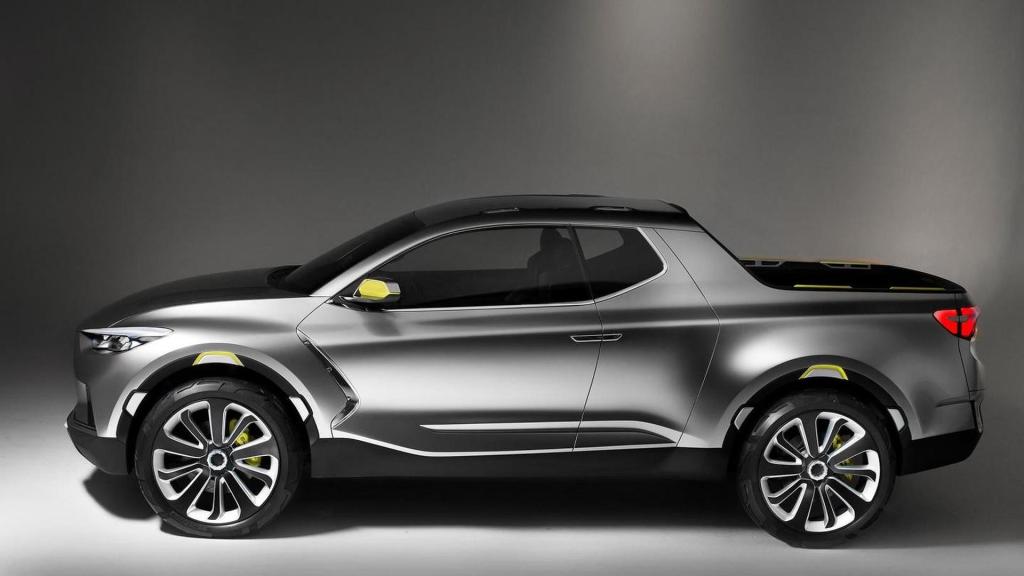
[0] https://www.motorbiscuit.com/wp-content/uploads/2019/09/hyun...
But Santa Cruz is at least a step in the right direction.
It's the same length as my 2002 Xtracab Tacoma, which is nice, but my Tacoma has a bed that's literally twenty inches longer.
I ended up just attaching a trailer hitch to my Chevy Volt and buying a lightweight 8ft trailer. As long as I just need to move big and not heavy, it's perfectly adequate, and the mileage when I'm not hauling is a lot better.
And it cost me about $2k while keeping me out of the insane used truck market.
Not always. Sometimes it's a weird little muscle car platform.[1]
I really wish it was tailpipe based. I liked the PA emissions laws where you could improve the efficiency of your vehicle and it would pass. Not so in CA, must be numbers matching and CARB certified parts/combo.
They used to do it that way. Still do, for some cars, although the pre-ODBII set is now out of smog regs in most states.
Turns out the tailpipe breather machines are finicky and difficult to calibrate, causing false positives and false negatives (sometimes corruptly).
The Toyota Sienta, which starts at JPY 2M, seems like a much better value for a passenger car - and I think they borrowed from the Kangoo's styling a bit for the latest iteration [2]. Or for business use a Town Ace, NV200, HiJet, etc.
To me, a pickup truck is a pretty utilitarian thing. I don't need a cab. I have other vehicles if I need to take passengers.
I remember pricing out a pickup a few years ago, and it was hard to find one that wasn't already configured with a cab. I guess the market demand is larger for people who have kids but still want a pickup for whatever reason.
Or people who buy trucks for their business. It's much easier to put a whole crew into one-two vehicles instead of driving each man in his own truck especially if you do residential work, where worksites might not have ample parking or any parking for that matter.
Ever since overfed suburban poseurs started buying trucks, the market has shifted to crew cab and luxury.
The 1950s to mid-1970s isn’t, even at the widest extreme that fits that description, 30-40 years.
That will at least get it perceived as not being a great work truck.
It looks like the Honda thing is like 6.5 feet, so you are sticking off the back quite a lot less if you have an 8 foot load.
My memory is a bit hazy, but at one point in time an importer company paid the
large sums (hundreds of thousands I’m sure) to have a certain GT-R model go
through the safety/emission procedures so they could be imported before they
were 25 years old. That’s the only case I can think of.
IMO a step in the right direction would be to carve out some exceptions for EV conversions.
Here's the first google result for "large cars regulation loophole", looks like an interesting read: https://www.wired.com/story/the-us-wants-to-close-the-suv-lo... Edit: prior HN discussion here: https://news.ycombinator.com/item?id=35609521
Sounds like it's a value-judgement free decision from manufacturers to follow the incentives from the policy as we'd predict:
way cheaper and less work to make those (now pretty popular) vehicles bigger than R&D and re-tool factories to make smaller and/or more efficient. It would need to be made more efficient to get smaller otherwise you lose power. Truck owners are comparing power (even if they dont use it, and it's sometimes just brand bragging rights) so that sounds like a worse option if you're making and selling them.
It has a bad connotation, but I guess not all things that sound like conspiracy theories are false. Another car themed topic is when Standard Oil and Firestone Tires colluded to buy up trolly lines and shut them down.
Why is it a conspiracy theory?
I'd love to cite GA's Clean Air Act as an example but the rule around qualified vehicles has been amended 11 times since it was enacted in 1996 and I can't figure out how to see previous versions of the rule.
My personal belief is this also explains American bias towards planes over rail.
Meanwhile in the US, Ford had a small aviation division that made one plane, closed their aviation business in 1936, but during the war converted their factories to mass produce bombers (most notably the B-24).
Today manufacturing is vastly more specialised, and today's planes are drastically more complex than their predecessors. Nonetheless, even basic trucks are a very important component of modern wars(for logistics), so in case of war any automotive factory could be useful.
I kid!
In use: https://commons.wikimedia.org/wiki/File:Bairon-FR-08-chantie...
https://commons.wikimedia.org/wiki/File:Mercedes-Benz_Sprint...
(Can an American tell me what these vehicles are called in the USA?)
Flatbeds.
I'm not gonna ask PETA for tips on raising beef steers, I'm not gonna ask Joe Biden what gun I should buy and I'm not gonna ask /r/fuckcars what car I should buy. And this is on top of the usual Reddit circle jerks and groupthink that make asking for advice there for anything of meaningful stakes questionable in general.
https://www.google.com/maps/@36.9510791,138.6746615,3a,75y,2...
They are pretty capable offroad vehicles.
They're comparing on a single dimension and laughing at F-150 owners.
> This is more like r/vegan showing how a vegan meal is better than a steak meal along some dimension, say, environmental impact.
Not when evaluating a purchasing decision, overall utility, or customer demographics and needs. I'm showing that morally opposed parties inject themselves and their biases orthogonally.
> In fact I would say that you are the one being somewhat dishonest by (implicitly) claiming both the benefits of being able to use it as a utilitarian workhorse, and in an urban area.
Have you ever been to a city that's half an hour to the woods? Or perhaps somewhere it's typical to find people owning acres of their own land right next to a major metropolitan? Not everything is SF or NYC.
If you want to tax an externality, do so. Many state gas taxes tax vehicle weight via the proxy of gas mileage. Right now it's the heavy EVs doing the damage that are slipping through the taxation cracks.
> they should require being licensed as a commercial driver
Okay, now we're getting into yucking other people's yums.
Some people own boats and full hog smokers, like getting muddy on the weekends and going fishing. There are millions of these folks in America.
If you want to regulate what you perceive as a negative externality, we should do it evenly against everything. Tax and regulate broadly and fairly.
Consider sex. It spreads disease and causes all sorts of relationship drama. Kids can be a nightmare. Think about all the lost productivity! Who's paying for that? (I'm joking, of course!)
In the scheme of things, these vehicles are much more good than bad. They sell like crazy, satisfy their consumers, get a lot of productive work done, and on the weekends are spent as leisure devices - getting folks muddy and smelly with beers and fish and sun. A good diversion for hard workers.
> potentially be banned from being operated on city roads due to the danger they pose to smaller vehicles and pedestrians
You can vote for that in your own district, and maybe that's correct, but other places and populations will feel differently about how they live their own lives.
> if you are driving a huge farm tractor, you cannot also bring said tractor into the city center. Not all heavy machinery needs to be allowed everywhere.
On the spectrum of farm tractor to kei car, the F-150 is tightly clustered in the middle with the rest of the "street legal" vehicles.
* The real farm families would have a pickup for pulling a horse trailer, moving mulch/manure/hay bales/equipment, but also have a regular sedan for, like, driving places.
* The suburban families would have a pickup or SUV as a daily driver.
A quick Google search seems to back my impresssion:
"According to Edwards’ data, 75 percent of truck owners use their truck for towing one time a year or less (meaning, never). Nearly 70 percent of truck owners go off-road one time a year or less. And a full 35 percent of truck owners use their truck for hauling—putting something in the bed, its ostensible raison d’être—once a year or less."
As you say, taxing the externality is reasonable (and currently imperfect, in a few dimensions). One reason to look especially hard at SUVs and light trucks is that they have externalities in a number of dimensions (road wear, emissions, accident safety for other cars) and seem to have very limited utility (most people who buy them aren't really using them for their supposed purpose).
In terms of fishing, lots of folks haul their own boats. Renting at a marina is expensive, and they have space to store their watercraft at home.
Things can be a conspiracy of common interests (and not even necessarily be bad), whether or not that's what this is, without involving "smoky rooms" (also known as boardrooms; but for fun on that topic, check out full history of NCR, company was nuts).
Here they are very common on construction sites for the messier work (building roads, railways, walls, roofs, forestry etc) but normal vans with a roof are more common for the cleaner work (plumbing, electrics, painting, carpentry etc).
I put in a pre-order for a hybrid 6 months ago and have probably another 6 months to wait.
If I was in a rural area and had to do serious things with it and haul then I wouldn't be in the market.
Wait until your local dealer has 20 of them parked next to their 1000 F150s before you decide on whether rural folks are going to buy them or not.
Mostly driven by people who white-flighted out of the city and need something to pick up chicken feed and mulch.
Here in Australia I bought a 6 year old Citroen DS3 for about EUR 5.5k, and it had around 60k km on it. Now I was looking at ~3 year old Golf GTI/R, and you can get them for about a 5% discount over buying a brand new one... Why.
I don't mind the change, but my current car works and I might as well hold out for an EV like Cupra Born or Peugeot e-208 personally.
Your average person is not mechanically inclined enough to assess the safety of vehicles, usually to the detriment of the safety of everybody else on the road. Another example of this is people's perception that they're safer with AWD in snowy conditions when all it's doing is getting the vehicle moving faster and giving the driver the confidence to push it way beyond its ability to brake in those conditions.
The most dangerous, a head on collision, will always be safer for the heavier vehicle. It's simple physics.
More than anything, you need to just not be in the accident in the first place. Buying a vehicle with dogshit braking and handling characteristics so you can "win" in a crash you could have just avoided is dumb, especially when you consider that you carry that increased rollover tendency every single second you're driving that vehicle.
Removing it would allow people to buy cheap cars in places like Mexico, that have loose emissions standards, and drive them around California, which has some of the most stringent emissions standards in the world. Not to mention the safety requirements issues...
I don't understand why the age of the vehicle should matter.
The 25 (well I think DOT is 20 years and EPA is 25 or vice versa) means you can import shit without it having to meet relevant federal standards. States (e.g. California) will still want to see proof it doesn't pollute too much, and CARB tests are expensive. Sates like Washington will let you register pretty much anything with wheels which is how you see a lot of non-US. market cars for sale out here with Washington plates.
Most people doing real work with trucks are hauling heavy duty construction trailers, or otherwise, but even if you wanted to move furniture you'd quickly exceed 1300 pounds.
Even a tiny 4'x 8' U-Haul is 850 pounds empty: https://www.uhaul.com/Trailers/4x8-Cargo-Trailer-Rental/UV/
https://www.thedrive.com/news/26907/you-dont-need-a-full-siz...
So we're clear: because surveys are incredibly difficult to do in a scientific way and there's a dozen ways to ask a question that can skew results, there's a hundred ways a journalist can misinterpret the results of that question, and there's a thousand ways you could incorrectly slice the demographics such that your survey skews completely out of sync with the target subject.
We want to know what large truck owners are doing with their trucks. We don't care about small truck owners not towing things because small trucks aren't considered to be excessive and truck beds are useful things on their own.
Show me the data. Not the spin.
Not in the battery power era.
But no, a new Tacoma isn't even close to the size of an old Tundra (212 vs 230 inches length, 75 vs 79 inch width). Also a new Tundra is right there with the size of an old Tundra (233 vs 230 inches length for double cab, same width)
                                    length    bed
    2002 Tacoma 2-door              184.4"  74.5"
    No 2022 model                   --- -   -- -

    2002 Tacoma Xtracab             202.9"  74.5"
    2022 Tacoma 4-door access cab   212.3"  73.7"

    2002 Tacoma 4-door              202.9"  61.5"
    2022 Tacoma 4-door double cab   212.3"  60.5"

    2002 Tundra 2-door              217.5"  98.2"
    No 2022 model                   --- -   -- -

    2002 Tundra 4-door access cab   217.5"  74.7"
    No 2022 model                   --- -   -- -

    No 2002 model                   --- -   -- -
    2022 Tundra 4-door double cab   233.6"  77.6"
But with Tacomas, you can see that in the same category, they've gotten about ten inches longer (while losing some bed length!).
A 2022 Tacoma access cab is 212.3", less than five inches shorter than a 2002 Tundra access cab.
And I miss my manual (1980's?) Chevy Luv.
- safety standards (eg crumple zones)
- emissions and efficiency regulations that vary with the footprint of the vehicle. Vehicles with larger footprint (= width x length) are allowed to have lower fuel economy numbers, which perversely means that one solution to a truck having poor fuel economy is to make it… bigger.
There are obviously some good reasons to buy a huge RV instead of using a tent, but the RV itself is an expensive and heavy status symbol.
We live in our RV for 3-6 months a year, in weather from -10 in Colorado blizzards and 120 degree California summers. In rain snow and sleet. I work remotely from it.
A tent is not a home. An RV It is for many of us.
Before you throw more stones, it's far more eco friendly and lower carbon Footprint to own an rv and travel and stay in it in various places than to own several properties and fly between them.
It's considered worse to drive (vs fly) unless you have more than 2 people-- and that's for a normal car. With a truck+trailer the break-even point would need more passengers.
https://terrapass.com/blog/carbon-footprint-of-driving-vs-fl...
https://yaleclimateconnections.org/2015/09/evolving-climate-...
Or any worse - you apparently didn't notice, but I wrote that there are good reasons to own an RV, and want to reiterate that. Probably in your heart of hearts you know whether your ownership is justified, and I don't need to tell you.
Literally don't know one person that drives a truck "for vanity" and I gotta know at least a few hundred truck owners.
I drive a F350. It will tow a mountain. I pull a fifth wheel with it. People are often surprised to hear that it gets 20 miles per gallon when it's not towing anything.
While I love the truck, I miss my old Tacoma. The Tacoma was a smoother ride and far more practical for urban navigation. But Tacomas have a bout a fifth or even less as much tow capacity as an F350.
Big trucks aren't causing social ills for anyone except people that have nothing better to do but complain about other people enjoying their own lives.
"These Stupid Trucks are Literally Killing Us" https://news.ycombinator.com/item?id=35202168
https://en.wikipedia.org/wiki/Motor_vehicle_fatality_rate_in...
As I get older I’ve grown less tolerant of people trying to tell other people how they should live. Feel free to live your own life as you see fit as long as you’re not directly hurting other folks.
The only American brands I see in Europe are either old Chevrolets (manufactured in Germany by Opel when they were part of GM) or Jeep/Dodge/RAM trucks and similar which are owned by Stellantis (the merger of PSA (Peugeot, Citroen) and FCA (Fiat, Chrysler)) and manufactured in Italy. So they aren't know for their poor quality because they're made in the EU, in the same factories that make other known models, on the same bases (e.g. an Opel Ampera and a Chevrolet Volt are the same car, from the same factory, different badge, slightly different interior, slightly different exterior), but they are known as shit inefficient cars that mostly assholes buy.
The only American American cars (not built in the EU with an American badge slapped on the front, but produced in Mexico) that I can think of that I have seen in Europe are Chrysler PT Cruisers which are universally known as shit.
Apparently they also made PT Cruisers for a brief period - https://en.wikipedia.org/wiki/Magna_Steyr#Production
Teslas are a new phenomenon and indeed getting more and more prominent in some niches, but it seems it's mostly taxis and uber drivers, at least in France. I suppose the theatrics of Tesla's prominent CEO will significantly hamper their expansion, and pretty much most car manufacturers have caught up. Around where I live I see more Renault Zoe and VW ID.3s than Teslas for personal use.
Last year Ford sold about 1/4 the vehicles Toyota did (they were the 6th best selling brand in Australia), while GM/Tesla didn’t make the top 10 (https://www.racv.com.au/royalauto/transport/cars/australian-...).
Historically GM (under the Holden brand) and Ford were popular because they sold locally designed and manufactured v6 sedans and utes (like small pickup trucks). These cars were always perceived as Australian, not American.
They don’t locally manufacture anymore and have lost most of the Australian market.
Ok, sure. Rephrase that to "historically, as of a decade ago", if you like.
The point was more that the low-quality association was a more American phenomenon than anything. Internationally, they were either perceived fine or unpopular for other reasons.
The thing about policy is usually somebody big is warning the public ahead of time that the "affordable healthcare bill" (for another example) isn't actually affordable healthcare (it's mandated health insurance), get called debby-downers/negative/hateful, and then it happens that way anyway due to lawmaker and corp PR pushing it through while everyone else cheers. Actually reading the bill and thinking/wargaming how it will apply deterministically with basic thought experiments is discouraged. And all "sides" do this, from incentives.
I question the validity of the spirit of bills when it repeats like that so often. At some point that is the spirit of the bill.
This is of course ignoring the revolving door, regulatory capture, and lobbying angles, which are always in play some (maybe huge) %. Also predictable and deterministic, from incentives.
You didn't reason yourself into this position, so I don't think you'll be reasoned out of it.
More generally, are people doing things because they aren't stopped from doing so a loophole or not?
Are loopholes a feature or a bug? Does it depend on intentions or how it's used to be called this, or not?
More importantly, why don't judges tend to rule in the "spirit of the law" over what's actually the law, if that's so obviously the thing that should matter the most? Are you willing to sign contracts with me on that basis? And see which philosophy wins? Or do you just want to complain and show your disapproval of me?
There's how things are and how they "should" be and simply describing it in terms of a constellation of competing actors and overlapping interests at different layers and forces that motivate them (not always easy to tell, and I've already left open and taken into account the whole spectrum of characterizations: intentional v not, malicious v not, passive v active. I have my own not-strongly held opinion on the car one while acknowledging all of that) means I'm not reasoning (unlike you). Got it.
Unfortunately, a lot of people can't get over this change, so the Mk7 is considered a "peak GTI".
I don't think most people use their trucks this way most days, but it's easy to convince yourself you will.
TONs of non-rich people also have 2 properties and go between them. You can buy a cabin or vacation property in the rural US for a surprisingly affordable amount. I know many folks who are certainly not rich, but do spend time in various locations.
Think traveling nurses, seasonal employees, etc. Also look up the term "snow bird"
It's a fine choice, as long as the truck has 4 doors. And the super cabs don't really affect gas mileage much at all.
When I was growing up, my dad had one of those tiny Rangers. There were 3 of us kids. My dad was a part-time plumber and also built our house when we were younger. We'd make regular trips to Lowe's or whatever with him when my mom was working. There weren't even 4 separate seat belts. It wasn't really safe, and it was a tight squeeze that was only possible because we were quite young. Anyways, many reasons why you sometimes need to do both.
Aside from the fact that there don't seem to be small pickups anymore, the closest ones I've found all seem to have 4 doors and a really short bed. I can count on one hand the number of times I've had more than one passenger in my Fit, but I frequently need to pick up large items at the local home center or haul things to the dump (old home renovation).
But since most smaller trucks seem like large cars with stubby beds, I settle for having my 4x8 plywood sheets ripped at the store or scoring/folding drywall sheets so I can slide them in from the hatch to the passenger seat.
Just one of many reports from the past 20 years documenting the correlation between vehicle size and deaths/injuries to those on the receiving end. You'll find similar conclusions from IIHS, NHTSA, etc.
That's a massive failure, in other developed countries, motor vehicle deaths have drastically declined in 40 years.
This is not the win you think it is.
Not really sure how you can avoid someone drifting over the line at you...
There are multiple times where I've had to drive on the shoulder to avoid people out of their lane and they would have been a hell of a lot scarier than they were if I had to do it in an SUV/truck. I've been in multiple fairly severe vehicle accidents and I can tell you from first-hand experience that you're not appreciably safer in an SUV.
You folks need to get it out of your heads that one size fits all and everyone needs to have the same values and make the same choices as you. Everything has risks and trade offs.
The article talks about using the Kei truck as a replacement for a UTV/Side-by-Side, not for a daily truck. These /r/fuckcars people have never done real work in their lives and are just larping. 1100 pound tow capacity couldn't even tow most empty trailers.
iPhones somehow manage to be a status symbol even with 50% of the US population owning one
Why do you think that is? (genuinely curious)
Of course, I don't see things this way anymore but I'm fairly confident that this is a common mindset.
Anything that is “surprising” while driving cause stress and anger reactions.
Conversely being on a bike there is a real sense that people in cars are out to do you harm. Theres the people who try to rattle you - honk their horn at you to vent their outrage, completely unaware of how fucking loud those things are, or run you off the road, that sort of thing. The real unnerving stuff is the people who come close to murdering you by accident, just not paying attention as they maneuver their vehicles. One time I made eye contact with a woman while I pulled my bike out from under her SUV (just a foot or two under, right between the wheels on the passenger side, real lucky break for me) as she sped away - people do hit and run but I never experienced it as a driver and don't think a car ever stopped to see if I was alright let alone exchange details when I was on a bike.
I never got the impression it was a class thing. I think part of it is that a bicyclist is not at all threatening and rather vulnerable in fact. The other part I suspect is just regular old 'not one of us' shit - if you listen to people they'll basically tell you how they think they should be allowed to wantonly mistreat bicyclists because they felt mildly inconvenienced at one point.
If a driver runs a stop sign, it reflects badly on that driver. If a cyclist runs a stop sign, it reflects badly on ALL cyclists, etc. It works the other way around too.
The same people think Bicyclists aren't trying to get from A to B but are just out for a ride and happily breaking the unwritten rule. That is where the outrage comes from, they think the cyclist doesn't care about the irritation they're causing the drivers so the drivers decide to take it out on the cyclists.
Apparently this is not uncommon, almost routine. The driver ran off, and the next day another person - not the real driver - turned himself in to the police. Apparently the Mafia has sone exchange program with the garbage companies, they do each other favors. Somebody will now sit in prison for decades, for a murder the detective knows he did not commit, apparently to repay some debt. And my brother-in-law's murderer is still driving garbage trucks on roads with cyclists.
The biggest difference is there are more protective laws / dedicated bike lanes and the critical mass of cyclists means you might be swatting at a bee swarm.
Plus, there just aren’t very many on the road so they stick out as unusual.
And there is a cultural obsession with big vehicles being tied to masculinity.
Which means that many (15%?) drivers would feel happy or even a little justified to blow past a moped on the road.
This is definitely regional. In California, social status (/"masculinity") is tied to luxury brands. Especially in the metros, if you were driving a giant truck you're going to be laughed at (more often than not) as parking is going to be impossible for you and you're going to be spending 150usd/5days to fill up.
In Cascadia/Northern California, eco-drivers (Prius, Tesla, etc) are seen as the self/entitled assholes.
And in Colorado, it's people with AWD/4WD cars (especially, Subarus and Jeeps).
"Trucks" as a social status signifier is confined more to more rural and Southern states.
In practically every country in the world, this experiment resulted in people giving money to the poorer neighbour. Only in the US did they give it to the richer neighbour.
[0]: https://www.urbandictionary.com/define.php?term=DUIcycle
Primarily because they are slow and constantly get in your way, building a train of cars and making many people late for work.
https://www.trianglerv.com/blog/post/how-an-rving-vacation-a...
Tiny homes and RVs have about 7% of the energy Footprint of traditional dwellings: https://beginrv.com/tiny-house-vs-rv/
So if you add all that up, its more eco friendly, affordable, and what we've chosen to do.
For context the typical RV has a 20-50 amp service, most common is 30. Houses have 200amp service or more typically.
For the comparison parent post is making - leisure travel - I think there's a big difference in that flying enables much larger distances, thus much more emissions.
You can easily fly 1000 miles each way for a weekend trip. Not as easily with a car, the travel tends to be much shorter.
IIRC, the average commute in the US is about an hour. Realistically, you probably are only going to need a few hours of charging daily.
Of course, the real problem in the US is infrastructure. It does no one any favors if you can't charge your car at your apartment, while at work, or can't find places to charge along the way. I haven't lived in the US for nearly 10 years - I moved to Norway, where electric cars are popular but the infrastructure for them has been growing too and there are places to charge your car. And that's just not possible in the US, and I doubt this is going to change in the current political atmosphere - again, rural and poor areas will be left behind at best.
It’s possible and should be done, but it’s expensive and not directly profitable.
Most commutes are under an hour.
A typical American pickup truck would be a total nightmare to own while living there.
So fix your city planning issues and people will choose smaller cars.
I have a small city car, and cyclists aren't in a blind spot
Not that I disbelieve you, it just seems odd. My idea of Colorado is a bunch of people in jeans and hiking boots.
Most truck owners I know use their truck as a truck quite often. But that’s more rural; maybe everyone in a city commutes in an F150 for absolutely no reason at all.
I'm sure semis are empty after they've dropped off a load at a destination and there is no commensurate return load back to where they came from. But given that semis are very expensive to move down the road, both from a human resource cost and an energy cost, I suspect the market is far better at optimizing that than you or I or any central operator could do.
Everyone I know that owns F150s use their truck beds or use their hitch to tow. I'm not sure what the big controversy is, except there seems to be a class of urbanites that are convinced they know other people's own needs better than they do. "They don't need a truck," says the Brooklyn blogger, who then proceeds to snark about a foreign micro truck that's normally used to skirt through the narrow streets and alleyways of Tokyo. The blogger has prob never owned acreage, cut lumber, smoked a brisket on-location, or hauled a load, but they know for sure that these silly Americans don't need a truck that's any bigger than a Prius.
Note that in Spain it is legal to cross the solid white line to take over a cyclist.
Sure, It is sometimes annoying but having more cars would also created more traffic.
I have been told that these NY garbage trucks _often_ intimidate cyclists. They are known for reckless driving and accidents. In any case, there are two reasons that the police are treating this as murder. One of the reasons is that the driver left the scene. I forget the second reason.
From personal experience it's also annoying when I get hate from car drivers who assume I deliberately use the road instead of the "bike lane" which is in fact only meant for pedestrians, but try to explain that in half a second while passing and when the official road markings are only visible with forensic tools.
The only time I've ever been annoyed at cyclists is when there was some kind of a parade procession in front of me, with cyclists fanning out across the entire road. It happened suddenly as well, which startled me moreso than making me angry.
I have nothing against the majority of bicyclists, but those occasional entitled few are the only ones people see; which can easily paint their opinions of all of them.
also FWIW this same problem exists in dense residential streets, just with the roles reversed. all those narrow intersections with no clear right of way and so many cars parked by them that you can’t see far: cars have to slow down way more for that whereas cyclists have maneuverability that lets them go a bit faster — until they catch up to a slow car on the same street. so anyway, don’t think that slowing down other classes of vehicles is a problem exclusive to bikes: on a mixed-use road every class of vehicle, including yours, will at some point require another vehicle to slow down for you.
Eventually I just moved within walking distance of work but would have loved to be able to get exercise biking 5-10 miles each way.
The vast majority of japanese brand cars are manufacturered in Japan and imported in the US.
> The largest automobile manufacturing facility in the world for Toyota, Toyota Motor Manufacturing, Kentucky, Inc. (TMMK) is able to produce 550,000 vehicles and more than 600,000 engines per year. Two years after breaking ground in Georgetown, Kentucky,
> Where are the majority of Toyotas produced?
> The majority of Toyota vehicles you see on the road are made in your own country.
This does read like marketing material from Toyota itself so I don’t know if it’s the most trustworthy. So I look at [2]. Toyota makes 8.1M cars globally.
> the assembly of Toyota vehicles in North America came to around 1.75 million units.
So nearly 20% of worldwide production is assembled in the US. 2.3M cars are sold in the US [3]. So doesn’t seem unreasonable to say that the vast majority of Toyota cars are assembled in the US. It wouldn’t surprise me if that’s more broadly true for other Japanese manufacturers.
Do you have a better explanation of your viewpoint?
[1] https://gearshifters.org/toyota/where-does-toyota-manufactur...
[2] https://www.statista.com/statistics/267272/worldwide-vehicle...
[3] https://www.best-selling-cars.com/brands/2021-full-year-glob...
With the current regulations, it makes the most sense to sell trucks with the longest wheelbase and largest width.
It sounds as though the 'regulations' are preventing US consumers from having a choice in trucks, which.. kinda makes no sense from what I've seen in the wide range of oversized trucks in the US.
This is also why SUVs exist, they are legally trucks for fuel efficiency/etc.
Or something along those lines.
Now it turns out that making a truck, say, longer by 10% does not increase the fuel consumption by 10%. If you are a manufacturer, you want to maximize the ratio of the allowance based on the square footage divided by the actual measured fuel consumption of the vehicle. The sweet spot comes out on the large side. So the fuel efficiency regulation, ironically, is causing a trend that leads to more total fuel consumption.
I misread this bit, so for clarification for people like me:
Toyota's numbers are 1,144,722 vehicles produced in the US, vs a total of 2,333,262 vehicles sold.
So while Toyota is a Japanese company, half is locally produced, and the rest is imported in alignment with the US standards (that they of course have no issue to understand and meet)
Although I strongly favor allowing import of recent foreign cars, safety features are a much better practical objection for folks who love objecting to good things. Non-US cars would lack many many mandated features and there’s no workaround
I don't understand. If this were the case, it seems like the rule wouldn't make an exception for 25+ year old cars.
I do think the rule is a little too strict, but its almost inevitable that something like it would exist.
This really is the crux of the issue, those kei cars simply do not meet US car regulations by the very nature of their small size and light weight.
Even in Japan, where they hail from, kei cars are a distinct category regulated separately from the rest of the car market with different build, safety, and emissions standards.
It's not some grand conspiracy to favor the domestic market or disenfranchise the used car market; the simple fact of the matter is those kei cars do not meet US regulations to be cars proper.
Trying to drive one on a highway (100kmph) strains the poor thing to it’s limit, and if you are ever in a crash with a real car you better prepare to be completely crumpled.
So, like farm vehicles in the USA?
In Australia there are a set of guidelines required for vehicle imports, they even outline pollution and safety requirements that must be met before it can be registered or driven on public roads.
On-road non import vehicles can also fail these tests and the car is not considered "road worthy".
If vehicles in the US need to be registered, why isnt this a valid solution ?
It's just that all of the above is very expensive and a lot of work, if not impossible. Having to buy a bunch of cars just to get them crash tested is probably the most expensive part, but the rest of that isn't easy either. Coming back to the kei trucks discussed in the article, there's basically no way they're going to pass crash testing.
So it's not that it isn't a valid solution, just America has much higher standards for "road worthiness".
It's been "done" by MotoRex for R34 GTRs, though there is a bit of fuzziness as to their legality as they got shut down by the government. That's a whole other story though.
But if you're not going to use the vehicle on the road and just as a show car, or drag race car, it doesn't need to be considered road worthy and the import journey is much easier.
Its probably just that the government has been bought by the appropriate lobby and this has not happened in Australia yet.
They also encourage lower speeds which could be a plus in every way.
Sometimes anyway. Ignoring lanes when making a turn (e.g. drift out on a multi-lane turn) is sadly common.
It's terrifying for a foreigner, though.
Awesome, but that's not about the car, it's about working from home.
> Taking up more space is not an issue for people who don’t live in big cities.
But it is for those who do. And still for a lot of people outside big cities.
> Trucks are not more inherently dangerous than any other vehicle just because of their size. If that were the case let’s outlaw semis, delivery trucks and anything larger than a VW Golf (a car I had & loved in my youth.)
It's not just the size, also other factors about the design, but there's a reason why commercial driving licenses exist. They should probably be required for all trucks.
> You folks need to get it out of your heads that one size fits all and everyone needs to have the same values and make the same choices as you.
It doesn't have to fit all, but it does have to fit the environment, or at least take it into consideration.
In your opinion
> It doesn't have to fit all, but it does have to fit the environment, or at least take it into consideration.
What does that even mean? It's a completely arbitrary non-specific statement. Look - if people don't want large vehicles, trucks or otherwise, they'll stop buying them and manufacturers will stop making them. It's entirely your right to dislike the state of things, but I don't believe it's anyone's job or authority to force people to buy a Fiat 500 (a perfectly fine car for many) when they prefer an F-150.
Maybe you should look around a bit through the rest of the discussion here, but lots of people are pointing out that those F-150s exist because they don't have to meet the same requirements as the Fiat 500, which is ridiculous. Especially since they do require the same license. They don't have to meet the same requirements as passenger cars because by some rules, they don't count as passenger cars, but as trucks. But you can drive with with a regular license, and they're used as regular passenger cars. This discrepancy is causing problems with lots of people driving trucks far bigger than what they need.
Also, apparently, US fuel efficiency rules seem to encourage larger cars, which are less fuel efficient. Clearly a broken system.
The sky isn't falling and pickup trucks aren't that big of a problem from an emissions standpoint (my F-150 gets 19mpg, within 1mpg of my wife's minivan and my neighbor's Toyota Highlander. Passenger car/truck transportation accounts for 7% of the world's emissions. People are acting like buying EVs and small cars is going to make a damn bit of difference.
1. https://www.cbp.gov/trade/basic-import-export/importing-car
The chickens came home to roost though, when the SEC declared a $196 million penalty in 2020 in import fines for the Ford Transit Connect, which was imported with a back seat, so it was considered a passenger vehicle for import tax reasons. Upon recieving the vans in the US, Ford removed the seats, turning it into a work van, and avoiding the import tax on work vans, something like 22%. Regardless of if it was clever of Ford or dishonest, the real point of my bringing up this story is those vans were made in Turkey.
https://www.freep.com/story/money/cars/ford/2021/06/03/ford-...
Nothing major is manufactured here.
The vehicles Japanese companies make for the American and US markets have no overlap. Nothing sold in America is made in Japan, and nothing sold in Japan is made in America. A lot of those vehicles are loaded up into tractor trailers and hauled off to their destination—Japanese tractor trailers that those manufacturers use aren’t large enough to haul American vehicles in Japan. Furthermore, the economics for manufacturing huge vehicles in a tiny country that can barely build for its own needs and shipping across the world wouldn’t make sense. The raw materials, energy, and real estate needed for the factories are simply far cheaper in the US.
In your opinion.
> Also, apparently, US fuel efficiency rules seem to encourage larger cars, which are less fuel efficient.
I'm not sure where you get that idea from. We're generally less sensitive to fuel economy because gasoline in the US is cheap - because it's not taxed to the hilt (I'd be happy to pay higher taxes for universal healthcare, but that's another hot topic).
> This discrepancy is causing problems with lots of people driving trucks far bigger than what they need.
Again, "need" is subjective.
You're in the EU and you have your own mindset that's very different from the vast majority of American's mindset (I would know, my parents are EU immigrants.) Nothing wrong with difference of opinions...but you're not going to change people's minds here with these arguments.
From this very discussion. Read what some other people here write.
(Quotes because the words refer to the legal definition of trucks/cars.)
In my mind I would like to see the opposite happen, and instead have a review into these "trucks" to see if they are actually what we want for the road.
There's been diagrams produced that through the ages these vehicles have been getting bigger but with less actual cargo space in them. While some in the country might want them I don't believe for a moment they are as necessary nor as useful for the cities and suburbs where parking space sizes would matter.
I want to say there was a Ford which had a fuel port on the rear of the vehicle which had to position the car further forward than usual, blocking the traffic exit while filing up the vehicle.
If you apply this to walking as well, you'll see how silly it is.
It's why you'd also be called entitled for using an elevator for your personal enjoyment, for defecating in a public pool, for playing around in a turnstile or for refusing to get vaccinated during a worldwide pandemic.
Or, you could use the rational side of your brain (the portion that most people develop in their preteens) and apply it to the abstract concept of your singular need/want being less important than another hundred's. Especially if there's a dedicated piece of infrastructure built just for you. Kind of like a bike lane 30ft away, or a restroom six feet away from the pool.
In other words, the literal definition of being entitled.
In your rush to accuse others of making bad faith arguments you're making just plain thoughtless ones.
But I'm not the author of the "like they're people" comment, so I'm not particularly interested in defending that particular line of argument.
You seem to be missing the entire point. This isn’t about the 999 cyclists that use the lane, as expected; but mostly go unseen. It’s about that 1 cyclist that acts in a completely entitled manner being the one everyone sees.
Just go re-read my original post that you downvoted, I wasn’t blaming cyclists in general. My point was an occasional entitled cyclist (who 100% exists, just like entitled cagers and motorcyclists) gives a bad name to all cyclists because the good ones go mostly unseen.
Bikes are allowed to go on roads, so I don't really understand why this annoys people. I guess if you really don't like it you should advocate for legislation to change the rules.
It’s well understood that bikes can impede traffic. The world accepts this, especially on a normal day. It’s why we build special lanes for them (in addition to their safety concerns). But if you have your own special infrastructure, just for you and you’re using the other infrastructure, adding 15-30mins to hundred’s of people’s daily commutes for your convenience, that’s the literal definition of entitlement.
Yes, you’re allowed to do it; just like I’m allowed to get into the elevator and press all of the buttons for my own joy. In either case, we are assholes to most people.
I haven't seen this myself. Here in London there are lots of cyclists on the road, and it doesn't seem to interfere with car traffic. It's relatively dangerous to the cyclists, of course.