https://squamuglia.wordpress.com/2017/04/16/67/#more-67
https://squamuglia.wordpress.com/2017/04/22/yes-kids-cookie-...
And while SRI has had their impact in the computing industry, they also have other research labs that have very little to do with computing such as biomedical, education, and policy.
Ironically, Apple and Microsoft would never allow some stranger company to walk into their offices and see everything they were developing either. lol
Another great example of the overlap between Silicon Valley and military/intelligence. It's disconcerting how great tech for the masses is often spun out of a warfare motivation.
Over time Xerox has gone quite far from where it was when PARC was founded and I think internal support for it had weakened a lot.
The bigger problem both orgs have historically had is on compensation and retaining talent. A lot of people tend to leave or get poached by major companies and their R&D units - lots of former PARC folks at X, and lots of former SRI folks across various robotics companies.
Xerox's revenue has been slowly declining over that time (~$15B from 2002-2009, ~$20B 2010-2013, ~$10B 2014-2019, ~$7B 2020-2023). There's likely a few business-related reasons they are doing this donation now.
https://en.wikipedia.org/wiki/List_of_the_oldest_currently_r...
I wonder why some corporations don't see the value of R&D, or even "incidental" R&D, when you develop something revolutionary while you work on something profitable.
"As part of the donation, Xerox will enter into a preferred research agreement, called the Technology Exploration and Innovation Program, in which SRI will provide contracted research and development services to Xerox and its clients. Through the collaborative program, Xerox and SRI will identify topic areas relevant to Xerox’s core print, digital and IT Services business, with the final goal of creating proofs-of-concept and roadmaps to implementation. Xerox will also retain a branded Innovation Hub at PARC to host meetings, demonstrations and annual conferences for its clients."
It's unclear what the size of this revenue stream is compared to SRI's current revenues.
SRI has its fingers in a lot of pies..including surgical robotics.
I say this from personal experience. I created many inventions in "intrusion detection", spent years in data centers making theory work in practice. SRI sued me using vaguely worded patents.
It's a harsh accusation, but objectively true. They never built a commercial intrusion-detection product, but they did sue people.
> They never built a commercial intrusion-detection product
No, but they did give away things like Bothunter away (which is admittedly HIDS).
I'm sympathetic to the argument against patents, etc. I was your competitor in the IDS space and also made a very fast IDS and exited, and also was harassed by people without a product in the market (over sending TCP RSTs to close connections, of all things, where there was loads of prior art).
Wow, do the lawyers over on Reddit hate this! In the Appendix, you can follow the progress of a recent Facebook patent:
https://albertcory50.substack.com/p/lets-vote-on-it
I do tend to be inflammatory at times /s
SRI is a real research entity. I know someone who worked there, and he's not a lawyer. That doesn't make them any more admirable, of course.
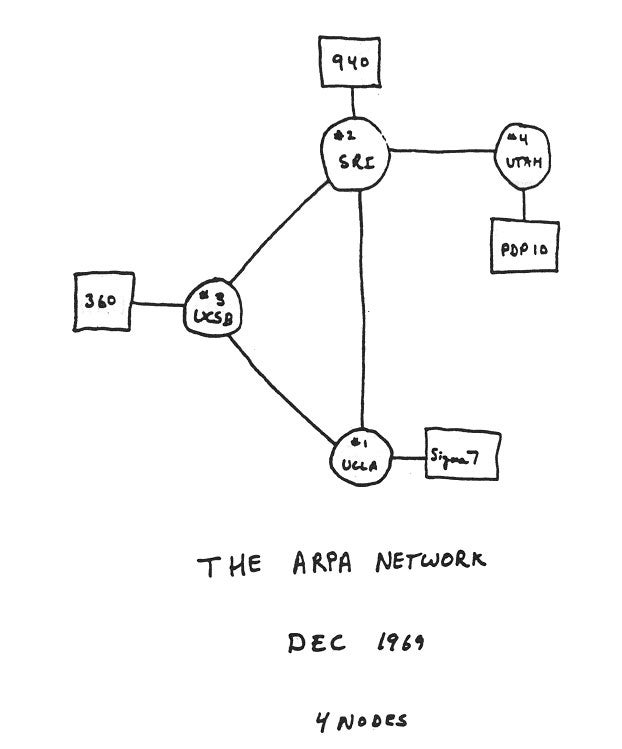
SRI where the original ARPANET NIC was, and had various important roles in the development of the net.
I really don't think they overestimated their brand, they just talk to their likely customers.
(I worked at PARC, never at SRI, but I had many friends from SRI, and there was a flow of personnel in both directions).
- Magnetic check ink
- ERMA https://en.wikipedia.org/wiki/Electronic_Recording_Machine,_...
More importantly: Stanford, SRI, and the high signal of connected people in Palo Alto created lots of inventions and companies. Sports metaphor: when they're on the team, the team scores more indirectly by their presence. Palo Alto-Stanford has been a modern "Venice" in terms of center of business-meets-academic since about 1940. Boston owns it in academia in sheer numbers of campuses and of reputation, but not when it comes to tightening the iteration loops of making money.
Students (et al.) had protested SRI's participation in secret (and military) research projects, and Stanford ultimately determined that secret research was incompatible with the university's mission.
Of course, like many universities, Stanford has aligned its actual priorities to focus primarily on endowment expansion and administrative employment.
TIL that FICO stands for Fair Isaac Corporation (or Fair, Isaac and Company, originally).
SRI is also where the “Mother of all Demos” came from.
> SRI formally separated from Stanford University in 1970 and became known as SRI International in 1977
The S used to stand for Stanford.
Just like RAND or Battelle or a half dozen others, it's nominally a non-profit organization that manages huge R&D projects, employs thousands of scientists and engineers, and manages government research facilities.
I have used Ethernet since 1985ish without being PARC's customer either. I have used a mouse since 1987ish. If you had asked me before reading up on the topic minutes ago where the mouse was developed I would have probably answered PARC, too, and not Stanford and absolutely not SRI. Not sure how the former managed to build to build a "brand" for stuff they haven't even accomplished.
Boyer and Moore used to work there. I used their theorem prover for early proof of correctness work.
It was an SRI spinout, acquired by Apple in 2010. https://www.sri.com/hoi/siri/
Here’s the president of SRI saying it was a pure coincidence: https://hbr.org/2015/09/the-president-of-sri-ventures-on-bri...
Here’s the cofounder saying that at least some of the appeal of the name was that some people liked the resemblance to SRI: https://www.forbes.com/sites/quora/2012/12/21/how-did-siri-g...
Siri started life running on Android and iOS. They took it down when Apple bought the company two months after launching. So if you blinked you might have missed it =)
The other theory I've encountered is that it was cover for ongoing mind control research after MKULTRA had to be wound down.
Along similar lines, while the original Ethernet was invented at PARC, Ethernet gained more popularity in industry through Silicon Valley companies like 3Com (with founder Bob Metcalfe, recent ACM Turing Award winner and ex-PARC researcher) and SynOptics Communications (with founders Andrew Ludwick and Ronald Schmidt, both ex-PARC employees).
"It's a good story. Unfortunately, it's also wrong in almost every way a story can be wrong."
Full details at https://web.stanford.edu/dept/SUL/sites/mac/parc.html
and there are many other references on the Web about that visit.
So yes, they need all the help they can get with naming things.
IIRC that's when i registered rmt.org (my initials) using that method (for free!). used it for a couple of years but then moved to USA and at some point in the mid 90s i guess i had to start paying for it, i forgot -- and lost the domain to the UK union for Rail, Maritime and Transport Workers. a worthy successor!
well i guess they sold it because now the domain is owned by a trust that helps autistic children in the UK. another worthy successor!
anyway, thanks for the memory!!!
https://news.ycombinator.com/item?id=30379919
DonHopkins on Feb 17, 2022 | parent | context | favorite | on: Who is squatting IPv4 addresses?
I know a naughty person who decades ago hijacked a /8 IPV4 network block when the company that owned it went out of business, by registering their expired domain name and sending in an email from that domain, transferring ownership of the block to himself.
It was "hot" so he couldn't just squat on it or sell it in the open, but he laundered it by trading it to some shady company in exchange for free network services for life.
If I were him, I would have printed out all the addresses on little slips of paper and taken an "IPV4 Address Bath" like Huell's scene in Breaking Bad:
https://www.youtube.com/watch?v=7HrmD_vIMIk
>(sexy lip bite) ... "I gotta do it, man!" ... "Mexico, all's I'm sayin'!"
icedchai on Feb 17, 2022 [–]
Was it really an /8? I could believe a smaller block...
DonHopkins on Feb 17, 2022 | parent | context | favorite | on: Who is squatting IPv4 addresses?
Yep, it was a long time ago, and he was one of those "old net boys" who worked on the early ARPANET, but I won't say anything else that might identify him.
I have another naughty friend (not the same person) who worked at SRI-NIC implementing and maintaining the ARPANET TACACS database, and as a personal favor, he created our mutual friend Devon his own ARPANET TAC card.
So Devon's free vanity TACACS account was named "DEVON", while most other accounts like mine were something ugly like "DH32", using initials and numbers. One day his boss summoned him to his office and showed him a print-out of the TACACS accounts, with "DEVON" right at the top, and asked him who the hell that was. He sheepishly prevaricated that "DEVON" was actually a control code to turn the printer DEVice ON, which accidentally got printed at the beginning of the list because of a bug in his program missing an escape code, and he would fix it right away. And that's how Devon lost his TAC card. We still tease him about his name as a printer control code, and call him "DEVOFF" when he talks too much. I'm pretty sure his boss knew what was up, but just let it slide.
Network security was a lot different in those days. TAC cards only happened later when they finally put passwords on the dialup TACs/TIPs -- you originally could dial up and connect to any host on the ARPANET without a password, then you could ask nicely for a free tourist account at places like the MIT-AI Lab. It didn't even require any social engineering, just being polite and curious, reading documentation, and following instructions.
I asked BBN nicely about the TIP manual, and they helpfully mailed me a free hardcopy of the "Users Guide for the Terminal IMP", which documented how to take control of other people's sessions and even divert their output by prefixing @ commands by their terminal number! See "Section 5: Unusual uses of the TIP" page 5-7, "Setting Another Terminal's Parameters" and "The DIVERT OUTPUT Command":
https://usermanual.wiki/Document/ADA014398UsersGuidetotheTer...
The guy who originally wrote that TIP manual in 1971 was none other than Will Crowther, who also developed Colossal Cave Adventure with Don Woods! You're in a twisty little maze of IMPs, all different.
https://en.wikipedia.org/wiki/William_Crowther_(programmer)
https://en.wikipedia.org/wiki/Colossal_Cave_Adventure
ARPANET Psiber SPACE (circa 1986): This is the network of IMPs (Interface Message Processors) that comprised the ARPANET in 1986. The ARPANET is history now, but thanks to the magic of Pseudo-Scientific Visualization and the ScriptX language and class library from Kaleida Labs, you can now experience what it was like to be free ranging packet hopping around the ARPANET in 1986!
https://www.donhopkins.com/home/catalog/arpanet/index-large....
MIT AI Lab Tourist Policy
https://medium.com/@donhopkins/mit-ai-lab-tourist-policy-f73...
“The MIT machines were a nerd magnet for kids who had access to the ARPANET,”
https://news.ycombinator.com/item?id=15080221
Keith F. Lynch wrote up a fascinatingly detailed and accurate history of the ARPANET from his perspective:
http://keithlynch.net/history.net.html
Keith mentions that ARPANET TACACS passwords were installed in 1986, and even mentions how Jerry Pournelle got himself kicked off the ARPANET for being obnoxious in 1985, which I can conform with the email messages he mentioned. The first message is about TACACS, and explains how MILNET TACACS was implemented in 1984, before ARPANET TACACS (in 1986). It was addressed to the same DEVON, and HN's own GUMBY chimed in with some salty remarks:
https://www.donhopkins.com/home/catalog/text/pourne-smut.htm...
jacquesm on Feb 17, 2022 | root | parent [–]
Your text is garbled:
"then you could even anity TACACS account "
DonHopkins on Feb 18, 2022 | root | parent [–]
Thanks, fixed! The "Arpanet" episode of The Americans featured a classic scene with an academic computer science professor dude bullshitting about the ARPANET -- I'm sure we both know somebody exactly like that from that period, who made eloquent hand-waving metaphors about Virtual Spaces and Post Offices and God and Disembodied Brains, trying to explain to skeptical people how vast and important the ARPANET was (with its 8 enormous bits of address space). But he kinda had a point, calling the PDP-10 "The Beast".
https://www.youtube.com/watch?v=hVth6T3gMa0
But the thing The Americans "Arpanet" episode got wrong is that you didn't actually have to slap on a Frank Zappa Soul Patch and a Beatnik Wig, dress up like a janitor, and brutally murder an unlucky grad student to get on the ARPANET, you just had to ask the right people nicely! (But it's still one of the best episodes, with the scene about passing a lie detector test by clenching your anus.)
https://news.ycombinator.com/item?id=14178993
DonHopkins on April 23, 2017 | parent | context | favorite | on: How SSH got port number 22
Back in the "bad old days" of the simplex NCP protocol [1], before the full duplex TCP/IP protocol legalized same-sex network connections, connect and listen sockets had gender defined by their parity, and all connections were required to use sockets with different parity gender (one even and the other odd -- I can't remember which was which, or if it even mattered -- they just had to be different).
The act of trying to connect an even socket to another even socket, or an odd socket to another odd socket, was considered a "peculiar error" called "homosocketuality", which was strictly forbidden by internet protocols, and mandatory "heterosocketuality" was called the "Anita Bryant feature" [2].
http://www.saildart.org/IMPSER.DOC[SS,SYS]
When the error code is zero, the next 8 bit byte is the Stanford peculiar error code, followed by 72 bits of the ailing command returned. Here are the Stanford error codes. [...]
IGN 3 Illegal Gender (Anita Bryant feature--sockets must be heterosocketual, ie. odd to even and even to odd) [...]
Illegal gender in RFC, host hhh/iii, link 0
The host is trying to engage us in homosocketuality. Since this is against the laws of God and ARPA, we naturally refuse to consent to it.
http://www.saildart.org/FTP.NCP[S,NET]
    ; Try to initiate connection

    loginj:
            init log,17
            sixbit /IMP/
            0
            jrst noinit
            setzm conecb
            setom conecb+lsloc
            move ac3,hostno
            movem ac3,conecb+hloc
            setom conecb+wfloc
            movei ac3,40
            movem ac3,conecb+bsloc
            move ac3,consck
            trnn ac3,1
                jrst gayskt  ; only heterosocketuals can win!
             movem ac3,conecb+fsloc
             mtape log,[
                     =15
                     byte (6) 2,24,0,7,7
                     ]       ; Time out CLS, RFNM, RFC, and INPut

    [...]

    gayskt:    outstr [asciz/Homosocketuality is prohibited (the Anita Bryant feature)

    /]

        ife rsexec,<jrst rstart;>exit       1,
I have used a CDC 6600 and various 370s. PDP only from reading, I started with VAXen.
I wrote my first Lisp program on a 940 back in the 70s. IIRC, the Sigma series were the machines XDS built after the 940. I don't know they were super popular, but maybe you might have heard of them.
https://www.amazon.com/Computers-Nobody-Wanted-Years-Xerox/d...
we can call it "the book nobody wanted." /s
Strassman tells how he offered the PARC people a very good deal on an SDS machine, and they turned up their noses at it. They wanted a PDP-10, but they weren't allowed to buy from DEC, so they built their own lookalike (Maxc).
However, in here: https://www.albertcory.io/lets-do-have-hindsight
I calculate some of the other PARC spinoffs they did. If they'd held onto all of it, it would dwarf the value of the copier & printer business.
It's clear that just the investments that Xerox did have would have been huge had they just held on to them. That's ignoring what they could have done had cashed out less conservatively and reinvested in ongoing technology concerns the same way that Intel Capital or Google Ventures has.
Beyond that, it would have been beyond epic for Xerox to have had all the right pieces to replace a huge chunk of the high tech ecosystem by itself. Each of the successes that "should have belonged to PARC" involves VCs, hundreds or thousands of employees, business pivots, decades of existence, and plain luck and timing.
Hank Chesborough's (formerly of Harvard Business School, at Berkeley Haas School of Business last I checked) lists 35 companies that spun out of Xerox in "The Governance and Performance of Xerox's Technology Spin-Off Companies". Just that level of brain drain/distraction was bad enough at times for PARC's ongoing work.
https://www.albertcory.io/lets-do-have-hindsight
Butler Lampson quoted some Xerox executive at the time as saying, "We don't want to be a holding company!"
Nonetheless. Damn, WHAT a holding company!
Inventing the Future forbids any hindsight. No one knows how it will turn out.
Hence the title: what if we DO allow hindsight?
"PARC was not at all secretive about its work. Its researchers published widely, and there was a regular flow of traffic between PARC and Stanford's computer science community. "
as opposed to a military intelligence company where all that would get you fired if not in prison.
-- [emph added: p.12 of https://archive.computerhistory.org/resources/access/text/20...] --
"When Stewart Brand came into PARC and there was a book Cybernetics 2? [II cybernetic frontiers], half of it was about the "secret" company and Stewart had pictures of PARC and so there had been publicity that I guess hadn’t been properly signed off on. And so there had been a bit of a “You don’t get to publish for awhile” period. I think Alan took it too seriously. He didn’t like having his hand slapped. We did start publishing again more in the ’76 timeframe including the personal dynamic media paper that Alan and I did for IEEE Computer Software. I wanted to go to corporate and ask for permission and it was a little risky because you didn’t know what would come back. There’s no reason for them to say yes.
Lucky for me, between the time I suggested it and actually asking, Xerox’s venture group had bought a lot of equity in a little fledgling computer company that wasn’t doing very well called Apple Computer and they had arranged for the Apple executives and then later the Lisa programming team, to come for a visit.
I kind of parlayed that into, “Well you’re willing to give it away. You’re not interested.” And I wrote this motivator about why we should be able to publish it all because we were planning to write a book and we were planning to have this community implementation event. I think it went to one of the principals at the venture group who then asked Jeff Rulifson his opinion. Jeff was on some special leave from PARC to corporate and he wrote “Oh sure, publish all this”. So I had it [the permission] on paper."
-- end --
I don't recall hearing about this Xerox venture group and its "lot of equity" in Apple. But ..
- source: https://www.cbinsights.com/research/report/corporate-venture... --
"Xerox had had an active CVC program since the 1960s, operating an internally managed fund that invested in some of the most legendary figures in Silicon Valley, including Raymond Kurzweil and Steve Jobs. Kurzweil got his start in technology when Xerox invested in his first company, Kurzweil Applied Intelligence Inc., in 1982, to develop a computer that could transcribe spoken English. The idea behind the investment was to create technology that would increase demand for Xerox’s printing products when it ultimately hit the market.
When Apple released its revolutionary Macintosh computer, some observers claimed that it had commercialized technologies first developed at Xerox PARC, such as the mouse, windows, and icons, even dating the origin of the supposed copying to a 1979 visit to the lab by Jobs and other Apple employees — the tour is considered a seminal event in Silicon Valley lore. Although the accusation that Apple outright copied its ideas for user interface from Xerox is generally refuted today, the revelations stung Xerox’s management. The company was eventually spurred into rethinking its CVC program in an effort to better capitalize on the company’s languishing in-house technologies."
-- end --
https://www.albertcory.io/lets-do-have-hindsight
they did "capitalize" on their technology in the 80's and 90's, mainly by allowing entrepreneurs a license to build with it (with no money put in).