As I am currently in a war zone, I don't have many options for cabling(electronics.stackexchange.com) |
As I am currently in a war zone, I don't have many options for cabling(electronics.stackexchange.com) |
They even went as far as having us string wire out to our ambush sites when we were on the Iraqi border during the first gulf war and reel it back up when we came in. Zero radio signals out there because they didn’t want them to know that a whole division plus French armor was there.
Modern tech is good and all unless you have some dumb Joe that keeps erasing the codes out of the radio by turning on the truck without putting it on standby or something…never quite figured that one out.
Pure hacking.
People helping each others.
And I learned something.
So much of our modern world is designed for modern infrastructure, and when that infra falls down, you either have to do without or accept a level of danger that is probably higher than the modern world takes, but lower than what our ancestors 100 years ago took.
"I cant give you this advice because it would be dangerous."
"I am in a warzone, it's fine..."
"OK, then what you need to do is..."
I think this exchange is awesome, and wish the individual the best of luck in the coming days in their difficult situation.
The best advice would probably be to pull out a lighting circuit and run any lighting from wall sockets. Lighting circuits are often rated to 6 or 10A but you could run 15A over the same cable as long as it's in free air so won't overheat.
"Yes. we already done that but not over do it because we hope the power will be restored.I think Probably the war will end because Russia and America are busy in Ukraine and hopefully will not supply fighting parties with bombs, rockets and ammunition and they have to keep fighting with sticks and swords"
They were merely pointing out that the US and Russia are too "distracted" with Ukraine to provide arms to the warring parties in Sudan, and so hopefully the Sudanese conflict will fizzle out sooner than if the Ukraine war was not going on.
I don't believe OP was making any kind of judgment on whether or not the West supplying weapons to Ukraine is a good or bad thing, or is morally right or wrong. Just observing a possible effect on their own situation.
The never ending "civil war" in Sudan is just one of the countless proxy conflicts between the US and Russia
The population doesn't want to be under Russia's boot, of course. Nobody does. But you're clearly playing the naivety card when you should, and do, know better
I was an exchange student in Ukraine in high school and the town I lived in periodically gets shelled now… we live immensely privileged and comfortable lives.
This is not a bad thing, it’s great, but we should try to make everyone else’s life as good instead of hoarding our privileges.
Your understanding of the world is warped by the safety and availability of goods. It's incredible when you get in places where the state doesn't function at let's say 50% of what we get in the first world. It's one hell of a learning experience.
> Fly to Brazil, take a cab around Central Sao Paulo.
source: Am Brazilian, would not recommend it.
To be fair, Central São Paulo isn't even what I would consider third world yet, if you really wanna see how good some of us have it go to the northeast of Brazil, or Venezuela (if you manage to get in somehow).
I kept thinking he might be better off figuring out how to move the transformer instead.
TLDR: connections must be protected by some kind of anti oxidation coating, if you have nothing else use grease but something designed for electrical connections is better. If you have nothing else, melt some lead and dip the exposed part of the wire in that to coat it. Lead should be readily available in a war zone? Long term the wire WILL melt at some random point along the wire so it is much better if this wire is kept away from anything flammable.
I list it specifically because it does cover creating insulated wire.
You can probably do this for a little while, but your total current through the circuit is limited to the photocurrent generated by the lowest performing cell. Otherwise you'd get a charge buildup.
(sorry, I don't have a quora account)
Not sure how you'd handle high voltage DC with most things though, it's only slightly better than using high voltage AC with a commercial inverter.
Generally the current ratings on those wires is given in terms of temperature rise over ambient. The current rating for a wire that is allowed to rise 60C is much more than one only allowed to rise 30C.
As it gets hotter the resistance goes up and the system becomes less efficient, but it's not usually a sharp break. It will get hot, so you'll need to keep an eye on it. That's not so bad to do manually, just be conservative.
If we're talking days, I think you should just use trial and error. Use the inverter to up the voltage, add loads slowly and keep an eye on the voltage on the load side (if it drops a lot you're drawing too much current) and keep an eye on the wire for hot spots (honestly wish I could suggest a way to do this without hazard of touching it, I don't know if you have a thermal camera).
Said another way: the conductor is rated for amps and doesn't care about volts, while the insulation is in volts.
In an urban environment, there are many opportunities to salvage. Industrial areas especially have good pickings.
Rural environments are limited by the lack of salvage opportunities.
Don't bother trying to salvage wire from vehicles for anything substantial. Find the lowest effort option to improvise based on what's available.
Maybe even copper piping is an option?
Also, the insulation will not be up to the need and he will get shocked if he touches the hot, melted insulation.
Yes, I want to use jQuery. No, I may not be in an active war zone.
> dumb Joe that keeps erasing the codes out of the radio by turning on the truck without putting it on standby
Oh man, I have nightmares about comms. Juggling frequencies while traversing areas of operation, trying to get satcom working in mountainous terrain with jammers, and depending on the finicky windows-tablet encryption device, was not a fun time.
> our concrete homes are not designed to be habitable without AC power.
and a little web-searching confirmed it. The reason being that concrete-made buildings in Ukraine are definitely habitable right now without AC (I live in a concrete-made building myself a couple hundred kilometres from the border with Ukraine).
> I think Probably the war will end because Russia and America are busy in Ukraine
"Concrete" can also mean "the cement based building material" or "specific", as in "this specific building needs power to be habitable, because <unusual detail>" (pumping drinking water for example, which is mentioned).
The comment "because Russia and America are busy in Ukraine" indicates OP is not in Ukraine.
Small improvements are important, especially for people in dire straights.
Without the internet, the author of the question might well be left to try it out and possibly getting harmed, or with no support at all.
Ukraine has been impressively fast in rebuilding critical infrastructure after Russian cruise missile strikes. It also helps that many of the Ukrainian men that have gone back to Ukraine are construction workers, electricians etc. Many of them are even working under the risk of Russian double-tap strikes.
Tell me you're in NY without telling me you're in NY
Best (worst) example - hand made natural gas lamps: use medical transparent tubing into a tennis ball as distribution joint, with four metal ballpoint pen tubes stuck into it, light the part that's not stuck in the tennis ball. Voila, chandelier!
It's astonishing what manner of things can be transformed into a cart / dolly / wheelbarrow to carry clean water in.
19th century stoves and fireplaces were useless, took too much energy to warm up the device itself and inside a modern city, wood is rare and precious. Sarajevo War Stove was a large 1-2l tin can, conducts heat directly and doesn't absorb much itself, lets you boil water or make some small soup.
Candles could be almost endlessly recycled. Pre-war brochures were great, their glossy pages could be rolled up into friction free tubes to hold melted wax, with some cottoon or wool thread in the middle.
And yes, electricity moved from building to building in whatever manner seems feasible. As a 13year old I've handled live male-to-male 220v cables, and can vouch, they give you quite a nice buzz if you're not careful :-)
(some experiments did not work out great; chain smokers tried to light up all kinds of things, up to and including various kinds of tea; apparently it's just not the same).
You’d be surprised!
I’m near Ottawa and in the past year I’ve been without power for 8 days, 5 days, and a handful of other times.
I’m on well water and our septic system requires a pump. When the power is out we have no water, sewer or heat.
The cell tower nearby only has about 1-2 hours of reserve power. There’s no hardwire communication here so we lose all outside communications after a couple of hours.
During the eight day outage, everywhere within about an hour drive was out of power. Gas stations were closed, grocery stores were closed, etc. That’s if you could even get anywhere—many highways and roads were closed due to fallen trees and power lines. Our own driveway had half a dozen mature trees across it.
It’s no active war zone, and it’s certainly not _two years_, but a lot of stuff you might not think would fly in Canada was exactly what many people were doing to get by.
Efficient stoves can indeed be fairly simple, as in https://en.wikipedia.org/wiki/Beverage-can_stove, https://en.wikipedia.org/wiki/Hobo_stove or https://en.wikipedia.org/wiki/Rocket_stove.
A hightech variant has a battery-operated fan. I find that a weird combination, but apparently, it works well (https://www.techxlab.org/solutions/zz-manufacturing-sierra-z...)
I've tried smoke a lot of things, including tea.
Don't recommend it.
Might satisfy the social and psychological aspects of addiction, but the physiological part is rather difficult to sate without nicotine.
Customer Service: How can I help you today?
hacker: I need help resetting the password to this account that is totally mine.
CS: Sure, I just need you to verify a few things.
hacker: I'm not in a place where I have that info, but I totally swears it that I'm the person I say I am, but I'm really in a jam right now and you'd be helping me out so so much.
CS: Of course, I understand. Your new password is....
PROVE IM NOT HER OVER A PHONE
"How can I do a thing?"
"You shouldn't want to do that thing."
Danger/risk is a situation that happens sometimes, but it's never an excuse to dismiss the asker's question and need.
Explain the warning or concerns ("May catch fire and explode" or "Will not be to code, would cause your building to fail inspection" or "There's this other framework/language that might make it easier"), but also give them a damn answer!
In this case, there's no @$&#ing reason someone sitting in their office shouldn't do the calculation that's being requested from the parameters supplied. It's a simple emag calc.
I'm pretty sure stackX would tell someone asking about the time required to boil water for sanitization to never drink boiled water and use the tap. :/
"You shouldn't use that sort of electricity, you should switch to three-phase."
Whether it's right or not, I have no idea since I'm no EE.
What are you referring to, specifically?
The only thing that comes to mind are the homeless population, but then again you could say the same problem (and at arguably larger scale) afflicts San Francisco or New York.
Sao Paulo is not even particularly violent, too
Made me realize there are still big chunks of the world where you can't take basic literacy for granted in 2023, even of people in their 30s.
Goddamn, son.
Probably fine in Sudan in late spring, tbh. They have to pump water up from the ground with electric pumps, hence the need for cabling, so I guess they don't have much rain right now.
Not so much arcing but resistance between the terminal and the wire will increase as a coating of oxide builds up between the two. Eventually the resistance is high enough that dangerous amounts of heat will build up and ignite wire insulation or other flammable materials. What usually happens, is the conductor was nicked by the electrician during stripping and that becomes a mechanical weak point that becomes a fuse link and the wire sometimes just melts off at that point rapidly without starting a fire and goes open circuit.
> melt some lead and dip the exposed part of the wire in that to coat it.
Plain molten lead isn't going to "wet" the steel wire without some sort of flux. Rosin flux is made from tree sap of a conifer tree so go find a pine tree and harvest some sap.
https://en.wikipedia.org/wiki/Zinc_chloride#As_a_metallurgic...
Though I have no idea if either can be found locally.
Or is its speed purely a consequence of temperature + environmental gases?
Oxidation (and reduction) are literally electron flows.
Oxidation is a loss of electrons and reduction is a gain of electrons.
Since the oxidizing material is the anode in this (oxidation "circuit") you can connect a "sacrificial anode" to the material you want to preserve and the electrons will flow from that instead of the (material you want to save).
We have sacrificial anodes connected to our underground propane tank:
http://www.pettank.com/wp-content/uploads/2016/03/cathode-pr...
... which means a bag of magnesium does all the rusting instead of the tank they are connected to.
I’ve also heard of cathodic protection or electronic rust proofing doing the opposite though? Maybe it has to do with moving charges vs static charges? Or ground a cable preventing rust vs charging it accelerates rust?
Tangentially, the real MVP is the home depot guy who helps you find the one right-sized screw that costs $0.5….
Straight from the GE "How to mortgage a company's future for a small boost in the present" book.
There were also some hilarious anecdotes told about him refusing to get out of his car in the corporate parking lot until security met him and escorted him in, presumably because he understood how much employees disliked him.
https://en.m.wikipedia.org/wiki/Robert_Nardelli#The_Home_Dep...
I recently spent 4 hours online trying to solve a carpentry problem and not even knowing what words to use. I finally called my dad and in less than 2 minutes it was solved.
I guess home depot has won, and the employees have enough faq experience to help now.
Now if home depot sold 80/20 supplies...
But as much as you push, sometimes you need to put on the rubber boots and gloves going up to your shoulders and figure out a somewhat safe way to run some Windows XP based machine controller in an environment. Or wrangle some Java 1.6 thing back into function. Or figure out the least security reduction to support some old system not supporting modern crypto.
And yeah, usually the idea is to put trusted isolation layers around the dumb idea we have to deal with, as the water hose suggested in the article.
Personally, when I answer a question it's because I want to, and feel I can be helpful. I have no skin in the game with regard to the site's overall ability to keep up with incoming questions. So, I take as long as I need, and do as much hand-holding as I feel is appropriate, not governed by external pressure.
But I suppose there are professional moderators and such who really do have that external pressure, and thus have incentive to give curt feedback, or even to drive people away — thus reducing that pressure, making their lives easier.
As a SO user from the early days, I do miss that feeling of mostly interacting with people doing it "for the love of it," rather than governed by efficiency.
It is not a reason to sit down and dismiss away questions or type out why you wont tell them.
The problems Stack Overflow has seems to me to be very much self inflicted, caused by the decision to optimize for political games instead of optimizing for solving problems.
And yikes, it's really really hot in Sudan!
It's actually pretty cool - it's very flexible and convenient.
It's difficult to solder and impossible to crimp though (so we use these factory-made), and I would not use PoE with it (the gauge - 32AWG - also means that it is really thin, and as it's steel, the resistance must be terrible. But for data, it works good.)
maybe just lighting if there are no windows or they have to keep the windows covered
"Water evaporative coolers are very effective in Sudan because of the dry weather and they consume little energy and also use ceiling fans for cooling and other things like split units but I'm not planning to turn that power hungry device those days."
Ha! That made my day. Stack Overflow in a nutshell, with analogy converted to js frameworks.
And no, you will only find similar stuff at Rio de Janeiro. Fortaleza and Recife have small areas that come close, but the real bad of urban violence is on the southeast.
Having an option to use other energy sources is great, because if you're out of power, you still have gas and vice-versa... if you're artificially limited to just one source, and you're suddenly out of that, you're basically screwed.
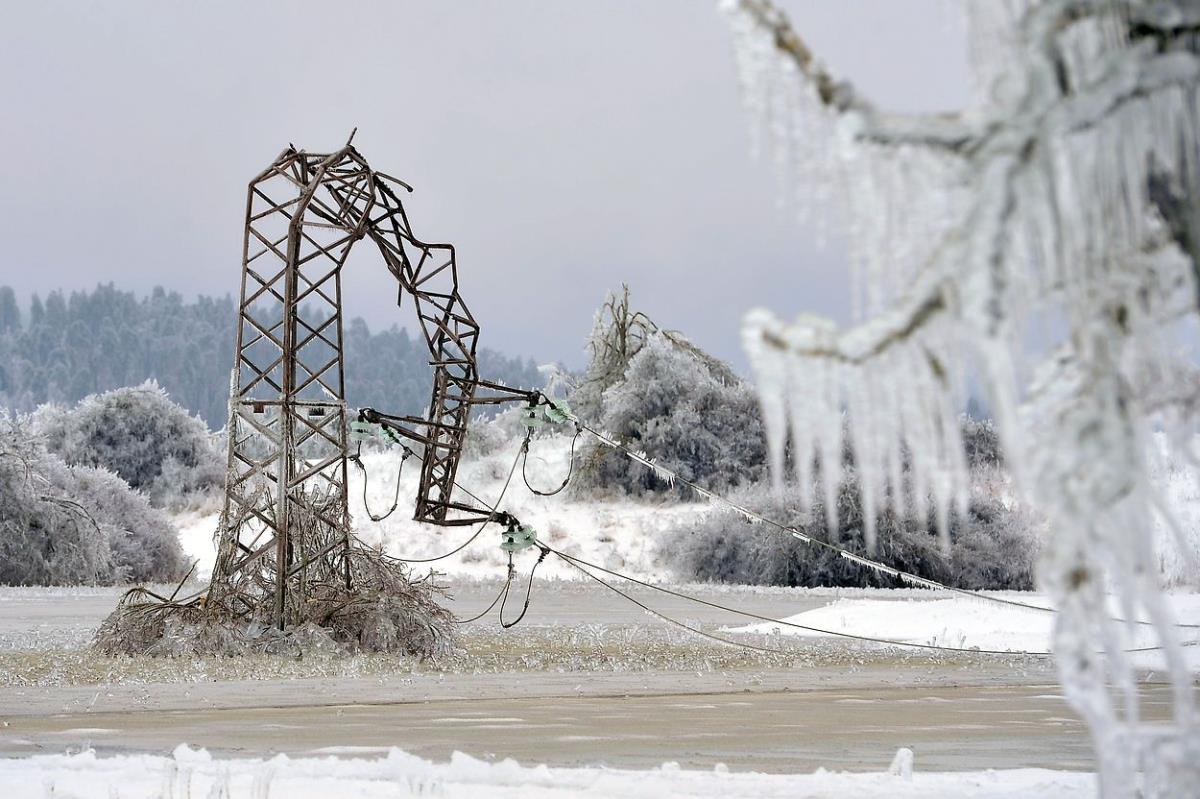
In case of slovenia in 2014, something happened, that has 'never' happened before (atleast not in living memory), and this: https://www.postojna.si/Datoteke/Slike/Novice/123958/l_12395... was the affect on power infrastructure. People who could heat their houses with eg. wood or gas, stayed warm, the ones who only had electricity-powered devices (for heat, cooking,..) were screwed, and had to get help from others. If you forbid alternatives, you're cold, and all your neighbors are cold too, and rebuilding after such destruction is not a few-days thing.
In normal use we rely on Starlink for bulk data and a slower fixed LTE connection for low latency/jitter. Once the power's been out a couple of hours... we fall back on the Starlink. If we need to call anyone, we use wifi calling through my cell provider over the Starlink. I have a backup set of Starlink hardware already linked to my account.
I've got a cheap (~$1k) 10kW generator. Pretty much a necessity since we need power for our water/sewer to work.
Generator can run on gas or propane. We've got a couple big propane tanks to provide fuel for heating/hot water/cooking/etc. So we've got that as an option, or generally about 150L of gas on hand. Keeping the generator running all day so I can work and on-and-off through the evening, 150L lasts us about a week.
We had no power for eight days and a lot of people were having to run down to the fire station for drinkable water. The town hall opened up so people could come recharge their phones and get a hot cup of coffee. A lot of people missed out on hot meals and showers.
I didn't miss a day of (remote) work. We had hot showers, coffee in the morning, hot meals, and generally besides the dull drone of the generator outside during the day and the absolute eerie silence at night when I turned the generator off... nothing was really all that different.
Maybe drinking it as an expectorant tea, but I can't imagine smoking it would be helpful overall.
I don't know about the specific green fuel bans you are talking about, but I do know that this issue is often used by politicians and companies to throw the blame on something else when it is their fault.
If the winner wouldn't write history it wouldn't be a problem to talk about
- Holodomor in Russia
- the genocide on the Armenians in Turkey.
And specifically, to make that choice for them?
Caveat hacker.
"Here are the things I know" + "Here are the things I know I don't know" + "Can you help me?"
I'm sure there's a ton they don't know they don't know (stranded vs solid core AWG equivalency), but this is a pretty simple use case -- running power a relatively short distance in a temporary install.
The worst that can happen is they or someone on the street short across their heart and dies. Which would not only require shocking yourself, but doing so in a pretty specific orientation.
But they're already in a warzone! That risk is lower than their base level of environmental lethality.
The Stack Overflow poster is on a metaphorical hill in a literal warzone to literally die on. They're trying to hack together AC power the best they can to make their home in Sudan livable. That's some serious hacking! So what if they don't know V=IR?
The GP is concerned that Tmobile allows hackers to impersonate you/your wife on the phone.
You're concerned that even after providing all possible account details - password, PIN, last four of her SSN, last bill amount, anything else they might want to ask that's not literally a live biometric scan - they can't distinguish the two of you just because you don't sound like a woman.
Perfection is unattainable.
I can't change anything about my phone without providing both a "Public" (Taxpayer Code: Doesn't change, commonly shared, also used as a state bank account number) and "Private" (Document number: changes per renovation, only shared for identification purposes) number
But it seems like you can indeed block the reaction from occuring by saturating the surface with enough electrons (i.e. by applying an appropriate amount of current) that it makes oxidation impossible from an electrochemical standpoint.
https://www.corrosionpedia.com/definition/1237/impressed-cur...
(In addition to the more common, passive bolt-on-a-sacrifical-cathode method)
When you then add on top of it "engagement" metrics, scale up the number of questions per day by orders of magnitude without the corresponding scaling up of the community involvement and (to an extent) try to remove the ability for the community to moderate and curate the content then the tools that are left to the community are the social ones (as they can be used beyond the limited number of down, close, and delete votes that one has in a day).
And then you're left with "the way to handle questions where the person didn't even put the title into Google to search first is to be rude to them." It's not a good thing, but without the barriers to entry being implemented in code they are erected by reputation and social forces instead.
It isn't a good thing - and it would probably be much better if those barriers were put in place through some other means... but as long as engagement is the measured metric and ad impressions are the income, having company's developers implement it is a non-starter and you're left with the community using rudeness as the moderation tool of last resort.
From A Group Is Its Own Worst Enemy ( https://news.ycombinator.com/item?id=27706413 )
> Four Things to Design For
> ...
> 3.) Three, you need some barriers to participation, however small. This is one of the things that killed Usenet, because there was almost no barrier to posting, leading to both generic system failures like spam, and also specific failures, like constant misogynist attacks in any group related to feminism, or racist attacks in any group related to African-Americans. You have to have some cost to either join or participate, if not at the lowest level, then at higher levels. There needs to be some kind of segmentation of capabilities.
> ...
> 4.) Finally, you have to find a way to spare the group from scale. Scale alone kills conversations, because conversations require dense two-way conversations. In conversational contexts, Metcalfe’s Law— the number of connections grows with the square of the number of nodes—is a drag. Since the number of potential two-way conversations in a group grows so much faster than the size of the group itself, the density of conversation falls off very fast as the system scales up even a little bit. You have to have some way to let users hang onto the “less is more” pattern, in order to keep associated with one another.
As there are many fewer people answering questions compared to the rate of questions being asked the overall "is stack overflow rude or not" is a "yes." But engagement numbers are up as people keep asking them.
And also, assuming it's wrapped but not encased to cabling standards (e.g. there's oxygen between the insulator and wire, but the insulator itself is contiguous and airtight), oxidation would eventually deplete the available oxygen "inside" the cable, right?
20+ years ago, rewiring buildings for 1000baseT the Cisco switches (3650s maybe? 3750s? I know they had IPv6 multicast acceleration in the switch fabric because that's why we had them) would do this for any circuit on command, OK, 18 metres from here there's a fault, pace, pace, pace, I reckon it'll be up on this cable tray... yup, some fool tried to "repair" a broken Cat5 cable, we'll just rip it out, meanwhile patch to a different circuit.
Actually, I think it wasn't detecting faults but rather the length of cable connected.
Which is specifically why I mentioned rosin. Though any acid could likely be used so citric acid or something that could work as well.
Choridric acid + Zinc was traditionally used in tin (but lead isn't so much different) soldering/brazing, particularly of copper and brass because the Zinc had some role in the chemical reaction, AFAIK.
So... is your understanding that Russia's been "forced" to invade because the US was arming Ukraine to eventually invade Russia?
I guess this is not an original argument to get into, but do we want to agree on some basic facts before we start:
1. Putin is corrupt. E.g. https://www.youtube.com/watch?v=T_tFSWZXKN0 . Sure the people making the video are people who want to see him be taken down and a Pro-Putin take could be that these guys are liars funded by "foreign states" to make propaganda to make Putin look bad, but there's tons of other evidence of his corruption.
2. The person ousted in the "coup" (Viktor Yanukovych) was also deeply corrupt. E.g. https://www.theguardian.com/world/2014/feb/24/rebels-toured-...
If we can agree that these 2 things are true, then I think there's an argument I can make that the Ukranian people's wish to be closer to the west is genuine and is not a Western-manufactured thing. Because the alternative is for a corrupt Ukranian leader that would've moved to be even more in bed with a corrupt Russian leader and for the citizenry to be robbed of their prosperity and welfare.
The argument that Putin did it to stop NATO's growing sphere of influence is a curious reversal of roles of the bad and good guys. Of course it's hard to argue the US/EU are the super clean good guys, hey there's corruption in these 2 institutions as well... but the way I see it, to say that Putin is the better guy against US/EU/NATO requires a lot of self-deception. Or am I the one being deluded?
Yes, among other things.
> Putin is corrupt
Probably true on some level, I don't know enough about it to judge it and I don't see how it makes a difference. Have you checked what the current alternatives to Putin are?
> The person ousted in the "coup" (Viktor Yanukovych) was also deeply corrupt
Yanukovych was democratically elected, so you can remove the quotes from coup. By the way Zelenskiy is also corrupt as revealed by the pandora papers[0]. I guess it's hard to do something in Ukraine without being at least a bit corrupt?
.0: https://www.theguardian.com/news/2021/oct/03/revealed-anti-o...
Hah... how to know you're not talking to a serious person. Of course it has something to do with it. Putin's been rigging elections and jailing opponents to ensure he's "democratically" in power. In reality he probably knows he's deeply unpopular because of his corruption. But hey, it's easier for you to look away and say "Probably true [...] I don't know enough about it to judge.". How convenient of you to say "let's just ignore that bit, for the benefit of my delusion, shall we?".
Why is it important whether he's corrupt or not? I've written why in my other post. If Putin was a clean president, Ukrainians probably would not have had any issues if their (also clean) president wanted to be closer to Russia. But if the corrupt Yanukovych wanted to be closer to the corrupt Putin, why do you think that is? Maybe because he would gain protection to continue to be even more corrupt. And what citizenry should tolerate being robbed from?
As to your link, it says:
> The leaked documents suggest he had – or has – a previously undisclosed stake in an offshore company, which he appears to have secretly transferred to a friend weeks before winning the presidential vote.
Huh, so he wanted to hide money that he earned before he was a politician? Hey... I don't know enough about it to judge, but that seems less terrible than using your political office for personal gain. But hey, maybe that's just me turning a blind eye, just like you're willing to turn a million blind eyes from Putin's and Yanukovych's corruption.
I think I made it clear that of course the Ukrainians prefer the US. Almost anybody would, myself included. But not because they are "the good guys". What are we, 12?
Sure the actors aren't good/bad but are acting out of their interest.
But the whole "Imagine if Russia staged a coup in Mexico and installed their guy" sounds like you're saying the whole situation got started because some actors' interest was to expand their sphere of influence and squeeze Russia. Let's say that this is the case; sure, I would then agree, the only logical move for the actor Putin was to sooner or later confront this with a war.
I'm arguing, how do you know there was a Western-engineered coup? Got any links? To me it looks more like a population that didn't want to live under the corrupt Putin/Yanukovich regimes, an actual people's movement. Maybe there aren't any bad actors, but it sounds like you're absolving Putin from any blame, with the whole Mexico-line of thinking, you're saying (I'll assume) "he was forced to defend his country because Nato was going to crush him".
Why did Putin attack? I can imagine he deluded himself[1] into thinking that Nato/"the West" wants to conquer Russia, and engineered Ukraine into falling into Nato's sphere of influence (so Western propaganda lying to the Ukranian public, who then forced Yanukovich out). But I imagine for Putin this explanation is easier to believe than the thought that people in the Baltics and even Russia itself don't like thieving bastards, because to do that he'd have to admit his corruption is something unsavory.
And you're sort of arguing the installation of weapons means Nato was going to attack Russia, but WTF, how about Putin look at himself if he's been behaving threateningly to justify a neighbor to install weapons? Who's the one who was the aggressor who annexed Crimea? (oh no, that's another can of worms, "Putin had to do that because the West was going to cut off the Black Sea access!", right?)
[1] The legend is that he was isolating so much due to Covid, he started to develop these theories.
More importantly, the population doesn't enjoy genocide and torture that comes with "being under Russia's boot". The specific goals and ways with which Russia wages this conquest makes them unequivocally "bad guys" and Americans who help Ukrainians "good guys", even if this simplicity offends your cynical tastes.
To me it reads like you didn't know the local language but they're the illiterate ones for not knowing your language? Or did I completely misunderstood your story?
I assume you didn't mean to imply that "basic literacy" == "knowing English", but your post does somewhat come across that way.
Some carriers in the US have you set a PIN number for phone porting. Although, people still forget them.
"I'm in a war zone."
"Oh yeah, which one?"
At least in March 2023 it was "slightly better" that people would go straight to assuming the answer is "Ukraine". Any other active wars going on[1]? Maybe Myanmar..
[1] Result for "active wars in 2023" gives me a page of potential conflicts: https://www.cfr.org/report/conflicts-watch-2023
The Nagorno-Karabakh conflict could reignite if Azerbaijan wants to take advantage of Russia's distraction.
The Yemeni and Syrian civil wars are still not resolved
Western Sahara has a sort of no-mans land and a land mine problem and had clashes in 2020.
India's borders with Pakistan see skirmishes from time to time. A similar situation may arise with India and China too as water and geopolitical issues mount.
I mean, when has there ever not been several regional wars going?
Ignorants perhaps. Several other active conflicts predate Ukraine's war[0]. It's just that nobody cared much, maybe as the people dying weren't white?
Wanna have fun? Pair the Wikipedia link about armed conflicts with the stats about the major arms exporters[1].
.0: https://en.wikipedia.org/wiki/List_of_ongoing_armed_conflict...
.1: https://www.statista.com/statistics/267131/market-share-of-t...
But Wagner (a Russian PMC) is arming the RSF which are the ones trying to overthrow the current government.
So I fail to see how your assertion holds any water.
To argue CIA backing must exist in a case where it seems manifestly ridiculous weakens the (already tenuous) argument that the actual color revolutions required some form of western prompting.
If you go through "newest questions" there are often questions there that can't be reasonably answered without more work to figure out what the problem is.
As I write this, there's a question https://stackoverflow.com/questions/76123197/is-it-possible-... which is apparently a Java and Kotlin question
> Is it possible to achieve Color gradient overlay like Resso app
> It's really going to be interesting (big inline image)
And... is that worth clicking answering in that form? How much time should you spend trying to make it a better question that someone else can answer? Or just down vote it and move on? Would you ask "how does this related to Java?" or "could you explain a bit more about what you've done so far and what problems you've encountered?" - and is that considered rude?
The corresponding part of it is that people who have their question down voted without any information may find it rude. Or if someone suggests a change to the question... they may find that rude too.
And some people find not getting a response at all to their question on a site that is billed as the place to get your questions answered rather frustrating.
In order to make it easier for people who want to answer questions to find questions to answer a lot of questions don't show up. Poke at the triage review queue and consider the additional difficulty of finding a question to answer if those were also present in browsing.
Note also that there are no professional moderators on SO. Everyone there is a volunteer... and thus they're burning out a bit too. While it may be easy to say "well, then they should take a break" - they do... and more questions of questionable quality show up in the feed.
The best way to find good questions to answer is to look at recently asked the up voted questions (and avoid the down voted ones)... but down voting is considered to be rude.
And if you want to help a question by asking a clarifying comment in there for this one that might be interesting... and that one... and that one... and do it for ten questions or so you've spent half an hour... and those comments trying to get some information about how you should answer are seen as rude. How much time do you want to spend asking clarifying questions in comments?
Ultimately, SO is suffering from issues of scale without the corresponding tooling to enable people who are trying to answer to find interesting questions more easily. That's not an issue on smaller sites where you can read all of a day's questions over lunch.
Yes, that seems like a reasonable take.
I suppose in my imagined ideal reality, people simply don't answer questions that are not asked well, or that don't interest them for any other reason, rather than actively body-slamming those questions.
If this results in a glut of low-effort questions, then the site suffers. As a result, the site has an incentive to provide better tools.
Right now, volunteers heroically stem the flood of poor questions by burning themselves out and sometimes getting bitter. The site still suffers, but in a different, more pernicious way.
I looked at a triage queue question just now, and it was indeed poorly-written. I selected "Needs author edit", and clicked "Submit". Then, I got a pop-up asking "Why should this question be closed?" and I was confused. I don't want to close the question. I don't want to send that signal to the question writer. I want them to improve their question, that's all. I canceled the interaction. So again: agreed about bad tools. Personally, I choose not to use them.
However, it feels that the only way that they've really accepted measuring it from a sales / marketing view (as that's what brings in the revenue) is the "engagement" metric. People signing up, asking questions, and accessing the site.
Better moderation tools which would result in fewer but higher quality questions on the site shows up in that measurement of engagement as "worse".
---
The part that you encountered is that "if the question isn't answerable, it should be closed." That in turn feeds other parts of the system. Users are more likely to update their questions if they are closed rather than if they're left open. Other people who answer questions (but rarely engage in fixing up questions) are less likely to click on questions that are closed. People that routinely ask poor questions that get closed start getting automated warnings about their question quality before they ask a question and end up with a question ban if that behavior persists. A closed question without answers or edits to improve it get automatically deleted after 30 days.
Without going in and commenting on a question and then spending time with the person ("why don't you just answer it if you think you know the answer rather than commenting? If you don't like it just don't read it." is something I've seen many times) closing the question is a way to suggest improvements to the question without exposing yourself to users who not infrequently then pursue a... negative engagement with the person trying to help them ask a better question.
I can see about digging more (it's been a long time since I went looking for it) but somewhere on one of the meta sites was a post about the different interactions and the "engagement" metric for new users asking a first question.
The best way to not have them ask a second question is to completely ignore their question - no votes, no comments, no answers. Closing a question results in more people asking a second question that is positively received than having no interaction.
(late edit - did the digging - https://meta.stackexchange.com/questions/216683/what-happens... )
I can show you how to do the thing with the chisel in this particular type of wood and humidity and grain and angle and pressure, but I can't write it down.
Or in books, for that matter.
Gonna have to guess that you've never had to replace a car exhaust :-)
In general, you have this problem with cold metal when there's enough humidity to cause condensation. Bare cast iron in an unconditioned space under cover will definitely rust from condensation.
https://www.youtube.com/watch?v=gIwvLuNzliI
I’d think that charge would create a faster rusting.
Adding that barrier to participation would in turn drive down engagement and advertisement impressions.
From the corporate standpoint, doing that (or anything like it) translates into a loss of revenue.
Also I think a lot of what happened was rampant deletionism, that I personally can't see any good reason for with todays storage prices.
Do we need 10,000 questions about how to handle a NullPointerException in Java? https://stackoverflow.com/questions/linked/218384?lq=1
If not, then it is probably appropriate to delete more of them and that may be seen as rude by people who have asked a question about a null pointer exception which gets deleted.
We complain about how Google has gotten worse with search because its harder to find the content that we're after... and at the same time say that we want to keep all that content around on Stack Overflow which in turn makes it harder for people to use it as a "this is where you look to find an already answered question."
Living in a warzone affords very little privilege, but likely not none.
i.e. recognize that you are privileged, since others paid the price on your behalf.
Yes, and benefiting from that -- without having had to fight in those conflicts -- is a privilege.
Why is it not privilege? What is privilege?
Many others clearly did too as many of the questions they removed or tried to remove were massively upvoted.
> The best way to not have them ask a second question is to completely ignore their question...
Leaving aside the issues of interpreting that data[1], and taking your conclusion at face value:
I get the sense that you imply this is a bad thing. But is it?
I agree that if the ultimate goal is "boost engagement metrics," then it's a bad thing. I suppose I just don't agree with that being the ultimate goal. And I sure wouldn't mind if other people in the community de-prioritized that goal, too. My opinion here applies to much about the modern internet landscape, to be fair (:
[1] eg: was their choice to ask a second question caused by a particular interaction? Or maybe users that ask second questions are more likely to ask a good first question, or other explanations and confounding factors? By another reading of it, we could say users who got their first question closed were 2x as likely to leave permanently than those who had no interaction (and this applies to over 2x as many users, so is even bigger in absolute terms). It's rather muddy.
https://meta.stackoverflow.com/questions/423143/
> Experiment goals and success criteria
> Given that this is our first attempt to display additional content within the main content area, we’re interested in learning how users will engage with it and whether this will provide any incremental value when trying to find relevant content to get closer to their just-in-time needs.
> Our null hypothesis is that engagement with related questions remains the same in both experiment groups. We will determine whether the variant is a winner if there is a statistical significant lift to clicks on related questions, thus allowing us to reject the null hypothesis.
https://meta.stackoverflow.com/questions/422972/collectives-...
> We learned that there is a post-join increase in user engagement. For users who joined a collective, their activity in the collective’s tags increased by about 30% afterwards, compared to before joining. This was extremely encouraging from early on, validating that there is merit in creating a focused space.
> ...
> We’ve managed to put a beta product through its paces and arrive at something that does (some of) what we’d hoped – notably, increasing engagement in the subject area and teaching us about what works and what needs more iteration. This all happened without negatively impacting the core community in a big way, though certainly, we’d hoped the positive impacts would be more apparent to the community. Now, as we look ahead to bringing Collectives into a new stage and additional method of implementation, we’ve got a product that’s been iterated on and improved upon without disrupting what works well.
https://meta.stackoverflow.com/questions/422973/collectives-...
> A collective does not depend on sponsorship to continue existing. Sponsors may come and go, as with other sponsorship instances on Stack Overflow and Stack Exchange sites. Like those other scenarios, the health of the content and the engagement of the established community will determine the direction of the collective.
https://meta.stackoverflow.com/questions/422975/
> Growth rate and engagement levels
> To aim for the best possible outcome with this initial set of collectives, it was important to focus on subject areas that are currently “on the rise,” with increasing amounts of questions, answers, and traffic across the community. We also looked for high (or steadily increasing) levels of contributor engagement, since that is essential for maintaining content quality. And we looked for spaces with established best practices that allow subject matter experts to emerge. This would help ensure that the collective can remain relevant in the long term.
---
If there's one consistent thing that SO employees seem to be basing the success of a particular "did this idea work" it is engagement.
It's not a community goal for engagement - it's a corporate goal. And thus the active answering / curating / moderating community has very little ability to influence SO corporate metrics other than through engagement (or lack of it).
Engagement is being used as the proxy for all other metrics - potentially subdivided (new user engagement, established user engagement, etc...).
Going back to your question, I believe that SO is best served by having good content that is easily discoverable and accessible. That involves actively curating posts which also means removing questions (and answers) that make the existing good content harder to discover (having 100k posts about null pointers makes it harder to find the post that people have put more effort into having it answer the question).
I also believe that in today's internet culture, anything that is "negative" is considered to be rude or hurtful in some circles. Saying "this question isn't a good fit for the Q&A format that Stack Overflow provides, if you are seeking a discussion about {topic} you may find asking about it on reddit /r/AskProgramming to fit the style of communication that you want to have or the handheld guidance that you need" - gets back a "why do you close this question? Why not ignore it and let someone else answer it" and is seen by some as rude and thus perpetuates the "SO is rude" meme.
I believe that SO is much better suited to a Q&A format and optimizing for that means making asking questions harder (and removing questions easier) which means either getting better buy-in from people who are unfamiliar with that model ( https://stackoverflow.com/tour remains rather controversial with some of the user base about opinions and discussions) or dealing with the repercussions of "SO is mean"... and that's where it kind of runs into difficulty.
Probably lower class people have a lot more latent trauma passed through generations.
If both of my grandfathers fought in WWII and neither of yours did, my parents are likely to have picked up a lot of latent trauma that yours did not.
I believe the lower classes in this country are less “privileged” for their freedom , on average.
Of course, the more time passes, the smaller this effect.
Really? They needed to? And if these individuals needed to destroy their country in order to save it, that is also the West's fault for providing the population some encouragement to overthrow the last warlord?
Which is more condescending and neocolonial: To believe (hopefully) that a country may be able to hold onto a democracy, or to think they're incapable and will inevitably fall into chaos?
My only original point was simply that this chaos wasn't the aim of the West - nor does it benefit anyone. But I always find these arguments that the West is responsible deny agency to the actors on the ground. Surely these two men realize that house to house fighting is not good for the people they wish to rule, and they don't give a flying fuck. To say their "need" to wage war is just a secondary or tertiary result of Western interference is to say thay all their actions are merely reactions, and has overtones of the worst colonial racism. At least the American policy of promoting democracy relies on hope for a more prosperous life, which is powerful enough on an individual level to overcome fear.
To answer your question, a polity can only do its best to promote its position and try to gain friends and allies. The American revolutionary cry of "Liberty or Death" goes a fair way toward absolving us of hypocrisy in promoting popular revolution in service of self government. People don't have popular revolutions without believing in what they're fighting for; the North Vietnamese didn't, nor did the Potemkin sailors.
One of our most shameful hours was failing to defend the uprising we promoted in Hungary in 1956. Yet if we had, the narrative against us would have been that we intervened with arms against some wildly popular communism we had fomented some fascists to fight against. We get no credit for the ones we won, that are thriving in their independence, like South Korea, Taiwan, Japan, all of Western Europe.
Hah. I'm ranting.
Like your username btw.
(Never mind what Chiang Kai-Shek was doing to the citizens under his government-in-exile. Never mind that killing some 200k people in a nuclear conflagration in Japan was already known to be unnecessary, and that those people died as a simple show of force against the USSR. Never mind that the Korean War that devastated that country didn't have to ever be fought in the first place. The Bad Communists™ must be fought.)
Usually, the investments don't have those happy endings--I don't think anyone who frequents this site could be completely blind to the abysmal record US interventions have for world stability and economic development, that three relative successes in that mass of bloody failure counts as barely a drop in the bucket.
Finally, I think taking statements about the CIA or NED or the Open Society Foundation or Radio Free Asia or VOC (etc, etc, etc) doing the work they do as statements that "remove local agency" misunderstand how the "West" works: Nobody in the countries that color revolutions happen in has to be given orders from the CIA to make their own country a horrible place to live, the investment is always structured as finding the people _most_ willing to seek an extreme solution and amplifying their voice and reach further than it would get on its own, if left to itself in the local context. We always propagandize this as "supporting democracy", but we absolutely know that a reverse effort of a theoretical CPC-affiliated NGO funding some adventurist Commie group with millions in ad funding and logistical support would be treated as an enemy attack against our government, and that that treatment would _be correct_.