Ask HN: Where to find open-source house plans? Wanting to build a house, and looking for a DB of open source plans if such thing even exist. |
Ask HN: Where to find open-source house plans? Wanting to build a house, and looking for a DB of open source plans if such thing even exist. |
Here are some of the benefits of building your own house:
1. You know everything about it. Well, some things you forget, but most of it remains in the back of your mind. "Didn't I run some extra wire here just in case?"
2. You learn all of the skills that you will need to maintain your home, if you don't already have them. This means you never need a handyman (but your weekends are shot).
3. Just like nobody will watch your money like you, nobody will build your house like you. There are a lot of really crappy houses being built in 2023, and for the last 75 years or so. The reason for the crappiness, of course, is money.Being able to make the decision to use quality building materials instead of collecting 10% more profit, for example, can result in a really big improvement over conventional building.
4. It's really satisfying living in your handiwork. I'm sure there are more reasons - I can't write all day.
Now the pitfalls and reasons it sucks:
1. It's really frustrating living in your handiwork. For me, every time I walk past something that still needs my attention, it's a little stressor. Of course that's not too different from regular homeownership, I think. There are also a lot of times that I wish I would have planned it better.
2. Regulations (and financing) are really, really not in favor of building your own home. Unless you are a professional builder as well. Permits will expire way too soon, you won't understand their processes, they won't understand your processes. Assuming you need to borrow money, the bank won't know what the hell to do. They will literally freak out and nobody will be able to help you. This is too far outside of their routines.
3. It's a lifetime commitment. I mean, I guess it doesn't have to be, but for me it definitely feels that way. I built too big, and now I'm stuck working on it for what feels like forever.
Also, I'm in a temperate climate (Georgia, USA) where I don't have to worry about cold weather too much. I'm back in the woods where people don't ask too many questions. I have the support of my family, which I couldn't have done without. Overall, I'm happy with where I am. I usually enjoy the work, and at this point I don't mind taking time to do other things as well.
Let’s say something that can generate house plans according to some parameters.
Or will you be able to give these plans to a plumber, mason, roofer, ... and have their questions answered?
Building plans are generally pretty simple but there's a designer (engineer or architect) that backs them up (and gets sued if something goes wrong)
https://www.argentina.gob.ar/habitat/modelos-de-vivienda
I don' know where are you from, but be advised that construction techniques that we use are mostly brick based with reinforced concrete structure.
https://decideyconstruye.gob.mx/index.php/paso-a-paso/descar...
They target different climates and some of them can be built in multiple stages. I'd easily live in some of those renders.
Here you can find multiple projects for free approved and shared by gov agency.
https://www.thespruce.com/free-tiny-house-plans-1357142
However building any house is about 10 times as much work as you think it will be. Once the main structure is built and roofed in you are about 10-20% done.
For my money this fold-out tiny house on steroids with a base price of $85k is way more cost effective than self-building a house from free plans.
You know what made the biggest difference? Looking at actual houses. Plans on paper, or even the (universally crappy) 3D simulations are nothing like walking into an actual house and seeing what works, and what doesn't.
What "works" is ultimately very subjective: a mix of your personal requirements and your personal taste. Abstract drawings are too dry, to objective, and just don't convey how a house actually feels, when you are inside the structure.
---
I built a house in Cape Cod (Massachusetts, United States,) a few years ago. A few things to consider:
When I started working with my GC, he had a whole filing cabinet full of designs. They weren't "open source," (as in copyrighted under GPL/MIT/Apache,) but he scanned the design we started from.
I then used (shockingly) preview on Mac to cut and paste it up to move some walls and rooms around. (Basically, we took some space out of the master bedroom to make one of the other bedrooms larger. The master bedroom still has a lot of extra space.)
He then sent my changes to a professional designer who brought the design up to something that the contractors could follow, and made the garage deeper so we had extra storage and a garage door for a riding lawn mower. In 2017, in Cape Cod, this cost me a little over $1000.
---
But, if you really want to get creative, I suggest hiring an architect. They have the experience that you, as an untrained novice, don't have. A good architect should be able to weigh your desires and give you something that'll be better than you could imagine.
Considering that redos are very expensive when building a house, spending a few thousand on an architect will be much cheaper than spending tens of thousands on a "redo" after the fact.
---
Furthermore, if there is a house you like, at least in MA, it's easy to find the dimensions online. Just google "[town name] GIS", and you will find the town's database of all homes. Enter the address (or street,) and you will be able to find room layouts (with sizes) used for assessments, and even the assessment of value for the home. These are all publicly available records.
It's also useful to pull the GIS data of any land you're planning on buying (in MA.) This will tell you who paid what for the land going back as far as the records are available. You can use this in negotiations. (I knew that my GC overpaid for the land before the 2008 crash, so I adjusted my negotiation style accordingly.)
All the listings from 1908 to 1940 are at http://www.searsarchives.com/homes/byimage.htm
You'll need him anyway because of the building permit.
Someone already wrote: ads. Go to your house/flat hunting website of choice, use the appropriate filters (house/flat) floors, sqm/sqft, etc. Usually the photos and the layout are there, and if you put a price range you can also see the cheap ones vs the expensive ones.
Edit to add: I doubt an architectural firm would give their source files to plans away for free. They put a lot of effort into creating them, its their business after all.
Any plan (at least in my area) is going to require an licensed Architect stamp and engineering to match local code.
It's also worth it to spend the money up front to get a house designed that fits your lot (terrain, light, elevation, etc) - you'll more than make up for it in final home value.
Why go through the trouble to build something if you’re just going to get a mediocre building plan someone is willing to give away for free?
In other words, you get what you pay for.
The same way an architecture would be wise to converse with software developers to start building a mental model of their industry, so should you in the reverse.
Earthships are also said to be open source, but the plans are (definitely) not free https://earthshipbiotecture.com/
You can also check Open Source Home, by Studiolada (those are free, but the plans are in french) https://www.countryliving.com/remodeling-renovation/news/g46...
Open Source Ecology is now listing a house in their list of builds https://www.opensourceecology.org/extreme-build-of-the-seed-...
Open Building Institute is also promoting a configurable house https://www.openbuildinginstitute.org/
The plans aren't on the website anymore, but you can get it from https://web.archive.org/web/20170918182346/http://www.studio...
The architecture industry is enormous. Real estate is enormous. There's no automatic drawing, electrical, plumbing, insulation, ect... generators given specifications? I'm kind of amazed no one's trying to disrupt that. "Hi Stable Diffusion, please draw me blueprints for a 2000 sq. ft. house, with two stories, given this landscape. Thanks Stable Diffusion."
There isn’t just one set of building codes for every jurisdiction, different jurisdictions adopt various sets of code.
Different geographic regions require various things that other areas don’t require. My state doesn’t have earthquakes or hurricanes, but we do have to have stronger roofs for handling snow load. Buildings in Florida need specific methods to handle hurricane force winds. Buildings in California need specific methods to handle earthquakes. And so on. How a building is designed is highly dependent on where it is located geographically.
You’re also underestimating just how many different materials/fixtures/fittings get installed in a house. Plumbing fixtures and light fixtures, electrical wiring devices, floor/wall/ceiling finishes, doors and door hardware, siding (type, color, trim color), windows, woodwork, cabinet, cabinet hardware, countertops, bathroom vanities, appliances, rain gutters, garage door, driveway/sidewalk material and color, deck material and color, etc.
I guess what I’m trying to say is that designing and building a building is far more complex than it seems.
Random text/image generators have no intelligence, no knowledge of design, building regulations, engineering, physics. A fun little tool to set up boilerplate is its peak usefulness.
Or an app with some dials and checkboxes for a constrained design space. Like for micro homes. Or vertically integrated companies like Lindal Cedar Homes. Kind of like buying a customized airplane or RV.
But for general purpose construction documents? I'd bet no. So many different construction codes. Site planning. Construction tech and products are constantly changing. Customers are psychotic. Etc, etc.
Disclaimer: I was just a drafter working misc A/E/C jobs. And I wrote add-ons for arch and civil engr. But mosdef am not an architect. Would like to be proven wrong.
The initial design could be done using an interactive tool that you can use. This is not different from web tools used to design a kitchen. I also think IKEA uses one.
I live in Scandinavia so it is probably different from what you know.
The company designing the house took our drawings and ideas and created drawings and an excel sheet they used to calculate the price of the project. A tool to do this would be valuable and same the customer some time ad I would be able to do most of the work designing the layout.
After the contract is signed the company would make proper plans used for building the house etc..
The complexity of the whole project is enormous but the initial planning would be a good fit for an interactive tool.
https://www.google.com/amp/s/www.instructables.com/Build-you...
Would a pre-existing plan account for the sun exposure of your land? Would it have a roof that makes sense for how much it rains or snows? Would getting sunlight in the bedroom also mean facing traffic? Would it take advantage of elevation for views or make sure to block a nearby neighbour? Would it deal well with moisture, or fires, or access roads? Would you build a porch where you can laze away late summer afternoons and feel everything's just right with the world, or a place to dry laundry where nobody goes?
If you really want to design your own house (a great idea), look up materials around A Pattern Language instead. Learn what makes a great house, then design a plan incorporating those ideas but customised towards your plot and your needs.
- buying some architectural books. Many (good ones) have plans in them from excellent architects. A sample from a good one is at [0]. If your tastes are not so 'architecture school' there are others.
- looking at the development approvals in your local area. Plans are often open to all. And they will (assumedly) be up to code in your area today.
Imo the concept of 'open source' doesn't translate to houses as well because regulation, construction approaches and tastes can be so locally specific and also change over time.
[0] https://issuu.com/birkhauser.ch/docs/floor_plan_manual_housi...
There are millions of applications and each local authority has a different database so it may take a bit of digging to find what you are searching for.
Application example - https://publicaccess.tewkesbury.gov.uk/online-applications/a...
Drawings example - https://publicaccess.tewkesbury.gov.uk/online-applications/f...
https://www.oeny.hu/oeny/nmtk/tervreszletek/NMTK-138
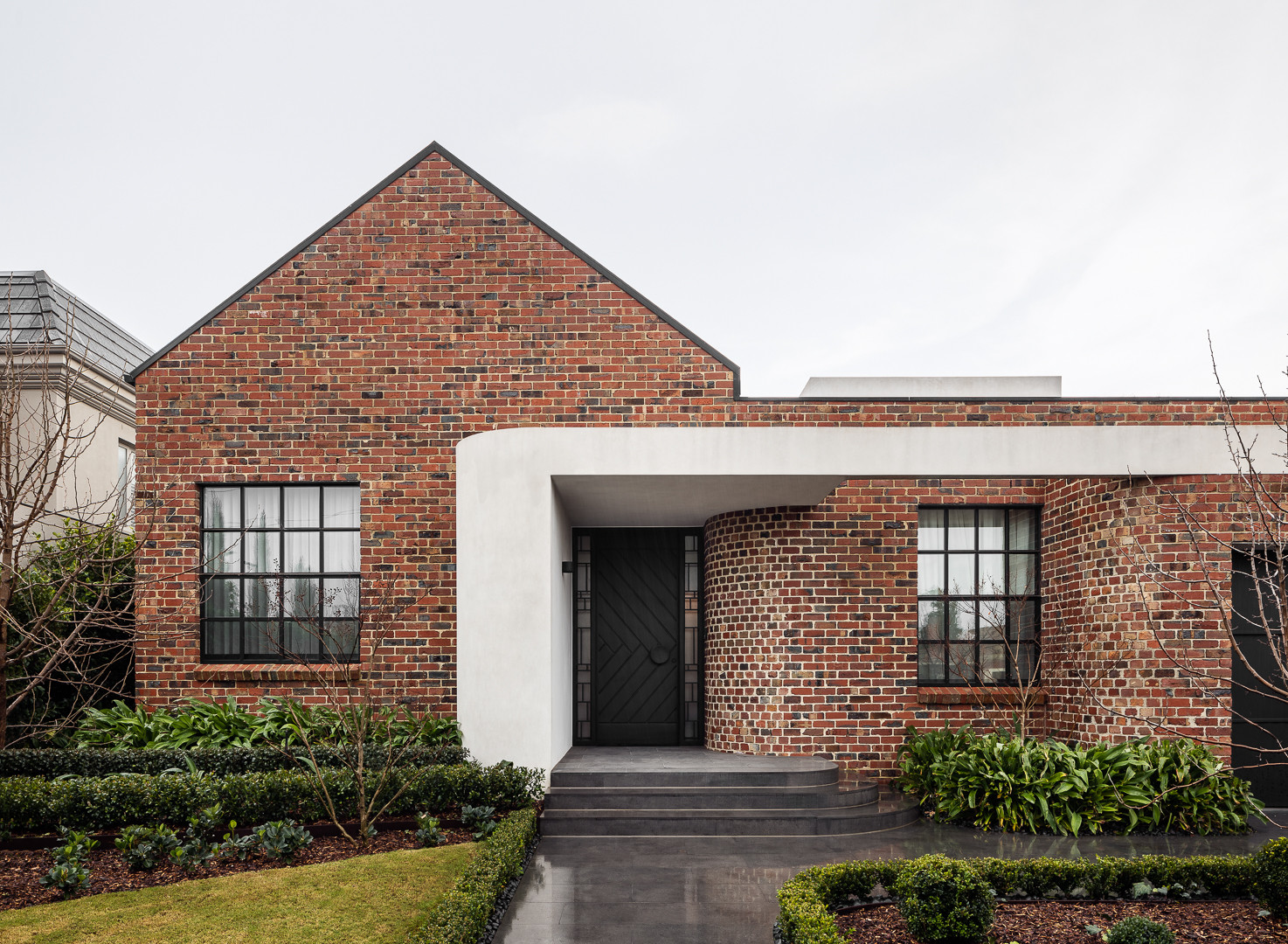
waste all that space on the recessed entrance instead of just making straight wall to the roof ?
There are so many things you notice while living in a particular house which would have been trivial to fix in planning stage, but impractical after it's built.
You do have to provide some basic info to get them but I can confirm that they're a full set of plans.
1. the house uses novel construction techniques. it's more of a design exercise than a serious attempt at something people might build.
2. you can't use the plans without getting sign off from an architect or engineer. this defeats the whole purposes of "releasing" plans.
I want it to be designed to minimize cuts and make building simple. I want the roof to be two slabs with no fancy protrusions, angles, gables, etc.
I want something that is easy to build and maintain.
As far as I’ve been able to find out, bardominiums are the closest to what I want.
Check also their forum for many member submitted plans: https://www.sweethome3d.com/support/forum/listthreads?forum=...
Did I mention that the free/open source software Sweet Home 3D is great :-) It’s been posted a few times on HN.
- https://www.openbuildinginstitute.org/
- https://www.openstructures.net/
I don't think anybody's compiled them in an "open-source house plans DB", but it's a pretty neat idea.
It's a modular design system based on the dimensions of commonly-available construction material, intended to be both cheap and easy to construct without (too much) assistance.
The gotcha is that it's based on dimensions of materials commonly available in the 1960's, so I have no idea if something you bought today would fit.
It's the sort of thing that's got me thinking that the next time I need to build a garden shed I'll give it a go. Anything that doesn't need foundations, like a deck with a roof on an existing concrete pad, or similar, I'd give it a go to get some experience with it. Round here that wouldn't need planning permission so it's comparatively low-risk. Just need to make sure whatever I did to replace the ties into the foundation blocks was suitable, but that doesn't strike me as beyond the wit of man.
I can say that the places that sell house plans, they want anywhere from about $3000 on up for the paper version, and they're usually numbered and watermarked. Digital ends up costing you several more grand on top of that, and I'm not sure exactly how they lock those down. On top of that, they're often missing important things like the mechanical, electrical, and plumbing plans. Your contractor is supposed to do that on the back of a napkin or something.
Ideally, any plans you'd find would have the following:
1. foundation
2. floorplans, 1 per
4. exterior elevation
5. cross section
6. electrical
7. interior elevation
8. perspective
9. construction notes/details
10. materials list
https://onlinecourses.shelterinstitute.com/courses/free?utm_...
There’s also then a in person course to actually do it!
Lumberyards often have fully kitted plan+materials packages you can order, and can often make some changes to suit your needs. Someting like https://www.hancocklumber.com/package-type/home-packages/
Local lumberyards can be hit or miss, but you likely have one that is happy to offer a huge range of services to customers.
In Australia at least we need to submit development approvals which are public for some time.
As part of these approvals there will be floor plans and architectural drawings. They won't be enough to build off (usually), but they're a great source of inspiration it you're looking for ideas, costings, and what your local council is willing to approve.
They are still protected by copyright but I'm not sure if it's relevant in the context of using the same plans to build a house. Copyright is meant to protect against copying and derivative works not how the information is used.
Unfortunately, it's practically unusable in the US, as the ground floor is built from AAC, very popular in Russia and practically unheard of in the US. It's probably too small for American tastes, too.
For comparison, I've paid around $2000 for whole family house project, it's not just plans but also heat-loss computation, heating systems plans etc.
Country CZ (EU). It's two story house made of "bricks", with gas+wood+heat pump heating systems. I would say pretty classical here. For ~$270k, not counting the property.
Also soon there is starting another round of EU subsidies in range of $50k paid upfront for houses with solar panels, green roof etc.
https://hammerandhand.com/best-practices/manual/
e.g., retrofit windows:
https://hammerandhand.com/best-practices/manual/3-windows-do...
- Are you going to build it? OR
- Are you going to act as the general contractor? OR
- Are you going to have a builder build it?
I just finished the lattermost process. In that case, you can get ideas from open source plans, but getting a builder to build your plans will be a full-custom build with the corresponding costs.
We looked at the plans several builders offered, modified one we liked, and then had them build it. From what I can tell, this route saved a lot of time and cost (assuming you are going the builder route).
There's a free software tool from National Renewable Energy Labs that lets you make a rough sketch of your house, including orientation and try alternate features to determine if adding more insulation would be worth it. Or a more efficient furnace. Each airport (at least in the US) measures weather (temp, wind speed/direction, humidity, cloudiness, etc) every hour. Local climate files will have the past 20 years of weather so you can evaluate the costs/benefits of different systems with your actual records.
https://www.nrel.gov/buildings/beopt.html
Disclaimer: I worked on an older version of this tool.
The mega builders that build big developments certainly don't match up house plans with the way lots are oriented, and that's where most houses are built.
I'm not trying to argue we shouldn't work on that, but to just dismiss off the shelf house plans entirely because "you have to build for the site" is rejecting the reality of how things are done.
At the very least, a repository of plans that was categorized simply by the orientation it was optimized for would be a step ahead of how most housing is planned and built today.
If you really don't believe me just survey home owners in those now 2-year old tract homes. Even if the actual houses have excellent construction you'll discover the builder completely declined to take into account things like drainage of the lot or how maintenance can be performed.
It's more general than lot to lot, but still seems to take into account the general lay of the land, the city's codes and etc.
There will be compromises because they build for average buyer, not for you.
And people that are looking for a house usually want to move there as soon as possible, doing custom not only means you need to pay more but that you also have to wait longer and pay for the place you're currently living extra year or two.
Ideally all would start from some common plans then architect would customize it based on the future home owner input but that's frankly expensive.
Historically, for example, log cabins are popular in the woods because logs are plentiful and adobe was used in desert environments because of the abundance of sand, lime, binders, etc. I would not build a solid wood home in the desert of New Mexico for the same reason why I wouldn’t build a masonry house in the forests.
Today, we have all but perfected the manufacturing of, developed logistics for, and codified laws governing building standards focused on raw building materials that you can order from a lumber yard or even Home Depot.
Modern building construction, at least in North America, is based around the “balloon framing” idea that the walls support subsequent floors and the roof, maybe with a load bearing wall in the middle somewhere. With 2x6 framing members, you can go up to 3 floors in some jurisdictions without additional engineering sign off. As long as there is a flat platform to build the first floor, you can build up.
The foundation is the only thing that would require custom construction, with a pier and beam, you need to drive your pier 1-3ft below the frost line and with a slab or basement foundation, you also need to reach below the frost line, but requirements differ between codes.
Drainage is another area that needs special attention and is 100% custom for each project.
I think you're getting balloon and platform framing mixed up.
Why not? Perhaps the US is different, but in mainland Europe you'll find plenty of brick houses in the forest.
Yes, historically you'd build a log cabin out of materials found on-site, but is anyone doing that anymore? Presumably you'd want logs shipped from elsewhere, if only to get ones that have dried out already.
At that point, why would it be prohibitively expensive to choose other building materials?
Would you, the first-time-house designer be able to accommodate for all those issues? Or even know they exist in the first place?
> If you really want to design your own house (a great idea), look up materials around A Pattern Language instead. Learn what makes a great house, then design a plan incorporating those ideas but customised towards your plot and your needs.
Horrible idea. By all means be the input in the process, but pick someone that actually knows how building works and that can instantly point out any misunderstanding or lacks of knowledge you have.
One, it is meant to be read alongside The Timeless Way of Building. It is not simply a how-to manual.
Two, it comes from experience gleaned in the field working as an architect and builder. It is not simply highbrow art, mysticism, or eccentricity.
Three, the patterns are separate from implementation: "[You] can use the solution a million times over, without ever doing it the same way twice." He goes on to distinguish patterns in which he believes an invariant property has been established from those in which more research is needed. He even states that some patterns are just a guess and shows how to identify those in the description of each pattern.
Lastly, he states there is a danger that people will assume that this one pattern language should stand for all time: "Is it not true that there is a danger that people might come to rely on this one printed language, instead of developing their own languages, in their own minds? The fact is, we have written this book as a first step in the society-wide process by which people will gradually become conscious of their own pattern languages, and work to improve them."
The purpose of the book and its principles is not to recreate an aesthetic through pastiche. You are meant to use the principles in the book to create your own language that works for your context. A pattern that works for me in my environment may not work for you. That fact doesn't nullify the value of the pattern. The purpose of the two books together is to acknowledge that humans have deep feelings about the environments they inhabit. Whether those feelings can be explained or not is beside the point. The point is that we have them. These feelings happen across cultures and time. When we apply those feelings about our environments to the built world, several patterns seem to emerge. Hence, you get the concept of pattern languages.
Alexander takes the bold step of not only acknowledging human feelings but centering them in the discussion about how the world should be built. This point should interest those who are sympathetic to the Agile Manifesto, or to principles of user-centered design, or to product design and product management. This fact is also likely why certain interests are uncomfortable with his work. Powerful interests do not, in general, like to lose power, and change is expensive.
Later works, including his series on The Nature of Order go deeper into his exploration of these principles, even the possibility of an objective evaluation of beauty. And yes, there is a bit of woo going on which can make some people feel uncomfortable. We are all capable thinkers. You can decide for yourself which ideas resonate and which do not.
Personally, I found that his ideas changed the way I experience the world, including giving me the ability to evaluate the kind of home I want to live in and how to optimize that home to increase my own happiness. I may not ever get the chance to build my own home. But I have a voice. I participate in society. I believe the world could and should do better than optimize itself for money. I believe I am not unique in finding the books useful.
(edited for clarity)
I get this is hn where diy ethos runs deep, but please don't do this. Hire someone to design it and oversee construction for you.
Expertise exists and matters.
Only the rich can afford good houses.
It's very rare to be in the position to build your own home, as you'll never do it cheaper than a mass market/spec builder. It's almost always cheaper to just sell your property and buy something already existing.
If you do end up building custom, it's almost a waste to find free plans, as you'll want to customize to your liking as much as possible.
It's like a system design template dictionary for homes, spaces, cities, etc.
A roof pitched for heavy snow with storm shutters for hurricanes would stand out like a sore thumb in Arizona.
That is untrue
Perhaps not the "best possible" but relocation of houses is very common and practical. Kitset houses are transforming the industry
This is far more complicated that the author appreciates.
Your typical signal family neighborhood has the following requirements: There will be room to store at least 3 cars, and at least 2 of them will be indoors. The path from the street to where the cars are stored will avoid hitting things with the car. All this means that every house will have a 3 car garage up front with a straight driveway to the road. A 3 car garage defines how wide your lot will be. All houses look the same because the car defines so much about how the house must look.
It rains everywhere, so you will account for that in all houses so you can take any plan knowing rain is accounted for. Views are the only thing that might be different, and most people don't live where the views are worth worrying about - unless you live in a rural area your view is the other houses in your neighborhood.
It rains here, but it also snows here -- so a roof that can shed water but not hold the weight of 3 feet of snow is not suitable. Putting our roof on a house in Georgia would just be a waste of money.
Some ground can deal with basements. Most of Florida can't, so they build on slabs. Then they need to put the HVAC and plumbing somewhere that isn't the basement.
A house in Florida should be designed to withstand hurricanes and floods. A house in California should expect frequent minor earthquakes.
My backyard view is great. My front view is of a road. Planning for those in the wrong direction would be bad.
Not every house needs triple-pane windows and R25 insulation in the walls, sitting on a 8-ft deep basement, with a steep roof pitch for snow to slide off of. Generally, you want to cut corners, because building to code in New York would be overkill in Texas.
You could have unique plans for each climate zone, but then the slope of the land and the shape of the lot also matters. Ideally, you'd want to be situated on a southward facing slope, beneath the road, so you could have huge windows towards the back of the house to taking in winter sun, natural insulation from the hill, and smaller windows facing the street. If you can't, you'll have to compromise on something that makes the house less pleasant to live in and/or harder to heat/cool.
At this point, we might actually have 100 distinct home designs, for each climate zone and slope. If you're lucky, these standard might actually be compliant with zoning for your lot, and maximize the allowable use of the lot. Every town is different, and who knows what silly rules your town requires.
At this point, you still need a design that local builders know how to build. Builders talk about "communities of practice", where they know how to build a certain way in response to how all of the other contractors in that area will also build, so that a subcontractor doesn't ruin another subcontractor's work. If you hire builders to build in ways they're not familiar with, they'll make mistakes. Most mistakes will be fine, but they could add up to failing to meet the code or standard for which the house was designed.
Ideally, you want to find an architect and a builder who have worked together before, to design and build the kind of house that you want using the techniques appropriate for that design, with the builder having crews of subcontractors that he/she has worked with before. If you've reached this point, you might as well take the extra step to building the perfect house for you, and customize it just a little more.
Maybe in your city.
A home designed for Texas is not a good home in Calgary.
Our house will have a space for one car (under a roof but not in the garage) a motorbike and some bikes (all bikes in a shed). If some of the kids will have their own car before they move out (IMHO 40 % chance), they can park on the street.
I think that's the biggest problem. You can draw up a house in free apps in a couple of minutes or hours but that doesn't mean it's structurally sound or that the walls will have the right dimensions for the pipes and cables that need to run through them or that they're the right size for the kind of insulation you want or that the windows meet your country's/state's legal regulations or that the house meets the code for where you want to build (which can literally depend on the part of the road the building will be on).
We approached our architect with pretty much a full floorplan in hand but it still took us months to pin down something that would get fast-tracked for approval and even then the floor plans had to be modified by the construction company to account for the placement of things like toilets and showers. Even without changing any of these details we couldn't take the floorplans and just submit them for a different part of town as they would likely not match the requirements there.
Not all houses need to meet the form based codes. If you want to do something different then you need a professional engineer to stamp and approve the plans - once stamped the town needs no more input.
Apartments and commercial buildings start to get more complex (but even then many meet form based codes as it is cheaper than calculating out all the stresses). However again professional engineer needs to approve the plans not the town.
My first house was a Seattle skinny, garage off the alley. The plans on file were for a garage in front, different upper floor layout, and a different roof shape.
Barndominiums generally imply steel framing and requires heavy equipment, at least to hoist the steel beams into place. They are less easy to build and maintain than a stick-framed home, in my opinion. A simple incarnation of a latter could be thrown up by two hobbyists, if it's small enough.
Lstiburek's "perfect wall"[0] may be of interest to you. Simply put, layered from the inside to the outside, it's drywall, wood studs (with batt insulation), sheathing (plywood or OSB), plastic house-wrap over the sheathing to serve as an air and vapor barrier, some depth of external insulation on top of that in the form of boards, then finally the exterior cladding.
[0]: https://buildingscience.com/documents/insights/bsi-001-the-p...
Something like this look: https://www.stocksy.com/791391/two-story-house-with-wrap-aro... is exceptionally resistant to weather issues.
https://map.simonsarris.com/p/designing-a-new-old-home-begin...
But what you decide for the interior plan, to be ideal for you, is very much up to how you plan to use your house.
Part of what I want to see is how others use their space, and use that as a "springboard" to how I could use mine.
The frame of the house is easy. The rest is not.
Any GC should have a huge stack of these plans sitting around, or has worked with a designer that can quickly edit a pre-existing plan for you.
FWIW: I grew up in a Raised Ranch built into the side of a hill. One side had the basement mostly buried, the other side had the basement wall mostly exposed with a garage. The front door was at the point where the basement as 50% underground, so the entry has a very high, and impressive ceiling. At the end of the day, it was still a box with the roof you want.
I realize that actually building it will require customization for local codes, etc, but I’d love a place to start - and I want to integrate building science instead of building spectacle.
The big thing is the detailed blueprints. The “look” is just the start of it.
What I'm really looking for is someone who has taken a basic "square/rectangular" house and though out interesting and intelligent ways of arranging the rooms inside.
Get an itemised estimate of the cost of land, cost of construction (include permitting and utility connect fees), and cost of housing while under construction, convert those to net present value, and compare to the all-in purchase price of the house with taxes and fees.
If you think future taxes or maintenance will be significantly different, you can estimate those in net present value as well.
IMHO, building your own house isn't usually about financial advantage, it's about getting a house that fits more of your needs and wants with less compromise than picking from what's available. But there might be exceptions if you have access to land, labor, or materials at a significant discount to market rates. Or if you want a much smaller house than is usually marketted.
> Get an itemised estimate of the cost of land, cost of construction (include permitting and utility connect fees), and cost of housing while under construction
That's the thing: getting these estimates is not simple, especially for a hypothetical build.
In any case, I take it as a matter of tradeoffs. And the financial side of it is one of the tradeoffs. I probably would not build my own house - despite all the benefits - if it cost me double compared to a house readily available for sale, for example.
I'd imagine only if you do a lot of the actual building yourself.
New house will just cost same or less than you trying to get a project then hire people to do it.
Project is tiny part of the cost, but for developer it's already amortized over tens of homes they've built. Workers also "know the process" and I'd imagine build it faster than some custom.
Now old house, that's interesting question, and that will heavily depend on state the house is in.
Putting some insulation on old house and doing some renovation might come out far cheaper.
Or you might get into some kind of renovation hell where every fix uncovers another problem with the house, then it turns out you not only need to re-do electrics but also water/sewage, or remove old insulation and replace it with better, or remove some rotting boards etc.
Then there is of course question about whether you like house layout or not or how much you'd want to change it.
On flip-side, the advantage of fixing up old house is that you don't need to do it all at once and so can take smaller mortgage and so pay less in cost of that.
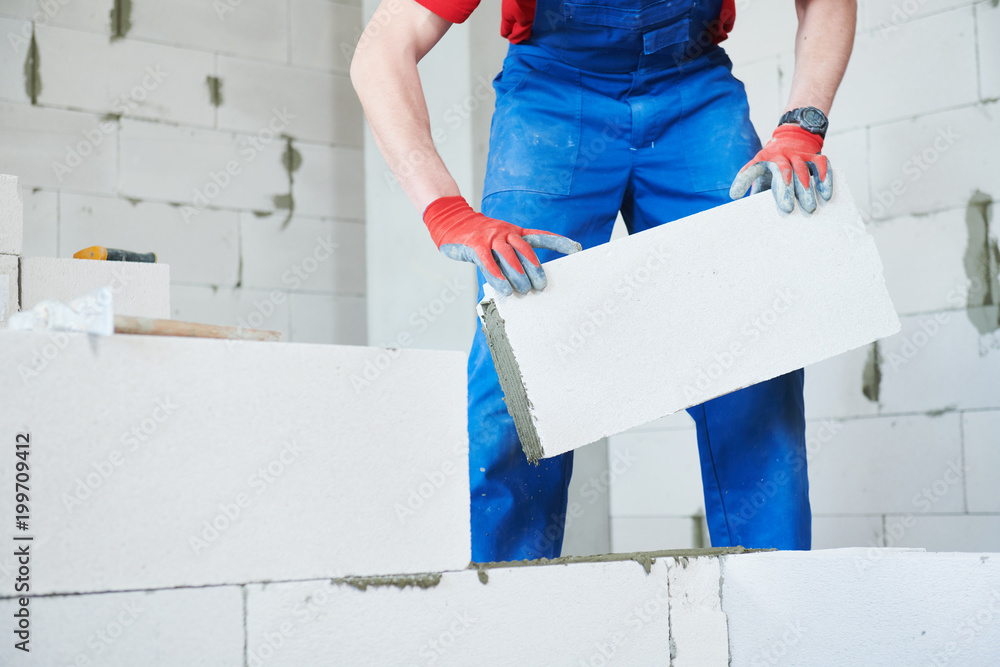
Or this Ytong https://as1.ftcdn.net/v2/jpg/01/99/70/94/1000_F_199709412_vW...
Because these are most common materials used for building houses, (in CZ).
And wanted to distinguish I don't mean classic house made of classic bricks. Because if American see a brick house, they think this, right? https://st.hzcdn.com/simgs/afd1745b0164c256_14-6933/home-des... And this type of house is very rare here. Maybe you can't even build it here, because of bad heat insulation etc.
I was shocked when I was looking to have a new home built a few years ago how much you have to spend to actually get into a "custom home" and not a fairly templated house.
It turns out that a roof built with the basic standard components can handle a large enough snow load for most locations. Even if it can't, the roof it generally engineered separately and placed on top, so you can interchange a different one without changing the house plans.
If you don't have a basement you delete the stairs down and get a closet which is also used for a tornado shelter.
A house in Minnesota is designed to withstand hurricanes and floods - It turns out storms can momentarily get as bad as a hurricane and so houses everywhere need to handle it. Likewise MN gets minor earthquakes - it is rare, but still happens enough that unless it greatly increases costs (it doesn't that much) you take in the earthquake work someone else does.
No California does have major earthquakes that Minnesota houses probably cannot handle. California is on their own code system. However Minnesota shares codes with states that get hurricanes and floods - those states put in a little more insulation than is needed, while they build for hurricanes - and both states get better results for it. Meanwhile those designing building components can scale better (cheaper!) knowing that once their parts work in one state they can sell to others.
Around here every house has a basement. Flooding is an extremely minor concern given the terrain and you want the foundation to be below the frost line. The provincial building code requires a heated basement on clay soil (all nearby soil is clay) to a depth of max(1.2m, frost line).
I'm definitely looking at the ZIP system and friends, and for those interested I'll drop some links I've been following:
This should be our home for at least 15 years though since I have a good track record of remote work, family in the area, and young kids. So hopefully the extra expense won't matter as much in the long run
I don't think building is ever cheaper unless you put years of your own labor into it and you are really good at that kind of stuff
Likely the same in the US.
https://ncma.org/resource/faq-20-14/
Every type has some specific trade name that rarely matters much - your images look like the type that interlock with a specific keying profile.
https://web.archive.org/web/20170505101559/http://archinia.c...
And it looks very different, I wouldn't do it at least.
- there might be distance requirements between the building and the lot boundary which would prevent a roof from sticking out
I'm sure it varies regionally, but where I'm at (Kansas City market) you have to be in about the $800k range, generally, to be able to work with an actual architect and build something custom - and that's just plain out of reach for most people.
But that's been roughly the way things have always been.
What's changed is the creation of a middle path of "built to sell" homes.
The "then architect" part of the process results in McMansions that are awful to live in, are environmentally disastrous, and contribute to the growing unaffordability of housing for all but the upper classes.
In an ideal world yes, in the real world you'll get run out of town being called a "communist", or no one will buy the houses because actually built-to-last homes are waaay more expensive than the cheap drywall and wood stuff that one sees go up in the air with every tornado video.
On top of that, they'll hold up better to a weak tornado, but anything over EF2 will structurally compromise one.
Add in all of the other disadvantages, and it is small wonder why people don't use them often in construction anymore.
They're pretty high up on the list of CO2 cost as well, between firing and shipping.
I'm around Kansas City. The biggest builders here will be in multiple subdivisions at once, with varying topography, and they may or may not have been the ones to plat out the lots.
They will absolutely sell you any house plan in their catalog to go on any lot, so long as it fits. You might get a walkout basement instead of a full in-ground basement, but that's about how much it varies.
The only variability is that smaller plans would be available in nicer subdivisions (that require bigger/expensive houses) and larger plans won't be available in subdivisions where they don't physically fit on the lots.
You are ignoring the tens of thousands of hours pre-built builders put into streamlining designs that can be put on almost any plot of land. Think of it as downloading a piece of software and saying "oh it just works everywhere" while ignoring the engineering time that went into testing and bug fixing on every platform.
Regardless of what you see as a casual outside observer, an architect and civil engineer are putting their stamps on each set of blueprints for each construction site.
Hard disagree on this wishful thinking. I've literally seen the submitted plans for my house - there was absolutely no architect or engineer stamp on them. The true mega-builders might do this, but smaller operations (say, 25 to a few hundred houses a year) don't.
In my subdivision (which will be a few hundred houses built by one company) the plans are all new to this subdivision, designed by the head guy, and there aren't enough houses of any plan to amortize "tens of thousands of hours" among them (they've built 4 copies of my house so far, for reference).
You don't need an engineer or architect involved in building a "normal" house or developing plans in large parts of the country. There's no calculations required, for the most part, either. The codes allow a prescriptive path to compliance, so if you fall the span charts in the codes, it's good to go.
The only real notable exception is in truss design - but that's never designed by an architect either. The builder sends the house design to a truss company along with required loads in the area, and the truss company sends back trusses that cover the space and hold the required loads.
Threads like this are peak HN - people who "know better" how the world should work (and hey, I wish I worked like that too) telling people who have actually experienced something their experience can't possibly be real. I actually have had a house built recently. I did a ton of research, and this builder was the best I could do in my area and at my price range (about $600k). The options get a LOT worse as you spend less on new constructions.
No they aren't. This thread was started by someone saying "The idea of planning a house without taking into account the site where it will sit will never produce a good house.".
Both of you (and everyone) is saying this isn't true.
Firstly, only a tiny fraction of people are interested in building a house. And the number that build 2 are a rounding error.
Developers already have architects on staff, already have libraries of plans, why would they pay for this?
Then, every detail of the generated plan would need to be checked. Every. Single. Detail.
Most people who build a house do do because they want to make a mark, or they need something they can't find. They are all literally edge cases. They'll sit with an architect for hours trying to get that dream out of their heads onto paper, adapting to limitations of budget, planning approval, local regulations, budget, site, budget and so on.
There is no market for a product like this.
But you're right that you can basically get a permit for nearly anything if your pockets are deep enough and the restrictions are often arbitrary. That's why I mentioned fast-tracking: the area we built in had fairly strict requirements compared to houses only a few blocks away and any deviation would have required a costly and lengthy approval process (measured in months rather than weeks) so staying within the requirements was primarily a financial decision.
This is corruption. The process of approval should not be lengthy of costly.
If you casually assume everyone lives in the northern hemisphere.
Don't worry, we're already used to it with you all decorating websites with snow-themes in December, and saying "releasing this spring!" when what you actually mean is "April".
Yes they do. Cooling is a large energy cost. Besides, you end up with that much space in your walls anyway just because for material strength reasons you need wide walls.
> sitting on a 8-ft deep basement
A basement is a line item that can be added or deleted at will. If you don't have stairs to the basement you still need that space except it gets a floor and is marked tornado shelter.
> with a steep roof pitch for snow to slide off of
They still build the same roof pitches so rain runs off.
> you want to cut corners, because building to code in New York would be overkill in Texas.
Not really because much of house design that matters is about structural matters where thickness matters. Other parts are about standard parts, you can buy a 2x4 off the self. While 2x3s exists, they cost more than a 2x4 and are generally lower quality.
If you already need a deep foundation and basements are common enough in the area so people know how to do them well, maybe. For other areas, it's a significant expense, a lot of work, might require design changes, and it'll probably leak.
Either way though, they are easy to remove from plans if you don't want one.
For material strength, walls are fine with 2x4 framing. However, 2x4 framing is limited to R19. So this is actually not true. The reason builders went to 2x6 framing is entirely to allow for a larger insulated cavity.
> They still build the same roof pitches so rain runs off.
Roofs do not require the same pitch to dispel snow as they do to shed snow. Roof pitches are genuinely steeper in areas that see particularly high snow loads.
And in warm climates there were going to 2x6 as well as air conditioning needed the r value.
In most of Texas, the air outside is humid, you need a moisture barrier between your structural wall and your rainscreen/siding.
In Calgary, cold winters will have very dry air, so the humidity will be much higher inside the house. So the moisture barrier needs to be on the other side.
In either case, you don't want the insulation layer or the structural layer to be collecting condensation from the humidity / temperature differential, or you will get mold.
Disclaimer: not a builder, just deal with humid climate.
But also humidity, local ordinances, matching the style of surrounding buildings, the relative value of land favoring single story (texas) or tall (Calgary) houses
This is one of the reasons why I would believe Lowes or Home Depot or another construction supply place would 52 such a piece of software. They have those zillions of "something" that get installed, and the lumber. They already know what all those people buy.
At least for a construction company: pick a general house, gives you adaptations for common landscapes, choose interior finishing(s) / style(s), gives you plans (with adaptations), already has them approved for your area (with variants), gives you parts list, gives you plumbing/wiring, gives you button to put it all in your "cart," drive to store, pick up house worth of stuff, Lowes/Home Depot make a quick $50k-100k or so.
If you build a development, you say, give me 10 of that. Build it again, say I'd like my old order.
Depending on how much you like symbology, since it's 52, it also carries playing card connotations, with "makes a good hand", "hearts the card game", "want this to shoot the moon."
If you tried to accomodate all of these methods now, your looking at much higher costs. But if your open source plans include all these methods, and people can produce kits that are shipped to you (either raw, or partially assembled) because they are identical, the costs would quickly start dropping..
And yet we were able to make Figma.
If the HOA allows it... ;)
Actually, there is only an equivalent of HOA for apartment blocks. House owners are usually only bound by law and personal relationships with neighbors (I'm in CZ).
https://maps.app.goo.gl/AUurWkVyhLMxzmHWA
My point is that the needs may be very different according to context.
That said, the processing time is probably more costly than the direct expenses because having to wait longer means you likely already pay a part of the mortage rate (most banks have start-up costs on these loans and you are generally expected to secure the loan before you have the approval). The entire process is expensive enough for the actual fees not to be a meaningful issue.
"Engineer's Disease" -- the idea that deep domain and problem solving skills easily transfer over to other areas in anything but a superficial sense.
Also Americans assuming their experience matches the experience of the rest of the world, despite being a tiny percentage of it - peak HN.
Wouldn't fly here in Germany, or in Croatia - you need plans signed off by a licensed architect or structural engineer for anything residential.
Haha, yes
Peak self own. I literally asked an architect before posting.
> there was absolutely no architect or engineer stamp on them.
Did you review the copies on file at the planning department? While there are exemptions in some states for simple or stick built homes, larger planned developments or construction financing (which all big builders use) will require it.
The vast, vast majority of single family homes built in the US are simple, stick built homes, without anything going on that requires any more engineering than consulting the span charts in the codes.
Like, going by objective measures like "how well it is insulated and how much it costs to cool/heat it", or "how well it uses the space of the plot" most of them fall well within "good", partly because at least on insulation level most countries require them to be at least decent.
But how well that fits the new owners ? Now that's where there would be actual benefit from either customization or doing it from scratch.
And if you have house with any kind of garden, you will need a place to store some basic tools, and maybe a grill, if house doesn't come with that it will naturally clog the garage.