A similarity between the CAP theorem and our heart(twitter.com) |
A similarity between the CAP theorem and our heart(twitter.com) |
Time to finish that refactoring, evolution! One component is over-engineered with respect to the rest of the system.
Of course, if the event that causes one to miss part of one’s brain also induces swelling of the remainder all bets are off.
So decentralized pulmonary system would be a huge drowning hazard.
I went for a battery of tests similar to the OP. The results shows my heart is structurally OK. The doctor diagnosed that I had RVOT and recommended I do ablation. He says that this is a very very common procedure.
I did the procedure. However, the symptoms started coming back again.
After reading this article, I wonder if I should have just left my heart as is.
The sad thing is I took Zoloft for years, mostly because my doctor said it's not wise to stop. In my case it was bad advice, as arrhythmia is a self perpetuating condition that gets worse if you let it linger. I use Zoloft to get past a high stress few years in my life (running my own business). Once that was over I should have stopped taking it immediately.
The human body is usualy one resilient bastard, so the ol' "tylenol and come back if it gets worse" is a good tactic for 95% of the cases.
But detecting those 5% cases probably takes A LOT of dedicated bandwidth from the whole medical process, so unless there is some clear manifestation that it's not horses but something else, I think it is reasonable that some will not investigate further.
EDIT: "this" meaning posting
Coffee and anxiety also cause PVCs, which are really harmless.
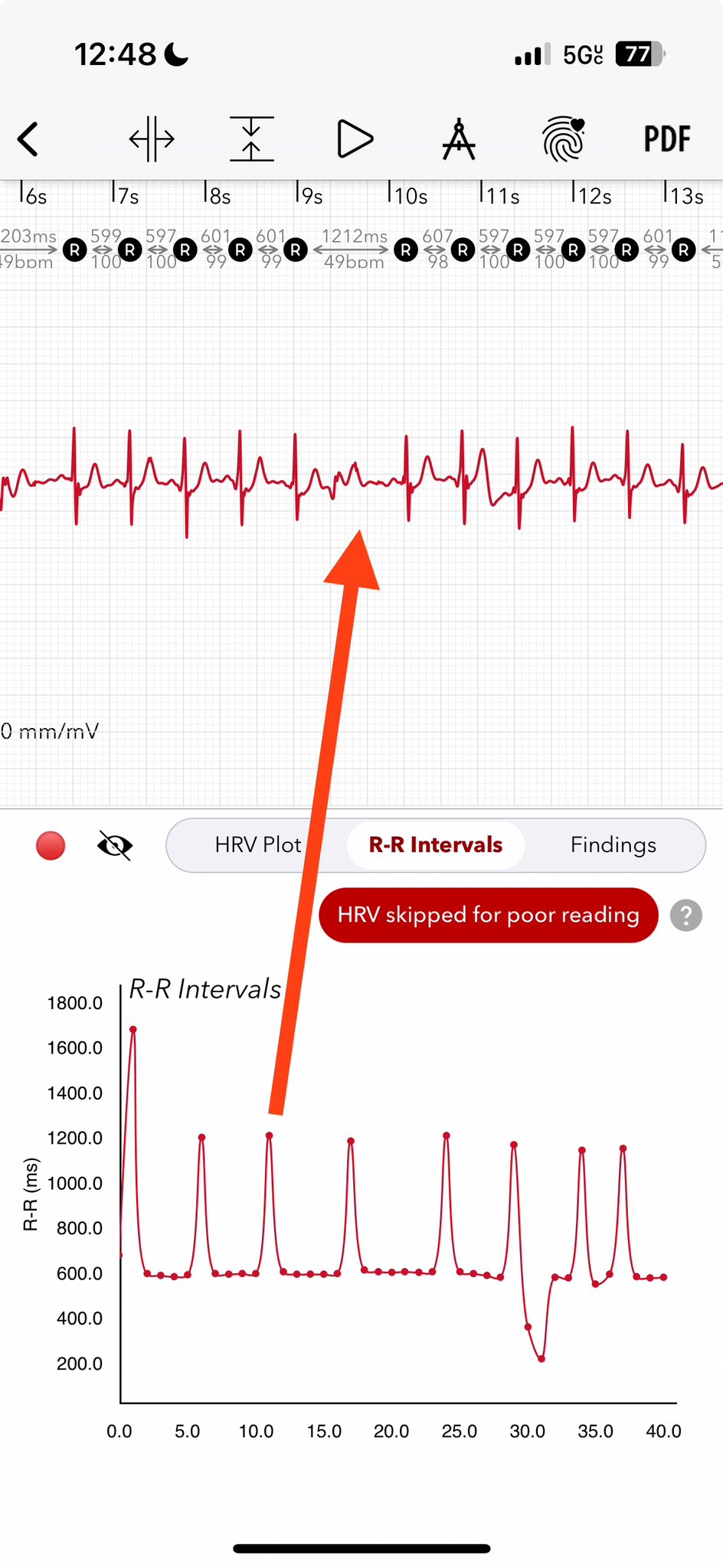
Basic comment was that the person confuses and misunderstands many things. According to my friend, the range marked as "missed beat" contains a premature heart beat [1].
Some more comments:
- Premature hear beats happen in us quite frequently
- CT scans are a rather invasive diagnostic method and such be avoided
So unless some more competent doctor comments otherwise, I take this as a nice story that resonates well in our layperson's minds. Not more.
But for those who do notice, they sometimes become super aware of every beat.
Feeling a PVC can make some people anxious, which boosts adrenaline, potentially leading to more PVCs.
It's like a feedback loop where a "missed beat" gets linked with that adrenaline jolt.
Most of the time, PVCs are no big deal. So, the best "fix" might just be learning to shrug them off, which often makes them happen less or go away (obviously after getting a green light from a cardiologist).
This is a great line, thanks! Going to share this with my distributed database reading group
During that time though, nothing I read and nobody explained to me what keeps the heart beating despite all manner of possible failures. 10/10 was definitely worth the read.
The symptoms of a heart attack and a panic attack are annoyingly similar. Whereas people qualified to diagnose and treat one are generally nowhere near the people qualified for the other.
Only after a couple of weeks of running about 20km, did I start seeing my resting heart rate drop to the high 40s. After that, it gradually lowered over the next 18 months or so.
Furthermore, an article about a study back in 2008 [1]:
> At the end of the 90-day study period, both groups had significant overall increases in the size of their hearts. For endurance athletes, the left and right ventricles — the chambers that send blood into the aorta and to the lungs, respectively — expanded. In contrast, the heart muscle of the strength athletes tended to thicken, a phenomenon that appeared to be confined to the left ventricle. The most significant functional differences related to the relaxation of the heart muscle between beats — which increased in the endurance athletes but decreased in strength athletes, while still remaining within normal ranges.
> “We were quite surprised by both the magnitude of changes over a relatively short period and by how great the differences were between the two groups of athletes,” Baggish says. “The functional differences raise questions about the potential impact of long-term training, which should be followed up in future studies.”
[1] https://news.harvard.edu/gazette/story/2008/04/exercise-chan...
The wonderfully comical thing about mine is they’re stress related. So the first one happened, made me a little stressed because I thought something was wrong, which caused more of them, which made me even more worried, etc.
> I'm not a paying member and I still see the entire thing
They meant paying members can post lengthly tweets.
Evolution isn't organized or eloquent. It's messy and random and non-optimized. Evolution results in many individuals who are not fit, any many evolved solutions are quite plainly bad.
Any elegance or beauty in evolution is a construct humans apply to an incredibly abstract and obtuse concept because that's just what we do to things that are difficult to grok.
Evolution is simply random mutations from various mechanisms, but the only guiding force is that of survival. Some random changes make some individuals more fit to survive, which makes the species more fit in time. There really isn't anything more to it. It's all just random chance averaged over a very, very long time.
Much like enterprise software development.
I'm not into any competitions or races. I run for health purposes only, so I'm okay losing some fitness. If the symptoms disappear, I'll certainly ramp up again. If they don't, I'll play it by ear :)
My understanding is that 35-50% of endurance athletes have what I have (including symptoms), and they continue to train without any harmful effects.
In my case, the PVC disappears during exercise and comes back when I take a rest after exercising. I just wonder if you had any comparisons between rest vs. elevated heart rate scenarios. Now I'm super curious how elevated heart rate might change the clock rates for those nodes.
From what I've read, when we're exercising (or sick or stressed) the heart rate gets overridden by the SNS (part of the autonomic nervous system). The SA node can only maintain resting heart rate, and once there's extra demands from the body, the SNS takes over (controlled by the brain, but involuntary).
It seems to be a good sign that PVCs disappear during exercise based on the studies I found.