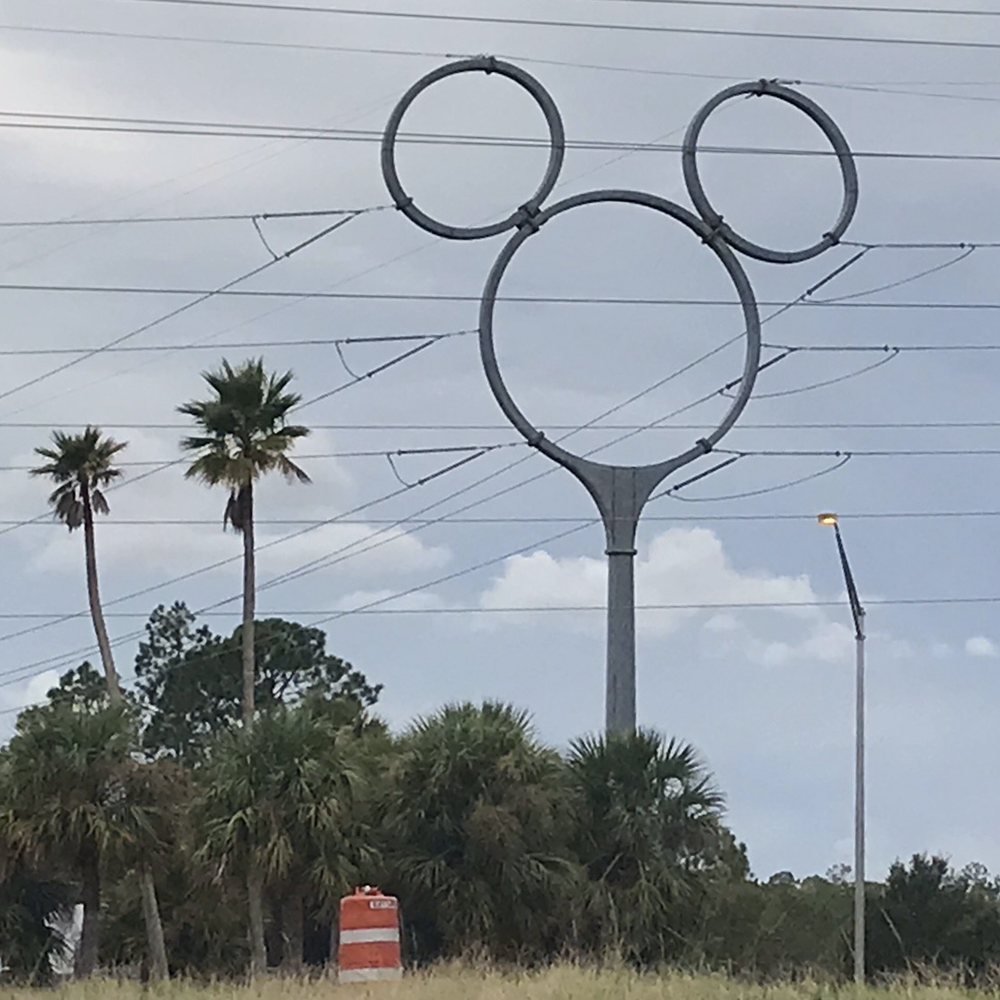
Can electricity pylons be beautiful?(bbc.com) |
Can electricity pylons be beautiful?(bbc.com) |
I feel compelled to point out that any "artistic" deviation from structural optimality will necessarily use more material to achieve the same sturdiness, and hence cost more. And when you have to put one every few hundred meters across a whole country, that's kind of a big deal.
A slavish adherence to this maxim condemns our age to a plague of depressing ugliness in our commercial and governmental structures
There are phrases for this, starting with "Penny Wise and Pound Foolish".
I have little doubt that the persistent lack of inspiration, or even whimsy, in architecture helps undermine our society's coherence. If no one builds anything of which we can collectively take pride and experience joy, where is the inspiration for cohesion?
There are myriad examples of wonderful government or commercial architecture from centuries ago. Centuries from now, will anybody GAF about any of today's structures?
We can do better, and it is more than worth it to do so.
If you design something well, it can be beautiful and functional and doesn't have to cost more.
But then I quite like big standard pylons, so each to their own.
And those tiny ground contact areas don't look cheap to stabilize.
Given a finite amount of dollars and materials, how much variation can there be in building something of structural soundness? Turns out a lot, at least in he video game :)
https://s3-media0.fl.yelpcdn.com/bphoto/ZljmUm9VF-aE2plYy5Py...
A lot of the medium-voltage stuff is already underground in some areas. All new 50kV-150kV stuff has been going underground for decades, and the stuff remaining above-ground just hasn't reached its replacement age yet. Despite its drawbacks, above-ground is unpopular enough that burying them is worth it.
However, the high-voltage stuff (220kV & 380kV) is still almost entirely above-ground. Those cables are extremely difficult to construct, and anything beyond a dozen miles or so simply isn't technically possible yet.
So for earthquake prone areas, you will find above ground power pylons everywhere simply because that is safer and cheaper than the alternative.
Where disasters are unlikely, they tend to be underground.
— The Pleasures and Sorrows of Work: t/c (Vintage International) by Alain De Botton https://a.co/1CjMq1u
The Luddites were not anti-technology; they were labour activists. They smashed machines because it was their leverage over the owning class.
https://www.smithsonianmag.com/history/what-the-luddites-rea...
bare hills result from deforestation
> A proposal in Norway faltered after a local mayor - spotting the visitor attraction potential of the structures - agreed they could be built in his town, as long as they weren't built anywhere else in the country.
Quite sad that alternative shaped (?) Pylons do exist, and some of them are really neat; yet are hampered by politics.
Work has continued in improving the alloy chemistry, so that it can be used for e.g. fencing without creating too many rust stains on nearby objects. One day we may be able to recreate the Delhi pillar alloy.
> Most people seem to view electricity pylons as a blight - ugly landmarks towering over the landscape.
I don't view them as ugly either. There is some beauty in truly functional design imo.
But as part of nature? Set across an landscape otherwise made of plants and trees and hills?
For me, that's a million times no. I can't think of anything uglier or more jarring. The cold gray angular lattice skeleton feels like it couldn't be more opposite to all of the positive aesthetic qualities of nature.
People decry the loss of views in suburbs when a train might run next to the freeway. They hear train tracks and think ugly. But we can build sightly infrastructure that does not detract from the world’s most beautiful places.
[1] https://en.wikipedia.org/wiki/Shukhov_Tower_on_the_Oka_River
It makes me wonder: all underground power lines are still laid by digging up the ground, laying them down, and then filling the dirt back in. Which is super-expensive. Right?
Are we trying to develop any technology for "microboring" in tunnels through dirt and clay, and maybe bedrock when occasionally necessary? E.g. just a two-inch diameter tube or something, that's even able to go underneath rivers and things? Solely for laying underground wires?
I dream of a world without electricity pylons...
The most important thing is to make them all the same as much as possible so that people who have to maintain them don't have to deal with annoying variations.
So: it seems like one of the more obvious faults of pylons is that they are the wrong color. Usually, they are white or grey (etc) which does not really gel with the existing natural landscape. It seems like the first step in fixing the problem would simply be to paint them brown, tan, green or blue, depending on the location -- possibly with a few brightly colored details so that they aren't too subtle. Bonus points for a paint that has inherent color variations, because flat colors are too visually distracting. (Why does pylon design even need a journal, anyway?)
though the one with the color panels would look fine if they removed the color panels
Underground electrical lines are a lot harder to access for maintenance and monitoring though; that expense isn't going to go away if you install without a big trench. It's usually a good idea to ensure access above the underground run, and if you're going to clear the land to ensure access, it's not that big of an additional step to do traditional trenching for installation.
I run electrical work and sometimes use directional boring to run underground conduits, it really depends on the pathway your conduit is taking. It boils down to whichever costs less, digging and restoring two pits and directional boring, or ripping up and restoring a surface so you can trench and backfill. If it’s all green space, plowing/trenching wins every time. Once you start crossing sidewalks and driveways and so on, directional boring tends to be cheaper.
Yes, the steel framing or reinforced concrete panels that would be needed to hold up the precast concrete sidewalk would be very expensive. You don’t need the entire conductor accessible anyways, that’s what tuggers and mule tape are for, pulling wire.
Also, all of the pipes would need to be supported from the underground concrete/steel structure and you would also need a lot of (expensive) expansion joints. Laying pipes in the ground and burying them lets the earth support them instead of pipe hangers.
There are some colleges/institutions to do use tunnels to run steam pipes through a campus, and they tend to build purpose-built tunnels for those. I’m not a pipefitter, so I’m unsure why steam pipes get their own tunnels, perhaps a MechE or pipefitter can weigh in!
Underground electrical feeder conduits (on customer premises, I only deal in the electrical world beyond the utility transformer secondary) are typically run in concrete encased ‘duct bank’, with manholes every so often. Electrical vaults/manholes are available as precast pieces that you simply lower into place.
Precast electrical vaults: https://www.ecbabbert.com/utility/electric-structures/electr...
https://hackaday.com/2021/10/05/repairing-underground-power-...
Speaking for myself, I like it because it's jarring. It's a juxtaposition of geometric against organic. Pure function against purposelessness.
Of course, it's better than a plane hitting the house in the fog.
That's the beauty of it. Same like a hiker wearing synthetic material clothes in a pristine nature range.
Funny you mention it -- I hate the neon day-glo colors of so much hiking and active outerwear as well.
For God's sake, try to blend in a little, you know? Earth tones, people. (Except in safety situations like hunting, obviously.)
I love it in a movie or an evocative painting or a comic.
I don't want it in real life, though.
Kind of like, I love watching Blade Runner. I don't want to live there.
Some are painted green :)
Where?
That feels like it helps at least a bit, maybe.
When it comes to pylon shapes, I quite like this one because it vaguely looks like a goat: https://maps.app.goo.gl/ZsmXL95mr1fknCqw7