Salim Kara stole $2M in coins with a magnet and a car antenna (2022)(nofreelunch.co.uk) |
Salim Kara stole $2M in coins with a magnet and a car antenna (2022)(nofreelunch.co.uk) |
His fatal mistake. Anyone with an indoor fountain is obviously up to _something_.
Hm? It does:
> In 1993, with the red flags mounting up, the city authorities hired private investigators to observe Kara, which finally caught him in the act.
"Before his sentencing in March 1996, Kara made an enigmatic statement in court, promising at some point to share his side of this fascinating tale “Remember, every coin has two sides”
Well… what’s the point of stealing money if you can’t ever spend it?
Conspicuous consumption is bound to trigger alarms. The smart wealth makes itself as invisible as possible, and typically plans generational succession instead.
If you really want to enjoy your riches, you better build all sorts of deniability layers first, or do it as part of retirement from the game. If this guy had dismantled the hack, left the job and retired to a Florida mansion, he wouldn't have been caught.
> My wife can barely look me in the face.
> Mine looks me in the face and more because she knows I'm on these mean streets every day juggling power and justice like they were damn chain saws.
Obviously I won't be naming Banks here but what usually happens is:
1) If they succeed in their investment they put the money back and walk out rich. Their venture can be detected during an audit some time later but if there's no money missing the worst that will happen is that they will be fired because banks are very sensitive on their reputation and they don't want people to hear that its possible for a such thing to happen. They also don't want the insurance and other regulatory bodies to hear about this.
2) If they are caught before returning the money(this could be audit, customer complaint or a whistleblower) they will be given the option to return the money and get fired. If they can't return the money, then a formal investigation and criminal case is initiated.
3) If they lose their investment, they will flee and trigger an audit. They won't be able to resign and leave gracefully because the process of using this money involves periodically putting it back at strategic times to avoid trigger an audit due to discrepancies, therefore it's very risky to keep coming back to work if you don't have the ability to put the money back at short notice.
This is one of the reason for people in banking having mandatory 2 weeks time off at a time in many jurisdictions. Stealing needs maintenance and maintenance needs access.
I also wouldn't call it "repay his debt to society" because due to money that he stole, he made the public transport more expensive and housing less affordable.
The book deal aspect was interesting also. So, the guy profits and has a potentially lucrative book deal with minimal jail time.
edits: another source says he settled with the insurance company which implies its less than the total amount.
This also moves the risk of the perpetrator not being able to pay the damage. Now the victim does not carry that risk anymore. The insurance does. Which is their value proposition.
"Why didn’t any Wall Street CEOs go to jail after the financial crisis?" - https://features.marketplace.org/why-no-ceo-went-jail-after-...
This is provably false. It's not "most" real estate, it has only recently approached 30% or so, and only in hot markets like Vancouver and Victoria.
There's a money laundering problem in Canadian real estate for sure, but let's try to be reasonably accurate in our statements, shall we?
Instead of buggy code causing innocent people to become criminals, here a “computer glitch” was blamed to explain away a signs of criminal behavior.
And mechancial counters were a thing in 1981 as well. I mean the machines had a way to say "you need to pay X amount" or a way to count money, surely that can be fed into a daily / weekly counter, a printed record, etc.
And also, they were pretty precise with the amount that he stole: they can't bring a guess to court, they had an exact record of how much was stolen.
> The failure to catch him, despite discrepancies between fares and cash raised in two audits, was put down to a belief that the errors were software glitches and, after his arrest, led to a significant amount of internal finger-pointing.
I'm not sure I could ignore outright theft. But I've definitely ignored - and watched others ignore - sandbagging, particularly when it has followed burnout.
They should have incentivized them with an annual bonus for reconciliation. Obviously keep the ticket and cash people separate (so they don’t just game it to get a bonus).
There is a pilot project[0] to put turnstiles/gates at two stations, but this is to keep the homeless out of the stations, not to count passengers.
[0] https://www.cbc.ca/news/canada/edmonton/transit-turnstiles-o...
E.g. Kids and seniors get discounts.
IIRC, there were mandatory PTO/vacations required as well, so that everyone's job was done by at least 2 different people during the year.
This was not a legal thing, but required for the firm I worked at. My manager at the time said this was pretty common practice on the street, then. (Early/mid 90's.)
While individuals could ask for their vacation time to just be paid out, a lot of employers don’t like that because they budgeted to pay you 100% of your salary per year, not 104% or 106% (ie: paying you for both 52 weeks of work plus whatever weeks of holiday per 52 weeks).
https://www.codulmuncii.ro/titlul_3/capitolul_3_1.html
> (5) In cazul in care programarea concediilor se face fractionat, angajatorul este obligat sa stabileasca programarea astfel incat fiecare salariat sa efectueze intr-un an calendaristic cel putin 10 zile lucratoare de concediu neintrerupt.
"at least 10 working days of non-interrupted leave"
Of course, this is not always enforced, but many countries to have it as part of the labor code.
Plus the individual being aware of the requirement could easily circumvent by only stealing every quarter or every month :-)
"Required Absences from Sensitive Positions" - https://www.newyorkfed.org/banking/circulars/10923.html
That's not a money laundering problem, that's a money laundering infestation.
Just over one-third (34.1%) of U.S. home purchases in September were made in cash, up from 29.5% a year earlier and the highest share in nearly a decade. That’s according to a new report from Redfin (redfin.com), the technology-powered real estate brokerage.
https://www.businesswire.com/news/home/20231108812516/en/1-i...
https://www.bankrate.com/real-estate/all-cash-offer-upfront-...
It sounds high but it seems to be normal enough?
I found this with some quick Googling:
https://www.thestreet.com/housing/a-surprising-number-of-hom...
https://www.washingtonpost.com/business/interactive/2023/all...
Then arrange the mortgage later, possibly after some capital-value improving… improvements.
It's also what Sam Bankman-Fried and others did in exchanges that acted as unregulated banks.
The system is not perfect and there are many scandals but if you compare it to what happens in crypto exchanges, its a day and night difference.
Running a machine as intended and screwing up is different from pretending doing one thing and actually doing something else and screwing up. This is also why bankers and fund managers don't usually go to jail when they lose clients money. It's not illegal to suck at your job as long as you follow the rules.
https://www.spglobal.com/marketintelligence/en/news-insights...
That are guaranteed by the US Government up to $250,000. While the average person may not know the details, the average person’s faith in the banking system is well founded. That’s why these “alt-banks”, which avoid FDIC or NCUA coverages, are so problematic.
"Moderating risk" = depending on the US federal government bail you out?
There really is no need for the charade of banks now that electronic databases are very solid technology. Their whole role in transmitting and keeping an account of money is surely reproducible by the federal government at very little cost (maybe even lower cost due to not needing FDIC and all that infrastructure) without having to pay a middleman.
It impossible for a bank for example to put all their money into Dogecoin because someone got a hunch that Musk will tweet about it. To do that they will need to create some kind of instrument that allows others to bet on Musks tweeting habits.
> There really is no need for the charade of banks now that electronic databases are very solid technology. Their whole role in transmitting and keeping an account of money is surely reproducible
That's not what banks do. You can do that without being a bank, like PayPal did. Most places will have different and much lightweight regulations than banks for this and you will go to jail if you do anything more than holding and transmitting customer money.
Banks' job isn't just keeping money safe and doing transactions. It includes maturity transformation as well.
Banks don't store money. They connect money to businesses in a structured way. No banks means businesses won't get created.
Yes, this is correct. The bank does it in a somewhat government controlled fashion, with checks and balances, which the world has been fighting for a millennia, if not more. And the guy inside does it with stolen money, for personal gain.
Consent, for one, is a difference between the two actions, if we're talking morality.
Consent is a difficult topic though, I agree. For example, what choice does a person have, not use banks at all? I don't think that's realistic.
Retail banks hold their assets in various forms (central bank reserves, bonds etc.) but can’t really ‘invest’ because they can’t accept the risk.
They make most of their money on lending, but can’t actually “lend deposits” because they are on the wrong side of the balance sheet. The bank levers up capital (money that shareholders have put in as well as retained earnings from previous years) to lend from.
Deposits do count as liquidity and are a fairly inexpensive form of it, which is why banks want you to move money into them and pay interest to encourage you to not transfer them out.
If the bank came into your home, took money without your consent, gambled it on high-risk activities, then tried to replace it before you noticed that would also be bad.
But that’s not what banks do. People deposit their money at the bank consensually and with an understanding that the bank’s activities are regulated within relatively strict frameworks.
I don’t understand if you are trying to downplay the severity of criminal embezzlement by bank employees or trying to demonize banks, but the two scenarios you’re equating are nothing alike in terms of consent, regulation, risk, and criminality.
Deposits are an asset AND a liability
> This means banks in the modern sense can literally create money, so they don’t need your deposits
Not really. Banks still have to spend central banking money when doing interbank settlements, and deposits are an important source of funding to day-to-day operations.
Say you have an account within Chase and want to send money to your friend at JPMorgan, Chase can't simply "create dollars" - they need to have enough reserves in their Central Bank account.
As a thought experiment, if you started a bank from 0, how do you pay out the first loan?
Yes, they create money, but deposits are a requirement to do it. (Unless you are doing some interest rate arbitrage by getting a loan from another source)
Deposits, although an important source of funding are not a requirement, capital is. There are capital requirements that make starting and running a bank a fairly expensive enterprise - you need to put up a lot of your own money (equity) for use.
$10 says they won't give a straight answer unless you ask just the right question. Eventually you'll find that there isn't a share you own directly, its effectively an IOU claim to a share. People can technically learn how the system works, but that leaves a lot of gray area there.
We could also technically read medical journals and learn how our medications work, but its unreasonable to expect everyone will and recent history has shown that in a pinch you'll be called out for doing your own research and thinking critically.
When half[1] the population refuses to participate (perhaps they're tired of being lied to, or the candidates are slime, or there are too many selectively-interpreted, arbitrarily-enforced "laws" to count[2], or the idea one person should represent 617,000 is absurd, or they just don't like bossing their neighbors around)...
Maybe the government doesn't have consent.
[1] https://www.politico.com/news/magazine/2020/02/19/knight-non... [2] https://en.wikipedia.org/wiki/United_States_Code#Number_and_...
Except PayPal has no FDIC protection.
The part of the bank (or credit union) that required the US government to provide FDIC protection was due to dealing with cash. Imagine creating a country with just electronic money. What purpose would a bank with a FDIC protection serve if the government can just operate electronic money accounts itself? And if you want to take more risk and earn a higher return, you find a broker or investment fund or investor.
Investing customers money, create money.
Most money in the world is digital already, there are many banks that don't have physical presence and traditional banks are shutting down branches more than the open because branches are just the foot soldiers. There are also countries where cash is almost not used. Banks are not about cash, they are about credit.
I don't know what a "physical bank" means though, AFAIk there's no such thing and the buildings that banks own or operate would serve functions like hosting employees/clients/systems but they might choose not to have some of those.
And they can do this without a federal government backstop, just like an SP500 ETF does or a US Treasuries mutual fund, or an REIT, etc.
My point is the federal government need not provide a subsidy to these businesses that "invest" customer's money (or simply handle the underwriting of loans in many cases).
Right now in the US, via the Fed Funds rate, the federal government pays a business 5.5% just so the business then turns around and pays me 5.05%, all for keeping an entry in a database. And these businesses pay a lot of less discerning depositors a lot less. Surely the federal government can just give all 5.5% to people directly.
I am not seeing the necessity of the federal government backstop to these businesses.
What does this have anything to do with maturity transformation? Are you simply trying to say that we don't need banks to do maturity transformation, and they should stick to handling transactions?
Money is electronic, the government can handle electronic money accounts directly, and skip paying businesses for no reason.
Banks or whatever other financial businesses can continue to sell maturity transformation services, without FDIC insurance.
Saying the money appears to be there is very different from the reality of it, and in the context of whether customers consent to how the system works its also feels disingenuous IMO.
Can people spend the money as though it were there? Sure. Is the money they deposited there or are they aware that 90-100% of the money was immediately allocated to something else? Almost certainly no.
Last year a few banks went tits up, all the deposits were paid.
Is it consent if you aren't made aware or given reasonable access to information that the average person could be expected to understand?
Can you clarify what you mean by "covering the failure of a moderately sized bank"? Bank is almost never "all the money is missing". Instead, it's usually something like "we have assets > deposits, but they're long term assets that can't be liquidated immediately so we can't pay all the depositors right this second", or "we have assets < deposits, but the gap isn't big enough that FDIC can't handle it".
At the end of 2022 the fund had $128.2 billion. I can't find a solid number on domestic deposits that are covered by FDIC based on the maximum deposit amount, but their Q2 2023 report showed $17.2 trillion in total domestic deposits across all FDIC institutions.
I'd expect that more than 0.7% of all deposits are under the $250k deposit limit. Let's just say 30% is actually covered, SVB had 89% of deposits above the limit when it failed, the insurance fund couldn't cover the failure of a bank with more than 3% of the market share of deposits.
The caveat there is that bank assets can be liquidated, but if the failure is fast enough that becomes really hairy. I haven't yet seen clear details on what strings they pulled and what sweetheart deals they gave when SVB was sold at the last minute, but that really means the fund isn't funded to cover enough and the hope really lies in market manipulation and a forced sale (likely funded in part by tax payers).
The problematic part starts when someone acts outside of this structure, like employees who take customers money and invest with it without explicitly having a right to do that.
Housing may be unaffordable, but people aren’t living in sod houses with dirt floors and no running water either.
Why not use banks for this as well?
Some wealthy investors would setup a lending operation using their own cash, based on historical examples of such. They would however need to charge higher interest rates than banks because they would be more capital constrained.
If the lender, such as a bank, is any good at their job of underwriting, then they won’t need the federal government’s assurance to bail them out and they will still be able to attract funds from people seeking returns (and risk).
So what would you say you do here at the business factory?
[…]
I connect the money with the businesses because businesses are not good at dealing with money! I have people skills, can’t you see that?
Yes, but a big way small business loans happen is with people's deposited money. You're naming alternatives, but not replacements. If my money is deposited with the government, then I have to go and find someone to lend to myself, and actually have the money removed from my bank account?
> If my money is deposited with the government, then I have to go and find someone to lend to myself, and actually have the money removed from my bank account?
Also, you know the savings rate you earn at a bank is not because of the loans a bank makes, but because the government pays the bank. Why do you want your government to pay a middleman before paying you?
There was a time and purpose for this system, before instant communications and electronic databases. Now, those purposes have been automated away.
There was case like this in Boston about 15 years ago that came to light as they were switching away from tokens to Charlie Cards. It was an MBTA mechanic. IIRC he was caught because it looked strange that someone kept showing up with bags of tokens to exchange for cash at one of the stations.
Even with the new card system, someone figured out a scheme to steal:
https://www.universalhub.com/2011/mbta-revere-man-made-sold-...
And when I was a kid there was a big parking meter scandal in which most of the collectors were implicated after a resident saw two of them skimming. Loved this quote from the investigator:
''The meters in Boston are the oldest I've ever seen,'' Mr. Vitagliano said. ''In some cases, it is actually easier to take a quarter out of one of our meters than to put a quarter in. I mean that.''
https://www.nytimes.com/1982/07/08/us/boston-meter-collector...
Many a cold morning in Boston my father would prefer to pay the $1 for his Dunkin coffee than pay for parking as we ran errands in the city. A trail of disabled meters laid in our wake. Not the best lesson for 8 year old me but a funny memory nonetheless. RIP Dad.
The repair shops must have hated that. Imagine having to take apart meter after meter to remove the stuck penny.
https://nationalpost.com/news/canada/royal-canadian-mint-emp...
In 2015, this fellow was making $55k/yr, contrast to the guy in the article making $31k in 1981.
Token sucking - described by police as the most disgusting non-violent crime committed on the NYC subway.
https://www.sfgate.com/news/article/robbed-blind-parking-cza...
Several articles were written about them, I think I saw an ad for a movie even, but it took both of them working very long days to pull this off, including standing in convenience stores for hours at a time pushing buttons. I think they ended up making less than $100 an hour between them.
Which is a better job than many people can get, but if you're retirement age in a job you can actually retire from, then this is more about Sticking It to the Man than about getting rich.
Both sound like a lot of work though.
There are only several properties that can be easily distinguised from coins without complex digital processing: weight (and its distribution), sizes, conduction and ferromagnetism.
I suspect US quarters would have the same makeup
I had thought pennies were made of zinc towards the end but that was only for a couple years. Then they were made of steel which should be magnetic.
Also, I'm sure you realize, but the US has had dollar coins since at least 1971. The public never really had much interest in using them and with cash use declining, I wouldnt expect that to change.
If that was their 1981 salary, that’s damn impressive.
Looking at a similar job in Toronto they make $80-100k today
https://career17.sapsf.com/career?career%5fns=job%5flisting&...
$38k in 1981 in Edmonton was firmly middle class.
Plenty of homes cost less than $100k. Rent was in the $100-300 per month range for a nice 2 bedroom.
Dude just got greedy. If he had skimmed $600 per week instead of $3000, he would have doubled his take home pay and likely never would have been caught. It would have amounted to almost $100k every 3 years which is a tidy sum back then.
It seems to me that once a person builds an illegal habit, it demonstrates they: (a) probably have a higher risk tolerance than most people and/or an inaccurate understanding of the empirical risk level and/or (b) they have, perhaps only temporarily, found a self-interestedly-rational aspect of law/society to exploit.
Once one's behavior crosses into that realm, "dude just got greedy" seems to miss the point. It was greed that got them there, right? How many optimally greedy criminals are there? I don't claim to know, but I'm suggesting that risk-adjusted _optimality_ and the criminal mind are not highly correlated.
Anyhow, it doesn't seem the 'level' of greed was the problem; it was the level of spending; the article suggests that Kara's lifestyle upgrade attracted considerable attention.
More generally, the risk-adjusted calculus between "steal a lot quickly" vs "steal a lot slowly" is interesting. First, being a repairman of said machines, he would be a suspect if any discrepancy was found. Second, dragging a larger-than-usual bags of coins to the bank for years seemed rather brazen. But perhaps the consistency of his behavior made it seem 'normal' to the local bankers? Putting both together, sure, larger amounts would attract more attention, but the relationship between intake and risk is probably not linear. As a guess, one might think halfing his intake might only reduce his risk by 10%. If so, a self-interested, amoral calculus might suggest that his intake was reasonable.
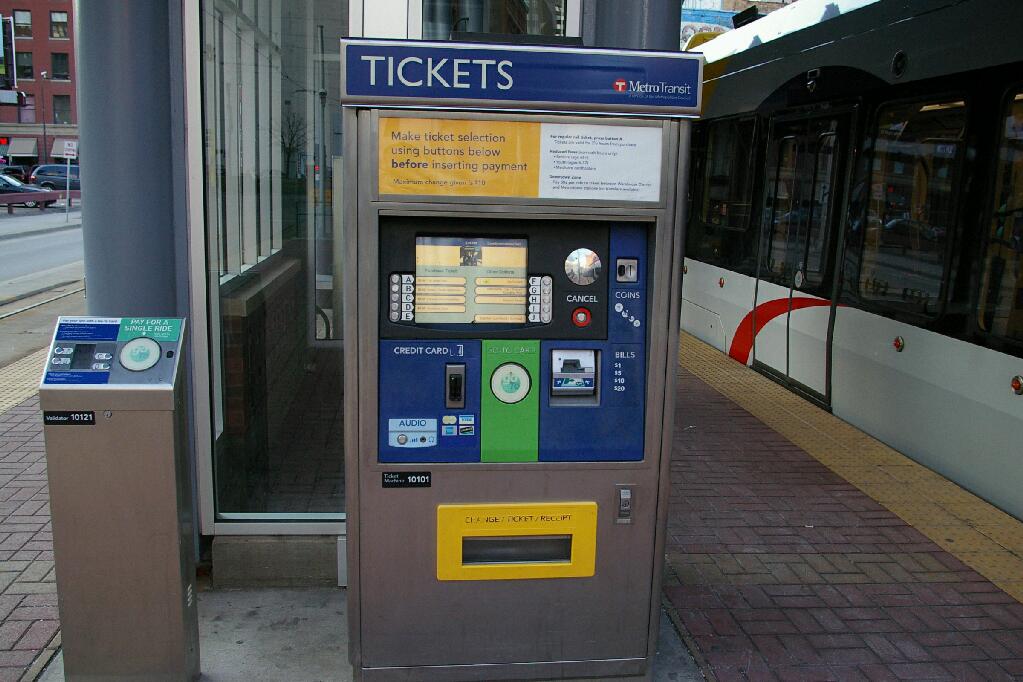
I can't picture how his rig worked, the article would have benefitted by anything visual help :/
https://pub-edmonton.escribemeetings.com/filestream.ashx?Doc...
Edit: disregard — this doc is for parking meters rather than LRT machines (which the article also calls LTR).
I think this guy snagged money from the light rail transit ticket/token system.
Funny how parking meters can be somewhat standardized, meanwhile every transit system seems to want to design/build its own solution.
https://www.reddit.com/media?url=https%3A%2F%2Fpreview.redd....
It's hard to find any information about this since it happened 30 years ago, but I wonder if he had to pay a fine. If not, he probably made out pretty well, investing the $2 million into real estate.
” You can spot these assholes by watching the way they bet. Like this guy. He's bettin' lavender chips at five hundred each with only one little problem. He's always guessed right. If he wasn't so fuckin' greedy, he'd have been tougher to spot. But in the end, they're all greedy.”
Laundromats would have been ideal for this kind of, well, money laundering. In a pre-digital era, who’s going to check that the number of cycles on the washing machines line up exactly with the takings?
This can't be right. How can one person steal 20% of the coins going through all the machines? Have they miscalculated the amount he took versus one year rather than 13 years?
> maintain and fix the 68 ticket machines of Edmonton’s LRT
So it’s not like the total number of machines is that crazy either.
That said, https://edmontonsun.com/opinion/columnists/gunter-edmonton-t... gives much higher numbers operating costs and fare revenues.
> In a report released Tuesday, Wiun revealed the cost to operate Edmonton Transit went from $105 million a year in 2000 to $327 million last year.
Maybe a lot of the revenue comes from transit passes and/or card payments and the 20% are supposed to represent only tickets sold for cash?
Edit: Just saw the year, so you'd have to adjust that for inflation again too, but credit cards likely weren't a thing for transit passes.
LTR's record keeping/monitoring must have been abysmal if they didn't realize the sudden drop in revenues when they hired this guy, unless the person he replaced had been doing the same !
Your neighbours will be too afraid you’ll wonder the same question about them.
Although I can't remember now if the older or the newer coins were the magnetic ones, I wonder if the composition was changed in part due to this case?
[0] https://en.wikipedia.org/wiki/Coin_pusher
[1] No
[2] British slang for 1 and 2 penny coins due to colour
M: Yeah... they did it in Superman III.
P: Right.
M: What a good movie, actually. And then a bunch of hackers did it in the 70s as well and one of 'em got busted.
P: Well, so they check for this now.
M: No, here's the thing. Initech's so backed up with all the software we're updating for the year 2000, they'd never notice.
P: You're right. And even if they wanted to, they couldn't check all that code.
M: Thumbs up their asses. Thumbs up their asses.
P: So, Michael, what's to stop you from doing this?
M: It's not worth the risk, I got a good job.
P: What if you *didn't* have a good job?
Edit: All of the publicly available scripts and quotes were wrong. Checked the original source. ;@]
https://www.reddit.com/media?url=https%3A%2F%2Fpreview.redd....
Unless his coins were microscopically thin, three sides would be more accurate
Then again it was Alberta so even minimum wage workers were probably making $17/hr back then since housing costs would have been nuts, or anything really.
Lots of demand throughout the 70s for electricians in Alberta.
I hope anyway…
What stood out for me was that the Canadian tax authorities didn't get to him. Maybe he payed tax on his earnings; the article doesn't clarify.
I mean, the theft itself is obviously unlawful. But perhaps you wouldn't be taxed on theft proceeds anyway, so no tax laws are broken in that case.
Edits, thinking about it...the article says he claimed the money was from his business. And the bank took in the money. So perhaps he did pay tax?
For the US, yes.
Well tax on income is theft ( my opinion). So tax on theft income would be theft on theft. Life sure is complicated ;)
https://lrt.daxack.ca/Cities/Minneapolis/hires003.jpg
The coin slot is in the top right.
    As Kara only maintained the machine function, he
    didn’t have direct access to the cash box where
    the coins were collected after customers had fed
    them to purchase LRT tickets.

    He removed the face plate from the ticket
    machines, which as a repairman would raise no
    suspicion
Ultimately what I think happened is that, behind the faceplate, the opening for the coin box is larger than the coin slot on the faceplate, possibly for tolerance reasons to ensure that a coin passing through the faceplate always lands into the coin box. This gap was enough to get an antenna down into with a magnet attached to the end.
Do the napkin math -
1. There was no AliExpress to get amazing magnets from, and there were no amazing magnets.
Average of $3k / week
$3000 / 6 days working / 8 hours = $62.5 per hour
Personally I get rid of lower coins into machines. So lets say 4 coins to get $1. He's pulling out 200 coins a hour? And doing his job. And no one sees him pulling up and down 4 time a minute for hours on end?
-------------------------------
Segway -
On the evening of Sept. 29 1994, Constable Ken Chatel, a member of the RCMP Customs and Excise Section in Edmonton leaned back in his chair to catch the six o'clock news.
One of the items that evening covered a police search of the home of Salim Kara, a city transit employee who was charged with stealing in excess of $2 million dollars from Light Rail Transit coffers.
As the camera panned the interior of the opulent residence on Osborne Crescent, several objects caught Chatel's eye and made him lean forward with renewed interest.
The camera revealed two zebra skins on the walls and a threefoot carved tusk in a display cabinet. Depending upon the species of animal each item represented, it was possible that they were protected by international legislation.
https://www.gamewarden.ab.ca/agwmagazine/1996/summer%201996/...
Excellent magnets available inside any speaker, just crack off a piece of the length you need. Basically free.
Dick Smith was the kiwi one, then they kind of stopped doing hardware/electronic parts at all, then went online only. Not sure if they're even still around, now.
Hobby stores are closing all over the place, but only bc they've been replaced by online/Adafruit, Sparkfun, etc.
https://www.royalmint.com/stories/collect/why-are-some-uk-co... - the composition of 1p and 2p coins was changed from bronze to copper-plated steel in 1992 and the composition of 5p and 10p coins was changed from cupro-nickel to nickel-plated steel in 2011
I suspect though, that some detail of the various ways he did this just got lost over time. You could probably fish them out with superglue or sticky mastic on the antenna rather than a magnet, for example.
Or maybe the magnet was always used to hold some kind of trap door open rather than directly fishing the coins.
Loonies are coated in a different metal making them less magnetic, but stronger magnets will fix that.
Now, yes. But this was the 90s. You could still (just about) buy some items for a single penny back then.
In other words, you wanted to cheat. I can't comment on whether that's fraud in a legal sense, it's still cheating.
There's a reason 13-14 year olds aren't held to the same standards as adults.
The game in question --the penny pusher-- pits a player's skill against the (the design of the) game, and (probably) allows a skillful player to earn a greater return. The game is inherently designed to restrict winnings, and (so goes urban legend) the owners can restrict winnings further by, for example, gluing coins to the base in certain areas.
I'd therefore argue that exploiting gaps or flaws in the game's design are just an example of a especially skillful operator beating the game and its designers, and not cheating. The line between clever exploitation and outright theft is a probably difficult one to draw; although turning up with a giant electromagnet which just pulled the coins straight off the shelf, would probably be over that line :)
This is why the Dunkin flip up lid was such a technological innovation: my dad was worried that he’d get reported by a meter maid if they continuously found his junker purple Oldsmobile Eighty-Eight (out of place in the Back Bay) in front of meters with obvious and visible paper jams. The Dunkin lid did just enough to permanently trip the jam sensor while also being removable and reusable. It gave you just enough plausible deniability. For a while there he just kept one in his center console instead of bothering with change machines.
>Extra points for using the orange colored envelope you got with your last parking ticket
Nothing worse than seeing that neon orange envelope under your wiper blade from afar when returning to your car. Those meter maids were like ninjas.
Nobody wants to carry change, so of course they favour the bill rather than the coin.
Canadians didn’t have much interest in carrying the toonie either, but had no choice in the matter.
While large volumes of transactions have been reported, the agency mostly… well, took reports!
It can be a hard nut to crack and I don’t think governments actually want to find and stop the transnational kind money laundering.
In what country? It maybe possible for tax agency to request access to the transaction history in case of the audit, but I doubt they just get a feed of all transactions.
I don't know, how big is Wall Street nowadays? /s
More seriously: it's likely that there are indeed a lot of "optimally greedy" criminals - it's just that we don't label them criminals, because they don't get caught. I guess the actual numbers are somewhat dependent on your trust in the ability of law enforcement.
> perhaps the consistency of his behavior made it seem 'normal' to the local bankers?
Perhaps it was just the '80s, when banks didn't really want to ask any questions.
> the relationship between intake and risk is probably not linear.
I agree there. Note that criminals do tend to understand this, typically regarding the results of conviction. It's the reason capital punishment is not really a deterrent: because once you pass the threshold (which is often with a single act), punishment does not grow prportionally, so they might as well do it over and over.
Bernie Madoff might be close to an example; his scheme kept going for an _amazingly_ long time, and he made some effort at times to reduce inflow to keep it somewhat under control. There was probably a world in which it only came out after he died; as it was he was kind of unlucky with the timing.
Of course, there might be plenty of optimally greedy criminals out there, and you’ll never know; more or less by definition they do not get caught.
No one had any legitimate idea for how Bernie could beat the market by such an amount and so consistently, and yet they still invested. They must have thought that he was insider trading or suspected that it was a Ponzi. Roughly half his investors made money by cashing out, which is not something you'd usually do if you thought the fund was legitimate.
Or not ask any questions at all and get big bonuses…
This is the idiocy of committing various forms of graft or embezzlement in the Western world: the rewards are small and short-term compared to the nonzero legal and financial consequences of getting caught. It's that most people are bad at quantifying the probabilities and qualitatively assessing their risk exposure before they're caught and rationalizing they're different and somehow smarter than everyone else at all times. His theft didn't go unnoticed and they eventually had to hire a private detective
Even if someone could steal much quickly the equivalent of, say, a billion dollars without raising any suspicion or leaving any trace evidence and launder it covertly, the problem becomes there is no country to disappear to where the proceeds could be utilized and where property rights are respected: countries including Iceland, Switzerland, Ecuador, Cuba, Venezuela, Russia, Belarus, Afghanistan, Iraq, Iran, Qatar, Yemen, China, and DPRK will not help you. One could attempt to live openly, but they would find it difficult to launder their funds from nowhere into the legitimate banking world without inevitably raising suspicions or being caught through forensic accounting.
Therefore, a wise criminal™ is generally better off using legitimized means to facilitate large-scale wealth transfer from people and organizations that lack economic and political power using trickery, obfuscation, and complexity. Either that, or by creating genuine (or genuine-appearing) value and monetizing it well through work that doesn't involve criminality reduces the risk of ending up poor and/or in prison. Apart from specialized IP or knowledge work ability that can be productized as a startup, the areas of real estate, public markets, and fintech are the most obvious targets for non-lifestyle business models. Other non-/semi-lifestyle business models readily achievable by an individual is becoming a B2B supplier of high-value, high-margin specialized goods that present one or more barriers to entry, i.e., aircraft parts, nuclear energy parts, safety systems, or medical devices.
0. https://topclassiccarsforsale.com/chevrolet/288637-1977-chev...
https://www.cbc.ca/amp/1.1407698
Depending on the seriousness of the crime, the taxman may or may not be able to share those details with law enforcement.
I think the cutoff is if the sentence could be for 14 years, they can share it.
When Canada legalized marijuana, they made many infractions punishable by up to 14 years. So if you sell unlawful marijuana to a minor, you could get 0 to 14 years in prison. As a result, many illegal marijuana sellers will require ID to avoid this (dunno if they’re paying taxes or not, but makes sense to care about this if they are).
A coin drops at a known speed and the right coin will get pulled by the right amount by a magnet or get rejected.
If you have a silver coin or a small piece of copper pipe and a large, strong neodymium magnet, then you can easily observe this effect at home by putting the metal sample on a table and quickly waving the magnet past it as close as you can without touching it. The metal will slide across the table following the magnet, despite the metal itself not being magnetic, because the moving magnet induces eddy currents which temporarily create a magnetic field like an electromagnet. Other metals besides silver and copper exhibit weaker responses due to higher electrical resistivity.
Otoh, there are coin mechanisms that can check for and reject quarter sized objects that are attracted to magnets; they might not be installed everywhere that takes US quarters, but if an operator starts getting a nuisance amount of CA quarters, they will be. See this doc [1] for a description of a pretty discerning mechanism (although it accepts both US and CA quarters, a slightly different design could reject CA quarters)
[1] http://segalandassociates.com/Documents/Coin-Mechanisms_Slug...
TD Bank in Canada had coin counting machines for customers for a while. I dumped a few hundred $ in and was very happy when it kicked back some silver coins to me.
How nice of them!
From Wikipedia: The LRT system had an estimated 18,220 weekday passenger boardings in 1978.
If I remember correctly fares ranged somewhere between 35-65 cents in those days.
Also, with 68 fare machines in the city in 1978, how many repairmen do you really need?
Going to unmanned and paying someone a premium to rapidly respond and fix machines 24/7 would be a massive cost reduction.
Recently discontinued Scarborough Rapid Transit could have been driverless, but still wasn’t.
Toronto’s will have both a driver and and an on-train “guard” person to look out the window to make sure nobody is trapped in the door or something. Might get eliminated tho: https://www.newswire.ca/news-releases/toronto-says-no-to-ttc...