Speeding Slows You Down (By a Lot)(algorithmsoup.wordpress.com) |
Speeding Slows You Down (By a Lot)(algorithmsoup.wordpress.com) |
That number (edit: rail deaths) feels too high. Other than major train collisions/derailments, is it even possible to die because of trains ?
> In 2022, more than two-thirds (69 %) of these fatalities in the EU were caused by 'accidents to persons by rolling stock in motion', typically involving persons who are unauthorised on the railway tracks and are hit by a running train. Together with level-crossing accidents, which caused 29 % of fatalities, these accidents were responsible for almost 98 % of all deaths occurring in railway accidents in the EU. [1]
So rail accidents where a train was at fault, constituted only 2% of deaths assigned to railways. Unlike train accidents, a car is always to blame (some car) in a car accident. Even if I double the risk of railways to 4% of their total number, railways are still 640x safer than cars.
[1] https://ec.europa.eu/eurostat/statistics-explained/images/2/...
[2] Note: All numbers exclude (alleged) suicides
Pedestrians and others are struck by rail vehicles regularly. Additionally, where rails come into contact with other pathways, they are a hazard to pedestrians, cyclists, and motorcyclists and sometimes even cars when railway is poorly designed or implemented.
Today, with cell phones and infotainment screens in our cars, I still see people "flying" down the highway with no apparent thought for other people's safety. Both my vehicles have dash cams for the reason of video proof of what happened if one of these morons crashes into me and takes my life.
there are a lot of places within 100 km of my house that i'd enjoy visiting but where public transport doesn't go. if i had a car, i could go there easily. if that means shortening my life expectancy by 20 minutes, that seems like a worthwhile tradeoff. the risk i'd be imposing on innocent people around me by driving a car is ethically trickier
And that's why public transit in the us is such a mess, if you want people to use it, you have to make it fast and frequent before people need it, so when you do use it, you thin, huh, that's not too bad.
https://nypost.com/2022/10/11/nyc-subway-murders-jump-to-hig...
Car: 2 hour 32 minutes driving door to door + 37 minutes of death = 3 hour 9 minutes
Train: 2 hour 37 minutes on train + 1 minute of death + 30 minute early arrive buffer + 30 minutes public transport to departure + 30 minutes public transport to destination = 4 hours 8 minutes
Trains already lose, unless both your source and destination are right next to the train stations. And once you factor possibility of other things, like having multiple stops or how you have to adjust the schedule around the trains, the car gets even better.
When I lived in NYC same dynamics… it would have actually taken significantly longer in most cases to drive than take the subway.
So I think it depends on how a city is laid out and planned. If public transportation was not a priority and kinda shimmed in then totally, but in cities where they prioritize public transportation generally it’s a better experience than driving.
This to say that the purpose of trains is not to be better than cars at what car do, but rather to allow as many people as possible not to need a car for most trips.
Depending on how trips are distributed this can be anywhere from easy to impossible.
Because in the 1960s and 70s the US was rebuilt to be entirely car-dependent. And most Americans today accept that as the norm, because the only places they know that are different are New York and those quaint European and Asian cities rich people travel to.
The sad reality is that people recklessly kill cyclists and barely get a slap on the wrist.
I think it is because the overwhelming number of drivers (in the US) haven't ridden a bike since they were children. A judge and most of the jurors fall into that category, and they empathize with the driver, as they could imagine themselves doing the exact same thing that the driver did.
I’d like to point out that as individuals, our ‘acceptance’ is not required nor even checked for. As Americans (speaking for my own countrymen only) we accept it the same way we accept our air quality. We, in broad strokes, may choose only to drive, or to remain stationary - just as we can breathe the air, or just stop breathing. Other practical options only even exist in very specific exceptional places or situations (most of them require you to commit to stay in an urban core 100% of the time, and that space physically cannot contain all Americans at once, due to space constraints, which we perceive via cost signals).
Of course, if the entire country were built out when NYC was built out, without cars even being hypothesized, things may have been very different today. But we shouldn’t pretend that most car-dependent people are choosing to be so, except maybe those who made an unforced decision to move from say, Manhattan to Phoenix. And even they may have accepted it only grudgingly in exchange for some other benefit such as weather, lower taxes, proximity to family, etc.
Note: I personally would like to not be car dependent, so please don’t try to explain to me why cars are bad. I cringe every time i see 327 SUVs idling in the street waiting to drop off each student in a school, on a warm, dry morning in the ‘burbs.
I'm pretty sure door to door personal planes would be a lot more risky than door to door personal cars.
As a cyclist, I've personally been injured by rail infrastructure and never by cars. So I'm more worried about street car projects with rails in the road than I am about cars. (Although, I certainly check for unexpected cars more than I check for unexpected rails.)
In the US, I’d bet heavily against this outcome (provided you were sober).
The FRA refuses to let us use European light trainsets because they're "unsafe", because they're too light. They're worried about collisions with freight trains.
As for European light trainsets not surviving collisions with freight trains: trains generally don't fare well in high speed collisions. And at low speed collisions European commuter trains (something like [2]) would be doing fine, meanwhile light rail (like [3]) isn't designed to collide with anything heavier than a truck. I don't think anybody in Europe runs freight trains on shared tracks with light rail.
1: https://pedestrianobservations.com/2011/06/02/comparative-ra...
2: https://de.wikipedia.org/wiki/DB-Baureihe_430#/media/Datei:1...
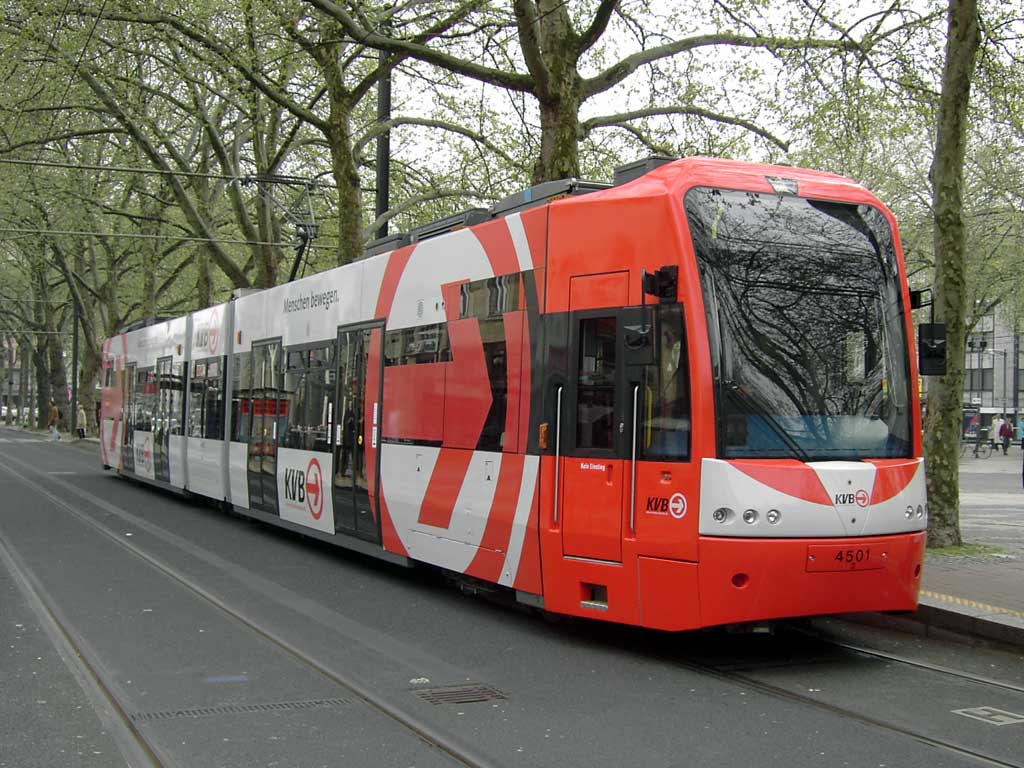
3: https://upload.wikimedia.org/wikipedia/commons/0/0d/K4500_VB...
I found it a bit disgusting due to how shotty the logic/ application was, even if the methods were sound.
"If you accidentally kill somebody on a bike you’re likely to serve prison time for manslaughter."
I wouldn't find this "likely". You have to be involved in some reckless or negligent action that directly resulted in their death. It is possible of course, and does occasionally happen. It's even less likely that it results in prison time, rather fines, probation, and diversionary programs.
"It is shocking to me that we accept so whole heartedly the risk associated with driving"
This shouldn't be shocking. Yes, there is a lot of risk. But people who understand the risks know that it's not as bad as what it's being made out as. About 45% of occupant fatalities are related to not being buckled in. Just buckling makes your stats look almost twice as safe. So buckle up (45%), don't drink (35%), and don't speed excessively (30%) and you've just reduced the largest risks significantly (not these are not additive due to overlap and other party risk).
Edit: why disagree?
I stopped cycling because I have a family to come home to. This has negatively impacted my quality of life.
Public transport is great but it won't convince reckless drivers to stop driving.
Self-driving cars will finally open up a realistic political path to eliminate traffic deaths. And ironically, if all cars were self-driving, I would choose to bike much more often than today. Because I can trust that the computer will follow the rules and I will be able to return home to my kids.
In the meantime, we should make gps-based speed governors and automatic breaking systems mandatory.
Just a note, they may be able to greatly reduce fatalities (guessing since the tech is not fully rhere yet), but no system will entirely eliminate them.
Edit (this might be wrong, see Edit 2 below -- I'm leaving this as is because otherwise, some of the responses don't make sense):
I noticed that the calculation is wrong even within the article's own logic. Supposedly, this calculates "the expected length of the trip (including dead time) at different speeds", and does so by adding the expected loss of lifetime to the total trip length.
However, you're surely not always going to die exactly at the end of the trip. In fact, you can be expected to die at the half-way point on average, meaning this "total time" in case of death is only half the trip length plus the loss of life expectancy. If you plug this into the equation, the speed that minimizes the travel time dramatically shifts to around 100 mph.
And more absurdly, near the end of your life, when your mathematical life expectancy might be measured in hours, it's "faster" according to this logic to just kill yourself and get it over with than to undertake any long trips at all. I wouldn't recommend following this line of reasoning.
Edit 2: The above line of reasoning might be wrong, I think I made an error and the calculation is correct within the article's premises. In that case, I take that part back. I still don't agree that adding loss of life expectancy to travel time is a reasonable way to look at things.
I used to be the crazy driver (and occasionally that personality comes out to play), but these days I usually just set my cruise to whatever is practical (in large cities, it's not the speed limit, but a bit higher to match others), and let adaptive cruise do most of the work.
When I started driving, I used to speed to the next stop light, change lanes frequently. I stopped doing this when I got older, partially because I see people that zip around at the same stop lights anyway.
The probability of being in that kind of accident goes up as the number of cars that you pass in the opposite direction goes up.
Without loss of generality we can assume that there are no entrances or exits on the other lane between your starting point and ending point, because if there are we can simply treat you trip as a sum of separate trips between each pair of consecutive entrances/exits.
The number of cars you pass going the opposite way is the sum of the number that were on the road between your start and end point when you started and the number than enter the road while you are traveling.
The number already on the road does not depend on your speed. The number that enter while you are traveling does, going down the faster you travel.
Hence the faster you go the lower your chances of getting hit by a lane crosser.
If my probability of dying is .6, it can’t double to 1.2. However if my odds of dying are 3:2, they can double to 6:2 or 3:1 or P=0.75. The odds can continue doubling indefinitely and P will asymptotically approach 1.
if you have a model where a probability goes outside the (0, 1) range for some input parameter value, that obviously isn't a valid answer, but it may just mean that the parameter value is well outside the model's range of validity. you are surely right that if we extrapolate this probability model of doubling the risk of death per 16 kph speed increase beyond about 400 kph we get invalid probabilities, but i think that probably the model breaks down well before that point
Most accidents involve the interaction of two cars. The faster vehicles get to their destination the fewer vehicles are on the road at any one time and thus the fewer interactions there will be.
I have no numbers on how big an effect this would be.
I imagine it's pretty hard to get seriously injured or die when not on the freeway. I've long thought that should be the primary application of self-driving technology. It's ultra-simplified and relatively standardized compared to other types of roads, and it's where the most life and limb can be saved. Not to mention the potential to alleviate traffic, which would save people vastly more time than just driving too fast.
Also, will everyone please use you blinker for fuck's sake? If moving your wrist slightly is just too much of a burden for you, then stop driving, you're not cut out to pilot your own anything.
I don't have data handy, but it seems like an awful lot of fatalities occur in and around intersections (which imply not-a-freeway).
Freeways feel like they are safer overall, most of the time you are moving in the same direction as the vehicles immediately surrounding you, which reduces the chances for head-on or side collisions, which seem to be particularly fatal.
However, an actual freeway crash also feels like it has a higher probability of being fatal. Proportionate to miles driven they may be less common, but like a plane crash, they are noteworthy when they do happen and make for "better news".
One exception is motorcycles, which are apparently at less risk on highways than other streets.
(This is also why airplane fatalities bear little relationship to the flight time--because they're mostly takeoff and landing. Accidents when you're peacefully up at cruise altitude are rare.)
I am reminded of the track from The Dead Kennedys, Buzzbomb from Pasadena.
One night I was on-call and drove really fast in the middle of the night and it took about 18-20 minutes.
I realized it was never worth it to shave off a handful minutes and drive way too fast to any destination.
Basic math. When you get to a certain speed, you’re shaving off seconds/minutes. 65mph is certainly better than 35mph. 90mph isn’t really better than 65-75.
When the trip is completed successfully, you've arrived sooner and the habit of speeding will only then affect risk on future trips, there is no post facto cost (ignoring automated speed traps).
Better correlate death rate with Time spent on the road
Also, as they noted, there are a bunch of other factors. Some of those factors are equally or more important as the ones they are looking at, such as alcohol impairment (both about 30% of traffic fatalities).
The biggest fatality risk factor is not being buckled in. About 45% of all occupant fatalities are people who were not buckled. This will greatly skew the stats if not properly accounted for.
Edit: why disagree?
I was not aware of the 50% alcohol involvement in motorcycle fatalities, but it doesn't surprise me. About 35% of all vehicle fatalities involve drunk driving, 50% of all pedestrian deaths involve either the driver or pedestrian being drunk, and 20% of cyclist fatalities invovle drunk cyclists (I assume alcohol is a factor for many other cyclist desths too). Then we have 45% of traffic fatalities that don't wear a seatbelt, about 35% of child fatalities did not use restraints, and 80-90% of child restraints are misused. I'm not sure about motorcycle accidents, but 60% of cyclist fatalities did not use a helmet.
The drunk driving and not properly restraining kids are really the biggest issue since it affects others. Things like not wearing a helmet, cycling DUI, and not using a seatbelt are a little more Darwinian in thier punishment.
This means slow drivers are just as dangerous as fast drivers, and also points to why self-driving cars would greatly reduce highway accidents. Assuming they'd all be monitoring each other's speeds, they could coordinate like swarms of drones, and thus could drive safely at faster speeds.
To go even faster, the cars could link up into a single line, under coordinated control, and zip along like a high-speed train (which is why trains are the most efficient transport system, at a nice optimum balancing speed and energy consumption). However, this 'train of cars' has some advantages, as you could then just detach from the train and drive on independently to your local destination, avoiding the last mile problem.
Single-track country roads are the most problematic, though, as everyone has a different idea of what the safe speed is - and the limit is as high as 60 miles/hour! I wouldn't be against simply reducing the national speed limit for roads without markings to 30, so that at least then people could be reasonably expected to drive at that speed, rather than at an unspecified speed anywhere up to 60.
Death converts living time (including free time) into death time.
Subtracting them makes mathematical sense: you have more or less free time. Though it is napkin math. Eg: it treats all free time as equivalent. If speeding gets you to a job interview on time, which gets you the job, that is more important than speeding so that you have time to do a crossword.
Might as well do the crossword in the car, eh?
I don't think the article intended to be taken entirely seriously.
It's narrative nonsense, but I would argue that it's entertaining narrative nonsense.
I think it also serves a larger point, not about "optimizing trip speeds" but about putting into easily-digestible context exactly how dangerous driving a car can be.
But only by a fraction corresponding to the probability of dying.
If you die an hour earlier in the trip then you're dead for an hour longer.
That's a recipe for pileups. People lose concentration in a convoy and as soon as something bad happens up front everybody piles in. People aren't computers, they need some variability to keep them alert.
clarified. thanks
[0] https://www.silive.com/news/2023/01/nyc-traffic-deaths-drop-....
I wonder what portion of those would have been a fatality even with a helmet. Cycling helmets are flimsy things.
People tend to migrate to the "fast" lanes (the left), so you naturally end up with people either passing on the right or tailgating them. Of course, you should always be in the right lanes except for passing.
I do wonder if let's say there's someone in lane 3 of 4 going slower than the limit and you can pass them safely on the right in lane 1 that it's probably safer to just do that (assuming you're not flying along!) than moving over 3 lanes to the left, passing then moving 3 over back to the right.
First, I should note that I 100% agree.
However, as the highways have become more crowded, it has become less practical to actually adhere to this.
If I'm going 70MPH (the prevailing speed on the NYS highways where the legal speed limit is 65MPH tends to be somewhere between 70 and 78MPH), and there are a half-dozen cars going 60MPH in the right lane, with just barely enough room between them to safely get in (ie, there's sufficient stopping room between the rear car and me, and between me and the front car), then technically I could pass the first car, pull back into the right lane, pull almost immediately back into the left lane to pass the next car, and repeat several more times. But that's not merely tedious, it's dangerous.
It's even worse when instead of a half-dozen regular cars going 60MPH, it's three tractor-trailers. Particularly since "safe distance" for them is much longer due to visibility issues.
...And, of course, sometimes when I'm doing this, some yahoo going 80MPH will zip up behind me, pass me on the right (completely ignoring the aforementioned safe distances) and then zip back into the left lane to careen onwards.
I used to adhere to this but it does not work in practice.
Right lanes have the highest churn-- people getting off, people getting on. If you're not planning to do either, you have no business being on that side of the road.
This idea about left lanes only being for passing only ever works when you're overtaking a tractor doing 15mph on a country road. The concept does not scale to freeway speeds or traffic. You're not legally passing anyone already doing 70.
Rather, it's idiots weaving through traffic. They treat the flowing traffic as basically static obstacles and things can go very wrong if they cease to be static.
I've also seen it because the guy who flew by me on the right was impatient with the amount of clearance I left before moving back to the right lane--cut right as soon as there was a gap wide enough to move through.
From my own experience interacting with cyclists on the road, the riskiest situations I saw were ones the cyclist created. Eg. Running reds, doing 15+ mph on the sidewalk, lane-splitting, etc.
In the UK the most common cause of cycling fatalities is being rear ended. Risky behaviour by cyclists is rarely to blame for accidents.
https://www.theguardian.com/lifeandstyle/2009/dec/15/cycling...
However, just like with drivers, often times the cyclists have negligent (or reckless) factors against them as well, which is often used to downplay the contribution of any reckless or negligent actions of the driver. For example, about 20% of cyclist-vehicle fatalities involve cyclist DUI. About 60% of cyclist fatalities are not wearing a helmet despite recommendations and applicaible laws. That's why most cycling-vehicle deaths are handled in civil cases - a lower burden of proof and you can still get a payout even if the cyclist had some level of contributory negligence depending on the state.
If a cyclist does not wear a helmet and gets killed by a driver running a red light, it is still 100% the driver's fault.
A kill is still a kill even if the victim didn't wear a bulletproof vest.
Only the collision is 100% the driver's fault (in most states).
The death is up for debate. If you die because you weren't wearing a seatbelt/helmet, you were negligent, so fault is shared.
There is no law mandating everyone wear bulletproof vests. All states have seatbelt laws, and most have helmet laws.
Cyclists can absolutely be at fault. I don't see why you'd think otherwise. Humans are uniquely fallible, cyclist and drivers are both human (if you ignore Waymo et al).
I'm seeing a lot of emotional comments that are not following the comment chains on this post. Are you meaningfully engaging in the conversation or trying to hijack them?
I find it incredibly frustrating how we as a society have accepted the high number of traffic deaths as a fact of nature. Imagine we had the technology to reduce childhood cancer rates by 50%, but chose not to use it.
Traffic accidents kill more children than cancer. And we have the technology to reduce them: GPS-based speed limiters, automatic breaking system, speed bumps, red light cameras.
Yet we choose not to act because ... people think that would be too uptight?
I’m all for everything else on your list, and I’m all in favor of protecting the children, but I draw the line at increasing the surveillance state. Big Brother gets to watch enough of what we do, already. Let’s not give him even more eyes.
This one wasn't off-topic, but it didn't really add anything. One of your other ones was off-topic, switching from driver risks to cycling risks, which had nothing to do with the article or the preceeding comments.
"Imagine we had the technology to reduce childhood cancer rates by 50%, but chose not to use it."
This is literally the case with traffic deaths today. About 45% of traffic fatalities are due to not wearing a seat belt. The technology has existed for decades but people choose not to use it. This then overstates the risks in the high level stats for the people who do use seatbelts. The number of childhood fatalities not buckled in was about 30-35%, and childhood restraint misuse is between 80-90%. If we want to make improvements in child survivability, then we should start by utilizing the most effect safety systems for the biggest focused gains.
"Traffic accidents kill more children than cancer. And we have the technology to reduce them: GPS-based speed limiters, automatic breaking system, speed bumps, red light cameras."
There is resistance to this because of the overstated risks, feasibility of implementation, and questions of effectiveness. For example, red light cameras have been shown to increase accidents because of the funding contracts many use. It's odd that you leave off enhanced driver testing when this is one of the most universal benefits. That and stricter enforcement are some of the main causes for lower fatality rates in many European nations, even in unrestricted speed sections of roads.
"Yet we choose not to act because ... people think that would be too uptight?"
No, that's more of a strawman than reality.
For cyclists?
EDIT: I also drive with two hands on the wheel, don't listen to the radio, and don't play with my phone.
For the same reason, I want cars who wish to go more slowly than I do to be behind me.
A train is something you can see coming from a mile away. It doesn't blindside you. 'Deer in headlights' events occur, but it not like the person couldn't have foreseen it coming. It's like blaming parkour deaths on walls.
A pedestrian crossing a street can be 'struck' by a car, because a car can actually come out of nowhere. There is a reason that most car deaths in cities occur on a 'unchecked turn right on red'. It is an accident that occurs because of occlusion.
Trams have a risk profile that borrows some of the risks of cars. But, grade separated rail requires active fault form the pedestrian/cyclist to be in fatal accident.
In most heavy rail, there's no chance of timely stopping if someone trips and falls on the tracks at an inopportune time and is unable to make their way away from the tracks in time. You can blame that on the pedestrian, but it's still a rail death in my book.
If you eliminate likely suicides, rail travel is stupendously safer than driving.
I looked it up and there are 140 people or so that get killed by train by year here in Germany. Could be a lot of suicids.