Fractional scales, fonts and hinting(blog.gtk.org) |
Fractional scales, fonts and hinting(blog.gtk.org) |
What Haiku needs is font setting per screen/resolution for multimonitor support. This way you can support mismatched monitors with different factors.
Relative units like this are usually considered best practice, because of the exact reasons that you've listed.
“The horizontal base unit returned by GetDialogBaseUnits is equal to the average width, in pixels, of the characters in the system font; the vertical base unit is equal to the height, in pixels, of the font.
The system font is used only if the dialog box template fails to specify a font. Most dialog box templates specify a font; as a result, this function is not useful for most dialog boxes.
For a dialog box that does not use the system font, the base units are the average width and height, in pixels, of the characters in the dialog's font. You can use the GetTextMetrics and GetTextExtentPoint32 functions to calculate these values for a selected font. However, by using the MapDialogRect function, you can avoid errors that might result if your calculations differ from those performed by the system.”
Windows says reference font dpi is 72 and reference sizes for buttons, list, labels, etc is specified at 96 dpi, then you're supposed to use actual dpi/ref_dpi and scale things according to that.
Then you set DPI scaling per monitor v2 in manifest.xml and catch WM_DPICHANGED message and recompute scale factors and presto, perfect dpi scaling across any monitor at any fractional scale.
https://building.enlyze.com/posts/targeting-25-years-of-wind...
Target from NT4 (up to Windows 11, I suppose) with LLVM and Visual Studio.
Do apps start drawing their lines wider if the default font size goes up? When? Is it consistent system wide?
further, the “pixel” unit widely used today is quite far removed from physical pixels on consumer devices and is more similar to an abstracted “point” unit - for example, apple alone supports devices at 1x, 2x, and 3x resolutions (or pixel densities)
Who’s the “you” in here? If it’s the end user, I don’t think it’s a better solution for the general population.
> Sloppy apps ignore this, but the devs are quickly notified.
Anything that increases friction for developers is bad. The API for HiDPI should be so seamless that the only thing developer does is to provide higher resolution bitmap icons.
Imagine what web app developers need to do when their users switch from a regular display to a HiDPI display. They do nothing; the browser knows how to scale on its down. And that should be the bar we are aiming for.
Background:
https://gitlab.gnome.org/GNOME/gtk/-/merge_requests/6190
Basically gtk-hint-font-metrics=1 was needed with Gtk4 on non-HiDPI displays to get crisp text. Thanks to the change from 6190 above it is already automatically applied, when appropriate depending on which display is used. Mixed setups with multiple displays are common and Gtk4 cares about. The whole topic caused a heated issue before - because it depends on your own vision, taste and hardware.
Apple avoids trouble and work by always using HiDPI displays. Attach a MacMini to a non-HiDPI display and you could recognize that the font rendering is awkward.
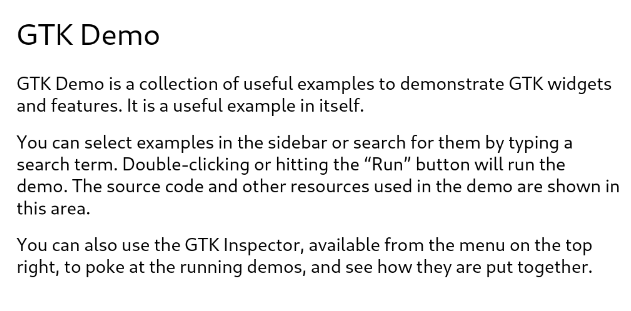
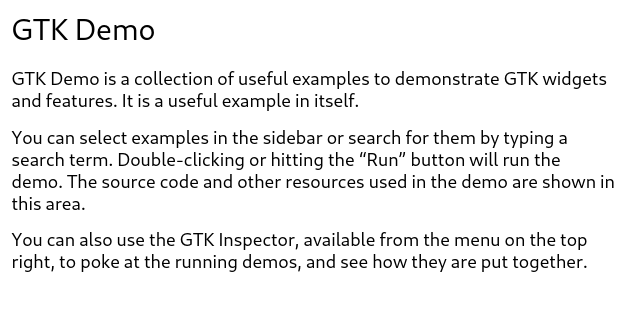
I enjoyed the side-by-side comparisons of the old vs new renderer, and especially the idea of homing in on particular letters ('T' and 'e') and extracting them, that really made the improvement clear.
Cool stuff, and many thanks to the developers who keep pushing the GTK stack forwards.
P.S. Since pango 1.44 some letters at some positions became blurry and some letters are more close to the previous one than being in the middle. Actually the later issue might be needed to prevent the first one, in theory. In practice, there might be other constraints, which force the corruption.
> 4 b: in contact with
> "leaning against the wall"
OP's code is "in contact with" the public APIs provided by GTK. That is, OP uses the GTK library.
This is great work btw.
[0]: https://github.com/snowie2000/mactype/issues/932
[1]: https://github.com/microsoft/PowerToys/issues/25595
[2]: https://freetype.org/freetype2/docs/reference/ft2-lcd_render...
While not solving the blurriness completely it, removing the border with the inspector helps a lot.
I think the remaining blurriness comes from the images using grey scale hinting rather than subpixel hinting (the hinted pixels are not colored)
For convenience (second is hinted)
+ https://blog.gtk.org/files/2024/03/Screenshot-from-2024-03-0...
+ https://blog.gtk.org/files/2024/03/hinting-125.png
You can really spot the difference.
Nobody does it properly on linux, despite freetype's recommendations.. a shame..
https://freetype.org/freetype2/docs/hinting/text-rendering-g...
It's even worse for Light text on Dark backgrounds.. text becomes hard to read..
GTK is not alone
Chromium/Electron tries but is wrong 1.2 instead of 1.8, and doesn't do gamma correction on grayscale text
https://chromium-review.googlesource.com/c/chromium/src/+/53...
Firefox, just like Chromium is using Skia, so is using proper default values but ignores it for grayscale text too..
https://bugzilla.mozilla.org/show_bug.cgi?id=1882758
A trick that i use to make things a little bit better:
In your .profile:
export FREETYPE_PROPERTIES="cff:no-stem-darkening=0 autofitter:no-stem-darkening=0 type1:no-stem-darkening=0 t1cid:no-stem-darkening=0" flatpak --socket=wayland run com.visualstudio.code --enable-features=UseOzonePlatform --ozone-platform=wayland
> Various font-related flags I found in solving for blurry fonts on wayland
Is there an environment variable to select Wayland instead of XWayland for electron apps like Slack and VScode where fractional scaling with wayland doesn't work out of the box?
Thanks for the tip, though.
I don't know what my life would like without such decisions...
When I boot into windows, the fonts especially in some applications look horrible and blurry because of my high DPI monitor. Windows has like 10 settings you can try to tweak high dpi fonts and man none of them look good. I think my Linux boot on the same machine has much better font smoothness and of course the MacBook is perfect.
Somehow most windows systems I see on people’s desks now look blurry as shit. It didn’t use to be this way.
I really don’t understand why high dpi monitors cause (rather than solve) this problem and I suspect windows has some legacy application considerations to trade off against but man - windows used to be the place you’d go to give your eyes a break after Linux and now it’s worse!
I realize I am ranting against windows here which is the most cliched thing ever but really come on it’s like right in your face!
I guess we all have different issues we care about, but I'm always surprised when I have to point out how awful Windows is with fonts and people just shrug and say they didn't notice. For me it's painfully obvious to the point of distraction.
I'm pretty sure they used to be bit mapped, or had excellent hinting. Now that high dpi is common, maybe they figured that wasn't needed anymore. And indeed, on my 24", 4k monitor at "200%", windows is pretty sharp if I start it that way. If I change it while running, it becomes a shit-show. But when running at 100% on a FHD 14" laptop, sharpness is clearly lacking.
Regarding the Linux situation, yes, it's subjectively better on that same laptop. But it depends a lot on the fonts used. Some are a blurry / rainbowy mess. However, on Linux, I run everything at 100% and just zoom as needed if the text is too small (say on the above 24" screen).
Since the 80s I've been wishing for a 300/600dpi resolution-independent screen. Sure, it's basically like wishing for a magic pony, but I was spoiled by getting a Vectrex[1] for a birthday in the 80s, and I really liked the concept. I know the Vectrex was a different type of rendering to the screens we use today, but I still find it fascinating.
It saddens me when I see people measuring things in pixels. It should all be measured relative to the font or perhaps the viewport size. The font size itself should just be how big the user wants the text which in turn will depend on the user's eyes and viewing distance etc. The size in pixels is irrelevant but is calculated using the monitor's PPI. Instead we get people setting font sizes in pixels then having to do silly tricks like scaling to turn that into the "real" size in pixels. Sigh...
So software "pixels" are relative units now, but you would have them get larger or smaller as the user moves closer to or further from the screen? (I think I'm not quite getting it, sorry.)
In any case, it makes much less difference (almost none practically speaking) on hi-dpi displays.
One of the reasons web designers have issues with text looking different between Windows and MacOS is that Windows' font renderer tries to force things to align with the pixel grid more, reducing a sharper result but slightly distorting some font characteristics. Apple's renderer is more true to the font's design, can can produce a little fuzziness like you see here. It also makes many shapes look a little more bold (at least on standard-ish DPI displays). A couple of old posts on the subject: https://blog.codinghorror.com/whats-wrong-with-apples-font-r..., https://blog.codinghorror.com/font-rendering-respecting-the-.... Differences in sub-pixel rendering also make a difference, so where people have tweaked those options, or just have the colour balances on their screens set a little differently (intentionally or due to design/manufacturing differences) you might see results that differ even further for some users even on the same OS.
So it just requires 6x more memory, GPU power and HDMI/DP bandwidth and prevents usage of large monitors ...
But I don't think that's relevant here anyway, since the article refers to the auto-hinter which as far as I know was never patent-encumbered.
Of course that's why subpixel rendering is all a bit moot on Apple devices. For a long time now they've just toggled the default font rendering to the equivalent of "none none" in this article and relying on the high quality screens the devices ship with/most users will plug in to make up for it.
It seems that they:
- Fail to properly position glyphs horizontally (they must obviously be aligned to pixels horizontally and not just vertically)
- Fail to use TrueType bytecode instead of the autohinter
- Fail to support subpixel antialiasing
These are standard features that have been there for 20 years and are critical and essential in any non-toy software that renders text.
How come GTK+ is so terrible?
EDIT: they do vertical-only rather than horizonal-only. Same problem, needs to do both.
If you read the article carefully, it mentions it aligns vertically to the _device_ pixel grid.
You may personally find the output awkward, but typographers will disagree. They didn't always have high density displays. They did always have superior type rendering, with output more closely matching the underlying design. Hinting was used, but they didn't clobber the shapes to fit the pixel grid like Microsoft did.
I personally like the Apple rendering, but I realize that many people around me don't. In the end, it is subjective.
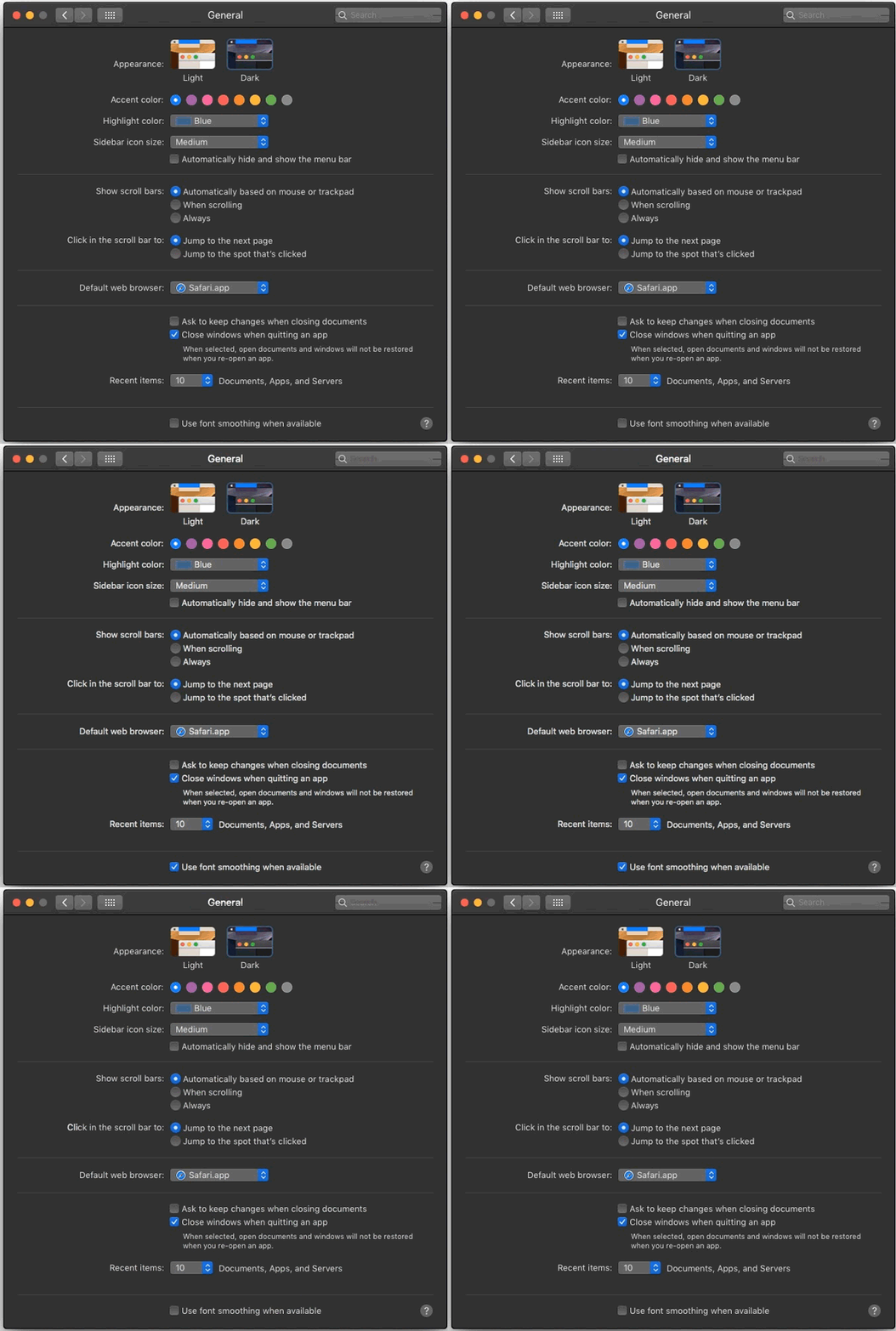
Ironically for "always expose relevant options through system settings" Apple, you can still access font smoothing via command line, e.g. "defaults -currentHost write -g AppleFontSmoothing -int 3". You can use 0-3 where 0 disables it (default) and 3 uses "strong" hinting, with 1 and 2 in between.
And then on the other hand you have finally a seemingly great solution, despite their sabotage. So, yeah gnome?
[1] https://gitlab.gnome.org/GNOME/gtk/-/merge_requests/6190
https://glenwing.github.io/docs/VESA-EEDID-DDDB-1.pdf (page 13)
[1] https://faultlore.com/blah/text-hates-you/#anti-aliasing-is-...
You'd want to render to that grid; then apply bayering fused with color mapping. No need to transmit 3x the data over the cable. And with a hint of sufficient software support (I think the high DPI stuff might (almost?) suffice already!), I'd actually prefer such a screen over a traditional vertical bars of RGB (or BGR, as I'm currently suffering; sadly the thermal design of the screen won't allow me to safely just rotate it to"wrong" landscape) LCD monitor... provided both have the same number of subpixels.
Probably bonus for a 4th deep cyan pixel color in place of a duplicate green to get a wider gamut. Or something similar in spirit.
A device like this would allow hobby developers to bring the software/driver support up to "daily driver, no regrets" levels.
Similarly I still wonder why no OLED seems to have shipped a "camera-based motion/pan/defocus self-calibrated" burn-in scan& compensate function where you just every ~100 hours move a cheap camera on front of the screen following the on-screen movement directions, to mechanically create an opportunity for the cheap sensor to be calibrated, and then use this freshly calibrated brightness sensor to map the OLED panel and make up for that the exact burn-in is very hard to simulate, but is required precisely to compensate/pre-distort without leaving visible residuals from incomplete/imperfect cancellation between the pre-distortion and the burned-in pattern.
For one, subpixels aren't just lines in some order - they can have completely arbitrary geometries. A triangle, 3 vertical slats, a square split in four with a duplicate of one color, 4 different colors, subpixels that activate differently depending not just on chromaticity but also luminance (i.e., also differs with monitor brightness instead of just color), subpixels shared between other pixels (pentile) and so on.
And then there's screenshots and recordings that are completely messed up by subpixels antialiasing as the content is viewed on a different subpixel configuration or not at 1:1 physical pixels (how dare they zoom slightly in on a screenshot!).
The only type of antialiasing that works well is greyscale/alpha antialias. Subpixel antialiasing is a horrible hack that never worked well, and it will only get worse from here. The issues with QD-OLED and other new layouts underline that.
The reason we lived with it was because it was necessary hack for when screens really didn't have anywhere near enough resolution to show decently legible text at practical font sizes on VGA or Super VGA resolutions.
Ich habe die Lösung gegen das GTK-framework entwickelt.
It's ambiguous btw.
But yes, unfortunately, it's not universal
[1] https://srdjan.si [2] https://bootcamp.uxdesign.cc/why-dark-mode-isnt-a-ux-panacea... [3] https://cdn.osxdaily.com/wp-content/uploads/2018/09/font-smo... [4] https://damieng.com/blog/2007/06/13/font-rendering-philosoph...
What Wayland is doing is making it so the window looks the same size on all screens, with the source matching the primary or highest dpi monitor, and the composite scaling the content to match other monitors. This makes it equally useful on all monitors, at the cost of non-primary monitors having lower clarity.
macOS handles it well by cheating: a window can only be shown on one monitor at any given time. Only while moving a window will it temporarily be allowed to be seen on two monitors at once.
If anything, bitmap fonts on older/crt monitors were as fuzzy as the scaled ones, and on lcds, too jagged, so that hunted their readability. For me, enabling antialiasing actually improved their appearance.
But then, I always disliked the X11 bitmap fonts as ugly; the Microsoft's MS Sans Serif was about the only bitmap font I could tolerate (nowadays, it is truetype too).
Reading through one of the GTK4 issue threads, it seems that one problem with early versions was an insufficient gamma correction strategy.
Simply turn off anti-aliasing, and use a period-specific font that was designed for presentation without anti-aliasing such as the MS core truetype fonts (e.g. Verdana, Arial, etc.) It will look fine IF you have full hinting turned on.
In fact since cleartype effectively triples resolution I guess you get quality of 12K display?
If you used subpixel rendering to render lines of fractional pixel thickness, it would just appear as a single-pixel line of the wrong color. The same happens if you render line thicknesses up to 1 1/3 pixels wide, but offset to not match any pixel boundary.
At the same time, subpixel antialiasing can only be used with a specific subpixel layout, in the direction sof the subpixels. For regular desktop LCD panels, this means smoothing of vertical lines only, making characters like "o" look funky and uneven.
With that in mind, a 4k panel with subpixel antialiasing does not look anything like a 6k panel with greyscale antialiasing ("super expensive mac screen" is not relevant, apart from display technology differences not related to resolution or aliasing).
Only horizontally (is 4K a double or a quadruple resolution of 1080p?), and only if you don't care about color (saturation, hue).
As the field of view taken by pixels decrease (DPI only has meaning when combined with distance to retina), anti-aliasing becomes less and less relevant. But until then, greyscale remains the lesser evil.
That said, the GPU and output encoder options chosen by Gtk3 and Apple have a major flaw: accelerated scaling is usually only available in sRGB colorspace, so you get either gamma-incorrect scaling or you need to fall back to a non-accelerated codepath.
That is a big if.
> the output will be bit-for-bit identical between the two different approaches.
It won't be identical. When you do it on widget-by-widget basis, you eventually reach the end of your surface, so you may need to paint your antialiased pixels, but the space is beyond your surface.
When the framebuffer is being considered as one global surface, the scaler will do the antialiasing for you outside of your surface, so you won't hit this problem.
Another thing is Apple scales; they limit the error caused by the antialiasing to a group of pixels, either 8x8 or 9x9. The error caused by fractional scaling won't spread outside of this group.
But for the sake of argument, let's say that these errors are not noticable and we can ignore them.
> the GPU and output encoder options chosen by Gtk3 and Apple have a major flaw: accelerated scaling is usually only available in sRGB colorspace, so you get either gamma-incorrect scaling or you need to fall back to a non-accelerated codepath.
This could be output encoder specific; I'm not aware of such limitation, so I'm looking into Intel docs now (TGL ones, volume 12: Display Engine), cannot find any mention of it. Would you have any pointers?
Or do you mean specifically GPU (texture) scaling? I'm not that familiar with GPU part, but I would be surprised if that was true, when the hardware today considers LUTs for the buffers.
For older hardware, or for ARM SBCs, that could be very well true.
---
In the end, both approaches have their pros and cons: with the encoder scaling, you won't be ever pixel-perfect in fractional scales, just good enough; but with software managed fractional scaling, you are over-complicating the already complicated code, so it won't be bug-free, and in the end, might consume more power (and CPU cycles on your CPU!) than the brute-force approach of encoder scaling that is being offloaded to dedicated hardware.
> Or do you mean specifically GPU (texture) scaling? I'm not that familiar with GPU part, but I would be surprised if that was true, when the hardware today considers LUTs for the buffers.
To scale in linear RGB colorspace, you first need to do a colorspace transform on the entire buffer, then scale, then do another colorspace transform. I can't find any device that does this in a single step correctly, except for some rare GPU extensions.
> Plane scaling is [sic] supports both linear and non-linear scaling modes. The scaling mode is programmed in the PS_CTRL. In HDR mode, scaling and blending operations are generally performed in linear mode.
To be limited to sRGB would mean, that the hardware is pretty much limited to SDR. That would make it unusable in mainstream market today; just good enough for low-end SBCs.
Regardless, I hope everyone agrees that hi dpi + no hinting (or smearing) looks the best.
This blog post seems to lay out the tradeoff between, at least, Windows and Mac font rendering: https://blog.typekit.com/2010/10/15/type-rendering-operating...
Fonts have several distinct periods where they were designed expecting that renderers would function a certain way. File format notwithstanding, one size does not fit all. You really do need to match your font to your renderer's settings.
I find 1 is a reasonable compromise in practice. I think of it as simulating a little paper ink bleed.
IF i specifically REALLY wanted a font that required hinting to look good, I would make a special config for that particular font, but I would need some serious advantage to bother doing that