When Nothing Ever Goes Out of Print: Maintaining Backlist Ebooks (2016)(teresaelsey.medium.com) |
When Nothing Ever Goes Out of Print: Maintaining Backlist Ebooks (2016)(teresaelsey.medium.com) |
Strictly for possible typos: if the author is alive, ask them, otherwise leave it.
> Sometimes a book is completely accurate at the time of publication, but becomes factually inaccurate over time, giving the wrong dates for the beginning of daylight saving time or an incorrect planetary status for Pluto.
> Should we fix these factual errors? Do we need the author’s input? What if the author is dead, the agent is retired, and the editor has left the company? Should we fix them silently or with some kind of editorial note?
> Then there’s the case where the content of a book is not incorrect, per se, but may have become outmoded or offensive.... What do you do here? Do you update the language that’s incidental to the content of the book? Does it matter who you think is buying this — whether it’s people who want the diet advice or people who are researching the historic participation of Asian Americans in diet programs?
No. A book should capture an author's intent/concept/idea at the time it was written and those intents/concepts/ideas should be frozen.
My latin was too rusty to be able to read Meditations on First Philosophy as it was written. ( https://www.gutenberg.org/ebooks/23306 ).
A translation from Latin to English ( https://en.wikisource.org/wiki/Meditations_on_First_Philosop... ) necessarily changes those intents/concepts/ideas into those that the reader is more familiar with.
A translation from English of 1000 AD to 2000 AD has the same necessary changes http://www.hieronymus.us.com/latinweb/Mediaevum/Beowulf.htm
Is it ok to read Liu Cixin's work 三体 as Ken Liu's translation known to the English speaking word as The Three-Body Problem? Or should I learn Chinese and immerse myself in the culture of China in order to read it with those intents / concepts / ideas as things frozen on paper?
There are two problems - the book captured at its time may not be accessible anymore. Secondly, even if you can read the words it may be that the words those concepts map to in today's language are not the concepts that the author intended.
So... how short of a time frame is not not acceptable to read the work in translation?
I hold that a translation across time is not really any different than a translation of a modern work across languages and cultures.
The translation is a new work.
The original work in the original language stays frozen.
Incidentally, the translation is treated the same and is frozen in the same manner.
> Should we fix these factual errors? Do we need the author’s input? What if the author is dead, the agent is retired, and the editor has left the company? Should we fix them silently or with some kind of editorial note?
I think it's bizarre to call the "factual errors" at all. Would you alter a book from 1958 that "incorrectly" refers to Eisenhower as the current U.S. President? Such "fixes" would be a defacement of the historical record, flattening all of time into a perpetual now.
If it is a novel, then clearly not. A fact-book, that lists the current heads-of-state of all world nations, then possibly yes.
It's ultimately a decision for the author/publisher for each book. Is this a living text that should be kept up-to-date, or a historical record - after all, a book which lists all of the heads-of-state in 1958 is also valuable for different contexts.
Perhaps more importantly - if a book says something dangerous - like a cook-book saying "add a few flakes of cyanide for flavour" is that grounds for an update, or editors note in an otherwise historical record text?
Given that we're talking about ebooks, whose readers generally have some kind of navigation system, I think it would be reasonable to include a footnote. If a book says Pluto is a planet, I wouldn't mind a [1] linking to a note that says "Pluto has not been considered a planet since $year. $LinkToWikipedia".
I agree that actually changing the content is a bad idea, but I do think it would be valuable to link to up-to-date information in a non-intrusive manner.
What you want doesn't necessitate changes to anything except maybe the reader software. Annotation and commentary has been around for millennia. What you want is for the reader to inline the commentary. That's fine.
Anything else is fundamentally underhanded.
In a print book, you can make corrections or revisions in a new edition, but the old edition is still potentially out there, in libraries and private collections, preserving its own history.
In a digital publication, if you make a revision, the old edition disappears by default; older versions are only preserved if someone does so deliberately.
At the very least, the reader should be informed of the initial publication date as well as the dates of any revisions, which I believe is already standard practice in the print world. This is essential context for the reader.
When a text revised in 2024 purports to be [entirely] from 1948: bad. When a revised text mostly written in 1948 purports to be [entirely] from 2024: also bad. To me, this is way more important than the question of whether or not to make revisions per se.
This doesn't suit the concept of all books, particularly non-fiction references. The article name-drops _The Joy of Cooking_, which is a suitable example of a book that strives to be useful and that benefits from new editions gently reworked to be correct and current.
This is a thing for self-published authors as well, only we tend to take a more optimistic view on the backlist: a large backlist is more of a benefit than a challenge. It is necessary to keep putting out new books of course to get new visibility, but income stability comes not from readers buying your shiny new book - it comes from them buying _all of your other books_ after they read and enjoy the shiny new book. The backlist is generally considered king for a sustainable self-publishing career.
It does come with maintenance, however. As the post mentions, my early books are just not very good. Heck my new books are not very good either, but they're better than my early books. Likewise, covers and blurbs go out of date and need to be refreshed once in a while. It is work - but a large backlist is in the end what keeps you afloat.
Why? The reader understand that they are from another time.
> I think we agree at this point that a nationality is not a super-cool Halloween costume, but I’m not clear on whether Clarissa’s putting on yellowface or has just borrowed her mother’s lipstick. And so how do we handle this? This is not Huckleberry Finn — it’s not a book about race, where we talk about the history and the controversy. Should we be concerned with this type of incidental racism in an ebook that we’re selling today, one that looks just like the new, and hopefully more enlightened, children’s ebooks we’re publishing in 2015?
That's something I never understood: rewriting books from the past to match recent cultural trends. What happened happened, whether you like it or not. (I also don't really get the Halloween costume controversy, but I acknowledge there's something to debate there, unlike with the history-rewriting topic which is just dumb).
Disable TTS? Can you please fucking not?? E-books were such a huge step forward for accessibility, now lawyers are here to ruin it all...
Hyperlinks are a particularly challenging area.
Or is that a "recent cultural trend" where you can understand why publishers followed the trend and made a change?
Because once someone admits that change was okay, it's no longer a question of principles and just a series of judgment calls that different people will make differently.
Publishers make changes to ensure books keep selling.
They are human and don't always make the right decision. But they aren't doing it for any reason other than profit.
My daughters are Asian I wouldn't buy them a children's book where "be Chinese" is considered an acceptable Halloween costume.
The publishers would probably prefer I consider purchasing it.
But removing nigger from Huckleberry Finn would greatly destroy the purpose and means of that work - someone has to make that decision and weigh it.
You mean 1940. (Its original publication in the US.)
> Because once someone admits that change was okay
You seem to be going with the assumption that everyone is on board—that they agree that that change was okay (had it actually happened, that is).
Famously, Christie set out to deliberately write her most technically challenging book, having ten people murdered on an island in a manner in keeping with the poem, whilst still keeping the reader guessing whodunnit. Most readers agree it was her best book by far.
The idea that the book is racist simply because of it's title is a rather modern phenomena (not to mention changing the title and poem somewhat hides her original challenge).
There also exist people who would rather avoid buying books where the publisher changed the content in 1984 style to appease the woke moaners.
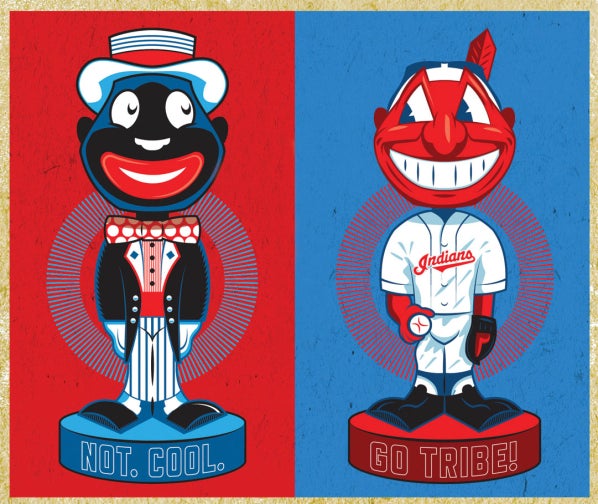
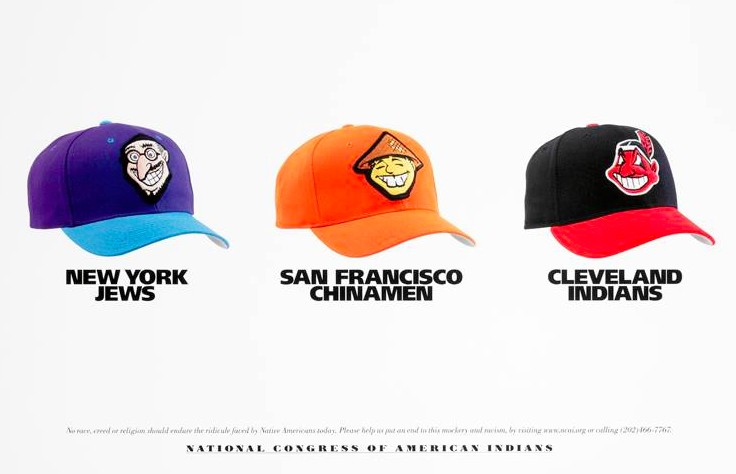
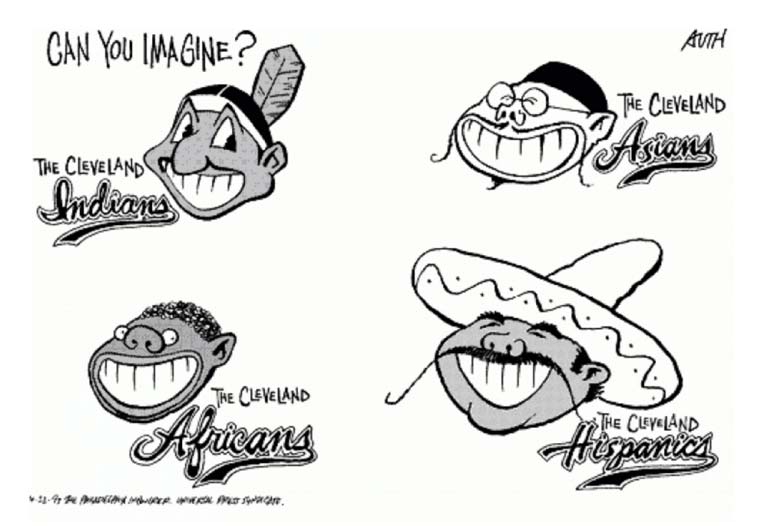
See these examples
https://www.culturalsurvival.org/sites/default/files/nmai-sp...
http://www.slate.com/content/dam/slate/blogs/browbeat/2013/1...
https://risetowin.org/assets/img/what-we-do/educate/resource...
Of course, this isn't foolproof because your descendants or heirs might also be willing to bowdlerize your work or even take it out of print altogether. So another option would be to just release all of your copyrighted works into the public domain upon your death allowing anybody who cares to publish uncensored copies.
"Readers who bought electronic versions of the writer’s books, such as Matilda and Charlie and the Chocolate Factory, before the controversial updates have discovered their copies have now been changed.
Puffin Books, the company which publishes Dahl novels, updated the electronic novels, in which Augustus Gloop is no longer described as fat or Mrs Twit as fearfully ugly, on devices such as the Amazon Kindle."
https://archive.ph/20230302163549/https://www.thetimes.co.uk...
One way to see Iliad is as a bard's song about lost good time before the apocalypse -- when Greek cities were mighty, trade flourishing, armies big etc.
The start of the gospel of John is one that is particularly thought provoking for me because we can more easily grasp the meaning of the original words.
https://www.blueletterbible.org/kjv/jhn/1/1/t_conc_998001
Ἐν ἀρχῇ ἦν ὁ λόγος καὶ ὁ λόγος ἦν πρὸς τὸν θεόν καὶ θεὸς ἦν ὁ λόγος.
en archē ēn ho logos kai ho logos ēn pros theos kai ho logos ēn theos.
In the beginning was the Word, and the Word was with God, and the Word was God.
And you'll note in that λόγος has been translated to "Word". But logos means such more than just "word" (the word for word is λέξις léxis). Logos, as understood in Greek philosophy was https://en.wikipedia.org/wiki/Logos
> Ancient Greek philosophers used the term in different ways. The sophists used the term to mean "discourse". Aristotle applied the term to refer to "reasoned discourse" or "the argument" in the field of rhetoric, and considered it one of the three modes of persuasion alongside ethos and pathos. Pyrrhonist philosophers used the term to refer to dogmatic accounts of non-evident matters. The Stoics spoke of the logos spermatikos (the generative principle of the Universe) which foreshadows related concepts in Neoplatonism.
This was relating the philosophy of the Greeks (even then a couple of hundred of years old) to that of the early forms of Christianity.
I would contend that "In the beginning was the [ability to reason, link the rational nature of the universe to rational discourse]" ... but that doesn't fit well in translation or even liner notes. And so, we're left with the word "Word".
---
One of the late night Bay Area public TV programs (not sure if it was KQED or KTEH) had a once a week program back in the late 90s / early 00s that was a verse by verse bible study looking at the oldest forms of the text and looking at specific word meanings like rāṣaḥ https://www.blueletterbible.org/lexicon/h7523/kjv/wlc/0-1/ and hāraḡ https://www.blueletterbible.org/lexicon/h2026/kjv/wlc/0-1/ - where they are used (you'll note the contexts are different while one is killing in general, the other is a specific type of killing).
Anyways... it was an interesting program that had a lot of linguistic study of ancient languages with the Bible as the text being translated.
> some take their own liberties with interpreting the original text as it was written
The "original text" in many cases is simply not known; there are multiple "sources" to translate from, so part of the job of those who are putting together a new edition is to discern between the variant texts and work out which one should be treated as canonical. This can obviously have a major impact on the result, and it's all before any translation ever occurs.
Sure, if you could only have one you'd want the original work in the original language, but that isn't as accessible as translations and other enhancements/improvements.
For example, Euclid's Elements in the original language has no diagrams; almost every translation and even reprints with the original have diagrams added. And those diagrams haven't been without controversy, either.
The people who want to read the complete Travis McGee series don't want updated covers. They want complete metadata and good search tools, so they can figure out that The Long Lavender Look comes before A Tan and Sandy Silence. The folks who are trying to hunt down ebooks of all the non-Fleming James Bond novels don't care much about the covers.
And if your epub reader software doesn't allow you to change the CSS to your own preferences, it's badly under-featured.
"Obviously comes from another time" is either a non-issue or a feature, not a bug.
Most genre fiction authors, even those making a great living, are not writing the next Travis McGee - they're writing thrillers, mysteries, or romance series that will not get Wikipedia pages or be turned into TV adaptations. Readers will not discover their books thinking "Oh yeah, Series X by that Obscure Author Y, I want to read that specifically."
Instead, they will stumble across a book in their chosen genre on their Amazon search (or top 100 list) or a BookBub promo. At best, they'll see a recommendation on TikTok or a readers facebook group. Hopefully that book will catch their interest with a solid on-market cover and blurb. They will read it, and then (hopefully) check out the rest of the author's backlist from there - judging those books' blurbs and covers as well. If the author is lucky and skilled, the reader will turn into a superfan and sign up for their newsletter, making it easier to sell them new books in the future.
What are you actually arguing for/against here?
If you want to sell an up-to-date, 2024 factbook, you should commission one. Providing up-to-date fact books is not a function that a back catalog can or should serve. You shouldn't take a 1950s fact book and try to make some ham-handed edits to it and sell it as if it's the same book.
> if a book says something dangerous - like a cook-book saying "add a few flakes of cyanide for flavour" is that grounds for an update, or editors note in an otherwise historical record text?
If a publisher feels that issuing a particular book in ebook form would be injurious to the public, than they are certainly within their rights to not issue it. Or to add an editorial note "This book is for historical interest only, don't try to use the recipes, because for some reason the author was trying to kill all their readers." Again there are a zillion cookbooks and it's not hard to get someone to write a new one.
It's a book, not a web page!
I have old astronomy books that indicate the visual appearance of Mars changes due to seasonal vegetation! This was obviously updated in later editions; the old edition remains as an important historical record of what we once thought.
> if a book says something dangerous
Old editions of the 'Home Doctor' recommended using petrol to treat headlice. Granted this is probably more dangerous than the advice given by some modern heath guru's diet books.
Well that's fascinating, do you happen to have an example of such a textbook that could be found online?
That's a distinction you are making - that books cannot or should not be updated, whilst web pages can/should be. It's no longer intrinsic to the nature of a book as a digital text.
Perhaps a list of heads-of-state is a silly example to use, but a text-book may be a better example - in a digital world it may be a reasonable expectation that a text-book would be 'correct', and so receiving updates would be appropriate. Or a particle physics data-sheet, where an updated value for the mass of a particle could be included.
Of course this should be consensual - "The publisher has provided an update to this text. Please accept, reject or review the changes", and it would be great if e-books and readers had a mechanism to scroll back and forward through editions (but perhaps that is a pipe-dream).
> I have old astronomy books that indicate the visual appearance of Mars changes due to seasonal vegetation! This was obviously updated in later editions; the old edition remains as an important historical record of what we once thought.
That's pretty much what I said in my comment. Sometimes the historical context is important, valuable or interesting.
It is implicitly consensual—when the consumer chooses to buy/download the newest edition. Don't try to "change" what's an an ebook, though. (Not that it's even possible.) Make new editions available if you want and allow the reader to decide whether to go for them. Otherwise, it is not consensual.
in principio erat Verbum et Verbum erat apud Deum et Deus erat Verbum
Though going back to logos - even that word changed meaning over the the centuries from Heraclitus (5th century BC) ( https://chs.harvard.edu/chapter/17-the-heraclitean-logos/ https://theimaginativeconservative.org/2015/12/logos-of-hera... https://modernstoicism.com/heraclitus-and-the-birth-of-the-l... ) to the neoplatonist school (3rd century AD)
The early Christian church traditions were a battlefield of dueling scriptures and philosophies.
Some books that I'd recommend on that area. Note that my approach to the Bible isn't one of a believer but rather as another work of ancient philosophy (which was my favorite philosophy class of my almost not getting a CS degree) and stoicism is the branch within there that I've read the most of.
https://www.amazon.com/Stoicism-Early-Christianity-Tuomas-Ra...
https://www.amazon.com/Lost-Christianities-Battles-Scripture...
https://www.amazon.com/Lost-Scriptures-Books-that-Testament/...
Or when someone dresses up as a 1920 gangster, just always happen to Italian...
Perhaps you would like to give us all a 'hierarchy of the races' so we can all judge who punches up or down? You can call it the Rassenkunde des deutschen Volkes.
You are an acceptable costume. Face it. But context matters. The reading kid is not singled out, nobody is making this negative. It could also be perceived as a celebration 'hey I want to be like my adopted asian sister, she is cool'.
Live and let live, and give context if the kid is asking questions. But don't censor because you feel like a special snowflake
This depends on the audience. For some people it is a turn off to adopt the title to a woke zeitgeist.
But it is not just about people buying the book knowing it changed, or buying it because it changed. It’s about coming across a title like that cold, without knowing any context. (Remember: the aspiration of a publisher is always to have the book become more popular with new formerly uninterested audiences). It’s an empirical question whether that title will do better than a retitle but my money is on the title without the most fraught words in the English language on the cover.
It is, if nothing else, convenient that I don't have to say one of the worst slurs in American English every time I discuss Agatha Christie's body of work.
It's worth noting that, for that reason, the book was released as "And Then There Were None" in its first US edition in 1940; the use of the original title until 1985 is a UK thing.
You just don't put that word on the cover of a book due to "changing cultural trends"
Admittedly that's actually a more complicated when it comes to electronic texts which may be automatically updated.
With 1984, I meant the book by George Orwell where newspaper articles of the past are permanently changed (and any references to the existence of the old versions are destroyed) to fit the daily political climate/narrative.
In a conversation about censorship being used to alter past events, I'm somewhat surprised you didn't understand the reference. Can I suggest this is a book you read as a matter of some importance:
There was indeed a huge backlash in the UK, amongst authors and the public, when publishers sought to edit classic children's books by Roald Dahl and Enid Blyton to make them politically correct. Children a quite capable of understanding something was written at a different time.
Even if some person is certain that this is not the case, the child's parents hopefully are capable of explaining this to their children. :-)
Sometimes you just want to read a book and children books are not all that much fun for adults anyway. You might not want to then have to go into explaining that racism was normal for the author, but we think differently jadda jadda ... it is additional completely pointless complication for what was supposed to be good night story.
Nobody is wishing they had a more prominent place today, nor in the future. Rather, there is a need not to edit the past, lest we forget it.
> "And Then There Were None" in its first US edition in 1940; the use of the original title until 1985 is a UK thing.
I suggest that is because in the USA, particularly in the south, political sensitivities about such a title would be difficult to overcome and the association with an old British poem would be completely lost.
Wait, are you sure about that? Wikipedia says "an 1869 minstrel song". I had assumed it was a song from the USA that happened to be fairly well known in Britain.
Also I have the impression that the word "nigger" is not traditional in British English. The first time I came across the word was when reading Mark Twain. I had previously heard several words used for referring to darker-skinned people but not that one. Of course that's just my experience from one part of the country.
As a black American, I'm forced to care about the efforts of people to retcon pervasive racism out of history, or relegate it to one-dimensional "bad guys." This will not save my children from racism, instead it will make them absolutely bewildered by the pervasive racism they will face, and make them blame themselves.
Rewriting crimes out of history does not help victims, it helps perpetrators.
But I do tend to care about the opinions of people who wish that works of the past are not manipulated to fit the current zeitgeist - in particular if it is claimed or suggest that this is the work as written by the author.
It is something you will need to explain to children at some point, and doing so over a light hearted story is an ideal approach. Shying away from the difficulties of bringing up a child isn't something you should be doing.
Besides, the best children's books are also fun for adults! (I raise you Roald Dahl's 'Boy' and Judith Kerr's 'The Tiger Who Came to Tea')
And I am not always interested in research about the original reason - how much author was or was not racist.
I don't know how you define best children's book. I found most of then boring and kids taste was not the same as my taste.
Also Kipling's Just So stories. My eldest loved me to read them to him and it was no chore at all.