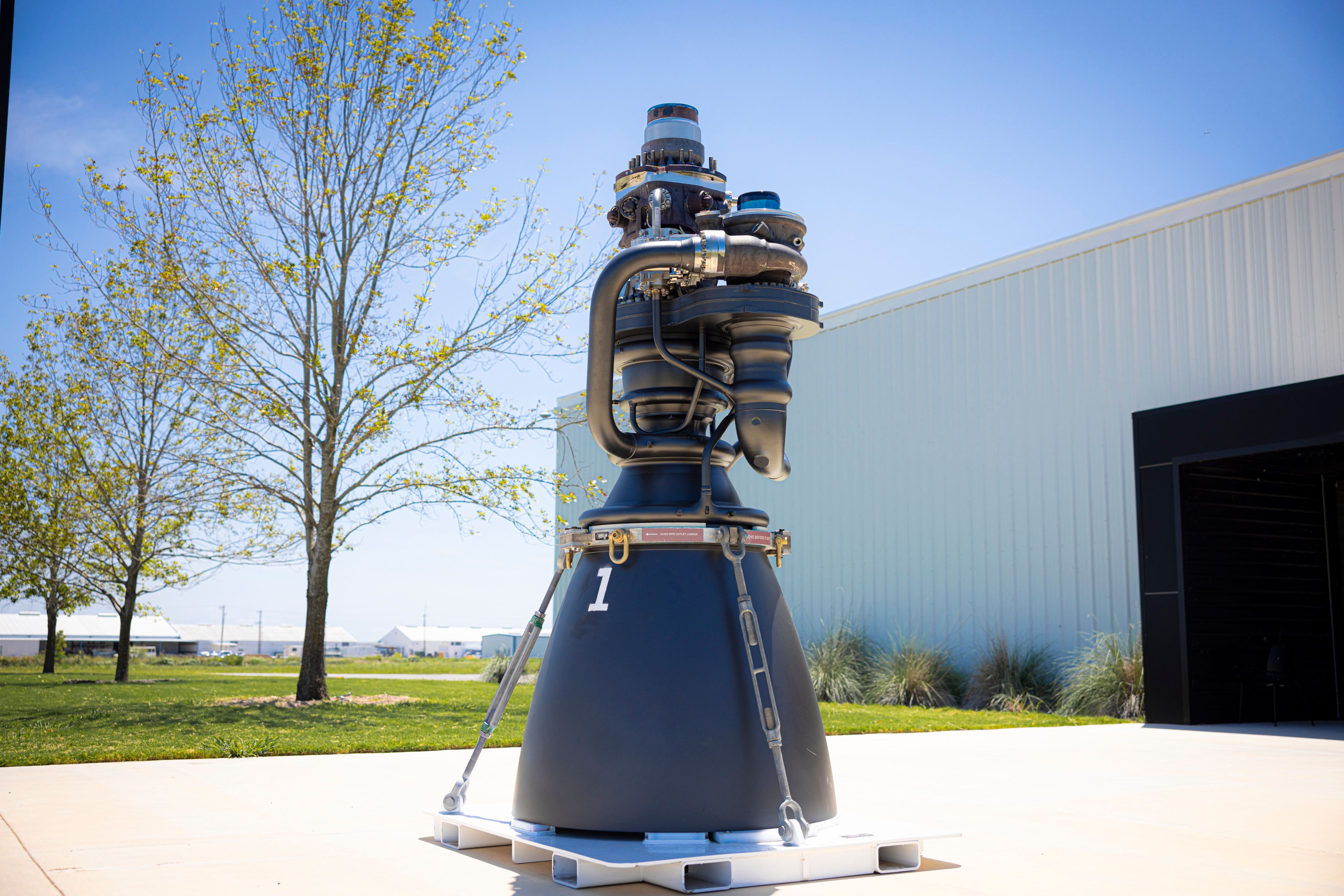
Starship V3(spacex.com) |
Starship V3(spacex.com) |
The rise of moralization of everything is really killing online discourse. It's gotten to the point where people will now mostly criticize and support ideas based on who proposed them, and not based on their merits. Tribalism at its worst.
I think religion helped reduce tribalism, at a societal level, by making evil/demons/bad acts as the "them" and everyone that went to church on sunday (it was the whole town previously) was the "us". Now, without religion, and the physical/social bringing together it brought, that hardware in our brain still tries to segment a clear "us"/"them", but with much less guidance.
A lot of Buddhist practice is basically trying to train against immediately collapsing reality into self/other, right/wrong, craving/aversion.
Practicing this with Elon Musk is effectively ultra hard mode.
--
Though I do think there’s a subtle irony here too — the original commenter may simply be describing their own emotional reaction/disillusionment, while your response risks collapsing them into "part of the problem."
Feels like everybody in the thread is pointing at the same tendency from different angles.
I too would like it to just be about the content, but nothing exists in a vacuum.
This is not a nuanced case of "he did a few icky things, but also lots of good things." No. He is a fucked up, deeply racist megalomaniac who is doing his best to reshape the Western world in his fetid image. If he stopped with Tesla and SpaceX, maybe he would be penned differently in the history books, but alas.
The sum of these merits adds up to something. SpaceX is a political venture, and just like the uncomfortable questions that Microsoft/Google/Apple all pose, it's worth asking what the consequences will be in the long term. Lawful intercept sounded like a great plan, before it was leveraged by America's adversaries in Salt Typhoon as a prepackaged surveillance network.
Personally I am looking forward to the post-IPO world where a lot of very smart people with hard-won knowledge will have their golden handcuffs off.
"People" were always like that and will be so..stupid. Let me quote Agent K from MIB for you.
> A person is smart. People are dumb, panicky, dangerous animals and you know it...
The funny thing is that these are the same people who applauded obvious scams because Musk proposed it when they liked him...
Whatever good Musk has accomplished with SpaceX will be offset by the harm he has done to biomedical research in the final accounting.
Which, at this point, has already been beaten to death and is just... tiresome. While discussing the broad concept of space-based compute in general (outside of SpaceX, Elon, etc) can still actually be interesting.
NASA has been propaganda since Operation Paperclip, sadly. It's hard to politicize something that's always been political, even if Musk gives Peenemünde optics a run for it's money.
The problem is the recent shift away from science towards a more performative roadmap – getting to the Moon (again) is about showing off US might, not about science this time around, at least that's how it's being messaged. Many pure science endeavours have been canned. And the Artemis missions have a strong vibe of propaganda to them with slick marketing designed to emphasise America.
I guess to sum it up: doing good stuff and being seen to be good because of it, is fine, but making a show of doing good stuff explicitly for show, while behind the scenes doing as little as you can get away with, is not.
You are watching the slave grid being erected over your head
https://www.youtube.com/watch?v=jbp3kdJZ1_A See 1:38:00
There will be a collision at some point, there's no real-time communication between USA and China satellite launches.
[1]: https://macintoshgarden.org/apps/neuromancer-count-zero-mona...
For their conventional space launch operations they also want multiple... to target different orbits, and to parallelize the high volume operations they anticipate.
There's already two Starship launch sites. The one in use in Texas, and one (LC-39A) in development at Kennedy Space Center, Florida. And there's good reason to believe they've begun planning a third in Louisiana. https://forum.nasaspaceflight.com/index.php?topic=64900.0
On a more serious note, the Cape Canaveral area / Kennedy Space Center has a large amount of empty land to build space infrastructure. The island has been dedicated to space facilities since the 1960s. Both SpaceX and Blue Origin have facilities there.
Of course, there are still a lot of unknowns, any of which could prove fatal to the concept but I'm no longer comfortable just dismissing it as "obviously ridiculous."
And if he's actually capable of producing solar panels in the quantity that he's talking about in the time frame that he's talking about -- why doesn't he just put them on earth to solve our growing climate change problems and fuel shortages?
It is physically possible, but it won't have positive ROI so it is not viable.
If you have a paper/post doing the calculations for positive ROI, I'd be all ears. It can even have the optimistic Elon assumptions about price of mass to orbit.
Why not have SpaceX build datacenter satellites and lease them to XAi et al, or XAi design and manufacture satellite datacenters and pay SpaceX to launch them? Heck, why not start a third company which focuses exclusively on datacenters in space, buying services from one company and selling them to another, so they can concentrate on this rather specialized skillset without distraction?
How does SpaceX acquiring XAi help anything but Elon Musk's personal portfolio?
The first time around it was also about showing off US might. I don't think that something has changed much. Maybe wild Musk's lies are the only thing that was added.
Well, yeah but that's just Elon being Elon. At this point I think even the most pro-Elon folks freely admit "The first rule of Elon is: 'Ignore everything he says about timeframes and scale.'"
Is a good start
I never said it did. My post didn't even mention SpaceX, Elon or XAI. I just shared that my initial drive-by opinion on space-based compute, as a general concept (regardless which company does it, when or how), was reflexively dismissive but after a tiny bit of research, it's now risen to the lofty epistemic level of "not completely ridiculous." And I discovered it's a much more interesting and complex question than I assumed, involving highly uncertain estimates of rapidly evolving technology, physics and economics.
For me the question starts more akin to "could a Dyson sphere ever be viable for human civilization in this solar system" than "should grandma invest her life savings in SpaceX this afternoon." But it seems some can't reason about the potential future viability of space-based compute independent of current politics, personalities, culture war or whether AI is a bubble inflated by circular deals. To be clear, I do think AI valuations are wildly over-inflated and propped up by financial engineering bordering on fraud likely to trigger a huge economic crash. But it can be simultaneously true that there will be hugely profitable AI businesses in 2035 and it's possible space-based compute might be viable for some company in 2040.
As for Elon, ever since I met him a couple times closer to the Paypal days, I've felt he's an eccentric, impulsive nut but that he's also a savvy, technically-minded entrepreneur with a sharp eye for opportunity who's compelled by obsessive, visionary zeal. And everything he's done since has been consistent with that assessment, from the successes of Tesla and SpaceX to his bizarre, self-destructive detours into politics, social media and AI. I don't understand why so many can't deal with the reality that a person can be deeply flawed and wildly irrational in some ways while simultaneously being highly effective and immensely valuable in other ways. Steve Jobs was a brilliant visionary entrepreneur yet also an asshole in his personal life who believed some crazy shit so deeply it contributed to his early death.
I'm sure you can do it and you can come up with estimates over how much it will cost... but it's always going to cost more than not putting your data centre underwater.
Also, how is a constellation of satellites any easier in this case? They all need extremely large radiators, they all need maintenance, they all need high bandwidth communication.
If you calculate the actual cooling requirements for megawatts of server, you end up with needing many, many football fields of cooling.
It's nonsensical. Sure you can make the numbers sort of work for a single server, but a single server on earth costs MUCH MUCH less to launch, maintain, etc. So why bother doing it in space? We just end up with loads of unusable space servers as they gradually breakdown and cannot be repaired.
Right, but SpaceX has already filed plans with the FCC to launch a million of them, which is to say, 10K of your datacenter units. Tying back to the article, this plan is definitely going to require Starship and airline-like operations.
Dude, you realize that right now there are 100+s of data centers in construction around the world often in the 500MW to 1PW range? I.e. there are many, many datacenters (100s) in construction, right now, with 100s of MW up to multiple PW?
Scott's analysis is out by several orders of magnitude!
Everyone knows its "theoretically" possible to have a single server or a single rack in space.
The big and most obvious glaring miss is, how would it be economically viable and operationally viable to have datacenters in space which compete with datacenters on the ground.
We are experts are creating economically profitable (very profitable) datacenters on the ground, which work really well for inference and training, which are cooled really well, can be maintained easily, etc. The idea that we are going to have 100s of MW clusters or 1PW clusters in space, and they are going to be competitive economically, and we are going to be able to maintain them, and they are going to actually WORK (i.e. how will the networking be competitive with datacenters on earth), is frankly laughable.
Scott is totally talking rubbish on this.
Let's do the math on "millions of datacenters" worth of launches.
In fact, let's try and do it for a single 50k GPU datacenter:
50,000 GPUs at GB200 density = 695 NVL72 racks at 1360 kg (1.36 tonnes) each, so the racks are roughly 950 tonnes.
GPUS = 950 tons
85MW of power needed for the GPUs. Latest solar power panels give roughly 120-150 watts per kg. Let's be generous and say 150 W/kg. So 85 MW / 150 W/kg = 570 tonnes of solar arrays
Power = 570 tons
Thermal management (radiators). Real space radiators are around 12 kg/m² for a heavy deployable radiator and its support structure, though ISS radiators are 8 kg per square meter, or 2.75 kg/m² if we only consider the exposed panels. (Using 8 kg/m² for an estimate). 200,000 m² × 8 kg/m² = 1,600 tonnes of radiators
Plus working fluid (ammonia or similar), pumps, manifolds, redundant loops: 150 tonnes.
Radiators Total: 1750 tons.
Structure, Propulsion, Comms, Avionics, Attitude Control Systems, plus Margin. Hard to estimate but conservatively several hundred tons extra. (Actual spacecraft programs always add roughly 20-30% mass margin).
Extras: 750 tons. (being very conservative).
Total = 950+570+1750+750 = 4020 tons.
And note, this is for a single 50k GPU datacenter with all the numbers being skewed to most optimistic.
That would be 40 (!!!) Starship launches. So far we've had 11 launches total with none being successful (100% successful I mean). Each of those launches currently costs 90M dollars. And note, we are assuming a fully working 100 ton payload for Starship of which none of the launches so far have been close to at all.
So our full datacenter to space would cost 3.6B dollars (at current SpaceX prices)... (just to launch it, not to actually buy the equipment). And realistically would cost far more than that...
Note, this is for (by today's standards) a small datacenter with only 50k GPUs and I haven't included any testing, R&D costs, costs of "maintenance", station keeping, replacements, etc etc.
Let alone the question of huge amounts more satellites in orbit, risks of space junk, Kessler syndrome, etc etc.
Happy to debate though! I love this topic.
V3 is their first Starship family big upgrade, containing lots of learnings from previous tests, and the big engine upgrades. V3 engines are the first iteration of a production engine, with lots of sensors and auxiliary systems integrated into the engine itself. Besides the improvements in thrust, they've streamlined the production, moved a lot of stuff "inside" the engine (the first iterations looked like something out of the steampunk era), and they've simplified lots of fire/heat protection.
The Booster and Ship also got some major redesigns in the way they're handling fuel, the "thrust puck" (the area where the engines get mounted) and so on. It's also a bit taller, helped by the engine upgrades. TWR has also improved, with estimates at 1.6. This should be visibly faster to clear the tower and "jump" the launch.
They are also adding ~44tons of simlinks (starlink simulators, dumb payloads). So they seem to have improved the margins for orbital payload a lot. New this launch will be a few sats that have comms & cameras on them. Hopefully we'll get to see outside shots of Starship from these things, on orbit. They've filed FCC paperwork for this, and they'll likely use it to inspect the health of the heatshield on orbit.
They've also updated the launch tower, with a flame deflector, and a new deluge system.
This flight will be still suborbital, testing payload deployment, booster return to a fixed point somewhere in the coastal waters, and the ship aiming for somewhere in the Indian Ocean. They've also removed some parts of hte heatshield, to test how it handles that. (on a previous flight the ship still nailed its simulated landing with huge gaps in it, from multiple tiles missing intentionally).
If everything works on this flight, the next one is planned to be orbital.
The level that they managed to fit everything inside of a simple-looking package was so high that the CEO of ULA (the Boeing/Lockheed Martin rocket company) thought they were lying when they first showed pictures [1].
[1] https://www.benzinga.com/news/24/08/40279896/spacex-presiden...
I'm not some kind of insider, though.
So much insane engineering just to make this launch pad work. The pad is more complex then the rocket. To make something that survives repeatedly the insane power of Starship is a actually insane.
That they managed to do a full duration static fire and it seems the pad is ok is a huge achievement.
Is that confirmed ? Will be truly amazing to see.
> The Starship upper stage will target multiple in-space and reentry objectives, including the deployment of 22 Starlink simulators, similar in size to next-generation Starlink satellites. The last two satellites deployed will scan Starship’s heat shield and transmit imagery down to operators to test methods of analyzing Starship’s heat shield readiness for return to launch site on future missions. Several tiles on Starship have been painted white to simulate missing tiles and serve as imaging targets in the test. The Starlink simulators will be on the same suborbital trajectory as Starship.
This is from the dedicated flight 12 page, not this article. https://www.spacex.com/launches/starship-flight-12
The Russians were really good at aerospace. It's a testament to their engineering that it took this long to advance past where they were in the 1970s. I love this video describing the development from the Russian RD270 all the way to Raptor: https://x.com/Erdayastronaut/status/1204179086823825408.
Competition does improve products.
Its clearly stating real numbers and I do make a clear point:
Space is a 700 Billion dollar business split between building the stuff you want to send up, the 'sending up' part, and the operations part. Space-X 'magic' evaluation is between 800 Billion and 2 Trillion.
snicker
And this doesn't even calculate in, that if Space would really become interesting and profitable as another big disruptive market, everyone else will join.
Or lets say they are joining already anyway.
Unless it manages to massively eat into mobile network market share (pretty unlikely in my view) growing past $100bn (yearly revenue) or so seems unrealistic to me.
Even with cheaper launch costs, it is not clear to me that Starlink would ever be interested in offering service for like $80/year (=> price competitive with mobile carriers in low income nations).
Several mobile carriers are already using them for backend of remote towers.
I guess the focus is going to be on getting stuff up, rather than back down. Thus the Starlink and data center plays, not human space exploration.
I imagine at least some of the reason to chase the AI datacenters in space thing is because Starship is "too capable" if it succeeds. It makes available a technology that does not have a short-term utility that people will pay for. Starlink was something that's been useful as telecoms but perhaps that market is saturating. It makes sense to pursue what is currently high-utility but is not being met because of terrestrial constraints.
Well, good luck to him. A lot of smart people are chasing this idea and I can't seem how it could work, but I was honestly surprised that Tesla hit its production goals, and I was honest surprised that SpaceX hit success so fast, and I was honestly surprised by the rise of LLMs, so the truth is there are lots of paradigm shifts I just miss: BEVs, cheap space, AI.
Someone once tweeted something like:
> Less intelligent people perceive more intelligent people as incredibly lucky. They always make inscrutably stupid decisions, unjustified by visible information, and somehow fate rewards them for this.
But also, I'm just hoping that a new era of space exploration will open up in my lifetime. That sounds incredibly cool! And I dare say there are many people like me in the US at least judging by the popular baby names of this era, which have seen spikes in Aurora, Nova, and Luna - and in the one my daughter has: Astra.
I can think of all sorts of successful decisions that would definitely be stupid for a normal person to try, due to lack of connections, access to money, high risk, etc.
And maybe to expose my own lack of intelligence, I've always thought eg Robinhood was incredibly dumb. I never in a million years would have thought of the idea of creating an investing app, since there are already many of them, from far more reliable and trustworthy sources. And yet Robinhood has made its founders billions.
Soooo, how much did he put on that outcome on polymarket?
If I'm building a warehouse and I say "this warehouse is going to house the worlds supply of x", am I risking the future of the company if that fails and I pivot to housing y instead?
They’ll be vague about capacity for a few years, and they’ll be building and acquiring data centers on earth “just while we wait for <breakthrough> that will unlock overnight massive scaling of the space data centers”. The timeline will always be “in the next year”, but no real workloads will run on the space GPUs for a decade. Then, finally, maybe, it’ll happen. Or maybe not, just like FSD. Always around the corner, never quite here.
And it’ll work for meme stock purposes, just like his other companies.
Obviously it’s very late, but Tesla now have vehicles in multiple YS cities taxing people with nobody in the front seats.
It’s coming.
I suspect the answer is because they're being remotely monitored and operated 24/7, and they don't have the staff to tend to them.
But only Tesla knows, and they've spent the last few years absolutely destroying their reputation. They lie constantly, they show flagrant disregard for the lives of their customers, and I trust nothing that they say.
EDIT: lol, looks like I was exactly right. These fucking clowns: https://www.wired.com/story/tesla-says-its-robotaxis-are-som...
> Liftoff will occur at 6:30 p.m. ET on Monday (May 19)
https://www.space.com/space-exploration/launches-spacecraft/...
He has to be the biggest richest idiot on the planet.
It should be a lot cheaper to just buy massive solar (wait, couldn't he just make them himself with his tesla roofs?) and batteries (which Tesla also makes) and put Datacenter in some dessert and put fiber to that place...
But it seems he needs some angle to push all this necessary investment into something?
Are we now in the phase of 'lets play scifi' just because we can't come up with anything else?
Btw. Starlink is already 'cheap', with only 8-10 Million customers and doesn't scale easily. So that will not just be able to keep up with his mars stuff...
It's a difficult engineering challenge but physically possible, and Elon is no stranger to engineering challenges.
Some numbers: assume an emissivity of 0.85, assume no absorption from the sun, assume heat rejected from both sides of a panel, a 1m^2 panel will reject 1.45kW/m^2 @ 350K.
At 900K its 62 kW/m^2. Not a trivial amount of heat.
This is first and foremost an engineering problem as you need to design a system that will both tolerate high heat and be able to pump even more heat to the radiators. The high temperature seems to be the primary objective to design for unless launch costs become absurdly low.
"Rockets should land themselves" is not a grand theory of physics. He had money and told smarter people to do it.
I'm a big space fan, don't get me wrong. But your exuberance uh, needs tempering.
More or less those things you mentioned have solutions and they are getting better.
Right now, the greatest threat to our survival and prosperity is humanity itself.
What if expanding helps us coexist peacefully? Maybe being in a crab bucket with no frontier is part of the issue.
The only problem that "data centers in space" solves is the problem of trying to scale a rocket company where the potential demand for rocket launches is simply not that big.
There are a lot of problems that can be solved by creating 20 other, much bigger, problems.
So the money we are saving is commodity solar, commodity steel and community battery (or any other form of power).
And instead of those things we add, insane engineering complexity, insane complex heating, insanely complex maintenance or standing backup, insanely expensive transportation and insanely complex operations and insanely complex communications?
If you are Dutch, just take a one-hour flight to Copenhagen to see how a city can be absolutely plastered with national flags.
If Poland or France were introducing a new nationally produced rocket, they would certainly show their national flags around it as well. They definitely do so when displaying new weapons. So does Ukraine etc.
Accidentally, I remember the Dutch colors on every package of Dutch cheese I ever bought.
Best case all the Martians get eaten alive by their own skin fungus and/or bacteria in a generation or two. There'll be a collapse in the personal or macro biome - biological systems have Kalmagorov complexity in a vertical like direction.
Shorter term, drawing from actual ISS problems, you get really weird and durable "biofilm" ecosystems sometimes literally exploding since there's nothing up there eating any of the material shedding from the crew and their food and poop and whatever else. Staphylococcus and Corynebacterium (skin commensals) and Bacillus species dominate surfaces. Aspergillus, Penicillium, Cladosporium, and Rhodotorula are some of the fungi. The Japanese Kibo module sampling found communities that shifted noticeably year over year. Thicker biofilms with novel "column-and-canopy" architectures not seen on Earth; probably related, E. coli and Salmonella studies showed increased virulence gene expression in microgravity. There's a Russian paper documenting 234 species recovered from Mir, including fungi actively degrading polymer materials. And this is on an orbital station after a few decades, constantly supplied, wiped down with sterilizers and lysol regularly, with individuals able to deorbit when they feel like it.
The history of human spaceflight is pretty much: Problem -> Difficult to find solution -> Solution leads to better spaceflight -> Solution leads to better life for humans on Earth. Then repeat that cycle for each new problem.
Think of the new medicine and hospital protocols that are waiting to be developed as biologists explore the solution to this problem.
> The book was written by married couple Kelly Weinersmith, an adjunct professor at Rice University in the BioSciences Department, and Zach Weinersmith, a cartoonist known for the webcomic Saturday Morning Breakfast Cereal.
But there are a few who have bothered. Here is one of the better ones: https://planetocracy.org/p/review-of-a-city-on-mars-part-i
Humans gestate at 1g and only 1g. Try doing it elsewhere and you’ll have horrible problems.
But the heat shield is just not mentioned in this article. They actually made significant changes to it in the new version. They added added new seals between the tiles, improved attachment points, and redesigned the shielding in specific areas.
A big problem with their work on the heat shield is that they lost the ship before reentry multiple times for various reasons. They were making changes to the heat shield on previous versions, but couldn't test them as they were repeatedly losing the ship before the heat shield was actually used.
Also, from their description of the planned launch of Starship V3:
> The Starship upper stage will target multiple in-space and reentry objectives, including the deployment of 22 Starlink simulators, similar in size to next-generation Starlink satellites. The last two satellites deployed will scan Starship’s heat shield and transmit imagery down to operators to test methods of analyzing Starship’s heat shield readiness for return to launch site on future missions. Several tiles on Starship have been painted white to simulate missing tiles and serve as imaging targets in the test.
> For Starship entry, a single heat shield tile has been intentionally removed to measure the aerodynamic load differences on adjacent tiles when there is a tile missing.
https://www.spacex.com/launches/starship-flight-12
So they're still working on the heat shield. Things like space data centers may be economical only if Starship is fully reusable, otherwise the idea is dead on arrival.
If they needed land a payload, they could stuff a dragon capsule in the starship, but the point is building something new.
Losing a tile on the most damage sensible area of the shuttle.
Do you have aerospace engineering background? what are your arguments?
I don't know how all of these turn out to be, but when you keep repeat the same arguments, without anything to back it up, you should have some reflection.
[0] https://news.cgtn.com/news/2026-01-29/China-unveils-space-am...
[1] https://www.reuters.com/science/google-spacex-talks-explore-...
[2] https://research.google/blog/exploring-a-space-based-scalabl...
[3] https://spacenews.com/blue-origins-surprise-terawave-constel...
Google has so much money, I don't know why they are doing this, perhaps because they can, because the people in their lab would like to shoot something up, but thats not the core selling point of Google.
Blue Origin, you are referencing, is doing Terawave its a Starlink competitor. Which is not a AI DC in Space.
But yes I mean either idiot or duplicitous for marketing/stock boosting reasons.
I wish there was a Kalshi market for TeraFLOPs in orbit by X date
So my bet would be that just ordering a bunch of sodium batteries and a bunch of solar panels (or you know using a source of energy that is constant) is cheaper then going threw all the effort of putting things into space.
I have been following everything space for decades, and not once have I thought, wow putting super complex engineering things into space so easy and you should do it for things that have an easy alternative on earth.
Also hard radiation is not something transistors like.
The more power you consume, the more power you need to dissipate. These constelations wouldn't be small at all. It would also take a interesting solution to be able to move this heat from very small very intense areas to very big cooling areas. How?
And space is not easy. Space is very very cold which puts a lot of stress on materials. It has radiation. And it has A LOT of microasteroids. Stuff in Space breaks down due to this. You would need to replace all of this stuff regularly with resources from the planet earth.
You would basically just spend a lot of resources throwing a lot of resources out into space. You can't even recycle all of this.
Its still lunatic at our current state of our current system. There is so so much space on our planet. Its ridicoulous
The only reason Musk is saying stuff like this is because he knows there is no market and he needs to keep his system alive
In the end in like 10-15 years when others land on the moon and build amazing new things maybe just maybe there will be a realization that playing scifi doesn't produce results.
See https://www.youtube.com/watch?v=jbp3kdJZ1_A and specifically for the economics of AI vs surveillance - https://www.youtube.com/watch?v=mA-S1JGzph4
I do wonder if shielding the multi-billion transistor GPUs will be a difficult.
Elon Musk on the other hand has a construct of multiply billion dollar companies he has to feed and keep alive:
xAI investment burns one Billion per month. Space X makes 8 Billion per year. X cost him 40 Billion when he bought it but is not profitable. Tesla struggles to grow, had the very costly Cybertruck, and has a lot more opposition than 10 years ago.
I do not understand at all what his endgame is. His finances are hidden enough. But his motivation is for sure selling his story.
his story is the future and it doesn't matter very much if its doable or not or usefull. Tesla as a company is still overevaluated for years now. If Tesla would drop to what its worth, Musk might need to pay back a lot of loans and other stuff and he might just be gone. He said often enough in public that it was very close etc.
If Space-X and Tesla wouljd just be good running companies with profits in the billions, he wouldn't need to be that weird but it could just be that he believes in it here are plenty of interviews showing him not knowing that much about his technology.
He is not the expert, he is the pusher and unblocker
> In the long term, space-based AI is obviously the only way to scale.
In the long term - all mass and energy available is outside of Earth - what is here is not even a rounding error. If you wish to continue scaling compute it then becomes a question of time before you'd want to go off planet. Personally I'm quite keen to see near term space based compute explored, as it could end up becoming a much better trade-off than allocating ever more ground to power and operate terrestrial compute which directly conflict with the biosphere.
SpaceX started the Starlink design phase in 2015 - started launching Starlink satellites in 2019 - and they now have the most dominant satellite constellation ever deployed by a large factor. They have their own launch systems, launch sites, satellite bus, communication stack - both in-house designed and built.
What is really going to be that difficult with space-based compute? Radiation hardening and cooling? These are clear engineering challenges that can be simulated, tested with earth analogs, and then rapidly iterated across design generations. There's napkin math all over the internet on this, but it really seems like small challenges compared to the other engineering SpaceX have already sorted.
Beyond radiation / cooling / servicing - it seems like the biggest hurdle is to crack the scaling of designing / scaling the necessary amount of compute they will need to scale space based compute according to the laid out plans.
In case anyone is wondering how Tesla’s stock price remain wildly detached from its business reality, keep these four words in mind. If you can convince people that anything about you and your business has to be evaluated on a literally astronomical timescale, you can justify any valuation you desire, because your believers will give you infinite time to realize their investment returns. It has nothing to do with business. They are selling you a vision — which can also come in a pill form, labeled "salvia" and sold at gas stations.
I still see people say the cybertruck is built for mars environments, conveniently ignoring the vast technological and economical barriers stopping us from driving commercially produced vehicles on mars. This space data center thing is the same deal. It doesn't matter how long it will take to solve the technical issues with cooling, radiation, maintenance. It doesn't matter if it will make economical sense or not. It doesn't matter if spacex will be the one to actually do it. You just have to believe, and give them some time — a lot of time, so much time that a monkey can type out Hamlet and type it out again backwards.
See also the buffoonery coming out of Bay Area "effective altruist" and "longtermism" communities.
Technical concerns aside, the main risk is financial. Success is based on the premise that we need this enough that the costs are justified but the costs are going to be much higher. That is totally unproven on any financial modelling scenario I've seen. In fact there's likely no actual ROI on what has been spent so far and no qualification of demand. With geopolitical problems on the table, no one is going to fund this.
The idea is completely dead before the first node leaves the planet.
So in the long term, what do you think is cheaper and easier to maintain, upgrade, handle etc.?
A Space operation on which you need to send compute hardware constantly upwoards or a fiber connection to some more 'remote/dessert' like area which has a lot of energy available?
Starlink is not a game changer at all. It has 8-10 Million customers, from which plenty of peopple just use it for holidays, or upping there already existing internet line or because its faster to deploy than a cable.
Our planet is already very well connected. Putting lines in the ground is necessary anyway because you still need energy / powerlines.
Of course this can be done, thats NOT the question. The only question is, if its worth it and its not.
Sending some servers up in space is margins more expensive than sending some servers on trucks (you need anyway) to another earth location.
Almost correct, yes.
Starlink is different, it makes sense. Covering the entire Earth, including the oceans with cell towers for global internet connectivity is harder than having a satellite constellation. The opposite situation from datacenters.
Manufacturing capabilities are quite lacking, though, in the short and medium terms, so this doesn't seem all that relevant.
Maybe a self-contained, modular solar panel / radiator / compute unit could be built, but it will be manufactured on Earth. (Where the fabs are.)
And it still seems easier to put solar panels and batteries near the data centers that SpaceX is already building on Earth.
Define “long term”. Nuclear energy is practically unlimited, plus fusion (if it ever works).
Stopping some random rogue nation blowing it up.
Why put them in space? Power? We have that on earth.
Seems more like a grift to me, after the car grift and the Mars grift didn't pan out.
you also shrug off cooling. this is not a solved problem in any way. its not even approachable as of yet. the vast size of the radiators will be hilarious regardless.
you ignore power generation. solar is not an option. so we also need nuclear reactors for these orbital data centers. thats cool spacex can just branch out into nuclear too! love the idea of unmanned nuclear orbiting behemoths.
speaking of orbital.. what is their orbit? do they go out to Lagrange points? hilariously far? or do they stay close? hilariously fuel intensive to stay out of the atmosphere for such massive structures?
but hey, maybe we distribute spaceX-AI gpu's across starlinks. a couple solar panels and a tesla battery per gpu. all launched there by spacex
'all mass and energy available is outside of earth' Yeah, and out of range for compute data connections too.
I don't agree with the feasibility or ANY sort of practicality to this whatsoever. Im all for going for it, but I wish everyone could just admit that we're doing it because it's cool, not because it's useful. I get why Elon wont say that, but not us.
They can. But in Elons case, its going to be his style of sending failure after failure up in the space, getting something working part time, lying about it and exaggerating how good it is, and then making fun of others for not using his inferior product.
Pretty much like everything else he has done.
yawn, people keep making this excuse on behalf of the South African investor with poor technical expertise.
Instead of wasting huge amounts of land to farming, restaurants and transportation of food it would be so much better if everyone just had a Star-Trek style food replicator in their house.
None of the tech exists but fuck it. Why bother with realities of life?
I am raising 200 Trillion Dollars for AI Space FoodX. Who is in?
tbf, a 'sane' person wouldn't have started a rocket company and an ev company, at the same time, in a recession.
He has never been sane. and that has made all the difference.
This "space datacenters is more important than colonizing the universe" thing is just to deflect from what would be an inevitable failure because if they do this pivot, they can push out the timeline for that further than the original 2026 on Mars goal that they are about to wildly overshoot.
I think if fusion is real, it might not be so advantageous until space mining is a thing.
In other words good old fashioned plausibly deniable securities fraud.
We're simply out things we can profitably send to space so SpaceX and others are trying to come up with ideas to induce demand.
My understanding is that Starlink mostly grew out of the same need to justify scaling up rocket production.
Other than the occasional GNSS, weather, scientific, broadcast and surveillance satellite, there's not all that much worth sending into space.
I can only assume "too easy to track" is part of the logic.
Ditto for kinetic strikes. That was super hyped up.
IDK I think plenty of people will want to go to space or even cut 24 hour flights across the world to 90 minutes.
As for experience - it's going to be pricy, but look how many multi-million dollar yachts are out there, parked, doing nothing. People do have money for such experiences.
Not that I think we'll end up increasing our total launch payload throughput by over 3000x within 3 years like he suggests.
-George Bernard Shaw
in the very broad shoulders of long term, he's probably right.. its why the concept of a dysonsphere is around. you can get uninterrupted 24/7 free energy.
but yeah, the tech is a long way away.
*Edit: lol My estimate is that within 2 to 3 years, the lowest cost way to generate AI compute will be in space.
i think 2-3 years is a very unlikely outcome.
Freeman Dyson invented the concept as a joke against SETI, especially designing it to sound quasi-plausible.
In reality, there is no way to create a stable structure of this size, it would be like trying to balance a building on the top of a pinhead - except the pinhead is a chaotic, unpredictable star. And the amount of energy required to displace multiple planets worth of mass, manufacture some amount of it into complex satellites, and then displace this amount again to a "stable" Solar orbit simply doesn't exist in the Solar system, on any plausible time scale (it would take many thousands if not millions of years worth of solar power to do so).
But 2 to 3 years?! Seems crazy
We used to eliminate Nazis, not invest in them.
US history is more complicated than that, and aside from those four years of hot war, more ambiguous.
Henry Ford was a big Nazi sympathizer, and the Apollo program was led by an actual card-carrying Nazi engineer with a history of overseeing slave labor in a concentration camp.
Which is not meant to defend Nazis, just correct the myth that the US was once somehow morally pure in this regard.
Still waiting on these 2014 fully self driving cars, back when Uber promised to buy every single model S they could produce.
Now he's late on his mars promises so he's pushing some new bullshit timeline.
For all the lies, bad behavior, and broken promises, SpaceX's achievements and reliability record is still incredible, X/Twitter hasn't crashed and burned after all the layoffs and drama, and Tesla (until recently due to his meddling) had a lock on the leading the car industry's direction & doing a lot to drive practical electrification globally.
Hell, it would be cheaper to figure out how to build them on the ocean.
https://www.chaotropy.com/why-jeff-bezos-is-probably-wrong-p...
Its to the point where anything he says is guaranteed to be wrong just on the merit that its coming out of his mouth.
Will we get to Mars soon? Hell no. But we may end up with a world-leading launch provider based in the US and that's a clear win for the country.
At least he has B.Sc. in physics and got admitted into Stanford.
I think what Elon says is better explained not as a promise what would happen, but rather as a goal which they're going to aspire to. It kinda supports the idea "we're in business of converting impossible into late". If Elon will start offering more "realistic" schedules, the pace of SpaceX will slow down, perhaps considerably. So, yes, it's "Elon time", which historically isn't particularly precise, but still useful.
How much did he bring in that timeline?
Chronic over-promise, underdelivery.
Where was the nearly 3T of fraud he said he'd uncover in the US government, again? Was that a clear win for the country?
But hey at least he's effective at getting people to give him money, I guess, which is an indistinguishable "skill" from that of someone who is able to convince people to buy an online course on how to make money online.
He just does it at a bigger scale so people are quick to suck him off. How we are still falling into the "money = smart/competent" trap in <<current year>> is beyond me.
I have immense appreciation for what SpaceX has done for humanity. I’m not being dramatic. Reusable rockets alone is an incredible achievement. But he’s lost the plot. He needs to drop his right wing bullshit and stardom chasing if he wants to be taken seriously again. The dude won’t even acknowledge his own kid because of his politics. I will never trust someone who makes that decision, personally. His judgment is beyond clouded.
The Elon bros will be mad but whatever. One day he’ll maybe remember why folks liked him. Hitching his wagon to Trump was a dumb move.
They beat the US exactly twice, on two very early records - first manmade object and first human in space. Then they fell behind.
For years they were the only vehicle taking humans to and from orbit.
Space Shuttle killed more people than Soyuz in fewer launches.
Also, the ability to fly without crew and the willingness to have highly visible failures means they can actually exercise the heat shield to understand what works.
The places that are awkward to tile are the spots that need tile the most.
I.e. it's not worth it.
The cost of launching 100K servers, each of which needs 20m^2 each of radiator (for a single H200 server), or 250 m^2 for a GB200 rack!
Ok but these numbers are for a single server or single rack, now what about a standard cluster size of like... 50k GPUs?
You would need (with optimal idealized efficiencies) roughly 64000 m^2 of space to cool down your space data-center. That's 9 American football fields of double sided radiator panels! For a single data-center, and realistically there would be inefficiencies and wastage so it could end up more like 20 American football fields of cooling needed.
How's that going to work?
St. George's Cross has long been a symbol of racism in the UK and they've recently been trying to do the same with the union jack.
It remains to be seen how efficiently those engineering problems can be solved, but none of the commentators here have any real insight about that (myself included). My money is on the ingenuity of the engineers that are working these problems.
We don't need to proclaim them a success or a failure yet. I don't think they'll be sensible economically for at least several decades, but I welcome the research.
Alternatively, it's not the scale of problem you try and solve fifteen timeslipped minutes and (at least) eighteen months away. We're not even sure what the shape of a solution even looks like, apart from "Generic Future Technology Tree Numbers 4 through 90". Mastery of bioengineering would probably fix it, but it would need to be desktop science, like 3d printing. We are not anywhere near that - mostly because we don't have things like "generic bioreactors" that can grow organisms like a universal womb/seedbed/strata/media.
I recognize human advancement comes with sacrifice. But human advancement also comes with prudent decisions like "don't built the village in the lava".
I think you’re also exaggerating those issues considerably.
But guess if you use some sort of fluid in them, you could use a reservoir of it for shielding something.
Going to mars or staying on the moon will be a Darwin Award-level adventure.
It has not been tried commercially yet, so has not failed there, but that is not relevant to my point.
But anyway, conservatively, about 20 tons each, it seems like you could fit at least 5 of these per starship, assuming it's weight and not volume limited. Doesn't seem like fuel's a prohibitive portion of the cost here. But if they can't get it to their no-refurb-between-launches target, then that might be a significant part of the cost.
Governments can change and the next one may be very unfriendly. "Rich gringos/infidels/colonizers are abusing our land sold for sordid money" is a very efficient populist call almost everywhere on the planet.
Elon must have read Rich Dad, Poor Dad.
EDIT: It was just pointed out to me that the meat of Peter's review (parts 2 & 3) are paywalled. What I linked to was more like a summary for a review. Sorry.
Space fan: We're going to make a city on Mars!
Weinersmith: It's going to be hard. There is no air, the ground is toxic, an insane amount of constant work will be required just to stay alive.
Fan: Don't threaten me with a good time.
> It's going to be hard. There is no air, the ground is toxic, an insane amount of constant work will be required just to stay alive.
I'm a successful developer, not suicidal, generally happy person. And I've dreamed of such a mission for decades.
There may not be many people like me willing to make such a sacrifice, but it only takes a handful of us to help propel our species further.
https://archive.ph/x3JDR
Whoever you are, fuck you. You are making this place worse and shame on the mods that allow you to do this.
Just continual tweaks and refinement to keep slimming down the packaging.
First time I see it!
I suspect that many of those pipes are for testing instrumentation of the early models. And those that remain necessary, might be built into channels in the engine body now, like how a carburettor is built. That's much simpler and cheaper to manufacture and maintain, not to mention more reliable.
If they didn’t you’d be canning them, and you’re canning them anyway.
It feels awfully like you don’t want them trying to roll out new tech at all. Funny take for someone on hacker news to have.
They’re not doing a cautious rollout. Tesla has repeatedly shown nothing but contempt for their customers and their safety. And they lie constantly, about everything.
No, they’re doing a fake rollout. They painted themselves into a corner with their technical approach, and this fake “unsupervised” robotaxi thing is just the latest way to prop up the stock price and stall while they try and figure out how to make this work.
And no, I do NOT want Tesla to roll out “new tech”, since they have proven that they lack the seriousness and engineering rigor to do so safely. Fuck Tesla, and fuck the regulators who let them drive their shitty cars on public roads.
Hope that clears it up for you.
I would be so embarrassed and ashamed to work on AI at Tesla.
That's basically what the logical conclusion of anti-colonialism or anti-imperialism is. If you don't think your culture is worth spreading, possibly through violence, you can't be very fond of it.
You can't say that the US should return the land to the natives and then say that US culture had a positive influence on north america. It's mutually incompatible.
I would argue that complexities of building Starship are already a solved problem. Boca Chica built a lot more test units than there were (test or production) Apollos and the "factory for rockets, churning them out in regular intervals" part seems to be mastered. They even made three iterations of Raptor, and the third one looks really promising so far.
What is far from perfected is the heat shield and I agree that it is a critical problem.
"it, they can push out the timeline for that further than the original 2026 on Mars goal that they are about to wildly overshoot"
True, but this seems to be ubiquitous in space industry. I am old enough to remember talking about the US going back to the Moon in the 1990s. But the goal, declared by presidents (who have a lot more power at their hands to fulfill it) kept being pushed back and back, always into the next decade, then the next...
If you tolerated it from the government, you should probably tolerate the same from Musk, for the sake of consistency.
Being the first rocket in history where both parts reached the ground ready to land is a pretty good start.
And if Starship can't land then any space datacenters are just as or even more unlikely, so that explaition makes no sense what so ever.
I suspect it would be maintained at the same quantization that it's delivered: pods. Pod has some unresolvable issue (things would have to go real bad), then eject it.
What maintenance do you have in mind, specifically, in a modular system like this would necessarily be?
If the argument is that off the shelf systems, designed within a context where humans are a Jira ticket away, won't work well in space, then I can agree with that. But, I don't think anyone is attempting that. Datacenter in space doesn't necessarily mean "standard rack computer in space". Keep in mind that redundant and self-correcting systems already exist in modern GPUs, with active rerouting around dead cores, detected with a BIST, at boot! These kinds of things are standard in financial systems.
Space is very very unforgiving and they ultimately conclude humanity is better served focusing our resources here on earth first. But the Trekkies have a tough time with that answer because its a bit of a let down.
I'm not saying I'm dismissing the arguments for that reason, at all, to be clear! Thanks for the recommendation.
> Space is very very unforgiving and they ultimately conclude humanity is better served focusing our resources here on earth first. But the Trekkies have a tough time with that answer because its a bit of a let down.
Well - it's a tricky one because that is susceptible to slippery slopes. If we hadn't gone to space at all and focused on Earth first we wouldn't have GPS, for example. We can always spend more on Earth to achieve a temporary boon for the current population. We could have not spent money on developing Golang and used the salary to dig wells in Africa, for example.
Spending a tiny amount on space for the chance of a permanent upgrade for the species does sound like quite a good idea, and I'm personally glad the American taxpayer is doing it.
For Starship development specifically, the American taxpayer is mostly not doing it; Starlink customers worldwide are contributing most, if I understand correctly.
There's clearly an extraordinary value in satellites from a military perspective, for instance to enable spying. Heck, Hubble directly benefited from the work that went into spy satellites and NASA was afterwards gifted 2 uneeded spy satellites to use for scientific exploration (1 is (was? as in finished) being converted to be used, the other AFAIK is still in storage).
GPS wasn't created to enable us to do anything in space, but to focus down here on earth. i.e. what was needed to fight wars better. One can argue if that was "necessary" but it was clearly earth focused.
I'm not sure if you're actually suggesting it or not with this statement, but we didn't need manned space flight to have GPS. We started launching satellite-based navigation systems a little bit before Yuri went to space, though the system wasn't in fully operational service until after a few human spaceflights.
I assume BO will increase their performance over time, but for now they company is about a decade behind SpaceX.
I suspect BO not as far behind as you think.
He is a bad person and we should not support him. There is no context that will make what he's done the last few years acceptable.
Starlink antenna needs a lot more energy and has a high montly cost.
That shouldn't be very economically for long.
There's a 20% increase in satellites planned, with possible 300% increase in the future, so it should reduce.
You make a H100, ship it to a space dock, load it onto a rocket (rocket requires fuuel, the rocket, etc.) send it up, deploy it, monitor it live 24/7, have means of adjusting its orbit, if it breaks, its immediade full loss, otherwise it will degenerate faster in space than on earth, now it needs a high speed up/downlink to do anything reasonable which also requires a base station. The base station has to track this satelite.
One H100 costs 40k, consumes 700 Watt peak and need probably at a minimum 5 square meter of area for cooling and solar.
The colossus datacenter from musk has 250.000 of these.
Now you have to track 250.000 single satelites, you have to coordinate the communication between the, up and downlink to earth.
250.000 * 5 square meter of area.
This alone increases the potential debris in space.
And this is ONE 300 MW Datacenter replacement. ONE.
Basically a Starlink v3 satellite has an estimated power budget of 20kW. Add in the heat absorbed from the environment (both directly from sunlight and reflected off of the Earth) and you’ll find that it must reject about 22kW of heat. That’s a fair amount, but at 65°C it can radiate it all away just using it’s own surface area! No radiator required at all!
Of course the power density of computer racks has been going up over the years. If you want to reach 100kW per satellite then they will need a modest radiator, but nothing extravagant. It would still be smaller than the solar panels, and far smaller than the ones on the ISS. And don’t forget that because radiated heat goes up as the fourth power of temperature, raising the temperature of the system by even a small amount raises the radiation emitted by a lot. If you design the system to run hotter you can minimize the size of the radiator. Most chips these days are designed to max out at 100°C to 110°C without lasting damage, although running them at that temperature 24/7 may reduce their lifespan. There will be some sweet spot in the middle.
And it turns out that a Starlink v3 already has a volume somewhat larger than a 48U rack. You talk about launching 250k satellites in order to have 250k GPUs in orbit, but that’s ridiculous. A real compute swarm will be hundreds or thousands of satellites each equivalent to a whole rack of GPUs.
But you’re not wrong to be skeptical. The economics might not work out even if the cooling is easy enough. It’s just that rejecting the idea takes a lot more than back–of–the–envelope calculations.
Now different people have different points where they quit when things get hard.
This is true for even everyday things in life. Quitting triggers exist for people at various points in the ladder. The end of ladder and path both exist, its upto you to decide if you wish to continue climbing, or give up and quit.
Your mileage may vary.
Sonic boom can't be the limiting factor forever.
They didn't even demonstrate performance on par with their 1950s era T-38 chase plane, and now they've retired their 'demonstrator' and pivoted into data centre power turbines.
Nevertheless...
"underdelivery."
Both Falcon and Starlink are quite major improvements over previous status quo. It is not just a question of having a nice WiFi during your flight. If you are interested in some very practical consequences, look at the Russo-Ukrainian war and the role Starlink plays there.
"Tee hee he just made a silly oopsie poopsie just like me when I take down prod for a few minutes"
'Brownish stuff', known more generally as natural ecosystems.
> So in the long term, what do you think is cheaper and easier to maintain, upgrade, handle etc.?
How long a term does your imagination stretch to? Are you really arguing that once provisioning, cooling, automated scaling in space, and off-planet mining are all solved problems, that shitting on our planet will still be the cheapest most maintainable option?
Like sending up a lot of satelites doesn't hurt/poisens our atmosphere? That space debris doesn't matter? Disruption to astrophotography doesn't matter? Building a spaceship, the fuel for it and everything is ecofriendly?
But the natural ecosystem thats your issue?
Its 2026. This google maps brown areas are VERY VERY BIG. I would say we have enough space on our planet for a few hundred more years. Especially as we as a society are struggling anyway to expand as we are not even remotely able or capable of educating and handling enough people properly anyway.
'once provisioning' -> Until then lets provision on earth
cooling -> yeah lets just leverage the heat produced by these data centers as an affordable distant heating for housing first? What do you think how much people would enjoy a DC close by if they would get very cheap heating?
automated scaling in space -> how about we start automating earth?
off-planet mining -> you watched to much scifi at this point. Do you even understand how big the machines on earth are for mining? How much we have to transport them away? If you mine anything with a little bit of gravity, the more you mine, the more energy you need to move it around.
Do you even know how to refine minerals in space?
Yeah i think 'shitting' on our planet will be the most maintanbale and cheapest option as long as Musk is alive. Easily.
Even if space was cost competitive (which it really isn't), you basically throw away all the stuff up there (because retrieval is too expensive). Copper prices are already up by 300-800% since the nineties even without dumping the stuff in space.
One could argue he likely knew way less than your day job rocket scientist or battery experts when he started out. But these people believe so as long something is not impossible by known physics it is doable, and hence there is a way to get it done. And then they do it.
That is you wake up everyday, and do whatever it take to get things done. You keep moving forward, you keep taking the next steps.
Of course you need lots of other aspects of human enterprise like tenacity, productivity etc for all this. But once you get the root value right, all things descend from there on.
Go start yet another "Elon is an idiot because I hate his politics" thread.
Every single satellite has sufficient cooling for its power production, otherwise they would be frying. Waste heat from a GPU is not materially different from waste heat from an amplifier. That's not cooling entire racks, but I don't think anybody talks about putting entire racks in space anymore.
I'm very much pro nuclear, but a solar cell in a sun synchronous orbit is pretty great too and eliminates most battery requirements
I very much doubt the economics of this makes sense, but I don't think a lot of your criticism is valid.
But here we're talking about putting data centers in space. It means stuffing as many gpus as possible into each satellite and running them at constant max power.
I don't think they can avoid a Kessler cascade at that scale, but if launch costs were cheap enough (questionable because Musk habitually overpromises and underdelivers, but not inconceivable as sometimes he succeeds too) then patterning each of those million on Starlink satellites is essentially viable.
Unless someone figures out how to break the laws of thermodynamics there's never going to be a cost effective DC in space.
Edit: https://en.wikipedia.org/wiki/Planetary_equilibrium_temperat... A blackbody sphere near Earth's orbit balances out to almost exactly 0C. A sphere has about 4x as much radiating surface as capturing surface. A flat surface facing the sun that would have 2x, front and back.
With Tesla, Musk invested in a neat startup, where the original founders didn't have the right skills to make it work and/or it was too soon for the tech, Musk managed to get the right talent in to turn the loss-maker and laughing stock into a decent middling output car company. That's fantastic! But it also isn't what Tesla is seen as by those who idolise Musk: he didn't make everything out of it; and even with all the talent, he found he got lucky that battery tech advanced as fast as it did and made EVs viable when they did.
He did a great job building that company up, but is now ruining it with a series of really bad decisions and appears to operate more on hype than tangible progress nowadays.
Musk wants to be called founder and he's absolutely right, as he got in when there was still nothing. Not that I care, but if you want to criticise Musk there plenty of real stuff to do it. This one is at the level of "he inherited his money".
There are now quite a few politicians running on a platform of banning data centre construction projects.
If politicians ban datacenter construction projects, do you think they will take kindly of the process of building them in space? Rockets are really bad from an environment perspective. We tolerate them because we don't do that many launches and the negative effects are small on a global scale.
We already have more than 10k Starlink satellites, and there’s almost no outcry about that outside of astronomers, who are justified in their concerns… but politically irrelevant.
Plus, you can technically launch a satellite from almost anywhere if you’re not picky about the orbit, so you just need to find a single country willing to give you a logistically viable launch site. There are no international laws that would prevent, e.g., India launching 1 million satellites.
Yeah, that's why it'd be a good way for SpaceX to make money.
There is zero merit and zero gain from lobbing pole sized object at terrestrial targets, and I blame people having negative understanding of orbital dynamics for the whole concept getting popular in the first place.
Problems are:
1) You pay every single Joule of impact energy (and more!) in rocket fuel for getting the thing up there in the first place, which is an abysmal deal.
2) You can't actually "drop" anything from orbit once its there, you have to accelerate it while being trivially observable (and trackable) from earth by 30 year old radar technology.
3) You could literally do the same thing by launching purely kinetic ballistic missiles at targets. Non one ever does that for a reason-- its difficult, expensive and ineffective at the same time. Basically the only benefit is demonstrating that you could have delivered an actual nuclear payload in the same way.
Dropping steel rods from orbit didn't seem so crazy. But I've never seen a detailed evaluation of the idea.
This orbit has to rotate about a degree every day to follow the terminator as the earth orbits the Sun. It uses the equatorial bulge of the earth to achieve that rotation without have to spend rocket fuel. It is really quite interesting.
A few datacenters could occupy some slots, but it would be difficult to accept a large number of datacenters obstructing such orbits.
If you plug eleventy trillion dollars of hope that the aristos can finally replace the working class into the issue, Earth loses access to low orbit from orbital debris almost immediately.
Their entire mindset cannot deal with this. Low orbit is a physically-enforced type of commons, inextricably tied to tragedy if overpopulated. You cannot privatize it and scale indefinitely. There is no defense, and any pissed off individual actor who gets malicious can burn it to the ground.
Chinese mega constellations on higher orbits & their spent stages left in space are a bigger issues.
Still in case it got going & made higher orbits unusable, starlink would likely still work just fine on the lower self-cleaning orbits, not to mention using a partial (and hopefully soon full) RLV for replenishment.
1. The twisting and folding of the heart tube is highly dependent on gravity and micro-pressures of circulating blood in the embryo. I learned that from Dr. Larry Taber at Wash U in St. Louis. In microgravity, there's a very strong chance the heart forms incorrectly or if it does form correctly, it conditions itself for zero-g life, so it will have reduced pumping strength because it never needs to move blood from toe to head against gravity. So, even if you gestate a kid correctly in microgravity, the transition to an environment _with_ gravity could be extremely stressful on the body or possibly fatal.
2. Other phases of gestation _depend_ on gravity. The "baby dropping" around the beginning of third trimester is important to kick start the body to prepare for birth. The baby presses on the cervix to stimulate dilation during the process of birth, etc.
We know very very little about the long-term effects of 0.166g on human health, because it's never been done. (best guess: also not good).
https://www.space.com/international-space-station-mouse-embr...
Skepticism is good, but ignoring related work weakens an argument.
But we don't know anything about the long term effect of 0g on human fetuses, which live in a very different environment than the humans we have tested. They live in an environment that combines fluid immersion and surface support, with buoyancy playing a major role -- which could (or could not -- absence of evidence etc) seriously change the importance of gravity for development.
I'd be more concerned about the impact of zero and low gravity on newborns than fetuses.
I agree with that. If (and it's if) it turns out that zero and low gravity are OK for foetal development, then there's the around 20 years of development that comes after birth and before adulthood, where "fluid immersion" is not part of the normal development process.
That's how reason works. "You can't prove there isn't a silver, bubblegum-farting unicorn living on the asteroid belt" doesn't make it true. Nor more plausible.
But the idea that this is "Nor more plausible" is wrong - there are good reasons to believe that human health and development that has occurred under 1g throughout our entire evolutionary history could go wrong when deprived of that, is in fact a highly plausible idea.
The "extraordinary claim" would be that there is no impact on human health and development from living entirely in (for example) lunar 0.16g.
I'm all for looking into it getting the data, but no space agency has yet constructed the required fractional G rotating structure. Nasa has made plans, see e.g. Nautilus-X (2) and AGOS study (3) but nothing has yet been built "due to budget constraints".
1) https://en.wikipedia.org/wiki/Russell%27s_teapot
2) https://en.wikipedia.org/wiki/Nautilus-X
3) https://www.researchgate.net/publication/319164912_AGOS-Arti...
> By changing the rotation rate AGOS Stage 1 can be used as a testbed for different g-levels and their influence on human health.
Beyond that, it's got to be the lousiest way to spend a couple days. Weightlessness is really uncomfortable -- you're most likely going to be motion sick for a day or two. But beyond that your body requires gravity for proper distribution of fluids. The reason astronauts look so puffy in photographs is their faces are swelling from excess fluid.
In terms of launch cost, Starship makes launch cost negligible. Some estimates are that it will cost less to launch a tonne to orbit, than to ship across the US by train.
Even if this figure is slightly low, that has nothing compared to the cost of real estate, construction costs, all of the building codes required to build a data center on Earth. These things all still apply underground, and underground is going to require additional shoring and structural engineering, to ensure that the structure is not crushed, damaged, and so forth.
Comparing this to scaling the production of compute where they try to work outside the bounds of ASML (~40k employees) and TSMC (~80k+ employees), and where there is a huge number of degrees of freedom in many, many layers of the stack that have complicated interactions.
With radiation and cooling, SpaceX also has plenty of experience with both already given that they've had to solve this on existing satellites. Overall, Terafab just seems like a far harder challenge, and where I'd be more wary on timelines.
And about starlink .. as far as I know the fail quite often but work, because of redundancy. So they get replaced.
If you want to ship GPU's to the orbit, then this surely works somehow, if you are willing to replace them often, which is expensive. Or you shield them, but then you will need to get up heavy shields. In general, of course computers work in space, but it is not cheap.
But I'd once again push back against the idea that GPS wasn't "Earth-bound spending". Its entirely an Earth-bound thing. GPS is useless on the moon, its useless on Mars. It doesn't help space probes go to other plants. It doesn't help our space telescopes. We didn't really learn new things about going to space by building our GNSS (although IIRC we did confirm some concepts related to time dilation). We didn't build new rocket designs to put them in orbit. They weren't the first things we put in space (although they were some of the earliest things). They were not space science systems. GNSS are inherently Earth-focused spending (global being a key word there).
We didn't build Transit or GPS or GLONASS or Galileo to explore space, we did it to measure things on the Earth. GNSS are very much Earth-bound spending, and would have happened regardless of us putting a man on the moon or sending probes to Mars or beyond.
We didn't even originally build the rockets launching a lot of this for science reasons or for looking towards exploring space, we originally built them to blow up people far away from us. The Atlas LV-3B for Mercury was a modified ICBM. The Gemini Launch Vehicle was essentially a modified Titan II, a nuke-capable ICBM. These rockets were being built and launching payloads regardless of if we put people on them and did science with them. IMO its a good thing we also did science with them, but its not like they were originally built for public science like NASA programs.
A data-center no matter where has 100'000s of connections, each connection is a failure point. And things that go on rockets that shake to an insane degree need to have lots of special attention paid to each such connection.
Heating again is 10-100x more difficult in space, again, it could be solved, but again, is it cheaper.
Same for transport, transporting stuff into space is 10-100x more expensive.
Same for lifecycle management, 10-100x more expensive in space. You need fuel and move around avoiding collisions and so on.
Same for mechanical complexity overall, a standard server rack on earth is complex (see Oxide) a 'space server rack' is likely 10x100x more complex.
So basically you have to re-engineer literally everything from the ground up for a new environment.
So the question is what is the argument for why you should bare this cost. The only argument seem to be constant sunlight, and maybe regulatory. Regulatory is not looking like it will be much easier in space, launch alone is a huge regulatory burden.
So really we are comparing setting up enough batteries to survive for a night or getting another constant source of power with all the cost mentioned above. I know what side I would be on.
> active rerouting around dead cores
That still means you have a dead core in your system. All you are saying is 'lets pay even more to launch extra capacity in case part of it fails'. And that goes for every part from the smallest core all the way up to the largest subsystems on the sat.
Or you can just order a replacement when you actually need it, like when you have a data-center on earth.
So in this world vision obviously companies will start shipping iron ore and coal by starship from one coast to the other because it will be cheaper than trains. In fact all trucking worldwide would be replaced by space ships because they would be cheaper than trucks by far. I can't see how it will ever be cheaper to build a literal space ship and launch it than to put stuff on a train. This all reads like some super optimistic early 50's scifi.
You're also mysteriously adding in build cost for starship, and not the train. Starship is reusable.
To orbit
Think of how short a distance "to orbit" is.
Political, not technical.
Going to space replaces a domestic problem of angry locals with an international problem of angry governments.
> No, we don't have the power on Earth.
The power problem isn't meaningfully improved by going to space.
For every GW you put in a sun synchronous orbit to get permanent light, you need around 6 GW in the major world deserts given their cloud cover. But! The ones on the ground last 30-40 years, while the satellites are currently expected to get replaced every 5 years, so the quantity which need to be manufactured each year to maintain fixed useful output is actually about the same.
For scale:
The world installed 445 GW in 2024, and this number has a long term growth trend in the range of 25-35% per year.
If SpaceX's proposed million satellite constellation are each 25 kW modules, the total they need to launch is 25 GW, the ground equivalent is 25*6 GW = 150 GW, so we could deploy something of this scale on the ground three times over in 2024, and probably around 11-18 times in 2030 if trends continue.
And to pre-empt someone what-abouting night, between cars and PowerWall Tesla supplies about 150 GWh of batteries each year, so provided they didn't need replacing more often than every four years on average this would be enough to supply a data centre that size for 24 hours, long enough to wait for the sun to return and supply enough to be charging rather than draining batteries.
Of course, America only controls one such desert. China has another, makes most of the PV and far more batteries, but America wants to treat this situation as a race against China.
Nobody is saying orbital datacentres can't be cooled, they're saying people arguing launching the mass of the required radiators into space is a better, more cost-effective cooling solution than pumping local water because "space is cold" are talking nonsense. Potential solutions don't look like trying to get 5000 engineers to invent radiators which defy the laws of physics, they probably look like amortising the costs over multiple decades of operation and ideally assembling the radiator portion of the datacentre from mass that's already in orbit, but that's not a near term profit pitch....
Of course the major exercise becomes about total cost efficiency, but I think a large attraction is that once you've solved space deployment sufficiently, you don't need to keep dealing with local circumstances and power production adaptations to every new site you're dealing with on Earth, as it's more about producing a set of modules you can keep launching without individual adaptation - not about "space being cold".
Given the current trajectory of battery and solar prices I just don't that space-based systems are cheaper in any way.
Of course there is a long-term aspect should we climb the ladder in the Kardashev scale: Once we used all solar radiation reaching earth we must move to space to grow. But that is decades if not centuries away.
So I'll just say the same sentence again. The NIMBY factor isn't so powerful as to keep datacenters off entire continents.
The satellite way: we launch a hundred million big satellites (or fewer even bigger satellites).
The land way: we cover 15000 square kilometers of the sahara desert in solar panels, or half-cover 30000, either way that's less than a percent of it. And some of the corners of the solar fields get turned into actual datacenter.
They both sound very hard but I don't see any notable reason to favor the first one.
I recognize that that is distressing to people, hell, it’s been obvious to me since I was at OWS in my 20s. But we are in a new world now and the old rules don’t apply. A company that has the backing of the government to launch their spacecraft will simply do it. You think Texas is going to stop them? Or Florida? Or even California? Of course not.
A lot changes in a world where you can plan things out with AI. A lot changes in a world with abundance. If we play our cards right we could have the culture, but that means letting go of the conservative yearning to put things back to how they were. The old world is 10 light years away now, it wasn’t as great as we remember it and it ain’t coming back.
And if I had to choose, I’d much rather have datacenters in orbit than one burning hydrocarbons loudly 2 blocks from my kids’ school.
Pendulums swing. Anyone advocating for the development of more advanced technologies should be in favor of a system of fair laws enforced robustly. One need only look to countries that lack this foundation to understand why.
Yeah, but that choice is nonsense. Mandate that datacenters on the ground are on 100% green power and quiet, and they'll still be way way more cost effective than the orbital option.
Looking at things right now? I would say no. We will see, maybe in up my own ass on this, but I see a pretty big set of changes coming down the pike. Adapt or die (as unpalatable as that may seem).
We are nowere near any resource limitation on planet earth for AI Datacenters.
Musk sells this story because he has Starship which needs payload to make financial sense. The payload doesn't exist so he inventes DC in Space.
Its the same thing as SpaceX buying Tesla Cybertrucks.
His old colossus datacenter is a 300MW Datacenter he now rents out to Anthropic because he doesn't even need his own compute. Colossus DC is probably 10x cheaper than his whole Space AI DC Story and will be for a long time.
The first line of the post that you are supposedly replying to is:
> Of course it works, the question is how this would look like and if its financial feasable.
Unless is cost-comparable to a data centre on Earth, and I am told that it very much is not, then there is no financial feasibility for space datacentres.
Christ. I thought we had seen the last of the Musk-tards.
You are lucky if you think you are, start on this path you are likely to increasing make choices that tend towards increasing your chances of success(i.e luck).
> For the same money you could spin up a bunch more QRFs and scatter them over the globe.
The argument Space Force could make is this would allow for higher talent density than dispersed QRFs. The same unit could also attack satellites or space stations.
[1] https://www.defenseone.com/policy/2025/12/space-force-specia...
However, in this particular trajectory, SpaceX did build the rockets and did build Starlink which is now the best global-scale wireless communication network for many use-cases. Stretching this trajectory to scale up the technology to facilitate in-space computing is vastly more grounded than Shakespearean monkeys.
That's the case on a pure "I could invest my money in something that makes a bigger profit now, and use that money to buy shares in the longer term bet afterwards" basis, but is even more the case when you factor in uncertainty. And "SpaceX's 2026 near monopoly of launch and the 2026 datacentre build rush will still be relevant once we're far enough into the future for inference chips to not need regular replacement and orbital megastructures to be cost competitive with ground ones due to the amount of orbital recycling going on" is pretty uncertain...
The large variance is in the projected market size, but I can see why people might be optimistic. Especially given SpaceX's success in Falcon 9 launches, gradually stealing stats away from the record-holders, who have been mostly Russia/USSR-based[0].
[0] https://spacestatsonline.com/rockets/most-launched-rockets
On a serious note, if you think that everyone else loses contact with reality, it's a signal to check and recheck your assumptions.
If it were only retail investors, your assumptions could make sense.
However plenty of the share ownership is institutional investors. Most of them care a bit more about fundamentals. (I'm ignoring passive investors just using indexes).
Like, it's not "great" but if you're not flying around the sun every 72 minutes or whatever and you can keep your panels sun on and radiate into deep space, the numbers aren't bananas.
And you need to get the heat away from the central point to the extremities of the radiator as much as possible. So you can maximize how much energy can be radiated away.
Seems like the weight of the system would be an issue with whatever gas or liquid you used to fill those radiators, but maybe I'm wrong...
"Is It Really Impossible To Cool A Datacenter In Space?" - Scott Manley
tl;dr -> not impossible.
And the Stanford admittance was for materials science, not physics as he lies about
I've got no opinion on the existence and legitimacy of any degrees Musk may or may not have, but whichever he does have you really can't infer much at all from whether a STEM degree in the US is a BA or a BS without looking at the specific requirements for the degrees at the particular school.
Some schools might give a BA for a program and other schools might give a BS for a nearly identical program. All of these happen in the US:
• BS is the only choice. (Caltech, for example. In fact, Caltech only offers BS for everything. Even English majors--and yes, there is an occasional English major at Caltech--end up with a BS).
• BA is the only choice. UC Berkeley is an example in this category for math and physics.
• Both are offered, with identical coursework and requirements. You can have whichever you want. Some will even for a small fee give you two diplomas, so you can use whichever seems appropriate for the situation.
• Both are offered, from the same department, with different in-major coursework and aims. One may be aimed toward students aiming to go into research, and one toward those aiming to go into teaching, for instance.
• Both are offered, from different departments. For example, UC Berkeley's College of Letters and Sciences offers a BA in chemistry, and the College of Chemistry offers a BS in chemistry. Computer science can be taken at Berkeley in the College of Letters and Science for a BA, or in the College of Engineering for a BS.
• Both are offered, with the same in-major coursework, but differ in out-of-major requirements. So, the BA and BS would require the exact same science and math courses, but the BA has specific breadth requirements to produce a well rounded education, whereas the BS lets you take pretty much what you want as long as you satisfy the math and science requirements and any general requirements of your school.
Cooling per unit is also basically fine, people make incorrect associations with the ISS without removing the bits of the ISS that aren't computers, including all the humans who die from heat at lower temperatures than chips can run at.
It comes down to the price to orbit vs. the price of not going to orbit. I don't trust Musk for the former, because even with the impressive demonstrations seen in Starship, they need to make that vehicle fully reusable to get the cost low enough to be an improvement over batteries and more PV and scattering the same count of units randomly around the desert in Arizona, Nevada, etc.
7.8 km/s delta-v, that's quite a lot.
>You're also mysteriously adding in build cost for starship, and not the train. Starship is reusable.
Even if both are reusable a train will last decades and a starship will be lucky to get a few dozen launches, which is still amazing mind you. Maybe it is my lack of imagination but i just can't see how a diesel engine that pulls a metal box at 60mph will cost more per trip than a rocket that has to accelerate to 18000 mph. Even just fueling: a train runs on diesel which is easy to handle and everywhere. Starship requires cryogenic fuel and oxidizer which is inherently more difficult to handle.
Supply runs to Mars will be in the range of 10000x as expensive, possibly even higher. Something that costs $100 to get to Antarctica will cost $1million to get to Mars. Permanent Mars settlement will entail a level of self-sufficiency that we haven't proven on a place that is comparitively balmy and has the benefit of a breathable atmosphere and abundant water (Antarctica). Not to mention radiation...
Don't hold your breath. I'm as much a fan of space colonization of as the next nerd, but it's premature.
None of those are self sustaining.
According to whom exactly? For me, permanent means "permanently without breaks".
The ISS has been continuously occupied since November 2, 2000. But it was not, in fact, expected by anyone to be a permanent station; It is made of non-replaceable parts that age and fail (decade scale), it only has very limited life support supplies on board (month scale).
No it doesn't. "Permanent settlement" just means it's not temporary, only intended for a short-term mission.
You don't want to be there? Almost every other place on earth is better. So you send a skeleton crew along with what they need.
If it is to test an actual community living isolated, sure. But I think it'll always be different because you know that help is at most a few months away and probably a lot less. I don't think you can fake that, unless you're never told you're not alone
When you are sending people to space on an experimental rocket, with experimental supply for an experimental habitat, all of that shit better be engineered to a huge safety factor, because its not a matter of if things will go wrong, its how often will they go wrong and what the impact will be. To deal with that kind of unknown requires a level of technology that should make it possible to live in Antarctica for extended period of time without any external shipments coming in to resupply. That means heating, oxygen generation, food resources, air filtration, full medical bay capable of advanced surgery, and a bunch of other smaller things that all matter in the end.
(eg any place on Earth is infinitely better than any place on Mars, maybe a couple of scientists are ready to endure Mars for a couple of months at a time, but beyond that? It will be like living in a labour camp in (frozen) hell.
There are skeptical arguments against Mars settlement but the Antarctica thing is kind of a weak one.
To point out one more problem with it: there’s legal and treaty restrictions in play for that continent. You can’t just go. That’s another limiting factor.
However put a reason to go to Mars, i.e. alien shipwreck and there is going to be multiple cities within end of the decade.
https://en.wikipedia.org/wiki/Earth_Overshoot_Day
I'd keep the Moonraker film in mind as a metric for self sustaining colonies created by billionaires. They can't be trusted unless they are also working to fix what we already have.
It isn't... the hostile local government can seize the ssh keys you use to control it and take it over just fine.
The hostile international non-local super power just gained a new ability to jam communications or destroy it with a bit of deniability too.
Local governments in the US practically never exercise control over data centers by doing any of the things you just discussed. There's a reason why you're saying "this has been threatened". It's a strange new thing resulting from bizarre current behavior - behavior and a resulting trend that started after Elon started talking about space based data centers, and thus cannot be the cause of it.
I'm not caught up entirely, but I would imagine that NSA's capabilities have advanced beyond what has been published from slides created nearly 20 years ago.
you mean other than China, russia, NK and Iran?
Even in Russian nationalist circles, the occassional idea of shooting down current Starlink satellites is usually met with derision from the rest of the discussion group (see, for example, topwar.ru comments). That is just step too far, too dangerous.
Meanwhile, on Earth, you have a lot of plausible deniability. "Some terrorist group sneaked in and planted a bomb, totally not our people."
or a tweet calling it "very weak response" and lying about being warned in advance.
You're concentrating it into a very small area of compute.
If you don't spread that heat back out, it's going to find a much higher thermal equilibrium than the solar panels themselves would find just absorbing the sunlight and radiating the energy back into space.
It's like you've pointed a magnifying glass at your compute, except with electricity, which means you can reach temperatures higher than you can with a magnifying glass.
It's the same way that Sam Altman talks about the risks of AI deciding to kill humanity: because that's dramatic and attention grabbing, and also the most unlikely outcome. Talking about it keeps us from talking about the real, ground level problems like the massive, unplanned-for disruption in jobs and education.
They just need to keep the money tap flowing, and tomorrow can worry about itself. Who's going to hold them accountable for data-centres-in-space five years from now, when they don't exist? Has Musk suffered any blowback from his hyping the Hyperloop that never materialized?
If the economics make it too expensive not to use freshwater on Earth, I don't see how closed-loop cooling suddenly becomes affordable in space where dispersing heat is already more difficult.
Similarly, a satellite only needs a cooling system so that it can move the heat from the internal components outward towards the hull. A satellite containing a rack’s worth of GPUs might literally have heat spreaders that touch the chips on one side and the outer hull of the satellite on the other. Combine that with some heat pipes or something to spread the heat out efficiently and you hardly need anything else. A satellite the size and shape of a Starlink v3 already has enough surface area to dissipate something like 28kW at 80°C, and more if you run it hotter. If you want more than ~30–40 GPUs per satellite then you might need a small radiator to increase the surface area, or you might just make the thing thinner and wider instead. You’ll need more solar panel area anyway, so making the bus wider to match the wider solar panels is fine. The “closed–loop cooling system” you say is so unaffordable might be no more than a bunch of heat pipes. Or it might be an aquarium motor that pumps a few kilos of ammonia through some pipes or channels in the hull of the satellite.
The Starlink v3 doesn't exist yet in space, it also needs Starship apparently and Musk said it will have the size of a Boeing 737 fully deployed. So it will not be small and its not proofen yet.
A rack with 48u will either have 12 or 24 GPUs which equals to 9kW or 17kW. Than its not 250k satellites for a 'small' 300MW DC but only 25k. Still a very crazy number.
I would love to see all of this scifi stuff happening. Spaceship in space, travel gates, dyson sphere but there is just no current breakthrough in our society which would indicate that this makes sense.
In my opinion, we as a society will have to get rid of capitalism first before we will do the next step and just because Musk needs a story to sell to keep his construct alive, doesn't mean its the right time.
True but not really relevant. All prior versions of Starlink worked well enough, so there’s no reason to suspect that v3 won’t.
> … it will have the size of a Boeing 737 fully deployed. So it will not be small…
Irrelevant. Size is a weird measure here. You should ignore it because it is a marketing thing. All that is meant by it is that once the solar panels are extended they span a distance larger than the wingspan of a 737, nothing more. A Starlink v3 satellite has far less mass, interior volume, or complexity than a 737. I could get a long 30m rope and tell you that it was “larger than a 737”, but you wouldn’t be very impressed.
> A rack with 48u will either have 12 or 24 GPUs which equals to 9kW or 17kW. Than its not 250k satellites for a 'small' 300MW DC but only 25k. Still a very crazy number.
Are you sure? That fits within the estimated power budget of a Starlink v3, but I was assuming that GPUs were denser than that these days. I’m not an expert though. I figured a rack would hold somewhere between 96 and 128 GPUs depending on whether they had to be in 3u or 4u servers. They would need between 60kw and 90kW of power, and would need a modest radiator. The solar panels would be far larger than the radiator.
> I would love to see all of this scifi stuff happening. Spaceship in space, travel gates, dyson sphere but there is just no current breakthrough in our society which would indicate that this makes sense.
Ok, see, your problem is that you haven’t properly distinguished between different types of fiction. You put those three things in one category as if they were all equally fictional, but that cannot be true.
The first one is ambiguous, since the Space Shuttle was definitely a “spaceship in space”, so perhaps you just mean FTL travel like in Star Trek or Star Wars. By “travel gates” I assume you mean something like the eponymous gates from Stargate SG–1. Those are both ruled out by the laws of physics, and we can only tell stories about them because people willingly suspend their disbelief. Campbell said that a true science fiction story can only include one thing that requires the reader to suspend their disbelief. If it includes more than that then it is a fantasy instead.
But a Dyson sphere, or more accurately a Dyson swarm, is not an impossibility at all. If I can put one solar–powered satellite in orbit around the sun then if I am really industrious I could put ten, or a hundred, or a trillion. As many as I wanted and could afford, right? The laws of physics don’t say that a sun can only have 8 satellites around it, or any other number. Dyson knew that enough such satellites would eventually blot out the sun. They would absorb all the sunlight it could emit, and then the satellites would all emit infrared waste heat. If all of those satellites were doing something useful then whoever put them there would have a lot of useful work being done at their command. Even if it’s just trillions of GPUs making AI–powered cat memes, or simulating the minds of a bunch of human uploads, or even if they’re all just mirrors to redirect that light somewhere else, that’s a lot of power at our command. It is fictional only because it is an idea that nobody has actually gotten around to implementing yet. Once we’ve done it then it won't be fictional anymore.
> Its just so much more expensive than just doing it in a dessert and putting fibre and solar panels and batteries there.
No one here is arguing that it isn’t. It might still be cheaper to build datacenters on Earth. But most of the people who say that it’s _definitely_ still cheaper to build them on Earth are overestimating the difficulties, and therefore the costs, of doing it in orbit instead. We’re getting to the point where launch costs are low enough that it is no longer a given that it is cheaper.
For one thing, actually building things in the desert is expensive. You have to build all the necessary infrastructure yourself. Roads, power, water, fuel, etc, etc. You might as well be launching everything into space! No, if you want it to be cheaper you need to build somewhere closer to home, like Ohio.
That sort of long run probably has even longer timelines than 75 years, and that's an argument which carries almost zero weight to an investor (particularly relative to the one SpaceX is actually making which is using their launch monopoly to make massive profits meeting 2020s inference compute demand) because by the time it happens, assuming it does, the space market is unrecognisable and they've missed a whole bunch of other hype cycles. The bull case for SpaceX depends a lot on what they deliver by the mid-late 2030s being more than expected rather than less and essentially not at all on the constraints and challenges of next century.
[1]I also hear this thesis every week from my own CTO, but much as some VCs like the passion it's not why people fund us...
The thing is, this is a massive expansion of AI investment. And AI has been the thing where Musk has failed consistently the most. Nothing he has done around AI indicates he has some special genius or insight.
The thing he had success with were things that were known to be good ideas, reusable rockets, electric cars and space based LEO communications. What he did is he brought together the finances and build a and lead a team to execute on them.
However, we are far away from that with xAI and Space data-centers.
in the long term, elon has a very good track record for attempting to follow through with his stated intentions. sometimes things change, or he changes his mind, which is his right as much as it is anyone's. that doesn't mean "false claim".
"The thing he had success with were things that were known to be good ideas, reusable rockets, electric cars and space based LEO communications."
This is so outrageously not what history reflects. Elon started an electric car company when the entire industry very strongly believed both, individually (car and electric cars), are absolutely stupid, terrible ideas. And Elon did both at the same time anyway.
If you asked Hacker News 15 years ago if starting a rocket company was a "good idea" and a "good way to make a trillion dollars", you'd be hazed ruthlessly. Everyone in the establishment aerospace community said it was impossible or absolutely divorced from reality.
Elon, more than anyone alive, has been way ahead of the curve on good ideas when everyone else thinks they're idiotic. online payment processing, electric cars, reusable rockets
But Musk was the one who had the skills, guts, personality - and sometimes luck - to bring these things to reality.
His existence has greatly benefited mankind and that remains true even if you hate the man.
He is The George Michael, while the rest of us are Andrew Ridgeleys.
SpaceX immediately responded by lowering its target orbits by 70km, the maximum it could legally do without renegotiating formally.
When a high orbit develops Kessler Syndrome, the billions of pieces of debris rain down on lower orbits and cause cascading collisions there, and they keep doing it for centuries.
Not understanding how any of this works, the scientists not being capable of convincing the politicos, or the leaders not being able to escape their local maxima of public stances to recognize a real threat, is a massive, civilizational level hubris. This is pass/fail - the math does not care about our level of understanding or maturity.
Stop trying to make Kessler Syndrome a thing. It was never a thing, it won’t be a thing, it will never be a thing.
Every collision increases the chance of additional collisions.
"Weeks"? SpaceX is aiming to be within the guideline of 25 years for the intact spacecraft, with solar panels unfurled. The want at minimum five years of business operations out of it. Half a spacecraft is still going to be decades (if not centuries if they lose the panels), and small chunks of spacecraft years.
This 1 Trillion Dollar has to be translated to either sending up A LOT of foreign payload OR his payload; All of this payload = new Satelites. Its not like we are sending earth resource up in space to build a dyson sphere.
One of the assumptions I mentioned is "significant overhaul of economy is impossible."
It would likely cost bare minimum 10-100 billion dollars to put a few boots on the ground on Mars, how could we possibly build cities there within the end of the decade?
We are better off at this stage of human civilization to look at building resiliency and redundancy at home. Settling margins of Earth in places like Antarctica, underground, under water is many orders of magnitude simpler than Mars, provides useful models for distant future space colonization, and also provides us with some of the civilizational redundancy and resiliency many space-colony-enthusiasts are looking for.
So what kind of laws would lead to the orbital option being preferred over the ground-based clean option?
Reaching this scale is a huge problem, but 90% of the problem is shared between the different components.
Optimizing for local circumstances is a benefit to doing things on earth: if having a production line and the ability to plug into wherever energy happens to be cheapest was better we'd all be sticking inference chips in shipping containers and not worrying about HVACs being relatively inefficient at cooling.
I was pointing out relative coupling, not absolute coupling. The coupling between the different design decisions involved in Terafab or Starship seems far greater as there are so many design levels to unite jointly - while figuring out the structural and thermal design of these satellites appears to be something that to a greater degree can be resolved with less design constrained coupling - i.e. making it more feasible to figure out with a lower number of people.
> Optimizing for local circumstances is a benefit to doing things on earth: if having a production line and the ability to plug into wherever energy happens to be cheapest was better we'd all be sticking inference chips in shipping containers and not worrying about HVACs being relatively inefficient at cooling.
I did not reference energy cost directly. In many countries there are year-long lines for data centers to even be allowed to connect to the grid, which is why many also resort to local gas turbine power plants etc. Having a cost effective (the unknown is if/when this becomes possible) method of deploying large units of compute without dealing with this power access issue - zoning issues - local policies etc - appears to be one of the large attractions to this endeavor, in addition to being able to avoid longer term scaling issues. Inference sticks are not cost effective at scale now and that does not seem to be on the horizon. Space based compute however seems to be a more open question depending on your timeline.
Sure, but you're missing the point which people familiar with spacecraft systems engineering are actually making, which isn't "radiators are a problem because they're hard to design" but that "radiators are a problem because it's hard to design everything else to offset their relatively large mass budget, and thus every other aspect of designing and operating an ODC as a profitable alternative to terrestrial ODCs is coupled to the theoretical limits to how low the radiator launch mass can be". The number of engineers required to design radiators themselves is totally irrelevant, but you can't isolate the radiators' required launch mass from the overall concept of operations and operating economics.
But to make sense, it needs to be cheaper than on earth, and that seems unrealistic.
Life on Earth is about 3/4 of the way through its existence…
It’s not like only idiots who know nothing about space are pointing out the cooling issue: https://taranis.ie/datacenters-in-space-are-a-terrible-horri...
"you don't lose that much power through the atmosphere"
Assuming you can point the orbiting panels at the sun and remain direct, you lose 80% of your power through the atmosphere (from angle and day/night). On the ground you lose 25% even if your panel is directly below the sun pointed exactly at it, which is never the case in many latitudes.
And of course it's not trivial to radiate heat. But it's also a fairly simple mechanical problem. You pump the heat to spread it out, and radiate it. You've already got the surface area shaded by the panels (which is more than enough, because the panels don't absorb 100% of solar radiation).
Sure, you need a lot of them. Starship V3 is probably about to get us past 100 tons of payload capacity - even if they blow up a few first.
The key people miss is that you don't have to spend money on ongoing cooling once the thing is in space. This isn't going to save money now, but the cost lines are going to cross.
The satellites built by SpaceX so far, and their engines, are quite unlike most previous space engineering due to these reasons. Given the undeniable success they've had in building Starlink, with each version growing considerable in size, I just don't see which engineers would be able to fully rule out the math that SpaceX might be working on here, exactly because there are so many parts of the total equation and where SpaceX are moving outside the previous design envelopes in many dimensions.
Of course I'm personally not convinced or able to know whether this is economically sensible - I just believe it's very difficult to fully rule out given the track record of SpaceX - and given that there doesn't appear to be any singular insurmountable thing that needs to be figured out here. Hence why I said in my original post that this is why I'm excited to see the design space explored.
What is the offensive launch that can destroy 60 000 satellites in one mission? I don't think it exists.
Retrograde launch, with 20 tons of small objects (say 1mm radar absorbing ceramic ball bearings to cause maximum chaos and minimize even the theoretical ability to avoid the oncoming disruption). Dispersed into a wide variety of LEO orbits by ejecting them as the rocket changes orbit. You wouldn't deny the orbital sphere for very long, because small objects would drop out quickly, but everything in it would be destroyed.
There's 10k starlink satellites alone that could all be destroyed by this. Which is the right number of orders of magnitudes.
Admittedly you can't get far above that currently though, since there are only about 15k satellites in orbit... but a single directed energy weapon could destroy practically every satellite in every orbit instead of only the low earth orbit ones so as a log-of-portion-remaining weapon it gets those extra orders of magnitude.
Space is not a safe place - if you want to keep things safe you keep them on firm ground protected by the atmosphere. If you want to keep them really safe you put them below the ground.
Its will ruin it for everyone, but Russia or China is certainly able to do that.
https://en.wikipedia.org/wiki/International_Space_Station#:~...
> It is made of non-replaceable parts
Every part of the ISS is replaceable if you want to.
> it only has very limited life support supplies on board (month scale)
I still don't see why self-sustainability is a part of being "permanent".
Since the ISS end of life is scheduled for 2030 - just four years from now - I really would not call it "permanent". Even if gets a few years reprieve, that's quite temporary.
> Every part of the ISS is replaceable if you want to.
There comes a point with buildings and with space stations where tearing down and completely replacing them is a better and cheaper option than repairing or extending them. The ISS is nearing that point.
Or can we at least agree that it was permanent at some point of its life?
> There comes a point with buildings and with space stations where tearing down and completely replacing them is a better and cheaper option than repairing or extending them. The ISS is nearing that point.
Sure, but that's the case for everything, including permanent things. My house won't be around forever, I would still call it a permanent housing.
How many smart people worked quietly at Theranos, knowing that a drop sample from a thumb was incapable of carrying sufficient blood volume for a legitimate sample, but thought "hey, maybe someone will figure something miraculous out that violates a basic tenet of my professional experience"?
It might even be useful in other circumstances. Better radiative cooling systems, hardening commercial high-end compute for space, etc etc. R&D you can feel proud of, even if your bosses are only paying you to do it to fleece rubes who think it's the next trillion dollar industry.
You came up with an extremely arbitrary choice. I pointed out that if you were in a position to make that choice, you have much better options somewhere in between.
Then you talked about the more general idea of moving all industry off the planet, and sure that's nice but this is not the industry you want to start with, it should be one of the last ones you worry about.
If someone's offering to build space datacenters for free, probably go ahead and take them up on the offer. But if you have any influence on the decisionmaking, don't push for space datacenters, just push for non-polluting datacenters. You'll get better results for cheaper.
You haven't reasoned through any of this, you're saying that they "should" do something because it will be cheaper/better/whatever. And that's not how it works - it was never how it worked, but it was less obvious in prior times.
There aren't really any better options. Your bottlenecks are power, land costs, technical stuff, and bureaucracy. In space you basically shortcut all of those problems except the technical ones, and (and this is unbelievably important too), it brings the costs of other things you're doing on orbit down. Sure you "could" build data centers in Arizona or whatever, but they're not going to because they'd have to ask permission, it'd be a permitting nightmare, etc.
These guys are also thinking about opportunity cost. So, say you can build AGI++ you just need more compute. What is the opportunity cost of building terrestrially if it takes you 4 years to build this with an extra year for legal requirements?
Grandparent is trying to argue that a lot of smart people working quietly on something confers plausibility upon the premise of their work (i.e., "they must know something you don't"). I've rebutted with two examples showing that large numbers of smart people working on something don't make plausible a premise that is obviously flawed for other reasons [*].
[*] (ETA) and is known at the time by the smart people.
No, the ISS never was permanent. It had a limited lifespan from the outset. It's actually beyond the original 15-year life. But it is not indefinite.
> The ISS was originally intended for a 15-year mission, but the mission has been repeatedly extended due to its success and support
https://en.wikipedia.org/wiki/International_Space_Station#En...
> My house won't be around forever, I would still call it a permanent
That's true, in the sense that "A word means whatever I choose it to mean". If you were in a flat in an apartment building scheduled for demolition in 2030, would you call that "permanent housing" ?
I’m not sure the bases in Antarctica all have a set lifetime so it doesn’t really matter for the original point.
When people say "you don't lose that much power on the ground", it's in the context of cost.
So a solar panel is 5x more efficient in space. You solve that in the ground by buying 5x more solar panels.
Solar panels cost -- rounding up -- $10/kg.
Lifting things into space costs -- rounding down -- $1000/kg.
For the same amount of money, you can put 100X solar panels into a ground based array as a space based array. You don't lose that much power on the ground. You aren't overcoming that difference because solar panels are more efficient in space.
If we don't have the experience of buildings stuff on earth where we can test things, we sure as shit not gonna be able to do it on Mars.
Launches need permission too.
> And you're using words like "should" - should has no place in this discussion. It's an "is-ought" thing. You're saying "they should behave this way" and I'm saying, "they're going to behave this other way."
My "should" is a summary of the incentives if they acted reasonably. Without a crystal ball, don't be so confident they'll do something different.
And here's a version with no is or ought: Anyone whose goal is avoiding datacenter downsides, that could say "we forbid polluting and power grid draining datacenters here" but chooses to say "we forbid any datacenters here, go to space", is a moron. And anyone that doesn't have the power to say either is irrelevant.
> You haven't reasoned through any of this, you're saying that they "should" do something because it will be cheaper/better/whatever. And that's not how it works - it was never how it worked, but it was less obvious in prior times.
Companies almost always do what's cheaper. Your logic is incomprehensible here.
> There aren't really any better options. Your bottlenecks are power, land costs, technical stuff, and bureaucracy. In space you basically shortcut all of those problems except the technical ones
If the satellites self-powering counts as not buying electricity, then so does self-powering on land. Land in the middle of nowhere is very cheap, and so is the bureaucracy per acre when you're buying large chunks. It's less bureaucracy than rocket launches. And the technical stuff is a lot simpler on land than in space; suggesting you avoid technical stuff by using rockets is crazy.
> Sure you "could" build data centers in Arizona or whatever, but they're not going to because they'd have to ask permission, it'd be a permitting nightmare, etc.
A baseless claim.
When you're happy with the middle of nowhere, building on land only requires a handful of approved sites on the entire planet. That's very achievable, and achievable faster than it takes to set up the production lines.
Do you think the US government that's fawning over StarShield and the Golden dome is going to prohibit it? Of course not. And the permissions required for a launch or series of launches are VASTLY different than the permissions required to get something built. I spent my old life dealing with the FAA a lot. It's painful, but it's not terrible. You basically do their job for them by following their evaluation rules as you write your proposed operations up (they publish those in something that used to be called the 8900.1), then you wait and they stamp it or it goes through a series of revisions, but the time it takes is not immeasurably bad. Other departments and divisions of the government are not like that.
>And here's a version with no is or ought: Anyone whose goal is avoiding datacenter downsides, that could say "we forbid polluting and power grid draining datacenters here" but chooses to say "we forbid any datacenters here, go to space", is a moron. And anyone that doesn't have the power to say either is irrelevant.
I guess time will tell who is right. Still, the permitting costs and the time it takes will be the deciding factor in the long run. We're (that is the collective we as a people) are going to do this. We will have compute in space. Mark my words.
And "is a moron" is a bit of an overstep, unless you want to call the vast majority of people morons, which may be fair, but they're datacenters are the current zeitgeist's nuclear power plants in my experience.
> Companies almost always do what's cheaper. Your logic is incomprehensible here.
Opportunity cost is a big thing, and again, how many companies have you worked for? How many companies have you run? Just a window into my world. I just spent like 3 hours on the phone with the IRS today. It was cheaper for me to do that than to pay someone to do that, so I did. But I'll tell you, if I have to do this again I'm going to have my CPA do it. Time has a value too - it's almost more valuable than money. If you have to wait for the permitting process or just start launching datacenters ASAP, what's the "smart" choice? Well... I'd rather pay more now, and have that big compute without the headache than wait. I reckon it's not all or nothing either, we'll have space based datacenters and orbital datacenters and probably remote / rural datacenters too? But I bet we'll have them all.
We will see who is right here.
> A baseless claim.
Try to go get something big built somewhere, I dare ya. Shit, I live in Alaska which is notoriously permissive when it comes to development, I saw people TODAY on reddit squawking about a plan for a datacenter in the high arctic. I think the high arctic is a stupid place for a datacenter for a lot of reasons (basically most reasons other than cooling and cheap dirty power) and I don't think one would be built there for just logistics reasons alone, but people who will never go to those places (by the way, I've spent much of my adult life working in rural Alaska) will scream bloddy murder and fight tooth and nail to stop that project. I guarantee it.
How what kind of bandwidth are you saying a hypothetical West Texas datacenter would be able to get? How many batteries and how much solar? If you're going to take water from an already parched area, who has the water rights? You ever tried to get something built in the desert? These are all permitting hurdles that have to be stepped through point by point and approved by team after team of bureaucrats.
If the prize is "AGI++" or whatever we're calling super-intelligence in a few years, then the delay is more costly. But again, I just think, and no offense here, but you don't understand the logistical and permitting burden of building in the middle of nowhere. If you already own a rocket company, and you're launching something close to an orbital datacenter node already (starlink), then dealing with the permitting and stress from building outside Tempe, or the uncertainty of Tunisia or whatever is a nightmare. You're just going to go "up." And like I said, you can disbelieve me all you want, but I bet this is how things go. In fact I'm planning on it.
I bought land in the "middle of nowhere" last year to build our cabin on. I bought someplace with literally no-zoning/restrictions on purpose, but even on the land I bought I couldn't just pop up a multi-thousand square foot datacenter without a lengthy permitting process. Hell, even here in Alaska the permitting process for a running water is (rightfully) no joke.
I'm not trying to be an ass, but as someone who owns an (admittedly extremely small) business the opportunity cost of wading through the morass of paperwork and approval is just not worth it if I were trying to do something big. If I already had a space company, orbital datacenters would be the natural choice if I wanted more compute.
But again, we'll see who's right here.
And launching enough rockets to compare to such big datacenters not only needs flight permission, it needs a lot more launch pads. And you need big assembly lines no matter what, so you can't avoid land permitting.
The way I look at it, land for the actual datacenter isn't a delay. Start that permitting at an appropriate time in your process and it'll be done before you're actually ready to build.
But yeah, we'll see.
I'm also assuming designs with no water use for this hypothetical. For bandwidth, you can drag some fiber out there easily, and for big AI tasks you don't need a very high bandwidth to compute ratio. (If you needed tons of bandwidth space would also be a problem.) For batteries and solar, you need massive solar factories either way so this doesn't change things tremendously much.
> And "is a moron" is a bit of an overstep, unless you want to call the vast majority of people morons
I think most people would allow a datacenter that isn't using electricity from the grid, isn't consuming water, and isn't polluting the air or with noise. Am I wrong to think that?
https://wlockett.medium.com/the-spacex-xai-merger-is-a-giant...
But to you're point here, I disagree with this take:
> I think most people would allow a datacenter that isn't using electricity from the grid, isn't consuming water, and isn't polluting the air or with noise. Am I wrong to think that?
This may be uncharitable of me, but I don't think people will. People in the states generally hate AI. Hate it. And, frankly, most people don't know how any of this stuff works. They don't know how the inference gets done and they couldn't care enough to try to learn it. It's kind of like the meme "keep your government hands off my medicaid" that was going around a few years back. People just... totally don't get it and will hate what they hate. Even the people I agree with politically often are absolutely unable to envision anything other than the status quo. People can't even begin to imagine a world where there is no obligation or requirement to work. We could build that world and free ourselves from the tyranny of scarcity, but we're going to need AI to help, and the transition (what we're going through now) is going to be rocky.
Even now you can find people on here who say, "AI gets everything wrong" etc. People will fight musk building something simply because it is Musk. No other reason is needed. People don't actually give a damn about the environment. (this has been hard for me to swallow as an environmentalist at heart, even if I did work for an oil company for a bit). I learned this when I was doing some flying to some mines most directly. Which mines get opposed in the popular press? The mine that happened to be close to a place where a wealthy bank/family had property (a family lodge) that could be wrecked if the rivers got polluted. A hundred or two nautical miles away the same story was playing out with another piece of earth. That mine was unopposed because... well, nobody wealthy gave a damn and the people who inhabited the villages around it were poor. Why do people talk about ANWR like it's some sort of glorious beautiful location of resplendent natural beauty? Because someone said it once, and they're more stochastic parrot-like than the AI lol. I've been up there, lived up there, etc. I'd much rather we protected a few other places (especially some extraordinarily beautiful places that have been absolutely devastated by logging, but I digress), just saying, and ain't nobody going to go up there and spend time up there unless they need to for work.
That is more or less the level of engagement and understanding I expect people to have about this stuff. They read a few Musk tweets, thought, "good lord what a train wreck" (which is largely the right takeaway, to be fair), and will now oppose everything he does, even if it is actually something is probably good for the world. Generally, people don't care about where things come from, how their food gets here, the logistics, etc. I'm being overly broad, obviously some people care, but the amount is far smaller than you'd think, and largely, people will oppose datacenters in America because it is popular to oppose datacenters in America presently. It wouldn't matter if it was a datacenter dedicated to curing cancer and ending world hunger that was entirely sourced from green and conflict-free minerals, you'd have a non-trivial amount of people opposing it.
Now for this: >The way I look at it, land for the actual datacenter isn't a delay. Start that permitting at an appropriate time in your process and it'll be done before you're actually ready to build.
This is right in the "old world" way of thinking about it. Like, if this was the problem 5 years ago, this would be totally right. However, today these guys all view this as a race to AGI and more realistically ASI. If I had effectively infinite money (and Musk basically does), and I wanted to start building a datacenter in here in Alaska, if I built in town it could be 4-8 months to approve the permitting for construction. Double that timeline down south in more desirable parts of the country or with adequate infrastructure. If I'm in a race to build a datacenter as fast as possible, 4-8 months is billions of dollars on the back end when you're being your opposition.
For the delay part, how many months do you think it takes to set up a substantial satellite production line? And go through enough test versions that you're ready for prime time? I think it's a lot more than 16 months. With a bunch of money you can get enough land and permits for a decade of datacenters long before you can get your first gigawatt of satellites launched.
And still, even if you have the land already, and even the permits, space offers something else. You're quite literally "above the law" in some sense.