England Runestones(en.wikipedia.org) |
England Runestones(en.wikipedia.org) |
So the vikings did not just stop, but rather became crusaders:
"In 1107, Sigurd I of Norway sailed for the eastern Mediterranean with Norwegian crusaders to fight for the newly established Kingdom of Jerusalem; the kings of Denmark and Sweden participated actively in the Baltic Crusades of the 12th and 13th centuries"
https://en.wikipedia.org/wiki/Vikings
(But otherwise of course many factors contributed to the rise and fall of the vikings and there indeed seems to have been a niche, with a temporary weakness, no christian nordic fleets etc.)
How are civilized and baptized comparable concepts? The vikings surely had a civilization before christianity took hold and ascribing sone kind of higher ethics to christianity is also quite a stretch.
I do not think its entirely true to say Christians were "free to plunder and enslave non-Christians". Even against non-Christians war required justification (OK, you can make something up, but there is an extra barrier) and slavery (and slave trading in particular) was increasingly discouraged (until its revival in early modern times, of course).
One of the big examples of a formerly Viking people participating in the crusades was Norman Sicily which was one of the most enlightened (religious freedom, for example) societies of its time.
The Normans also settled down in Normandy and England and stopped raiding.
I think mainly it was, that they became civilized/baptized and christians were still free to plunder and enslave non christians, but not fellow christians.
Look into the Hanseatic League. Pirates (to go a-Viking was to go a-pirating) became shopkeepers. But they kept up "walk softly and carry a big stick".
I think the vikings were actually among the last of their kind, the last to become christianized and part of the European trade network. And that might be why they're so fascinating.
Like on https://en.wikipedia.org/wiki/Jelling_stones (ᚼᛅᚱᛅᛚᛏᚱ᛬ᚴᚢᚾᚢᚴᛦ᛬ᛒᛅᚦ᛬ᚴᛅᚢᚱᚢᛅ etc).
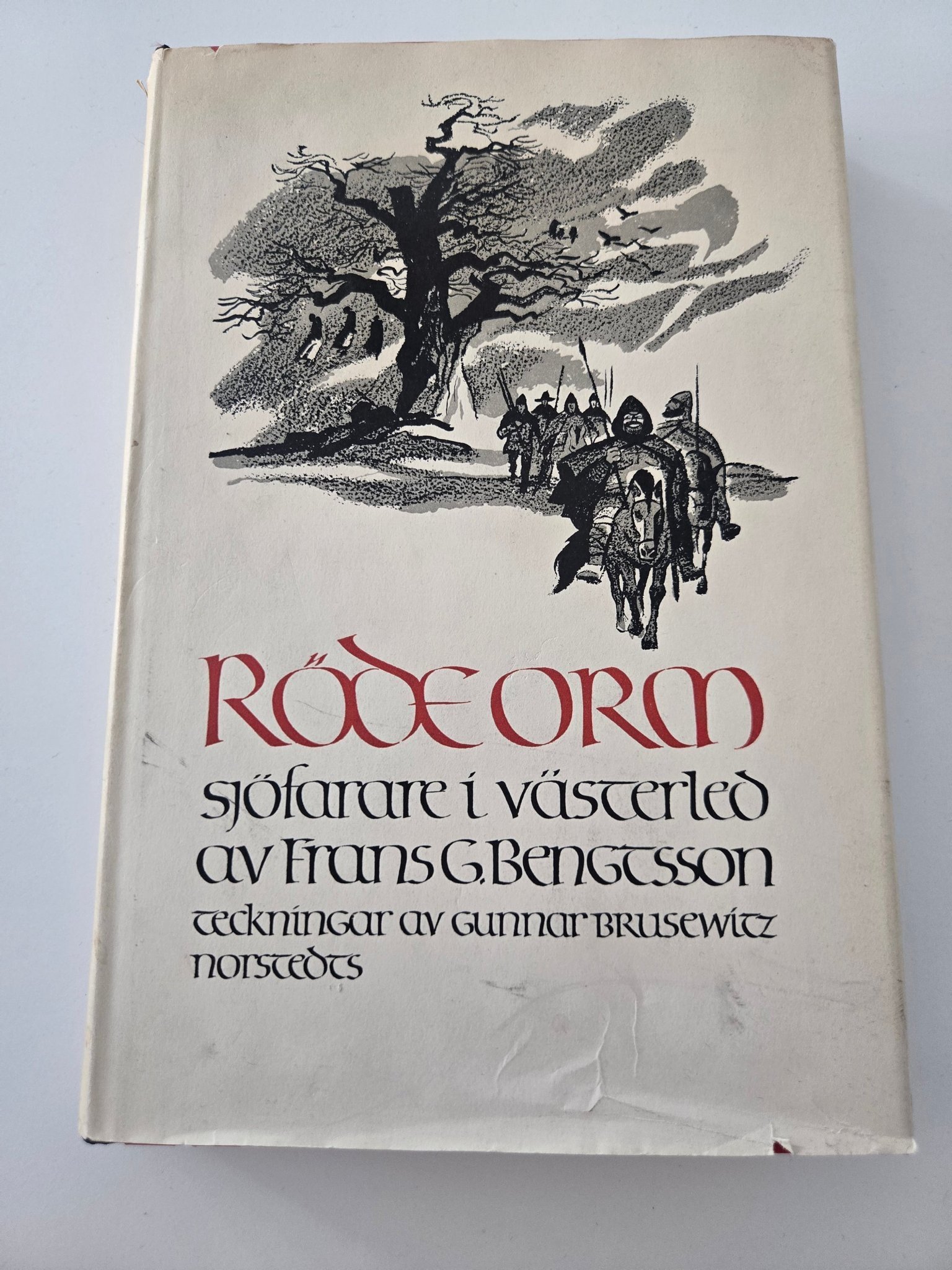
[0] https://www.amazon.com/Long-Ships-Review-Books-Classics/dp/1...
It's a great book, I highly recommend it.
Why do you think so?
https://norse-mythology.org/the-vikings-conversion-to-christ...
> Surely some cases involved genuine religious convictions; it would be superficial and reductionistic to assume otherwise.[18] However, it seems that the majority of conversions occurred largely, and perhaps entirely, for the sake of the tangible, practical advantages that the new religion brought with it.
> [...] the Norse seem to have become convinced of the might of the Christian god largely through more down-to-earth political and economic means.[21] Viking rulers – who, as we’ve noted, were generally the first to formally convert to Christianity – wanted to forge alliances with the powerful Christian kingdoms to the south so as to consolidate their own power. The kings of those southerly kingdoms, in turn, were happy to oblige, as this enabled them to turn former enemies into pacified friends.[22] Viking kings also found that “the document-based church administration was unsurpassed and utterly useful to rule and administer a kingdom.”[23]
Well, I am not a historian, but was there any war against pagans, that was stopped by the church or individual priests?
(talking about medieval times, modern christianity is a bit different, but the old tradition seems to get a revival in certain circles)
The most I know of, is individual priests who for example criticize the acts of the conquistadores. But crusades to "spread" christianity were rather pushed as a sure way to get into heaven as far as I know.
"The crusades were not financially remunerative - the crusaders mostly lost money."
That is probably why they stopped doing it. Before christianity they had all the coasts of europe to blunder. After their kings turned christians who made treaties with the mainland christian empires - that was not possible anymore and raiding, even under the disguise of crusade, much harder and therefore less attractive (apart from that I did not claim that my explanation is the explanation, just a contributing factor)
I recall reading a priest or monk influenced Charlemagne to stop/moderate his persecution of pagans. I very much doubt this was the only example, just one I have read about.
> But crusades to "spread" christianity were rather pushed as a sure way to get into heaven as far as I know.
In very specific cases, most notably the liberation of Jerusalem, not in general.
> That is probably why they stopped doing it.
Crusades went on for about 400 years if you count things such as the Reconquista
I also find it hard to believe they could not find profitable wars. It was not difficult to find an excuse for war. Being Christians did not prevent either Harald Haraddra or William the Conqueror from invading England.
> The most I know of, is individual priests who for example criticize the acts of the conquistadores
It was more than just scattered individuals voicing criticism. It was a movement that lead to action and legislation: https://en.wikipedia.org/wiki/Protector_of_the_Indians
I also find it hard to believe they could not find profitable wars."
Well, sailing from norway to england, do some raiding then come back before the winter sounds way easier, than sailing from norway to the middle east and back. So it has been done, but apparently was not so worth it.
https://en.wikipedia.org/wiki/Protector_of_the_Indians
And here thanks for the link, I know little of that time, but I am not so sure if it counts as protecting pagans, or protecting baptized pagans who are christians.
Norse mythology is, like Greek mythology, extremely fatalistic. But there's also this idea that basically all power is stolen, and that fate will give the thieves their come-uppance. The first king got his power by murdering or dominating his brothers. The world as we know it was arguably created by a betrayal, if not a patricide - made from the body of the first giant - and his children are forever seeking revenge. The worm of spite gnaws at the tree of life, and is fated to eventually kill it. The closest thing to hope you have, is that old one eye might share some of his secret fate-postponing magic tricks with you.
So the natural conclusion when you hear of immensely powerful kings who seemingly get away with it, is that those guys must know some powerful secrets about reality.
That's more rooted in Hollywood than reality.
And like the other commenter pointed out, civilization is ill defined. I was mainly using it here from the christian point of view, where pagans are not civilized by definition. Not that the norse had not a complex society themself.
> ascribing sone (sic) kind of higher ethics to christianity is also quite a stretch.
This is subjective. Even if you disagree with Christian ethics, and even if they were frequently violated, becoming Christian still could have reduced Viking violence against their neighbors. Shared culture would improve trust and encourage alliances and trade.
If you are interested in the conquistadores the Rest is History podcast series on the conquest of the Aztec and Inca empires is excellent, especially the latter.
But then again, there is the new beginning. Ragnarok is not the end of the world in a christian sense, but it goes in circles.