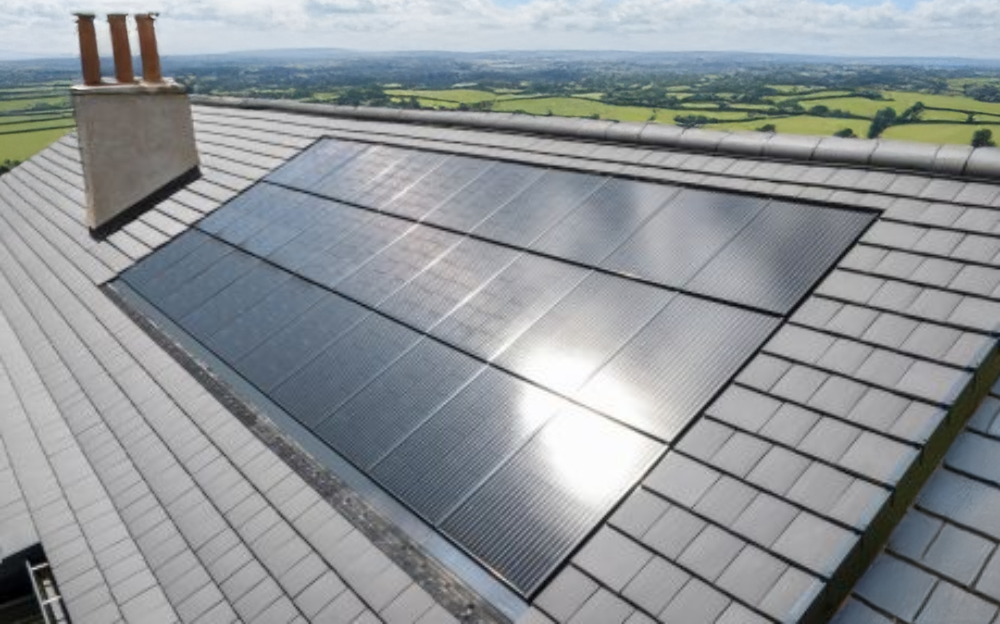
Hmm actual solar panels are so cheap now could you use them as large shingles on a new build?
They actually had to develop it (with Tesla shareholders' money) after buying out the failing SolarCity.
[1] https://www.theguardian.com/us-news/2026/feb/10/jeffrey-epst...
[2] https://fortune.com/2026/02/13/kimbal-musk-jeffrey-epstein-h...
[3] https://www.denverpost.com/2026/02/13/kimbal-musk-epstein-fi...
I’m open to understand why I might be wrong though.
I think marketwatch or financial times from the title…
Elon Musk is like that developer you hired which always promises "this feature will be ready tommorow" and it end's up in the backlog for 6 years. The richest person in the world who understood that the world is not built on trust anymore and all you need is hype.
> Tesla acquired SolarCity for $2.6 billion partly on the strength of this vision [of producing thousands
Ouch. The whole point was that it was supposed to be cheaper.
I recently had 9.2kw of solar panels installed in the SE of England, the actual cost of the panels themselves was ~£1k. I’ve seen new installs going up with standard cheap panels nicely inset, flush into the roof itself. The roofers themselves have told me they are cheaper than a traditional roof due to the decreasing price of panels and ever increasing price of tile. Got a listed property with a slate roof? Solar could save you potentially £10k+ according to one roofer I spoke to.
Panels were and always were going to be dumb commodity items. There’s literal fields literally filled with the things everywhere. Compare to say something like the PowerWall which they still sell bucket loads of and I have one myself, Elon be damned…
However, the PowerWall still suffers from that worst of all tech bro sins of trying to limit YOUR access to YOUR data. I wanted to add an ESP CYD to display all my Home Assistant data when we had solar installed to help us as a family see what was happening in realtime. It’s incredibly useful - In typical HN fashion I rolled my own and avoided ESPHome, making it just how I wanted and I love it! 3d printed case and all! Boots in 2 seconds and just works!
I had obviously and wrongly assumed the PW3 would be easy as pie. Getting realtime data out of the PW3 is a freaking Kafka-esque nightmare… the only workable solution to which was setting up another dedicated ESP32 to connect directly to the PW own perm on wifi and weird custom API and shunt the data over BT. Tesla could break it all at a moments notice with an update and i’ll be out of hours trying to fix it. The whole thing is cat&mouse hoop jumping, the likes of which I haven’t seen since the earlier console hacking days. Tesla will display the realtime data through their servers, through their app, but if you want that…
Anyway, please everybody who’s all gung ho on the Anthropic and OpenAI hype trains remember - every single big tech company has had the exact same disregard for you, your family, your home and your planet since the start. It’s probably more consistent than Moore’s law at this point. Nothing is going to be different this time around.
I on the other hand, Maximus Virtus, am a net gain to humanity when I hack into tech products for visualizing my home’s data.
It doesn't need to compete with normal panels on only one metric. People will accept longer payoff times for aesthetics or durability if the ratio is right. Also, who really cares about Tesla at this point? Other companies are now producing these panels.
Like everything Musk, it died because of his poor business practices and his politics. The only thing he seems to excel at these days is extracting government money.
Solarcity was clearly a great example of Elon's ,,no investor left behind'' philosophy: if he promotes a company and gets investors to invest in it, he is doing whatever he can to make sure that they at least don't lose their money (by merging it to a bigger company he controls), even if it wouldn't be the best financial decision.
So far this strategy has been working quite well for both him and the investors.
Frank being against Elon speaks less about Frank and more about Elon in my eyes.
"FSD disengages just before the collision." The other video angle shows that the driver presses the brake, which disengages FSD. "Tesla consistently hides information from the court." There are two different cases separated by years. The police got all the information they needed in the first case. "FSD is 10x worse than the average driver." The uncertainty of the number due to insufficient statistics makes the comparison moot.
He might not specifically lie, but puts such a negative spin on anything Elon-related that the overall result is essentially a lie.
The article seemed fine to me.
It’s hard to trust “reporting” when it’s historically operated more like a tabloid.
Which source would you prefer? Frankly, really only Tesla-obsessive websites are going to be talking about this at all; for any normal business news outlet, something which has sold 3,000 units in ten years isn't worth thinking about at all.
But sometimes it's not. I'll do my own fact checking (because I don't trust them) - and find out that maybe there is something to the story. Not only that - none of the sources that I typically read are reporting on the issue. And then I'm forced to admit that I actually learned something from the NY Post. And usually I've learned something about my own biases and bias in my regular information sources, too.
My point is this: if you can't get past the source of an article and actually engage with the content - then that says more about your own bias and trustworthiness as a source of information than it does about Electrek.
To be fair that's not a contradiction. If FSD is designed such that a user braking because FSD was about to plow into something, sure the user started driving at the last second, but that is Tesla making a design choice to artificially blame users for FSD being fundamentally unsafe.
All-in-all, the trick that can't fool anyone and that doesn't make any sense. If this claim was true, the only explanation would be that Tesla is evil for the sake of evil and to the detriment to itself. Evil and dumb.
On the other hand, pressing the brake is a common way of disengaging ADAS. Tesla is no better and no worse in this regard than other ADAS manufacturers.
https://www.thedrive.com/news/24025/electreks-editor-in-chie...
Cheaper installations generally win, especially when the homeowner receives a credit on the install for its projected or actual power generation (only federal credits tended to scale proportionally to the install cost.) This cost pressure has been hard for premium flat panel installers, which are in turn cheaper than Tesla was.
As acceptance of rooftop solar has grown, comfort with its aesthetics has also increased, reducing the need for solar that hides its nature.
Railways, highways, wind turbines- they become part of the landscape.
They are struggling in China which is pretty insane considering their head start in that country.
Clearly the solar roof idea could have been iterated on and made to make more financial sense. I think they could have built it into a panel solution that integrates a standard steel roof.
But again, what it looks like to me is that Tesla hasn’t actually been able to put real money and effort into any products at all. I think all their best people quit, and their leadership is distracted and ineffective.
For small (i.e. residential) installation these parties taking their pounds of flesh represents a double digit percentage of system cost.
Larger installations, of course, will never work that way, simply because they generate too much current for your standard wall plug to handle.
From a disaster situation/civil defense perspective, it provides offgrid durability to communities, and it could be life or death in cold waves or heat waves.
For all the utility companies complaining about EV and alt energy infrastructure adaptation... well, fine, then let consumer PV do a large part of the work. Oh wait, did someone say consumer choice? The utility companies shut up real fast.
So it also counterbalances the political power of utility companies, who are no longer a monopoly, and provides economic competition so utilities can't jack rates if corporate/industrial/(ahem, AI) starts increasing demand and prices.
This needs a small asterisk that many systems are deliberately not "islanding" capable. Mine isn't, but in the ten years I've had my panels I've only ever had a couple of power cuts, one of which was at night.
For roofs, hail is another consideration, hail damage causes complication. Age of roof is another consideration, you don't want to do solar anytime, the right time is when the roof needs to be replaced, which is usually ~25 years.
That might just be another way of saying "niche."
Americans come up will all kinds of ridiculous reasons for not using clean energy.
1) Nuclear is dangerous, even though it has the safest profile of all energy: https://ourworldindata.org/grapher/death-rates-from-energy-p...
2) Also, we are now bird lovers! Wind turbines killed 2 dozen birds (but cats kill billions of birds). Wind is also an eyesore. Ruins the views from $_.
3) Solar is an eyesore.
4) Electric cars don't work in the cold. (lets ignore Norway, a tropical island)
5) Range anxiety, because I might drive from Florida to Wyoming.
I tend to think garages are an eyesore, and yet, basically everyone (including me) wants one included with their home.
Next best thing aesthetically are full-roof racks, where one face of the roof is 100% covered in panels. Nowadays you just have to select the right panel and you can make it tile the plane perfectly.
On the average suburban tract home in my corner of the USA, panels are no more ugly than the shingled roofs they sit atop.
Yikes that’s a lot of money. For most people buying solar, I think payback period is probably the biggest consideration.
Solar shingles (Tesla roof, GAF) seem like a smart idea -- why do 2 layers of install, shingles and solar panels, instead save on both material and labor by using solar shingles.
It didn't work because the shingles are small, massively increasing the number of parts, connectors, and wiring -- and all the intensive skilled labor that it needs. Labor needs to be skilled as well as increases the number of hours. It also increases failure rates (at install time?) as well as lifecycle maintenance costs from repairs. Standard shingled roof (not the solar) is just an illegal immigrant working for $2/hour with a nail gun, unskilled labor, finishes things super super quick.
The above is a manual summary from this insightful thread: https://news.ycombinator.com/item?id=48166226
Could it work in future? We don't know. I think the fundamental constraint is people's existing belief system on what a roof is supposed to look like and unwillingness to consider that all roofs don't have to look the same. Perhaps its possible to let go of existing shingle design, build massive panels and make it a structural roof along with metal, but it may not have any buyers. And most definitely will not be accepted by any HOA. Most of the US in in a HOA regime. Any tiniest variation from the rigid HOA rules and regulations (slightly different shade) will require an entire roof rebuild. The constraint is not technological, but human beliefs (about what a roof should look like) and existing rigid structures on how we organized our society.
Sure, it was more expensive than a shingled roof, but less expensive than a shingled roof with solar on top. Add to that, it looks better.
People generally limit the number of roofs to one, as they are expensive and important for keeping the outside out and the inside in.
Residential roofs are more or less the worst place possible to put solar panels.
What does this mean?
And why is it the worst place to put solar panels? Is this and America only phenomenon, cause in India people are installing them like hot cakes on the roof. What’s different about roofs here?
These things carry a lot of current though, so I would certainly not trust anyone without proper tools and training to put them on a roof.
The main issue was that normal large panels got a lot cheaper way faster than expected and custom sized ones like that end up costing too much by comparison.
In Australia where North is “optimal”, even South facing panels produce only 20-30% less and East/West about 15%. It does vary a bit by latitude but it’s not at all pointless to install them in other orientations in many places. I have not done the math to see how much of the world this extends to, but it applies to a fairly large chunk of Australia. Source: https://www.solarquotes.com.au/panels/direction/
Tesla’s system also had non solar tiles so you could just skip the panels in whichever parts you wanted.
Roof construction is quite different here to the US though. We never have the plywood layer, it’s either ceramic tile or Colorbond steel directly onto usually wooden sometimes steel beams.
This seems to be overblown. I've seen plenty of string inverters around without issues, I'm not sure why this being used against Tesla in particular.
But yeah, not really their unique problem. Just cheaper solution that is out there.
I do think it's an interesting idea to use panels everywhere, but it can't be a complicated and expensive solution. You could maybe use them as a facade or lately people have used them for fences.
Their cars have build quality issues, self driving continues to be "just around the corner", their service centers are cheap, the solar roof is it's own nightmare, the pivot to robots is laughable, the robot taxis are a PR stunt that are amusing but in a cringey way...
And the promises over the years of automatic chargers, replaceable batteries, sensors, etc.
The company had a great idea early, had tons of goodwill, a growing manufacturing capacity, and squandered it chasing whatever Elon dreamt up.
I forget who but it reminds me of electric cars with speakers to restore the engine noise. There is nothing beautiful about noise.
https://arstechnica.com/cars/2024/08/heres-what-the-electric...
The Australian market is largely adding trad PV panels to existing housing, but there are signs of greater uptake of integrated PV + weather proof + thermal insulation roofing panels by architects and hopefully will be seen more on new mass produced housing plans.
~ https://arena.gov.au/projects/integrated-pv-solar-roofing/
Everyone gets caught up in the thermal management stuff and the power density stuff and whatever but to me that's a red herring.
The real issue is that Tesla has never known the ability to produce solar panels at scale and Musk said in that recent interview with Dwarkesh that he intends to do all the solar production in house.
So where's he getting the sand from? How are they going to purify it at scale? How are they going to turn it into ingots and then wafers and then cells and panels when they haven't even been able to produce a slim fraction of panels without all those extra steps over the past decade for their roofs?
And if the goal is to have the industrial capacity to do all this in a few years and produce solar panels on the scale that he's talking about -- why doesn't he just lay those bad boys down en masse on Earth and solve the impending climate crisis and our current energy shortages?
It just doesn't make sense.
I'm split on the datacenter-in-space stuff. I don't know whether I should disbelieve it because there is, obviously, no good way to evacuate heat in space, or because Musk talked about it, and he has an uncanny track record of not upholding his promises.
No they don't, they procure them from Taiwan Solar Energy Corp. They do not produce or manufacture their own cells, they're using off the shelf components.
At one point after signing the contract, Tesla mailed him and notified that his previous signed contract was void and they sent him a new contract where the price had doubled to over $100k. They told he he had to sign the new contract in order for it to go forward.
This is classic Elon Musk tactic, which is to do whatever the fuck you want, laws be damned, and then try to bully your way through it. My friend didn't budge. They would call him or email him and kept harrassing him to sign the new contract and he said no. I don't remember there being a lot of news about this but I couldn't believe they had the gall to try this, although as I said, this is classic Elon Musk tactics.
Eventually I think other solar roof customers started to band together, and eventually Tesla caved and honored the original contract, as if they were doing him a favor. I'm not surprised that this technology is going to fail because it's too expensive and Musk's promise of dropping prices, surprise surprise!, never manifested.
https://pitchroofing.com/roofing/the-best-time-to-get-a-roof...
They end up installed at commercial locations ideal for solar: often on covered parking, in fields, or on industrial roofs. Easier to repair, they can do larger panels, no issues with your roof line or roof condition.
10/10 would recommend.
And a member of a wind farm project (Ripple Energy) which went bankrupt. So like all small investment schemes, I guess you need to keep a close eye on their financials.
If you just care about the overall transition to solar (which you should!) then you can pay for green tariffs and invest in existing solar energy companies or ETFs.
Not saying it is a huge factor but it is there.
The simplest explanation is that they did all that and the market didn't want it. The economics of traditional panels outweighed the aesthetic advantages of tiles and they're pivoting. No conspiracy or fraud need be invoked.
Financially it was part of SolarCity bailout (Musk's cousin). It heavily heavily penalized Tesla shareholders and smelled of a family bailout. Solar Roof was announced so hastily in October 2016 justify the merger and stave off massive shareholder lawsuits. There was little effort in the roof development after bailout was a success, minus the bait-and-switch lawsuits.
There was genuine concept level development at some point, but it was developed into product after they knew it did not work to keep lawyers happy.
From this to self-driving cars in 2 years to tunnels that will change public transport… maybe Musk should prototype and see what’s actually possible before telling the market. I mean come on - it’s borderline fraud in order to pump stocks - there’s got to be stockholders that are forming class actions as we speak
That's the problem though. Thinking your product will get by on looks when it's clearly outcompeted on performance, price, availability and longevity. That's not just optimism, it's delusion.
https://news.ycombinator.com/reply?id=48166411&goto=item%3Fi...
[1] https://mansionengineer.com/2018/08/10/elon-musk-tesla-and-t...
> There’s a reason that they announced the idea on a fake block in a fake neighborhood with fake houses!
Interesting read.
It also doesn't help that they seemingly had issues scaling up - and even people who were willing to spend $100K on a Solar Roof faced long delays if they were available at all in their market. Tesla's image has also shifted in the last decade, and having a Tesla parked in your driveway with a powerwall and solar roof doesn't carry quite the same image that it once did - which is important when you are relying on emotions to drive sales.
If they can work out the economics to the point that it's more viable than something like treasuries then I don't see the issue? Of course there's some potential market and other variability, but if this business model is sound then Lloyd's is there to insure it?
But it’s usually a bad deal for the homeowner compared to a more conventional lease or purchase with a fixed rate. The incentives don’t match up, there is also the issue of the lease buyout if the home is sold.
> "requires on-site renewable electricity generation for new homes in England — solar PV covering around 40% of ground floor area where feasible"
As well as an end to new gas boilers, replaced with a heat pump mandate.
> The estimated build cost increase is around £4,350 per dwelling. FHS-compliant homes are projected to save homeowners around £830 per year on energy bills compared to a typical EPC C home
That .. looks rather different to a $100k gold plated roof.
With that said, Tesla's Solar Roof is definitely the gold plated unreasonably out of touch option.
What's the capacity though. Either way this seems extremely high unless we are talking in terms of like 100kw or something. For reference, I recently installed hybrid/net-metered system set up at my home in India; 7kw solar with a 20kWh battery for around $10K. The biggest cost is for the batteries though. The panels themselves have become extremely low price and the prices continue to fall.
It's interesting to see Tesla's solar business getting disrupted by Chinese manufacturers after EV.
* Diversification. These days stocks, bonds, real estate, crypto, and even precious metals are increasingly correlated [1]. Solar panels offer pretty consistent returns regardless of what is happening in the stock market.
* Backup power. I live in an area that is prone to natural disasters. Having a backup power source gives me a bit of peace of mind.
* Hedge against increasing energy prices. My solar panels have actually performed better than I expected due to electricity prices increasing faster than I expected.
* Clean energy. When I turn on my A/C in the summer I take some enjoyment from the fact that it's powered by the panels on my roof and not burning fossil fuels.
* Entertainment. I enjoy nerding out and learning about the tech, monitoring output, etc. A lot of people think solar panels are ugly but I actually like the way they look.
Yes the S&P 500 would have returned signficantly more than my solar panels. But I already have a lot invested in the S&P 500, solar panels were fairly inexpensive and don't make up a significant portion of my overall investments, and the psychological benefits outweigh whatever opportunity cost I have incurred.
There is also the option to finance them. You need to be careful with financing, as I think there are a lot of predatory offers out there. But if you are buying or building a house, for example, and can roll the cost of the panels into your mortgage, then that's going to reduce the up front cost and hence the opportunity cost.
But yeah when you get into the $100K range for a Tesla solar roof, then I think that starts to be a pretty substantial amount for most people that can be better spent elsewhere. Not to mention the delays, customer service issues, etc that people have experienced with Tesla - which can easily offset any peace of mind benefits.
[1] https://www.economist.com/finance-and-economics/2026/04/14/h...
Edit: installed for me by trades in that price.
It doesn't blend with the surrounding slates (asphalt shingles are rare in the UK, use of asphalt is more for flat roofs and sheds), but .. how much does that really matter? It sounds like US HOAs have replicated the worst aspects of UK "conservation areas", preventing building variation, while not actually preserving anything other than a McMansion style of no historical or aesthetic importance?
Apparently integrated panels can be a little less efficient in hot weather as they don't get cooled by airflow under the panels and are less efficient when hotter. But it's a pretty minor effect, maybe a few percent of output. Seems like the best option on a new-build or if you're re-roofing anyway.
- Magnitude higher number of interconnections which impacts reliability and efficiency
- Uniform roof tile style
- Requires entire roof rebuild which is always more expensive than retrofit of panels on top
- Complex installation resulting in less installers available overall for the market
- Crossing of trades between roofing & electrical
A slightly better solution would have been to make the big traditional solar panels your actual roof panels but really retrofitting them on top of panels solves most of those issues above.
The market pitch is different tho, they are aimed at providing less effective solar for places where you have a hard need to keep the old look, old churches, monumental buildings and such.
The market shrank because standard panels and their mounting techniques got more aesthetically pleasing and cheaper.
Multiple tiles also need to be connected in series to get reasonable efficiency, so you get plenty of failure points where one bad connection can cause a significant part of your solar roof to become useless. And you won't be able to easily fix it.
You can obviously fix all these issues, but it makes tiles too expensive.
Essentially, you are adding another zero to the cost to have hidden solar. A 20k solar install becomes a 200k+ solar roof install.
Even if the final result is great, the economics shrink the possible customer base. Basic solar has gotten so cheap that people aren't worrying if the investment increases the value of the house itself. But very few people are willing to pay 10x for a thing that will never pay itself back in energy or home value. It's like putting a pool in your house - a few buyers will want it, but a lot will run from it because they don't know what to do with it.
So as a result, the target market ends up being super rich dudes in gated communities - the same kind of people buying custom 100k hifi systems and home cinema rooms. It becomes an upsell for people with unlimited budgets.
It's just not a mass market product when the competition is 10x cheaper and dropping daily.
On the other hand, Tesla's solar shingles are tiny compared to panels, more in the shape of actual shingle strips, means tons of connectors, wiring losses, dangerous shorts (these things carry 10s of amps) etc. and probably a nightmare to troubleshoot.
I would not get these for any reason other than aesthetics.
IMHO a pergola or carport is going to be better. You lose solar efficiency but gain the benefit of something that provides shade. Especially as solar panels have become an economical roofing option if you don't care about perfect waterproofing.
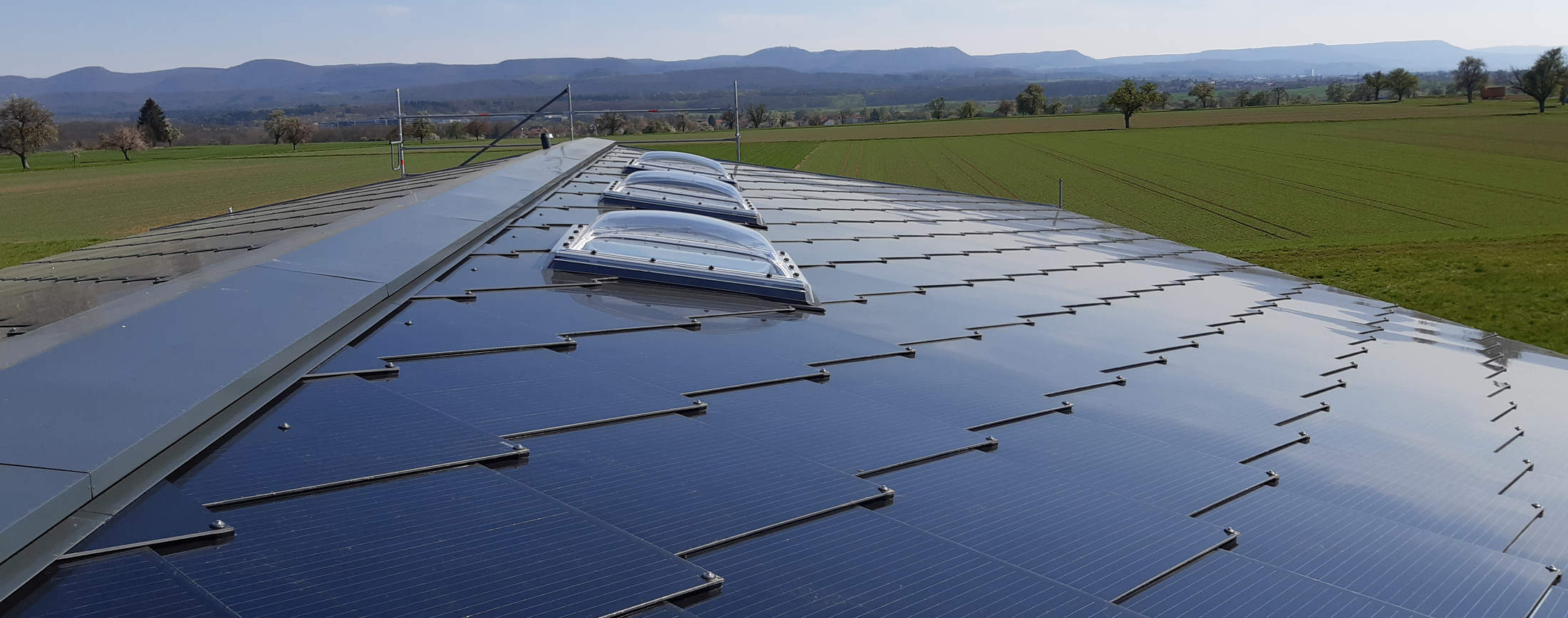
https://nabendynamo.de/wp-content/uploads/2021/06/20210426_1...
While not quite panel-sized, it's much larger tiles and there's not another roof underneath. Probably makes most sense with a new roof, though. The problem is that when a roof lasts 50--80 years, that's not a very big market just for new roofs.
Thanks for sharing.
Apologies, my google-fu is weak; I couldn't find more details. It's SON's building? I couldn't find that roof top at that address (using Google Maps).
Here's as far as I got: https://gemini.google.com/share/bef19f2b145c
Flush with the rest of the roof seems like a mistake. What if you need/want to replace them with a different sized panel?
The big problem is that because there is no real ventilation, the panels get hotter and don't produce as much power.
What you put under them also has an effect on how waterproof your roof is long term, plus when you need to replace them finding ones that are the right size are also a pain.
Also see https://roofit.solar/ used in a few houses… mainly self build a or architect designed
If you experience any failure, like a falling tree limb, you're now _required_ to replace panels to restore the integrity of your home.
It's far simpler to be able to just restore a roof, which any builder can do, and then come back and restore the panel layer again later.
I have a system this size and it's fairly rare for me to make less over the day than I use (we have pretty sunny winters where I live and at -27 degrees latitude am not super far from the equator). In summer I tend to produce at least twice as much energy than the house draws.
The economics have skewed a bit as export tariffs have dropped (due to there being so much solar) but batteries have become so cheap and are now subsidised quite a bit too that most people aren't getting just solar systems anymore but now are doing solar+battery.
It would probably technically be a bit more efficient to do larger neighbourhood arrays and batteries, but if they're cheap enough it works fine to do individual homes.
The electricy is consumed in the houses and not on the empty land.
Parking lots become a win-win with electric cars. They also keep the cars cleen and sun protected.
Plus, most solar installs are grid connected so a significant portion of the electricity tends not to be consumed where it is produced. It’s not as if installing solar is an alternative to grid connections for most practical reasons.
We'll see. But I have an outbuilding with a large two plane roof and the south facing plane has no penetrations and is pretty much unshaded. Our utility rates have pretty much doubled over the last three years, and there's another ~30% increase scheduled over the next three years. Said roof is coming up on the end of its expected life, so it may be a good time to put on a new roof and put on solar at the same time.
Could someone get better ROI doing a larger solar project somewhere else? Probably. But if it maths for me, I'm going to do the project on my roof, because I don't have anywhere else to do it (well I could do a ground install, but I'd lose aesthetically)
E.g. Disconnecting your energy supplier or a power outage will still result in no power usage, despite solar panels generating power.
More expensive inverters and battery systems allow this, although this is far from the norm.
On the other hand it can make sense based on arbitrage. In a lot of markets the cost of the system is unfairly subsidized. People on the losing side of that can lower their costs with roof top solar.
I'm aware of the arguments about how it can be that much cheaper when deployed at mass centralized scale rather than decentralized across a bunch of rooftops, however the way the electric markets are prices is based primarily on the cost to produce the marginal supply, which is usually gas.
So while the power company might flood a bunch of solar panels trying to capture the profit between cost to generate solar vs. cost to generate using gas, those profits haven't been lowering electric costs at residential rates. If anything those costs are still climbing.
It's actually not hard to get rooftop solar to pencil out in that situation, especially if you assume even moderate growth in future electricity rates or inflation. In my own tracker it would even be superior to paying down additional principle on my home mortgage!
Admittedly it would be less of a slam dunk if the net metering was less generous around here as you'd basically be required to add battery to the mix if you weren't already. But even that just prolongs the time to payoff, it still ends up having good ROI economically speaking.
Electricity generation in the event of a power outage was another consideration for me.
But yeah as a techy I also just enjoy having them.
Tesla has no 3-row SUV/family vehicle, no subcompact SUV (Kia EV3), no city subcompact car (Renault 5), and no commercial vehicles.
Speaking of which, solar roofs for parking lots always seemed like a thing we should be doing everywhere. I'm sure it's not cheap to build the structure but it has the added benefit of protecting cars.
All for it but not for simgle family home market.
My benchmark there is a ventilated attic with insulation between attic and house, using traditional glass roof structure filled with frameless glass-glass panels instead of human-below rated laminated safety glass.
Like, it can't be that hard to do better when you're not trying to be substantially fancier than a classic gable roof, it's just that the panels need to not be shear-loaded much, and the structure doesn't have to be so pretty from underneath as traditional glass roofs.
The American roofs mentioned are typically significantly inclined, made of a less rigid material (wood, asphalt shingles), and not built to the expectations of supporting as much.
When OP says 'the worst place' they mean it is not a structural place, it is hard to access, and it serves an important function that is best not to mess with.
Note, I do not fully agree with OP but I get the points made.
I've long thought of them as a visible signifier of prosperity and cluefulness, but since they've become standard on new build they just fade into the background.
I've not seen solar-over-thatch yet. I wonder if that exists in the Highlands somewhere.
But it's more than that with residential solar: at least in places where with a heavy oversupply in real estate, "massive capital investment" is hardly a matching term. More like a drop in the ocean, given the amount of capital bound in the whole package.
The article from which I've linked the image is here (in German, though): https://nabendynamo.de/unser-neues-produktionsgebaeude-steht...
The roof is from Sunstyle, as detailed in the article: https://www.sunstyle.com/
Gemini seems to have read that article, taken a few details, embellished a few more, and not answered your question.
40% of Australian households have rooftop solar. You get used to the look very quickly, and well-installed ones look perfectly fine.
I know they are on every second house, but gun to my head I could not tell you how many have it on my street.
Quote from the article:
In Sydney, south-facing panels typically produce around 30% less energy than north-facing ones. The steeper the roof, the less they’ll produce. They’ll also produce much more energy in summer than winter.
In the far north, the difference isn’t as great and in Townsville south-facing solar panels will only produce around 15% less energy overall than north-facing ones. Because Queenslanders generally use more electricity in summer than winter due to air conditioner demand, the fact that south-facing panels have considerably higher output in summer can improve self-consumption.
In Darwin, south-facing panels produce about 17% less electricity overall than north-facing ones, and, like in Townsville, they have considerably higher output in summer than winter.
This is mostly only cost-effective for remote properties where power cuts are common, but it works.
The Model 3 is not one of the top 5 selling EVs in Europe. Everything in the top 3 has a hatch. Sedans are more popular in the American market but they’re also a dying segment compared to SUVs, while Europe always preferred vehicles with hatchbacks for space efficiency and practicality.
Volkswagen Group EVs outsell Tesla in Europe. The Skoda Elroq and VW ID.4 together (same platform) outsell the Model Y.
My next prediction is that the Rivian R2 steals about 30% of Model Y sales in the US. It’s priced similarly and it’s a way better vehicle according to early reviews and impressions, and it fits the boxy American SUV off-road aesthetic far better.
https://www.reddit.com/r/electriccars/comments/1t4slmi/best_...
UK now has a significant Chinese presence: Omoda, Jaecoo (Chery), and especially BYD.
No tiny city car hatchback for volume in Europe, no three row SUV for American families, no commercial delivery vehicles (the ideal EV use case), no subcompact SUV, and their pickup truck is way more of a failure than it should have been.
The Cybertruck should have just been called tho Model T, be made to look normal/big manly grill like a Silverado, and have ads for it plastered all over NFL games. Tesla should have easily been able to sell 100,000 units per year in North America but they designed the thing without considering demographic research at all. (Example: many families use the 6 seat configuration of the F-150 to fit the whole family in in lieu of a minivan).
Mind you, that's with having AC, electric laundry dryer, a private well pump, septic heater and all sorts of other energy hogs trotting about the place throughout the year. I'm not exactly living an ascetic lifestyle myself.
Maybe if I paid the UK's electricity rates it'd be different though.
>It also doesn't help that they seemingly had issues scaling up
I think these two things were highly related. Same with the cost. They couldn’t figure out how to scale up, which kept prices high and volume low. Because of this, it really was a bespoke business. And while, it looks nice, that type of margin just is not going to provide the returns they promised investors.
Thanks for sharing
If it maths with that, great. If not, but it's close, we'll look again when we need to do the roof. Utility prices are rising, panel prices are dropping, it'll probably make sense eventually... Installer costs are going up too though.
> Customer service complaints are pervasive and consistent. Tesla Energy has a 2.6 out of 5 rating on SolarReviews
I'm also not sure if its actually worse on longevity.
I'm sure the steel shingle will last a fair time but if the PV elements need replacing four times a century, that's not a non-trivial cost.
When my PV panels die, it's just £400 a panel, four hex bolts and some quick connectors to replace it. It's no contest.
May I present to you the Apple corporation, at least until recently.
That's about 90 m². Here in Germany [1], if it's just replacing tiles, you're looking at 10k, add 20k for adding heat insulation - and you can get 15-20% back with government assistance from that sum. The only way you reach 50k in costs here is if you have to fix structural issues (e.g. rotting wood due to water ingress, but if you take proper care of your roof you won't need to do that - expected life time for roofs is about 80 years for the tiles and much more to the tune of centuries for the wood framing.
[1] https://www.obi.de/magazin/energiesparen/daemmung/dachdaemmu...
A bundle of shingles is $50, 3 bundles to cover 100 sq ft is $1.50 sq ft in materials. Figure $1.50/sq ft to demo and dispose of the old roof shingles.
Materials and demo comes out to $3,000, figure $500 for tools and nails, mark it up to $4,500-5,000
Probably (4) people can knock out a 1000sq ft roof in an 8 hour day, call it 40 hours of labor for demo and install.
Surely the labor cost and markup is not $1,000 an hour, that’s what it would have to be for a 1000 sq ft roof to cost $50-60k. $125/hr for 40 hours is $5,000.00
Once you’re achieving 30-50% annual returns over 20-30 year horizons (PE, HFT, invite-only HF) , you stop caring about cost of capital for anything less than US$1 million.
But 10% VTI / VOO, sure, factor that 10% into your excel.
1. I support nuclear, really stupid not to use anything else. Blame politicians and the hippies.
2. Yeah wind imo is useless, and it's more than 2 dozen. Quite high, I don't think comparing kills to the top predator is a win. Also windmills are in raptor's paths, generally cats don't eat raptors. Noisy and ugly too.
3. Solar is nice, will use it as aux, but panels and batteries don't come close to a propane generator. Different use-cases.
4. I own a cybertruck and a trailboss, but it's Texas, can't really speak to cold weather ev experiences.
5. Owning an EV I know how they work, anxiety no issue, just hop free SCs and enjoy the ride.
Bonus: Garage doors can look stupid if it's the entire front of the house, like those mcmansions, but can be subtle with a long ranch house for example.
Solar panels always look awful on a roof.
It's the equivalent of 100 radio towers crowding the area. Kind of takes you out of nature.
And I don't have a CT because it's pretty. I have it because it's functional and so fucking cool.
> 4. I own a cybertruck
Mind if I ask why?
Feels like a space ship and I love it more than my ICE truck.
And yeah, realized that would be downvoted. Fun to break the bubble here with other opinions though.
People love to show off houses. Kitchens, bathrooms, etc. And spending £10k on a bathroom doesn't even generate electricity!
I have also become an unironic supporter of virtue signalling, provided it's backed up by actually doing the thing yourself. Because otherwise the alternative is "vice signalling", like "rolling coal", which is much, much worse.
Honestly, I don't agree with you though. Yes, there are ways for folk to signal virtue, and that happens, but I don't think solar power is one of those. Frankly the utility, and financial, returns are just too high.
Obviously ymmv with regard to returns, but I'm getting 16% on capital invested (a number that keeps climbing as electricity costs rise.) That's decent enough that virtue-signalling becomes a meaningless goal. I guess folk might _like_ that they're not burning fossils to get electricity (I do) but the financials dwarf that.
There are definitely a few people who want to show off their bling/goodies, but all 326 of them already bought cybertrucks to show off. Solar panels are not something to show off and brag about, its not macho. It would be looked at as feminine technology. If its not making a loud noise, looks big and inspiring (pick up truck), billeting smoke, it has no macho power to show off.
So, yes, I could probably get a higher return if I invested that capital elsewhere, but, apart from the diversification, I get benefits beyond the raw financial return.
Firstly, earlier this year, we had a cable coming into the house fail. By the time the electrician and city had done all they needed to do to sort it out, almost 4 days had passed. We would have been without power for that time. As it happens we ran completely on solar for that period - freezers stayed frozen, could run the laundry, etc. Some stuff was limited (no oven, no hot water) but the impact was minimal compared to what it might have been.
Secondly, during the day at least, I'm not really fussed about electricity usage. If lights are on, or AC is on or whatever. So there's less "hey, that light is costing money" etc. So we end up using more electricity, but the marginal cost (during the day) is 0. My next car is electric (already on order) and that can charge at home as well (during the day, I work from home) and so that just increases the return (utilization of available power goes up.)
From a financial point of view, for me, it's a no-brainer. Obviously ymmv - everyone's numbers are different. For me the payback is in the 5-6 year range (probably under 5 once the car comes online.)
> my panels are returning 16% on capital spent
Electricity here in Germany is expensive at an average 30 ct/kWh, so the panels save 324€ worth of electricity - an ROI of > 50%. Choose some better quality for the inverter and battery and you'll still be north of 30% ROI.
The key thing making this high ROI possible is that it's small. Counterintuitive, yes - but explained by the fact that for larger installations than that, setup costs go up: you need to install the panels on your roof instead of hanging them off your balcony which can be thousands of € in labor, you need to run new power wires...
[1] https://www.idealo.de/preisvergleich/OffersOfProduct/2092828...
[2] https://www.swm.de/unternehmen/magazin/energie/pv-ertrag-im-...
I put that in a spreadsheet which calculates money saved. (Which is reasonably complex because of pricing tiers although fortunately I don't have to deal with daily pricing changes.)
Then some math returns the return on investment per month and per year.
Tiles on my house are at least 150yrs old
About three weeks because I didn't do it all at once, an 11/12 pitch is tiring to work on. One week per side of stripping/waterproofing, then a couple weekends of shingling.
Edit: the stripping took a week from having two layers of shingles, first layer was cedar than asphalt.
Took a day to take all the tiles off the front, add insulation, membrane and batten it. Then another half day or so to put the original tiles back on
Back took slightly longer because we had some alterations done but it was just over a week in total effort
Also even if you personally don't live that long, it does affect the value. For example a 99 year lease on a property is considerably less valuable than a 999 year lease, even though very few people live more than 99 years.
Given shingles last between 20-30 years someone's got to pay the cost of re-roofing on a regular basis throughout the house's lifetime
Then you've got the added maintenance, flammability and other downsides of a shingle roof to take into account too
On top of that there’s an inverter, and if you can’t use all the power immediately you’d need a battery too, which tends to increase the cost.
The biggest cost though is installation.
I have a Tesla solar roof. I bought it knowing there were cheaper options for equivalent solar power because I liked the aesthetics.
What drove you to get solar panels ultimately and why did you go Tesla? Genuinely curious. I have a feeling you’ll say something i hadn’t considered.
1. I wanted solar & batteries as a buffer for grid outages
2. I wanted to be able to offset some of my energy usage with solar
3. I wanted my roof to look nice, and personally I think solar panels strapped onto a roof don't look very appealing.
4. At the time, Tesla was one of the few names in town for an integrated solar roof.
Saving money wasn't really part of the calculus, which worked out because as the article and parallel comments note, getting a Tesla solar roof is a pretty bad decision if one of your primary factors is cost or saving money on your electric bill.
If you think about money as a tool to maximize your "joy", then whether the Solar Roof is worth it completely depends on your preferences and your financial situation. Most people are fine with black panels; but if you have the money and like the look of the tiles, why not?
Where I stay solar is really common (probably > 1 in 10 has it.) Plus the Financials make it easy (if you have the roof and capital.) And here no-one really cares if you're green or not.
The fact that it is green is a bonus. (Which i think most people don't care about.)
I guess you can read virtue-signalling into anything you like, especially if it matters to you personally. I just don't think it comes into play here.
You can't just blindly say "PVs save you money". It matters very much how much sunlight you get, the orientation of your roof, how much electricity costs, how much labor and installation costs, etc.
My location is far from ideal for solar. But with incentives - which are funded in my country via a per-kWh surcharge on everyone's electricity bills - it just barely makes financial sense to have solar panels on my roof.
In very sunny places with expensive grid power a battery is sensible, but again politics often favours flat rate tariffs that discount peak power, which again favours grid incumbents.
So it might not be economic for your region but that is entirely due to regional politics, a default choice to make PV power expensive.
https://www.citizensinformation.ie/en/housing/housing-grants...
You do make a good point about VAT on electricity bills also being a factor in the break even calculation. In Ireland it's 9% and that's a temporary cost of living measure and will revert to 13.5% in 2030.
Musk just takes car centric society pipe dreams and sell it back to them.
Like OMG you transiting to work and can safely stay in your phone 99% of time. In other countries this called train or a bus. Solved in London with 1863 tech.
Also most people live plenty urban to make public transit perfectly viable.
Self driving cars means even more cars on the road, and reduce the avg occupation even more. Even in a same rural environment this isn't great. And in an urban environment is insanely fucking stupid.
On the other hand, the suburbs don't have much that is even comparable to city taxis in price or availability today, so maybe if it existed that price point would indeed do just as well away from cities too.
No matter how much car infrastructure you build and self driving will only make it worse because it will incentify car use.
Most US cities aren't dense at all. A lot of them were built with transportation in mind. London and European cities in general are so much older that their city centers have no real way to accommodate that.
So what do you do? You provide non car options. Technically they exist in US cities too, but especially on the west coast they're just not a viable alternative. Nobody who can choose will take a 2 hour public transit trip over a 20 minute drive. Heck, in a lot of cases biking might be faster than your transit option, albeit riskier
It obviously take decades not years, but again Tesla full self driving was promissed back in 2016 and something tells me it would be a big success if it will be deployed on scale in 2036.
> A lot of them were built with transportation in mind.
Complete nonsense, the Post-1945 push for suberbia had nothing to with 'transportation in mind', the reason they wanted it was totally different.
The reality is more that they pushed suberiba and only then realized the transportation problem it caused, and then they reacted with every increasing highway and stroad building.
> Technically they exist in US cities too, but especially on the west coast they're just not a viable alternative.
Its not an alternative because its either not funded or badly organized.
Its bad because the government doesn't care that its bad, its not actually a fundamental problem.
It is really condescending to dismiss their choice as motivated by vanity rather than assuming that other people might have done their homework and made a rational decision. It might very well be that you have done your own homework and it doesn't make sense for your situation, but other people face different tradeoffs which make it worthwhile.
I own an electric car (albeit not an SUV) that cost nearly that much and I can tell you that I didn't give a crap about status, and while the green part was a nice aspect, the main thing is just that I like the car a lot.
When people accuse others of buying something just because it's "green" it's usually actually a case where the thing is just actually good in some way, and the buyer likes it, but the accuser can't accept this. I lost a friend over this when I bought a Prius. It's a genuinely good car that was cheap to drive, but he could not get over his idea that I was a smug "green" asshole merely for owning one and liking the fuel efficiency.
Off the top of my head the only thing that's really doable without replacing a depreciating asset are certain kinds of insulation upgrades. (And I guess potentially ceiling fan installs.)
In some areas when big enough hail or storms goes through a town 1 or 2 crews will jump on the insurance payouts and take the low bid if they can do them all at once. And within a week or two at worst the entire neighborhood or small town is reshingled.
That and saving $20 000 or so in labour. I was quoted $8000 just to remove cedar shingles not asphalt as well (off-hand by a buddy). This is in $CAD.
As well as doing a better job than most of the roofs I've redone, whole lotta hack jobs on roofs since you'll never see the problem or deal with it till the contractor is long gone.
The reality is not that simple. PVs are definitely the cheapest source of energy in a lot of places, which is why it is the fastest growing energy source in the world. But "cheapest in a lot of places" is not the same thing as "universally a winner in every scenario". Politics can be a complicating factor, but in other cases the math just doesn't work out due to plain old physics and economics.
I'm extremely optimistic about the future of solar. But I don't think it helps the argument to pretend that it's already a guaranteed win everywhere if not for foolish politicians. That's just swapping one oversimplification for another.
But a small system is still going to bring a return and is cheap to install. And it'll give you a real way to understand the concept and to experiment.
I started with a 660w small system, and it gave me lots of insight for planning my current system.
Great that you like your car, windmills and solar panels are also functional and fucking cool, so I don't know why you've bought up them being ugly. You're happy to drive an ugly car, but draw the line at looking at ugly roofs?
A few select spots for nuclear would be ideal ofc.
No I don't buy things based on whether they are "ugly" or not.
Solar panels don't make any financial sense in my scenario, would take half of their lifespan to break even on the energy savings.
But yeah tastes are different. Personally I find the CT to be a cool look overall, albeit different, so I get why you are so fixated on them.
I'm not fixated on the cybertruck, you bought it up unprompted. Though I do find it uglier than most cars, I think all of those enormous American "trucks" are an eyesore, and I hope to never see one in person.
Couldn't be more different in the big European cities, using a car there is (made) cumbersome.
> Just to tell my friends how I'm saving the planet?
This is a really uncharitable framing that I often see repeated that wealthy people are only motivated by how other people perceive them. And sure, that probably plays a part for some people. But maybe they just feel good about saving on their electricity bill in the long term and reducing their carbon foot print - even if it's not the most economical or environmentally friendly option available?
In my case, it's been a while since I crunched the numbers but the pay back period is effectively infinite, assuming that had I not bought the roof I'd invested the money instead. This is especially true as temperatures continue to swing more and more widely (winters that push below the efficient window for my heat pumps are murderous on my banked solar energy) and more states and electric companies switch from net metering to newer rate plans.
I was considering joining a Crossfit gym but that seemed really strenuous so the next best thing was sending a truckload of money to Tesla.
I live in Portland. Traffic is often quite slow. And even then it is much faster than public transit unless your destination is just a few miles away and on the same line.
I said I use solar, just think the panels are ugly on a roof. That's subjective also, it's not the reason I don't have them, cost is.
Windmills are useless because of the amount of maintenance, the resources/carbon used to make them, lack of recyclability (huge blade graveyards), and most importantly, it's not a base load. Them being ugly is just the cherry on top. They are useless when you could just use nuclear.
Yeah you keep wanting to bring it back up though, it wasn't unprompted, the GP mentioned EV and range. I was giving a duality example of owning both vehicle types. You focused on the CT for some odd reason. As did another person.