Chuwi Minibook X(tylercipriani.com) |
Chuwi Minibook X(tylercipriani.com) |
I ended up buying the macbook neo and frankly i think i made the right choice.
of course the macbook does not run gnu/linux (for better or for worse).
I wish laptop manufacturers would pay more attention to this. I'm stuck using older laptops because modern laptops can't reliably pick up keystrokes.
Have had a couple of Chuwi devices in the past, they're always a painful mix of really impressive with baffling cost cutting measures so I'm a bit wary of spending more than £50 on one.
while the weight and dimensions may not be quite as attractive, there is a lot going for the rest. or just go for an old m series macbook air at this rate. you only miss out on upgradable storage and a kneecapped linux experience
So, unusable for blind typing.
920g for a 10" is also crazy much. LG make 14" laptops under a kg.
I want something like the Sony Z4 tablet. About 600g with keyboard dock. Thin, waterproof (not the keyboard), days of standby, 4G supported, the keyboard was excellent.
If it would be possible to run a current version of Android on it, it would be perfect.
i also removed windows and installed omarchy and one of the speakers does not work. :( and no its not a skill issue. tried every solution and nothing works. check reddit for the user reviews on literally every product from this brand. you'll understand my frustration.
The appeal isn't necessarily the end result. It's the process of tinkering, learning, and gradually making the tool your own.
Every time I try to search, it's either unavailable or 100s€$ over the original price?
Not if you buy an eeepc off ebay and put a light linux on it, then they're as good as always. Love me a good netbook
I do have my ASUS EEEPC 701 4G Surf still working. I think it is 18 years old at this point? It is rocking Antix, in its 3.6 GB hard drive. It broke the S key in the keyboard last night and I ordered a replacement.
I use it as writer deck and to ssh to my server and raspberry pi from the sofa.
It is built in a very resistant way? Survived my kid so far.
They're Android tablets with non-removable keyboards.
The idea of a netbook was very small, cheap, portable, full-featured computer that you could use like a normal computer.
All the ports, your desktop OS, and so on.
Chromebooks ain't it, even if they compete in the market segment that made netbooks a success.
I've done that with mine. Worked great, and now I get around 30 hours of battery life with a lean linux distro, as long as I'm only like reading websites or writing on it.
As a data point: I'm 100% converted personally. A Chromebook is what goes into my backpack and the device I use for all my general day-to-day UI clickery, and it's a better fit for my needs than Windows (not nearly as bad as it used to be but still sort of a PITA to make work as a Linux-focused dev environment) or Linux (not nearly as much of a PITA for a connected consumer network device but still has the occasional wart trying to get something weird to run).
Generally x86_64 is more commonly used
Battery life is crap, on the new one the webcams aren't supported by linux because they aren't v4l.
With plasma-mobile there is no need to mess with configuration about the orientation since it just flips the screen the way I'm holding it.
I contributed a couple of patches to KDE to improve the experience on touch devices but overall there is lots of applications that already work fine on a touchscreen. Alligator, kasts, a few kdegames, angelfish.
Client side (device) sets the current draw. Weird take to not use the supplied psu.
Basically, if you're lucky, you can find Chromebook-class PCs with less restrictions. Admittedly I'm in a lucky locale for such things, but the one in question i bought from a normal retailer
How's the Windows support with this flow?
For a list of devices: https://docs.chrultrabook.com/docs/devices.html
All of them, specifically.
I don't want to think about which windows program can or can't run with Wine.
This includes:
* Microsoft software, from MSTeams to Windows itself
* Audio production software (DAWs and VST plug-ins)
* Games
* Device-specific software (like drivers/software for portable thermal printers)
* CAD (nTop, only supports Windows, for example, and don't tell me I don't need it; same for many Autodesk products. NX and Rhino don't have Linux support)
The last one is the most fun, as I'm a CAD developer who worked on nTop in particular.
The hardware feels great to hold (though the touchpad is still meh). I covered the Google logos with a glossy black vinyl Obsidian sticker.
Run Windows and Windows programs that I use.
> it's a better fit for my needs than Windows
Happy for you. The key here is your needs.
Well... yeah. Likewise your post is clearly about your needs, which are different. But that's not what you said, you said it "wasn't a computer" and you couldn't use it "like a normal computer". Which is obviously wrong. But I guess "normal computer" means "windows" to you, which (especially given the forum you posted on!) is a little surprising.
So what you wrote (but apparently not meant) seemed mistaken to me, thus the correction. But if you want windows then just buy windows. Your market is well served.
Normal computer means a choice of OS to run on it without having to hack it to do that job.
Chromebooks aren't sold as general-purpose computing devices. They aren't "normal computers" in the same sense that cell phones aren't.
>which (especially given the forum you posted on!) is a little surprising.
I'm a CAD developer and user. I need Windows for my work.
I would hope that this forum includes people who are in touch with the real world.
Psh, Fuck that. Install actual Linux on it (I have Debian on mine) and don't deal with ChromeOS (if you don't want to).
A Chromebook is a first class consumer device backed by a Big Threatening Tech Giant that works on all sites everywhere because no one wants to piss off Google. And it's still Linux and runs great. I'll take it.
I was too, and then AI came out, and now Codex just makes my Linux work how I want it, no needing to fiddle with .config/gconf whatever crap. I just tell it to fix my two finger scrolling on my trackpad, and it does it.
If you must use windows, then you must use windows and you don't have a choice. None of that has anything to do with the nonsense about Chromebooks not being "real computers" or whatever, that's just the rationalization you've decided on. Obviously they are real computers.
That's too high a standard. When we consider MacOS along with Windows and Linux, there are basically no computers that let you freely choose between all three without hacks.
And even just considering Windows and Linux, a big chunk of the laptop market only supports Windows properly.
A laptop that runs any normal desktop OS is a normal computer.
How's nTop Linux support coming along?
Also drivers are often better on Linux.
CAD has been around since before IBM PC came out. It's not necessarily a demanding piece of software.
Still, scratch CAD. My favorite VST synths are Windows-based.
And I don't want to lug around extra kilograms just to make some noise.
hard to say without actually trying it tho. and depends on the device, of course - mine was like $250 when new, it's a very different beast than a $1,000+ chromebook. the higher-end ones are much closer to normal laptops.
Aside from Microsoft Office, the rest is workstation stuff, and Microsoft Office is pushing "web first" (at least if their pricing is to be believed, the lowest O365 subscriptions do not offer access to the native apps).
I think you missed the point of the question.
> the rest is workstation stuff
Yes, I want to be able to run workstation stuff on the small computer I carry everywhere, so that I don't have to carry my workstation everywhere.
I feel like I’m taking crazy pills.
Your e-bike can’t tow a carriage either, that’s not strange.
I mean, sure, I can torrent a copy or whatever. But there's a point at which you just don't want to deal with that nonsense. ChromeOS is Linux, in all the ways I care to measure. But it codes as "not Linux" to all the corporate overlords afraid of the nerds and hippies, and that has value too.
> ChromeOS is Linux, in all the ways I care to measure.
It's Linux the same way Android is technically Linux. You get this little box called Linux, and /proc isn't actually the "real" /proc because it's inside a VM. To each their own, but it's not (GNU) Linux enough for me.
I'm OK with having computational limitations that musicmakers had in 2000s. Heck, some of my favorite softsynths are from that time (Superwave P8, 4Front and other romplers, Dexed, etc).
The weak CPUs today handle them without a problem.
Hell, I've produced plenty of music on Intel Atom-powered Asus Eee1000 netbook back in what was it, 2008-2010, and I'm still using the very same software.
>low-channel sound cards
What do you even mean by this?
In any case, a USB audio adapter that solves all the audio issues costs $20 these days.
The netbook is a small and inexpensive machine that has enough specs to do the job.
And most computers today are beefed up enough to do the jobs I need them to do when I leave the house/office, even the cheapest ones.
Given the ability to run the software I use, my concerns are form factor, price, size, weight, ports, and battery life — in that order.
This little machine ticks all these boxes; very few others do.
Call it a "workstation laptop", and find me one in 10-11 inch size (with a screen that doesn't have 1 inch margins), has an amount of RAM that would be adequate 10 years ago (i.e. more than 4GB), has all the ports, and doesn't cost over $500 (so I won't have to care much when it invariably gets lost, stolen, dropped, etc).
You’re asking for more than that based on the passage of time, but software got heavier faster than hardware kept up.
I think my desire for this kind of product is something lighter, but this set of notes on the Chuwi feels like the compromises GPD gives you but with less power.
I had no idea other vendors like Chuwi were providing netbook like devices. I will be doing more research tonight. Great post by OP!
I can get a used MacBook Air M1 for £250 which beats the Minibook in every regard and it can run Linux.
I have a 14" MBP M4 lying around unused, but yesterday picked it up to have my daughter watch her evening cartoons and at 1.6kg it struck me how light it was. The Zephyrus G14 that's also collecting dust and weights essentially the same also felt handy (just can't ever start from 0% battery powered via PD).
Neither fits in the palm of one's hand, but how often is that a problem really?
Lots of 15.6" Windows laptops come with 1080p screen which is painful to look at.
Nowadays it’s probably a performance / battery saving “feature” attempt.
https://shkspr.mobi/blog/2026/05/gadget-review-chuwi-miniboo...
All have this "not enough" vibe to me. They are cute, but have no performance and no purpose my iPhone can't fullfil. Maybe because i never work on documents, sheets or listings while i'm commuting or traveling. I do work on those when at work or at home, on a ProBook. But never while on the road or something. I do refurbish old HP ProBooks whenever i can get my hands on them (or Dell, Lenovo equivalent) by putting in more ram and more capacity nvme. Sometimes even upgrading the wifi board. This works for me. ProBooks are nice. Not that heavy, pretty upgradable (except CPU/GPU) and full size keyboards. It's amazing what people sometimes throw away.
I had to close everything on the OS just to watch a youtube video at <720p without stuttering. I ended up putting Debian on it which lead to me learning Linux and Ruby on Rails, and booting the dev server (rails server) would take minutes on a hello world.
When I got my first job out of uni, they gave me a Macbook Air, and it was so fast that I felt bad thinking about how much time I wasted waiting for things to happen on that netbook.
17 years later, in my late 30s, I don't think I could go back to such a small screen. But it was cool doing real work on something so small.
As others have noted the company has done some pretty shady things with some of their other products, and I would not really expect a warranty, so this isn't really a recommendation. But my personal experience after ~six months of use has been good.
There's room for great lower end hardware, but I'm not sure if it'll be any good running Windows.
https://github.com/petitstrawberry/minibook-support
Awesome speaker improvements too:
https://forum.chuwi.com/t/minibook-x-improve-speakers-on-lin... https://codeberg.org/diamondburned/minibook-impulse
It is good as Macbook Air just cheap, but it isn't nearly as portable as something Minibook X should represent. Old Apple 12" plastic one if you remember would be more perfect for such use case if it would be recreated.
Does the Chuwi Minibook X have sensors that minimize this 'bug'? I've been looking for a way to disable the keys on tablet mode, but can't really seem to get it right (Ubuntu Studio) ..
It was Japanese, naturally.
At linux.conf.au 2007 we chose a smaller conference bag, designed to carry your electrical accessories and nick-knacks... it turned out to be the perfect size for the new EeePC (and later the MacBook Air 11").
A few things contributed to its demise: less industry money sloshing around for travel and sponsorships, a growing sense that "Linux" didn't represent the entire community, and a pandemic.
Which left "Everything Open" launching weaker in every sense.
But I don't think Linux or Open Source feel sufficiently radical or inspiring to sustain that kind of community-building (local or global) these days... maybe a "Fuck AI" tech conference. :-D
I'm a big believer in cheap, small, low-power laptops. For simple tasks, you don't need that much compute.†
But you can't skimp on the keyboard! Especially because, one of the big advantages of a low-power laptop should be for writing!
------
† Okay, Electron exists... you shouldn't need all that compute.
Stock Ubuntu runs just fine since about 24.04 or 23.10 (do not remember). Keyboard is fine. Trackpoint instead of a cheap trackpad which is great. Touch screen.
And incredibly mind-bogglingly slow eMMC storage. Like, makes it impossible to use.
So as cute as it is, I haven't found any use for it for the last ~10 years that I own it. Maybe I have used it for emergency ssh from the mountain hike once or twice.
Also some support from distribution is needed, because the screen is rotated as well, fan needs software support, etc
I used to play with omarchy. It is good enough for a lot of use cases. For powerful work I just connect to remote session.
Perfect for planes in economy
You (we) are old :)
Can I ask why you want 2-in-1? I've personally never found the convert-to-tablet useful, and I have to imagine only visual artists might. I bought a nice case with a keyboard for my iPad Mini thinking I'd use it as a tiny laptop on the go, but in all honesty, I forgot the keyboard existed until I started typing this.
Not knocking your needs, just curious what kind of user those are for since I am obviously not the market
I wouldn't even care much about the touchscreen otherwise, although it's a nice way to read articles on a train.
I got myself a 150$ N150 chromebook, yoinked a Linux on it and using that, despite the terrible screen and build quality, but at least it is disposable.
This is definitely not the case with my 1.23kg Macbook Air.
If you're on a long journey, it's even more of an issue.
8gb is plenty. i've ran tinycore on machines with 512MB or less
When film is converted to 50 Hz TV, the film is sped up 24->25 fps and every frame shown twice. When converted to 60 Hz TV, there is "2:3 pulldown": every even frame is shown twice, every odd thrice. (Actually, both PAL and NTSC have interlaced video modes, with only every other line updated each frame, so as to conserve bandwidth.)
BTW, when 60 Hz computer monitors were introduced in Europe and used in office spaces with fluorescent lights with passive ballasts that flickered at 50 Hz, some sensitive users suffered headaches from using the computer screen for too long. These days, both fluorescent lights and LCD backlights tend to flicker at much higher frequencies that it isn't much of a problem.
[1] generally 24fps because that is culturally what film looks like and people get very weird whenever anyone tries to fuck with it
But actually interlaced content exists too. Each field is independent, there's no frames to speak of.
Early video game systems based on NTSC/PAL ran at 60 fps or 50 fps, but ran off-spec signals to always hit the same half of the display lines (odd or even). 4th gen systems (genesis/mega drive and snes/sfc) had a few games that used interlaced output; later systems had many, running PAL@60Hz became a common option too.
I bought it because I was going on holiday and didn't want to take a real laptop both in case it got stolen and to dissuade me from using it. I ended up using it more than I would have a normal laptop because it's so small and easily carried.
My current use case is for my commute into the office, it easily fits on the microscopic train tables and doesn't add much weight to my bag. Highly recommended.
I think, realistically, the issues the author describes - particularly with the keyboard and trackpad - would drive me up the wall for any kind of serious use.
But then, if you're travelling on holiday, do you really want serious use? I like your rationale of taking something that's bad enough that you won't want to use it but you have something if you really need it even if it didn't quite work out that way for you.
And, apart from theft, and depending on where I'm travelling, maybe a cheap device that I don't mind the authorities rifling through the storage of wouldn't be such a bad thing. Like I don't necessarily want $RANDOM_CUSTOMS_PERSON_IN_SOME_COUNTRY to have access to my bank statements, account details, or to get into my social media accounts, or whatever.
And it would be nice not to have to worry about any of that stuff if the machine did get stolen (sure, the drive on my main laptop is encrypted, but physical access is always a massive force multiplier when trying to gain access to a system or its contents).
I don't have the same problems with my model, possibly theirs is bad. I don't like that the keyboard is teeny and in the ANSI layout but I got used to it.
The trackpad isn't great but that's just yet another reason to avoid using the mouse and do everything with the keyboard.
That being said, I would never use it for fulltime use. I'm not even using it to type this message even though it's right next to me. I use it while travelling and it remains off at all other times.
Me too. But the tray table compatibility resonates. I had hoped someone would build a modern netbook as a detachable focused on productivity and light gaming (say, Steamdeck class), maintainability and (modular) expandability; a modern road warrior that's also a nice hobbyist machine that stands some abuse. Framework was/is positioned to put something out, but they decided to release the F-12 instead.
I read this review with mounting excitement until I got to the part about the things he doesn't like. And yeah, those things would drive me up the wall too.
Although it might be fine if that touchy keyboard works well for touch typists. For me, that's everything.
This looks cool but I care a lot more for even 100 bucks than 10 :P
Or really buy any laptop rated highly by Dave2D or other reviewers that's 4 to 5 years old.
Different category to a 15” 2kg cheap 5 year old dell.
The screen isn't terrible. Frequency can be easily overclocked from 50 to 80Hz, making the manufacturer's decision quite odd. Good brightness, and after calibration, the colors are even somewhat normal.
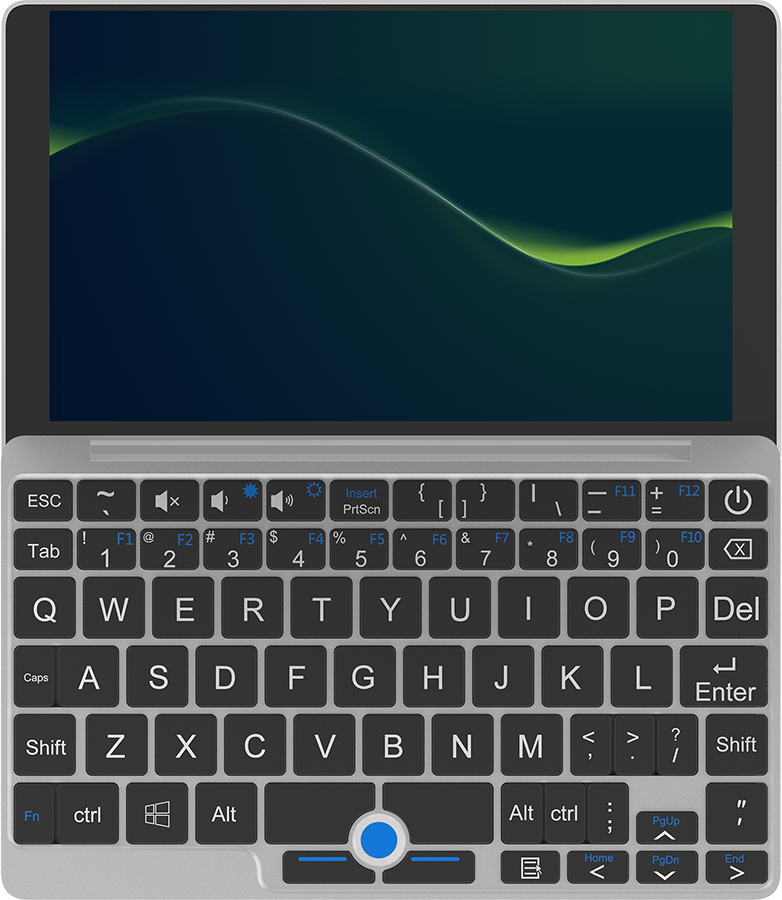
In my case, the keyboard works reliably and isn't annoying, although it does take a little getting used to due to the smaller key size.
Only one thing that frustrates me - they cost-cutted on the battery controller. The OS only receives information about the battery voltage, without details on consumption/cycles/Ah. The consumption is hard-coded, which means the battery life estimate is never nearly accurate.
And yeah, terible touchpad but it's not that bad when you have touchscreen.
99% it was done to extend battery life. It's probably in the order of 5%, but most likely not the only such decision.
https://www.zdnet.com/a/img/2014/10/03/9f923860-4b47-11e4-b6...
I don't share the complaints of the OP about the keyboard or the screen, though. The keyboard is fine, I can hit about 110WPM on it, slower than my regular pace, but enough that there's no dramas. The layout is great: Occasionally there's keys that are too small (looking at you, apostrophe) but everything is at least in the right spot, which is way more important.
The 2K display at 10" is high enough DPI that everything is totally crisp, and you can unlock ~95Hz (bad for video, good for everything else) with a bit of a tweak. You can also smash a byte into the EC at the correct offset and access the full unrestricted BIOS -- mostly to crank the RAM up to 4800MT/s.
I'm running vanilla Arch with Niri and Noctalia, and it's a dream. It's my primary dev machine, used in combination with a remote server with a tonne more grunt. If it broke tomorrow, I'd buy another - and I wouldn't do that with my macbook.
To the OP:
* Accelerometer support, EC-byte-bashing to get BIOS unlock: https://github.com/greymouser/minibook-x-tools
* 95Hz EDID fix: https://github.com/sonnyp/linux-minibook-x/issues/7#issuecom...
Getting from zero to a fully working OS was a mild journey, but I'd do it again.
I will note that I also had the screen rotation issue described in the post, but it was easy to solve at the desktop environment level in COSMIC. I didn’t bother dealing with it elsewhere because I honestly don’t mind if the grub menu is sideways.
I agree with the complaint about the trackpad, but the keyboard has been just fine for me. Just a bit small, of course. I also find the screen perfectly acceptable for what I use this thing for: youtube, taking notes, writing emails, small bouts of coding and ssh'ing into servers.
My main complaint is related to battery management. May be it's becaused I'm used to Macbooks, but it drives me nuts to go pick the Minibook up and find that it has no power, because I haven't used it in a couple of days and I put it to sleep. I haven't measured, but the power use on sleep is noticeable, and I suspect the leakage while hibernating might be significant too.
I don't really like the laptop form factor. Laptops are the perfect solution for only one use case: using them on your lap. On a table, I'd rather have the computer be just a tablet, to add a bluetooth keyboard and mouse. At my desk, with bigger screens, I'd like the computer to disappear into a small puck or box, like a Mac Mini. With the Minibook, being so small, the form factor makes sense again. It's so portable, so easy to take with me to a coffee shop or on a trip, it's worth it.
A tablet with a keyboard might be a more practical solution, although generally more expensive, but I appreciate that my Minibook runs Linux so well, so I don't have to even think about Apple or Google telling me how to use my computer.
I'd rather not have to underclock the RAM and be careful in which order I plug my USB hubs in order for the system to be stable even if I still end up with great performance.
I can't say I agree with the author's assessment of the keyboard in this submission. I find it more pleasant to use than the other laptops I have access to.
At least it can charge off a powerbank, but that's pretty standard now.
No need to cry:
1. Per ark[1], "Max Memory Size (dependent on memory type) 16 GB" - you wouldn't be doing much with modular RAM, anyway
2. Swapping BGA package RAM actually isn't THAT hard. If you invest a few hundred monetary units now in a hot air station, some flux, a few relevant stencils, some solder paste and/or appropriately sized balls, fine tweezers, and (for extra credit) a €£$60 AliExpress LCD microscope, you never have to cry again when the laptop you prefer has soldered RAM, a soldered M.2 1216 SMT Wi-Fi module, a flaky USB-C charge port (ThinkPad plague), etc. Guess how many Raspberries Pi 4 I've upgraded to 8GB RAM!
[1] https://www.intel.com/content/www/us/en/products/sku/241636/...
I'll stick with my 13" MBP going forward. Netbooks served a purpose but I'm not sure they make much sense anymore
Not sure what you're doing, but Win7 itself uses 1 GB of RAM or less. Even just 2 GB of total system RAM was enough for basic usage, like document editing and single-tab web browsing.
iPad? OK, if you don't want a laptop and can live with it. Android tablets? worse.
11" - 13" can already be too large, maybe not for you.
Chromebooks - would be the 1:1 replacement if they weren't usually 12" or more
The price. Sure, inflation and all but I paid 300 for my eeePC, new.
My main pain point is RAM (even with zram), but considering the MacBook Neo was just launched with the same amount I don't think I'll need to stop using it unless it finally decides to kick the bucket. A lot of laptops like the Minibook are better on paper but the build quality isn't there.
As for size and dimensions, the difference is under 200 grams, with the MBA being smaller than the 2009-ish era netbooks the blog post compares the Minibook to. Everything is a matter of trade offs.
It has the aluminium body, it is ridiculously thin (3,5mm thinnest point, 13mm thickest point, feet included), it weighs just 920 gram. It charges via USB-C. It has a very good 2304 × 1440 (16∶10) IPS "retina" screen.
I run mine with MacOS/Linux dual boot, I charge it using my phone charger. It keep it in my go-bag at all times. I never have to worry being without it.
What to love:
- Super small, yet very sturdy.
- Can be found for relatively cheap (I paid €300 for mine 2 years ago)
- Really nice screen.
- Keyboard size is really good, though travel is obviously minimal with such a thin laptop.
- Plenty of battery life (and new batteries still available at Mac store last time I asked)
- upgraded model has 1.4Ghz dual core i5, 16GB RAM and 512GB SSD, which is still more than enough for on-the-go use.
What not to love:
- Has only 1 I/O port (USB-C), which is also used for charging.
- No longer receives MacOS updates, if you find a 2017 production model you get updates up to MacOS 13.
- Linux support is not great. The WiFi/Bluetooth chip (BCM15700A2) is not fully supported in Linux, WiFi works but Bluetooth doesn't. Audio via headphone jack works, but speakers don't. There are some experimental patches to get BT and speakers somewhat working, but it's not great.
If you can find it, get a late production model (2017) with the 1.4Ghz CPU upgrade, it will have 16gb RAM instead of 8gb (earlier models) and receive MacOS updates up to MacOS 13.
I really wish they brought back this format with the modern M processors. On the other hand, my M2 Macbook Air is around 300 grams heavier, but I don't need to carry a power adapter most of the time, and the device is much better in every conceivable way.
https://photos.tylercipriani.com/2026-05-31_chuwi-boot-smol....
It's actually the keyboard that surprises me the most: I think it's really good (and I consider myself a bit of a keyboard snob). I've never had any issue like the author describes, of having to strike keys just-so.
Also me: just a month ago I bought a Bluetooth keyboard and mouse for my phone because they are completely sufficient for the work emergency use case along with the termux app
16GB ram is cool though.
PostmarketOS has a small handful of Snapdragon 870, 865 tablets (~5 year old, Cortex-A77). But it feels like it's by hook & by crook. Meanwhile it feels like bootloaders are just getting more and more locked down, making it less interesting whether mainline Linux support developers or not.
15", sure, that's a bit big, but smaller models are available.
I bought a tablet from this brand few years back. Screen edges were non responsive to touch within months.
the brand is trash.
It is being thrown away in the first place for a reason.
13th Gen Intel, 14” screen, 16GB/512GB at about $350.
Lenovo and Dell both make similar business laptop models at around the same age and price point.
Businesses sell off perfectly functional laptops in bulk because they are on regular refresh cycles for employees, not because there’s anything wrong with them.
On the Mac side, MacBook Air M1.
I think it was a year or two latter I got a Chuwi Lapbook 12.3, which was a great machine. Lovely 3:2 screen off the Surface Pro, again a pretty good Intel small-core set-up, decent ram, ok SSD, all so cheap. Great metal case. Lovely machine, at such a great price. https://www.notebookcheck.net/Chuwi-LapBook-12-3-Celeron-2K-...
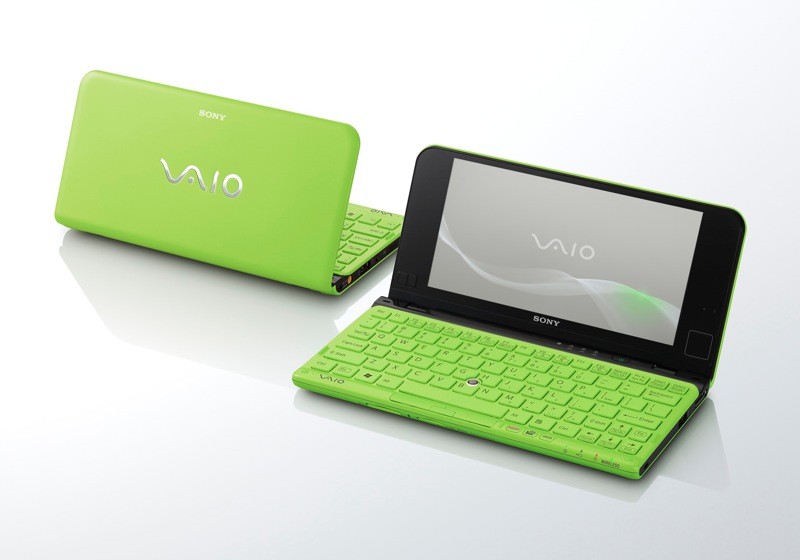
I’d love to see someone retrofit a modern soc into the vaio p motherboard form factor. There were a few partial efforts on GitHub but seems like Sony’s miniaturisation skills remain undefeated.
My T14 has even a dedicated slot for a SIM card.
At least with Lenovo laptops, that is very common. You con't need to order the laptop with a radio; it can be easily upgraded.
(Note: My estimate on this is purely based on Apple implementing/expanding the use of their own cell modems, which also includes their wifi chip. It seems logical that they would quickly adopt the same chip for wifi in their laptops, thusly getting LTE/5g 'for free'. Definitely no insider knowledge on this)
https://www.macrumors.com/2011/08/14/photos-of-a-prototype-m...
They're sometimes an odd size, but when I hit the wrong key due to a sizing constraint, I don't even have to think: Backspace, hit the right key with mildly adjusted positioning.
I've tried a few machines with different layouts, and that's never the case - and having to stop and look at the keyboard to find a key interrupts flow in the worst kind of way.
- the keyboards was terrible
- the battery didn't last more than 2h30 after only 6 months of use
- it ran super hot
The only thing I can say is that they seem to have significantly improved the thermals; IME, the Pocket 4 only gets moderately warm to the touch during full CPU load, and that's even with the quiet fan mode.
Battery life on it is comparable to the MicroPC 2, but for the netbook form factor, it should really be compared to the Pocket 4. Similar story for the RAM, as well as the odd screen refresh rate.
Minor points: I do also appreciate the Ethernet ports on the GPD devices, and their approach to touchpads (buttons and placement in particular).
I guess my issues basically all boil down to the Minibook X not having enough functionality for the form factor when compared to GPD. That's mostly understandable for the price, but my point is just that if you're willing to fork over some more cash, you can get a whole lot more laptop in the same form factor (Pocket 4) or slightly better specs in a smaller form factor (MicroPC 2), and at least for me, that's the only way I could even have seriously considered these form factors for my work.
(Just to be clear, I have no particular brand loyalty to GPD; they're just the only player in town for high-end netbooks/UMPCs at the moment.)
There are many countries where I wouldn't be at all worried about that, but I'd still be concerned about the possibility of theft (which, let's be real, can happen anywhere: I went on a trip to Switzerland once - generally considered very safe and low crime - where somebody had their laptop stolen from their room).
I’ll learn a weird layout for a netbook, some compromise is expected to get the small size (side note: I think “unfamiliar layout” issues are over-represented in reviews because they usually describe the reviewer’s experience when they are first getting used to the device, I get used to a layout in the medium term anyway and then it isn’t really a problem anymore (side side note: we should separate out the concepts of unfamiliar and bad layouts, they are different things, the former is overcome over time, the latter gives you repetitive stain injuries over time)).
Having the nail the keys in the middle, though, is just a sign of poor keyboard design. That probably won’t be overcome, if anything it is a sign of bad build quality and will probably get worse over time.
I'd figured remote development was the only viable workflow for these devices anyway?
I also just acquired a 2014 MacBook Air for two packs of coffee to use as a distraction free tty writerdeck and toy around with, as it's my first piece of Apple hardware.
What's wrong with them? The M1 was popular and now people selling them are competing against a lot of other people selling them which suppresses the price. Like it or not, Macs are mainstream and therefore aren't going hold a "magic" high price.
It is, however, an expensive fucking device. $2300 maxed out these days (which I think is $800ish more than i paid. Hurray ram...) or $1400 min specs (which are still quite nice).
I'm glad to see other options at that size (Pocket 4 is 8.8", but my second screen is 10") but a literal quarter of the cost. 80% of what I do on the pocket could be done something like this Minibook, and I don't give a shit if the keyboard/mouse sucks because I've got my own anyways so long as I can tent it.
There will be those days where I might need to do some local heavy lifting and regret not having the Pocket, but I'm also happy to know if it dies on me tomorrow I've got options that aren't shell out another $1k for a tool mostly used for coding.
There's nothing in the market like them, which is a shame - I think a slightly better quality Minibook (Chuwis are plain crap) would be a very solid laptop.
It is NOT cheap ($1300 min spec) but it's also quite a bit more powerful and with better ports (full size HDMI and Ethernet). It's not for everyone, but it blows my mind how little competition it has given how useful its been for me over the years.
Maybe you'd save running a large test suite until back at base with the branch checked out on something beefier, but for on-the-go coding I expect this spec would do just fine for many. The reviewer's comments about the keyboard would be my concern, not the limits if what it can run.
[0] https://www.cpubenchmark.net/cpu.php?id=6304&cpu=Intel+N150
[1] https://www.cpubenchmark.net/cpu.php?id=3064&cpu=Intel+Core+...
Though my experience with this brand is mixed at best so I'd personally give this one a miss, especially given the reviewer's comments on the keyboard.
Now it's X1 Gen 10, it has been largely trouble free.
Probably my next laptop will be the next Gen X1 with the new upgradeable LPCAMM2 RAM.
It's a fantastic console, but a mediocre general purpose computer.
I think at those sizes, what reads as small differences give an outsized experiential factor.
Sure, I can blame Chrome and JS, but ultimately, the core 2 duo and 8GB RAM did not keep up very long.
It still works, but a few specific apps started to really drag on it.
I saw a review of the MacBook Neo where the reviewer was yearning after the 12" - but suggested that Apple has made UI elements so big with such ridiculous spacing and border radius that it would be almost unusable at anything less than 13".
Which would not surprise me in the least - I struggle with my 16" MBP and this crappy UI "framework".
Native resolution on a 13" MacBook Air is already pretty unusable. Out of the box, the 13" MacBook Air (physical screen resolution 2560x1664) is configured with display scaling so that the “looks like” resolution is 1470x956 (i.e., macOS renders everything at 2x1470x956 – 2940x1912 – and then scales it down to match the display for output). If you dial the “looks like” resolution down to 1280x832 (so that the rendering resolution matches the output resolution; because, say, you prefer that every UI element not be a little bit blurry from being scaled down), you'll find yourself unbelievably short (ha) on vertical resolution. You basically have to turn dock hiding on. Even then, fixed-position headers are very common on websites these days, so between that and browser chrome, you'll often find that actual webpage content is crammed into the bottom half of the display.
In my experience, 13.3" MBA is fine for many applications. A little smaller (eg 12.5") might still be usable. 11" would not work with current MacOS.
Conversely if you bought an i7 macbook in 2019 it would have felt out of date in just 2-4 years, when everyone has an m1 or better and things are starting to slow down from OS changes that expect apple silicon.
If you bought an m1 just a year later in 2020, i’d guess you’re feeling fine 6 years on.
I didn't wait years to buy the max spec model of a previous generation or something.
I'm well aware CPUs got better and whatever arguments people want to make.
None of this changes the fact that the initial 11" MBA was borderline obsolete from launch.