This blog is written in en-GB(shkspr.mobi) |
This blog is written in en-GB(shkspr.mobi) |
> From the outside
You should try visiting the inside.
More generally, we Brits draw a measure of distinction between cultural pride and nationalism: the former is good, and we have plenty of it; the latter is viewed with suspicion, for good reason.
(Edited for clarity)
Their attempts to claim culture is governed by strong borders is also hilarious when an hour's drive in any direction from London would expose them to people they probably wouldn't even realise are speaking English.
I've always wondered why people who so proudly claim to not be from here speak with such authority about how it is to live here.
It's Fox news claimed no-go zones and Sharia law cities all over again. Utter bullshit.
From outside this dimension maybe.
Fuck off.
Yours etc,
Who are they?!
https://youtu.be/zPFrTBppRfw?si=BaHHYnP52UfWd6Fs
Ian Rush (referenced in the ad) https://en.wikipedia.org/wiki/Ian_Rush
If the Green Bay Packers lose every game, I think they're just back next year anyway like nothing happened? If Manchester United lost every game they're relegated and cease to be in the Premier League, some team you've never heard of which won the EFL Championship become a Premier League team next season [subject to various extra rules they can probably meet] and Man U take their place in the EFL Championship.
Surely most turns of phrase and references are easily googleable these days anyway, so it's not like it's even that hard to figure out. And if it is, you can do this amazing thing called 'asking'. I doubt the author will be mad that you want to know exactly what they meant when they wrote what they wrote.
"Accrington Stanley!, Who are they?"
"Exaaaccttlyyy...."
Well, there's the counterpoint to the whole post. You don't know what Twinkies are.
It was the blandest, most solid chunk of cake with a flavourless blob of sugar in the middle.
Describe a chicken nugget next, I bet people hate those too.
(For the record, a proper Twinkie would be fluffy, not a solid chunk.)
However, this blog uses a very readable font called “Atkinson Hyperlegible” and I had no problem reading it. If the color scheme bothers you, click on “eInk” in the theme switcher on the top.
Disclaimers: No relationship to the owner of this blog. No AI used in this posting; I have the em-dash (—) in my custom keyboard layout.
As a multilingual Canadian capable of understanding most English and French accents, I'm grateful for those who preserve and persevere with their home patois.
Funnily enough, I had a hard time with Bradley's accent the first time viewing Hot Fuzz but many hours of BritBox and Acorn and a few hours of HarbourCustoms later, no problems at all!
Excuse me, but I believe you meant to say this bloug is written in en-GB.
More seriously... you know, 30 or 40 years ago, I can sort of understand this attitude. Today, in the amount of time it takes you to complain, you could have popped the word into Google or something instead and learned what it was instead. Probably in less than the amount of time it took you to complain for an online blog. And you might learn something interesting.
When I grew up in the 1980s and 1990s, there was a thing called the "generation gap". It originally referred to something closer to the difference between the Hippies and their Greatest Generation parents, but it was smoothly repurposed into the differences between GenX and the Boomers, and the way we could have slang that was not decodeable by our parents.
I haven't heard the term in a while. The "generation gap" isn't what it used to be and there is less need for a term for it. I'm not entirely certain but I probably heard about "6-7" before my kids did. Urban Dictionary may not be the most reliable source in an academic sense but you can get a very fast sense of what something means from its entries, especially if you read them with a postmodern analysis eye and not just for the plain text.
I also find it a bit weird when people my age or the boomer generation complain about the kid's slang, because it's so easy to decode. You can't possible have a national-level kid's slang without an internet explainer 15 seconds away. It's not that hard anymore.
* blogue
It's a trade-off: you can write in your regional dialect or you can write in a more widely understood global style.
It doesn't really matter if you natively speak British English instead of American English, whereas French and English are obviously completely different languages and the switch made French a lot less useful and English a lot more useful
Nobody speaks the One True English. That is its power.
Or has the situation improved? :)
I've never heard of this depite being from the UK. It seems to be some ad from 1989. Although I do remember many classic ads from the 1980's I don't recall this. Is it an English / Scottish thing ? Who knows.
Why is Accrington Stanley so famous?
Ian Rush reflects on famous milk advert ahead of Liverpool v ... Accrington Stanley achieved worldwide fame primarily due to a legendary 1989 television advert for the Milk Marketing Board. In the iconic commercial, two young Liverpool fans debate whether to drink milk. One claims that football star Ian Rush told him, "If you don't drink lots of milk, you'll only be good enough to play for Accrington Stanley". The other boy questions, "Accrington Stanley? Who are they?", prompting the reply, "Exactly". The slogan became a massive pop-culture catchphrase in the UK, turning a then-obscure non-league team into the most famous minnows in football.
It was never shown in NI, which had its own Milk Marketing Board. Scotland had a separate one too, so probably didn't get them either.
Also, I've never understood the disdain for microwave boiling. It's just easier 90% of the time
Try reading in light of basic facts, if you need more hint consider if a spell checker might put a wiggly underline under the letters "loug".
The term "log" as a list of entries in some kind of journal predates the internet in en-GB by several hundred years, having strong nautical origins in the ship's log. It is the origin of "login" too (entering entries into the log), or do you assert that it should be "lougin" too?
It was not, and never has been, "loug" in en-GB.
It uses the dd-mm-yyyy date format like the rest of Europe, the start of the week is on Monday (vs Sunday in the US), the default paper size is A4 (vs US letter), measurement defaults are metric (indeed UK roads use imperial, but the default is otherwise metric), the time format uses 24hrs (vs AM/PM in the US).
Anything else is as bad as using mm:hh...
Why isn't there an en-EU or en-ISO locale that has:
  - yyyy-mm-dd
  - SI units
- 1,234.56 number formatFor something more likely to be read by a human and not parsed by a computer (and is not locale or i18n/l10n flexible) I'll use d mmm yyyy, e.g., 3 Jul 2026. To my thinking, for English speaking this is the friendliest unambiguous format (although I'm sure opinions will differ).
If you cluster English dialects by various characteristics, you’ll end up with en-US as a clear outlier. I believe that, if you’re going to divide English into two camps, the best is “English (International)” and “English (US)”. Canadian English is the one that’s closest to US English, but even it works at least as well based on International English as regards spelling (https://en.wikipedia.org/wiki/American_and_British_English_s... is an interesting read).
But there’s a lot more to it than spelling, and here the distinction is even clearer: the US has its own length, area, volume, weight and temperature units that no one else uses; its own stupid date format that everyone else loathes; its own paper sizes that no one else knows what to do with.
Not everyone else agrees on which date format to use, but we do all agree that any of our formats (DD/MM/YY, DD-MM-YYYY, YYYY-MM-DD, &c.) are better than the US’s middle-endian monstrosity. Though if we see the likes of DD/MM/YYYY we may mistrust whether it’s actually MM/DD/YYYY.
I also believe that you should default to English (International) for all users geolocated outside the USA.
Once you’ve get this divide right, adding further dialects also probably becomes quite a bit easier. But I do wish for diamond inheritance of locales: so you can mix in -ise/-ize, -yse/-yze, -re/-er, -ence/-ense, program/programme, and thereby deduplicate a fair bit across locales.
(There are still plenty of differences: such as time formats; decimal/grouping separators though I believe all places where English is a main language use . for decimal and , for grouping; even number grouping varies: en-IN does 1,23,45,678 rather than 12,345,678; keyboard layout; word choices; and lots more.)
(One last point: the naming is a bit fiddly. “Spanish (International)” means Spanish as used outside Spain. “English (International)” means the broad international/non-US consensus of what English is, generally following what England does but probably with kilometres instead of miles for long distances.)
Go on, switch your thermostat in the US to degrees C. Join us.
Everywhere sane uses a monotonic order: either increasing or decreasing units. Americans had to be different, somehow - it's a compulsion.
Americans inherited it from the British through colonialism.
Later, the British adopted the French method, as through history they periodically go through periods of Francophilia.
Look in a good British antiques store or archive and you will see letters penned by Queen Victoria using the "American" date method.
SI units everywhere
ISO date and time
American English
24 hour clock
etc
I think Windows has "English International" locale or something
Yes, but not always in my experience:
    # Default locale is en_GB.utf8

    > date
    Fri  3 Jul 12:14:20 BST 2026

    > date +%x
    03/07/26

    > LC_TIME="C.UTF-8" date
    Fri Jul  3 12:14:29 BST 2026

    > LC_TIME="C.UTF-8" date +%x
07/03/26It surprises me that anyone would feel entitled to ask a blogger to change the variety of English they use. American English is only one of many forms of English. The world is richer for its many varieties of English, and languages, and that diversity makes it more interesting, not less.
This blog calls that out brilliantly.
Also, in the late 90's, The Register made me love British English... Local accents are great branding.
0: https://en.wikipedia.org/wiki/Euro_English (we don't have to take the examples in this page as-is, we can definitely make better local oddities!)
I call it Eurospeak, for extra outrage - though that word currently has European Union civil service connotations (cf. https://en.wiktionary.org/wiki/Eurospeak)
Eurospeak is definitely the language of international corporate meetings !
ETA: Esperanto or Interlingua would also be acceptable
Sometimes it's their turn to repay the favour
https://www.reddit.com/r/PawPatrol/comments/1q68v16/british_...
https://www.reddit.com/r/PawPatrol/comments/17wcsdm/my_digit...
Perhaps you can be more inclusive in your language on the future.
This comment is written in en-GB-Brummie.
Would en-GB-WLL be a valid variant of English?
As a Black American, I find the author's idea extremely interesting and naturally began to wonder -- what might this idea (in code?) look like for us?
Owing to history and whatnot, the role "Black American English" might play is of course very much a moving target, but it's interesting to think about.
The other thing I find interesting is that formal English has eschewed the double negative as an intensifier while most (all?) other Indo-European languages employ it. Compare Spanish “No veo nadie” (literally ”I don’t see nobody“ which is the informal English formulation) to English “I don’t see anybody.”
That is how it often manifests, the bits the Brits get to choose is in their own language and spelling.
Incidently I always change automatic language correction tools to English GB, I live in this side of the Atlantic, and that is variant I learnt while growing up.
  - "proper English"
  - metric system
  - Euro
It's both surprising and irritating how many US-centric things are just assumed. (Don't even get me started on paper sizes...! ;) )
Europe uses the algo according to the ISO 8601 standard, where the week no.1 is the one with January 1st occuring between Monday and Thursday, inclusive. If the 1st happens on Friday or later within a week, it's considered a week no.52 or 53 of the previous year.
US does not use this scheme and [EDITED] I am not sure what method is applied there.
Some companies use week numbers in business talks, planning and scheduling, so be aware who is speaking about which weeks!
I am glad someone is pushing back on this, though, and I want more multi lingual sites on the Internet in general.
You just mean that you visit more american sites than other non-US english speaking sites
I would love to be able to write in proper narfuck, and have which ever screen reader read it out in the authentic accent for that area (central norfolk, not norwich, broadlands or the wierdos in the fens.)
There is something deeply joyful (to me) about a thick regional accent.
Timer set for “thirdy minnids”. Unfortunately the others also sound like parodies in their own way — the Californian's idea of en_GB, “Oi, you go' a loicense for that thir'y minute timah?”
But that's more of a thing for millennials, I would've thought younger generations get exposed to more diverse cultures / languages / etc.
Anyway, for British-English full of cultural references, watch some of these compilations https://www.youtube.com/@OneGazillionEccentricGoldfish, Scouse is nearly incomprehensible (to my ESL ears). For difficult US-English full of cultural references, watch The Wire or Treme. Try both without subtitles.
I can understand The Wire fine without subtitles because most of the actors just speak relatively generic African American English instead of a proper Baltimore dialect, and that's no problem at all for someone who spent their formative years consuming Nas and Biggie and all the rest of it.
On the other hand Snoop who is the only main character with an actual Baltimore street accent is pretty much unintelligible to me, but I suspect she would be for a lot of middle class americans as well
But there are some interesting issues with UK <> US english, things like 'quite' which works in different ways in each locale. I was also very surprised to discover the difference in what we consider a frown - which makes a lot more sense of the US 'turn that frown upside down'. Interestingly my uncle who'd lived in the US ~20 years had never uncovered that difference till I asked him about it.
So it's good to know differences - especially when you want communication to be clear.
“Do you remember that JK Rowling lady we all hate because she’s an evil witch? Haha, yeah. Anyways, I’m British and I’m going to keep writing like I’m British.”
Edit: I agree with the thesis. You have a culture; don’t filter it. Differences are beautiful. I’d rather live in a melting pot. Etc. Separately this new communication style is hard to stomach. Ive seen it growing in popularity in the U.S. - seems like there too?
Hahaha
I decided to have a bit of fun with the Accept-Lang header, if you're british it shows a totally different version of my blog including changing my name to a more british variant, a background including tea, phone booths, kings guards, busses, bulldogs and flags... and the colour scheme changes to RWB.
The original plan was actually to write two variants of every blog post, one where I write using dry wit, banter and colloquialisms, and the other with a more to the point and professional tone.
The reason I chose not to was because I thought it might be confusing when discussing the content on link aggregators (like HN)- I'm not so arrogant as to believe I write anything worth discussing, but it would violate the principle of least surprise... so I chose not to do it.
I'm curious to hear other peoples opinions, since this is the exact right subject to ask the question to relevant crowd..
0. https://en.wikipedia.org/wiki/List_of_dialects_of_English
I've traveled all over the world, and the one place that I've had the most difficulty understanding, was London. Cockney is hard. It's not just the patois. It's the cultural references and slang.
I tend to hang with … interesting … people.
If english speaking adult-aged people, with a wealth of opportunities to meet people and explore the world, are genuinely befuddled by en-GB to the point where they have to ask you to "translate" it, that's immensely embarrassing for them.
I'll die on the Fahrenheit hill though. A 100F is 100% torture. 70% (70F) is tolerable. 35.3C tells me nothing on a scale.
The answer is definitely still a big no, but for me the reasoning is because it will make it worse. And you apparently aren't the target audience anyway, so why should I care if you stick around.
(Whereas in the case of harry potter, the goal was to sell books, not just to produce something good).
It requires an open mind to see diverse experiences as a good thing, and certain cultures think having citizens with open minds is an unprofitable way to run a society.
> Certain cultures teach that diversity is a bad thing to be feared and extinguished.
Much of British English was standardised long after several waves of the US settlers left our shores, so US english has some traits of pre-standardised English dialects, and ours is different again.
It's equally silly when some Americans claim their English is closer to the "true" English as a result, because, again, there was really no standardised "true" English when they left.
Along with some simplifications and some things reintroduced from german settlers, it has some traits of older English that the British abandoned in our own simplification of the language.
Is ours the best? Of course it bloody is :-) But is it "true" English? No more than anyone else's. That is the enormous power of English.
(OTOH I don't think you should suppress 'false friends' like biscuits, pants etc.)
Another exception: "moot", as in "moot point". In the UK it means "subject to debate", while in the US it means "inconsequential and therefore not subject to debate".
Just whatever you do, don't mention the taxes! I did once, but I think I got away with it...
—He keeps talking about the war.
—Well you started it.
—No we didn’t.
—Yes, you did. You invaded Poland!
For example, I never said "supposed to" again — "meant to" has always sounded and felt so much better. Similarly, "can't be bothered/asked" often exactly describes the situation in a way that "I don't want to" seemingly can't.
I'd also like to add "bum bag" v. "fanny pack" was a valuable lesson and a memorable laugh.
(IE; I never use the word "chip" to mean crisps or fries - I will instead use "Crisps", despite it being british, and fries, despite it being American; in order to avoid ambiguity.)
The more difficult one is "pants", I would say underwear or trousers.
It's interesting how I only notice how much it's contrasted when I go back to the UK and hear others, I notice people using words that I've put a mental "X" on, and its only then that I realise that I've put the mental "X" on the word... because it no longer feels natural to hear it.
To avoid ambiguity, I always say "half past" in English so that Germans (and I!) remember to compensate for the language barrier. Unfortunately "half to" isn't really a thing in German, so I can't do the opposite when I'm speaking German.
It's more complicated than this and how you say "quarter to eleven" is A Whole Thing in Germany, but everyone agrees on the half hour at least
In Australia we don't care about ambiguity or clarity and refer to both the thin sliced cold things and freshly fried rectangular ones as "chips"
People occasionally comment that it's a British word, but being misunderstood is so unusual I can't remember a recent example. Essentially everyone has read/watched Harry Potter, Dr Who or Midsomer Murders, and Europeans are probably ten times more likely to have visited the UK as the USA.
I think it was less as a conscious act and more as a result of just not being around people that use them. There's a sizeable element of cultural reinforcement involved.
That said, they'll pry my British spelling out of my cold, dead, hands.
I've had the pleasure of working with many different people from different backgrounds, including many Brits. I've always found the dry, understated humor from them to be endearing, making casual conversation more interesting. My parents are both from the Middle East, my wife is from Southeast Asia, and I have many Middle Eastern, Desi, African American as well as African (as in continental) friends, so I may not be a "typical" American in that regard.
That being said, don't underestimate the value you bring by sharing your cultural insights. I don't think I told anyone to their face that appreciated their cultural value, but I hoped that my engagement and cheerfulness in dealing with them at least communicated that I was happy with their presence.
It might be that your engagement with someone opens them up to a part of the world they've yet to experience or know much about. Granted, there are lots of places with more gaps than the US and the UK, but there's still value in that and I started with those examples but mentioned it comes from all sides.
There's nothing unique about this though, it's the same for every language - it's one thing knowing Spanish well enough to hold a conversation where the other person is speaking slowly and making it easy for you, it's quite another to be able to slot into a group of native Chilean Spanish speakers in full flow.
I travel a lot so I'm used to adapting my use of English depending on who I'm talking to. I find there's a way to express things and still enjoy using the language without making it hard for non-native speakers to understand. But also, when you do end up in a group of entirely Brits it is fun to be able to just let loose
> My parents are both from the Middle East, ... so I may not be a "typical" American in that regard.
Oh, fer feck’s s sake, it’s not like the U.S. hasn’t had Monty Python for fifty years. Me, after a steady diet of British motorcycle magazine’s for the last 40 years, I speak Brit just fine. But I would think the diversity and prevalence of online forums would get folks up to speed. I dunno, maybe people just don’t pay that much attention.
OTOH, I do recall an Australia coworker who expressed appreciation that he didn’t have to explain idioms to me (Oz has moto mags, too). Obviously it’s a real problem even in this age of connections.
Funny story, I was visiting Hong Kong one time, and asked the young waiter, who seemed to speak English just fine, where the washroom was. Blank stare. Bathroom? Cesuo (Mandarin)? All blank stares. I was a little out of options at that point... Turned out the word I was looking for was "toilet", which is a word I never use.
Despite all the woke stuff I still have to hide my en-GB background in my BigCo
There is a constant American assumption that their language and culture is the norm and we should all adjust our language to fit their definitions and culture. I intend to keep eating faggots, having a master branch in git, etc.
In Spanish for example, consuegro and consuegra refer to the father and mother of your child's spouse.
The Spanish words succinctly encode that relationship while English requires verbally traversing the family tree.
Here's another: "fíjese". It kind of means "you'd never guess what happened". It's like "something that was completely unpredictable and totally outside my control happened, and it negatively affected my ability to do what I was trying to do", except with a lot fewer syllables.
Here's one going the other way: I was talking to a systems engineer about a specific issue, and I said that "we might be able to sweep that under someone else's rug". He was from Russia, and didn't have "sweeping it under the rug" as an idiom, and so didn't know what sweeping it under someone else's rug might mean.
Now, none of these are things that you can't say in another language or culture. You can. They're just a lot more unwieldy to say, and so people express that idea a lot less frequently.
waldeinsamkeit, saudade, ya’aburnee, etc.
As a Brit I am biased, however, there is a crucial difference between 'free range' British English and 'simplified' American English. Superficially, American English seems the more 'free', with liberties taken to create cool words and brand names. However, American English is constrained by the work of Webster, with there being a definitive dictionary, very much cast in stone, with changes such as 'no u in colour' made purely because of a rejection of everything English, including tea and spellings.
Currently we have something more extreme going on with the language that Ukrainians are expected to speak, with their 'government' seeking new and improved ways to move the language away from Russian. If this was OG English then it would be like getting rid of every French sounding word, so 'beef' becomes 'cow meat', 'mutton' becomes 'sheep meat' and so on. These changes can be made quite easily since it is not a whole new language has to be learned (or unlearned) at once. The lists of banned/allowed words changes all the time, much like Newspeak in 1984.
This won't be the last attempt to determine what a language is by decree, however, the result of such efforts is that languages get stuck in time. Hence the observations of my translation 'helpers', preferring English to their mother tongues.
IMHO American English is British English, stuck in time for 250 years, or whenever Webster got his special dictionary to schools. Meanwhile, OG British English has evolved in its own way, a form of direct democracy, where words change based on how they are used in the here and now.
I don't believe there is such a thing as an actual English word, all of it is 'stolen' from various colonial adventures of the past, or inherited from invaders of the past, notably the 'old enemy', as in the French.
French used to be the language for arts, diplomacy and the aristocracy. But they lost out, in part due to the fixed dictionary. Had they allowed their language to accept English loan words, chances are that French could still be the language it once was.
Currently there is an existential threat to English as the language for science and technology due to the rise of China. It gets worrying when data sheets for Texas Instruments components are released first in Chinese, to be followed up, months later with English translations. Therefore I am rooting for en-GB rather than en-US, due to that minor detail of there not being a 'Webster' dictionary of the past, casting a shadow on our future.
The Académie française has exactly 0 to do with the fact that French is used less as a lingua franca.
Calling her 'the wicked with of the terfs' was one of those. I found it quite funny personally. I can find the joke funny despite my opinion of Rowling as a person or her statements on particular topics. Sometimes, here in the UK, we make jokes featuring people because the joke is funny, not just to virtue signal.
Here in the UK, there is a significant section of the population whose base state is mildly dissatisfied and the external manifestation of that is low level grumbling about minor things. It's not a virtue signal, it's not a statement, it is just how they are. You may do better understanding if you take off your glasses of American Exceptionalism and view things more objectively.
Ironically, your post could very easily be read that you were upset by the article, wanted to express that to strangers, and signalled your social ingroup by referencing other things you were upset about, like the joke.
This post contains more than one joke also. Some people will get them, some will not. And that's OK.
It's a stereotype that Brits can be miserable and complain a lot, but the truth is most of us just enjoy having a moan about ultimately inconsequential things.
The example that comes to mind is just how many of the blokes I know will complain about reality shows like Married at First Sight or Love is Blind, yet will sit down with their partner each evening to watch them.
The uninformed might suggest they simply don't watch the shows if they're annoyed by them, but if they didn't watch they'd have nothing to moan about, and that's half the fun!
While I'm sure the blog post was made primarily for sparking discussion around the point of la guage differences, I wouldn't be surprised if simply having a moan about something perceived as mildly irritating but otherwise inconsequential wasn't also a driving factor. :)
> Here in the UK, there is a significant section of the population whose base state is mildly dissatisfied and the external manifestation of that is low level grumbling about minor things
Does that have a name? What causes it? Is it a proud cultural tradition, or more a sort of disease?
> BBC News Pidgin now dey on Whatsapp
> No dull yoursef, be di first to get latest tori, analysis, exclusive interviews and ogbonge coverage of Nigerian and International news from BBC News Pidgin, straight to your Whatsapp.
> Click here to join di channel
    Da time wen eryting wen start, God make da sky an da world. Da world come so no mo notting inside, no mo shape notting. On top da wild ocean dat cova eryting, neva had light notting. Ony had God Spirit dea, moving aroun ova da watta.

    Day Numba One

    Den God tell, “I like light fo shine!” an da light start fo shine. God see how good da light. Den he put da light on one side, an da dark on da odda side. Da light time, he give um da name “Day time.” Da dark time, he give um da name “Nite time.” So, had da nite time an da day time, az day numba one.

    Day Numba Two

    Den God tell, “I like get someting inside da middo fo no let da watta up dea an da watta undaneat come togedda!” An dass wat God do. God make someting fo no let da watta up dea an da watta undaneat come togedda. Da ting inside da middo, God give um da name “Da Sky.” Had da nite time an da day time, az day numba two.

    Day Numba Three

Den God tell, “I like da watta unda da sky come togedda one place, so dat get dry land!” An dass wat God wen do. Da dry groun, God give um da name “Land,” an da watta dat wen come togedda one side, he give um da name “Ocean.” God look da dry groun an da ocean, an he tell, “Real, real good, all dat!”IMO if these are all the same language then they should perhaps be dignified with a proper name that doesn't involve the generic term "pidgin".
I found it completely unrelatable and couldn't follow it at all, not having any frame of reference for how much a dollar might be worth in real money
Luckily the background reminded me i could go and make myself a cup of tea to feel better
now we're all confused.
This is definitely manageable: canonical meta tags and other metadata; update the URL to a canonical permalink that encodes the language preference; a banner that informs people that there is an alternate version, etc.
https://www.iso.org/iso-8601-date-and-time-format.html
The fact that they are then sortable is a nice side benefit!
This was a very noticeable phase in the UK; I knew several Dutch people who were fully unaware they had American accents and some American linguistic traits until they got here.
Whereas Dutch friends of my father who learned English before WWII had actually quite plummy English accents.
This is in stark constrast to Germany, say, where people colloquially use 24-hour times, with some exceptions for round times (e.g. 17:00 might be called "um fünf", but 17:05 would usually be described as "siebzehn uhr fünf", roughly translated as "seventeen oh five".
This might have changed in the last five years or so since I was living in the UK, but I've never noticed this be different when I was visiting, nor when speaking to British friends or colleagues.
  $ echo "$LANG"; date
  en_US.UTF-8@aspirational
2026-07-02T11:17:00-07:00> This style guide is intended primarily for English-language authors and translators, both in-house and freelance, working for the European Commission.
It specifies formats for date, numbers etc.
I wish we’d rip the bandaid off and invent a new character that makes it unambiguous across the world.
And having been raised in the continent, I personally find using commas for thousands disgusting.
But it would be beyond bizarre to write "3:59 pm"
deadline supposed to come from delay but it is incorrect use in French. cabinet is toilet. etc
It's an artificial invented variant, like a kid would invent its own language to speak to other kids, not something that was born out of habit and unified. https://en.wikipedia.org/wiki/Esperanto shares a similar issue but at least it's cute and more logical though.
AI would be good at creating an international language
[1] https://en.wikipedia.org/wiki/Long_and_short_scales#Current_...
The basic cable A&E began its life as “Arts & Entertainment” and was originally a mix of British import shows and high culture presentations (e.g., televised orchestra concerts). But much like carcinisation in aquatic invertebrates, for basic cable, apparently channels tend to evolve towards mostly showing Law & Order reruns.
(Back in the eighties,) I had a teacher who taught both French and geography (I think), and he used the apostrophe as the thousands separator. With a twist. For example, he would write three million as 3'000'000, and then he would abbreviate that to 3''. Very fascinating. I wonder if that was somehow inspired by Swiss conventions.
One billion, two-hundred thirty-four million, five-hundred sixty-seven (the rest are the decimals)
I've never seen 3'' but that's a nice shorthand
I now live in Germany where the format is confusing to me: 1.234.567,890. It's pretty much the opposite of English format!
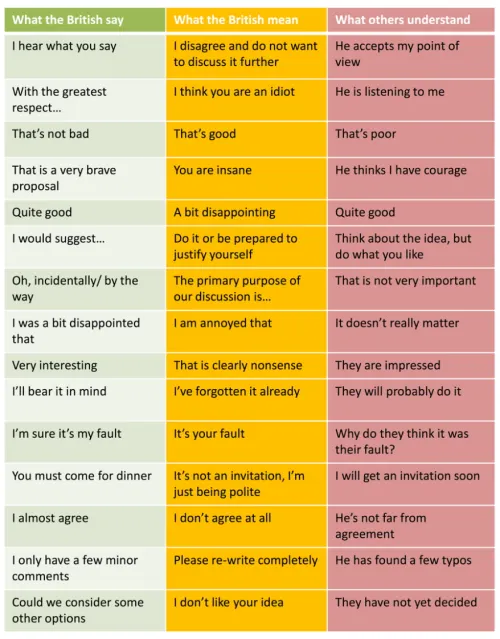
I think almost all of the expressions in the left-hand side have direct, almost literal equivalents in French for example, with the same meaning as they have for the British, including being very context-dependent.
Also works for Flemish by the way, although the Dutch are supposed to be more literal so maybe Flemish/Dutch is to be seen the same way as British/American.
I use it in different senses all the time.
https://en.wiktionary.org/wiki/moot
I expect the US meaning will eventually become standard everywhere.
> Inexcusable that Paramount used the UK dub on some episodes
> Just downloaded it and had the same panic in my house
Sure I was being hyperbolic for effect but a lot of the tone is closer to panicking than “wondering”.
We are exposed to American accents all day every day. Americans often seem to want to protect themselves from having to be exposed to anything non-American, even going as far as to remake entire TV shows rather than just broadcasting the original.
> even going as far as to remake entire TV shows rather than just broadcasting the original.
I guess you're talking about The Office? The British version of The Office would've been a flop in the US because British humor is just inscrutable outside of the UK.
They even wanted to remake "Fawlty Towers" without "the tall idiot".
It was a joke based on the Norman French references from https://en.wikipedia.org/wiki/Middle_English
You could postulate that a language developed specific words for family and relatives because they prized those specific family structures? Or that language copied another language that did.
Similarly, you can categorise languages by how they group numbers, e.g. French is vigesimal while English is decimal.
> the fact that French is used less as a lingua franca
The non-prestige dialects of a language don't usually attract official interest, not least because officially the people who understand that dialect could also understand a prestige variant. Scousers may not talk like King Charles among themselves, but if he speaks they're not confused about what the King is saying even if they wouldn't use those words or say them that way.
This might get sketchier for Chinese topolects where the official government policy is that China has a single language, "Standard Chinese" but, those topolects sure do seem like different languages if you didn't know about the policy. However AAV is nowhere close to that, I can't imagine that anybody who uses AAV normally watches "Last Week Tonight" and goes "That guy is speaking a completely unrecognisable language, are there subtitles?".
Linguists would tell you that Scots is a sibling to English rather than just a dialect of English, having both descended from Middle English and that the dialect of English people in Scotland speak is instead "Scottish English". In practice of course humans don't language tag their speech (indeed they rarely even language tag written text) so it's murky. Maybe one word in ten that a Scottish bloke just said to confuse a tourist was technically Scots not Scottish English and perhaps some of it was even Gaelic. The important thing was that they confused the tourist as desired, for which frankly even an inside joke would work.
Sociolects are fun. In one of my friend circles the word "fish" is understood to mean the controller for a video game, I don't know why exactly, but if you said to one of us "Pass the fish" they'd hand you a controller without even seeming puzzled, that's just obviously what you'd call it. But in another circle it means nothing and you'd be greeted with confusion.
>That guy is speaking a completely unrecognisable language, are there subtitles?
Interestingly enough, I remember reading somewhere that you could be legally entitled to an interpreter in a court setting (take that with a grain of salt, I forget where I read it)
The more I think about it, the more difficult it seems. Not that it shouldn't be done, but wow.
⸻
1. For the record:
below 0: Stay inside, drink warm cocoa
0–10: Only go out if you have to
10–20: Cold, but doable
20–30: Nice winter-sports temperature
30–40: Cold, but you could run out to the garage without a coat if you had to
40–50: Cold, but you don’t need a scarf or gloves
50–60: Cool. wear a jacket
60–70: Cool, wear a light jacket
70–80: Perfect
80–90: Warm, but not too bad. Go to the pool.
90–100: Ugh, hot. Tell your parents that you’ll pay their electric bill if necessary but they need to turn on the air conditioning.
100+: Stay inside, eat ice cream.
Put it in quotes: "Indian Standard English" and you will see plenty of results.
https://www.google.com/?q=%22Indian+Standard+English%22
https://www.jbe-platform.com/content/journals/10.1075/eww.24...
It doesn't mean a written standard exists.
Maybe it's called Standard Indian English or just Indian English in other contexts; I'm only using a term I've seen used.
What you heard wasn't what they were saying.
Aussie translation: https://en.wiktionary.org/wiki/can%27t_be_fucked
British people say "I couldn't care less about the World Cup".
Both are saying they have no interest at all in the World Cup. I don't know why Americans phrase it that way.
To give a documented example, the lyrics of Teenagers by My Chemical Romance:
    They said, "All teenagers scare the livin' shit out of me"
They could care less as long as someone'll bleedAnother is 'on accident'.
For context, I'm British though I have spent a fair amount of time in the states over the years and somehow never picked up this difference.
"You did a fine job"
"It is quite impossible"
Do you also address your mail to "United Kingdom, Scotland, Edinburgh;" or tell people, "I'm going on holiday to Croatia, Split?"
Please tell me that's not a thing.
2026-07-02-16-31-52 -> -----00011222235667
Hopefully it will remain a nonsense and never be seen in the wild, unlike the phone number field which I found on a real website which responded to scroll events to increase and decrease the value it contained.
(I am not Welsh, but it has been described to me as an ever tightening elastic emotional rope that is anchored in a place and time that it might not be possible to go back to)
You mean "English" and "English (Simplified)"?
I really wish en-CA was as well supported as fr-CA honestly.
A common response to the question "how are you?" is "could be worse". I've always felt this is a good example of British culture, though maybe it's not so simple to understand if you've not lived here.
A casual moan about the weather or the fact that the potholes only ever get haphazardly filled in a week before people need to re-justify their budgets for the following year is a great way to blow off a little steam while building social bonds with the people around you.
These mild inconveniences are perfect when filling dead air with a friend or passing the time with a stranger at the bus stop (it's always 5 bloody minutes late, why do they even bother with the digital signage if it's always wrong? Ah well, it is what it is).
As for causes, you'll get many varying answers, from Thatcher to that just being how it goes.
> There is a constant American assumption that their language and culture is the norm
> having a master branch in git
This is now far more than an American assumption. I have seen younger continental Europeans bristle at UK English because they grew up in a world of social media that is converging on usage that is closer to US English.
    4.3 Limited Use Nonce Values

    The Digest scheme uses a server-specified nonce to seed the
    generation of the request-digest value (as specified in section
    3.2.2.1 above).  As shown in the example nonce in section 3.2.1, the
    server is free to construct the nonce such that it may only be used
    from a particular client, for a particular resource, for a limited
    period of time or number of uses, or any other restrictions.  Doing
    so strengthens the protection provided against, for example, replay
    attacks (see 4.5).  However, it should be noted that the method
    chosen for generating and checking the nonce also has performance and
    resource implications.  For example, a server may choose to allow
    each nonce value to be used only once by maintaining a record of
    whether or not each recently issued nonce has been returned and
    sending a next-nonce directive in the Authentication-Info header
    field of every response. This protects against even an immediate
    replay attack, but has a high cost checking nonce values, and perhaps
    more important will cause authentication failures for any pipelined
    requests (presumably returning a stale nonce indication).  Similarly,
    incorporating a request-specific element such as the Etag value for a
    resource limits the use of the nonce to that version of the resource
    and also defeats pipelining. Thus it may be useful to do so for
    methods with side effects but have unacceptable performance for those
    that do not.
Presumably the etymology was in place before it took on its present meaning, but it is not a word I would use in a professional context.
My comment was oblique, but not sarcastic. Partly because I didn't want to use the word directly, and partly in keeping with the tone of the original blog post!
Wait, isn't that a cigarette? Why would you eat it?
edit: nevermind, it's actually meatballs, the short version is for cigarettes
This means that AAV is culturally important, but there's not necessarily the same sense of "this is a separate language" that there is with Scots, even though in many ways it has all the same claims of being one.
It would be exceedingly difficult to strongly distinguish it from "Gen Whatever Slang" or "US Slang" or a lot of "LGTBQ Slang" etc etc. The list goes on.
Around the turn of the millennium, Muslim Uighur radicals got a lot of attention in the international press. But what most of the world had not followed was that before that, there had been conflict between secular Uighur Communists and the central government because the former saw the space for use of Uighur shrinking. Those Uighurs were silenced or forced into exile abroad, leaving only Islam as a channel for ethnic discontent.
> Yes—some countries have (at various times, and in some cases still today) adopted policies aimed at making the population more “homogeneous,” through segregation, assimilation pressure, or exclusion/deportation. Concrete examples:
- South Africa (apartheid era, 1948–1990s): An official system of racial classification and enforced separation (“separate development”).
- Germany (Nazi period, 1933–1945): State ideology enforced a racial hierarchy and pursued forced removal and mass murder of those deemed “undesirable.”
- Israel (state policies affecting Palestinian citizens and occupied territory, especially since 1967): Includes laws and administrative practices that many observers describe as producing or enforcing unequal status by group; key issues include citizenship status differences and restrictions tied to national/ethnic identity.
- Myanmar (Rohingya): Policies and law enforcement that stripped/blocked citizenship for Rohingya and enabled persecution, culminating in mass violence and displacement.
- Canada (Indigenous assimilation policy, especially 19th–20th century into 1996): Forced assimilation via residential schools and bans on language/cultural practices; many have characterized this as cultural genocide.
- United States (Jim Crow + earlier immigration/citizenship rules; and internment): Historical legal regimes created segregation and restricted citizenship/naturalization based on race/national origin (e.g., earlier Asian-exclusion immigration restrictions).
You may disagree with some examples on this list, but I'm sure even you would consider that the first two are clear examples of diversity-fearing 'cultures' rather than 'bait'. And this is even before considering the wider definition of the word 'culture', which can be even more exclusionary.
I, the human, demonstrated that even an LLM, which in this context can be viewed as an impartial source, could easily find legit examples.
I could of course have simply stated that this is the case without pasting the LLM text, but in that case I'm fairly sure OP could have simply replied "Nah-uh".
My guess is US English, not UK English, not Indian English, not Chinese English. Sure, they may visit some of those sites, but I suspect that the most frequent will be US English.
There is no such thing as Chinese English, unless you politely mean "English as incorrect spoken by Chinese native speakers."
Look at the places where US english has become the norm or convention; programming, media, apps, business, Internet in general.
And the US is in unique position - it drives technology forward quite a bit, and it's also actual native English speakers.
So in other words got more to do with technological and economic influence, not population size.
In fact, the first time I signed up for my own line, it happened unintentionally, and it was only after Pacific Bell had installed the line that I figured out it spelled something, and I informed my father and it was hilarious (the spelling was "BUG-BLOW").
Reminds me of when I tell Siri, "Play 2-G-B Sydney" and she responds, "Now playing two gigabytes."
2026-07-02 16:45 becomes
2026-45-16-06-02
Bonus points for using a very confusing separator... Maybe {?
2025-06 and 2026-05 both have the same digits, for example.