Delayed Gratification – Proud to Be 'Last to Breaking News'(slow-journalism.com) |
Delayed Gratification – Proud to Be 'Last to Breaking News'(slow-journalism.com) |
I worked with the founders Marcus and Rob, and met their infographics whizz Christian waay back when they were kicking this off. I was blown away by it then, and I continue to be blown away now.
Here's to the next 15 years!
I haven't really had that problem with news.
This advertises up to a 3 month delay. I do like that with that much lead time you can see not just news but sometimes a bit of the fallout and consequences.
Not a fan of the name, though. It reads like those Claude comments that I absolutely despise, where it feels the need to comment in a reactionary way to the feedback it's getting and changes it's making, rather than a forward-looking way that's cohesive with the new state of the codebase.
Maybe I missed it, but is there a back issue available I could page through, or even just a full story somewhere, that I could read so I can evaluate what I think of it?
News organizations have been in decline for a few decades because of two reasons:
1. Lack of ad revenue (all vacuumed up by Google)
2. Loss of subscribers because they can get free news online
Don't expect quality from people not being paid much.
Yesterday I watched a fabulous piece by the Australian 4 Corners on food fraud in our country. They did forensic research into what food on our supermarket shelves actually contains. Shocking, but excellent journalism. Four Corners is a journalism arm of the Australian ABC - our national broadcaster. They’re funded by my tax dollars.
I don’t know what people mean when they say “mainstream media”. There’s lots of organisations out there - some of them doing really great work. But journalism is time intensive to do well, so it costs money. News you get for free is often either junk or it’s propaganda.
The primary reason is the click metrics, they realized quality didn't matter as much as emotions and outrage and validating peoples own beliefs.
It doesn't matter how much you pay for it when they will just invest more into those things. You can see this in gaming, the more people paid for Ubisoft games the more toxic transactions Ubisoft put into them.
The industry got it wrong when it digitized
[0]https://en.wikipedia.org/wiki/Concentration_of_media_ownersh...
everything is broadly declining, too, as we grow up taking it for granted while the older generation retires, and we also are too busy working menial jobs to pay the rent.
The real deep dives are hard to find.
And I don't think only money brings quality. Hobbyists tend to do great work especially because they're not making money. For them quality can be a goal. Not getting the most money with the least amount of effort.
A lot of the content and software I value most is by people who are doing it just for fun or because they care.
And the newspaper world in particular was oversaturated. Every little town had one or more local dailies. That was never sustainable in the digital age.
"Donald Trump frequently attacks the American media as having a left-wing bias and being "corrupt", and also uses a variety of insults when speaking about outlets that give him unfavorable coverage. Trump has sued various media outlets for perceived inaccuracies or biases, and has used his position as president to pressure outlets he dislikes by interfering in their business operations, launching investigations, threatening to revoke broadcast licenses, and cutting funding for public broadcasting."
https://en.wikipedia.org/wiki/Donald_Trump%27s_conflict_with...
I mean as an Australian taxpayer I am partly funding the ABC. And its following the exact same trends.
Todays crop of journalists are more likely to repeat absurd claims from social media as true, and shop around among experts to find the one that will support the crazy assertions.
I send more letters to the editor and to politicians today than ever before. Its getting stupid.
[0] https://cbc.ca/
[1] https://bbc.com/
[2] https://npr.org/
I watched the speech live. He said he’d be running for a fourth term because he’s still claiming that he won in 2020. That’s a crazy lie so AP News helpfully changed it to “quipped about a third presidential term.”
That might seem minor on its own but I’ve noticed it’s been occcuring more and more like [2] where the headline calls out the Democrats for blocking a bill and simultaneously calls the bill bi partisans, or [3] which on review actually seems like more of your critique than the sanewashing where they report that a crack in a container vessel reduced pressure but then take the officials statements that nothing leaked out like physics got an update where you can have pressure reduced from material escaping the container but it magically is still all inside the container
[1] https://apnews.com/article/correspondents-dinner-trump-shoot...
[2] https://apnews.com/article/democrats-senate-fisa-trump-pulte...
[3] https://apnews.com/article/california-tank-leak-explosion-ga...
Kierkegaard in the 1850s:
"The daily press is the evil principle of the modern world, and time will only serve to disclose this fact with greater and greater clearness. The capacity of the newspaper for degeneration is sophistically without limit, since it can always sink lower and lower in its choice of readers. At last it will stir up all those dregs of humanity which no state or government can control."
I’m sure there was still some funny business going on. They didn’t report so heavily on tabloid stuff and probably protected people in power more. But there was absolutely some level of investigative journalism in every article.
https://www.independent.co.uk/voices/commentators/fisk/rober...
It probably has something to do with the decline of quality journalism.
Free, consumer website: https://www.forth.news Paid site with custom notifications and feeds: https://pro.forth.news
Btw, nice initiative with Forth! That's why I clicked.
Neutral journalism is not presenting the claims of all opposing parties, it's fact-checking the claims of both sides without a bias for any of them.
If one party says the truth and the other side is not, it's still neutral to repeat only the claims of the first one.
This is the key. Nobody wanted to read yesterday’s newspaper and the same applies to recent digital media world. Media are pushed to deliver almost instant news feed.
Common news stories are often updated several times an hour. This leads to burnout for the journalist covering the event.
This constant focus on breaking news is so common and devastating on society that it has inspired books like Newport’s The Deep Work.
The facts chosen to include in a report are chosen with bias. There's no neutral subset of facts about any event.
Yes.
> it seems that the current trend in journalism is to be as factual as possible, without adding in one's own biases
No. It is not factual at all. Factual journalism would check facts and said 'Hormuze is not open' or even 'Trump lied again'. The 'neutral journalism' or 'both sides' or 'they say they say' is bias on itself - and harmful one at that.
that is EXACTLY what i want in news.
i do not want your summarization opinion out-of-context clickbait eye-catching headline snippet.
just be a parrot.
"We've always been at war with Eurasia." -Politimouth
The news should say this is not true when it is not true.
Wrong. Great effort goes into ensuring only the desired statements are regurgitated, and the undesirable ones omitted: https://www.foxnews.com/media/ap-report-slain-north-dakota-t...
This is not a cherry-picked example, but the policy of most major media, explicitly outlined in their style guides: https://jfulford.substack.com/p/hiding-the-race-of-criminals...
Outside of tech because it affects my work, I've stopped reading online news altogether. There's a bookstore down the road from me which sells the daily and weekend editions of a couple papers. On a slow weekend I'll walk over there, buy the weekend edition of some reputable paper, and peruse it over coffee. The stories are invariably better than anything I see online, as well as in the daily editions. None of this stuff is urgent. I don't need up to the minute. I just need to kill some time, preferably with higher quality information.
Honestly the old ways were better in this case. Just stop reading online news. Grab a weekend edition of a paper when you're bored instead. Couple bucks. No subscription. Better. They haven't changed much.
Under late stage capitalism, the main driver in any industry, not just journalism, is unscrupulous opportunism. Profit comes first, at the cost of everything else, including, of course, effort and sincere expression.
Now Trump offers privileged access to his "tweets" for money.
Late stage capitalism indeed.
We can live in a society where a massive scandal happens and it takes two months for the systems and mechanisms to respond to it. I genuinely believe that most stories are better delivered with full information and nuance well after the event occurs than immediately.
Ultimately, it didn't work for me, but that's my fault. Despite my best intentions, it turned out I wasn't interested in reading about world affairs beyond the news cycle.
i've often thought about making a site that lets you easily do side-by-side comparisons of news sites on different timescales (1 week, 1 month, 1 year) so you can pull it up and show them "see all this stuff that you feel like you NEED to consume? like it makes you a better informed member of society? how much of it actually mattered and how much of it was just there to hook you in the moment?"
[1] https://manual.calibre-ebook.com/glossary.html#term-recipe
If you feel interested in following them but it feels too high traffic or chaotic you can follow specific categories with rss by just going to subcategories on the website and adding /feed to the end of the url. Even slower journalism!
For example I follow the long reads one: https://www.slow-journalism.com/filter/long-reads/feed
You can do that trick with a lot of sites. One of your old faves started pumping out listicles but still puts out good stuff here and there? Might be worth seeing if those higher quality articles have their own categories with feeds.
I used to work at Tortoise (who now own/operate The Observer) and our motto was 'Slow News'. We operated on a pretty transparent membership model, but I got the impression that it was difficult to make pure membership work financially, leading to a reliance on other revenue streams like podcasting and business partnerships over time.
I have often thought about with my friends who are "terminally online" that they would benefit from NOT being a town crier from times gone by.
Many of my friends hate Twitter, hate Elon and hate social media, but because they have to be first to all the latest news, they remain locked in to Twitter day in and day out. They cannot quit. They are socially bound to them because being the person to start a topic on whats happened in Ukraine, who was traded to the Dolphins, etc is part of their socialization.
It's been baffling to me, as I simply don't see the value in being the "first" to discuss some news, especially if its misinformation.
Anyway, all that to say that I think is a great idea and would really benefit society to return back to less "real time" news, which really tends to drown out the big topics in favor of buzz words and Twitter quips.
In between a myriad of notifications, fake social media posts, total collapse of local radio and tv, I have no idea of how to stay informed.
I can understand why this might seem like a good take to have but sometimes you need 100% biased news because some things are 100% biased. Things like climate change is real or genocide is bad should not be controversial takes. Convincing people that there are two sides to an argument is exactly how you end up with sensationalism and extreme views that push the Overton window.
Delayed Gratification – The Slow Journalism Magazine - https://news.ycombinator.com/item?id=32222831 - July 2022 (16 comments)
Delayed Gratification: A Slow Journalism Magazine - https://news.ycombinator.com/item?id=22200573 - Jan 2020 (23 comments)
I suppose it differs for everyone, and there's an argument that people used to do just fine living on their homesteads without much outside contact for months except the occasional visit into town to go to the general store.
But, for the majority of people, I believe weekly news is probably a good balance of relatively up-to-date information that's maybe even been filtered a bit (the good kind, filtering of noise, not the censorship kind), while still being infrequent enough as to not contribute to the continual degradation of the mind that constant feed scrolling brings.
Personally, I'd probably want a short daily feed to check either in the morning, or after work, but even then most news is annoying for me, and I prefer to mainly just look at tech news...
I figure the fact that news has turned into hedonic consumption is the much bigger deal. Neil Postman wrote a book, Amusing Ourselves to Death outlining how mass media turned all programming into entertainment programming. Everything is stimulating, emotionally charged etc. That to me seems to be the exhausting part.
So as for the title of this publication people really seem to be into the "delayed" part but I think the "gratification" part might be the problem
There's something a bit heart-warming about this. When you sign up for the newsletter, it gives you an optional checkbox to ask if you give them permission to send you the newsletter you are signing up for.
This is in stark contrast to the standard model where services typically don't give you a checkbox but sign you up for every spam mailer in the galaxy anyway.
Consuming news has little to do with being informed. Quite the opposite, at times.
It is fairly maddening when you know what they say is completely inconsistent with what was happening.
Through a friend or family member who's been watching the news?
When life finally happened, I had to force myself to "slow" down. By "slow" I don't mean read less news, but rather I'd dedicate a week a month for catching up to the prior month's news (via RSS, etc).
And that's where I learned the same lesson as you: It's better to read about a news event a month or so after the actual event. The first few days is mostly speculation, and it's best not to get rumors in your head. Seeing all those articles at once makes it easy to glean what did and didn't happen. Seeing them piecemeal over a month made it harder.
(I don't bother with news any more, but that lesson stuck with me).
And we need to stop taking anyone seriously who doesn't abide by it.
Kick them out of mainstream media if necessary.
Sure I'm late to finding out some important information, but it's better than every piece of news that doesn't personally affect me being treated as if it's a world ending event that I must know about right now
I really do just want the same news, condensed and distilled, instead of blow-by-blow details padded to maximize engagement, and I haven't found it anywhere.
Edit: I see Delayed Gratification is quarterly which is probably too delayed to replace primary news and better suited for supplementary deep dives.
I don't recall it really surfacing things that didn't make the news cycle, but one thing I failed to mention is they had (have?) really good infographics/visualizations! They have a lot of the more recent ones here https://www.slow-journalism.com/filter/infographics
It was however entertaining to receive in the mail, inside a nice form-fitting cardboard box with Royal Mail elegantly stamped on it.
They're a good fit on your "one week" timescale.
The invented news and invented intensity is the problem.
I'm trying to tell people, you have to take initiative, you have to have agency and be responsible for your own attention.
If you are being "fed" from a "feed" you are being fattened for slaughter
People that get sucked into social media srolling for hours know that they're not doing something good for themselves, people are guzzling from the fear-monger newshose and they think they're doing something "healthy".
What would you need to start such a project?
My latest life hack which I can recommend to anyone, at least in Germany: as part of my local library membership I get access to the PressReader app, which gives me access to the print edition of the economist! At 10 EUR a year it’s so affordable it nearly feels like it’s unethically so for what I get. I guess I’ll close with: May we forever be blessed with libraries, and may they never be „optimised away“ as an unnecessary social good.
A newspaper called The Economist should not take a hyper-critical view of conservatism or right-leaning politics across the globe, and hyper-liberal views about decisions leaders are making. I do not need my morals being shaped by my news outlet - full stop.
I find the Week and the Financial Times to be significantly better.
Both are well written and well researched and although they both take an ulta-capitalist view of the world (might be good to also read something more socialist-leaning), at least when it comes to social issues you might get a bit more of a nuance by comparing their takes.
I agree. Aside from emergencies or other truly circumstance-changing news, I am not sure there's really any value in being immediately informed vs. days or perhaps even weeks later. I just hadn't thought in these terms before.
I can't help but imagine how much healthier our society would be...
And if you're a billionaire there's a lot of intangible value in owning news outlets.
The Pro site is all self-curated by the user, and forth.news is a series of LLMs doing grouping, summarization/headline writing, measuring urgency, categorization, etc.
Maybe they can't credibly fudge the numbers, but they can find enough data to agenda-set pretty much anything.
I like to be informed I don't necessarily need to be able to deliver a nuanced treatise on current global events. When I become supreme chief I'll have my cabinet read both.
And while humans can't be without bias, there is a big difference between trying to be factual while leaving your biases aside, and having an agenda or outright reporting propaganda.
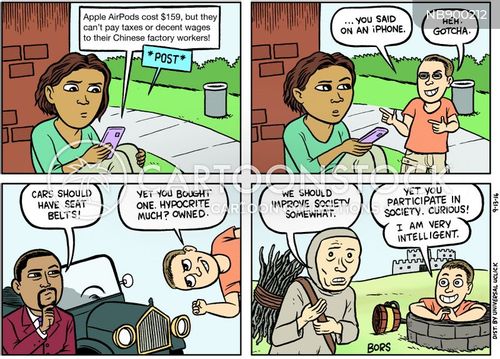
Further irony, your gotcha is like exactly the point the comic is trying to make. It's like you were made by God to demonstrate failure.
No, that’s not a new phenomenon. Tabloids and political rags filled that market well before the Internet. News organizations aren’t static entities, they come in a wide variety of flavors.
His exfiltration of Venezuelan leader Nicolás Maduro was swift, effective and - as we found in our follow-up reporting - surprisingly popular among Venezuelans (plo). But then the 47th president threw himself into a new venture, a major attack on Iran. Far from being a surgical strike à la Caracas, it rapidly spiralled into a regional conflagration which threatened to blast the global economy off its hinges. We have analysed the build-up and fall-out of the Iran war in forensic detail in an infographic extravaganza (p70). While Trump loomed large throughout the quarter, adding an Ice operation in Minneapolis (p30) and unseemly wranglings over Greenland (p50) into the headline-grabbing mix, his was not the only game in town. Andrew Mountbatten-Windsor was arrested (P66), a football final turned into theatrical chaos (p40), the power of Al gave hope to sufferers of ultra-rare diseases (p80) and victory was declared over ferrets on a Northern Irish island (p100). Meanwhile Nasa scientists announced fascinating revelations drawn from their analysis of a thimbleful of space dust obtained at great expense from a four billion-year-old asteroid (p56).
edit: you can see some samples on their website: https://www.slow-journalism.com/back-issue/62-jan-mar-2026
Hard to build a business that requires changing user behavior on pennies. Seriously, make the math and strategy work - requires a Herculean effort to hit ramen profitability for all involved.
Looks like I didn’t rotate my certificate. Eek
Keep in mind that the definition of news I’m using is specifically “reporting on recent events,” not all forms of journalism or ways in which information is shared.
It’s the former that I have gripes with and see people consume like a drug. It takes significant effort to be informed about the world, and reading the news, I think, is not a very good way to do so. The time and mental energy are better spent elsewhere.
IMHO this is an indicator that they are doing a great job. The opposite being "extremely niche and biased".
I don't need to know the deep inner workings of India's goings on, and especially don't need my first introduction to it being profoundly myopic and spun. Which is what I find the Economist to be guilty of.
Give me surface level and neutral.
Now i have to research whether two sources are true or not.
I want my news to say, "politician say x; and is a liar, here is the evidence." Nobody should want a propaganda parrot. If I look into it and the politician is not lying, I know to trust the source less.
I think that when it comes to topics we can vote on, saying X is bad because media says it's totally bad is not really an informed opinion.
Saying something deserves nuance because 1 out of 99 experts disagrees is exactly how you end up with increasing measles cases or adding 6 more lanes to a highway.
Those are the things among many others that actually make you informed about the world, in my opinion, not the news feed.
Worse than knowing nothing, they know only party talking points.
There was all kinds of quasi-serious news-adjacent crap like 60 minutes, 48 hours, etc. The big difference was none if it was data driven and backed by algorithms that are constantly tuned for max engagement.
https://www.goodnewsnetwork.org/
I like to check this every so often as a palette cleanser for the endless bad news that is available elsewhere
I dont see any bias in their journalism, but they have a tendency to just accept everything at face value. They will also shop around for experts that support their opinions. One person will write an article about housing referring to housing experts, and get one view, and then a few years later another will instead quote a public housing expert getting another view. Theres never any "Lets test the quality of each expert and try and figure out whats true"
4 corners and foreign correspondant however are still absolute top tier journalism. Its a shame they dont apply those standards everywhere.
A recent, prominent example is [1] where they edited footage to make it look like a soldier was shooting at an innocent civilian. They then appointed a 40 year abc/sbs veteran to investigate the incident who unsurprisingly found no wrong doing.
All of this on a topic that isn't even super political...
Granted they are still probably the best journalists in the country, but when you can't trust them to not alter primary evidence, or admit real fault when something has gone wrong, you cant really trust them for much.
For day to day stuff I still find them an ok source, it just needs to be taken with a very heavy dose of salt.
[1] https://7news.com.au/spotlight/7news-spotlight-abc-launches-...
>where they edited footage to make it look like a soldier was shooting at an innocent civilian.
In your link the ABC is claiming the footage wasnt edited by them. I mean its still a bit of weak journalism to publish it. Did that ever get resolved either way?
Economist always was good but I have not read it in a while so I can't speak to it. If it has not changed, that would be great.
Sometimes you just have to accept that you still know nothing despite 100 articles describing a topic.
I think we have over a million games that visualize war more clearly than any news agency.
I'll admit I don't fully understand what they were claiming/how it changed over time but they later issued an apology for the incident [1].
From what I can work out the thrust of the abc claim is "don't blame our journalists, the editors on multiple occasions accidentally did this for no reason at all and we then failed to catch it".
Then midway through the apology they pivot to blaming twitter, or at least that is the flow of the guardian article.
[1] https://www.theguardian.com/media/2024/sep/17/abc-australion...
I personally don’t think the 24 hour news cycle is healthy. I pretty much abstain from it except it’s so prevalent in our culture there’s a lot of second hand exposure.
Their entire political reporting side is headlined by Laura Kuenssberg who is on her best day mediocre and on her worst actively participatory on the decline of democratic principles in the UK. Her "mistakes" such as giving her questions to Boris Johnson ahead of time, would be fireable offenses in any other high stakes job. But despite repeated mistakes all somehow helping the more radical, anti democratic, side of the conservative spectrum her position has never been in danger. She also hosts far right parties 500% more time than their current seats in parliment and is directly responsible for the cleaning of image of repudiable characters such as Nigel Farage.
So if becoming a slightly less abrasive Daily Mail while being paid with public money is not worthy of being called Trash, then idk what is. Its becoming the New York Post but without slurs
Possibly you mean David Clementi who was appointed in 2017 as Chair of the BBC, but he was a financier, with no background in journalism tabloids or otherwise, so not sure what you are talking about.
Laura Kuenssberg hasn’t been political editor since spring 2022. The political editor is Chris Mason.
I’m going to take the rest of your comments with a pinch salt.
i don't agree that I should do all the work to prove something while the person (GP) whose naked opinion I was responding to is not asked the same about his opinion. This leads me to believe on the basis of evidence that you are selective and share his bias.
so yeah, let's pick one, you: How are you not biased?
Asking "are you a dumb conservative bigot" is offensive and shuts down dialogue even when the person wasn't. Better to ask for the fellow to expand on their comment
If the report exonerated them, and showed they even have a Israeli bias, why would they spend 50k in lawyer fees (disclosed so far, real number is probably higher) to hide that report?
There is obvious distrust on western sources of the conflict and the UK active participation in the creation of the 2 state solution, as well as its alliance with America all taint the possible impartiality or accuracy of the BBC. But the accusations against them for antisemitism and anti israeli bias go back decades
The covererage of the Genocide in Palestine (and I'm betraying my view just by calling it that) just brings this into incredibly sharp relief as there are, to a first approximation, no real centrists in that discussion. And yet you still get the same 5 minutes of interview for a doctor on the ground in Palestine and for Ben Gvir, presented as if there's some kind of happy middle ground that everyone can broadly agree on.
yeah so the story about that... its mostly a right wing hoax.
The real story is as follows, many police departments refused to help working class people specially women. This was repeatedly reported and demanded to eb reformed multiple times.
A woman finally got the story through in the early 2010s. Which led to a big trial.
Due to reporting laws in the UK, newspapers couldn't report on it. Names are sealed until the trail and a bunch of other protections.
However Facebook and Twitter were blooming. And a man by the name of Yaxley, now Tommy Robinson, decided to make the case about race before any news could report on it. He spent years calling the case "Asian Grooming gangs" without any news reporting due to trail muzzle laws in the UK.
By the time the case was out in the open, the name had made the rounds and newspapers like the Sun and Daily Mail used it from day one.
Most cases found had white perpetrators, but the ones with Asian men got all the headlines due to the Tommy Robinson years of shit stirring.
The most famous case found that the police had been investigated twice over their lack of helping vulnerable girls. A judge had ignored a video of a girl being taken advantage of, saying "this girls like it". No prior investigation found race to be a reason why they weren't helped.
In 2016, the chief of police was fired because he was found to be responsible in part for the 17 years of abuse this girls suffered as something he actively ignored.
After he was fired, he repeated a twitter talking point "we didnt help because we were scared of being accused of being racist". This was repeated by other fired member in the 2020 report, but somehow didnt show up in the 2011 report, the 2007 report or the 2001 report. All of which highlighted ignoring girls for being poor, drug users, sex workers, or coming from foster homes and nothing about the race of the abusers.
So its funny how right wing people complain about the bbc not reporting about the gangs, when its a conspiracy made up by a neo nazi felon, in active contradiction to every police investigation from before twitter narratives and which is now a talking point in most far right circles.
So I dont think it averages out, making up shit to be angry about when police reform is something they have opposed for decades is not warranty to keep an incompetent far right spokesperson in the most important political journalistic office in the country.
Between 1997 and 2013, girls were abused by grooming gangs of predominantly Pakistani men.
https://en.wikipedia.org/wiki/Rotherham_child_sexual_exploit...
However they also got a fraction of the news coverage.
The Rotherdam police had been investigated 3 times before 2013, and they failed all the inspections.
The Sarah Everatt investigation found serious deficiencies in UK policing.
The last 300 page comprehensive report on UK police found systemic mysoginy, classicism and racism at all levels across the ranks and had very direct improvement plans all of which have not even began to be implemented.
EDIT no, wikipedia says plural "gangs" also. I have zero idea what a rape gang even is, an organized crime group providing access to foster home girls?
1) is that the main predictor is race
2) that the cases were uninvestigated because of race
Neither is true. Dozens of cases all found commonalities, and they were working class victims and police lack of professionalism.
> I have zero idea what a rape gang even is, an organized crime group providing access to foster home girls?
Its an umbrella term for multiple men, having a system to take advantage of women. In some cases its offering access to drugs, in other cases is giving them gifts, sometimes its using an attractive man as bait.
A famous case happened recently in france where a man was basically drugging his wife and when she was passed out allowing men to come to his house.
Every case its a different type of horrific nightmare. People who try to make it about race instead of finding proactive solutions (like investigating how a judge in Rotherdam with video evidence in front of him ignored it) give 0 fucks about the victims.
And its unsurprising that in protests against this cases, 70% of the men attending had domestic abuse cases. Because protecting women is not their cause, hating brown people is.
Many of the girls are underage, and cannot consent, coercing them to do it will always be ra pe